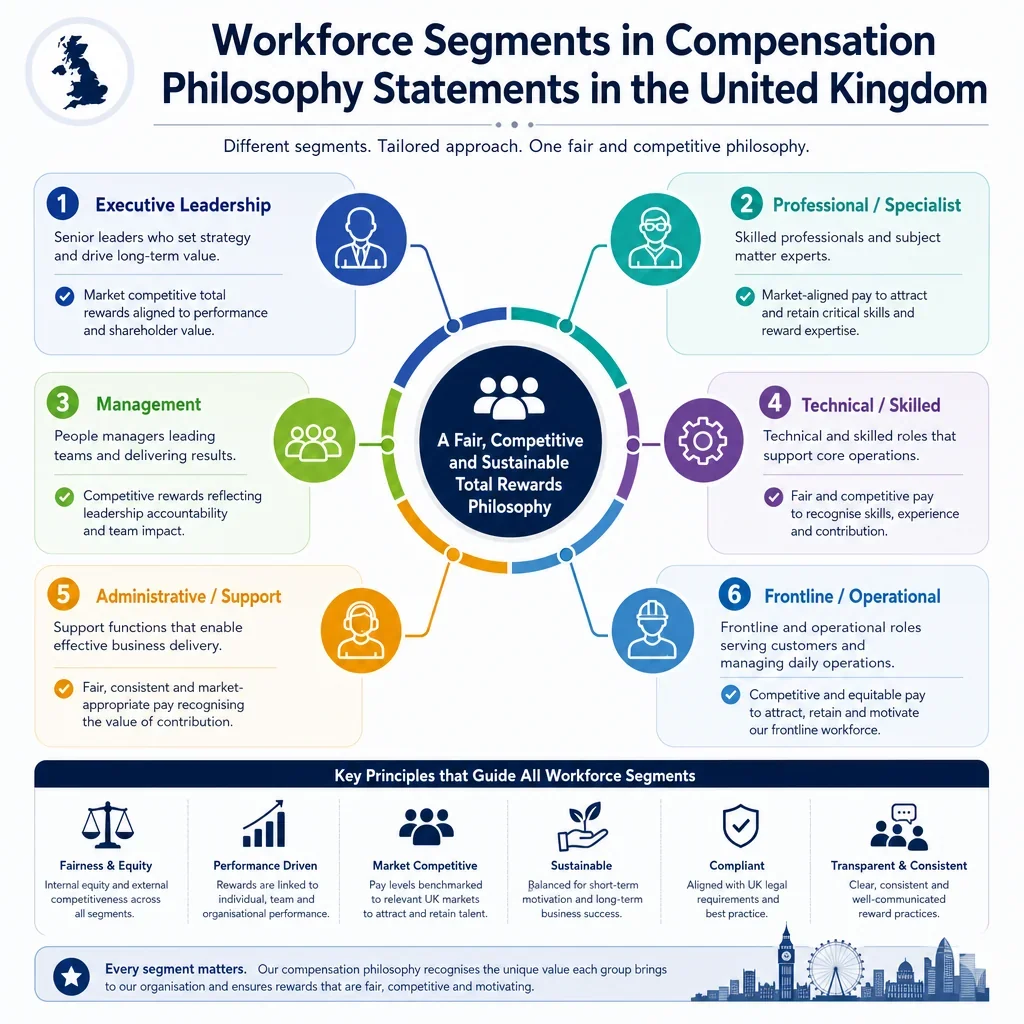
Workforce Segments In Compensation Philosophy Statements In The United Kingdom
Segment Category | Segment Description | Relevant Compensation Principles | Example Wording | Detail Level Required |
|---|---|---|---|---|
Executive directors | ||||
Executive leadership | Board-level leaders with statutory accountability and material influence over company value. | Pay for sustainable performance, shareholder alignment, remuneration committee oversight, long-term incentives, malus and clawback where appropriate. | Executive remuneration is designed to attract and retain high-calibre leaders while aligning reward with long-term sustainable performance and stakeholder interests. | High |
Non-executive directors | ||||
Executive leadership | Independent board members whose fees should preserve independence and reflect time commitment. | Fixed fees, no performance incentives, independence, transparency, market benchmarking, committee chair supplements. | Non-executive director fees reflect responsibilities, time commitment and market practice while safeguarding independence from management. | Medium |
Founders and owner-managers | ||||
Executive leadership | Founder leaders may have significant equity ownership and different salary, dividend or incentive considerations. | Balanced cash pay, equity alignment, tax awareness, governance, sustainability, clear distinction between employment reward and ownership return. | Founder remuneration is considered separately from ownership returns and is reviewed for fairness, affordability and alignment with the company’s stage of growth. | High |
C-suite executives | ||||
Executive leadership | Top executives responsible for enterprise strategy, risk, financial performance and culture. | Executive market benchmarking, variable pay, long-term incentives, leadership impact, succession risk, performance scorecards. | C-suite pay reflects enterprise accountability, leadership impact, market competitiveness and delivery of strategic priorities. | High |
Chief Executive Officer | ||||
Executive leadership | The principal executive role, normally the most visible internal and external benchmark for pay governance. | Strategic delivery, stakeholder alignment, pay ratio awareness, long-term incentives, robust objective setting, board oversight. | CEO remuneration is set with regard to company performance, workforce pay context, leadership accountability and long-term value creation. | High |
Chief Financial Officer and finance leadership | ||||
Executive leadership | Senior finance leaders overseeing financial control, funding, reporting, investor confidence and risk. | Market competitiveness, control quality, risk management, regulatory accountability, retention, performance-linked bonus. | Finance leadership reward recognises stewardship, financial discipline, risk management and contribution to sustainable business performance. | Medium |
Executive committee members | ||||
Executive leadership | Senior leaders collectively responsible for company-wide decisions and cross-functional delivery. | Enterprise performance, leadership behaviours, market positioning, bonus scorecards, retention, internal equity. | Executive committee pay balances functional market value with accountability for enterprise-wide outcomes and leadership behaviours. | High |
Senior management | ||||
Senior management | Senior leaders translating strategy into operating plans and managing major functions or regions. | Market alignment, performance differentiation, leadership capability, bonus eligibility, succession planning, retention risk. | Senior management reward supports strategic execution, leadership accountability and retention of critical organisational capability. | High |
Divisional and business unit heads | ||||
Senior management | Leaders accountable for business unit results, budgets, people and customer outcomes. | Business unit performance, profit contribution, customer outcomes, leadership behaviours, balanced scorecards, retention. | Business unit leader pay reflects market value, scale of accountability and delivery of financial, customer and people outcomes. | Medium |
Country and regional leaders | ||||
Senior management | Leaders responsible for local operations, commercial performance and market-specific employment conditions. | Local market benchmarking, mobility considerations, regional profitability, compliance, leadership impact, cost-of-labour differences. | Regional leadership reward reflects local market conditions, operational scale and contribution to group objectives. | Medium |
Heads of function | ||||
Senior management | Functional leaders responsible for policy, capability and delivery across areas such as HR, finance, legal or technology. | Functional market pricing, leadership scope, internal parity, capability building, performance outcomes, succession risk. | Heads of function are rewarded for functional expertise, leadership contribution and delivery of business-critical services. | Medium |
Middle managers | ||||
Middle management | Managers who lead teams, allocate work, manage performance and implement policies. | Managerial accountability, fair pay progression, team performance, span of control, leadership behaviours, internal equity. | Middle manager pay recognises people leadership, operational delivery and consistent application of company standards. | Medium |
Line managers | ||||
Middle management | Direct supervisors who influence day-to-day employee experience, productivity and performance ratings. | Team leadership, fair performance assessment, pay decision training, consistency, capability development, role complexity. | Line manager reward reflects direct people leadership, operational accountability and the importance of fair and consistent pay decisions. | Medium |
Project managers | ||||
Professional or specialist | Professionals accountable for delivery of projects, budgets, timelines, stakeholders and risk controls. | Project complexity, certification, delivery outcomes, market rate, scarce skills, bonus tied to milestones where appropriate. | Project management pay reflects delivery complexity, stakeholder impact and the market value of proven project capability. | Medium |
Programme and portfolio managers | ||||
Professional or specialist | Senior delivery professionals coordinating multiple projects with strategic, financial and dependency risk. | Strategic impact, delivery risk, budget scale, stakeholder influence, market competitiveness, retention. | Programme and portfolio roles are rewarded for strategic delivery, dependency management and value realised from major change activity. | Medium |
Technical specialists | ||||
Professional or specialist | Employees with deep technical expertise that may command premium market rates and alternative career paths. | Skills-based pay, market premiums, dual career ladders, certification, scarce skills retention, contribution beyond management. | Specialist reward recognises depth of expertise, market scarcity and measurable contribution without requiring progression into management. | High |
Software engineers | ||||
Professional or specialist | Digital specialists in competitive labour markets where skills, seniority and location strongly affect pay. | Market benchmarking, skills premiums, level architecture, remote work policy, equity or bonus eligibility, retention. | Software engineering pay is benchmarked to relevant technology markets and reflects skill depth, product impact and level of accountability. | High |
Data, analytics and AI specialists | ||||
Professional or specialist | Specialists in high-demand analytical, machine learning and data governance roles. | Scarce skill premiums, market pricing, certification, business impact, ethical use, retention, progression pathways. | Data and AI specialist pay reflects market scarcity, technical depth and responsible delivery of data-enabled business value. | High |
Cyber security specialists | ||||
Professional or specialist | Security professionals protecting systems, data and continuity in a competitive specialist market. | Scarce skill premiums, certification, retention, on-call allowances, risk criticality, market benchmarking. | Cyber security reward recognises market scarcity, certification, operational criticality and contribution to resilience and risk reduction. | High |
Engineers and chartered professionals | ||||
Professional or specialist | Qualified professionals whose pay may reflect accreditation, safety accountability and scarce technical capability. | Professional accreditation, technical grade progression, market benchmarking, safety impact, retention, skills allowances. | Engineering and chartered professional pay recognises accredited expertise, safety-critical judgement and contribution to operational performance. | Medium |
Legal professionals | ||||
Professional or specialist | In-house lawyers and legal specialists whose pay is shaped by qualification, practice area and market comparators. | Professional qualification, specialist practice, external legal market, risk management, confidentiality, retention. | Legal professional pay reflects qualification, specialist expertise, market value and contribution to risk-managed decision making. | Medium |
Finance, accounting and audit professionals | ||||
Professional or specialist | Qualified or part-qualified finance professionals supporting reporting, control, audit, tax and planning. | Qualification progression, market benchmarking, control responsibility, professional development, performance differentiation. | Finance professional reward reflects qualification, control responsibilities, business partnering impact and relevant market benchmarks. | Medium |
HR and people professionals | ||||
Support functions | People specialists responsible for employee relations, reward, talent, learning and organisational culture. | Professional capability, policy stewardship, confidentiality, employee relations risk, market benchmarking, service impact. | People function reward recognises professional expertise, policy stewardship and contribution to a fair and effective employee experience. | Low |
Reward and payroll specialists | ||||
Support functions | Specialists managing pay structures, payroll accuracy, statutory rates and reward governance. | Technical accuracy, confidentiality, compliance knowledge, market benchmarking, service continuity, internal equity. | Reward and payroll roles are recognised for technical expertise, confidentiality and their role in ensuring accurate and compliant pay outcomes. | Medium |
Procurement and supply chain professionals | ||||
Professional or specialist | Specialists managing sourcing, contracts, supplier risk, logistics and cost efficiency. | Commercial impact, certification, risk management, savings quality, supply resilience, market benchmarking. | Procurement and supply chain pay reflects commercial impact, supplier risk management and contribution to resilient operations. | Low |
Marketing and communications professionals | ||||
Professional or specialist | Professionals driving brand, customer acquisition, reputation, campaigns and internal communications. | Creative and commercial impact, campaign outcomes, specialist skills, market benchmarking, performance differentiation. | Marketing and communications reward recognises specialist capability, brand impact and contribution to customer and stakeholder outcomes. | Low |
Product managers | ||||
Professional or specialist | Professionals owning product strategy, prioritisation, user outcomes and commercial performance. | Product impact, commercial outcomes, market benchmarking, cross-functional influence, digital talent competition, retention. | Product management pay reflects product impact, customer value delivered and the market value of cross-functional leadership capability. | Medium |
Sales leadership | ||||
Senior management | Leaders accountable for revenue strategy, team targets, commission governance and customer growth. | Revenue accountability, incentive plan governance, target fairness, margin quality, ethical selling, retention. | Sales leadership reward balances revenue growth with margin quality, customer outcomes, ethical conduct and effective team leadership. | High |
Sales representatives | ||||
Professional or specialist | Revenue-generating employees whose pay often includes commission or target-based incentives. | Clear commission rules, target achievability, sales quality, customer outcomes, minimum wage compliance, incentive caps or accelerators. | Sales reward links a meaningful proportion of pay to clear, measurable and ethical revenue outcomes while maintaining legal pay compliance. | High |
Account managers | ||||
Professional or specialist | Client-facing employees focused on retention, relationship development, upsell and service quality. | Customer retention, account growth, service quality, balanced incentives, relationship value, market benchmarking. | Account management pay rewards customer retention, relationship quality and sustainable account growth. | Medium |
Customer success teams | ||||
Professional or specialist | Roles focused on customer adoption, satisfaction, retention and recurring revenue protection. | Retention metrics, customer health, service outcomes, balanced incentives, team-based reward, market pricing. | Customer success reward recognises customer retention, adoption outcomes and contribution to recurring revenue quality. | Medium |
Call centre and contact centre employees | ||||
Operational or frontline | Frontline customer service roles with high volume work, performance metrics and potential shift patterns. | Hourly or salary bands, service metrics, shift premiums, fair scheduling, progression, minimum wage compliance. | Contact centre pay supports fair base rates, service quality, progression and recognition for agreed shift or unsocial-hours requirements. | High |
Customer service advisers | ||||
Operational or frontline | Frontline roles handling customer enquiries, complaints and service recovery. | Fair grading, service quality, progression, performance consistency, equal pay awareness, recognition of emotional labour. | Customer service pay reflects role complexity, service standards, progression and consistent treatment of comparable frontline roles. | Medium |
Retail store employees | ||||
Operational or frontline | Customer-facing store roles often paid hourly with variable hours, premiums or sales incentives. | Minimum wage compliance, fair scheduling, premium pay, location weighting, progression, customer service metrics. | Retail pay is structured to provide fair hourly rates, legal compliance, transparent progression and recognition of agreed premiums or responsibilities. | High |
Hospitality and catering staff | ||||
Operational or frontline | Frontline service roles where tips, service charges, shifts and seasonal demand may affect total reward. | Base pay compliance, fair allocation of tips, shift premiums, seasonal flexibility, overtime, transparent deductions. | Hospitality reward combines compliant base pay with transparent treatment of tips, service charges and agreed shift arrangements. | High |
Warehouse operatives | ||||
Operational or frontline | Operational roles performing picking, packing, loading and inventory tasks, often with shift work. | Hourly rates, shift premiums, productivity incentives, safety, overtime, minimum wage compliance, fair scheduling. | Warehouse pay reflects compliant hourly rates, safe productivity, progression and agreed premiums for shifts or additional responsibilities. | High |
Manufacturing operatives | ||||
Operational or frontline | Production roles where pay may reflect skill levels, shifts, output, safety and quality standards. | Skill grades, shift premiums, safe productivity, quality metrics, overtime, minimum wage compliance, progression. | Manufacturing pay recognises skill, safe working, quality output and agreed premiums for shift or overtime arrangements. | High |
Drivers and logistics employees | ||||
Operational or frontline | Roles transporting goods or people where licences, working time, unsocial hours and safety affect pay. | Licence premiums, safety, route complexity, overtime, night allowances, working time compliance, retention. | Driver reward reflects licence requirements, safe performance, working pattern demands and agreed allowances for role-specific duties. | High |
Field service technicians | ||||
Operational or frontline | Mobile technical roles providing installation, maintenance or repair services at customer sites. | Technical skill, travel time, on-call allowances, certification, customer service, safety, equipment responsibility. | Field technician pay recognises technical competence, customer impact, travel requirements and agreed on-call or standby responsibilities. | High |
Maintenance and facilities workers | ||||
Operational or frontline | Operational staff maintaining buildings, equipment, safety and workplace continuity. | Skill levels, safety responsibilities, call-out payments, certification, shift cover, market rates, progression. | Facilities and maintenance pay reflects technical skill, safety-critical responsibilities and agreed call-out or standby arrangements. | Medium |
Security personnel | ||||
Operational or frontline | Roles protecting people, premises or assets, often requiring licensing and unsocial-hours work. | Licence requirements, night premiums, risk exposure, minimum wage compliance, training, site responsibility, retention. | Security pay recognises licensing requirements, site responsibility, safe conduct and agreed premiums for unsocial-hours work. | Medium |
Cleaning staff | ||||
Operational or frontline | Essential workplace service roles that are often hourly paid, part-time or outsourced. | Minimum wage compliance, fair scheduling, travel time where applicable, dignity, equal pay awareness, overtime. | Cleaning roles are paid in line with legal requirements and company principles of fairness, dignity and transparent working arrangements. | Medium |
Healthcare and care workers | ||||
Operational or frontline | Care and clinical support roles where working time, travel, sleep-ins and qualifications can affect pay compliance. | Minimum wage compliance, travel time, qualification pay, shift premiums, retention, safe staffing, dignity of work. | Care worker reward recognises compliant pay for working time, qualifications, continuity of care and agreed unsocial-hours requirements. | High |
Nurses and clinical professionals | ||||
Professional or specialist | Qualified clinical staff with regulated professional standards, scarce skills and patient safety responsibilities. | Professional registration, scarcity, shift premiums, clinical responsibility, continuing development, safe staffing, retention. | Clinical professional pay reflects registration, patient safety responsibilities, market conditions and agreed premiums for working patterns. | High |
Material risk takers in financial services | ||||
Professional or specialist | Employees whose professional activities can materially affect a regulated firm’s risk profile. | Risk adjustment, deferral, malus, clawback, conduct, proportionality, governance, fixed-to-variable balance. | Remuneration for material risk takers is governed by applicable regulatory requirements and supports prudent risk-taking, conduct and long-term resilience. | High |
Certified persons under SMCR | ||||
Professional or specialist | Financial services staff performing roles that can cause significant harm to the firm or customers. | Conduct, accountability, risk outcomes, variable pay governance, performance quality, certification status. | Certified role remuneration considers conduct, customer outcomes and risk management as core elements of performance and reward decisions. | High |
Traders and investment professionals | ||||
Professional or specialist | Financial professionals whose incentives can affect risk-taking, client outcomes and firm performance. | Risk-adjusted performance, conduct, deferral, clawback, market competitiveness, client outcomes, regulatory compliance. | Investment professional reward is based on risk-adjusted performance, client outcomes, conduct and compliance with applicable remuneration rules. | High |
Risk and compliance professionals | ||||
Professional or specialist | Control function roles supporting legal, regulatory, operational and conduct risk management. | Independence, control effectiveness, professional expertise, market benchmarking, conduct, avoidance of conflicted incentives. | Risk and compliance pay supports independent judgement, professional expertise and effective control outcomes without inappropriate commercial pressure. | High |
Internal audit roles | ||||
Professional or specialist | Independent assurance roles requiring objectivity and specialist control knowledge. | Independence, objectivity, professional standards, control assurance, market benchmarking, no inappropriate business-line incentives. | Internal audit reward is designed to protect independence and recognise assurance expertise, control insight and professional judgement. | Medium |
Research and development scientists | ||||
Professional or specialist | Specialists creating intellectual property, scientific knowledge, products or technical breakthroughs. | Innovation impact, qualification level, IP contribution, market scarcity, long-term incentives, publication or patent recognition. | R&D reward recognises specialist expertise, innovation impact and contribution to the company’s long-term technical advantage. | Medium |
Creative and design professionals | ||||
Professional or specialist | Employees producing creative assets, user experience, product design or brand expression. | Portfolio quality, creative impact, market benchmarking, specialist tools, intellectual property, performance differentiation. | Creative and design pay reflects specialist capability, quality of output and contribution to customer experience and brand value. | Low |
Administrative assistants | ||||
Support functions | Support roles coordinating records, scheduling, office processes and team administration. | Fair grading, role scope, reliability, service quality, progression, internal equity, minimum wage compliance. | Administrative pay reflects role scope, service quality, reliability and fair internal comparison with similar support roles. | Low |
Executive assistants | ||||
Support functions | Senior administrative roles supporting executives with confidentiality, judgement and complex coordination. | Confidentiality, executive support complexity, discretion, market benchmarking, internal equity, stakeholder management. | Executive assistant pay recognises discretion, complex stakeholder support and the level of executive accountability supported. | Low |
Office management staff | ||||
Support functions | Support staff coordinating workplace operations, suppliers, facilities and employee services. | Service continuity, supplier coordination, role breadth, internal equity, market benchmarking, problem solving. | Office management pay reflects operational breadth, service continuity and contribution to an effective working environment. | Low |
Graduate trainees | ||||
Early career | Early-career employees on structured development schemes with planned progression and rotations. | Entry market rates, cohort consistency, progression milestones, development investment, rotation equity, performance standards. | Graduate trainee pay provides fair cohort-based entry rates, transparent progression and recognition of developing capability. | Medium |
Apprentices | ||||
Early career | Employees combining work with formal training and subject to apprentice minimum wage rules where applicable. | Apprentice rate compliance, paid training time, progression, qualification milestones, cohort fairness, safeguarding early-career workers. | Apprentice pay complies with statutory requirements and supports structured progression as skills, qualifications and contribution increase. | High |
Interns and work placement students | ||||
Early career | Temporary early-career workers whose legal pay entitlement depends on worker status and arrangement. | Worker status, minimum wage compliance, access and inclusion, learning value, expenses, transparent duration. | Internship pay is set transparently and in line with legal status, inclusion aims and the nature of the work performed. | High |
Trainees and junior professionals | ||||
Early career | Employees building professional competence before reaching fully independent role expectations. | Development-based progression, qualification support, clear levels, mentoring, market entry rates, pay transparency. | Junior professional pay reflects developing capability, structured learning and transparent progression towards full role competence. | Medium |
School leavers | ||||
Early career | Young entrants to the workforce who may need structured pay progression and careful age-rate compliance. | Age-rate compliance, inclusion, development, progression, mentoring, fair access, cohort consistency. | School leaver pay supports fair access, legal compliance and structured development as skills and contribution grow. | Medium |
Hourly paid employees | ||||
Operational or frontline | Employees paid by the hour, often affected by shifts, overtime, deductions and working time records. | Minimum wage compliance, overtime rules, paid working time, deductions, premiums, scheduling fairness, record keeping. | Hourly pay is managed to ensure legal compliance, transparent rates and fair recognition of agreed overtime, shift or premium arrangements. | High |
Salaried employees | ||||
Professional or specialist | Employees paid an annual salary, with pay principles often focused on grade, market and performance. | Salary bands, market benchmarks, performance reviews, internal equity, progression, minimum wage safeguard for working hours. | Salaried roles are managed through transparent grade ranges, market review and fair progression based on capability and contribution. | Medium |
Shift workers | ||||
Operational or frontline | Employees working rotating, night, weekend or irregular patterns that may justify premiums. | Shift premiums, fatigue and safety, fair rostering, working time compliance, predictability, minimum wage compliance. | Shift worker reward recognises agreed working pattern demands through transparent premiums, compliant scheduling and fair access to progression. | High |
Night workers | ||||
Operational or frontline | Employees working at night, where working time limits, health assessments and premiums may be relevant. | Night premiums, working time compliance, health and safety, fatigue management, fair scheduling, role continuity. | Night work is recognised through transparent pay arrangements and managed with regard to working time, wellbeing and operational need. | High |
On-call and standby employees | ||||
Operational or frontline | Employees required to be available outside normal hours for incidents, call-outs or continuity cover. | Standby allowances, call-out payments, working time treatment, minimum wage compliance, fatigue, rota fairness. | On-call arrangements are rewarded through clear standby and call-out provisions that reflect availability, response expectations and legal compliance. | High |
Remote employees | ||||
Professional or specialist | Employees working mainly away from a company workplace, raising location and expense policy questions. | Location-based pay stance, role-based market pricing, homeworking expenses, fairness, performance measurement, inclusion. | Remote worker pay is based on role value and agreed market approach, with clear treatment of location and homeworking expenses. | Medium |
Hybrid employees | ||||
Professional or specialist | Employees splitting work between company premises and another location, often requiring consistent pay and expense treatment. | Role-based pay, location policy, travel expectations, expense rules, inclusion, performance consistency. | Hybrid working does not change core pay principles unless location, travel or role requirements are expressly addressed in policy. | Low |
London-based employees | ||||
Professional or specialist | Employees in London labour markets where cost and market pay may differ from other UK locations. | London weighting, location premium, market data, internal equity, remote policy, affordability. | Where appropriate, London-based pay may reflect relevant local market data and agreed location weighting principles. | Medium |
Part-time employees | ||||
Operational or frontline | Employees working fewer hours than comparable full-time workers, requiring fair pro-rated treatment. | Pro-rated pay and benefits, no unjustified less favourable treatment, equal opportunity, progression access, scheduling fairness. | Part-time employees receive pay and benefits on a fair pro-rated basis unless a different approach is objectively justified. | High |
Fixed-term employees | ||||
Professional or specialist | Employees engaged for a set period or task, requiring fair treatment against permanent comparators. | Comparable pay and benefits, objective justification, contract duration, retention, bonus eligibility, pro-rating. | Fixed-term employees are considered for comparable pay and benefits to permanent employees, subject to objective justification and contract terms. | High |
Agency workers | ||||
Operational or frontline | Temporary workers supplied by an agency, with equal treatment rights after qualifying conditions are met. | Agency Workers Regulations, equal treatment, assignment length, rate transparency, minimum wage compliance, hirer-agency coordination. | Agency worker pay is managed with suppliers to support statutory equal treatment obligations and transparent assignment terms. | High |
Casual and zero-hours workers | ||||
Operational or frontline | Workers engaged flexibly without guaranteed hours, requiring clear rates, holiday pay and status-aware treatment. | Worker status, minimum wage, holiday pay, transparent hourly rates, scheduling fairness, no exclusivity clauses where prohibited. | Casual and zero-hours arrangements use transparent hourly rates and are administered in line with worker status and statutory pay rights. | High |
Seasonal workers | ||||
Operational or frontline | Workers engaged for peak trading or operational periods, often with variable hours and short tenure. | Transparent rates, minimum wage compliance, holiday pay, onboarding pay, retention incentives, fair scheduling. | Seasonal worker pay is set transparently and administered consistently for hours worked, holiday entitlement and any agreed peak-period incentives. | Medium |
Contractors and consultants | ||||
Professional or specialist | Non-employee service providers whose rates are usually commercial rather than employee compensation. | Employment status, IR35, market day rates, scope clarity, no employee benefits unless appropriate, procurement governance. | Contractor and consultant fees are governed separately from employee pay and reflect market rates, scope, status and commercial terms. | High |
Gig economy platform workers | ||||
Operational or frontline | Workers providing services through platforms, where status determines pay rights and protections. | Employment status, minimum wage where worker status applies, holiday pay, transparency, incentive fairness, deductions. | Platform worker reward is determined with regard to legal status, transparent earning arrangements and applicable statutory pay protections. | High |
Unionised employees | ||||
Operational or frontline | Employees covered by collective bargaining or recognised union arrangements affecting pay decisions. | Collective bargaining, negotiated pay awards, transparency, affordability, consistency, dispute avoidance, consultation. | For unionised groups, pay outcomes are considered through recognised collective bargaining processes and aligned with business affordability and fairness principles. | High |
Employees covered by collective agreements | ||||
Operational or frontline | Employees whose pay terms are influenced by formal collective bargaining arrangements. | Negotiated terms, consistency with agreements, consultation, affordability, implementation clarity, employee relations stability. | Where collective agreements apply, compensation decisions are made consistently with those agreements and the company’s wider fairness principles. | High |
TUPE-transferred employees | ||||
Operational or frontline | Employees transferred to a new employer with protected employment terms in relevant business transfers. | Preserved terms, harmonisation risk, objective justification, communication, fairness, legal review, pay integration planning. | Compensation for TUPE-transferred employees is managed with regard to preserved contractual rights, legal obligations and fair integration principles. | High |
Expatriates and international assignees | ||||
Professional or specialist | Employees working across borders with additional mobility, tax, cost and hardship considerations. | Mobility allowances, tax equalisation, cost-of-living, hardship, housing, school fees, repatriation, internal equity. | International assignment reward is governed by mobility policy and reflects role need, host location conditions and equitable treatment across assignees. | High |
Globally mobile employees | ||||
Professional or specialist | Employees who frequently work in multiple jurisdictions, creating pay, tax, immigration and equity issues. | Home-host policy, tax compliance, immigration compliance, allowances, currency, market positioning, assignment governance. | Globally mobile employee reward is managed through consistent mobility principles covering market alignment, allowances and compliance obligations. | High |
High-potential employees | ||||
Professional or specialist | Employees identified for accelerated development or succession, requiring careful retention and fairness governance. | Retention, development investment, succession risk, transparent criteria, bias control, differentiated progression, internal equity. | High-potential reward decisions are based on objective criteria, succession needs and sustained performance, with oversight to ensure fairness. | Medium |
Critical talent roles | ||||
Professional or specialist | Roles whose vacancy would materially disrupt strategy, operations, customer delivery or risk management. | Retention premiums, market scarcity, succession planning, role criticality, governance, time-limited allowances, affordability. | Critical talent pay may include targeted market or retention measures where role scarcity and business impact are clearly evidenced. | High |
Scarce skills roles | ||||
Professional or specialist | Roles where supply constraints require premium market positioning or targeted allowances. | Market premiums, evidence-based benchmarking, review dates, skill validation, retention, internal equity, affordability. | Scarce skills premiums are used selectively, supported by market evidence and reviewed to ensure continued business need and fairness. | High |
Mission-critical operational roles | ||||
Operational or frontline | Operational roles essential to continuity, safety, service availability or customer fulfilment. | Reliability, continuity, retention, shift premiums, safety, contingency cover, role criticality, fair recognition. | Mission-critical operational roles may receive targeted recognition for continuity, reliability and role-specific demands where clearly evidenced. | Medium |
Employees in safety-critical roles | ||||
Operational or frontline | Roles where errors may create significant health, safety, environmental or public risk. | Safety performance, competence, certification, fatigue management, no unsafe productivity incentives, premiums for risk or conditions. | Safety-critical role reward prioritises competence, safe behaviours and compliance, and avoids incentives that could encourage unsafe outcomes. | High |
Employees handling vulnerable customers | ||||
Operational or frontline | Customer-facing roles requiring judgement, empathy and compliance when supporting vulnerable individuals. | Customer outcomes, quality over volume, training, conduct, emotional labour, avoidance of harmful incentives. | Reward for vulnerable-customer roles emphasises quality, empathy, conduct and customer outcomes rather than purely volume-based measures. | Medium |
Commission-only or low-base sales workers | ||||
Professional or specialist | Sales workers with earnings heavily dependent on commission, requiring careful compliance and target governance. | Minimum wage compliance, clear commission rules, recoverable draws, target fairness, ethical selling, earnings volatility controls. | Commission-led reward is designed with clear rules, fair targets and safeguards to ensure compliant and ethical earnings outcomes. | High |
Bonus-eligible employees | ||||
Professional or specialist | Employees eligible for annual or periodic variable pay based on performance or business results. | Eligibility clarity, performance measures, discretion, affordability, governance, proration, conduct and values. | Bonus eligibility is linked to role level, performance contribution, conduct expectations and the company’s ability to fund variable pay. | Medium |
Equity-eligible employees | ||||
Professional or specialist | Employees granted shares, options or equity-linked awards to support ownership and retention. | Long-term alignment, retention, dilution, tax-approved schemes, vesting, performance conditions, governance. | Equity participation is used selectively or broadly to align employees with long-term company value and retention objectives. | High |
Employees in share incentive plans | ||||
Professional or specialist | Employees participating in tax-advantaged all-employee or selected share arrangements. | Eligibility, all-employee access where applicable, retention, ownership culture, tax rules, vesting, communication. | Share plan participation supports employee ownership and is operated in accordance with plan rules, eligibility criteria and tax requirements. | Medium |
Employees on parental leave | ||||
Support functions | Employees taking maternity, paternity, adoption, shared parental or parental leave, requiring careful treatment of pay and benefits. | Statutory pay, enhanced pay, benefit continuation, bonus treatment, non-discrimination, return-to-work fairness. | Pay treatment during family-related leave is applied consistently, lawfully and in accordance with statutory rights and company policy. | High |
Employees with disabilities or reasonable adjustments | ||||
Support functions | Employees who may need adjusted performance, attendance or working arrangements to ensure fair reward decisions. | Reasonable adjustments, non-discrimination, objective criteria, adjusted performance assessment, accessibility, equal opportunity. | Reward decisions are made using objective criteria and reasonable adjustments where required to ensure disabled employees are treated fairly. | High |
Employees on long-term sickness absence | ||||
Support functions | Employees absent due to illness, where sick pay, benefits and bonus treatment may require policy clarity. | Statutory sick pay, occupational sick pay, disability awareness, bonus discretion, benefit continuation, fair return-to-work treatment. | Pay during sickness absence is managed consistently with statutory requirements, company sick pay policy and applicable equality obligations. | High |
Lower-paid workers | ||||
Operational or frontline | Workers near statutory pay floors, where affordability, compliance and living cost pressures are central. | National Minimum Wage, National Living Wage, pay compression, deductions, annual uprating, fairness, total reward access. | Pay for lower-paid workers is reviewed carefully against statutory rates, deductions, working time and internal fairness considerations. | High |
Real Living Wage covered roles | ||||
Operational or frontline | Roles covered by an employer’s voluntary Real Living Wage commitment or aspiration. | Voluntary living wage, annual rate updates, contractor scope, affordability, pay compression, public commitment. | Where applicable, the company’s pay approach reflects its commitment to the voluntary Real Living Wage for covered roles. | Medium |
Employees in equal value comparator roles | ||||
Operational or frontline | Roles that may be compared for equal pay purposes because work is like work, rated equivalent or of equal value. | Equal pay, objective job evaluation, transparent grading, material factor defence, audit, consistency, non-discrimination. | Pay structures are reviewed for equal pay consistency using objective role evaluation, market evidence and documented business reasons for differences. | High |
Employees in gender pay reporting population | ||||
Support functions | Employees included in statutory gender pay gap calculations, relevant to pay transparency and workforce fairness. | Gender pay reporting, objective criteria, representation, bonus gap analysis, progression, transparency, governance. | The company monitors pay outcomes, including gender pay metrics where applicable, to support fair progression and reward governance. | Medium |
Public sector employees | ||||
Operational or frontline | Employees whose pay may be shaped by public pay frameworks, transparency duties and affordability controls. | Public pay guidance, transparency, affordability, job evaluation, collective bargaining, pay remit controls, fairness. | Public sector pay decisions are made within applicable pay frameworks, affordability constraints and principles of transparency and fairness. | High |
Charity and not-for-profit employees | ||||
Support functions | Employees in mission-led organisations where affordability, public trust and market competitiveness must be balanced. | Mission alignment, affordability, transparency, trustee oversight, market reasonableness, retention, donor confidence. | Charity pay balances market competitiveness, affordability, mission delivery and responsible stewardship of charitable resources. | Medium |
Charity trustees receiving payment | ||||
Executive leadership | Trustees may only be paid in permitted circumstances, requiring governance and conflict management. | Legal authority, conflicts of interest, reasonableness, trustee approval, transparency, expenses distinction. | Any trustee payment is considered separately from employee reward and is made only where authorised, reasonable and properly governed. | High |
Start-up employees | ||||
Professional or specialist | Employees in early-stage businesses where cash constraints may be balanced with equity participation. | Cash affordability, equity incentives, growth-stage benchmarking, retention, transparency, dilution, EMI eligibility where relevant. | Start-up reward balances competitive cash pay with appropriate equity participation to align employees with long-term growth. | High |
Employees in private equity-backed companies | ||||
Professional or specialist | Employees in ownership structures where management incentives may focus on value creation and exit outcomes. | Value creation, retention, management equity, exit incentives, affordability, governance, differentiation by impact. | Incentive arrangements may support value creation and retention, with participation based on role impact and governance criteria. | Medium |
Merger integration employees | ||||
Professional or specialist | Employees critical to integration delivery, synergy capture or business continuity during corporate transactions. | Retention bonuses, milestone incentives, fairness, communication, role uncertainty, integration governance, affordability. | Integration-related reward may be used selectively to support continuity, milestone delivery and retention during periods of material change. | Medium |
Redundancy consultation populations | ||||
Operational or frontline | Employees at risk of redundancy, where statutory and enhanced payments may need clear treatment. | Statutory redundancy pay, enhanced terms, fairness, consultation, notice pay, objective criteria, communication. | Redundancy-related payments are managed in accordance with statutory rights, contractual terms and consistent company policy. | High |
Pension-eligible employees | ||||
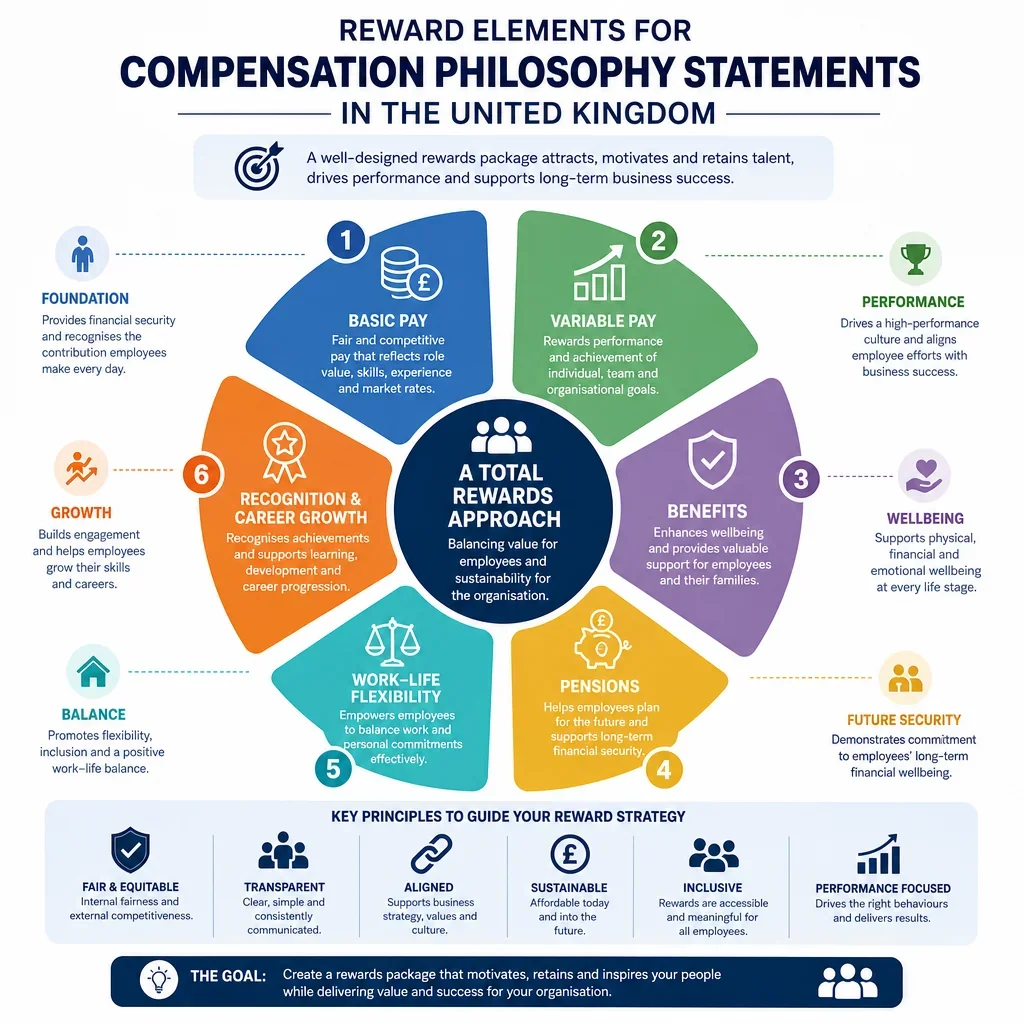
Support functions | Employees eligible for workplace pension contributions, with different contribution tiers or scheme rules possible. | Auto-enrolment, contribution levels, salary sacrifice, total reward communication, fairness, executive pension alignment. | Pension provision forms part of total reward and is operated in line with auto-enrolment duties and applicable scheme rules. | Medium |
Employees using salary sacrifice | ||||
Support functions | Employees exchanging salary for benefits, requiring tax, pension and minimum wage safeguards. | Tax efficiency, minimum wage floor, benefit choice, pension impact, communication, employee consent, HMRC compliance. | Salary sacrifice benefits are offered subject to employee choice, HMRC requirements and safeguards against reducing pay below legal minimums. | Medium |
How Should UK Employers Segment Employees In A Compensation Philosophy Statement?
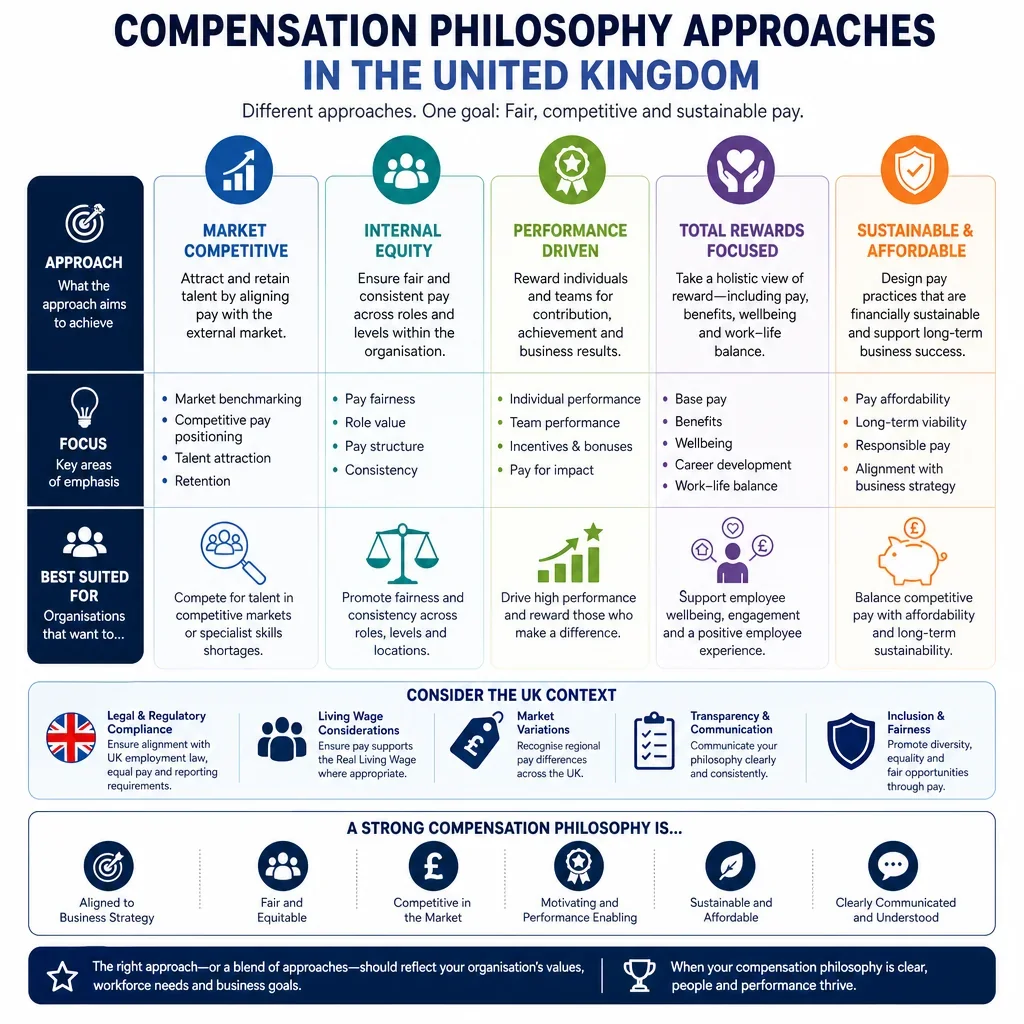
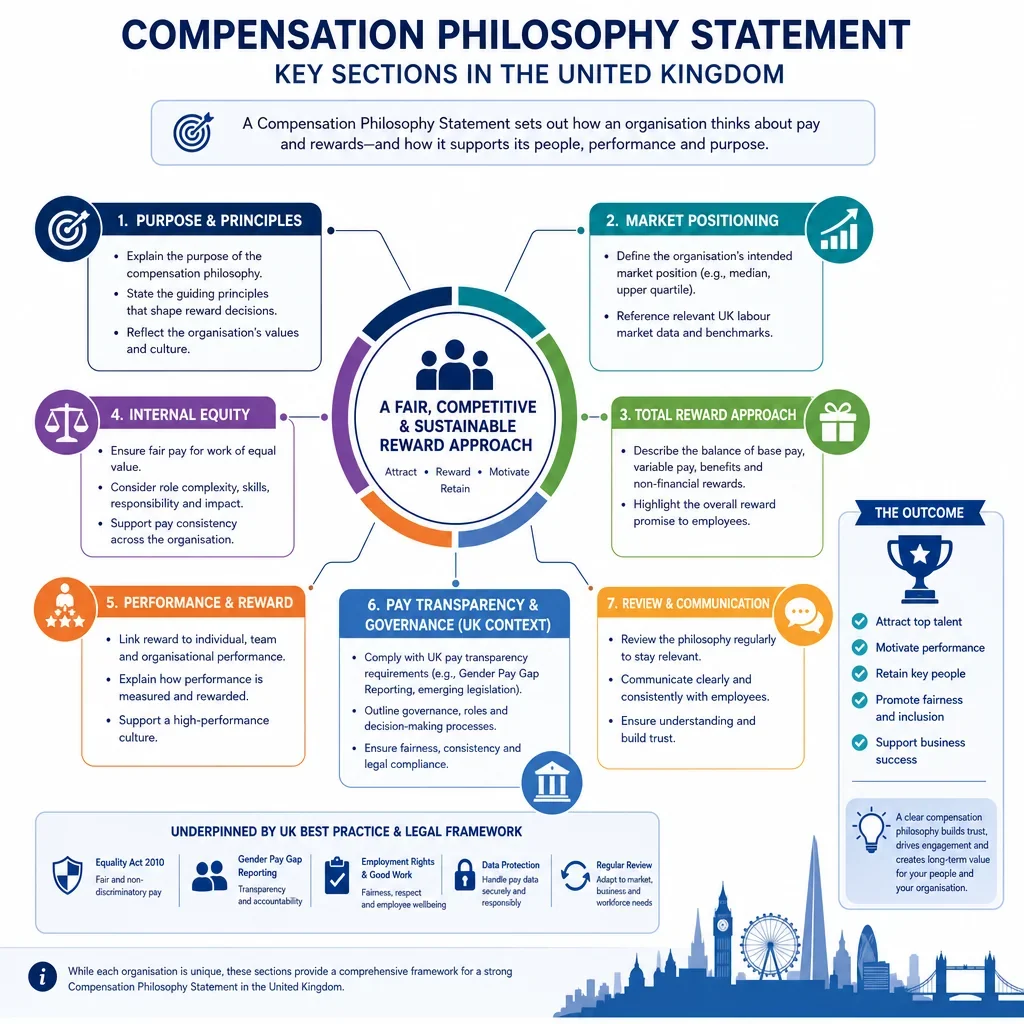
UK compensation philosophy statements are most useful when they distinguish between segments with materially different reward drivers: statutory accountability for directors, market scarcity for specialists, incentive design for sales, unsocial-hours premiums for operational staff, and progression pay for early-career roles.
Which Segments Need The Most Detail?
Executive directors, senior leaders, regulated roles, sales teams, scarce technical specialists, and hourly frontline employees usually need the highest level of detail because pay design, governance, incentives, market positioning, and legal or regulatory risk differ significantly from the wider workforce.
What UK Legal And Governance Issues Should Shape The Wording?
- National Minimum Wage and National Living Wage compliance is essential for hourly, apprentice, intern, and variable-hours segments, including treatment of deductions, unpaid working time, travel time, uniforms, and training time.
- Equal pay and discrimination risk should be addressed where segments overlap with gender, ethnicity, disability, age, or working pattern. A philosophy should explain objective job evaluation, market data, performance criteria, and consistent governance.
- Executive and director pay should refer to transparency, shareholder expectations, long-term value creation, and remuneration committee oversight where relevant, especially for quoted and listed companies.
- Financial services and regulated roles may require express reference to risk adjustment, malus, clawback, deferral, and conduct outcomes under the FCA and PRA remuneration rules.
- Part-time, fixed-term, agency, and flexible workers should be treated carefully so the philosophy supports pro-rated fairness and does not imply unjustified less favourable treatment.
How Detailed Should The Statement Be?
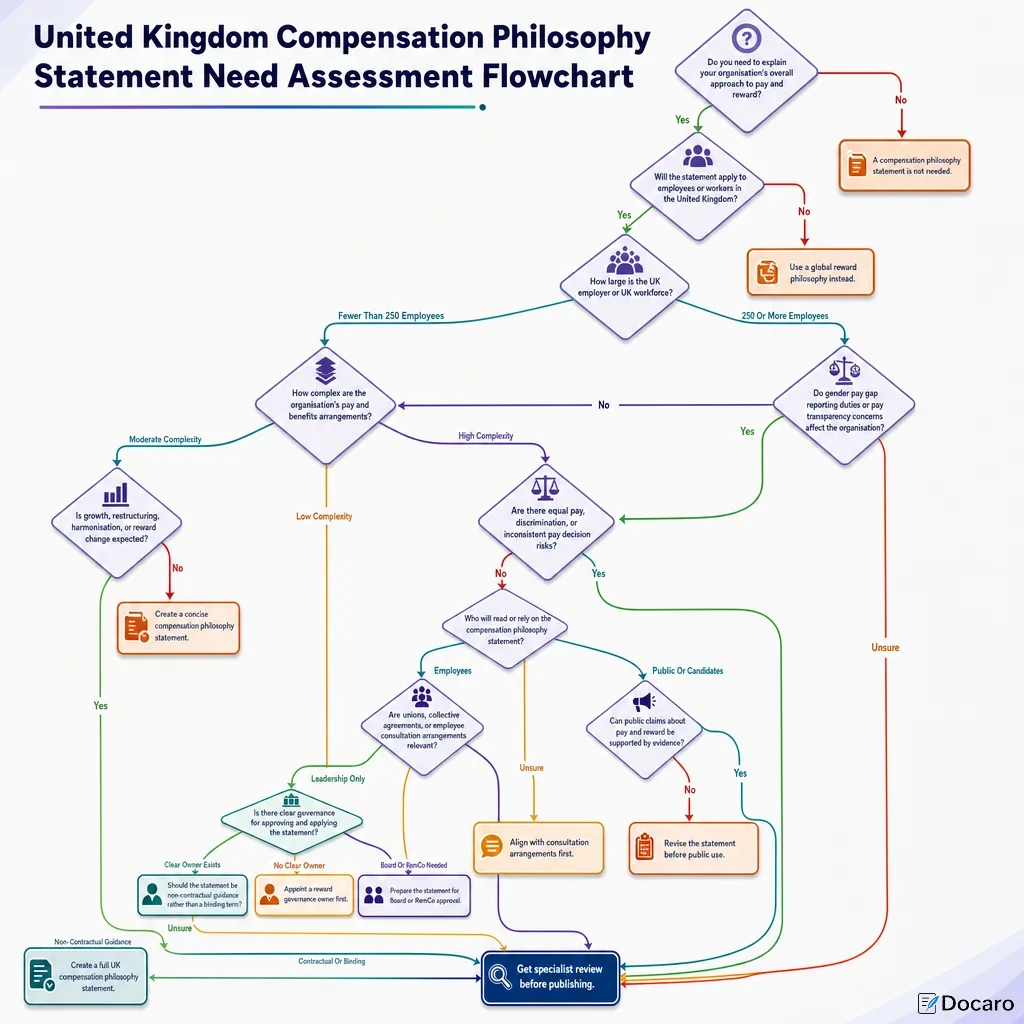
A practical approach is to keep broad workforce principles concise, then add targeted paragraphs for segments where pay policy is different: executives, sales, scarce skills, frontline hourly workers, apprentices, and regulated roles. This avoids an overly generic document while keeping the statement usable for employees, managers, investors, and HR teams.
FAQs
You Might Also Be Interested In