

Pay Positioning Options In The United Kingdom
Created:
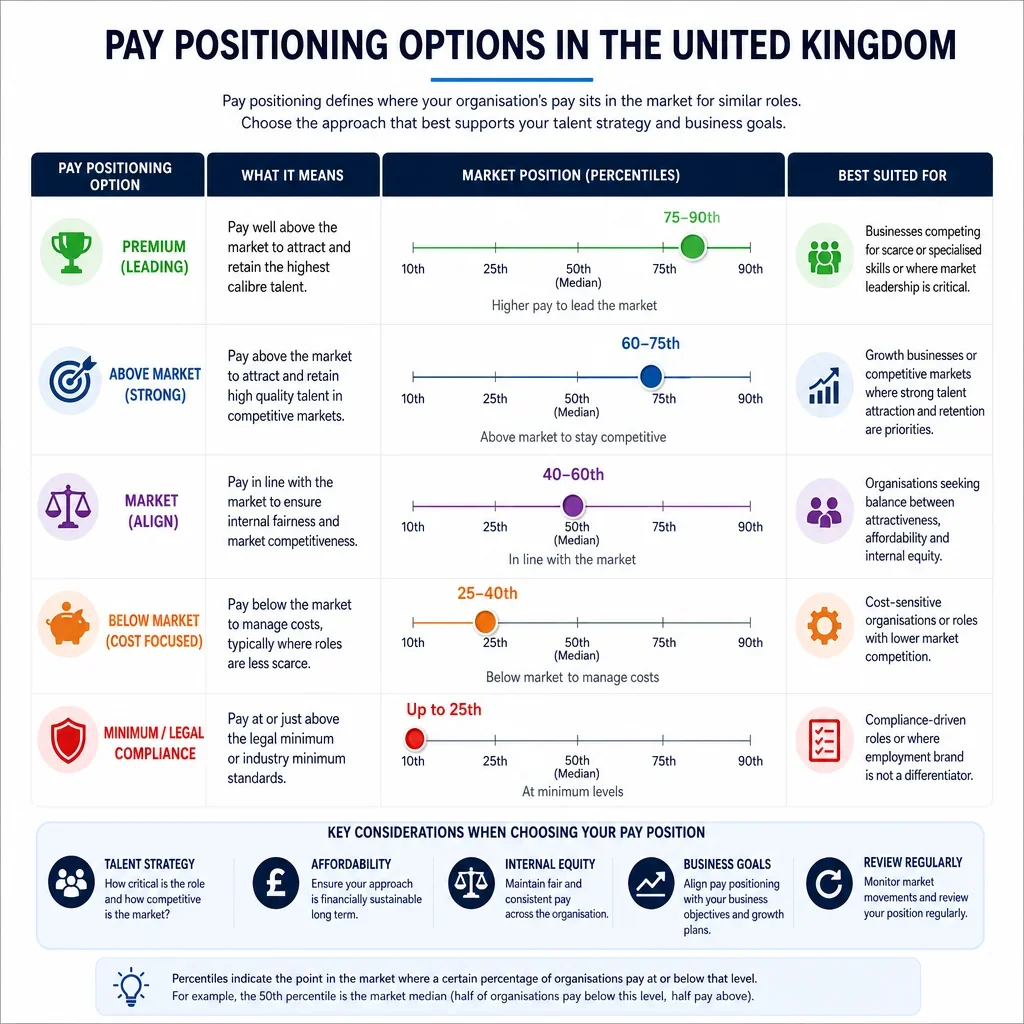
This structured dataset helps UK employers compare pay positioning options and choose a clear market stance. It supports better reward decisions alongside an AI Generated Compensation Philosophy Statement for use in the United Kingdom.
Positioning Category | Application Description | Example Statement Wording | Primary Objective | Considerations |
|---|---|---|---|---|
Lower Quartile Market Positioning | ||||
Below market median | Sets base pay around the lower quartile for comparable roles, usually with stronger non-pay benefits or development opportunities. | We position base pay around the lower quartile of the relevant market where roles offer strong development, flexibility and progression opportunities. | Cost control | May hinder attraction and increase turnover unless offset by career growth, culture or benefits must still meet UK minimum wage rules. |
Entry-Level Budget Positioning | ||||
Below market median | Uses below-median starting rates for trainees, apprentices or junior hires, with planned progression as capability develops. | For entry-level roles, we may position starting pay below the market median and provide structured progression linked to skills and contribution. | Cost control | Progression criteria should be clear apprentice and worker pay must comply with statutory minimum rates. |
Pay Restraint Positioning | ||||
Below market median | Maintains pay below median during financial pressure, with exceptions for retention-critical roles. | Where business conditions require restraint, we may position pay below market median while protecting critical roles and statutory compliance. | Cost control | Can damage morale and retention if prolonged should be time-limited and communicated transparently. |
Mission-Led Discount Positioning | ||||
Below market median | Applies modest below-market pay where employees value purpose, flexibility or public-benefit work. | We may pay modestly below the commercial market where our mission, flexibility and total employment offer remain competitive. | Cost control | Purpose alone may not sustain retention in scarce roles monitor market gaps and employee sentiment. |
Public Sector Comparable Positioning | ||||
Below market median | Benchmarks against public sector or not-for-profit comparators rather than higher private sector rates. | We benchmark pay primarily against relevant public sector and not-for-profit comparators, recognising our funding model and public purpose. | Internal fairness | May be uncompetitive for transferable professional skills also sought by commercial employers. |
Market Median Positioning | ||||
At market median | Targets the 50th percentile of relevant market data for comparable roles and locations. | We aim to position base pay at the market median for comparable roles in our relevant labour markets. | Internal fairness | Requires reliable benchmark data and defined peer groups median positioning may not secure scarce talent. |
Median Total Reward Positioning | ||||
At market median | Targets market median when salary, pension, bonus, benefits and flexibility are considered together. | We seek to provide a total reward package that is competitive at the market median, considering salary, benefits, pension and flexibility. | Talent retention | Employees may focus on cash pay total reward value should be communicated clearly. |
Median Base Salary With Variable Upside | ||||
At market median, Performance-adjusted positioning | Sets base salary near median while allowing bonuses or incentives to differentiate higher contribution. | Base pay is normally positioned around the market median, with variable pay providing upside for strong performance and business results. | Performance differentiation | Incentive design must be measurable, affordable and not encourage inappropriate risk-taking. |
Market-Aligned Salary Bands | ||||
At market median, Market range approach | Creates salary ranges with midpoints aligned to market median and controlled movement through the range. | Our salary ranges are designed with midpoints aligned to the market median and progression based on capability, performance and affordability. | Internal fairness | Range widths and progression rules must avoid unjustified pay gaps between comparable employees. |
Median Plus Strong Benefits Positioning | ||||
At market median | Keeps salary near median while offering above-market benefits, pension, leave or flexibility. | We generally position salary at the market median and differentiate our offer through high-quality benefits, pension and flexible working. | Talent retention | Benefits valued by one workforce segment may not attract another cash competitiveness still matters. |
Upper Quartile Market Positioning | ||||
Above market median | Targets around the 75th percentile for roles where the organisation wants a strong market premium. | For selected roles, we may position pay toward the upper quartile of the market to attract and retain high-calibre talent. | Talent attraction | Increases fixed cost and internal equity pressure should be limited to clear business needs. |
Market Leader Positioning | ||||
Above market median | Aims to pay ahead of most competitors for critical populations or employer brand differentiation. | Where talent is strategically critical, we may lead the market on pay to secure and retain exceptional capability. | Talent attraction | Expensive and may be difficult to reverse requires strong governance and affordability testing. |
Premium Scarcity Positioning | ||||
Above market median, Role-specific positioning | Pays above median for skills in short supply, such as cyber, data, engineering or specialist finance roles. | We may position pay above market median for scarce or business-critical skills where external demand materially exceeds supply. | Talent attraction | Scarcity premiums should be reviewed regularly and based on evidence, not informal negotiation alone. |
Critical Role Premium Positioning | ||||
Above market median, Role-specific positioning | Applies above-market positioning to roles with disproportionate operational, regulatory or commercial impact. | Roles identified as critical to our strategy, operational resilience or regulatory obligations may be positioned above the market median. | Talent retention | Criticality definitions should be documented to avoid perceived favouritism and equal pay concerns. |
Executive Premium Positioning | ||||
Above market median, Role-specific positioning | Positions senior executive remuneration above median where leadership scope, accountability or market competition justifies it. | Executive remuneration may be positioned above market median where necessary to attract and retain leaders with the required scale and complexity of experience. | Talent retention | Should align with remuneration policy, shareholder expectations, performance outcomes and UK Corporate Governance Code principles. |
Competitive Graduate Positioning | ||||
Above market median, Role-specific positioning | Pays above median for graduate schemes where brand, intake quality and early retention are priorities. | For graduate programmes, we may position starting pay above market median to attract high-potential early careers talent. | Talent attraction | Can create compression with existing junior employees unless progression and pay ranges are managed. |
Competitive Apprenticeship Positioning | ||||
Above market median, Role-specific positioning | Pays above apprentice minimum rates or local market norms to improve apprentice attraction and completion. | We aim to offer apprenticeship pay that is competitive in the local market and supports attraction, inclusion and completion. | Talent attraction | Must observe apprentice minimum wage rules and avoid inequity with other entry-level roles. |
Target Range Around Median | ||||
Market range approach | Defines competitiveness as a range, such as 90 percent to 110 percent of market median. | We aim to position pay within a competitive range around the market median, recognising role size, experience, performance and affordability. | Internal fairness | A range allows flexibility but needs governance to prevent unexplained drift toward the top. |
Broad Market Range Positioning | ||||
Market range approach | Uses wider salary bands to accommodate varied experience, skills and performance within a role level. | Our pay ranges are broad enough to recognise different levels of capability, contribution and market value within each grade. | Talent retention | Wide ranges require clear progression rules to avoid opaque and potentially unequal outcomes. |
Narrow Controlled Range Positioning | ||||
Market range approach | Uses tight salary ranges to limit pay variation among similar roles and levels. | We use controlled pay ranges to support consistency and fairness for employees performing comparable work. | Internal fairness | May reduce flexibility for exceptional hires or scarce skills and can increase off-cycle exception requests. |
Grade Midpoint Progression Positioning | ||||
Market range approach, Performance-adjusted positioning | Places developing employees below midpoint and experienced strong performers at or above midpoint. | Position within range reflects role mastery, performance, experience and sustained contribution relative to the grade midpoint. | Performance differentiation | Requires calibration to avoid bias in performance or capability assessments. |
Pay Range Quartile Progression | ||||
Market range approach | Uses lower, middle and upper range zones to guide pay based on development, competence and contribution. | Employees progress through the pay range as they build capability, demonstrate sustained contribution and remain aligned with market conditions. | Internal fairness | Managers need guidance on zone placement to prevent inconsistent decisions. |
Pay Corridor Positioning | ||||
Market range approach | Sets a preferred corridor within the full salary range to guide hiring and annual pay decisions. | Hiring and pay progression will normally fall within the approved pay corridor unless an exception is justified by market evidence or business need. | Cost control | Exception processes must be documented and monitored for consistency and diversity impact. |
Job Family Differential Positioning | ||||
Role-specific positioning | Applies different market positions for job families such as technology, sales, operations or corporate functions. | Pay positioning may vary by job family to reflect distinct labour markets, skill scarcity and business impact. | Talent attraction | Differences must be objectively justified and explained to manage internal fairness and equal pay risk. |
Technical Specialist Premium | ||||
Above market median, Role-specific positioning | Positions expert individual contributors above standard grade rates where expertise is rare and commercially important. | Technical specialists with scarce expertise may be positioned above standard grade benchmarks where their skills are critical to delivery. | Talent retention | Needs a clear specialist career framework to avoid forcing experts into management for pay progression. |
Sales Incentive-Led Positioning | ||||
Role-specific positioning, Performance-adjusted positioning | Keeps base pay moderate while total target earnings are competitive through commission or sales incentives. | Sales roles are positioned using total target earnings, with variable pay designed to reward measurable sales performance. | Performance differentiation | Plans should be transparent, achievable and compliant with wage rules where variable pay fluctuates. |
Regulated Role Premium Positioning | ||||
Above market median, Role-specific positioning | Pays a premium for roles carrying regulated accountability, professional approvals or material compliance risk. | Roles with significant regulatory accountability may be positioned above median to reflect required expertise, judgement and personal accountability. | Talent retention | Premiums should reflect actual accountability and may require alignment with sector remuneration rules. |
Location-Based Market Positioning | ||||
Role-specific positioning, Market range approach | Adjusts pay positioning by labour market location, such as London, regional UK or remote-working markets. | Pay positioning may reflect the relevant work location and labour market, including regional differences in market pay. | Talent attraction | Remote and hybrid policies should clarify which location market applies and when pay may change. |
London Weighting Positioning | ||||
Role-specific positioning, Market range approach | Adds a London allowance or higher range for roles based in or requiring regular work in London. | London-based roles may receive a location premium to reflect local labour market conditions and cost pressures. | Talent retention | Define eligibility, hybrid attendance expectations and whether the premium is pensionable or temporary. |
Remote-First National Positioning | ||||
Market range approach | Uses a national UK benchmark rather than local rates for remote roles recruitable across the country. | For remote-first roles, we generally use national UK market benchmarks rather than a single office-location rate. | Internal fairness | Can overpay low-cost locations or underpay London-based talent policy should state how location moves are handled. |
Regional Cost-Sensitive Positioning | ||||
Below market median, Role-specific positioning | Positions pay by lower-cost regional markets where local recruitment remains viable. | Regional pay positioning reflects relevant local labour markets while maintaining fairness for comparable work. | Cost control | Must avoid unjustified disparities where employees perform equal work across locations. |
Retention Risk Premium | ||||
Above market median, Role-specific positioning | Temporarily positions pay above target for employees or roles with high replacement risk. | Where retention risk is material, we may apply a time-bound market premium supported by evidence and review. | Talent retention | Should not reward threats to resign disproportionately use objective criteria and expiry dates. |
Counter-Offer Exception Positioning | ||||
Above market median, Role-specific positioning | Allows above-range or above-median pay to retain key employees facing external offers. | Counter-offers may be considered only where retention is critical, market evidence supports the adjustment and internal equity is reviewed. | Talent retention | Can create inequity and encourage opportunistic negotiation monitor protected characteristic impact. |
Acquisition Premium Positioning | ||||
Above market median, Role-specific positioning | Pays a hiring premium for candidates needed urgently or in competitive recruitment campaigns. | Hiring premiums may be used where market competition or urgency requires pay above our normal target position. | Talent attraction | Can create compression with existing employees review internal relativities before approval. |
High Performer Range Acceleration | ||||
Performance-adjusted positioning, Market range approach | Moves sustained high performers faster through the salary range or above midpoint. | Sustained high performance may result in faster salary progression within the range, subject to market position and affordability. | Performance differentiation | Performance ratings must be calibrated and evidence-based to reduce bias and discrimination risk. |
Performance-Led Premium Positioning | ||||
Above market median, Performance-adjusted positioning | Positions exceptional contributors above median where sustained outcomes exceed role expectations. | Employees with sustained exceptional contribution may be positioned above market median where outcomes and behaviours support premium pay. | Performance differentiation | Avoid permanent premiums for short-term performance spikes review continued justification annually. |
Skills-Based Pay Positioning | ||||
Role-specific positioning, Performance-adjusted positioning | Adjusts pay based on validated skills, certifications or capabilities valuable to the business. | Pay positioning may recognise certified skills and capabilities that materially increase contribution or market value. | Talent retention | Skill criteria should be objective, role-relevant and accessible to avoid indirect discrimination. |
Competency Progression Positioning | ||||
Performance-adjusted positioning, Market range approach | Links movement within range to demonstrated competence against defined role standards. | Employees progress within the pay range as they demonstrate the competencies required for effective performance at their level. | Internal fairness | Competency frameworks need consistent assessment and manager training. |
Contribution-Based Positioning | ||||
Performance-adjusted positioning | Uses overall contribution, including delivery, behaviours and impact, to determine position relative to market. | Pay positioning reflects sustained contribution, including delivery, behaviours, capability and impact against business priorities. | Performance differentiation | Subjective contribution assessments can embed bias unless calibrated and documented. |
Team-Based Performance Positioning | ||||
Performance-adjusted positioning | Links positioning or variable pay to team outcomes rather than only individual performance. | In selected areas, pay outcomes may reflect team performance where collaboration is central to value creation. | Performance differentiation | High individual contributors may feel under-recognised team metrics must be within employees' influence. |
Bonus-Weighted Positioning | ||||
Performance-adjusted positioning | Uses market median base pay but higher variable pay opportunity for performance and business results. | We may place greater emphasis on variable pay where performance outcomes can be clearly measured and rewarded. | Performance differentiation | Variable pay should not undermine predictable income for roles where employees expect stable earnings. |
Commission-Heavy Positioning | ||||
Below market median, Performance-adjusted positioning | Sets lower fixed pay with significant commission potential for revenue-generating roles. | For commission-based roles, fixed pay may be below market median while total earnings opportunity rewards successful revenue generation. | Performance differentiation | Workers must receive at least National Minimum Wage for working time, regardless of commission timing. |
Bonus Cap Conservative Positioning | ||||
At market median, Performance-adjusted positioning | Keeps fixed pay competitive while limiting variable pay volatility through capped bonuses. | We maintain competitive fixed pay and use capped variable pay to reward performance within prudent affordability limits. | Cost control | Caps may reduce motivation for exceptional overperformance in sales or growth roles. |
All-Employee Fairness Positioning | ||||
At market median, Market range approach | Prioritises consistent pay positioning across the workforce to support fairness and trust. | We seek consistent and fair pay positioning for comparable roles, supported by transparent ranges and objective criteria. | Internal fairness | May limit targeted premiums needed for scarce or highly competitive roles. |
Equal Pay Risk-Managed Positioning | ||||
Market range approach, Role-specific positioning | Allows market differences only where supported by objective, documented and reviewable reasons. | Any differences in pay positioning for comparable work must be objectively justified, documented and periodically reviewed. | Internal fairness | Requires disciplined records, job evaluation and review of equal work comparators. |
Gender Pay Gap-Conscious Positioning | ||||
Market range approach, Performance-adjusted positioning | Reviews pay positioning decisions for their effect on gender pay distribution and representation by level. | We monitor pay positioning decisions to support fair outcomes and understand their impact on our gender pay gap. | Internal fairness | Premiums for senior or scarce roles can widen reported gaps if representation is imbalanced. |
Living Wage Aligned Positioning | ||||
Above market median, Market range approach | Sets minimum organisational pay at or above the voluntary Real Living Wage, even where market rates are lower. | We aim to maintain a minimum pay standard at or above the voluntary Real Living Wage where affordable and operationally sustainable. | Talent retention | The Real Living Wage is voluntary and separate from statutory National Minimum Wage and National Living Wage rates. |
Statutory Floor Plus Market Positioning | ||||
Below market median, Market range approach | Uses statutory minimum rates as a floor, with market supplements only where needed for recruitment or retention. | We comply with statutory wage floors and apply market adjustments where required to remain competitive for specific roles. | Cost control | Must assess deductions, unpaid time and salaried-hours rules to ensure actual compliance. |
Union-Negotiated Positioning | ||||
At market median, Market range approach | Sets pay ranges or increases through collective bargaining, often balancing market data with affordability. | For collectively bargained groups, pay positioning will reflect agreed bargaining arrangements, market context and organisational affordability. | Internal fairness | Agreed terms may constrain individual differentiation and require consultation or negotiation before changes. |
Collective Agreement Premium Positioning | ||||
Above market median, Market range approach | Maintains above-market rates because they are embedded in collective agreements or historic negotiated structures. | Where collective agreements establish rates above the market median, we will honour agreed terms while reviewing sustainability over time. | Talent retention | Changes may require negotiation and can raise affordability issues if market rates move differently. |
TUPE Protected Positioning | ||||
Role-specific positioning, Market range approach | Preserves transferred employees' existing pay terms even where they differ from the organisation's market position. | Where employees transfer to us, protected terms may result in pay positioning outside our normal ranges, subject to applicable transfer rules. | Internal fairness | Legacy differences can create equal pay and employee relations issues harmonisation is legally sensitive. |
Legacy Red-Circle Positioning | ||||
Above market median, Market range approach | Protects employees whose pay is above the current range after restructuring, job evaluation or market change. | Employees paid above the current range may be red-circled, with future increases managed until alignment improves. | Cost control | Protection periods and future increase rules should be clear to avoid indefinite inequity. |
Green-Circle Catch-Up Positioning | ||||
Below market median, Market range approach | Identifies employees below the range minimum and prioritises phased increases to bring them into range. | Employees below the approved pay range will be prioritised for catch-up adjustments, subject to performance, affordability and timing. | Internal fairness | Delaying catch-up can increase retention and equal pay risk if under-positioning lacks objective reasons. |
New Hire Control Point Positioning | ||||
Market range approach | Sets typical hiring pay between range minimum and midpoint, with exceptions for scarce skills. | New hire salaries normally fall between the range minimum and midpoint unless market evidence supports an approved exception. | Cost control | Controls salary inflation but may lose candidates if approval processes are slow or inflexible. |
Internal Promotion Positioning | ||||
Market range approach, Performance-adjusted positioning | Places promoted employees in the new range based on readiness, experience and internal equity. | Promotion pay reflects the new role range, the employee's readiness, sustained performance and internal relativities. | Internal fairness | Small promotion increases can create unfairness against external hires compare internal and external entry rates. |
Accelerated Promotion Premium | ||||
Performance-adjusted positioning, Above market median | Uses larger increases for high-potential employees promoted into roles with immediate strategic impact. | Accelerated promotion increases may be used for high-potential employees taking on materially larger strategic responsibilities. | Talent retention | High-potential criteria should be transparent enough to manage bias and employee relations risk. |
Career Framework Positioning | ||||
Market range approach, Role-specific positioning | Aligns pay to defined career levels across professional, technical and leadership pathways. | Pay positioning is aligned to our career framework, recognising role level, scope, capability and market value. | Internal fairness | Level definitions must be maintained and consistently applied across job families. |
Job Evaluation-Led Positioning | ||||
Market range approach | Uses job evaluation to determine internal grade, then benchmarks pay for that grade externally. | We use job evaluation to support consistent grading and then benchmark roles against relevant external markets. | Internal fairness | Job evaluation supports fairness but depends on accurate role information and regular maintenance. |
Dual Ladder Specialist Positioning | ||||
Role-specific positioning, Market range approach | Provides comparable senior pay opportunities for expert specialists and people managers. | Our pay structure supports both specialist and management career paths, with positioning based on role impact and market value. | Talent retention | Requires robust role levelling so specialist premiums reflect genuine expertise and impact. |
Project-Critical Premium | ||||
Above market median, Role-specific positioning | Applies temporary higher pay or allowance for roles essential to a major project or transformation. | Temporary premiums may be used for project-critical roles where delivery risk and market demand justify additional reward. | Talent retention | Set end dates and review triggers to prevent temporary premiums becoming unmanaged permanent pay. |
Market Supplement Positioning | ||||
Above market median, Role-specific positioning | Adds a separate supplement to standard salary where market rates exceed internal grade rates. | Market supplements may be applied where benchmark evidence shows that standard salary ranges are insufficient for attraction or retention. | Talent attraction | Clarify review frequency, pensionability, contractual status and removal conditions. |
Temporary Allowance Positioning | ||||
Role-specific positioning, Market range approach | Uses temporary allowances rather than base salary increases for interim duties or short-term market issues. | Temporary allowances may be used where additional duties or market pressures are time-limited and do not justify a permanent salary change. | Cost control | Terms should state duration, review points, eligibility and whether the allowance affects pension or bonus. |
Acting-Up Pay Positioning | ||||
Role-specific positioning, Market range approach | Provides temporary pay above normal position while an employee performs a higher-level role. | Employees temporarily acting in a higher-level role may receive acting-up pay aligned to the duties, duration and relevant pay range. | Internal fairness | Apply consistently and define when acting-up duties become a substantive role change. |
Shift Premium Positioning | ||||
Role-specific positioning | Adds premiums for nights, weekends, unsocial hours or rotating shifts where required for operations. | Roles requiring unsocial hours or shift patterns may receive premiums that reflect operational requirements and relevant labour market practice. | Talent retention | Ensure average pay remains compliant with wage rules and Working Time obligations are managed. |
Overtime Premium Positioning | ||||
Role-specific positioning, Performance-adjusted positioning | Uses overtime rates to reward additional hours rather than increasing base pay for all hours. | Overtime premiums may be used where additional hours are required and approved, subject to working time and affordability controls. | Cost control | Overtime arrangements must respect Working Time limits and minimum wage calculations. |
On-Call Allowance Positioning | ||||
Role-specific positioning | Adds allowances for employees required to be available outside normal working hours. | On-call allowances may apply where roles require availability outside normal hours to support operational continuity. | Talent retention | Working time and minimum wage treatment of standby and call-out time should be assessed. |
Unsocial Hours Market Positioning | ||||
Above market median, Role-specific positioning | Positions total cash above median for roles requiring regular nights, weekends or difficult patterns. | Roles with sustained unsocial hours requirements may be positioned above standard market benchmarks to support staffing and retention. | Talent retention | Premium design should not encourage excessive hours or fatigue risk. |
Inflation-Sensitive Positioning | ||||
Market range approach | Considers inflation measures alongside market pay movement when setting annual pay budgets. | Annual pay positioning decisions may consider market pay movement, inflation, affordability and business performance. | Talent retention | Inflation is not the same as labour market price affordability and competitiveness may diverge. |
Affordability-Capped Median Positioning | ||||
At market median, Market range approach | Targets median over time but limits annual movement to what the organisation can sustainably fund. | We aim for market median competitiveness over time, subject to affordability, business performance and prioritisation of critical gaps. | Cost control | Persistent underfunding can create green-circle populations and retention pressure. |
Phased Market Catch-Up Positioning | ||||
Below market median, Market range approach | Plans staged increases for roles materially below target market position. | Where roles are materially below target market position, we may prioritise phased catch-up adjustments over an agreed period. | Talent retention | Prioritisation criteria should address legal risk, turnover risk and business criticality. |
Annual Market Review Positioning | ||||
Market range approach | Reassesses pay ranges and market position each year using updated benchmark data. | We review market positioning annually using relevant benchmark data, internal equity analysis and affordability considerations. | Talent retention | Survey data lag and sample quality can distort decisions use multiple indicators where possible. |
Real-Time Hot Market Positioning | ||||
Above market median, Role-specific positioning | Uses current recruitment data and offer outcomes to adjust pay for fast-moving talent markets. | For fast-moving talent markets, we may supplement survey data with current recruitment evidence and approved market adjustments. | Talent attraction | Short-term spikes can lead to overcorrection document evidence and review after the market stabilises. |
Peer Group Premium Positioning | ||||
Above market median | Benchmarks against a selected premium peer group rather than the broad market. | For key roles, we benchmark against a defined peer group that reflects our sector, scale, complexity and talent competitors. | Talent attraction | Peer group selection can inflate pay if aspirational rather than evidence-based. |
Broad Market Comparator Positioning | ||||
At market median | Benchmarks against a broad cross-sector market for roles with transferable skills. | For roles with transferable skills, we benchmark against the broad UK labour market as well as sector-specific comparators where relevant. | Talent attraction | Broad data may miss sector premiums or specialist skill differences. |
Sector-Specific Positioning | ||||
Role-specific positioning | Uses pay data from the same sector where sector regulation, funding or competition shapes pay levels. | We benchmark selected roles against sector-specific markets where sector conditions materially influence pay competitiveness. | Talent retention | Sector-only benchmarking may understate pay for skills recruited from wider markets. |
Global Talent Market Positioning | ||||
Above market median, Role-specific positioning | Benchmarks UK-based roles against international talent markets where skills are globally mobile. | For globally mobile specialist or leadership talent, we may consider international market benchmarks alongside UK pay data. | Talent attraction | Currency, tax, benefits and employment market differences can make direct comparisons unreliable. |
Expatriate Premium Positioning | ||||
Above market median, Role-specific positioning | Provides assignment allowances or premiums for international mobility, hardship or relocation requirements. | International assignment pay may include premiums or allowances reflecting mobility, location, tax and assignment conditions. | Talent attraction | Complex tax, immigration and equalisation issues require specialist review. |
Skills Shortage Occupation Positioning | ||||
Above market median, Role-specific positioning | Pays above median for roles affected by recognised shortages, visa salary thresholds or intense competition. | Roles affected by recognised skills shortages or visa salary thresholds may require above-median pay positioning. | Talent attraction | Immigration salary thresholds and market salary data should both be checked before setting offers. |
Visa-Threshold Compliant Positioning | ||||
Role-specific positioning, Market range approach | Sets pay for sponsored roles to meet both market competitiveness and applicable Skilled Worker salary requirements. | For sponsored roles, pay must meet applicable immigration salary requirements as well as our market positioning principles. | Talent attraction | Eligibility rules and salary thresholds change verify before each sponsored appointment. |
Pay Transparency Positioning | ||||
Market range approach | Publishes salary ranges or explains market positioning to improve trust and candidate clarity. | We communicate pay ranges where appropriate and explain how market position, role scope and contribution influence pay decisions. | Internal fairness | Requires accurate ranges and manager capability disclosed ranges can expose legacy inconsistencies. |
Salary Band Disclosure Positioning | ||||
Market range approach | Shares role salary bands in recruitment or internally while retaining discretion on placement within range. | Published salary bands show the expected pay range for a role, with individual placement based on skills, experience and internal equity. | Talent attraction | Wide advertised ranges can reduce trust if the realistic hiring point is much lower. |
Internal Equity Override Positioning | ||||
Market range approach, Role-specific positioning | Limits market-led offers or increases where they would create unjustified internal inequity. | Market adjustments may be moderated where necessary to maintain fair internal relativities for comparable roles. | Internal fairness | May lose candidates unless internal catch-up budgets or alternative rewards are available. |
Diversity Impact Checked Positioning | ||||
Performance-adjusted positioning, Market range approach | Reviews pay placement, exceptions and performance adjustments for adverse impact on protected groups. | We review pay positioning decisions for fairness and potential adverse impact across protected characteristics. | Internal fairness | Requires quality employee data, consistent analysis and documented follow-up actions. |
Risk-Adjusted Remuneration Positioning | ||||
Performance-adjusted positioning, Role-specific positioning | Aligns pay and incentives with risk management, compliance and long-term outcomes in regulated sectors. | For regulated roles, remuneration positioning considers performance, conduct, risk management and long-term sustainability. | Performance differentiation | Financial services firms may need malus, clawback and regulatory alignment for variable pay. |
Conduct-Adjusted Positioning | ||||
Performance-adjusted positioning | Reduces or limits pay outcomes where conduct, compliance or values expectations are not met. | Pay outcomes may be adjusted where conduct, compliance or values expectations are not met, even if financial results are strong. | Performance differentiation | Conduct criteria should be defined in advance and applied consistently. |
ESG-Linked Positioning | ||||
Performance-adjusted positioning | Includes environmental, social or governance outcomes in variable pay or executive reward positioning. | Variable pay may reflect delivery against ESG priorities where those measures are material, measurable and aligned with strategy. | Performance differentiation | Measures must be credible and auditable to avoid weak linkage between pay and stated outcomes. |
Long-Term Incentive-Led Senior Positioning | ||||
Performance-adjusted positioning, Role-specific positioning | Keeps fixed pay controlled while using long-term incentives for senior leaders and key executives. | Senior reward may place greater emphasis on long-term incentives to align leadership outcomes with sustainable organisational performance. | Performance differentiation | Listed company design should consider shareholder alignment, vesting periods and remuneration reporting expectations. |
Founder-Stage Equity Offset Positioning | ||||
Below market median, Performance-adjusted positioning | Uses below-market salary with equity or share options for start-up or scale-up employees. | In early-stage roles, base pay may be below market median where meaningful equity participation forms part of total reward. | Cost control | Employees should understand equity risk, vesting, tax treatment and lack of guaranteed value. |
EMI Option Offset Positioning | ||||
Below market median, Performance-adjusted positioning | Combines moderated salary with Enterprise Management Incentive options where eligibility and growth potential support it. | Where appropriate, EMI options may form part of total reward and support a lower fixed-pay position during growth phases. | Talent retention | EMI eligibility, valuation and tax rules should be checked option value is not guaranteed. |
Profit-Sharing Positioning | ||||
Performance-adjusted positioning | Positions fixed pay around median or below, with profit-sharing distributing business success. | We may use profit-sharing to supplement fixed pay and allow employees to participate in organisational success. | Performance differentiation | Profit volatility can affect perceived competitiveness eligibility and formula should be clear. |
Gainsharing Positioning | ||||
Performance-adjusted positioning | Rewards employees for measurable productivity, quality or efficiency improvements. | Gainsharing may be used where employees can directly influence measurable improvements in productivity, quality or efficiency. | Performance differentiation | Metrics must be understandable, controllable and not achieved by undermining safety or quality. |
Retention Bonus Positioning | ||||
Above market median, Role-specific positioning | Uses one-off or staged bonuses to retain key employees through critical periods without raising base pay. | Retention bonuses may be used selectively for critical roles during periods of heightened business continuity risk. | Talent retention | May delay rather than solve turnover risk repayment and tax treatment should be specified. |
Sign-On Bonus Offset Positioning | ||||
At market median, Role-specific positioning | Maintains salary within range while using a one-off joining bonus to secure a candidate. | Where appropriate, sign-on bonuses may be used to secure candidates while maintaining salary alignment with internal ranges. | Talent attraction | Avoid using sign-on payments to mask uncompetitive salary ranges repayment clauses should be reasonable. |
Retention Through Benefits Positioning | ||||
At market median, Below market median | Uses enhanced pension, healthcare, leave or flexibility to offset moderate cash positioning. | Our cash pay may be complemented by enhanced benefits and flexibility designed to support long-term retention. | Talent retention | Total reward comparisons should include employer pension contributions and benefit take-up. |
Pension-Enhanced Positioning | ||||
At market median, Below market median | Offsets modest salary positioning with above-statutory employer pension contributions. | We consider employer pension contributions as part of total reward when assessing market competitiveness. | Talent retention | Pension value may be less visible than salary auto-enrolment duties still apply. |
Flexible-Working Value Positioning | ||||
Below market median, At market median | Uses flexibility, hybrid working or compressed hours as part of the employment value proposition alongside pay. | Our market position considers the overall employment offer, including flexibility, wellbeing and work-life balance. | Talent retention | Flexible working is valuable but cannot justify unlawful pay differences for equal work. |
Low-Base High-Benefits Positioning | ||||
Below market median | Sets base pay below median while offering unusually strong benefits, leave or wellbeing support. | We may position base pay below median where the total reward package provides strong overall value through benefits and flexibility. | Cost control | Cash shortfalls are most acute for lower-paid employees minimum wage and affordability of living costs matter. |
Candidate Experience Premium | ||||
Above market median, Role-specific positioning | Offers premium pay for roles where fast hiring and offer acceptance are strategically important. | For priority hiring campaigns, we may use premium positioning to improve offer acceptance and reduce time to hire. | Talent attraction | Premiums should not bypass internal equity review or create unjustified gaps with existing employees. |
Pay Compression Management Positioning | ||||
Market range approach | Uses adjustments to preserve sensible pay differences between new hires, experienced staff and managers. | We review pay compression to maintain fair differentiation by role scope, capability, experience and contribution. | Internal fairness | Compression fixes can be costly and may require phased internal adjustments. |
Manager Differential Positioning | ||||
Role-specific positioning, Market range approach | Maintains a defined pay differential between managers and direct reports where accountability justifies it. | Manager pay positioning reflects leadership accountability, role scope and appropriate differentiation from direct reports. | Internal fairness | Specialists may legitimately out-earn managers where market value or expertise is higher. |
Flat Hierarchy Positioning | ||||
Market range approach | Limits pay gaps between levels to support egalitarian culture and collaboration. | We maintain relatively controlled pay differentials between levels to support collaboration, fairness and shared accountability. | Internal fairness | May be less competitive for senior leadership or high-demand specialist roles. |
Seniority-Based Positioning | ||||
Market range approach | Places employees higher in range based on length of service or accumulated experience. | Length of service and accumulated experience may inform pay positioning where they remain relevant to capability and contribution. | Talent retention | Length-of-service criteria can raise age discrimination concerns unless objectively justified. |
Experience-Based Entry Positioning | ||||
Market range approach | Sets starting pay by directly relevant experience, capability and expected time to full productivity. | Starting pay reflects relevant experience, skills, expected contribution and internal equity within the approved range. | Talent attraction | Avoid relying on previous salary alone, as it can perpetuate historic pay inequality. |
No-Negotiation Offer Positioning | ||||
Market range approach | Uses fixed or tightly controlled offer points to reduce negotiation-driven inequity. | We use structured offer ranges and limit negotiation to support fair and consistent starting pay decisions. | Internal fairness | May reduce flexibility for scarce candidates explain the fairness rationale clearly. |
Negotiation-Adjusted Positioning | ||||
Market range approach, Role-specific positioning | Allows negotiated placement within range, subject to approval and internal equity checks. | Individual pay may be negotiated within approved ranges, subject to market evidence, skills assessment and internal equity review. | Talent attraction | Negotiation can widen demographic pay gaps approvals should be monitored for equality impact. |
Pay Freeze Positioning | ||||
Below market median | Holds salaries flat, accepting declining market position during a defined financial or restructuring period. | A pay freeze may be applied in exceptional circumstances, with statutory compliance and critical retention risks reviewed. | Cost control | Can quickly move employees below market and may require later catch-up investment. |
Selective Pay Review Positioning | ||||
Market range approach, Role-specific positioning | Targets limited pay budget to roles or employees with the largest market, retention or equity gaps. | Where budgets are limited, pay adjustments may be targeted to priority market gaps, retention risks and fairness issues. | Talent retention | Employees excluded from increases may perceive unfairness criteria should be objective and communicated. |
Across-The-Board Median Maintenance | ||||
At market median | Applies broad increases to maintain overall median competitiveness across the workforce. | General pay increases may be used to maintain overall market median competitiveness across eligible employee groups. | Talent retention | Broad increases may underfund the largest market gaps and overfund less pressured roles. |
Merit Matrix Positioning | ||||
Performance-adjusted positioning, Market range approach | Uses performance rating and current range position to guide salary increase percentages. | Salary increases may reflect both performance and current position in range, using a structured merit framework. | Performance differentiation | Matrices need enough budget to create meaningful differentiation and avoid mechanical outcomes. |
Compa-Ratio Target Positioning | ||||
Market range approach | Uses salary divided by range midpoint to manage position relative to the target market rate. | We use range position and compa-ratio analysis to guide pay decisions against our target market midpoint. | Cost control | Compa-ratio is only as reliable as the underlying range midpoint and job match. |
Range Penetration Positioning | ||||
Market range approach | Uses percentage progression through the salary range to manage pay placement and increases. | Pay decisions consider range penetration, ensuring progression reflects capability, contribution and market alignment. | Internal fairness | Employees near range maximum may need non-salary recognition or lump-sum awards. |
Lump-Sum Maximum Range Positioning | ||||
Market range approach, Performance-adjusted positioning | Gives lump-sum awards instead of salary increases to employees at or above range maximum. | Employees at or above range maximum may receive non-consolidated awards rather than further base salary increases. | Cost control | Non-consolidated awards may be less valued and should be clearly distinguished from salary. |
Broadbanding Positioning | ||||
Market range approach | Combines multiple grades into broad bands to provide flexibility in pay and career movement. | Broadbands provide flexibility to recognise varied roles, skills and contribution within wider career levels. | Talent retention | Can reduce transparency and make equal pay comparisons harder without strong job levelling. |
Spot Rate Positioning | ||||
At market median | Uses a fixed rate for a role or level rather than a salary range. | Some roles may use spot rates where consistency, simplicity and equal treatment are more important than range progression. | Internal fairness | Limits recognition of experience or performance unless supplements or bonuses are available. |
Rate-For-The-Job Positioning | ||||
At market median | Pays all competent employees in the same role the same standard rate. | For selected operational roles, we use a rate-for-the-job approach to support consistency and transparency. | Internal fairness | May require separate mechanisms for performance, scarcity or location differences. |
Step Progression Positioning | ||||
Market range approach | Uses defined pay steps, often linked to time, competence or qualifications. | Progression through pay steps reflects defined service, competence or qualification milestones, subject to eligibility rules. | Internal fairness | Automatic time-based progression can weaken performance differentiation and raise age-related concerns. |
Capability Gate Positioning | ||||
Performance-adjusted positioning, Market range approach | Requires employees to meet capability gates before moving to higher pay zones. | Movement to higher pay zones requires evidence that defined capability and contribution gates have been met. | Performance differentiation | Assessment evidence and appeal routes help reduce inconsistency and perceived unfairness. |
Market Pricing Only Positioning | ||||
Role-specific positioning | Sets pay primarily from external market value with limited internal grade influence. | For selected roles, pay may be primarily determined by external market value rather than standard internal relativities. | Talent attraction | Can undermine internal equity and equal pay governance if similar work is priced differently. |
Hybrid Job Evaluation And Market Pricing | ||||
Market range approach, Role-specific positioning | Combines internal job evaluation with external market data to set ranges and exceptions. | We balance internal job evaluation with external market pricing to support fair and competitive pay positioning. | Internal fairness | Conflicts between internal value and market value need a documented decision hierarchy. |
Market Exception Governance Positioning | ||||
Role-specific positioning, Market range approach | Permits deviations from target pay position only through formal approval and documented evidence. | Exceptions to our target market position require documented evidence, approval and review for affordability and internal equity. | Cost control | Too much governance can slow hiring too little can create uncontrolled pay drift. |
Scarce Skills Sunset Premium | ||||
Above market median, Role-specific positioning | Adds above-market premiums with predefined review dates and sunset clauses. | Scarce skills premiums are time-bound and reviewed against current market evidence before renewal or removal. | Cost control | Removal can affect morale and retention contractual wording must be clear. |
Pay Protection Transition Positioning | ||||
Market range approach | Protects pay temporarily after restructuring, regrading or location change while moving toward target ranges. | Transitional pay protection may apply where structural changes would otherwise reduce pay, with clear review and end dates. | Internal fairness | Indefinite protection can perpetuate unequal pay changes to contractual pay need legal care. |
Restructuring Alignment Positioning | ||||
Market range approach | Realigns pay positions following organisational redesign, new grades or changed role accountabilities. | Following restructuring, pay positioning will be reviewed against new role accountabilities, grades and market benchmarks. | Internal fairness | Consultation and contract variation requirements may apply where pay or duties change materially. |
Acquisition Harmonisation Positioning | ||||
Market range approach | Moves acquired employees gradually toward the buyer's pay ranges while respecting protected terms. | After acquisitions, pay harmonisation will be managed carefully, considering protected terms, fairness and business integration needs. | Internal fairness | TUPE and contract issues can restrict harmonisation obtain legal advice before changing terms. |
Contractor Conversion Positioning | ||||
Role-specific positioning, Market range approach | Sets employee pay for former contractors by comparing total employment reward with contractor day rates. | When converting contractors to employment, pay positioning considers market salary, benefits, employment costs and internal equity. | Talent attraction | Contractor rates include different tax, risk and benefit assumptions, so direct conversion is misleading. |
Fixed-Term Premium Positioning | ||||
Above market median, Role-specific positioning | Pays a premium for fixed-term roles where lack of permanency reduces candidate appeal. | Fixed-term roles may attract a premium where market evidence shows this is needed to secure suitable candidates. | Talent attraction | Fixed-term employees have protections against less favourable treatment unless objectively justified. |
Part-Time Parity Positioning | ||||
At market median, Market range approach | Applies the same full-time equivalent market positioning to part-time employees on a pro-rated basis. | Part-time employees are positioned using the same full-time equivalent pay principles, with pay pro-rated for working hours. | Internal fairness | Different treatment of part-time workers must be objectively justified and can create indirect sex discrimination risk. |
Apprentice Progression Positioning | ||||
Below market median, Market range approach | Starts apprentices at training rates and increases pay as apprenticeship year, age or competence progresses. | Apprentice pay progresses with statutory requirements, programme stage, competence and business affordability. | Talent attraction | Rates must be updated when age, apprenticeship year or statutory rates change. |
Trainee Progression Positioning | ||||
Below market median, Market range approach | Positions trainees below fully competent role rates, with scheduled increases after milestones. | Trainee pay may start below the fully competent role rate and progress as defined training milestones are achieved. | Cost control | Milestones should be objective and not delay equal pay for employees doing equivalent work. |
Intern Living Wage Positioning | ||||
Above market median, Role-specific positioning | Pays interns at or above the voluntary Real Living Wage where they are workers or part of paid programmes. | We aim to pay interns fairly, with paid internship roles aligned to at least the voluntary Real Living Wage where practicable. | Talent attraction | Interns who are workers are generally entitled to National Minimum Wage. |
Inclusive Access Positioning | ||||
Above market median, Market range approach | Sets lower-paid or early-career roles above market or living wage levels to widen access and reduce attrition. | We may position early-career and lower-paid roles above market where this supports inclusion, access and sustainable retention. | Talent attraction | Can create compression unless adjacent roles are reviewed at the same time. |
Social Mobility Pay Positioning | ||||
Above market median, Market range approach | Uses fair entry pay, paid work experience and transparent ranges to reduce financial barriers to participation. | Entry routes will be paid fairly and transparently to support social mobility and reduce financial barriers to participation. | Talent attraction | Unpaid work trials or internships can create wage compliance and reputational risks. |
Institutional Knowledge Retention Positioning | ||||
Above market median, Performance-adjusted positioning | Pays premiums to retain employees whose organisational knowledge is difficult to replace quickly. | Retention premiums may be used where institutional knowledge is critical to continuity and cannot be replaced quickly. | Talent retention | Knowledge transfer plans should accompany premiums to reduce long-term dependency. |
Succession Risk Positioning | ||||
Above market median, Role-specific positioning | Positions successors or key incumbents competitively where replacement pipelines are weak. | Pay positioning may be adjusted for roles with material succession risk and limited replacement depth. | Talent retention | Premiums should not substitute for succession planning and capability development. |
Business Turnaround Positioning | ||||
Below market median, Performance-adjusted positioning | Controls fixed pay during turnaround while using success-based incentives for recovery outcomes. | During turnaround periods, fixed pay may be tightly controlled while incentives recognise measurable recovery milestones. | Cost control | Retention of critical staff may require exceptions and clear communication on timeframes. |
High-Growth Scale-Up Positioning | ||||
At market median, Performance-adjusted positioning | Balances median cash pay with equity, rapid progression and performance upside in scaling businesses. | In high-growth areas, we balance competitive cash pay with progression, equity participation and performance-related upside. | Talent attraction | Rapid hiring can create inconsistent offers central governance is needed as headcount grows. |
Stable Mature Business Positioning | ||||
At market median, Market range approach | Maintains median salary and predictable benefits in exchange for stability and steady progression. | We aim to maintain stable market median pay supported by predictable benefits, fairness and sustainable progression. | Talent retention | May need targeted premiums to compete for transformation, digital or leadership skills. |
Cost Leadership Positioning | ||||
Below market median | Deliberately manages pay below median to support a low-cost operating model. | Our pay approach supports a cost-efficient operating model while maintaining legal compliance and targeted competitiveness for critical roles. | Cost control | High turnover, low engagement and minimum wage exposure are key risks in low-paid populations. |
Differentiation Strategy Positioning | ||||
Above market median, Performance-adjusted positioning | Pays above median to secure talent that supports innovation, quality, customer experience or premium positioning. | Where our strategy depends on differentiated capability, we may invest above market median in talent that creates premium value. | Talent attraction | Needs clear link between premium pay, capability advantage and measurable business value. |
Customer-Facing Premium Positioning | ||||
Above market median, Role-specific positioning | Pays above median for roles directly affecting customer service, revenue or brand experience. | Customer-facing roles with material impact on revenue, service or brand experience may be positioned above median. | Talent retention | Premiums should be tied to role impact, not simply visibility or proximity to senior leaders. |
Frontline Stability Positioning | ||||
At market median, Above market median | Pays median or above for high-volume frontline roles to reduce churn and service disruption. | For frontline roles, we may position pay at or above median where stability is essential to service quality and continuity. | Talent retention | Can create compression with supervisors review adjacent levels when raising frontline rates. |
Safety-Critical Role Premium | ||||
Above market median, Role-specific positioning | Pays premiums for roles where capability directly affects health, safety or operational risk. | Safety-critical roles may be positioned above median where capability and continuity are essential to risk control. | Talent retention | Pay premiums do not replace training, competence assurance and safe staffing controls. |
Governance-Sensitive Executive Restraint | ||||
At market median, Performance-adjusted positioning | Positions executive fixed pay around median and emphasises performance, proportionality and workforce alignment. | Executive fixed pay is normally positioned around median, with outcomes reflecting performance, proportionality and workforce pay considerations. | Internal fairness | Remuneration committees should consider workforce pay context and stakeholder expectations. |
Shareholder-Aligned Performance Positioning | ||||
Performance-adjusted positioning | Links senior pay outcomes to shareholder value, long-term measures and remuneration policy. | Senior remuneration is positioned to align reward with long-term performance, shareholder interests and responsible governance. | Performance differentiation | Overemphasis on shareholder metrics can neglect workforce, customer and risk outcomes. |
How Should UK Employers Choose A Pay Positioning Approach?
UK compensation philosophy statements should usually define both a market reference point and the circumstances in which the organisation may move above or below it. A single blanket position can be simple, but role-specific or performance-adjusted positioning is often more practical where scarce skills, regulated roles, unionised populations or senior leadership roles have different labour markets.
What Are The Main UK Legal And Governance Risks?
- Equal pay and discrimination risk: different positioning by role, geography, skills or performance should be supported by objective criteria and records, because UK employers must manage equal pay and Equality Act risks.
- National Minimum Wage compliance: below-median or entry-level positioning must never result in pay falling below statutory minimum wage rates after considering working time and deductions.
- Gender pay gap reporting: premium positioning for scarce or senior roles can affect pay distribution and should be monitored where the employer is within the UK reporting regime.
- Executive pay governance: listed and larger companies should align senior pay positioning with remuneration committee policy, shareholder expectations and UK Corporate Governance Code principles.
What Is The Most Practical Design Choice?
Many UK organisations use a market range approach, such as targeting a competitive range around the median, then adding defined exceptions for critical roles, high performers or hard-to-hire locations. This gives flexibility without implying automatic entitlement to upper-quartile pay.
Want to Generate Your own Compensation Philosophy Statement?
Docaro AI can help you write your own Compensation Philosophy Statement for use in the United Kingdom in minutes.
FAQs
Pay positioning is the deliberate choice of where an organisation sets salaries and total reward compared with the external labour market, such as at, above, or below market median. It helps define competitiveness, affordability, and talent strategy in a UK compensation philosophy.
Show All FAQs
You Might Also Be Interested In
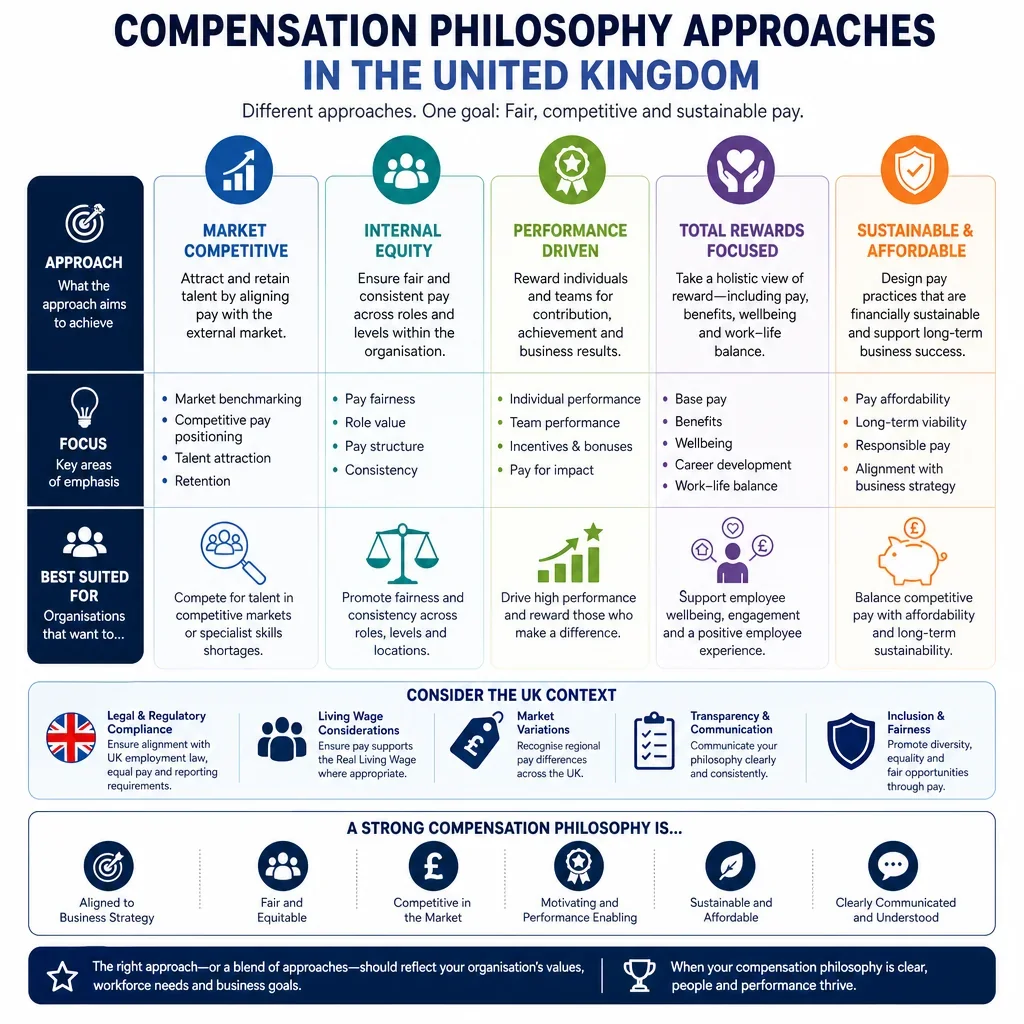
Explore compensation philosophy approaches in the United Kingdom to build fair, competitive, and effective pay strategies.
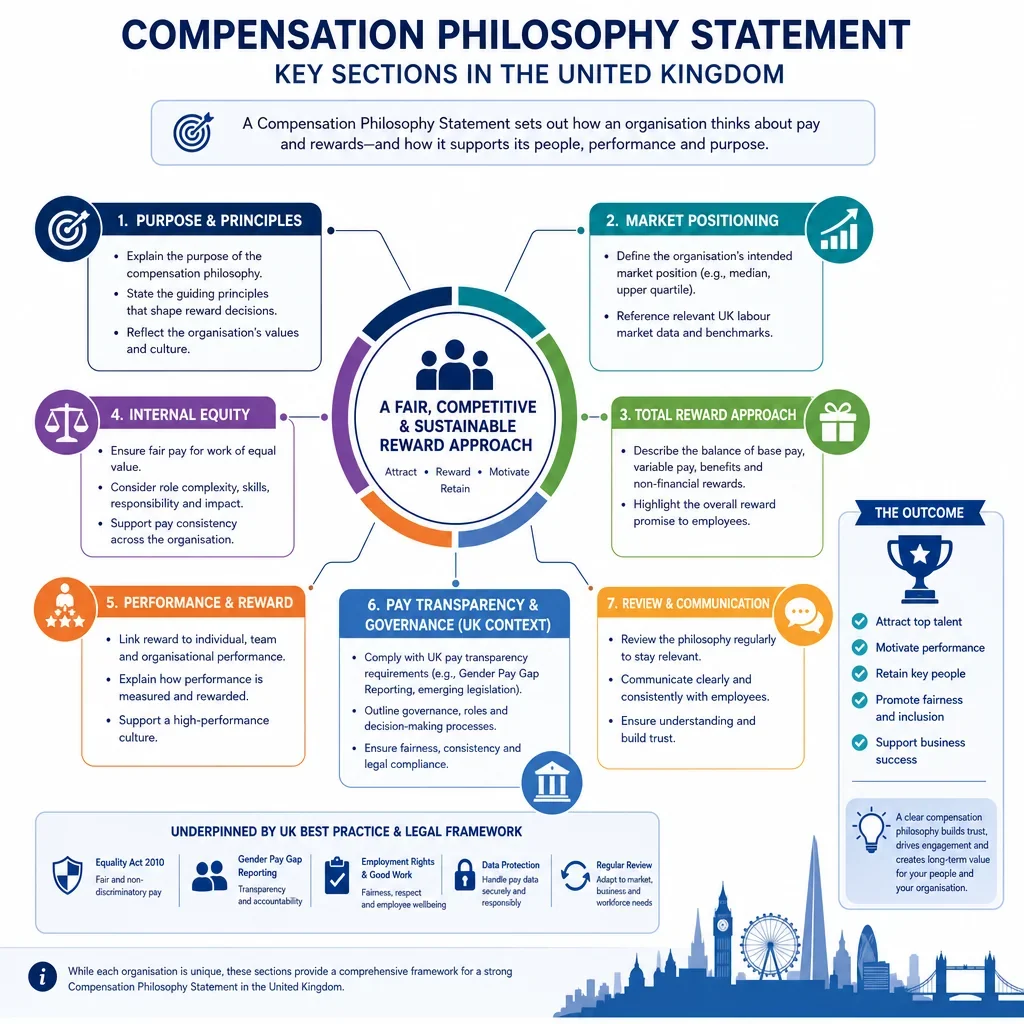
United Kingdom guide to compensation philosophy statement sections for fair, consistent, and strategic pay decisions.
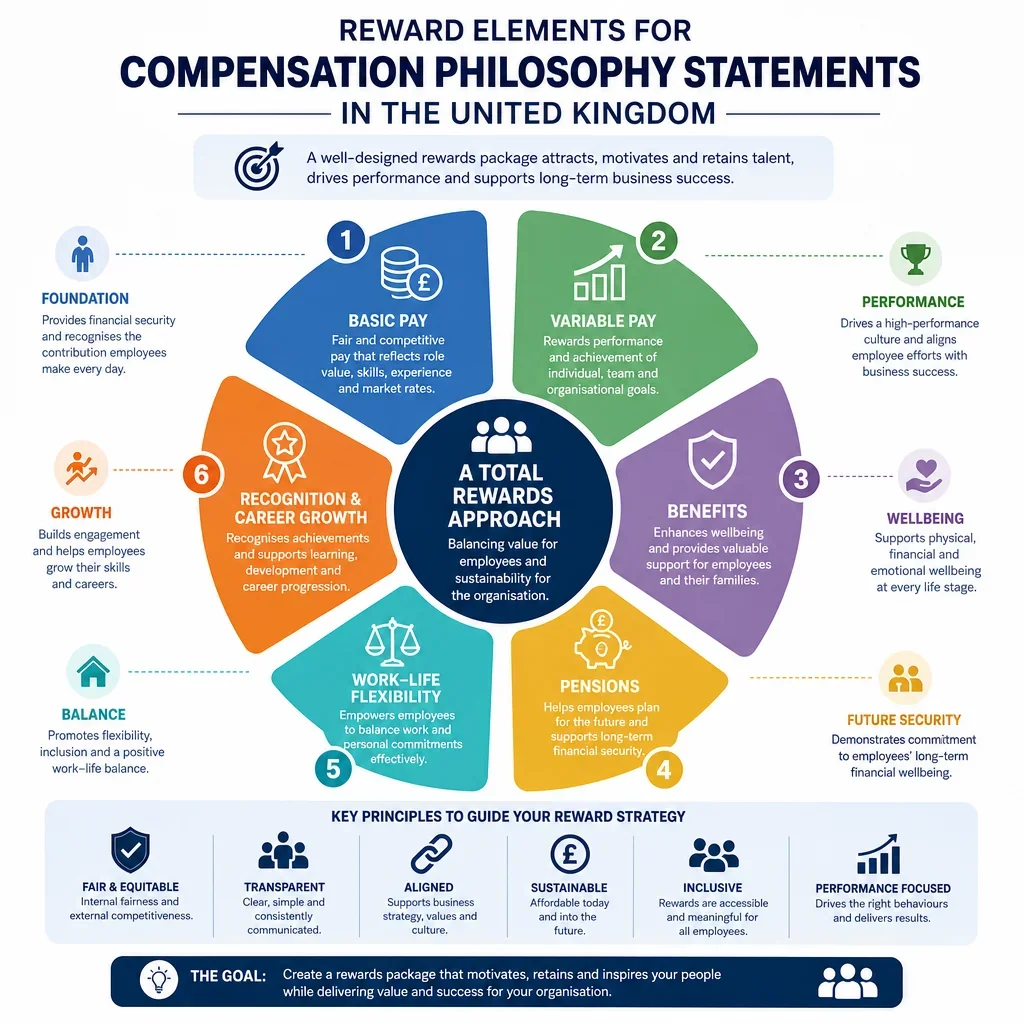
Explore UK reward elements for compensation philosophy statements, including pay, benefits, incentives, and recognition.
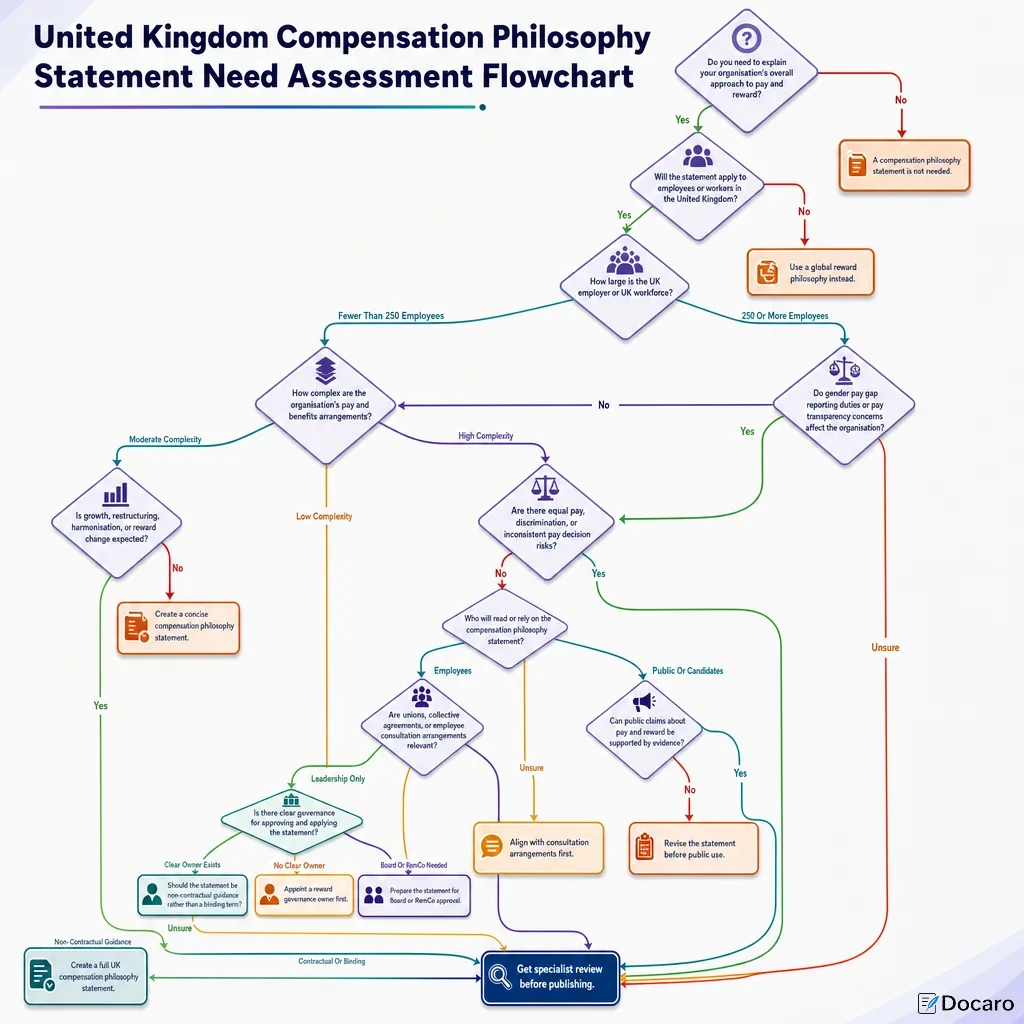
United Kingdom flowchart to assess whether your organisation needs a compensation philosophy statement for fair, consistent pay decisions.
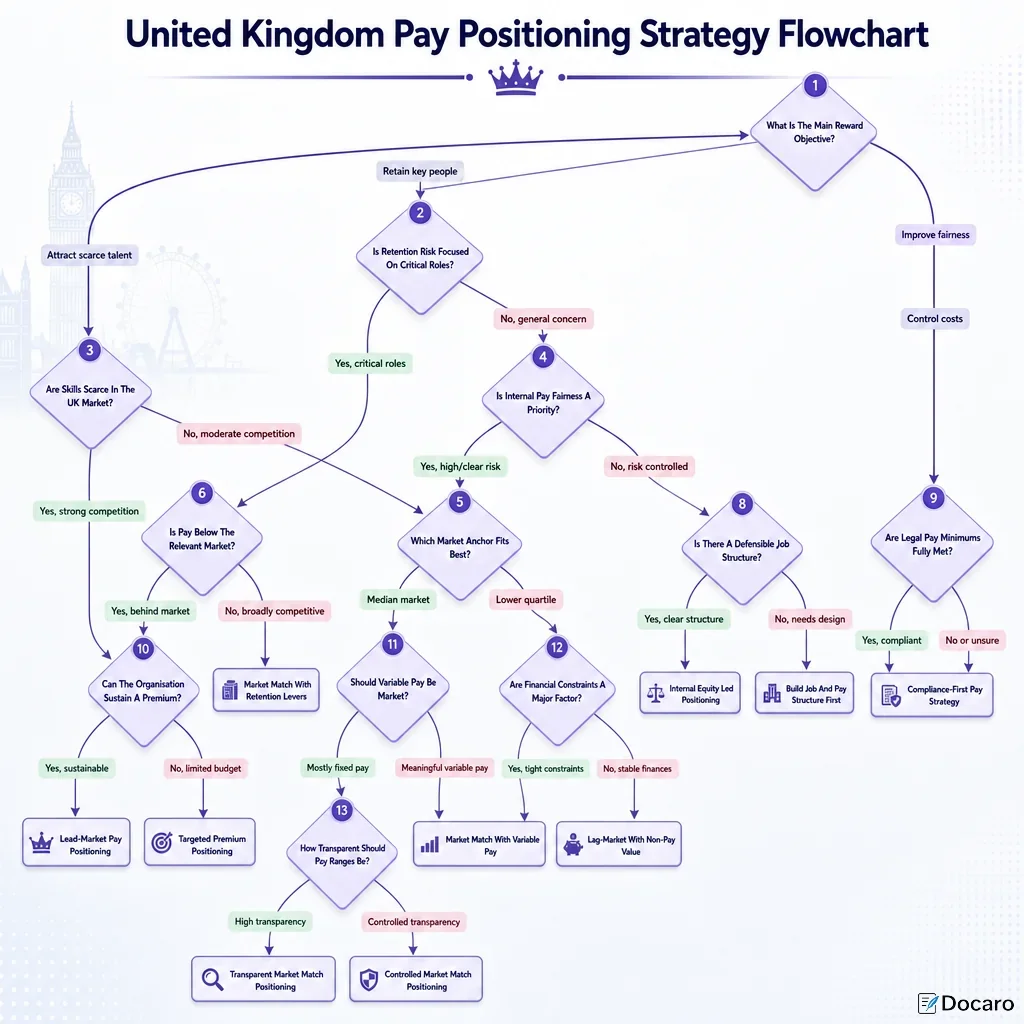
Use this United Kingdom pay positioning strategy flowchart to align market pay targets, reward philosophy, and hiring decisions.
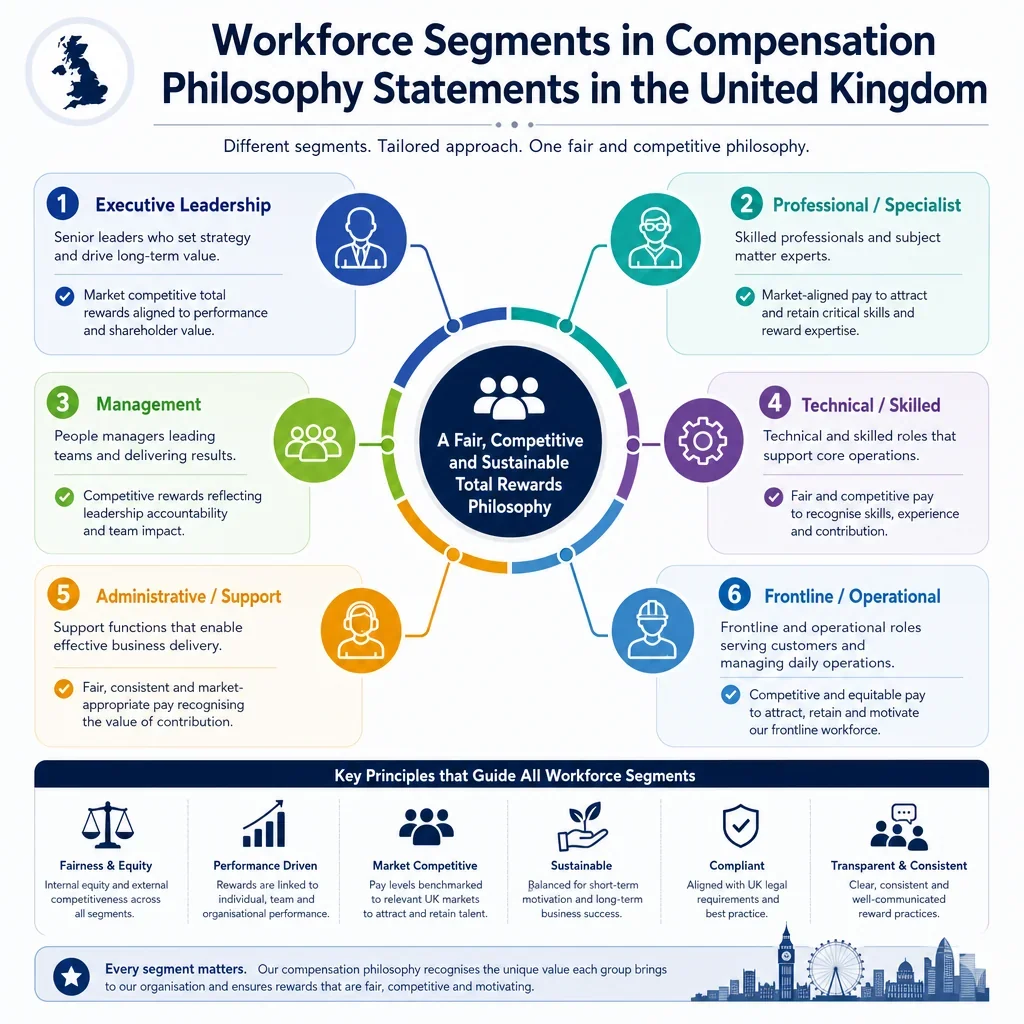
Explore workforce segments in UK compensation philosophy statements and how they support fair, competitive pay decisions.
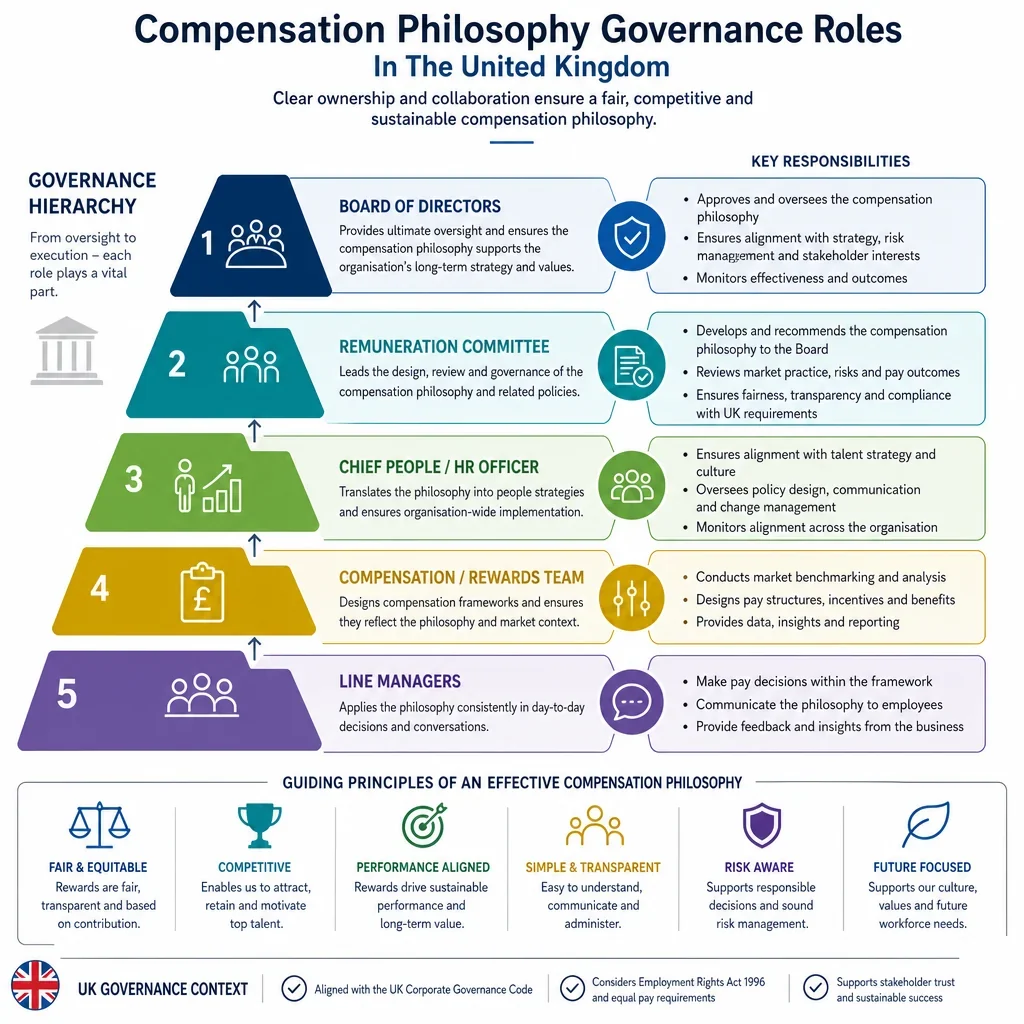
Explore UK compensation philosophy governance roles, responsibilities, and oversight for fair, consistent pay decisions.
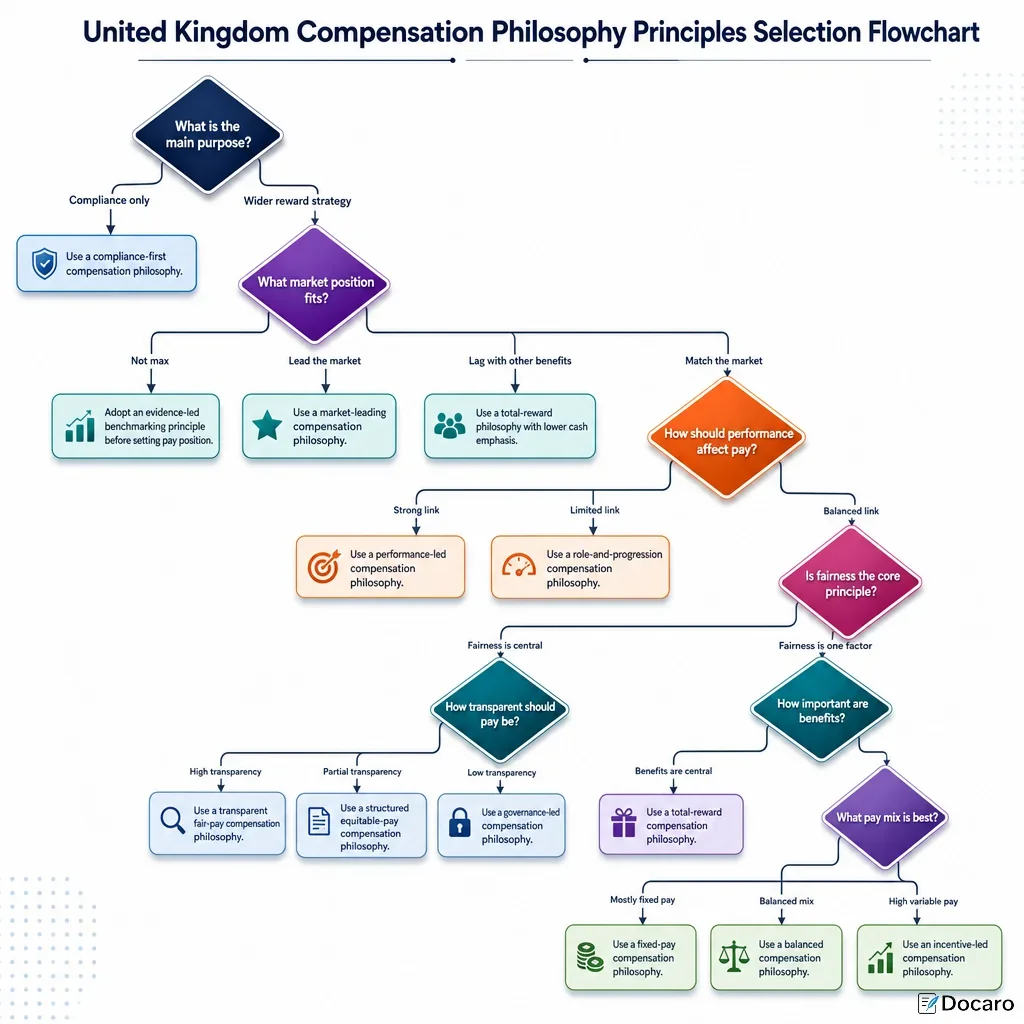
United Kingdom flowchart for selecting compensation philosophy principles to guide fair, consistent and strategic pay decisions.