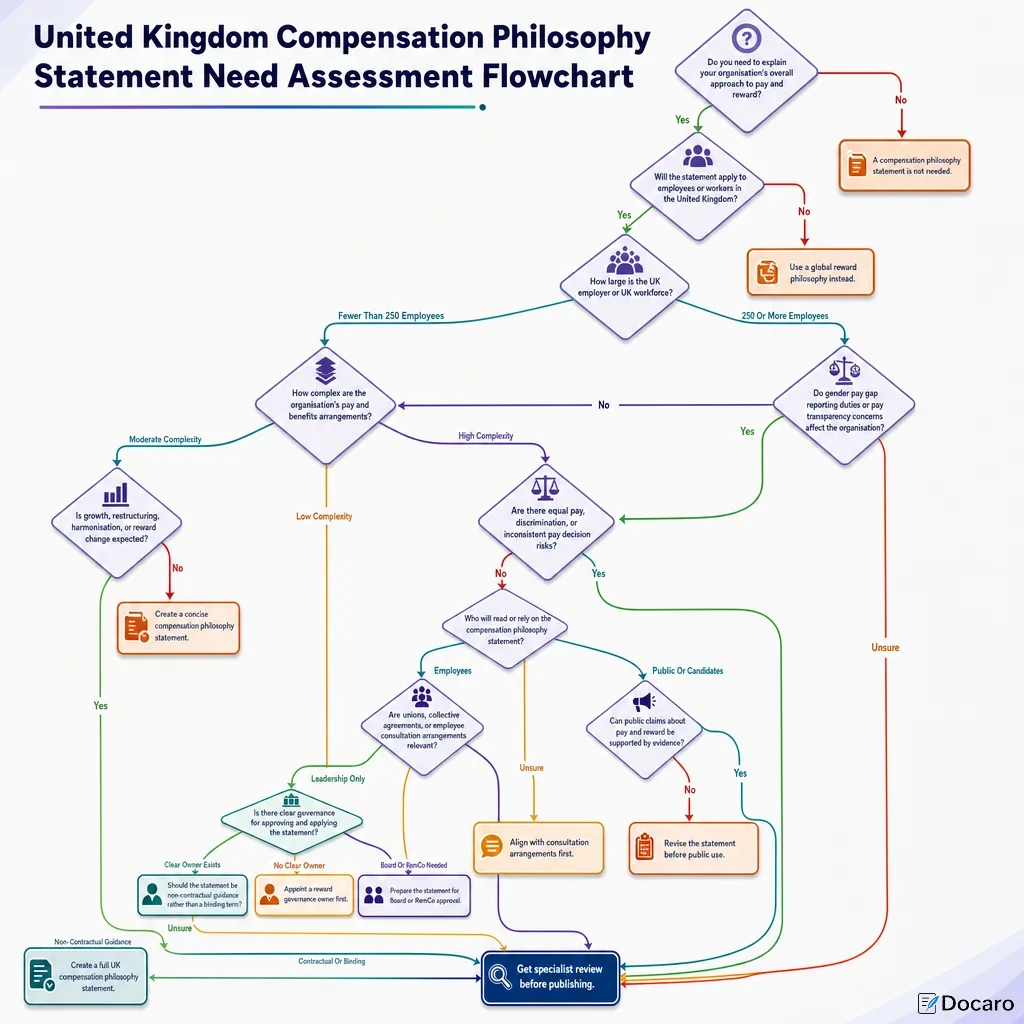
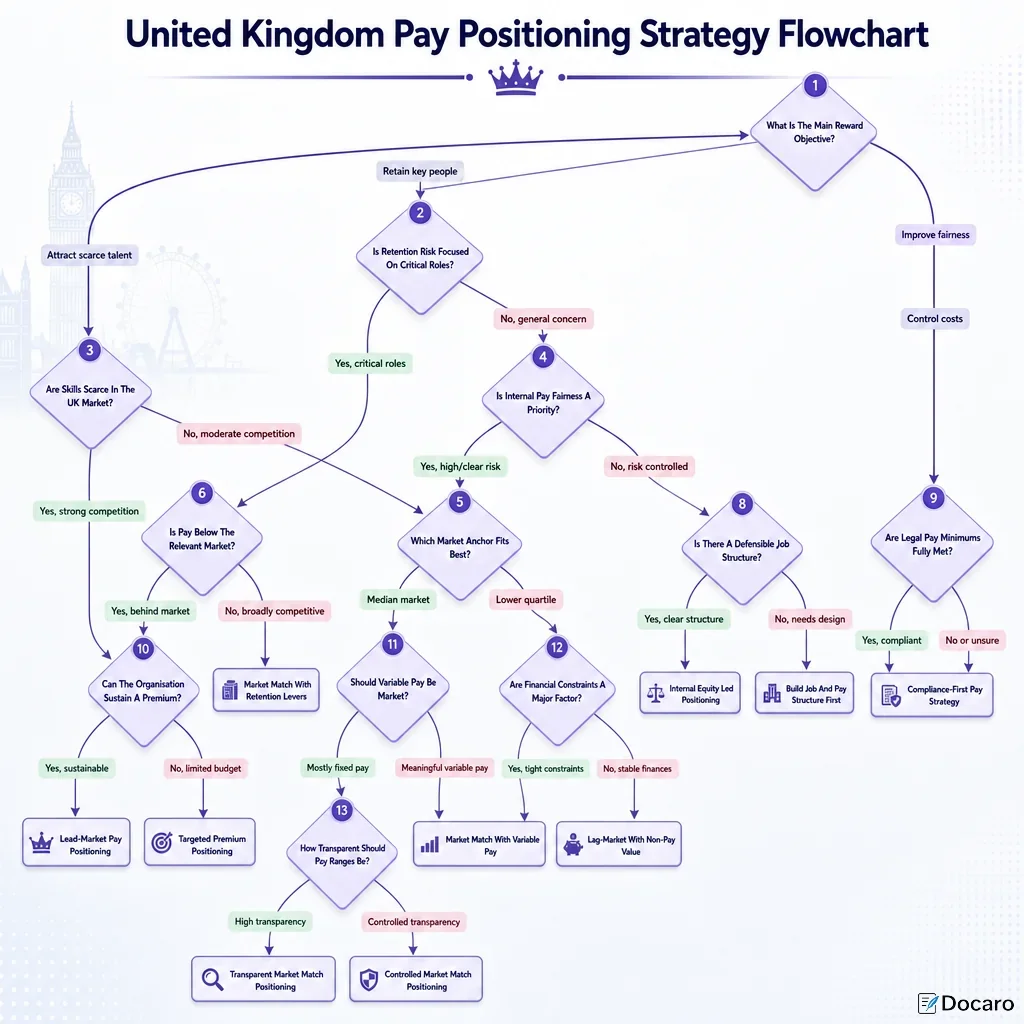
United Kingdom Pay Positioning Strategy Flowchart
What Is The Main Reward Objective?
Why Is A UK Pay Positioning Strategy Important?
A pay positioning strategy explains whether an organisation intends to pay below, at, or above the relevant UK labour market. Getting this right helps a compensation philosophy statement become practical, credible, and legally safer.
How Does Pay Positioning Affect UK Recruitment And Retention?
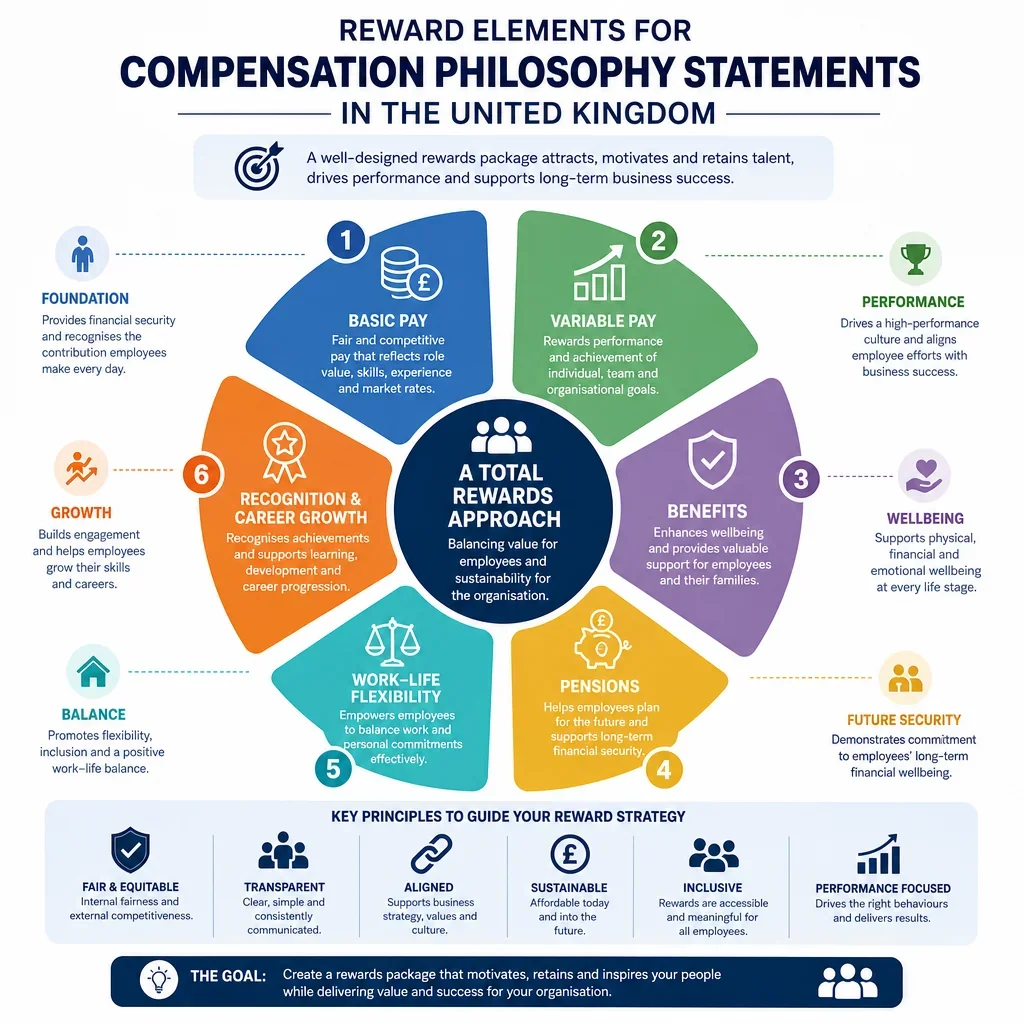
UK employers compete for skills across sectors, regions, and working patterns. A clear position helps decide when to match the market, when to pay a premium, and when to use wider reward such as flexibility, pensions, benefits, learning, or progression.
How Can The Wrong Pay Position Create Legal Risk?
Pay choices must sit within UK rules on the National Minimum Wage and National Living Wage, equal pay, discrimination, written employment particulars, pension auto-enrolment, tax, and payroll. A poorly reasoned approach can also increase employee relations problems and equal pay concerns under the Equality Act 2010.
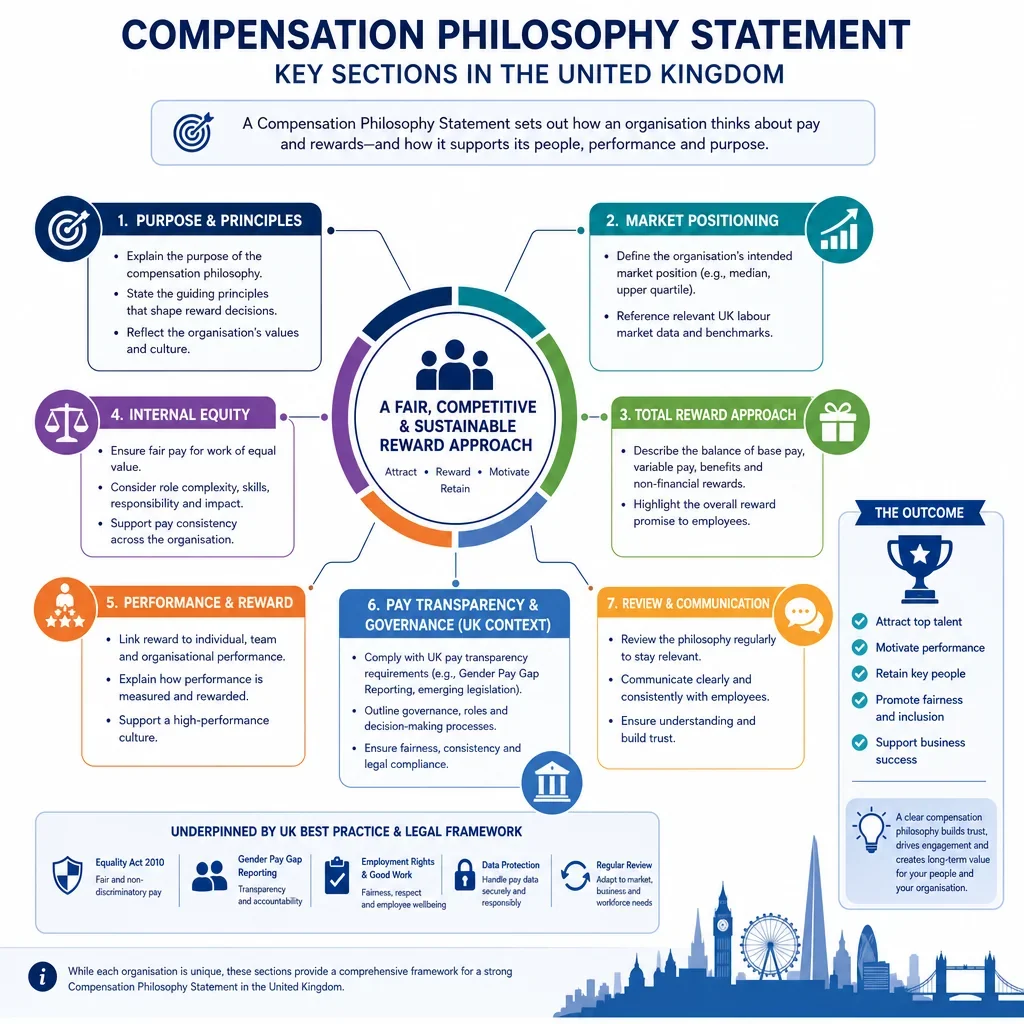
What Should A Good Compensation Philosophy Statement Do?
A strong statement should connect pay to business strategy, affordability, role value, market evidence, and fairness. It should also describe how pay ranges are reviewed, who approves exceptions, and how the organisation balances internal equity with external competitiveness.
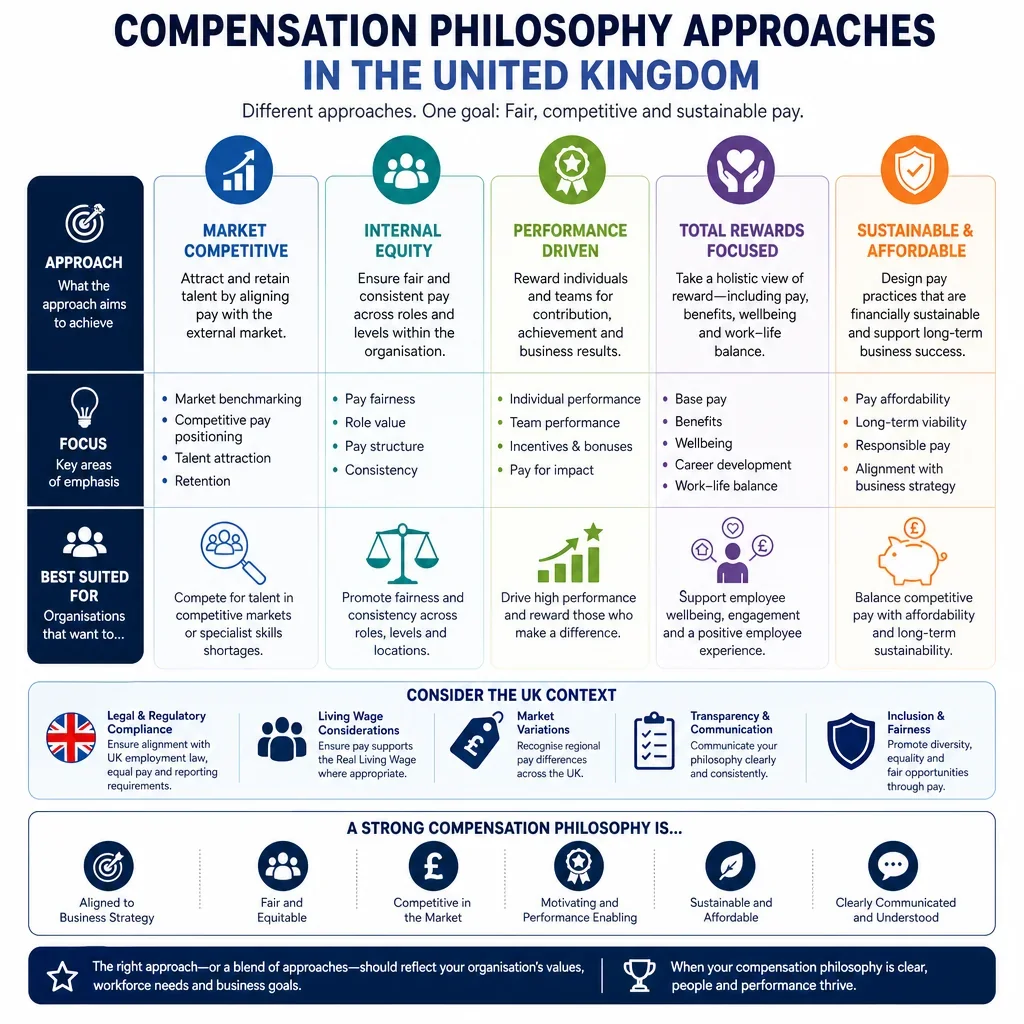
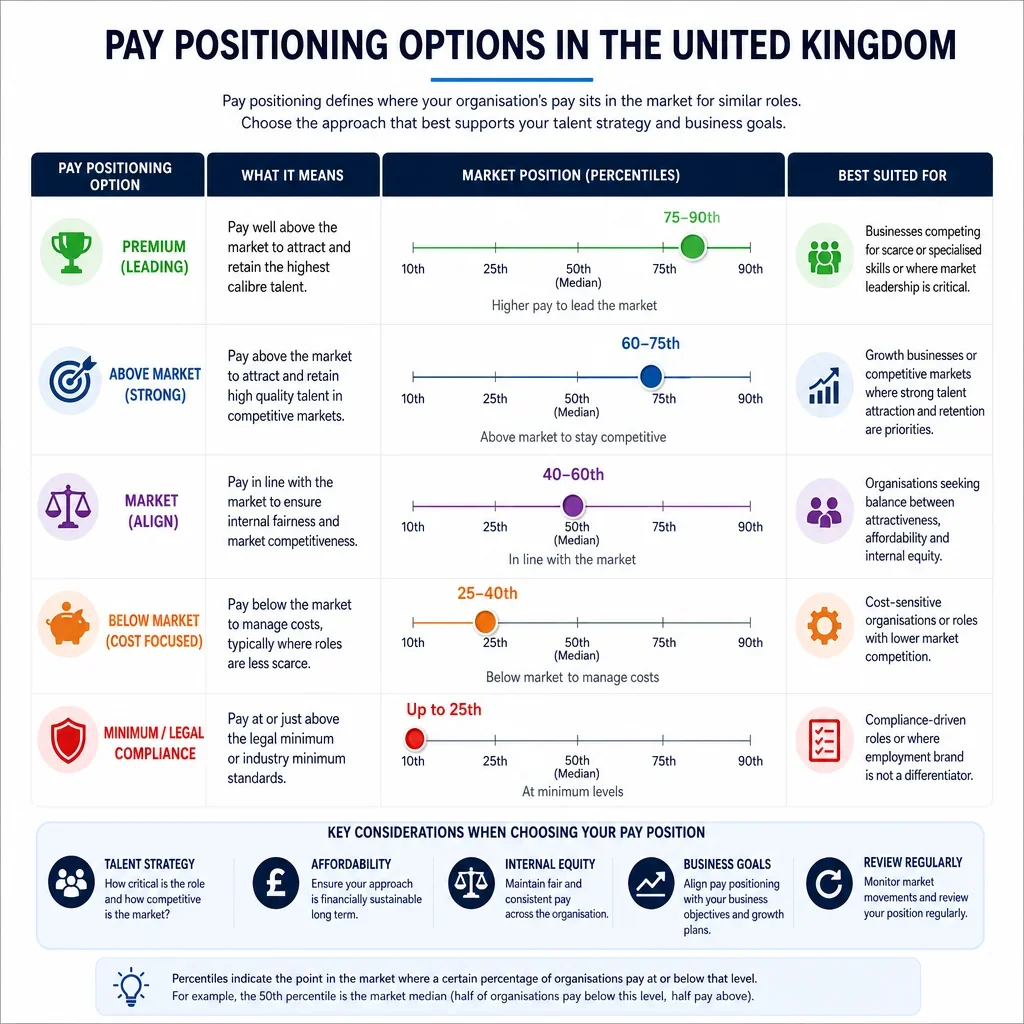
What Are The Main UK Pay Positioning Choices?
- Lead Market: pay above the market to attract or retain scarce talent.
- Match Market: pay around the market median for balanced competitiveness and cost control.
- Lag Market: pay below market only where lawful, affordable, and balanced by non-pay value.
- Targeted Premium: pay above market for specific critical roles or skills.
- Internal Equity Led: prioritise consistent grades, equal pay safeguards, and defensible progression rules.
Using a structured decision process helps ensure the chosen position is evidence-based, consistent, and suitable for use in a UK corporate compensation philosophy statement.
FAQs
You Might Also Be Interested In