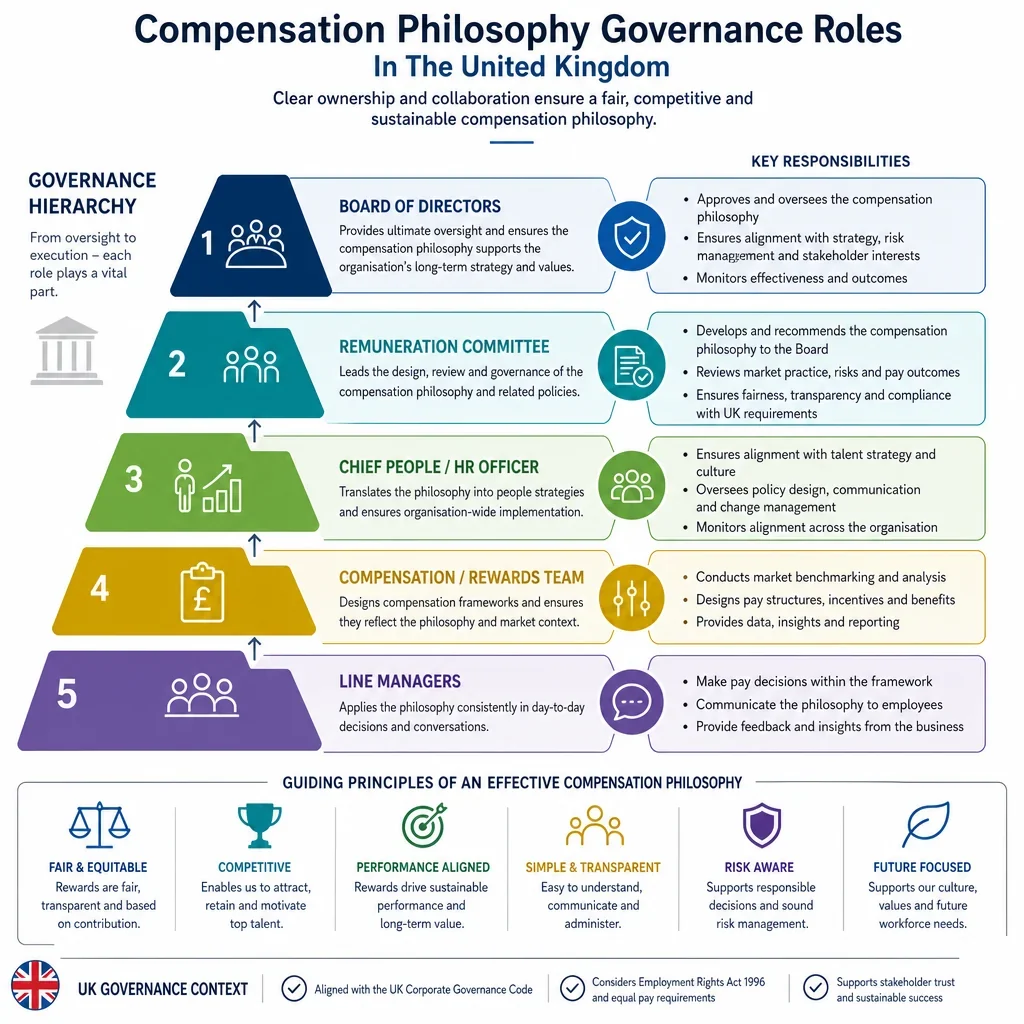
Compensation Philosophy Governance Roles In The United Kingdom
Role Category | Responsibilities | Process Stage | Suggested Wording | Governance Notes |
|---|---|---|---|---|
Board of directors | ||||
Board | Approves the overall pay philosophy, ensures alignment with strategy, culture, risk appetite and long-term sustainable success. | Approval, Monitoring | The board approves the compensation philosophy and oversees its alignment with business strategy, culture and stakeholder interests. | Reserve approval for material changes record board decisions and conflicts in minutes. |
Remuneration committee | ||||
Remuneration committee | Reviews executive pay principles, incentives, performance measures, workforce pay context and alignment with governance expectations. | Review, Approval, Monitoring | The remuneration committee reviews executive remuneration principles and monitors consistency with workforce pay and company purpose. | Use independent judgement obtain external advice where needed avoid management deciding own pay. |
Remuneration committee chair | ||||
Remuneration committee | Leads committee scrutiny, sets remuneration agenda, ensures proper papers, challenge and reporting to the board. | Review, Approval, Monitoring | The committee chair coordinates remuneration governance and ensures recommendations are supported by evidence and challenge. | Document rationale for recommendations escalate unresolved issues to the board. |
Independent non-executive directors | ||||
Board | Provide independent challenge on fairness, proportionality, incentives and conflicts affecting pay governance. | Review, Approval, Monitoring | Independent non-executive directors provide objective challenge on pay principles and executive remuneration outcomes. | Useful for listed and investor-backed companies retain independence evidence. |
Chief executive officer | ||||
Executive leadership | Sponsors the philosophy, links pay principles to business strategy and supports leadership adoption. | Drafting, Review, Communication, Implementation | The chief executive sponsors the compensation philosophy and promotes consistent leadership application across the business. | CEO should not approve own remuneration executive pay decisions need independent oversight. |
Chief people officer | ||||
Human resources | Owns pay strategy design, governance process, workforce consultation inputs and implementation planning. | Drafting, Review, Implementation, Communication, Monitoring | The chief people officer is accountable for developing and maintaining the compensation philosophy for the workforce. | Coordinate with finance and legal before board or committee approval. |
HR director | ||||
Human resources | Translates philosophy into HR policy, reward frameworks, manager guidance and employee communications. | Drafting, Implementation, Communication, Monitoring | HR maintains the compensation philosophy and ensures related people policies reflect approved pay principles. | Keep version control and align with employee handbooks and contract templates. |
Reward director | ||||
Human resources | Designs pay positioning, salary ranges, incentive principles, benefits strategy and benchmarking approach. | Drafting, Review, Implementation, Monitoring | The reward function designs pay structures and benchmarks that support the approved compensation philosophy. | Use credible market data document methodology and material assumptions. |
Compensation and benefits manager | ||||
Human resources | Maintains pay ranges, benefits details, survey data, annual review tools and exception logs. | Drafting, Implementation, Monitoring | Compensation and benefits maintains the operational tools used to apply the compensation philosophy consistently. | Escalate out-of-range offers, off-cycle awards and policy exceptions. |
HR business partners | ||||
Human resources | Advise managers on applying pay principles, salary ranges, performance links and exception procedures. | Implementation, Communication, Monitoring | HR business partners support managers in applying pay principles fairly and consistently. | Provide calibration support and escalate equality or consistency concerns. |
Talent acquisition team | ||||
Human resources | Applies pay philosophy to hiring ranges, offer approvals, sign-on payments and candidate communications. | Implementation, Communication, Monitoring | Recruitment offers must follow approved pay ranges and the compensation philosophy unless an exception is authorised. | Track offer exceptions and ensure equal pay risks are reviewed before approval. |
Learning and development team | ||||
Human resources | Trains managers on pay philosophy, performance differentiation, objective evidence and fair decision-making. | Communication, Implementation | Managers will receive training on applying compensation principles consistently and objectively. | Training records help evidence governance and consistent application. |
Chief financial officer | ||||
Finance | Tests affordability, budget impact, incentive funding, financial controls and cost sustainability. | Review, Approval, Monitoring | Finance reviews the affordability and financial sustainability of compensation principles and proposed pay programmes. | Material cost changes should be approved through budget governance. |
Financial planning and analysis team | ||||
Finance | Models salary review budgets, bonus pools, headcount costs and scenario impacts. | Drafting, Review, Monitoring | Financial planning supports pay decisions with cost modelling and approved budget parameters. | Retain model assumptions and reconcile final awards to approved budgets. |
Payroll team | ||||
Finance, Human resources | Confirms pay changes, bonus payments, deductions and benefits can be administered accurately through payroll. | Implementation, Monitoring | Payroll implements approved compensation decisions and maintains accurate pay records. | Require authorised inputs, audit trails and reconciliation before payment runs. |
Tax team | ||||
Finance, Legal or compliance | Advises on PAYE, benefits, share awards, expenses, salary sacrifice and tax-efficient reward design. | Review, Implementation, Monitoring | Tax advice will be obtained where compensation arrangements create PAYE, NIC, benefit or share-plan implications. | Escalate complex or novel arrangements before communication or implementation. |
General counsel | ||||
Legal or compliance | Reviews legal risk, authority, contracts, directors' remuneration, disclosure and governance obligations. | Review, Approval, Monitoring | Legal reviews the compensation philosophy for employment, corporate governance and disclosure risks. | Obtain legal sign-off before board approval or external publication. |
Employment legal counsel | ||||
Legal or compliance | Checks employment contract, equal pay, discrimination, objective justification and consultation risks. | Review, Monitoring | Employment legal counsel reviews pay principles for compliance with UK employment and equality obligations. | Review pay differentials, discretionary criteria and contractual wording before implementation. |
Company secretary | ||||
Legal or compliance | Supports board and committee governance, agendas, minutes, shareholder approvals and directors' remuneration documentation. | Review, Approval, Monitoring | The company secretary ensures remuneration approvals are properly documented and aligned with corporate governance requirements. | Important for companies with formal board committees, quoted-company reporting or shareholder approvals. |
Compliance function | ||||
Legal or compliance | Reviews regulated remuneration requirements, conduct risk, conflicts, incentives and control-function independence. | Review, Monitoring | Compliance reviews compensation arrangements where incentives may affect conduct, customer outcomes or regulatory obligations. | Essential for FCA-regulated firms escalate material risk-taking incentives. |
Risk committee | ||||
Board, Legal or compliance | Assesses whether incentives encourage excessive risk-taking or undermine risk management. | Review, Approval, Monitoring | Risk governance reviews incentive structures to ensure remuneration supports prudent and sustainable risk-taking. | Coordinate with remuneration committee for variable pay, deferral, malus and clawback. |
Internal audit | ||||
Legal or compliance | Provides assurance on pay governance controls, approval compliance, data integrity and exception management. | Monitoring | Internal audit may review compliance with compensation governance controls and report findings to management or the board. | Use periodic audits for high-risk pay processes and regulated environments. |
Data protection officer | ||||
Legal or compliance | Advises on lawful, secure and proportionate use of employee pay and performance data. | Review, Implementation, Monitoring | Employee compensation data will be processed lawfully, securely and only for legitimate reward governance purposes. | Consider DPIA for new analytics, pay dashboards or automated decision tools. |
Diversity, equity and inclusion lead | ||||
Human resources, Legal or compliance | Reviews pay principles for fairness, inclusion, equal opportunity and potential adverse impact. | Review, Communication, Monitoring | The compensation philosophy is reviewed for fairness, inclusion and consistency with equality commitments. | Use pay-gap and distribution analysis to identify areas requiring action. |
Gender pay gap reporting owner | ||||
Human resources, Legal or compliance | Links compensation philosophy to gender pay gap analysis, narrative, action planning and public reporting where applicable. | Review, Communication, Monitoring | Pay governance will take account of gender pay gap analysis and any relevant action plans. | UK employers with 250 or more employees must report gender pay gap data annually. |
Employee forum or workforce advisory panel | ||||
Human resources | Provides workforce feedback on pay fairness, transparency, benefits and communication clarity. | Review, Communication, Monitoring | Workforce feedback may be considered when reviewing compensation principles and communication materials. | Clarify consultation status do not imply collective bargaining unless applicable. |
Recognised trade union representatives | ||||
Human resources, Legal or compliance | Participates in collective bargaining or consultation on pay principles where recognition arrangements apply. | Review, Communication, Implementation | Where collective bargaining applies, relevant pay principles will be discussed through recognised union arrangements. | Check recognition agreements before changing pay terms or communication routes. |
Employee relations team | ||||
Human resources, Legal or compliance | Manages consultation, employee concerns, grievances and contract-change risks linked to pay policy changes. | Review, Communication, Implementation, Monitoring | Employee relations will advise where compensation changes may require consultation or affect contractual terms. | Use ACAS-consistent consultation where changes affect terms and conditions. |
Line managers | ||||
Line management | Apply pay principles to performance ratings, salary recommendations, promotions and employee conversations. | Implementation, Communication, Monitoring | Managers are responsible for applying compensation principles consistently, objectively and within approved guidance. | Require calibration, HR review and evidence for discretionary decisions. |
Senior leadership team | ||||
Executive leadership | Aligns business-unit practices with the philosophy and supports consistent implementation across functions. | Review, Implementation, Communication, Monitoring | Senior leaders are accountable for consistent application of compensation principles within their areas. | Hold leaders accountable for budget adherence, fairness and exception discipline. |
Performance and pay calibration panel | ||||
Executive leadership, Human resources, Line management | Reviews performance ratings and pay recommendations for consistency, evidence and budget alignment. | Implementation, Monitoring | Pay decisions may be calibrated to promote consistency, fairness and alignment with approved budgets. | Maintain calibration records avoid unsupported changes or discriminatory outcomes. |
Job evaluation committee | ||||
Human resources, Line management, Legal or compliance | Maintains role levels, grading criteria and job evaluation governance to support equal pay consistency. | Drafting, Implementation, Monitoring | Role levels and pay ranges are supported by structured job evaluation and governance controls. | Use objective criteria and retain records supporting grade decisions. |
External remuneration adviser | ||||
Remuneration committee | Provides independent market data, executive pay advice, incentive design support and governance benchmarking. | Drafting, Review, Monitoring | The remuneration committee may obtain independent external advice on market practice and executive remuneration governance. | Disclose adviser use where required assess independence and conflicts. |
Investor relations team | ||||
Executive leadership, Legal or compliance | Coordinates shareholder engagement on remuneration policy, pay outcomes and governance narrative. | Communication, Monitoring | Investor feedback may inform remuneration governance and the communication of pay principles to shareholders. | Relevant for listed and investor-backed companies align with annual report messaging. |
Shareholders | ||||
Board | Approve directors' remuneration policy and vote on remuneration reporting where statutory requirements apply. | Approval, Monitoring | Where required, directors' remuneration arrangements are subject to shareholder approval and reporting processes. | Applies mainly to quoted companies coordinate timetable with annual reporting and AGM. |
Audit committee | ||||
Board | Reviews financial reporting impacts, controls and audit issues linked to remuneration accruals and disclosures. | Review, Monitoring | The audit committee may review financial controls and reporting impacts related to compensation arrangements. | Coordinate with finance on bonus accruals, share-based payments and disclosures. |
Nomination committee | ||||
Board | Considers succession, leadership capability and pay implications for senior appointments. | Review, Monitoring | Senior appointment and succession planning may inform executive remuneration principles and leadership pay governance. | Coordinate with remuneration committee on recruitment awards and buy-outs. |
Chief operating officer | ||||
Executive leadership | Assesses operational impact, workforce deployment needs and practical implementation across business units. | Review, Implementation, Monitoring | Operational leadership reviews compensation principles for practical implementation across business units. | Useful where pay varies by site, shift, region or operational role type. |
Business unit leaders | ||||
Executive leadership, Line management | Provide market, retention, capability and operational context for pay principles in their units. | Drafting, Review, Implementation, Monitoring | Business leaders provide input on workforce needs and are accountable for applying approved compensation principles. | Input should be balanced against central governance and equal pay consistency. |
Sales leadership | ||||
Executive leadership, Line management | Advises on commission philosophy, sales incentives, targets, accelerators and customer conduct implications. | Drafting, Review, Implementation, Monitoring | Sales incentives will support sustainable performance and comply with approved compensation governance. | Review for mis-selling, target manipulation and affordability risks, especially in regulated sectors. |
Procurement team | ||||
Finance, Legal or compliance | Procures pay surveys, reward platforms and external advisers under approved supplier controls. | Implementation, Monitoring | External reward data, systems and advisory services will be procured under approved supplier governance. | Check confidentiality, data protection, conflicts and value for money. |
HR systems owner | ||||
Human resources | Configures HRIS workflows, pay review tools, access controls and compensation data reporting. | Implementation, Monitoring | HR systems will support approved compensation workflows, access controls and reporting requirements. | Ensure role-based access and audit logs for sensitive pay data. |
Internal communications team | ||||
Human resources, Executive leadership | Shapes clear employee messaging on pay principles, timing, transparency and manager talking points. | Communication | Compensation communications will be clear, consistent and aligned with the approved philosophy. | Legal and HR should review sensitive wording before release. |
Pay transparency lead | ||||
Human resources, Legal or compliance | Advises on pay range disclosure, transparency commitments and employee-facing explanation of pay decisions. | Drafting, Communication, Monitoring | The organisation will communicate pay principles and ranges in line with its approved transparency approach. | Ensure disclosed ranges are accurate, current and consistent with offer approvals. |
Executive committee | ||||
Executive leadership | Reviews organisation-wide pay priorities, affordability, business alignment and implementation risks before board escalation. | Review, Implementation, Monitoring | The executive committee reviews compensation priorities and implementation plans before formal approval where required. | Do not substitute for board or remuneration committee approval where reserved matters apply. |
Founders or owner-managers | ||||
Executive leadership, Board | Set early-stage pay principles, equity participation approach and affordability parameters. | Drafting, Approval, Communication | In founder-led businesses, pay principles are approved by authorised directors or owners within agreed governance limits. | Document decisions to avoid informal exceptions and future equal pay inconsistency. |
Private equity sponsor or investor representative | ||||
Board, Remuneration committee | Reviews senior pay, incentive alignment, value creation metrics and reserved matters under investment documents. | Review, Approval, Monitoring | Investor consent will be obtained for compensation matters reserved under shareholder or investment arrangements. | Check shareholder agreement thresholds before awards, hiring packages or incentive plan changes. |
Regulated firm remuneration committee | ||||
Remuneration committee, Legal or compliance | Oversees remuneration policies for material risk takers, risk alignment, deferral, malus and clawback. | Review, Approval, Monitoring | For regulated roles, remuneration will be governed in accordance with applicable FCA or PRA remuneration rules. | Identify material risk takers and retain evidence of risk-adjusted decision-making. |
Senior manager responsible for remuneration compliance | ||||
Executive leadership, Legal or compliance | Ensures regulated remuneration arrangements meet accountability, risk and governance expectations. | Review, Approval, Monitoring | A designated senior manager oversees compliance with applicable regulated remuneration requirements. | Map responsibilities under the firm's senior management responsibility framework. |
ESG or sustainability committee | ||||
Board, Executive leadership | Advises on responsible business metrics, workforce fairness commitments and sustainability-linked incentives. | Drafting, Review, Monitoring | Where relevant, compensation principles may reflect responsible business and sustainability priorities. | Ensure ESG metrics are measurable, auditable and not inconsistent with financial controls. |
Health and safety leadership | ||||
Executive leadership, Legal or compliance | Reviews incentives to ensure they do not discourage incident reporting or safe working practices. | Review, Monitoring | Incentive arrangements will not encourage unsafe behaviour or discourage accurate reporting of safety issues. | Review safety metrics for perverse incentives and reporting bias. |
Pensions trustee liaison | ||||
Human resources, Finance, Legal or compliance | Coordinates pension contribution principles, auto-enrolment compliance and trustee or provider communications. | Review, Implementation, Communication, Monitoring | Pension arrangements will be managed in line with applicable employer duties and approved benefits principles. | Check auto-enrolment duties and consult where pension changes require it. |
Benefits broker or adviser | ||||
Human resources, Finance | Provides market advice on insured benefits, wellbeing provision, renewals and employee value proposition. | Drafting, Review, Implementation, Monitoring | External benefits advice may be used to support market-competitive and cost-effective benefits design. | Review adviser independence, commission, data handling and renewal evidence. |
Global mobility team | ||||
Human resources, Finance, Legal or compliance | Advises on expatriate pay, allowances, tax equalisation, relocation support and cross-border compliance. | Drafting, Review, Implementation, Monitoring | International assignments and mobility allowances will be governed by approved mobility and compensation principles. | Escalate cross-border tax, immigration and equalisation issues before assignment approval. |
Share plans administrator | ||||
Finance, Human resources, Legal or compliance | Administers employee share schemes, grant rules, vesting, leaver treatment and statutory reporting. | Implementation, Communication, Monitoring | Equity awards will be administered under approved share plan rules and applicable tax reporting requirements. | Align grant authority with plan rules, Companies Act constraints and tax filings. |
Board people or culture committee | ||||
Board | Oversees workforce culture, engagement, fairness and people risks linked to compensation principles. | Review, Monitoring | Board-level people governance monitors workforce pay themes and cultural impacts of compensation decisions. | Define boundaries with remuneration committee to avoid overlap or gaps. |
Pay grievance appeal manager | ||||
Line management, Human resources | Handles escalated employee concerns about pay decisions, process fairness or policy application. | Monitoring | Employees may raise concerns about compensation decisions through the applicable grievance or appeal process. | Ensure appeal managers are impartial and supported by HR evidence. |
National minimum wage compliance owner | ||||
Finance, Human resources, Legal or compliance | Checks pay principles and deductions against National Minimum Wage and National Living Wage obligations. | Review, Implementation, Monitoring | All compensation arrangements must comply with National Minimum Wage and National Living Wage requirements. | Monitor salaried hours, deductions, uniforms, apprentices and salary sacrifice impacts. |
Working time compliance owner | ||||
Human resources, Legal or compliance | Reviews overtime, holiday pay, allowances and working time assumptions in compensation design. | Review, Implementation, Monitoring | Compensation practices will be reviewed for working time, overtime and holiday pay compliance where relevant. | Escalate variable pay and overtime arrangements affecting holiday pay calculations. |
Modern slavery and supply chain lead | ||||
Legal or compliance, Executive leadership | Reviews outsourced labour and supplier pay principles for exploitation, wage compliance and ethical sourcing risks. | Review, Monitoring | Reward governance will consider ethical labour standards where pay practices involve suppliers or outsourced workforces. | Relevant where labour providers or contractors affect workforce pay standards. |
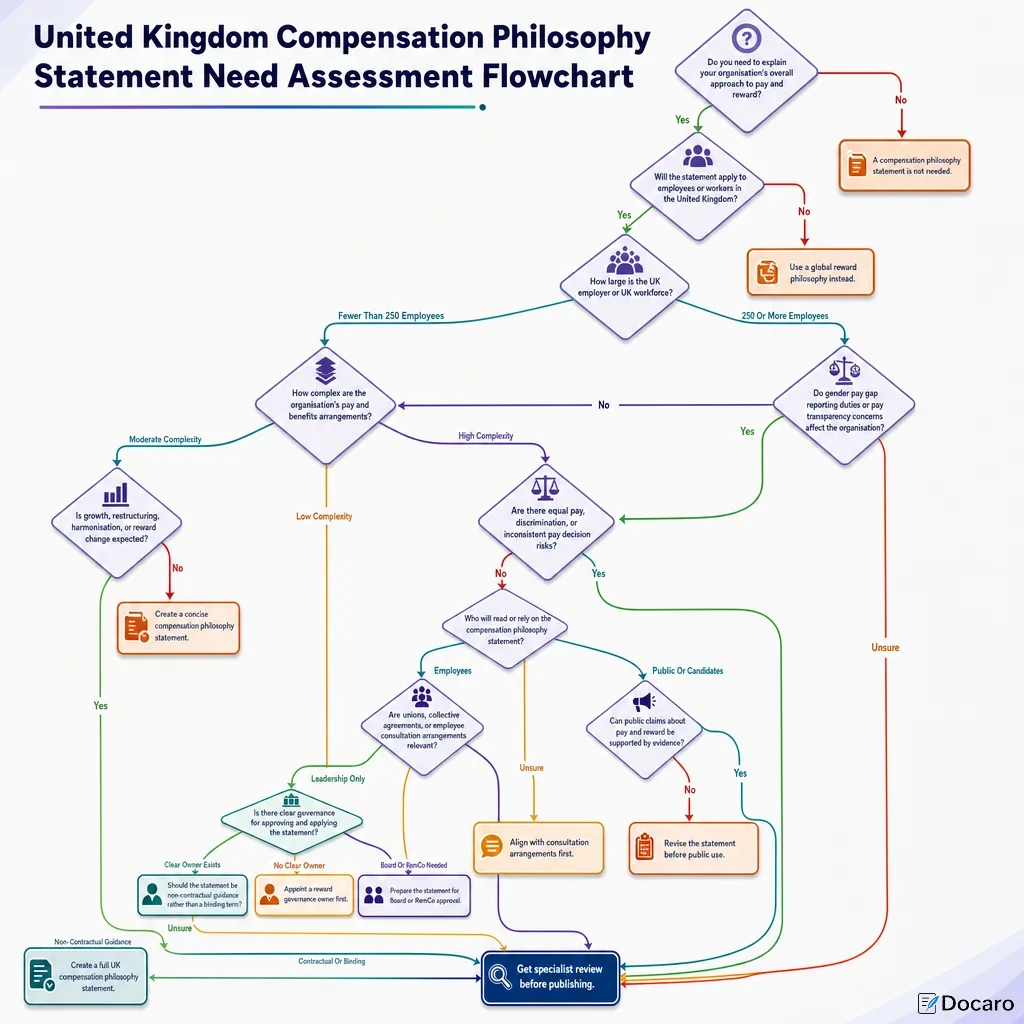
Who Should Own A UK Compensation Philosophy Statement?
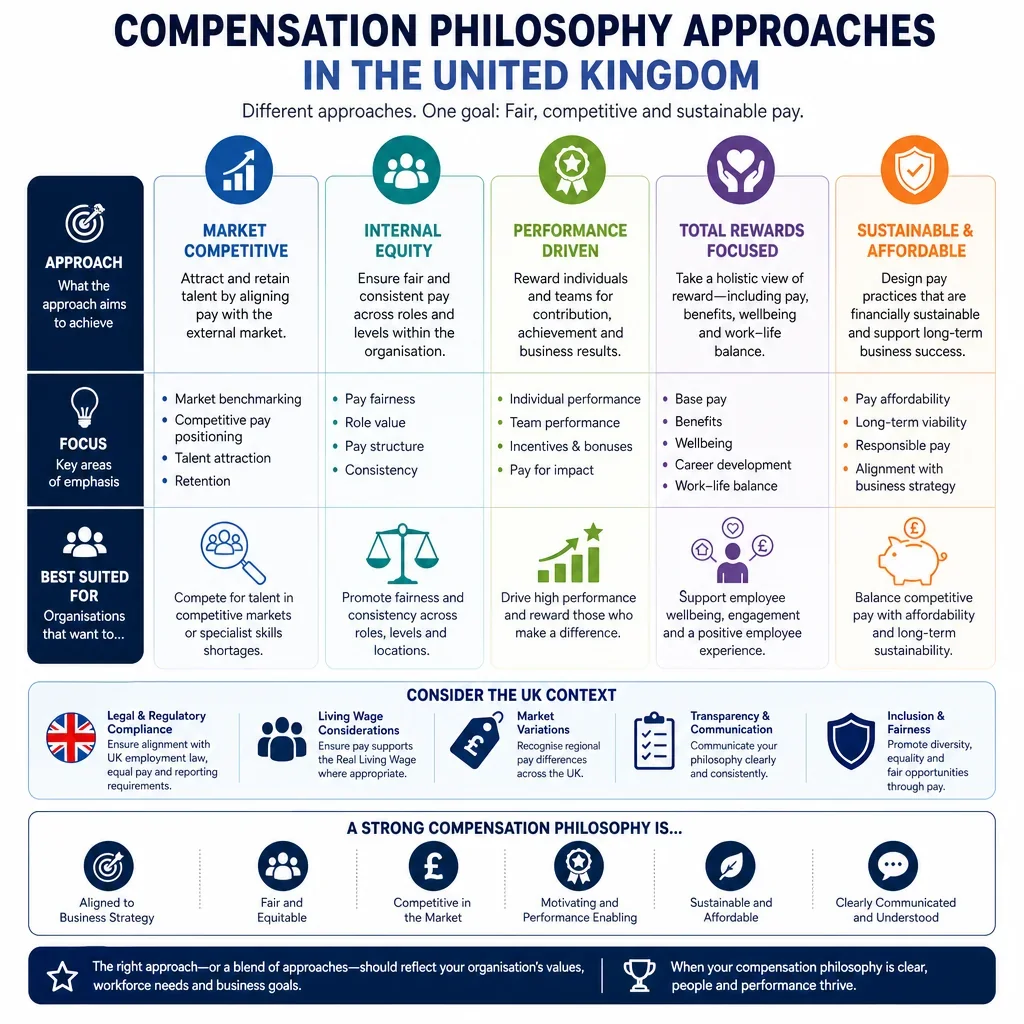
Board and remuneration committee oversight is essential where pay principles affect directors, senior executives, listed-company reporting, investor expectations or workforce fairness. The board should approve the overall philosophy, while the remuneration committee should scrutinise executive pay alignment, incentives and workforce pay context.
Which Functions Should Be Involved Before Approval?
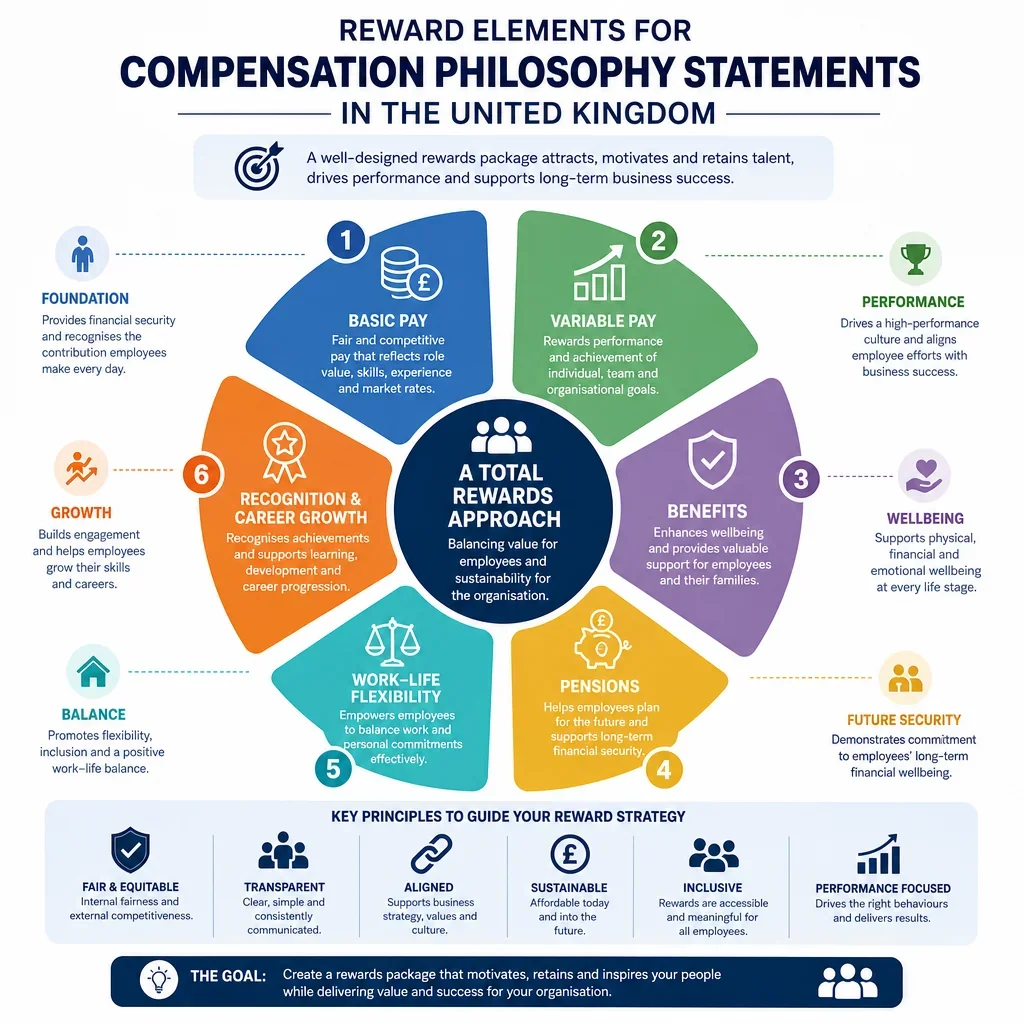
A robust UK process normally involves HR, finance, legal, compliance, payroll and line management. HR owns the drafting and job architecture; finance tests affordability; legal checks equality, employment contract and regulatory risk; payroll confirms operational deliverability; and line managers apply the philosophy consistently in pay decisions.
What UK Legal And Governance Risks Should Be Documented?
- Equality Act 2010: pay principles should support equal pay, non-discrimination and objective justification of pay differences.
- Companies Act 2006: quoted companies must consider directors\' remuneration reporting and shareholder approval requirements.
- UK Corporate Governance Code: premium listed companies should evidence independent remuneration committee oversight, alignment with purpose and workforce pay considerations.
- FCA and PRA remuneration rules: regulated firms may need deferral, malus, clawback and risk adjustment governance.
How Should Governance Be Reflected In The Statement?
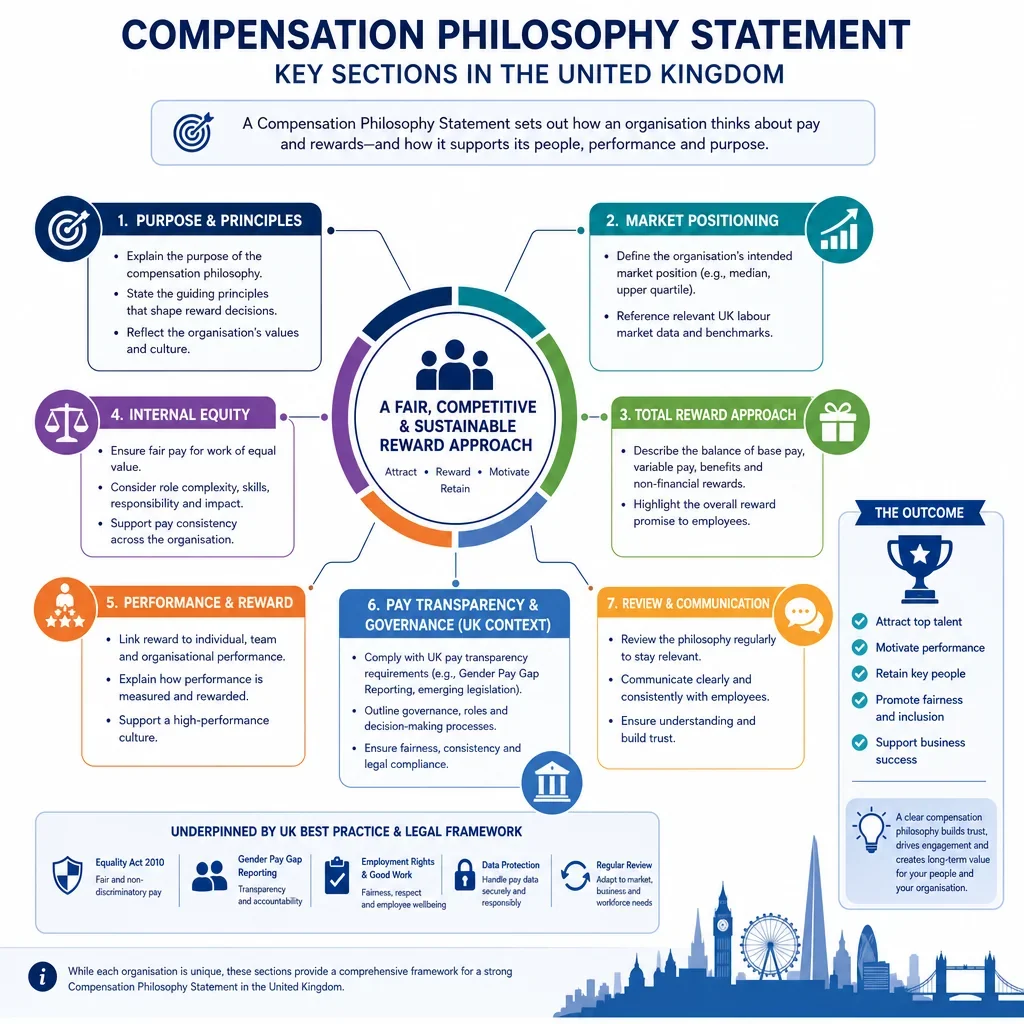
The statement should identify who drafts, reviews, approves, communicates and monitors the philosophy. It should also set escalation routes for exceptions, conflicts of interest, executive pay, regulated remuneration and material budget impacts.
FAQs
You Might Also Be Interested In