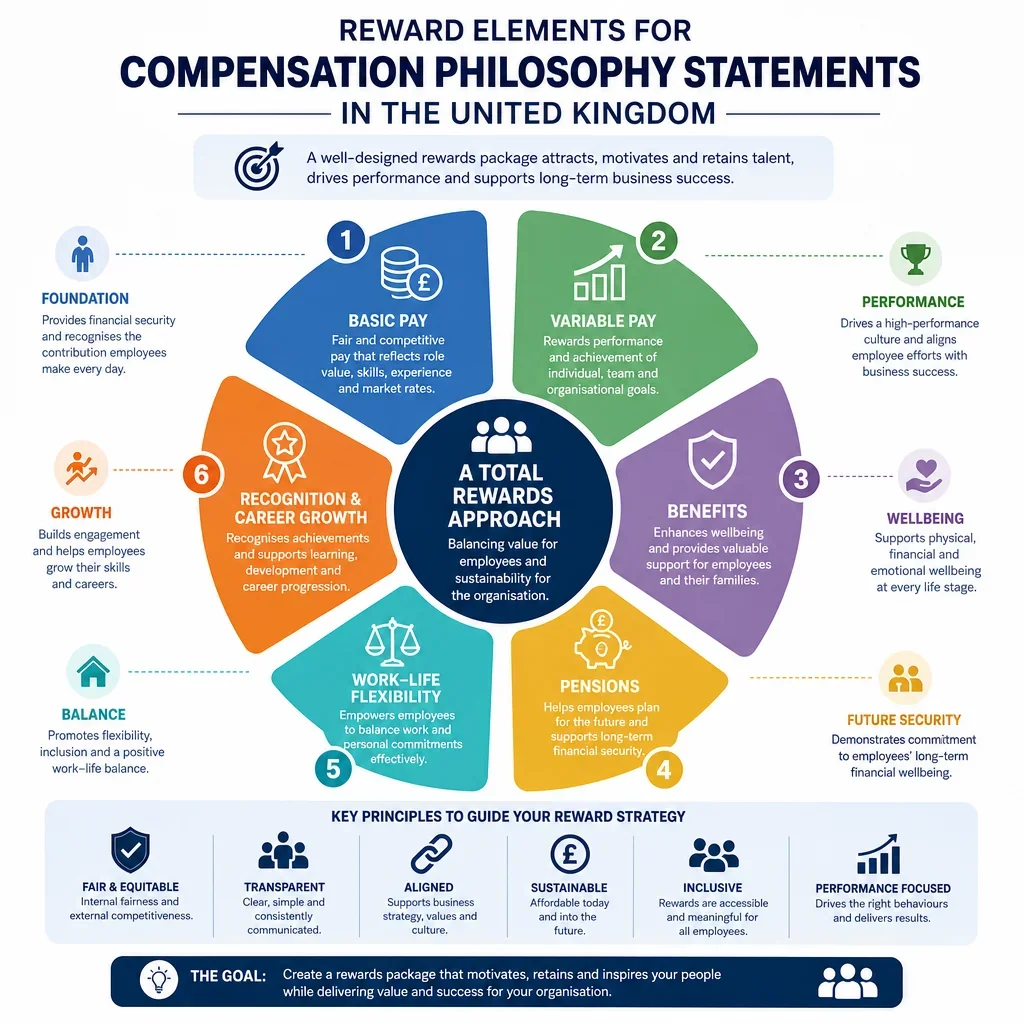
Reward Elements For Compensation Philosophy Statements In The United Kingdom
Reward Category | Description | Statement Example | Relevant Employee Group | Governance Considerations |
|---|---|---|---|---|
Base salary | ||||
Base pay | Fixed contractual pay for the role, usually expressed as an annual salary for salaried staff. | We set base salaries to reflect role scope, skills, market conditions, affordability and internal equity. | All employees | Use documented pay ranges and review outcomes for equal pay and consistency risks. |
Hourly rate | ||||
Base pay | Fixed pay per hour worked, commonly used for operational, shift or casual roles. | We set hourly rates with reference to role requirements, local labour markets and statutory minimum pay. | Operational roles | Monitor working time, deductions and unpaid tasks so pay does not fall below statutory minimums. |
Salary ranges | ||||
Base pay | Defined minimum, midpoint and maximum pay levels for roles or grades. | We use salary ranges to support fair, competitive and disciplined pay decisions. | All employees | Publish or explain ranges where appropriate and apply progression rules consistently. |
Market pay positioning | ||||
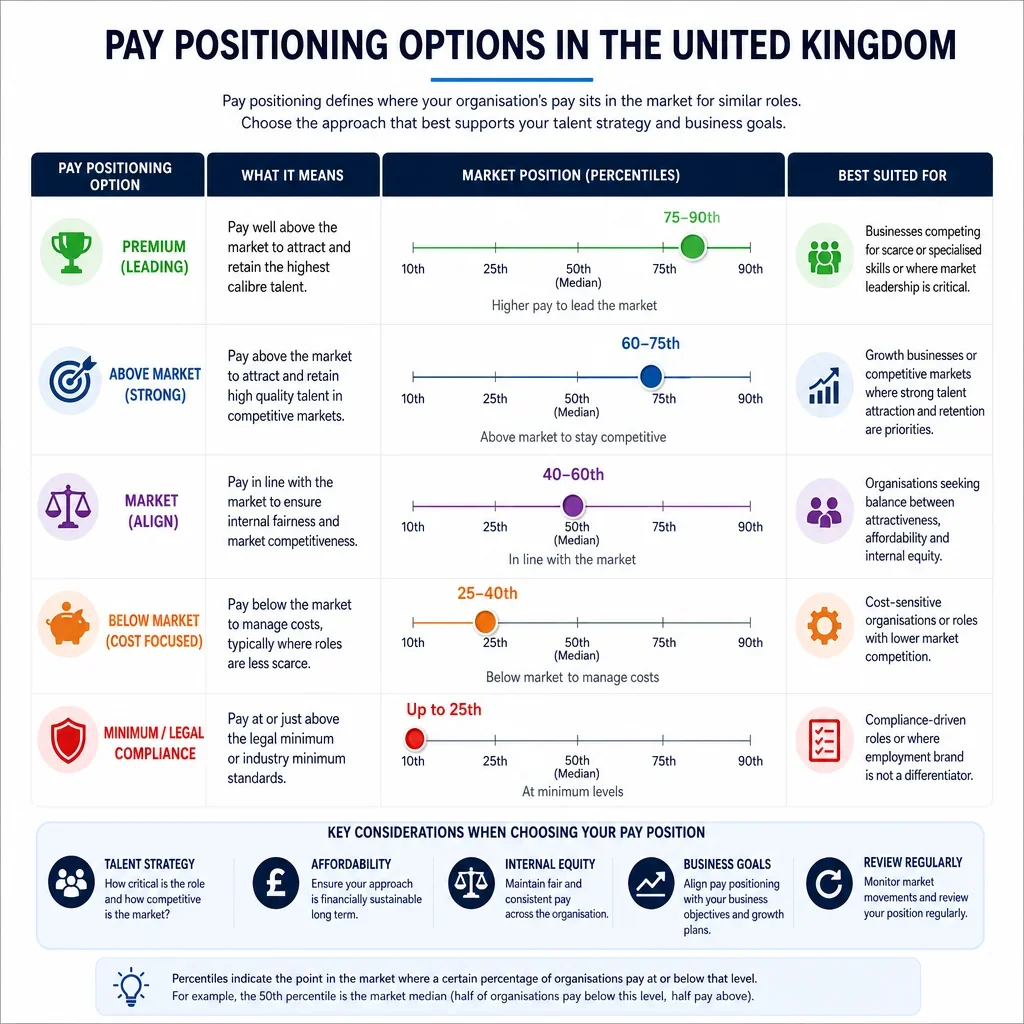
Base pay | The target position against external pay benchmarks, such as median or upper quartile. | We aim to position pay competitively against relevant UK labour markets while maintaining internal fairness. | All employees | Use reliable benchmark data and avoid over-weighting scarce market data without equity checks. |
Job evaluation and grading | ||||
Base pay | A structured method for assessing role size and placing jobs into grades or bands. | We grade roles using consistent job evaluation principles based on responsibilities, impact and required capability. | All employees | Maintain role evidence and calibration to reduce equal pay and discrimination risk. |
Annual salary review | ||||
Base pay | Periodic review of salary, often considering performance, affordability, inflation and market movement. | We review salaries annually, but increases are not automatic unless required by contract or law. | All employees | Clarify discretion, budget controls and manager guidance to support consistent decisions. |
Cost of living adjustment | ||||
Base pay | A pay increase intended to reflect inflation or living cost pressures. | We may consider cost of living pressures when setting pay budgets, alongside affordability and market data. | All employees | Avoid implying an automatic index-linked increase unless contractually intended. |
Promotion pay increase | ||||
Base pay | Salary adjustment when an employee moves to a higher grade or materially larger role. | Promotion increases recognise increased responsibility and are set within the salary range for the new role. | All employees | Apply objective promotion criteria and check outcomes by sex, ethnicity and other protected characteristics. |
Pay progression | ||||
Base pay | Movement through a salary band based on time, competence, performance or skills growth. | Progression within pay ranges reflects sustained contribution, capability growth and position in range. | All employees | Use clear criteria to prevent opaque decisions and unjustified pay gaps. |
Skills-based pay | ||||
Base pay | Pay linked to verified skills, qualifications, licences or multi-skilling capability. | We may reward certified skills that are business-critical, current and demonstrably used in the role. | Specialist roles, Operational roles | Define eligible skills, verification standards and review dates to avoid inconsistent allowances. |
London weighting | ||||
Base pay | Additional pay recognising higher costs or labour market pressures in London. | Where applicable, London weighting recognises location-specific market conditions and is reviewed periodically. | All employees | Define qualifying locations and treatment during hybrid, remote or relocation arrangements. |
Regional pay differentials | ||||
Base pay | Pay variation by work location to reflect labour market or cost differences. | We may apply regional pay differences where supported by objective market evidence and business need. | All employees | Document rationale and assess whether remote working changes eligibility. |
Acting-up allowance | ||||
Base pay | Temporary additional pay for covering a higher-level role or duties. | We may provide acting-up pay where an employee temporarily assumes substantial higher-level responsibilities. | All employees | Set start, end and approval rules to prevent informal unequal treatment. |
Overtime pay | ||||
Variable pay | Additional pay for hours worked beyond normal contractual hours. | Overtime is used to meet operational need and is paid only where authorised under policy. | Operational roles, Specialist roles | Ensure total pay meets minimum wage and working hours comply with Working Time Regulations. |
Shift premium | ||||
Variable pay | Extra pay for working unsocial, rotating, night or weekend shifts. | Shift premiums recognise specific working patterns and are paid according to published eligibility rules. | Operational roles | Check night work limits, health assessments and consistent application across comparable roles. |
Standby allowance | ||||
Variable pay | Payment for being available outside normal hours to respond if required. | Standby allowances compensate employees for agreed availability obligations outside normal working hours. | Specialist roles, Operational roles | Clarify availability expectations, response times, call-out pay and working time treatment. |
Call-out pay | ||||
Variable pay | Payment when an employee is called to work outside scheduled hours. | Call-out pay applies where an authorised request requires work outside planned working hours. | Specialist roles, Operational roles | Record hours accurately for working time, rest and minimum wage compliance. |
Annual bonus | ||||
Variable pay | Variable payment linked to company, team or individual performance over a year. | Our annual bonus rewards performance against agreed business and individual measures, subject to affordability and plan rules. | All employees, Management employees, Executive employees | State whether discretionary or contractual and ensure measures are objective and non-discriminatory. |
Sales commission | ||||
Variable pay | Variable earnings based on sales, revenue, margin or new business performance. | Commission plans are designed to reward profitable growth, customer outcomes and compliant sales behaviour. | Specialist roles | Define crediting, clawback, leavers, caps and conduct safeguards clearly. |
Profit sharing | ||||
Variable pay | A payment or allocation linked to organisational profit performance. | Where business performance permits, we may share success through profit-related awards. | All employees | Explain eligibility, profit definition, discretion and treatment for joiners and leavers. |
Gainsharing | ||||
Variable pay | Variable reward linked to productivity, efficiency, quality or cost-saving improvements. | Gainsharing rewards measurable improvements that create sustainable value and do not compromise safety or quality. | Operational roles, Management employees | Use auditable metrics and avoid incentives that encourage unsafe or short-term behaviour. |
Long-term incentive plan | ||||
Variable pay | Multi-year incentive, often equity-based, linked to sustained performance or value creation. | Long-term incentives align senior leaders with sustainable performance, responsible risk-taking and shareholder interests. | Executive employees, Management employees | Apply remuneration committee oversight, performance testing, malus, clawback and disclosure where required. |
Share options | ||||
Variable pay | Right to acquire shares at a set price, often subject to vesting conditions. | Share options may be used to support retention and align employees with long-term business growth. | Executive employees, Management employees, Specialist roles | Document tax, vesting, leaver and dilution rules consider approved schemes where suitable. |
Employee share ownership | ||||
Variable pay | Arrangements enabling employees to hold shares or share-like interests in the organisation. | We support employee share ownership where it reinforces shared success and long-term engagement. | All employees | Communicate investment risk, tax treatment, eligibility and dealing restrictions clearly. |
Retention bonus | ||||
Variable pay | One-off or staged payment to encourage retention during critical periods. | Retention payments may be used selectively where continuity is critical and other reward tools are insufficient. | Specialist roles, Management employees, Executive employees | Record business justification, repayment terms, eligibility and equality impact. |
Sign-on bonus | ||||
Variable pay | One-off payment to secure a hire, often offsetting lost bonus or relocation costs. | Sign-on awards are used only where justified by recruitment need and approved before offer. | Specialist roles, Management employees, Executive employees | Use approval controls and repayment clauses monitor demographic patterns in awards. |
Project completion bonus | ||||
Variable pay | Payment linked to successful delivery of a defined project, milestone or transformation activity. | Project bonuses recognise exceptional delivery against agreed milestones, quality standards and business outcomes. | Specialist roles, Management employees | Define success measures before work starts and avoid rewarding normal role duties twice. |
Safety performance bonus | ||||
Variable pay | Variable pay linked to safe working, risk reduction or safety improvement measures. | Safety incentives support proactive risk management and must never discourage incident reporting. | Operational roles, Management employees | Avoid metrics that suppress reporting align with health and safety duties. |
Workplace pension auto-enrolment | ||||
Pension | Automatic enrolment of eligible workers into a qualifying workplace pension scheme. | We meet our pension auto-enrolment duties and support employees in saving for retirement. | All employees | Comply with enrolment, contribution, opt-out and re-enrolment duties. |
Employer pension contributions | ||||
Pension | Employer payments into a workplace pension, often above statutory minimum for some schemes. | Our pension contribution approach balances statutory compliance, affordability and support for long-term financial wellbeing. | All employees | Define contribution tiers clearly and avoid discriminatory eligibility rules. |
Pension salary sacrifice | ||||
Pension | Arrangement where employees exchange salary for employer pension contributions, usually saving National Insurance. | Where offered, pension salary sacrifice is designed to improve pension efficiency without reducing statutory protections. | All employees | Ensure sacrifice does not reduce pay below minimum wage or affect statutory benefits unexpectedly. |
Pension contribution matching | ||||
Pension | Employer increases pension contributions when employees contribute at higher rates. | We may match additional pension contributions to encourage retirement saving and shared responsibility. | All employees | Check affordability, communication clarity and access for lower-paid employees. |
Death in service benefit | ||||
Benefits | Life assurance benefit paid to beneficiaries if an employee dies while employed. | We provide death in service cover to offer financial protection for employees' dependants. | All employees | Communicate eligibility, nomination forms, scheme limits and tax implications. |
Private medical insurance | ||||
Benefits | Employer-funded access to private healthcare cover, often treated as a taxable benefit. | Private medical cover supports timely access to healthcare and complements, rather than replaces, NHS provision. | All employees, Management employees, Executive employees | Define eligibility consistently and report taxable benefits where required. |
Health cash plan | ||||
Benefits | Benefit reimbursing everyday health costs such as dental, optical or physiotherapy expenses. | Health cash plans help employees manage routine healthcare costs and support preventative wellbeing. | All employees | Explain reimbursement limits, taxable status and any waiting periods. |
Company sick pay | ||||
Benefits | Employer sick pay above Statutory Sick Pay, usually based on service or policy rules. | Company sick pay supports employees during genuine illness while encouraging attendance and wellbeing. | All employees | Align with SSP, disability duties, absence management and contractual wording. |
Annual leave entitlement | ||||
Benefits | Paid holiday entitlement, including at least the statutory minimum for workers. | Our annual leave approach supports rest, wellbeing and compliance with statutory holiday rights. | All employees | Calculate entitlement and holiday pay correctly for part-year, irregular-hours and variable-pay workers. |
Enhanced holiday entitlement | ||||
Benefits | Paid annual leave above the statutory minimum, sometimes increasing with service. | We may provide enhanced holiday to support wellbeing, retention and sustainable performance. | All employees | Define accrual, carry-over, bank holidays and leaver treatment clearly. |
Enhanced maternity pay | ||||
Benefits | Employer maternity pay above statutory maternity pay, subject to policy terms. | Enhanced maternity pay supports employees during maternity leave and strengthens our family-friendly culture. | All employees | Ensure eligibility rules are lawful, clear and aligned with pregnancy and maternity protections. |
Enhanced paternity pay | ||||
Benefits | Employer paternity pay above statutory paternity pay for eligible partners or fathers. | Enhanced paternity pay supports early family bonding and a more inclusive approach to caring responsibilities. | All employees | Apply eligibility consistently and align with statutory paternity leave rights. |
Enhanced shared parental pay | ||||
Benefits | Employer pay above statutory shared parental pay for eligible parents sharing leave. | Enhanced shared parental pay helps employees make flexible choices about work and caring. | All employees | Check consistency with maternity, adoption and paternity enhancements to manage discrimination risk. |
Enhanced adoption pay | ||||
Benefits | Employer adoption pay above statutory adoption pay for eligible adopters. | Enhanced adoption pay supports employees growing their families through adoption. | All employees | Align eligibility and repayment provisions with family leave policy and equality duties. |
Car allowance | ||||
Benefits | Cash allowance provided instead of, or alongside, a company car arrangement. | Car allowances are provided where role requirements or market practice justify vehicle-related support. | Management employees, Executive employees, Specialist roles | Clarify tax treatment, business mileage rules and eligibility criteria. |
Company car | ||||
Benefits | Employer-provided vehicle for business and sometimes private use, usually taxable. | Company cars are provided where business travel needs, role requirements or market practice support provision. | Management employees, Executive employees, Specialist roles, Operational roles | Manage benefit-in-kind tax, emissions policy, insurance and private use rules. |
Mileage reimbursement | ||||
Benefits | Reimbursement for business miles driven in an employee's own vehicle. | We reimburse authorised business mileage in line with policy and HMRC guidance. | All employees | Use accurate claims, approved mileage rates and clear rules excluding ordinary commuting. |
Season ticket loan | ||||
Benefits | Employer loan to help employees buy annual public transport tickets, repaid through payroll. | Season ticket loans help employees manage commuting costs through structured repayment. | All employees | Set loan limits, repayment terms, leaver deductions and tax treatment for beneficial loans. |
Cycle to work scheme | ||||
Benefits | Salary sacrifice or loan scheme helping employees obtain a bicycle and cycling equipment for commuting. | Our cycle to work scheme supports sustainable commuting, wellbeing and tax-efficient access to cycling equipment. | All employees | Ensure salary sacrifice does not reduce pay below minimum wage and scheme rules are followed. |
Childcare support | ||||
Benefits | Employer support for childcare, such as nursery discounts, workplace nursery access or guidance. | Childcare support helps employees balance work and caring responsibilities where feasible and affordable. | All employees | Communicate interaction with government childcare schemes and apply eligibility fairly. |
Employee assistance programme | ||||
Benefits | Confidential support service often covering counselling, wellbeing, legal or financial guidance. | Our employee assistance programme provides confidential support for personal and work-related challenges. | All employees | Explain confidentiality, access routes, service limits and data protection safeguards. |
Wellbeing allowance | ||||
Benefits | Allowance or reimbursement for health, fitness, mental wellbeing or lifestyle activities. | Wellbeing allowances give employees choice in supporting their physical and mental health. | All employees | Define eligible spend, taxable treatment, evidence requirements and inclusive access. |
Financial wellbeing support | ||||
Benefits | Education, tools or guidance helping employees manage money, debt, saving and pensions. | Financial wellbeing support helps employees make informed decisions about pay, benefits and long-term saving. | All employees | Avoid regulated financial advice unless provided by authorised professionals. |
Flexible benefits scheme | ||||
Benefits | Scheme allowing employees to select from benefit options within defined limits or allowances. | Flexible benefits allow employees to tailor elements of reward to their personal circumstances. | All employees | Explain enrolment windows, tax effects, salary sacrifice and benefit changes after life events. |
Spot recognition award | ||||
Recognition | Small award given promptly for specific positive contribution or behaviour. | Spot awards recognise timely examples of exceptional contribution, collaboration or living our values. | All employees | Use clear nomination criteria and monitor award distribution for bias. |
Peer-to-peer recognition | ||||
Recognition | Recognition given by colleagues, often through points, thanks or nominations. | Peer recognition encourages everyday appreciation and reinforces behaviours that support our culture. | All employees | Prevent popularity bias and ensure awards remain proportionate and inclusive. |
Long service award | ||||
Recognition | Recognition for reaching service milestones, sometimes as vouchers, gifts or extra leave. | Long service awards recognise sustained commitment and contribution over time. | All employees | Check tax exemptions, award value limits and equality implications of service-based rewards. |
Values award | ||||
Recognition | Recognition linked to behaviours that demonstrate organisational values. | Values awards celebrate behaviours that strengthen our culture and support responsible performance. | All employees | Define values-based evidence clearly so decisions are not subjective or exclusionary. |
Professional development budget | ||||
Development | Funding for courses, conferences, qualifications or learning resources related to work. | We invest in development that builds capability, supports performance and aligns with business priorities. | All employees, Specialist roles, Management employees | Use fair approval criteria and repayment agreements only where reasonable and transparent. |
Professional subscriptions | ||||
Development | Employer payment or reimbursement of professional body membership fees relevant to the role. | We may fund professional memberships where they are required for the role or support professional standards. | Specialist roles, Management employees | Check approved professional bodies, tax treatment and role relevance. |
Apprenticeship support | ||||
Development | Structured work-based training leading to recognised skills or qualifications. | Apprenticeships support early careers, reskilling and progression into skilled roles. | Operational roles, Specialist roles, All employees | Meet apprenticeship rules, training time requirements and minimum wage obligations. |
Leadership development | ||||
Development | Programmes developing management, leadership and strategic capability. | Leadership development prepares managers to lead people responsibly, inclusively and effectively. | Management employees, Executive employees | Ensure selection is transparent and not based solely on informal sponsorship. |
Tuition assistance | ||||
Development | Employer funding for external education, degrees or formal qualifications. | Tuition assistance is targeted at learning that benefits both the employee and the organisation. | Specialist roles, Management employees, All employees | Set approval, repayment, study leave and qualification relevance rules before funding. |
Career progression opportunities | ||||
Development | Access to role progression, internal moves, promotion pathways and career planning support. | We support progression through transparent opportunities, capability development and fair selection processes. | All employees | Monitor access to opportunities and promotions for discrimination and bias risks. |
Flexible working | ||||
Working arrangements | Changes to hours, times or place of work, including statutory flexible working requests. | We support flexible working where it meets business needs, role requirements and employee wellbeing. | All employees | Handle requests lawfully, consistently and within statutory decision timeframes. |
Remote working | ||||
Working arrangements | Working from home or another non-office location on a regular or agreed basis. | Remote working is supported where performance, collaboration, security and role delivery can be maintained. | All employees, Specialist roles, Management employees | Address health and safety, data protection, equipment, expenses and location restrictions. |
Hybrid working | ||||
Working arrangements | Working pattern combining workplace attendance with remote working. | Hybrid working balances flexibility, collaboration, inclusion and customer or operational needs. | All employees, Specialist roles, Management employees | Set clear attendance expectations and avoid disadvantaging office-based or remote employees unfairly. |
Compressed hours | ||||
Working arrangements | Working full-time hours over fewer days, such as a nine-day fortnight. | Compressed hours may be agreed where service coverage, workload and wellbeing can be managed. | All employees | Check working time limits, rest breaks, holiday calculations and fatigue risk. |
Part-time working | ||||
Working arrangements | Working fewer hours than a comparable full-time employee, usually with pro-rated reward. | Part-time arrangements are supported where they meet role requirements and are rewarded fairly on a pro-rated basis. | All employees | Do not treat part-time workers less favourably without objective justification. |
Job sharing | ||||
Working arrangements | Two people share the duties and reward of one full-time role, usually pro-rated. | Job sharing may be considered where responsibilities can be divided without reducing service quality. | All employees | Define handover, accountability, pro-rating and equal access to benefits clearly. |
Four-day week | ||||
Working arrangements | Reduced or compressed working week, sometimes with no reduction in pay if productivity is maintained. | Any four-day week arrangement must maintain performance, service standards, fairness and wellbeing. | All employees, Specialist roles, Operational roles | Clarify whether hours or pay change and review impacts on workload, overtime and part-time equity. |
Time off in lieu | ||||
Working arrangements | Paid time off granted instead of extra pay for additional hours worked. | Time off in lieu may be used where additional hours are authorised and can be taken promptly. | All employees, Management employees, Specialist roles | Track hours so TOIL does not undermine rest, minimum wage or working time compliance. |
Sabbatical leave | ||||
Working arrangements | Extended paid or unpaid leave for rest, study, volunteering or personal development. | Sabbaticals may be offered to support renewal, development or retention where business needs allow. | All employees, Management employees, Specialist roles | Set service, approval, pay, benefits, return and continuity of employment rules. |
Volunteering leave | ||||
Working arrangements | Paid or unpaid time off to undertake approved volunteering or community activities. | Volunteering leave supports social impact and employee engagement through approved community activity. | All employees | Define approved activities, annual limits, insurance and operational approval requirements. |
Home office equipment | ||||
Benefits | Employer-provided equipment for safe and effective home or hybrid working. | We provide or support appropriate equipment so employees can work safely and effectively from approved locations. | All employees, Specialist roles, Management employees | Assess display screen equipment, ownership, return of equipment and data security. |
Business expense reimbursement | ||||
Benefits | Repayment of authorised business costs incurred by employees in performing their role. | We reimburse reasonable, authorised business expenses in line with policy and tax rules. | All employees | Require evidence, approvals and HMRC-compliant treatment of taxable and non-taxable expenses. |
Executive benefits package | ||||
Benefits | Enhanced benefits for senior leaders, such as medical cover, car, protection or financial planning. | Executive benefits are set to support recruitment, retention and governance-aligned market competitiveness. | Executive employees | Ensure board approval, tax reporting, proportionality and disclosure where applicable. |
Severance and termination payments | ||||
Benefits | Payments or benefits provided on termination, redundancy or settlement. | Termination payments are managed fairly, lawfully and in line with contractual and statutory obligations. | All employees, Executive employees | Apply statutory redundancy rights, tax rules, approval controls and settlement governance. |
What Reward Elements Should A UK Compensation Philosophy Statement Cover?
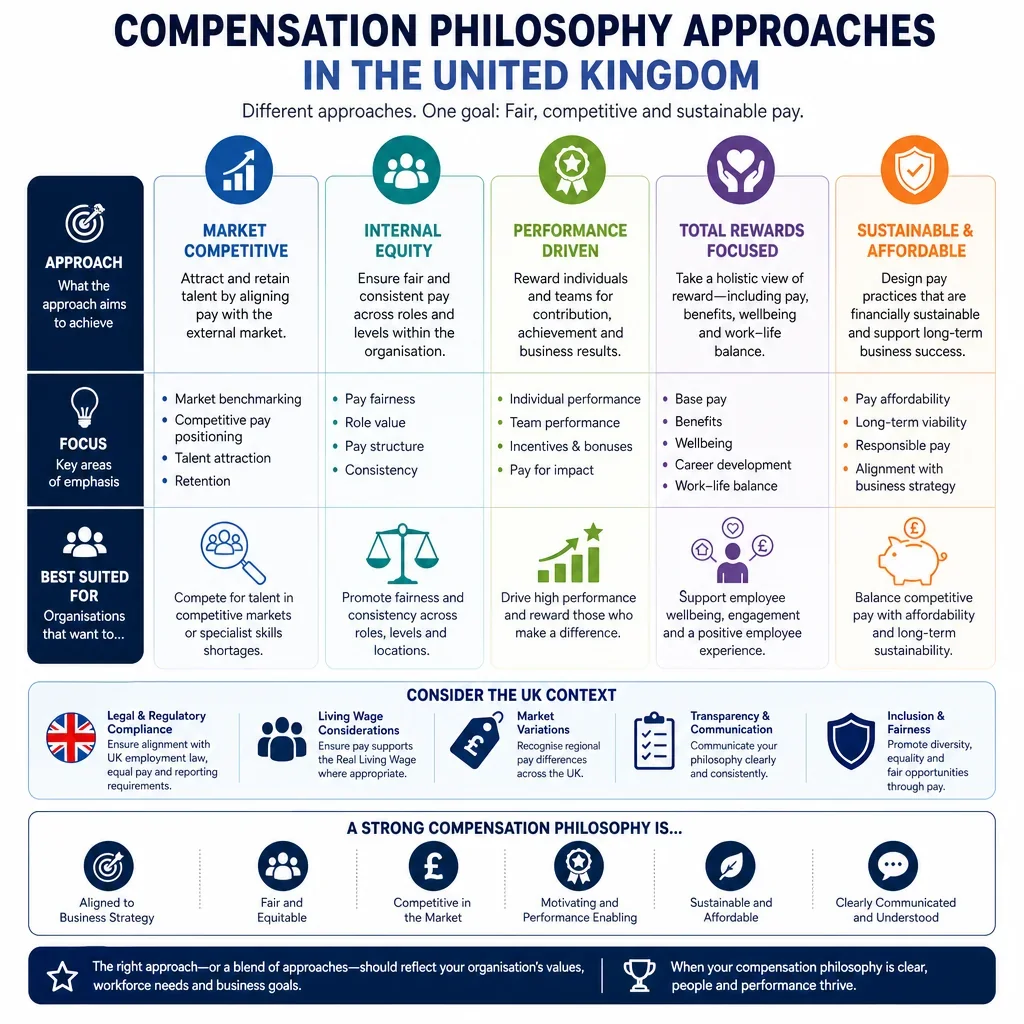
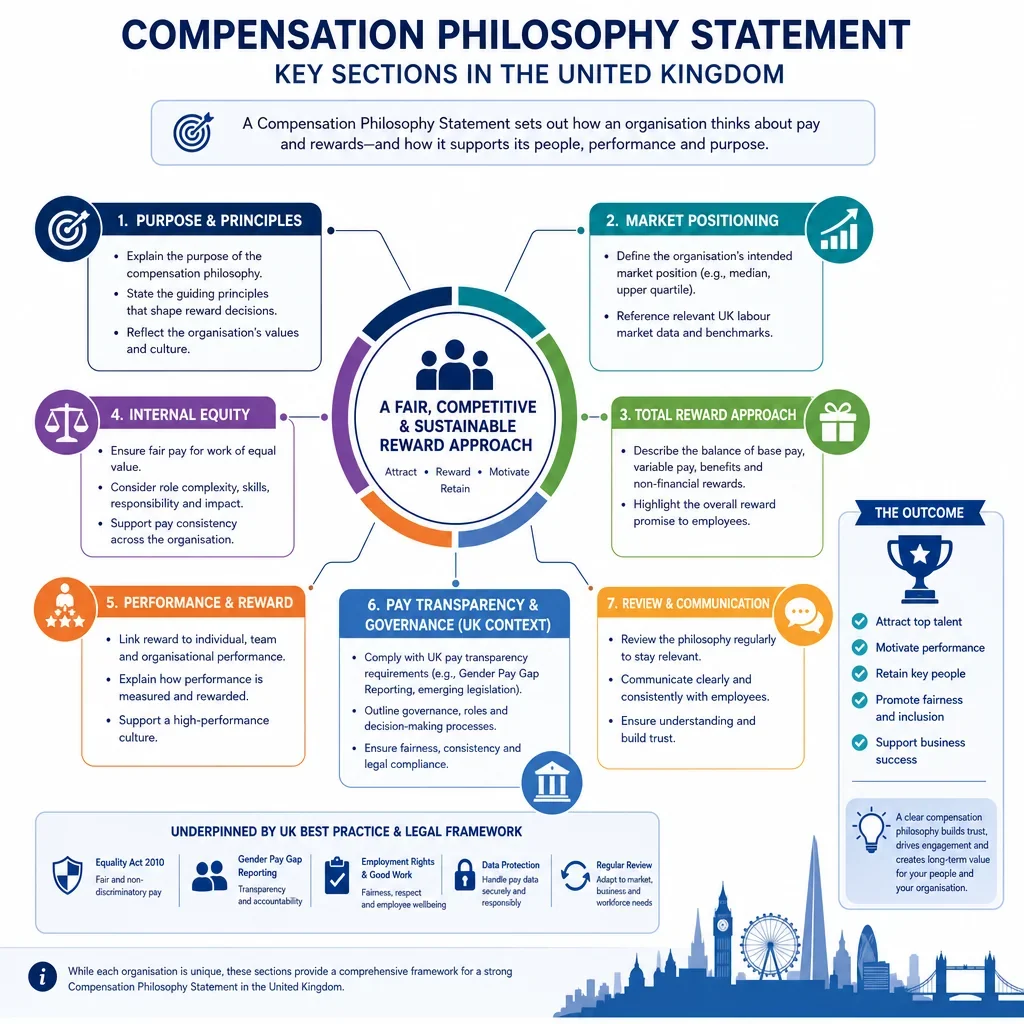
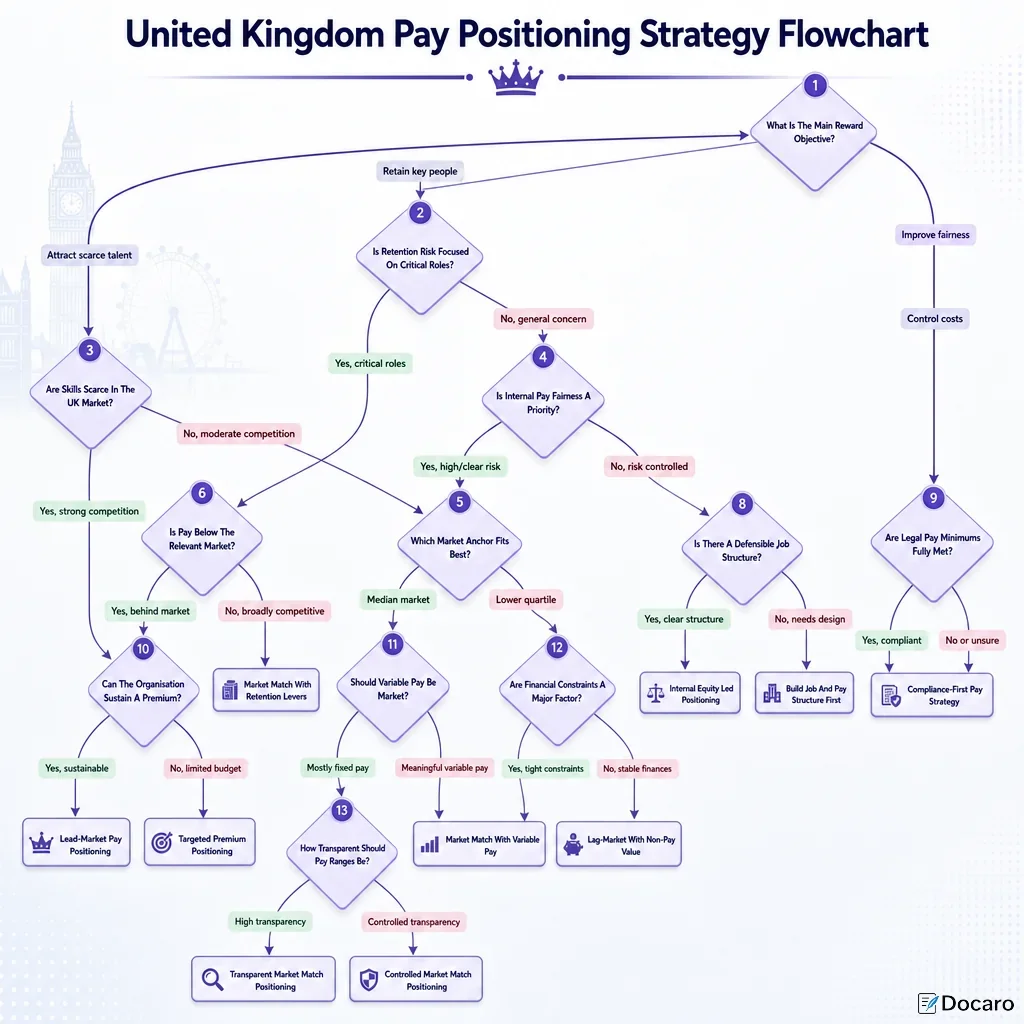
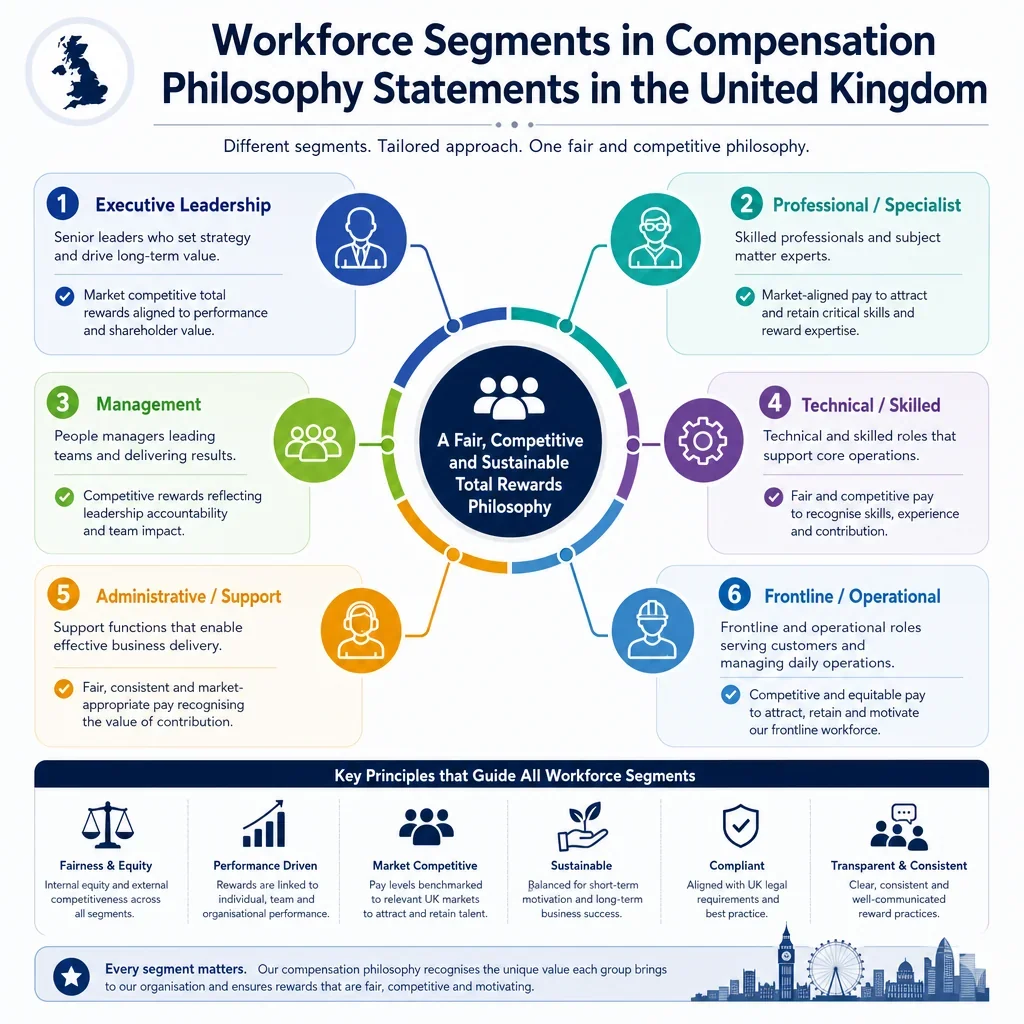
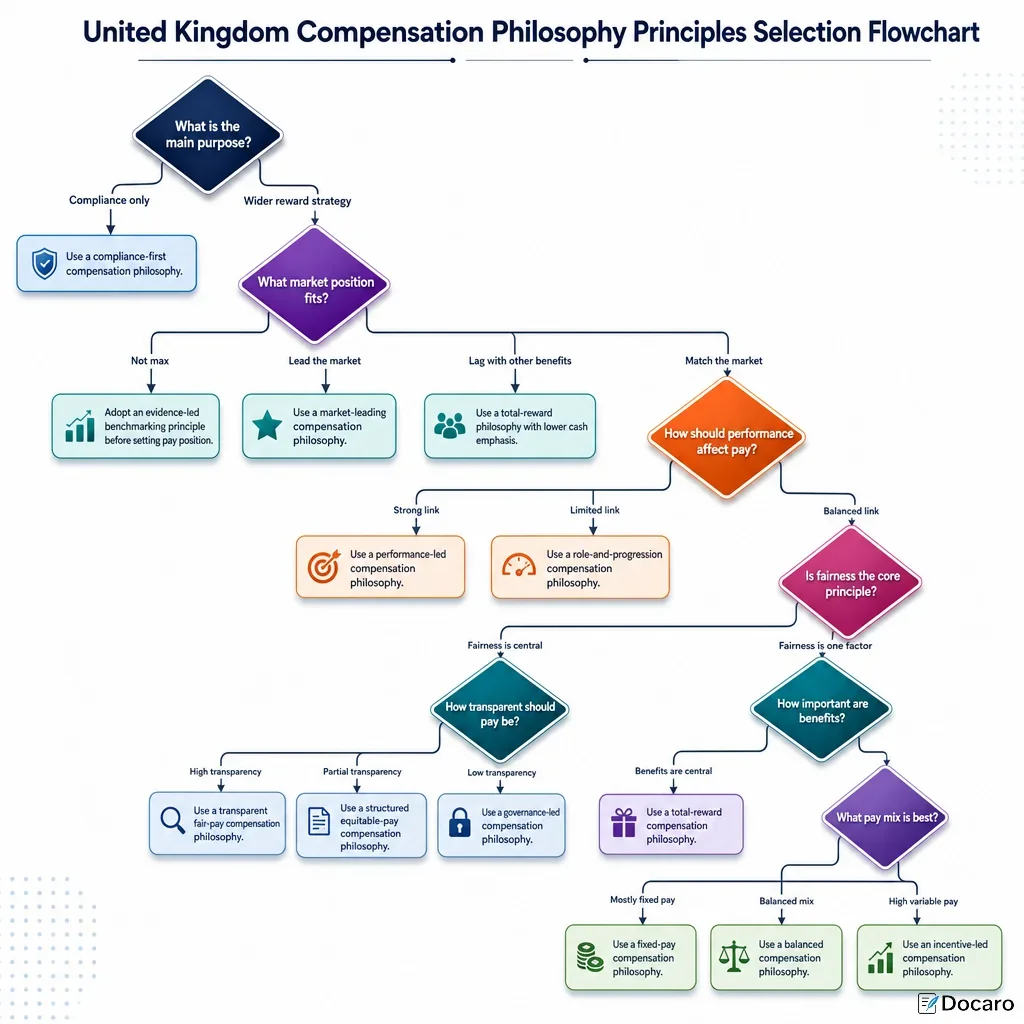
A strong UK compensation philosophy should explain not only salary positioning, but also variable pay, pensions, benefits, recognition, development and working arrangements. This helps employees understand the full employment value proposition and reduces over-reliance on base pay as the only indicator of reward fairness.
Which UK Legal Duties Most Affect Reward Philosophy Wording?
- National Minimum Wage and National Living Wage: pay structures, deductions, salary sacrifice and unpaid time must not reduce pay below statutory minimums.
- Equality and equal pay: base pay, bonuses, allowances, benefits and progression criteria should be objectively justified, consistently applied and monitored for adverse impact.
- Pensions auto-enrolment: pension statements should reflect employer enrolment and contribution duties rather than presenting pension membership as purely discretionary.
- Holiday pay and family leave: wording on benefits, leave and allowances should align with statutory entitlements and any enhanced contractual commitments.
- Working time: overtime, on-call arrangements, shift work and flexible working should be designed with working time, rest break and record-keeping obligations in mind.
How Should Employers Balance Transparency And Flexibility?
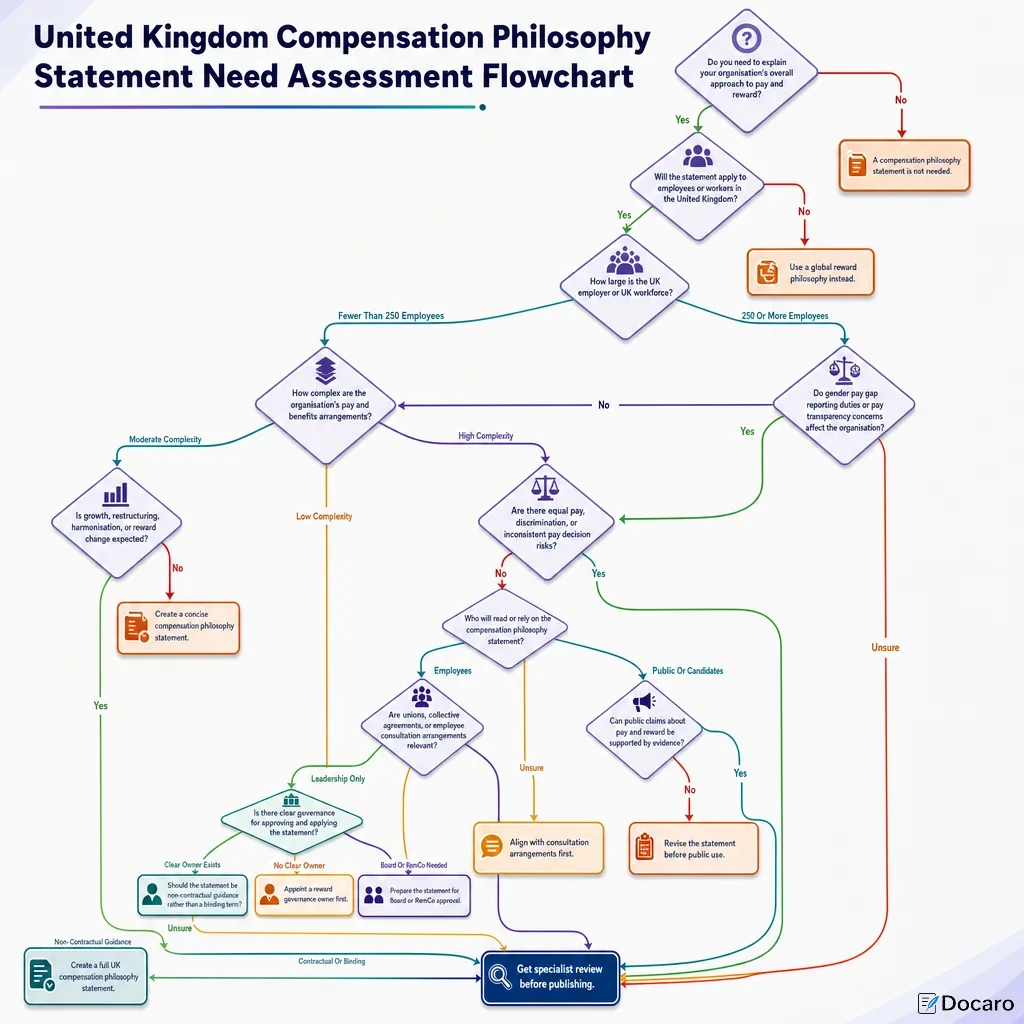
The dataset shows that transparency is most important where decisions affect pay outcomes, such as salary ranges, bonuses, commission, allowances, promotion pay and recognition. Flexibility is still useful, but policies should identify decision owners, eligibility criteria, review cycles and whether the reward is contractual or discretionary.
Why Should Executive And Broad Employee Rewards Be Governed Differently?
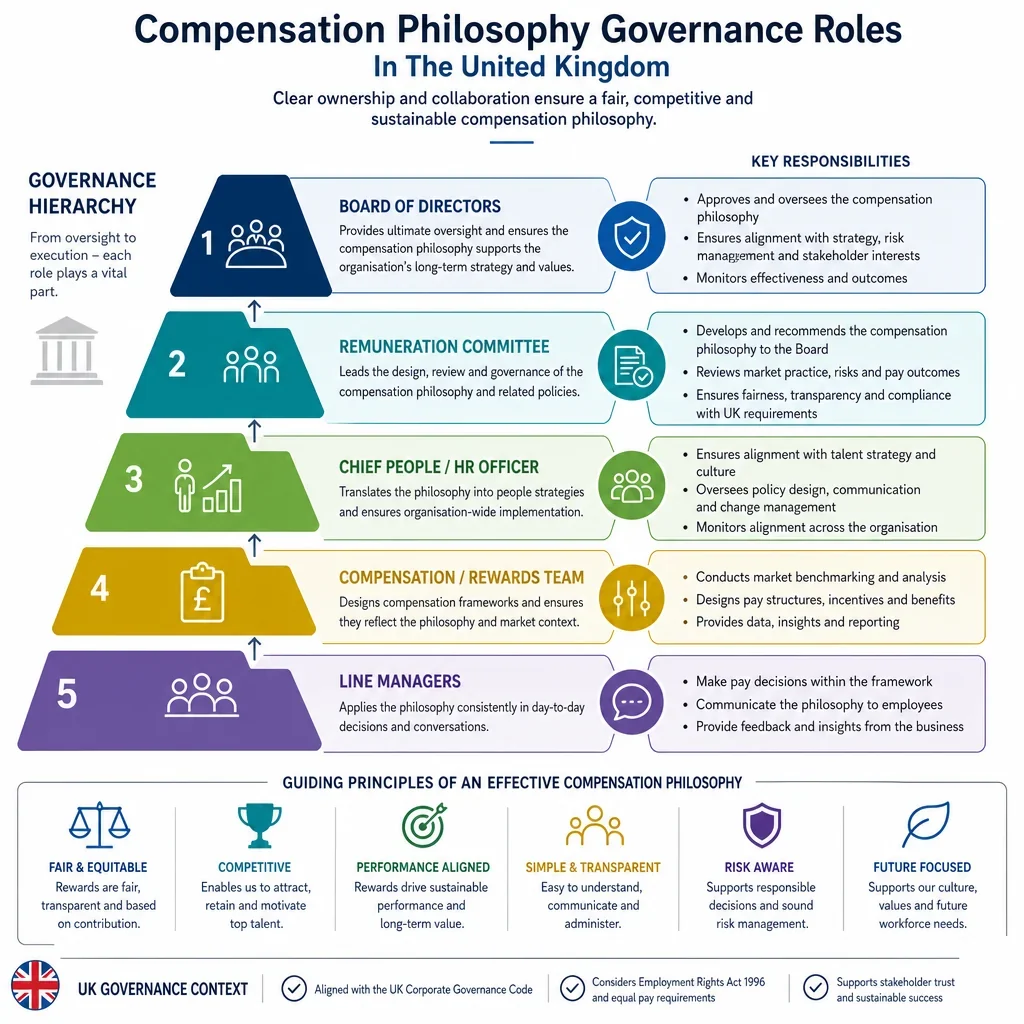
Executive pay, long-term incentives, severance and director benefits usually need stronger governance because of shareholder, remuneration committee and Companies Act reporting expectations. Broad employee rewards need equally careful fairness checks, but the emphasis is more often on consistency, equal pay risk, affordability and clear communication.
FAQs
You Might Also Be Interested In