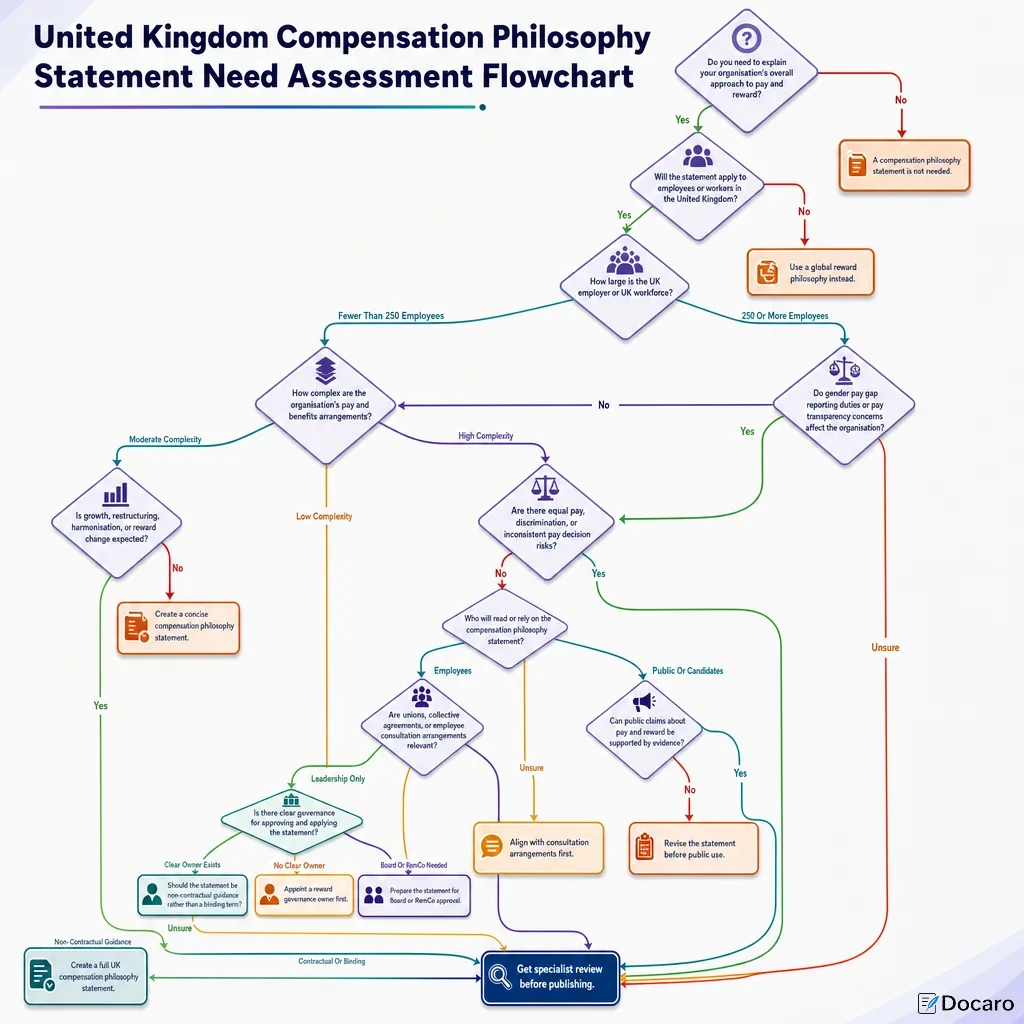
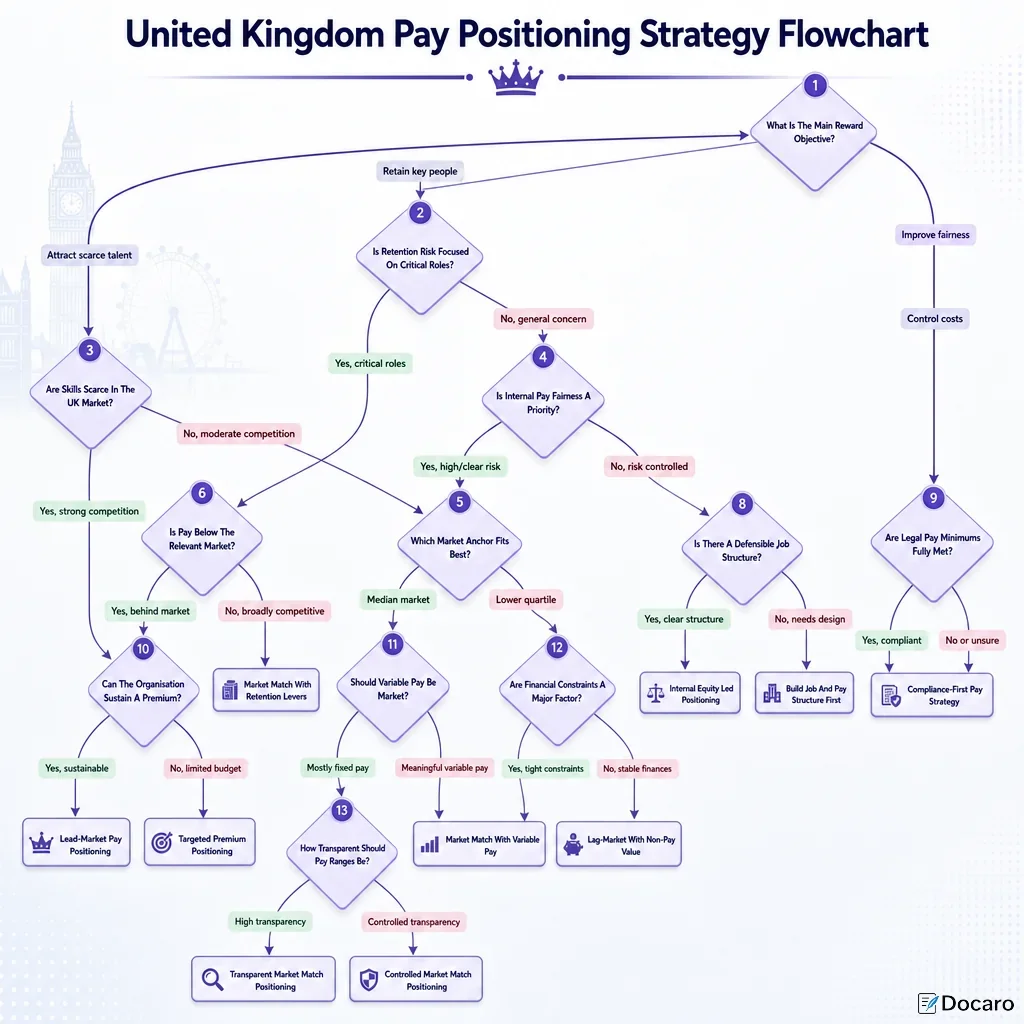
United Kingdom Compensation Philosophy Principles Selection Flowchart
What is the main purpose?
Why Is The Right UK Compensation Philosophy Important?
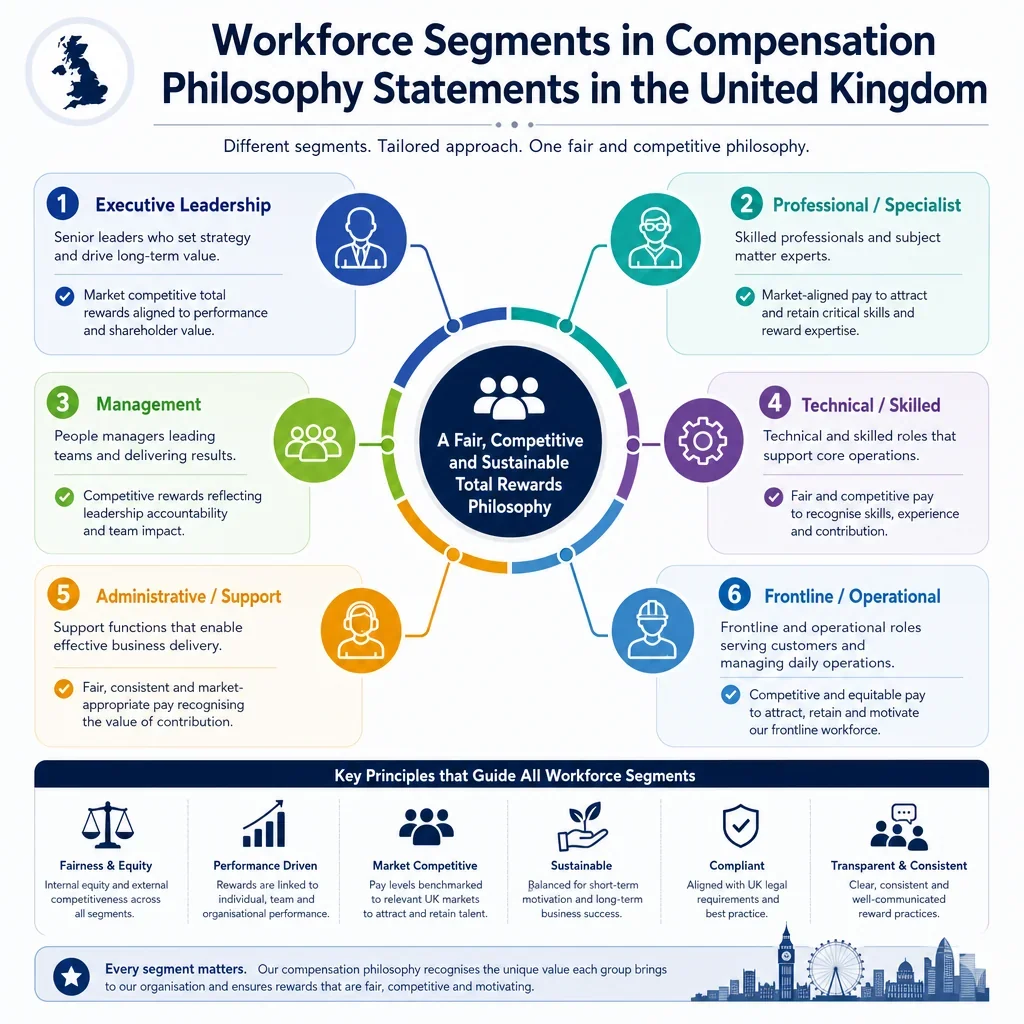
A compensation philosophy statement explains how an organisation in the United Kingdom makes pay, benefits and reward decisions. Choosing the right principles matters because the statement can influence hiring, retention, employee trust, budgeting and legal risk.
How Does It Support UK Pay Compliance?
A good philosophy makes clear that statutory duties come first. This includes the National Minimum Wage and National Living Wage, equal pay rights, working time rules and workplace pension duties. If these foundations are missing, reward decisions may become inconsistent or legally unsafe.
How Does It Reduce Equal Pay And Discrimination Risk?
UK employers should be able to justify pay differences using objective reasons such as role value, skills, location, experience or performance. Clear principles help managers avoid informal decisions that may create equal pay concerns or discrimination risk under the Equality Act 2010.
How Does It Improve Recruitment And Retention?
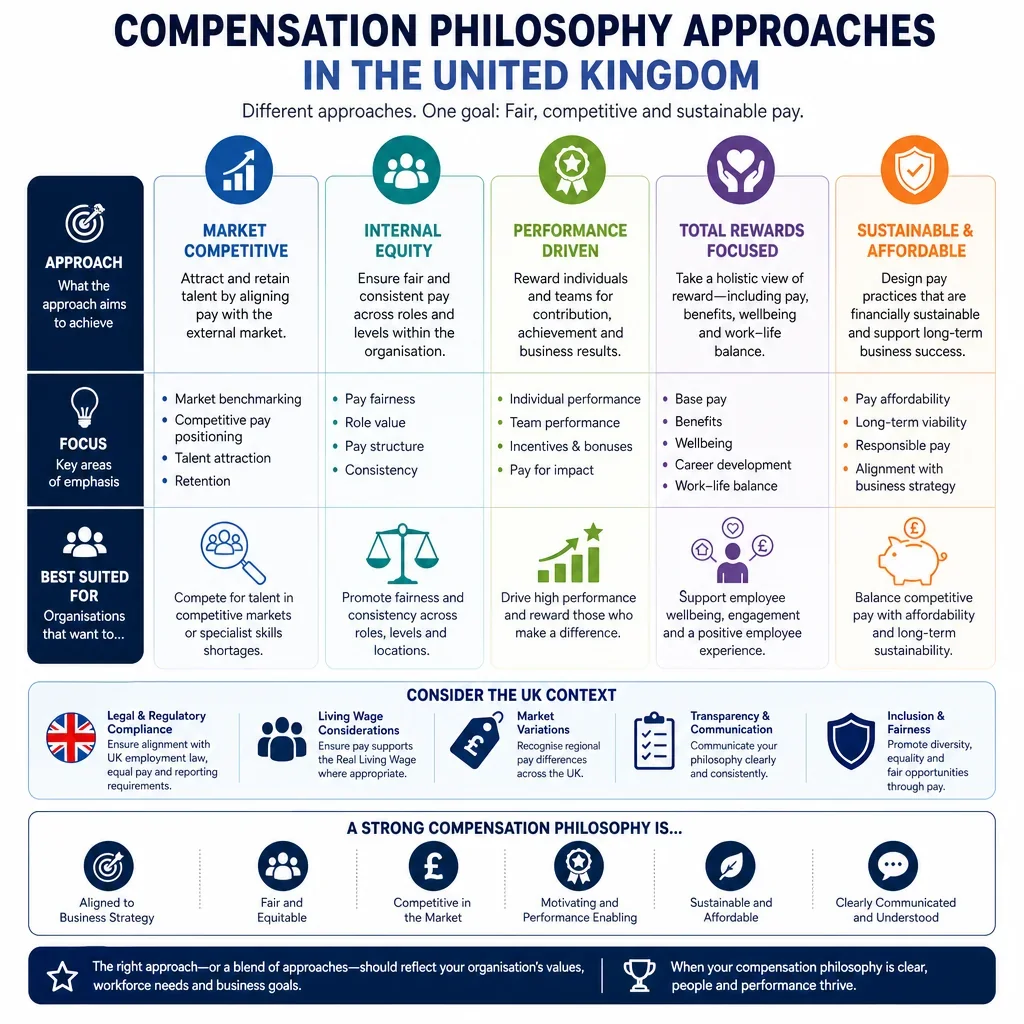
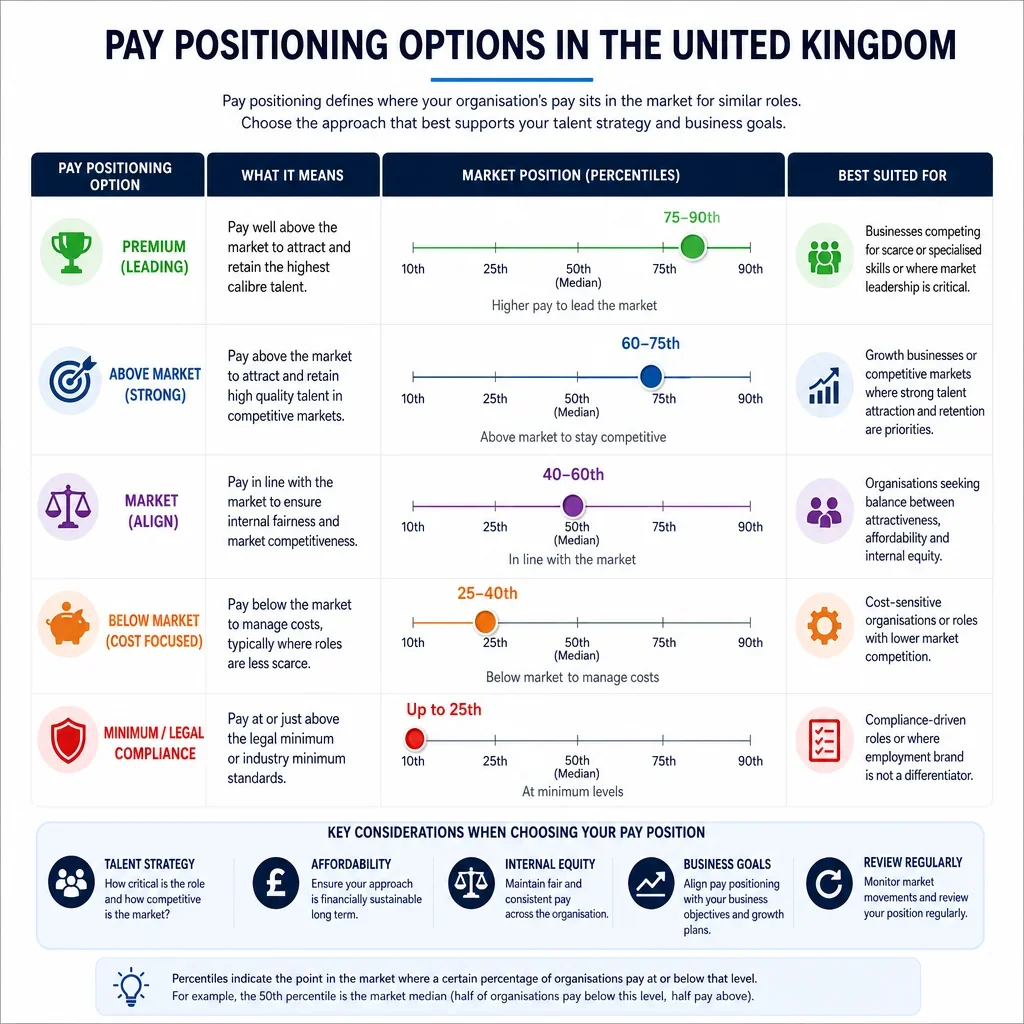
Employees and candidates want to understand how pay is set and how they can progress. A well chosen philosophy tells people whether the organisation aims to lead the market, match the market, prioritise fairness, reward performance or compete through total reward. This supports a clearer employee value proposition.
How Does It Help Managers Make Consistent Decisions?
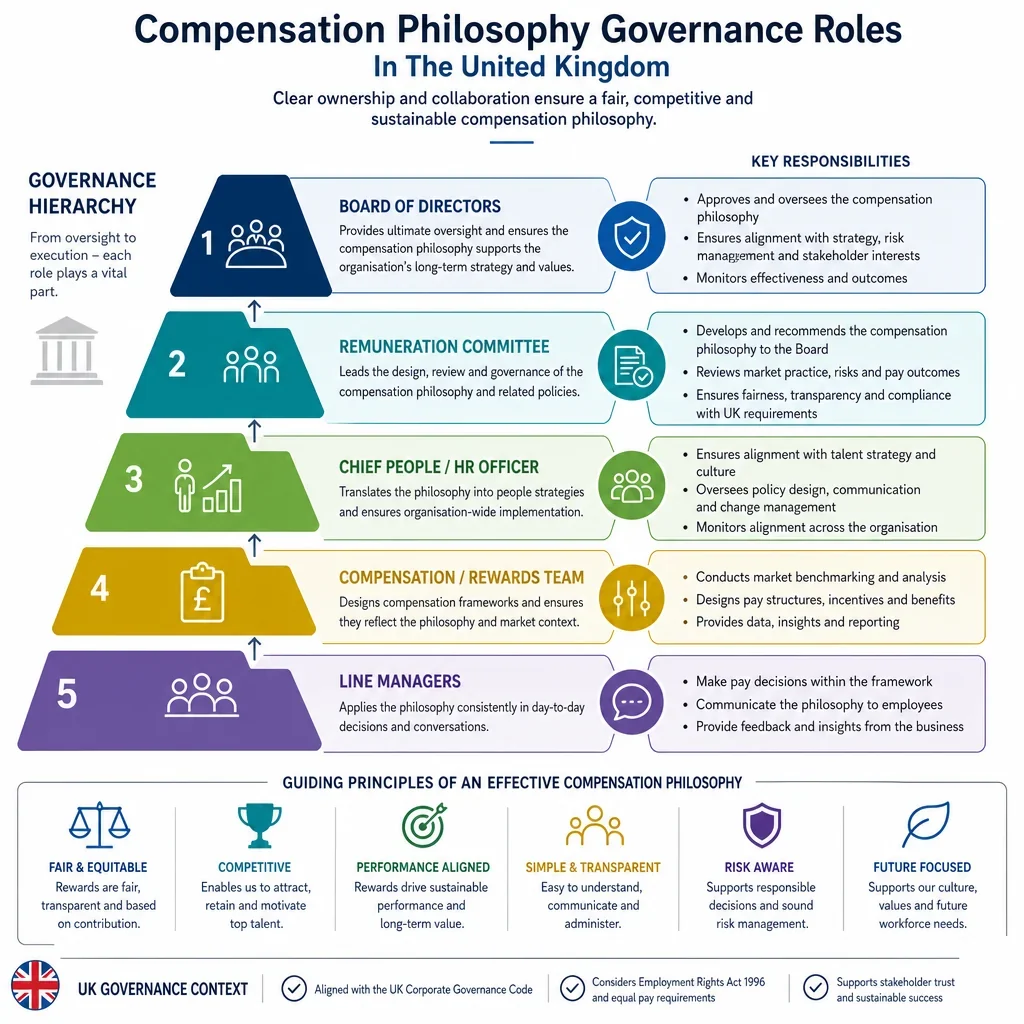
Without agreed principles, pay rises, bonuses, offers and exceptions may depend too much on individual manager judgement. A compensation philosophy gives managers a common framework and helps HR review decisions against affordability, fairness and business need.
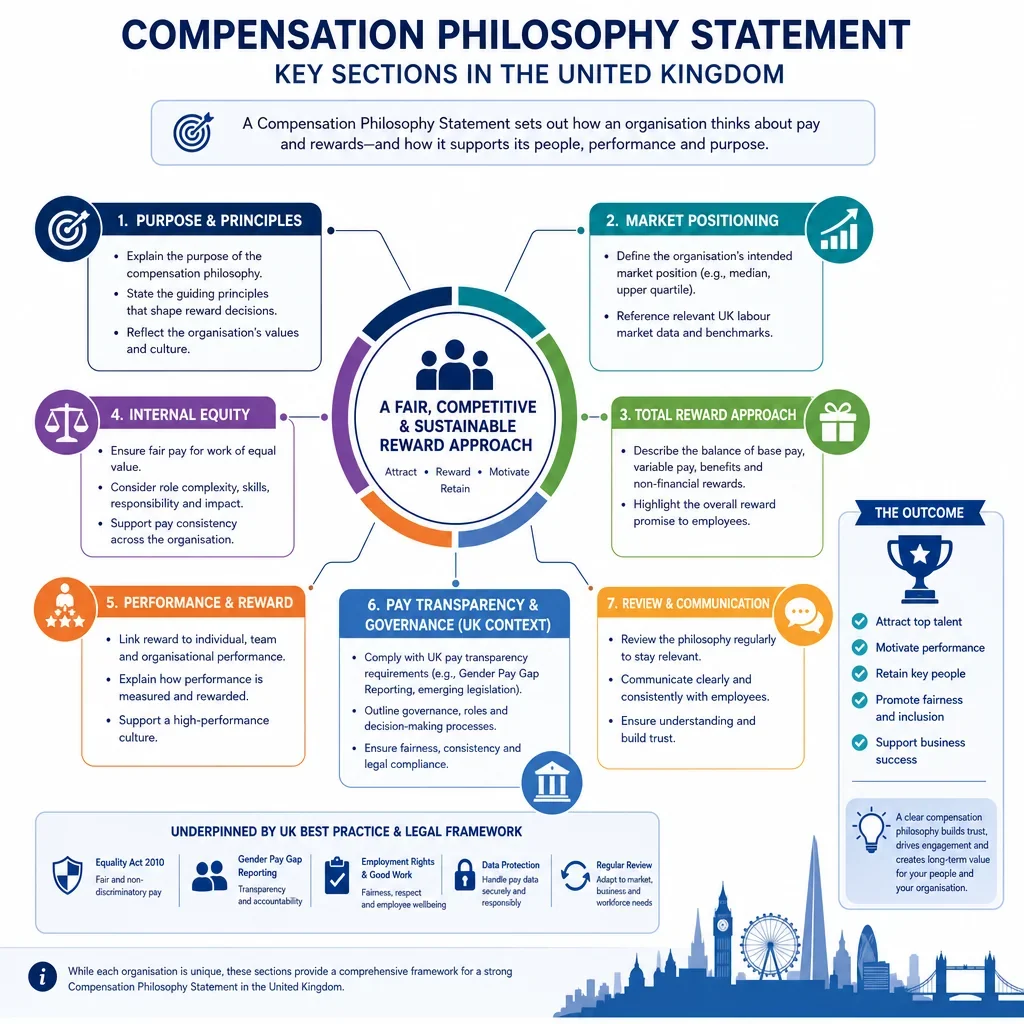
What Should A UK Compensation Philosophy Cover?
- Legal compliance: statutory pay, equal pay, pensions and working time requirements.
- Market position: whether pay should lead, match or lag the relevant labour market.
- Fairness: job levels, pay ranges, progression rules and equality checks.
- Performance: how individual, team or business results affect reward.
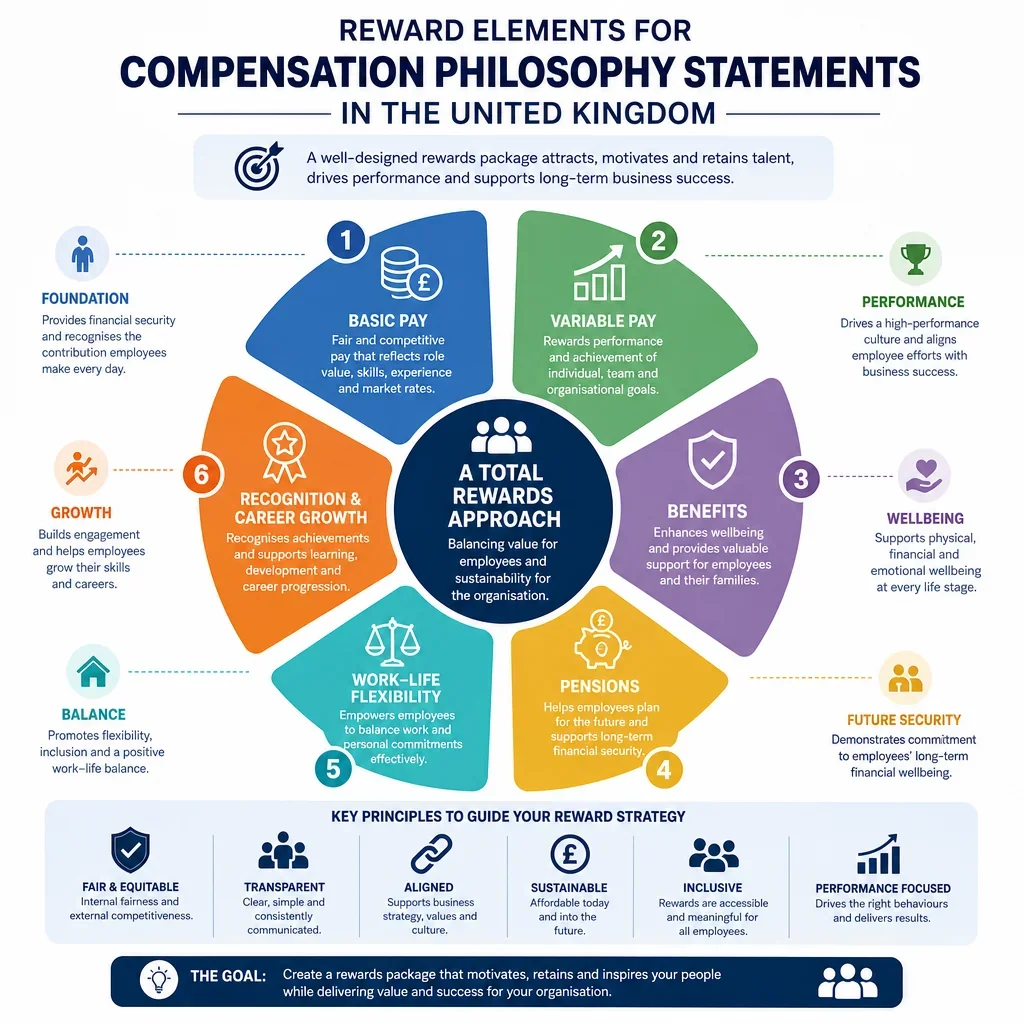
- Total reward: the role of pensions, benefits, flexible working and wellbeing support.
- Governance: approvals, exceptions, audits and review cycles.
The right choice creates a practical, defensible and credible foundation for compensation philosophy statement documents used in the United Kingdom.

FAQs
You Might Also Be Interested In