

Compensation Philosophy Statement Sections In The United Kingdom
Created:
Explore key sections of a compensation philosophy statement and how they support fair, consistent pay decisions. This guide complements our AI Generated Compensation Philosophy Statement for use in the United Kingdom resources.
Section Category | Purpose | Suggested Content | Drafting Notes | Section Importance |
|---|---|---|---|---|
Purpose Of The Compensation Philosophy | ||||
Introductory | Explains why the organisation has a compensation philosophy and how it should guide reward decisions. | State the aim to attract, retain, motivate and fairly reward employees while supporting sustainable business performance. | Use plain UK business English and avoid creating contractual guarantees. | Essential |
Scope And Application | ||||
Introductory | Defines the employees, workers, executives, locations and entities covered by the philosophy. | Identify covered roles, UK entities, exclusions, treatment of contractors, senior executives and international assignees. | Be precise where different populations have separate reward arrangements. | Essential |
Guiding Reward Principles | ||||
Strategic alignment | Sets the core principles that underpin all compensation decisions. | Cover fairness, transparency, competitiveness, affordability, performance, consistency, compliance and inclusion. | List a small number of principles and define each in practical terms. | Essential |
Alignment With Business Strategy | ||||
Strategic alignment | Connects reward choices to the organisation's commercial objectives and long-term priorities. | Explain how pay supports growth, productivity, customer outcomes, innovation, risk control or transformation goals. | Avoid generic statements link reward design to actual strategic priorities. | Essential |
Talent Attraction And Retention | ||||
Strategic alignment | Explains how compensation helps recruit, engage and retain the people needed by the business. | Describe target talent markets, scarce skills, retention priorities and the balance between pay, benefits and career opportunity. | Keep wording realistic and avoid promising market-leading pay unless this is intended. | Recommended |
Total Reward Approach | ||||
Benefits and total reward | Shows that reward includes salary, incentives, benefits, recognition, wellbeing and development. | Summarise fixed pay, variable pay, pensions, insured benefits, leave, flexibility, recognition and non-financial rewards. | Use this section to avoid over-focusing on base salary alone. | Essential |
Market Positioning | ||||
Pay structure | States the organisation's intended pay position against relevant labour market benchmarks. | Specify whether the target is median, upper quartile, market competitive or differentiated by role, level or skill scarcity. | Define the comparator market and avoid vague phrases such as competitive without explanation. | Essential |
Market Data And Benchmarking | ||||
Pay structure | Explains how external pay data is selected, interpreted and applied. | Cover survey sources, data age, peer groups, geography, job matching, sample size and use of judgement. | State that market data informs decisions but does not automatically determine pay. | Essential |
Internal Equity | ||||
Pay structure | Ensures employees in comparable roles are paid consistently using objective factors. | Refer to role size, skills, experience, performance, location, scarcity and legitimate business reasons for pay differences. | Use objective language and avoid subjective criteria that may create discrimination risk. | Essential |
Equal Pay And Non-Discrimination | ||||
Governance | Confirms commitment to equal pay and non-discriminatory reward decisions. | State that pay decisions must comply with equality law and be based on objective, justifiable criteria. | Do not overstate compliance describe controls such as audits, moderation and documented rationale. | Essential |
Equality Act Compliance | ||||
Governance | Links the philosophy to statutory duties on discrimination and equal pay in Great Britain. | Refer to objective pay criteria, equal pay for equal work, protected characteristics and prevention of discriminatory outcomes. | Keep the section legally accurate and aligned with current HR and legal guidance. | Essential |
National Minimum Wage Compliance | ||||
Governance | Confirms that pay practices must meet National Minimum Wage and National Living Wage requirements. | Cover hourly compliance checks, deductions, unpaid working time, apprentices, salary sacrifice and annual rate changes. | Use cautious wording because compliance depends on working hours, deductions and pay reference periods. | Essential |
Job Architecture And Levelling | ||||
Pay structure | Explains how roles are grouped and levelled to support consistent pay decisions. | Describe job families, grades, levels, career paths, role evaluation factors and link to salary ranges. | Keep technical grading detail in a separate framework if lengthy. | Essential |
Job Evaluation Methodology | ||||
Pay structure | Describes how roles are assessed to determine relative value and support fair grading. | Cover factors such as responsibility, knowledge, skills, complexity, impact, working conditions and evaluation governance. | Use consistent terminology and avoid implying that job holders are evaluated rather than roles. | Recommended |
Base Salary | ||||
Pay structure | Defines the role of fixed pay within the overall reward package. | Explain salary ranges, starting pay, progression, review factors, affordability and relationship to market and internal equity. | Avoid stating that employees are entitled to annual increases unless this is intended contractually. | Essential |
Salary Ranges And Pay Bands | ||||
Pay structure | Explains how salary ranges are structured and used for pay management. | Cover range minimums, midpoints, maximums, band overlap, range penetration and controls for out-of-range pay. | Define terms clearly for non-specialist managers and employees. | Essential |
Pay Progression | ||||
Pay structure | Sets out how employees may move through salary ranges over time. | Cover performance, skills growth, role development, market movement, promotion, budget availability and manager discretion. | Use conditional language such as may, normally and subject to approval. | Recommended |
Salary Review Cycle | ||||
Review and monitoring | Explains when and how pay is reviewed. | State review timing, eligibility, data inputs, approval stages, effective dates and communication process. | Make clear that a review does not guarantee an increase unless policy says otherwise. | Essential |
New Hire Pay Setting | ||||
Pay structure | Provides principles for setting starting salaries consistently and fairly. | Consider role level, experience, skills, market rates, internal comparators, budget and approval requirements. | Discourage reliance on previous salary where it may perpetuate pay inequality. | Recommended |
Promotion Pay | ||||
Pay structure | Explains how pay is adjusted when an employee moves to a higher-level role. | Cover salary range placement, minimum increase guidance, market alignment, internal equity and effective date. | Avoid fixed formulas unless the organisation is ready to apply them consistently. | Recommended |
Lateral Move Pay | ||||
Pay structure | Sets expectations for pay changes when an employee moves to a role at the same level. | State whether pay usually remains unchanged and when adjustments may be made for market, skills or responsibilities. | Include flexibility for exceptional business needs and internal equity checks. | Optional |
Demotion Or Redeployment Pay | ||||
Pay structure | Explains how pay may be handled where an employee moves to a lower-level role. | Cover pay protection, salary adjustment, consultation, contractual considerations and approval requirements. | Flag that contractual changes may require agreement and legal advice. | Optional |
Geographic Pay Differentials | ||||
Pay structure | Explains whether pay varies by work location, labour market or cost area. | Cover London weighting, regional ranges, remote work, office location, mobility and review of location allowances. | Define eligibility carefully where employees work remotely or hybrid across UK locations. | Recommended |
Skills-Based Pay | ||||
Pay structure | Explains when scarce, critical or certified skills may influence pay. | Cover technical skills, professional qualifications, certifications, skill premiums, review periods and sunset clauses. | Use objective evidence for premiums and review them regularly to avoid legacy inequity. | Optional |
Allowances And Premiums | ||||
Pay structure | Describes additional payments for specific duties, conditions or working arrangements. | Cover shift premiums, on-call allowances, standby payments, travel allowances, first aid payments and temporary responsibility allowances. | State eligibility, review rights and whether allowances are pensionable or discretionary. | Recommended |
Overtime And Additional Hours | ||||
Pay structure | Sets principles for paying or recognising work beyond normal contractual hours. | Cover eligibility, approval, overtime rates, time off in lieu, salaried roles and minimum wage implications. | Align with contracts and working time rules avoid encouraging unpaid extra hours. | Recommended |
Variable Pay Philosophy | ||||
Performance and incentives | Explains the role of bonuses, incentives and commission in rewarding performance. | State when variable pay is used, its link to performance, affordability, risk, plan rules and discretion. | Clearly distinguish philosophy from detailed bonus or commission plan terms. | Essential |
Bonus Plans | ||||
Performance and incentives | Describes how discretionary or formulaic bonus opportunities fit the reward approach. | Cover eligibility, performance measures, target opportunity, funding, discretion, malus, clawback and payment timing. | Avoid creating an unintended contractual bonus entitlement cross-refer to plan rules. | Recommended |
Sales Commission | ||||
Performance and incentives | Explains how sales roles are rewarded for revenue, margin, customer or growth outcomes. | Cover quotas, commission rates, accelerators, caps, recoveries, territory changes and quality controls. | Signpost detailed commission plans and reserve rights to amend prospectively. | Optional |
Long-Term Incentives | ||||
Performance and incentives | Explains the use of share, equity or cash-based incentives to support long-term value creation. | Cover eligibility, vesting, performance conditions, retention, shareholder alignment, leaver treatment and plan rules. | Keep tax, securities and company law detail outside the philosophy statement. | Optional |
Link To Performance Management | ||||
Performance and incentives | Explains how performance ratings or outcomes influence pay decisions. | Cover objective setting, manager assessment, calibration, performance differentiation, development and documentation. | Emphasise evidence-based assessment and moderation to reduce bias. | Essential |
Incentive Risk And Conduct | ||||
Performance and incentives | Ensures incentives do not encourage inappropriate risk-taking or poor conduct. | Cover balanced metrics, quality gates, compliance behaviour, customer outcomes, moderation, malus and clawback. | Particularly important for regulated, sales, financial services or safety-critical roles. | Recommended |
Recognition Awards | ||||
Performance and incentives | Explains informal or formal recognition for exceptional contribution, values or teamwork. | Cover spot awards, non-cash recognition, nominations, approval, values alignment and budget limits. | Use inclusive criteria and monitor award distribution for bias. | Optional |
Benefits Philosophy | ||||
Benefits and total reward | Explains the organisation's approach to employee benefits as part of total reward. | Cover core benefits, flexible benefits, wellbeing, insured benefits, leave, family support and employee choice. | Avoid listing every benefit if benefits change frequently signpost the benefits guide. | Essential |
Pensions And Auto-Enrolment | ||||
Benefits and total reward | Confirms the role of workplace pensions and compliance with automatic enrolment duties. | Cover employer contributions, employee contributions, eligibility, salary sacrifice, enrolment and signposting to pension materials. | Do not provide detailed pension advice refer employees to scheme documents. | Essential |
Annual Leave And Holiday Pay | ||||
Benefits and total reward | Recognises paid holiday as a statutory and contractual component of reward. | Cover statutory entitlement, enhanced leave, bank holidays, holiday pay principles and links to leave policies. | Keep details consistent with contracts and current holiday pay rules. | Recommended |
Family Leave And Pay | ||||
Benefits and total reward | Explains how statutory and enhanced family-related pay supports employees. | Cover maternity, paternity, adoption, shared parental, parental bereavement, neonatal care and any enhanced pay. | Avoid detailed eligibility rules unless fully maintained link to separate policies. | Recommended |
Sick Pay And Absence Support | ||||
Benefits and total reward | Explains statutory sick pay and any occupational sick pay as part of reward and wellbeing. | Cover statutory sick pay, company sick pay, eligibility, discretion, wellbeing support and absence policy links. | Ensure wording matches contracts and absence policies to avoid conflicting entitlements. | Recommended |
Wellbeing And Health Benefits | ||||
Benefits and total reward | Explains benefits that support physical, mental and financial wellbeing. | Cover private medical insurance, EAP, mental health support, health screening, gym benefits and financial education. | State that insured benefits are subject to provider terms and eligibility. | Recommended |
Flexible Benefits | ||||
Benefits and total reward | Explains any employee choice framework for tailoring benefits to personal needs. | Cover benefit selection windows, core benefits, voluntary benefits, salary sacrifice and life event changes. | Include tax and eligibility caveats, and refer to platform or scheme rules. | Optional |
Salary Sacrifice Arrangements | ||||
Benefits and total reward | Explains how salary sacrifice may be used for pensions or benefits and its pay implications. | Cover eligible benefits, effect on contractual salary, tax, national insurance, minimum wage checks and employee consent. | Mention that salary sacrifice must not reduce pay below minimum wage thresholds. | Recommended |
Expenses And Reimbursements | ||||
Benefits and total reward | Distinguishes compensation from reimbursement of business costs. | Cover business travel, subsistence, homeworking costs, approval, receipts and taxable benefits reporting. | Keep reimbursement rules in a separate expenses policy and avoid treating expenses as reward. | Optional |
Pay Transparency | ||||
Governance | Explains what pay information is shared and with whom. | Cover salary range disclosure, employee communications, manager guidance, recruitment advertising and confidentiality boundaries. | Be clear about current practice and avoid promising transparency levels not yet operational. | Recommended |
Gender Pay Gap Reporting | ||||
Review and monitoring | Explains how gender pay gap reporting informs reward monitoring where the duty applies. | Cover reporting obligations for relevant employers, action planning, data review and links to broader inclusion work. | State applicability accurately, as UK reporting duties depend on employer size and jurisdiction. | Recommended |
Pay Gap Analysis | ||||
Review and monitoring | Sets out how the organisation monitors unexplained pay differences across groups. | Cover gender, ethnicity, disability, grade, function, location, bonus outcomes and action tracking where data is available. | Mention data protection, small sample caution and the difference between pay gaps and equal pay claims. | Recommended |
Decision Rights And Approvals | ||||
Governance | Clarifies who can recommend, approve and review compensation decisions. | Define roles for line managers, HR, finance, senior leaders, remuneration committee and board approvals. | Use a simple approval matrix or cross-refer to one. | Essential |
Remuneration Committee Oversight | ||||
Governance | Describes board or committee oversight of senior reward decisions where applicable. | Cover committee remit, executive pay, independent advice, workforce reward context and escalation of exceptional decisions. | Adapt for listed, private, charity or subsidiary governance structures. | Recommended |
Executive Remuneration | ||||
Governance | Explains special principles for directors and senior executives. | Cover shareholder alignment, long-term incentives, pension alignment, severance, risk, disclosure and workforce pay context. | Keep separate from general employee principles if executive arrangements are materially different. | Optional |
Directors' Remuneration Reporting | ||||
Governance | Addresses statutory remuneration reporting duties for quoted companies where applicable. | Refer to remuneration policy, annual remuneration report, shareholder approval and director pay disclosures. | Include only if relevant to company status do not use for small private employers unnecessarily. | Optional |
Reward Data Privacy | ||||
Governance | Explains how pay, performance and benefits data are handled lawfully and confidentially. | Cover lawful basis, access controls, payroll providers, survey data, analytics, retention and employee privacy notices. | Cross-refer to the employee privacy notice rather than repeating data protection detail. | Recommended |
Budget And Affordability | ||||
Governance | Recognises that compensation decisions must be financially sustainable. | Cover annual budgets, business performance, affordability tests, workforce planning and exceptional approval routes. | Balance affordability with fairness and market competitiveness. | Essential |
Documentation And Audit Trail | ||||
Governance | Ensures compensation decisions are recorded with a clear rationale. | Cover decision records, approvals, benchmarking evidence, equality checks, exceptions and retention of records. | Use concise wording that supports accountability without overburdening managers. | Recommended |
Exceptions And Discretion | ||||
Governance | Explains how exceptions to normal compensation practice are controlled. | Cover business-critical hires, retention risks, market anomalies, approval levels, time limits and review dates. | Make discretion structured and documented to reduce inconsistency and bias. | Recommended |
Employee Communication | ||||
Governance | Sets expectations for how reward decisions and principles are communicated. | Cover pay statements, manager briefing, salary review letters, benefits communications and employee questions. | Use transparent but controlled language avoid disclosing confidential colleague pay data. | Recommended |
Manager Accountability | ||||
Governance | Clarifies the role of managers in applying the compensation philosophy fairly. | Cover objective recommendations, performance evidence, budget discipline, equality awareness and communication responsibilities. | Make clear that managers recommend but may not have final approval authority. | Recommended |
HR And Reward Team Role | ||||
Governance | Defines HR's role in maintaining frameworks, advising managers and monitoring outcomes. | Cover policy ownership, benchmarking, salary ranges, review process, governance, analytics and compliance support. | Describe HR as a control and advisory function, not sole decision-maker where approval is shared. | Recommended |
Finance Role In Reward Decisions | ||||
Governance | Explains Finance involvement in budget control and affordability of compensation actions. | Cover salary budgets, bonus pools, headcount planning, cost modelling, payroll impact and approval of exceptions. | Keep finance controls aligned with HR fairness and market competitiveness objectives. | Optional |
Employee Voice And Consultation | ||||
Governance | Explains when employee feedback or consultation may influence reward design. | Cover surveys, employee forums, trade union engagement, works councils and consultation on contractual changes. | Do not imply consultation where the organisation has no legal or policy commitment, except where changes require it. | Optional |
Collective Bargaining Arrangements | ||||
Governance | Explains how union recognition or collective agreements interact with the compensation philosophy. | Cover bargaining units, negotiated pay awards, consultation, collective agreements and non-bargained populations. | Ensure the philosophy does not contradict binding collective agreements. | Optional |
Pay Review Monitoring | ||||
Review and monitoring | Explains how annual pay outcomes are checked for fairness, consistency and budget compliance. | Cover distribution of increases, outliers, gender and diversity checks, budget use, approvals and post-review reporting. | Include enough detail to demonstrate control without revealing confidential analytics. | Essential |
Philosophy Review Cycle | ||||
Review and monitoring | Sets how often the compensation philosophy itself will be reviewed and updated. | Cover review frequency, owner, triggers, approval route and communication of material changes. | Annual or biennial review is common include triggers such as growth, acquisitions or legal changes. | Essential |
External Market Review Cycle | ||||
Review and monitoring | Sets expectations for refreshing market pay data and salary structures. | Cover annual benchmarking, targeted reviews for hot skills, survey participation and review of salary bands. | Avoid promising automatic market adjustments after each benchmark review. | Recommended |
Benefits Review Cycle | ||||
Review and monitoring | Explains how benefits are assessed for value, relevance and competitiveness. | Cover employee uptake, cost, provider performance, market practice, inclusion, wellbeing and renewal dates. | Mention that benefits may change subject to provider terms, consultation and contracts. | Recommended |
Incentive Effectiveness Review | ||||
Review and monitoring | Checks whether incentive plans drive intended outcomes without unfairness or excessive risk. | Review payout distribution, performance correlation, affordability, conduct issues, equality impacts and participant feedback. | Use this to justify plan amendments before the next performance period. | Recommended |
Mergers, Acquisitions And Harmonisation | ||||
Strategic alignment | Explains how reward principles apply during integration, transfer or harmonisation activity. | Cover due diligence, legacy terms, harmonisation approach, consultation, retention arrangements and transition periods. | Avoid promising harmonisation employment law and contractual rights may restrict changes. | Optional |
TUPE And Transferred Employees | ||||
Governance | Flags that transferred employees may have protected terms affecting compensation changes. | Cover preserved contractual terms, inherited benefits, consultation, harmonisation limits and legal advice for changes. | Use high-level wording only TUPE issues are fact-specific and legally sensitive. | Optional |
International Mobility And Assignments | ||||
Pay structure | Explains reward treatment for employees working across borders or on assignments. | Cover assignment allowances, tax equalisation, relocation, host or home pay, exchange rates and benefits continuity. | Refer to mobility policies and specialist tax advice rather than detailed rules. | Optional |
Contractors And Off-Payroll Workers | ||||
Introductory | Clarifies whether non-employees are outside the compensation philosophy and how rates are treated. | Cover exclusion from employee benefits, contractor day rates, statement of work arrangements and off-payroll working checks. | Avoid wording that suggests contractors are employees or entitled to employee benefits. | Optional |
Apprentices And Early Careers Pay | ||||
Pay structure | Explains reward principles for apprentices, graduates, interns or trainees. | Cover apprentice minimum wage, progression, qualification milestones, training time and transition to permanent roles. | Ensure apprentice pay wording reflects age, apprenticeship year and current legal rates. | Optional |
Part-Time And Flexible Working Pay | ||||
Pay structure | Confirms fair treatment of part-time and flexible workers in pay and benefits. | Cover pro-rating, comparable full-time workers, benefits access, flexible working and non-discrimination. | Use clear pro-rating language and avoid disadvantaging part-time workers without objective justification. | Recommended |
Fixed-Term Worker Pay | ||||
Pay structure | Confirms fair reward treatment for fixed-term employees and workers. | Cover comparable permanent employees, benefits, bonuses, contract length and objective justification for differences. | Avoid blanket exclusions from benefits or bonuses for fixed-term staff without a lawful rationale. | Recommended |
Agency Worker Reward Considerations | ||||
Pay structure | Recognises equal treatment rights for agency workers after the qualifying period. | Cover basic working and employment conditions, pay, holiday entitlement, comparator roles and agency responsibilities. | Keep high-level and coordinate with agency contracts and procurement processes. | Optional |
Living Wage Positioning | ||||
Strategic alignment | States whether the organisation voluntarily aligns to the Real Living Wage or similar standards. | Cover voluntary accreditation, employee and contractor coverage, London rate, annual updates and affordability considerations. | Distinguish the voluntary Real Living Wage from the statutory National Living Wage. | Optional |
Responsible Reward And ESG | ||||
Strategic alignment | Explains how reward supports responsible business, sustainability and social impact commitments. | Cover fair pay, workforce wellbeing, executive pay restraint, sustainability incentives and supplier workforce considerations. | Only include ESG commitments that are measurable and supported by governance. | Optional |
Diversity, Equity And Inclusion In Reward | ||||
Strategic alignment | Explains how reward practices support inclusion and reduce bias in pay outcomes. | Cover inclusive criteria, manager training, moderation, accessibility, monitoring and objective justification for pay differences. | Use UK wording carefully equity may need explanation as fairness rather than guaranteed equal outcomes. | Recommended |
Reward Across The Employee Lifecycle | ||||
Strategic alignment | Shows how reward principles apply from hiring to progression, promotion and exit. | Cover recruitment, onboarding, development, promotion, transfers, leave, retirement and termination considerations. | Use this as a linking section if the statement covers many detailed pay events. | Optional |
Retention Awards | ||||
Performance and incentives | Explains when one-off retention payments may be used for critical talent or business continuity. | Cover eligibility, business case, repayment terms, retention period, equality review and senior approval. | Use sparingly and document objective reasons to avoid perceived unfairness. | Optional |
Sign-On Payments | ||||
Pay structure | Explains when joining bonuses or buy-outs may be used to secure key hires. | Cover lost bonus buy-outs, relocation, scarce skills, repayment clauses, approval and equality checks. | Ensure repayment terms are clearly documented in offer letters or agreements. | Optional |
Severance And Termination Payments | ||||
Governance | Explains principles for statutory, contractual or discretionary payments on termination. | Cover statutory redundancy pay, notice pay, settlement agreements, ex gratia payments and approval controls. | Avoid detailed settlement wording termination payments are fact-specific and may require legal advice. | Optional |
Payroll Accuracy And Timeliness | ||||
Governance | Confirms the importance of accurate and timely payment of wages and deductions. | Cover payroll cut-offs, payslips, tax deductions, pension contributions, corrections and employee query routes. | Keep operational payroll rules separate but align with the compensation philosophy. | Recommended |
Payslip Information | ||||
Governance | Recognises the requirement to provide itemised pay information to workers. | Cover gross pay, deductions, net pay, variable deductions, hours where pay varies by time worked and query process. | Do not duplicate payslip law in full reference payroll standards and employee rights. | Recommended |
Working Time And Pay Interaction | ||||
Governance | Links pay practices to working time, rest and record-keeping requirements. | Cover working hours, overtime, opt-outs, rest breaks, time records and minimum wage compliance. | Avoid encouraging unpaid excess hours for salaried employees. | Recommended |
Reward Systems And Technology | ||||
Governance | Explains use of HR, payroll and compensation systems to manage reward decisions. | Cover system controls, data quality, workflow approvals, audit logs, access rights and reporting. | Keep operational system instructions outside the philosophy statement. | Optional |
Automated Decision Support In Reward | ||||
Governance | Explains any use of algorithms, analytics or AI in reward recommendations. | Cover human oversight, bias checks, data quality, explainability, privacy and limits of automated recommendations. | State clearly that final pay decisions involve appropriate human review. | Optional |
Contractual Status Of The Statement | ||||
Introductory | Clarifies whether the compensation philosophy is contractual or a non-contractual policy guide. | State that the statement guides decisions and may be amended, unless specific terms are expressly contractual. | Include this early to reduce risk of unintended contractual entitlement. | Essential |
Definitions | ||||
Introductory | Defines technical reward terms used in the statement. | Define base salary, total cash, total reward, salary range, midpoint, bonus, incentive, benefits and market median. | Use short definitions and avoid jargon where possible. | Recommended |
Related Policies And Documents | ||||
Introductory | Signposts detailed policies that support the compensation philosophy. | Link to contracts, bonus rules, benefits guide, expenses policy, pension documents, equal opportunities policy and salary review process. | Use this section to keep the philosophy concise and avoid duplicating detailed rules. | Recommended |
What Should A UK Compensation Philosophy Statement Cover?
A strong UK compensation philosophy statement should do more than describe salary bands. It should explain how pay supports business strategy, how market data is used, how decisions are governed, and how the organisation manages fairness, incentives, benefits and review cycles.
Which Sections Are Usually Essential?
- Purpose, scope, principles, market positioning, job architecture, base pay, variable pay, benefits, governance, equal pay and review sections are usually the core of the document.
- UK employers should ensure the statement reflects statutory duties on equal pay, non-discrimination, national minimum wage compliance, pension auto-enrolment, gender pay gap reporting where applicable, and executive pay reporting for quoted companies where relevant.
- The document should be written as a practical decision-making framework, not as a contractual promise of pay progression or bonus entitlement.
How Should UK Legal Risk Be Managed?
- Use clear wording that distinguishes policy intent from contractual terms, especially for bonuses, salary reviews, allowances and benefits.
- Explain how equality, diversity and inclusion considerations are embedded in reward decisions, with reference to objective criteria and moderation processes.
- Include review and audit sections so the organisation can evidence ongoing checks on equal pay, pay gaps, market competitiveness and incentive outcomes.
Where Should The Statement Link To Detailed Rules?
The philosophy statement should stay concise and should signpost detailed documents such as salary band frameworks, bonus plan rules, benefits guides, expenses policies, pension communications, remuneration committee terms of reference and equal opportunities policies.
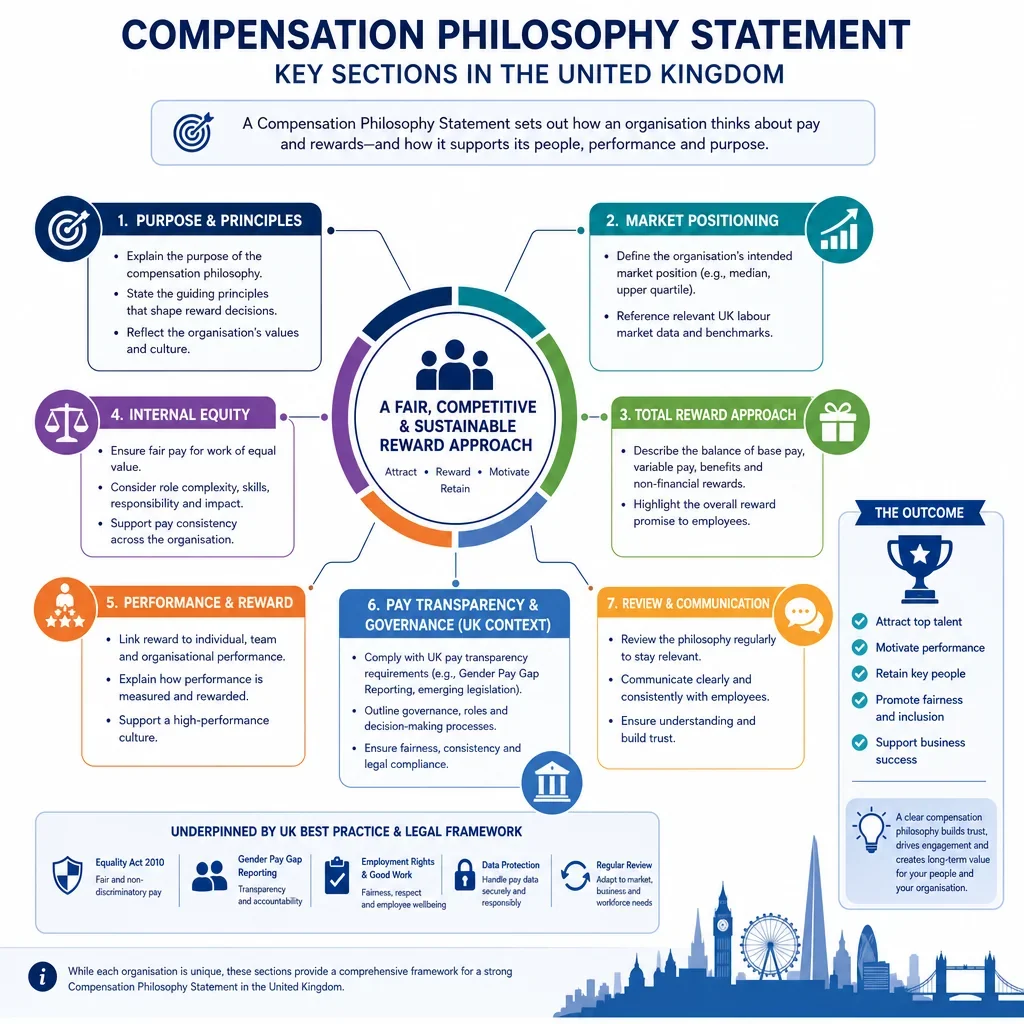
Want to Generate Your own Compensation Philosophy Statement?
Docaro AI can help you write your own Compensation Philosophy Statement for use in the United Kingdom in minutes.
FAQs
It is a supporting document page that explains the typical sections included in a UK-focused compensation philosophy statement, such as pay principles, market positioning, benefits, incentives, and governance.
Show All FAQs
You Might Also Be Interested In
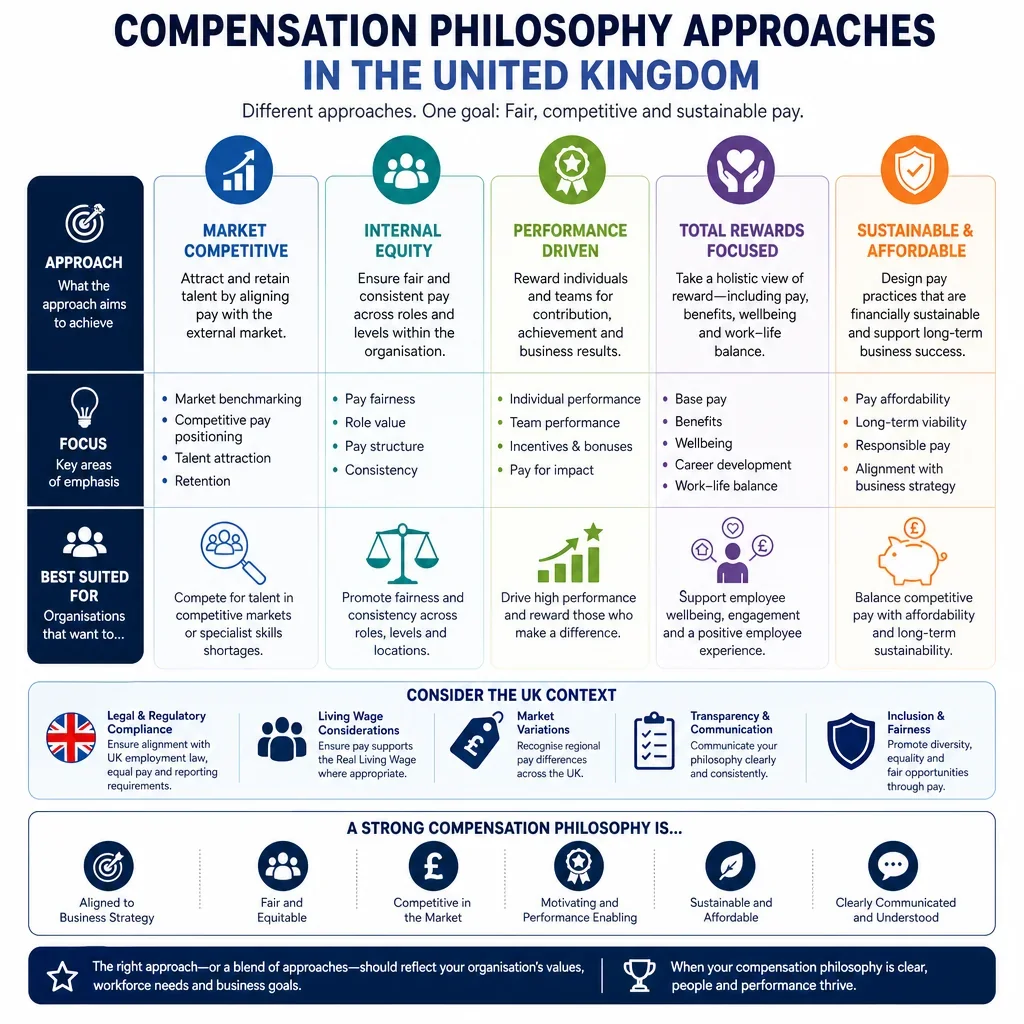
Explore compensation philosophy approaches in the United Kingdom to build fair, competitive, and effective pay strategies.
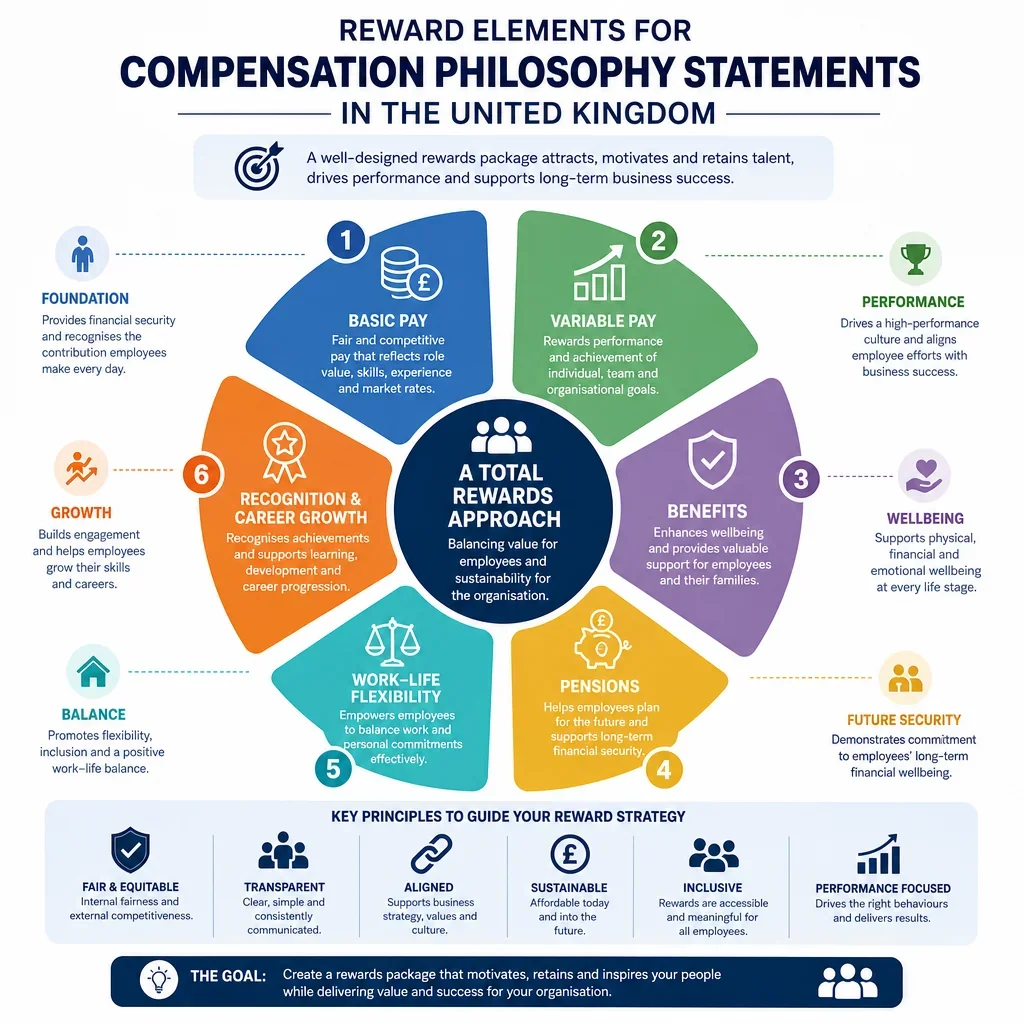
Explore UK reward elements for compensation philosophy statements, including pay, benefits, incentives, and recognition.
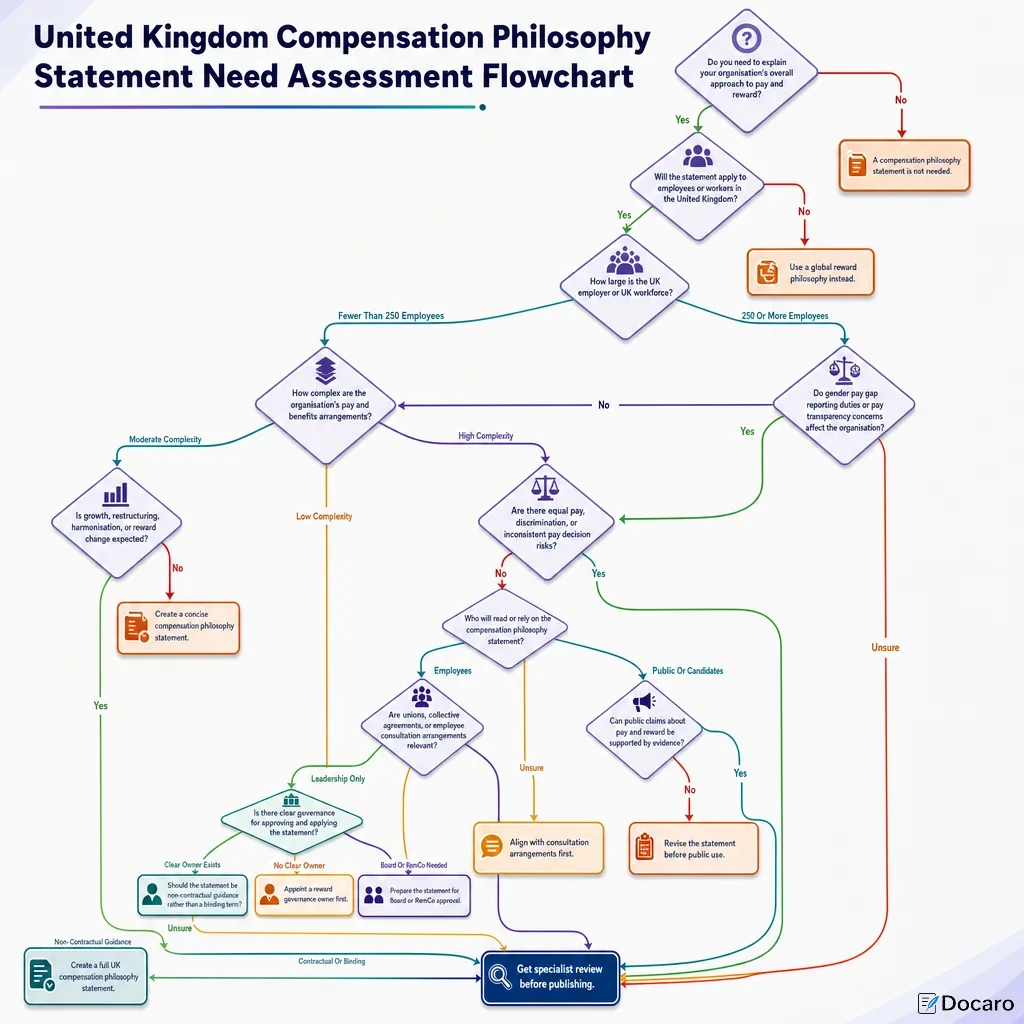
United Kingdom flowchart to assess whether your organisation needs a compensation philosophy statement for fair, consistent pay decisions.
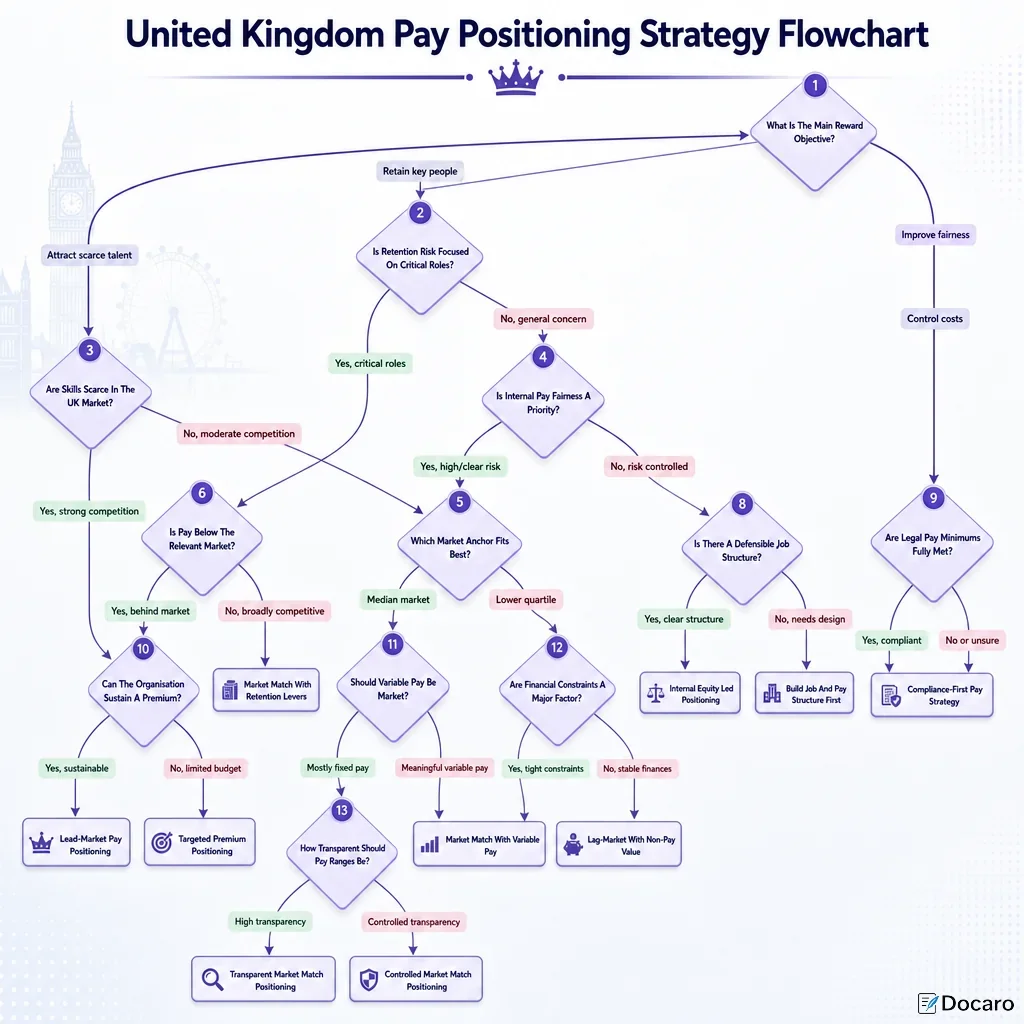
Use this United Kingdom pay positioning strategy flowchart to align market pay targets, reward philosophy, and hiring decisions.
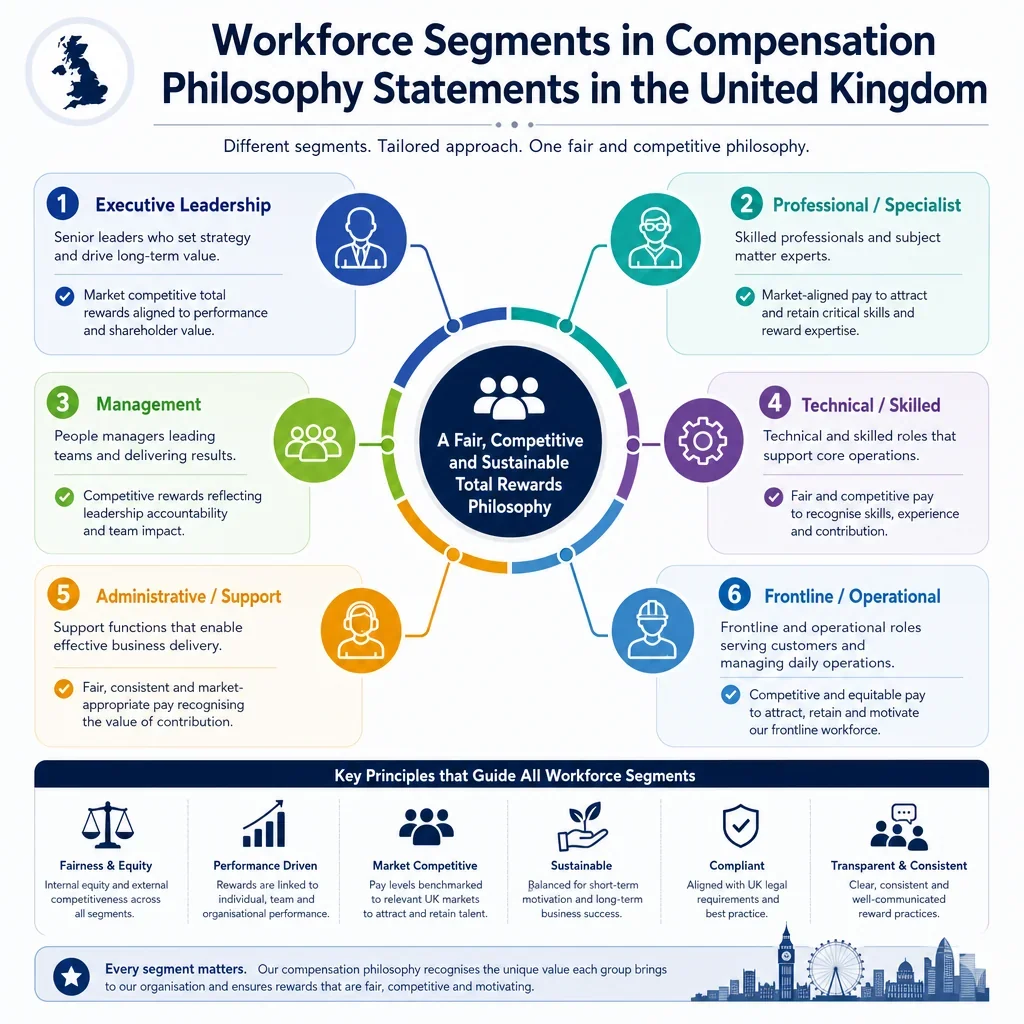
Explore workforce segments in UK compensation philosophy statements and how they support fair, competitive pay decisions.
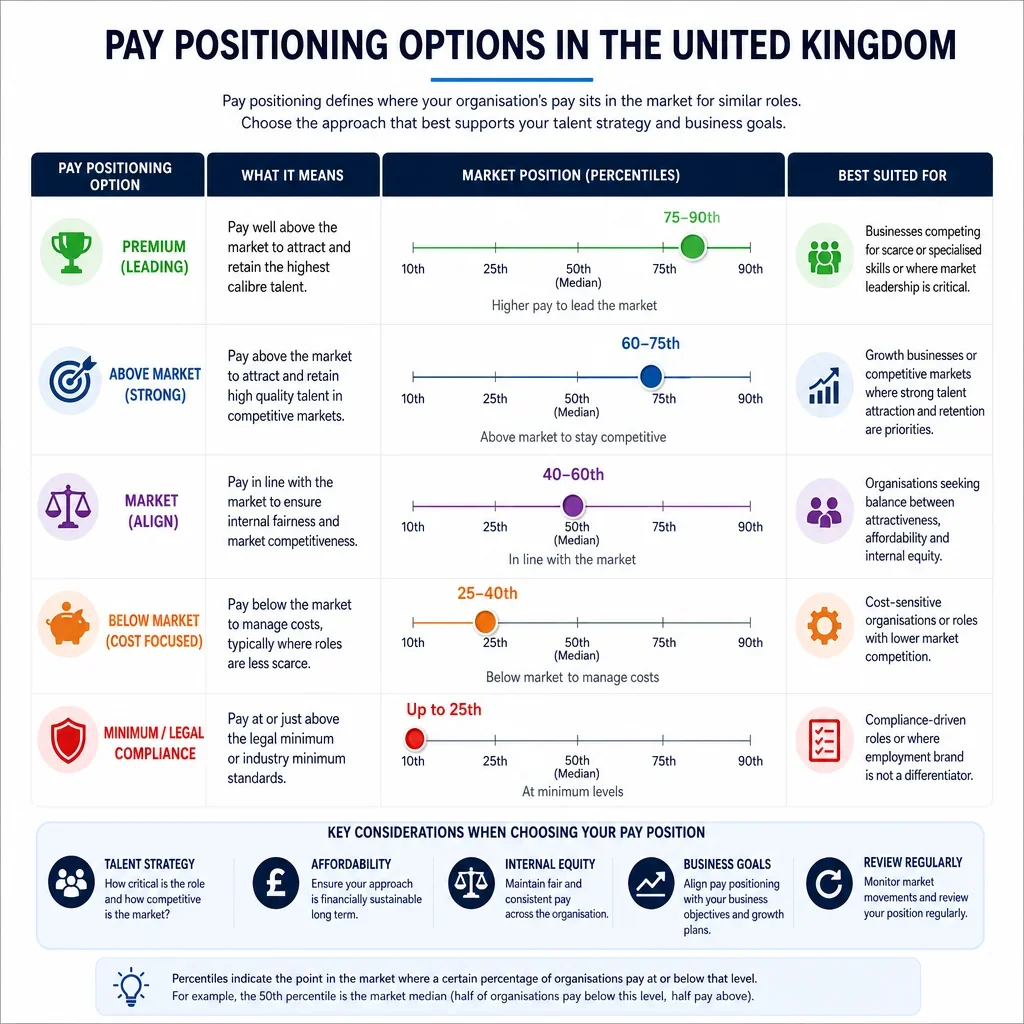
Explore pay positioning options in the United Kingdom to align salaries, market strategy and compensation philosophy.
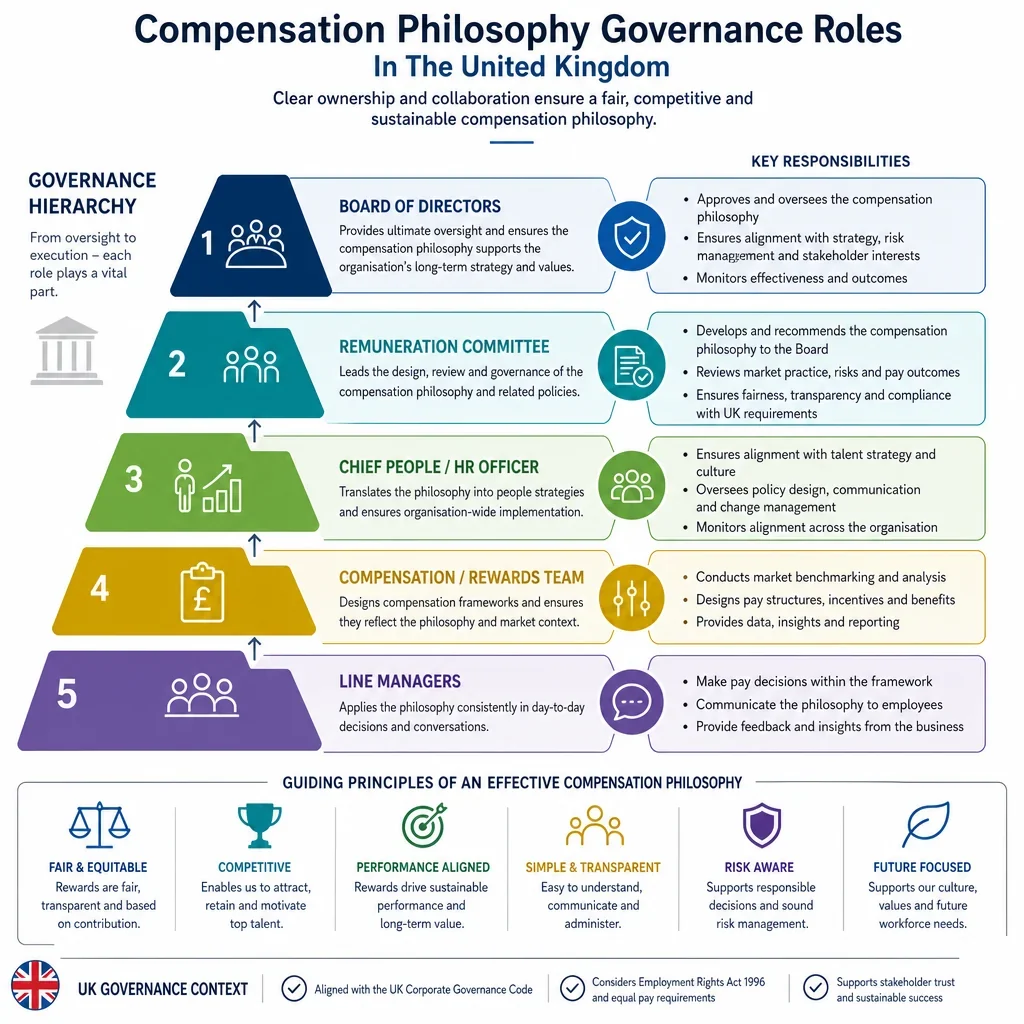
Explore UK compensation philosophy governance roles, responsibilities, and oversight for fair, consistent pay decisions.
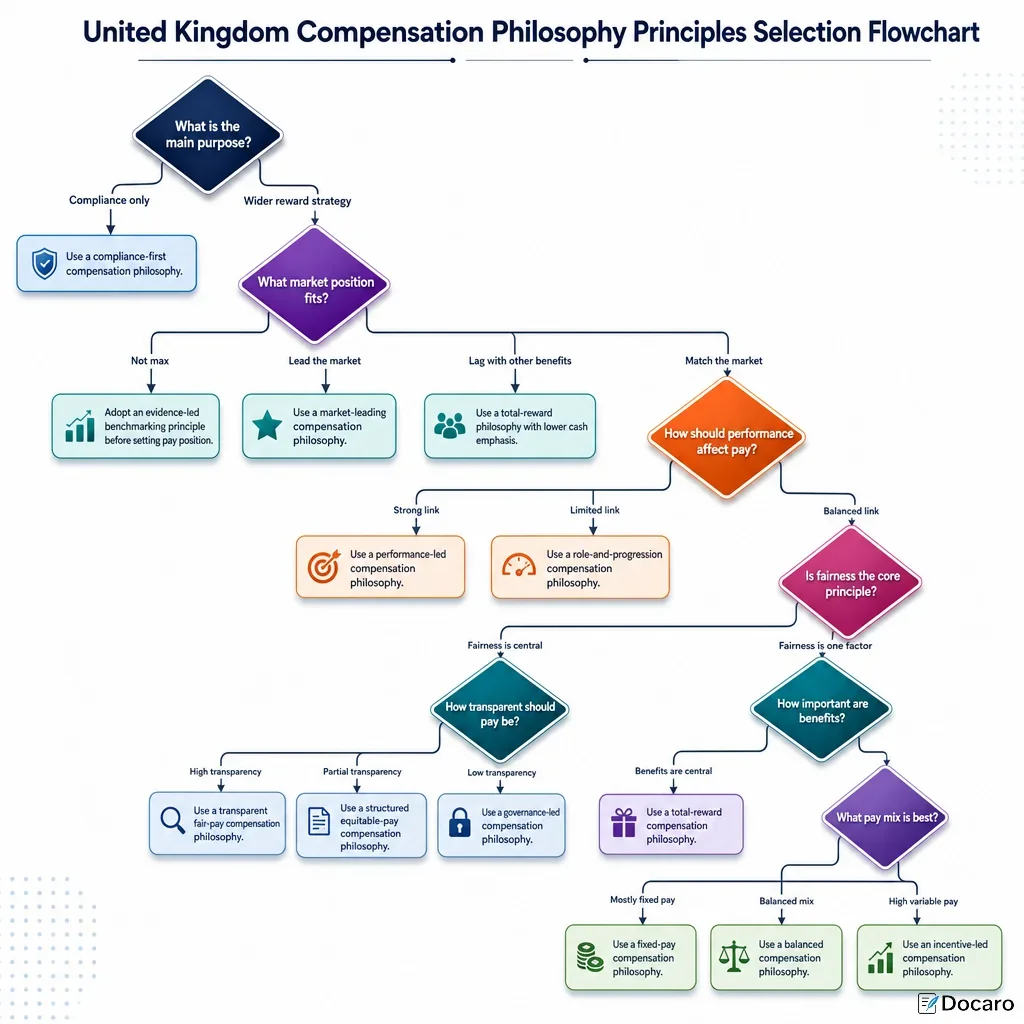
United Kingdom flowchart for selecting compensation philosophy principles to guide fair, consistent and strategic pay decisions.
References and Information Sources
26.https://www.gov.uk/government/publications/creating-an-action-plan-guidance-for-employers/overview
39.https://www.lawworks.org.uk/sites/default/files/files/LW-NFPP-MEMO-EMP-Employees_vs_Contractors.pdf