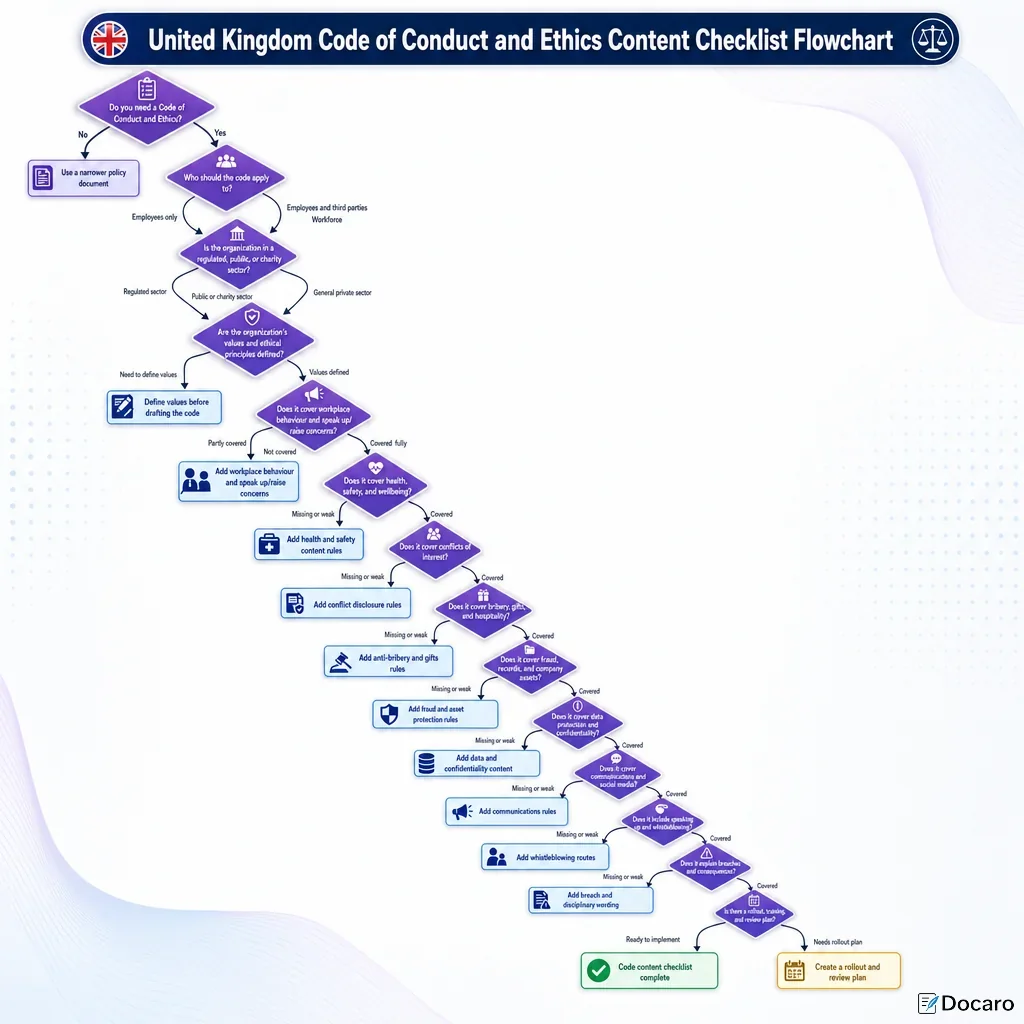
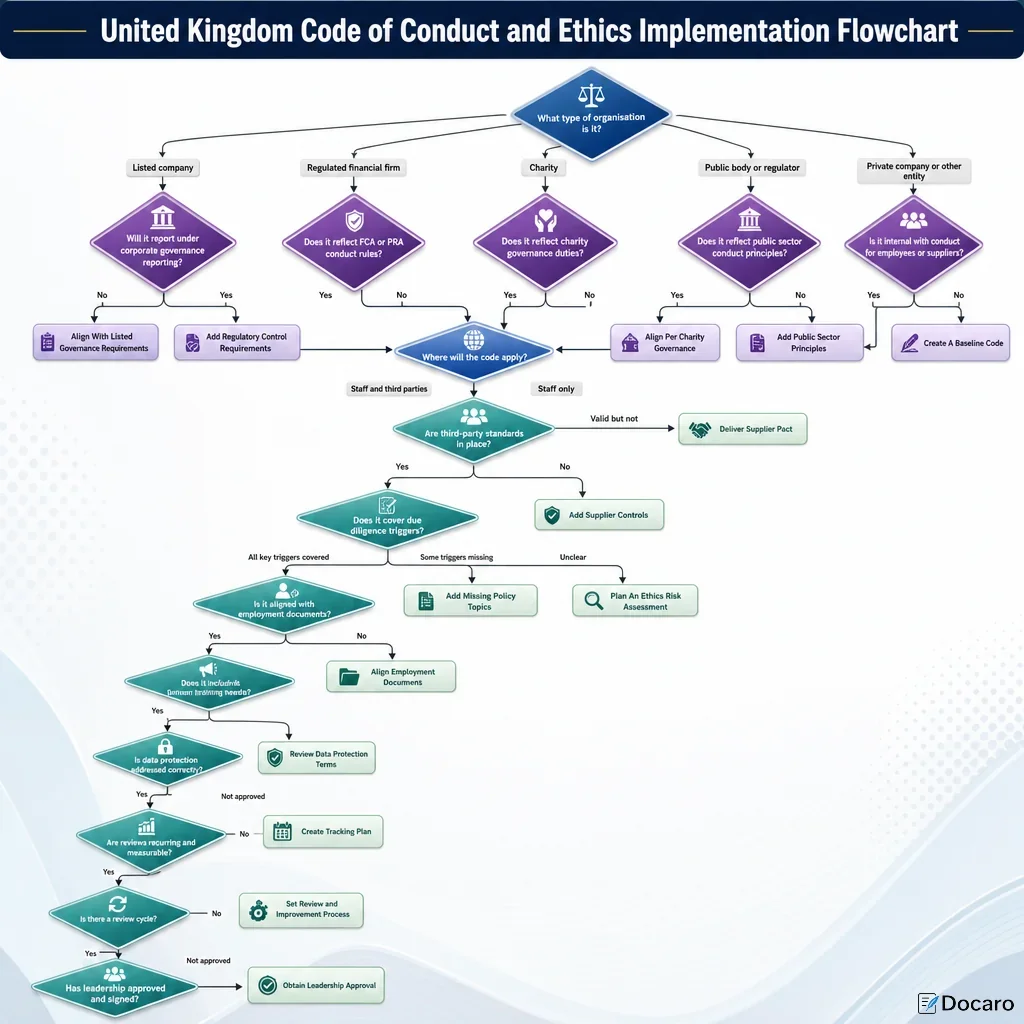
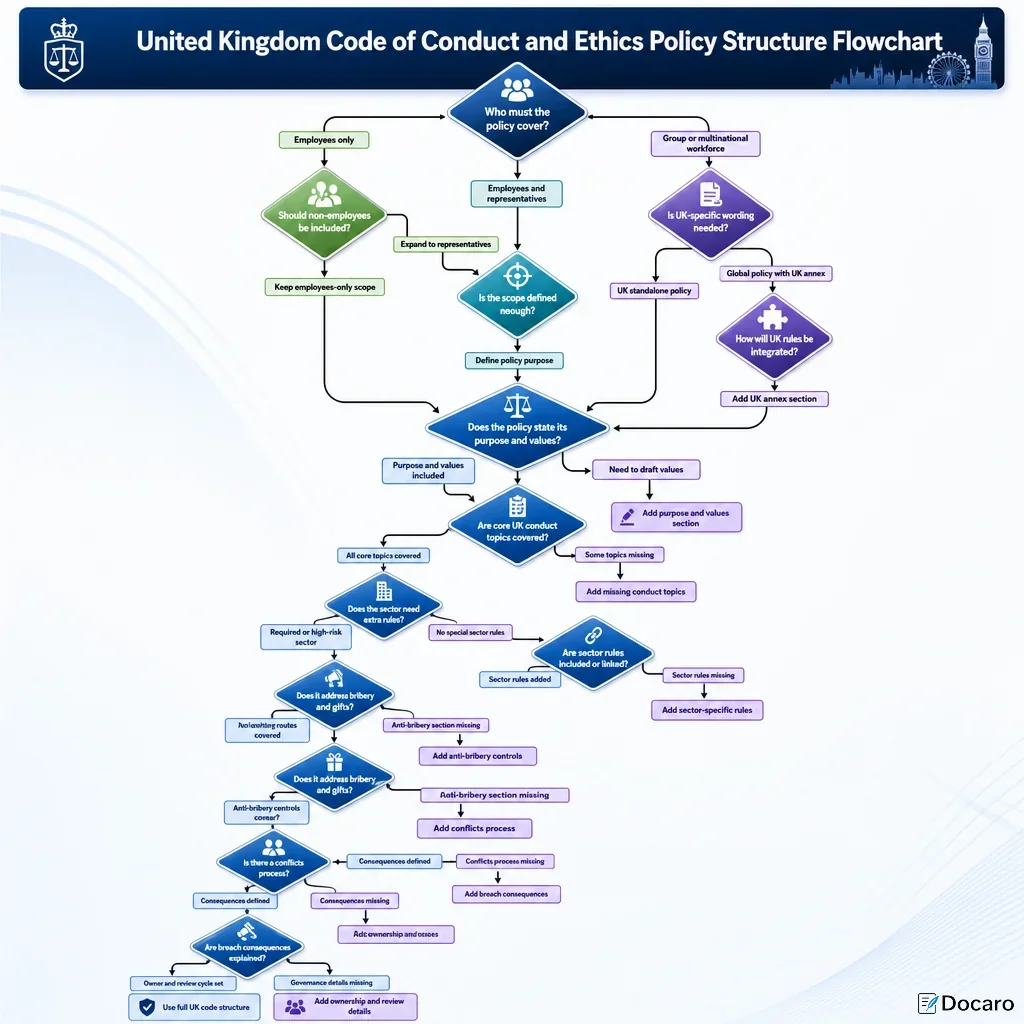
United Kingdom Code Of Conduct And Ethics Policy Structure Flowchart
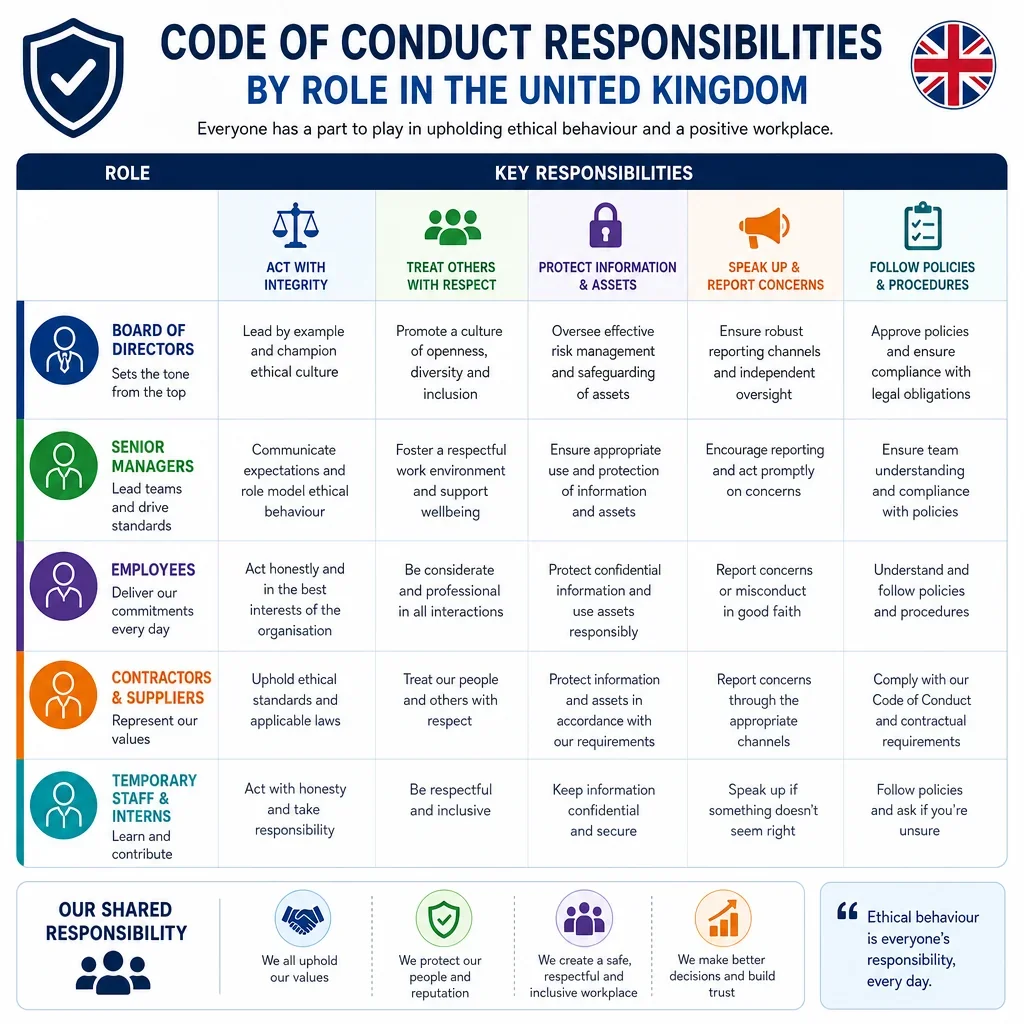
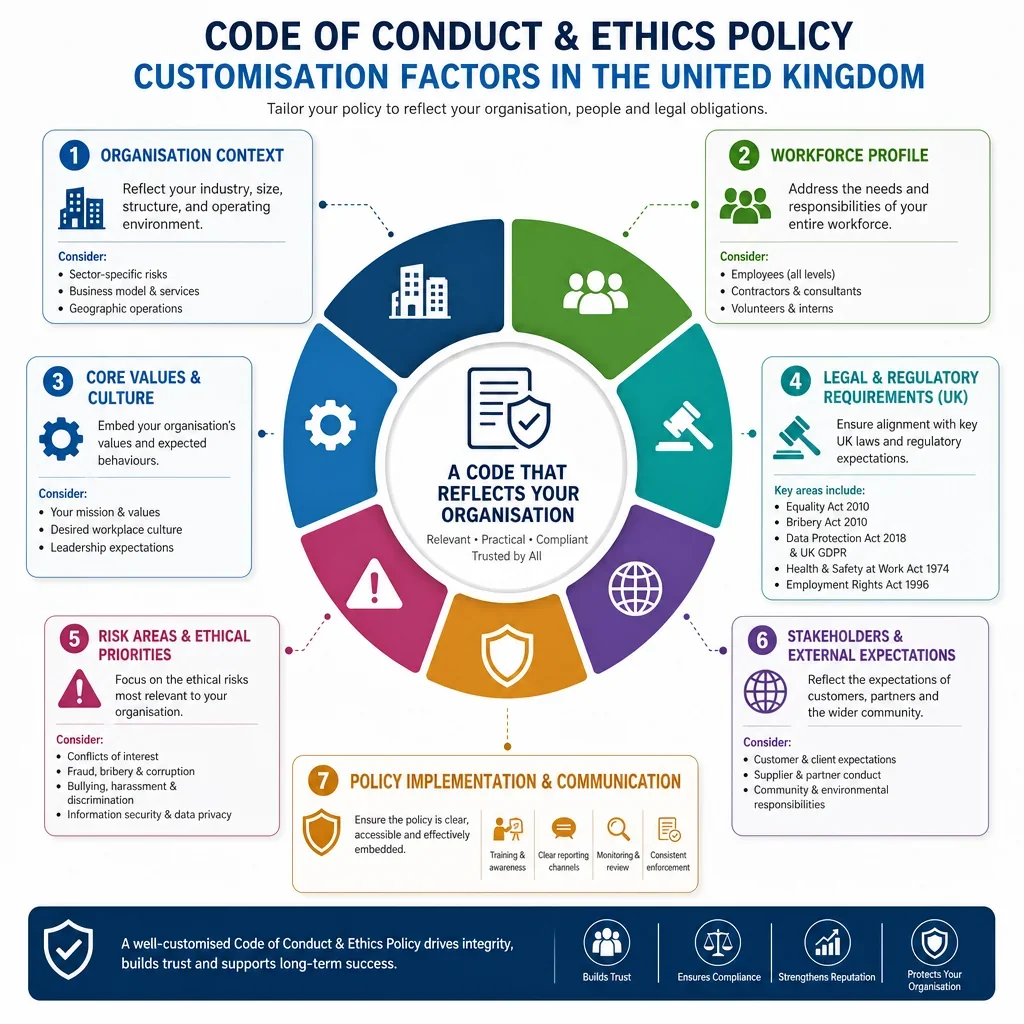
Who must the policy cover?
Why Is A UK Code Of Conduct And Ethics Policy Important?
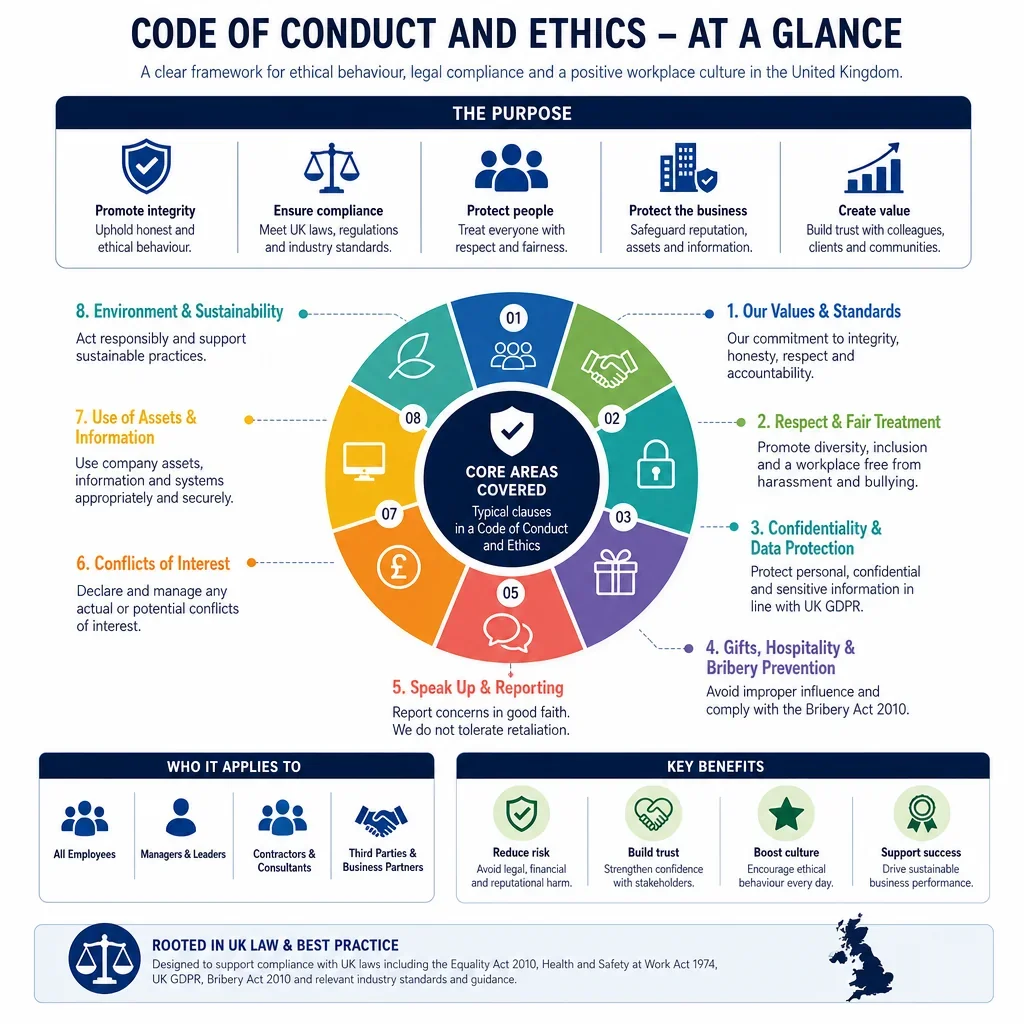
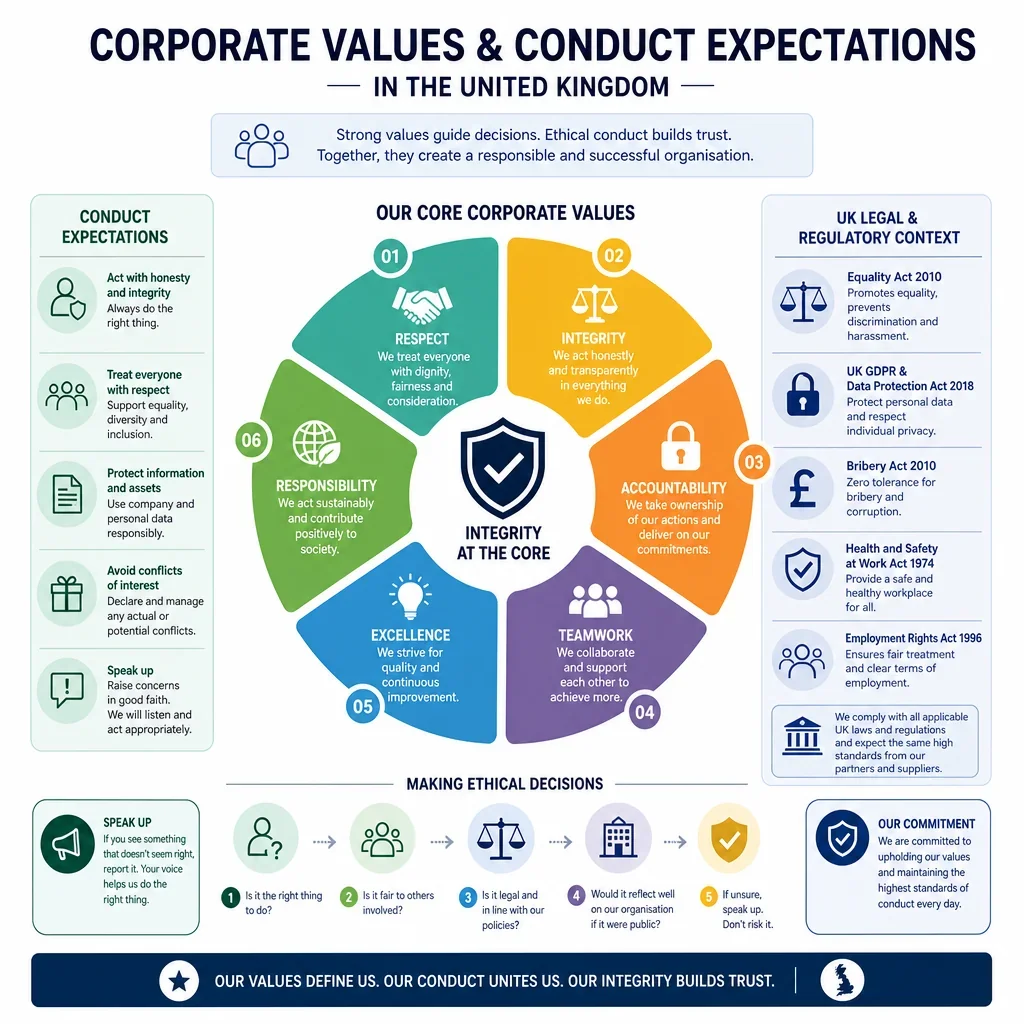
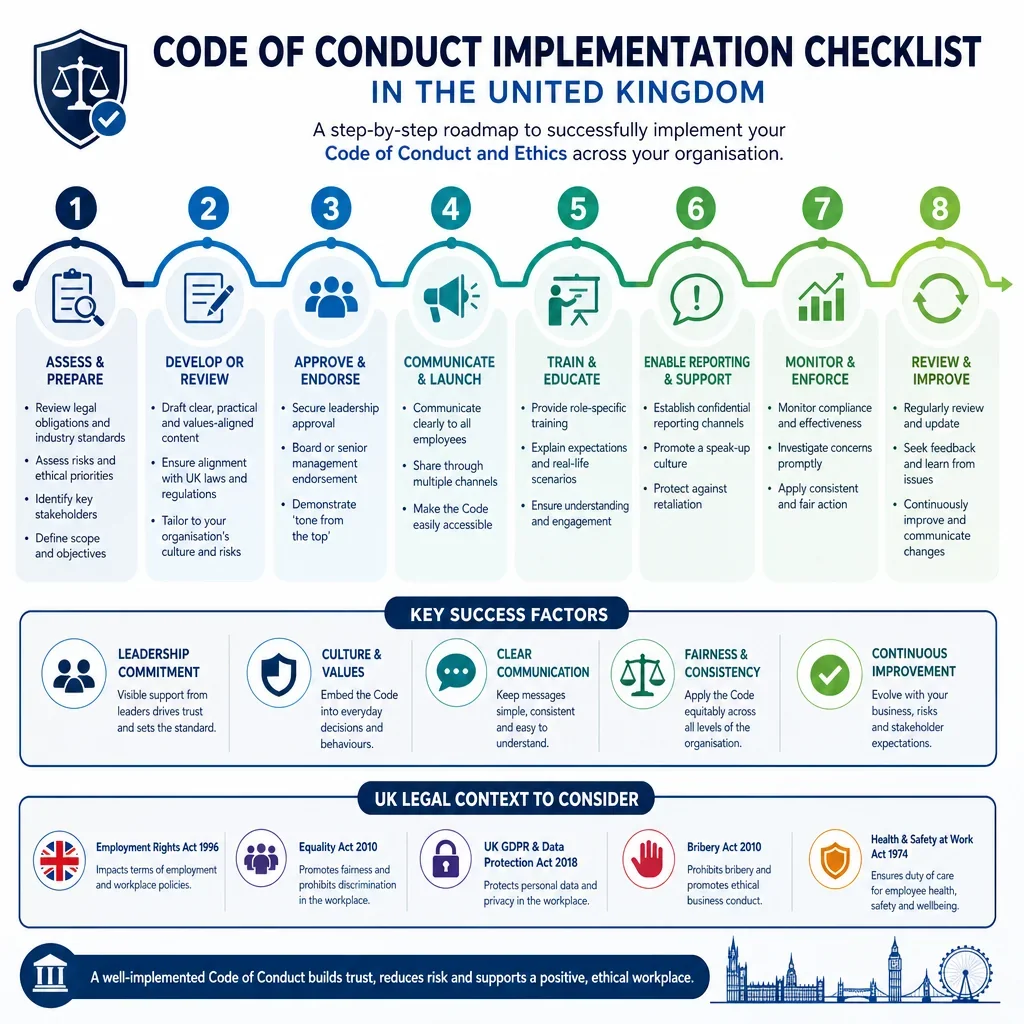
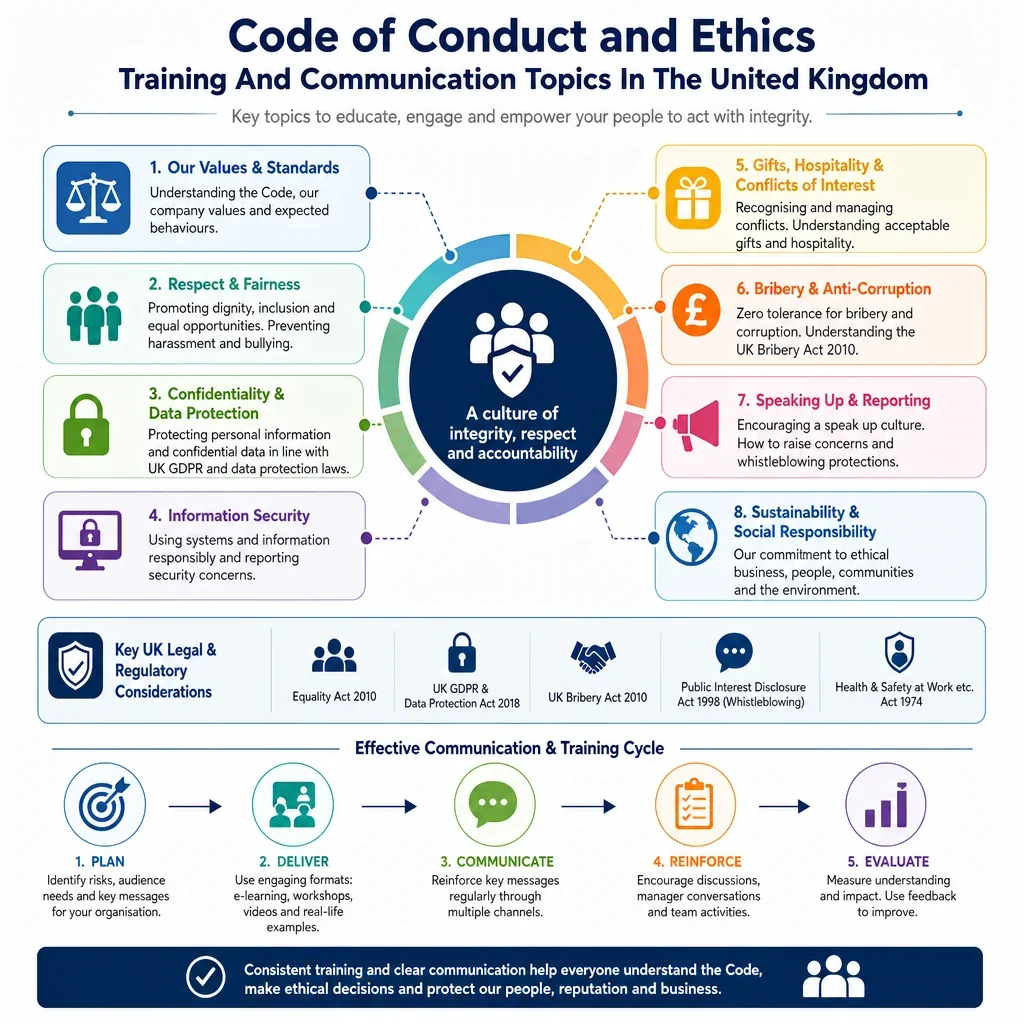
A well-structured Code of Conduct and Ethics helps a UK organisation explain the behaviour it expects from employees, directors and business representatives. It turns broad values into practical rules on honesty, respect, conflicts of interest, bribery, confidentiality, data protection and reporting concerns.
How Does The Right Structure Reduce UK Legal Risk?
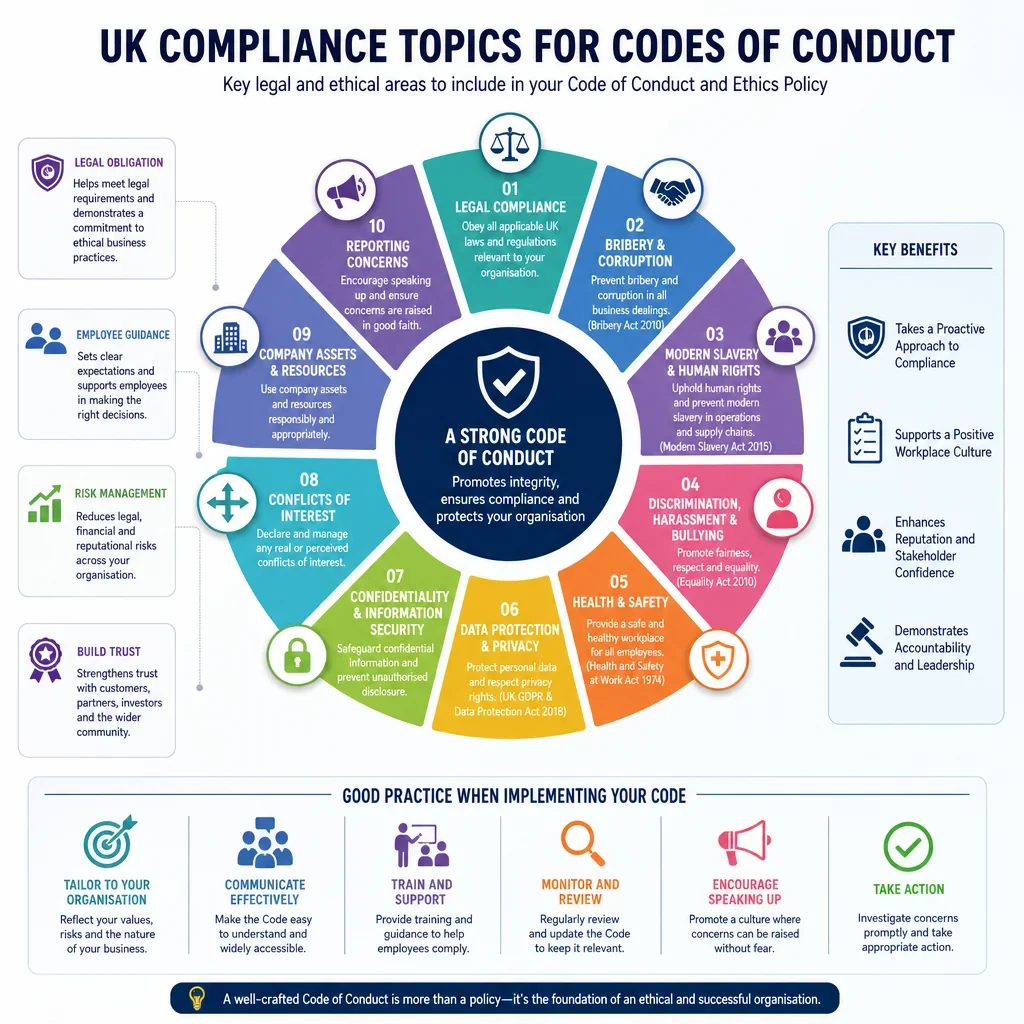
The right structure helps ensure that important UK duties are not missed. These may include obligations under the Equality Act 2010, the Bribery Act 2010, UK data protection law and health and safety rules. It also helps align disciplinary wording with the ACAS Code of Practice.
What Should A UK Ethics Code Help Staff Do?
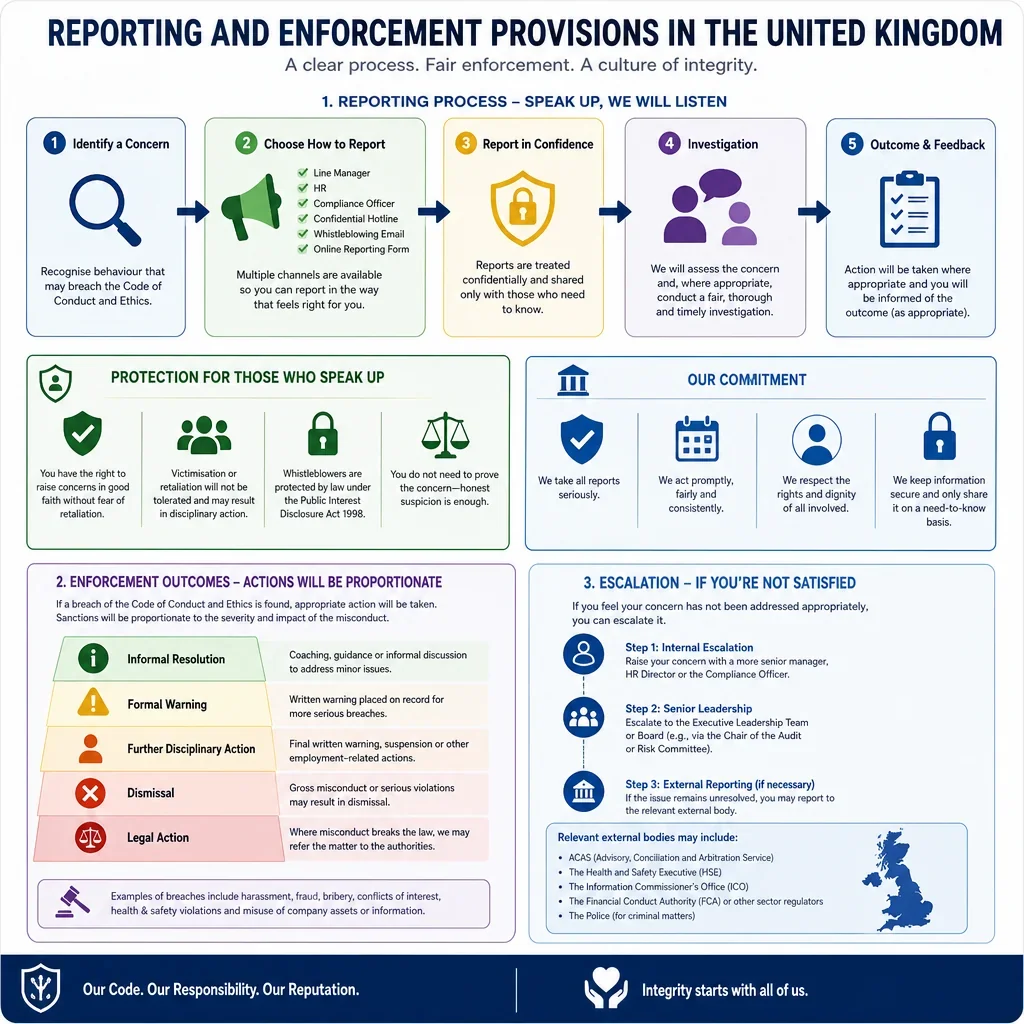
- Understand the organisation's values and expected conduct.
- Identify bribery, conflicts, discrimination, harassment and misuse of information.
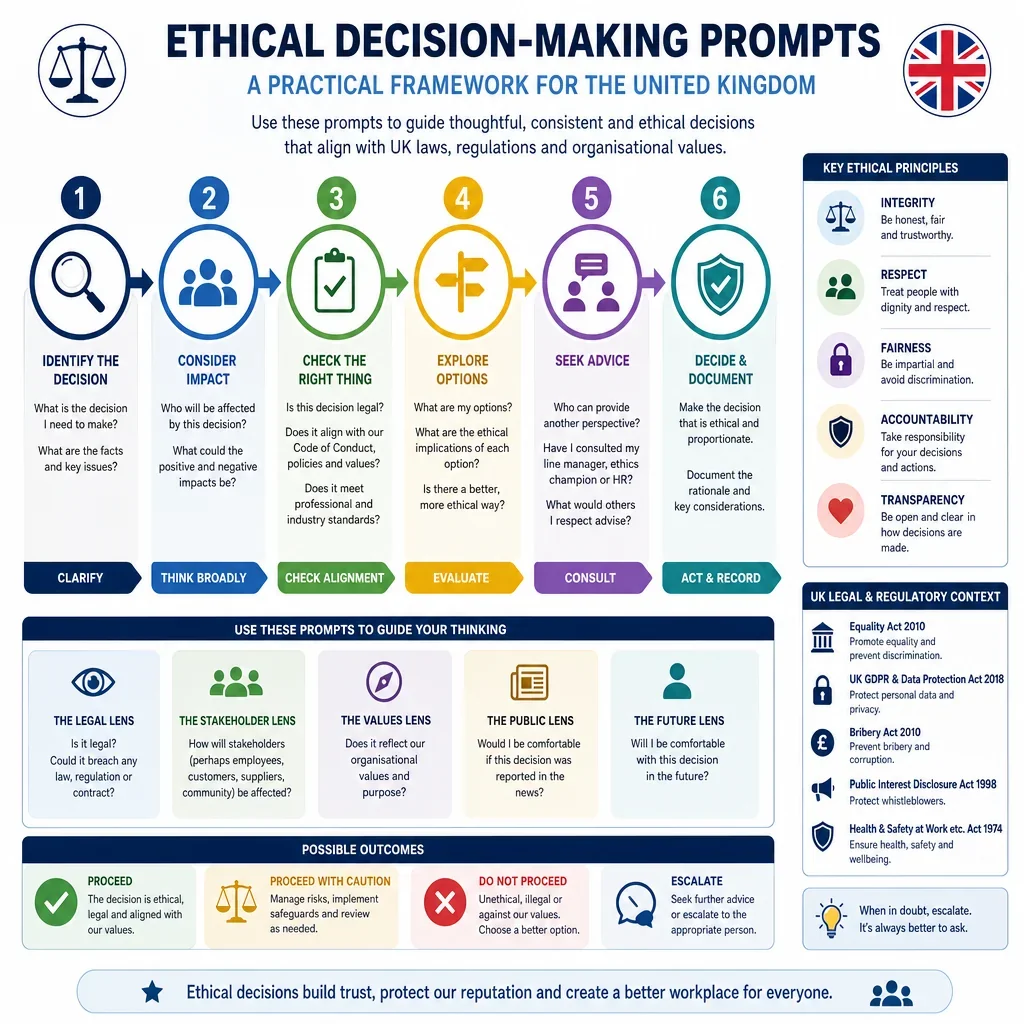
- Know where to get advice before acting.
- Raise concerns, including whistleblowing concerns, without fear of retaliation.
- Understand the consequences of serious or repeated breaches.
Why Does Governance Matter For A Code Of Conduct?
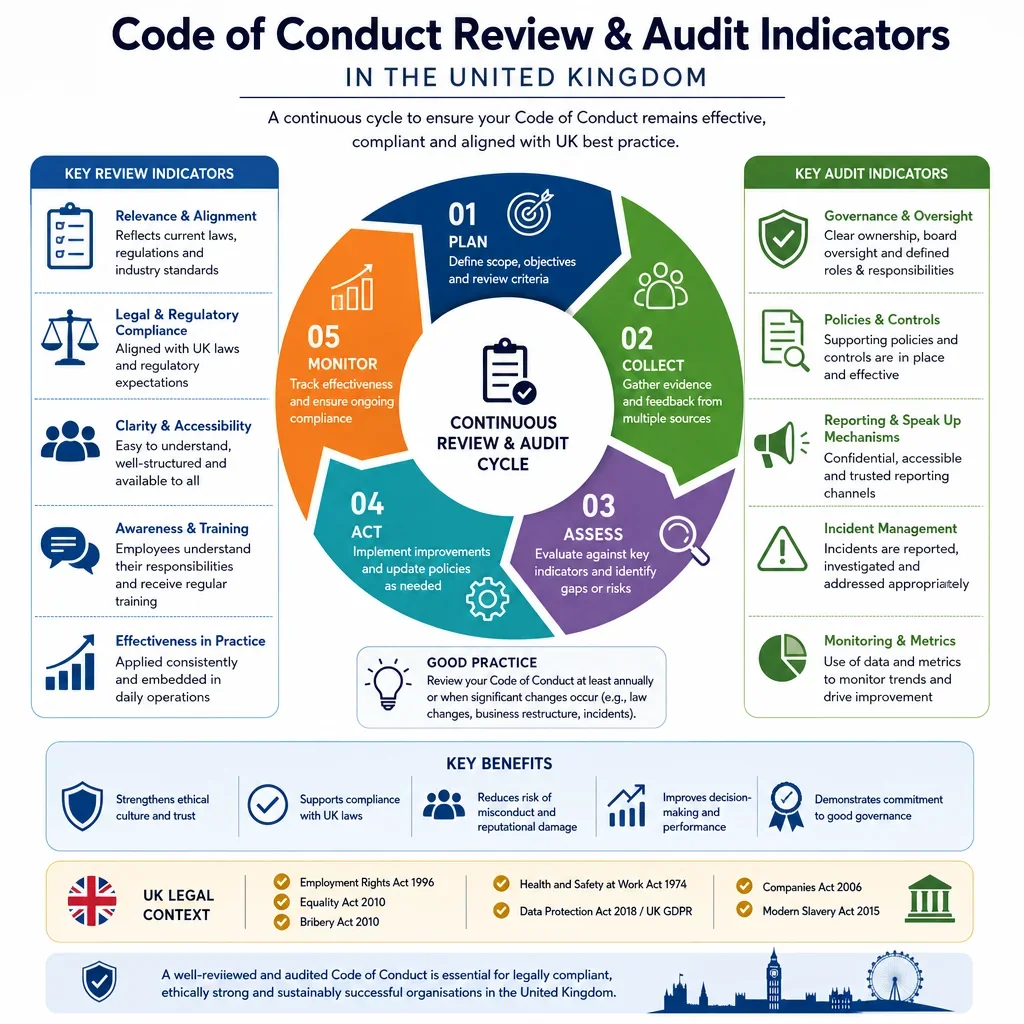
A policy is more effective when it has an owner, approval process, review date and training or acknowledgement process. These details help show that the organisation is actively managing conduct risk rather than treating the code as a one-off document.
Getting the structure right matters because a clear UK Code of Conduct and Ethics can support compliance, improve workplace culture and protect trust with staff, customers, suppliers, investors and regulators.
FAQs
You Might Also Be Interested In