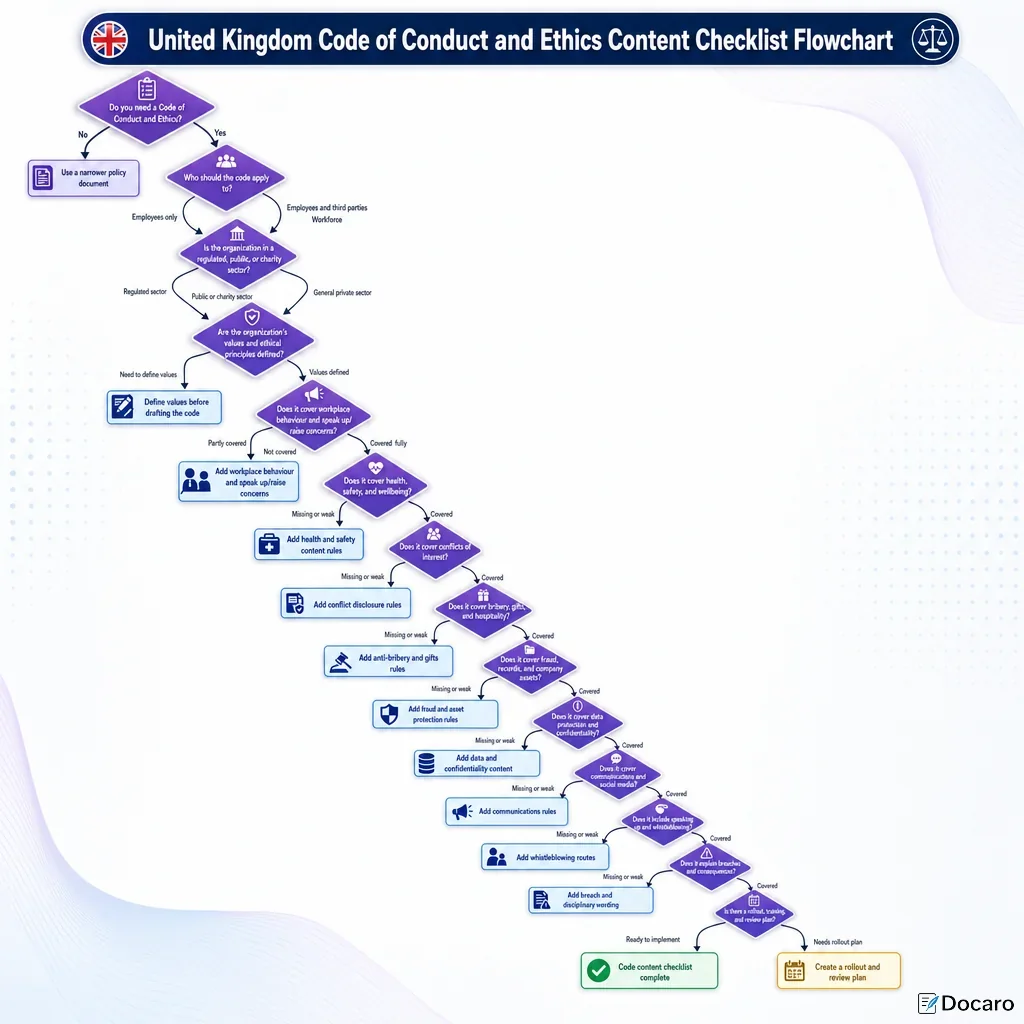
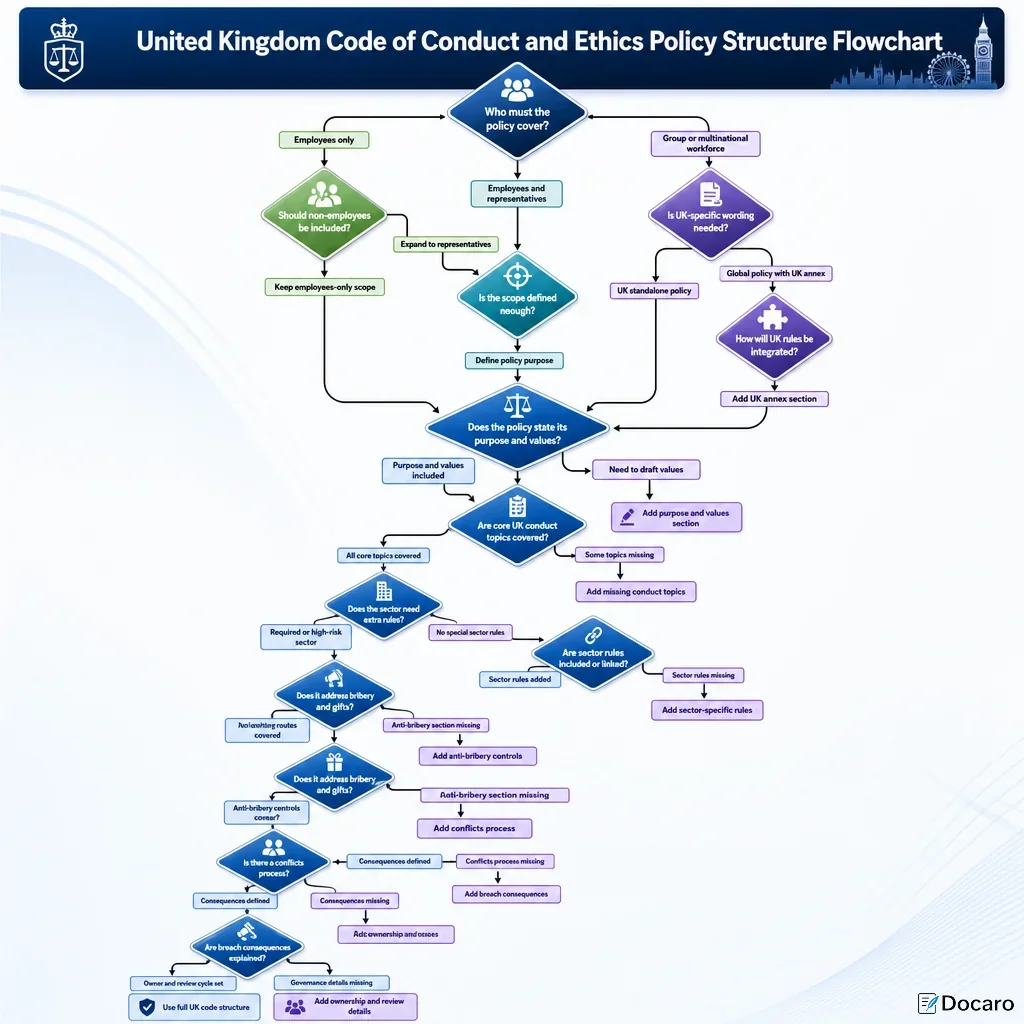
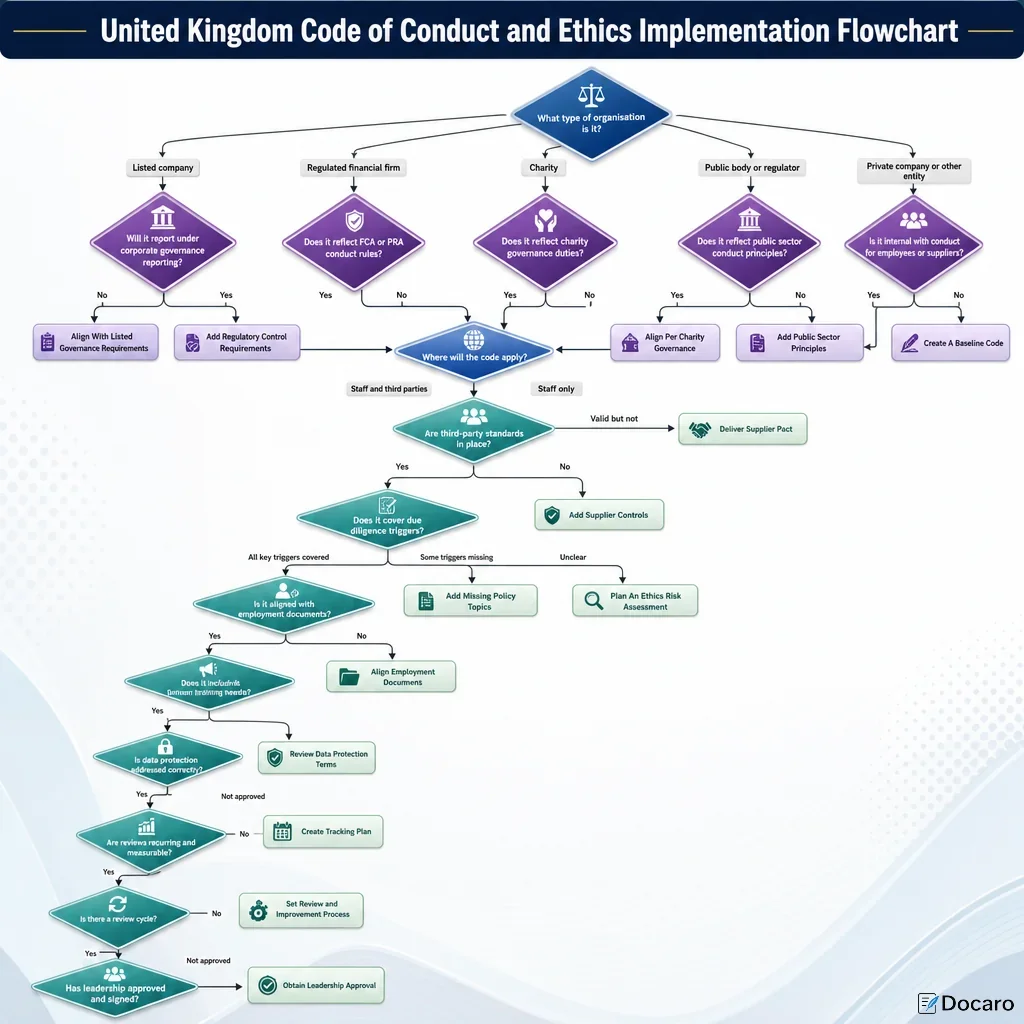
United Kingdom Code Of Conduct And Ethics Implementation Flowchart
What type of organisation is it?
Why Is A UK Code Of Conduct And Ethics Important?
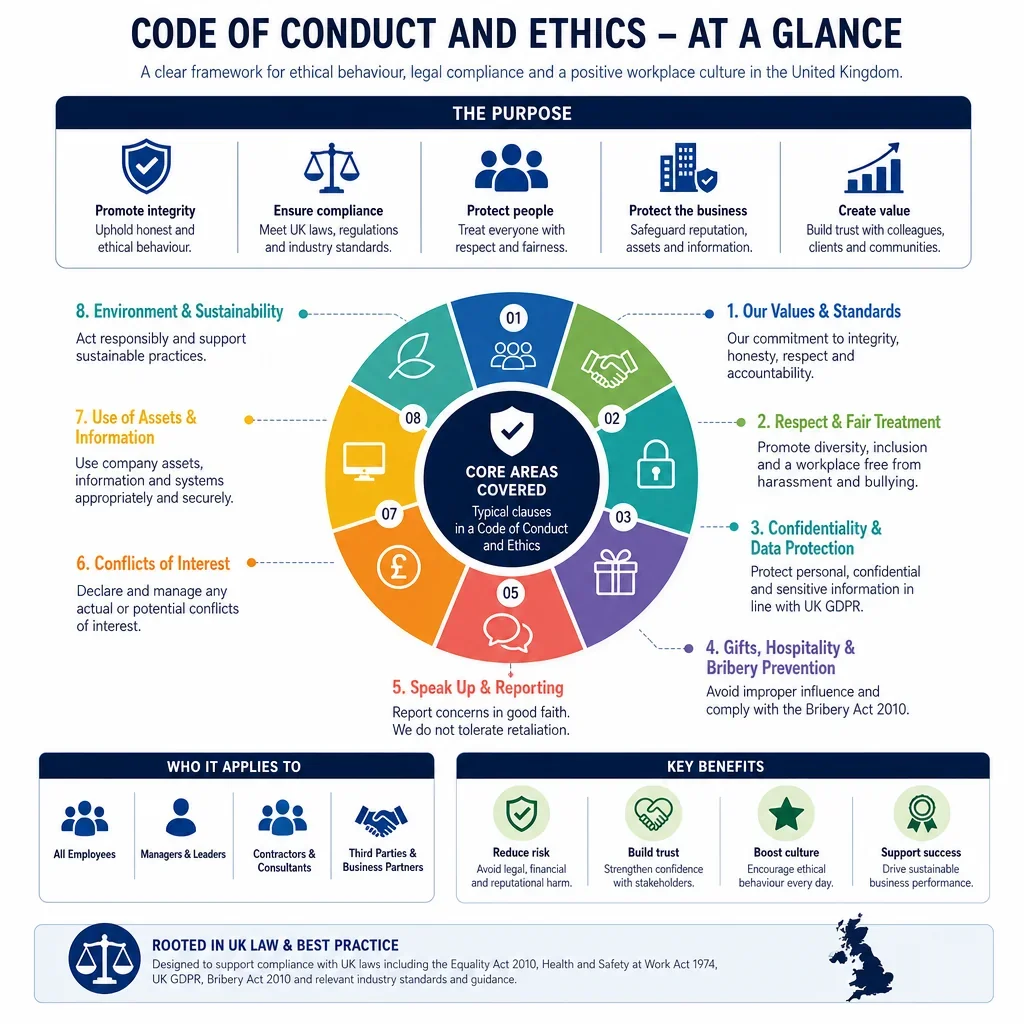
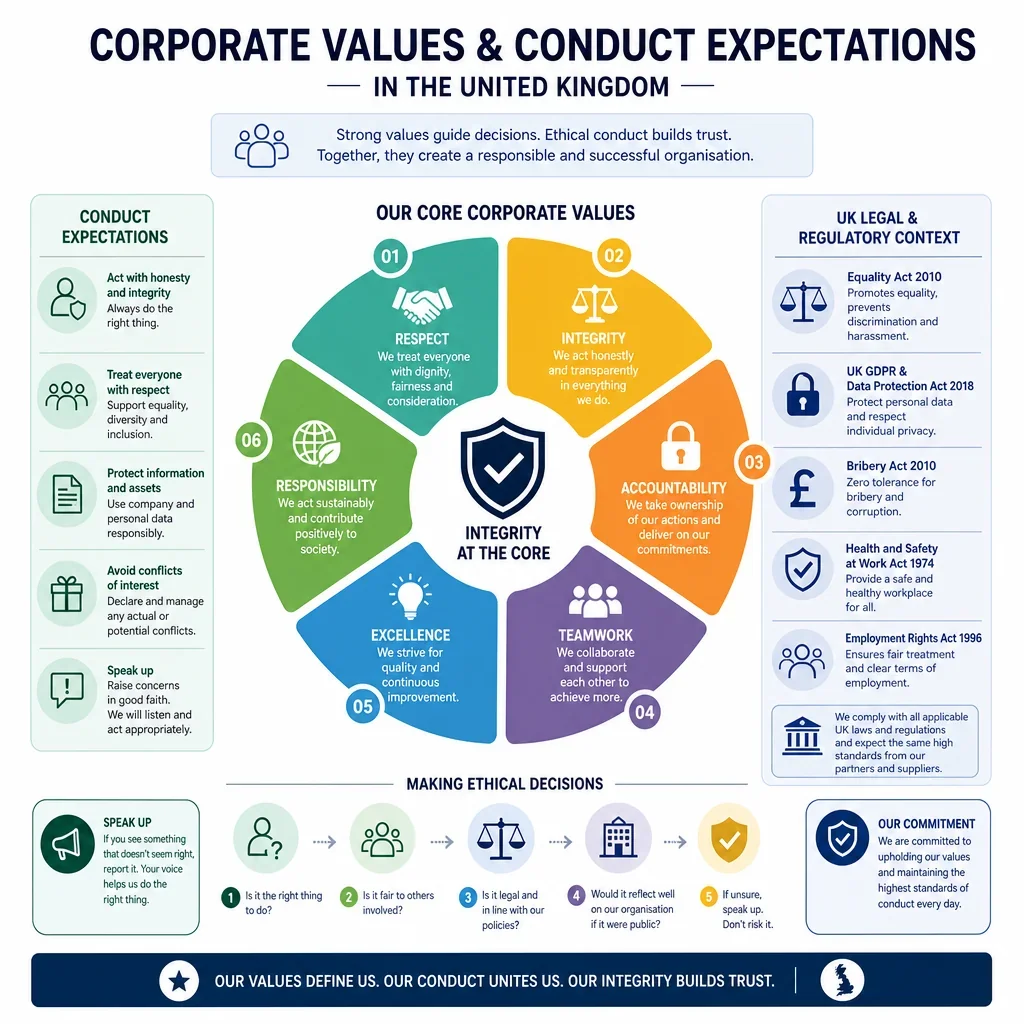
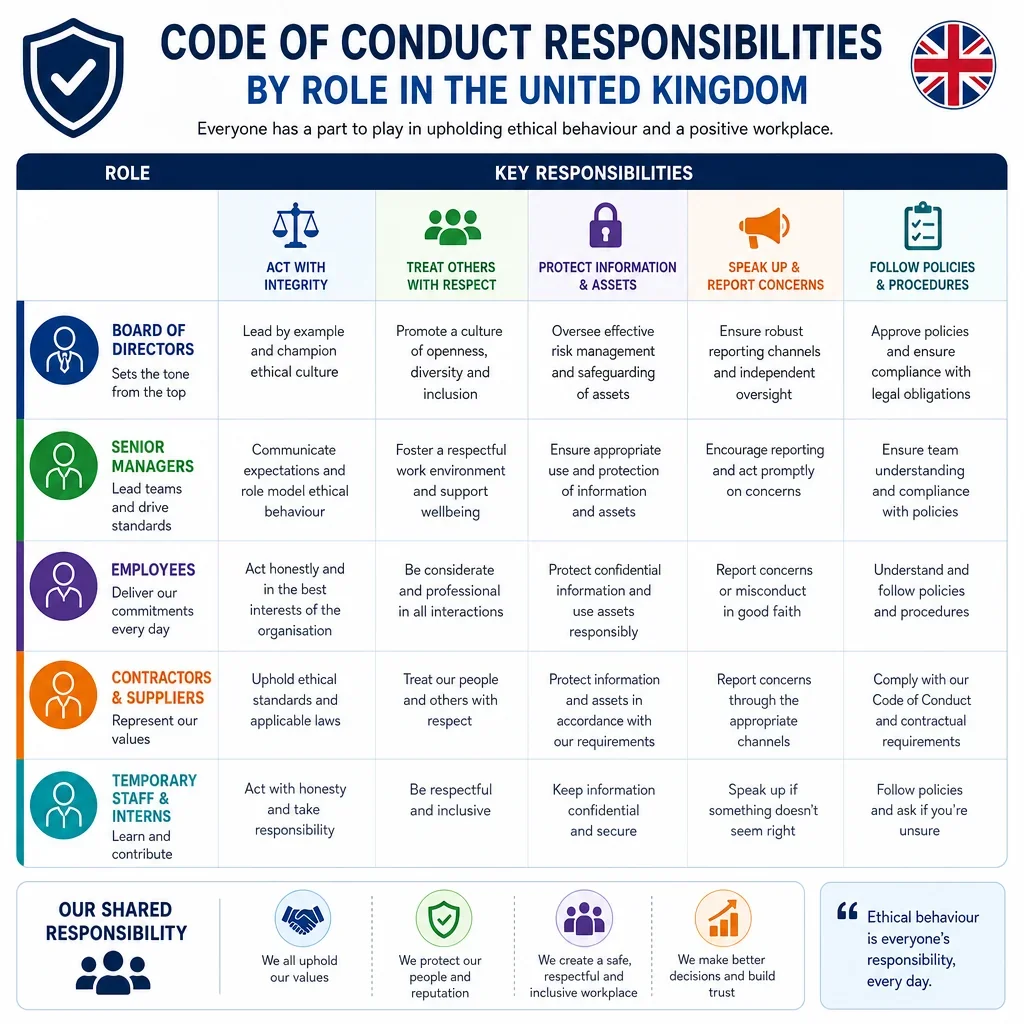
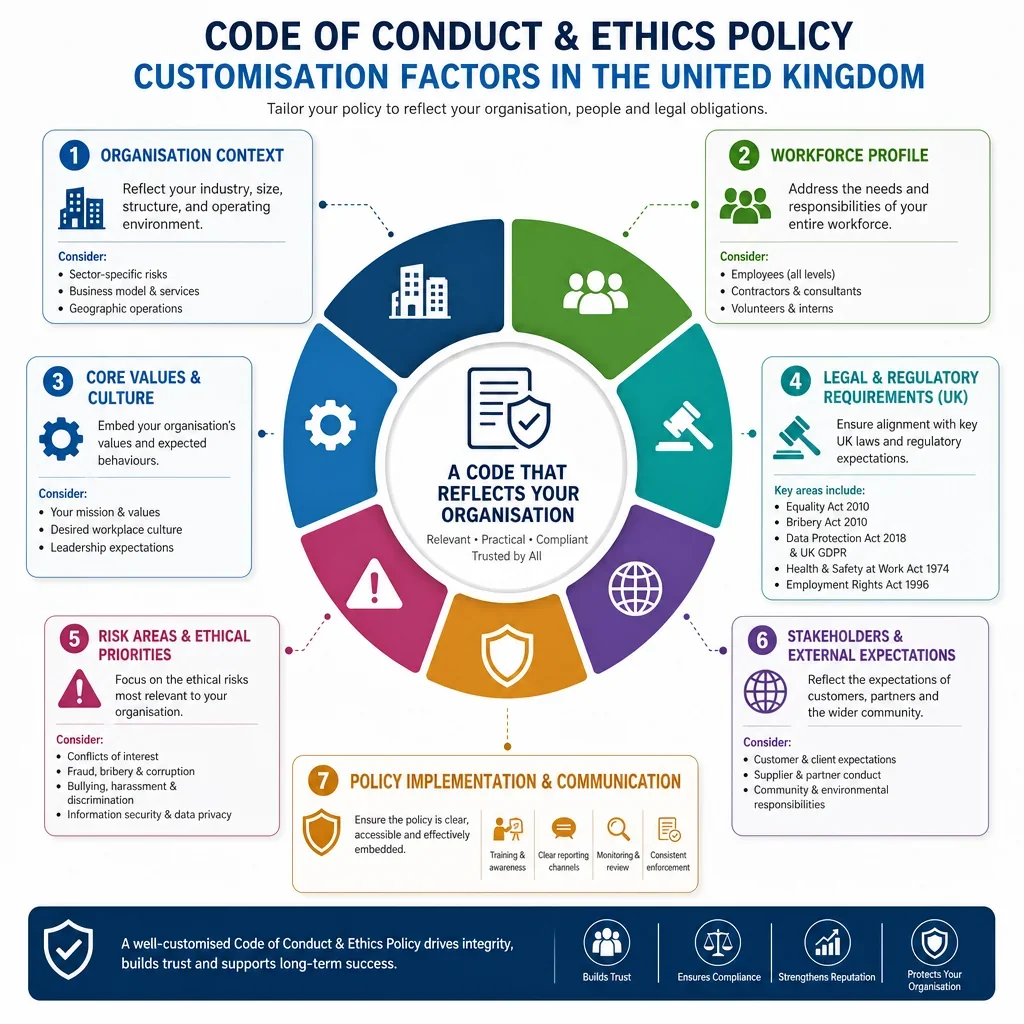
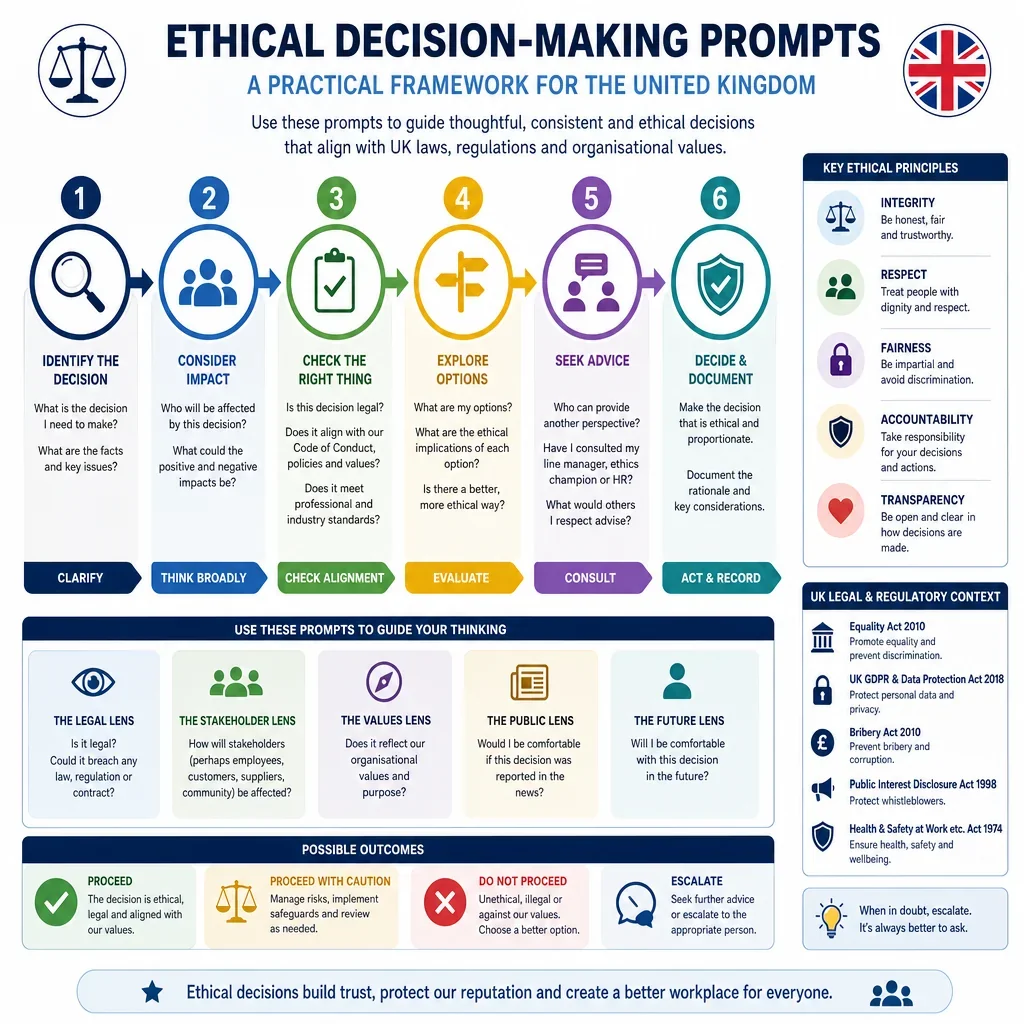
A well drafted Code of Conduct and Ethics helps a UK organisation turn legal duties, governance expectations and workplace values into practical rules. It gives directors, employees, workers, contractors and suppliers a clear standard for acceptable behaviour.
How Does The Right Code Reduce Legal And Governance Risk?
The right decision matters because different UK organisations face different obligations. A listed company may need to support governance reporting, a regulated financial firm may need to reflect FCA conduct rules, and a charity may need to address trustee duties and public trust. A generic document can miss important UK requirements.
What Should A UK Ethics Code Cover?
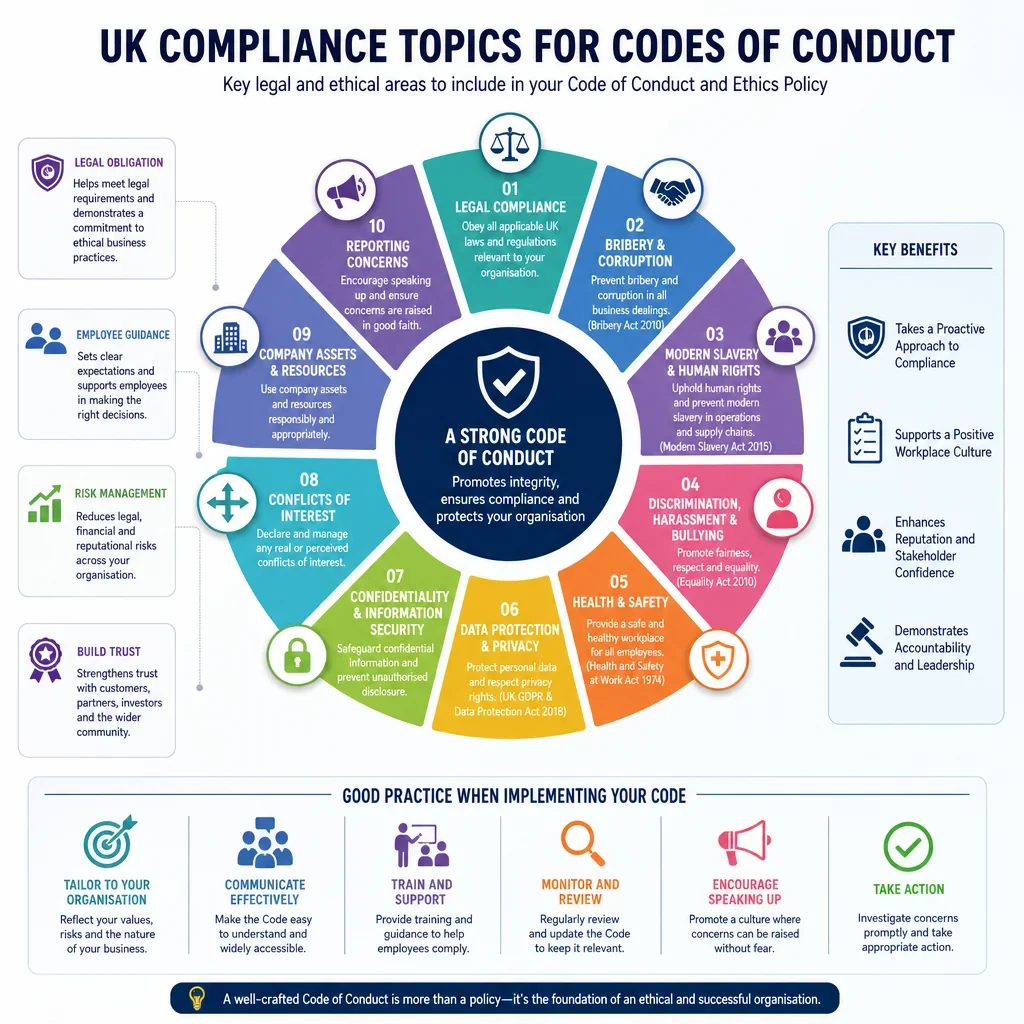
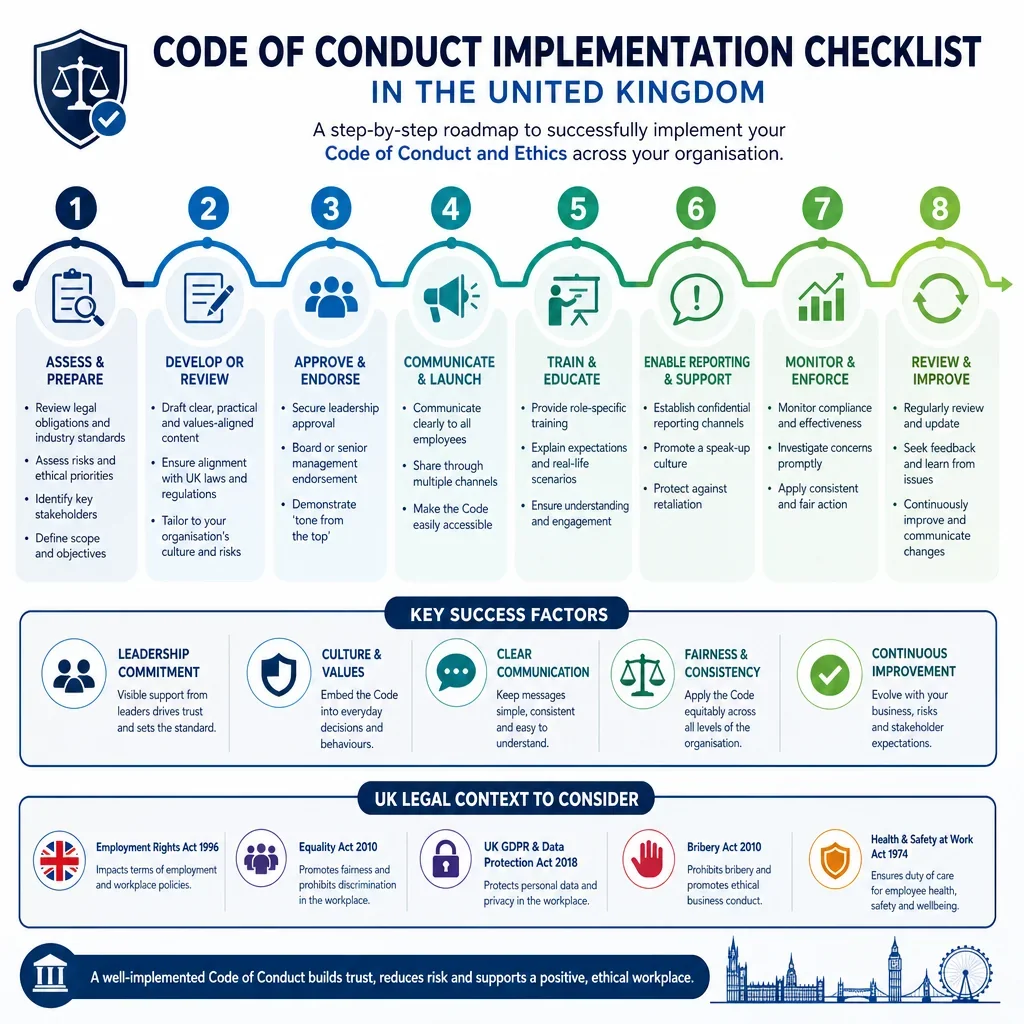
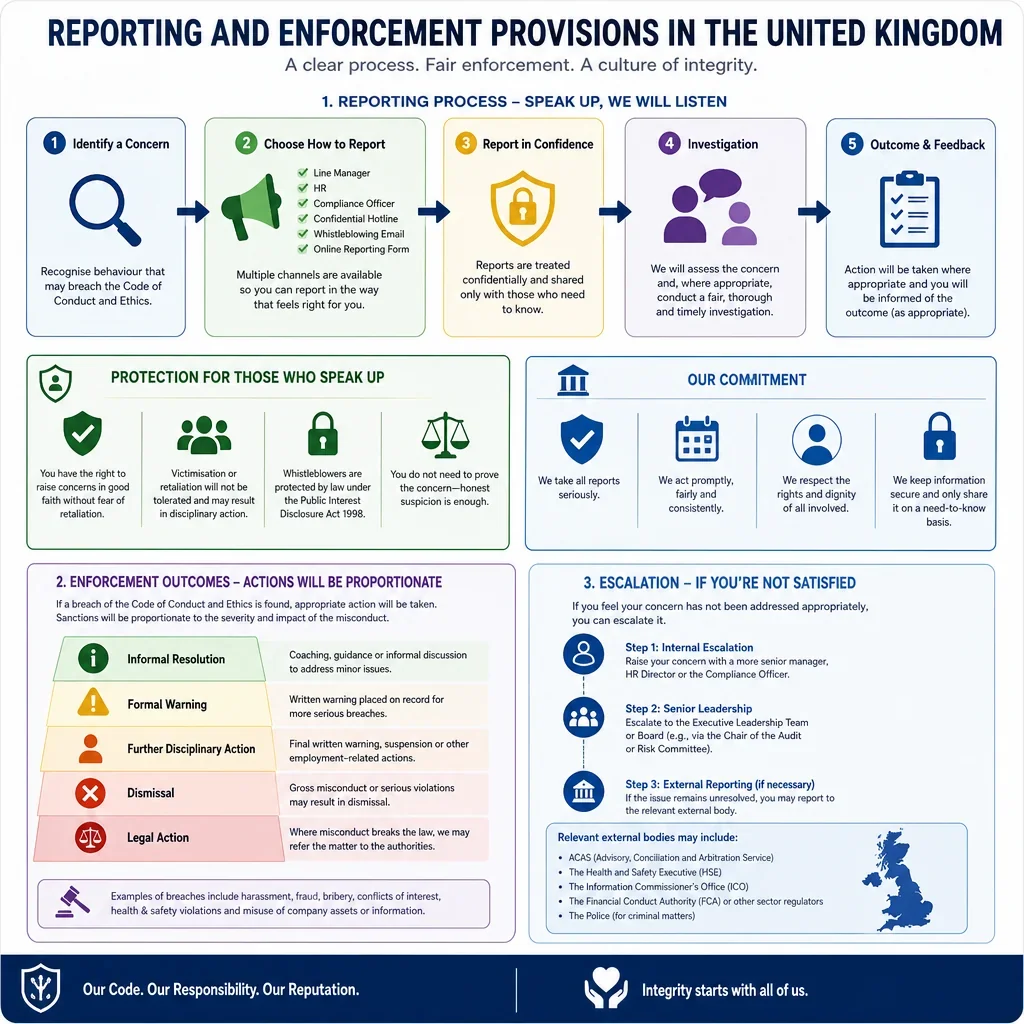
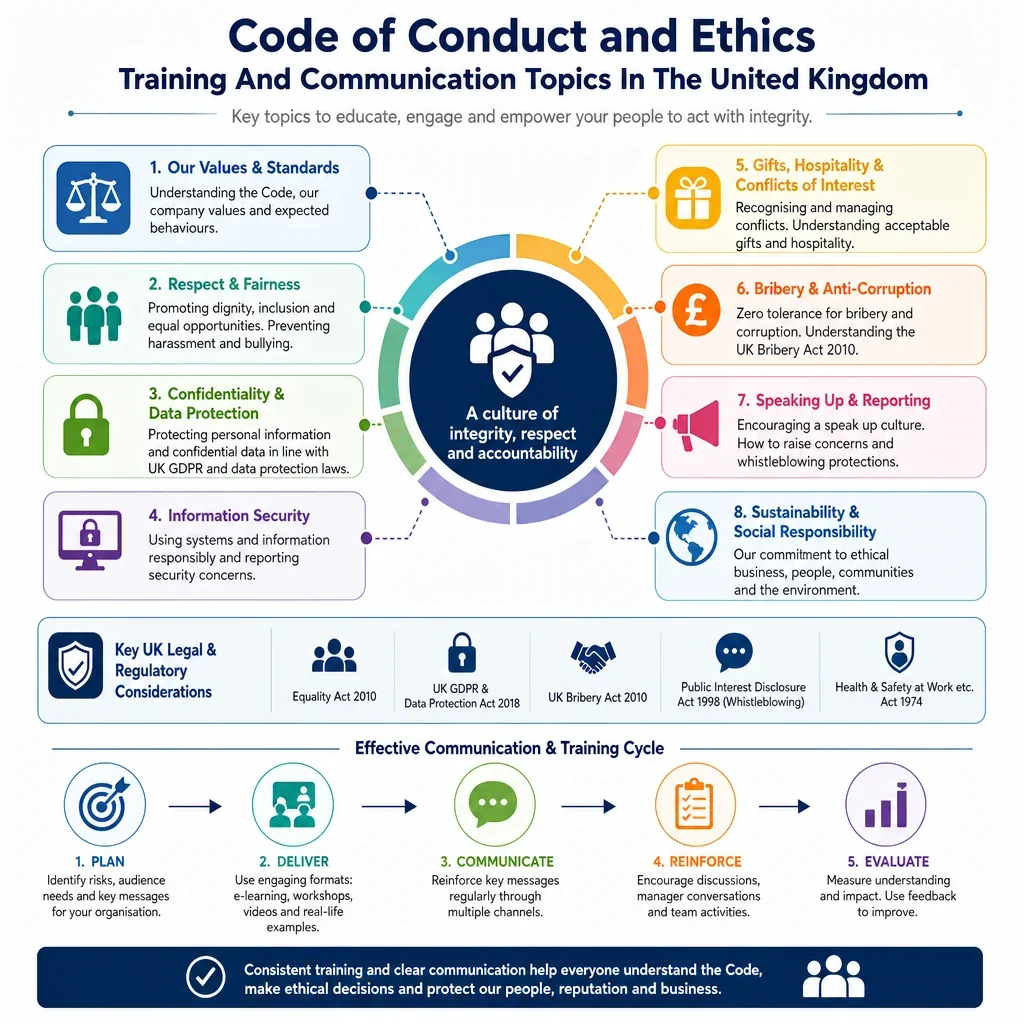
A strong UK code usually addresses bribery, conflicts of interest, equality and harassment, whistleblowing, data protection, confidentiality, fraud, health and safety, supplier behaviour and disciplinary consequences. These topics help the organisation show that expectations are clear and consistently applied.
Why Does Implementation Matter As Much As Drafting?
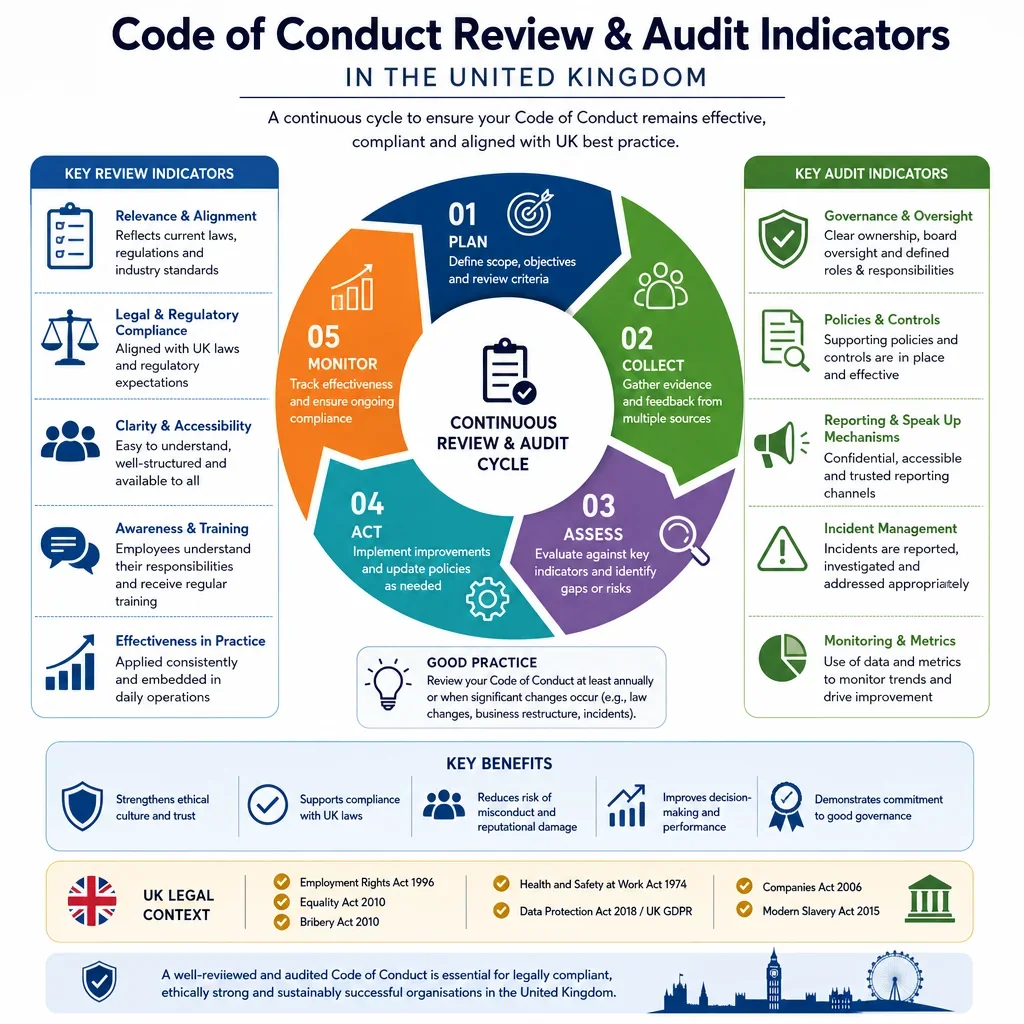
A code is only useful if it is approved, communicated, understood and enforced. UK employers should align the code with employment contracts, staff handbooks, disciplinary procedures and privacy information. Training, acknowledgements and regular reviews help prove that the code is a working control rather than a symbolic document.
Where Can UK Organisations Find Official Guidance?
FAQs
You Might Also Be Interested In