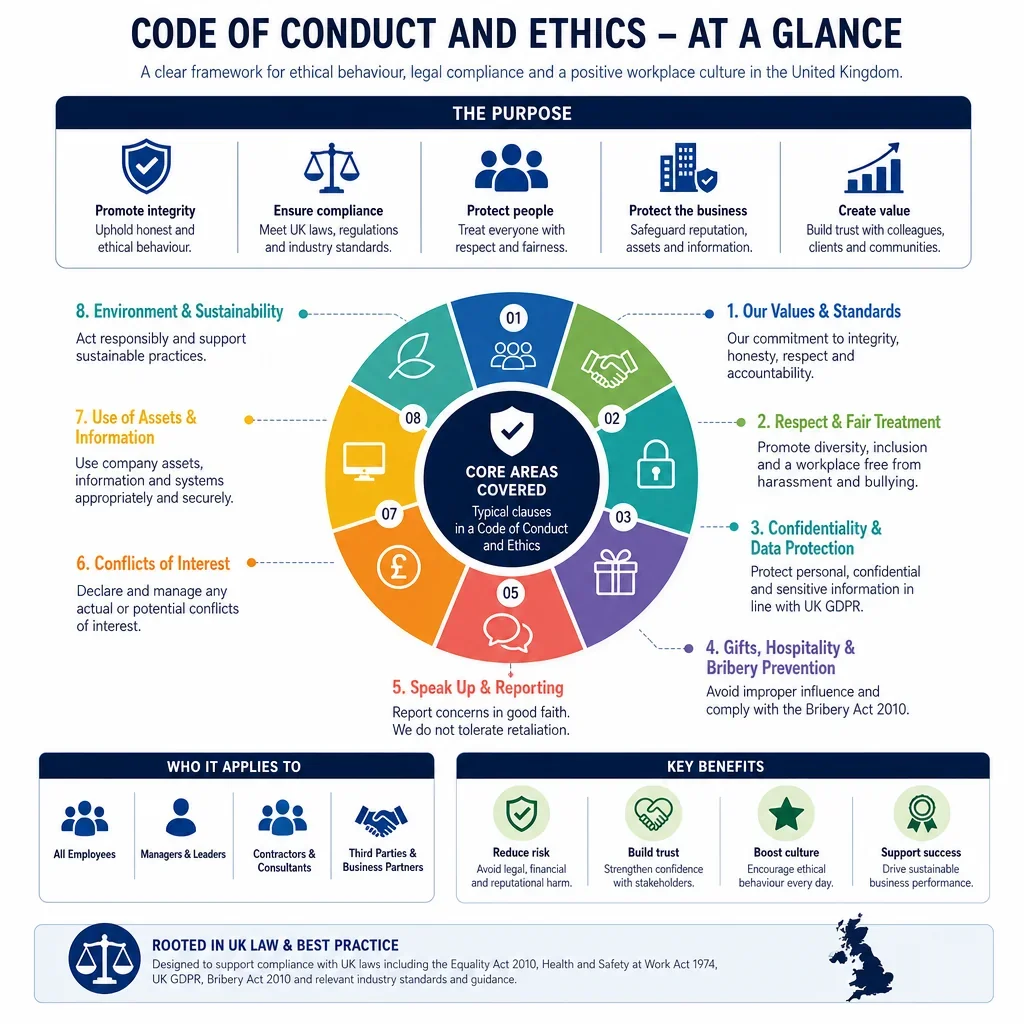
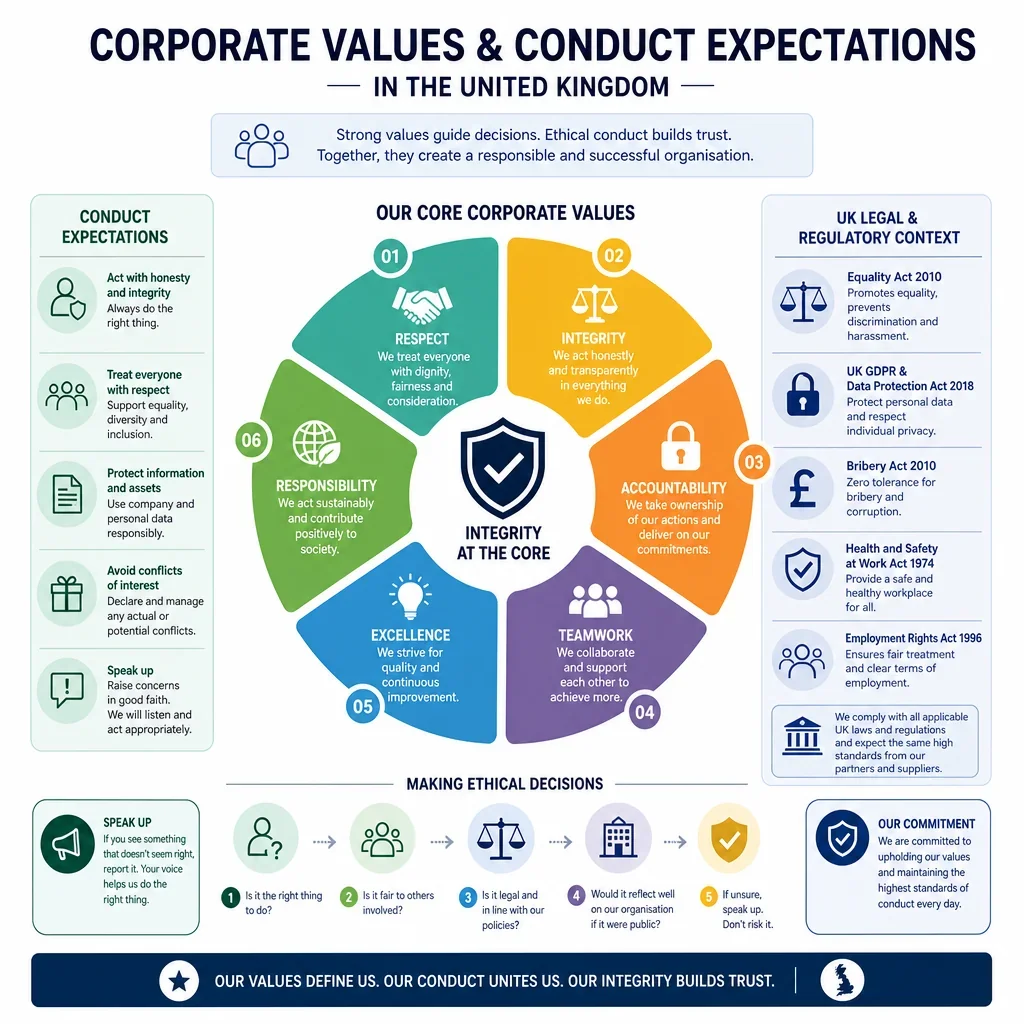
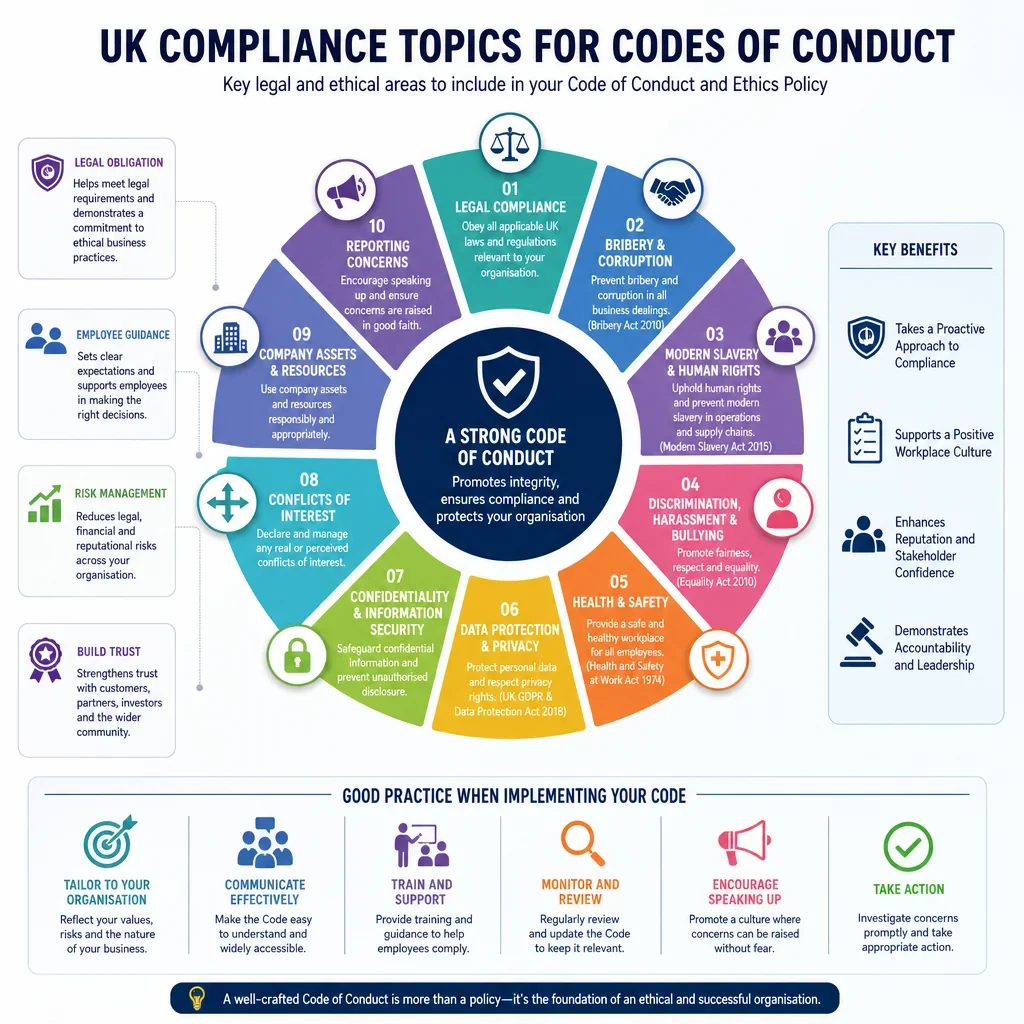
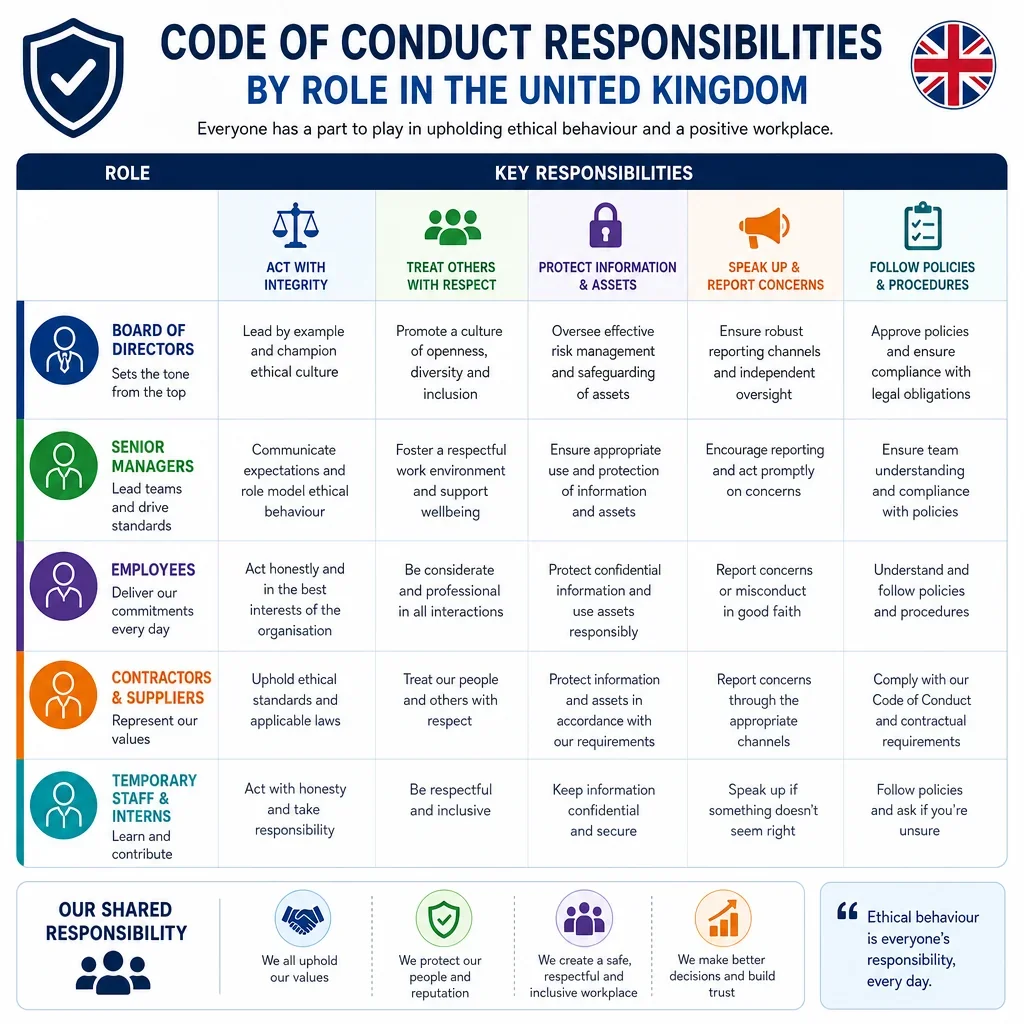
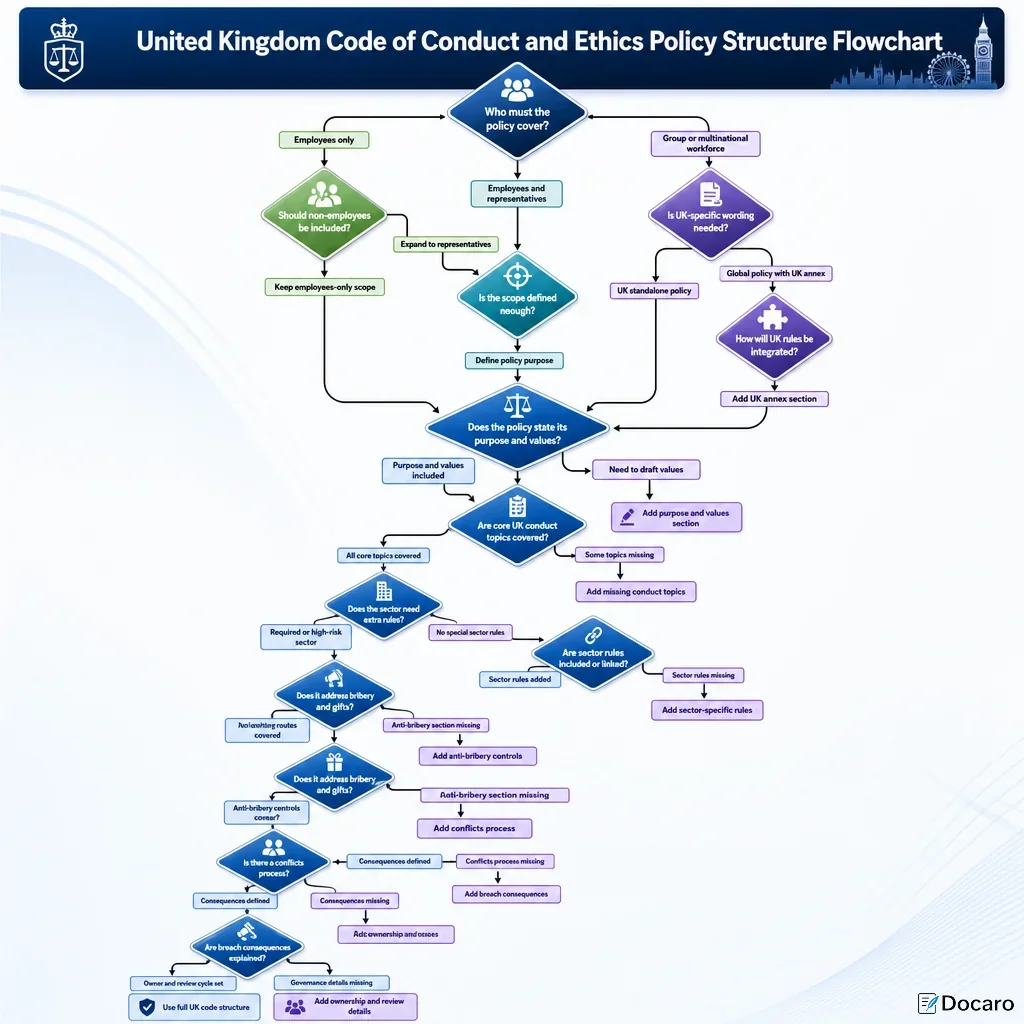
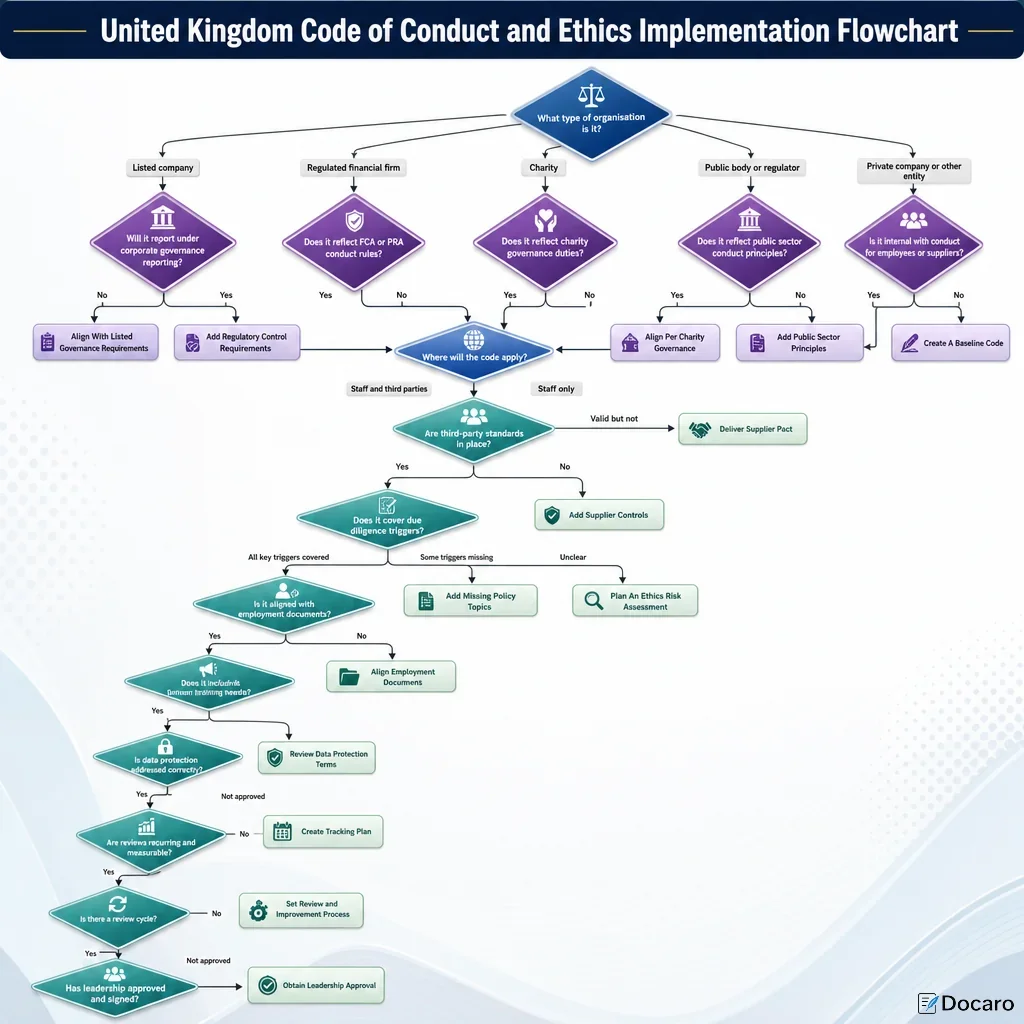
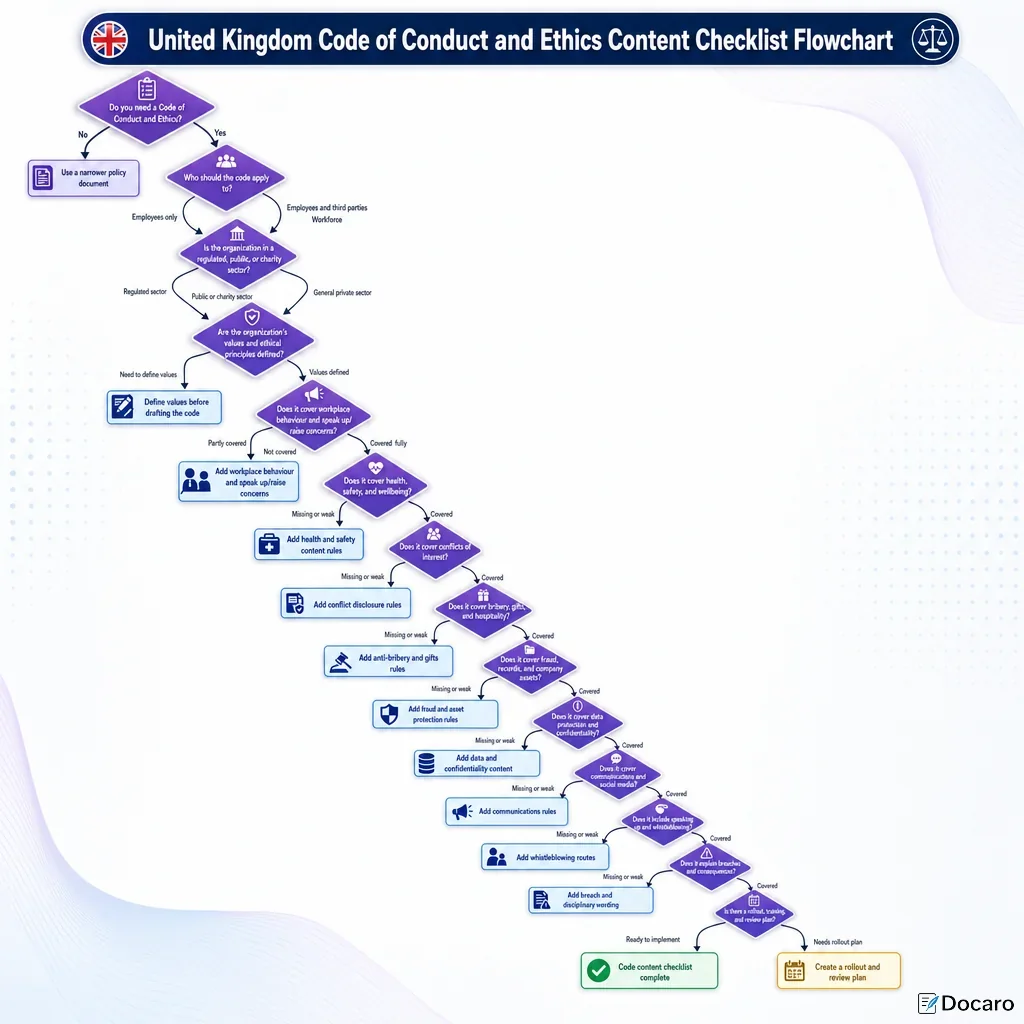
United Kingdom Code Of Conduct And Ethics Content Checklist Flowchart
Do you need a Code of Conduct and Ethics?
Why Is A UK Code Of Conduct And Ethics Important?
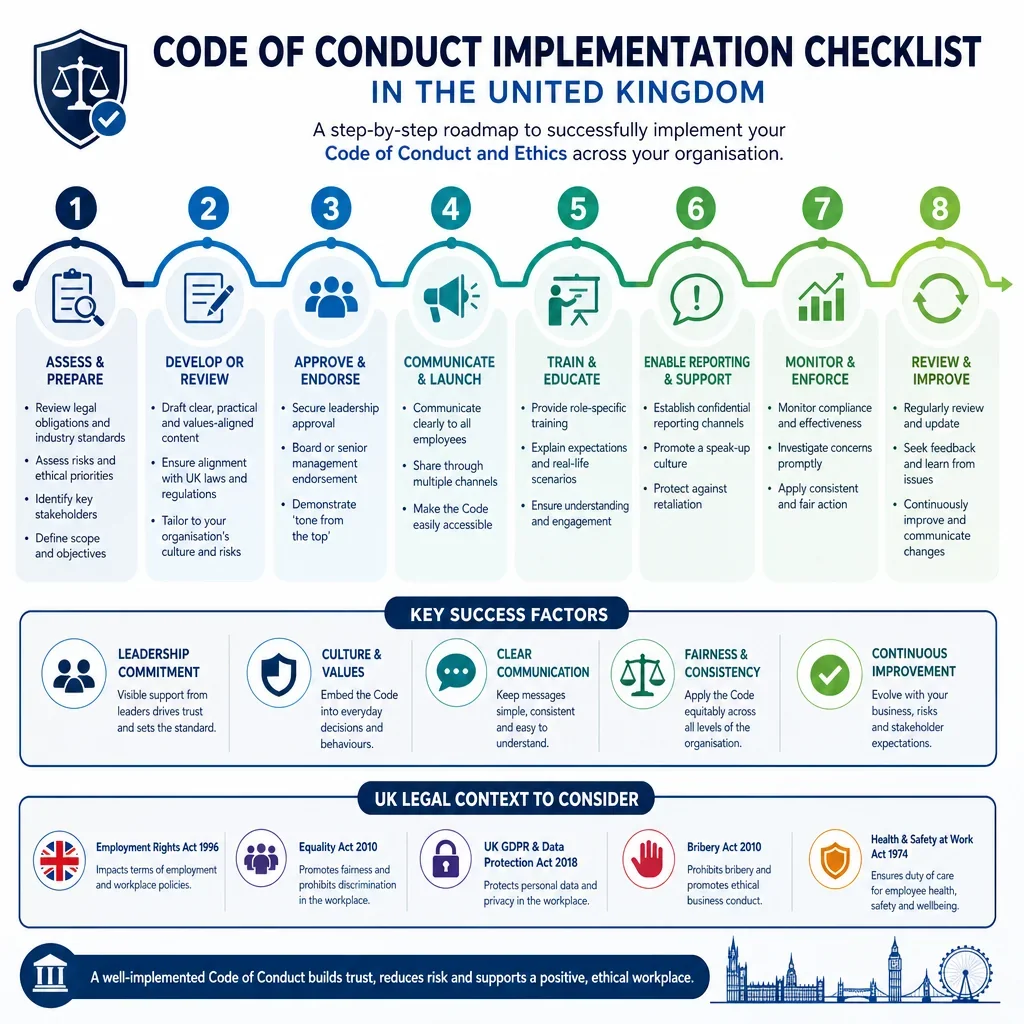
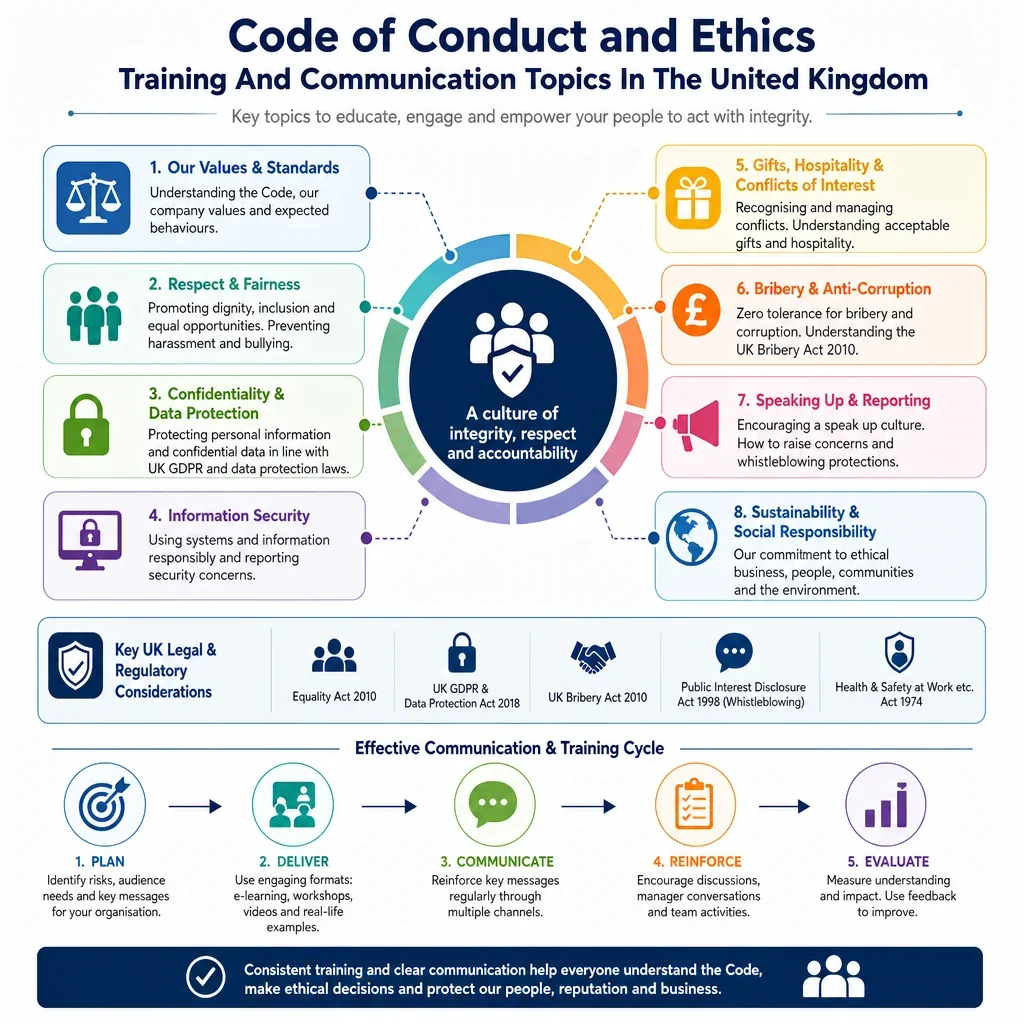
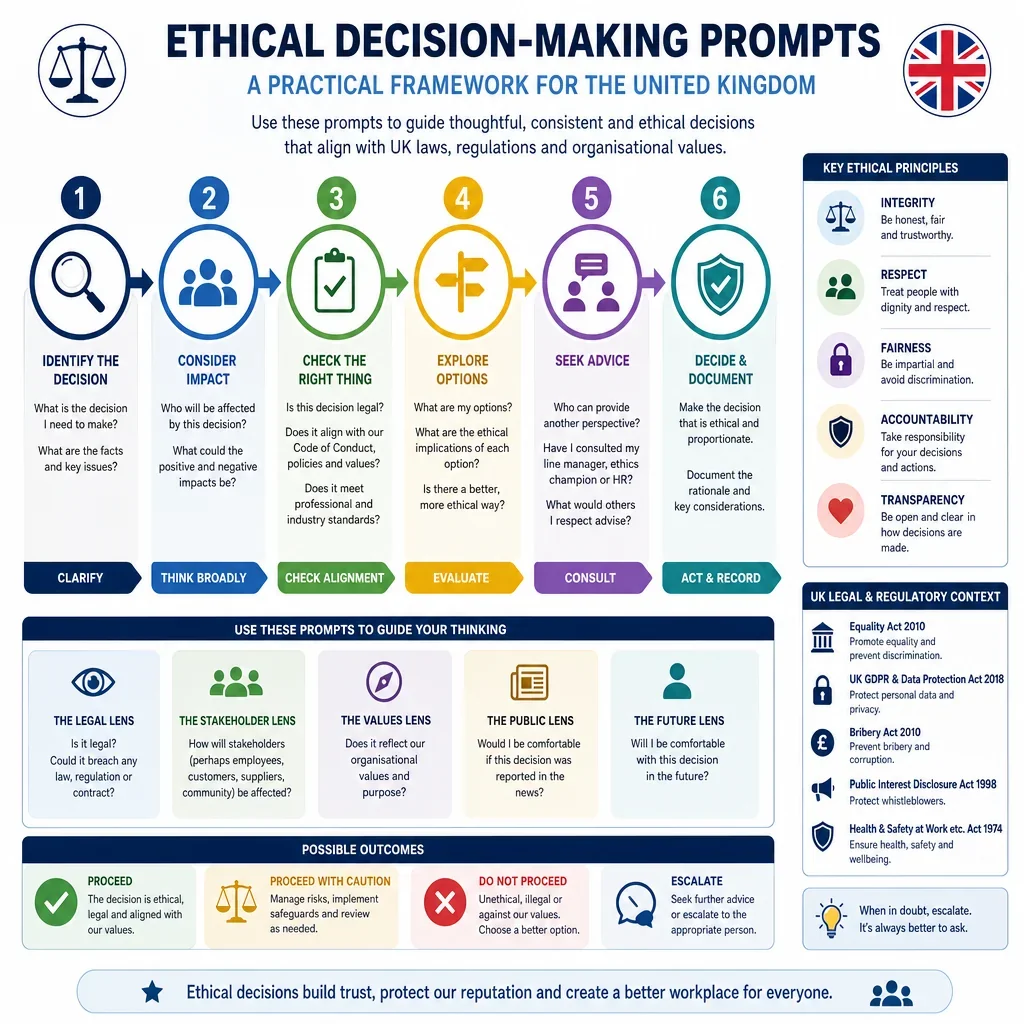
A well-drafted Code of Conduct and Ethics helps UK organisations turn legal duties and ethical values into clear day-to-day behaviour standards. It supports consistent decision-making, reduces misconduct risk, and gives workers a practical reference point when they are unsure what to do.
What Should A UK Code Of Conduct And Ethics Protect Against?
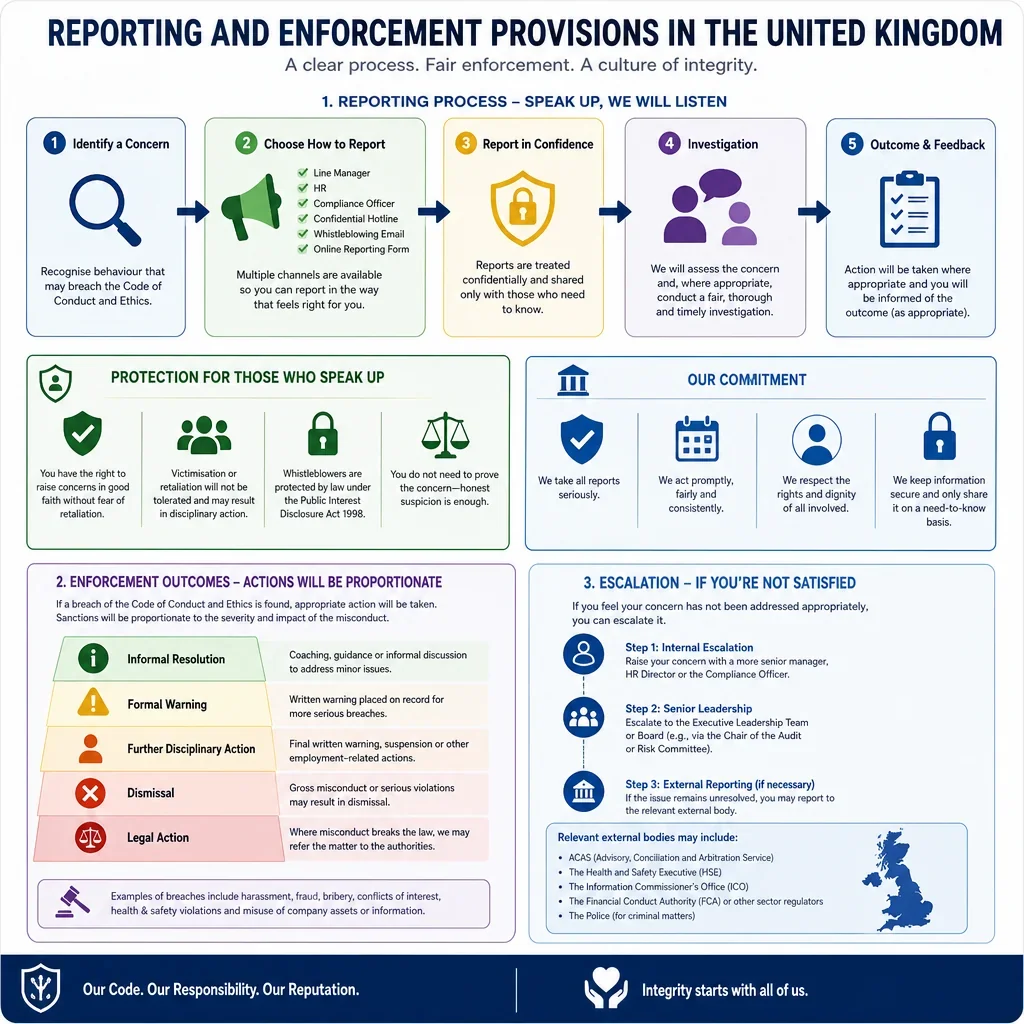
The right content can help manage risks linked to discrimination, harassment, bribery, fraud, conflicts of interest, misuse of confidential information, data protection failures, health and safety breaches, and reputational damage. These areas are especially important in the United Kingdom because they often connect to statutory duties, regulatory expectations, and ACAS good practice.
How Can The Wrong Code Create Problems?
A weak or generic code may leave gaps, confuse workers, or conflict with employment contracts and workplace policies. If standards are unclear, managers may enforce rules inconsistently, employees may not know how to raise concerns, and the organisation may struggle to show that it took reasonable steps to prevent misconduct.
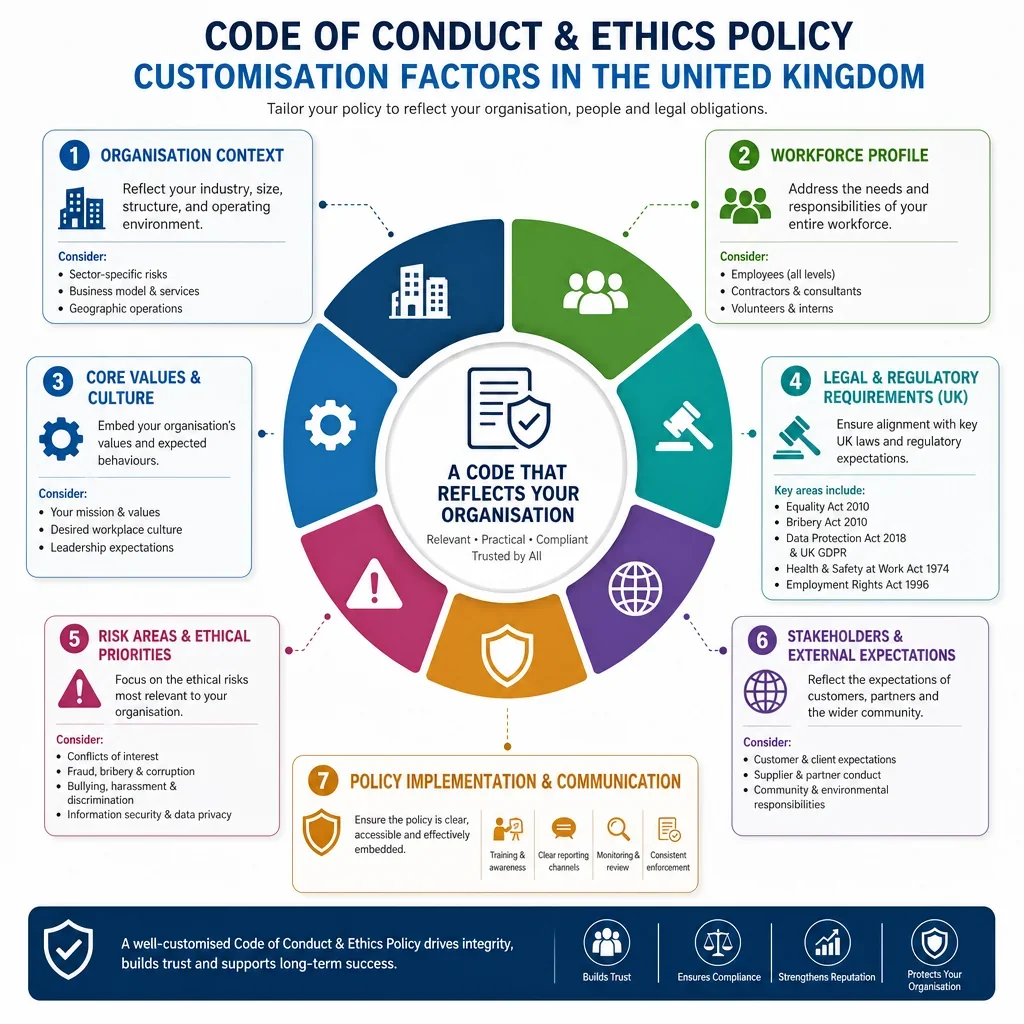
What Makes A Code Suitable For A UK Organisation?
- It reflects UK employment, equality, data protection, health and safety, and anti-bribery expectations.
- It is tailored to the organisation's sector, workforce, and risk profile.
- It explains how to report concerns and what happens after a breach.
- It links to detailed policies, such as disciplinary, whistleblowing, data protection, and anti-harassment policies.
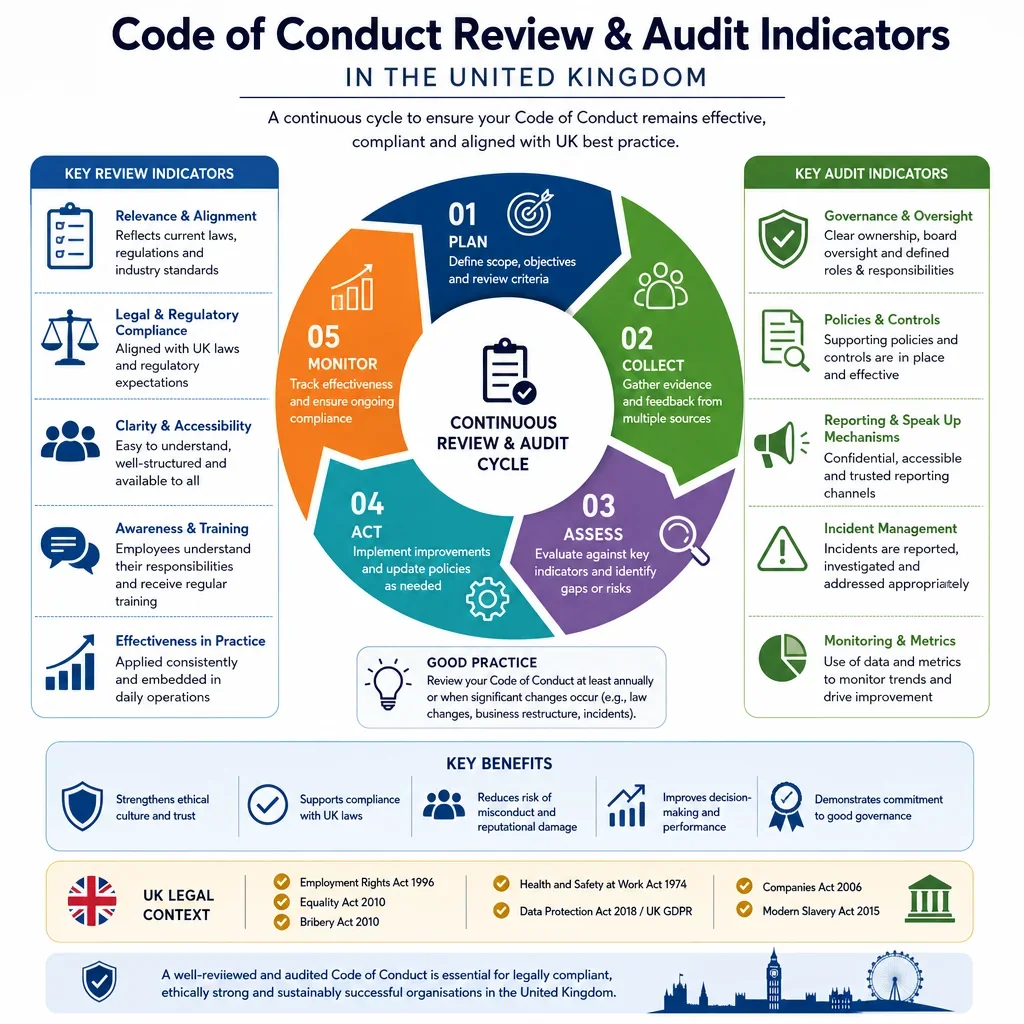
- It is communicated, trained, reviewed, and applied consistently.
For further guidance, UK organisations can refer to official sources such as ACAS workplace policy guidance, GOV.UK Bribery Act guidance, ICO UK GDPR guidance, and HSE health and safety guidance.
FAQs
You Might Also Be Interested In