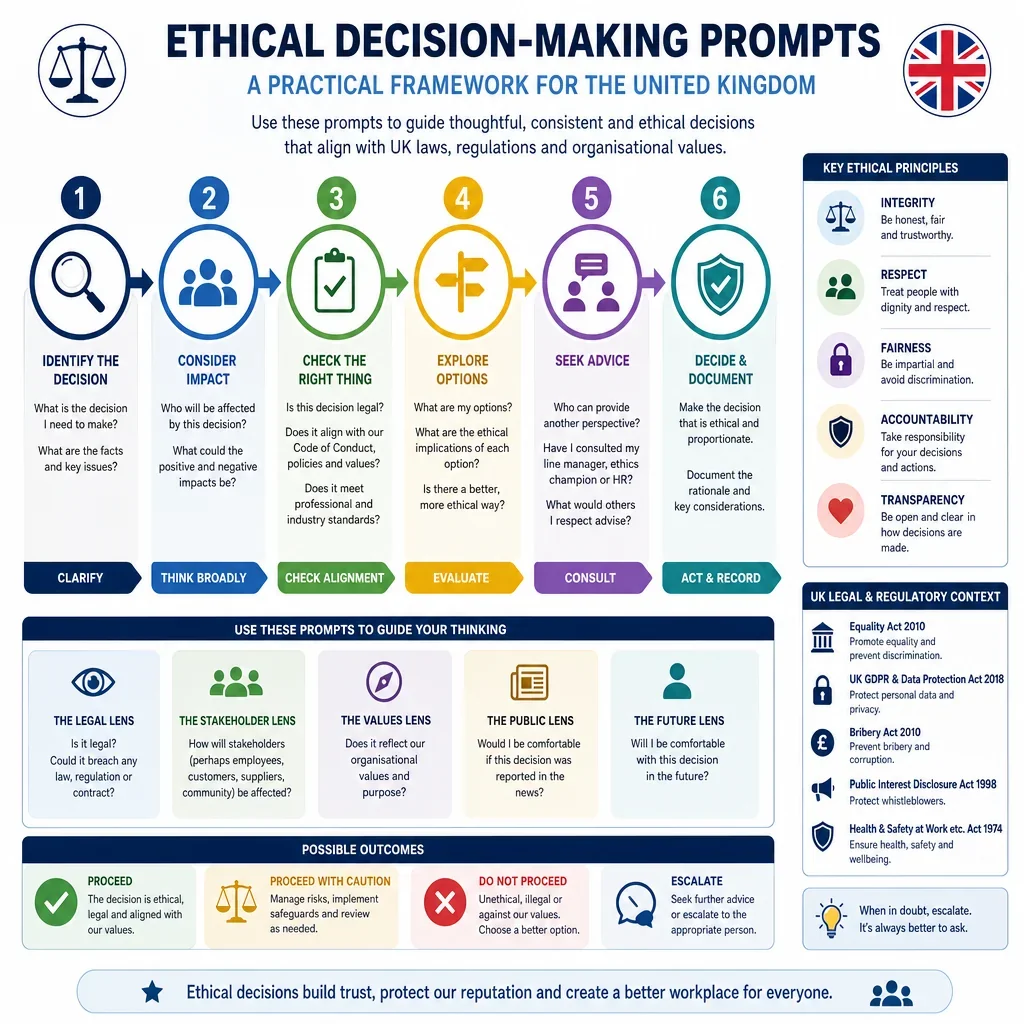
Ethical Decision-Making Prompts In The United Kingdom
Decision prompt | Why it matters | Likely users | Possible action indicated | Implementation notes |
|---|---|---|---|---|
Legality | ||||
Is the proposed action lawful in the UK and any other relevant jurisdiction? | Unlawful conduct can create criminal, civil, regulatory and employment consequences. | All personnel | Do not proceed until reviewed | Use as a first question in all ethics checklists and approval workflows. |
Policy alignment | ||||
Does this comply with our Code of Conduct and related policies? | Policies translate legal and ethical standards into expected workplace behaviour. | All personnel | Seek guidance | Place near links to conduct, HR, finance, procurement and data policies. |
Legality | ||||
Could this payment, gift or favour be seen as a bribe or improper inducement? | Bribery risks can arise even where a benefit is described as hospitality or relationship building. | All personnel | Do not proceed until reviewed | Include in gifts, hospitality, donations, sponsorship and sales training. |
Could the organisation be exposed to failure-to-prevent bribery risk? | UK companies can be liable where associated persons bribe for their benefit. | Managers, Senior leadership, Procurement teams | Escalate for approval | Use in third-party, agent, reseller and intermediary due diligence. |
Is anyone requesting a small payment to speed up a routine official process? | Facilitation payments can amount to bribery under UK law. | Employees, Customer-facing teams, Procurement teams | Do not proceed until reviewed | Add to travel, logistics, customs, public-sector sales and anti-bribery training. |
Transparency | ||||
Do I have a personal, financial or family interest that could affect my judgement? | Undisclosed interests can undermine trust and lead to biased decisions. | All personnel | Seek guidance | Include in annual declarations, recruitment panels and procurement approvals. |
Reputation | ||||
Could others reasonably think my independence is compromised? | Perceived conflicts can damage confidence even where no improper conduct occurs. | Managers, Senior leadership | Escalate for approval | Use in board, tender, hiring and performance review processes. |
Fairness | ||||
Would this decision treat people consistently and without unfair bias? | Consistency reduces discrimination, grievance and morale risks. | Managers | Seek guidance | Use in HR decisions, resource allocation and customer treatment reviews. |
Legality, Fairness | ||||
Could this disadvantage someone because of a protected characteristic? | UK equality law protects characteristics including age, disability, race, religion, sex and sexual orientation. | Managers, Customer-facing teams, All personnel | Do not proceed until reviewed | Include in recruitment, promotion, discipline, customer access and service design checks. |
Legality, Stakeholder impact | ||||
Could this behaviour create an intimidating, hostile, degrading or offensive environment? | Harassment can breach equality law and cause serious harm to colleagues. | All personnel | Do not proceed until reviewed | Use in dignity at work, events, messaging and manager training. |
Legality, Fairness | ||||
Have reasonable adjustments been considered for disabled colleagues or customers? | The duty to make reasonable adjustments helps remove disability-related barriers. | Managers, Customer-facing teams | Seek guidance | Embed in HR, recruitment, facilities, digital accessibility and customer service guidance. |
Legality, Policy alignment | ||||
Are we collecting only the personal data needed for this purpose? | Data minimisation reduces privacy, security and regulatory risk. | All personnel | Proceed with care | Include in project intake forms, DPIAs, marketing checks and system design. |
Legality | ||||
Do we have a lawful basis for using this personal data? | Personal data use must have a valid legal basis and comply with UK data protection law. | All personnel | Do not proceed until reviewed | Use in privacy notices, marketing, HR, analytics, AI and supplier onboarding. |
Legality, Escalation | ||||
Are we handling special category data or criminal offence data? | Sensitive data usually needs extra conditions, safeguards and documentation. | Managers, Customer-facing teams, All personnel | Escalate for approval | Add to HR, health, safeguarding, fraud prevention and identity checks. |
Fairness, Transparency | ||||
Would the individual reasonably expect us to use their data in this way? | Unexpected processing can be unfair even where business reasons exist. | All personnel | Seek guidance | Use in legitimate interests assessments, marketing and product changes. |
Escalation, Accountability | ||||
Could this incident involve loss, unauthorised access or disclosure of personal data? | Some personal data breaches require prompt assessment and notification. | All personnel | Escalate for approval | Include in incident reporting, IT security and manager response checklists. |
Legality, Stakeholder impact | ||||
Could this decision put anyone’s health, safety or welfare at risk? | Employers must protect workers’ health, safety and welfare so far as reasonably practicable. | Managers, All personnel | Do not proceed until reviewed | Use in risk assessments, site work, lone working and operational changes. |
Accountability, Escalation | ||||
Has a near miss or unsafe condition been reported and acted on? | Near misses reveal hazards before harm occurs. | Employees, Managers | Escalate for approval | Add to safety briefings, incident forms and manager handovers. |
Legality, Escalation | ||||
Could this concern amount to protected whistleblowing disclosure? | Workers may be protected when raising certain public interest concerns. | Employees, Managers | Escalate for approval | Include in speak-up policies, manager training and investigation triage. |
Fairness, Accountability | ||||
Could this action be seen as retaliation against someone who raised a concern? | Retaliation discourages reporting and can create legal and cultural risk. | Managers | Do not proceed until reviewed | Use before disciplinary, redundancy, transfer or performance actions after a concern. |
Accountability | ||||
Would this create a complete, accurate and timely business record? | Accurate records support audit, tax, reporting and fraud prevention. | Employees, Managers, Senior leadership | Proceed with care | Embed in expenses, invoicing, procurement, payroll and contract management. |
Legality, Accountability | ||||
Could this entry misstate income, costs, timing or approval? | False accounting can be a criminal offence and undermine financial integrity. | Managers, Senior leadership | Do not proceed until reviewed | Use in finance approvals, revenue recognition and audit issue escalation. |
Legality | ||||
Could this involve dishonesty, deception or personal gain at another’s expense? | Fraud risks require immediate review and evidence preservation. | All personnel | Do not proceed until reviewed | Include in expenses, procurement, customer refunds, cyber and finance training. |
Fairness, Accountability | ||||
Have suppliers been assessed using fair, documented and relevant criteria? | Documented criteria reduce favouritism, challenge and poor value decisions. | Procurement teams, Managers | Proceed with care | Use in tender scoring, supplier selection and contract award records. |
Stakeholder impact, Escalation | ||||
Does this supplier present bribery, labour, sanctions, human rights or environmental risks? | Third-party misconduct can create legal, operational and reputational exposure. | Procurement teams, Managers | Escalate for approval | Embed in supplier due diligence, onboarding and contract renewal reviews. |
Legality, Stakeholder impact | ||||
Are there indicators of forced labour, exploitation or human trafficking in our supply chain? | Modern slavery risks require serious due diligence and may trigger reporting obligations. | Procurement teams, Senior leadership | Do not proceed until reviewed | Use in supplier audits, high-risk sectors, overseas sourcing and board reporting. |
Legality, Escalation | ||||
Could this transaction involve a sanctioned person, entity, sector or territory? | Sanctions breaches can carry severe civil, criminal and commercial consequences. | Procurement teams, Customer-facing teams, Senior leadership | Do not proceed until reviewed | Add to customer onboarding, supplier screening, payments and export controls. |
Are there unusual payment patterns, ownership structures or source-of-funds concerns? | Suspicious financial activity may indicate money laundering or terrorist financing risk. | Customer-facing teams, Procurement teams, Managers | Escalate for approval | Use in KYC, onboarding, payments, refunds and high-value transaction reviews. |
Policy alignment, Accountability | ||||
Am I sharing confidential information only with authorised people for a valid purpose? | Confidentiality protects customers, colleagues, trade secrets and commercial negotiations. | All personnel | Proceed with care | Include in information security, NDA, remote working and communications guidance. |
Legality, Escalation | ||||
Could this information be inside information or market-sensitive before disclosure? | Improper use or disclosure of inside information can breach market abuse rules. | Senior leadership, Managers | Do not proceed until reviewed | Use in investor relations, finance, M&A, board papers and announcements. |
Legality | ||||
Could this discussion with a competitor affect prices, markets, bids or customers? | Anti-competitive agreements can breach UK competition law and attract major penalties. | Senior leadership, Customer-facing teams, Procurement teams | Do not proceed until reviewed | Include in trade association, tender, sales and strategic partnership guidance. |
Fairness, Stakeholder impact | ||||
Would this customer outcome be fair, clear and not misleading? | Fair customer treatment reduces harm, complaints and regulatory scrutiny. | Customer-facing teams, Managers, Senior leadership | Seek guidance | Use in product design, sales scripts, complaints and customer communications. |
Could a vulnerable customer need extra support to make an informed decision? | Vulnerability can increase the risk of harm or misunderstanding. | Customer-facing teams | Seek guidance | Include in call handling, complaints, collections and sales quality monitoring. |
Transparency | ||||
Would a reasonable person understand what we are saying and what it means for them? | Clear communication reduces misunderstanding, complaints and unfair outcomes. | Customer-facing teams, Managers | Proceed with care | Use in customer letters, web content, employee notices and policy summaries. |
Transparency, Reputation | ||||
Could this statement omit facts that would change someone’s decision? | Material omissions can mislead even where each statement is technically true. | Customer-facing teams, Senior leadership, Managers | Seek guidance | Embed in marketing, investor, customer and internal change communications. |
Accountability | ||||
Who is accountable for this decision and is their authority clear? | Clear ownership prevents unmanaged risk and hidden decision-making. | Managers, Senior leadership | Escalate for approval | Use in delegations of authority, risk committees and project governance. |
Accountability, Transparency | ||||
Can we document the reasons, evidence and approvals behind this decision? | Good records support audit, learning and defensible decisions. | Managers, Senior leadership, Procurement teams | Proceed with care | Add to approval templates, committee papers and incident investigation reports. |
Reputation, Transparency | ||||
Would we be comfortable if this decision appeared in the media or before a regulator? | Public scrutiny tests whether a decision is explainable and values-led. | All personnel | Seek guidance | Use as a memorable training prompt in ethics scenarios. |
Stakeholder impact | ||||
Who could be harmed by this decision, and how serious could that harm be? | Identifying harm early helps balance business aims against human impact. | Managers, Senior leadership, All personnel | Seek guidance | Include in risk assessments, product approvals and organisational change plans. |
Stakeholder impact, Fairness | ||||
Have affected employees, customers or communities been considered before acting? | Decisions made without affected perspectives can miss foreseeable impacts. | Managers, Senior leadership | Proceed with care | Use in consultation plans, equality reviews and change management. |
Escalation | ||||
Am I unsure who owns this risk or whether approval is needed? | Uncertainty is often a signal to pause and involve the right function. | All personnel | Seek guidance | Add to conduct training, intranet guidance and helpline pages. |
Escalation, Accountability | ||||
Is this high-value, high-risk or outside normal delegated authority? | Delegated authority controls prevent unauthorised commitments and unmanaged exposure. | Managers, Procurement teams | Escalate for approval | Include in finance, contracting, procurement and project approval matrices. |
Am I being pressured to act quickly, ignore controls or keep something quiet? | Pressure and secrecy are common warning signs of unethical conduct. | Employees | Escalate for approval | Use in speak-up, anti-fraud and manager culture training. |
Policy alignment, Accountability | ||||
Am I using company assets, systems or time for an authorised business purpose? | Asset misuse can create security, fraud, productivity and disciplinary issues. | Employees | Proceed with care | Add to IT acceptable use, expenses, equipment and remote working policies. |
Stakeholder impact, Escalation | ||||
Could this link, file, request or system change create a cyber security risk? | Cyber incidents can expose data, disrupt operations and harm customers. | All personnel | Seek guidance | Include in phishing training, access requests and IT change controls. |
Accountability, Transparency | ||||
Is AI being used in a way that is explainable, supervised and appropriate for the risk? | AI can amplify bias, opacity and accountability gaps if unmanaged. | Managers, Senior leadership, All personnel | Escalate for approval | Use in AI tool approval, data protection reviews and human oversight guidance. |
Legality, Fairness | ||||
Could an automated decision significantly affect someone without meaningful human review? | Automated decisions can affect rights, access, employment or services. | Managers, Senior leadership | Do not proceed until reviewed | Include in AI governance, HR tools, credit, fraud and customer eligibility checks. |
Transparency, Reputation | ||||
Can we substantiate any environmental claim with accurate, current evidence? | Unsupported green claims can mislead customers and attract enforcement action. | Customer-facing teams, Senior leadership, Managers | Seek guidance | Use in marketing approvals, ESG reports, packaging and product claims. |
Legality, Stakeholder impact | ||||
Could this activity cause avoidable environmental harm or breach permit conditions? | Environmental breaches can harm communities and lead to enforcement or remediation costs. | Managers, Senior leadership | Escalate for approval | Use in operations, facilities, waste management and supplier site reviews. |
Legality, Reputation | ||||
Could this donation, lobbying or political activity create legal or reputation risk? | Political activity is sensitive and may require controls, transparency and approvals. | Senior leadership | Escalate for approval | Include in donations, public affairs, lobbying and sponsorship procedures. |
Reputation, Policy alignment | ||||
Could this post reveal confidential information or harm trust in the organisation? | Online conduct can quickly create confidentiality, harassment or reputation issues. | All personnel | Seek guidance | Add to social media, communications and disciplinary guidance. |
Policy alignment, Accountability | ||||
Am I authorised to speak publicly on behalf of the organisation? | Unauthorised statements can mislead stakeholders and create legal exposure. | Employees, Managers, Senior leadership | Seek guidance | Include in media, investor, regulator and conference speaking protocols. |
Accountability, Reputation | ||||
Would my team see this as consistent with the standards I expect from them? | Manager behaviour sets practical norms more strongly than written rules. | Managers, Senior leadership | Proceed with care | Use in leadership training, appraisal objectives and culture reviews. |
Fairness, Accountability | ||||
Have we investigated fairly before taking disciplinary action? | Fair process reduces employment tribunal and employee relations risk. | Managers | Do not proceed until reviewed | Embed in disciplinary, grievance and investigation manager checklists. |
Has the employee’s concern been acknowledged, assessed and handled impartially? | Prompt impartial handling helps resolve issues and prevents escalation. | Managers | Seek guidance | Use in grievance, bullying, harassment and whistleblowing triage. |
Stakeholder impact, Fairness | ||||
Could this workload, deadline or rota create avoidable fatigue or wellbeing risk? | Excessive pressure can affect safety, mental health and performance. | Managers | Seek guidance | Include in workload planning, absence reviews and wellbeing risk assessments. |
Policy alignment, Accountability | ||||
Is this expense genuine, proportionate, properly approved and business-related? | Expense controls prevent misuse, tax issues and inaccurate records. | Employees, Managers | Proceed with care | Add to expense forms, cardholder rules and approver checklists. |
Policy alignment, Transparency | ||||
Does this gift or hospitality exceed policy limits or require registration? | Registers help detect patterns and prevent improper influence. | All personnel | Seek guidance | Use in gifts and hospitality registers and pre-approval workflows. |
Legality, Escalation | ||||
Does this involve a public official, regulator or state-owned organisation? | Interactions with public officials can carry heightened bribery and perception risks. | Customer-facing teams, Procurement teams, Senior leadership | Escalate for approval | Add to hospitality, tenders, inspections, licensing and public-sector sales. |
Legality, Reputation | ||||
Could this donation or sponsorship be used to obtain improper influence? | Charitable or community payments can be misused to disguise inducements. | Managers, Senior leadership | Escalate for approval | Use in CSR, sponsorship, charity partnerships and local authority engagement. |
Fairness, Accountability | ||||
Is this hiring decision based on objective, job-related criteria? | Objective criteria reduce bias and improve defensibility of hiring decisions. | Managers | Proceed with care | Embed in interview scoring, shortlisting and recruitment panel guidance. |
Fairness, Transparency | ||||
Could this appointment, promotion or award favour someone because of a personal relationship? | Nepotism concerns damage trust and may hide conflicts of interest. | Managers, Senior leadership | Escalate for approval | Use in recruitment, promotion, bonus and supplier selection processes. |
Stakeholder impact, Escalation | ||||
Could a child or vulnerable adult be at risk of harm or abuse? | Safeguarding concerns require prompt action and specialist handling. | All personnel, Managers | Do not proceed until reviewed | Include where services, volunteering, charities or customer contact involve vulnerable people. |
Transparency, Accountability | ||||
Are we being open, accurate and timely with regulators or public authorities? | Regulator trust depends on candour, accuracy and prompt correction of errors. | Senior leadership, Managers | Escalate for approval | Use in regulatory reporting, inspections, breach notifications and enquiries. |
Policy alignment, Accountability | ||||
Am I authorised to make this promise, variation or contract commitment? | Unauthorised commitments can bind the business or create disputes. | Employees, Managers, Customer-facing teams, Procurement teams | Seek guidance | Add to sales, procurement, contract variation and email approval guidance. |
Legality, Reputation | ||||
Could this arrangement be viewed as artificial tax avoidance or inaccurate tax reporting? | Tax arrangements can create legal, financial and reputational risk beyond technical compliance. | Senior leadership, Managers | Escalate for approval | Use in finance, payroll, transfer pricing and group structure approvals. |
Accountability, Legality | ||||
Do we have sufficient evidence to support VAT, payroll or tax treatment? | Weak evidence can cause tax errors, penalties and audit findings. | Employees, Managers | Seek guidance | Include in finance approvals, supplier invoices and employee expense processes. |
Policy alignment, Stakeholder impact | ||||
Does this working arrangement protect confidentiality, security, safety and fair treatment? | Remote working can create hidden risks around data, supervision and wellbeing. | Employees, Managers | Proceed with care | Use in hybrid working, homeworking and overseas working approvals. |
Legality, Policy alignment | ||||
Could local custom conflict with UK legal or ethical standards? | Local practice does not excuse conduct that breaches UK law or company standards. | Employees, Managers, Senior leadership | Seek guidance | Include in travel, overseas sales, customs and distributor training. |
Accountability, Policy alignment | ||||
Should this record be retained, protected or put on legal hold? | Retention controls preserve evidence and reduce over-retention risk. | All personnel | Seek guidance | Use in records management, litigation hold and data retention policies. |
Accountability, Escalation | ||||
Could deleting or altering this record hide a problem or frustrate an investigation? | Improper deletion can obstruct audits, investigations and legal processes. | All personnel | Do not proceed until reviewed | Include in investigation notices, legal hold guidance and IT deletion controls. |
Legality, Accountability | ||||
Is this agent, introducer or consultant being paid for clear, legitimate services? | Vague third-party services can conceal bribery, conflicts or fraud. | Procurement teams, Customer-facing teams, Managers | Escalate for approval | Use in intermediary onboarding, commission approvals and contract reviews. |
Fairness, Stakeholder impact | ||||
Could this incentive encourage mis-selling, overcharging or poor customer outcomes? | Incentives shape behaviour and can create conduct risk. | Managers, Senior leadership, Customer-facing teams | Escalate for approval | Use in sales incentives, bonus schemes and product governance reviews. |
Accountability, Stakeholder impact | ||||
Does this complaint reveal a wider ethical, fairness or control issue? | Complaints can identify systemic problems before they become major failures. | Customer-facing teams, Managers | Seek guidance | Add to complaints root-cause analysis and conduct risk reporting. |
Stakeholder impact, Legality | ||||
Could this product, service or change expose users to avoidable harm? | Safety risks should be assessed before products or service changes reach users. | Managers, Senior leadership | Do not proceed until reviewed | Use in product launch, quality assurance and change approval gates. |
Fairness, Stakeholder impact | ||||
Can people with disabilities access this service, workplace or information effectively? | Accessibility reduces exclusion and supports equality obligations. | Managers, Customer-facing teams | Seek guidance | Include in web, document, facilities and customer communication reviews. |
Accountability, Policy alignment | ||||
Have the people involved received training for this risk or responsibility? | Training gaps make policy breaches more likely and harder to defend. | Managers, Senior leadership | Seek guidance | Use in role-based training matrices and onboarding checks. |
Accountability, Stakeholder impact | ||||
Would people feel safe raising concerns about this decision? | Psychological safety helps surface issues before serious harm occurs. | Managers, Senior leadership | Proceed with care | Include in culture surveys, leadership training and speak-up communications. |
Fairness, Accountability | ||||
Is the person reviewing this concern independent and free from conflicts? | Independent review supports confidence in outcomes and reduces bias. | Managers, Senior leadership | Escalate for approval | Use in investigation appointment, grievance and whistleblowing procedures. |
Is our response proportionate to the risk, evidence and potential harm? | Proportionality prevents overreaction, underreaction and inconsistent treatment. | Managers, Senior leadership | Proceed with care | Use in disciplinary, customer remediation, investigations and risk acceptance. |
Accountability, Fairness | ||||
Are we relying on assumptions where evidence should be checked? | Unchecked assumptions can lead to unfair or unsafe decisions. | All personnel | Seek guidance | Include in investigation, procurement, HR and risk assessment templates. |
Accountability | ||||
What should we change to prevent this ethical issue recurring? | Learning turns individual incidents into stronger controls and culture. | Managers, Senior leadership | Proceed with care | Use in post-incident reviews, audit findings and compliance reporting. |
Policy alignment, Accountability | ||||
Does this decision align with the organisation’s stated values, risk appetite and long-term duties? | Leadership decisions shape culture, incentives and stakeholder confidence. | Senior leadership | Escalate for approval | Use in board papers, executive approvals and risk committee decisions. |
Legality, Stakeholder impact | ||||
Have directors considered long-term consequences, employees, suppliers, customers, community and environment? | UK directors must consider specified stakeholder and long-term factors when promoting company success. | Senior leadership | Proceed with care | Include in board minutes, strategic decisions and section 172 reporting support. |
Legality, Escalation | ||||
Could this decision worsen creditor interests if the company is financially distressed? | Distress changes the ethical and legal context for directors and management decisions. | Senior leadership | Do not proceed until reviewed | Use in finance, restructuring, major payments and board escalation protocols. |
Transparency, Accountability | ||||
Are we accurately disclosing material facts to insurers, lenders or auditors? | Incomplete disclosures can invalidate cover, breach covenants or undermine assurance. | Managers, Senior leadership | Seek guidance | Use in insurance renewals, audits, lender reporting and risk registers. |
Escalation, Reputation | ||||
Is a customer asking us to bypass controls, misstate facts or conceal information? | Customer pressure can draw employees into fraud, bribery or misleading conduct. | Customer-facing teams | Escalate for approval | Add to sales, account management and customer onboarding training. |
Escalation, Accountability | ||||
Is a supplier asking for unusual payment terms, secrecy or off-system communication? | Unusual supplier requests can indicate fraud, bribery or sanctions evasion. | Procurement teams | Escalate for approval | Use in supplier onboarding, payment changes and contract management. |
Fairness, Transparency | ||||
Could a personal relationship affect supervision, pay, promotion or disciplinary decisions? | Relationship conflicts can undermine trust in employment decisions. | Employees, Managers | Seek guidance | Include in conflict declarations and manager reporting lines guidance. |
Legality, Policy alignment | ||||
Could my personal trading benefit from confidential or inside information? | Personal dealing can create market abuse and conflict risks. | Employees, Senior leadership | Do not proceed until reviewed | Use in personal account dealing, restricted lists and finance role guidance. |
Fairness, Reputation | ||||
Is any gift or hospitality being offered during a tender, negotiation or dispute? | Timing can make otherwise modest hospitality appear improper. | Procurement teams, Managers | Do not proceed until reviewed | Add to procurement black-out periods and hospitality approval rules. |
Fairness, Stakeholder impact | ||||
Are we using our bargaining power responsibly and paying suppliers as agreed? | Unfair payment practices can harm suppliers and damage trust. | Procurement teams, Senior leadership | Proceed with care | Include in payment practices, contract management and supplier relationship reviews. |
Transparency, Accountability | ||||
Have we told the customer clearly what happened, what we will do and when? | Clear complaint handling supports trust and timely resolution. | Customer-facing teams | Proceed with care | Use in complaints scripts, remediation letters and service recovery training. |
Stakeholder impact, Accountability | ||||
Have we protected the confidentiality and welfare of the person who raised the concern? | Protection encourages reporting and reduces victimisation risk. | Managers, Senior leadership | Seek guidance | Include in speak-up investigation plans and HR support protocols. |
Fairness, Stakeholder impact | ||||
Have we checked whether this process excludes or disadvantages underrepresented groups? | Process design can create unintended barriers even without explicit bias. | Managers, Senior leadership | Seek guidance | Use in recruitment, promotion, training access and workplace policy reviews. |
Legality, Transparency | ||||
Is employee monitoring necessary, proportionate and clearly communicated? | Monitoring can intrude on privacy and damage trust if excessive or hidden. | Managers, Senior leadership | Escalate for approval | Use in monitoring impact assessments, HR policies and IT controls. |
Is CCTV or surveillance justified, proportionate and signposted? | Surveillance affects privacy and must be limited to justified purposes. | Managers, Senior leadership | Escalate for approval | Include in facilities, security, workplace monitoring and privacy notices. |
Legality, Policy alignment | ||||
Are we using third-party content, software or designs with proper permission? | Unauthorised use can infringe rights and expose the business to claims. | All personnel | Seek guidance | Add to marketing, software procurement, product development and training materials. |
Policy alignment, Accountability | ||||
Have open-source licence terms been checked before using or distributing code? | Licence obligations can affect disclosure, distribution and commercial use. | Employees, Managers | Seek guidance | Use in engineering, procurement, legal review and software asset management. |
Policy alignment, Transparency | ||||
Could my outside work compete with or distract from my role here? | Outside interests can create conflicts, confidentiality risks and performance issues. | Employees | Seek guidance | Include in outside employment, directorship and conflict declaration processes. |
Stakeholder impact, Policy alignment | ||||
Could alcohol, drugs or fatigue impair safe or professional performance? | Impairment can create safety, conduct and safeguarding risks. | Employees, Managers | Do not proceed until reviewed | Use in safety-critical roles, events, driving and disciplinary guidance. |
Legality, Stakeholder impact | ||||
Is this journey necessary, safe and compliant with driving-for-work requirements? | Work-related road risk is a health and safety responsibility. | Employees, Managers | Proceed with care | Include in fleet, travel, fatigue and lone working procedures. |
Accountability, Escalation | ||||
If I bypass a control for an emergency, can I justify and report it promptly? | Emergency exceptions need transparency to prevent abuse and manage residual risk. | Employees, Managers | Proceed with care | Use in business continuity, incident response and emergency procurement rules. |
Stakeholder impact, Reputation | ||||
Could this activity adversely affect workers, communities or other human rights? | Human rights impacts can arise through operations, products and supply chains. | Senior leadership, Procurement teams, Managers | Escalate for approval | Use in supplier due diligence, country risk reviews and ESG governance. |
Fairness, Transparency | ||||
Can we explain pay, bonus or reward differences using fair and objective reasons? | Unexplained reward differences can indicate bias or equal pay risk. | Managers, Senior leadership | Seek guidance | Include in pay reviews, bonus moderation and promotion panels. |
Fairness, Accountability | ||||
Are redundancy selection criteria objective, evidenced and applied consistently? | Fair selection reduces unfair dismissal and discrimination risk. | Managers, Senior leadership | Do not proceed until reviewed | Use in restructuring plans, consultation packs and HR approval gates. |
Are tender documents, bids and supplier pricing protected from improper disclosure? | Confidential tender information protects fair competition and supplier trust. | Procurement teams | Proceed with care | Add to tender management, clean teams and procurement access controls. |
Escalation | ||||
Would I advise a colleague to ask for help if they faced the same issue? | Distance from the issue helps identify when guidance is prudent. | All personnel | Seek guidance | Use in scenario-based training and quick-reference conduct cards. |
Accountability, Reputation | ||||
Could repeated small exceptions create a larger ethical or control problem? | Patterns of minor exceptions can normalise poor practice and conceal systemic risk. | Managers, Senior leadership | Seek guidance | Use in risk reporting, gifts registers, audit findings and conduct MI. |
Fairness, Stakeholder impact | ||||
Are we excusing behaviour as local practice, tradition or humour when it may be harmful? | Normalised behaviour can still be discriminatory, unsafe or disrespectful. | All personnel, Managers | Seek guidance | Use in dignity at work, global mobility and inclusion training. |
Escalation, Accountability | ||||
Am I keeping confidentiality appropriately, or wrongly using it to avoid reporting harm? | Confidentiality should not prevent proper escalation of serious concerns. | All personnel | Seek guidance | Include in speak-up, safeguarding, HR and legal privilege training. |
Accountability, Stakeholder impact | ||||
If harm has occurred, have we considered apology, correction, compensation or remediation? | Prompt remediation can reduce harm and restore trust. | Managers, Senior leadership, Customer-facing teams | Escalate for approval | Use in complaints, incidents, investigations and customer remediation frameworks. |
How Should UK Organisations Use Ethical Decision-Making Prompts?
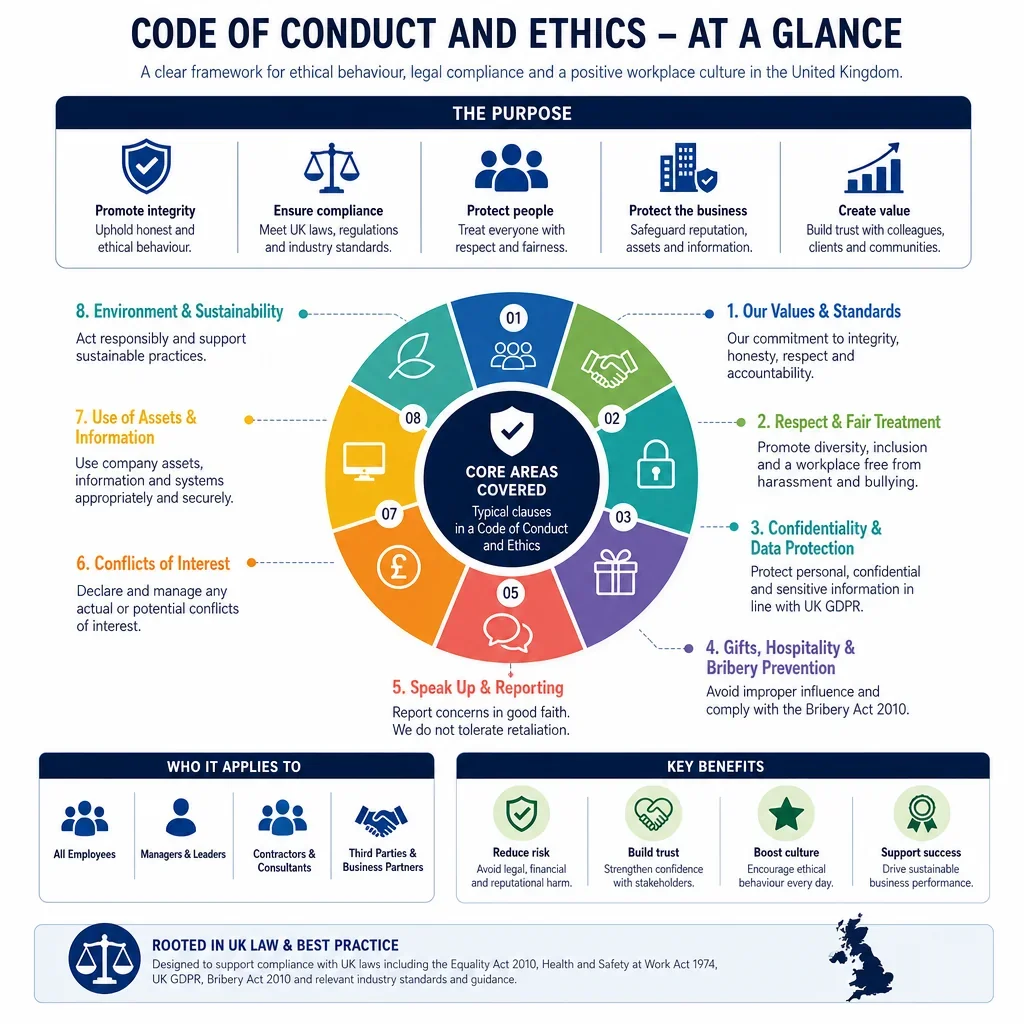
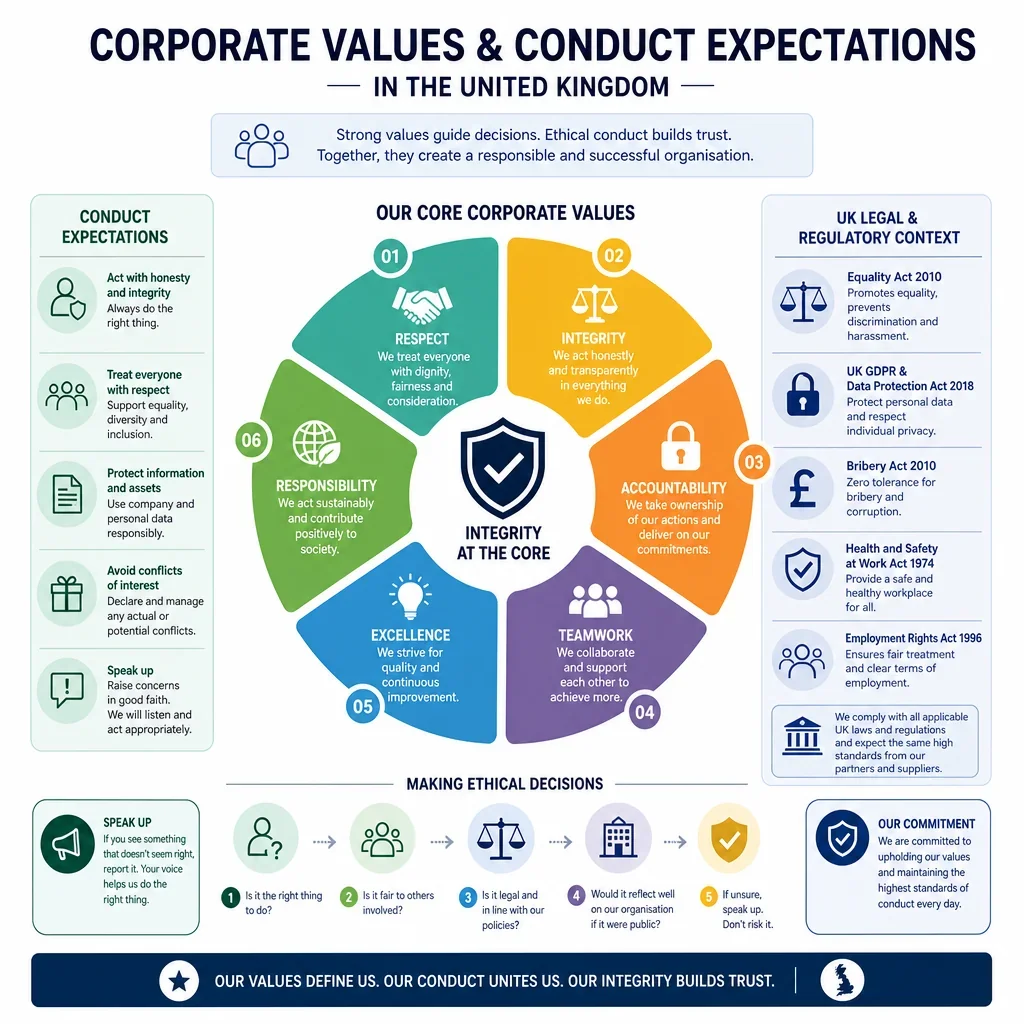
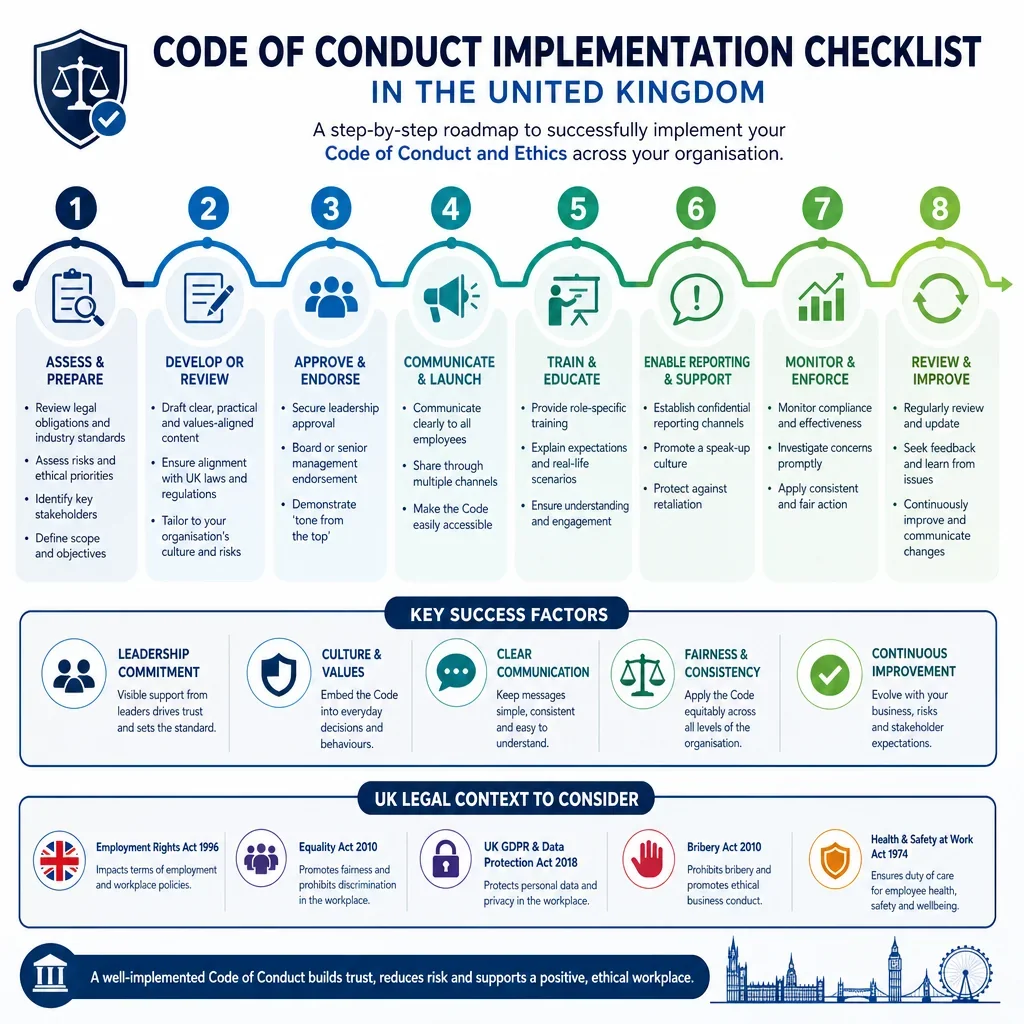
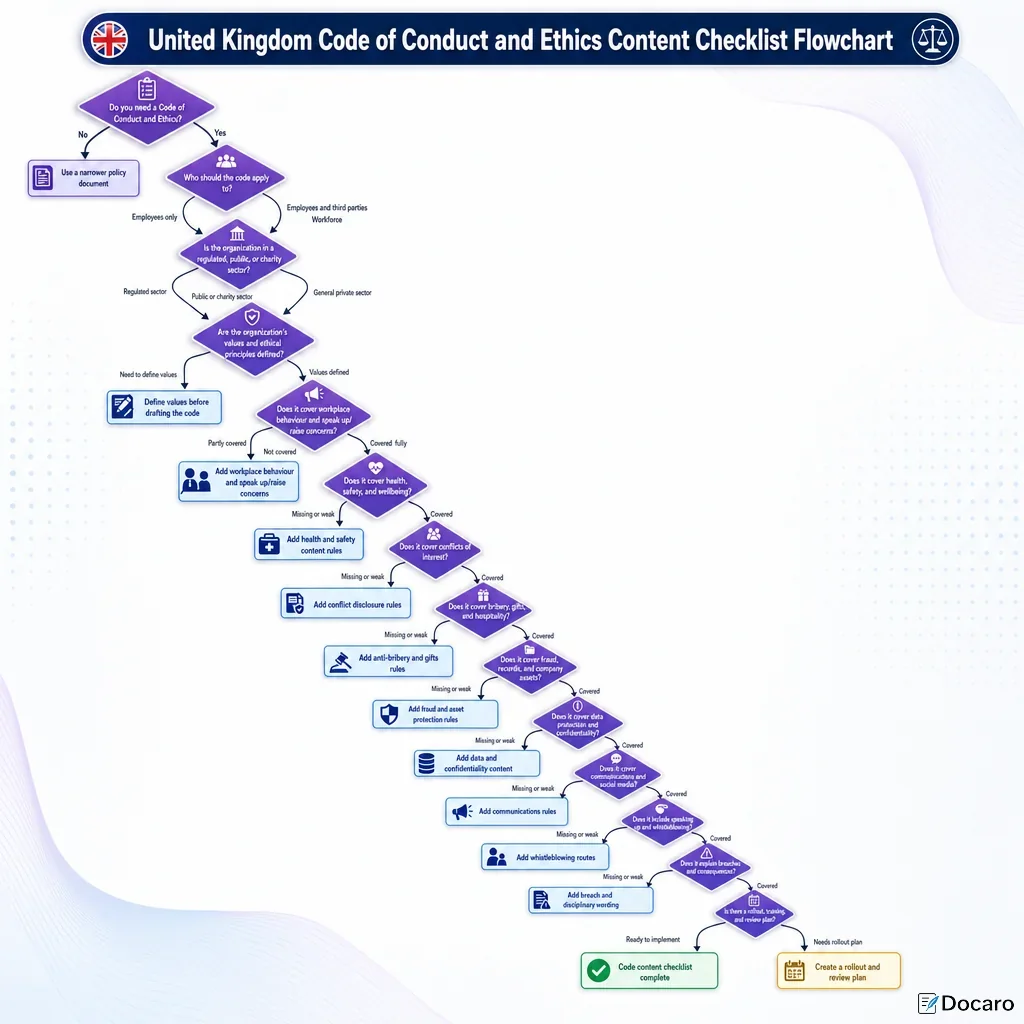
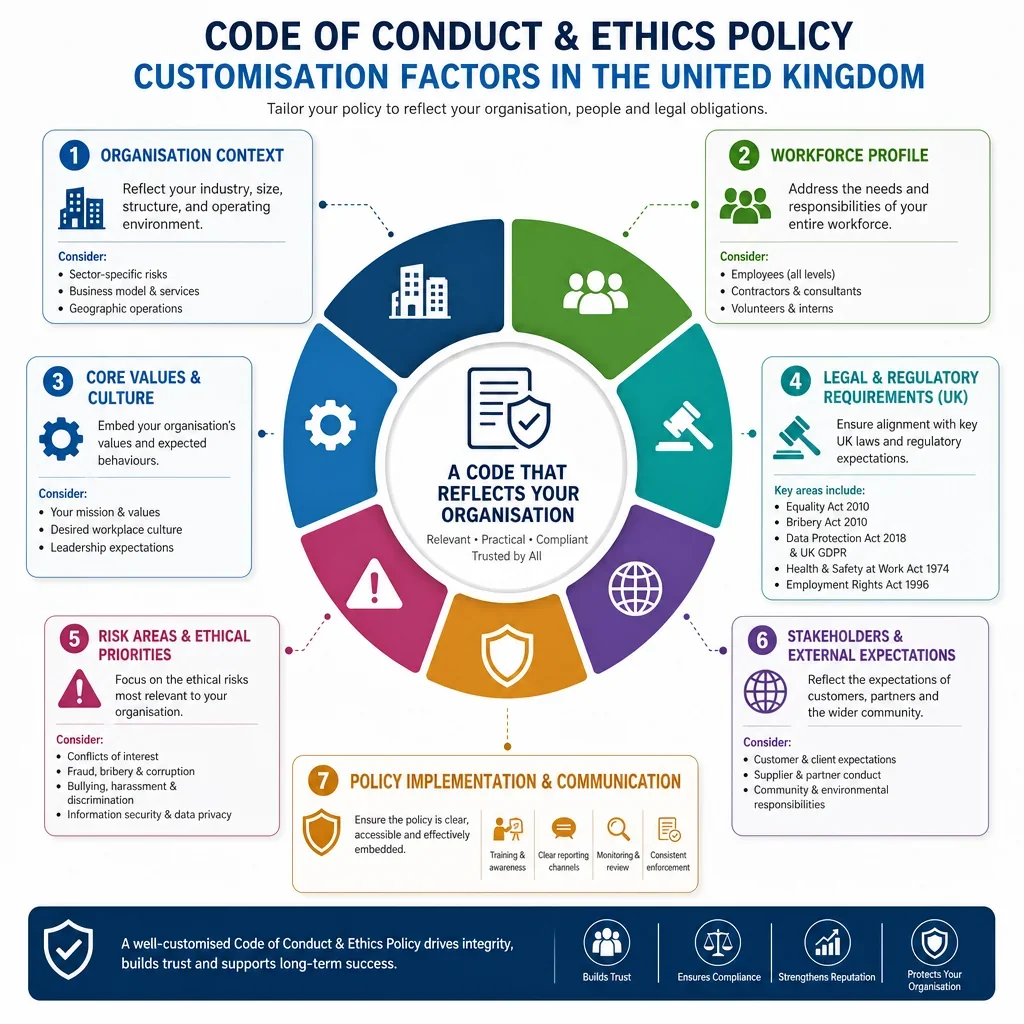
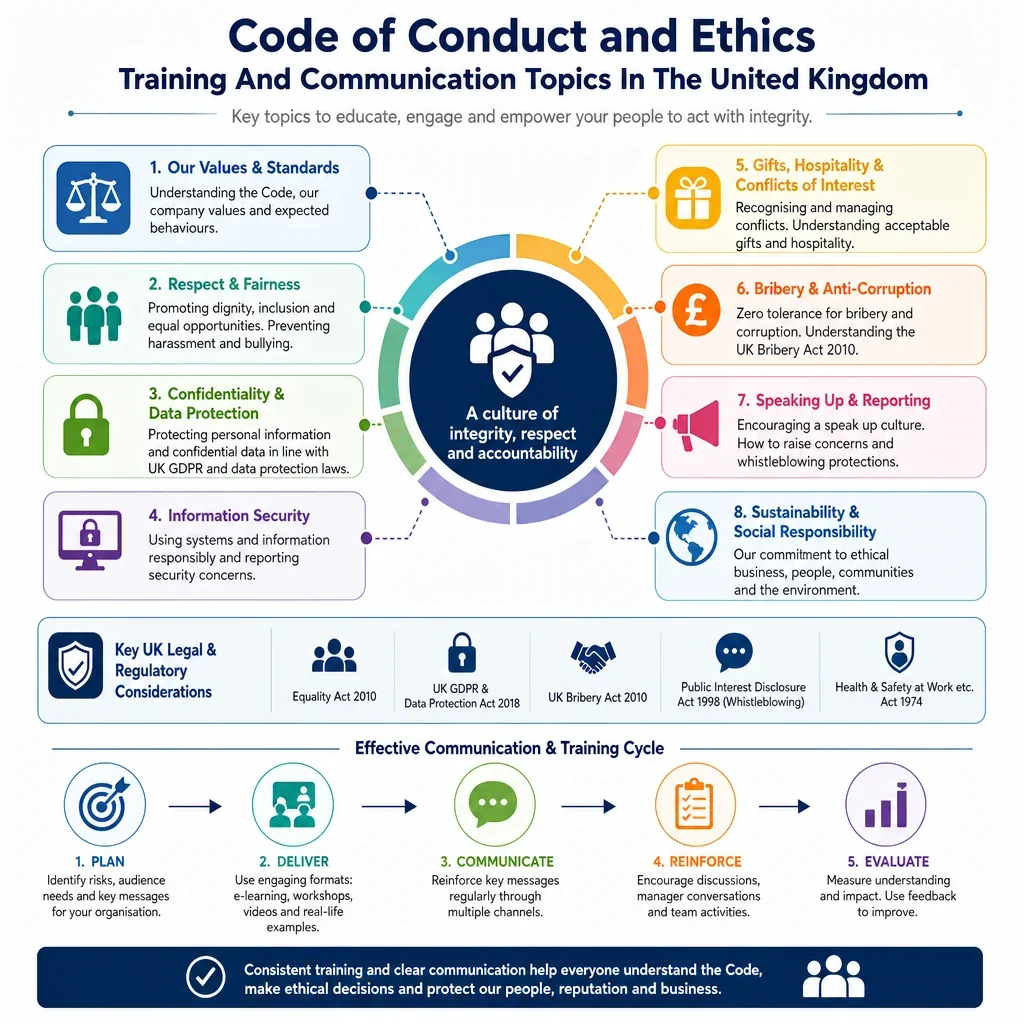
Use prompts as a practical bridge between a Code of Conduct and day-to-day decisions. The strongest prompts test four things before action: whether the conduct is lawful, whether it fits internal policy, whether affected people would regard it as fair, and whether the organisation could explain it transparently if challenged.
When Should Personnel Stop And Seek Review?
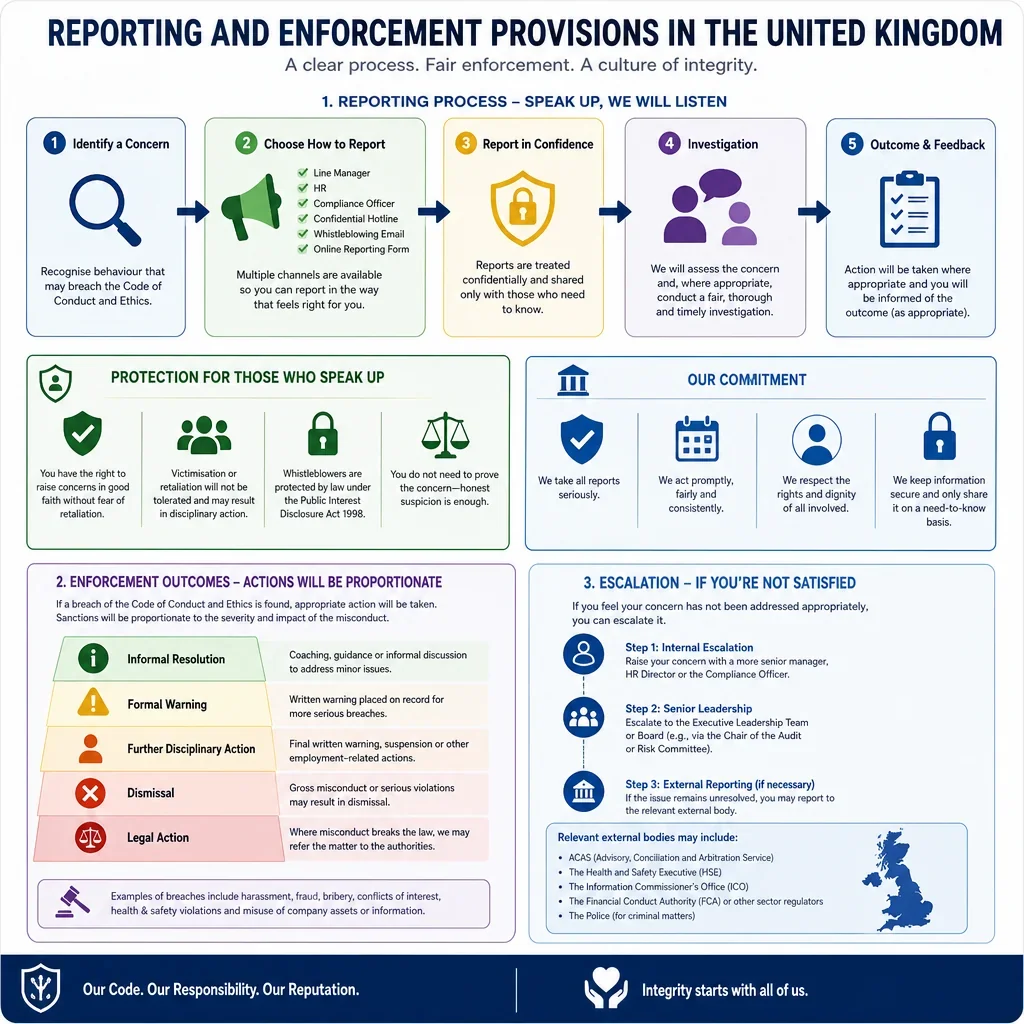
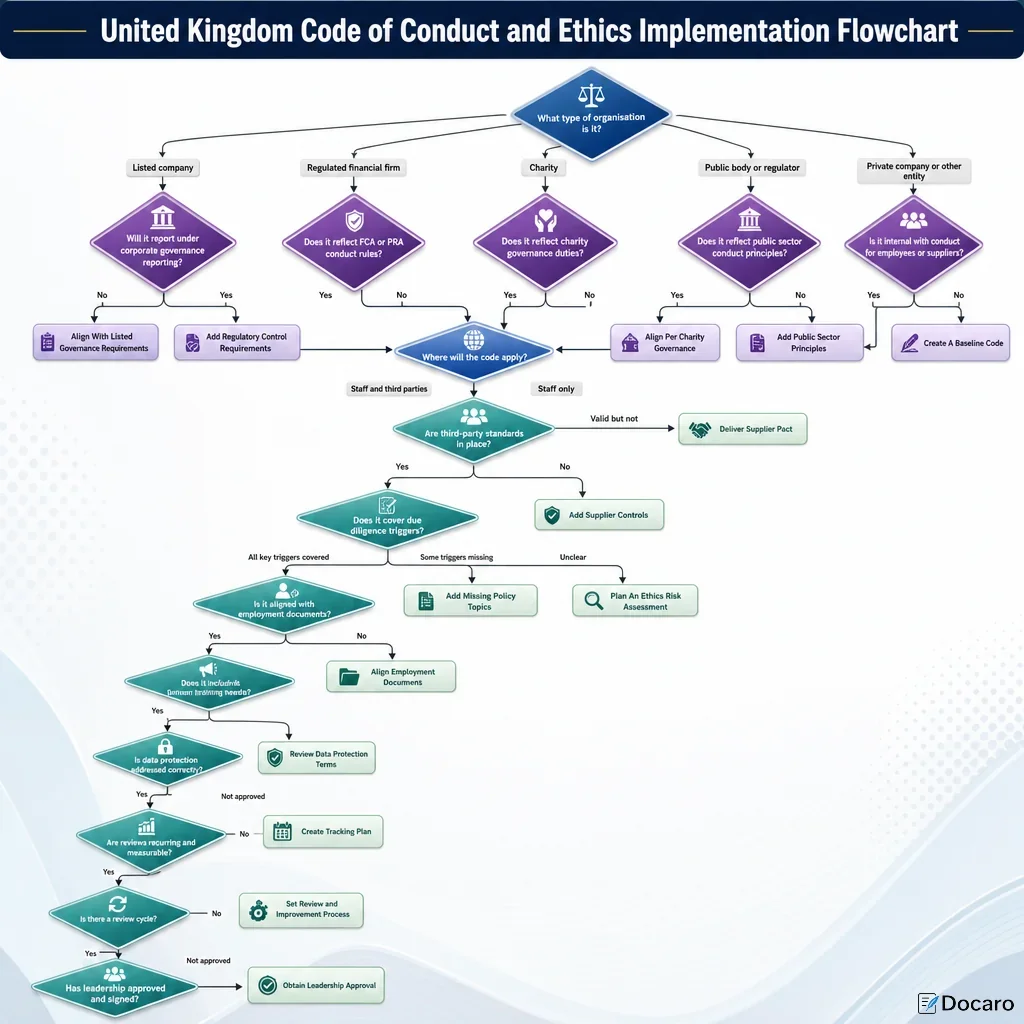
- Do not proceed until reviewed where a decision may involve bribery, discrimination, retaliation, unsafe work, misuse of personal data, sanctions exposure, market abuse, modern slavery indicators or inaccurate records.
- Escalate for approval where a decision is legally permitted but sensitive, such as gifts and hospitality, conflicts of interest, use of AI, high-risk suppliers, customer vulnerability or public statements.
- Seek guidance where an employee lacks authority, evidence is incomplete, or the issue crosses legal, HR, finance, data protection or compliance boundaries.
Which UK Legal Themes Should Be Built Into The Prompts?
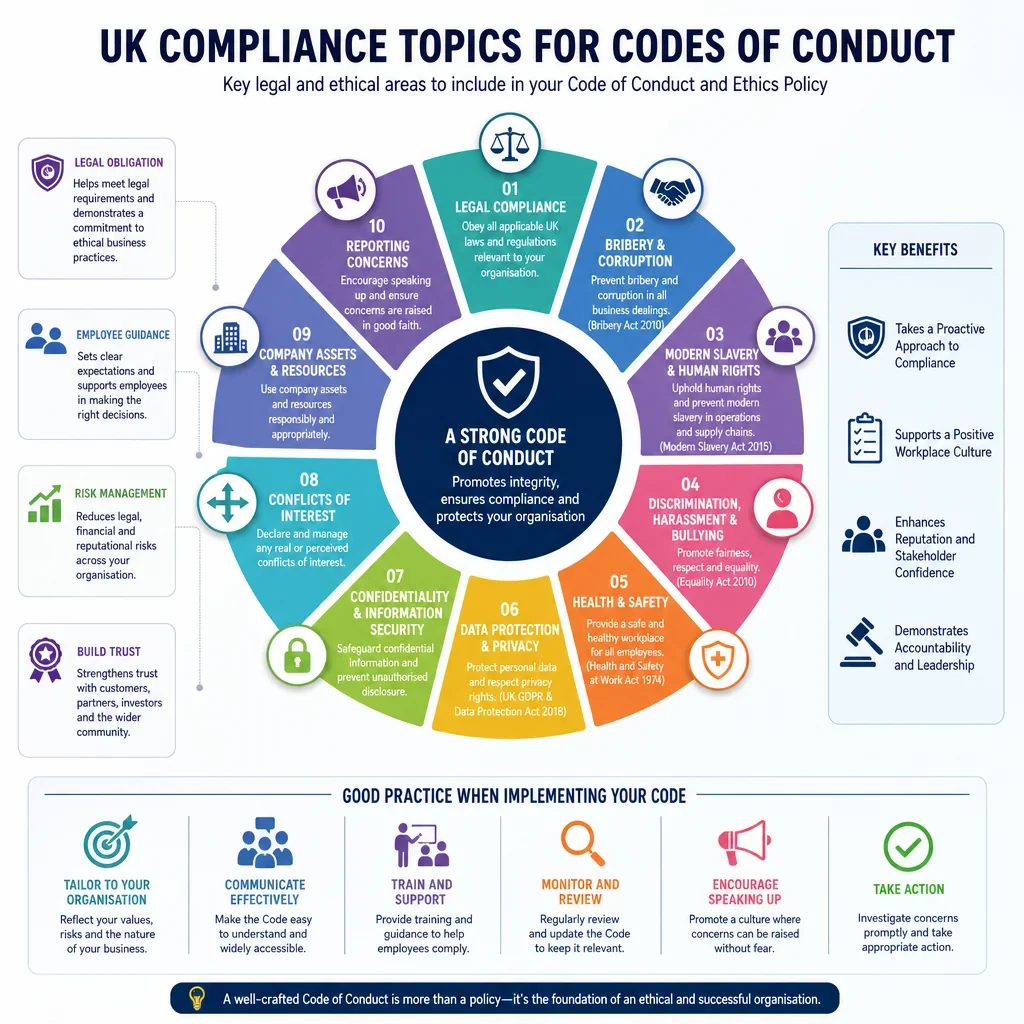
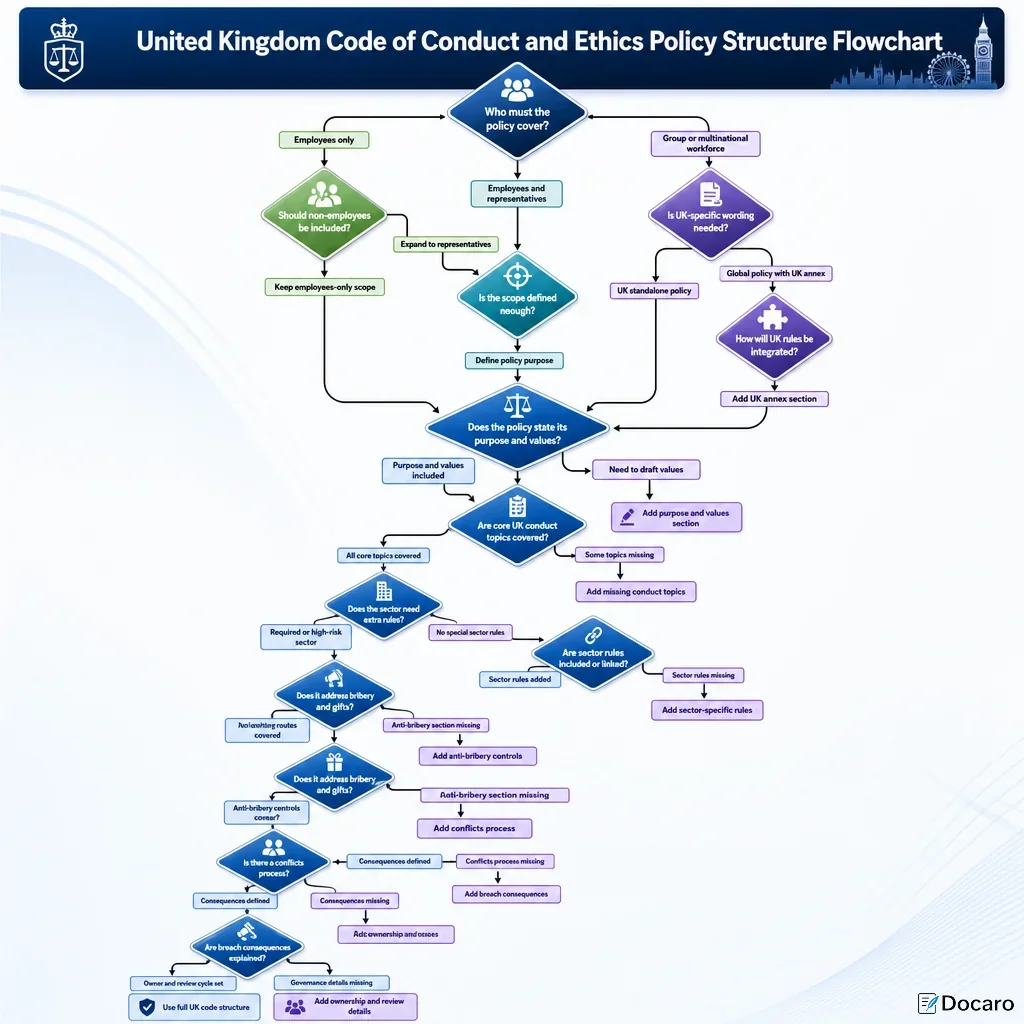
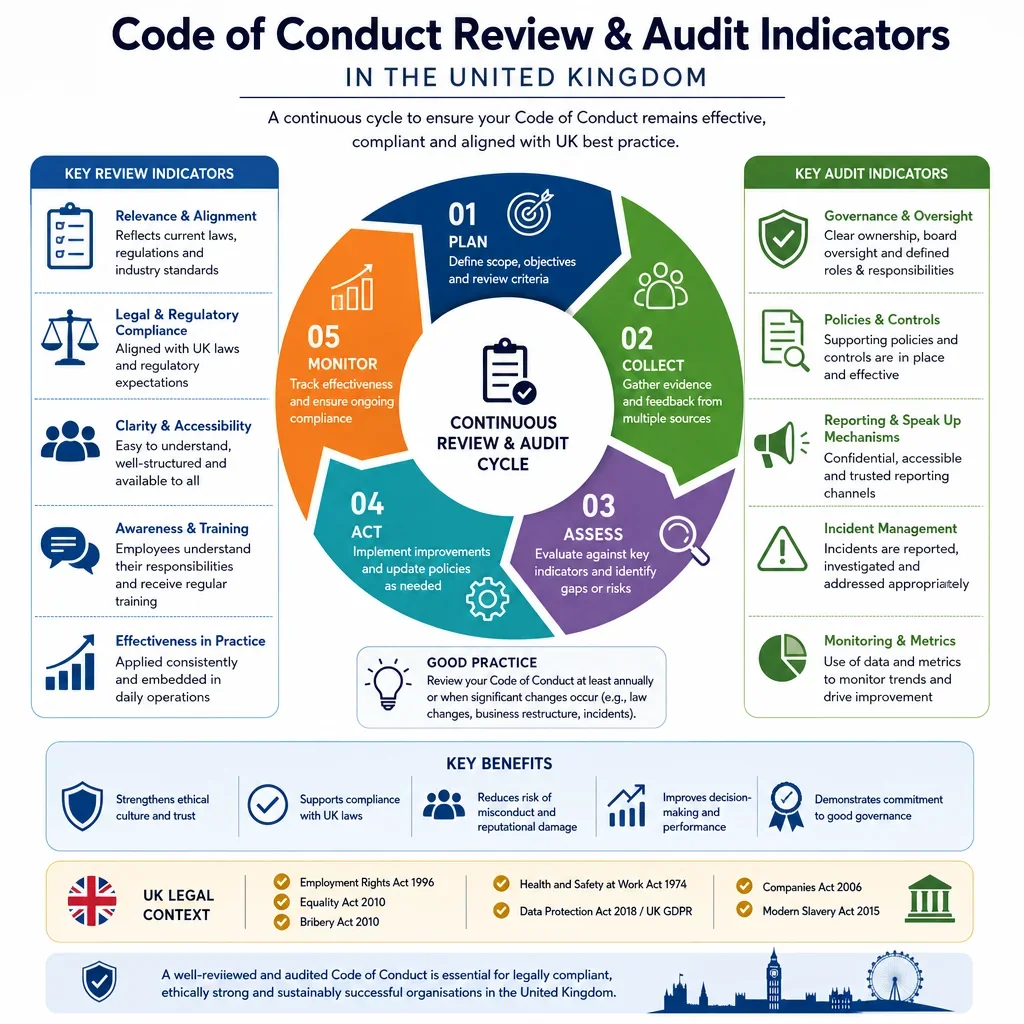
The dataset highlights several UK-specific compliance anchors that should be reflected in conduct and ethics policies: anti-bribery controls under the Bribery Act 2010, equality duties under the Equality Act 2010, worker safety under the Health and Safety at Work etc. Act 1974, personal data requirements under the Data Protection Act 2018 and UK GDPR guidance from the ICO, and whistleblowing protection under the Employment Rights Act 1996.
Where Should These Prompts Be Embedded?
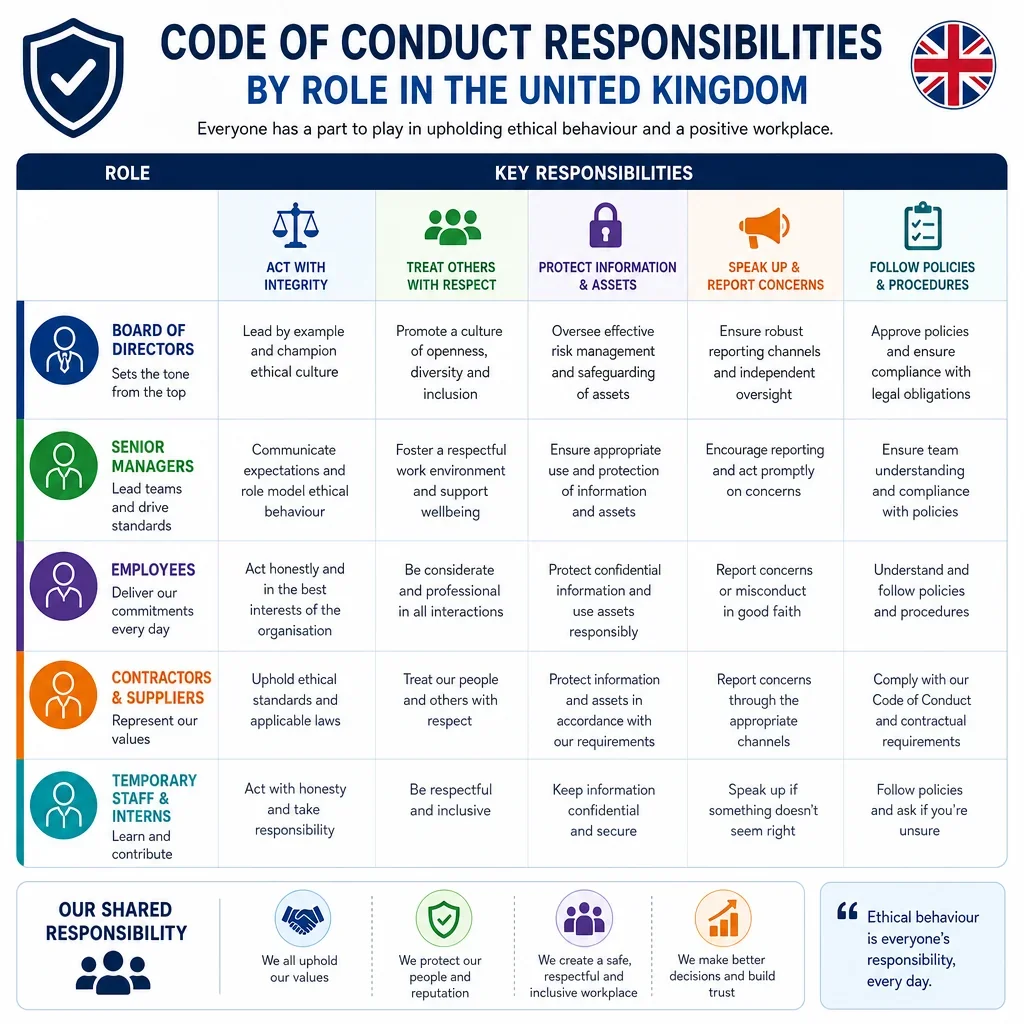
For best practical effect, include prompts in manager checklists, procurement onboarding, gifts and hospitality registers, conflict declarations, data protection impact assessments, disciplinary guidance, speak-up training and approval workflows. Prompts should also define who decides, what evidence is needed, and when a matter must be recorded.
FAQs
You Might Also Be Interested In