

Policy Customisation Factors In The United Kingdom
Created:
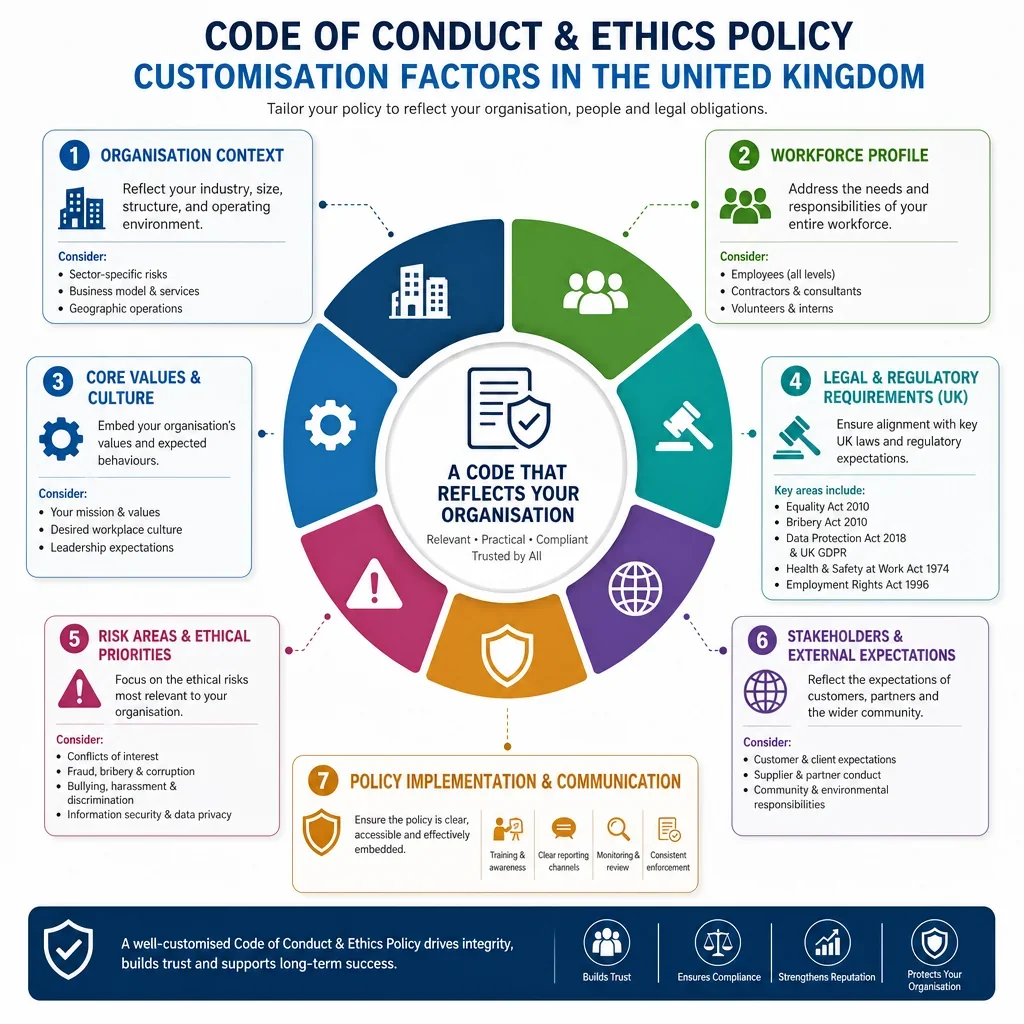
This structured dataset helps you understand the key factors that shape policy customisation for UK organisations. It supports clearer, more relevant governance content and complements the AI Generated Code of Conduct and Ethics for use in the United Kingdom.
Customisation factor | Effect on policy | Typical impact level | Affected policy areas | Review trigger |
|---|---|---|---|---|
Organisation size | ||||
Micro-business with informal management | Keep rules simple, practical and owner-led avoid unnecessary committee processes. | Medium | Reporting lines, conflicts, gifts, disciplinary links, approval routes. | Before first adoption |
Growing SME with new management layers | Clarify delegated authority and consistent conduct expectations across teams. | High | Manager duties, approvals, escalation, retaliation, investigations. | After organisational change |
Large employer with complex governance | Require formal ownership, board oversight and auditable reporting processes. | High | Policy owner, speak-up channels, investigations, monitoring, board reporting. | During annual review |
Regulatory exposure | ||||
Listed company or market-facing business | Add strict rules on market conduct, inside information and disclosures. | High | Insider dealing, confidentiality, personal dealing, media statements, disclosures. | After regulatory change |
FCA or PRA regulated firm | Align conduct rules with senior manager accountability and individual fitness expectations. | High | Conduct rules, conflicts, customer outcomes, escalation, regulatory reporting. | After regulatory change |
Customer interaction model | ||||
Consumer credit or debt-related services | Emphasise fair value, vulnerable customers, clear communications and harm prevention. | High | Fair treatment, complaints, vulnerability, incentives, sales conduct. | After regulatory change |
Sector | ||||
Healthcare or clinical services | Include patient safety, candour, dignity, professional standards and incident reporting. | High | Safeguarding, confidentiality, clinical ethics, whistleblowing, duty of candour. | After incident or concern |
Adult social care provider | Focus on dignity, safeguarding, safe staffing, consent and escalation of abuse concerns. | High | Safeguarding, respectful behaviour, reporting abuse, confidentiality, gifts from service users. | After incident or concern |
School, college or education provider | Add child safeguarding, professional boundaries and suitability reporting requirements. | High | Safeguarding, online conduct, staff-pupil boundaries, whistleblowing, disclosures. | After regulatory change |
Charity or not-for-profit organisation | Address trustee duties, fundraising ethics, conflicts and public trust. | High | Conflicts, fundraising, safeguarding, gifts, trustee conduct, donations. | During annual review |
Legal services provider | Reflect duties of independence, integrity, confidentiality and client interest. | High | Client confidentiality, conflicts, undertakings, reporting, professional conduct. | After regulatory change |
Accountancy, audit or tax advisory firm | Add independence, objectivity, confidentiality and conflicts safeguards. | High | Independence, client gifts, conflicts, professional scepticism, reporting. | After regulatory change |
Construction or infrastructure projects | Emphasise site safety, subcontractor conduct, bribery risks and respectful workplaces. | High | Health and safety, subcontractors, gifts, harassment, alcohol and drugs. | After incident or concern |
Manufacturing or industrial operations | Stress safety culture, product quality, supervision and reporting of unsafe practices. | Medium | Safety, quality, equipment use, shift conduct, incident reporting. | After incident or concern |
Food production, retail or hospitality business | Include food safety, allergen honesty, hygiene and responsible customer conduct. | High | Hygiene, allergens, product integrity, complaints, alcohol service. | After regulatory change |
Technology or software business | Strengthen data ethics, cybersecurity, IP ownership and responsible AI use. | High | Data protection, AI use, IP, security, open-source tools, confidentiality. | After organisational change |
AI product or automated decision-making provider | Address fairness, transparency, human oversight and misuse of AI systems. | High | AI ethics, bias, data use, explainability, customer disclosures, misuse. | After regulatory change |
Media, publishing or advertising business | Include accuracy, substantiation, editorial independence and responsible advertising. | Medium | Marketing claims, sponsorship, conflicts, social media, confidentiality. | After incident or concern |
Recruitment agency or employment business | Add fair hiring, candidate privacy, anti-discrimination and client integrity rules. | High | Equality, candidate data, fees, references, client conflicts, inducements. | After regulatory change |
Customer interaction model | ||||
Supplier to UK public authorities | Emphasise integrity, conflicts, transparency, anti-bribery and exclusion risk. | High | Tender conduct, gifts, lobbying, conflicts, records, whistleblowing. | Before first adoption |
Regulatory exposure | ||||
Exposure to public procurement exclusion grounds | Misconduct can affect supplier eligibility policy should support prevention and evidence. | High | Fraud, bribery, tax compliance, labour abuses, records, self-cleaning evidence. | After regulatory change |
Environmentally regulated operations | Include lawful waste handling, reporting, environmental integrity and permit compliance. | Medium | Environmental compliance, records, supplier selection, incident reporting. | After regulatory change |
Processing large volumes of personal data | Strengthen confidentiality, lawful use, security and breach escalation expectations. | High | Data protection, confidentiality, monitoring, reporting breaches, access controls. | After incident or concern |
Workforce structure | ||||
High diversity, inclusion or harassment risk | Use clear standards on discrimination, harassment, victimisation and inclusive conduct. | High | Equal treatment, bullying, harassment, reasonable adjustments, complaints, retaliation. | After incident or concern |
Regulatory exposure | ||||
Workplace sexual harassment prevention duty | Policy should support proactive prevention, reporting and action against harassment. | High | Harassment, third-party conduct, manager duties, reporting, retaliation, training. | After regulatory change |
Bribery or facilitation payment risk | Require zero tolerance, proportionate procedures and strict approval controls. | High | Gifts, hospitality, agents, facilitation payments, donations, procurement, reporting. | Before first adoption |
Supply chain model | ||||
Modern slavery statement threshold or risk | Add forced labour, supplier due diligence and worker exploitation reporting rules. | High | Supplier standards, recruitment fees, audits, grievance routes, escalation. | During annual review |
Geographic footprint | ||||
Sanctions or restricted trade exposure | Include screening, escalation and prohibitions on circumvention or restricted dealings. | High | Sanctions screening, exports, customer onboarding, payments, third parties. | After regulatory change |
Regulatory exposure | ||||
Fraud risk in payments or expenses | State honest recordkeeping, approval controls and reporting of suspected fraud. | Medium | Expenses, procurement, invoices, timesheets, records, whistleblowing. | After incident or concern |
Risk of facilitating tax evasion | Add prevention expectations for employees, agents and associated persons. | High | Tax integrity, payments, invoices, agents, due diligence, reporting. | Before first adoption |
Need for protected disclosure procedures | Set safe reporting channels, non-retaliation and independent escalation options. | High | Speak-up, investigations, confidentiality, retaliation, regulatory disclosures. | After incident or concern |
Material workplace health and safety risks | Make safe conduct, stop-work duties and hazard reporting explicit. | High | Safety rules, drugs and alcohol, equipment, incident reporting, manager duties. | After incident or concern |
Workforce structure | ||||
Remote or home-based workforce | Clarify online conduct, confidentiality, working environment and wellbeing expectations. | Medium | Video meetings, data security, equipment use, bullying, working time, wellbeing. | After organisational change |
Hybrid office and home working model | Ensure consistent standards across office, home and digital communications. | Medium | Attendance, meetings, respectful communication, monitoring, confidentiality, fairness. | After organisational change |
Shift-based or 24-hour operations | Address fatigue, handovers, supervision and conduct outside standard office hours. | Medium | Fatigue, alcohol and drugs, handovers, supervision, reporting, safety. | During annual review |
Lone workers or field workers | Add personal safety, escalation, customer behaviour and check-in expectations. | Medium | Safety, harassment, aggression, reporting, use of devices, refusal of unsafe work. | After incident or concern |
Mobile workforce using company vehicles | Set rules on safe driving, expenses, customer conduct and device use. | Medium | Driving, alcohol and drugs, mobile phones, expenses, customer visits. | After incident or concern |
Senior executives with external influence | Add stricter standards for conflicts, public statements and example-setting. | High | Conflicts, media, social media, gifts, confidentiality, leadership duties. | Before first adoption |
Use of contractors, consultants or freelancers | Define who must follow the policy and how breaches are handled contractually. | High | Scope, confidentiality, IP, conflicts, reporting, termination rights. | Before first adoption |
Use of agency workers | Clarify expectations, supervision and reporting despite non-employee status. | Medium | Scope, induction, reporting, harassment, confidentiality, site conduct. | After organisational change |
Use of volunteers | Adapt language for non-employees and focus on safeguarding and reputation. | Medium | Scope, safeguarding, expenses, confidentiality, social media, reporting. | Before first adoption |
Apprentices or early-career workers | Use accessible wording and emphasise training, supervision and safe reporting. | Low | Induction, bullying, supervision, reporting, social media, safeguarding where relevant. | Before first adoption |
Unionised or collectively represented workforce | Align consultation, representation and investigation wording with workplace arrangements. | Medium | Discipline links, investigations, reporting, consultation, workplace representatives. | After organisational change |
Geographic footprint | ||||
Operations outside the United Kingdom | Set global minimum standards while allowing local law escalation. | High | Bribery, sanctions, human rights, gifts, reporting, local law conflicts. | After organisational change |
Trading in higher corruption-risk jurisdictions | Add enhanced anti-bribery controls and clear facilitation payment rules. | High | Agents, public officials, gifts, hospitality, charitable donations, approvals. | Before first adoption |
Multiple UK sites or branches | Ensure consistent standards with site-specific contacts and escalation routes. | Medium | Local reporting, site conduct, safety, manager duties, investigations. | After organisational change |
Operations across England, Wales, Scotland and Northern Ireland | Check local legal, safeguarding, reporting and terminology differences. | Medium | Safeguarding, employment terminology, reporting bodies, public sector duties. | Before first adoption |
Supply chain model | ||||
Franchise or licensed brand model | Set brand conduct standards and escalation rights for franchisee misconduct. | High | Brand reputation, customer service, complaints, discrimination, audits, termination. | Before first adoption |
Outsourced service delivery | Extend conduct expectations to suppliers performing critical or customer-facing work. | High | Supplier code, confidentiality, incident reporting, audits, service continuity. | After organisational change |
Use of agents, distributors or introducers | Add due diligence, commission controls and anti-bribery obligations for intermediaries. | High | Third-party due diligence, bribery, conflicts, payments, recordkeeping. | Before first adoption |
International supply chain | Require ethical sourcing, human rights due diligence and supplier escalation routes. | High | Modern slavery, audits, supplier standards, sanctions, environmental conduct. | During annual review |
Subcontractor-heavy delivery model | Define cascading standards, supervision duties and breach consequences. | High | Supplier code, safety, confidentiality, right to audit, reporting, termination. | After organisational change |
High-value procurement or tendering | Emphasise impartial selection, conflicts, hospitality controls and audit trails. | High | Conflicts, gifts, supplier selection, tender integrity, records, fraud. | After incident or concern |
Customer interaction model | ||||
Direct-to-consumer sales | Add fair selling, honest marketing, complaints and refund conduct expectations. | Medium | Sales conduct, advertising, complaints, vulnerable customers, refunds. | Before first adoption |
Interaction with vulnerable customers or service users | Require empathy, accessibility, escalation and protection from exploitation. | High | Fair treatment, safeguarding, complaints, privacy, sales incentives, escalation. | After incident or concern |
Services used by children | Add safeguarding, age-appropriate communication and child privacy requirements. | High | Safeguarding, data protection, marketing, online conduct, complaints. | Before first adoption |
Business-to-business client relationships | Focus on confidentiality, conflicts, fair dealing and professional communications. | Medium | Confidentiality, gifts, conflicts, client entertainment, records, complaints. | Before first adoption |
Call centre or customer support operation | Set standards for respectful calls, data verification and escalation of abuse. | Medium | Customer conduct, privacy, call recording, complaints, harassment, scripts. | After incident or concern |
Online platform or marketplace | Address user safety, moderation integrity, data misuse and platform abuse. | High | User safety, moderation, privacy, fraud, complaints, illegal content escalation. | After regulatory change |
Employees represent brand on social media | Clarify acceptable online behaviour, endorsements and confidential information rules. | Medium | Social media, confidentiality, harassment, discrimination, media statements. | After incident or concern |
Sector | ||||
Alcohol sales or licensed premises | Include responsible service, age checks, aggression management and staff sobriety. | High | Age verification, drugs and alcohol, customer abuse, safety, reporting. | After incident or concern |
Gambling or betting services | Add responsible gambling, AML, customer protection and advertising integrity. | High | Customer protection, AML, conflicts, marketing, complaints, suspicious activity. | After regulatory change |
Regulatory exposure | ||||
Anti-money laundering regulated activity | Require customer due diligence, suspicious activity escalation and records integrity. | High | AML, customer onboarding, confidentiality, tipping off, records, escalation. | After regulatory change |
Sector | ||||
IP-rich business or R&D activity | Strengthen confidentiality, invention ownership and use of third-party materials. | Medium | IP, confidentiality, open-source code, research integrity, conflicts. | Before first adoption |
Regulatory exposure | ||||
Export-controlled goods or technology | Add licensing, screening, documentation and no-circumvention rules. | High | Export controls, sanctions, customer checks, records, overseas access. | After regulatory change |
Organisation size | ||||
Recent merger, acquisition or integration | Unify conduct standards and address legacy practices or culture gaps. | High | Scope, values, reporting, conflicts, investigations, training, approvals. | After organisational change |
Rapid recruitment or high staff turnover | Prioritise induction, accessible rules and early reporting routes. | Medium | Induction, manager duties, probation, bullying, confidentiality, reporting. | After organisational change |
Workforce structure | ||||
Staff subject to professional codes | Cross-refer professional duties and reporting of fitness concerns. | High | Professional integrity, conflicts, competence, reporting, confidentiality. | Before first adoption |
Customer interaction model | ||||
Commission-based sales incentives | Mitigate mis-selling, pressure tactics and conflicts created by incentives. | High | Sales conduct, conflicts, customer outcomes, complaints, records, supervision. | After incident or concern |
Frequent gifts, hospitality or entertainment | Set thresholds, registers, approvals and prohibited inducements. | Medium | Gifts, hospitality, conflicts, public officials, procurement, approvals. | During annual review |
Handling sensitive commercial information | Strengthen confidentiality, clean desk, access control and disclosure rules. | Medium | Confidentiality, conflicts, information barriers, personal devices, social media. | After incident or concern |
Workforce structure | ||||
Employee monitoring or surveillance tools | Explain acceptable use, transparency, privacy limits and misuse consequences. | Medium | IT use, privacy, monitoring, data protection, investigations, communications. | After organisational change |
Bring-your-own-device or personal app use | Add boundaries for company data, messaging apps and device security. | Medium | Confidentiality, data protection, cybersecurity, records, acceptable use. | During annual review |
Regulatory exposure | ||||
High cybersecurity exposure | Make secure behaviour, phishing reporting and access controls conduct duties. | High | Cybersecurity, passwords, phishing, devices, incident reporting, remote access. | After incident or concern |
Workforce structure | ||||
History of bullying or poor workplace culture | Use explicit behavioural examples and stronger reporting protections. | High | Bullying, harassment, retaliation, manager duties, investigations, sanctions. | After incident or concern |
Organisation size | ||||
Need to align with disciplinary procedure | Ensure breaches are linked to fair investigation and disciplinary handling. | Medium | Breaches, investigations, disciplinary links, appeal routes, recordkeeping. | Before first adoption |
Customer interaction model | ||||
High volume of customer complaints | Require respectful handling, accurate records and escalation of systemic issues. | Medium | Complaints, customer dignity, records, escalation, retaliation, learning lessons. | After incident or concern |
High public visibility or media scrutiny | Tighten public statements, social media, conflicts and crisis escalation rules. | Medium | Media, social media, confidentiality, complaints, whistleblowing, reputation. | After incident or concern |
Organisation size | ||||
Board, trustee or director conflict risks | Require disclosure, recusal and documented management of conflicts. | High | Conflicts, declarations, related parties, gifts, decision-making, minutes. | During annual review |
Customer interaction model | ||||
Use of environmental or sustainability claims | Require accurate substantiation and prohibit misleading green claims. | Medium | Marketing, records, product claims, supplier data, approvals, complaints. | After regulatory change |
Regulatory exposure | ||||
Political, charitable or community donations | Set approvals and prohibit donations used to disguise improper influence. | Medium | Donations, bribery, conflicts, public officials, records, approvals. | During annual review |
Customer interaction model | ||||
Regular interaction with public officials | Apply stricter hospitality, gifts, lobbying and facilitation payment controls. | High | Bribery, lobbying, gifts, hospitality, procurement, approvals, records. | Before first adoption |
Workforce structure | ||||
Sponsored workers or immigration compliance exposure | Clarify lawful recruitment, document integrity and reporting of compliance concerns. | Medium | Recruitment ethics, records, discrimination, reporting, manager duties. | After regulatory change |
Supply chain model | ||||
International recruitment or labour providers | Address recruitment fees, worker exploitation and labour provider due diligence. | High | Modern slavery, recruitment ethics, supplier checks, grievances, whistleblowing. | Before first adoption |
How Should A UK Code Of Conduct And Ethics Policy Be Customised?
A UK code of conduct should not be a generic values statement. The highest-impact customisation points are regulated activities, workforce structure, overseas operations, high-risk supply chains and the way staff interact with customers, public officials or vulnerable people.
Which Factors Usually Require The Most Tailoring?
- Regulated sectors, such as financial services, healthcare, legal services, education, charities and public contracting, usually need specific conduct, reporting, conflicts, safeguarding, bribery and fitness-to-practise wording.
- International operations and overseas intermediaries increase the need for clear anti-bribery, sanctions, modern slavery, gifts, hospitality and third-party due diligence provisions.
- Remote, hybrid, shift-based and platform workforces require practical rules on communications, bullying, harassment, information security, supervision, reporting channels and use of company systems.
- Customer-facing or vulnerable-user services should emphasise fair treatment, safeguarding, accessibility, complaints handling, confidentiality and escalation duties.
When Should The Policy Be Reviewed In The UK?
The policy should be reviewed before adoption, annually, and whenever the business changes materially, enters a regulated market, expands internationally, appoints agents or distributors, suffers a conduct incident, or faces a relevant legal or regulatory change. UK organisations should pay particular attention to changes under the Equality Act 2010, Bribery Act 2010, Modern Slavery Act 2015, UK GDPR guidance from the ICO, and sector regulator expectations.
Want to Generate Your own Code of Conduct and Ethics?
Docaro AI can help you write your own Code of Conduct and Ethics for use in the United Kingdom in minutes.
FAQs
Policy customisation factors are the organisation-specific details used to tailor a UK Code of Conduct and Ethics, such as sector, workforce size, regulatory environment, reporting channels, disciplinary approach, and links to related policies.
Show All FAQs
You Might Also Be Interested In
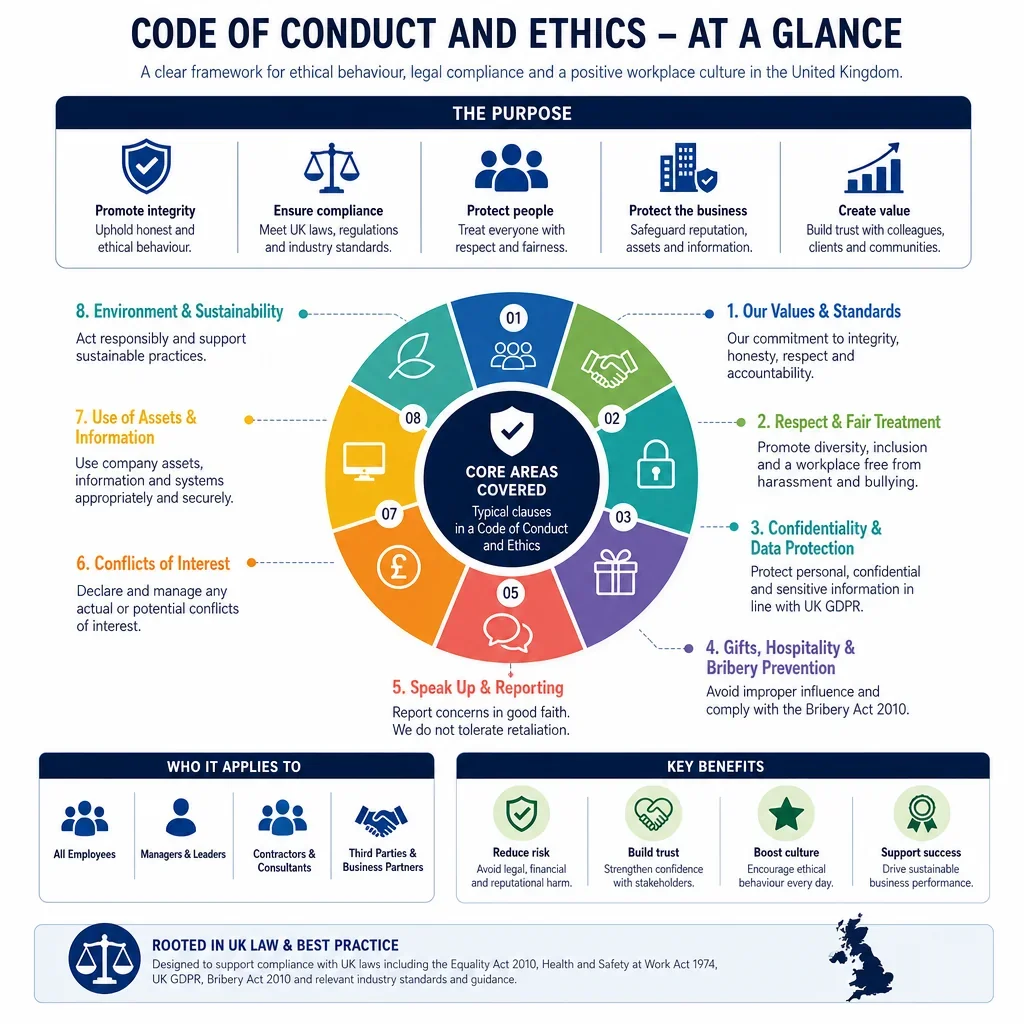
Explore United Kingdom code of conduct and ethics clauses for clearer workplace policies and compliance-focused drafting.
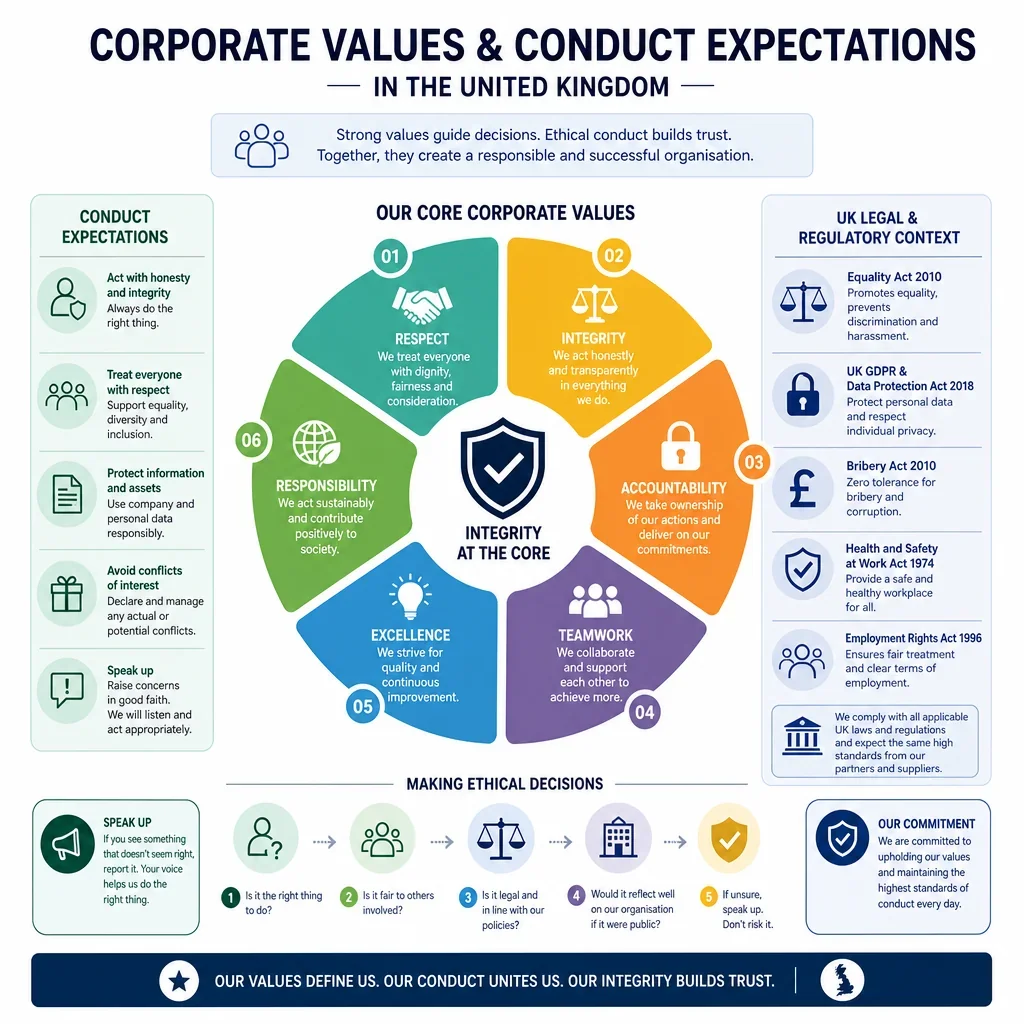
Corporate values and conduct expectations in the United Kingdom for ethical, accountable workplace behaviour.
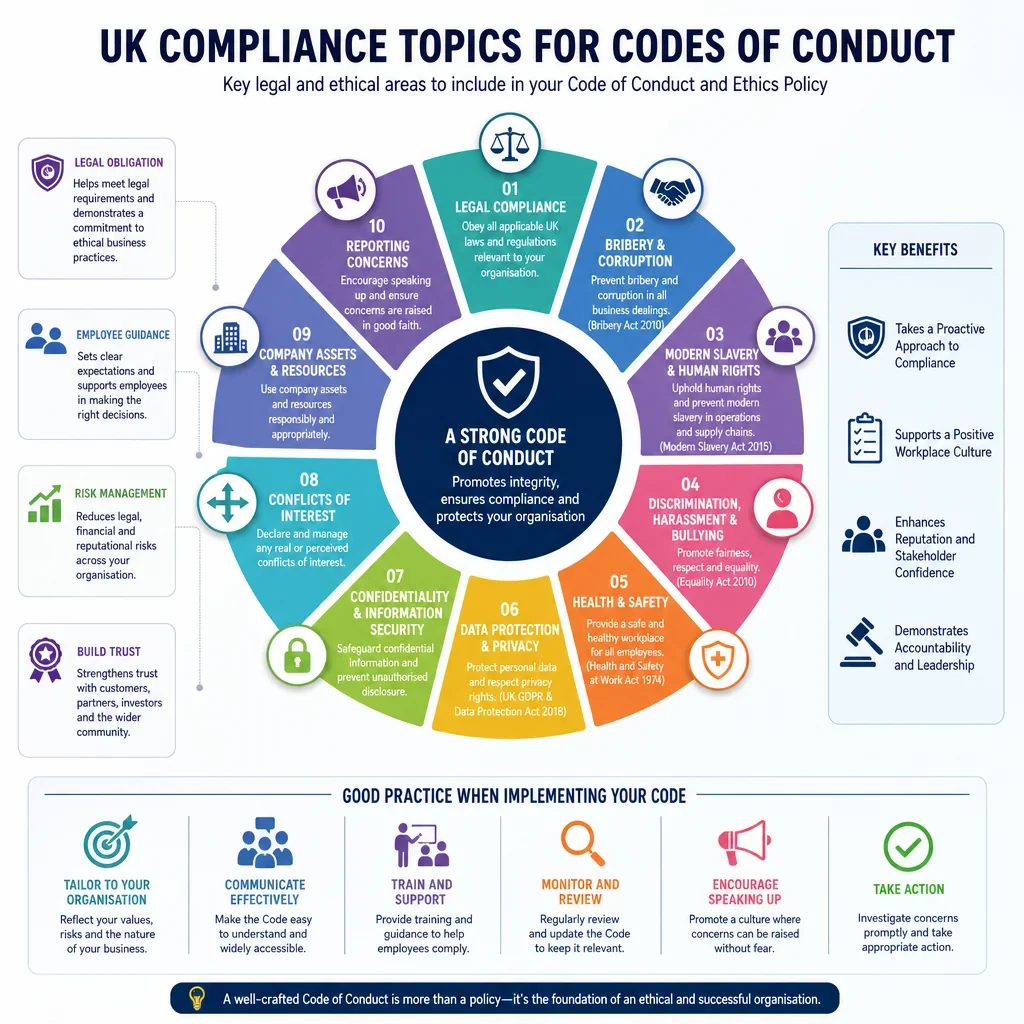
Explore UK compliance topics for codes of conduct, including ethics, workplace rules, reporting, and governance essentials.
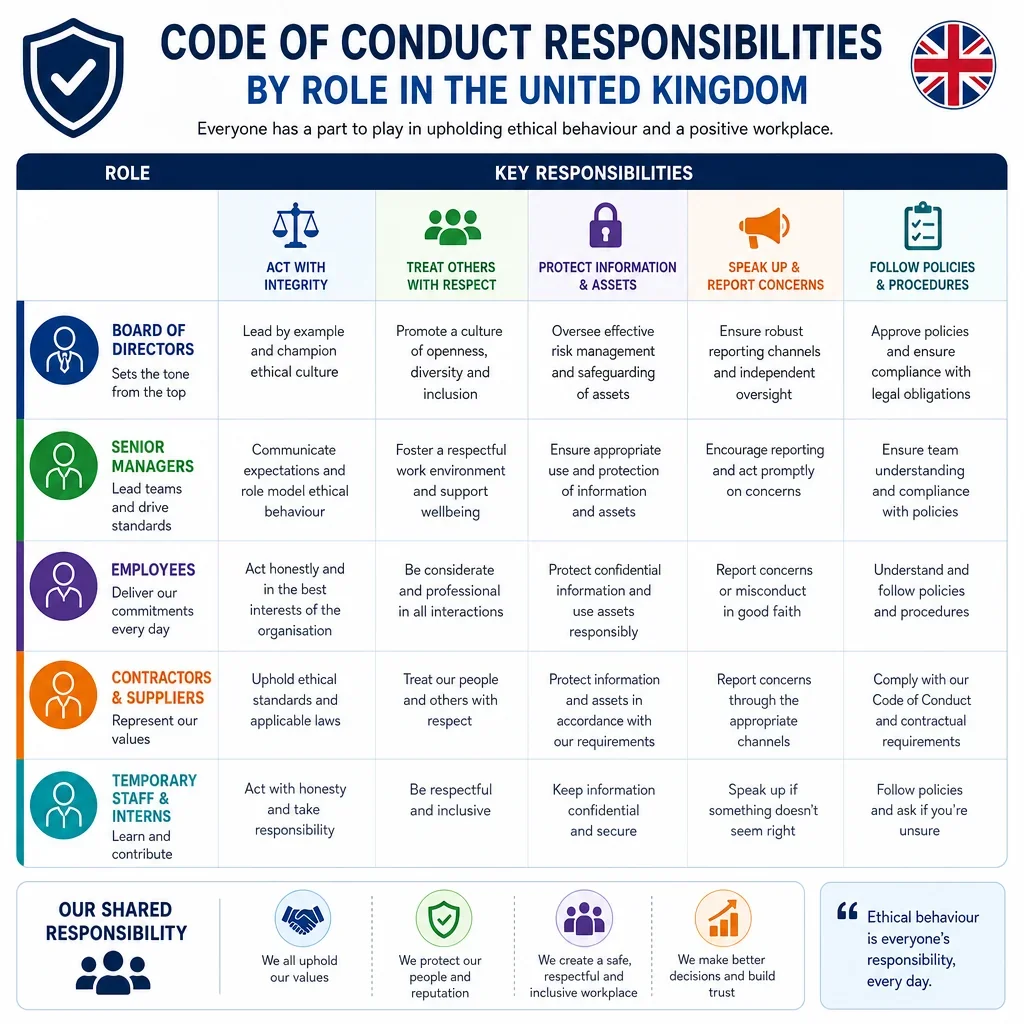
Explore United Kingdom code of conduct responsibilities by role to clarify expectations, accountability, and ethical standards.
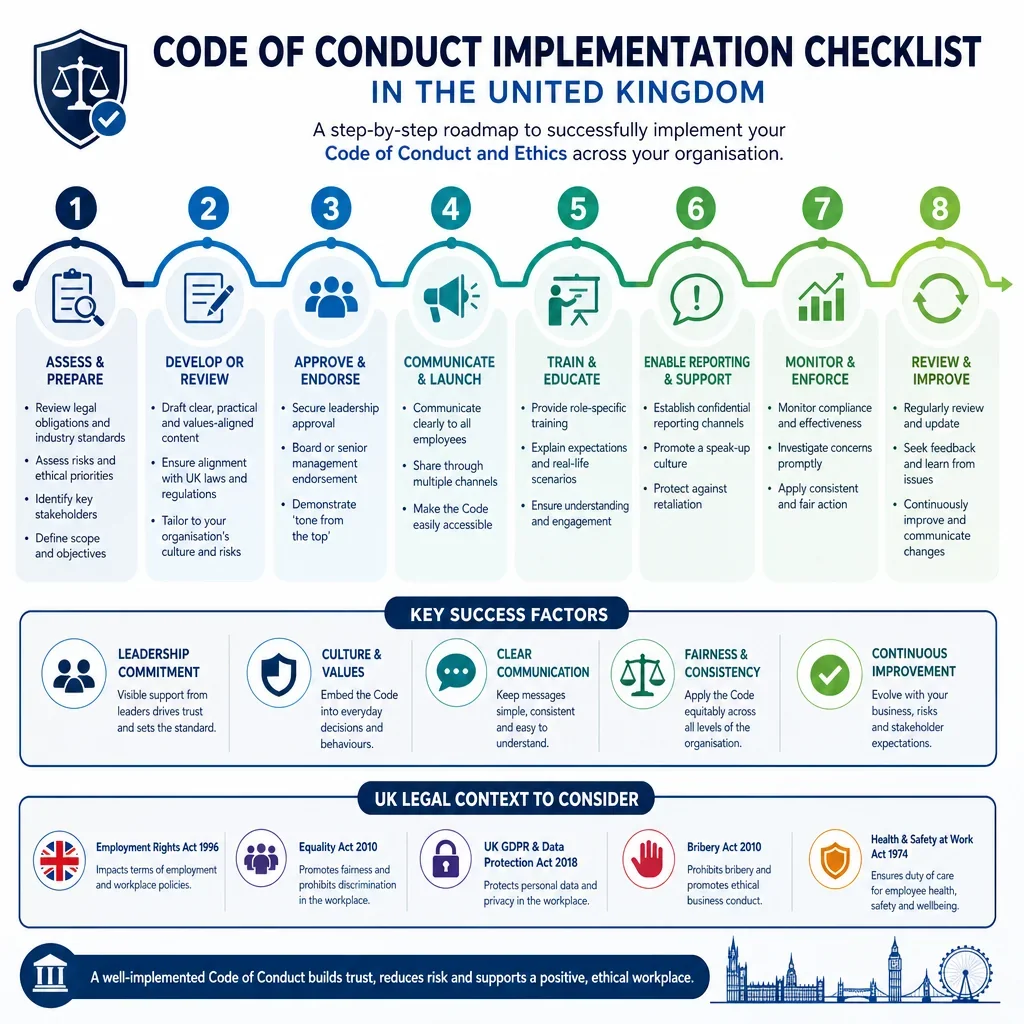
Implement a code of conduct in the United Kingdom with this practical checklist for ethics, compliance, and workplace standards.
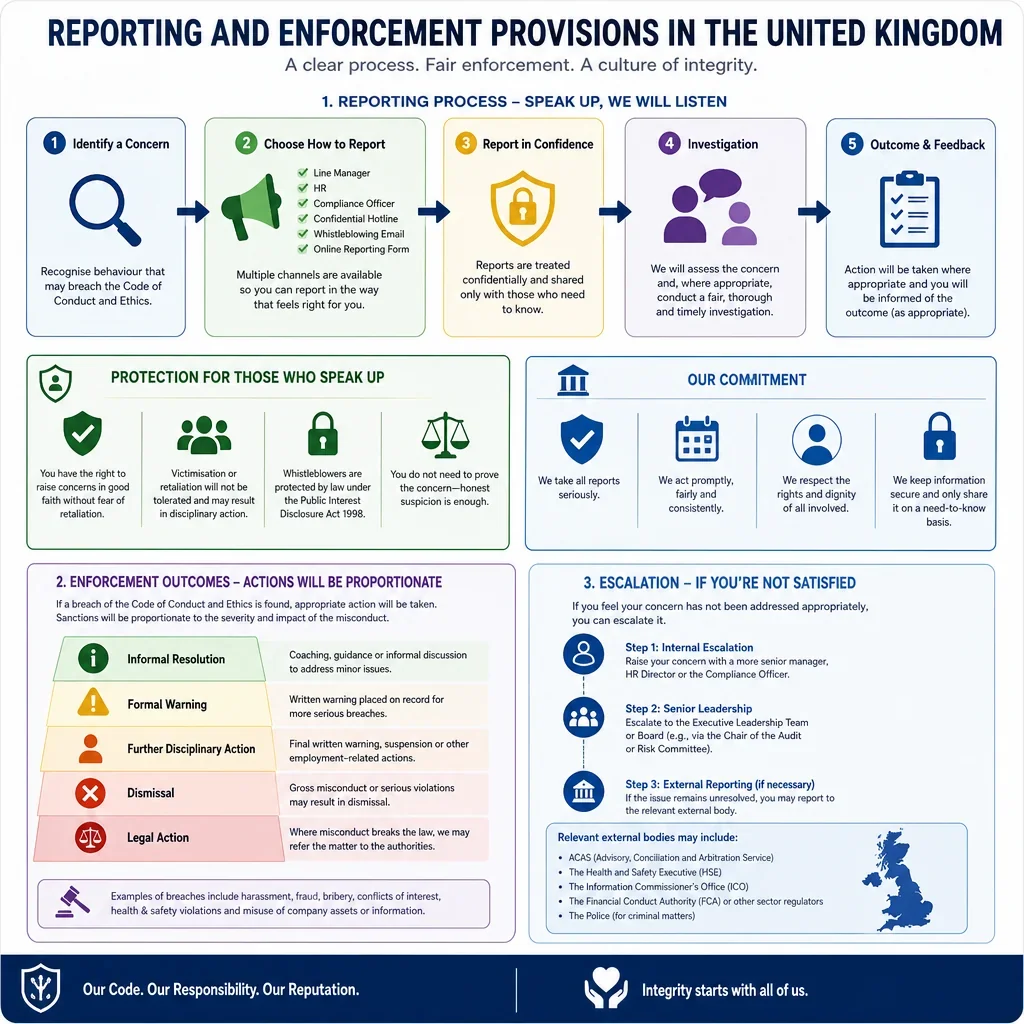
Understand United Kingdom reporting and enforcement provisions, including compliance duties, oversight, and practical governance expectations.
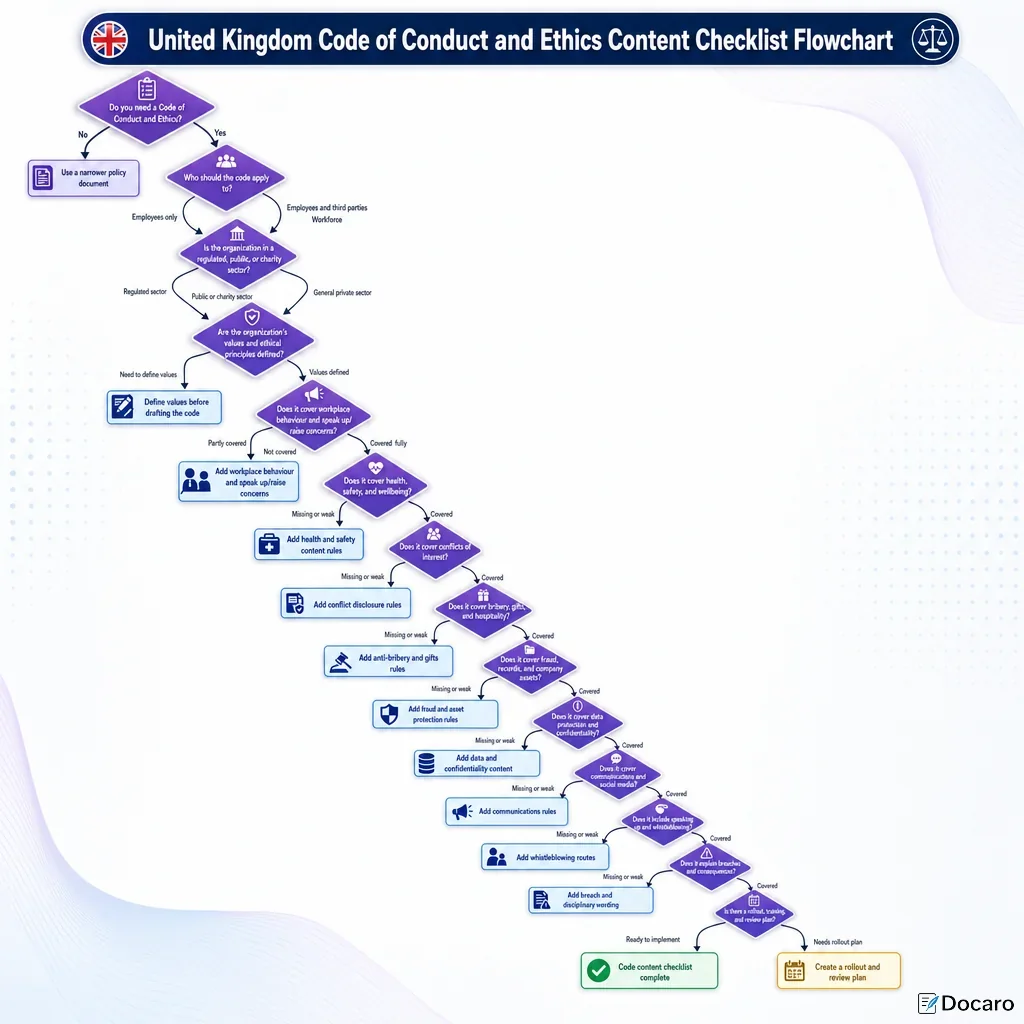
United Kingdom code of conduct checklist flowchart for ethics, compliance, workplace standards, and policy planning.
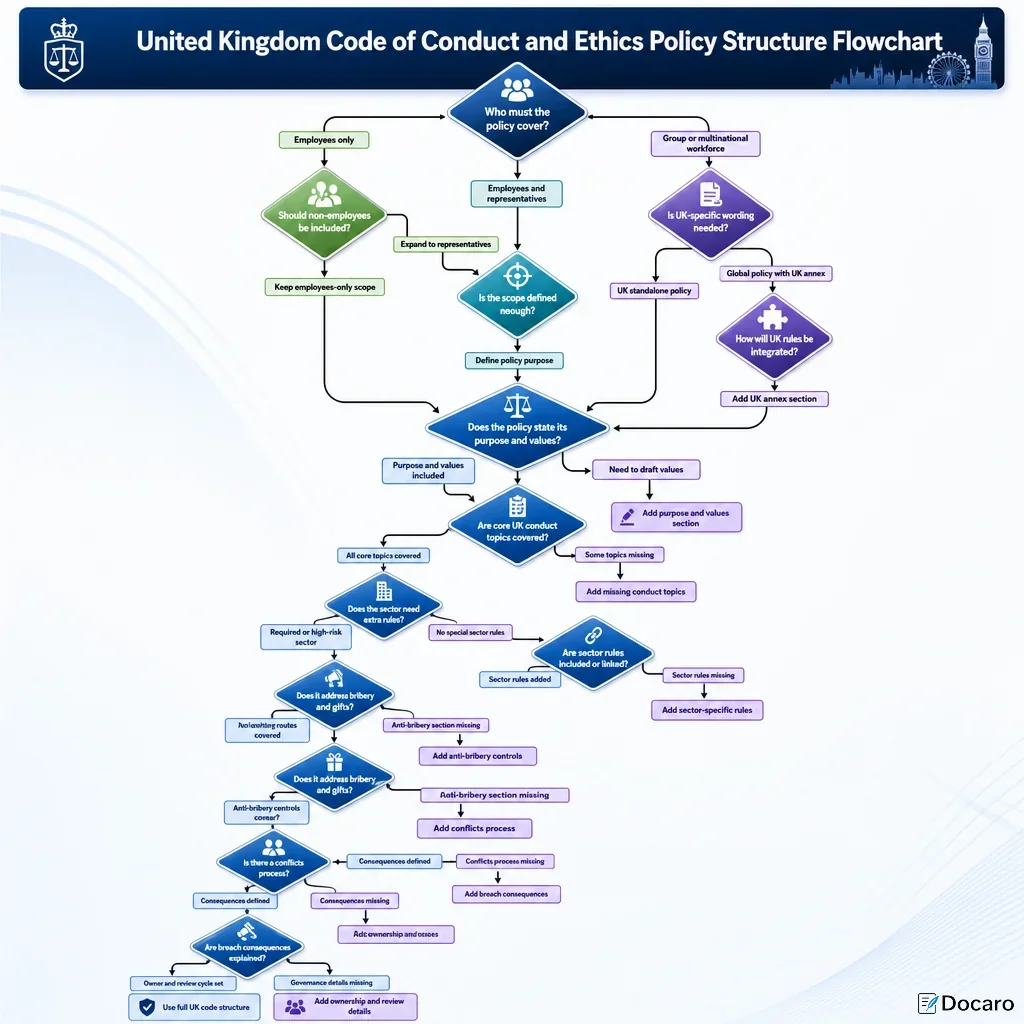
United Kingdom code of conduct and ethics policy flowchart showing key sections, structure, and practical guidance.
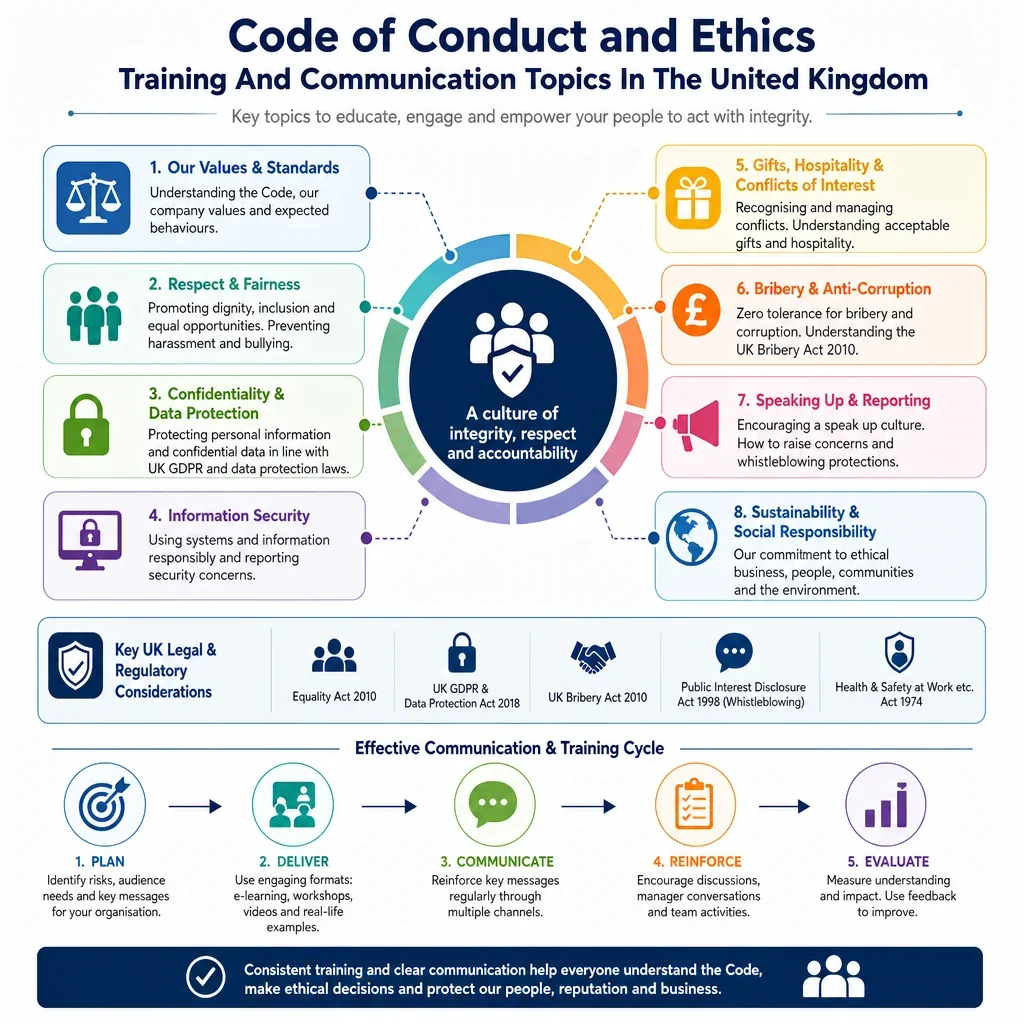
Explore training and communication topics for ethics and conduct programmes in the United Kingdom.
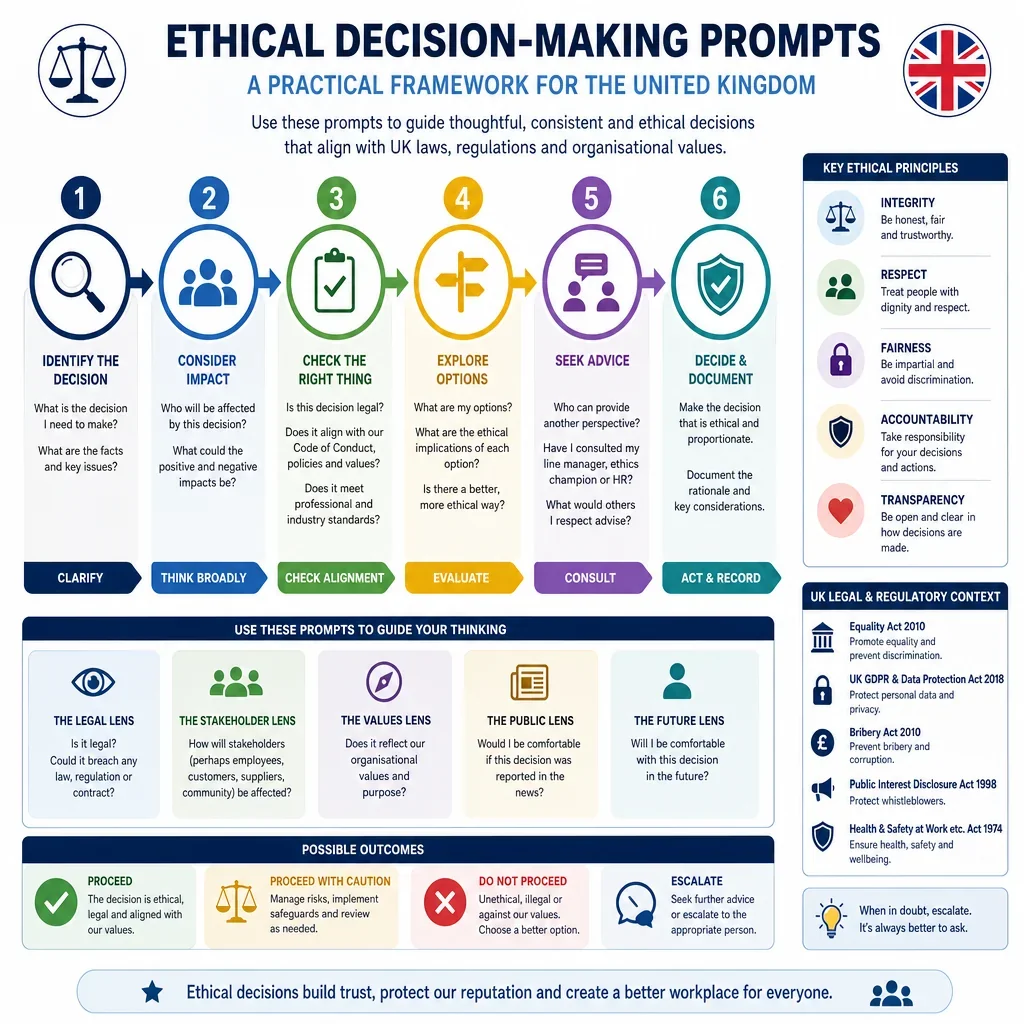
Ethical decision-making prompts for the United Kingdom to support responsible choices, policy alignment, and ethical workplace conduct.
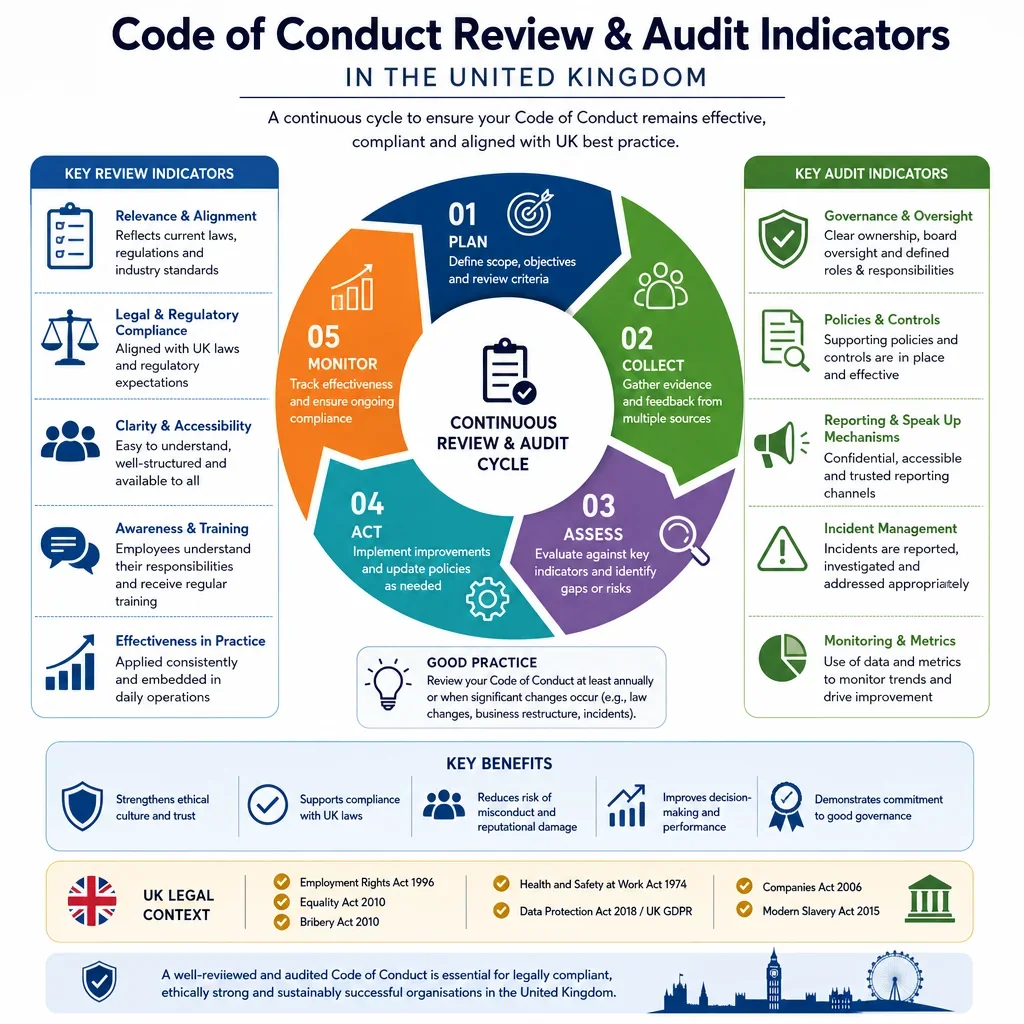
Review United Kingdom code of conduct audit indicators to assess compliance, ethics risks, and governance effectiveness.
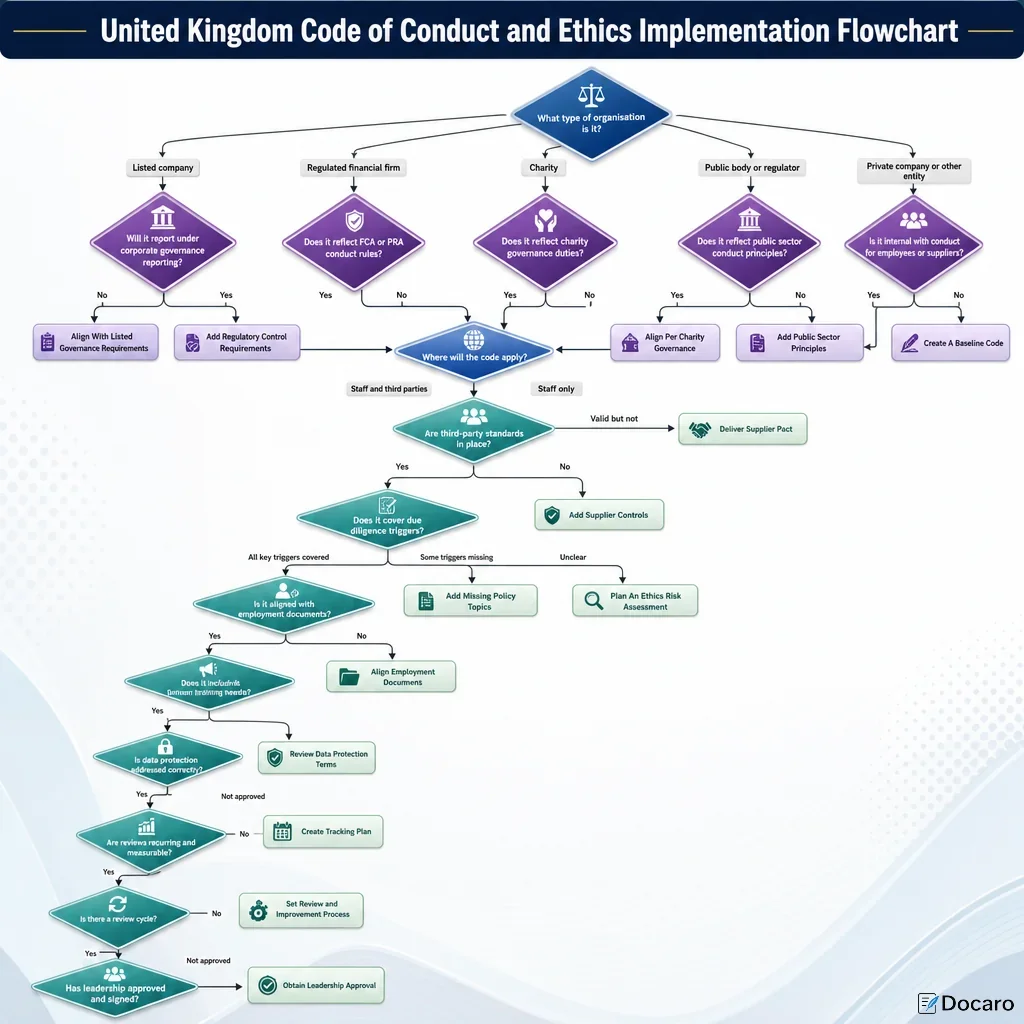
United Kingdom code of conduct and ethics flowchart for implementing workplace policy steps clearly and consistently.
References and Information Sources
19.https://docs.oracle.com/en/cloud/saas/human-resources/fawhr/overview-of-workforce-structures.html
45.https://theinfinitygroups.com/understanding-supervision-direction-or-control-in-employment-status/