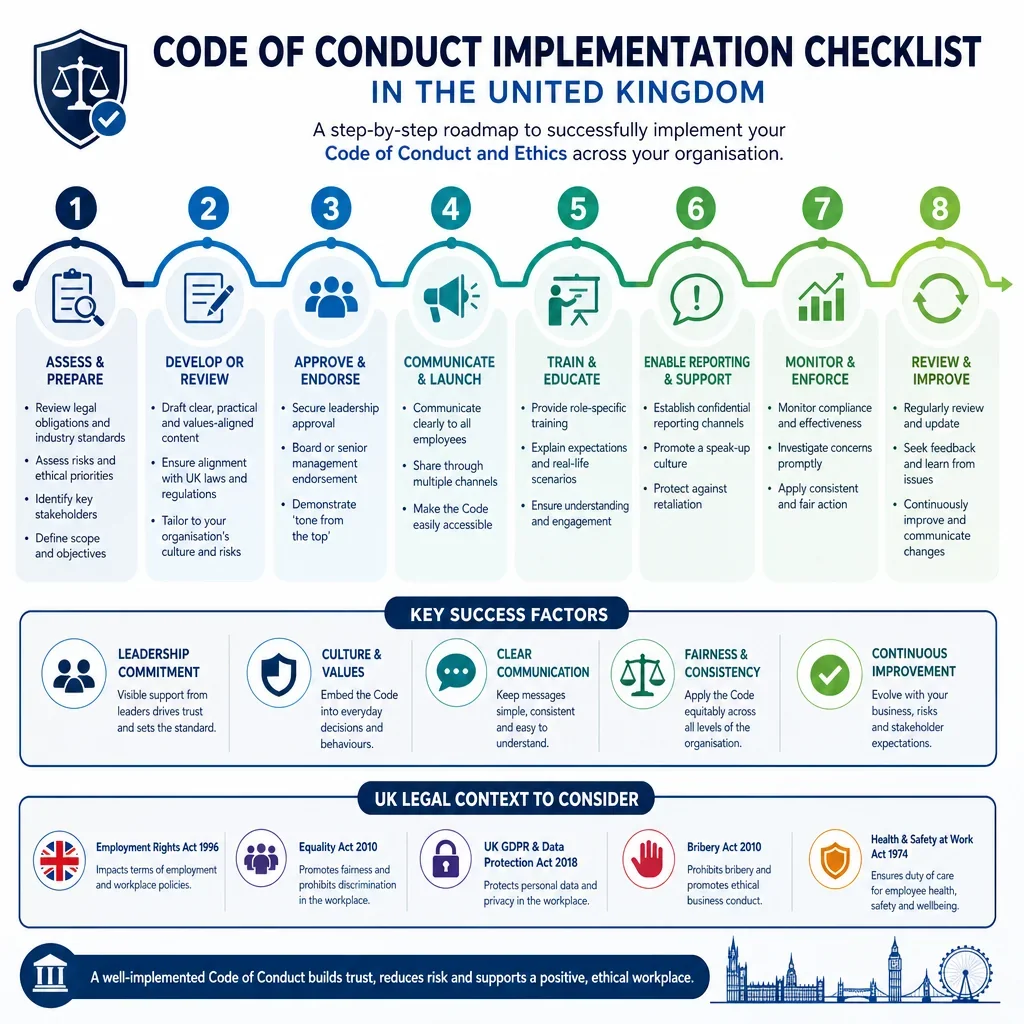
Code Of Conduct Implementation Checklist In The United Kingdom
Task name | Task description | Typical owner | Suggested timing | Expected output |
|---|---|---|---|---|
Preparation | ||||
Define Code Purpose And Scope | Decide who the code covers and which business activities it governs. | Senior leadership | Before adoption | Scope statement and project brief |
Map UK Legal Requirements | Identify laws and guidance affecting workplace conduct and ethics. | Compliance or legal team | Before adoption | Legal requirements checklist |
Assess Ethics And Conduct Risks | Review bribery, fraud, harassment, data and conflicts risks. | Compliance or legal team | Before adoption | Conduct risk assessment |
Review Existing Policies | Check related HR, compliance and security policies for consistency. | Human resources | Before adoption | Policy gap analysis |
Consult Key Stakeholders | Gather input from HR, legal, managers, employee representatives and risk owners. | Human resources | Before adoption | Consultation notes and action list |
Assign Implementation Responsibilities | Allocate drafting, approval, training, reporting and monitoring duties. | Senior leadership | Before adoption | Responsibility matrix |
Confirm Organisational Values | Agree the ethical principles the code must reflect. | Board of directors | Before adoption | Values and ethics statement |
Drafting | ||||
Draft Plain English Code Structure | Organise the code into clear duties, examples and reporting routes. | Compliance or legal team | Before adoption | Draft code outline |
Include Equality And Dignity Standards | Set expectations on discrimination, harassment, bullying and respectful conduct. | Human resources | Before adoption | Equality and dignity section |
Address Sexual Harassment Prevention | Explain prohibited conduct, reporting routes and reasonable prevention steps. | Human resources | Before adoption | Harassment prevention wording |
Set Anti-Bribery Rules | Prohibit bribes, facilitation payments and improper advantages. | Compliance or legal team | Before adoption | Anti-bribery code section |
Define Gifts And Hospitality Controls | Set approval thresholds, recording rules and prohibited benefits. | Compliance or legal team | Before adoption | Gifts and hospitality procedure |
Include Conflicts Of Interest Rules | Require disclosure and management of personal, financial and business conflicts. | Compliance or legal team | Before adoption | Conflicts declaration process |
Add Whistleblowing Reporting Routes | Explain how workers can raise protected disclosures and concerns. | Compliance or legal team | Before adoption | Whistleblowing section and contact list |
Include Non-Retaliation Commitment | State that retaliation for genuine reports is prohibited. | Compliance or legal team | Before adoption | Non-retaliation clause |
Set Data Protection Expectations | Explain lawful, secure and confidential handling of personal data. | Compliance or legal team | Before adoption | Data conduct section |
Reference UK GDPR Duties | Link conduct rules to UK GDPR accountability and security duties. | Compliance or legal team | Before adoption | UK GDPR cross-reference |
Define Confidentiality Duties | Set rules for company, client, supplier and employee information. | Compliance or legal team | Before adoption | Confidentiality code section |
Add Fraud And Financial Integrity Rules | Prohibit dishonesty, false records, misuse of assets and expenses abuse. | Compliance or legal team | Before adoption | Fraud and records section |
Include Modern Slavery Expectations | State zero tolerance for forced labour and supply chain exploitation. | Compliance or legal team | Before adoption | Modern slavery conduct wording |
Include Health And Safety Duties | Require safe working, incident reporting and cooperation with safety rules. | Human resources | Before adoption | Health and safety conduct section |
Set Social Media Conduct Rules | Define acceptable public, online and work-related communications. | Human resources | Before adoption | Social media conduct rules |
Define Technology Acceptable Use | Set rules for systems, devices, passwords, monitoring and cyber security. | Compliance or legal team | Before adoption | Technology conduct section |
Add Responsible AI Use Rules | Set boundaries for AI tools, confidential inputs and human review. | Compliance or legal team | Before adoption | Responsible AI conduct rules |
Explain Breach Consequences | Link code breaches to investigation and disciplinary procedures. | Human resources | Before adoption | Breach consequences section |
Define Manager Responsibilities | Explain manager duties to model, escalate and enforce the code. | Line managers | Before adoption | Manager obligations section |
Internal review | ||||
Complete Legal Review | Check employment, regulatory, privacy and criminal law references. | Compliance or legal team | Before adoption | Legal review comments |
Check HR Policy Alignment | Ensure consistency with contracts, handbook, grievance and disciplinary policies. | Human resources | Before adoption | HR alignment sign-off |
Review Privacy And Monitoring Wording | Check employee monitoring, data handling and reporting wording. | Compliance or legal team | Before adoption | Privacy review note |
Check Accessibility And Readability | Ensure the code is clear, accessible and usable by all personnel. | Human resources | Before adoption | Readability and accessibility check |
Consider Employee Feedback | Review feedback from employee forums, unions or staff representatives. | Human resources | Before adoption | Feedback log and decisions |
Approval | ||||
Obtain Senior Leadership Endorsement | Secure visible support and tone from the top. | Senior leadership | On adoption | Leadership endorsement message |
Approve Final Code | Formally approve the code under governance arrangements. | Board of directors | On adoption | Approved code and meeting minute |
Assign Version Control | Record owner, approval date, version number and review date. | Compliance or legal team | On adoption | Version-controlled master copy |
Communication | ||||
Publish The Code Internally | Make the code available on intranet, handbook or HR system. | Human resources | On adoption | Published internal code link |
Send Launch Communication | Explain why the code matters and what personnel must do. | Senior leadership | On adoption | Launch email or announcement |
Collect Employee Acknowledgements | Require personnel to confirm they have read and understood the code. | Human resources | Within first month | Acknowledgement records |
Add Code To Onboarding | Include the code in induction materials and starter checklists. | Human resources | On adoption, Within first month | Updated onboarding checklist |
Communicate Expectations To Third Parties | Share relevant conduct expectations with suppliers, agents and contractors. | Compliance or legal team | Within first month | Supplier communication or clause |
Training | ||||
Deliver All-Staff Code Training | Train personnel on key standards, examples and reporting routes. | Human resources | Within first month, Annually | Training deck and attendance log |
Train Managers On Escalation | Train managers to handle reports, preserve evidence and avoid retaliation. | Human resources | Within first month, Annually | Manager training records |
Provide Anti-Harassment Training | Train staff on harassment, sexual harassment and bystander response. | Human resources | Within first month, Annually | Harassment training completion report |
Provide Anti-Bribery Training | Train relevant staff on bribery risks, gifts, hospitality and red flags. | Compliance or legal team | Within first month, Annually | Anti-bribery training log |
Provide Data And Cyber Awareness | Train personnel on secure data handling and incident reporting. | Compliance or legal team | Within first month, Annually | Data awareness training record |
Monitoring | ||||
Maintain Reporting Channels | Keep confidential routes available for concerns, complaints and whistleblowing. | Compliance or legal team | Quarterly | Active reporting channel register |
Monitor Gifts And Hospitality Register | Review entries for threshold breaches, patterns and approvals. | Compliance or legal team | Quarterly | Gifts register review record |
Review Conflict Declarations | Check disclosures are current, assessed and managed. | Compliance or legal team | Quarterly, Annually | Updated conflicts register |
Track Conduct Incident Trends | Analyse grievances, disciplinary matters, whistleblowing and ethics reports. | Human resources | Quarterly | Conduct dashboard or trend report |
Check Investigation Consistency | Review whether code breaches are investigated fairly and consistently. | Human resources | Quarterly | Investigation quality review |
Monitor Training Completion | Track completion rates and chase overdue mandatory training. | Human resources | Quarterly | Training compliance report |
Report Ethics Metrics To Leadership | Provide leadership with key code compliance indicators and risks. | Compliance or legal team | Quarterly | Ethics and conduct report |
Monitor Third-Party Conduct Risks | Review supplier, agent and contractor compliance with ethical expectations. | Compliance or legal team | Quarterly, Annually | Third-party conduct review |
Review and update | ||||
Complete Annual Code Review | Review the code against law, risks, incidents and business changes. | Compliance or legal team | Annually | Annual review report |
Update For Legal Changes | Amend the code when relevant UK law or guidance changes. | Compliance or legal team | When circumstances change | Updated legal change log |
Review After Serious Incidents | Update rules, controls or training after material misconduct or control failures. | Senior leadership | When circumstances change | Lessons learned update plan |
Review After Business Changes | Update the code after mergers, restructuring, expansion or new markets. | Senior leadership | When circumstances change | Business change code assessment |
Gather Employee Culture Feedback | Ask whether personnel understand the code and trust reporting routes. | Human resources | Annually | Culture survey findings |
Issue Refresher Communications | Remind personnel of key standards, reporting routes and recent updates. | Human resources | Annually, When circumstances change | Refresher message or campaign |
Archive Superseded Versions | Keep historic versions, approvals and communications for audit purposes. | Compliance or legal team | When circumstances change | Policy archive and version history |
How Should A UK Employer Implement A Code Of Conduct And Ethics?
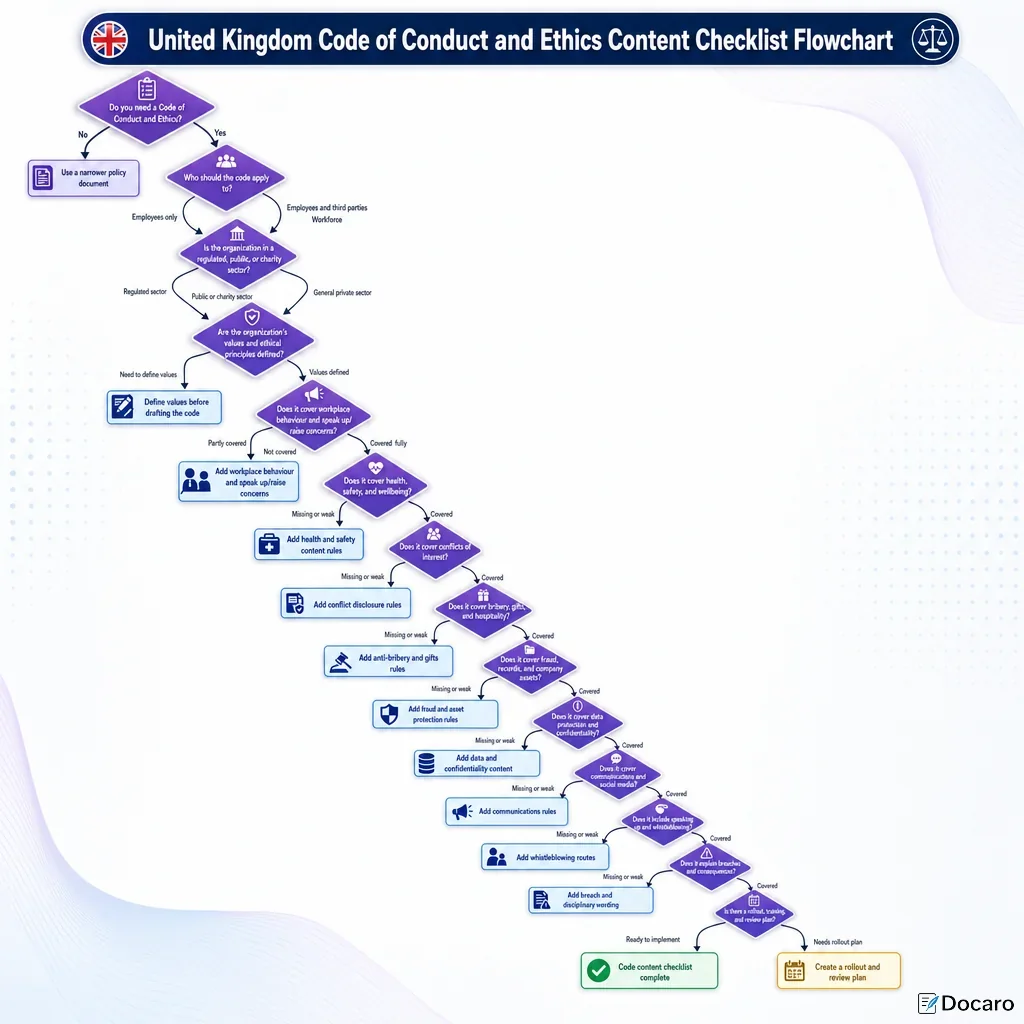
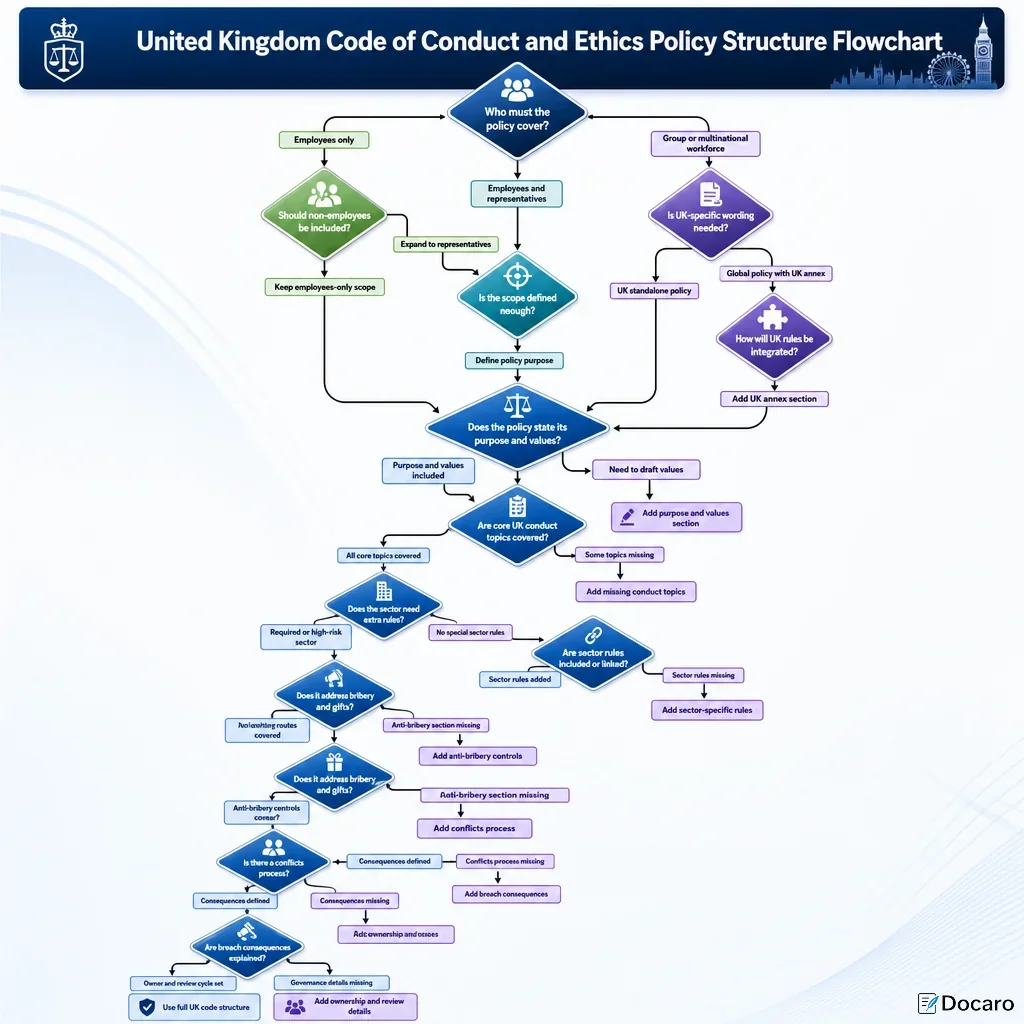
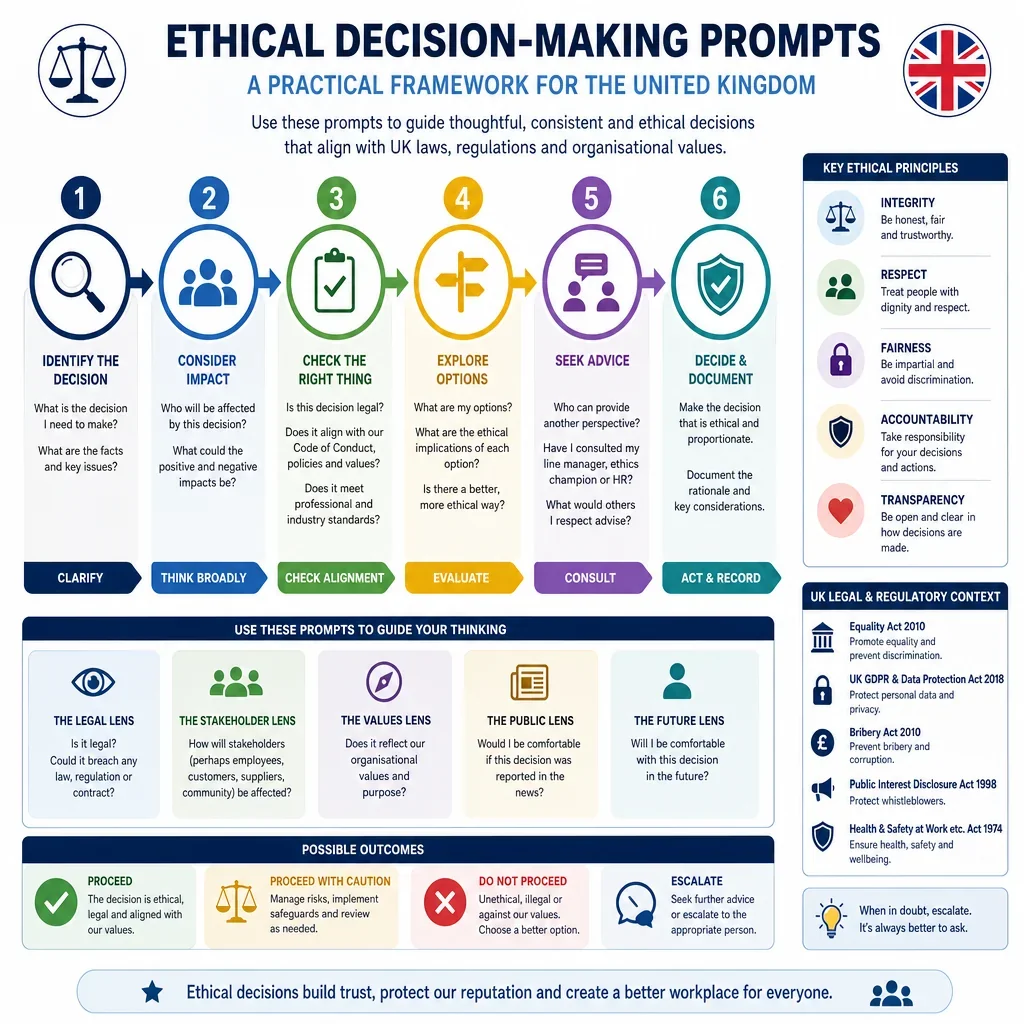
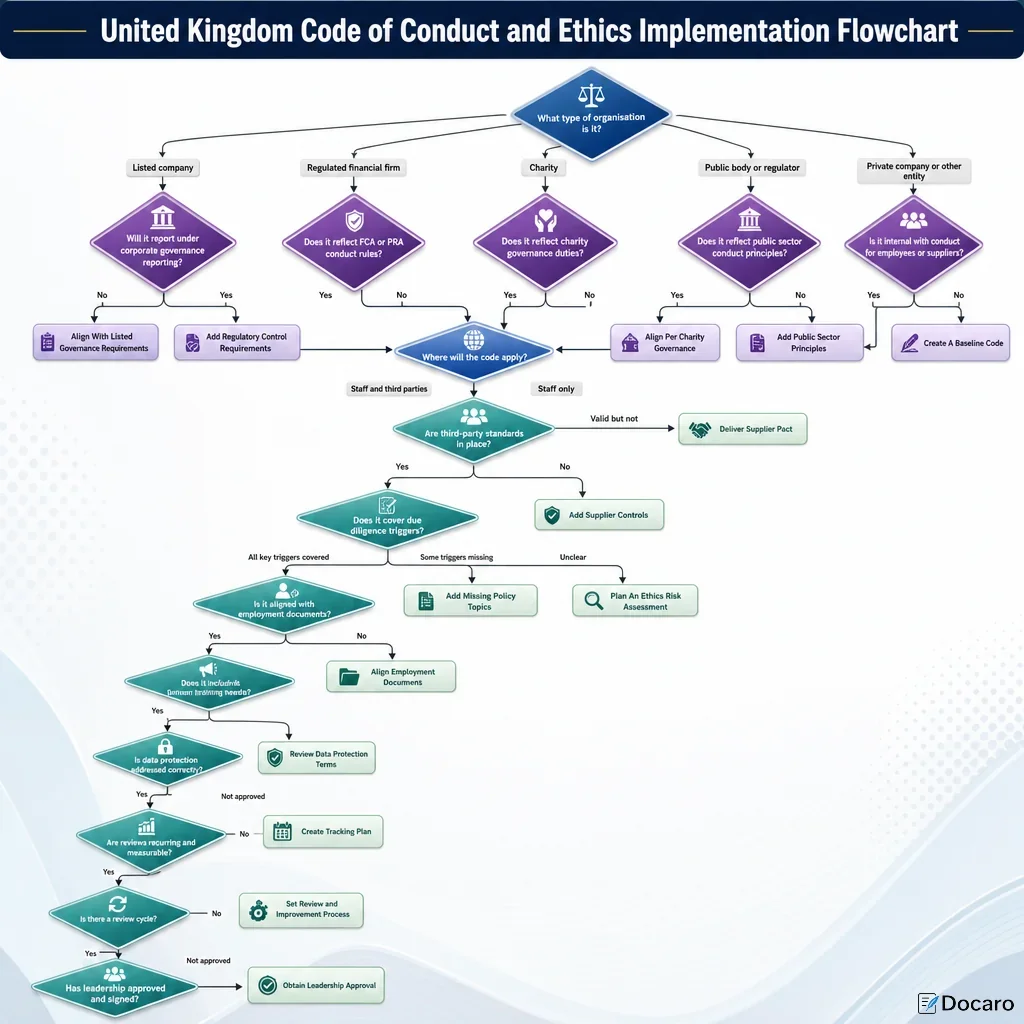
A UK code of conduct should be treated as a controlled governance document, not just an HR template. The checklist shows that the strongest implementation route is to map legal and operational risks first, draft clear behavioural standards, obtain board or senior leadership approval, then evidence communication, training, monitoring and periodic review.
Which UK Legal Risks Should The Code Address?
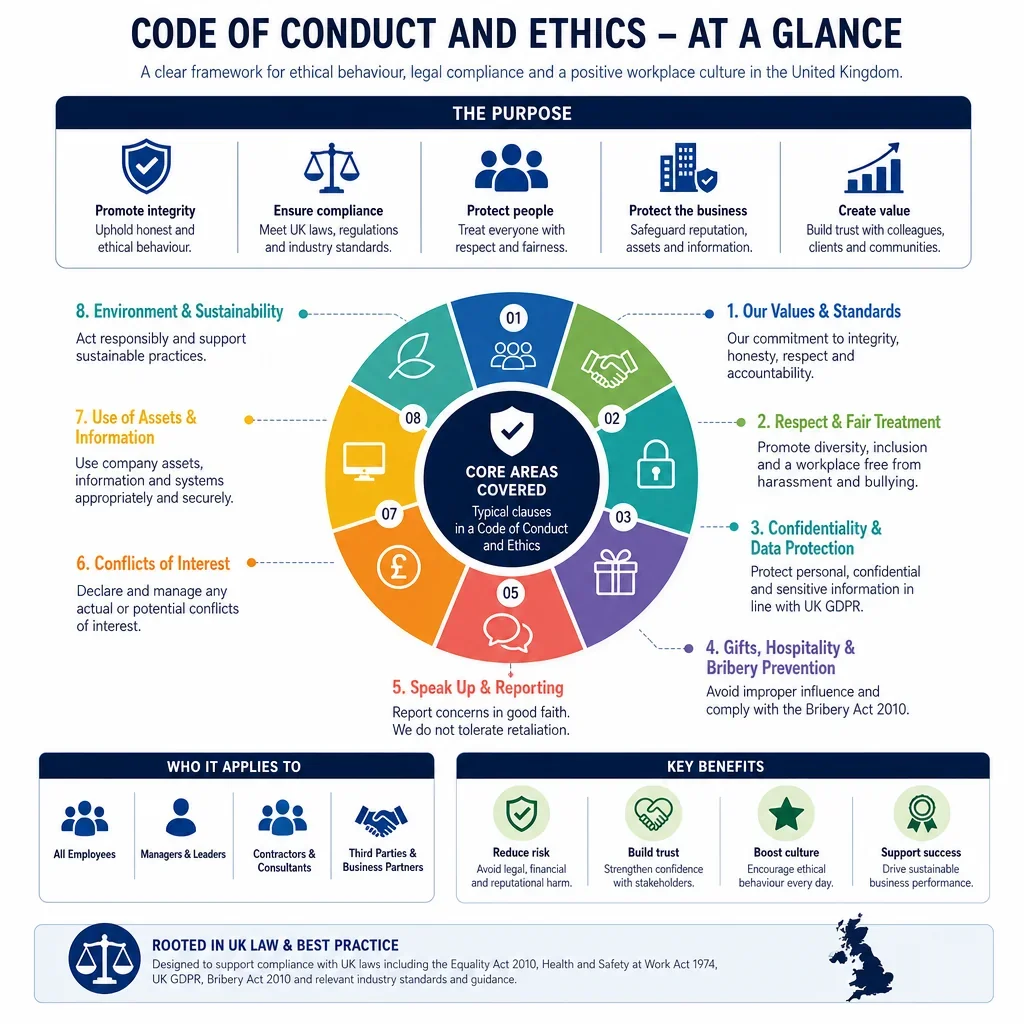
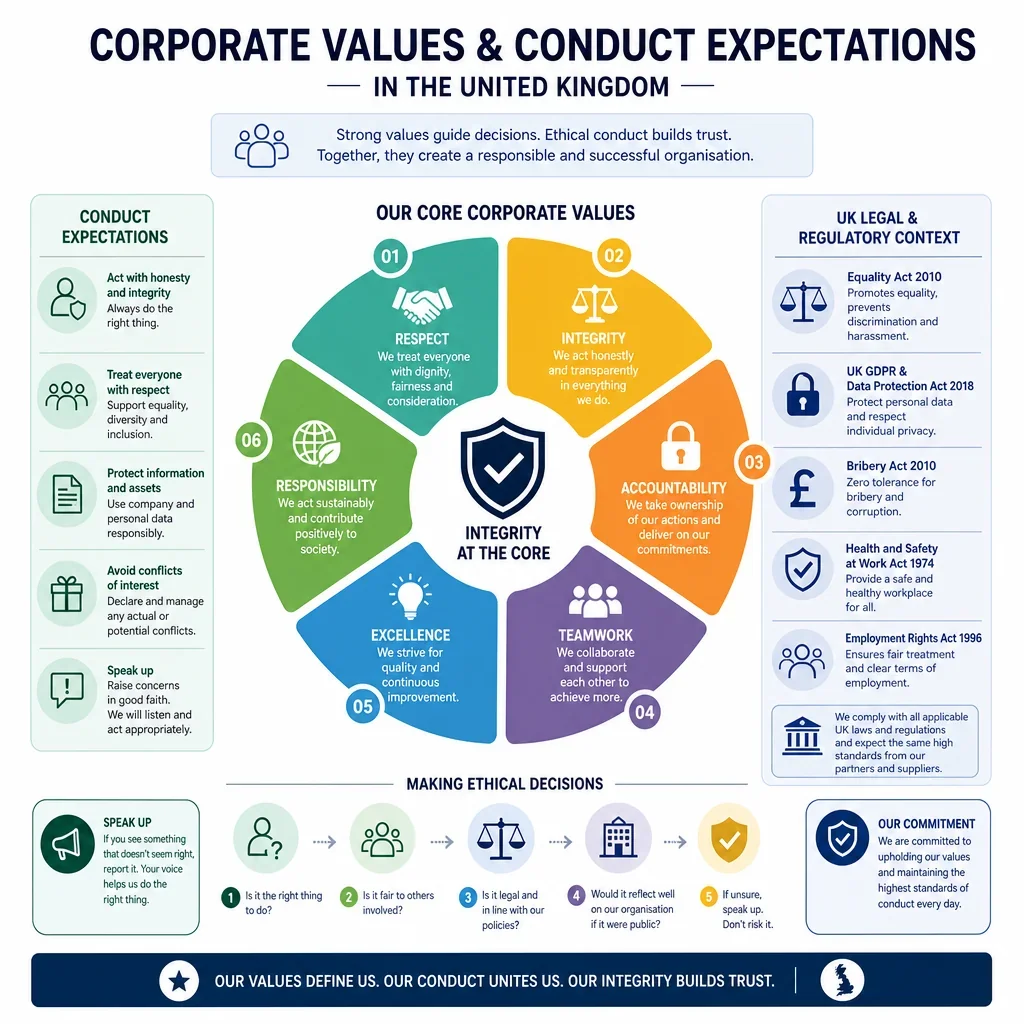
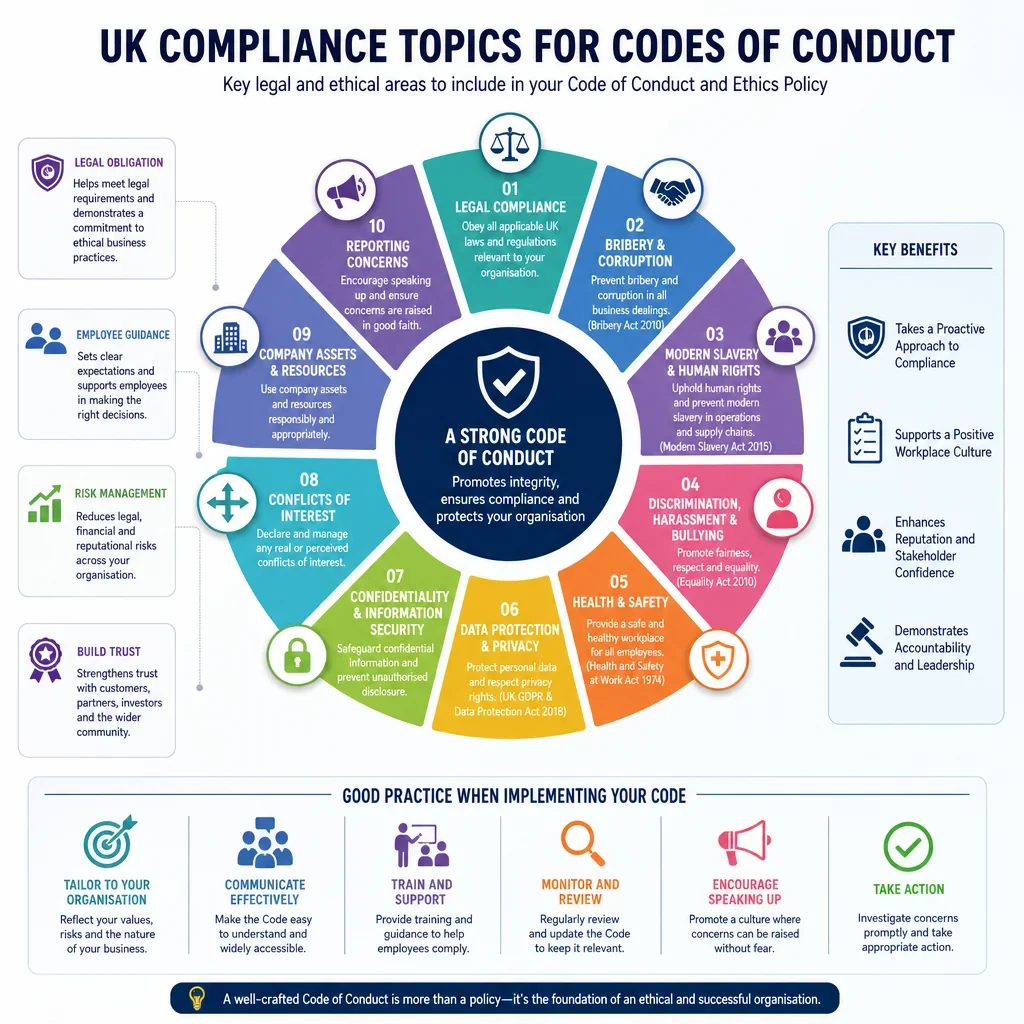
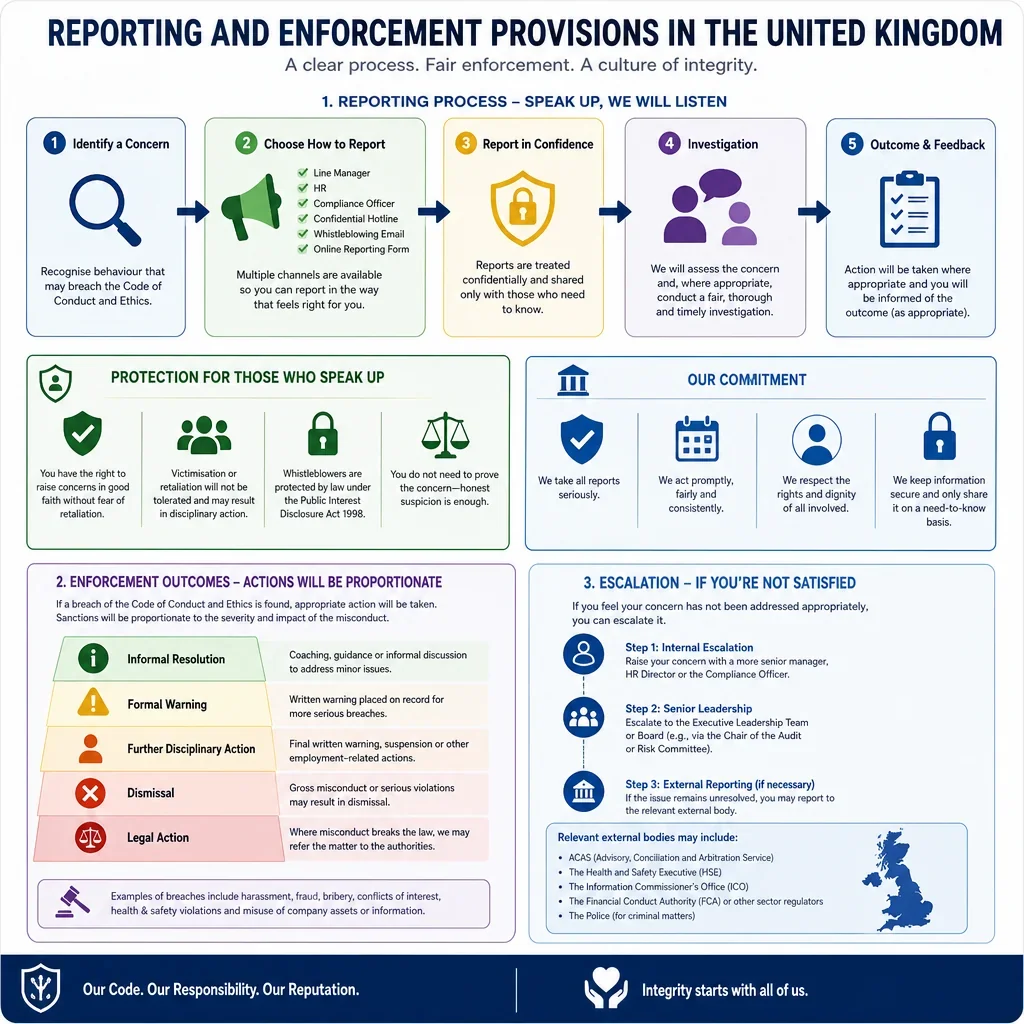
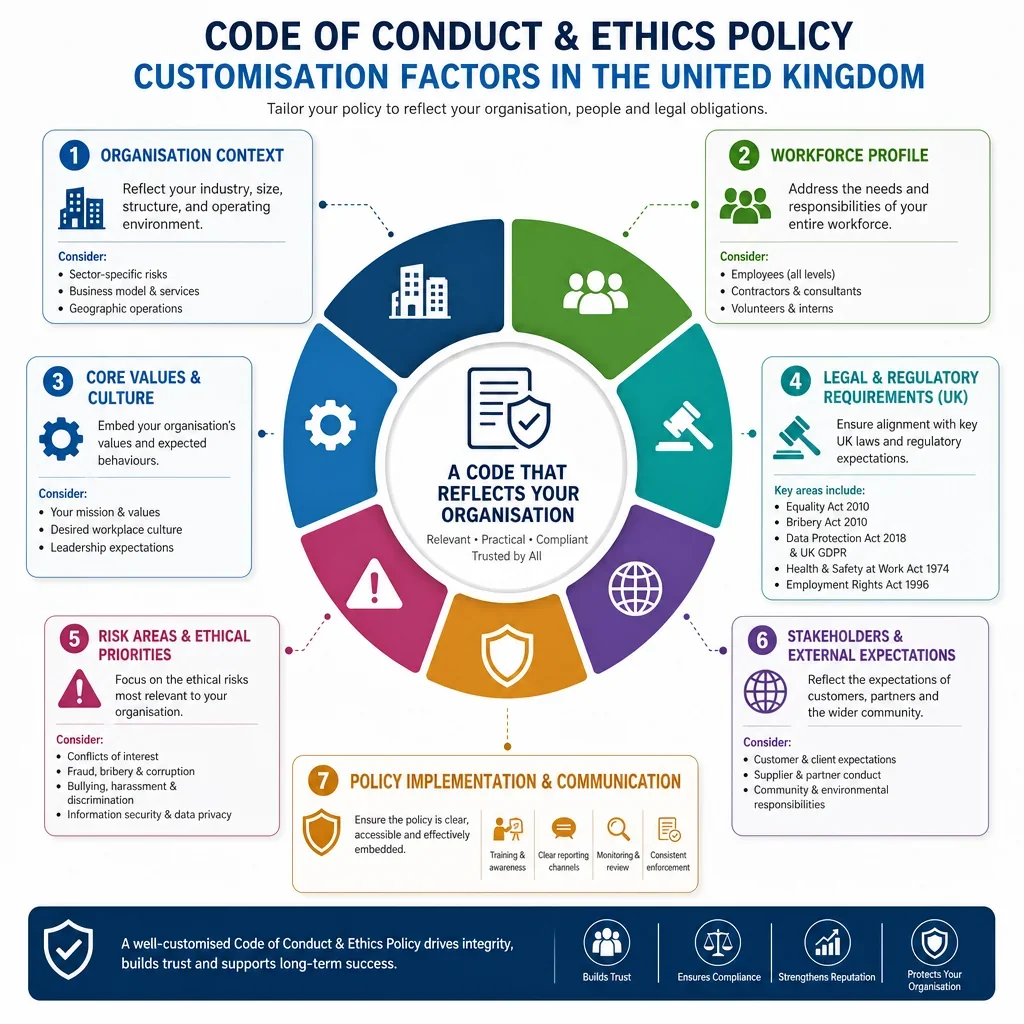
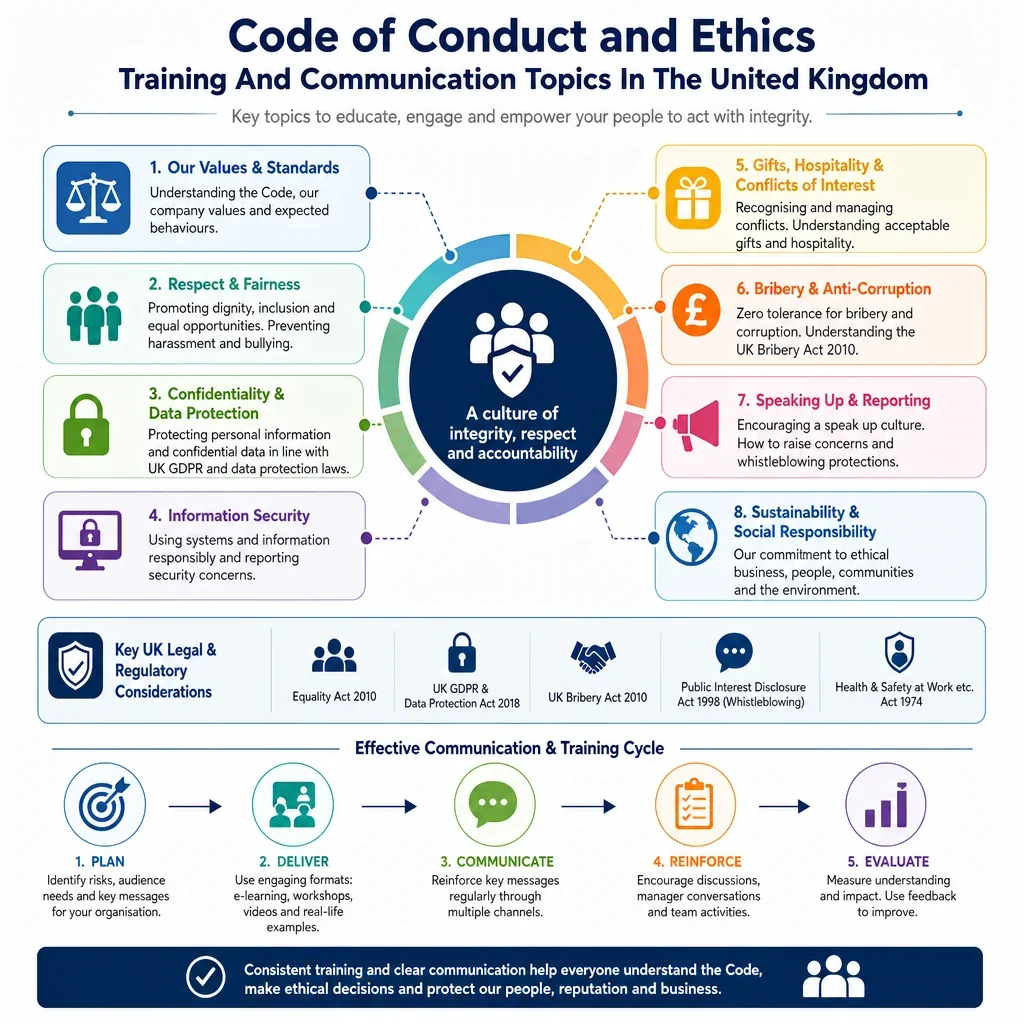
- Equality and harassment: The policy should align with the Equality Act 2010 and the employer duty to take reasonable steps to prevent sexual harassment. Practical outputs should include anti-harassment standards, reporting routes, manager escalation steps and training records.
- Bribery and fraud: UK organisations should document proportionate anti-bribery procedures, gifts and hospitality controls, conflicts checks and investigation processes, particularly because adequate procedures are central to managing Bribery Act 2010 risk.
- Whistleblowing: The code should signpost protected disclosure channels and safeguards against detriment, reflecting the Public Interest Disclosure Act 1998 framework and Acas guidance.
- Data protection: Conduct rules should cover confidential information, personal data handling, acceptable technology use and incident reporting, with links to UK GDPR and Data Protection Act 2018 policies.
Who Should Own The Code Of Conduct?
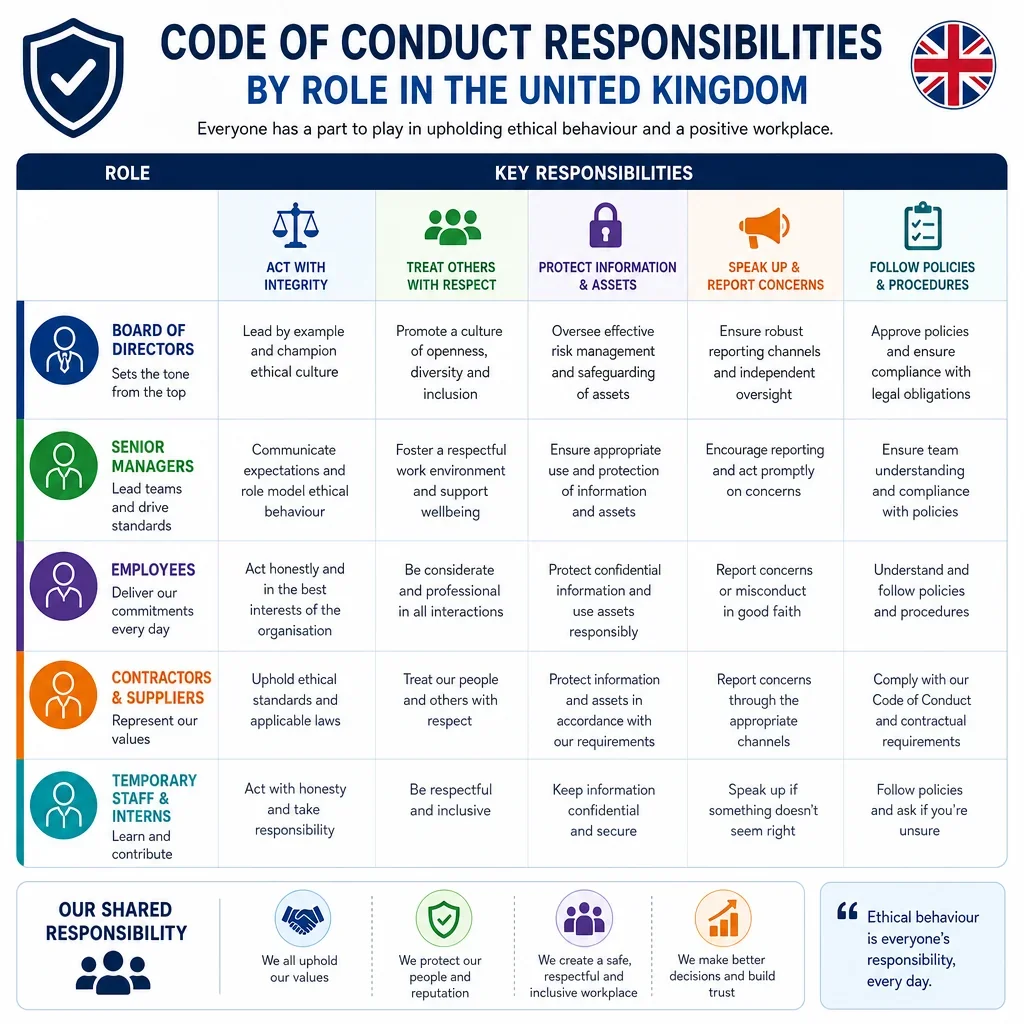
Ownership should be shared. The board or senior leadership normally approves the code and sets ethical tone, HR leads employee communication and disciplinary alignment, compliance or legal teams check regulatory and legislative accuracy, and line managers reinforce expected behaviour day to day.
What Evidence Should Be Kept After Adoption?
Useful evidence includes the approved code, version history, board minutes, consultation notes, employee acknowledgements, training attendance records, investigation logs, gifts and hospitality registers, conflicts declarations, whistleblowing records and annual review outcomes. These records help show that the code was actually implemented, not merely published.
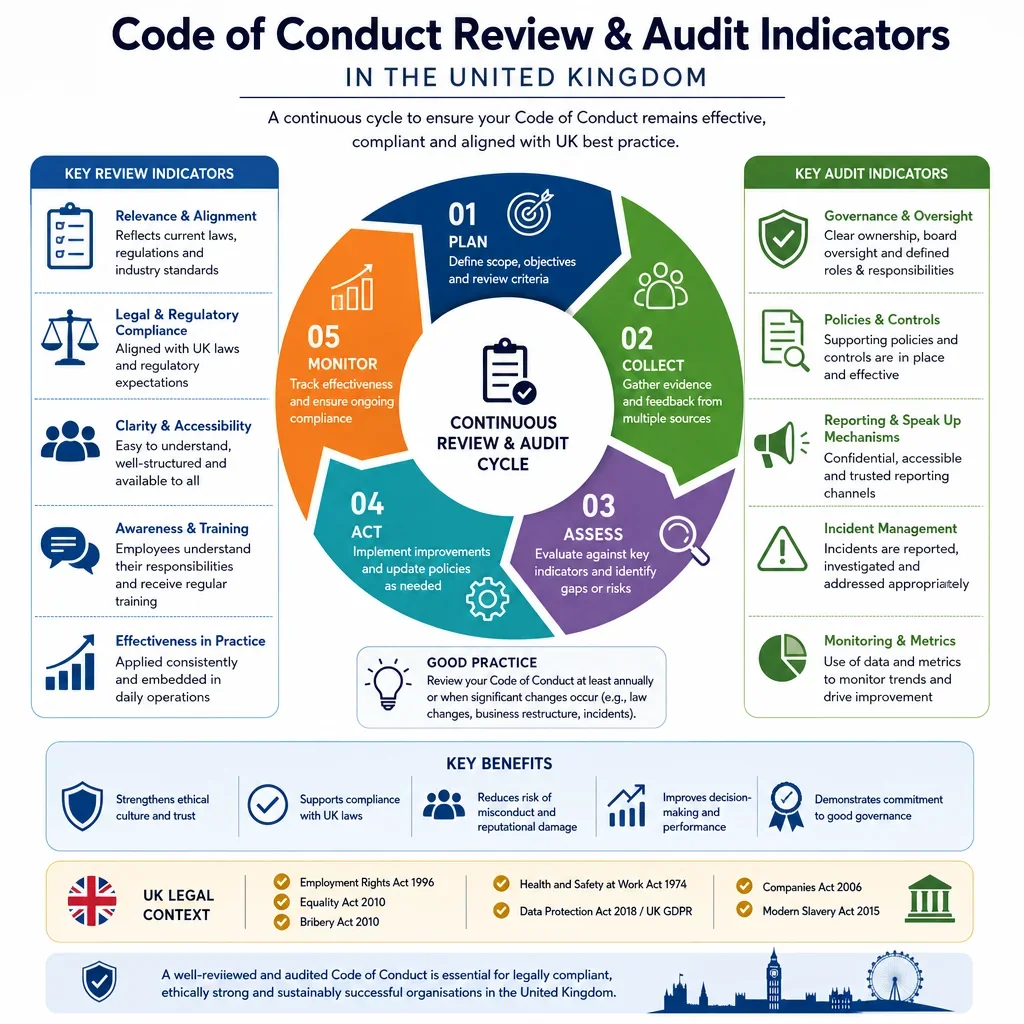
When Should The Code Be Reviewed?
The checklist supports at least an annual review, with earlier updates when circumstances change, such as new legislation, regulatory guidance, business restructuring, expansion into new markets, a serious incident, high complaint trends or material changes to working practices such as hybrid working or AI use.
FAQs
You Might Also Be Interested In