UK Future Healthcare Planning Document Types
Document type | Main purpose | Generally legally binding | Can include care preferences | Typical use case |
|---|---|---|---|---|
Advance Decision | ||||
Advance Decision to Refuse Treatment | Refuse specified treatment in future circumstances. | true | false | When a person wants to refuse future treatment if capacity is lost. |
Advance Decision Refusing Life-Sustaining Treatment | Refuse life-sustaining treatment in defined situations. | true | false | Used to refuse ventilation, CPR, feeding, or other life-sustaining treatment. |
Treatment-Specific Advance Decision | Refuse a named treatment or class of treatment. | true | false | Used where a person wants to refuse specific medication or procedures. |
Condition-Specific Advance Decision | Refuse treatment if a particular condition progresses. | true | false | Common after dementia, neurological, or terminal diagnosis. |
Mental Capacity Act 2005 Advance Decision | Statutory framework for advance refusals of treatment. | true | false | Legal basis for ADRTs in England and Wales. |
Advance Statement | ||||
Advance Statement of Wishes and Preferences | Record wishes, values, and care preferences. | false | true | Used to guide best-interests decisions after capacity is lost. |
Values Statement | Explain beliefs, priorities, and quality-of-life views. | false | true | Used to influence best-interests decisions by clinicians and attorneys. |
Preferred Place of Care Statement | Record preferred place of care or death. | false | true | Used in palliative care and end-of-life planning. |
Religious and Cultural Care Wishes Statement | Record faith, cultural, and spiritual care needs. | false | true | Used where beliefs affect treatment, diet, modesty, or rituals. |
Communication Needs Statement | Record how the person communicates and understands information. | false | true | Used for dementia, learning disability, brain injury, or aphasia. |
Lasting Power of Attorney | ||||
Health and Welfare Lasting Power of Attorney | Appoint attorneys for health and care decisions. | true | true | Used to appoint trusted decision-makers before capacity is lost. |
Health and Welfare LPA With Life-Sustaining Treatment Authority | Allow attorneys to decide on life-sustaining treatment. | true | true | Used where the donor wants attorneys involved in critical treatment decisions. |
LPA Instructions and Preferences | Guide or restrict attorney decisions. | true | true | Used to add conditions, limits, or preferences to an LPA. |
Property and Financial Affairs Lasting Power of Attorney | Appoint attorneys for money and property decisions. | true | false | Used to fund care, manage bills, or arrange property matters. |
Do Not Attempt Cardiopulmonary Resuscitation form | ||||
Do Not Attempt Cardiopulmonary Resuscitation Form | Record a clinical decision not to attempt CPR. | false | false | Used where CPR would not work or is not wanted/appropriate. |
Community DNACPR Form | Communicate DNACPR status across home and care settings. | false | false | Used by ambulance, GP, hospice, and care home teams. |
Hospital DNACPR Form | Record inpatient CPR decision. | false | false | Used during hospital admission when CPR is unlikely or inappropriate. |
Care plan | ||||
Recommended Summary Plan for Emergency Care and Treatment Form | Summarise emergency care recommendations and priorities. | false | true | Used for people at risk of sudden health crisis. |
Emergency Health Care Plan | Set out urgent response steps and escalation decisions. | false | true | Used for frailty, complex illness, or repeated crises. |
Personalised Care and Support Plan | Agree care goals, support needs, and preferences. | false | true | Used in long-term condition, disability, or social care planning. |
End of Life Care Plan | Plan care, comfort, and support near end of life. | false | true | Used for terminal illness, palliative care, or frailty. |
Palliative Care Plan | Plan symptom control and holistic support. | false | true | Used for serious illness needing symptom and support planning. |
Anticipatory Care Plan | Plan ahead for likely care and support needs. | false | true | Common in Scotland for long-term conditions and palliative care. |
Treatment Escalation Plan | Record ceilings of treatment and escalation choices. | false | true | Used in hospital, care home, or acute illness planning. |
Hospital Treatment Escalation Plan | Guide ward decisions on ICU, ventilation, and escalation. | false | true | Used during hospital admission with serious or deteriorating illness. |
Advance Statement | ||||
Mental Health Advance Statement | Record mental health treatment and care preferences. | false | true | Used before a mental health crisis or relapse. |
Advance Decision | ||||
Advance Decision Refusing Psychiatric Medication | Refuse specified psychiatric medication if capacity is lost. | true | false | Used in mental health planning, subject to Mental Health Act limits. |
Care plan | ||||
Mental Health Crisis Plan | Set out support and actions during mental health crisis. | false | true | Used to manage relapse signs, contacts, and preferred interventions. |
Other | ||||
Birth Plan | Record labour, birth, and newborn care preferences. | false | true | Used during pregnancy to discuss birth choices with midwives. |
Hospital Passport | Share needs, routines, communication, and support requirements. | false | true | Used by people with learning disabilities or communication needs. |
Summary Care Record With Additional Information | Share key medical and preference information with NHS staff. | false | true | Used so urgent care clinicians can see important health details. |
Care plan | ||||
Coordinate My Care Urgent Care Plan | Share urgent care wishes with London urgent care services. | false | true | Used in London for urgent and end-of-life care coordination. |
Universal Care Plan | Digitally share urgent and personalised care plans. | false | true | Used in London to share care plans across services. |
Other | ||||
NHS Organ Donor Register Decision | Record organ and tissue donation decision. | true | false | Used to record donation consent or opt-out preferences. |
Appointed Organ Donation Representative | Appoint someone to decide about organ donation. | true | false | Used when a person wants a named representative to decide. |
Body Donation Consent Form | Consent to donate body for medical education or research. | true | false | Used to arrange anatomical donation after death. |
Court of Protection Personal Welfare Order | Obtain court decision on serious health or welfare issues. | true | false | Used for disputed or serious treatment decisions lacking capacity. |
Personal Welfare Deputyship Order | Appoint deputy for ongoing welfare decisions. | true | false | Rarely used where ongoing welfare decisions need court authority. |
Independent Mental Capacity Advocate Referral | Secure advocacy for serious decisions when required. | false | false | Used for unbefriended people facing serious medical treatment decisions. |
Mental Capacity Assessment Record | Record assessment of capacity for a specific decision. | false | false | Used before relying on best interests or advance planning documents. |
Best Interests Decision Record | Record reasoning for decisions after capacity is lost. | false | true | Used by clinicians and carers when the person lacks capacity. |
Advance Decision | ||||
Advance Directive in Scotland | Refuse future medical treatment in Scotland. | true | false | Used in Scotland to refuse treatments if capacity is later lost. |
Lasting Power of Attorney | ||||
Welfare Power of Attorney in Scotland | Appoint attorney for welfare decisions in Scotland. | true | true | Used in Scotland instead of an England and Wales LPA. |
Other | ||||
Northern Ireland Enduring Power of Attorney | Appoint attorneys for property and financial affairs only. | true | false | Used in Northern Ireland for finances, not healthcare decisions. |
Which UK Future Healthcare Planning Documents Are Legally Binding?
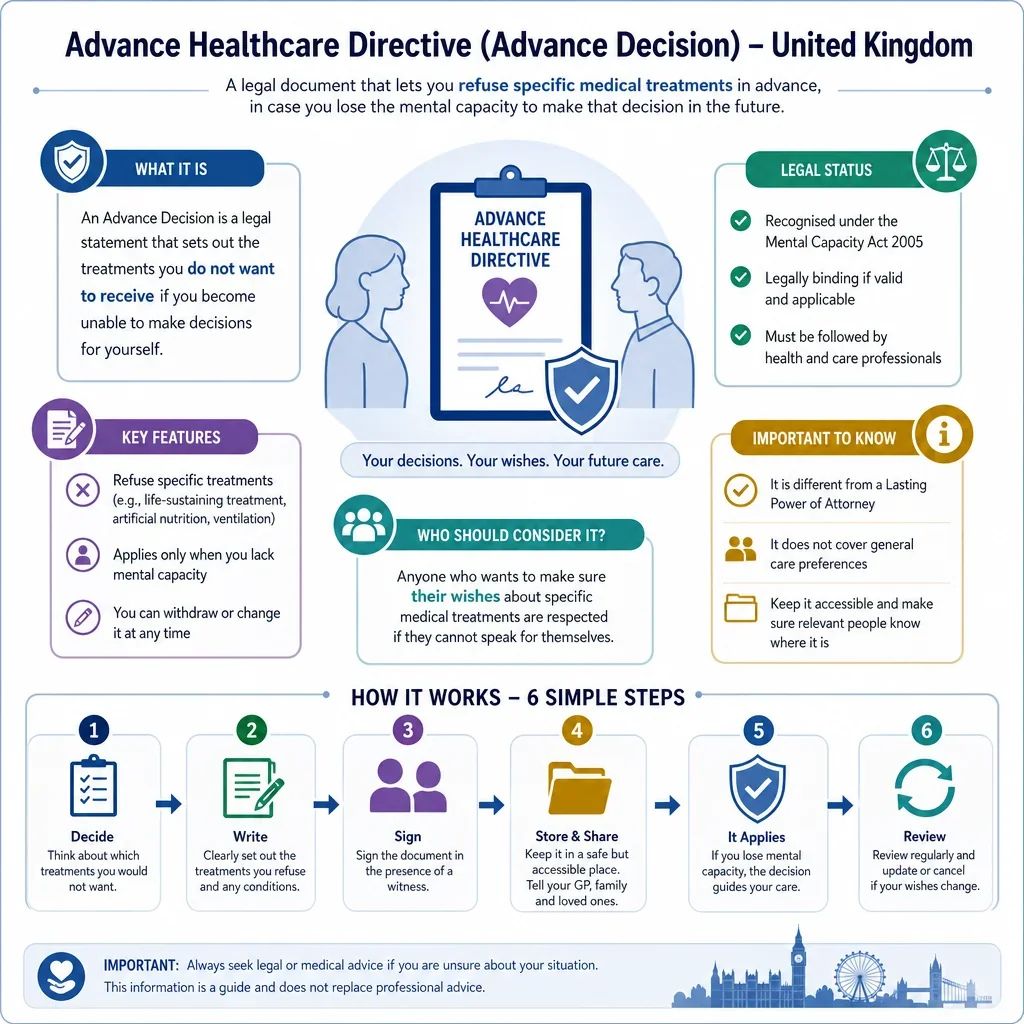
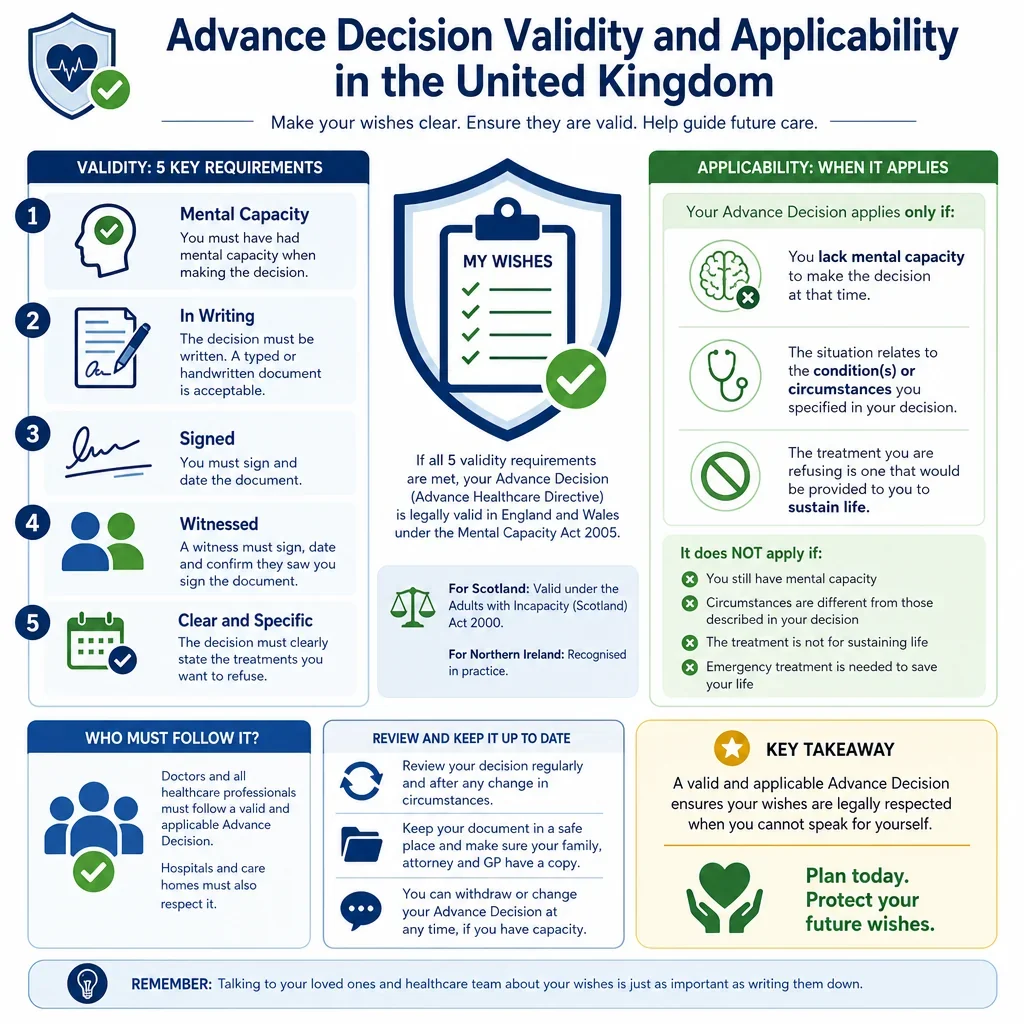
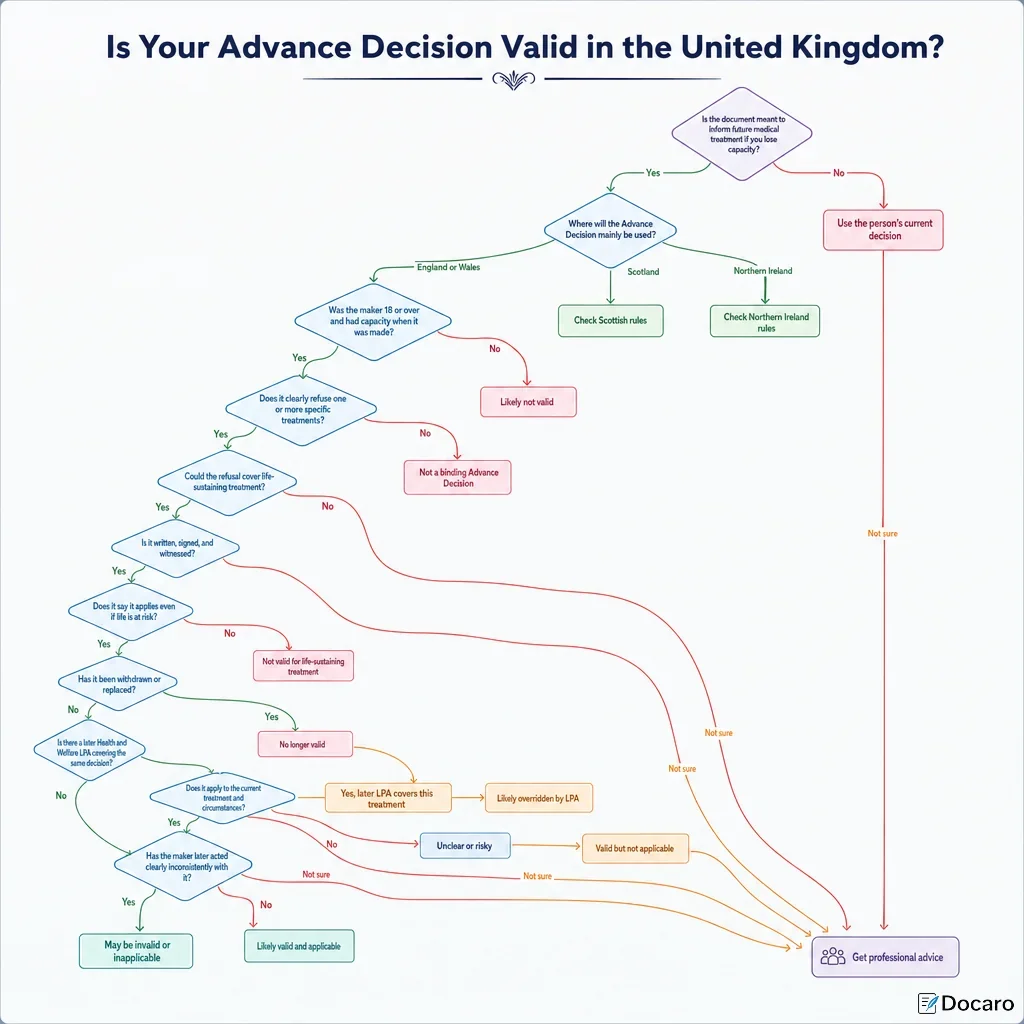
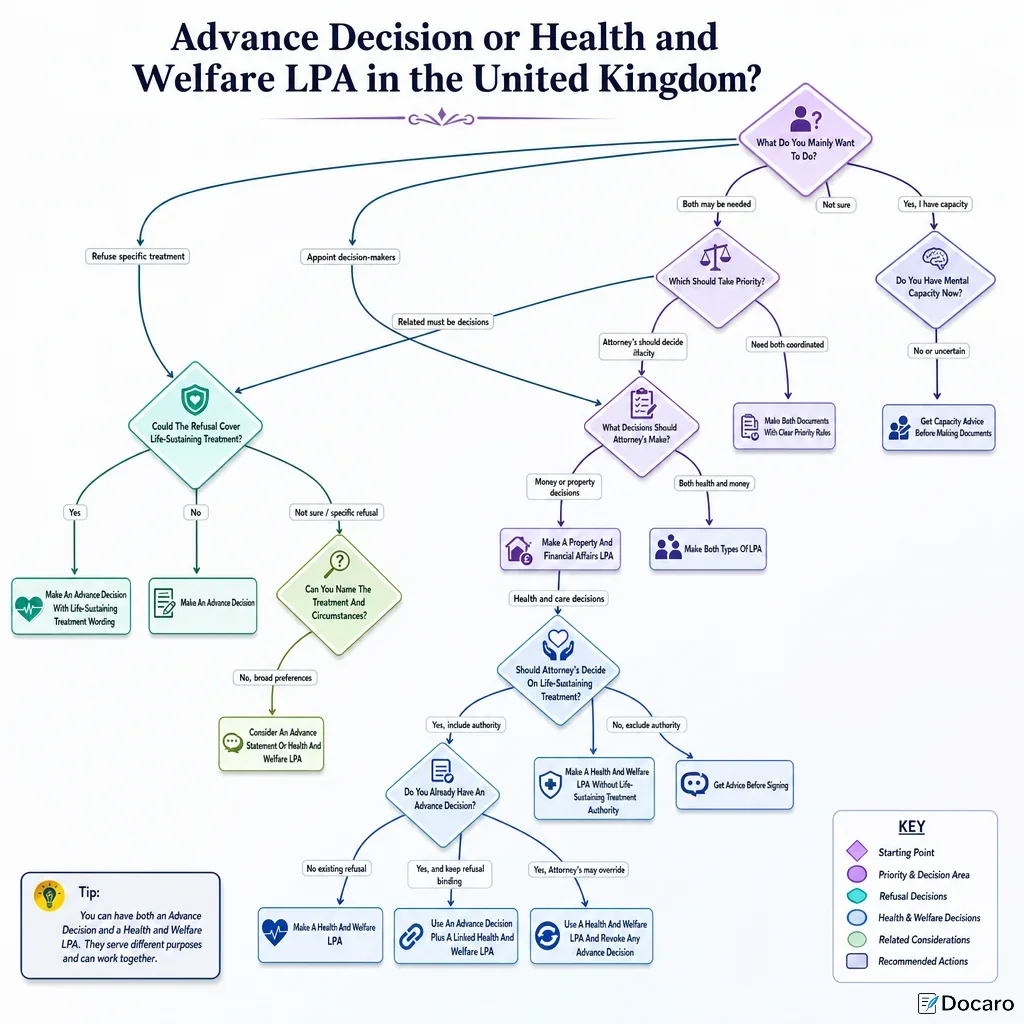
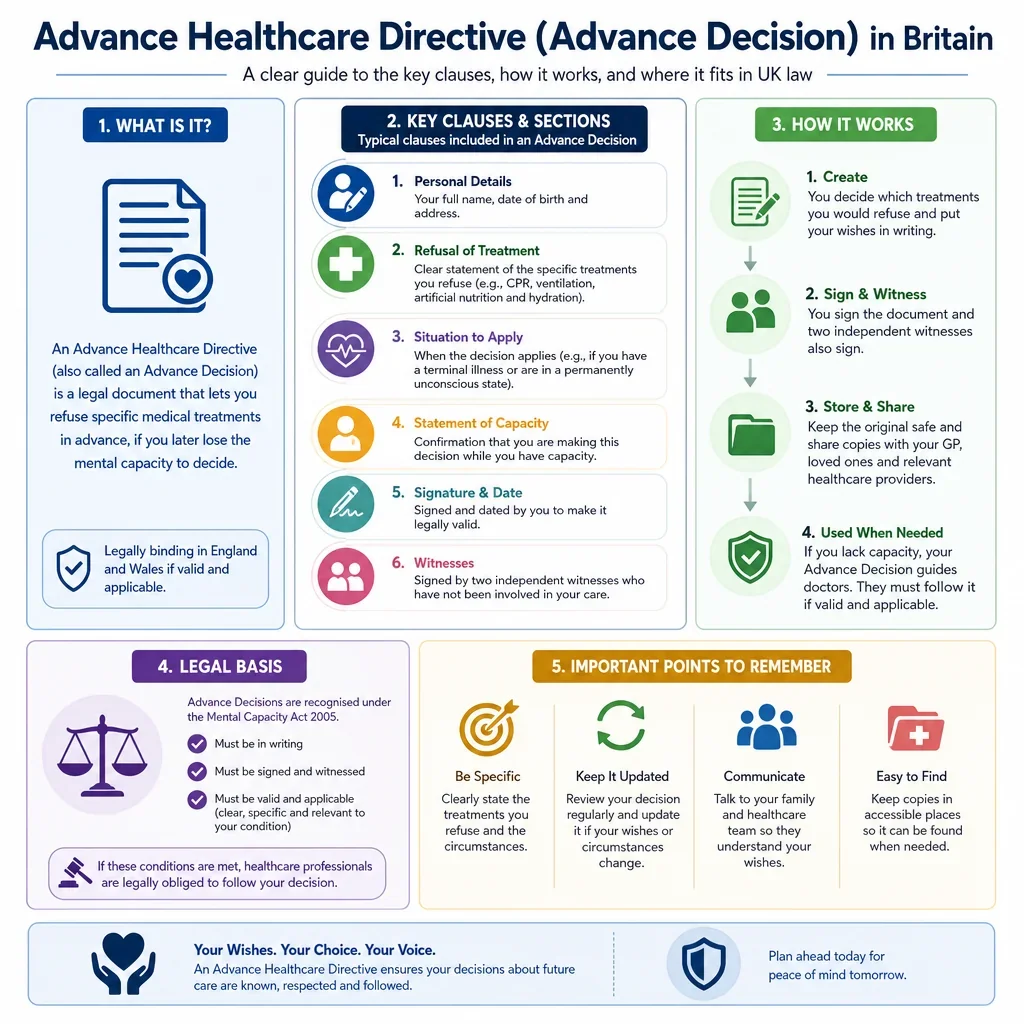
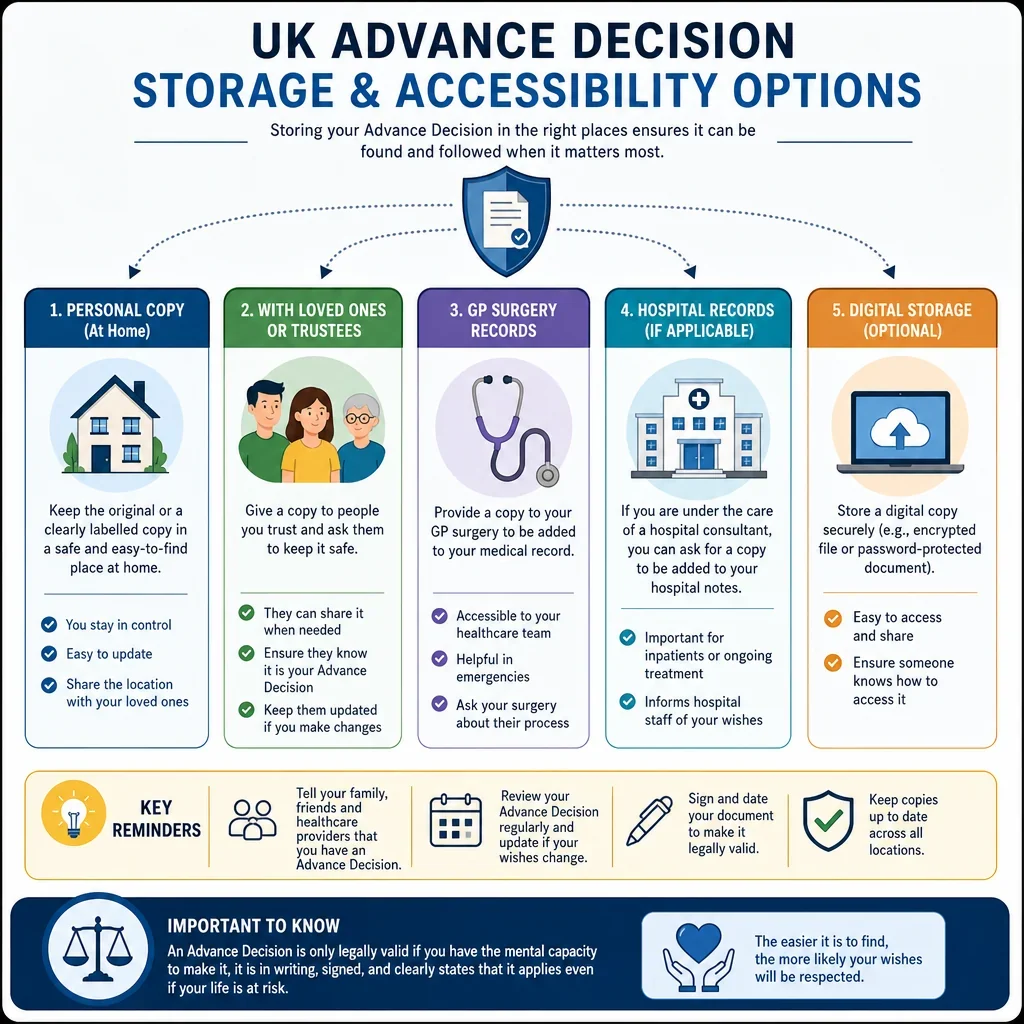
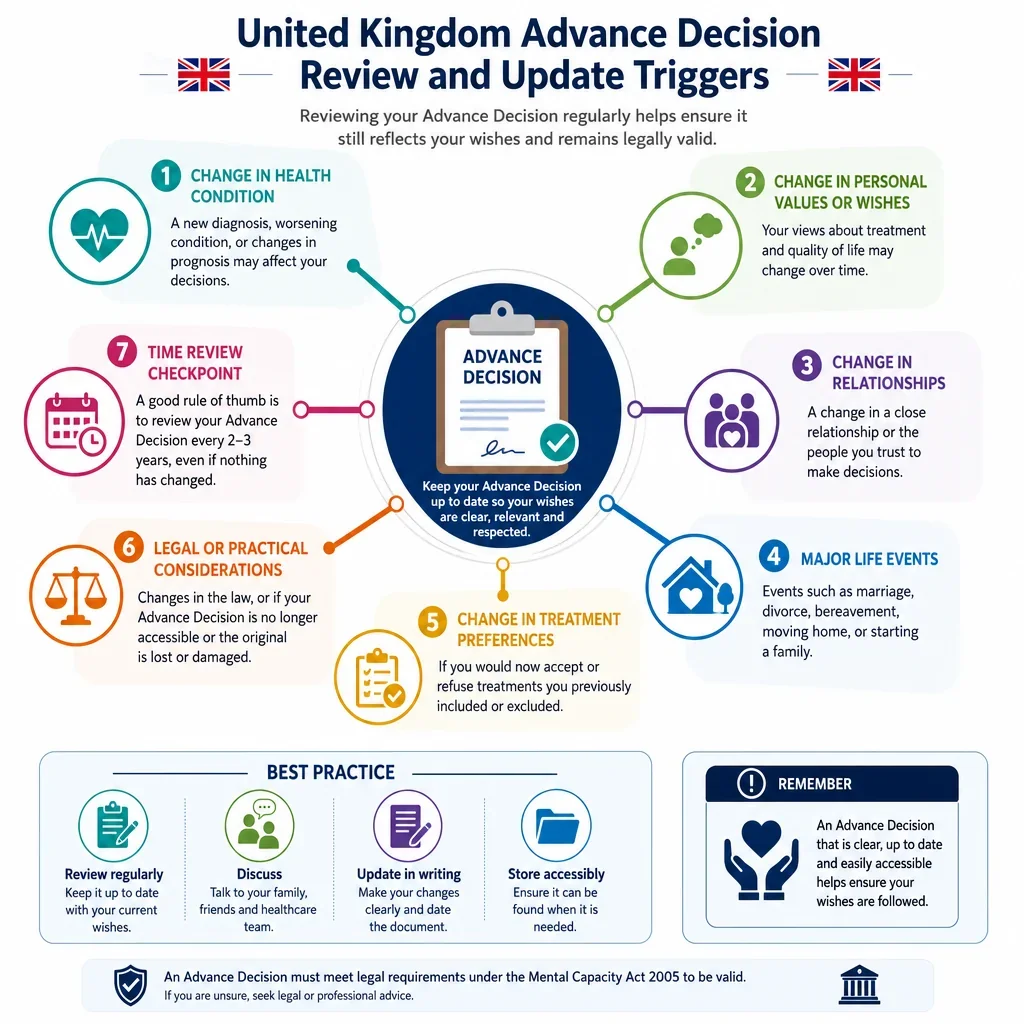
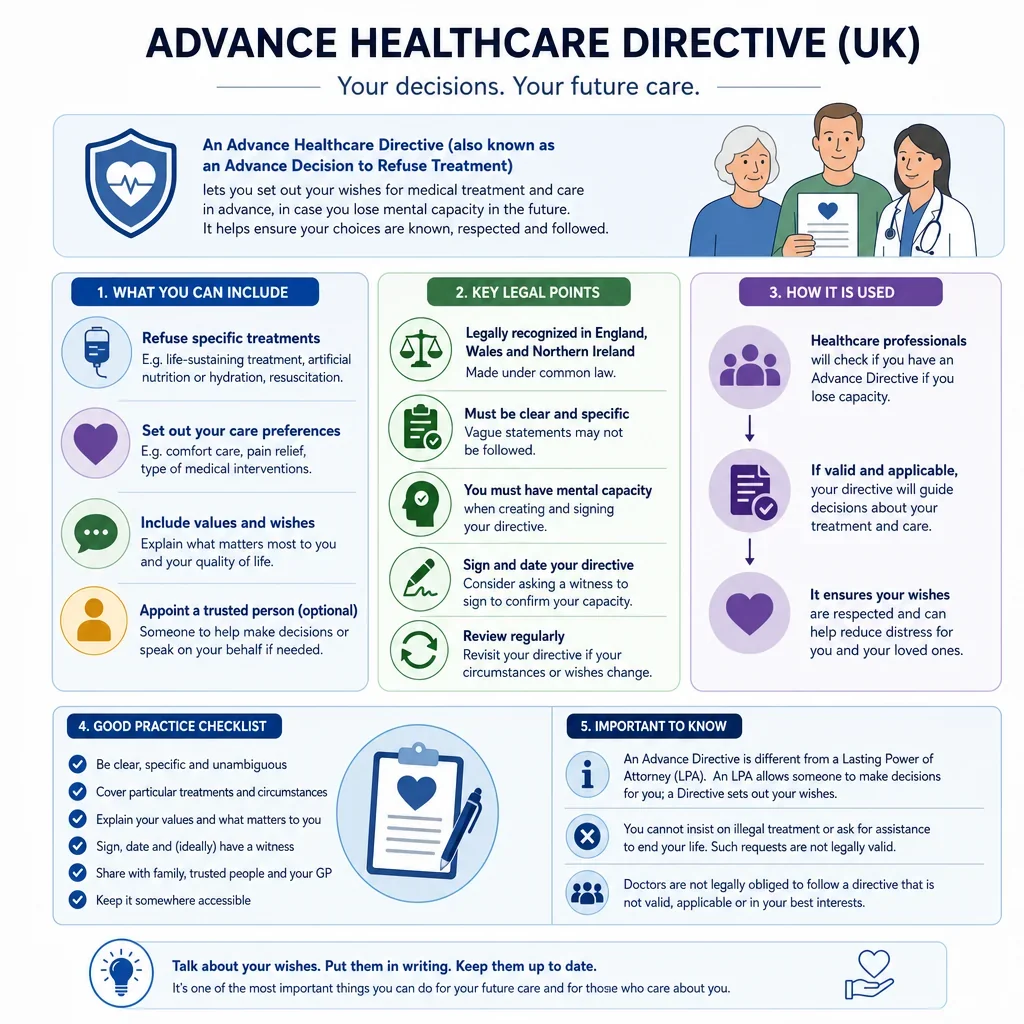
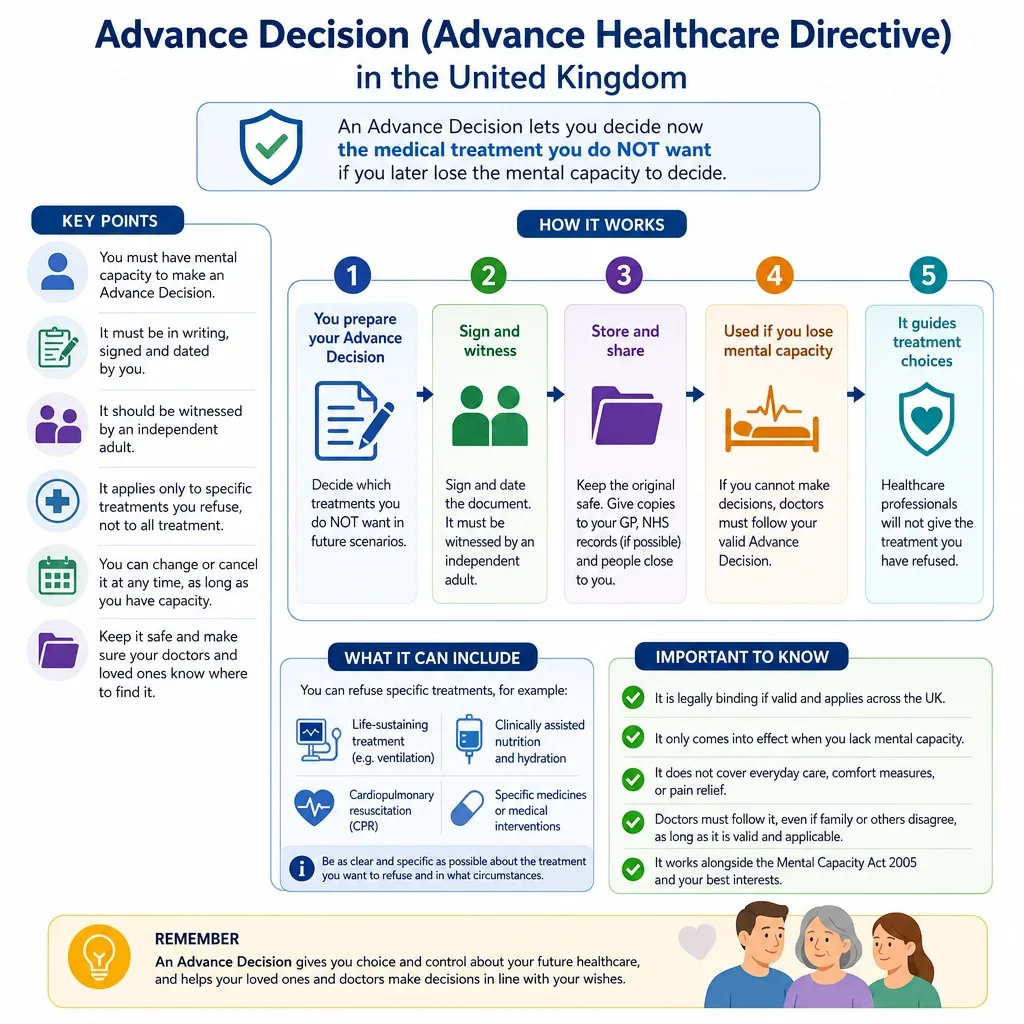
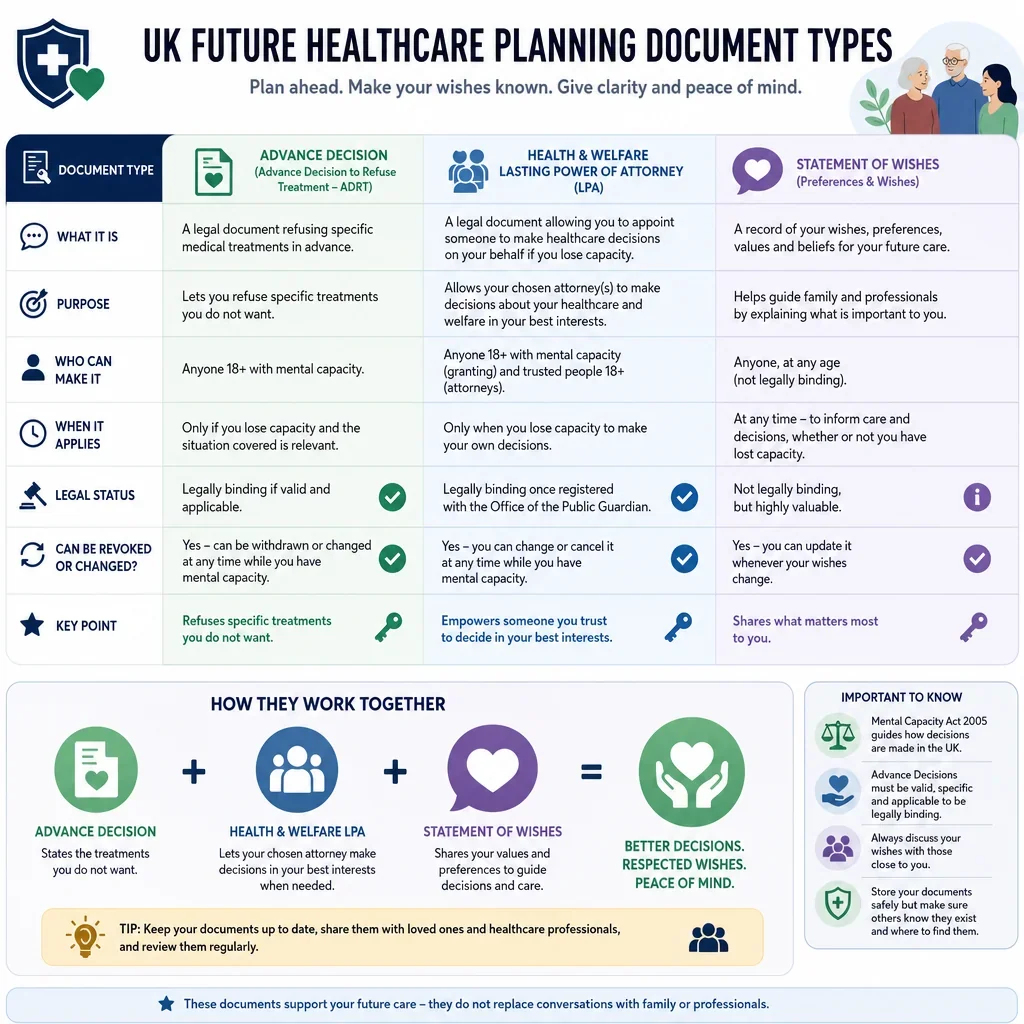
Advance Decisions to refuse treatment and Health and Welfare Lasting Powers of Attorney are the main legally binding tools, but only if they meet the legal rules and are relevant at the time. A refusal of life-sustaining treatment must be written, signed, witnessed, and state that it applies even if life is at risk. A Health and Welfare LPA can usually only be used after the donor has lost capacity, and it can only cover life-sustaining treatment decisions if the donor expressly gave that authority.
How Do Advance Statements And Care Plans Help If They Are Not Binding?
Advance Statements, emergency care plans, ReSPECT forms, and personalised care plans are not usually binding refusals of treatment, but they are highly practical because clinicians and attorneys should take them into account when deciding what is in the person’s best interests. They are useful for recording values, religious beliefs, communication needs, preferred place of care, and what quality of life means to the person.
Do DNACPR And ReSPECT Forms Replace An Advance Decision?
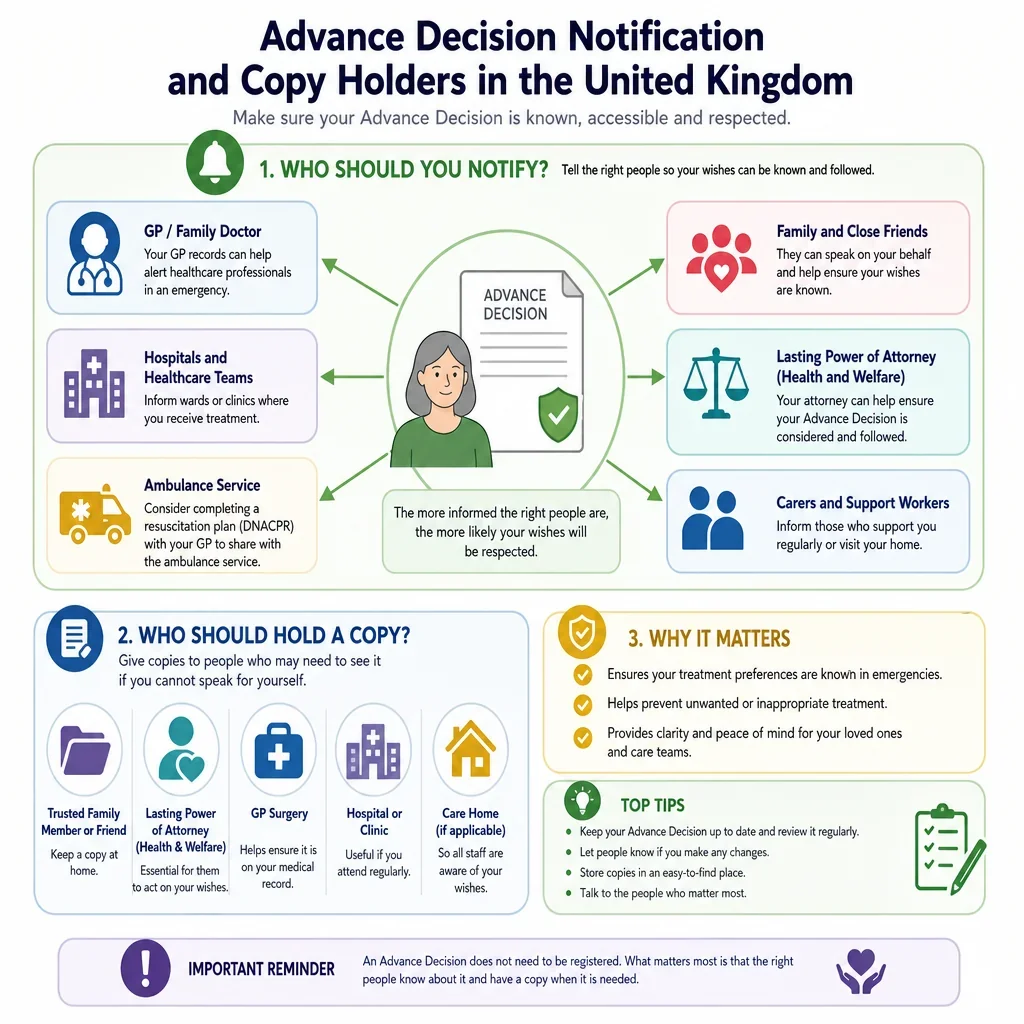
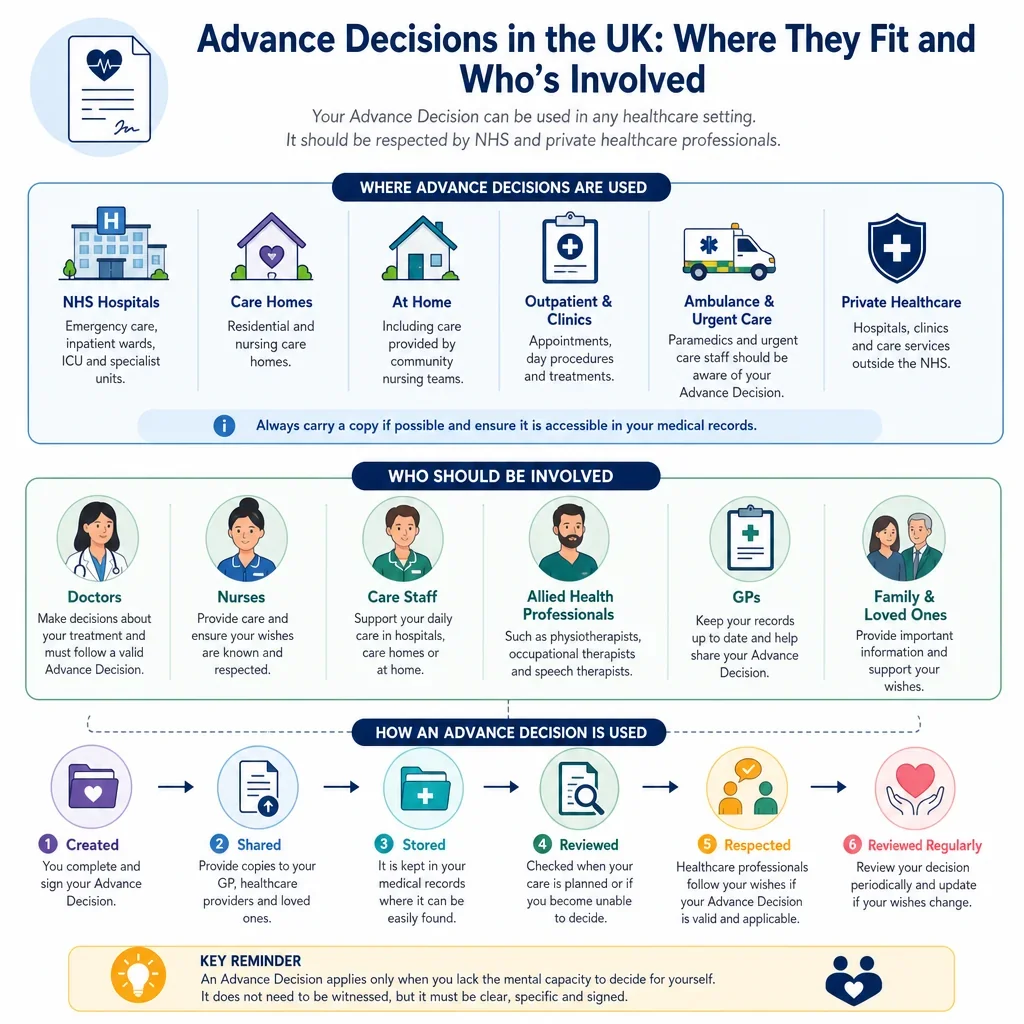
No. A DNACPR form focuses on CPR only, while a ReSPECT form records wider emergency care recommendations. They are normally clinical records rather than standalone legal documents. If a person wants to make a legally binding refusal of specified treatments, especially life-sustaining treatment, they should consider a properly drafted Advance Decision.
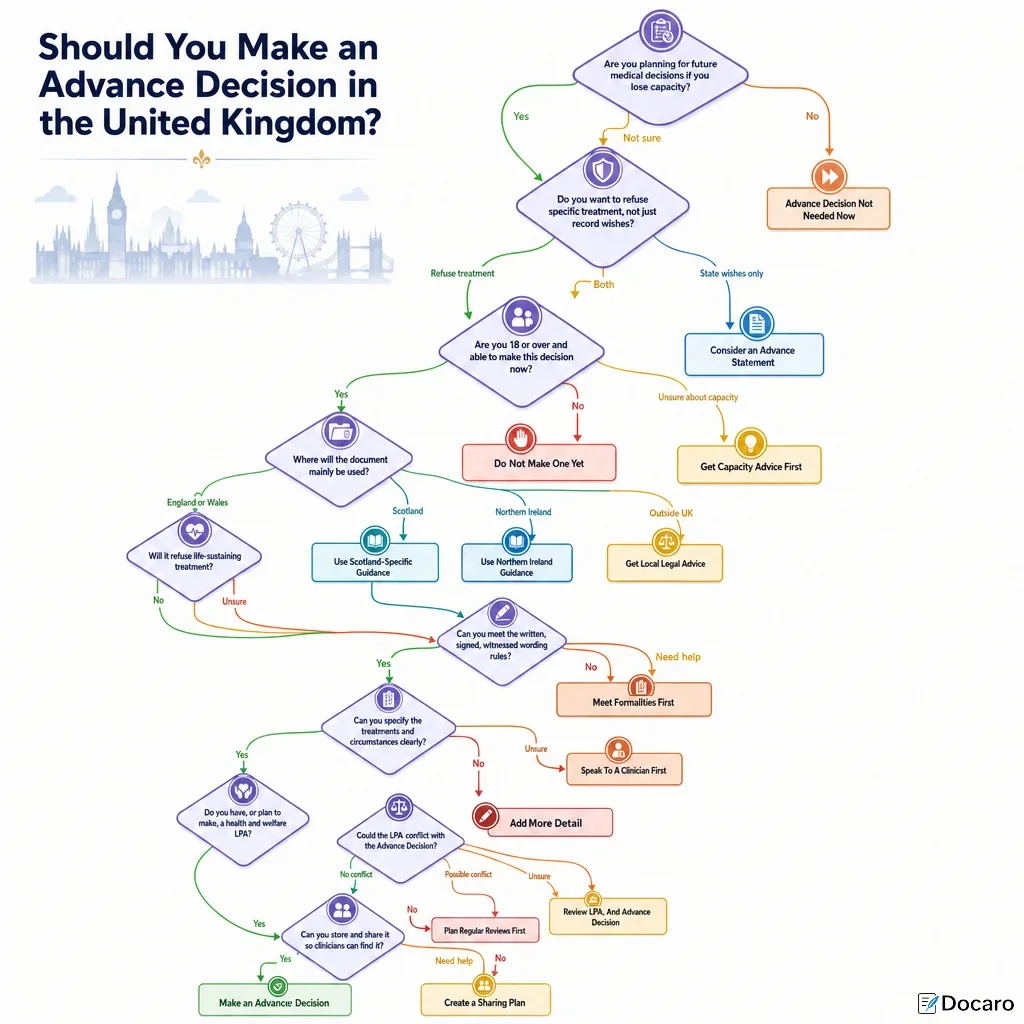
What Should Users Create First For Future Healthcare Planning?
- Use an Advance Decision for clear refusals of specified medical treatment in specified circumstances.
- Use an Advance Statement for care wishes, values, comfort preferences, religious needs, and preferred place of care.
- Use a Health and Welfare LPA to appoint trusted decision-makers for health and care decisions if capacity is lost.
- Ask clinicians about DNACPR, ReSPECT, or emergency care plans if serious illness, frailty, or emergency treatment decisions are likely.
FAQs
You Might Also Be Interested In