UK Advance Decision Storage And Accessibility Options
Storage option | Main benefit | Potential limitation | Useful in urgent situation |
|---|---|---|---|
Home storage | |||
Signed original in a clearly labelled home folder | Keeps the original available for verification. | Clinicians may not know it exists in an emergency. | false |
Home file with will and lasting power of attorney papers | Centralises key personal planning documents. | May be checked too late for urgent treatment decisions. | false |
Visible home notice stating where the Advance Decision is kept | Alerts paramedics or carers to the document. | Notice may be missed or removed. | true |
Message in a Bottle or fridge alert scheme | Gives emergency responders quick access to key information. | Local awareness and use may vary. | true |
Trusted person | |||
Wallet card naming the Advance Decision and contact holder | Travels with the person outside the home. | Card can be lost or overlooked. | true |
Home storage | |||
Folded paper copy carried in a wallet or handbag | May be immediately available away from home. | May become damaged, outdated or unreadable. | true |
Medical record | |||
Copy held on GP medical record | Makes the decision visible in primary care records. | Emergency teams may not access full GP records instantly. | true |
Summary Care Record additional information in England | Can show important care planning information to NHS staff. | Availability depends on consent, coding and system access. | true |
GP record coded alert for Advance Decision | Flags the document during clinical record review. | Incorrect or missing coding can reduce visibility. | true |
Digital copy | |||
Uploaded document visible through GP online services or NHS App | Lets the person view and share the copy digitally. | Not all uploaded documents are easy for urgent clinicians to find. | false |
Medical record | |||
Copy lodged with a hospital team currently providing care | Available to clinicians treating a known condition. | May not be visible outside that NHS trust. | true |
Scanned copy in hospital electronic patient record | Can be opened directly by hospital staff. | May be hard to locate if poorly indexed. | true |
Copy held in specialist outpatient clinic notes | Relevant specialists can consider it during care planning. | Not reliable for unrelated emergency admissions. | false |
Ambulance service special patient note or care plan record | Can inform paramedics before or during attendance. | Processes differ by ambulance service area. | true |
Electronic Palliative Care Coordination System record | Shares end-of-life preferences across local services. | Coverage and interoperability vary across the UK. | true |
ReSPECT form referencing the Advance Decision | Summarises emergency care recommendations for clinicians. | It is not itself a substitute for the Advance Decision. | true |
DNACPR record cross-referencing the Advance Decision | Links resuscitation decisions with wider treatment refusals. | DNACPR only concerns CPR, not other treatments. | true |
Trusted person | |||
Copy held by health and welfare attorney | Attorney can alert clinicians and explain wishes. | Attorney may be unreachable during an emergency. | true |
Copy held by next of kin | Family can tell healthcare staff about the decision. | Family views may conflict or be uncertain. | true |
Copy held by main unpaid carer | Carer may be present when urgent care is needed. | Informal carers may not be contacted by services. | true |
Copy held by a close friend who knows your wishes | Adds backup if family is unavailable. | Clinicians may not know to contact them. | false |
Emergency contact list naming document holders | Helps staff identify who has the current copy. | Phone numbers can become outdated. | true |
Professional adviser | |||
Original or copy stored by solicitor | Professional safekeeping and document integrity. | Usually not accessible outside office hours. | false |
Copy held by will writer or estate planner | Keeps it with broader future planning papers. | May not be regulated or available urgently. | false |
Copy held by advocate involved in care planning | Advocate can support communication of wishes. | Advocate involvement may be time-limited. | false |
Copy noted by financial adviser handling later-life planning | Adds another professional record of its existence. | Not a clinical or legal access route. | false |
Digital copy | |||
Password-protected cloud storage link | Accessible from many locations if credentials are available. | Password barriers can block emergency access. | false |
Shared cloud folder with trusted people | Allows quick sharing of updates. | Old versions may remain in circulation. | true |
Email copy sent to GP, attorney and family | Creates an easy-to-forward copy trail. | Email attachments may be outdated or insecure. | true |
Smartphone emergency medical ID note | Can show that an Advance Decision exists. | Device may be locked, flat or not checked. | true |
Medical alert app storing document location and contacts | Combines document details with emergency contacts. | App data may not be trusted or accessible by clinicians. | false |
USB drive with scanned signed copy | Portable offline backup. | NHS staff may not use unknown USB devices. | false |
QR code linking to a hosted copy or contact page | Fast access from a card, bracelet or notice. | Link security, accuracy and internet access may fail. | true |
Online legal document account with downloadable copy | Keeps a retrievable version after creation. | Account access may be unavailable to clinicians. | false |
Password manager secure note with document location | Keeps access instructions secure and organised. | Emergency access depends on shared credentials or legacy access. | false |
Care setting | |||
Copy kept in care home care plan | Care staff can show it to visiting clinicians. | May not follow the person after transfer. | true |
Copy held by domiciliary care provider | Home care staff can flag it during deterioration. | Care workers may not attend at the critical moment. | true |
Copy held by hospice team | Highly relevant for end-of-life care decisions. | May not be visible to unrelated acute services. | true |
Copy stored with nursing home medication or clinical file | Easy for nurses to locate during clinical review. | Staff turnover can reduce awareness. | true |
Copy or note held by adult day centre | Useful if a crisis occurs while attending the centre. | Only useful during attendance hours. | true |
Copy held by supported living provider | Support staff can alert emergency services. | Provider may hold only a note, not the signed document. | true |
Medical record | |||
Copy held by district nursing team | Community clinicians can consider it during home visits. | Out-of-hours teams may use different systems. | true |
Copy held by community palliative care team | Supports coordinated end-of-life decisions at home. | May not be checked by non-palliative services. | true |
Out-of-hours GP service special note | May inform urgent advice outside normal GP hours. | Sharing arrangements vary locally. | true |
NHS 111 accessible care plan flag where locally available | Can guide triage and urgent care routing. | Not a universal national document store. | true |
Local shared care record entry | Can share information across local NHS and care services. | Access is usually limited to participating local organisations. | true |
Digital copy | |||
Personal health record portal used by local NHS services | Lets the person manage and share health documents. | Clinician access depends on the portal and local policy. | false |
Trusted person | |||
Medical alert bracelet or necklace with document location | Visible prompt for emergency responders. | Usually points to information rather than holding the full document. | true |
Digital copy | |||
Medical alert provider record with copy or contact details | 24-hour access route may be available depending on provider. | Subscription and provider processes vary. | true |
Home storage | |||
Travel pack with copy and emergency contacts | Useful when away from usual UK care teams. | Recognition abroad may differ from UK law. | true |
Trusted person | |||
Workplace emergency contact record noting document holder | May help if a medical emergency occurs at work. | Employer may not have clinical context or full copy. | true |
Care setting | |||
University wellbeing or accommodation emergency record | May alert staff supporting a student in crisis. | Not routinely accessed by NHS clinicians. | false |
Medical record | |||
Mental health crisis plan referencing the Advance Decision | Helps mental health teams locate relevant treatment refusals. | Mental Health Act treatment rules may affect applicability. | true |
Home storage | |||
Advance statement bundle kept with the Advance Decision | Adds context about values and preferences. | Advance statements are not the same as binding refusals. | false |
Professional adviser | |||
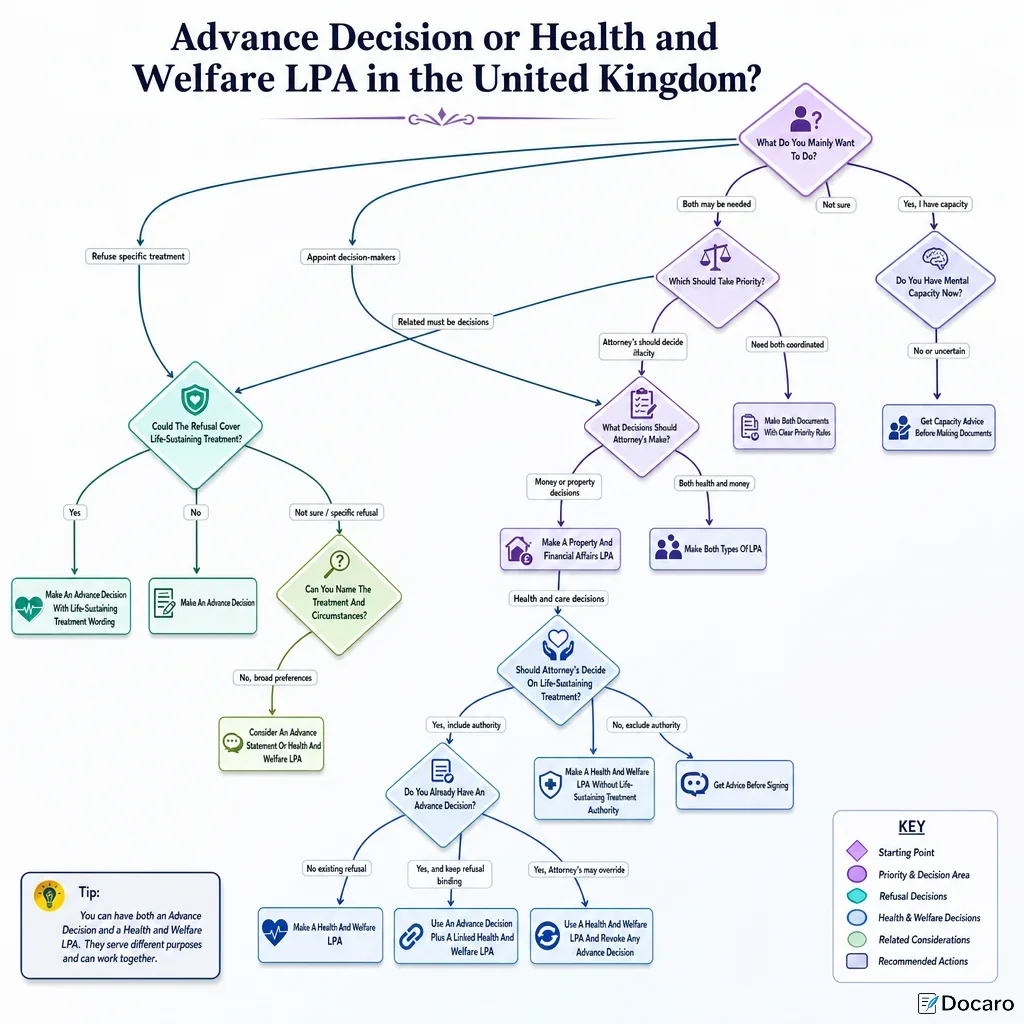
LPA papers include a note about the Advance Decision | Helps attorneys understand the relationship between documents. | Priority can depend on timing and scope of the LPA. | false |
Home storage | |||
Home fireproof box with trusted person access | Protects the signed original from damage. | Locked storage can prevent urgent access. | false |
Professional adviser | |||
Bank safe deposit box | High physical security for the original. | Poor emergency access often unsuitable as sole storage. | false |
Care setting | |||
Patient-held care plan folder kept at bedside | Visible to visiting clinicians and ambulance staff. | Can be misplaced during transfers or admissions. | true |
Home storage | |||
Hospital admission grab bag with copy included | Travels with the person during planned or emergency admission. | Bag may not accompany sudden ambulance transfer. | true |
Medical record | |||
GP letter summarising existence and storage location | Confirms healthcare discussion and where to find the copy. | Summary is not the full signed refusal. | true |
Consultant correspondence includes the Advance Decision as attachment | Places the document in condition-specific clinical context. | Attachments may not transfer between organisations. | false |
Care setting | |||
Community pharmacy note of document holder in patient profile | Pharmacy may help contact family or GP. | Pharmacists are unlikely to be central in emergency treatment refusal decisions. | false |
Home storage | |||
Signed and witnessed written copy for life-sustaining treatment refusal | Meets key statutory formality for this type of refusal. | Correct storage cannot cure invalid wording or execution. | false |
Where Should An Advance Decision Be Kept In The UK?
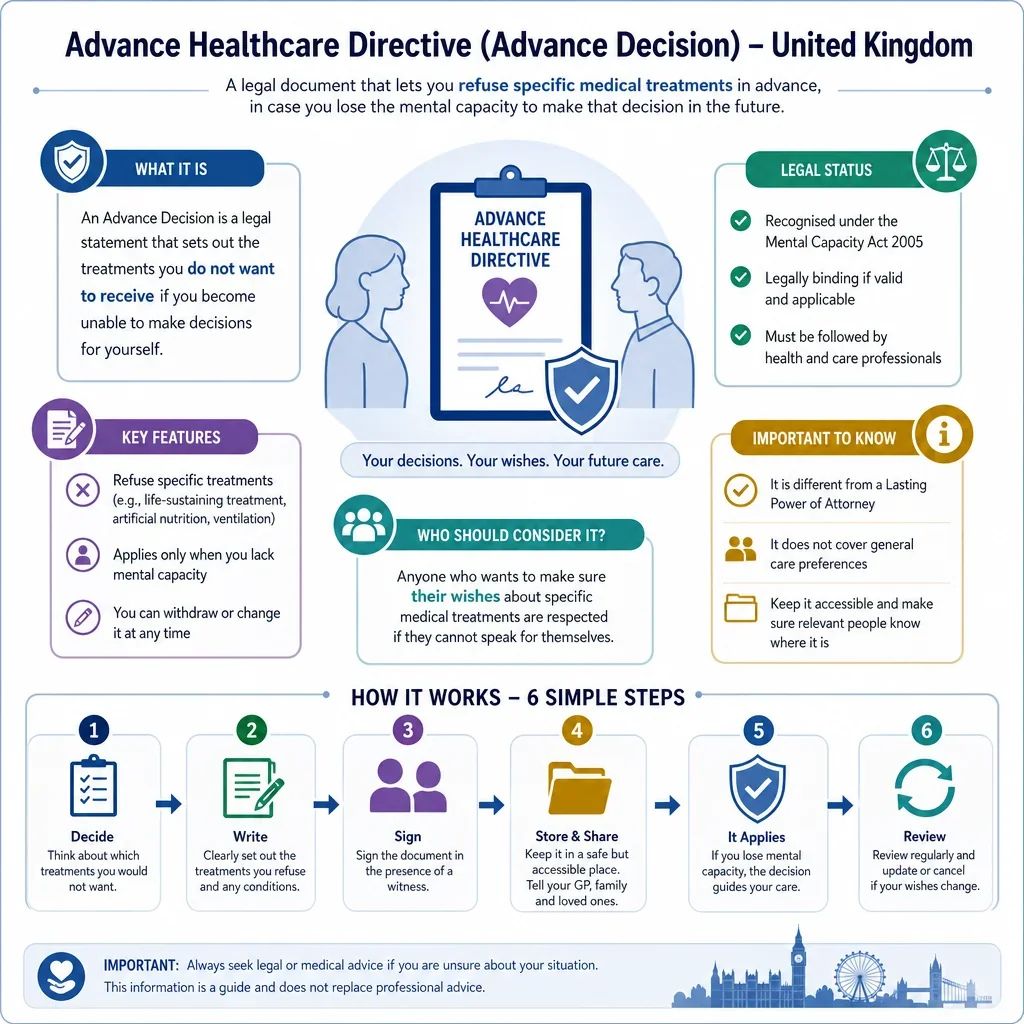
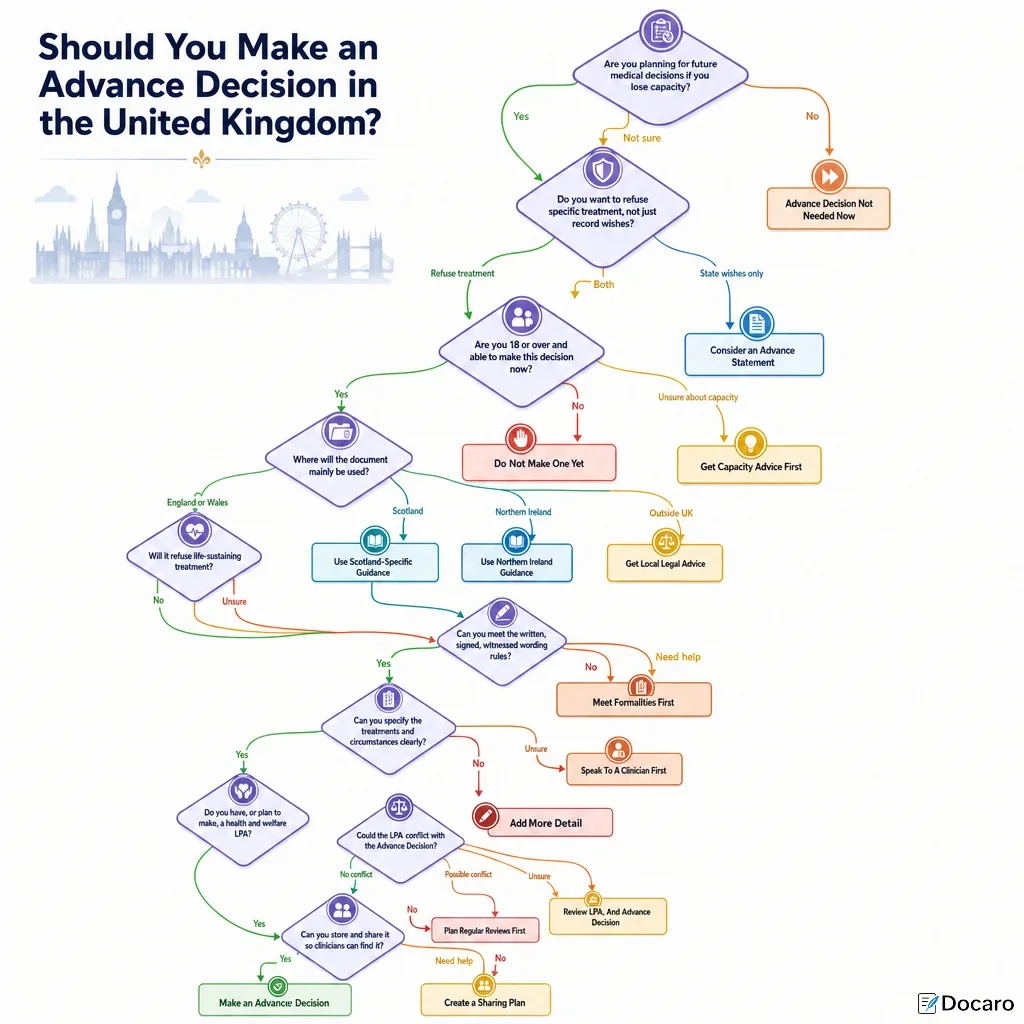
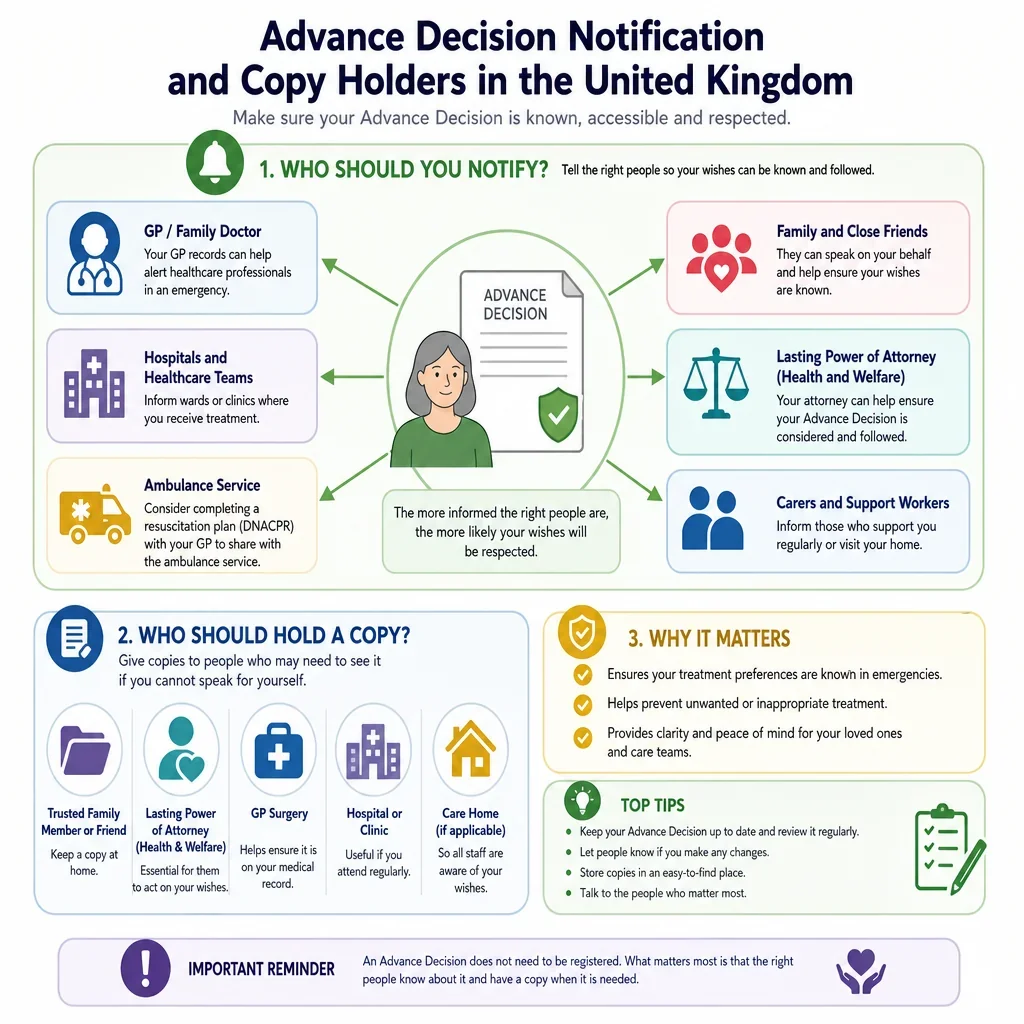
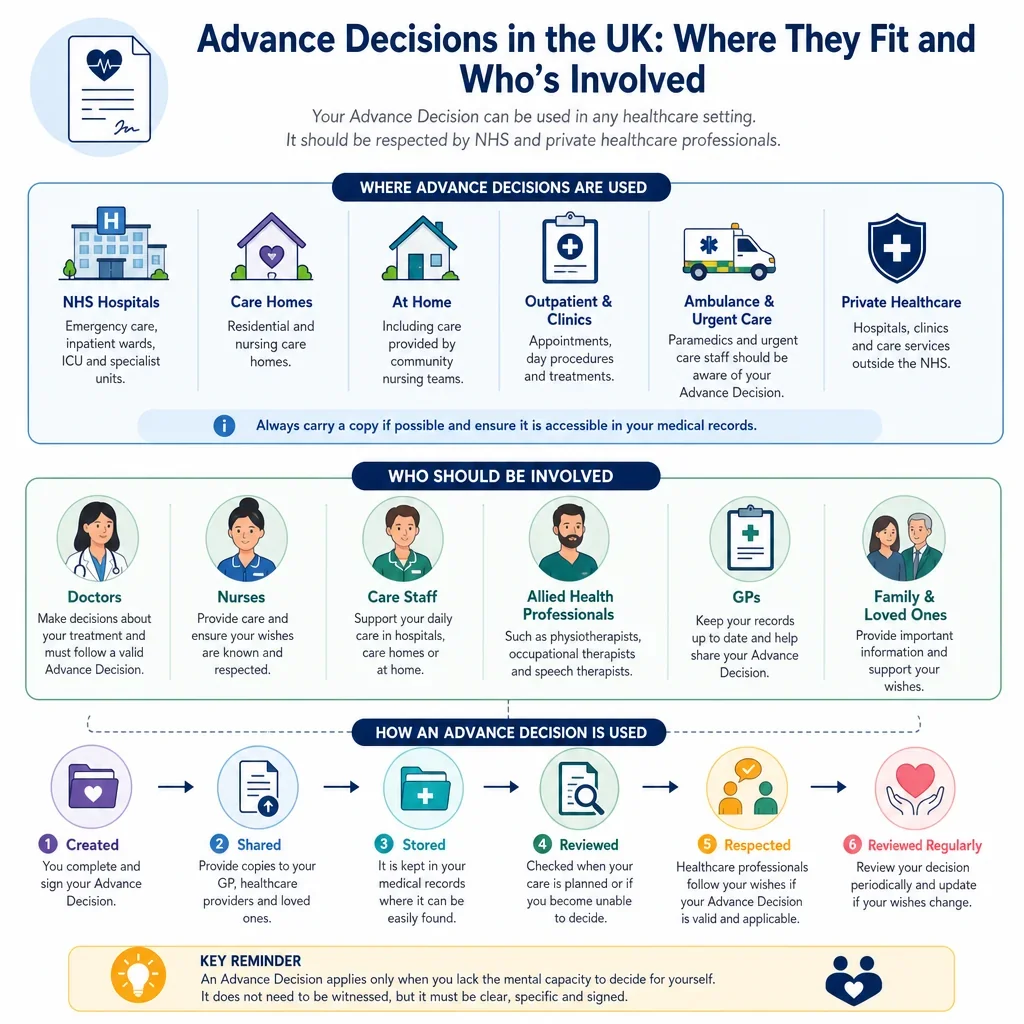
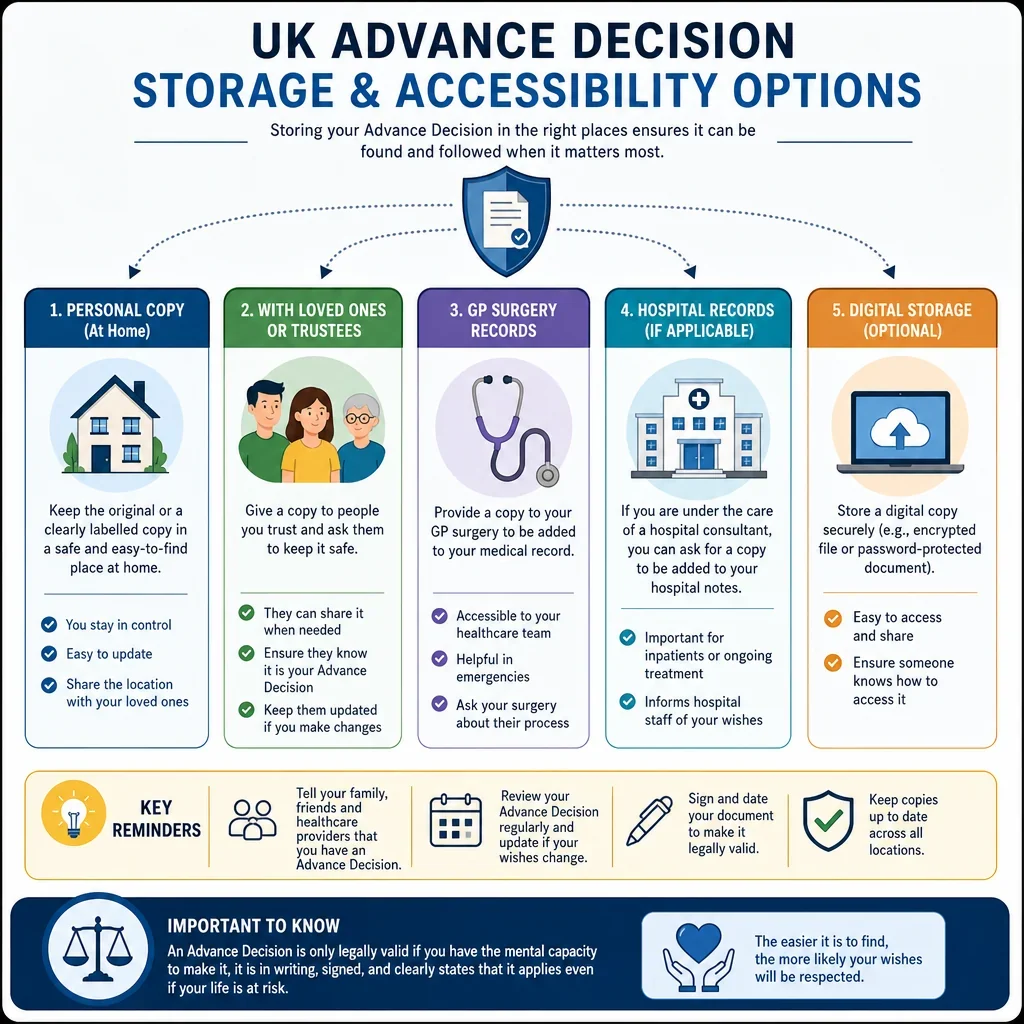
An Advance Decision is most useful when clinicians can find it quickly and confirm that it appears valid and applicable. In practice, relying on one location is risky: keep the signed original safely at home, but also give copies or access details to people and services likely to be involved in urgent care.
Who Should Have A Copy Of An Advance Decision?
- Your GP record is often the most important medical storage point because NHS services may check it when making treatment decisions.
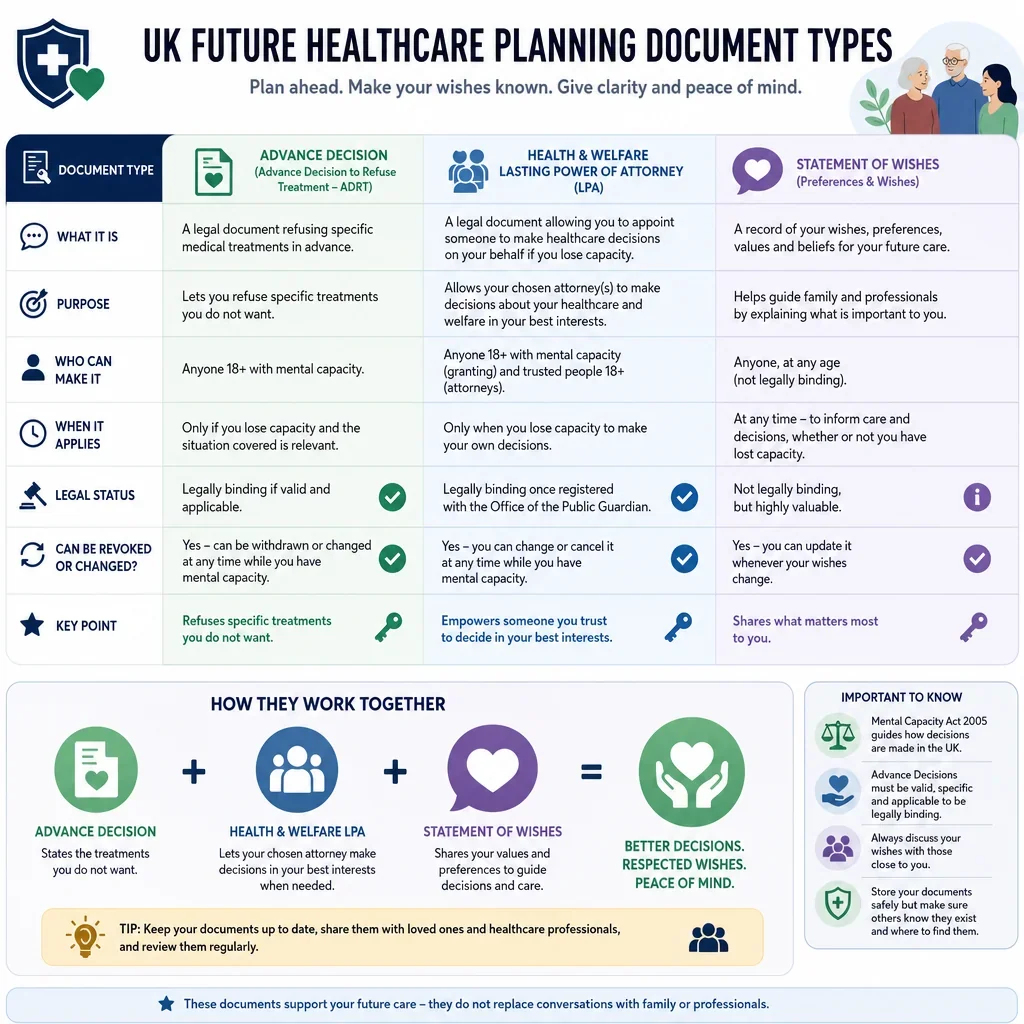
- Trusted people, such as a health and welfare attorney, next of kin, or main carer, can alert doctors that the document exists when you cannot speak.
- Care homes, hospices and hospitals should be given a copy if they are currently involved in your care, especially where treatment refusal may become relevant.
- Digital copies are helpful for sharing, but should not be the only method because urgent staff may need assurance about the signed and witnessed version, particularly where life-sustaining treatment is refused.
What Makes Storage Legally Important?
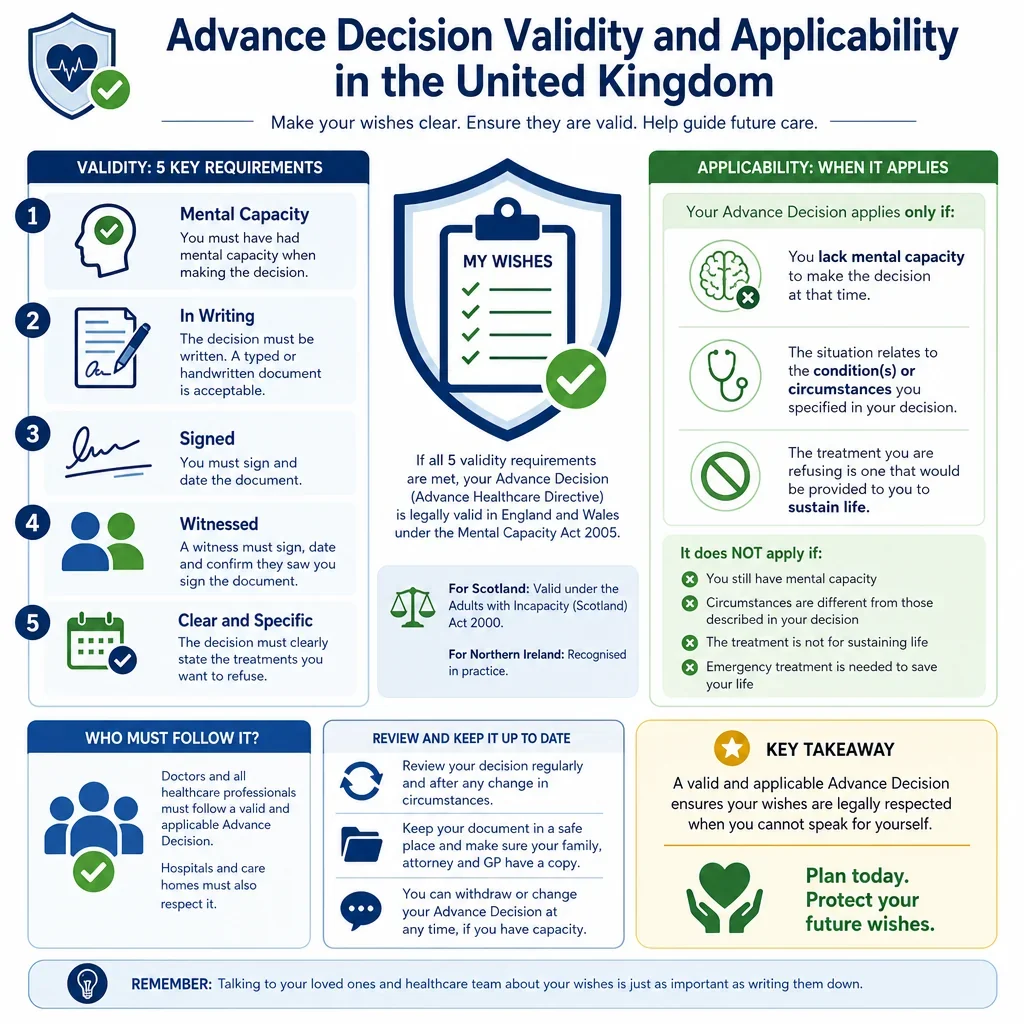
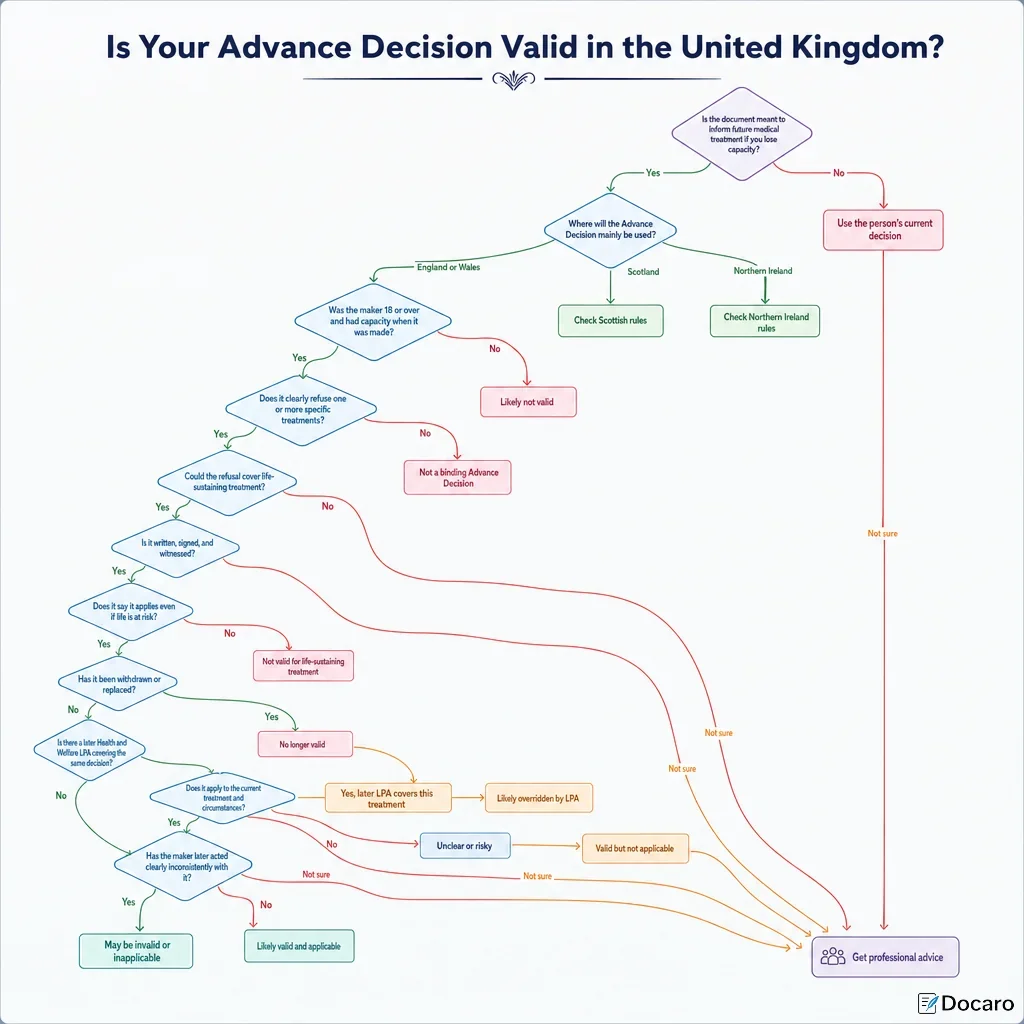
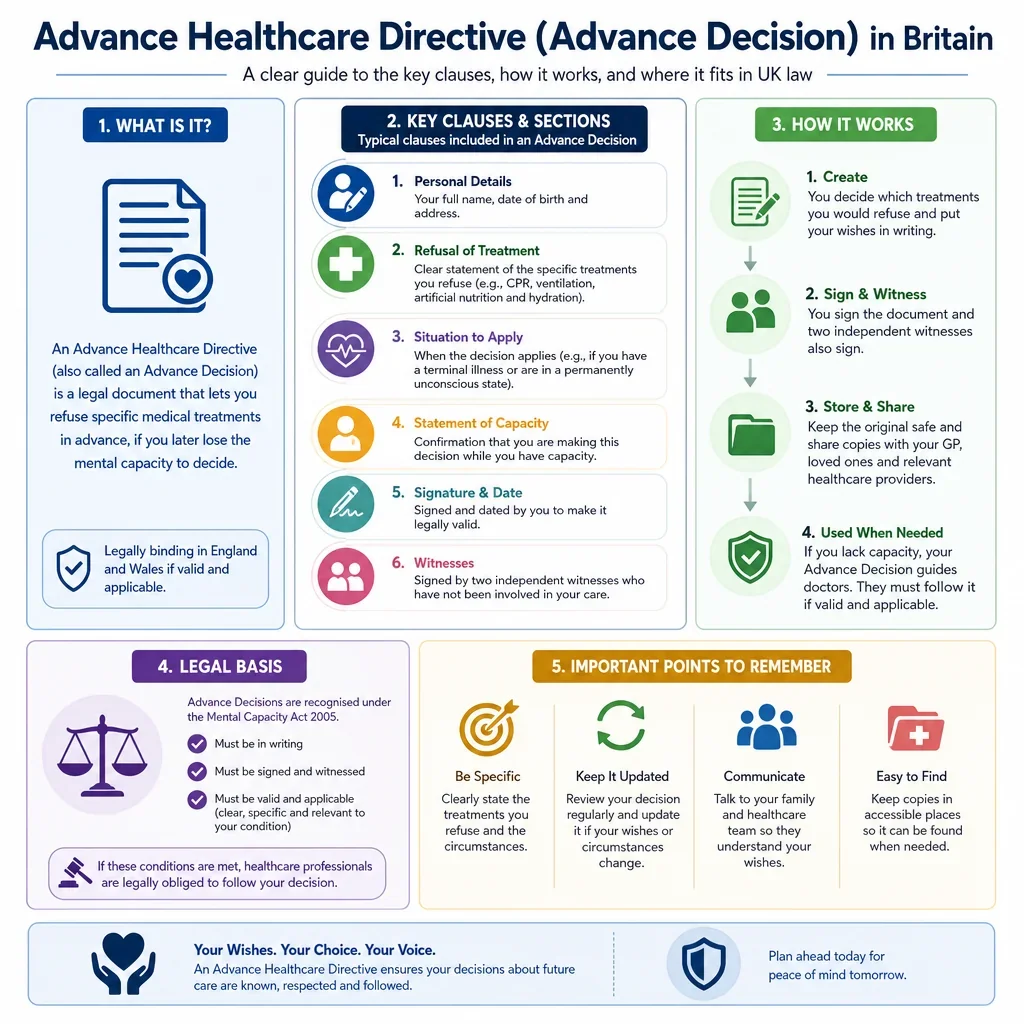
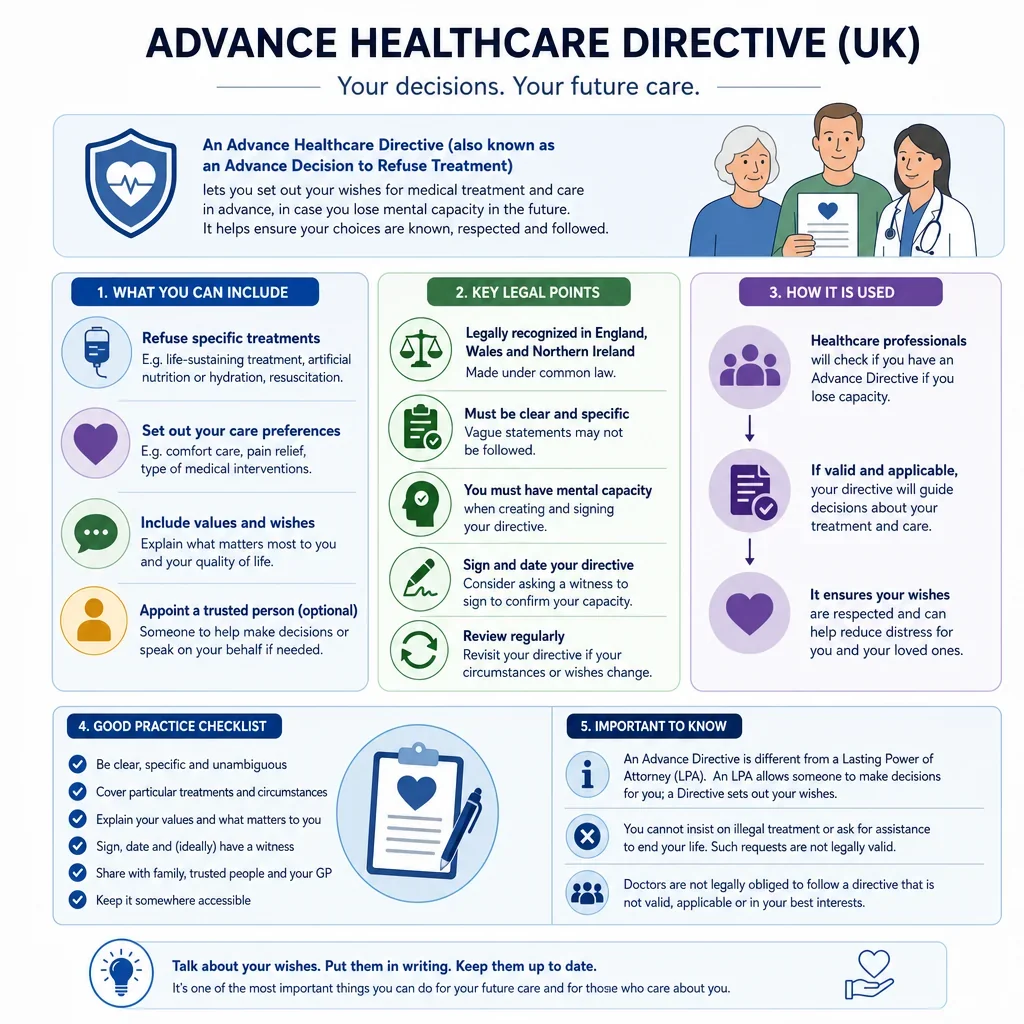
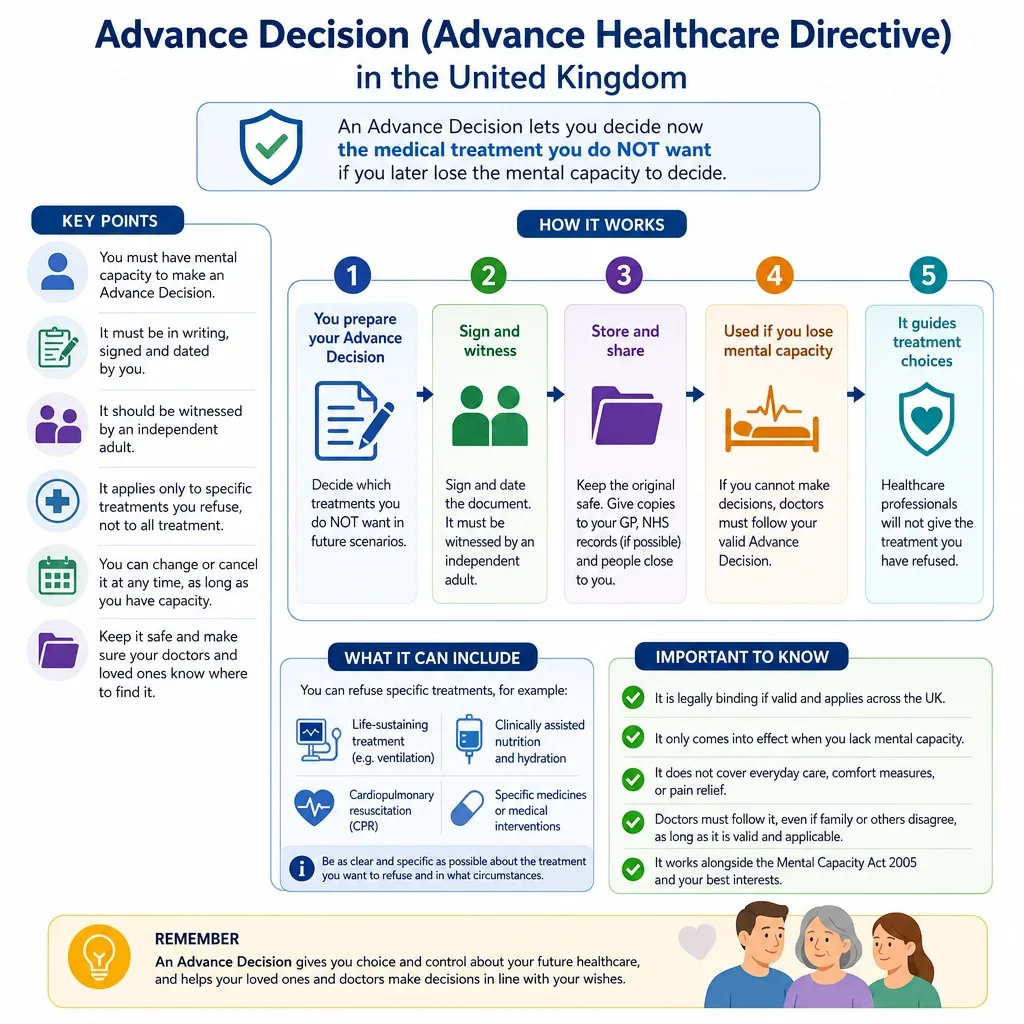
Under the Mental Capacity Act 2005, an Advance Decision refusing life-sustaining treatment must be in writing, signed, witnessed, and state that it applies even if life is at risk. Good storage supports, but does not replace, these legal requirements.
How Can You Improve Emergency Access?
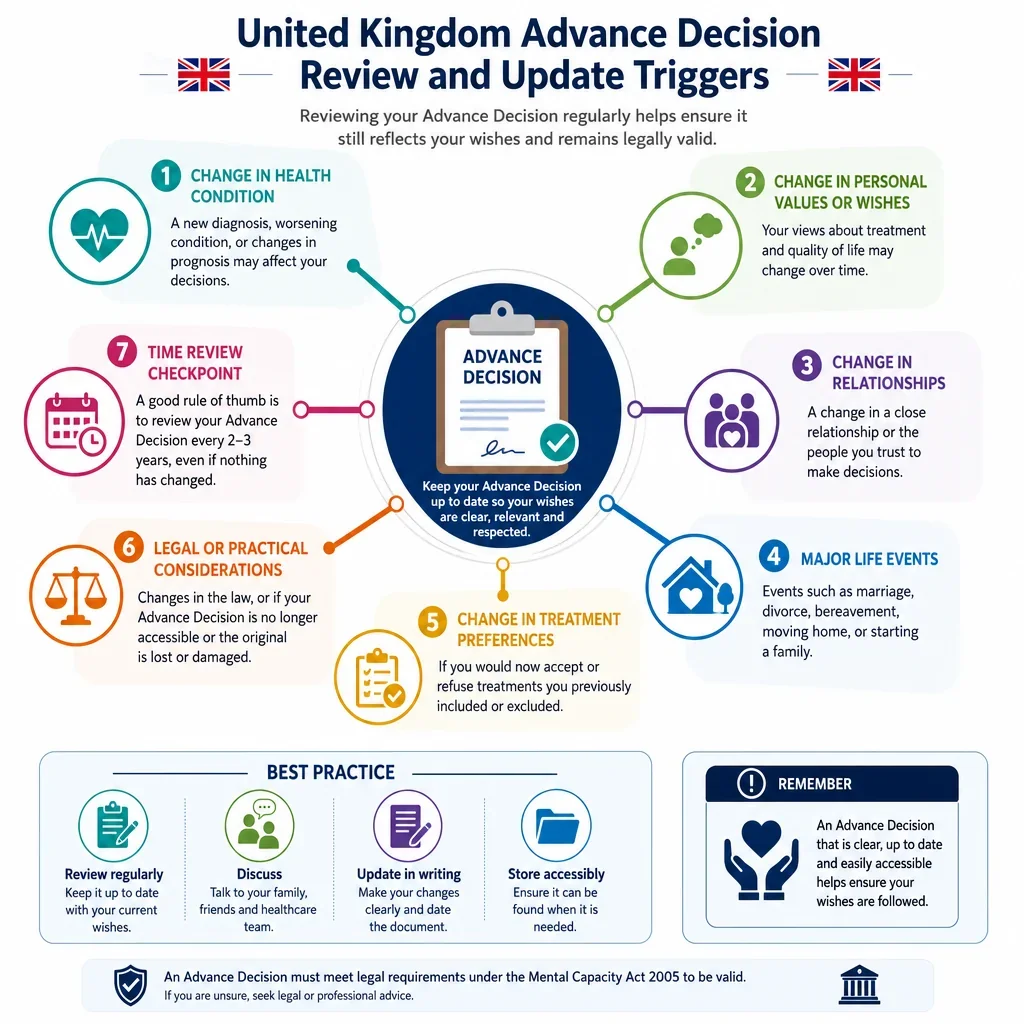
The strongest approach is layered access: a visible home note, GP record entry, copies with trusted people, and a wallet card or phone emergency information showing where the Advance Decision is stored. Tell each holder when you update or revoke it so old versions are not used by mistake.
FAQs
You Might Also Be Interested In