United Kingdom Advance Decision Review and Update Triggers
Review trigger | Reason for review | May require new version | Practical action |
|---|---|---|---|
Time-based review | |||
Annual review date reached | Regular review helps confirm the decision still reflects current wishes. | false | Read the document, date the review, and tell key people it remains current. |
Two years since last review | A long gap may raise doubts about whether wishes are still settled. | false | Carry out a full review and record the review date. |
Health change | |||
Diagnosis of a serious illness | The refusal may need to address realistic treatments for the new condition. | true | Discuss likely treatments with the clinical team and update refusals if needed. |
Terminal diagnosis | End-of-life treatment choices may become more immediate and specific. | true | Review with palliative care staff and share the latest version with services. |
Diagnosis of dementia or cognitive impairment | Review while capacity is clear can reduce later validity disputes. | true | Review promptly, consider capacity evidence, and store the final version safely. |
Fluctuating capacity becomes a concern | Capacity at the time of making or amending the decision may be questioned. | true | Review during a lucid period and ask a professional to record capacity. |
Treatment change | |||
Planned major surgery | Surgery may involve ventilation, transfusion, resuscitation, or intensive care. | true | Give the surgical and anaesthetic teams a copy before admission. |
Health change | |||
Emergency or unplanned hospital admission | Hospital staff need current and accessible evidence of refusals. | false | Ask staff to place the latest copy on the medical record. |
Treatment change | |||
Admission to intensive care or high dependency care | Intensive care can involve treatments commonly refused in advance decisions. | true | Clarify whether refusals apply to ventilation, CPR, dialysis, or artificial nutrition. |
Health change | |||
Significant change in prognosis | Different outlook may change the balance of acceptable treatment burdens. | true | Ask the consultant to explain likely scenarios and revise wording if needed. |
Treatment change | |||
New treatment becomes available | The document may refuse or omit a treatment now clinically relevant. | true | Check current NICE or clinician advice before confirming or changing the refusal. |
Treatment option is withdrawn or no longer suitable | Refusals may need updating to reflect available and clinically suitable care. | true | Ask the treating team whether the treatment list is still accurate. |
Major medication change | Medication changes may affect emergencies, side effects, or treatment preferences. | false | Check whether the advance decision needs to mention medication-related emergencies. |
Change of wishes | |||
Change in CPR preferences | CPR refusal may be life-sustaining treatment and needs strict wording. | true | Create a new signed and witnessed version if refusing CPR in advance. |
Change in ventilation preferences | Ventilation may be life-sustaining and must be clearly refused if intended. | true | Specify the circumstances and include the life-risk statement if required. |
Change in artificial nutrition or hydration wishes | Clinically assisted nutrition or hydration may be life-sustaining treatment. | true | Use precise wording and obtain witness signature for life-sustaining refusal. |
Change in dialysis preferences | Dialysis may become relevant after kidney disease or acute kidney injury. | true | Discuss likely dialysis scenarios with a kidney specialist and update if needed. |
Change in blood transfusion preferences | Transfusion may arise in surgery, trauma, childbirth, or cancer care. | true | State exactly which blood products are refused and when. |
Change in antibiotics preferences | Infections may be treatable but burdensome in advanced illness. | true | Clarify whether refusals apply to all antibiotics or only specified situations. |
Change in chemotherapy or cancer treatment wishes | Cancer treatment options, side effects, and prognosis can change quickly. | true | Review wording with oncology before refusing or accepting future treatments. |
Personal circumstances, Change of wishes | |||
Change in religious or ethical beliefs | Treatment refusals may depend on beliefs about specific interventions. | true | Update refusals and tell clinicians if beliefs affect emergency treatment. |
Change of wishes | |||
You change your mind about any refusal | An advance decision should reflect current and settled wishes. | true | Revoke or replace the document and retrieve old copies where possible. |
You want to add a new refusal | New refusals must be specific enough to be valid and applicable. | true | Draft a new version identifying the treatment and circumstances clearly. |
You want to remove a refusal | Old copies could wrongly suggest treatment must still be refused. | true | Make a replacement document and notify everyone who held the old one. |
Personal circumstances, Health change | |||
Pregnancy or planning pregnancy | Treatment priorities and foreseeable emergencies may change during pregnancy. | true | Review with maternity clinicians and clarify whether refusals apply in pregnancy. |
Treatment change, Personal circumstances | |||
Upcoming childbirth or caesarean section | Birth can involve transfusion, anaesthesia, surgery, or emergency resuscitation. | true | Give the maternity unit a copy and align it with the birth plan. |
Personal circumstances | |||
Moving home | New GP, hospital, or carers may not know the document exists. | false | Give copies to the new GP and update emergency contact details. |
Legal or administrative change, Personal circumstances | |||
Moving from England or Wales to Scotland or Northern Ireland | Mental Capacity Act rules apply to England and Wales, not all UK jurisdictions. | true | Take local legal and clinical advice and consider a jurisdiction-specific document. |
Personal circumstances, Health change | |||
Moving into a care home | Care staff need clear instructions and access in emergencies. | false | Place a copy in the care plan and tell the GP and care manager. |
Legal or administrative change | |||
Changing GP practice | The new practice may not have the document on record. | false | Ask the new GP to add the latest version to your records. |
Legal or administrative change, Treatment change | |||
New consultant or specialist team | New clinicians may need context to judge applicability. | false | Review the document at the next appointment and provide a copy. |
Legal or administrative change | |||
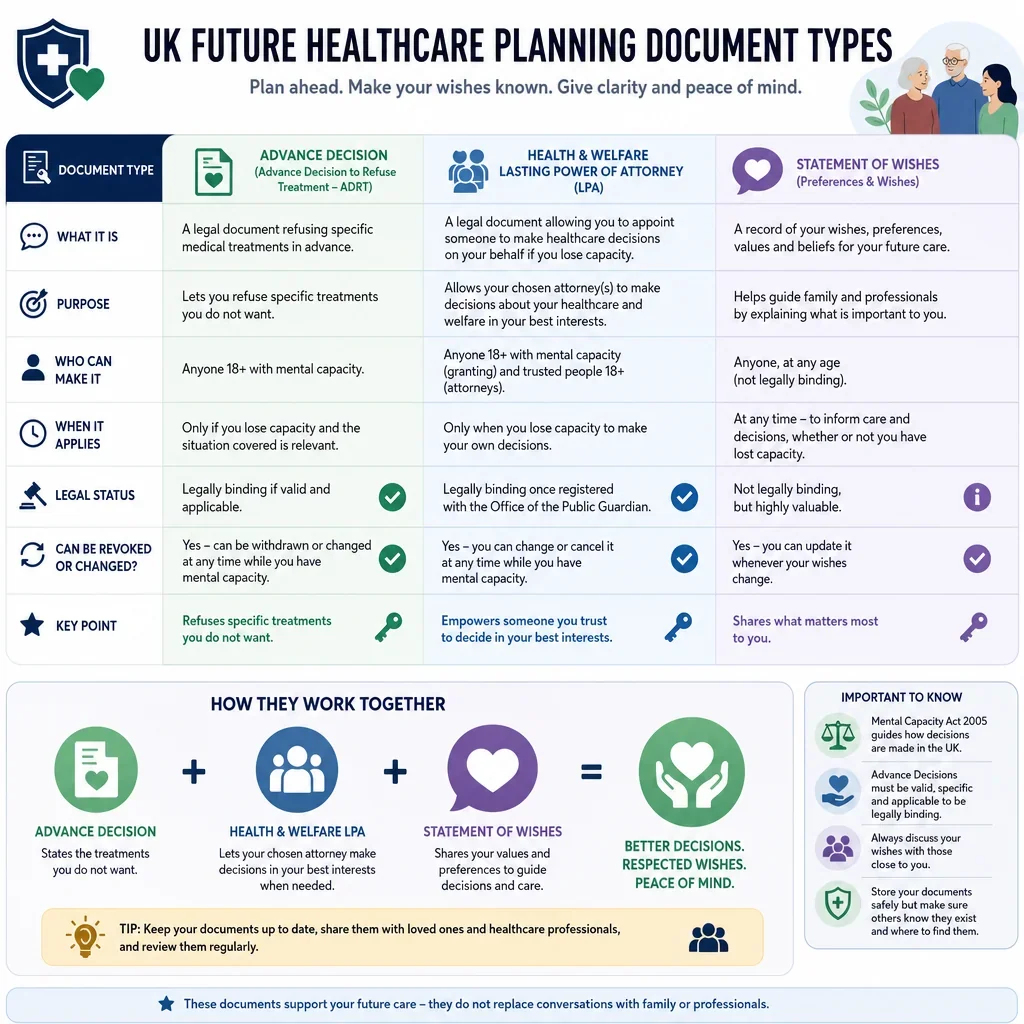
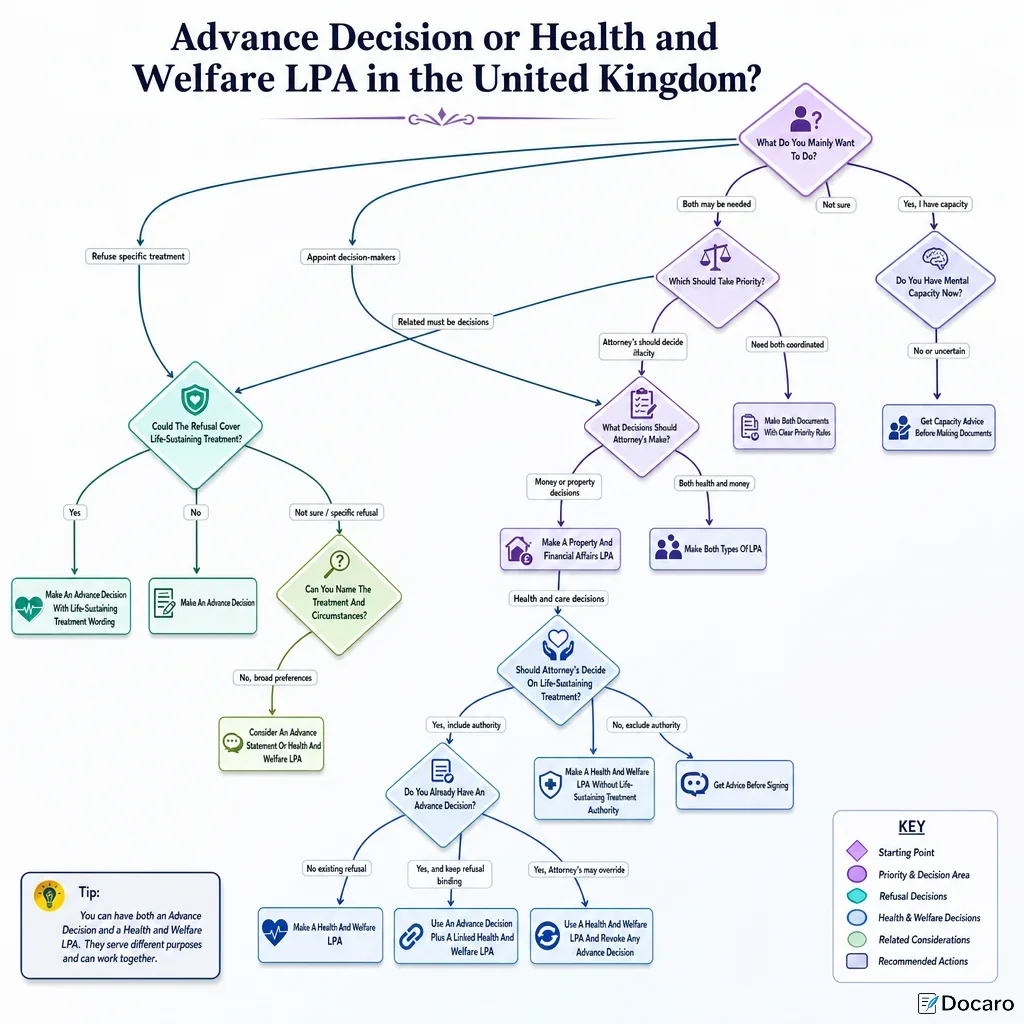
Creating a Health and Welfare LPA | Later LPA authority may override an earlier advance decision if inconsistent. | true | Check consistency and state whether attorneys can decide on life-sustaining treatment. |
Health and Welfare LPA is registered | Registered attorneys may need the latest advance decision for future decisions. | false | Give attorneys a copy and explain how it limits or guides decisions. |
Legal or administrative change, Personal circumstances | |||
Changing or replacing an attorney | New attorneys need current instructions and may affect document consistency. | true | Review alongside the LPA and provide the attorney with the latest copy. |
Personal circumstances, Legal or administrative change | |||
Attorney dies or can no longer act | Decision-makers and contact routes may no longer be reliable. | false | Update contact details and consider whether a new LPA is needed. |
Personal circumstances | |||
Marriage or civil partnership | Family contacts and views about treatment may change. | false | Decide whether to add your spouse or civil partner as a contact or copy holder. |
Divorce, dissolution, or separation | A former partner may no longer be an appropriate contact or copy holder. | false | Update contacts and retrieve copies if the person should no longer be involved. |
Family disagreement about care wishes | Disputes can make clarity, evidence, and circulation more important. | true | Reconfirm wishes in writing and give copies to clinicians and attorneys. |
Death of a close family member or trusted contact | Named contacts or copy holders may need replacing. | false | Update emergency contacts and redistribute copies. |
Legal or administrative change | |||
Emergency contact details change | Clinicians may be unable to locate the latest document quickly. | false | Update the contact sheet and notify GP, hospital, and care providers. |
Original or copies are lost | The document may not be available when treatment decisions are needed. | true | Create and distribute a replacement if the signed version cannot be found. |
Old versions are still circulating | Conflicting versions may cause uncertainty in urgent treatment decisions. | false | Mark old versions revoked and ask copy holders to destroy or replace them. |
Signed document is damaged or illegible | Clinicians may be unable to verify wording, signature, or witness details. | true | Sign and witness a clear replacement version. |
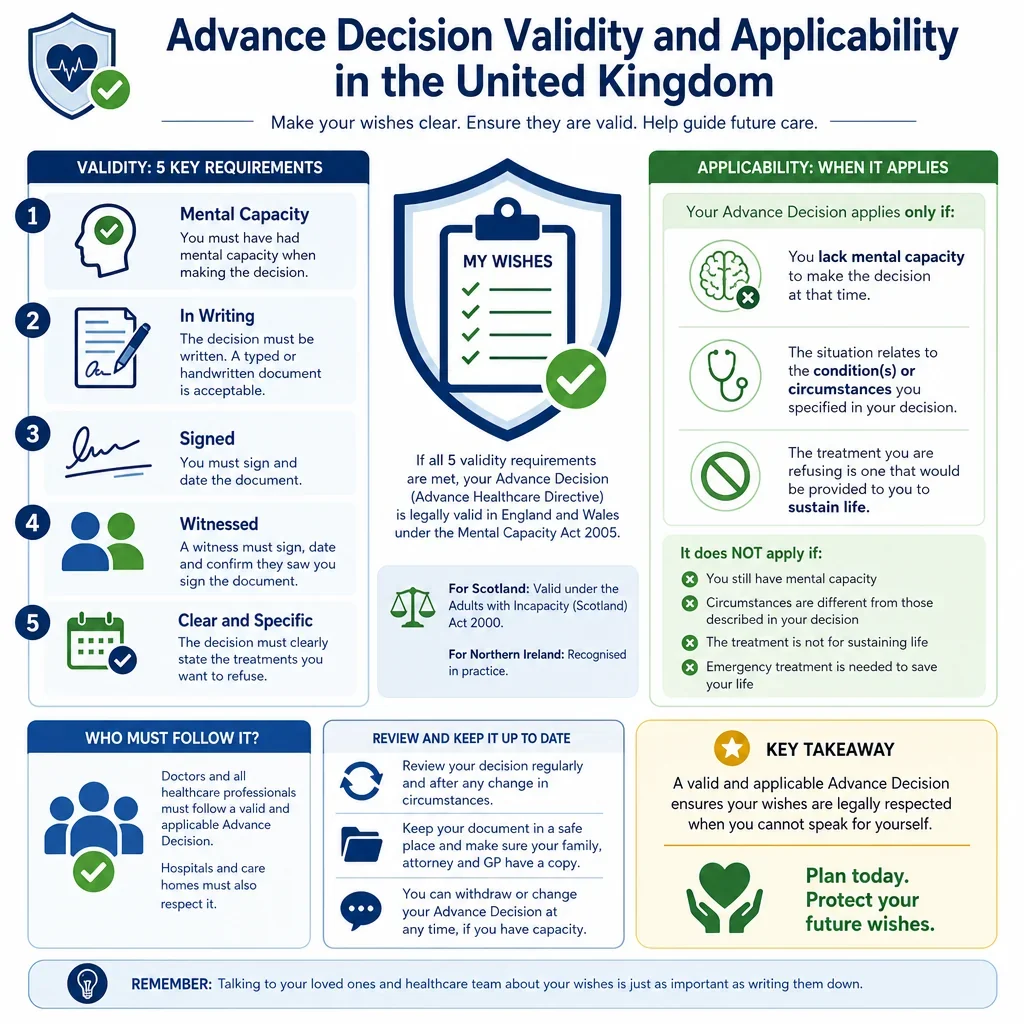
Life-sustaining refusal lacks witness signature | A life-sustaining treatment refusal must be signed and witnessed. | true | Prepare a compliant new version with signature, witness, and life-risk statement. |
Life-sustaining refusal lacks life-risk statement | The decision must state it applies even if life is at risk. | true | Create a new compliant version before relying on that refusal. |
Wording is vague or too broad | Unclear wording may make validity or applicability harder to establish. | true | Rewrite to identify specific treatments and specific circumstances. |
Legal or administrative change, Change of wishes | |||
Advance statement conflicts with the Advance Decision | Conflicting preferences can confuse best-interests decisions and care planning. | true | Align both documents and label which document controls treatment refusals. |
Treatment change, Legal or administrative change | |||
DNACPR decision differs from the Advance Decision | CPR records should not contradict a binding refusal or current wishes. | true | Ask the GP or clinical team to reconcile the DNACPR and Advance Decision. |
ReSPECT form is created or updated | Emergency care recommendations should reflect any binding treatment refusals. | false | Ensure the ReSPECT form refers to the latest Advance Decision. |
Treatment change, Health change | |||
Palliative or end-of-life care plan is made | Care plans should match binding refusals and comfort-care preferences. | false | Ask the palliative care team to cross-reference the Advance Decision. |
Legal or administrative change, Personal circumstances | |||
Concern about pressure or undue influence | Validity may be challenged if the decision was not made freely. | true | Review privately and seek independent clinical or legal support. |
Change of wishes | |||
Recent actions suggest different wishes | Later inconsistent conduct can affect whether the decision remains valid. | true | Confirm current wishes in writing and replace the document if necessary. |
You verbally revoke or alter the decision | Advance decisions can be withdrawn or altered while capacity is present. | true | Record the revocation and inform everyone holding copies. |
Health change, Treatment change | |||
Mental health admission or treatment planning | Some treatment under mental health law may override ordinary refusals. | true | Get specialist advice on how refusals interact with mental health legislation. |
Legal or administrative change | |||
Court of Protection dispute is likely | High-stakes disputes need clear evidence of validity and applicability. | true | Seek legal advice and gather evidence of capacity and settled wishes. |
Legal name change | Records may not clearly link the document to your current identity. | false | Attach evidence of name change or sign a replacement version. |
NHS or medical record details are corrected | Incorrect identifiers can make retrieval or matching harder in emergencies. | false | Update the document cover sheet and ask records teams to file it correctly. |
Digital storage or access method changes | Emergency access may fail if links, apps, or passwords change. | false | Check that paper and digital copies are accessible to relevant people. |
Online GP record access changes | Visibility of the document in records may change after system updates. | false | Ask the practice to confirm the latest version is visible on your record. |
Care transfers to a different NHS trust or board | Records may not transfer automatically between providers. | false | Provide the latest copy at the first appointment or pre-admission assessment. |
Treatment change, Legal or administrative change | |||
Starting private healthcare | Private providers may not have NHS-held copies. | false | Give the private provider a copy and confirm it is in their records. |
Health change, Treatment change | |||
New serious allergy or adverse reaction | Treatment refusals may need to distinguish allergy risk from broader refusal. | false | Update medical records and check whether the document needs clarification. |
Health change | |||
Stroke or major neurological event | Future capacity, swallowing, ventilation, and rehabilitation choices may change. | true | Review during recovery if capacity is present and update treatment scenarios. |
Heart failure or serious cardiac event | CPR, ventilation, defibrillation, and intensive care choices may become relevant. | true | Discuss likely emergencies with cardiology and revise refusals if needed. |
Severe lung disease or worsening breathlessness | Non-invasive or invasive ventilation may become foreseeable. | true | Clarify ventilation preferences and share with respiratory services. |
Advanced kidney disease diagnosis | Dialysis and intensive care decisions may become foreseeable. | true | Discuss dialysis scenarios with renal clinicians and update the document. |
Cancer progresses or recurs | Treatment aims may shift from cure to control or comfort. | true | Review with oncology or palliative care after prognosis discussions. |
Increasing frailty or repeated falls | Emergency admissions, surgery, and resuscitation decisions may become more likely. | false | Review with GP or geriatric team and update care records. |
Health change, Treatment change | |||
Sepsis or severe infection episode | Future infection treatment, fluids, ICU, or antibiotics may need clarification. | true | Clarify whether refusals apply to severe infections or only end-of-life situations. |
Treatment change | |||
Feeding tube is proposed | Tube feeding may need separate consideration from ordinary eating and drinking. | true | Specify whether clinically assisted nutrition is refused and in what circumstances. |
Organ transplant assessment begins | Transplant care involves intensive treatment and long-term medication decisions. | true | Review refusals with the transplant team before assessment decisions are made. |
Change of wishes, Legal or administrative change | |||
Organ donation wishes change | Donation wishes may affect end-of-life discussions and family communication. | false | Update the NHS Organ Donor Register and ensure documents are consistent. |
Treatment change | |||
Joining or leaving a clinical trial | Trial treatments may change foreseeable risks and emergency interventions. | true | Ask the trial team whether refusals affect trial treatment or emergencies. |
Personal circumstances, Legal or administrative change | |||
Extended travel or living abroad | Foreign healthcare systems may not recognise an English or Welsh document. | false | Carry copies and seek local advice for longer stays abroad. |
Key carers do not read English confidently | Carers may not communicate the document accurately in emergencies. | false | Keep the signed English version and add a reliable translation if useful. |
Personal circumstances, Health change | |||
New home care package starts | Home carers need to know who to contact and where the document is kept. | false | Add a copy or note to the care folder and update contact instructions. |
Health change, Treatment change | |||
Hospice referral or admission | Hospice care should align symptom relief with refused treatments. | false | Give the hospice a copy and discuss any boundaries around hospital transfer. |
Legal or administrative change, Treatment change | |||
Ambulance care plan or special note is created | Emergency responders need quick access to treatment refusals. | false | Ask clinicians to ensure ambulance records note the latest Advance Decision. |
Legal or administrative change | |||
Relevant law or official guidance changes | Legal requirements or clinical practice may affect wording or reliance. | true | Check current MCA guidance and consider legal advice before updating. |
Time-based review, Personal circumstances | |||
Major age milestone or retirement | Care priorities, contacts, and health risks may have changed. | false | Use the milestone to check wishes, contacts, and copy holders. |
Health change, Treatment change | |||
Swallowing problems or dysphagia develop | Feeding, fluids, aspiration treatment, and tube feeding may become relevant. | true | Clarify assisted nutrition, hydration, and infection treatment preferences. |
Change of wishes, Treatment change | |||
Pain relief or sedation preferences change | Comfort-care wishes should sit consistently alongside treatment refusals. | false | Update any advance statement or care plan and check the refusal wording. |
Health change, Personal circumstances | |||
Major change in disability or independence | Views about acceptable quality of life or treatment burden may change. | true | Reflect on current wishes and revise refusals if assumptions have changed. |
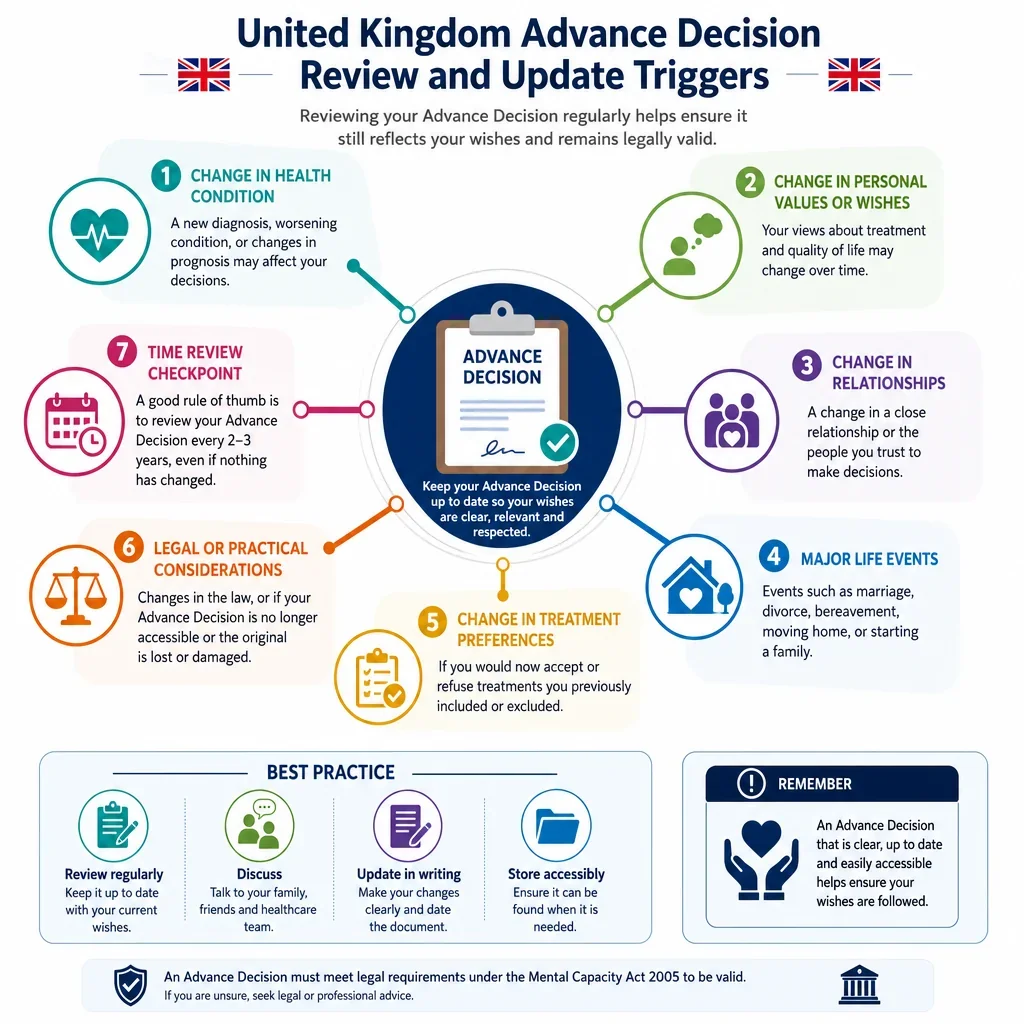
When Should You Review An Advance Decision In The UK?
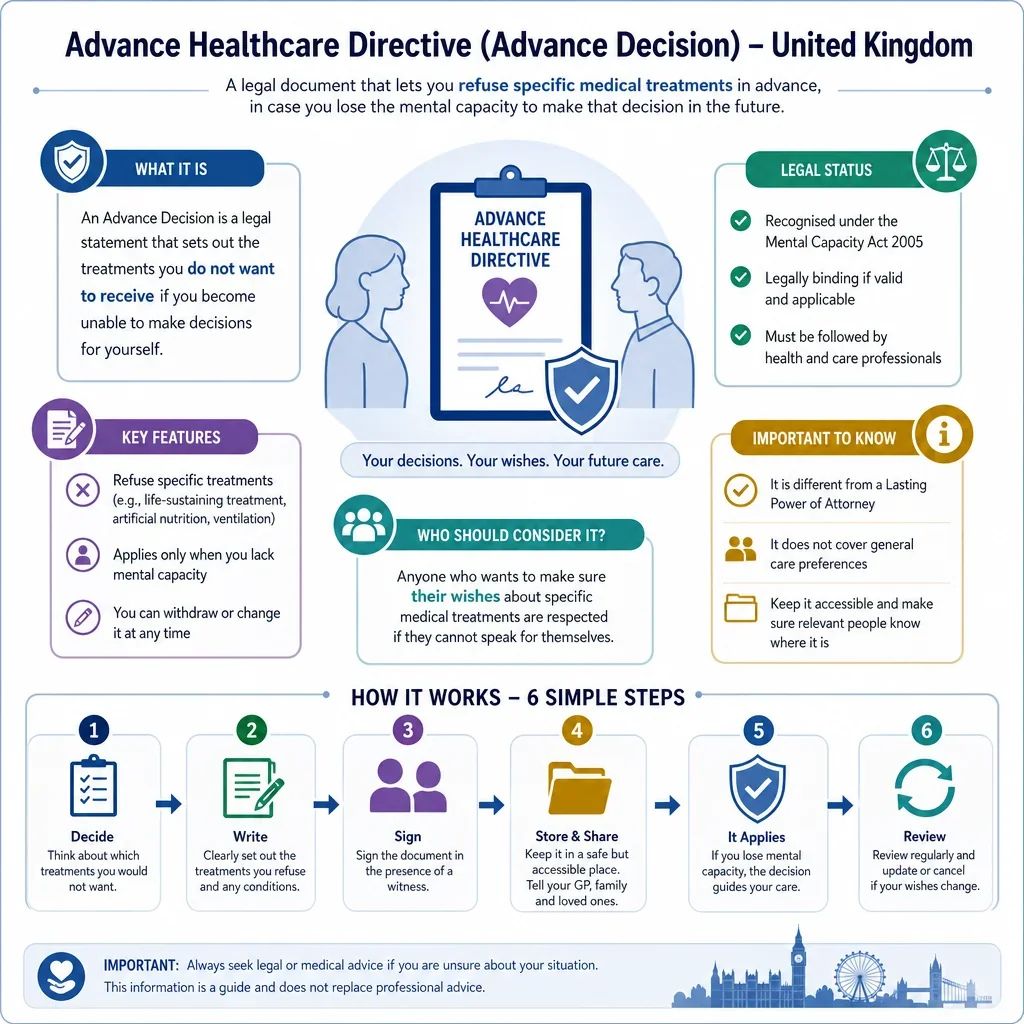
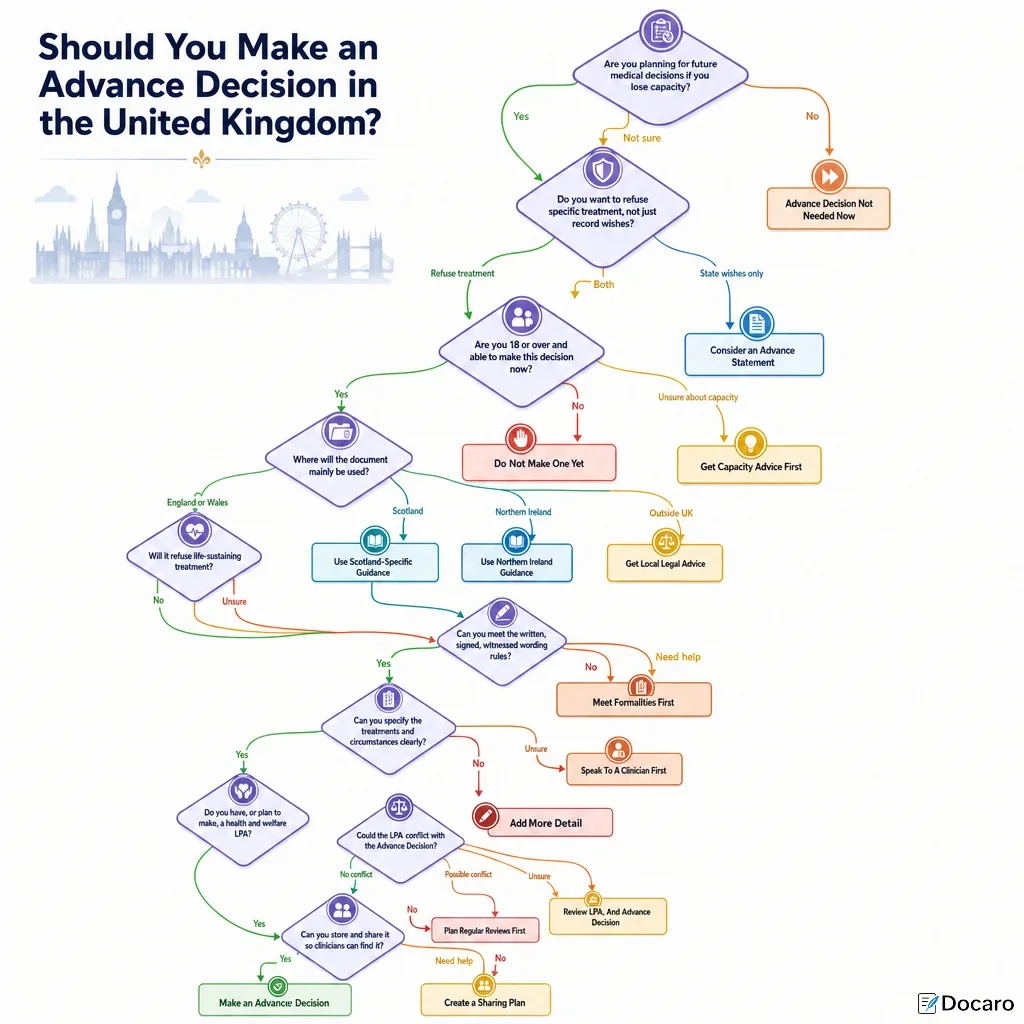
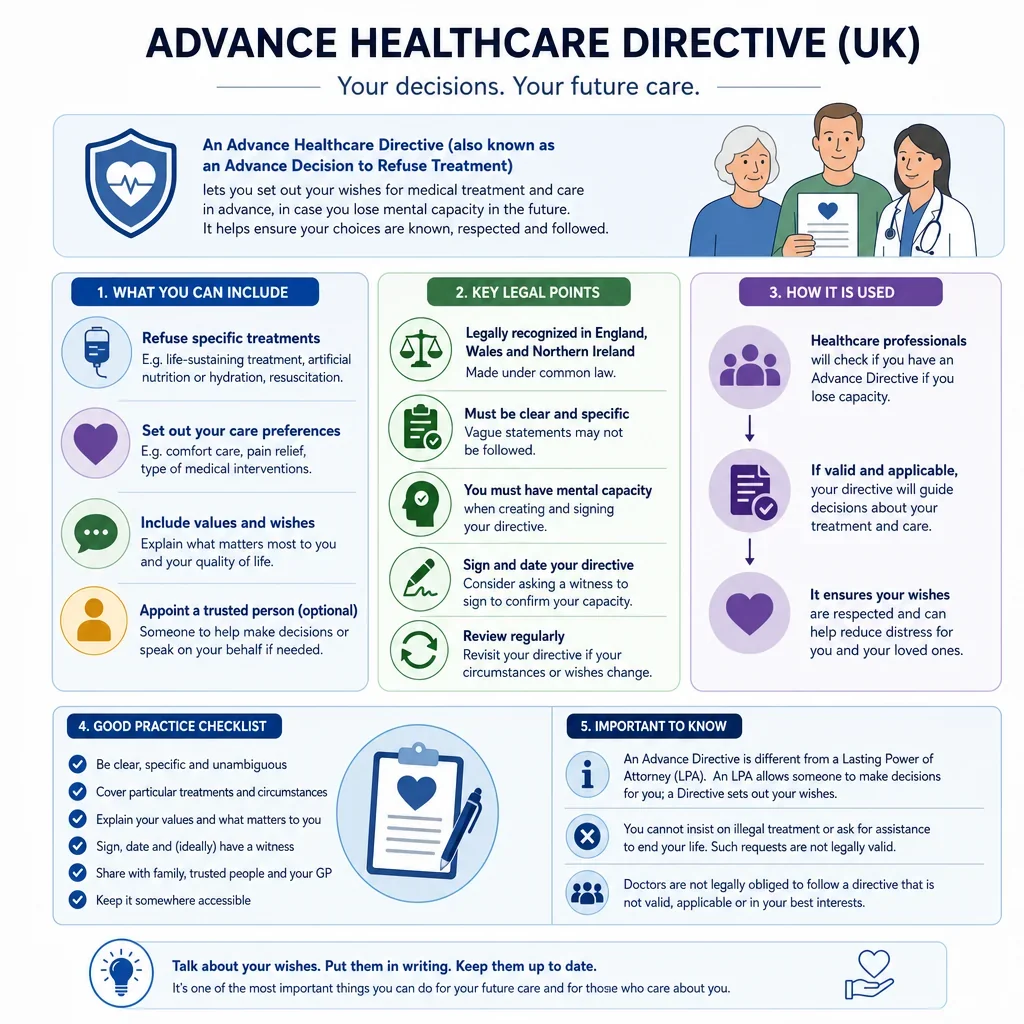
An Advance Decision should be reviewed whenever the document may no longer match your current wishes, treatment options, diagnosis, or the people who may need to rely on it. A review is especially important after a major health change, a new treatment option, a move into care, or any change affecting who holds copies of the document.
When Is A New Advance Decision Needed?
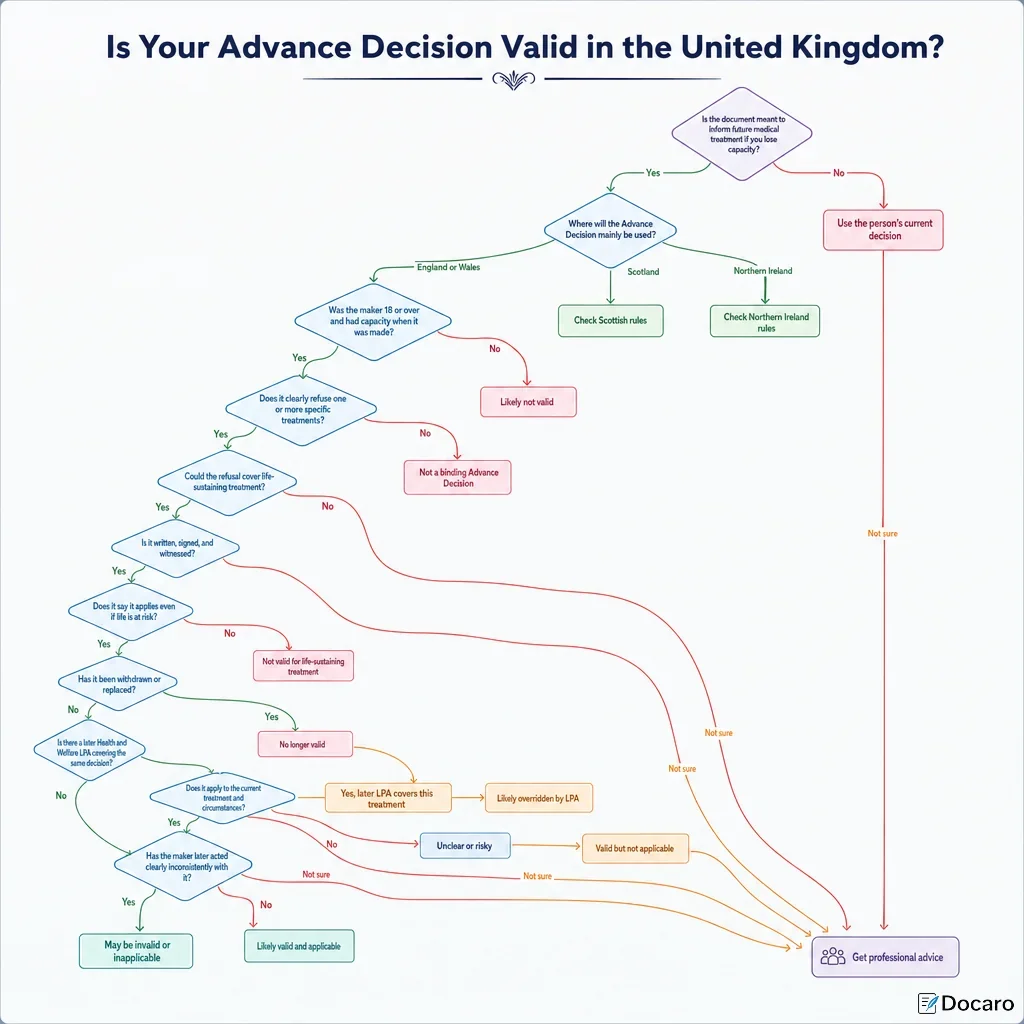
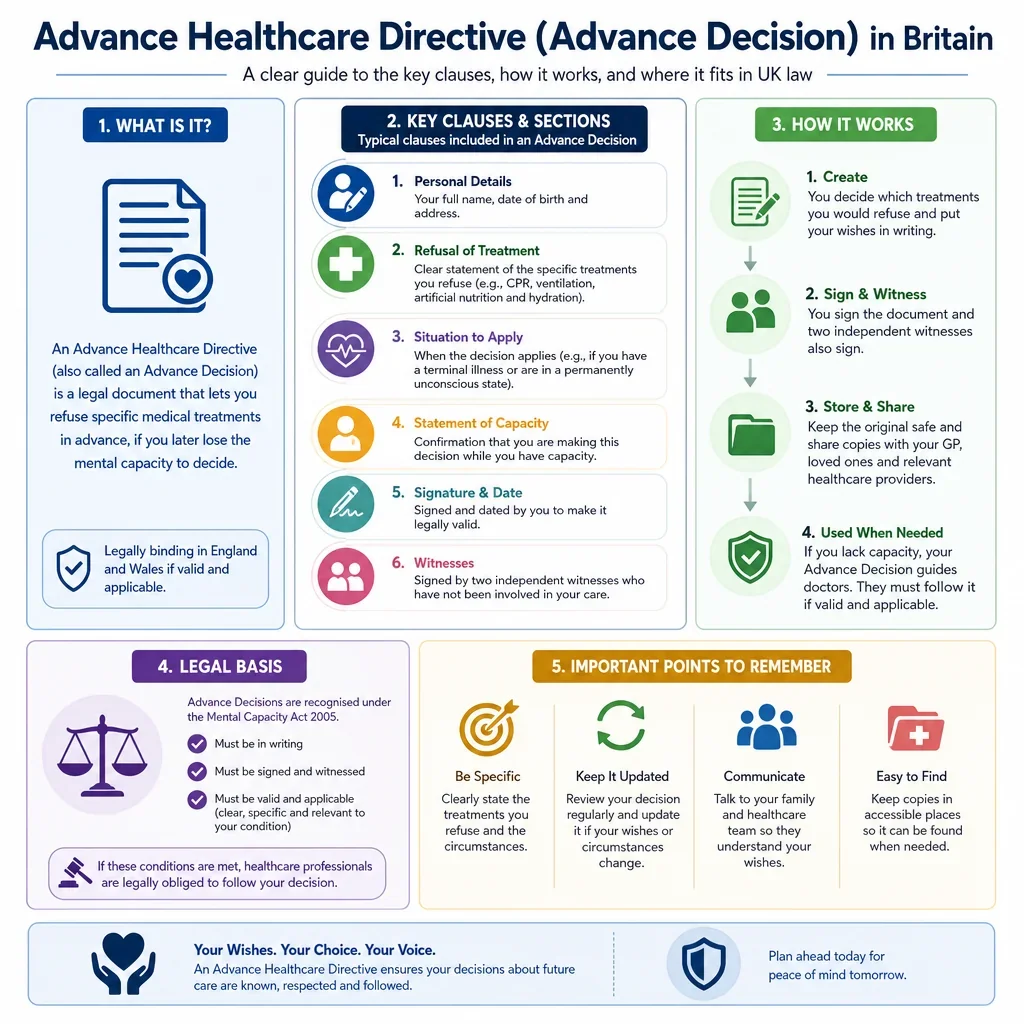
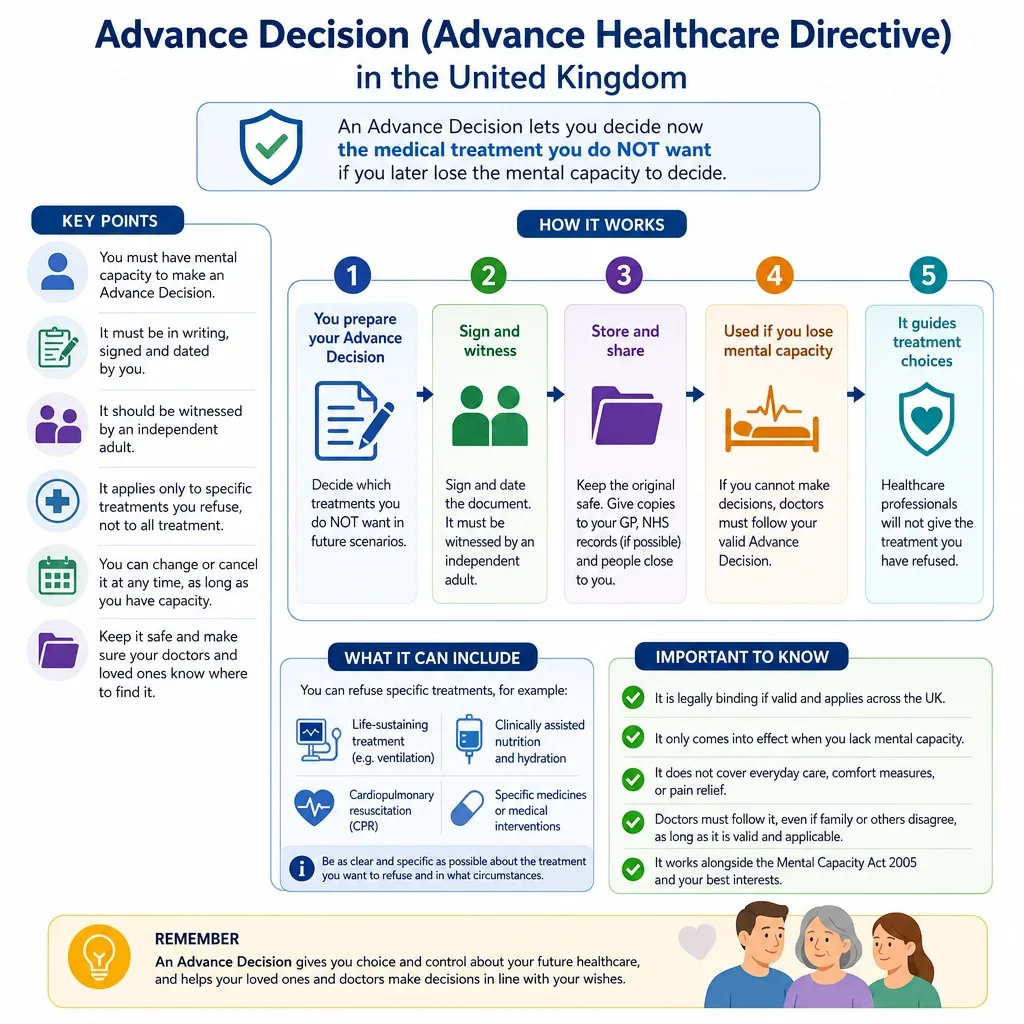
A new signed and witnessed version may be needed if you change a refusal of life-sustaining treatment, add or remove treatments, change the circumstances in which a refusal applies, or create conflicting documents such as a Health and Welfare Lasting Power of Attorney. Under the Mental Capacity Act 2005, a refusal of life-sustaining treatment must be in writing, signed, witnessed, and contain a statement that it applies even if life is at risk.
What Practical Steps Help Keep An Advance Decision Effective?
- Review regularly: a planned review every year, or after any major change, helps show the decision still reflects your wishes.
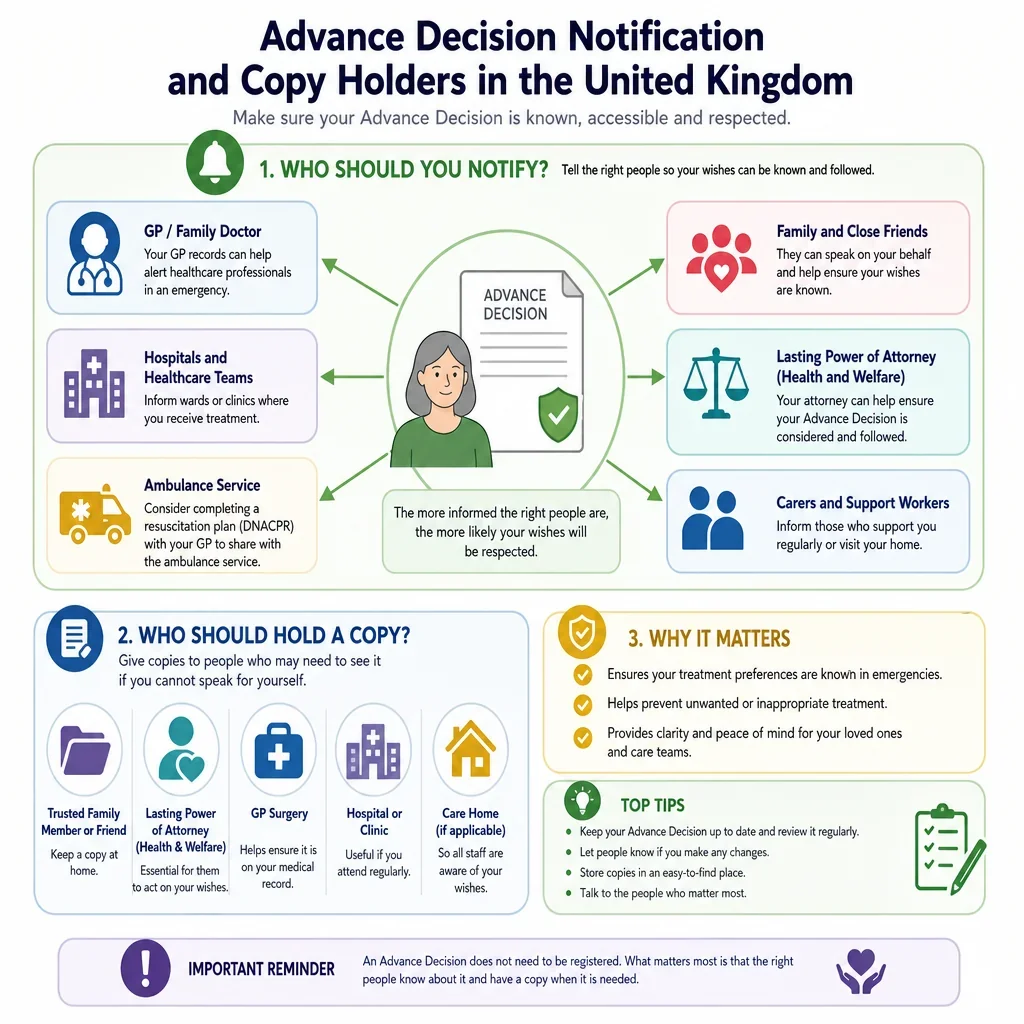
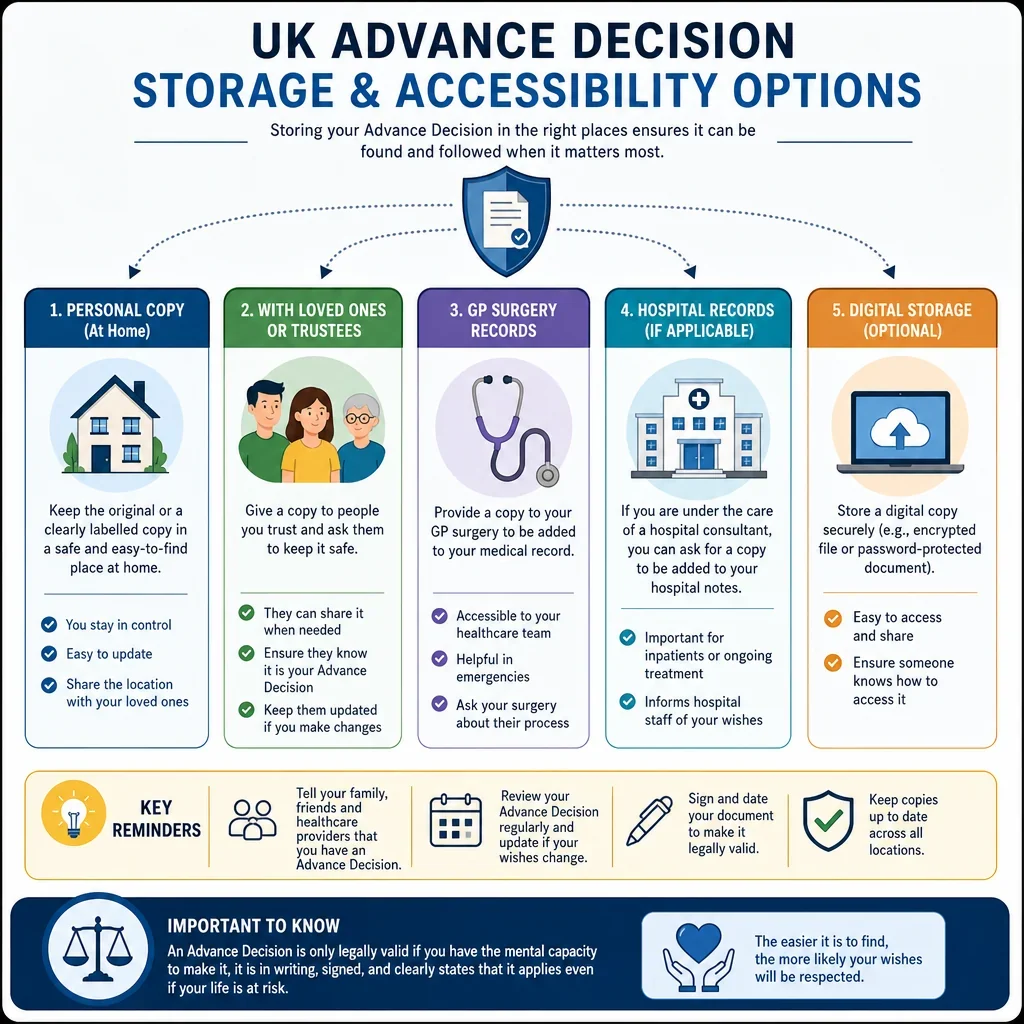
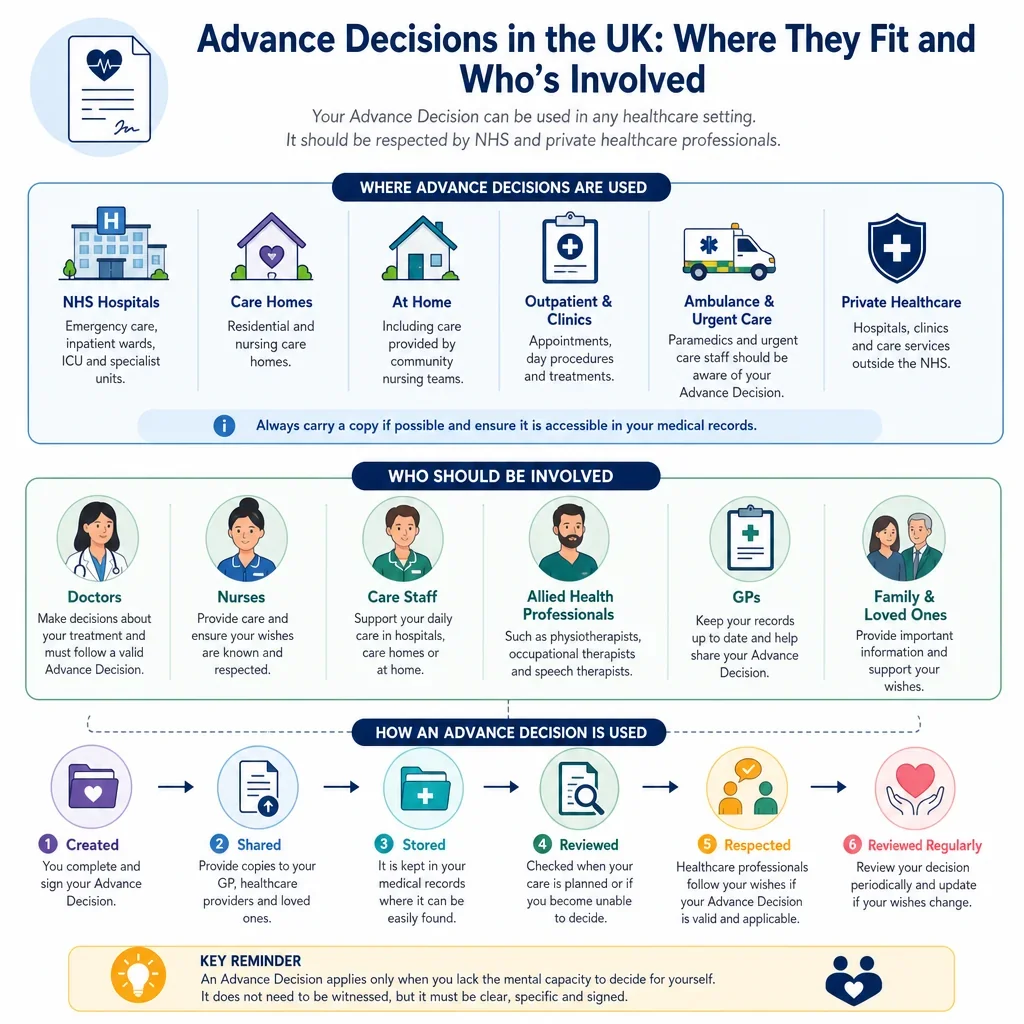
- Update key people: give the latest version to your GP, hospital team, care home, attorneys, family members, and anyone named as an emergency contact.
- Destroy or clearly revoke old versions: keeping outdated copies can create uncertainty in urgent care.
- Check for conflicts: make sure your Advance Decision is consistent with any Health and Welfare LPA, advance statement, DNACPR form, ReSPECT form, or care plan.
- Seek clinical input: ask a relevant healthcare professional to explain how your refusals apply to your current diagnosis, treatment choices, and likely emergencies.
FAQs
You Might Also Be Interested In