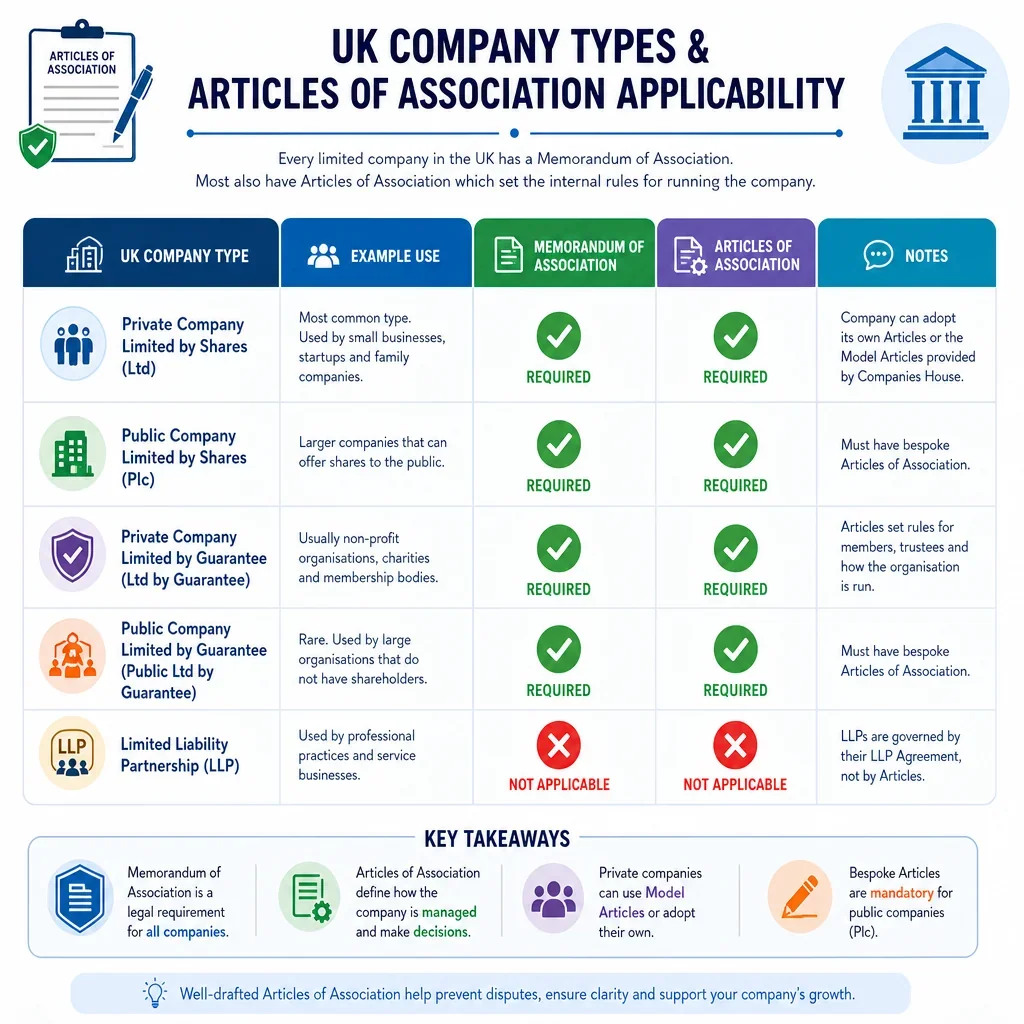
UK Company Types And Articles Of Association Applicability
Company Type | Articles Usually Required | Typical Use | Member Liability Summary | Registration Context |
|---|---|---|---|---|
Private company limited by shares | ||||
Private company limited by shares | Yes | Common trading company for small and medium businesses. | Shareholders are liable only for unpaid amounts on shares. | Companies House incorporation |
Single-member private company limited by shares | Yes | Owner-managed business with one shareholder. | Sole shareholder’s liability is limited to unpaid share capital. | Companies House incorporation |
Multi-member private company limited by shares | Yes | Business with two or more shareholders. | Each shareholder is liable only for unpaid share amounts. | Companies House incorporation |
Private company using model articles | Yes | Straightforward company adopting statutory default rules. | Shareholder liability is limited to unpaid share capital. | Companies House incorporation |
Private company with bespoke articles | Yes | Company needing tailored governance or share rights. | Liability remains limited to unpaid share capital. | Companies House incorporation |
Alphabet share company | Yes | Company with different dividend rights by share class. | Shareholders remain liable for unpaid share amounts only. | Companies House incorporation |
Company with preference shares | Yes | Company giving priority dividend or capital rights. | Preference shareholders risk unpaid amounts on their shares. | Companies House incorporation |
Company with redeemable shares | Yes | Company issuing shares intended for later buy-back or redemption. | Liability is limited to unpaid amounts until shares are redeemed. | Companies House incorporation |
Employee share scheme company | Yes | Company granting shares or options to employees. | Employee shareholders are liable only for unpaid share amounts. | Companies House incorporation |
Startup investment company | Yes | Growth company raising equity from external investors. | Investors’ liability is limited to unpaid share capital. | Companies House incorporation |
Joint venture company limited by shares | Yes | Vehicle owned by two or more commercial parties. | Shareholder liability is limited to unpaid share capital. | Companies House incorporation |
Dormant private company limited by shares | Yes | Company kept inactive for future or asset-holding use. | Shareholders remain liable for unpaid share amounts. | Companies House incorporation |
Holding company limited by shares | Yes | Company holding shares in subsidiaries or group assets. | Members are liable only for unpaid amounts on shares. | Companies House incorporation |
Property management company limited by shares | Yes | Company managing freehold or leasehold property interests. | Shareholders are liable only for unpaid share capital. | Companies House incorporation |
Private company limited by guarantee | ||||
Right to manage company | Yes | Leaseholders taking over management of their building. | Members’ liability is limited to their guarantee amount. | Companies House incorporation |
Private company limited by guarantee | Yes | Non-profit, membership or community organisation. | Members promise a fixed guarantee if the company is wound up. | Companies House incorporation |
Non-profit company limited by guarantee | Yes | Club, association or social enterprise without share capital. | Liability is limited to the guarantee stated in the constitution. | Companies House incorporation |
Charitable company limited by guarantee | Yes | Charity needing incorporated status and limited liability. | Members’ liability is limited to a small guarantee amount. | Specialist registration |
Charitable incorporated organisation | No | Incorporated charity registered only with the Charity Commission. | Members and trustees usually have limited or no personal liability. | Specialist registration |
Members’ club company limited by guarantee | Yes | Sports, social or professional membership club. | Members are liable only up to their guarantee. | Companies House incorporation |
Residents’ association company limited by guarantee | Yes | Residents collectively managing estate or service-charge matters. | Members’ exposure is capped at the guarantee amount. | Companies House incorporation |
Public limited company | ||||
Public limited company | Yes | Large company able to offer shares to the public. | Shareholders are liable only for unpaid share capital. | Companies House incorporation |
Listed public limited company | Yes | PLC with securities admitted to a regulated market. | Shareholder liability is limited to unpaid share amounts. | Specialist registration |
AIM public company | Yes | Growth company admitted to AIM market. | Shareholders are liable only for unpaid share amounts. | Specialist registration |
Unlisted public limited company | Yes | PLC not admitted to a public market. | Members’ liability is limited to unpaid share capital. | Companies House incorporation |
Unlimited company | ||||
Private unlimited company | Yes | Private vehicle where financial privacy may be important. | Members have unlimited liability on winding up. | Companies House incorporation |
Unlimited company with share capital | Yes | Unlimited company funded through issued shares. | Members have unlimited liability despite holding shares. | Companies House incorporation |
Unlimited company without share capital | Yes | Member-based unlimited company without shares. | Members have uncapped liability if the company is wound up. | Companies House incorporation |
Community interest company | ||||
Community interest company limited by shares | Yes | Social enterprise with shares and community purpose. | Shareholders’ liability is limited to unpaid share amounts. | Specialist registration |
Community interest company limited by guarantee | Yes | Non-profit social enterprise with an asset lock. | Members are liable only up to their guarantee amount. | Specialist registration |
Community interest public limited company | Yes | Community-purpose PLC structure with CIC restrictions. | Shareholder liability is limited to unpaid share capital. | Specialist registration |
Asset-locked CIC | Yes | Social enterprise locking assets for community benefit. | Liability follows its shares or guarantee constitution. | Specialist registration |
Limited liability partnership | ||||
Limited liability partnership | No | Professional or trading partnership with separate legal personality. | Members’ liability is generally limited to agreed contributions. | Companies House incorporation |
Professional services LLP | No | Law, accountancy, consultancy or investment partnership. | Members usually avoid personal liability for LLP debts. | Companies House incorporation |
Family investment LLP | No | Family-owned vehicle for shared investments or assets. | Members’ liability is generally limited by LLP status. | Companies House incorporation |
LLP with designated members | No | LLP appointing members responsible for statutory filings. | Limited liability applies, but filing duties fall on designated members. | Companies House incorporation |
Private company limited by shares | ||||
Private company limited by shares or guarantee | Yes | Rare hybrid company with shares and member guarantees. | Members may face unpaid share amounts and guarantee obligations. | Companies House incorporation |
Private company limited by guarantee | ||||
Company limited by guarantee with share capital | Sometimes | Historic form new companies cannot be formed this way. | Liability may include share amounts and guarantee liability. | Not applicable |
Royal charter body | No | University, professional body or institution incorporated by charter. | Liability depends on the charter and governing instruments. | Specialist registration |
Co-operative society | No | Member-owned trading society registered with the FCA. | Member liability depends on society rules and shareholding. | Specialist registration |
Community benefit society | No | Community enterprise registered as a mutual society. | Liability depends on registered society rules and shares. | Specialist registration |
Charitable community benefit society | No | Charitable mutual registered with the FCA. | Member liability follows the registered society rules. | Specialist registration |
Private company limited by shares | ||||
Overseas company with UK establishment | Sometimes | Foreign company registering a UK branch or place of business. | Liability depends on the overseas company’s home law. | Companies House incorporation |
Public limited company | ||||
Private company re-registering as public | Yes | Company converting to PLC status. | Shareholder liability remains limited to unpaid shares. | Companies House incorporation |
Private company limited by shares | ||||
Public company re-registering as private | Yes | PLC converting to private company status. | Shareholder liability remains limited to unpaid shares. | Companies House incorporation |
Company changing membership or share structure | Yes | Company altering constitution or class rights. | Liability depends on the resulting company form. | Companies House incorporation |
Unlimited company | ||||
Company re-registering as unlimited | Yes | Company removing limited liability status. | Members become subject to unlimited liability. | Companies House incorporation |
Private company limited by shares | ||||
Unlimited company re-registering as limited | Yes | Unlimited company adopting limited liability status. | Members’ liability becomes limited by shares or guarantee. | Companies House incorporation |
Private company limited by guarantee | ||||
Guarantee company without charitable status | Yes | Non-charitable association, trade body or standards organisation. | Members’ liability is capped at the guarantee amount. | Companies House incorporation |
Private company limited by shares | ||||
Charity trading subsidiary limited by shares | Yes | Company used by a charity for non-primary-purpose trading. | Charity shareholder’s liability is limited to unpaid shares. | Companies House incorporation |
Special purpose vehicle limited by shares | Yes | Ring-fenced company for a project, asset or transaction. | Shareholder exposure is limited to unpaid share capital. | Companies House incorporation |
Subsidiary company limited by shares | Yes | Company controlled by another parent undertaking. | Parent shareholder liability is limited to unpaid share capital. | Companies House incorporation |
Management buyout vehicle | Yes | Company formed to acquire an existing business. | Investor and manager liability is limited to unpaid shares. | Companies House incorporation |
Buy-to-let property company | Yes | Company holding residential or commercial rental property. | Shareholders are liable only for unpaid share capital. | Companies House incorporation |
Residents’ freehold company limited by shares | Yes | Leaseholders jointly owning the building freehold. | Resident shareholders are liable for unpaid share amounts only. | Companies House incorporation |
Private company limited by guarantee | ||||
Flat management company limited by guarantee | Yes | Leaseholders managing shared building services without shares. | Members’ liability is limited to the guarantee amount. | Companies House incorporation |
Unincorporated association | No | Informal club, society or small charity without incorporation. | Members or committee may face personal contractual liability. | Not applicable |
Private company limited by shares | ||||
Sole trader | No | Individual trading personally without a company. | Owner has personal liability for business debts. | Not applicable |
Limited liability partnership | ||||
General partnership | No | Two or more people trading together without incorporation. | Partners are personally liable for partnership debts. | Not applicable |
Limited partnership | No | Investment or fund partnership with general and limited partners. | Limited partners’ liability is capped if they do not manage. | Specialist registration |
Scottish partnership | No | Partnership in Scotland with separate legal personality. | Partners may still have personal liability for firm debts. | Not applicable |
Scottish limited partnership | No | Scottish fund or investment partnership. | Limited partner liability is capped if statutory conditions are met. | Specialist registration |
Public limited company | ||||
Societas Europaea registered in the UK | Sometimes | Legacy European public company form affected by Brexit rules. | Shareholder liability is generally limited to subscribed capital. | Specialist registration |
Private company limited by guarantee | ||||
Charitable company using Charity Commission model articles | Yes | Charity company adopting regulator-approved constitutional wording. | Members’ liability is normally limited to a nominal guarantee. | Specialist registration |
Academy trust company | Yes | Company limited by guarantee operating academy schools. | Members’ liability is limited to the guarantee amount. | Specialist registration |
Private company limited by shares | ||||
Company with entrenched articles | Yes | Company restricting amendment of key constitutional provisions. | Liability depends on limited-by-shares or guarantee status. | Companies House incorporation |
Company with modified pre-emption rights | Yes | Company tailoring rights on new share issues. | Shareholder liability remains limited to unpaid shares. | Companies House incorporation |
Private company limited by guarantee | ||||
Company with restricted objects | Yes | Charity, CIC or association limiting corporate purposes. | Liability follows the entity’s shares or guarantee structure. | Companies House incorporation |
Which UK Entity Types Usually Need Articles Of Association?
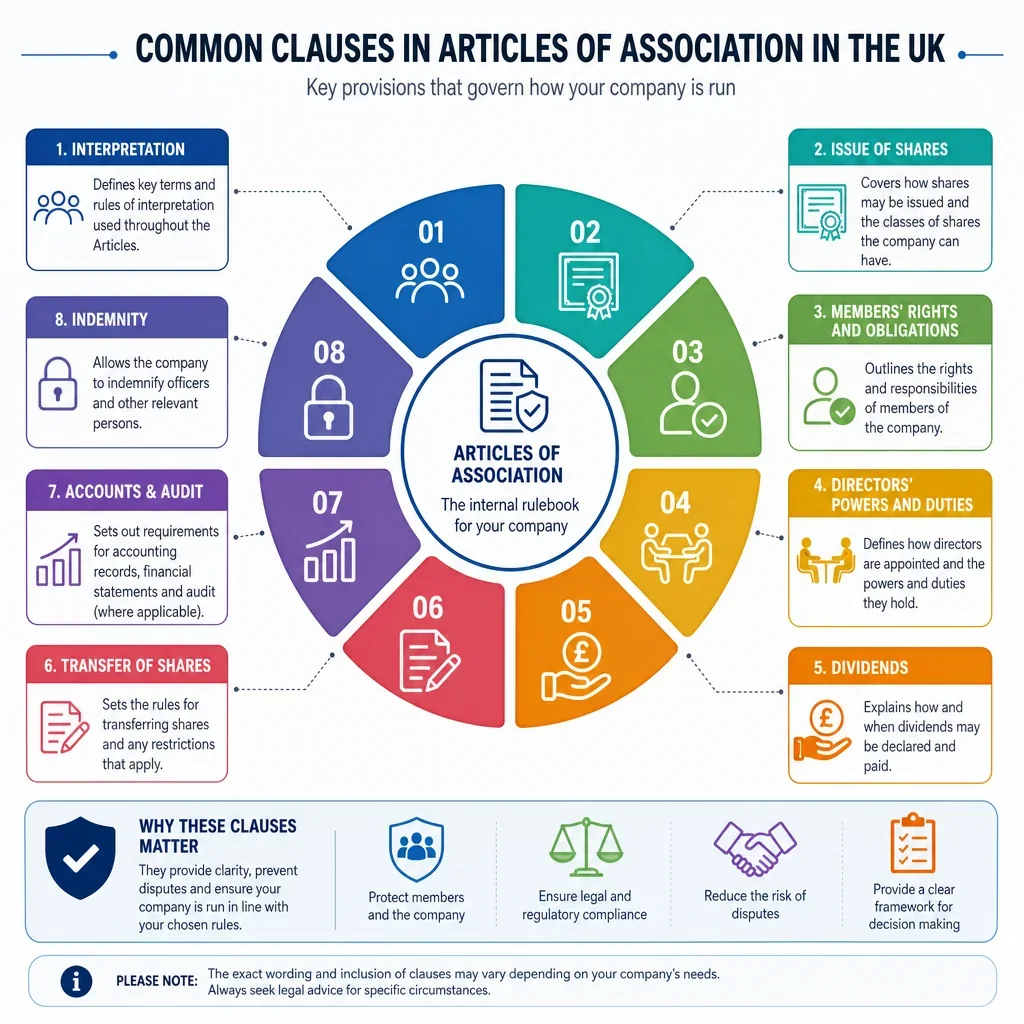
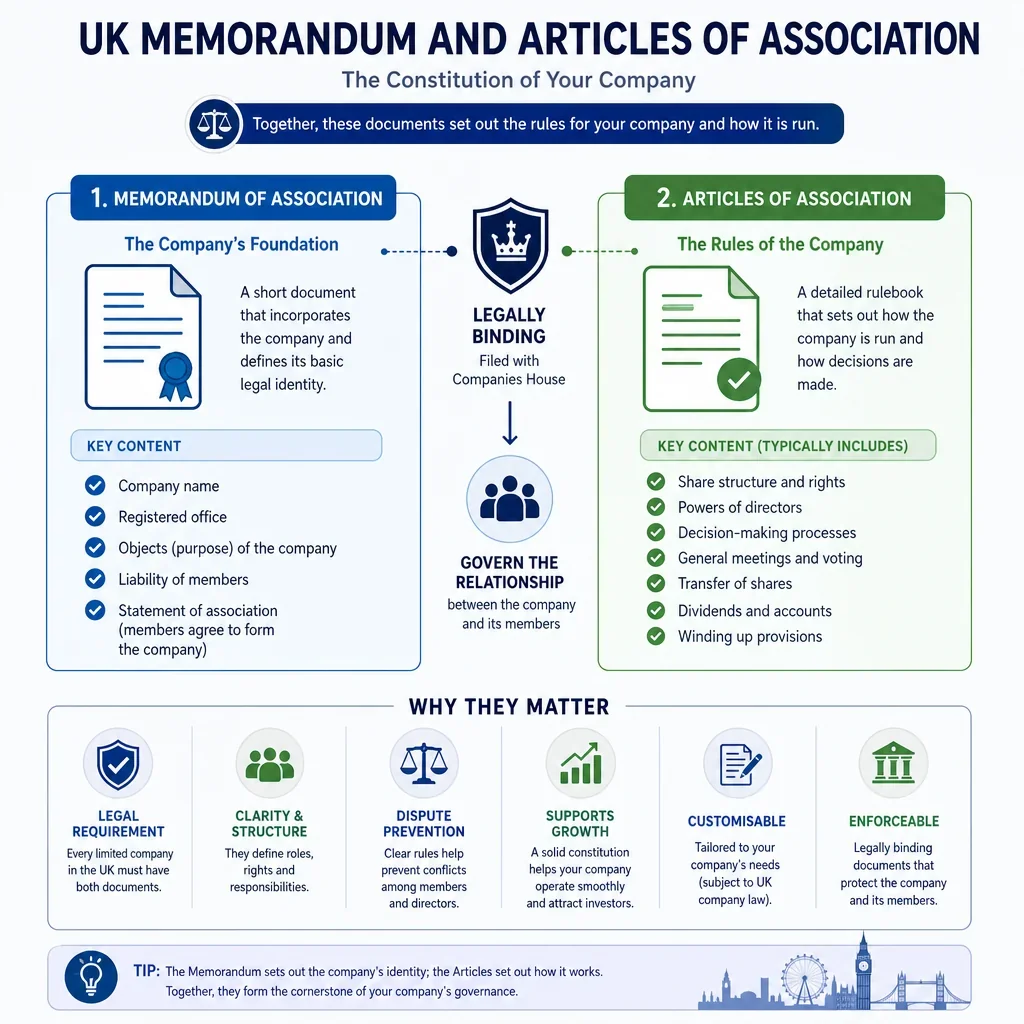
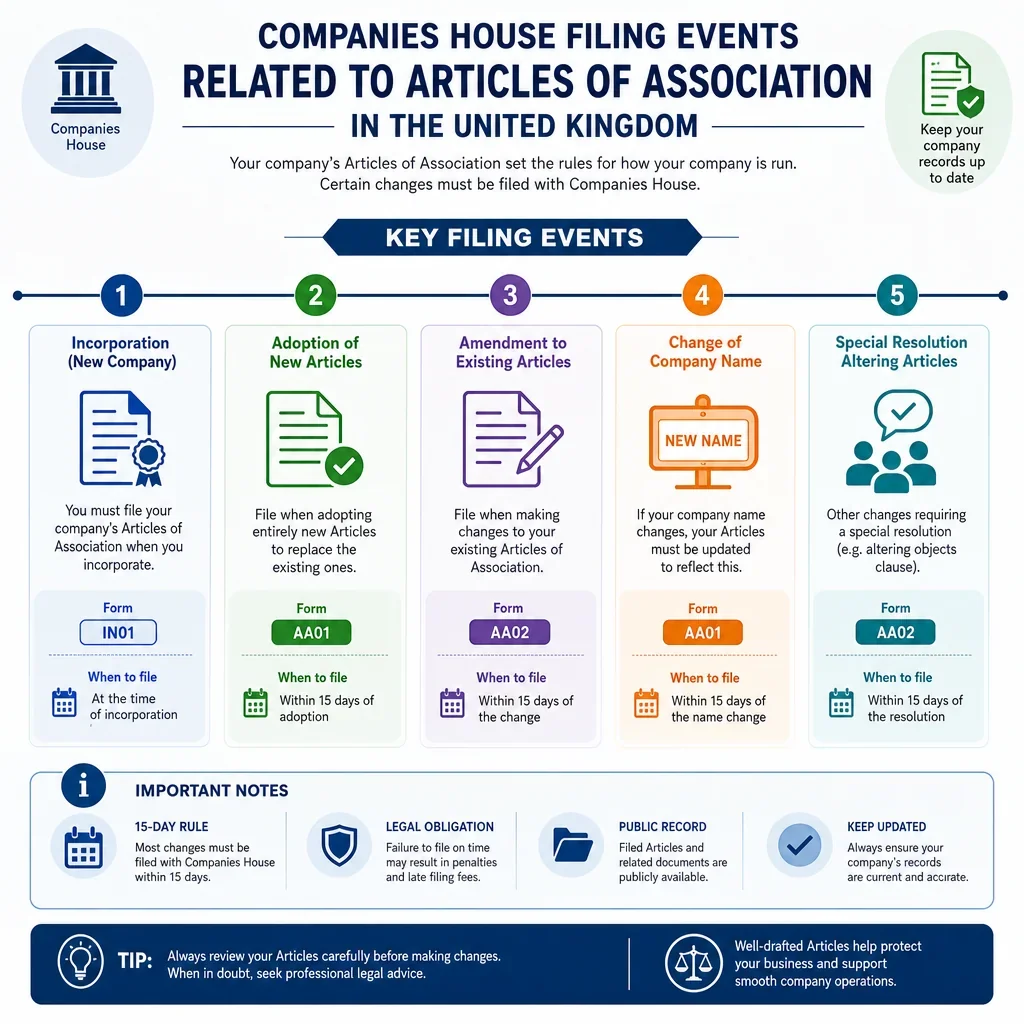
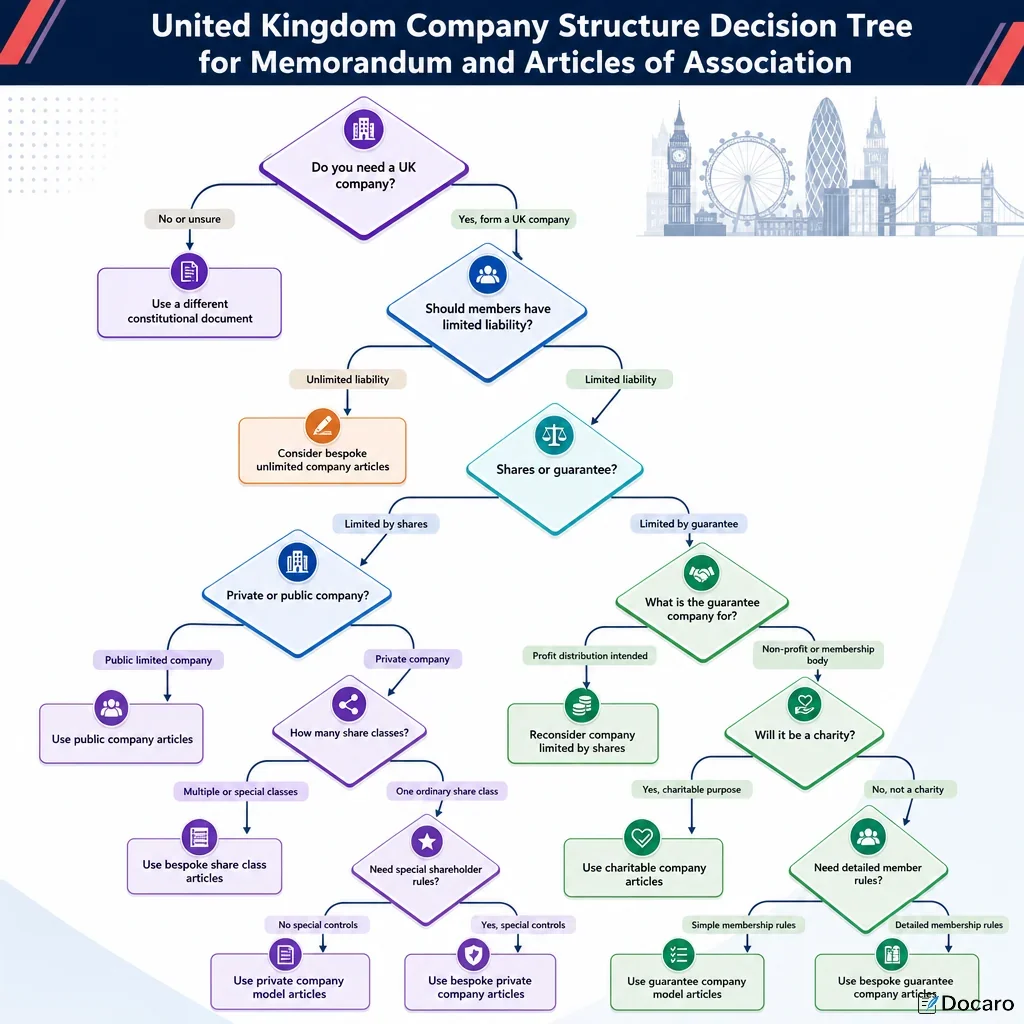
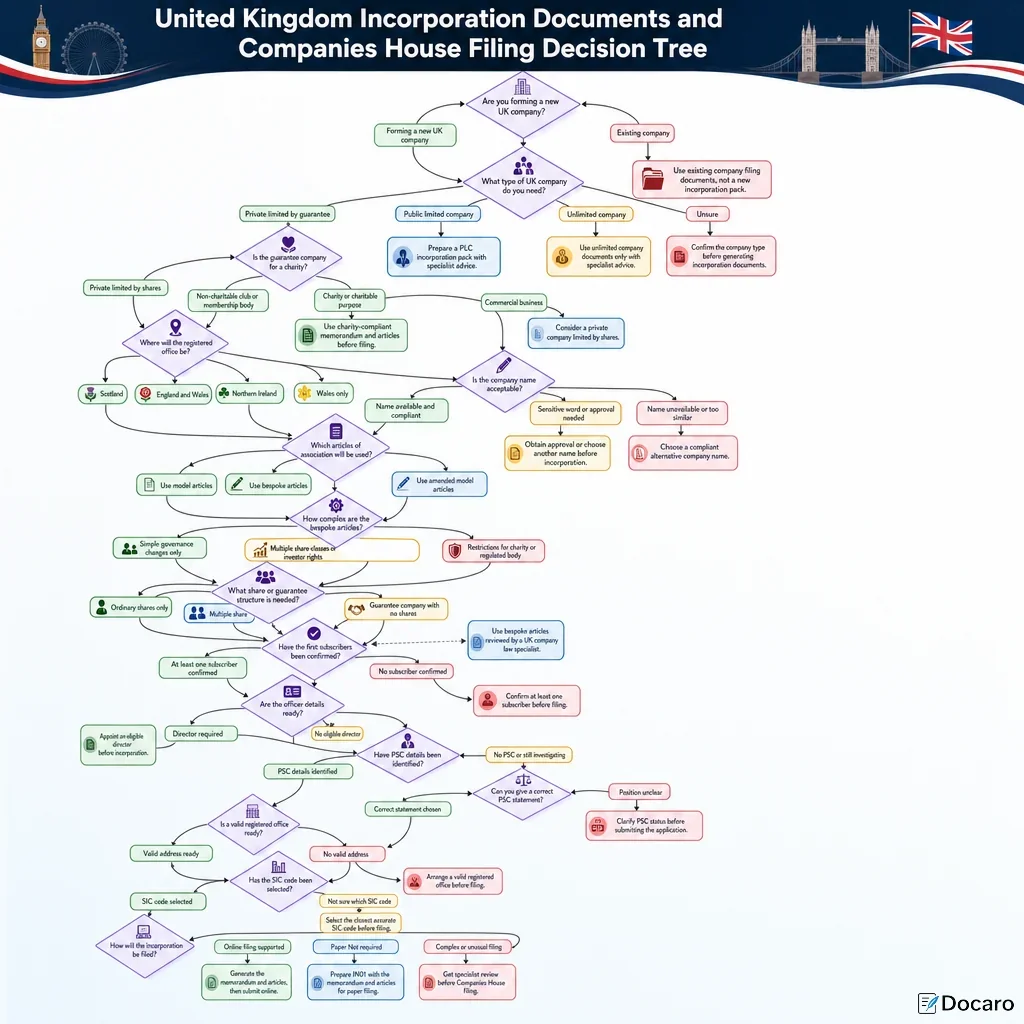
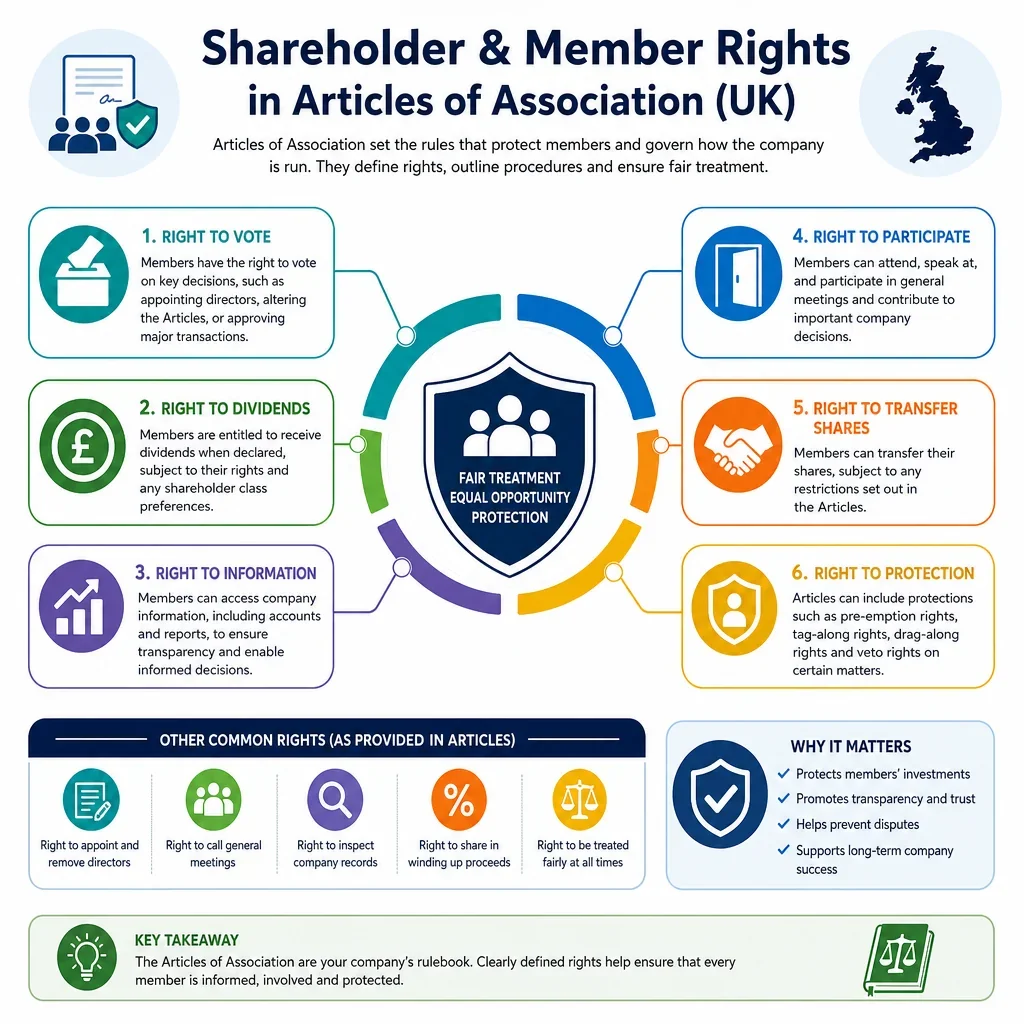
Companies registered at Companies House generally use articles of association, especially private companies limited by shares, private companies limited by guarantee, public limited companies, unlimited companies and community interest companies. The articles set the company’s internal rules and are normally filed or adopted during incorporation.
When Are Model Articles Not Enough?
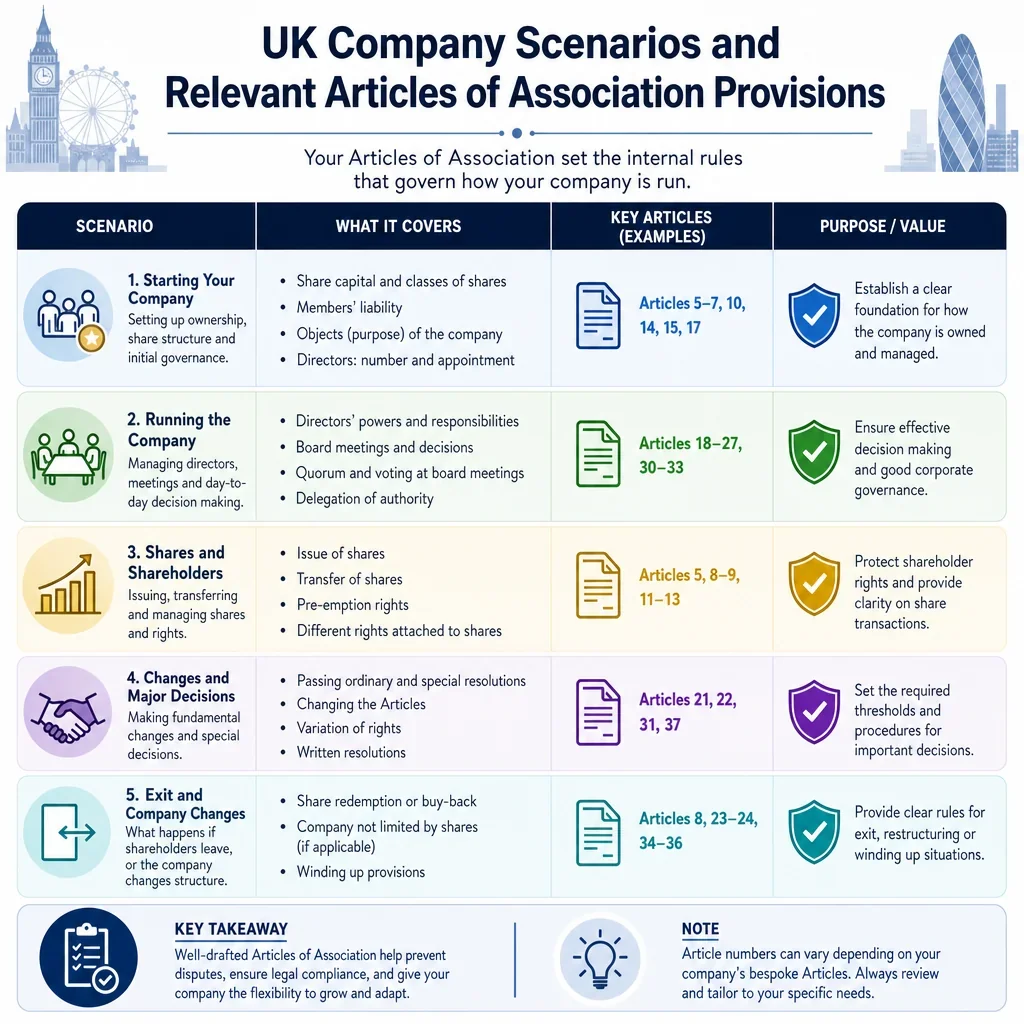
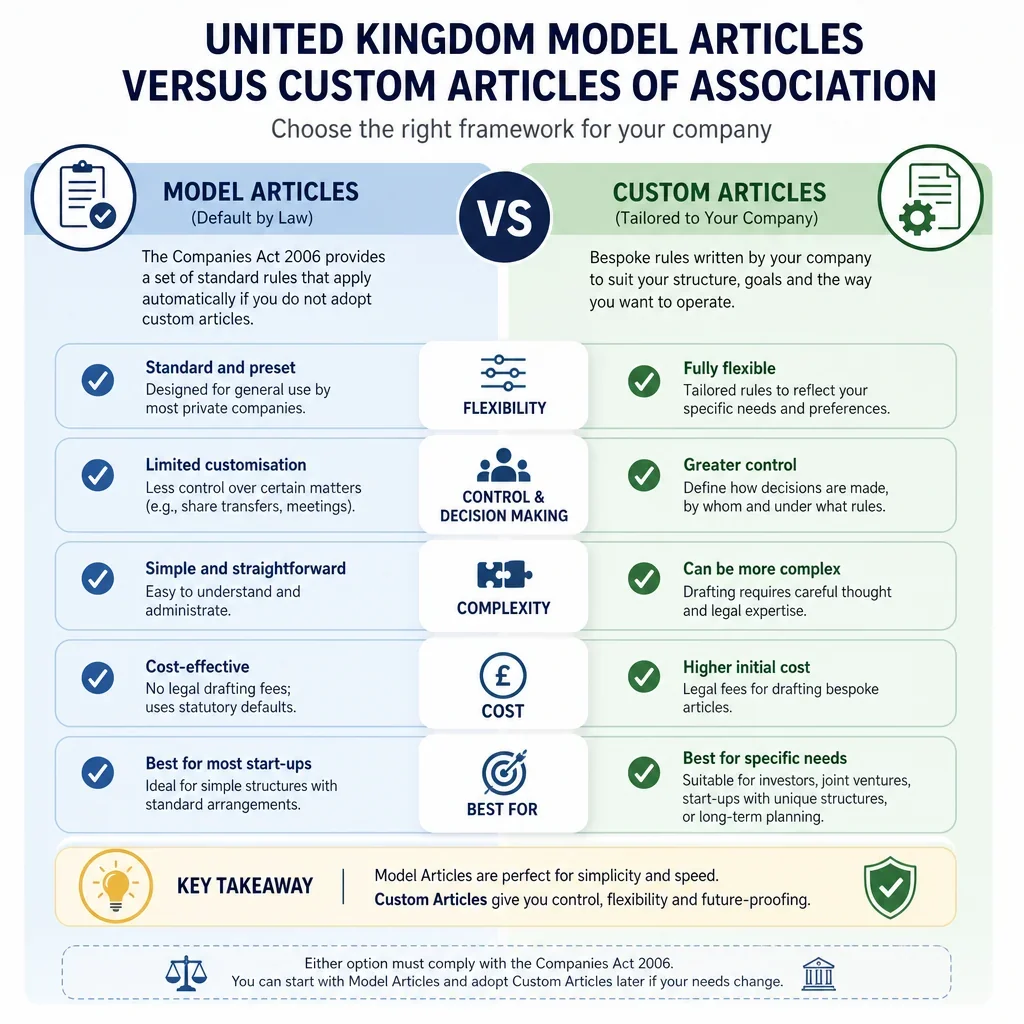
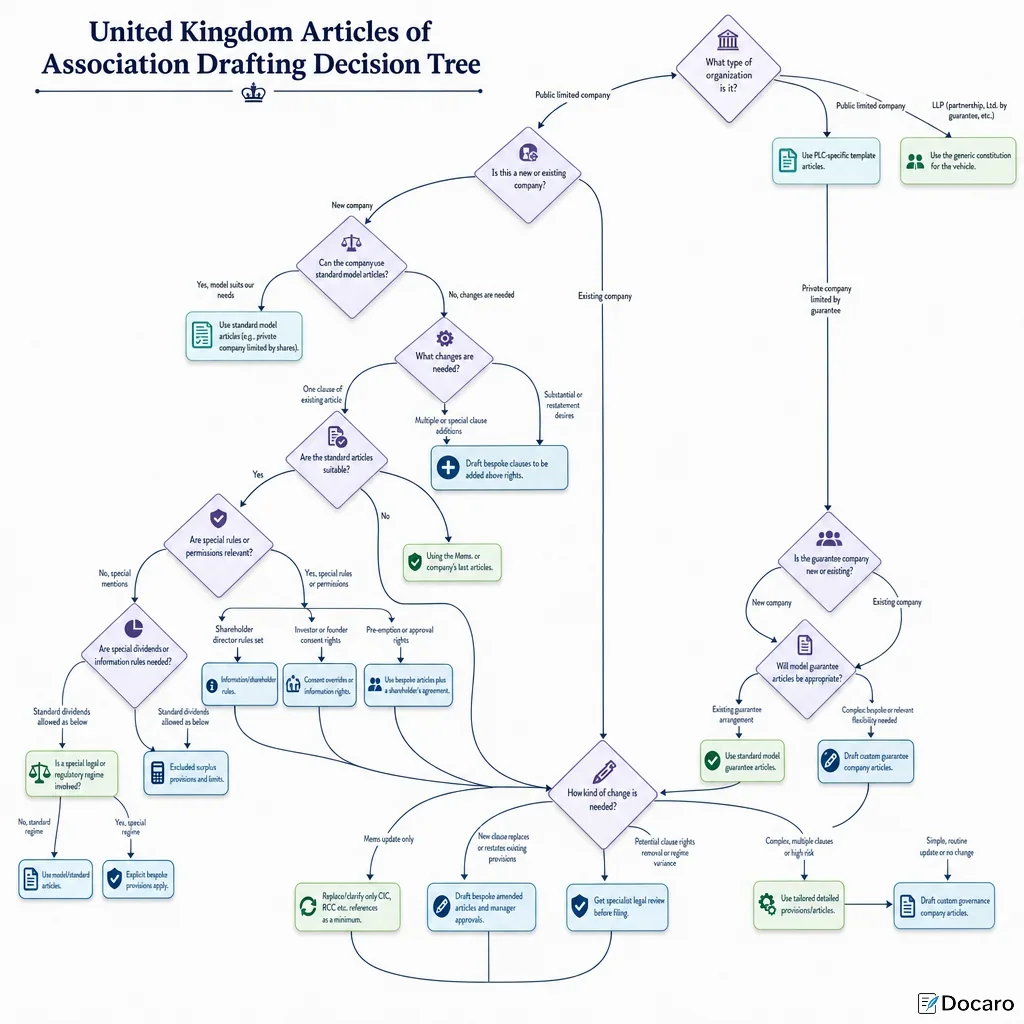
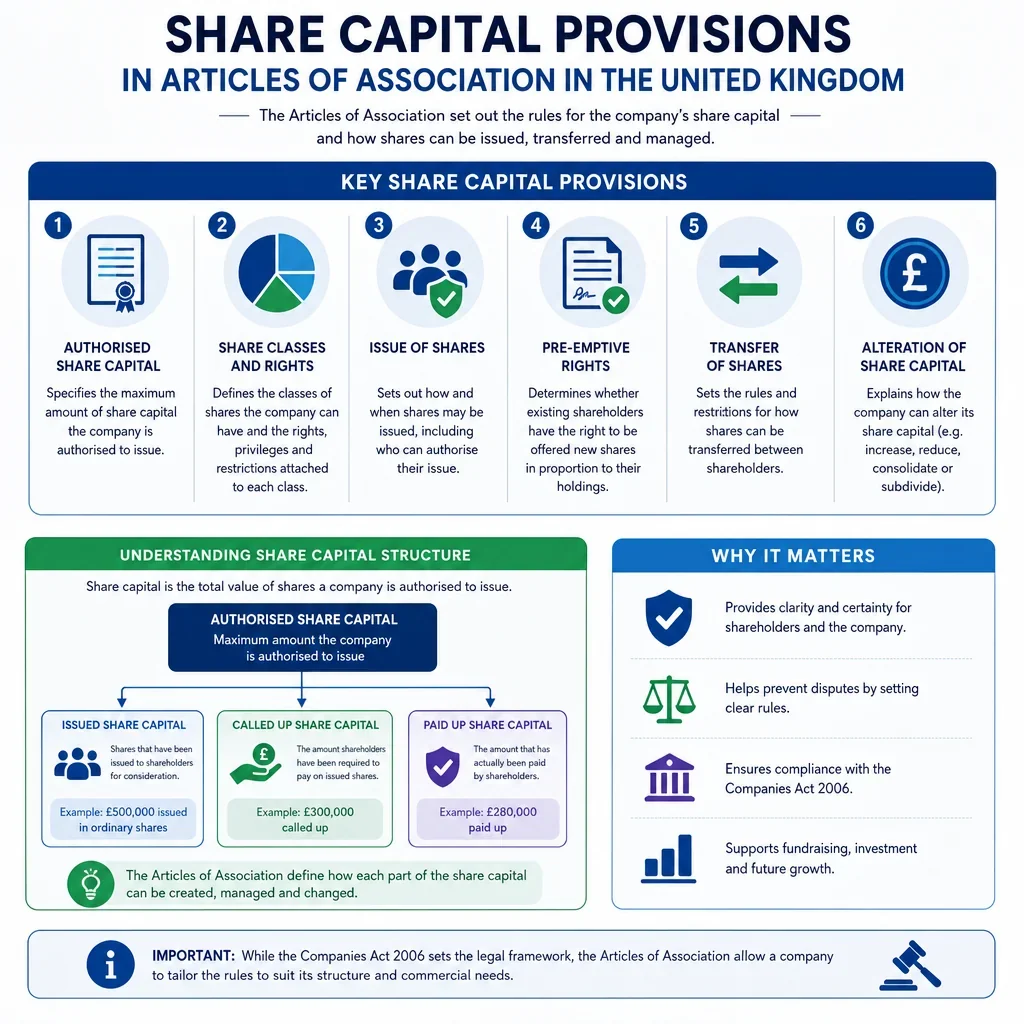
Model articles are often suitable for straightforward companies, but bespoke articles are commonly needed where there are multiple share classes, investor rights, pre-emption provisions, weighted voting, charitable restrictions, community interest company asset locks, joint venture controls, or subsidiary governance requirements.
Do LLPs Use Articles Of Association?
No. Limited liability partnerships do not usually have articles of association. LLPs are registered at Companies House, but their internal governance is normally handled through an LLP agreement rather than company articles.
Why Does The Company Type Matter?
The correct articles depend on whether the entity is limited by shares, limited by guarantee, public, unlimited, or a CIC. Choosing the wrong document can create filing problems, unsuitable member liability wording, or governance rules that do not match the organisation’s legal form.
Which Organisations Need Specialist Registration Instead?
Some entities linked to companies need additional or specialist oversight. For example, charitable companies may register at Companies House and also with the Charity Commission, while community interest companies require CIC Regulator approval and CIC-specific constitutional provisions.
FAQs
You Might Also Be Interested In