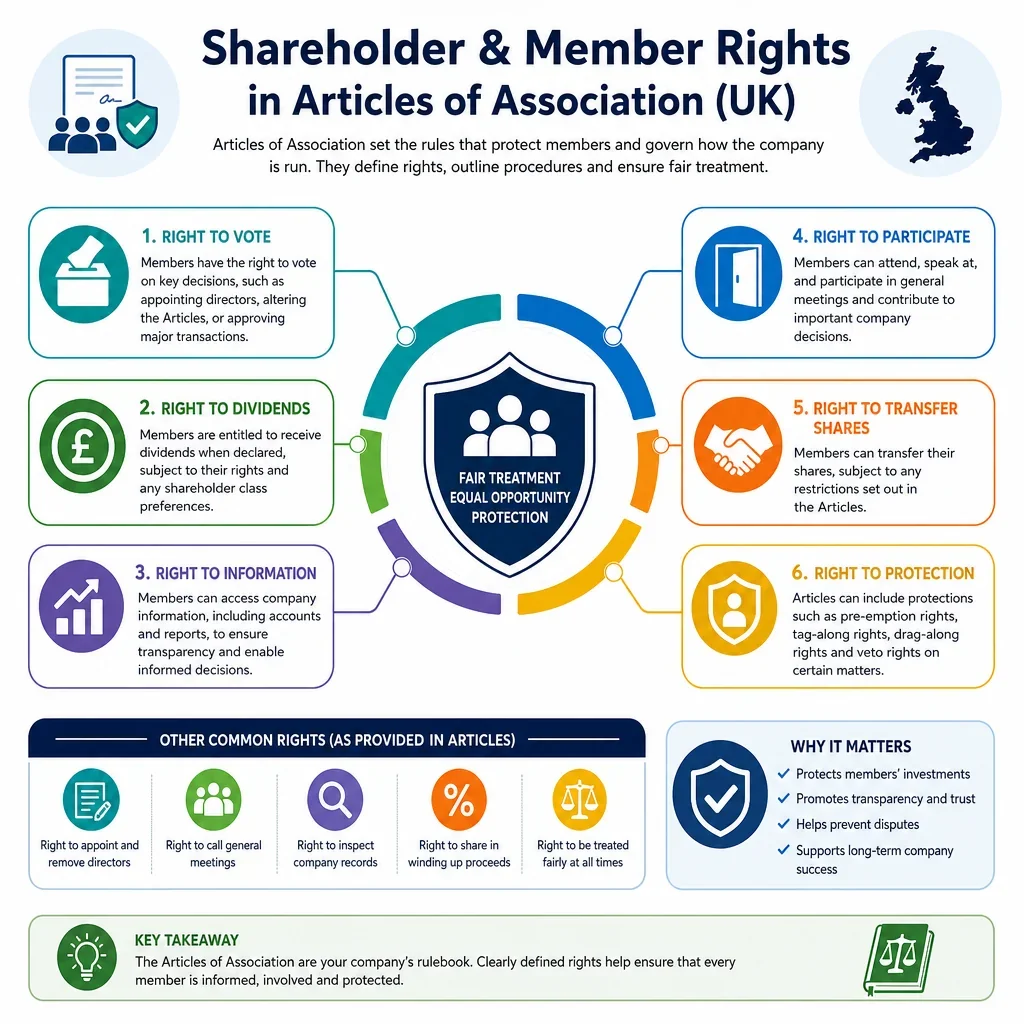
Shareholder And Member Rights In Articles Of Association In The United Kingdom
Right Name | Description | Applies To | Common Source | Practical Operation Example |
|---|---|---|---|---|
Voting rights | ||||
Ordinary Voting Right | The right to vote on member decisions, usually one vote per share or per member. | Both shares and guarantee membership | Usually in articles | Each ordinary share carries one vote at a general meeting. |
Poll Vote Right | On a poll, voting power is counted by shares or voting entitlement rather than by show of hands. | Both shares and guarantee membership | Usually statutory | A shareholder with 60% of voting shares can carry a poll vote despite equal headcount. |
Show Of Hands Vote | Each member present normally has one vote on a show of hands. | Both shares and guarantee membership | Usually statutory | Five members present each raise a hand and each is counted once. |
Proxy Voting Right | A member may appoint another person to attend and vote on their behalf. | Both shares and guarantee membership | Usually statutory | An absent shareholder appoints the chair to vote for a resolution. |
Corporate Representative Right | A corporate member may authorise a person to exercise its meeting rights. | Both shares and guarantee membership | Usually statutory | A corporate shareholder appoints its finance director to vote at the AGM. |
Written Resolution Voting Right | Eligible members can approve resolutions without holding a meeting. | Both shares and guarantee membership | Usually statutory | Shareholders sign a written special resolution to adopt new articles. |
Weighted Voting Right | Certain shares or members carry extra votes on specified matters. | Both shares and guarantee membership | May be in either | A founder share carries ten votes on director appointment decisions. |
Reserved Matter Veto Right | A named shareholder or class must consent before specified actions are taken. | Shares | Usually in shareholders agreement | Investor consent is needed before issuing new shares or borrowing heavily. |
Meeting rights | ||||
Quorum Participation Right | Specified members must be present for a meeting to conduct business. | Both shares and guarantee membership | Usually in articles | A meeting is inquorate unless one investor representative is present. |
Voting rights | ||||
Chair Casting Vote | The chair has an extra vote if votes are tied, if the articles allow it. | Both shares and guarantee membership | Usually in articles | A 50:50 vote is decided by the chair's casting vote. |
Dividend rights | ||||
Dividend Participation Right | The right to receive dividends if declared and legally available. | Shares | Usually in articles | Ordinary shareholders receive dividends pro rata to shares held. |
Distributable Profits Limitation | Dividends may only be paid out of profits available for distribution. | Shares | Usually statutory | No dividend is paid despite cash in bank because accounts show no distributable profit. |
Preference Dividend Right | A class receives dividends before ordinary shareholders, often at a fixed rate. | Shares | Usually in articles | Preference shares receive 6% annually before ordinary dividends are paid. |
Cumulative Dividend Right | Unpaid preference dividends accumulate and are payable later before other dividends. | Shares | Usually in articles | Two missed years of preference dividends must be paid before ordinary dividends. |
Non-Cumulative Dividend Right | Missed dividends do not carry forward unless declared for that period. | Shares | Usually in articles | If no dividend is declared this year, the entitlement is lost. |
Participating Dividend Right | A class receives a preferred dividend and may also share in surplus dividends. | Shares | Usually in articles | Preference shares receive 5% plus a share of remaining profits. |
Final Dividend Approval Right | Members approve final dividends recommended by directors, if articles require it. | Shares | Usually in articles | Directors recommend £20,000 shareholders approve it by ordinary resolution. |
Interim Dividend Right | Directors may pay dividends during the year if permitted and lawful. | Shares | Usually in articles | Directors declare a quarterly interim dividend from available profits. |
Scrip Dividend Right | Members may receive extra shares instead of cash dividends. | Shares | Usually in articles | A shareholder elects to take new shares rather than a £500 dividend. |
Capital rights | ||||
Return Of Capital Right | The right to share surplus assets after debts are paid on winding up. | Shares | Usually in articles | After creditors are paid, surplus assets are distributed pro rata to shareholders. |
Liquidation Preference Right | A class receives a fixed or priority amount before ordinary shareholders on exit or winding up. | Shares | May be in either | Investor shares receive their subscription price back before founders receive proceeds. |
Participating Liquidation Preference | A class receives priority capital and also shares in remaining surplus. | Shares | May be in either | Preference shares get 1x investment back, then share remaining sale proceeds. |
Non-Participating Liquidation Preference | A class receives either its preference amount or ordinary share proceeds, not both. | Shares | May be in either | Investor chooses the higher of 1x investment or conversion proceeds. |
Redeemable Share Right | Shares may be bought back or repaid by the company on agreed redemption terms. | Shares | May be in either | Preference shares are redeemed after five years at issue price plus premium. |
Share Buyback Participation Right | A shareholder may sell shares back to the company under a lawful buyback. | Shares | Usually statutory | The company buys back a departing founder's shares under an approved contract. |
Share Conversion Right | Shares may convert into another class on specified events or by election. | Shares | Usually in articles | Preference shares convert into ordinary shares before an IPO. |
Anti-Dilution Right | Conversion or ownership economics are adjusted if later shares are issued cheaply. | Shares | Usually in shareholders agreement | Investor conversion price is reduced after a down-round issue. |
Information rights | ||||
Right To Receive Annual Accounts | Members are entitled to receive copies of the company's annual accounts and reports. | Both shares and guarantee membership | Usually statutory | A member receives the annual accounts before the filing deadline. |
Register Of Members Inspection Right | Members may inspect the register of members and request copies for a proper purpose. | Both shares and guarantee membership | Usually statutory | A shareholder requests the member register to contact others about a resolution. |
General Meeting Minutes Inspection Right | Members may inspect minutes of general meetings without charge. | Both shares and guarantee membership | Usually statutory | A member checks whether a special resolution was properly recorded. |
Constitution Copy Right | A member may require a copy of the company's articles and other constitutional documents. | Both shares and guarantee membership | Usually statutory | A new investor asks for a copy of the current articles before completion. |
Director Service Contract Inspection Right | Members may inspect directors' service contracts or memoranda of their terms. | Both shares and guarantee membership | Usually statutory | A shareholder inspects the CEO director's service contract summary. |
Management Information Right | A member receives periodic management accounts, budgets or KPIs. | Shares | Usually in shareholders agreement | An investor receives monthly management accounts within 20 business days. |
Auditor Report Access Right | Members receive or access auditor reports where audit requirements apply. | Both shares and guarantee membership | Usually statutory | Members review the auditor's opinion with the annual accounts. |
PSC Register Inspection Right | Members and others may access information about persons with significant control. | Both shares and guarantee membership | Usually statutory | A member checks who ultimately controls more than 25% of shares or votes. |
Transfer rights | ||||
Right To Transfer Shares | A shareholder may transfer shares, subject to restrictions in the articles or agreements. | Shares | Usually in articles | A shareholder transfers shares after board approval and registration. |
Board Refusal Of Transfer Right | Directors may refuse to register a share transfer if the articles permit it. | Shares | Usually in articles | Directors refuse registration of a transfer to a competitor. |
Permitted Transfer Right | Transfers to specified persons are allowed without full transfer restrictions. | Shares | May be in either | A founder transfers shares to a family trust without investor consent. |
Compulsory Transfer Right | A shareholder must offer or transfer shares after specified trigger events. | Shares | May be in either | A bankrupt shareholder must offer shares to existing shareholders. |
Good Leaver Share Right | A departing employee-shareholder may keep or sell shares at a fairer price. | Shares | Usually in shareholders agreement | A founder leaving due to illness sells shares at fair market value. |
Bad Leaver Share Right | A defaulting leaver may be forced to sell shares at a discounted price. | Shares | Usually in shareholders agreement | A dismissed founder must sell unvested shares at nominal value. |
Tag-Along Right | Minority shareholders can join a majority sale on the same terms. | Shares | Usually in shareholders agreement | A 10% shareholder sells alongside founders to the same buyer at the same price. |
Drag-Along Right | Majority sellers can require minority shareholders to sell on the same terms. | Shares | May be in either | Holders of 75% accept a company sale and require all shareholders to sell. |
Pre-emption rights | ||||
Right Of First Refusal | Existing shareholders can buy shares before they are sold to outsiders. | Shares | May be in either | A seller must offer shares to existing shareholders before accepting a third-party offer. |
Statutory Pre-Emption On New Shares | Existing ordinary shareholders generally have first refusal on new equity securities for cash. | Shares | Usually statutory | New cash shares must be offered pro rata before being issued to an investor. |
Pre-Emption Disapplication Approval Right | Members may approve allotments without statutory pre-emption rights applying. | Shares | Usually statutory | Shareholders pass a special resolution to issue investor shares directly. |
Contractual Pro Rata Subscription Right | Investors can maintain ownership percentage in future funding rounds. | Shares | Usually in shareholders agreement | An investor subscribes for extra shares to keep a 20% holding. |
Excess Application Right | Members taking their entitlement may apply for shares not taken by others. | Shares | May be in either | A shareholder applies for lapsed shares after another investor declines. |
Class rights | ||||
Class Rights Variation Consent | Rights attached to a class may be varied only with required class consent. | Shares | Usually statutory | Preference shareholders must consent before their dividend priority is changed. |
Class Variation Objection Right | A qualifying minority of a class may apply to court to cancel a variation. | Shares | Usually statutory | Dissenting class holders challenge a variation they say unfairly prejudices them. |
Separate Class Meeting Right | A class may meet separately where its class rights or class decisions are affected. | Shares | Usually statutory | A class meeting approves cancellation of preference share rights. |
Non-Voting Share Right | A share class has economic rights but no votes, except where law or articles allow. | Shares | Usually in articles | Growth shares receive exit proceeds but do not vote on ordinary business. |
Deferred Share Right | A class has delayed or subordinated rights to dividends, votes or capital. | Shares | Usually in articles | Deferred shares receive capital only after ordinary shares receive £1,000 each. |
Growth Share Hurdle Right | A class participates only in value above a specified hurdle or threshold. | Shares | Usually in articles | Growth shares share only in proceeds above a £5 million valuation hurdle. |
Meeting rights | ||||
General Meeting Notice Right | Members are entitled to minimum notice of general meetings. | Both shares and guarantee membership | Usually statutory | A private company gives at least 14 clear days' notice of a general meeting. |
Short Notice Consent Right | A meeting may be held on shorter notice if sufficient members consent. | Both shares and guarantee membership | Usually statutory | Members holding 90% voting rights agree to a same-week meeting. |
Right To Attend General Meetings | Members are entitled to receive notice of and participate in general meetings. | Both shares and guarantee membership | Usually statutory | A member attends the meeting and asks questions before voting. |
Right To Demand A Poll | Qualifying members may require voting to be counted by voting entitlement. | Both shares and guarantee membership | Usually statutory | A 10% shareholder demands a poll after losing a show of hands. |
Right To Require Circulation Of Written Resolution | Eligible members may require a private company to circulate a written resolution. | Both shares and guarantee membership | Usually statutory | Members require circulation of a resolution to remove a director. |
Right To Require A General Meeting | Members with sufficient voting rights may require directors to call a general meeting. | Both shares and guarantee membership | Usually statutory | Members holding 5% of votes require a meeting about board conduct. |
Right To Circulate Member Statement | Qualifying members may require circulation of a statement about meeting business. | Both shares and guarantee membership | Usually statutory | Minority members circulate a statement opposing a proposed asset sale. |
Annual General Meeting Right | Public companies must hold AGMs private companies may require them in articles. | Both shares and guarantee membership | May be in either | A public company holds an AGM within the statutory period each year. |
Electronic Meeting Participation Right | Members may attend and vote at meetings using electronic means if permitted. | Both shares and guarantee membership | Usually in articles | Members join a hybrid meeting by video link and vote electronically. |
Membership Admission Right | A person may become a member if admitted under the articles or membership rules. | Guarantee membership | Usually in articles | The board admits a new club member after an approved application. |
Membership Resignation Right | A guarantee member may resign in the manner set by the articles. | Guarantee membership | Usually in articles | A member resigns by written notice to the company secretary. |
Capital rights | ||||
Limited Guarantee Liability Right | A guarantee member's liability is limited to the guaranteed amount if the company is wound up. | Guarantee membership | Usually in articles | Each member guarantees £1 and has no share capital entitlement. |
Non-Distribution Member Right | Members of a non-profit guarantee company usually have no right to profits or surplus assets. | Guarantee membership | Usually in articles | Surplus assets must transfer to another non-profit body on winding up. |
Meeting rights | ||||
Membership Removal Procedure Right | Members may be removed only under a defined fair process in the articles. | Guarantee membership | Usually in articles | A member is expelled after notice, reasons and a board or member vote. |
Voting rights | ||||
Right To Approve Alteration Of Articles | Articles may generally be amended only by special resolution. | Both shares and guarantee membership | Usually statutory | Members holding 75% approve replacement articles. |
Class rights | ||||
Unfair Prejudice Petition Right | A member may petition the court if company affairs unfairly prejudice members' interests. | Both shares and guarantee membership | Usually statutory | A minority shareholder petitions after exclusion from management and diverted profits. |
Information rights | ||||
Derivative Claim Right | A member may seek court permission to bring a claim on behalf of the company. | Both shares and guarantee membership | Usually statutory | A shareholder seeks permission to sue directors for breach of duty to the company. |
Voting rights | ||||
Right To Remove A Director | Members may remove a director by ordinary resolution with special notice. | Both shares and guarantee membership | Usually statutory | Shareholders pass an ordinary resolution removing a director from office. |
Investor Director Appointment Right | A shareholder or class may appoint a director while holding a minimum stake. | Shares | May be in either | A 20% investor appoints one non-executive director to the board. |
Information rights | ||||
Board Observer Right | A member may attend board meetings without voting as a director. | Shares | Usually in shareholders agreement | An investor observer receives board papers and attends board meetings. |
Pre-emption rights | ||||
Pre-Emption Waiver Right | A shareholder may waive their right to be offered shares or transfer shares first. | Shares | May be in either | A shareholder signs a waiver so an investor can subscribe immediately. |
Voting rights | ||||
Joint Holder Voting Priority | Where shares are jointly held, the senior holder's vote may prevail. | Shares | Usually in articles | Only the first-named joint holder's vote is counted if votes conflict. |
Dividend rights | ||||
Dividend Record Date Right | Entitlement to a dividend is fixed by shareholding on a specified record date. | Shares | Usually in articles | Only shareholders on the register on Friday receive the declared dividend. |
Information rights | ||||
Share Certificate Right | A shareholder is entitled to a share certificate after allotment or transfer registration. | Shares | Usually statutory | A buyer receives a certificate within the statutory period after registration. |
Replacement Share Certificate Right | A shareholder may obtain a replacement certificate if the original is lost or damaged. | Shares | Usually in articles | The company issues a replacement after an indemnity and admin fee. |
Transfer rights | ||||
Transmission Of Shares Right | Personal representatives or trustees may become entitled to shares on death or bankruptcy. | Shares | Usually in articles | An executor is registered after producing a grant of probate. |
Company Lien On Shares | The company may have security over partly paid shares for unpaid amounts. | Shares | Usually in articles | The company refuses transfer until unpaid share capital is paid. |
Capital rights | ||||
Forfeiture Protection And Procedure | Partly paid shares may be forfeited only under the article procedure for unpaid calls. | Shares | Usually in articles | A shareholder receives notice before shares are forfeited for an unpaid call. |
Voting rights | ||||
Voting Suspension For Unpaid Calls | A shareholder's voting rights may be suspended while amounts on shares remain unpaid. | Shares | Usually in articles | A holder cannot vote until an unpaid call on shares is settled. |
Capital rights | ||||
Capital Reduction Approval Right | Members approve reductions of share capital using the statutory procedure. | Shares | Usually statutory | Shareholders approve a solvency-statement capital reduction by special resolution. |
Share Allotment Authority Right | Directors may need member authority to allot new shares. | Shares | Usually statutory | Shareholders authorise directors to allot up to 10,000 new shares. |
Single-Class Allotment Default | Directors of a private company with one share class may allot shares unless restricted. | Shares | Usually statutory | Directors allot ordinary shares without separate authority because no restriction applies. |
What Shareholder And Member Rights Should UK Articles Of Association Cover?
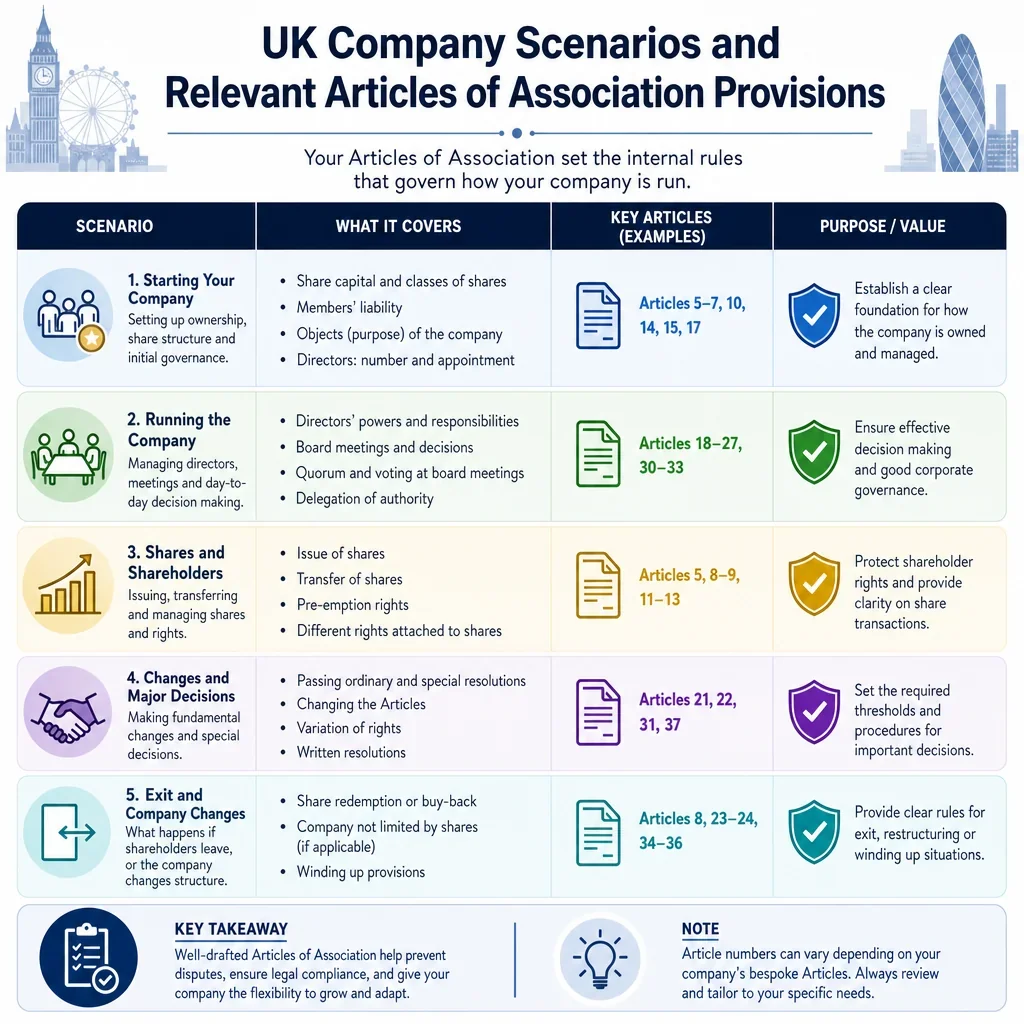
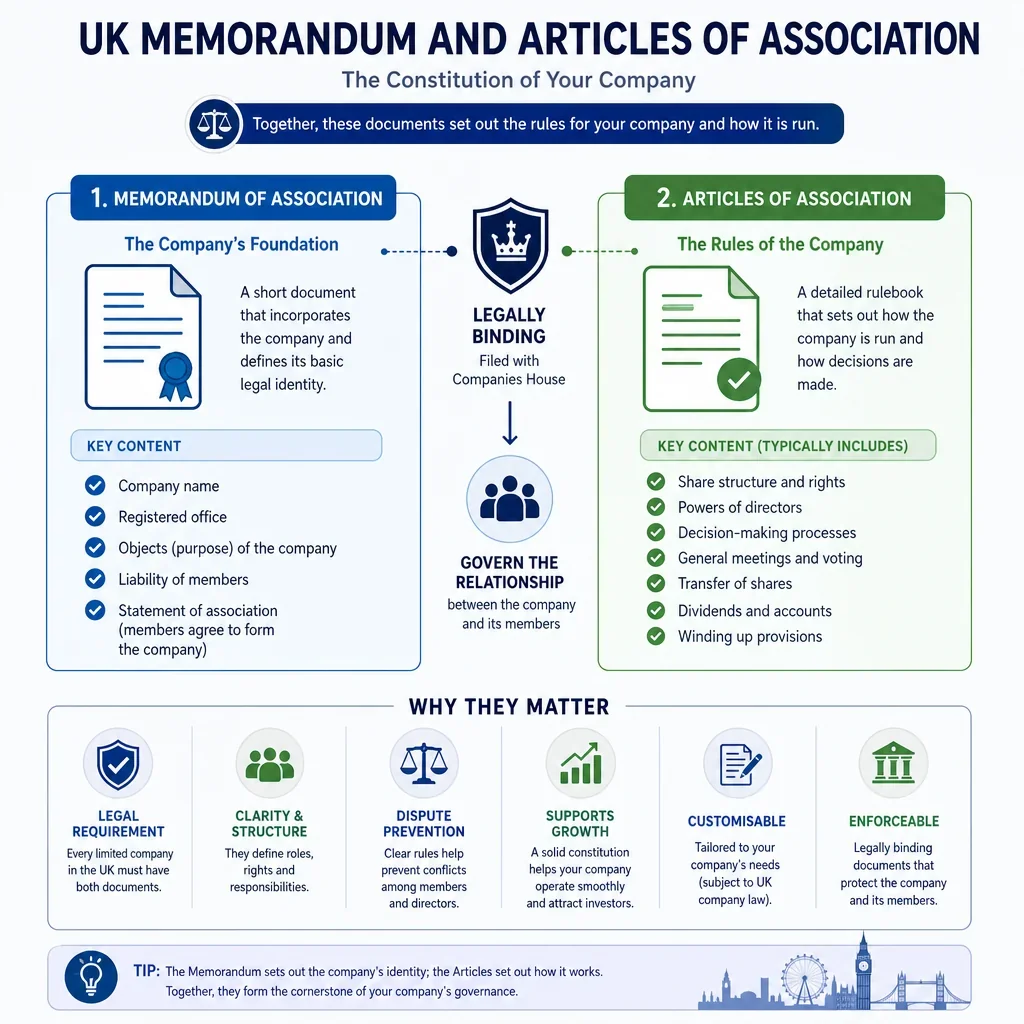
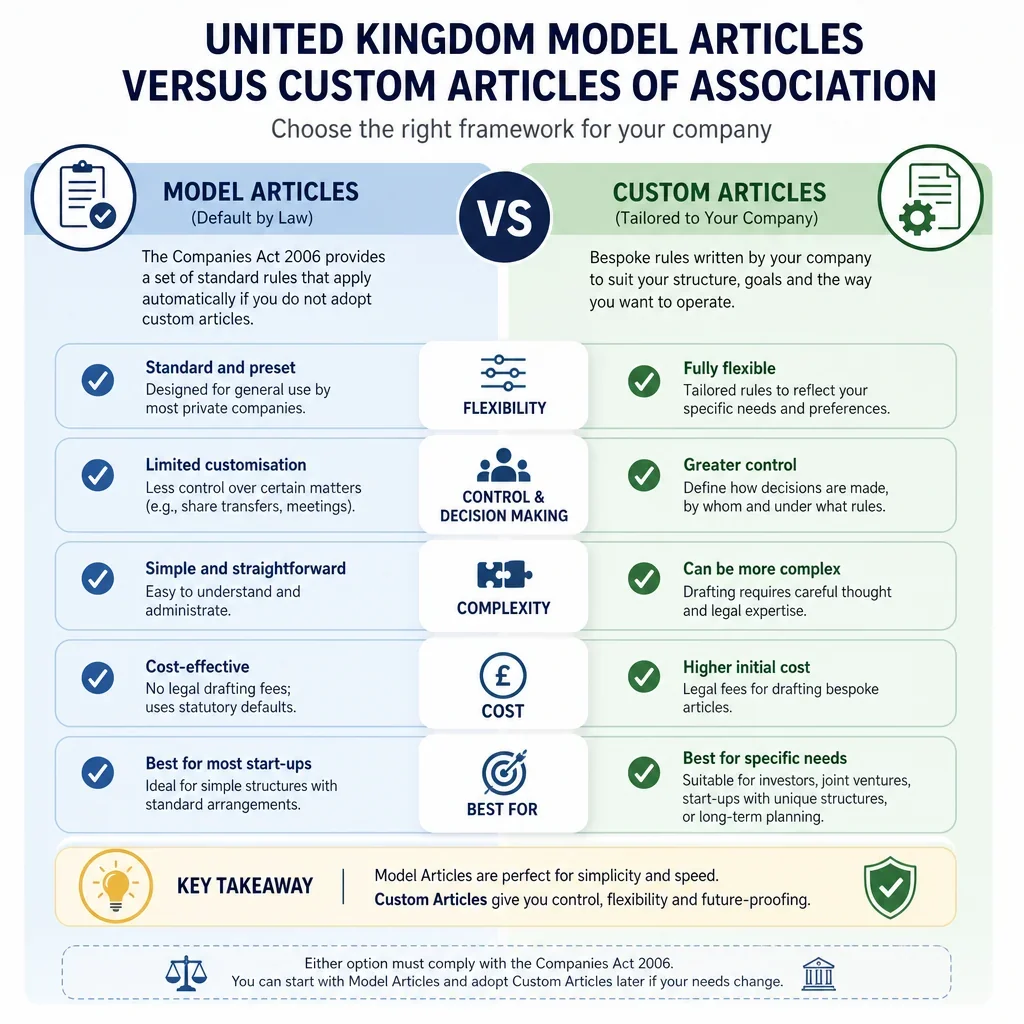
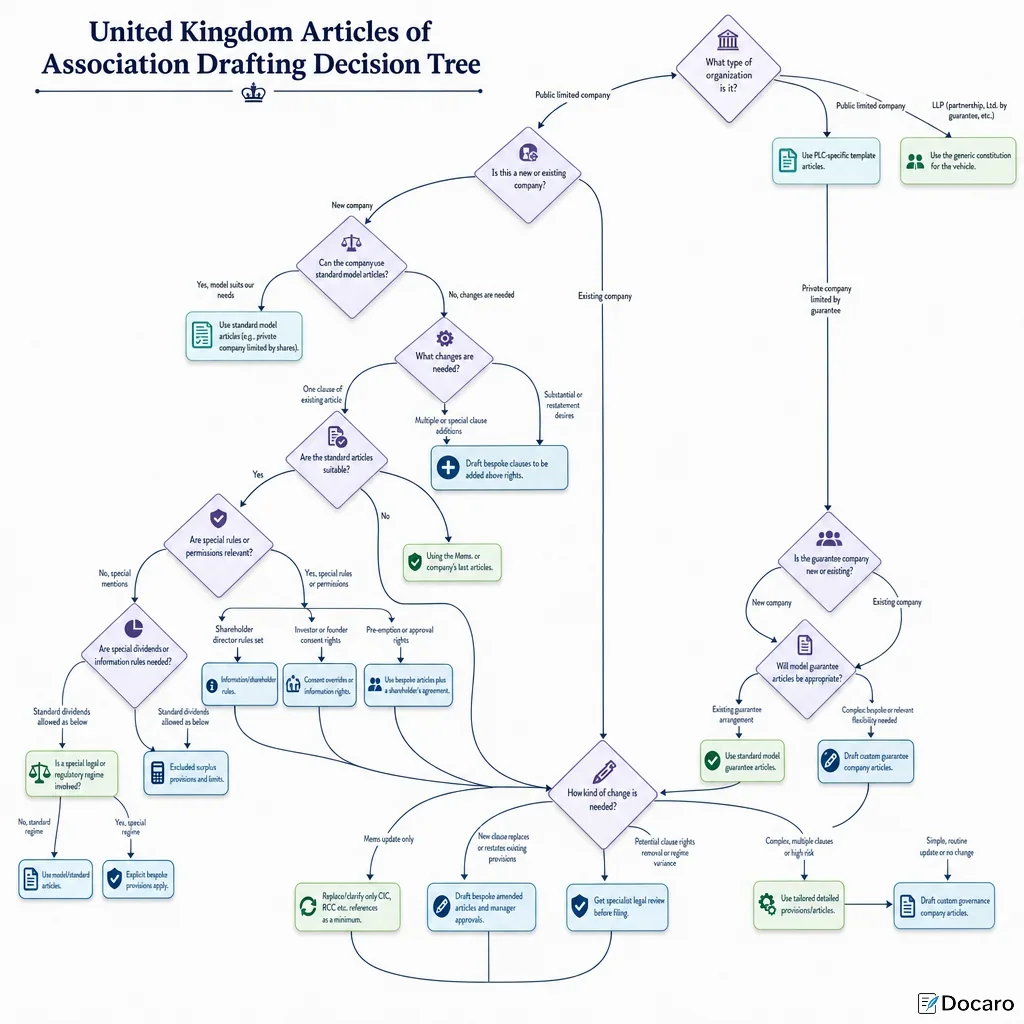
For a UK company limited by shares, the articles commonly need clear rules on voting, dividends, capital on a winding up, share transfers, pre-emption rights and class rights. Some rights are mainly statutory under the Companies Act 2006, such as the right to receive notice of general meetings and the right to inspect certain company records, but the articles can often add procedural detail or modify default rules where the Act permits it.
Which Rights Are More Commonly Put In A Shareholders Agreement?
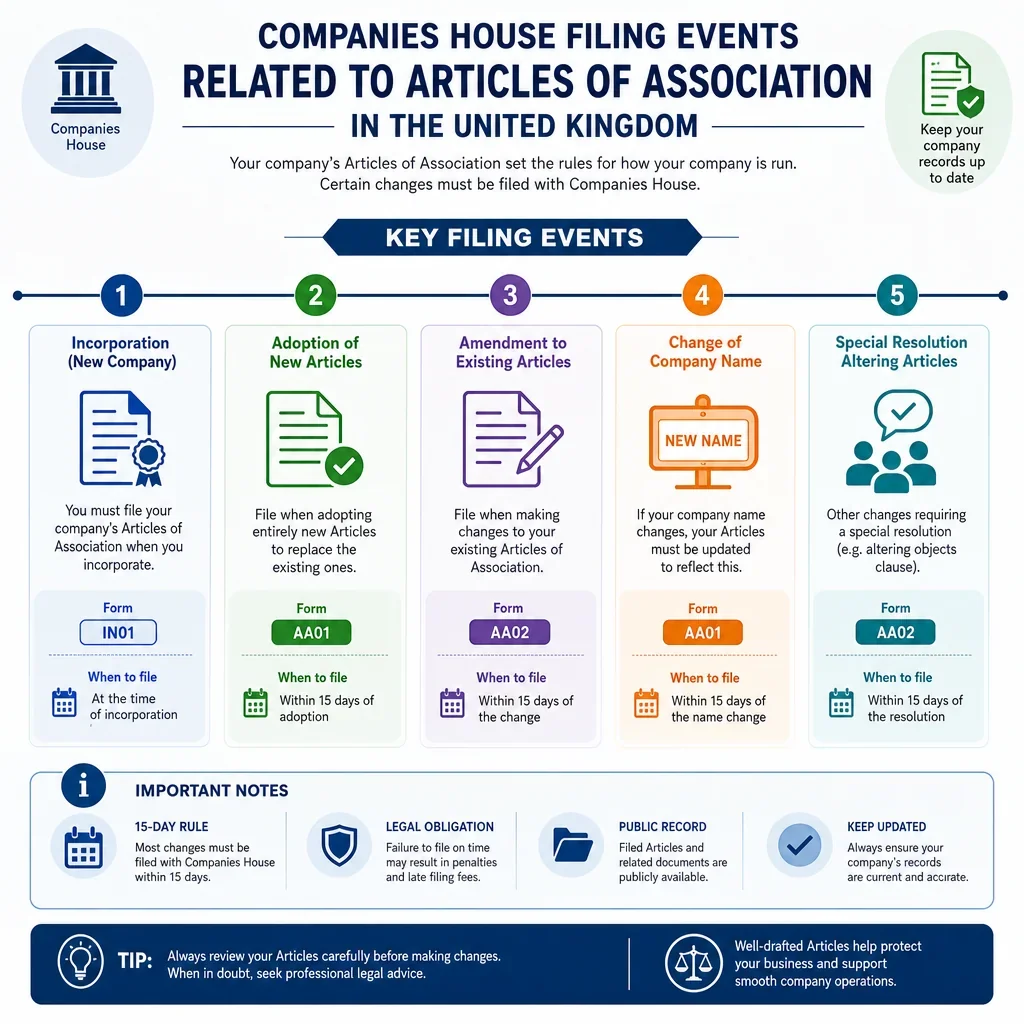
Rights that are commercially sensitive or personal to particular investors, such as veto rights, drag-along rights, tag-along rights, founder leaver provisions and information packs, are often placed in a shareholders agreement rather than the articles. This is partly because articles are publicly filed at Companies House, while a shareholders agreement is normally private.
Why Do Class Rights Matter In Articles Of Association?
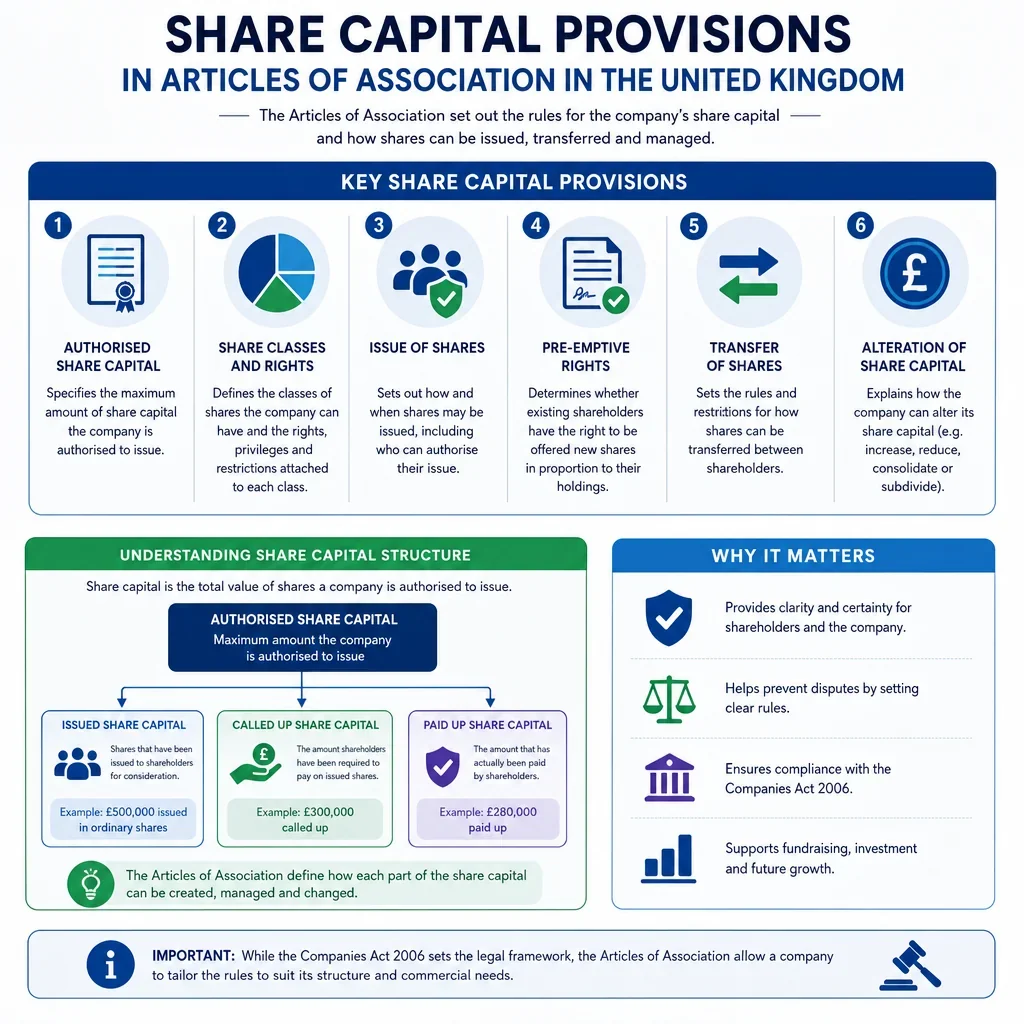
If a company has ordinary shares, preference shares, growth shares or other classes, the articles should identify the rights attached to each class, especially votes, dividends, return of capital and conversion or redemption mechanics. Variation of class rights is governed by the Companies Act 2006 and may require consent from the relevant class, so unclear drafting can make later fundraising or reorganisation more difficult.
Do Guarantee Companies Need Different Member Rights?
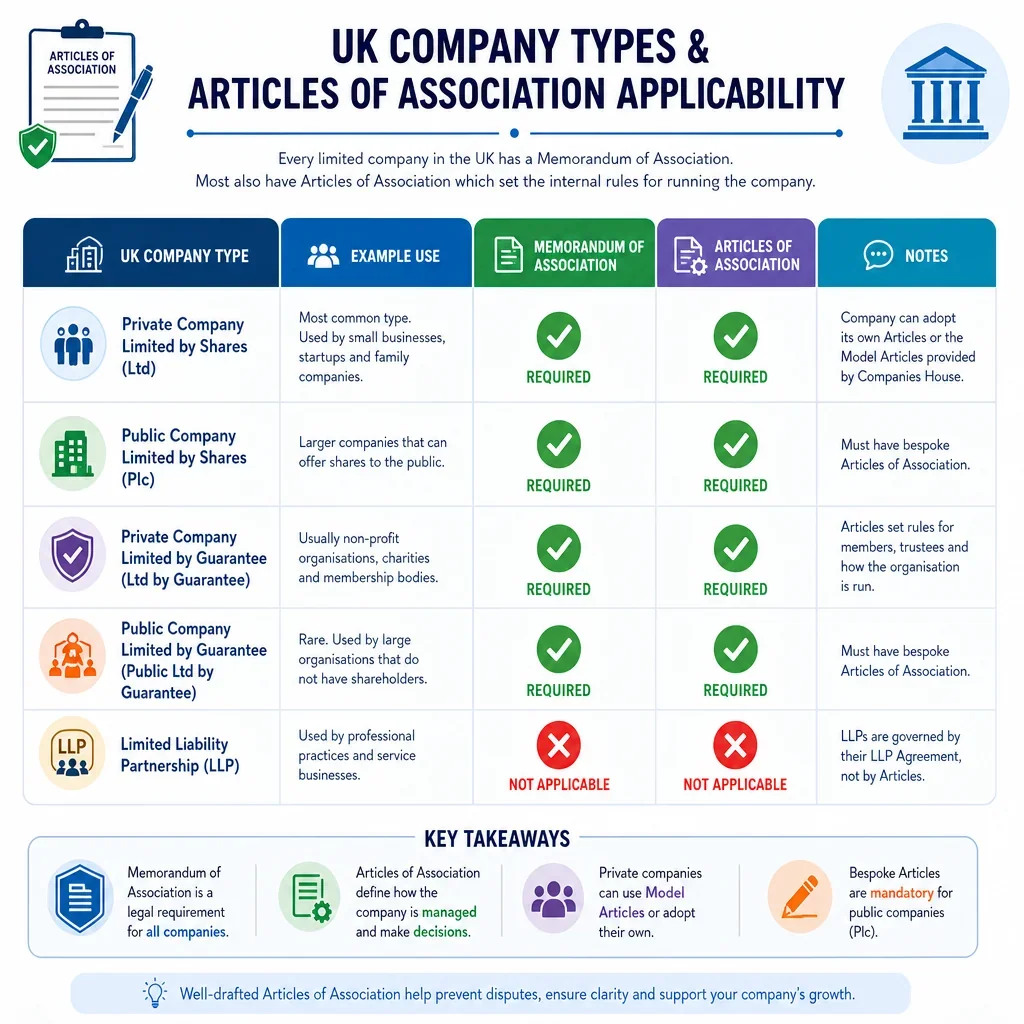
Companies limited by guarantee do not usually have share capital, so rights such as dividends, share transfers and return of share capital are normally irrelevant. Their articles should instead focus on membership admission, resignation, voting, meetings, information access, member liabilities and distribution restrictions, especially for charities, clubs and non-profits.
How Can Poorly Drafted Articles Cause Practical Problems?
Ambiguous articles can create disputes about who may vote, whether shares can be transferred, who receives dividends and what approvals are needed for major decisions. For UK companies, well-drafted articles should align with the Companies Act 2006, any shareholders agreement and the company\'s intended ownership structure.
FAQs
You Might Also Be Interested In