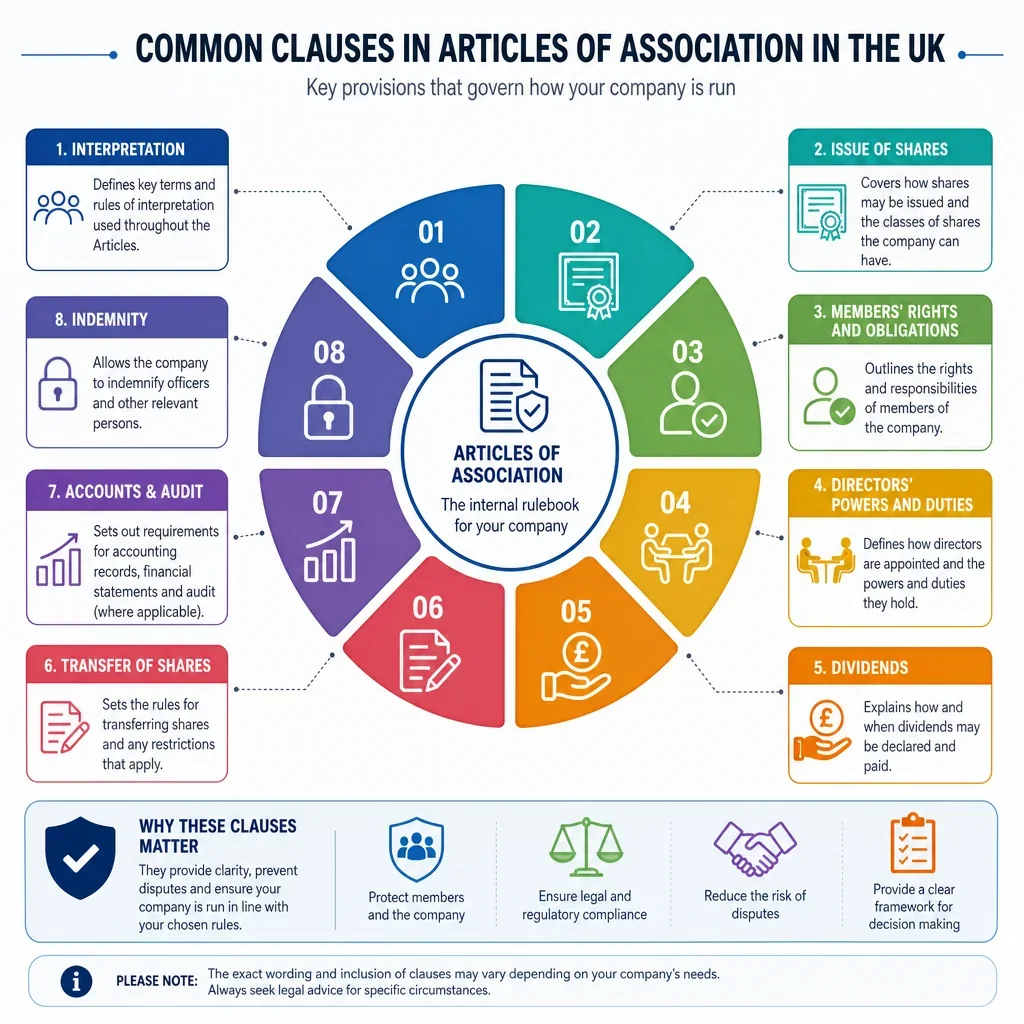
Common Clauses In Articles Of Association In The UK
Clause Name | Purpose | Typical Inclusion Status | Customisation Example | Importance Level |
|---|---|---|---|---|
Administrative provisions | ||||
Company Name | Identifies the company governed by the articles. | Standard | Adapt when changing company name after incorporation. | Medium |
Limited Liability Statement | Confirms membersu2019 liability is limited. | Standard | Use guarantee wording for a company limited by guarantee. | High |
Share capital | ||||
Statement Of Capital | Records initial share capital and share details. | Standard | Use multiple classes for founders and investors. | High |
Company objects | ||||
Unrestricted Objects | Allows the company to carry on any lawful business. | Standard | Restrict activities for a charity or regulated vehicle. | Medium |
Restricted Objects | Limits the companyu2019s permitted activities. | Situation-specific | Use for charities, SPVs or regulated entities. | High |
Directors | ||||
Directorsu2019 General Authority | Gives directors power to manage the company. | Standard | Limit powers with shareholder reserved matters. | High |
Decision making | ||||
Shareholder Reserved Matters | Requires shareholder approval for key decisions. | Optional | Require investor consent for borrowing or new shares. | High |
Board Reserved Matters | Requires special board approval for sensitive actions. | Optional | Require nominated director consent for annual budgets. | High |
Directors | ||||
Directors May Delegate | Allows directors to delegate powers to others. | Standard | Limit delegation to committees or named officers. | Medium |
Directorsu2019 Committees | Permits committees to handle specified functions. | Standard | Create audit, remuneration or investment committees. | Medium |
Decision making | ||||
Directorsu2019 Decision-Making | Sets how directors make board decisions. | Standard | Require unanimous consent for major decisions. | High |
Unanimous Board Decisions | Allows board decisions without a meeting if unanimous. | Standard | Permit electronic approvals by all directors. | Medium |
Directors | ||||
Calling Board Meetings | Sets who may call a directorsu2019 meeting. | Standard | Allow investor director to demand a board meeting. | Medium |
Notice Of Board Meetings | Requires directors to receive meeting notice. | Standard | Set minimum notice for overseas directors. | Medium |
Decision making | ||||
Board Quorum | Sets the minimum directors needed for decisions. | Standard | Require founder and investor director attendance. | High |
Directors | ||||
Single Director Quorum | Allows a sole director to make decisions. | Situation-specific | Clarify authority for a one-director private company. | High |
Chairing Board Meetings | Sets how the board chair is appointed. | Standard | Give chair role to a founder or investor nominee. | Medium |
Decision making | ||||
Chairu2019s Casting Vote | Lets the chair break tied board votes. | Optional | Remove for 50:50 joint ventures to avoid imbalance. | High |
Directors | ||||
Conflicts Of Interest | Manages directorsu2019 actual or potential conflicts. | Standard | Permit investor directors to hold competing appointments. | High |
Declaration Of Interests | Requires directors to disclose transaction interests. | Standard | Set stricter disclosure rules for regulated businesses. | High |
Interested Director Voting | Sets whether conflicted directors may vote. | Standard | Exclude conflicted directors from quorum and voting. | High |
Director Appointment By Ordinary Resolution | Lets shareholders appoint directors by resolution. | Standard | Add class rights to appoint a nominated director. | High |
Director Appointment By Board | Allows directors to appoint additional directors. | Standard | Require shareholder approval for board appointments. | High |
Removal Of Directors | Allows shareholders to remove directors. | Standard | Link removal to loss of shareholding or employment. | High |
Termination Of Director Appointment | Lists automatic vacation events for directors. | Standard | Add termination on bankruptcy or loss of licence. | Medium |
Alternate Directors | Allows a director to appoint a substitute. | Optional | Useful where directors travel frequently. | Medium |
Minimum Number Of Directors | Sets required number of directors. | Situation-specific | Require at least two directors for governance. | Medium |
Director Remuneration | Allows directors to be paid for services. | Standard | Require shareholder approval for director fees. | Medium |
Directorsu2019 Expenses | Permits reimbursement of directorsu2019 expenses. | Standard | Cap travel costs or require receipts. | Low |
Indemnity For Directors | Protects directors within permitted legal limits. | Standard | Extend to officers and associated company directors. | High |
Directorsu2019 Insurance | Allows purchase of D&O insurance. | Optional | Make insurance mandatory for investor-backed companies. | Medium |
Transfers and allotments | ||||
Allotment Of Shares | Authorises directors to issue new shares. | Standard | Require shareholder approval above a funding cap. | High |
Statutory Pre-Emption On Allotment | Gives existing shareholders first refusal on new shares. | Standard | Disapply for employee option or investor rounds. | High |
Disapplication Of Pre-Emption Rights | Permits new shares without first offering existing holders. | Optional | Allow quick fundraising with investor consent. | High |
Share capital | ||||
Share Classes | Creates different rights for different shares. | Situation-specific | Create growth, preference or non-voting shares. | High |
Ordinary Shares | Sets default economic and voting rights. | Standard | Use different nominal values or voting rights. | High |
Preference Shares | Gives priority dividend or capital rights. | Situation-specific | Give investors liquidation preference on exit. | High |
Deferred Shares | Postpones rights behind other share classes. | Situation-specific | Use in tax planning or reorganisations. | Medium |
Shareholder rights | ||||
Non-Voting Shares | Separates economic ownership from voting control. | Situation-specific | Issue shares to employees without control rights. | High |
Share capital | ||||
Alphabet Shares | Allows different dividends for separate share classes. | Situation-specific | Family company paying different dividends to members. | High |
Growth Shares | Gives rights only above a hurdle value. | Situation-specific | Incentivise management in a scaling company. | High |
Redeemable Shares | Allows shares to be bought back or redeemed. | Situation-specific | Issue redeemable investor or employee shares. | High |
Shareholder rights | ||||
Variation Of Class Rights | Sets approval needed to change class rights. | Situation-specific | Require investor class consent for preference changes. | High |
Dividends | Sets how profits may be distributed to shareholders. | Standard | Allow different dividends for alphabet shares. | High |
Interim Dividends | Allows directors to pay dividends between accounts. | Standard | Require lender or investor consent before payment. | Medium |
Final Dividends | Lets shareholders approve recommended dividends. | Standard | Cap dividends until loans are repaid. | Medium |
Share capital | ||||
Capitalisation Of Profits | Converts reserves into bonus shares or capital. | Standard | Use for bonus issues to existing shareholders. | Medium |
Share Certificates | Provides evidence of share ownership. | Standard | Use uncertificated arrangements for larger structures. | Medium |
Administrative provisions | ||||
Replacement Share Certificates | Sets process for lost or damaged certificates. | Standard | Require indemnity before issuing replacements. | Low |
Share capital | ||||
Lien On Shares | Secures unpaid amounts owed on shares. | Standard | Extend lien to debts owed to the company. | Medium |
Calls On Shares | Allows company to demand unpaid share capital. | Standard | Set call notice periods for partly paid shares. | Medium |
Forfeiture Of Shares | Permits forfeiture for unpaid calls. | Standard | Apply only after extended notice and board approval. | Medium |
Transfers and allotments | ||||
Transfer Of Shares | Sets the process for transferring shares. | Standard | Require board approval before registration. | High |
Board Refusal To Register Transfers | Lets directors refuse registration of transfers. | Standard | Limit refusal to approved grounds only. | High |
Pre-Emption On Share Transfers | Gives existing holders first refusal on sales. | Optional | Protect a family company from outside shareholders. | High |
Permitted Transfers | Allows transfers without full restrictions. | Optional | Allow transfers to spouses, trusts or group companies. | High |
Compulsory Transfer Events | Requires sale after specified trigger events. | Optional | Trigger on death, insolvency, dismissal or breach. | High |
Dispute and exit provisions | ||||
Good Leaver Provisions | Sets fairer exit terms for acceptable departures. | Situation-specific | Use for founder illness, redundancy or retirement. | High |
Bad Leaver Provisions | Penalises misconduct or early departure. | Situation-specific | Discount shares for fraud, gross misconduct or breach. | High |
Drag-Along Rights | Lets majority force minority to join a sale. | Optional | Require 75% approval before compulsory sale. | High |
Tag-Along Rights | Lets minority join a majority share sale. | Optional | Protect minority investors on founder exit. | High |
Shotgun Buy-Sell Clause | Resolves deadlock by forced buy-sell process. | Situation-specific | Use in 50:50 owner-managed companies. | High |
Deadlock Escalation | Escalates unresolved decision deadlocks. | Situation-specific | Escalate from board to shareholders to mediation. | High |
Russian Roulette Clause | Breaks deadlock by offer-to-buy or sell. | Situation-specific | Use only where parties have similar resources. | High |
Texas Shoot-Out Clause | Uses sealed bids to resolve ownership deadlock. | Situation-specific | Use in sophisticated joint ventures. | High |
Transfers and allotments | ||||
Right Of First Refusal | Lets existing holders match third-party offers. | Optional | Set process for external buyer offers. | High |
Right Of First Offer | Requires offer to existing holders before marketing. | Optional | Use where private sale confidentiality matters. | Medium |
Transmission Of Shares | Deals with shares after death or bankruptcy. | Standard | Require sale rather than inheritance by successors. | High |
Share capital | ||||
Share Buyback Authority | Allows company purchase of its own shares. | Situation-specific | Buy back departing employee shareholder shares. | High |
Treasury Shares | Allows bought-back shares to be held in treasury. | Situation-specific | Use for employee share scheme recycling. | Medium |
Decision making | ||||
General Meetings | Sets framework for shareholder meetings. | Standard | Add remote meeting procedures. | High |
Notice Of General Meetings | Sets required notice for shareholder meetings. | Standard | Require longer notice for overseas shareholders. | High |
Short Notice Consent | Allows meetings on shorter notice if approved. | Standard | Set stricter consent threshold for investor companies. | Medium |
Quorum For General Meetings | Sets minimum members needed for valid meetings. | Standard | Require investor shareholder presence for quorum. | High |
Chairing General Meetings | Determines who chairs shareholder meetings. | Standard | Prevent chair from having casting vote. | Medium |
Shareholder rights | ||||
Attendance And Speaking At Meetings | Sets who may attend and speak at meetings. | Standard | Allow advisers or observers to attend. | Low |
Voting On A Show Of Hands | Gives one vote per member present. | Standard | Use polls by default where shareholdings differ. | Medium |
Voting On A Poll | Allocates votes according to shareholding. | Standard | Give weighted votes to founder shares. | High |
Demanding A Poll | Sets who may require poll voting. | Standard | Lower threshold for minority investor protection. | Medium |
Decision making | ||||
Ordinary Resolutions | Approves routine matters by simple majority. | Standard | Identify matters needing higher consent. | High |
Special Resolutions | Approves major matters by 75% majority. | Standard | Use for articles amendments or share class changes. | High |
Written Resolutions | Allows shareholder decisions without meetings. | Standard | Require circulation to all shareholders first. | High |
Unanimous Shareholder Decisions | Requires all shareholders to approve specified matters. | Optional | Use for joint ventures or founder veto rights. | High |
Shareholder rights | ||||
Proxy Voting | Allows members to appoint proxies to vote. | Standard | Permit electronic proxy appointments. | Medium |
Corporate Representatives | Allows corporate members to appoint representatives. | Standard | Specify evidence of representative authority. | Medium |
Decision making | ||||
Electronic Meetings | Permits meetings by phone or video link. | Optional | Define technology failure and attendance rules. | Medium |
Administrative provisions | ||||
Electronic Communications | Allows notices and documents by electronic means. | Standard | Require members to provide valid email addresses. | Medium |
Means Of Sending Notices | Sets permitted methods for company notices. | Standard | Permit portal notifications for investor updates. | Medium |
Deemed Delivery Of Notices | States when notices are treated as received. | Standard | Shorten deemed receipt for email notices. | Medium |
Company Seal | Controls use of any company seal. | Optional | Use for overseas execution requirements. | Low |
Execution Of Documents | Sets how company documents are validly executed. | Standard | Specify signing authority for contracts and deeds. | High |
Company Records | Supports keeping statutory registers and records. | Standard | Use electronic statutory books and board records. | High |
Shareholder rights | ||||
Inspection Of Records | Controls access to company records. | Standard | Limit access to confidential board minutes. | Medium |
Administrative provisions | ||||
Accounts And Reports | Supports preparation and circulation of accounts. | Standard | Require management accounts for investors monthly. | High |
Auditors | Covers appointment and role of auditors. | Situation-specific | Require audit despite small-company exemption. | Medium |
Company Secretary | Provides for appointment of a secretary. | Optional | Make secretary mandatory for governance support. | Low |
Registered Office | Confirms official address arrangements. | Standard | Use professional registered office provider. | Medium |
Registered Email Address | Supports Companies House electronic communications. | Situation-specific | Maintain monitored governance email address. | Medium |
Company objects | ||||
Lawful Purpose Statement | Confirms the company is formed for lawful purposes. | Standard | Add sector-specific lawful activity wording if needed. | Medium |
Shareholder rights | ||||
Entrenchment Provisions | Makes specified articles harder to amend. | Situation-specific | Protect investor veto or founder control rights. | High |
Decision making | ||||
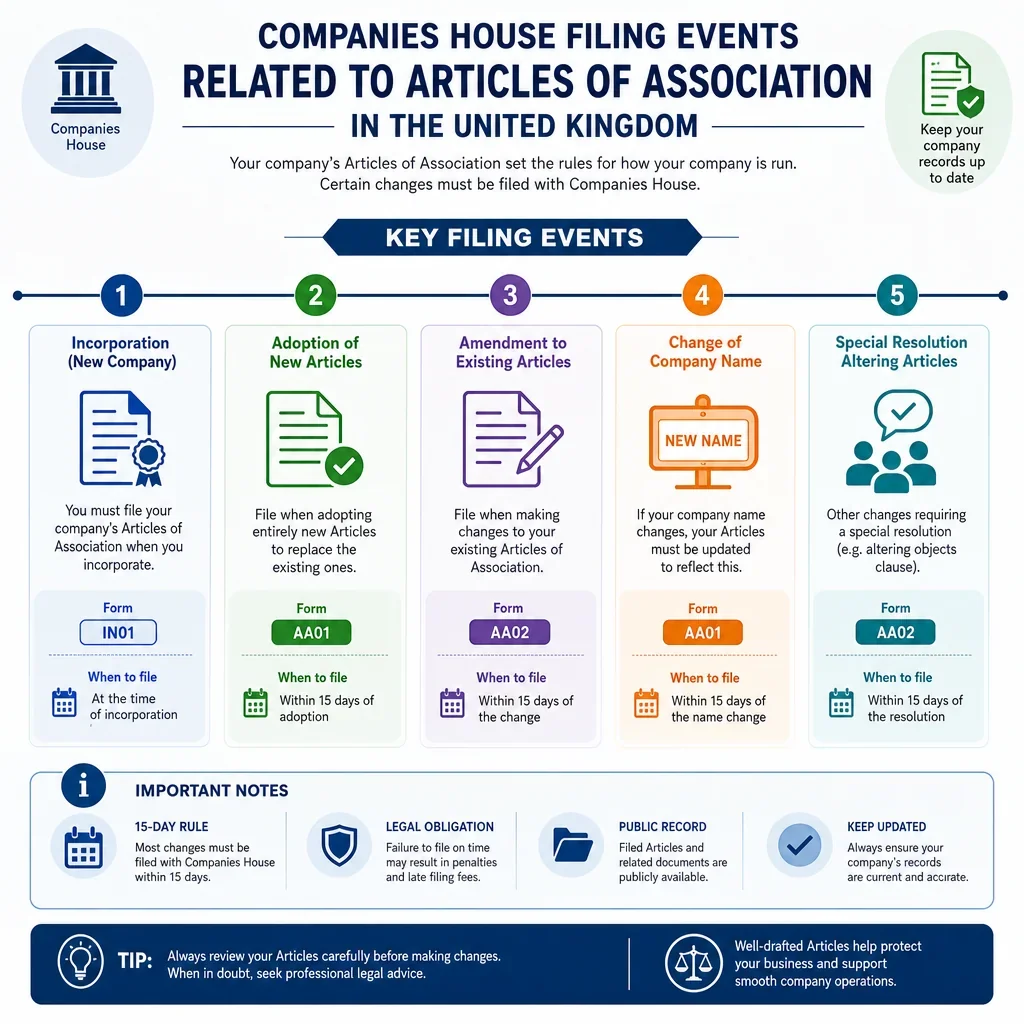
Amendment Of Articles | Sets how articles may be changed. | Standard | Add class consent before changing protected rights. | High |
Dispute and exit provisions | ||||
Unfair Prejudice Awareness | Encourages fair treatment of minority shareholders. | Optional | Add information and consent rights for minorities. | High |
Mediation Clause | Requires mediation before litigation or exit rights. | Optional | Use for family companies or equal partnerships. | Medium |
Arbitration Clause | Refers disputes to private arbitration. | Optional | Use for confidential investor or JV disputes. | Medium |
Administrative provisions | ||||
Governing Law | Specifies applicable UK jurisdiction law. | Optional | Use English law for an England and Wales company. | Medium |
Jurisdiction Clause | Identifies courts for company disputes. | Optional | Choose courts matching registered jurisdiction. | Medium |
Shareholder rights | ||||
Confidentiality Of Company Information | Restricts misuse of confidential information. | Optional | Allow investor reporting to fund stakeholders. | Medium |
Information Rights | Gives shareholders specified financial information. | Optional | Give investors monthly accounts and annual budgets. | High |
Directors | ||||
Observer Rights | Allows non-directors to attend board meetings. | Optional | Give investor observer non-voting board access. | Medium |
Dispute and exit provisions | ||||
Non-Compete Restrictions | Restricts competition by shareholders or founders. | Situation-specific | Use narrow scope, area and duration for enforceability. | High |
Non-Solicitation Restrictions | Prevents poaching of customers, staff or suppliers. | Situation-specific | Apply to founder shareholders after exit. | Medium |
Administrative provisions | ||||
Intellectual Property Assignment | Ensures key IP belongs to the company. | Situation-specific | Require founder-created IP to be assigned. | High |
Share capital | ||||
Employee Share Scheme Authority | Supports issuing shares or options to employees. | Situation-specific | Create option pool and leaver rules. | High |
Share Option Exercise Shares | Defines rights of shares issued on option exercise. | Situation-specific | Issue non-voting growth shares on exercise. | High |
Dispute and exit provisions | ||||
Founder Vesting | Links founder share retention to continued involvement. | Situation-specific | Four-year vesting with one-year cliff. | High |
Shareholder rights | ||||
Anti-Dilution Rights | Protects investors from down-round dilution. | Situation-specific | Use weighted-average or full-ratchet protection. | High |
Share capital | ||||
Conversion Rights | Allows shares to convert into another class. | Situation-specific | Convert preference shares to ordinary shares on IPO. | High |
Shareholder rights | ||||
Liquidation Preference | Sets priority return on liquidation or sale. | Situation-specific | Give investors 1x non-participating preference. | High |
Participation Rights | Lets preference holders share further proceeds. | Situation-specific | Cap participating preference at a return multiple. | High |
Weighted Voting Rights | Gives specified shares enhanced voting power. | Situation-specific | Give founder shares ten votes per share. | High |
Matters Requiring Class Consent | Protects a class from adverse decisions. | Situation-specific | Require preference shareholder consent for new senior shares. | High |
What Clauses Matter Most In UK Articles Of Association?
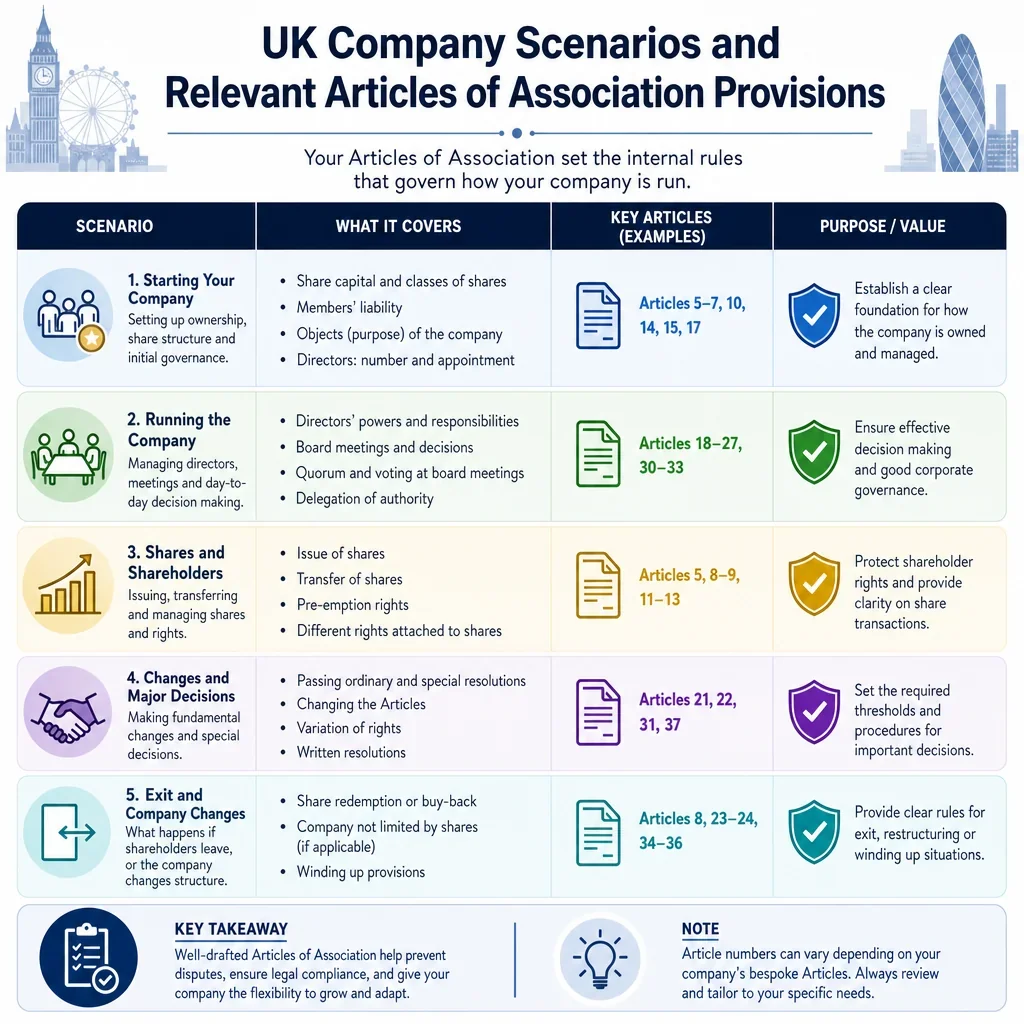
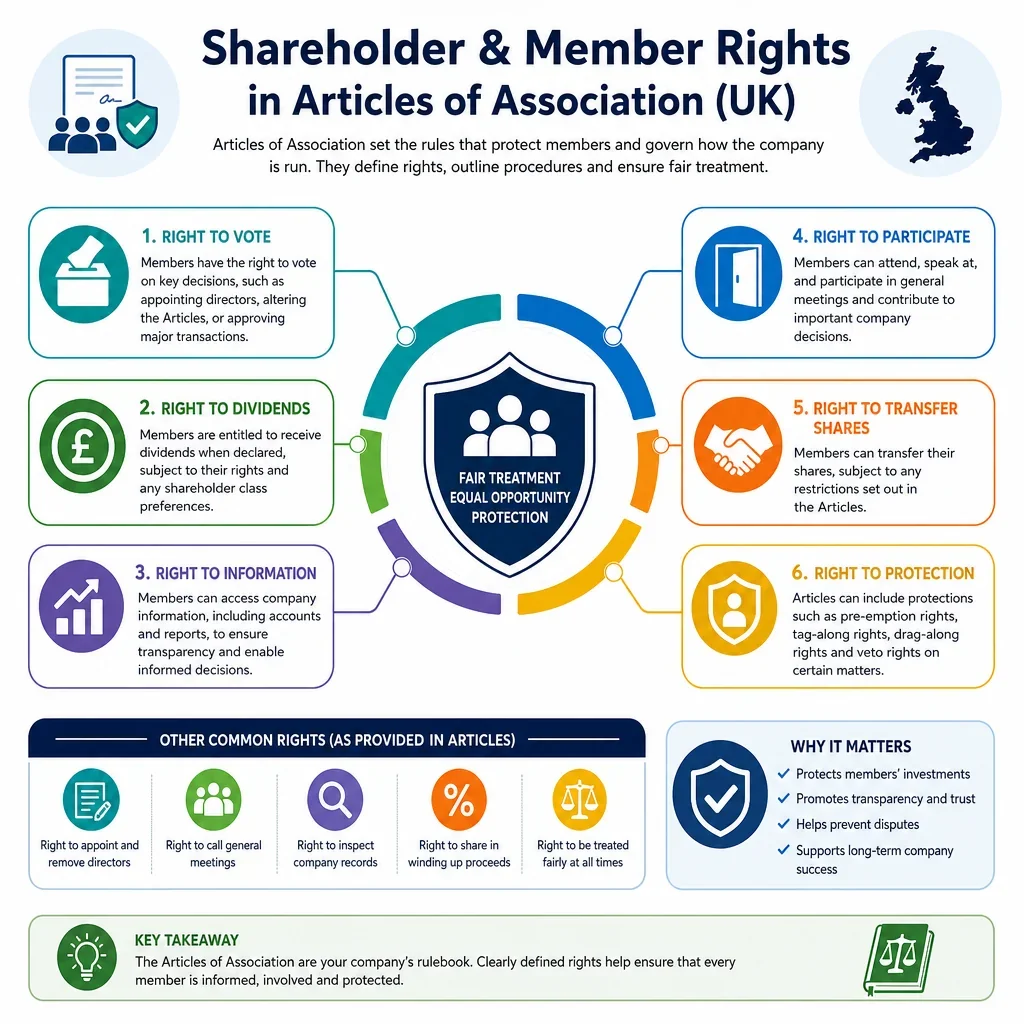
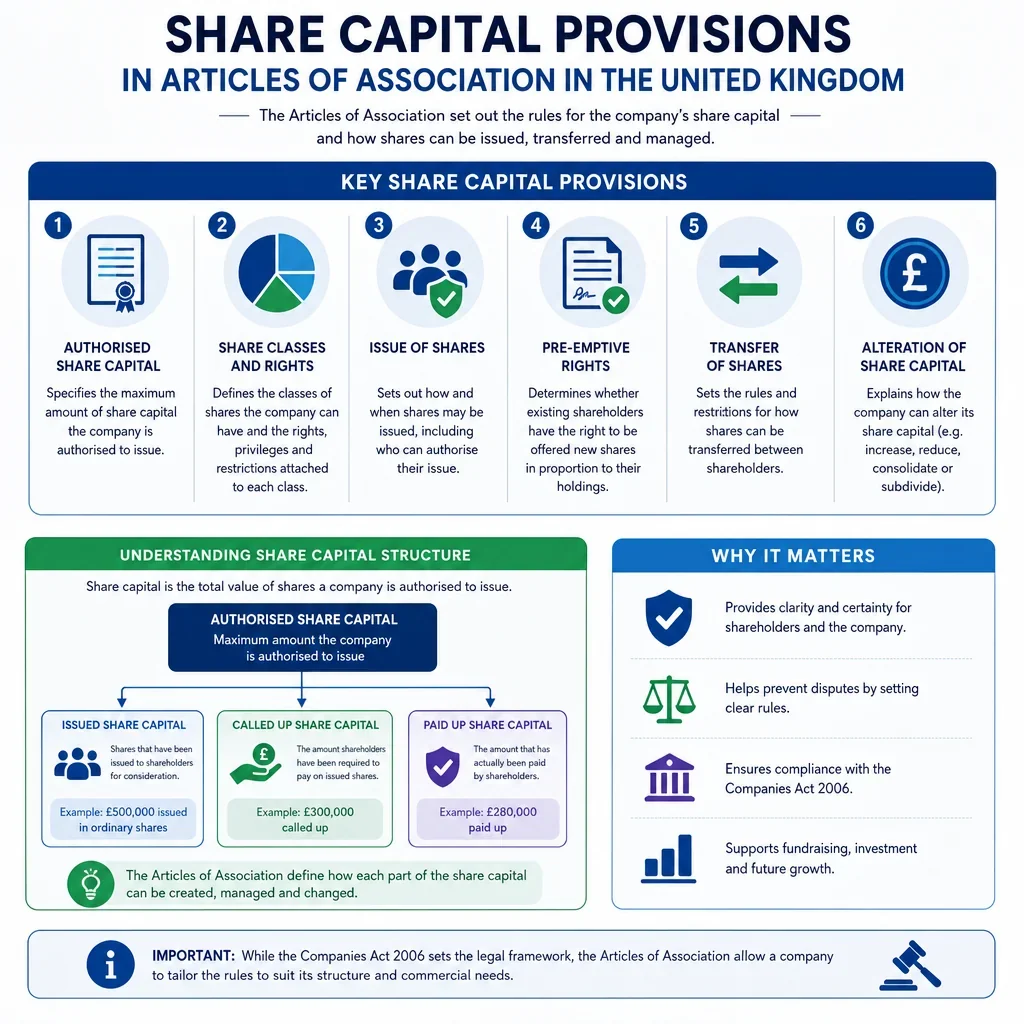
For a UK company, the highest-impact provisions are usually those controlling share issues, share transfers, director powers, voting, conflicts of interest, dividends and deadlock. These determine who controls the company, how value is distributed, and whether decisions can still be made when relationships break down.
When Should Articles Be Customised Instead Of Using Model Articles?
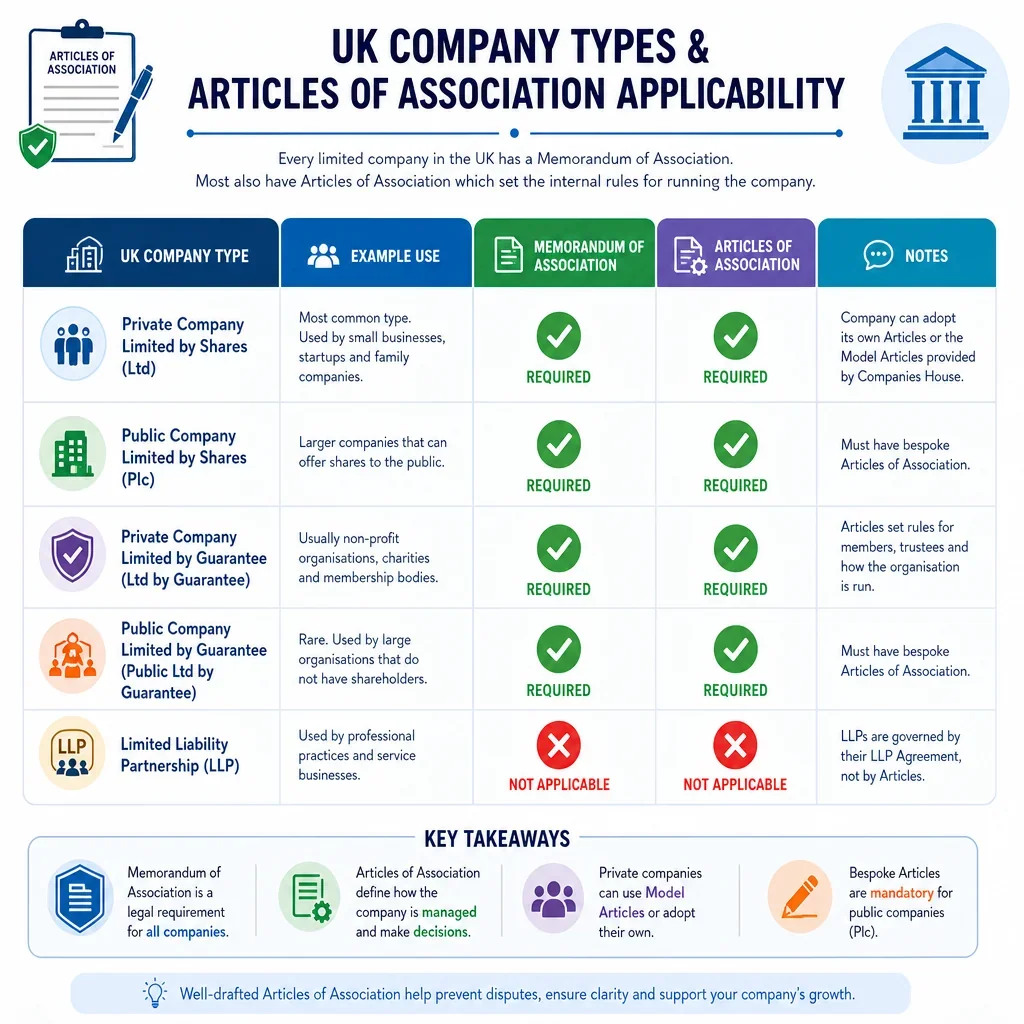
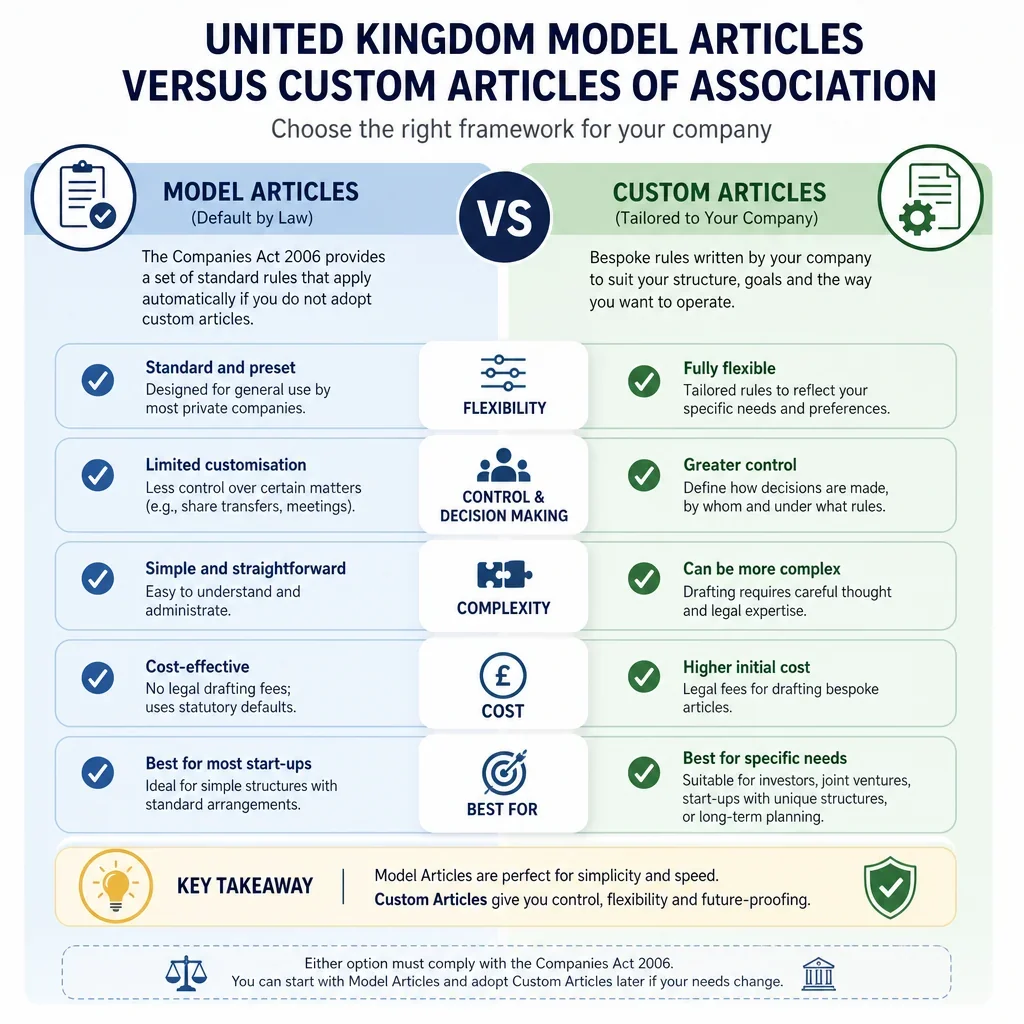
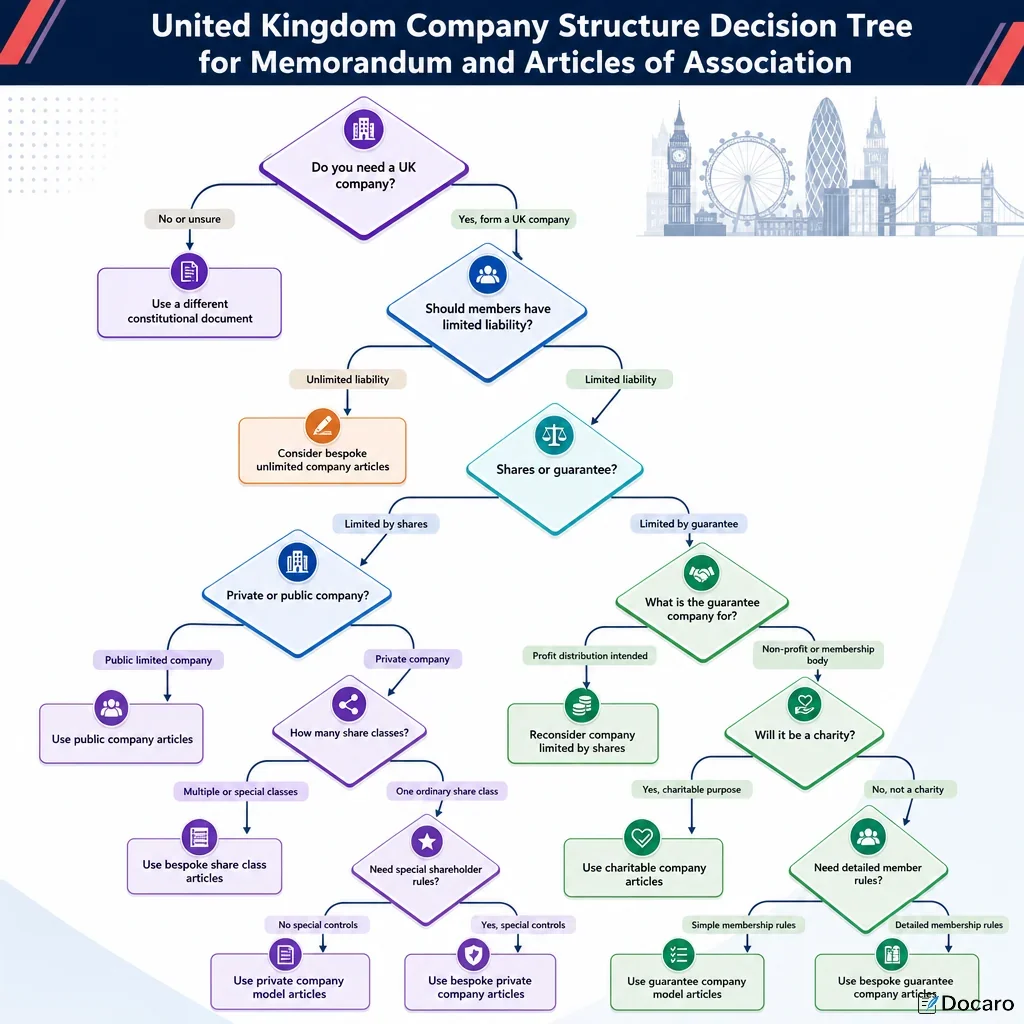
Customisation is most important where there are multiple shareholders, different share classes, investor rights, family-company succession plans, employee shareholders or joint-venture arrangements. The UK model articles provide a general default framework, but they do not fully cover common commercial needs such as pre-emption on share transfers, drag-along rights, tag-along rights, bad leaver provisions or detailed deadlock mechanisms.
Which Articles Commonly Affect Control Of The Company?
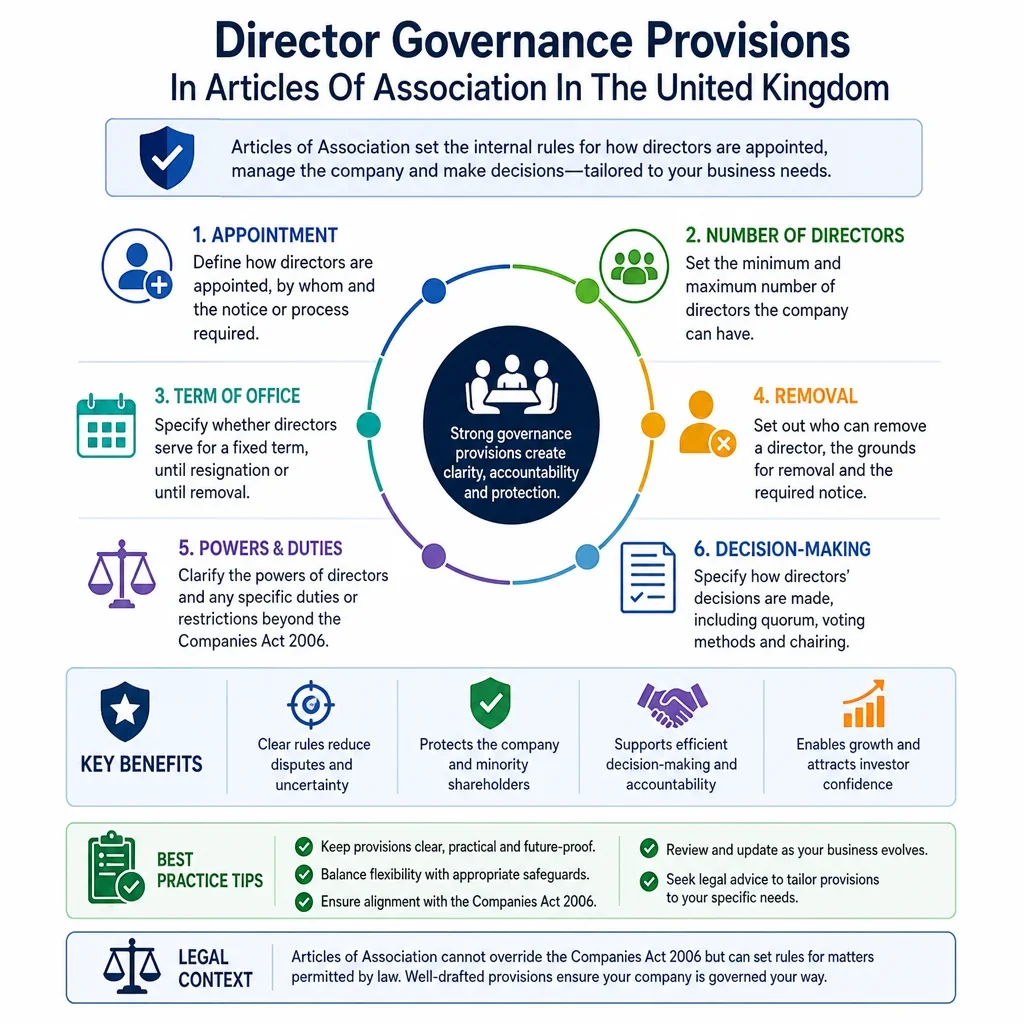
Clauses on director appointment and removal, board quorum, shareholder voting thresholds, class rights, reserved matters and written resolutions are central to control. Small drafting differences can decide whether founders, investors or minority shareholders can block major decisions.
Which UK Legal Requirements Should Be Checked?
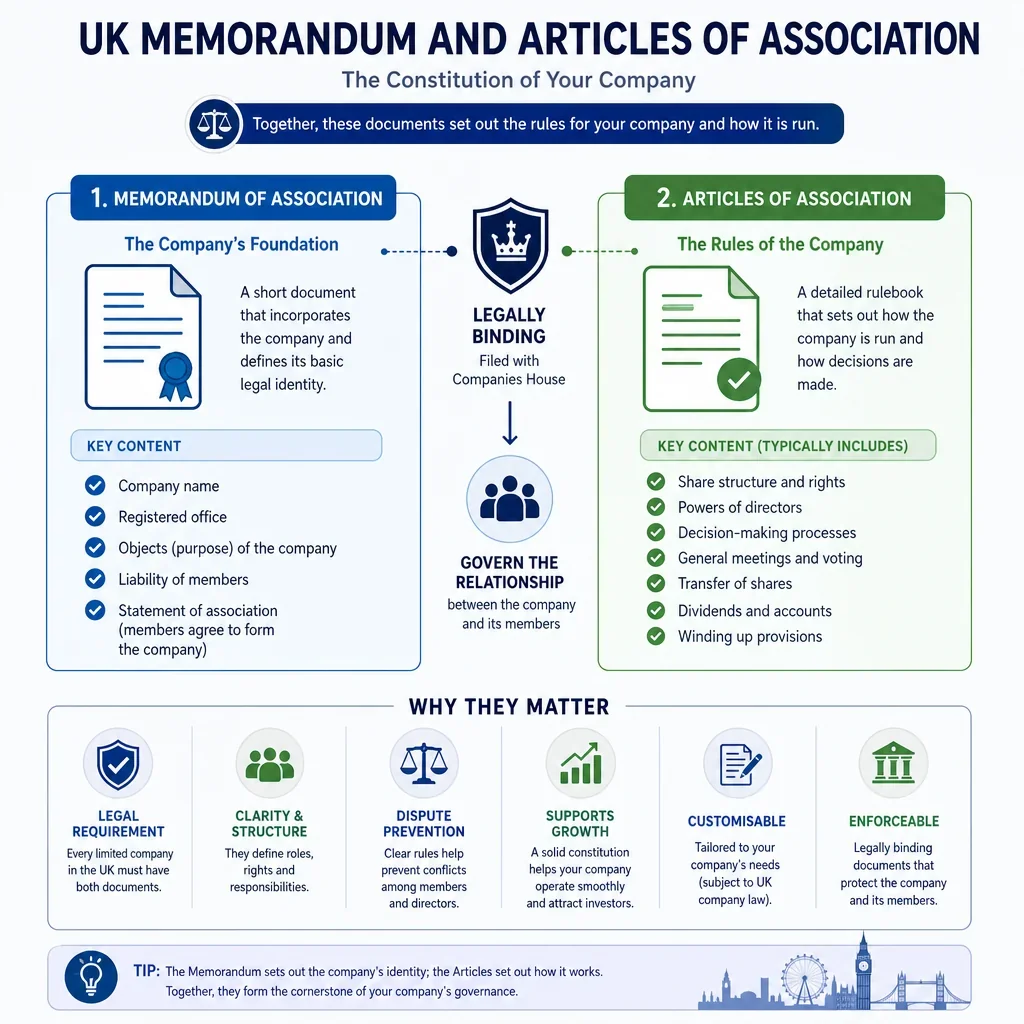
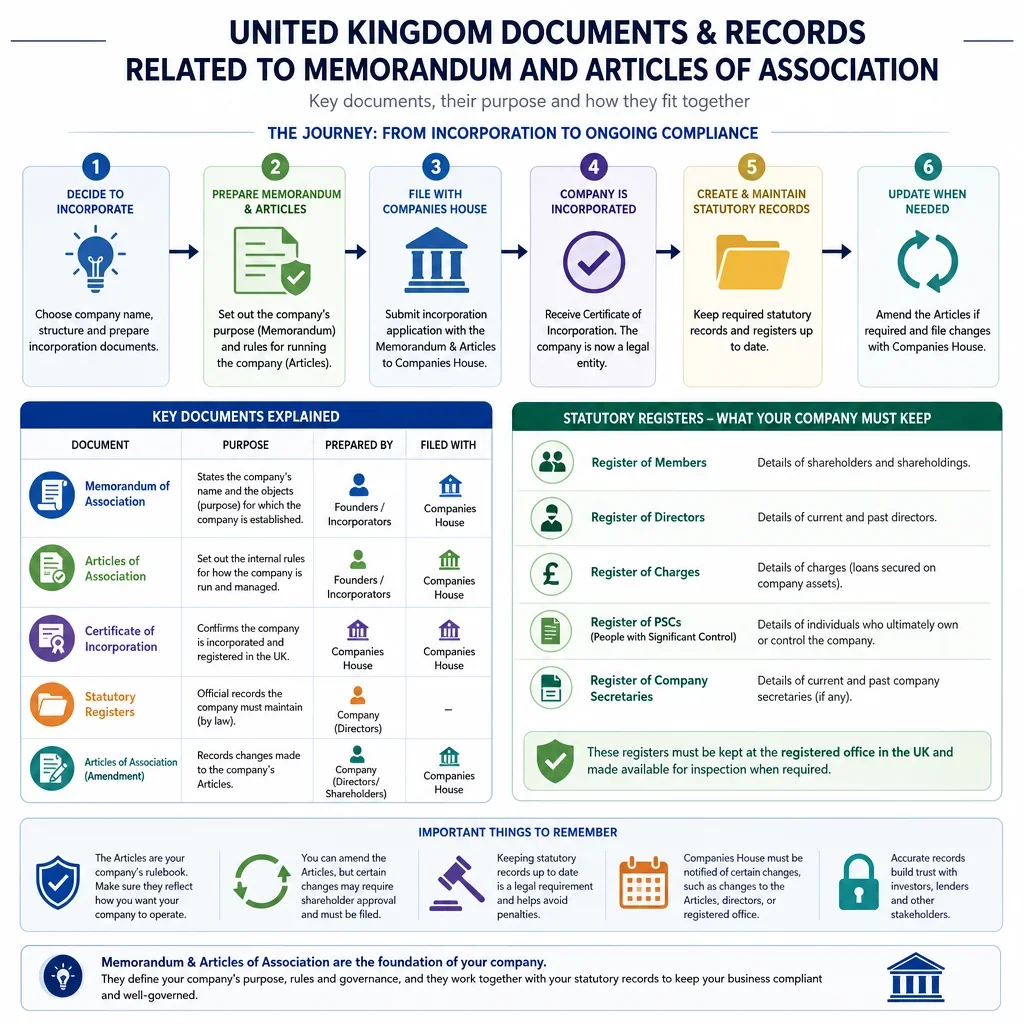
Articles must work with the Companies Act 2006, including rules on share capital, directors, company resolutions and distributions. Bespoke articles should also be checked against any shareholders\u2019 agreement so the two documents do not conflict.
Why Do Exit Clauses Need Particular Care?
Exit provisions such as pre-emption rights, compulsory transfers, drag-along, tag-along and good leaver or bad leaver rules are often optional, but can be critical. They help prevent unwanted third-party shareholders, protect minority holders on a sale, and set expectations when a founder, employee or investor leaves.
FAQs
You Might Also Be Interested In