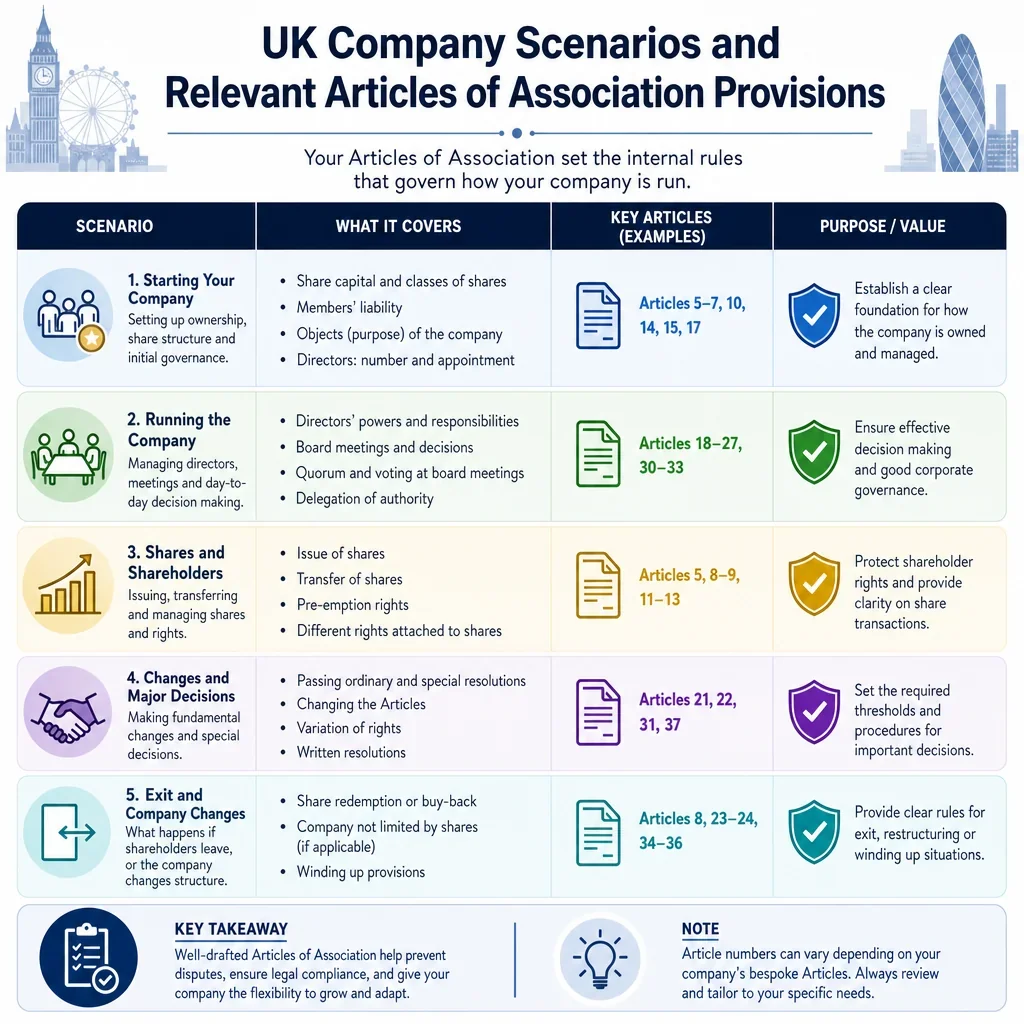
United Kingdom Company Scenarios And Relevant Articles Of Association Provisions
Company Scenario | Relevant Article Provisions | Why It Matters | Customisation Need | Recommended Review Stage |
|---|---|---|---|---|
New incorporation | ||||
Single founder private company limited by shares | Model articles adoption, director powers, share capital, decision-making, transfer restrictions | Keeps setup simple while giving the company workable governance rules. | Low | At incorporation |
Founder arrangements | ||||
Two or more founders starting a trading company | Director appointment, board quorum, founder consent matters, share transfer restrictions, deadlock process | Prevents one founder controlling key decisions or exits without agreement. | High | Before incorporation |
New incorporation | ||||
Company using unmodified private company model articles | Default model articles, director decision-making, member decisions, conflicts, transfers | Model articles provide default rules but may omit commercial protections. | Low | At incorporation |
Company formed with bespoke articles from day one | Objects if needed, share classes, veto rights, transfer rules, director rights, conflicts | Avoids later shareholder approvals and filings to fix unsuitable defaults. | Medium | Before incorporation |
Private company intended to operate with one director | Sole director authority, quorum, board decision procedure, appointment of additional directors | Clarifies whether one director can validly make board decisions alone. | Medium | Before incorporation |
Company restructuring | ||||
Subsidiary owned by a parent company | Parent consent rights, director appointment, written resolutions, conflicts, intra-group transfers | Allows group control while keeping subsidiary governance administratively efficient. | Medium | Before incorporation |
Founder arrangements | ||||
New co-founder joins after company formation | Share issue authority, pre-emption disapplication, vesting, leaver transfers, founder vetoes | Aligns ownership with contribution and protects against early departure. | High | Before investment or transaction |
Share issue | ||||
Issue of new ordinary shares to existing owners | Authority to allot, statutory pre-emption, article pre-emption, share rights, board approval | Helps avoid invalid allotments and unintended dilution disputes. | Medium | Before investment or transaction |
Issue of shares to a new third-party shareholder | Allotment authority, pre-emption waiver, transfer restrictions, class rights, information rights | Controls dilution and confirms the rights attached to the new shares. | High | Before investment or transaction |
Existing shareholders expect first refusal on new shares | Statutory pre-emption, enhanced article pre-emption, waiver procedure, excluded issues | Protects shareholders from dilution unless they decline the opportunity. | Medium | Before investment or transaction |
Company wants flexibility to issue shares without pro rata offers | Pre-emption disapplication, allotment authority, investor exceptions, employee option exceptions | Enables faster fundraising but increases dilution risk. | High | Before investment or transaction |
Alphabet shares for flexible dividends | Separate share classes, dividend discretion, voting rights, variation of class rights | Allows different dividends but must define class rights clearly. | High | Before investment or transaction |
Investor involvement | ||||
Issue of preference shares to investors | Preferred dividend, liquidation preference, conversion, voting rights, anti-dilution, class consent | Defines investor economics on dividends, sale, insolvency or conversion. | High | Before investment or transaction |
Share issue | ||||
Issue of redeemable shares | Redemption terms, funding source, redemption dates, board discretion, class rights | Redemption must follow Companies Act rules and the agreed share terms. | High | Before investment or transaction |
Employee share arrangements | ||||
Growth shares for management incentives | Hurdle value, economic rights, voting rights, leaver transfers, drag-along participation | Rewards future value growth while protecting existing shareholders' current value. | High | Before investment or transaction |
Share issue | ||||
Issue of partly paid shares | Calls on shares, forfeiture, transfer limits, voting restrictions, dividend restrictions | Clarifies payment obligations and consequences of non-payment. | Medium | Before investment or transaction |
Company restructuring | ||||
Company buyback of shareholder shares | Buyback permission, valuation method, funding source, transfer mechanics, cancellation or treasury | Buybacks require strict statutory process and compatible articles. | High | Before investment or transaction |
Company holds repurchased shares in treasury | Treasury share holding, reissue authority, voting suspension, dividend suspension | Determines whether bought-back shares can be reused or must be cancelled. | Medium | Before investment or transaction |
Founder arrangements | ||||
Founder shares subject to vesting | Vesting schedule, compulsory transfer, good leaver, bad leaver, valuation discount | Protects the company if a founder leaves early with a large stake. | High | Before incorporation |
Shareholder employee leaves the business | Good leaver, bad leaver, compulsory transfer, valuation basis, board determination | Sets who must sell shares and at what price after departure. | High | Before incorporation |
Equal founders may deadlock on major decisions | Deadlock notice, escalation, chair casting vote, buy-sell option, reserved matters | Provides an exit route if equal owners cannot agree. | High | Before incorporation |
Investor involvement | ||||
Founder or investor needs a board seat | Director appointment rights, removal rights, alternate directors, quorum including appointee | Gives a stakeholder direct influence over board decisions. | High | Before investment or transaction |
Investor requires veto rights over key actions | Reserved matters, class consent, investor director consent, spending limits, share issue consent | Prevents major changes without investor approval. | High | Before investment or transaction |
Investor wants regular financial reporting | Information rights, management accounts, budgets, inspection rights, confidentiality limits | Ensures investor receives agreed operational and financial information. | Medium | Before investment or transaction |
SEIS or EIS investment round | Share rights, preferential rights review, redemption restrictions, investor protection rights | Certain preferential rights can affect tax-advantaged investment eligibility. | High | Before investment or transaction |
Convertible loan converts into shares | Conversion share class, allotment authority, pre-emption waiver, investor rights on conversion | Ensures automatic conversion mechanics match the company's share rights. | High | Before investment or transaction |
Advance subscription agreement before priced round | Future allotment authority, conversion class, pre-emption waiver, investor accession rights | Prevents future conversion being blocked by existing article restrictions. | High | Before investment or transaction |
Investor seeks anti-dilution protection | Weighted average adjustment, ratchet rights, conversion ratio, excluded issues | Protects investor economics if shares are later issued at a lower price. | High | Before investment or transaction |
Majority shareholders need to force a company sale | Drag-along threshold, notice process, sale terms, warranties, power of attorney | Prevents minority shareholders blocking an agreed exit. | High | Before investment or transaction |
Minority shareholders want to join a majority sale | Tag-along trigger, selling shareholder notice, pro rata participation, same terms requirement | Protects minority holders from being left behind after control changes. | High | Before investment or transaction |
Founder arrangements | ||||
Shareholders want first refusal on share transfers | Transfer notice, pre-emption on transfer, valuation, acceptance period, permitted transfers | Keeps ownership within the existing shareholder group before outsiders enter. | High | Before incorporation |
Board wants control over who becomes a shareholder | Director refusal power, permitted refusal grounds, transfer registration, notice of refusal | Allows screening of transferees but should avoid arbitrary disputes. | Medium | Before incorporation |
Family business | ||||
Family business planning succession | Permitted family transfers, death transmission, pre-emption, board succession, dividend policy | Keeps control within the family and manages generational transitions. | High | Before incorporation |
Spouses or civil partners hold different share classes | Alphabet shares, dividend discretion, voting rights, transfer on separation, pre-emption | Balances tax planning flexibility with control and separation risk. | High | Before incorporation |
Shareholder dies while holding shares | Transmission on death, personal representative rights, compulsory offer, valuation, insurance-funded buyout | Avoids uncertainty over voting, dividends and who inherits control. | High | Before incorporation |
Relationship breakdown affects family shareholding | Transfer restrictions, compulsory transfer events, valuation, permitted family holder definition | Reduces risk of unwanted third-party influence after separation. | High | Before incorporation |
Passive family members hold minority shares | Dividend policy, information rights, transfer restrictions, reserved matters, dispute process | Balances active management control with fair treatment of passive holders. | High | After incorporation |
Employee share arrangements | ||||
Company grants employee share options | Option share class, allotment authority, pre-emption waiver, leaver rules, drag-along accession | Ensures option shares can be issued and work on exit. | High | Before investment or transaction |
EMI option scheme for employees | Option exercise shares, employee leaver rules, exit-only exercise, share restrictions disclosure | Article restrictions should match option terms and tax disclosures. | High | Before investment or transaction |
Employee exercises options then leaves | Compulsory transfer, good leaver, bad leaver, market value, nominal value buyback | Stops former employees retaining shares on unsuitable terms. | High | Before investment or transaction |
Sale to an employee ownership trust | Trust shareholder rights, board appointment, transfer lock, dividend flow, employee benefit purpose | Aligns company governance with trust ownership and employee benefit objectives. | High | Before investment or transaction |
Employees receive direct minority shareholdings | Employee transfer restrictions, leaver provisions, voting limits, dividend rights, drag-along | Prevents a dispersed employee shareholder base blocking transactions. | High | Before investment or transaction |
Charitable or guarantee company | ||||
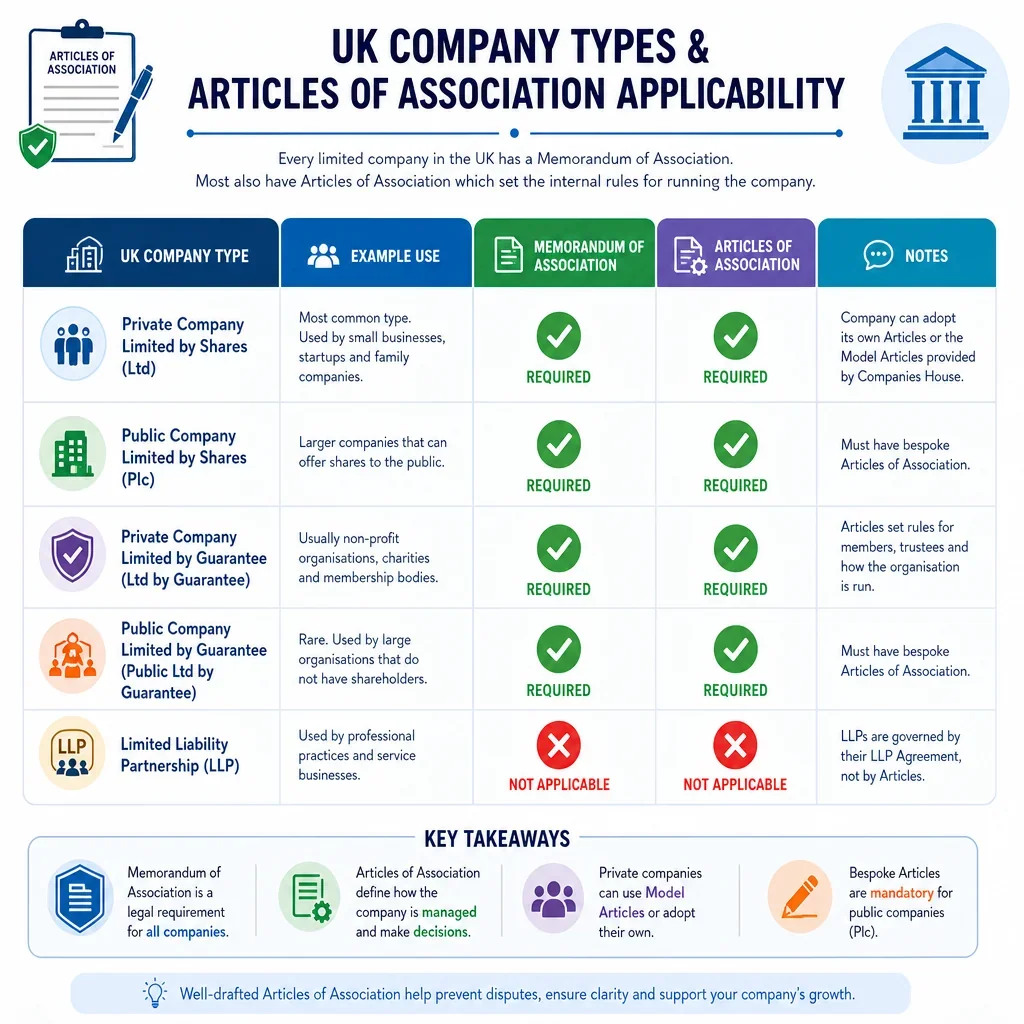
Company limited by guarantee for a club or association | Member guarantee, membership admission, voting, non-profit distribution, winding-up surplus | Replaces share capital with member liability and membership governance. | High | Before incorporation |
Charitable company limited by guarantee | Charitable objects, trustee powers, private benefit limits, asset lock, member liability | Articles must support charity registration and lawful charitable operation. | High | Before incorporation |
Charity needs specific charitable objects | Objects clause, powers clause, beneficiary class, geographic area, amendment restrictions | Objects define what the charity can lawfully do. | High | Before incorporation |
Community interest company formation | CIC asset lock, community purpose, dividend cap, transfer restrictions, regulator clauses | CIC articles must include statutory community interest protections. | High | Before incorporation |
Guarantee company with different member classes | Member classes, voting rights, admission criteria, expulsion, subscriptions, meeting quorum | Prevents disputes over who can vote and on what basis. | High | Before incorporation |
Non-profit company must restrict distributions | Dividend prohibition, asset lock, winding-up surplus, director remuneration limits | Ensures assets are used for the organisation's purposes, not private profit. | High | Before incorporation |
Company restructuring | ||||
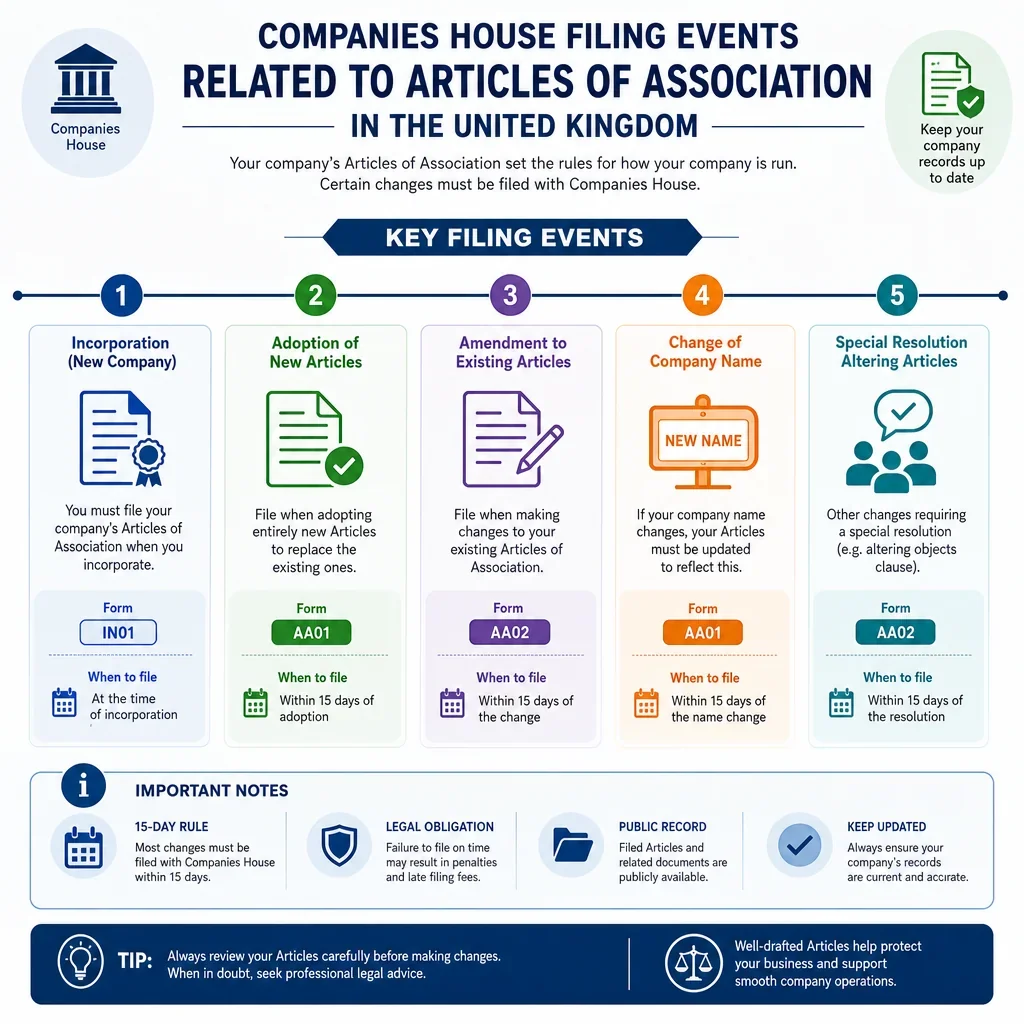
Company changes its articles after incorporation | Special resolution, filing updated articles, class consent, entrenched provisions | Article changes normally require 75 percent shareholder approval. | Medium | After incorporation |
Founder arrangements | ||||
Founders want certain articles harder to change | Entrenchment, unanimous consent, higher voting threshold, protected provisions | Stops key rights being changed by a standard special resolution. | High | Before incorporation |
Company restructuring | ||||
Company changes rights attached to a share class | Class consent threshold, separate class meetings, deemed variation, objection rights | Protects holders when voting, dividend or capital rights are altered. | High | Before investment or transaction |
Company subdivides or consolidates shares | Share subdivision, consolidation, rounding, class rights, authority for capital changes | Adjusts share numbers without changing economic ownership if done correctly. | Medium | Before investment or transaction |
Company reduces share capital | Capital reduction authority, solvency statement route, class rights, shareholder approval | Can return capital or tidy accounts but needs statutory compliance. | High | Before investment or transaction |
Family business | ||||
Shareholders want predictable dividend rights | Dividend declaration, interim dividends, class dividends, reserves, board recommendation | Clarifies who controls distributions and whether classes can be paid differently. | Medium | Before incorporation |
Investor involvement | ||||
Directors may have conflicts or outside interests | Conflict authorisation, quorum exclusion, voting restriction, disclosure procedure | Allows conflicts to be managed without invalidating board decisions. | Medium | Before incorporation |
New incorporation | ||||
Company wants to protect directors from liability exposure | Director indemnity, qualifying third-party indemnity, insurance, expense advancement | Supports recruitment of directors while respecting statutory limits. | Medium | At incorporation |
Investor involvement | ||||
Board decisions require specific people present | Board quorum, investor director presence, founder director presence, adjourned meeting rules | Prevents important decisions being made without required stakeholder participation. | High | Before investment or transaction |
Founder arrangements | ||||
Shareholder meetings need protective quorum rules | Member quorum, class quorum, adjourned meeting rules, minority presence requirement | Stops majority holders passing decisions without agreed minority participation. | High | Before incorporation |
New incorporation | ||||
Private company wants fast shareholder approvals | Written resolution procedure, eligible member voting, circulation, ordinary and special thresholds | Allows shareholder decisions without holding a meeting where permitted. | Low | At incorporation |
Company wants electronic meetings and notices | Electronic notices, virtual attendance, hybrid meetings, deemed delivery, email consent | Reduces administration for remote shareholders and directors. | Medium | At incorporation |
Founder arrangements | ||||
Company considers a chair's casting vote | Chair appointment, casting vote, deadlock limits, reserved matter carve-outs | Can break deadlock but may shift control to one side. | Medium | Before incorporation |
Company restructuring | ||||
Share transfers may change control reporting | Transfer approval, information undertakings, register updates, beneficial ownership confirmations | Ownership changes can trigger PSC register and Companies House filings. | Medium | Before investment or transaction |
Employee share arrangements | ||||
Company creates an employee option pool | Option pool authority, pre-emption waiver, pool size, investor dilution treatment | Allocates equity for hiring without repeated shareholder approvals. | High | Before investment or transaction |
Company restructuring | ||||
Joint venture company with two corporate shareholders | Equal board rights, reserved matters, deadlock, transfer lock-in, exit rights | Balances control where neither party should dominate the venture. | High | Before incorporation |
Management buyout company structure | Investor shares, management shares, leaver rules, drag-along, debt consent matters | Aligns management incentives with funder protections and exit mechanics. | High | Before investment or transaction |
New holding company inserted above trading company | Share-for-share exchange, mirror rights, group transfer permissions, investor consent rights | Preserves existing shareholder rights in the new group structure. | High | Before investment or transaction |
Business demerger or spin-out into a new company | New share rights, transfer restrictions, transitional board rights, reserved matters | Sets governance for the separated business from completion. | High | Before investment or transaction |
Minority shareholders affected by restructuring | Class consent, tag rights, valuation, information rights, unfair prejudice risk controls | Reduces disputes where restructuring changes economic or control rights. | High | Before investment or transaction |
Private company preparing for possible public company conversion | Transferability, share class simplification, board governance, public company compliance | Private company protections may need removal before public market readiness. | High | Before investment or transaction |
New incorporation | ||||
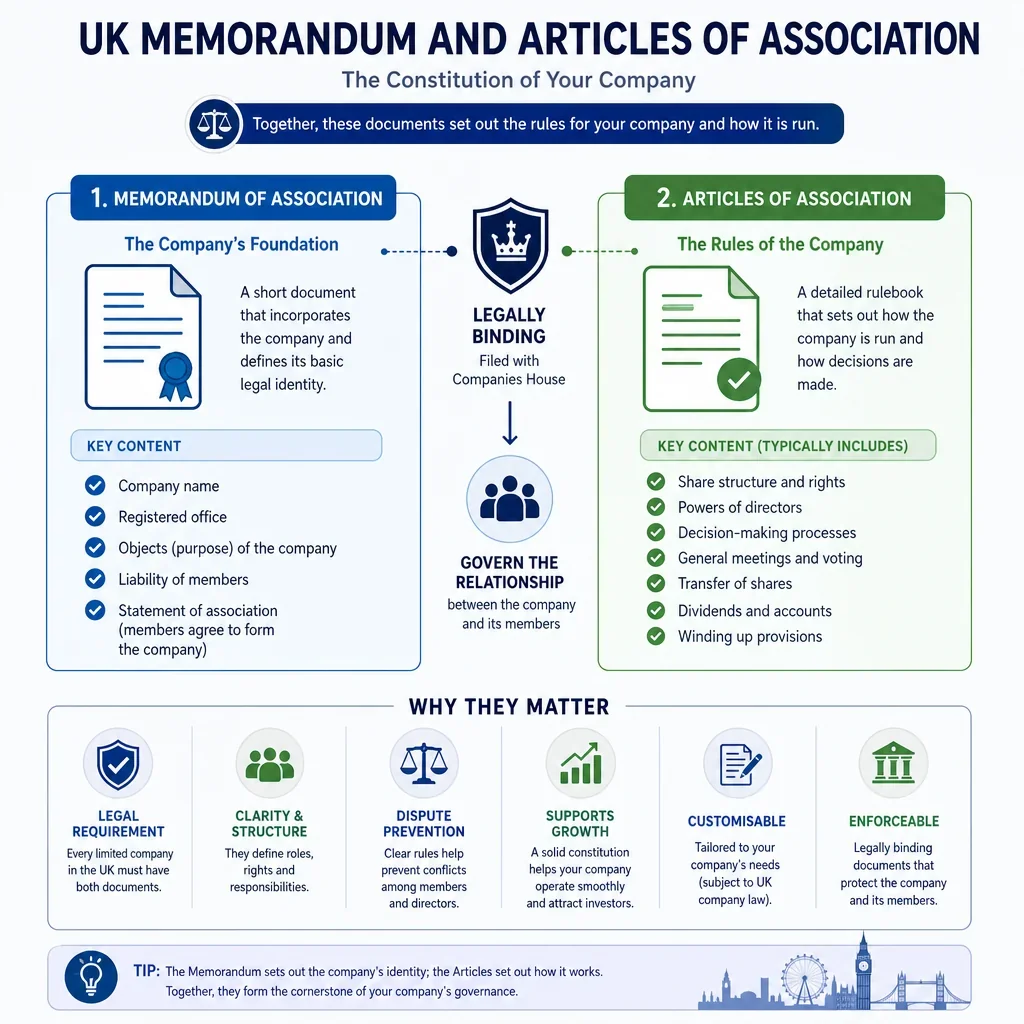
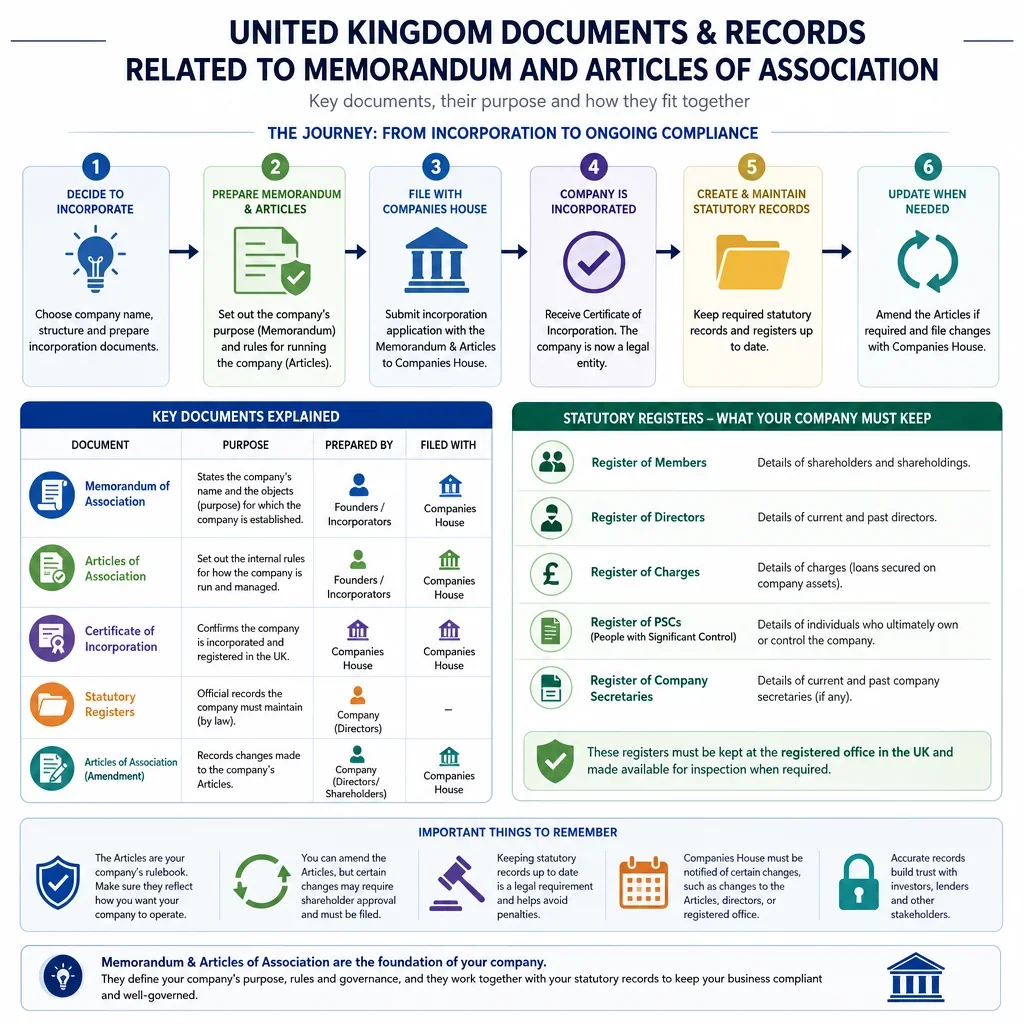
Shareholders rely on articles as binding governance rules | Member rights, company obligations, enforceable internal rules, consistency with shareholder agreement | Articles bind the company and members as a statutory contract. | Medium | Before incorporation |
Founder arrangements | ||||
Company has both articles and a shareholders' agreement | Priority clause, accession, transfer mechanics, reserved matters, confidentiality split | Avoids inconsistent rules on transfers, votes and investor protections. | High | Before investment or transaction |
Investor involvement | ||||
Shares held by nominee for beneficial owners | Nominee recognition, voting instructions, transfer restrictions, information flow, beneficial owner disclosure | Clarifies who votes and receives notices where legal and beneficial ownership differ. | High | Before investment or transaction |
Crowdfunding round with many small investors | Nominee structure, drag-along, tag-along, information rights limits, transfer restrictions | Prevents administrative burden and exit blockage from a large investor base. | High | Before investment or transaction |
Founder arrangements | ||||
Business depends on founder IP and continued involvement | Leaver share transfers, reserved matters, director removal consequences, IP-related default triggers | Links equity retention to continued contribution and key asset protection. | High | Before incorporation |
Professional firm restricts ownership to qualified persons | Eligibility to hold shares, compulsory transfer, board approval, regulatory compliance undertakings | Helps maintain regulatory or professional ownership requirements. | High | Before incorporation |
Investor involvement | ||||
Regulated business needs approval for ownership changes | Regulatory consent condition, transfer suspension, information covenants, compulsory transfer | Prevents share transfers breaching sector approval requirements. | High | Before investment or transaction |
New incorporation | ||||
Company has overseas shareholders | Electronic notices, service addresses, tax withholding awareness, transfer compliance, sanctions checks | Makes administration workable across jurisdictions and time zones. | Medium | Before incorporation |
Share issue | ||||
Shares have different voting and economic rights | Weighted voting, non-voting shares, dividend rights, capital rights, class consent | Separates control from economics but needs precise drafting. | High | Before investment or transaction |
Non-voting shares issued to passive holders | No vote rights, dividend rights, capital rights, class voting on variations | Allows economic participation without routine control rights. | High | Before investment or transaction |
Founder arrangements | ||||
Founder retains enhanced voting control | Multiple voting shares, sunset triggers, transfer conversion, reserved matters, class rights | Preserves founder control but can affect investor appetite. | High | Before investment or transaction |
Investor involvement | ||||
Sale proceeds must be distributed by a waterfall | Liquidation preference, participating preference, catch-up, ordinary share residual rights | Determines who receives sale proceeds first and how much. | High | Before investment or transaction |
Founder arrangements | ||||
Shareholder becomes bankrupt or insolvent | Compulsory transfer event, valuation, suspension of voting, permitted buyer, trustee dealings | Prevents shares being controlled by insolvency officeholders without a process. | High | Before incorporation |
Share issue | ||||
Company wants to block prohibited transferees | Prohibited transferee definition, director refusal, compulsory transfer, compliance warranties | Reduces legal and reputational risk from unsuitable ownership. | Medium | Before investment or transaction |
Investor involvement | ||||
Company wants public articles to omit confidential deal terms | Public article rights, private shareholders' agreement split, reserved matter placement, confidentiality | Articles are filed publicly, unlike most shareholders' agreements. | Medium | Before investment or transaction |
When Should UK Articles Of Association Be Customised?
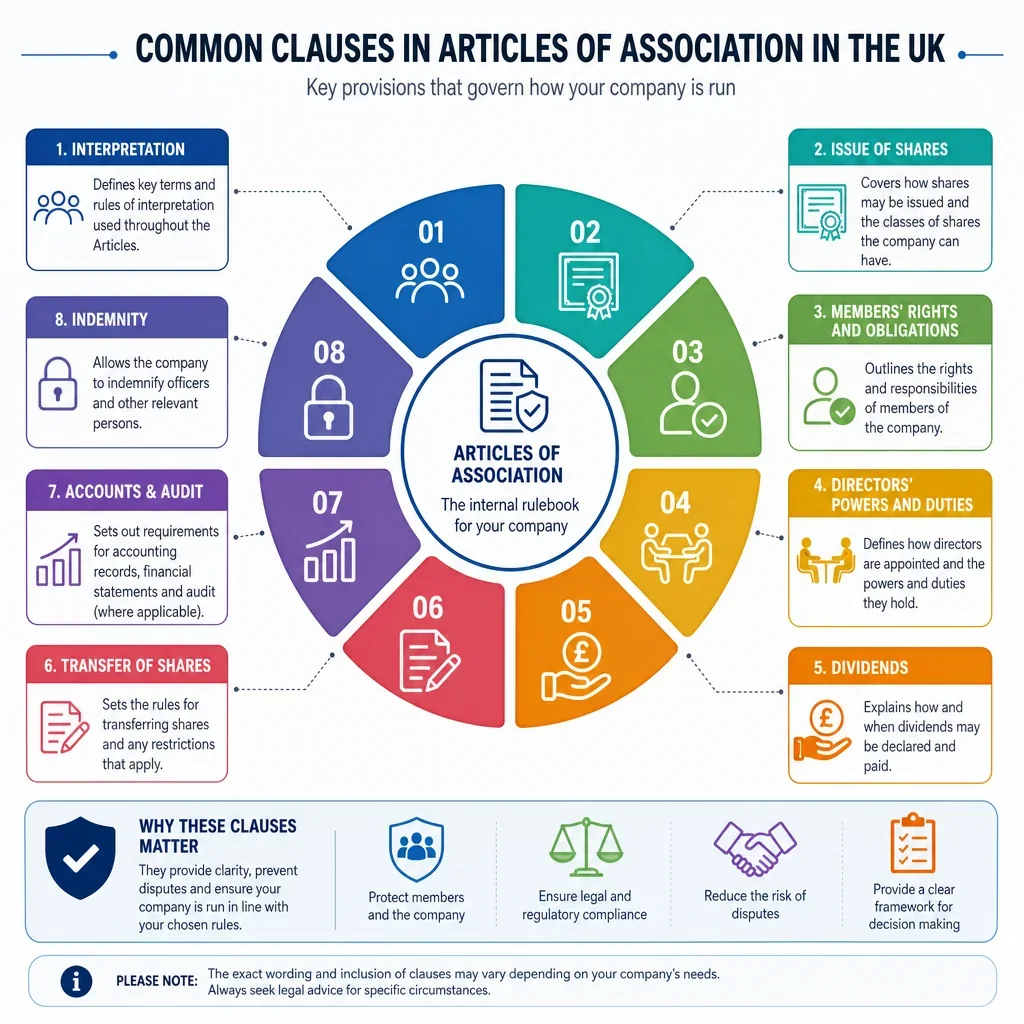
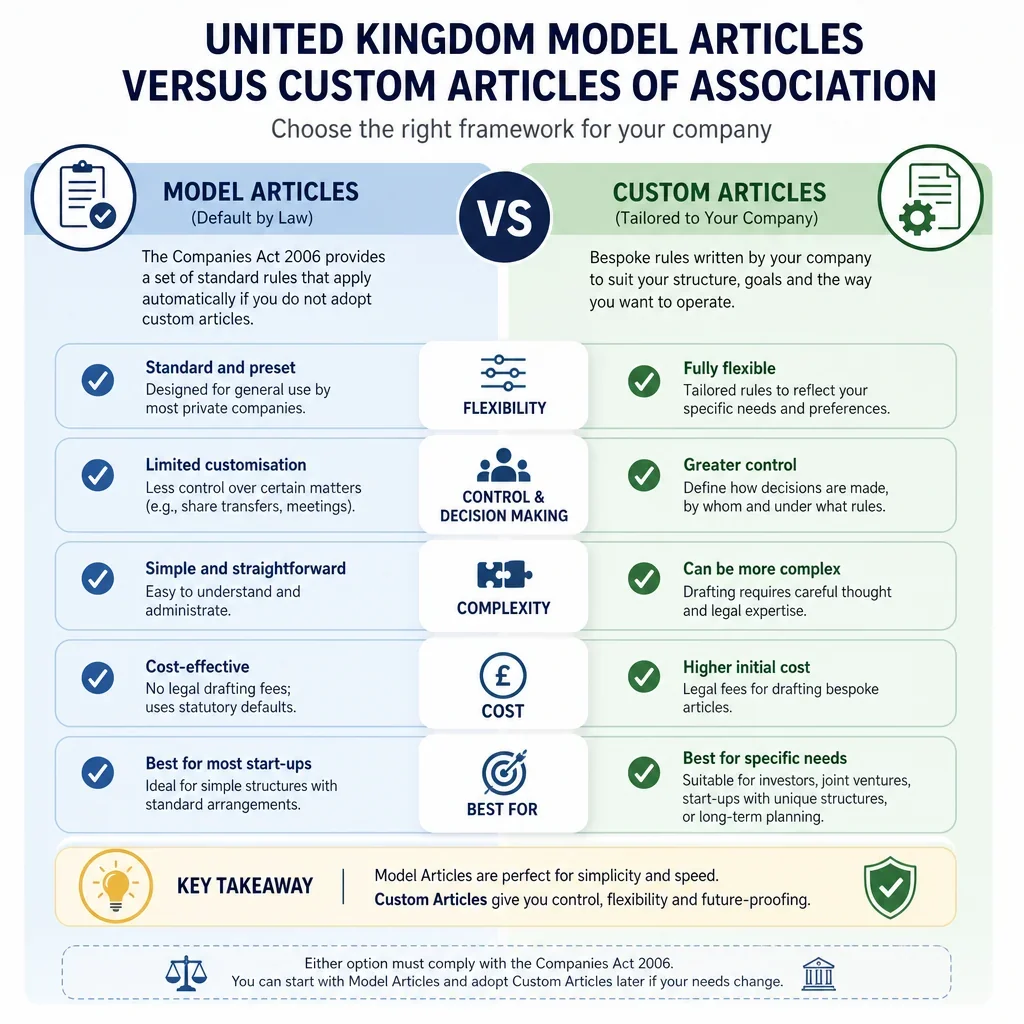
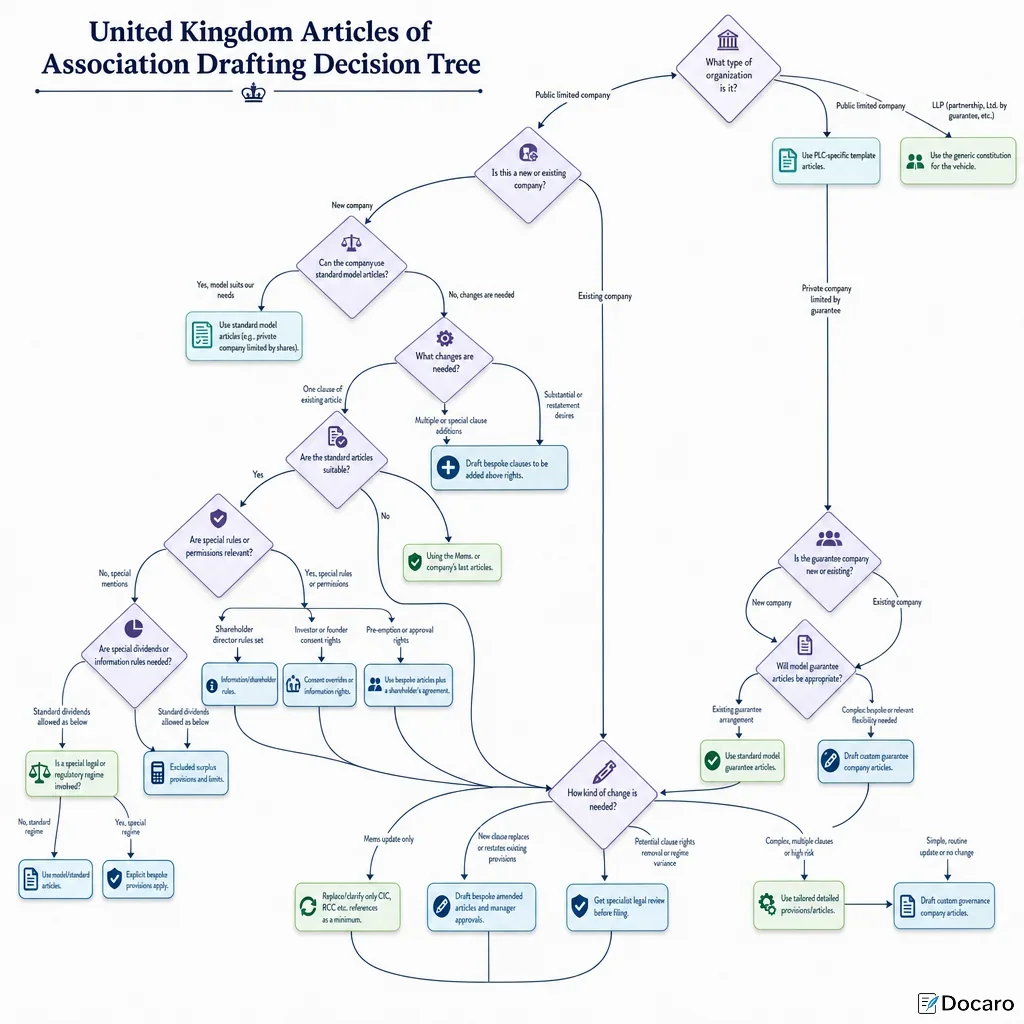
Articles usually need the most tailoring where a company has more than one economic stakeholder: investors, multiple founders, family shareholders, employee option holders or a group restructuring. The default model articles can be suitable for a simple single-shareholder private company, but they rarely deal fully with consent rights, exit controls, deadlock, drag-along rights, leaver provisions or different share classes.
Which Provisions Most Often Affect Control Of A UK Company?
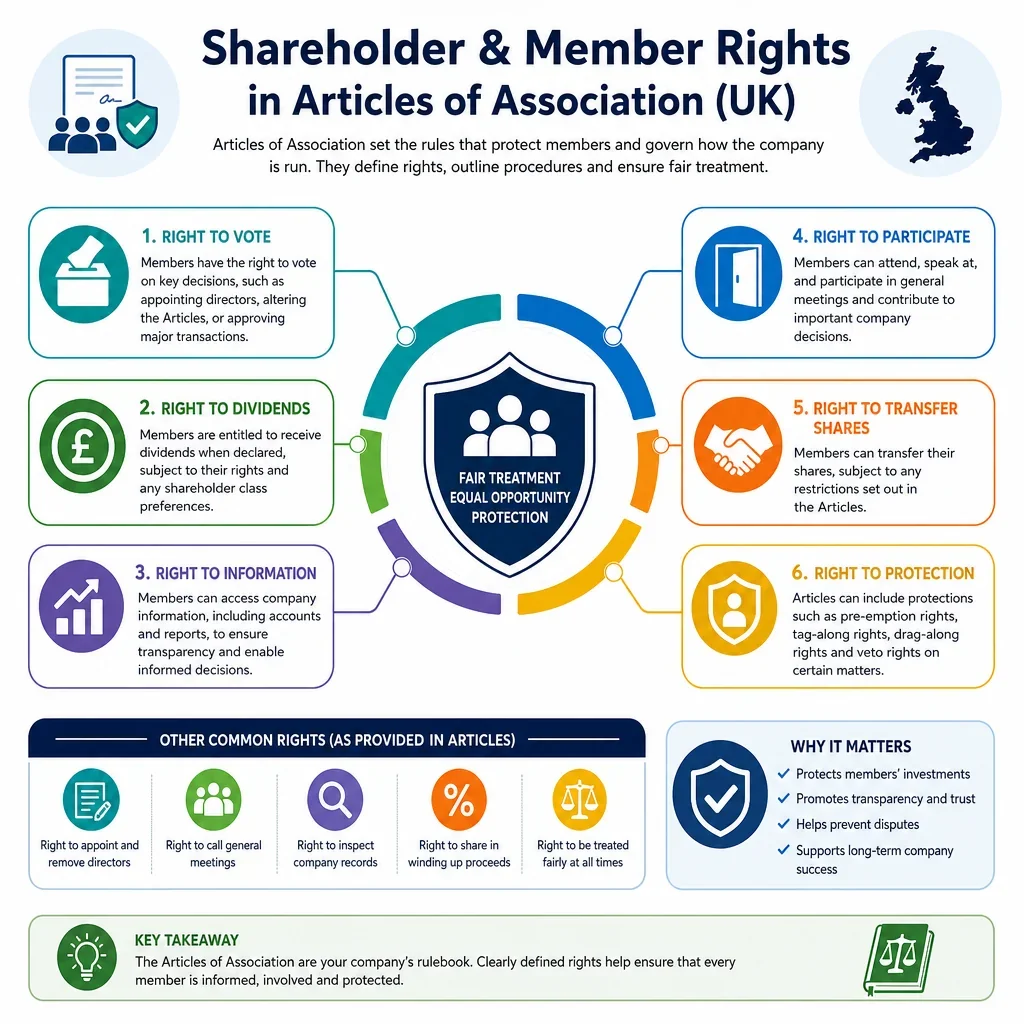
- Share transfer provisions determine whether shares can be sold freely, offered first to existing shareholders, or blocked by director approval.
- Reserved matters and quorum rules can give investors, founders or family branches practical veto rights over important decisions.
- Class rights and dividend provisions are essential where ordinary, preference, growth or alphabet shares are used.
- Drag-along and tag-along rights are usually needed before investment or sale discussions because they affect who can force, or participate in, an exit.
Why Review Articles Before Investment Or A Share Issue?
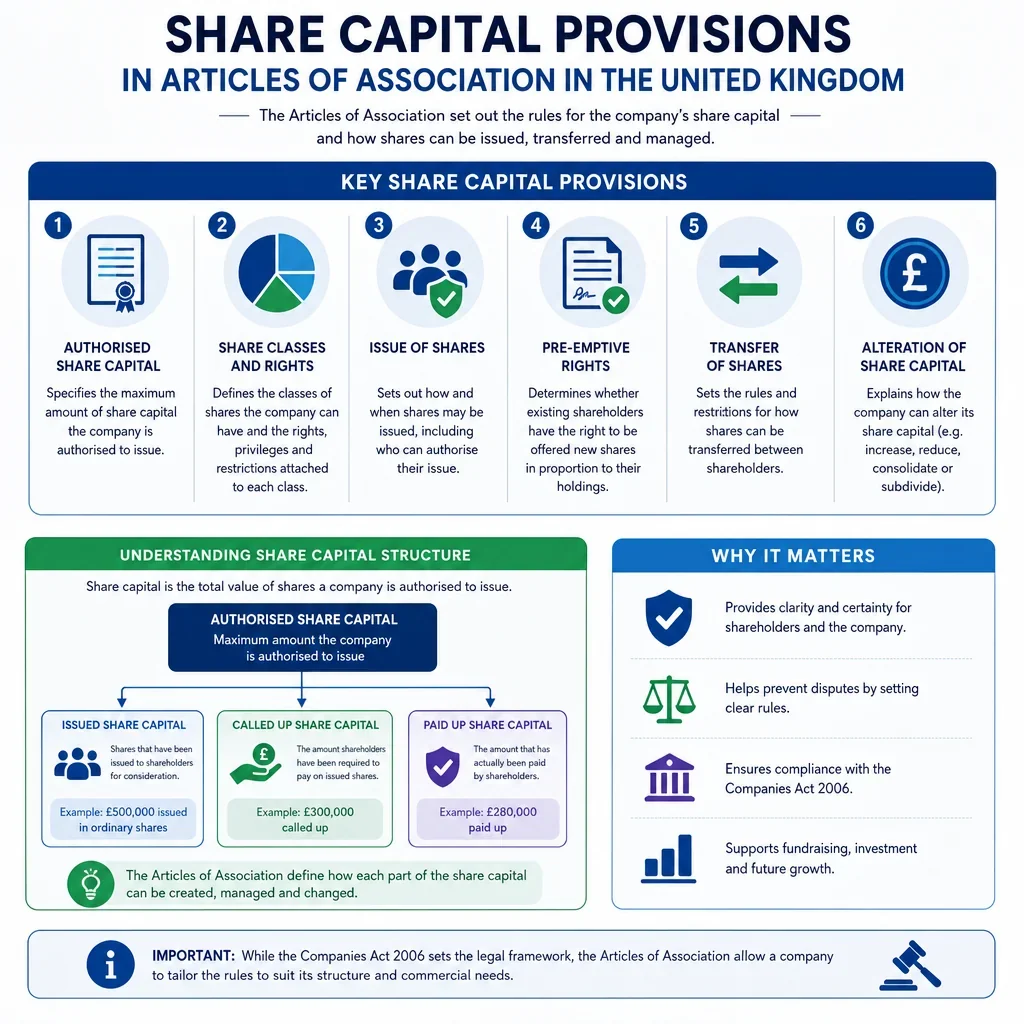
UK companies should check their articles before issuing shares because statutory pre-emption rights, directors' authority to allot shares and class rights can restrict or invalidate the proposed mechanics if not handled correctly. Investor rounds commonly require new articles alongside a shareholders' agreement so that key rights bind future shareholders and are visible on the public record at Companies House.
What Is Different For Guarantee Companies And Charities?
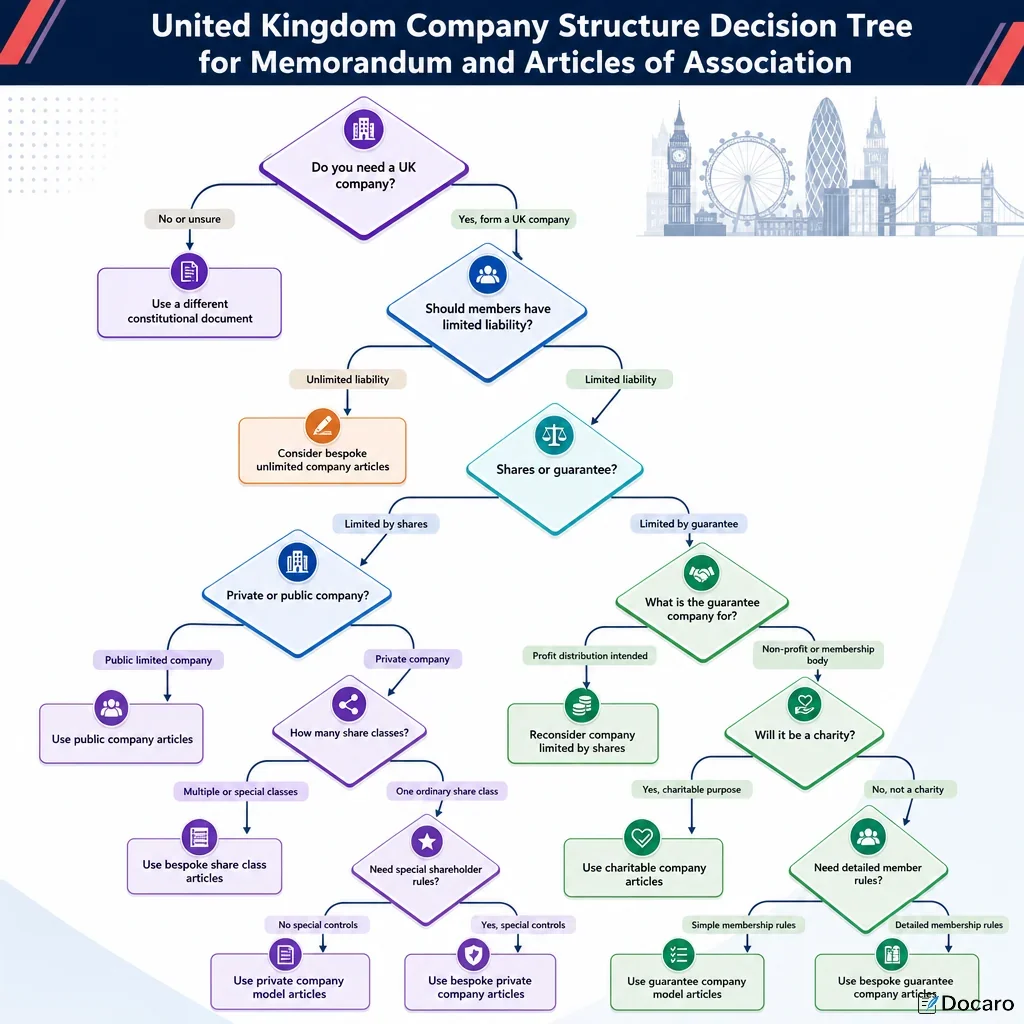
Companies limited by guarantee and charitable companies usually need bespoke articles covering membership, non-profit distribution locks, trustee/director powers and regulatory compliance. Charity articles should align with Charity Commission expectations and the charity's objects, while guarantee company articles should clearly define member liability and voting rights.
FAQs
You Might Also Be Interested In