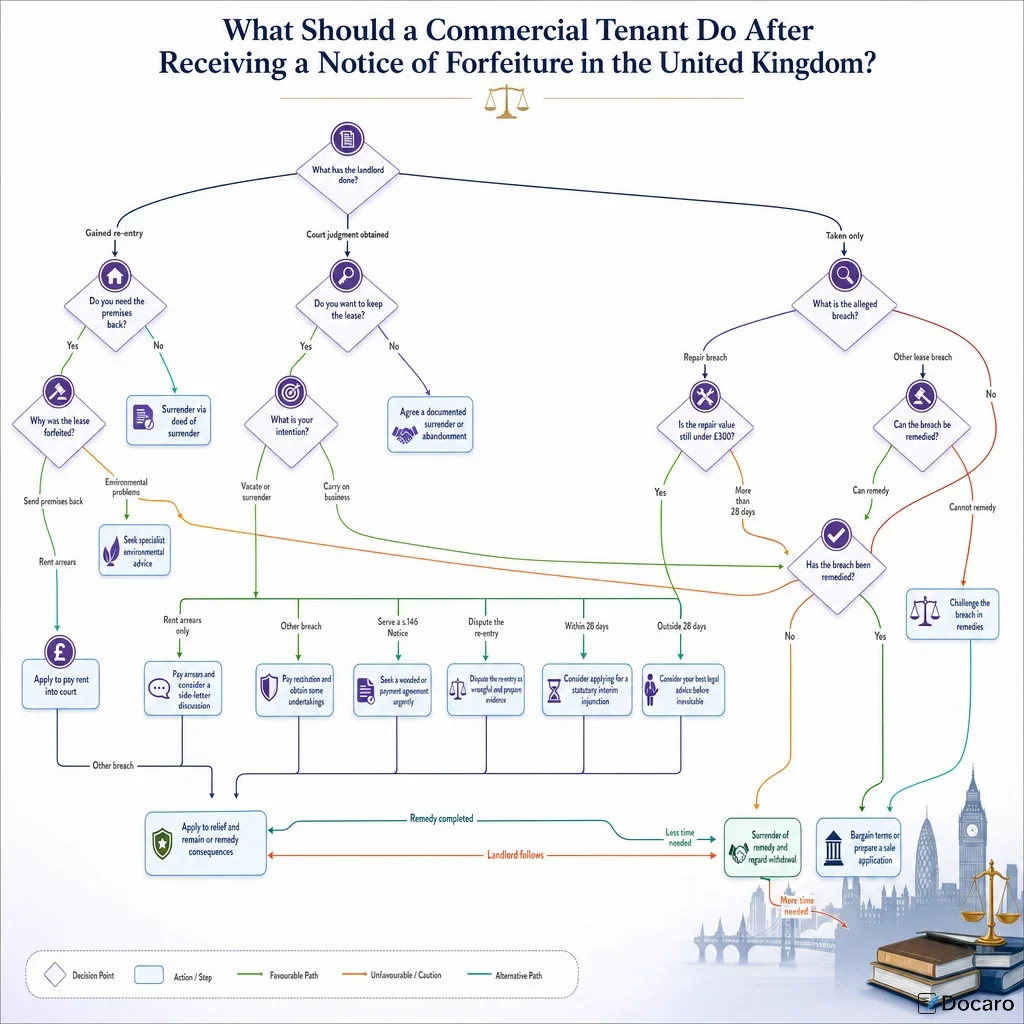
What Should A Commercial Tenant Do After Receiving A Notice Of Forfeiture In The United Kingdom?
What has the landlord done?
What Should A UK Commercial Tenant Do After A Notice Of Forfeiture?
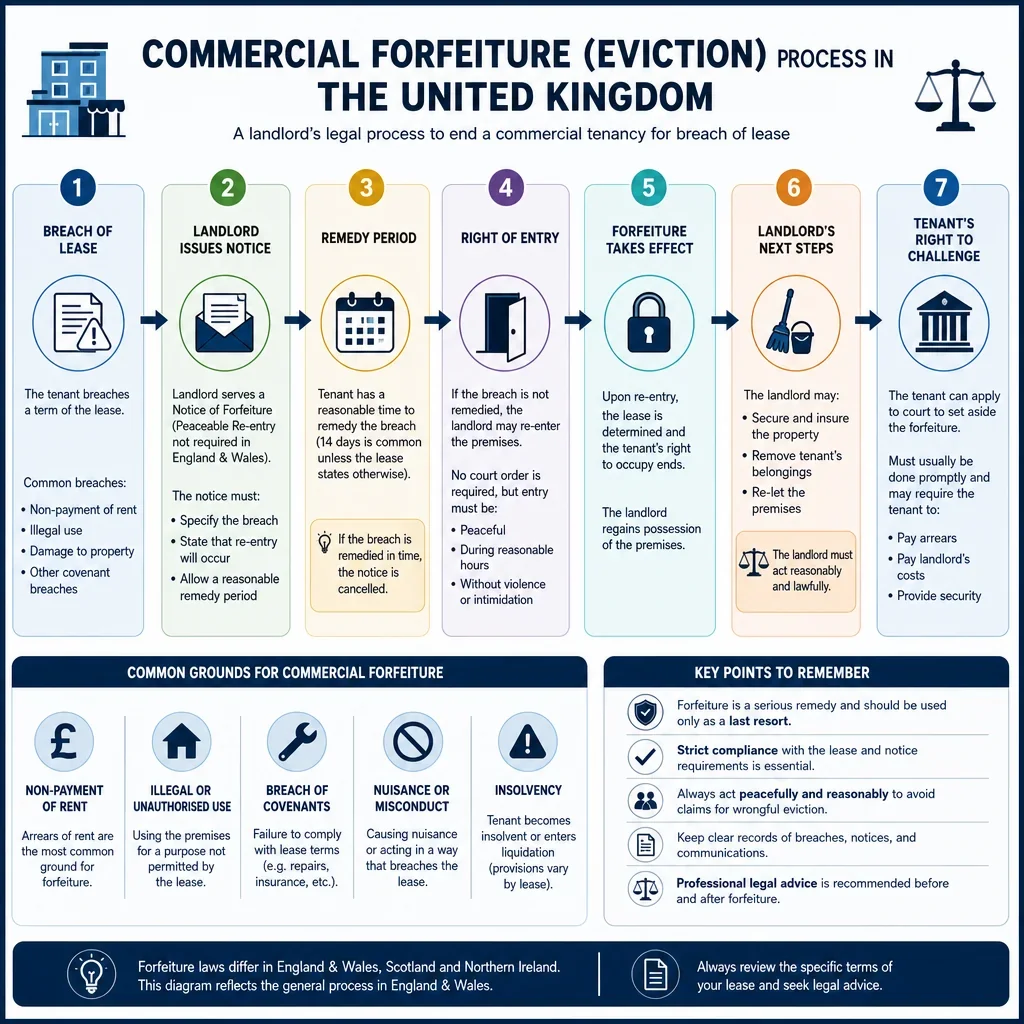
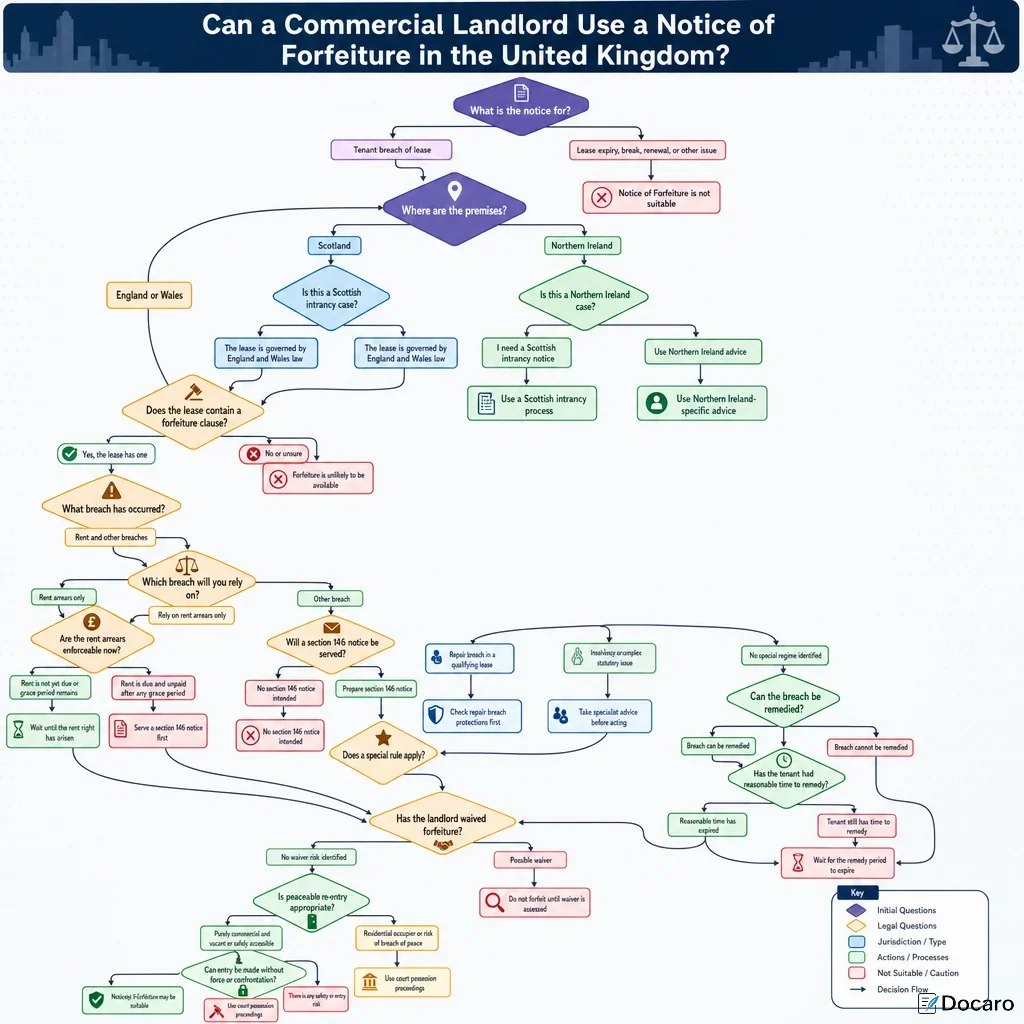
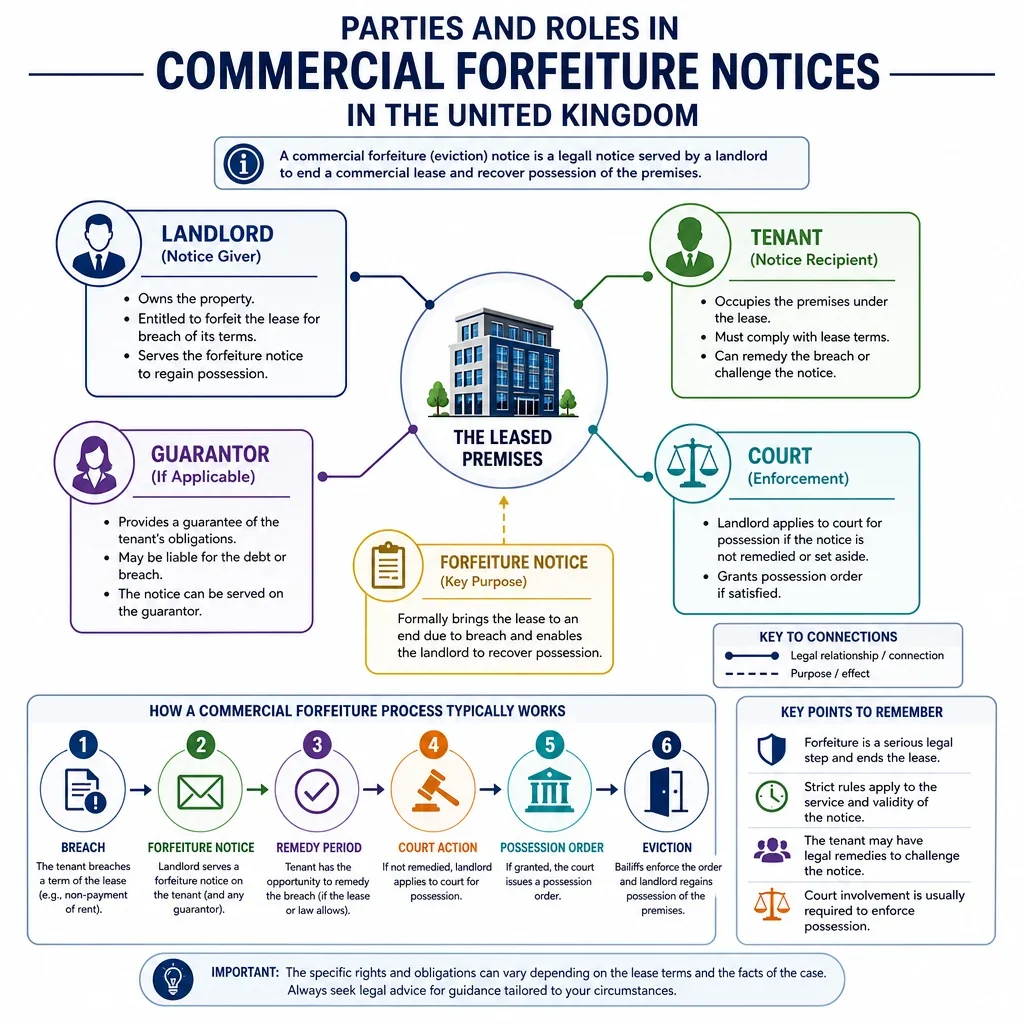
A notice of forfeiture can put a business lease, trading location, stock, staff arrangements, and customer access at immediate risk. In the United Kingdom, the correct response depends on the lease terms, the type of breach, whether the landlord has changed the locks, and whether court proceedings have started.
Why Is Speed Important After A Commercial Eviction Notice?
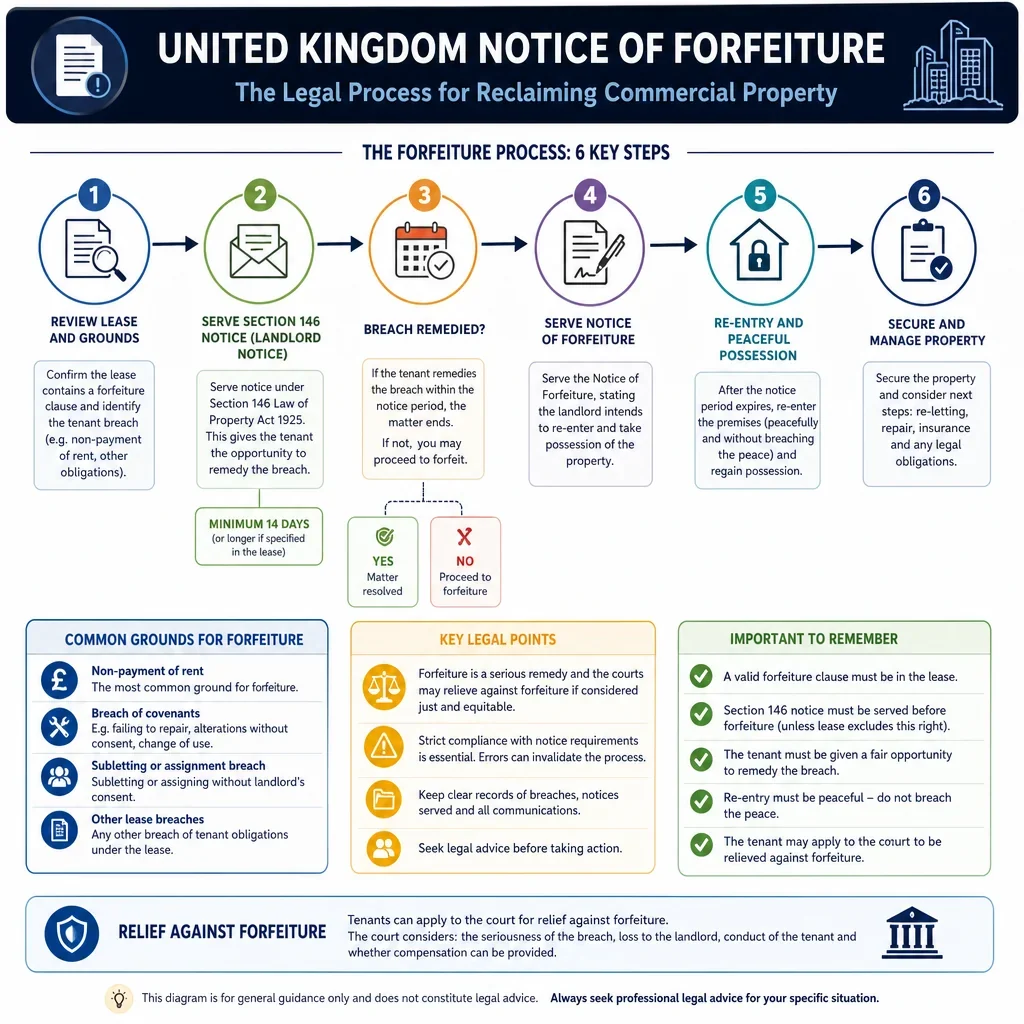
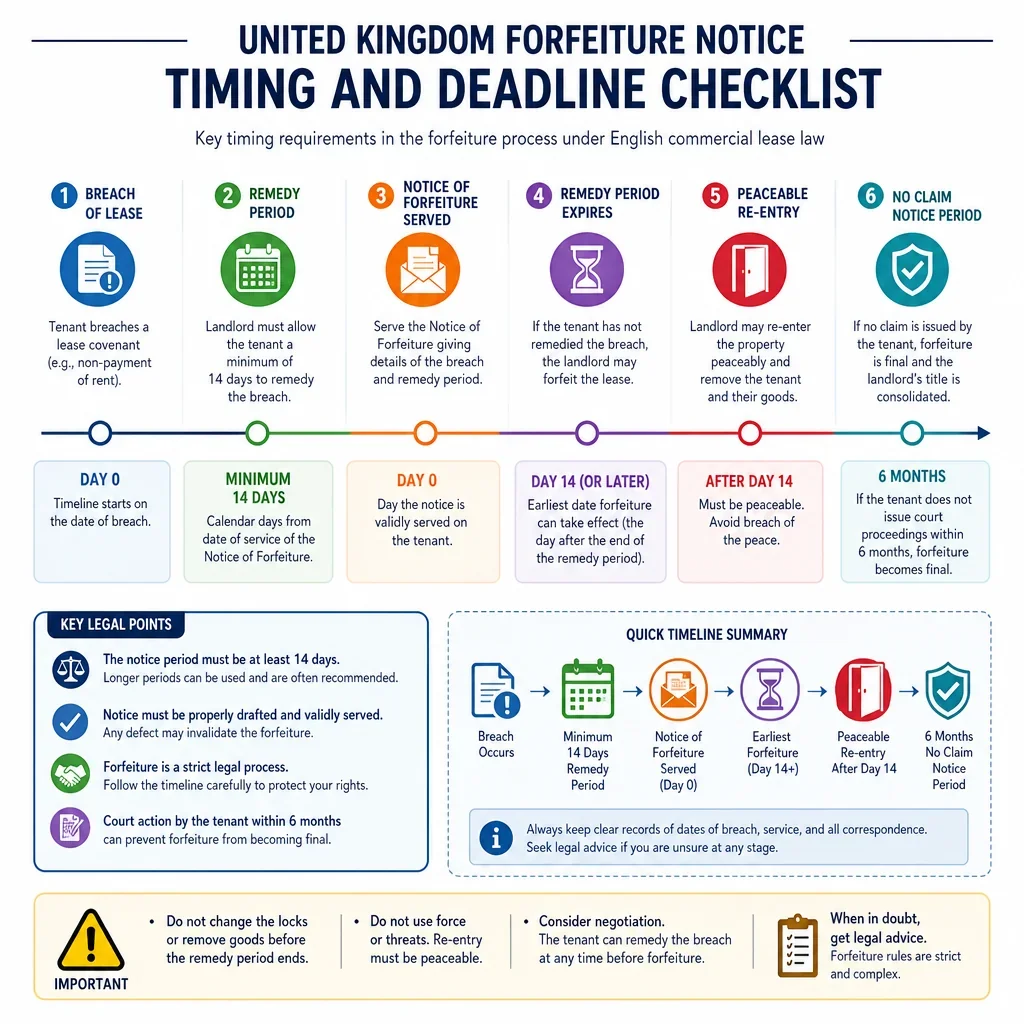
Forfeiture is often time-sensitive. A tenant who delays may lose negotiating leverage, miss court deadlines, or weaken an application for relief from forfeiture. If the issue is rent arrears, prompt payment or security for arrears and costs may be decisive. If the issue is a non-rent breach, quick evidence of remedy or compensation can be critical.
Why Does The Type Of Breach Matter?
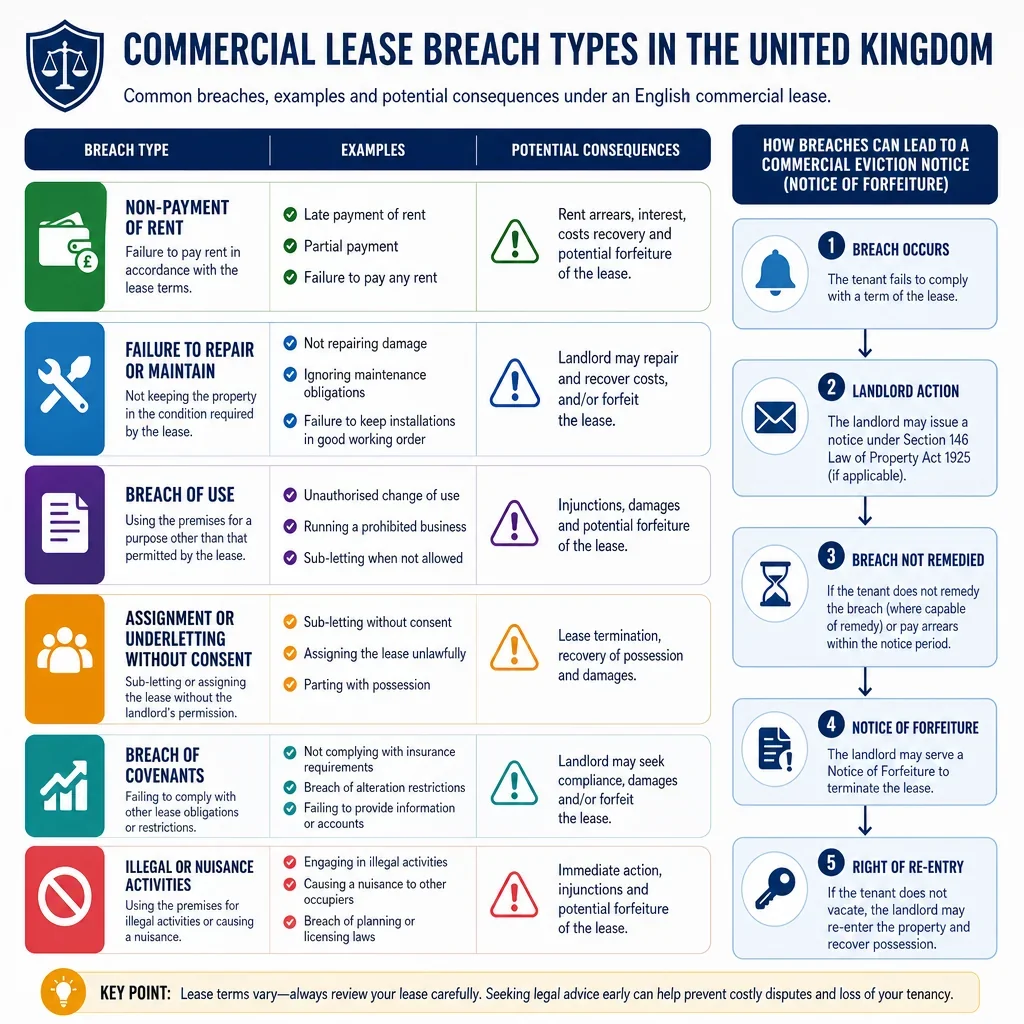
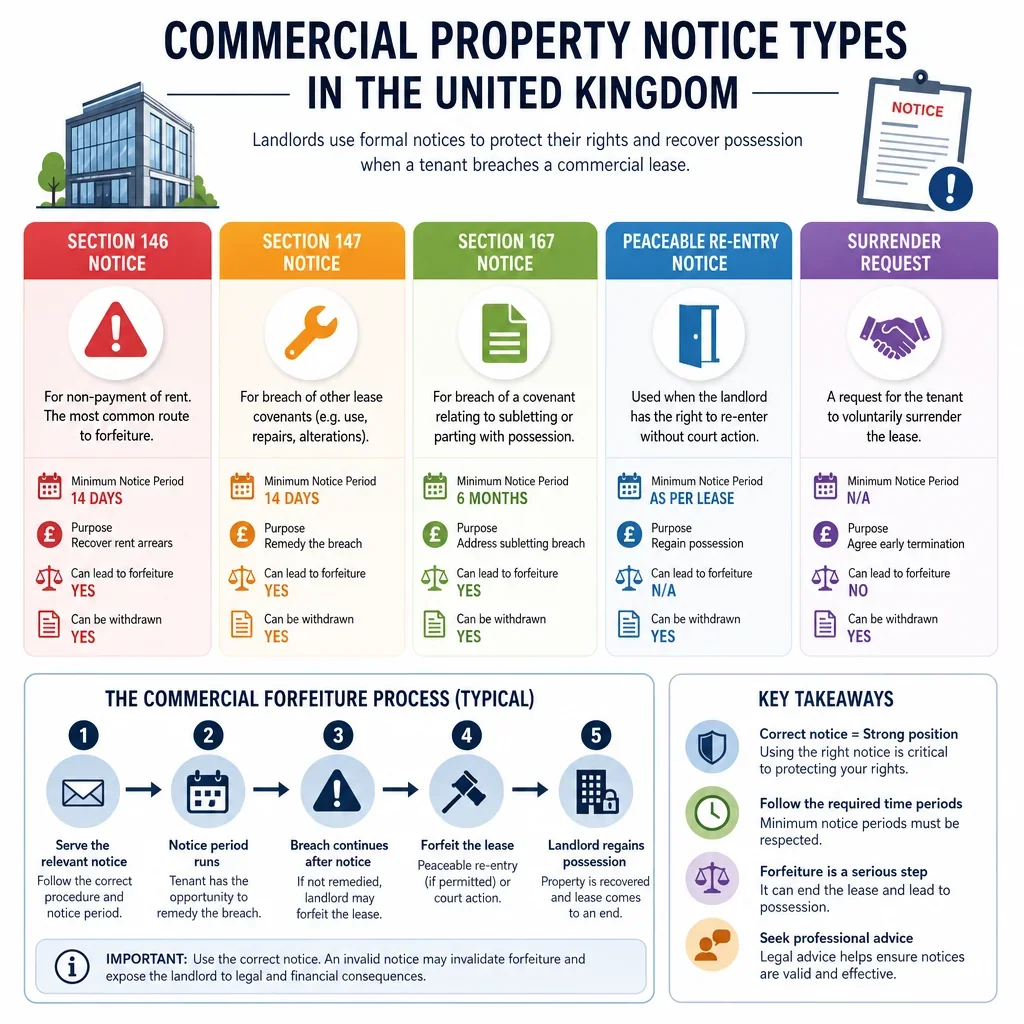
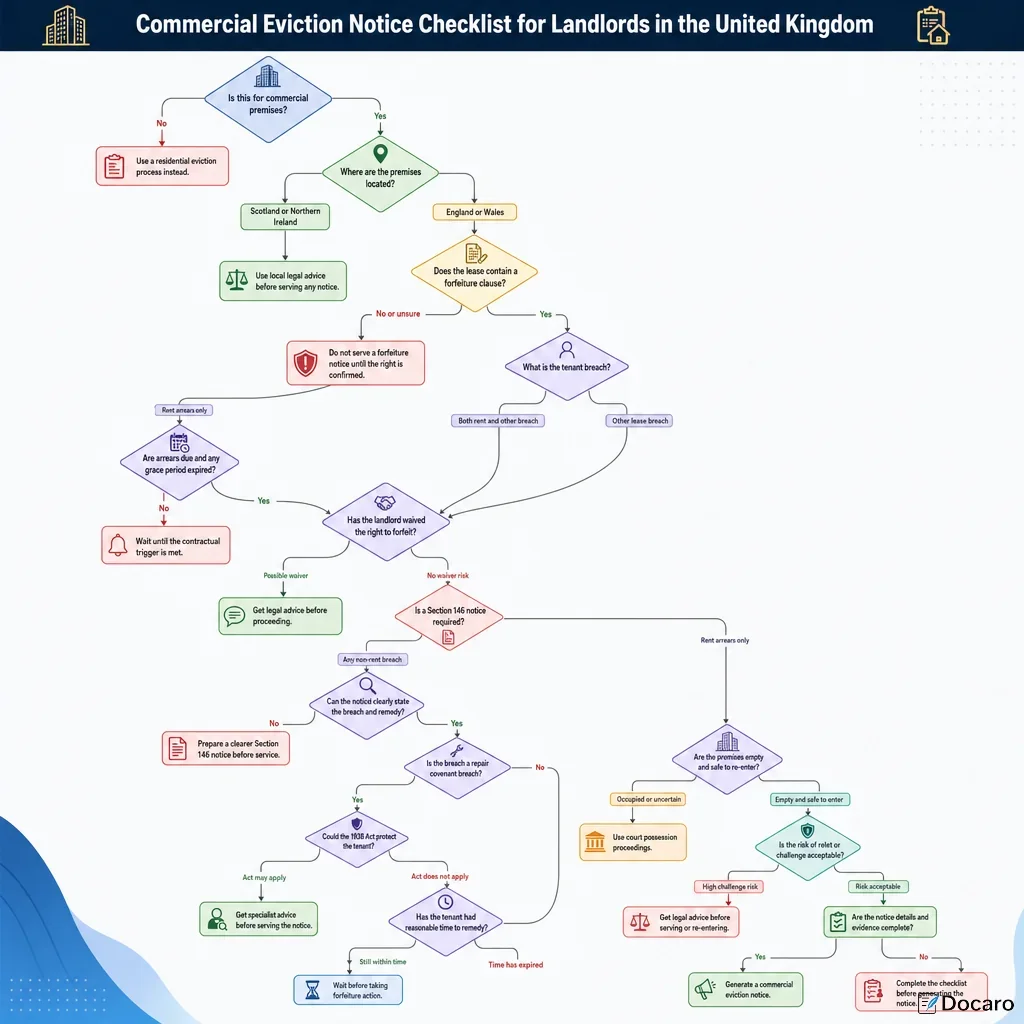
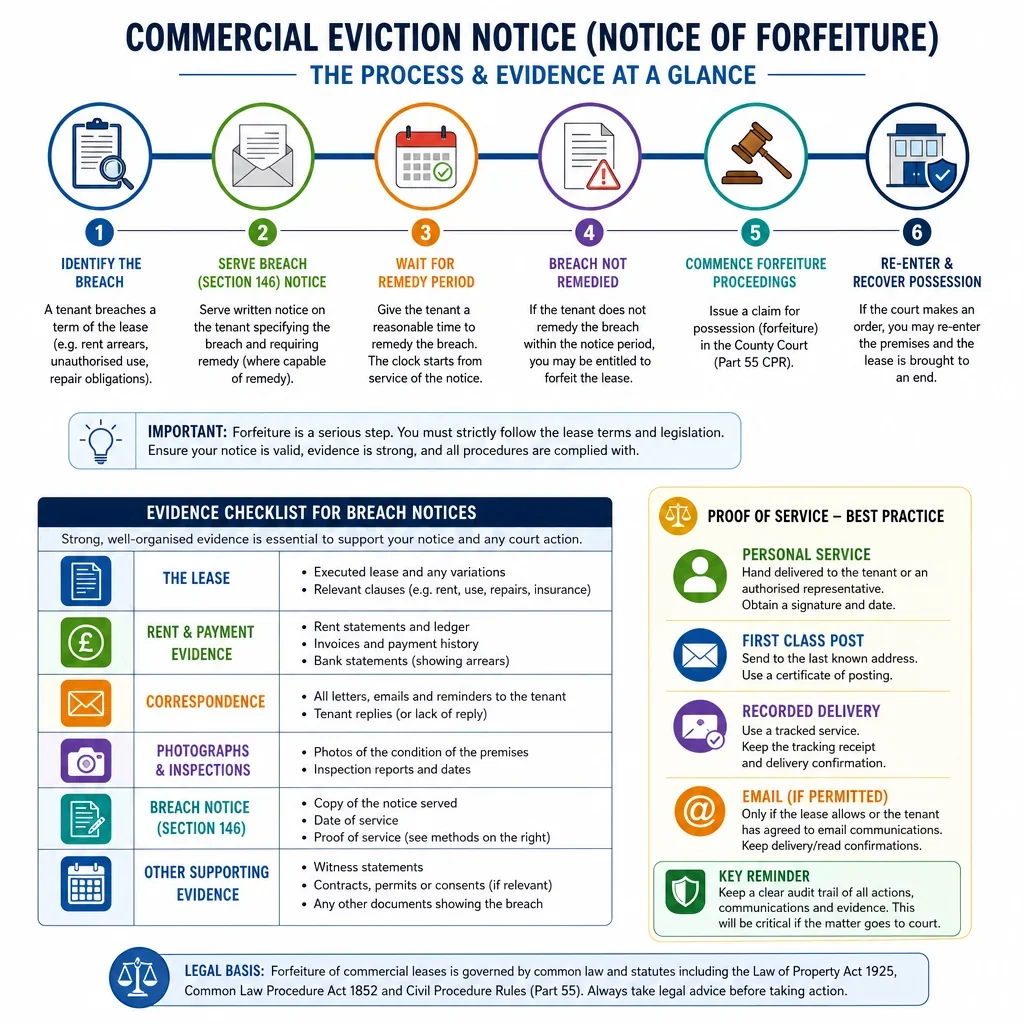
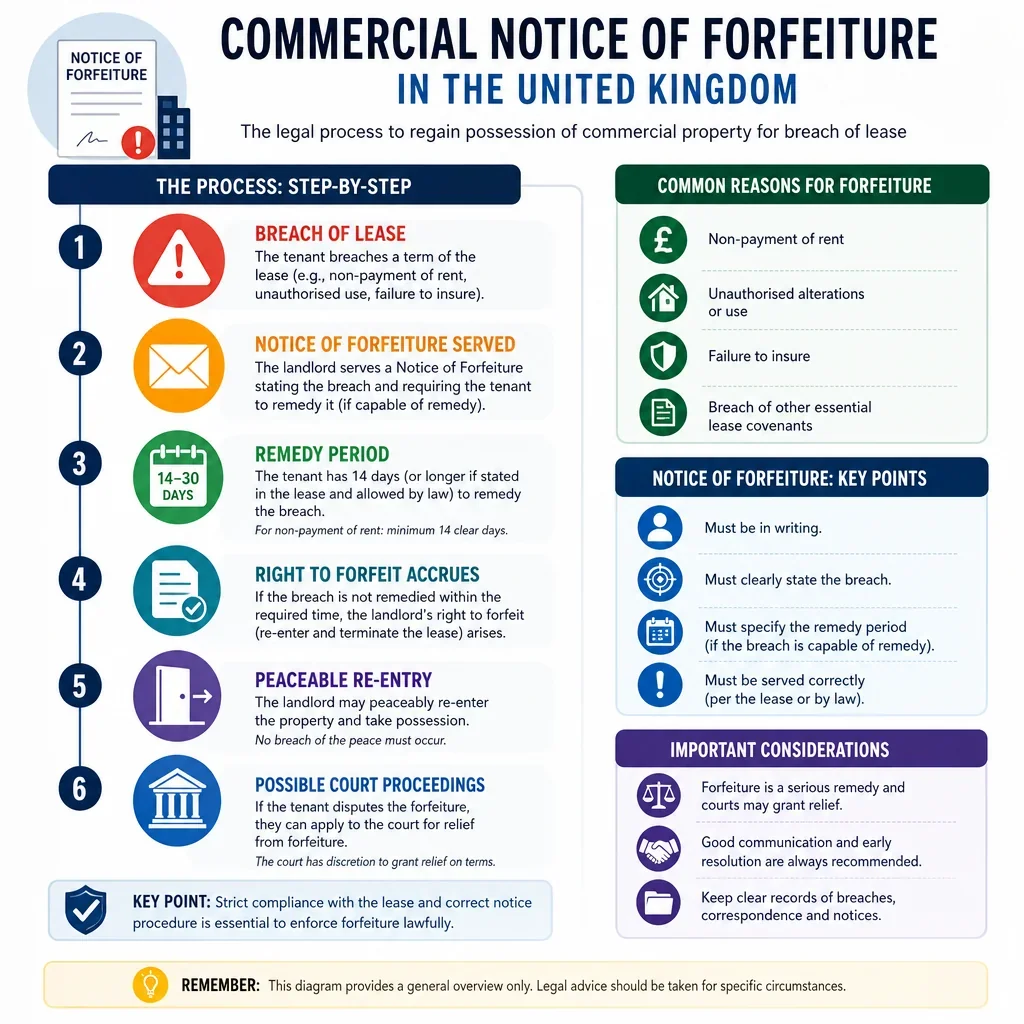
UK law treats rent arrears, repair breaches, and other covenant breaches differently. Many non-rent breaches require a valid notice under section 146 of the Law of Property Act 1925. Some repair cases may involve extra protection under the Leasehold Property (Repairs) Act 1938. Identifying the correct category helps a tenant decide whether to pay, remedy, dispute, negotiate, or apply to court.
What Are The Risks Of Making The Wrong Decision?
- Loss of premises: the business may be locked out or a possession order may be made.
- Financial liability: arrears, interest, legal costs, service charge, dilapidations, and guarantor claims may continue.
- Loss of evidence: delay can make it harder to prove payment, waiver, remedy, or invalid notice.
- Weaker court position: relief from forfeiture is discretionary and prompt action matters.
When Should A Commercial Tenant Get Legal Advice?
A tenant should take urgent specialist advice if the landlord has re-entered, court papers have arrived, the sums are disputed, the breach is not clear, the property has mixed use, the tenant is insolvent, or the lease is valuable. This tool gives a structured starting point, but it is not a substitute for advice on the particular lease and facts.
FAQs
You Might Also Be Interested In