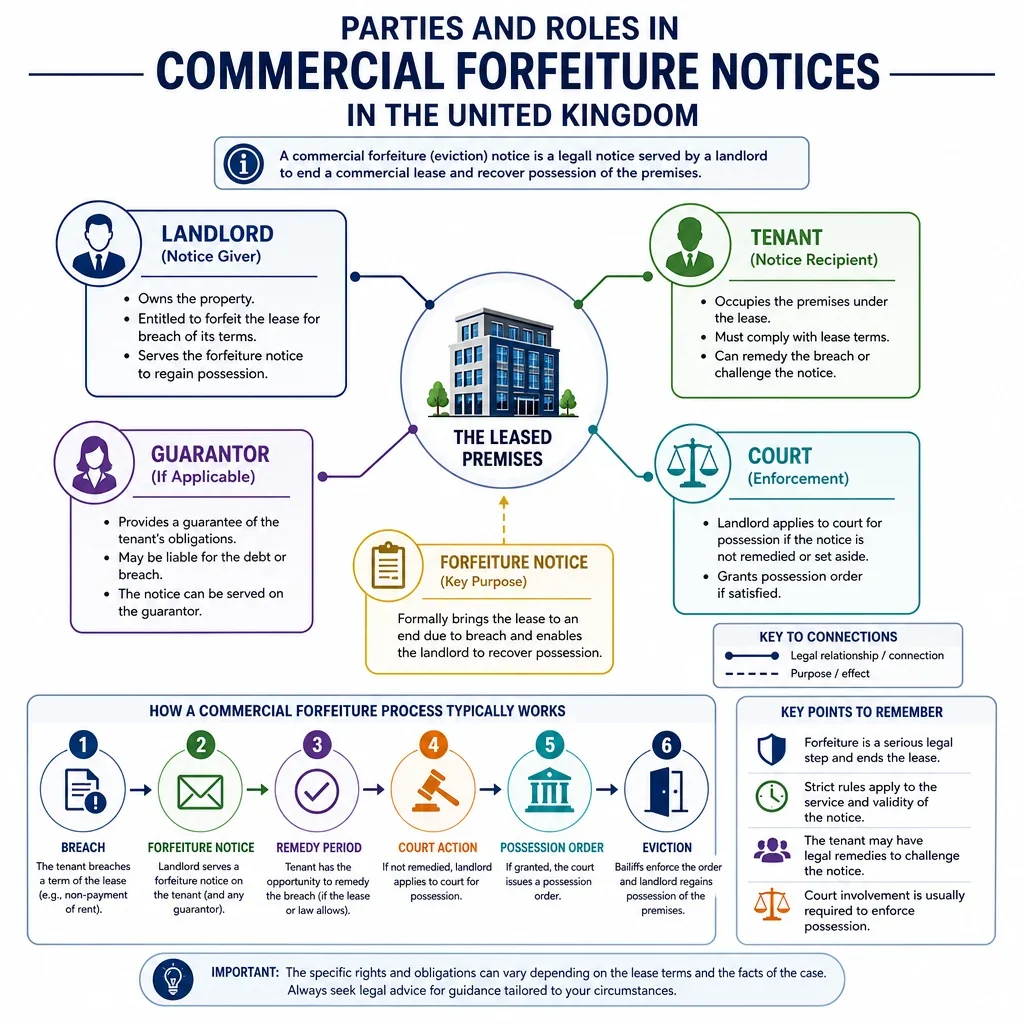
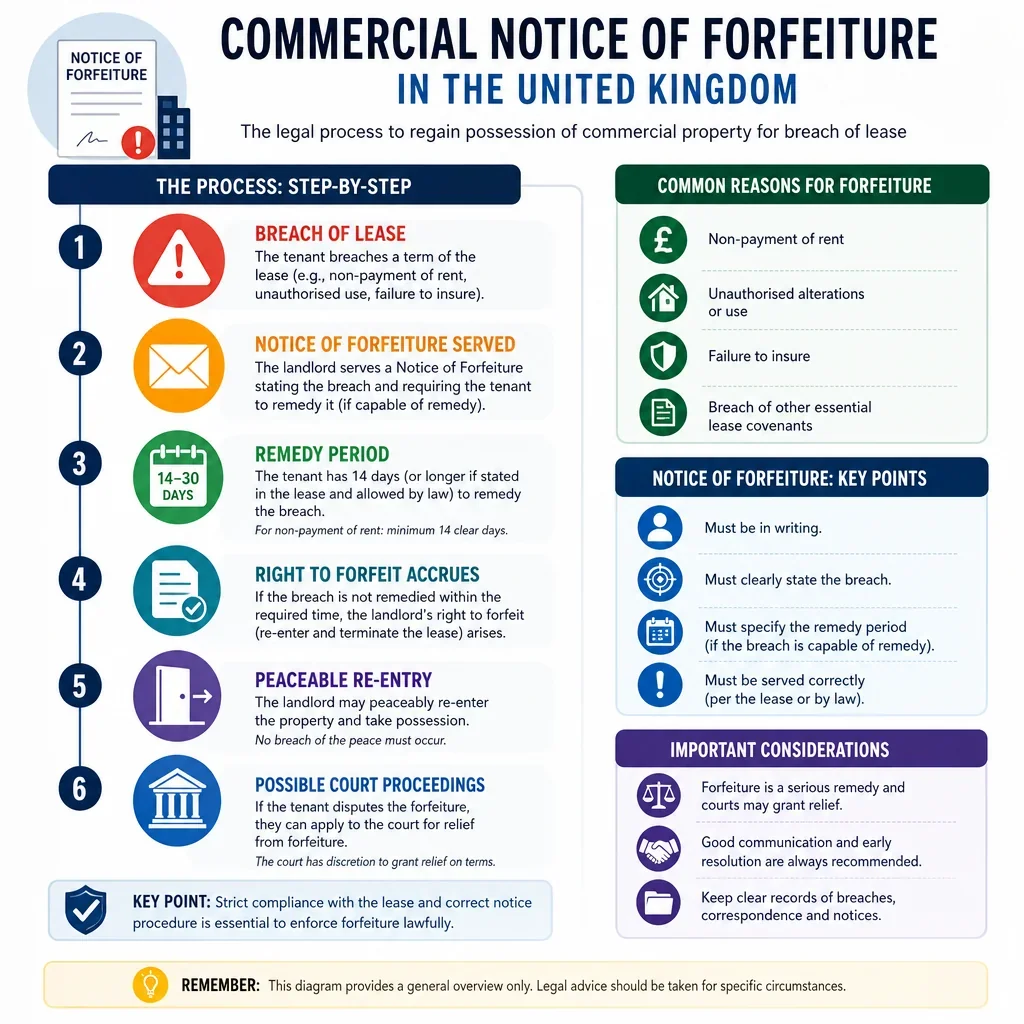
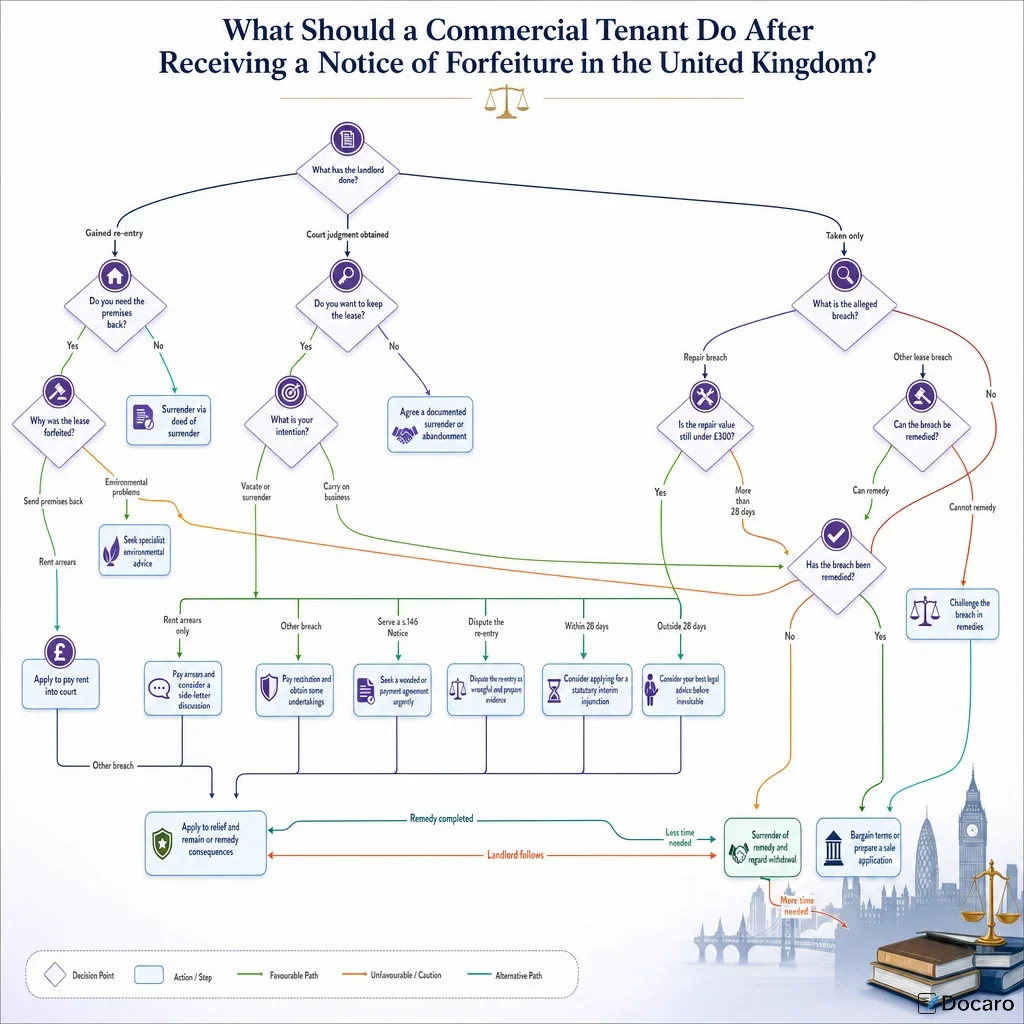
Evidence Checklist For Commercial Lease Breach Notices In The United Kingdom
Evidence Type | Purpose | Usually Available Before Notice | Details To Verify | Record Keeping Notes |
|---|---|---|---|---|
Lease document | ||||
Executed lease | Identifies parties, premises, covenants, rent terms and forfeiture clause. | true | Parties, property address, term, rent dates, breach clause, notice clause. | Keep complete signed copy with plans, schedules and counterparts. |
Deed of variation | Shows amended rent, premises, covenants or notice requirements. | true | Execution date, varied clauses, parties, registration status if relevant. | Store with lease and mark amended clauses in evidence index. |
Licence to alter, assign, underlet or change use | Shows whether alleged conduct was authorised or conditional. | true | Consent scope, conditions, approved plans, deadlines, reinstatement duties. | Keep signed licence, plans and evidence of condition compliance. |
Side letter or rent concession agreement | Confirms temporary concessions or waived enforcement conditions. | true | Concession period, payment triggers, termination rights, parties. | File with lease to avoid misstating arrears or obligations. |
Financial record | ||||
Rent arrears schedule | Shows unpaid rent and dates sums became due. | true | Due dates, amounts, VAT, credits, concessions, interest, balance. | Keep spreadsheet version and source invoices supporting each entry. |
Tenant rent ledger | Provides running account of charges, payments and arrears. | true | Opening balance, posting dates, payment allocation, closing balance. | Export dated ledger before notice and preserve audit trail. |
Rent demands and invoices | Shows sums demanded and basis of arrears. | true | Invoice date, period charged, tenant name, VAT number, due date. | Keep copies as sent and evidence of delivery if available. |
Bank statements showing payments received | Corroborates payments made or not made by tenant. | true | Account name, dates, references, amounts, returned payments. | Redact unrelated entries but retain originals securely. |
Service charge statement and budget | Supports unpaid service charge or reserve fund breach. | true | Lease apportionment, accounting period, balancing charge, payments. | File demand, accounts, certificate and calculation together. |
Insurance rent demand and premium schedule | Shows unpaid insurance contribution due under lease. | true | Policy period, premium, tenant share, demand date, VAT or IPT. | Keep policy schedule and apportionment workings with demand. |
Interest calculation schedule | Supports contractual interest claimed on overdue sums. | true | Interest clause, rate, start date, daily rate, compounding. | Keep formula visible and separate principal from interest. |
Costs and professional fee invoices | Supports recoverable surveyor, solicitor or enforcement costs. | false | Lease cost clause, invoice date, work description, VAT, payment status. | Separate recoverable costs from internal administration time. |
Inspection record | ||||
Schedule of condition | Establishes baseline condition for repair or damage allegations. | true | Date, photographs, plan references, signatures, lease incorporation. | Keep original report and photo files in chronological condition folder. |
Landlord inspection notes | Records observed breach, location and condition at inspection. | true | Inspector, date, access basis, areas inspected, exact observations. | Write promptly and cross-reference photos and lease clauses. |
Third party report | ||||
Surveyor disrepair report | Provides expert evidence of repair breaches and remedial works. | false | Surveyor credentials, inspection date, defects, causation, cost estimate. | Keep signed report, instructions, photographs and cost breakdown. |
Terminal or interim schedule of dilapidations | Itemises repair, reinstatement and decoration breaches and remedies. | false | Lease clauses, defect items, remedial works, costs, dates, surveyor. | Use consistent item numbering with photographs and notice allegations. |
Photographic record | ||||
Dated breach photographs | Visually proves disrepair, alterations, obstruction, waste or misuse. | true | Date, location, photographer, file metadata, what each image shows. | Keep originals and labelled copies avoid editing source files. |
Video footage of breach | Shows ongoing activity such as nuisance, obstruction or unauthorised use. | false | Date, time, location, camera source, continuity, privacy compliance. | Preserve original file and note who extracted and stored it. |
CCTV clips or access footage | Corroborates timing of unauthorised access, dumping or nuisance. | false | Retention period, timestamp accuracy, camera angle, identity evidence. | Export promptly and keep lawful processing and disclosure notes. |
Before and after alteration photographs | Shows physical changes made without consent or beyond licence. | true | Location, dates, original condition, current works, approved plan comparison. | Pair images with plans and alteration covenant references. |
Third party report | ||||
Planning permission and enforcement records | Shows unauthorised use or works affecting lease compliance. | false | Planning reference, permitted use, conditions, enforcement notices, dates. | Save council portal copies and screenshots with access date. |
Building control approval or contravention record | Supports breach involving unsafe or unauthorised building works. | false | Application number, approved works, completion certificate, defects, notices. | Keep authority records with photos and contractor evidence. |
Fire risk assessment or fire officer report | Evidences unsafe occupation, blocked exits or missing precautions. | false | Assessment date, responsible person, findings, remedial actions, deadlines. | Retain report, action plan and evidence of unresolved items. |
Health and safety notice or report | Supports breach involving unsafe operations or statutory non-compliance. | false | Notice type, recipient, premises, breach, compliance date, status. | Keep official notice and any follow-up correspondence together. |
Environmental health complaint or abatement notice | Evidences noise, odour, waste or nuisance linked to tenant use. | false | Complainant, dates, measurements, premises, notice terms, tenant link. | Store council correspondence and incident logs chronologically. |
Service record | ||||
Waste transfer notes or fly-tipping records | Shows improper waste handling or dumping at the premises. | false | Waste type, collection dates, contractor, location, tenant responsibility. | Keep photos, contractor invoices and council records together. |
Financial record | ||||
Utility bills and meter readings | Supports unpaid utilities, excessive use or meter tampering allegation. | true | Meter number, billing period, readings, account holder, arrears. | Keep bills, photos of meters and supplier correspondence. |
Correspondence | ||||
Access request letters and attendance notes | Shows tenant refused inspection, repair or statutory access. | true | Notice given, appointment date, attendees, refusal details, lease right. | Record failed visits immediately and retain delivery evidence. |
Breach warning letters or emails | Shows prior notice, admissions, remedy requests and chronology. | true | Sender, recipient, dates, breach description, required action, deadlines. | Keep full email chains and attachments, not just extracts. |
Tenant admission or explanation | Confirms tenant knowledge, responsibility or inability to remedy. | false | Exact wording, author identity, authority, date, context. | Preserve full message thread and avoid paraphrasing admissions. |
Neighbour or occupier complaint log | Supports nuisance, obstruction, noise or antisocial conduct allegations. | true | Complainant, incident date, description, impact, corroboration, tenant link. | Keep original complaints and anonymise only where necessary. |
Other evidence | ||||
Witness statement or incident note | Provides first-hand evidence of events not fully shown by documents. | false | Witness identity, date, location, observations, exhibits, truth statement if used. | Take statements promptly and attach referenced photographs or documents. |
Companies House tenant details | Checks company name, number, registered office and status. | true | Registered name, company number, address, liquidation, dissolution, charges. | Save dated search results before serving any notice. |
Insolvency register or Gazette notice | Identifies insolvency status affecting enforcement strategy and service. | false | Tenant identity, insolvency type, office-holder, dates, moratorium risk. | Keep search printouts and update immediately before enforcement. |
Land Registry title register and plan | Confirms landlord title, premises extent and registered lease interests. | true | Title number, proprietor, lease entries, plan boundaries, restrictions. | Save official copies close to notice date. |
Service record | ||||
Proof of delivery for demands and warnings | Shows tenant received relevant demands, warnings or access notices. | true | Method, address, tracking number, delivery date, recipient. | File certificates, tracking receipts and email delivery logs together. |
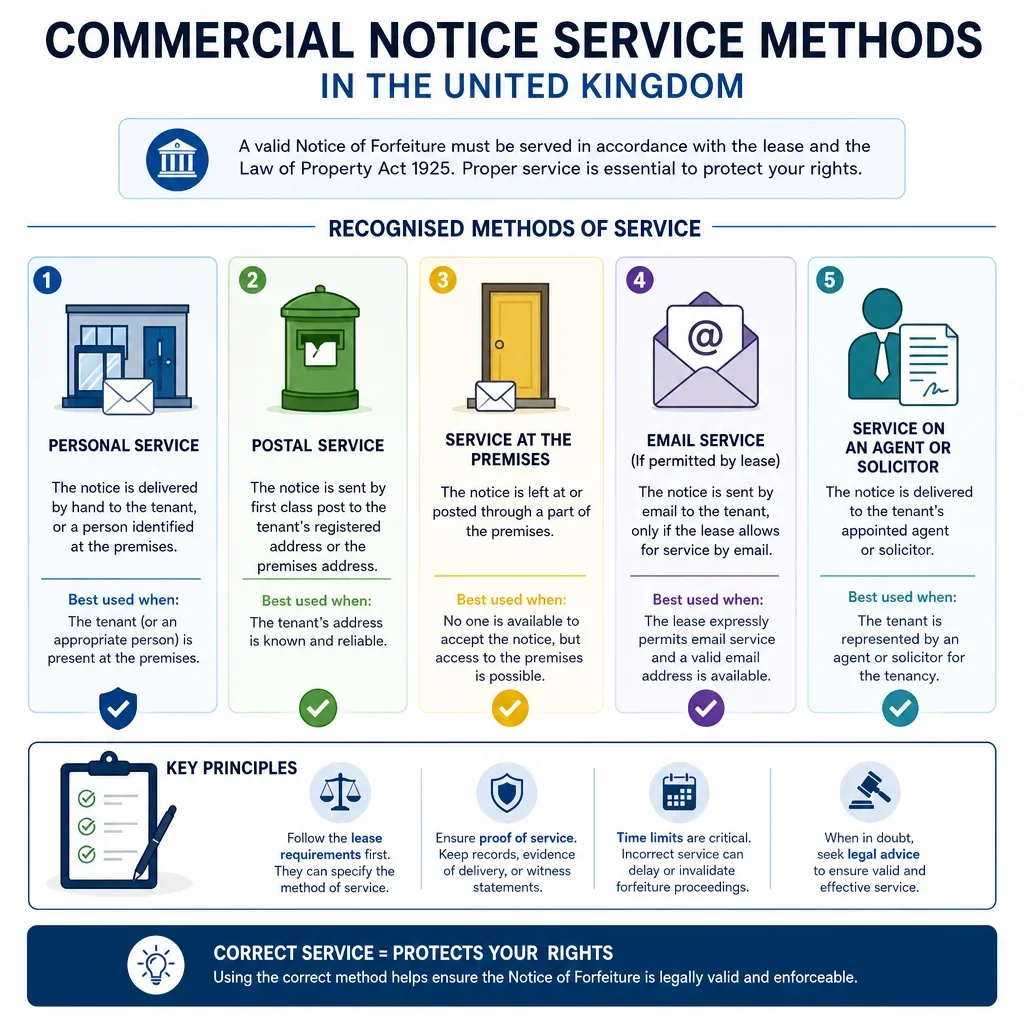
Notice service checklist | Confirms proposed service method follows lease and law. | true | Service clause, permitted methods, addresses, deemed service timing. | Keep checklist with final signed notice and service evidence. |
Other evidence | ||||
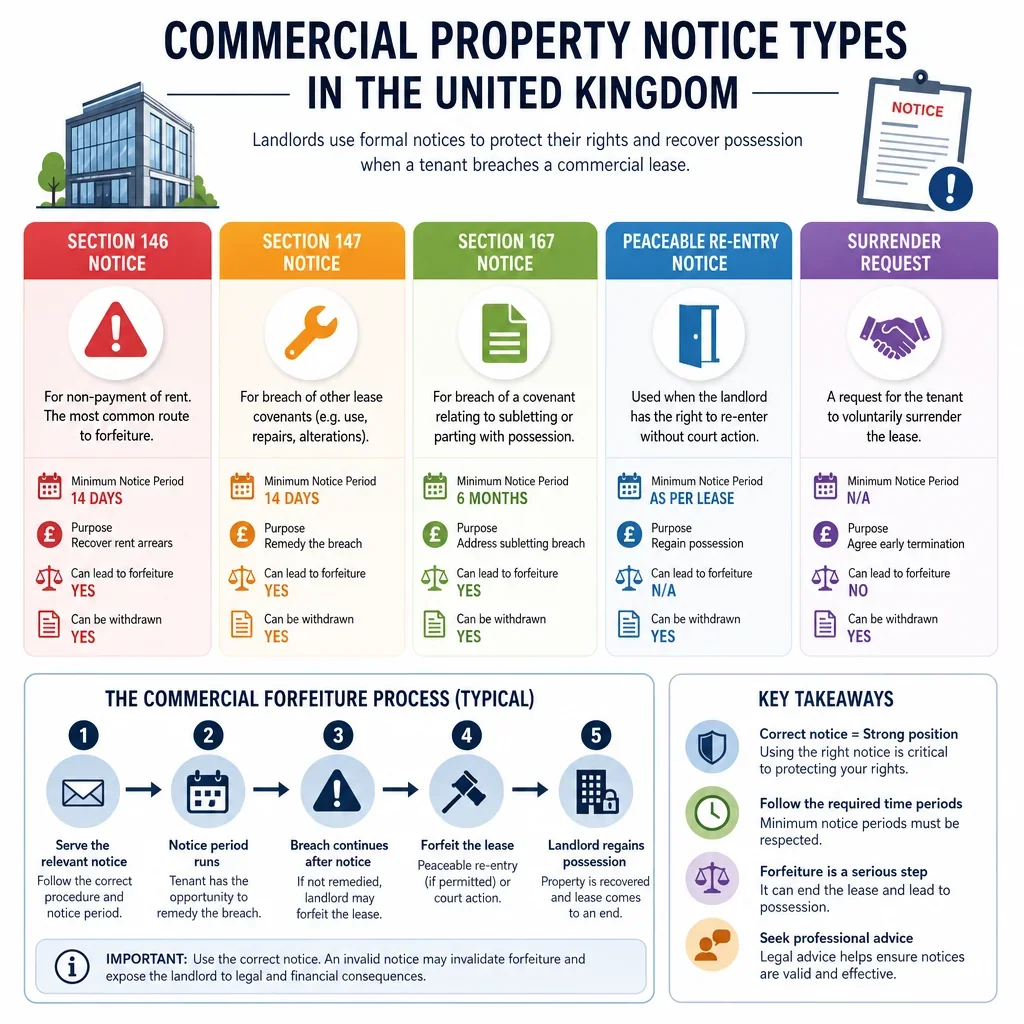
Law of Property Act 1925 section 146 requirements | Requires breach specification, remedy if possible and compensation if sought. | true | Whether breach is non-rent, capable of remedy, compensation claimed. | Keep legal basis note with evidence mapped to each notice requirement. |
County Courts Act 1984 section 138 rent arrears relief context | Relevant to rent arrears proceedings and possible tenant relief. | true | Arrears, costs, payment timing, court route, lease terms. | Keep arrears evidence complete because relief may turn on payment figures. |
Tribunals, Courts and Enforcement Act 2007 CRAR context | Identifies alternative arrears remedy and rent-only limitations. | true | Pure rent arrears, lease type, occupation, enforcement notice status. | Keep CRAR records separate from forfeiture notice evidence. |
Correspondence | ||||
Insurance policy breach correspondence | Shows tenant conduct invalidated or increased insurance risk. | false | Policy condition, insurer warning, tenant act, premium increase, dates. | Keep insurer letters, broker emails and premium adjustment evidence. |
Inspection record | ||||
Occupier identity and subletting evidence | Supports unauthorised assignment, sharing occupation or underletting breach. | false | Occupier name, trading style, signage, website, staff statements, dates. | Keep screenshots, photos and inspection notes with access dates. |
Other evidence | ||||
Corporate relationship checks | Helps identify group occupation, guarantors or misnamed entities. | false | Company numbers, directors, trading names, guarantor status, filings. | Save dated searches for tenant, occupier and guarantor entities. |
Lease document | ||||
Guarantee or authorised guarantee agreement | Identifies guarantor obligations and notice or demand implications. | true | Guarantor name, execution, guaranteed obligations, notice provisions. | Store with lease and copy guarantor on notices if required. |
Financial record | ||||
Emergency repair invoices | Supports costs caused by tenant default or failure to repair. | false | Work date, contractor, defect, cause, cost, lease recovery clause. | Keep invoice, job sheet, photos before and after works. |
Service record | ||||
Contractor job sheets | Confirms attempted or completed works and tenant obstruction or cause. | true | Attendance date, operative, work requested, access issue, findings. | Request signed job sheets and retain contractor photos. |
Gas, electrical or plant compliance certificates | Shows compliance failure or missing tenant-maintained certificates. | false | Certificate type, expiry, equipment, responsible party, defects. | Keep expired and current certificates with maintenance correspondence. |
Other evidence | ||||
Website, advert or trading evidence | Shows actual use inconsistent with lease permitted use. | false | URL, screenshot date, business activity, premises link, tenant link. | Save timestamped screenshots and page source where practical. |
Photographic record | ||||
Signage and shopfront photographs | Shows trading name, unauthorised branding, use or occupation changes. | true | Photo date, location, sign wording, relation to premises. | Label images by frontage, entrance, interior and common parts. |
Service record | ||||
Key, fob and access control logs | Shows unauthorised access, blocked access or change of locks. | false | User, entry times, fob number, door, system clock accuracy. | Export logs promptly and preserve system audit records. |
Inspection record | ||||
Abandonment inspection record | Records apparent vacancy, disuse, security risk or failure to trade. | false | Inspection dates, stock, utilities, mail, security, tenant contact attempts. | Avoid treating abandonment as forfeiture without legal advice keep notes factual. |
Financial record | ||||
Insurance claim file | Links tenant acts to damage, losses or policy issues. | false | Incident date, cause, adjuster findings, excess, settlement, exclusions. | Keep insurer reports, photos and payments with damage evidence. |
Third party report | ||||
Loss adjuster or structural engineer report | Expert evidence on damage cause, severity and remedial scope. | false | Expert name, inspection date, causation, recommendations, limitations. | File with photos, invoices and tenant correspondence about damage. |
Inspection record | ||||
Common parts obstruction log | Shows obstruction, storage, parking or access breaches. | true | Location, items, dates, photos, responsible tenant, impact. | Maintain recurring log to show persistence and remedy opportunities. |
Parking breach records | Evidences unauthorised parking, loading or vehicle storage breach. | true | Vehicle registration, bay, date, duration, signage, tenant link. | Keep photos and logs in date order with site plan reference. |
Lease document | ||||
Rent review memorandum or award | Confirms revised rent used in arrears calculation. | true | Review date, new rent, effective date, back rent, signatures. | Attach to arrears schedule where rent changed mid-period. |
Break notice or lease expiry records | Clarifies whether lease continues and forfeiture is relevant. | false | Break date, conditions, service evidence, occupation after date. | File separately from breach notice papers but cross-reference status. |
Landlord and Tenant Act 1954 notices or court papers | Clarifies business tenancy continuation or renewal context. | false | Contracted-out status, section 25 or 26 notices, court deadlines. | Keep renewal papers with tenancy status note before enforcement decisions. |
Contracting-out declaration and warning notice | Shows exclusion from Landlord and Tenant Act 1954 security of tenure. | true | Warning notice, declaration type, dates, lease reference, tenant signature. | Store with lease status documents and renewal evidence. |
Financial record | ||||
Post-breach rent demand and acceptance review | Helps identify waiver risk after landlord knew of breach. | true | Knowledge date, rent demands, payments accepted, reservation wording. | Keep chronology of breach knowledge and all post-knowledge transactions. |
Other evidence | ||||
Breach chronology | Summarises evidence dates and connects documents to allegations. | true | First breach date, discovery date, warnings, remedies, current status. | Update as master index and link each entry to source evidence. |
Remedy feasibility note | Helps state what tenant must do to remedy breach. | false | Breach type, remedial steps, timescale, required consents, cost. | Base note on surveyor, contractor or legal input where needed. |
Financial record | ||||
Compensation calculation | Supports compensation required in a section 146 notice. | false | Loss heads, invoices, estimates, VAT, mitigation, lease cost clauses. | Keep calculation conservative and linked to supporting documents. |
Correspondence | ||||
Landlord consent correspondence | Shows whether landlord consent was granted, refused or conditional. | true | Request, response, conditions, dates, plans, authorised works or use. | File full consent chain before alleging lack of consent. |
Managing agent file notes | Provides day-to-day chronology of breach reports and actions. | true | Author, date, tenant contact, site visits, instructions, follow-up. | Export notes from management system with timestamps preserved. |
Other evidence | ||||
Property management system audit trail | Corroborates ledger entries, tasks, notices and communications. | true | User actions, timestamps, document versions, tenant account, exports. | Keep immutable export or PDF snapshot used for notice drafting. |
Third party report | ||||
Listed building or conservation records | Supports breach involving protected fabric or unauthorised works. | false | Listing entry, affected features, consent status, council correspondence. | Save listing entry and expert photos with alteration evidence. |
Asbestos survey or management plan | Evidences unsafe works, failure to manage asbestos or contamination risk. | false | Survey date, ACM location, dutyholder, works impact, exposure risk. | Keep survey, lab results, contractor records and warnings together. |
Pest control report | Supports hygiene, waste, repair or nuisance breach allegations. | false | Visit dates, infestation source, recommendations, tenant practices, photos. | Keep treatment records and unresolved recommendations in order. |
Food hygiene inspection result | Supports breach involving unlawful or unsafe food business use. | false | Business name, premises, rating date, authority, improvement notices. | Save official rating and council correspondence with date accessed. |
Premises licence and licensing authority records | Shows licensed activities, conditions and possible unauthorised use. | false | Licence holder, hours, conditions, review, enforcement, premises address. | Keep licence copies and authority records with nuisance evidence. |
Police incident reference or crime report | Corroborates criminality, disorder, damage or unlawful use at premises. | false | Incident number, date, premises link, allegation, outcome, disclosure limits. | Record references and retain only lawfully shared information. |
Inspection record | ||||
Hazardous goods storage evidence | Supports breach of user, insurance, safety or nuisance covenants. | false | Substance, quantity, storage location, signage, risk assessment, consent. | Keep photos, safety reports and insurer concerns together. |
Third party report | ||||
Environmental contamination report | Evidences pollution, spills or contamination caused by tenant activity. | false | Sampling date, pollutant, source, affected area, remediation cost. | Keep chain of custody, lab reports and site photographs. |
Energy performance certificate and MEES evidence | Supports compliance context where tenant works affect rating or letting. | true | EPC rating, expiry, assessor, recommendation report, tenant alterations. | Store EPC and evidence of tenant-caused rating issues. |
Remedial works specification | Defines precise works needed to remedy repair or alteration breach. | false | Scope, location, standard, materials, deadline, surveyor approval. | Cross-reference specification item numbers in notice drafting notes. |
Lease document | ||||
Reinstatement notice or reinstatement schedule | Shows tenant must remove alterations or reinstate premises. | false | Lease or licence power, service timing, works required, plans. | Keep with alteration licence and current condition photographs. |
Condition compliance checklist for consent | Shows breach of consent conditions after approval was granted. | true | Each condition, deadline, evidence of compliance, outstanding default. | Use checklist to avoid alleging unauthorised act where only condition breached. |
Financial record | ||||
Rent deposit deed and account statement | Shows deposit drawdown, top-up breach or security position. | true | Deposit amount, drawdown date, notice, top-up deadline, balance. | Keep deed, bank statement and top-up demand together. |
Returned payment or direct debit failure notice | Corroborates failed payment forming arrears. | true | Payment date, amount, bank reference, reason, subsequent payment. | Link to rent ledger entry and bank statement evidence. |
Service record | ||||
Tenant public liability insurance certificate | Shows failure to maintain or provide required tenant insurance. | false | Insured name, premises, policy period, cover limit, exclusions. | Keep requests for certificate and any expired policies supplied. |
Inspection record | ||||
Trading hours observation log | Shows breach of keep-open, operating hours or quiet hours covenant. | false | Observation dates, opening status, staff presence, photos, lease hours. | Use repeated dated observations rather than single anecdotal entry. |
Third party report | ||||
Noise monitoring records | Corroborates excessive noise or nuisance from tenant operations. | false | Measurement dates, equipment, location, decibel levels, source. | Keep raw readings, methodology and complaint links. |
Inspection record | ||||
Odour, smoke or fumes incident log | Supports nuisance, ventilation or unlawful use breach. | true | Date, time, source, weather, affected areas, witnesses, duration. | Keep repeated observations and related complaints together. |
Service record | ||||
Tenant address verification records | Checks correct addresses for tenant and any guarantor notices. | true | Lease address, registered office, last known address, email permissions. | Keep dated searches and correspondence confirming address changes. |
Other evidence | ||||
Notice evidence cross-reference table | Maps each allegation in notice to supporting evidence. | true | Notice paragraph, lease clause, evidence ID, date, remedy requested. | Keep with final notice bundle to ensure consistency and traceability. |
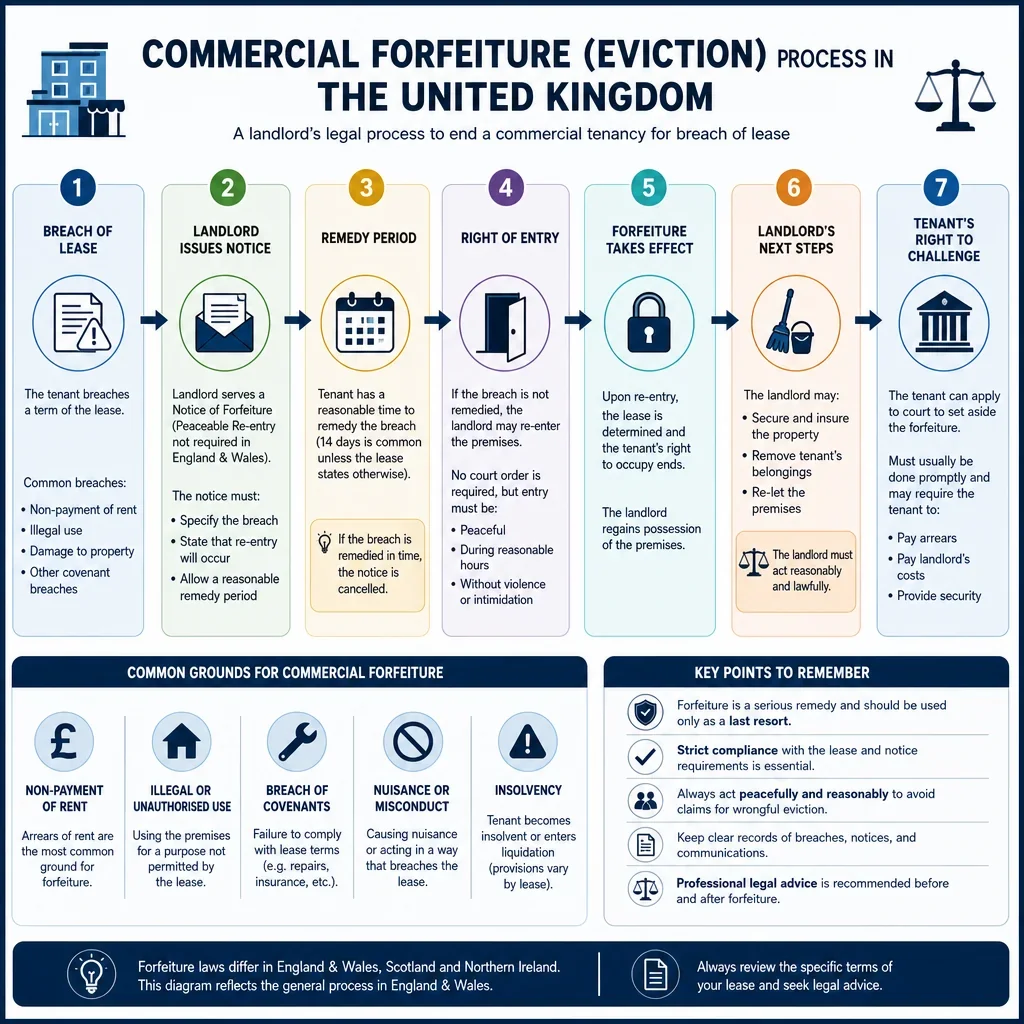
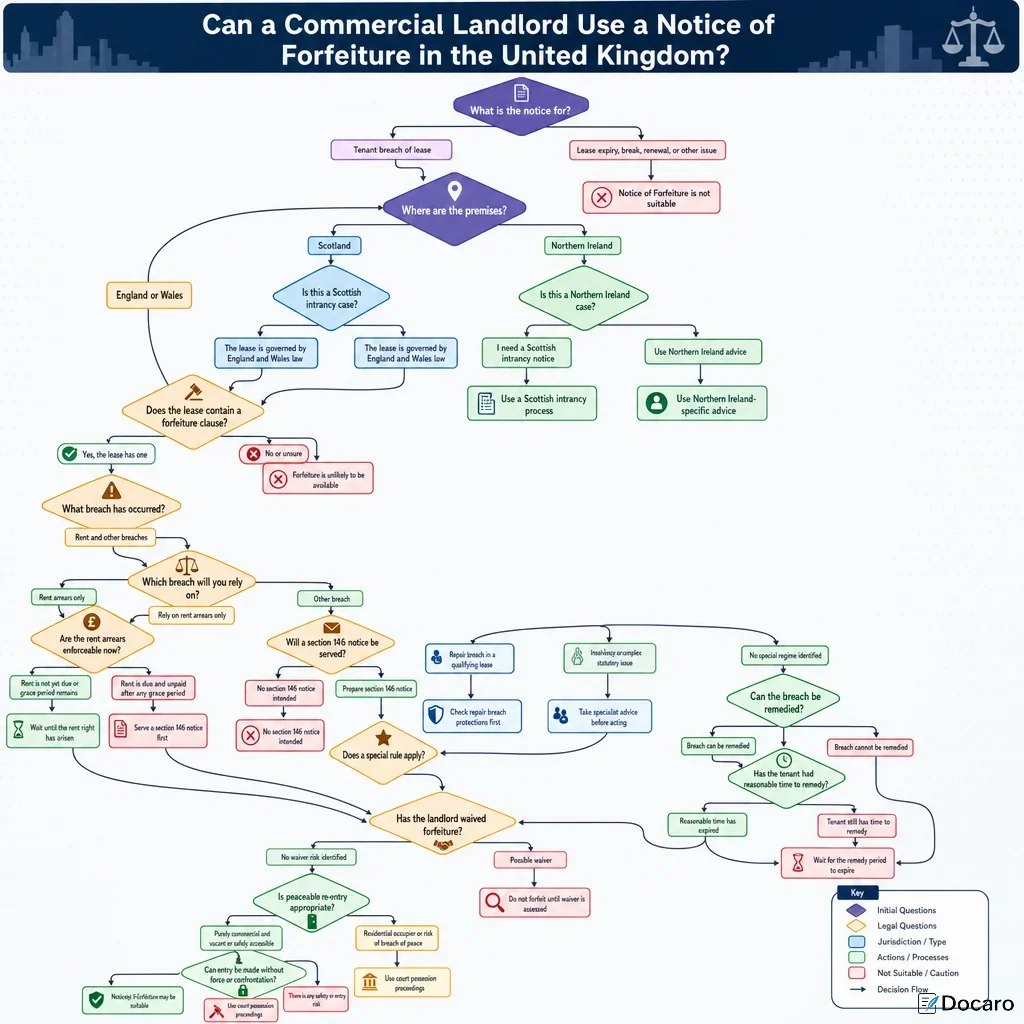
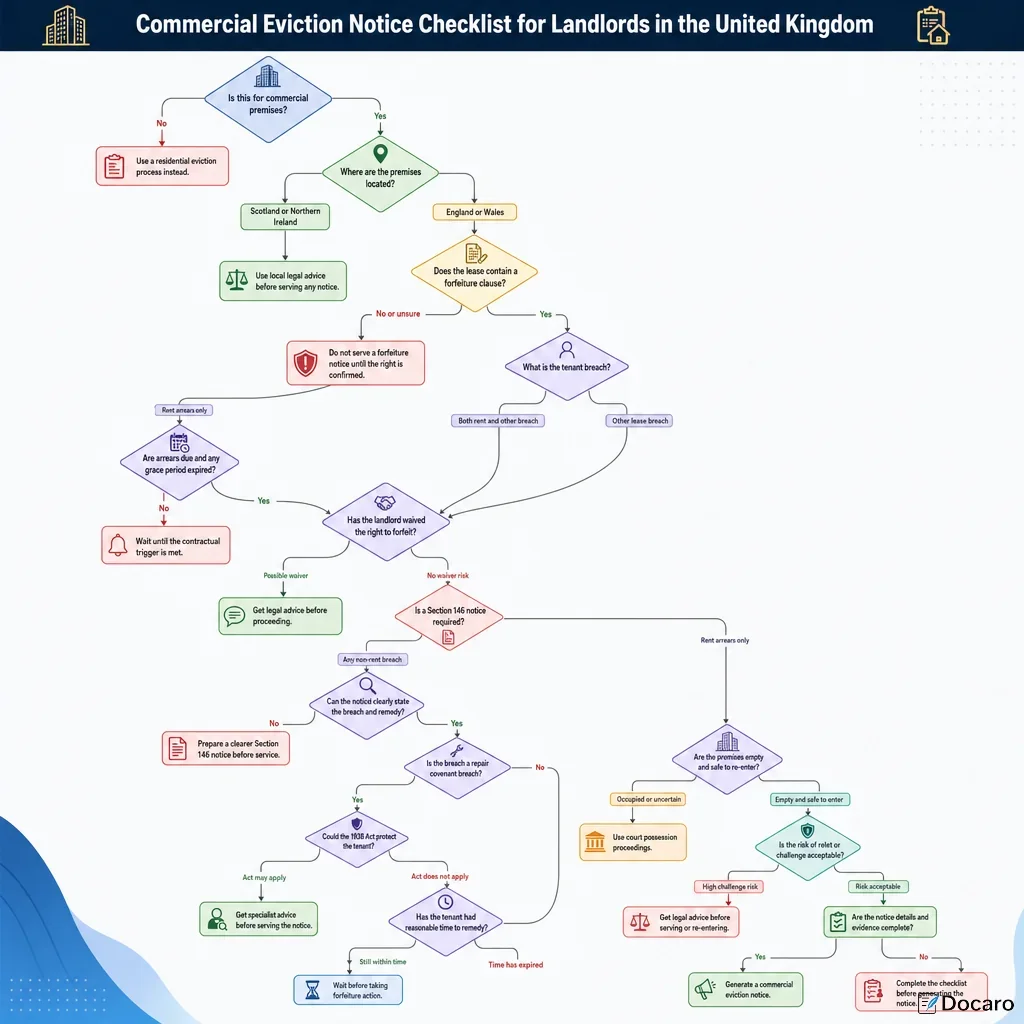
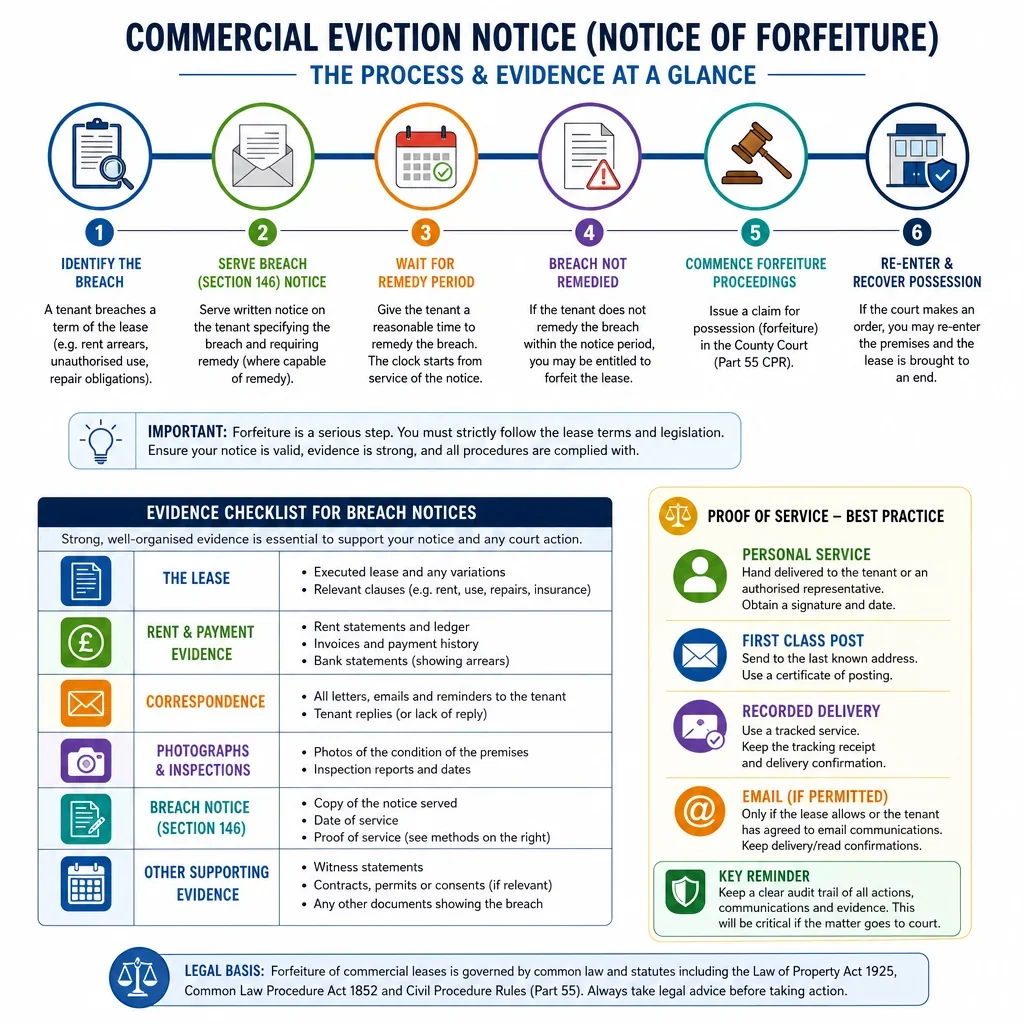
What Evidence Should A UK Commercial Landlord Gather Before Serving A Forfeiture Notice?
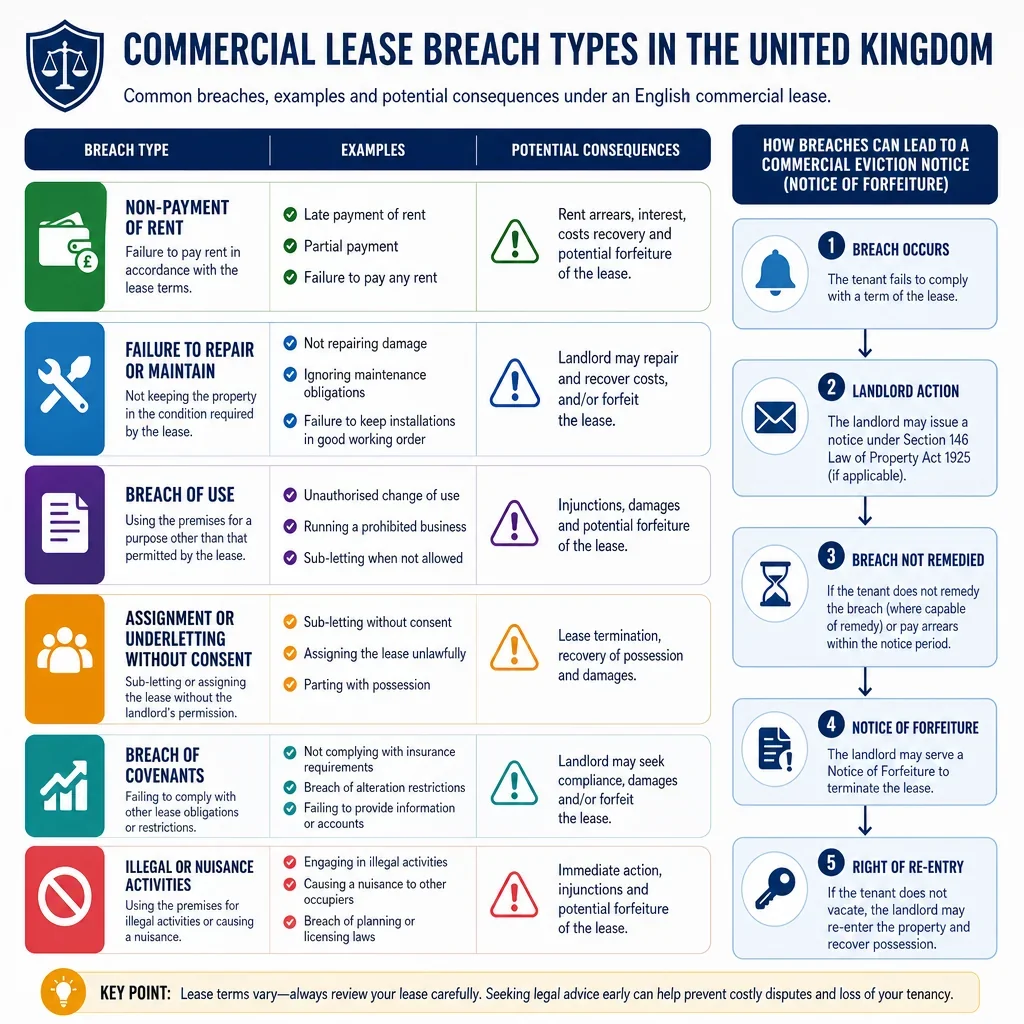
Before preparing a commercial lease breach or forfeiture notice, the landlord should align the evidence with the specific covenant breached. For non-payment of rent, keep a rent ledger, invoices, demands and bank records. For disrepair, alterations, unlawful use or nuisance, keep dated inspections, photographs, expert reports and correspondence showing the tenant was told about the issue.
Why Does The Lease Matter Most For A Notice Of Forfeiture?
The lease is the starting point because it identifies the premises, parties, forfeiture clause, covenants, rent dates, permitted use, repair obligations and any notice service rules. Evidence should use the same names, dates, address and breach wording as the lease and any licence, deed of variation or side letter.
When Is A Section 146 Notice Evidence Checklist Needed?
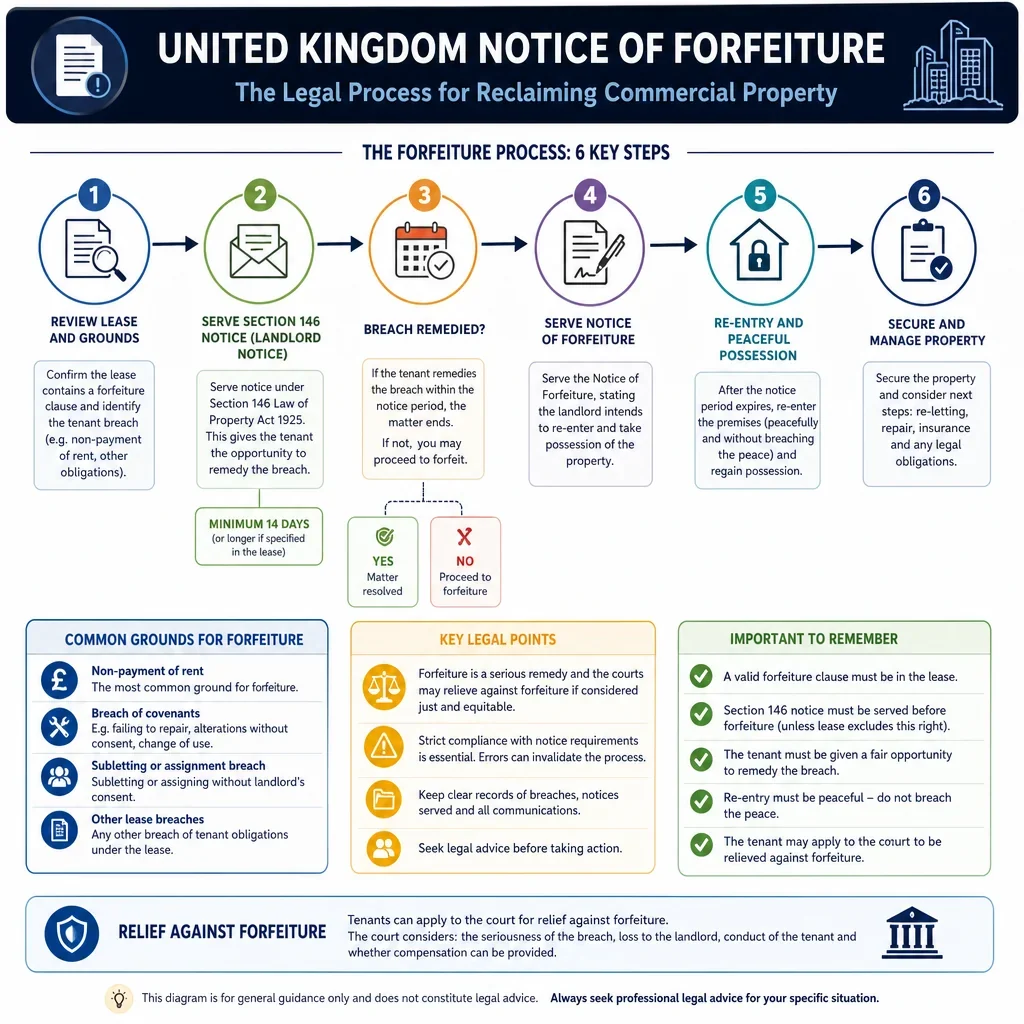
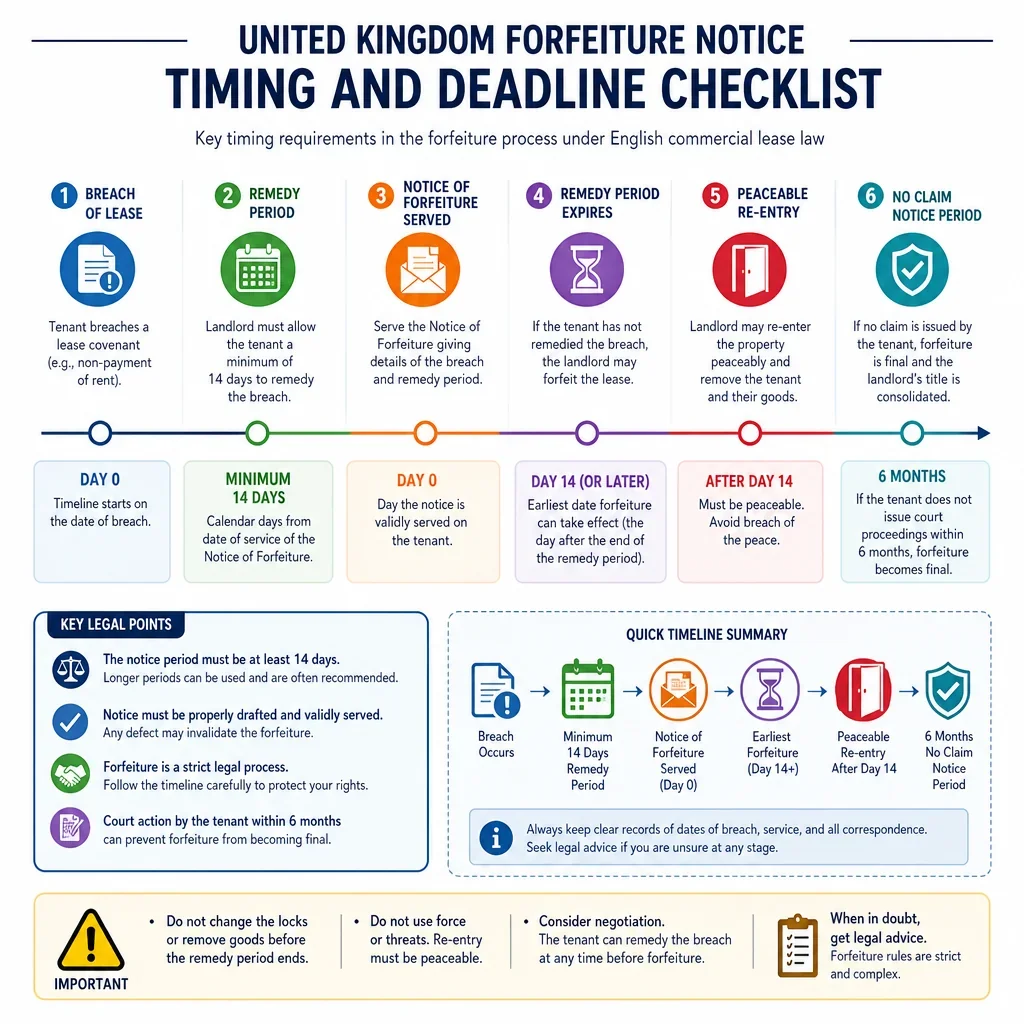
For most breaches other than non-payment of rent, section 146 of the Law of Property Act 1925 requires a notice specifying the breach, requiring remedy if capable of remedy, and requiring compensation if sought. Evidence should therefore show what the breach is, whether it can be remedied, what remedy is required, and how any compensation figure was calculated.
How Can Evidence Reduce Risk When Drafting A Commercial Eviction Notice?
- Use dated records: inspection notes, photographs and reports should show when the breach existed.
- Check sums carefully: arrears schedules should separate rent, VAT, service charge, insurance rent, interest and costs.
- Preserve communications: emails and letters can show knowledge, warnings, admissions, waiver risk and opportunities to remedy.
- Keep original source documents: leases, licences, plans, consents and expert reports should be stored with the draft notice file.
- Confirm service details: use the lease notice clause and any current company or individual address checks before serving.
FAQs
You Might Also Be Interested In