Commercial Forfeiture Scenarios In The United Kingdom
Scenario Name | Typical Situation | Section 146 Notice Usually Required | Notice Requirement Notes | Common Supporting Evidence |
|---|---|---|---|---|
Non-payment of rent | ||||
Non-Payment Of Principal Rent | Tenant has failed to pay the main quarterly or monthly rent by the due date. | false | Section 146 generally does not apply to non-payment of rent, but the lease forfeiture clause and any grace period must be checked. | Lease, rent demand, rent ledger, bank statements, arrears schedule, VAT invoices, payment correspondence. |
Non-Payment Of Service Charge Reserved As Rent | Tenant has not paid certified or demanded service charge sums treated as rent under the lease. | false | If the lease reserves service charge as rent, forfeiture may proceed as rent arrears disputed certification and lease wording should be reviewed. | Lease definition of rent, service charge certificate, budget, demand, reconciliation, arrears schedule, correspondence disputing charges. |
Non-Payment Of Insurance Rent | Tenant has failed to reimburse the landlord for insurance premiums due under the lease. | false | Often treated as rent if expressly reserved as insurance rent otherwise a section 146 notice may be needed. | Lease, insurance premium invoice, apportionment calculation, demand, payment ledger, policy schedule. |
Non-Payment Of Interest On Arrears | Tenant paid rent late but has not paid contractual default interest. | false | May be treated as rent only if the lease clearly reserves interest as rent otherwise section 146 may be prudent. | Lease interest clause, rent ledger, calculation of interest, demands, payment history. |
Breach of covenant | ||||
Persistent Late Payment Of Rent | Tenant repeatedly pays after the due date, even if arrears are later cleared. | true | If the claim is based on breach of a punctual payment covenant rather than existing rent arrears, section 146 is commonly required. | Payment history, rent demands, bank records, prior warnings, lease payment clause. |
Breach Of Repair Covenant | Tenant has failed to keep the premises in the repair condition required by the lease. | true | Disrepair is usually a remediable breach, so a section 146 notice normally gives the tenant a chance to repair. | Lease, schedule of condition, surveyor report, photographs, inspection notes, repair notices, contractor estimates. |
Failure To Decorate | Tenant has not carried out internal or external decoration required at specified intervals. | true | Usually capable of remedy, so section 146 notice is normally required before forfeiture. | Lease decoration clause, inspection report, photographs, prior decoration records, contractor quotations. |
Unauthorised Structural Alterations | Tenant has removed walls, changed layout, or altered structure without required landlord consent. | true | Alterations breaches usually require section 146 notice and may require reinstatement if capable of remedy. | Lease alterations clause, licence records, plans, inspection report, photographs, building control records, surveyor evidence. |
Unauthorised Non-Structural Alterations | Tenant has installed partitions, signage, fixtures, plant, or fit-out works without consent. | true | Usually a remediable breach requiring section 146 notice unless the lease provides a different enforceable route. | Lease, licences for alterations, photos, plans, fit-out drawings, landlord consent correspondence. |
Unauthorised Change Of Use | Tenant is using the premises for a business or activity not permitted by the lease. | true | Use covenant breaches normally require section 146 notice and may be remedied by stopping the unauthorised use. | Lease permitted use clause, website listings, photographs, planning records, witness evidence, trading materials. |
Illegal Use Of Premises | Premises are used for unlawful trading, criminal activity, or activities breaching licensing law. | true | Even serious illegal use commonly falls within section 146 unless the forfeiture is for rent urgency may justify court action. | Police or council records, licensing notices, witness statements, photographs, lease use clause, tenant correspondence. |
Nuisance Or Annoyance To Neighbours | Tenant causes noise, smells, obstruction, disturbance, or antisocial conduct affecting other occupiers. | true | Usually requires section 146 notice remedy may involve ceasing the nuisance and preventing recurrence. | Complaints log, witness statements, photos, videos, council correspondence, lease nuisance covenant. |
Failure To Comply With Statutory Requirements | Tenant fails to comply with health and safety, fire, environmental, planning, or licensing obligations imposed by the lease. | true | Statutory compliance covenants are usually lease covenants, so section 146 notice is normally required. | Enforcement notices, risk assessments, inspection reports, correspondence from authorities, lease compliance clause. |
Health And Safety Breach | Tenant operates unsafe equipment, blocks fire exits, or fails to manage workplace safety obligations. | true | Usually a covenant breach needing section 146 notice, though urgent injunction or authority action may also be relevant. | Inspection reports, HSE or council correspondence, photographs, risk assessments, fire safety records, lease covenants. |
Fire Safety Breach | Tenant obstructs escape routes, removes alarms, or ignores fire risk obligations under the lease. | true | A section 146 notice is normally required for breach of a fire safety or statutory compliance covenant. | Fire risk assessment, photographs, fire authority notices, maintenance records, witness statements, lease obligations. |
Environmental Contamination By Tenant | Tenant spills pollutants, stores hazardous materials improperly, or breaches environmental covenants. | true | Usually requires section 146 notice and may require remediation works as the remedy. | Environmental reports, regulator correspondence, photographs, spill records, waste transfer notes, lease environmental covenants. |
Unauthorised assignment or subletting | ||||
Unauthorised Assignment Of Whole Lease | Tenant transfers the lease to another party without required landlord consent. | true | Alienation breaches normally require section 146 notice a completed assignment may be difficult to remedy. | Lease alienation clause, assignment deed, Land Registry entries, Companies House records, correspondence, occupation evidence. |
Unauthorised Subletting | Tenant grants a sublease without consent or contrary to an absolute prohibition. | true | Usually needs section 146 notice remedy may involve ending the unauthorised sublease if possible. | Lease, sublease, rent receipts, occupation evidence, Land Registry entries, advertisements, correspondence. |
Unauthorised Sharing Of Occupation | Tenant allows group companies, franchisees, concession operators, or third parties to occupy without consent. | true | Sharing occupation is generally an alienation covenant breach requiring section 146 notice. | Lease sharing clause, occupier details, signage, trading records, access logs, websites, correspondence. |
Parting With Possession | Tenant gives another person exclusive occupation or control of all or part of the premises. | true | Normally requires section 146 notice factual distinction between sharing and possession should be checked. | Occupation evidence, keys and access records, trading documents, sub-occupation agreement, witness evidence, lease clause. |
Assignment Without Required AGA | Tenant assigns the lease without providing an authorised guarantee agreement required as a consent condition. | true | A breach of assignment consent conditions is usually subject to section 146 notice before forfeiture. | Licence to assign, assignment deed, AGA requirements, consent correspondence, Land Registry records. |
Disputed Assignment Without Consent | Tenant assigns after arguing consent was unreasonably withheld or delayed. | true | Still commonly requires section 146 notice landlord must consider statutory duties on consent requests. | Consent application, references, landlord replies, timeline, assignment deed, lease alienation clause. |
Insolvency-related breach | ||||
Tenant Company Liquidation | Corporate tenant enters creditors voluntary liquidation or compulsory liquidation triggering an insolvency forfeiture clause. | true | Insolvency events are covenant-based forfeiture triggers, so section 146 is commonly required unless proceeding for rent arrears. | Lease insolvency clause, Companies House filing, liquidator notice, rent ledger, landlord correspondence. |
Tenant Company Administration | Tenant enters administration and the lease contains an insolvency-triggered forfeiture right. | true | Section 146 may be required, and administration moratorium restrictions may prevent forfeiture without consent or court permission. | Notice of appointment, administrator correspondence, lease insolvency clause, rent ledger, court filings. |
Company Voluntary Arrangement | Tenant proposes or enters a CVA and the lease treats this as a forfeiture event. | true | Usually requires section 146 notice if relying on insolvency event CVA terms and moratorium status should be checked. | CVA proposal, creditor notices, lease insolvency clause, voting results, rent ledger, correspondence with supervisor. |
Receivership Or Administrative Receivership | A receiver or administrative receiver is appointed over the tenant or its assets. | true | If the lease makes receivership a forfeiture event, section 146 is commonly required before forfeiture. | Receiver appointment documents, Companies House records, lease insolvency clause, lender notices, rent ledger. |
Individual Tenant Bankruptcy | Individual tenant is made bankrupt and the lease includes bankruptcy as a forfeiture trigger. | true | Bankruptcy-triggered forfeiture is generally a covenant/event breach requiring section 146 notice, subject to insolvency restrictions. | Bankruptcy order, insolvency register search, lease insolvency clause, trustee correspondence, rent ledger. |
Individual Voluntary Arrangement Or DRO | Individual tenant enters an IVA or debt relief order triggering an insolvency clause. | true | Usually requires section 146 notice if relying on an insolvency event rather than rent arrears. | IVA proposal, DRO entry, insolvency register, lease clause, supervisor correspondence, rent ledger. |
Other lease breach | ||||
Abandonment Of Premises | Tenant appears to have stopped trading, removed stock, and left the premises empty without surrender. | true | If relying on breach of keep-open, occupation, or security covenants, section 146 is normally required. | Inspection notes, photographs, utility records, returned mail, trading status, lease occupation covenants, contact attempts. |
Breach of covenant | ||||
Failure To Keep Premises Open For Trade | Retail or leisure tenant closes during required trading hours contrary to a keep-open clause. | true | Keep-open breach is generally a covenant breach requiring section 146 notice enforceability may be fact-sensitive. | Lease trading hours clause, inspection logs, photos, footfall records, tenant notices, shopping centre rules. |
Failure To Maintain Tenant Insurance | Tenant has not maintained public liability, plate glass, contents, or other insurance required by the lease. | true | Failure to insure is usually remediable by obtaining cover, so section 146 notice is normally required. | Lease insurance clause, policy schedule, broker letters, requests for evidence, expired certificates. |
Invalidating Landlord Insurance | Tenant carries out activities that increase risk or breach conditions of the landlord's buildings insurance. | true | Usually a covenant breach requiring section 146 notice, though urgent protective action may be needed. | Insurance policy, insurer warning, broker correspondence, inspection photos, lease insurance covenants, risk assessment. |
Other lease breach | ||||
Failure To Pay Business Rates | Tenant fails to pay non-domestic rates or reimburse rates payable under the lease. | true | If not reserved as rent, non-payment of rates is usually a covenant breach requiring section 146 notice. | Lease outgoings clause, council bills, liability orders, demands, payment ledger, correspondence. |
Failure To Pay Utilities | Tenant fails to pay electricity, gas, water, or communal utility recharges required under the lease. | true | Usually a covenant breach requiring section 146 notice unless the sums are expressly reserved as rent. | Lease, utility invoices, meter readings, recharge calculations, demands, payment ledger. |
Failure To Provide Turnover Information | Turnover rent tenant fails to provide sales figures, accounts, or auditor certificates. | true | A reporting failure is usually a covenant breach requiring section 146 notice. | Turnover rent clause, requests for figures, accounts, auditor correspondence, prior certificates, rent calculations. |
Non-payment of rent | ||||
Underpayment Of Turnover Rent | Tenant underreports sales or fails to pay turnover rent due under the lease. | false | If turnover rent is reserved as rent and properly quantified, section 146 may not be required evidential disputes are common. | Lease turnover provisions, sales reports, audit findings, accounts, rent certificates, payment ledger. |
Breach of covenant | ||||
Planning Breach By Tenant | Tenant uses the premises or carries out works without required planning permission. | true | Usually a breach of use, alterations, or statutory compliance covenants requiring section 146 notice. | Planning portal records, enforcement notice, lease user clause, photos, planning correspondence, surveyor report. |
Listed Building Consent Breach | Tenant alters listed premises without required listed building consent or landlord consent. | true | Usually requires section 146 notice and may require reinstatement or compliance with enforcement action. | Listed building records, enforcement notices, lease alterations clause, photos, heritage reports, consent history. |
Unauthorised Signage | Tenant installs fascia signs, projecting signs, banners, or advertising without consent. | true | Usually a remediable alterations or signage covenant breach requiring section 146 notice. | Lease signage clause, photographs, licence records, planning advertisement consent records, landlord correspondence. |
Obstruction Of Common Parts | Tenant stores goods, bins, furniture, or equipment in corridors, yards, loading bays, or shared areas. | true | Usually a remediable covenant breach requiring section 146 notice. | Photographs, site rules, complaints, inspection logs, lease common parts covenants, fire risk records. |
Other lease breach | ||||
Breach Of Estate Or Building Regulations | Tenant breaches reasonable building, estate, shopping centre, or industrial estate rules incorporated into the lease. | true | Usually a lease covenant breach requiring section 146 notice before forfeiture. | Lease regulations, notices of rules, incident reports, photographs, complaints, tenant correspondence. |
Breach of covenant | ||||
Refusal To Permit Landlord Inspection | Tenant refuses access for landlord, surveyor, insurer, or managing agent inspections permitted by the lease. | true | Access refusal is usually a remediable covenant breach requiring section 146 notice. | Lease access clause, access request notices, emails, attendance notes, witness statements, agent records. |
Refusal To Allow Landlord Works | Tenant prevents repairs, services works, redevelopment access, or compliance works allowed under the lease. | true | Usually requires section 146 notice injunction may be more suitable where access is urgent. | Lease access rights, works notices, contractor schedules, refusal emails, attendance notes, compliance deadlines. |
Failure To Reinstate Alterations | Tenant fails to remove alterations or reinstate the premises when required by lease or licence. | true | Usually a remediable covenant breach requiring section 146 notice, especially before lease expiry. | Licence for alterations, reinstatement notice, lease, plans, photographs, surveyor report, contractor estimates. |
Other lease breach | ||||
Early Breach Of Yielding Up Obligations | Tenant has damaged or stripped out premises before expiry in breach of reinstatement or preservation obligations. | true | During the term, forfeiture for breach of yielding up or preservation covenants usually requires section 146 notice. | Lease, inspection report, photographs, inventory, contractor reports, correspondence, dilapidations schedule. |
Breach of covenant | ||||
Waste Or Deliberate Damage | Tenant damages the premises, removes landlord fixtures, or allows serious deterioration. | true | Usually requires section 146 notice and may require repair, reinstatement, and compensation. | Photographs, surveyor report, inventory, contractor estimates, witness evidence, lease repair and waste clauses. |
Other lease breach | ||||
Failure To Secure Premises | Tenant leaves doors, windows, alarms, or shutters insecure, increasing risk to the building. | true | Usually a remediable lease breach requiring section 146 notice, unless action is taken under emergency access rights. | Inspection notes, photos, alarm reports, police reports, insurer correspondence, lease security obligations. |
Breach of covenant | ||||
Unauthorised Storage Of Hazardous Materials | Tenant stores flammable, explosive, chemical, or hazardous goods not permitted by the lease or insurance. | true | Usually requires section 146 notice, but urgent risk may require immediate protective steps or injunction. | Inspection photos, safety data sheets, insurer letters, fire authority correspondence, lease user and insurance clauses. |
Insolvency-related breach | ||||
Guarantor Insolvency Trigger | Lease provides forfeiture if a guarantor becomes insolvent or ceases to exist. | true | If relied on as an insolvency forfeiture event, section 146 notice is commonly required and lease wording is critical. | Guarantee, lease insolvency clause, Companies House or insolvency register evidence, correspondence, replacement security demands. |
Other lease breach | ||||
Failure To Provide Replacement Security | Tenant fails to provide a replacement guarantor, rent deposit top-up, or security required by the lease. | true | Usually a covenant breach requiring section 146 notice unless linked solely to unpaid rent. | Lease, rent deposit deed, guarantee, trigger notice, financial records, correspondence requesting replacement security. |
Failure To Top Up Rent Deposit | Landlord draws from the rent deposit and tenant fails to restore the required balance. | true | A top-up obligation is usually a covenant in the rent deposit deed or lease, so section 146 may be required if forfeiting. | Rent deposit deed, drawdown notice, account statement, top-up demand, lease default clause, correspondence. |
Failure To Pay Landlord Costs | Tenant fails to pay surveyor, legal, enforcement, consent, or notice costs recoverable under the lease. | true | If costs are not reserved as rent, forfeiture usually requires section 146 notice. | Lease costs clause, invoices, demands, solicitor or surveyor bills, payment ledger, correspondence. |
Breach Of Operational Restrictions | Tenant breaches lease restrictions on hours, deliveries, waste, branding, stock, or operational conduct. | true | Usually a remediable covenant breach requiring section 146 notice before forfeiture. | Lease operational covenants, centre handbook, incident logs, photographs, complaints, warning letters. |
Breach of covenant | ||||
Unauthorised Auction Or Closing-Down Sale | Retail tenant holds auctions, liquidation sales, or closing-down sales prohibited by the lease. | true | Usually a covenant breach requiring section 146 notice, though urgent injunctive relief may be more practical. | Lease sales restrictions, advertising materials, photographs, website posts, witness statements, landlord warnings. |
Other lease breach | ||||
Trading Under Unauthorised Name | Tenant trades under a different brand, franchise, or business name without required consent. | true | Usually a remediable covenant breach requiring section 146 notice. | Lease trading name clause, signage photos, website, Companies House records, franchise documents, consent correspondence. |
Breach of covenant | ||||
Selling Prohibited Goods Or Services | Tenant sells products or services outside the permitted trade or in breach of estate restrictions. | true | Usually a use or operational covenant breach requiring section 146 notice. | Lease user clause, product lists, photos, website, tenant menus or catalogues, complaints from other occupiers. |
Other lease breach | ||||
Failure To Cooperate With Rent Review | Tenant refuses access, evidence, or procedure steps required for rent review under the lease. | true | Usually a procedural covenant breach requiring section 146 notice if forfeiture is pursued. | Rent review clause, notices, expert correspondence, access requests, missed deadlines, valuation evidence. |
Failure To Register Lease Dealing | Tenant fails to register a lease, assignment, charge, or dealing as required by the lease. | true | Usually a remediable covenant breach requiring section 146 notice. | Lease registration clause, Land Registry title, requisitions, assignment deed, charge records, correspondence. |
Unauthorised assignment or subletting | ||||
Unauthorised Charging Of Lease | Tenant grants a legal charge or mortgage over the lease without required landlord consent. | true | Charging restrictions are usually alienation covenants, so section 146 notice is normally required. | Lease alienation clause, Land Registry title, charge document, lender correspondence, consent records. |
Change Of Control Breach | Corporate tenant's ownership changes and the lease treats this as requiring consent or as a default. | true | Usually a covenant breach requiring section 146 notice enforceability depends on precise lease wording. | Lease change-of-control clause, Companies House PSC records, share sale documents, board filings, correspondence. |
Other lease breach | ||||
False Information In Consent Application | Tenant provides false accounts, references, plans, or operational details when seeking landlord consent. | true | If framed as breach of lease covenant or consent condition, section 146 notice is commonly required. | Consent application, submitted documents, verification evidence, emails, licence terms, witness statements. |
Breach Of Headlease Obligations | Undertenant breaches covenants requiring compliance with the landlord's headlease obligations. | true | Usually requires section 146 notice superior landlord enforcement risk should be reviewed. | Underlease, headlease, superior landlord notices, breach evidence, correspondence, inspection reports. |
Failure To Comply With Superior Landlord Notice | Tenant fails to comply with a superior landlord or freeholder notice passed down under the lease. | true | Usually a covenant breach requiring section 146 notice if forfeiture is pursued. | Superior landlord notice, underlease, headlease, service records, tenant warning letters, compliance evidence. |
Breach of covenant | ||||
Failure To Maintain Plant Or Equipment | Tenant fails to maintain lifts, HVAC, extraction, boilers, grease traps, or other demised plant. | true | Usually a repair or maintenance covenant breach requiring section 146 notice. | Maintenance contracts, service records, engineer reports, photos, lease plant obligations, defect notices. |
Food Hygiene Or Pest Control Breach | Restaurant or food tenant breaches hygiene, waste, extraction, or pest control obligations. | true | Usually a statutory compliance, nuisance, or operational covenant breach requiring section 146 notice. | Council hygiene report, pest contractor report, photos, complaints, waste records, lease food-use obligations. |
Extraction Or Ventilation Breach | Tenant fails to install, maintain, clean, or use extraction and ventilation systems as required. | true | Usually a repair, statutory compliance, or nuisance covenant breach requiring section 146 notice. | Engineer report, cleaning certificates, photos, odour complaints, fire risk assessment, lease plant obligations. |
Waste Storage Or Disposal Breach | Tenant stores waste improperly, misses collections, causes pests, or breaches waste disposal rules. | true | Usually a remediable nuisance, compliance, or estate regulation breach requiring section 146 notice. | Photos, waste transfer notes, complaints, pest reports, council correspondence, estate rules, lease waste covenants. |
Unauthorised Residential Occupation | Commercial premises are being used for sleeping or residential accommodation contrary to the lease. | true | Usually a use and statutory compliance breach requiring section 146 notice housing and planning issues may arise. | Inspection photos, witness evidence, utility usage, council records, lease user clause, planning records. |
Other lease breach | ||||
Death Of Individual Tenant | Lease contains a forfeiture trigger or condition linked to the death of an individual tenant. | true | If treated as a lease event of default, section 146 notice is commonly considered before forfeiture. | Death certificate, probate records, lease default clause, executor correspondence, rent ledger. |
Loss Of Required Licence Or Permit | Tenant loses a premises licence, operator licence, registration, or permit required for the permitted use. | true | Usually a statutory compliance or operational covenant breach requiring section 146 notice. | Licensing authority decision, register search, lease permitted use clause, correspondence, regulatory notices. |
Breach Of Consent Conditions | Tenant breaches conditions attached to landlord consent for works, use, assignment, or underletting. | true | Breach of licence or consent conditions is usually treated as a covenant breach requiring section 146 notice. | Licence document, consent conditions, inspection report, photos, completion certificates, correspondence. |
Breach of covenant | ||||
Unauthorised Rooftop Or Telecoms Equipment | Tenant installs aerials, satellite dishes, telecoms kit, solar panels, or rooftop plant without consent. | true | Usually an alterations, user, or roof-access breach requiring section 146 notice. | Photos, roof inspection report, licences, installation contracts, planning records, lease alterations clause. |
Other lease breach | ||||
Energy Performance Compliance Breach | Tenant prevents energy works or breaches lease obligations connected with EPC or energy efficiency compliance. | true | Usually a cooperation, access, or statutory compliance covenant breach requiring section 146 notice. | EPC, MEES assessment, access requests, energy report, lease cooperation clause, correspondence. |
When Is A Section 146 Notice Needed For Commercial Forfeiture?
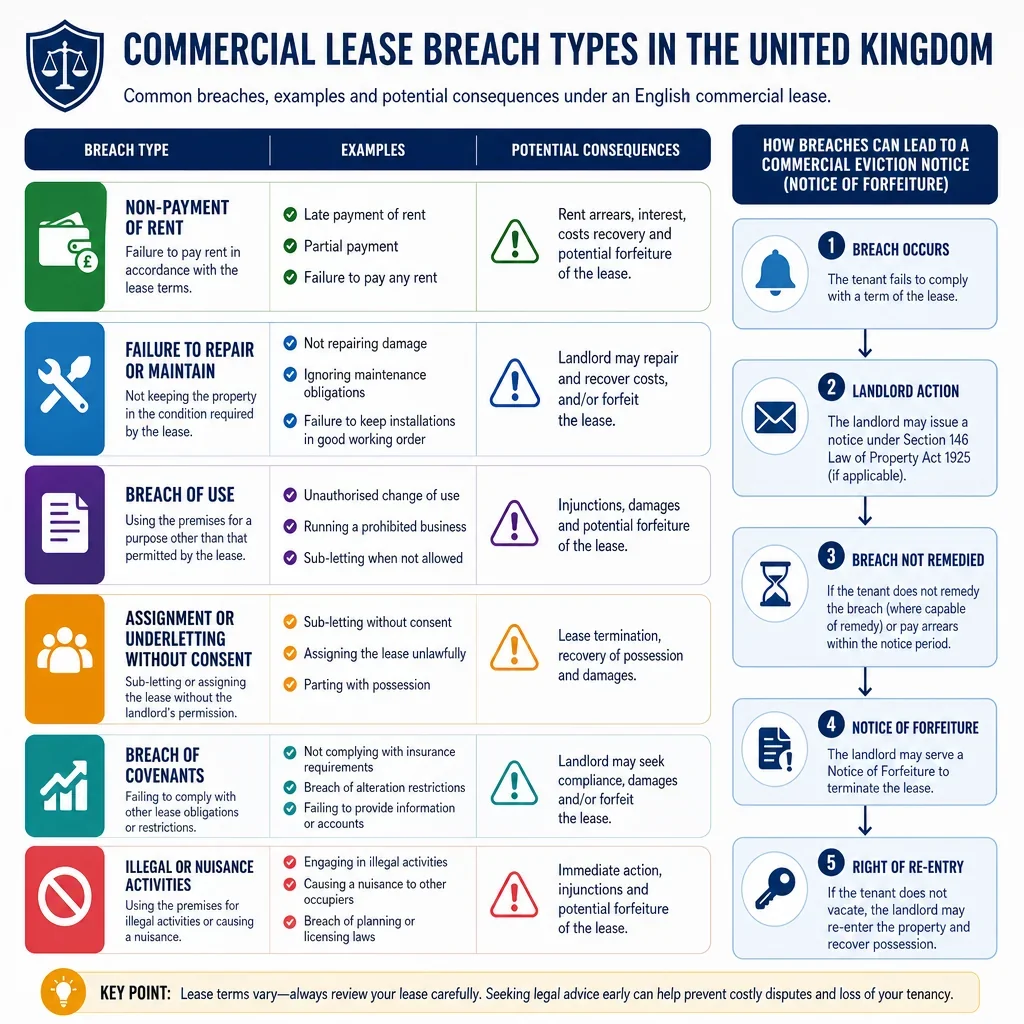
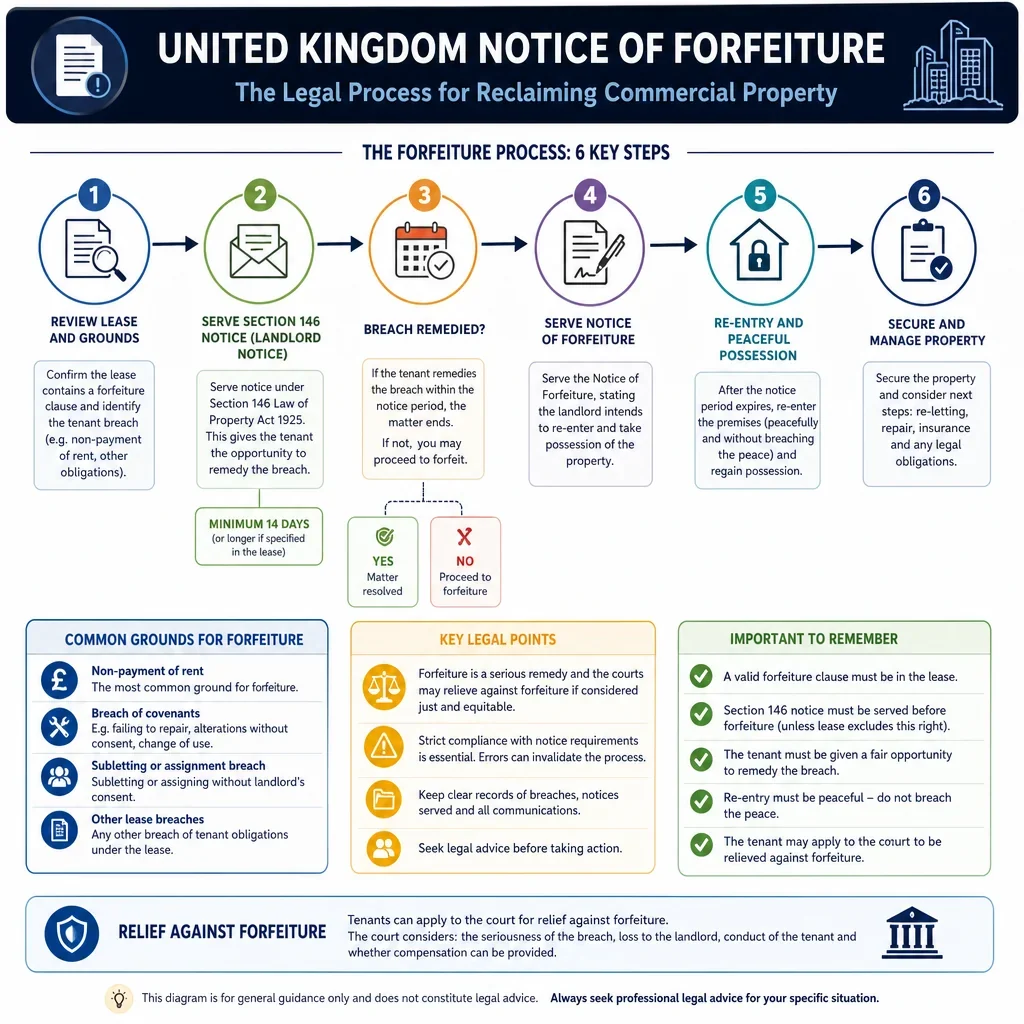
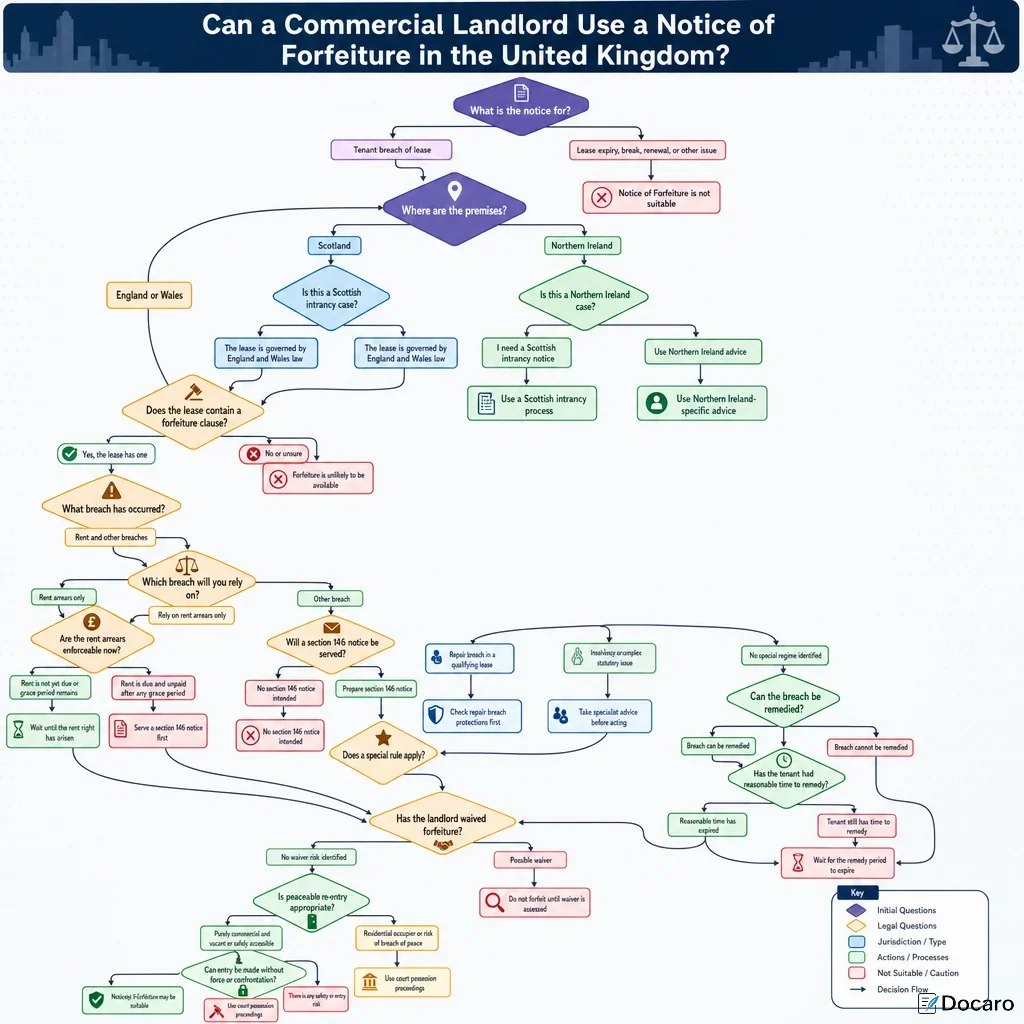
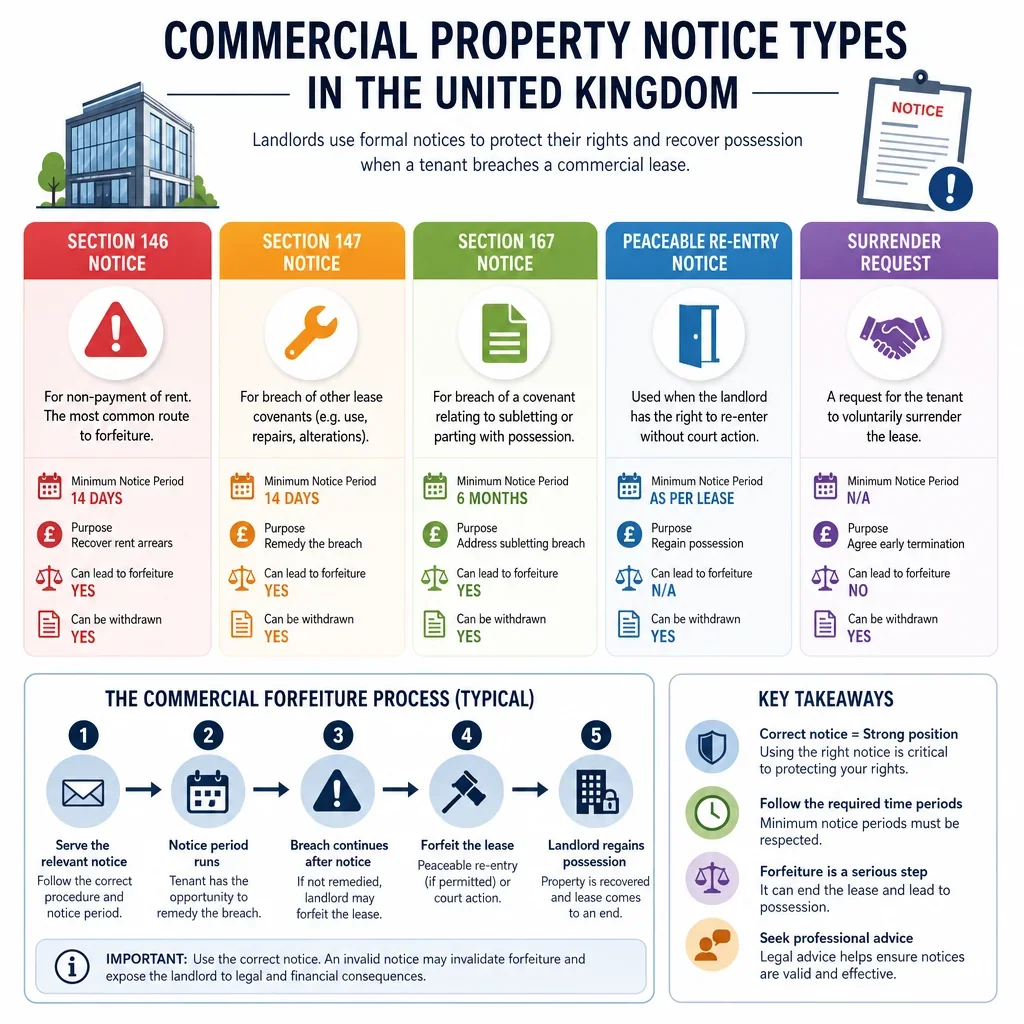
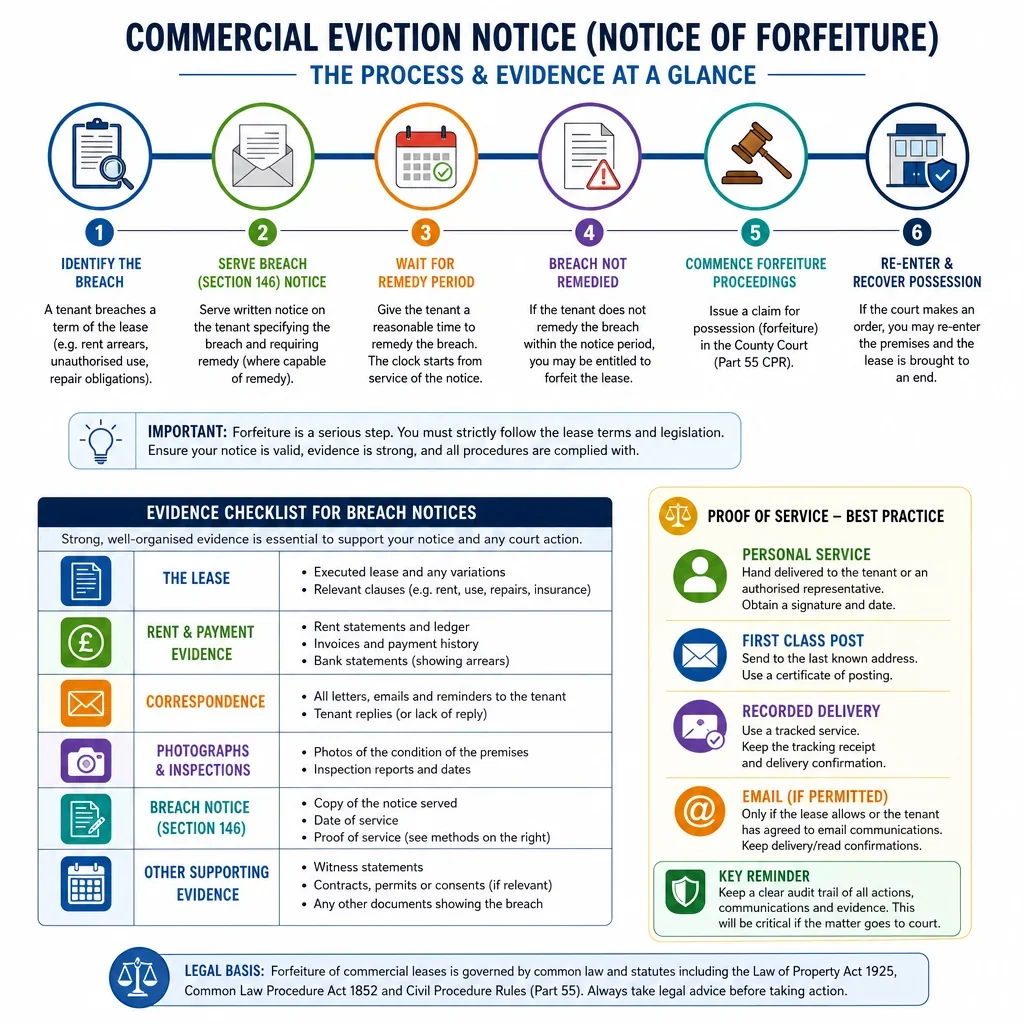
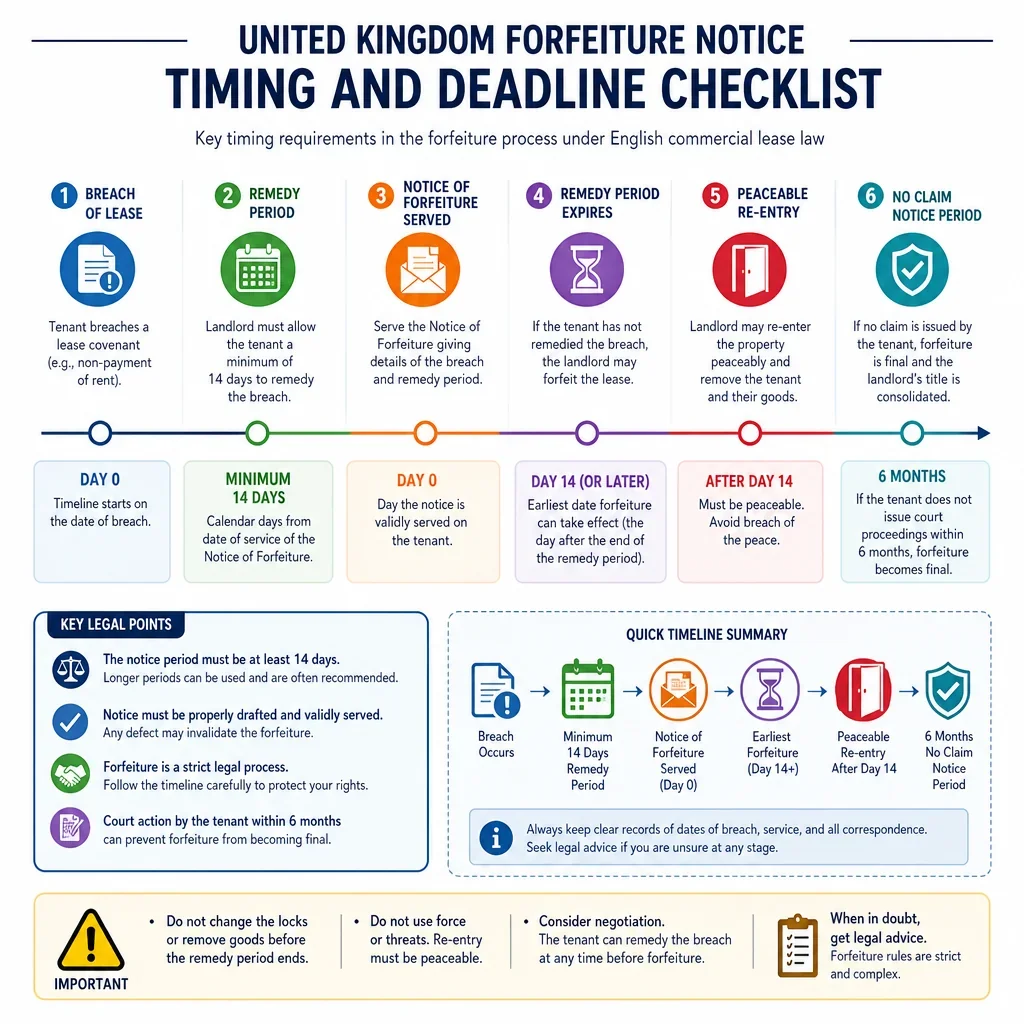
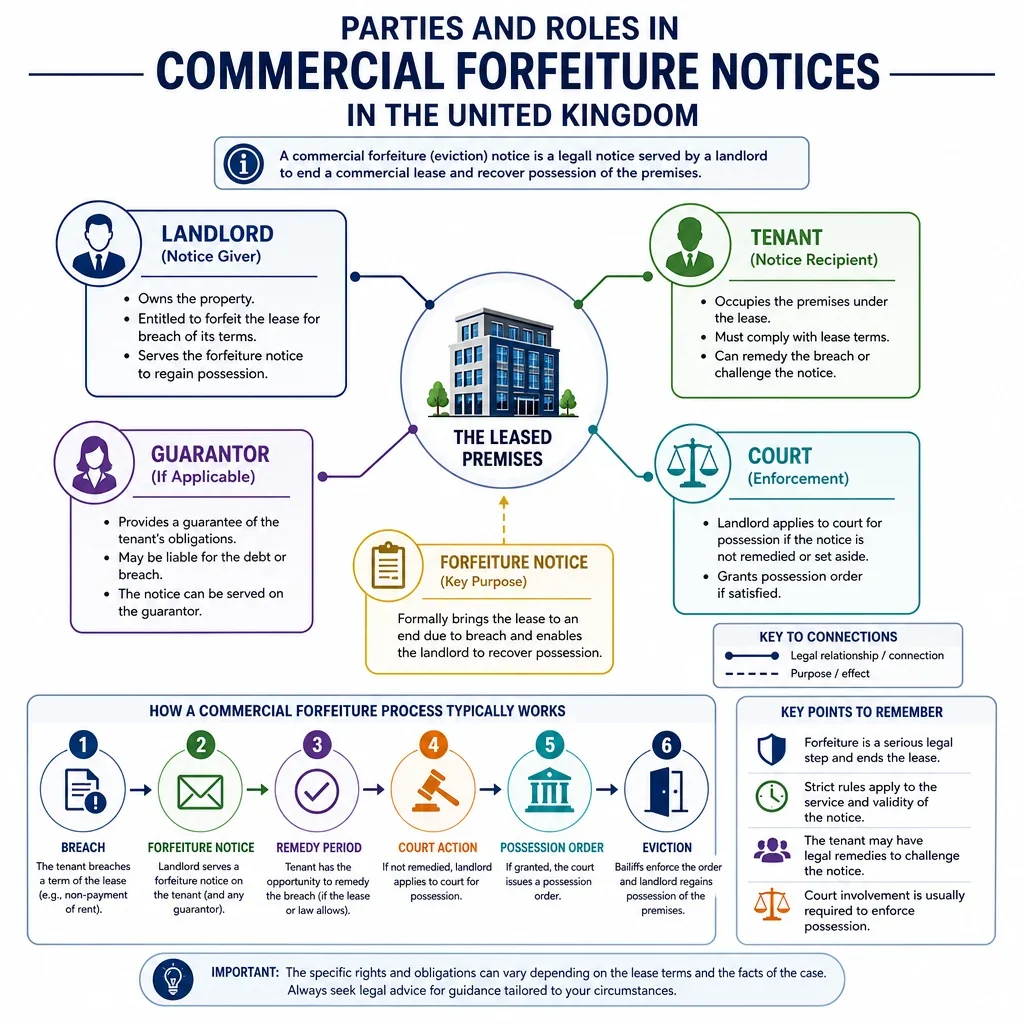
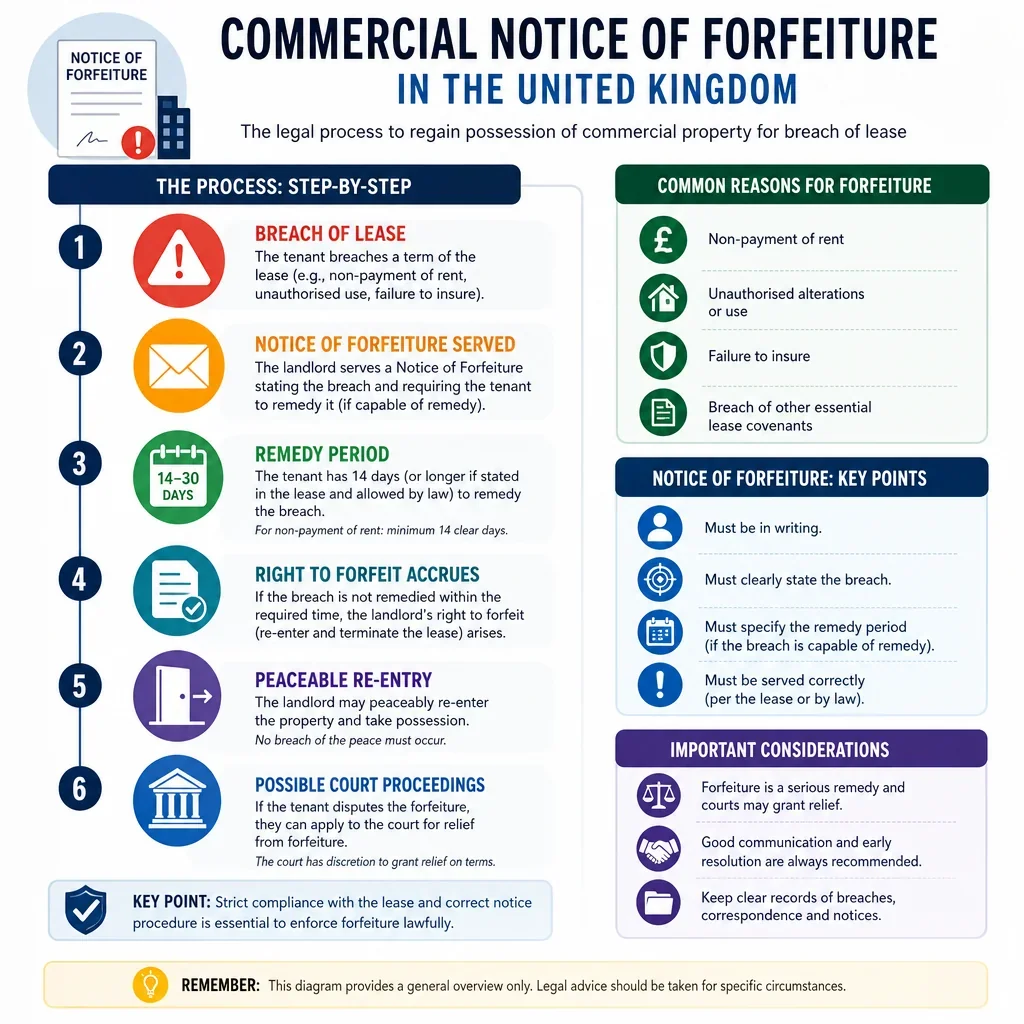
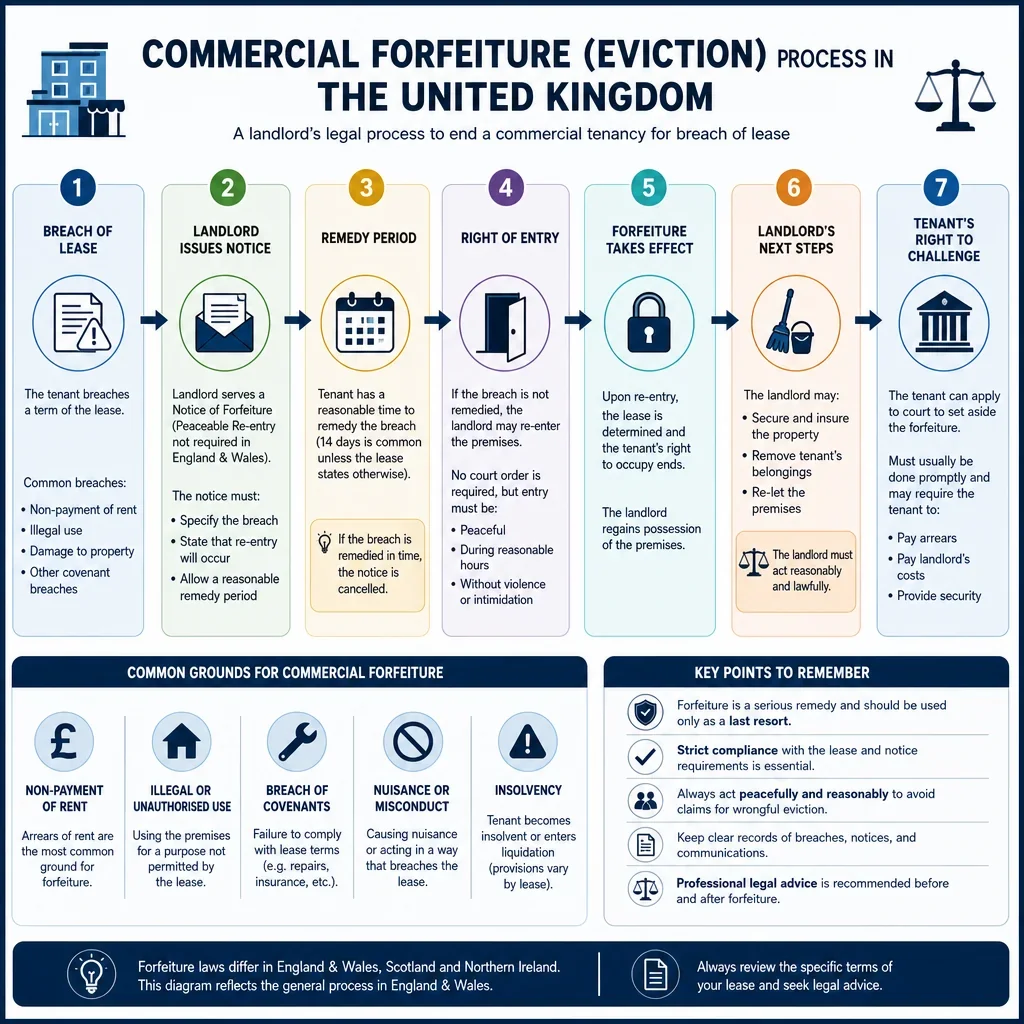
For most commercial lease breaches, a landlord should expect to serve a section 146 notice before forfeiting. The notice normally identifies the breach, requires it to be remedied if capable of remedy, and requires compensation where appropriate. Common examples include disrepair, unauthorised alterations, unlawful use, assignment or subletting breaches, and failure to insure where the tenant is responsible.
When Can A Landlord Usually Forfeit Without A Section 146 Notice?
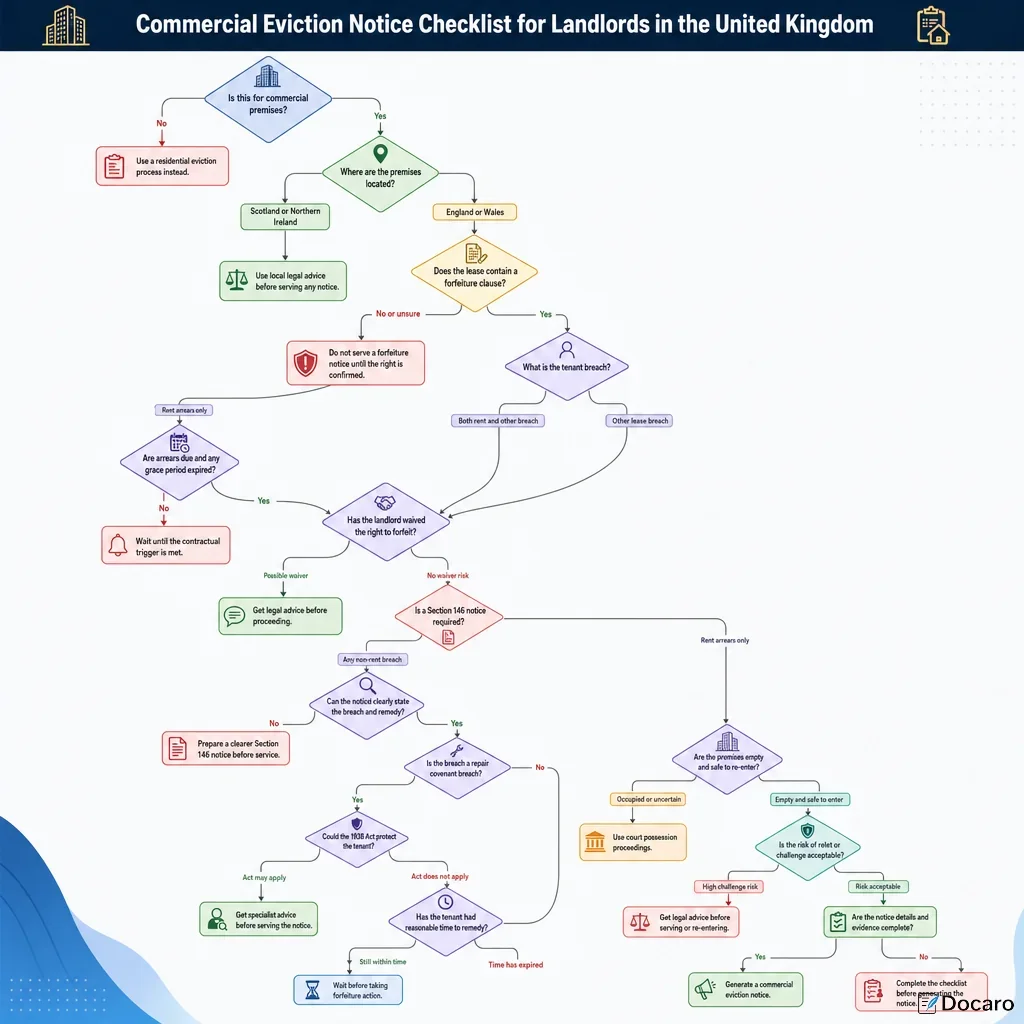
The main recurring exception is non-payment of rent. If the lease contains a valid forfeiture clause and the rent is properly due, forfeiture for rent arrears is usually treated differently from other breaches. However, landlords should still check waiver, demand history, grace periods, payment allocation, and any lease definition of rent before acting.
Why Does The Type Of Breach Matter?
The dataset shows that commercial forfeiture risk turns heavily on the exact lease covenant breached. Some breaches, such as poor repair or unauthorised alterations, may be capable of remedy. Others, such as a completed unlawful assignment or insolvency event, may be harder to remedy and require careful analysis of the lease wording and statutory restrictions.
What Evidence Should Be Checked Before Preparing A Notice Of Forfeiture?
- Lease documents: forfeiture clause, rent clauses, alienation clauses, use clauses, repair covenants, insolvency triggers and any licences or side letters.
- Payment evidence: rent ledger, invoices, bank statements, demands, VAT records, service charge certificates and interest calculations.
- Breach evidence: inspection reports, photographs, surveyor reports, planning records, insurance correspondence, Companies House filings and communications with the tenant.
- Waiver evidence: any rent demands, rent acceptance, negotiations or landlord conduct after knowledge of the breach.
What Is The Main Practical Risk For Landlords?
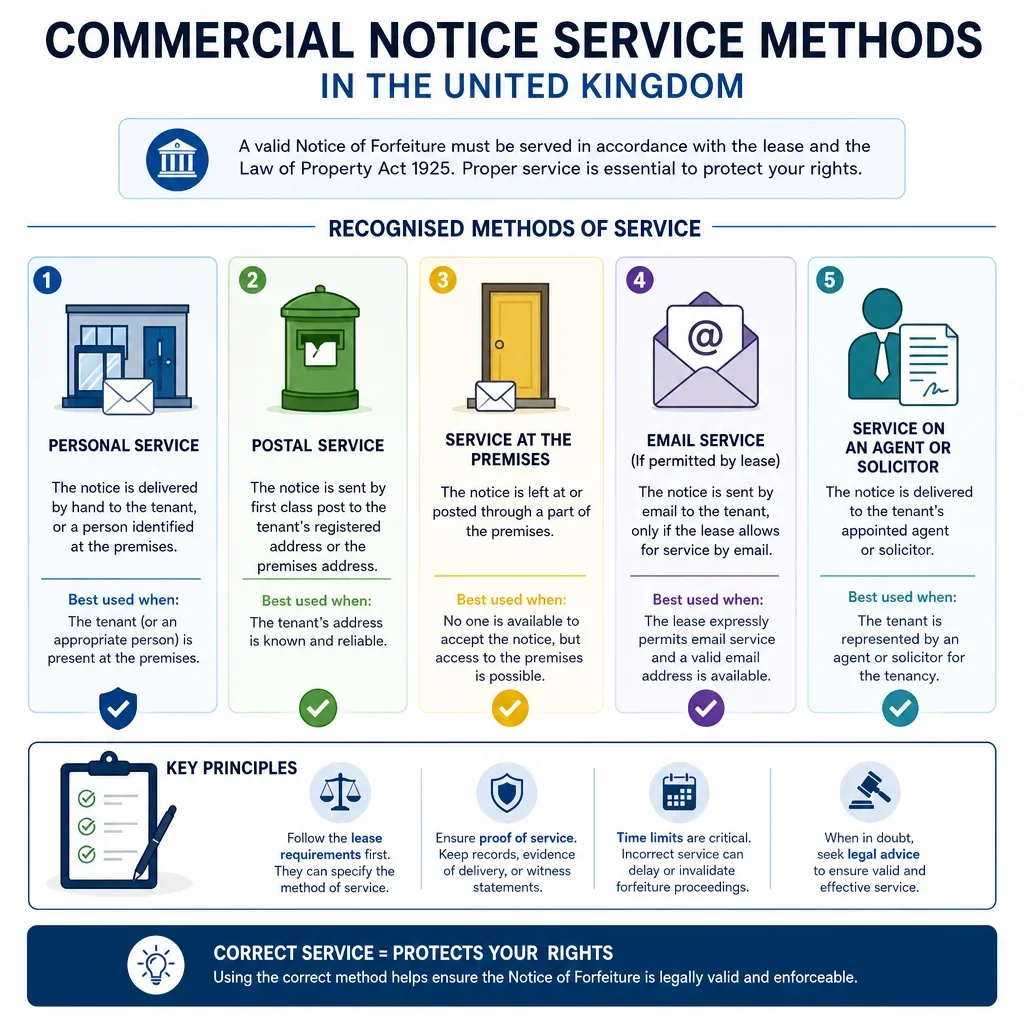
The main risk is forfeiting too early, using the wrong procedure, or accidentally waiving the right to forfeit. A commercial eviction notice should be based on the lease wording, the precise breach, the evidence available, and whether section 146 of the Law of Property Act 1925 applies.
FAQs
You Might Also Be Interested In