Parties And Roles In Commercial Forfeiture Notices In The United Kingdom
Role Name | Typical Involvement | Usually Identified In Notice | Details To Confirm | Authority And Identity Notes |
|---|---|---|---|---|
Landlord side | ||||
Landlord | Decides whether to forfeit and authorises the notice or re-entry. | true | Full legal name, address, title number, and lease capacity. | Check the lease, title, and any transfer before naming the landlord. |
Competent landlord | The landlord with sufficient interest to exercise forfeiture rights. | true | Reversionary interest, lease chain, address for service. | Confirm which landlord has the right to enforce the relevant covenant. |
Other interested party | ||||
Superior landlord | May have an interest where forfeiture affects an intermediate lease. | false | Name, title interest, superior lease, service address. | Review the lease structure before assuming the immediate landlord can act alone. |
Landlord side | ||||
Intermediate landlord | May grant the occupational lease and receive breach notices or requests. | true | Company name, leasehold title, superior lease limits. | Check whether forfeiture of the intermediate lease would affect occupational interests. |
Other interested party | ||||
Freehold owner | May be relevant to title checks and landlord authority. | false | Registered proprietor, title number, ownership address. | Do not assume the freeholder is the landlord under the occupational lease. |
Landlord side | ||||
Corporate landlord | Company or LLP landlord instructing service and enforcement. | true | Registered name, company number, registered office, signatory authority. | Use the exact Companies House name and confirm directors or authorised agents. |
Individual landlord | Private person authorising notice, proceedings, or peaceful re-entry. | true | Full name, correspondence address, joint ownership status. | Where there are joint landlords, confirm who must authorise service. |
Trustee landlord | Trustees hold the reversion and authorise enforcement steps. | true | Trustee names, trust capacity, title entry, service address. | Check whether all trustees or a managing trustee must approve action. |
Property professional | ||||
Asset manager | Coordinates strategy, instructions, and commercial decision-making. | false | Firm, contact, written authority, reporting line. | Confirm the asset manager can instruct lawyers or agents for the landlord. |
Managing agent | Manages arrears records, tenant contact, and sometimes service arrangements. | false | Agency name, address, client authority, service records. | Check written agency authority before signing or serving notices. |
Rent collection agent | Provides rent account, arrears schedule, and payment history. | false | Account statements, payment dates, tenant ledger, contact details. | Avoid forfeiture if later rent has been accepted after knowledge of breach. |
Tenant side | ||||
Tenant | Receives the notice and may remedy breach or seek relief. | true | Full legal name, trading name, lease date, service address. | Use the current tenant, including assignee or successor, not only the original tenant. |
Corporate tenant | Company occupier receives notice and responds through officers or advisers. | true | Registered name, company number, registered office, trading address. | Check for dissolution, administration, liquidation, or name changes. |
Individual tenant or sole trader | Receives notice personally and may trade from the premises. | true | Full personal name, trading style, home or service address. | Distinguish a trading name from the individual legally liable under the lease. |
Partnership tenant | Partners may be liable and receive notice depending on lease terms. | true | Firm name, partner names, principal place of business. | Confirm whether the lease names a firm, individual partners, or an LLP. |
LLP tenant | Limited liability partnership receives notice as tenant entity. | true | LLP name, registration number, registered office, members. | Use the registered LLP name, not only the trading or member names. |
Assignee tenant | Current tenant after assignment receives and responds to notice. | true | Assignment deed, licence to assign, registration, service address. | Check whether assignment was completed and whether landlord consent was required. |
Original tenant | May have continuing liability or indemnity exposure after assignment. | false | Original lease party, assignment history, AGA or indemnity terms. | Do not confuse liability for arrears with the current tenant to be served. |
Other interested party | ||||
AGA guarantor | May remain liable for assignee defaults under an authorised guarantee agreement. | false | AGA wording, guarantor name, address, notice requirements. | Check Landlord and Tenant Covenants Act 1995 position before relying on liability. |
Guarantor | May be notified of breach or arrears and face recovery action. | false | Guarantee deed, full name, address, liability scope. | Serving a guarantor is not a substitute for serving the tenant where required. |
Tenant side | ||||
Authorised occupier | Occupies with permission but may not be the tenant. | false | Occupation basis, licence, contact, trading name. | Confirm whether the occupier is a licensee, subtenant, or actual tenant. |
Other interested party | ||||
Unauthorised occupier | May be discovered during inspection or re-entry planning. | false | Identity, occupation basis, access arrangements, risk issues. | Do not treat occupation as tenancy without checking documents and conduct. |
Subtenant | May receive notice and may apply for relief from forfeiture. | true | Sublease, premises, name, address, rent, term. | Section 146 notices must be served on sublessees in relevant cases. |
Undertenant | Older term for subtenant with an interest below the tenant. | true | Underlease parties, term, premises, service address. | Treat as a subtenant when checking statutory service and relief rights. |
Tenant's mortgagee | Charge holder may need notice and may seek relief to protect security. | true | Chargee name, registered charge, address for service, loan contact. | Check Land Registry charges before serving section 146 notices. |
Landlord's mortgagee | May control enforcement strategy under loan or security documents. | false | Mortgagee name, consent requirements, receiver appointment. | Check whether lender consent is needed before forfeiture or proceedings. |
Fixed charge receiver | May manage property and instruct enforcement on behalf of lender. | false | Appointment deed, receiver powers, property covered, contact. | Confirm receiver has power to serve or instruct service of notices. |
LPA receiver | Receiver appointed under mortgage powers may manage the reversion. | false | Appointment, statutory or mortgage powers, service address. | Check Law of Property Act 1925 receiver powers and mortgage terms. |
Tenant side | ||||
Administrator of tenant company | Controls tenant company during administration and may restrict enforcement. | true | Administrator names, appointment date, insolvency contact, court details. | Administration moratorium may require consent or court permission for forfeiture steps. |
Liquidator of tenant company | Handles insolvent tenant company and may disclaim lease. | true | Liquidator name, appointment, company status, contact address. | Check insolvency status before serving or taking possession action. |
Trustee in bankruptcy | May control bankrupt tenant's leasehold interest. | true | Trustee name, bankruptcy order, estate interest, contact. | Check insolvency restrictions and whether the lease has vested or been disclaimed. |
CVA or IVA supervisor | May deal with arrears compromise and tenant restructuring proposals. | false | Arrangement terms, supervisor name, payment schedule, moratorium status. | Check whether the arrangement affects enforcement or arrears recovery. |
Legal representative | ||||
Landlord's solicitor | Drafts notice, checks validity, advises on service and enforcement. | false | Firm name, SRA details, client authority, service instructions. | Confirm retainer and that instructions come from the landlord or authorised agent. |
Tenant's solicitor | Responds to notice, challenges validity, negotiates remedy or relief. | false | Firm, reference, authority to accept service, contact details. | Do not serve only on solicitors unless they confirm authority to accept service. |
Counsel | Advises on complex breaches, relief, injunction risk, or proceedings. | false | Chambers, instructions, advice scope, hearing availability. | Counsel usually advises the client or solicitor authorises notice steps. |
Licensed conveyancer | May verify title, leasehold ownership, and registration details. | false | Firm, regulator details, client authority, title documents. | Confirm authority if asked to serve or receive notices. |
Service provider | ||||
Process server | Serves notice and provides evidence of service. | false | Name, firm, service method, time, place, witness statement. | Give clear instructions on permitted service methods in the lease and rules. |
Certificated enforcement agent | May attend peaceful re-entry and secure the premises. | false | Certificate status, firm, attendance time, inventory notes. | Peaceful re-entry must avoid unlawful force and residential occupation risks. |
High Court Enforcement Officer | Enforces High Court possession or money judgments where authorised. | false | Authorisation, writ details, enforcement address, appointment time. | Court enforcement is separate from serving a forfeiture notice. |
County court bailiff | Executes county court possession warrant after proceedings. | false | Court, warrant number, appointment date, property address. | Only relevant where forfeiture proceeds through court possession process. |
Property professional | ||||
Chartered surveyor | Inspects premises and reports on disrepair, alterations, or use breaches. | false | RICS status, inspection date, report, photographs. | Use evidence that matches the covenant breach stated in the notice. |
Building surveyor | Prepares schedules of condition, dilapidations, and remedial works. | false | Report, photographs, inspection authority, repair specification. | Disrepair notices should clearly identify the breach and required remedy. |
Valuer | Assesses rental value, loss, premium, or security value. | false | Valuation date, assumptions, report, professional credentials. | Valuation evidence may affect settlement or relief terms, not notice identity. |
Service provider | ||||
Locksmith | Changes locks after lawful peaceful re-entry. | false | Name, attendance time, access method, key handover. | Should act only under clear landlord or enforcement agent instructions. |
Security contractor | Secures premises and monitors after re-entry. | false | Contractor name, licence status, site log, key control. | Use authorised personnel and keep records of access and tenant goods. |
Inventory clerk | Records goods left in the premises after re-entry. | false | Inventory, photographs, date, witnesses, storage arrangements. | Accurate records reduce disputes about tenant goods and damage. |
Utilities or facilities provider | May need meter, alarm, access, or service handover information. | false | Account numbers, meters, emergency contacts, access codes. | Do not disconnect services unlawfully or create safety risks. |
Other interested party | ||||
Property insurer | May require notice of vacancy, re-entry, or risk change. | false | Policy number, insurer contact, vacancy conditions, security requirements. | Check policy obligations before leaving premises vacant after forfeiture. |
Local authority | May be relevant for business rates, licensing, planning, or safety issues. | false | Rates account, licensing contact, enforcement notices, planning records. | Authority records may help evidence unlawful use or occupation status. |
HMRC | May be a creditor or have interests in seized goods or arrears. | false | Notices, enforcement markings, insolvency claim, contact reference. | Do not remove goods subject to third-party enforcement claims without advice. |
Service provider | ||||
CRAR enforcement agent | May pursue rent arrears by taking control of goods instead of forfeiture. | false | Instruction, rent arrears, notice of enforcement, certification. | Using CRAR may waive the right to forfeit for known arrears-related breaches. |
Other interested party | ||||
Registered charge holder | Holds registered security over the lease or reversion. | true | Charge entry, lender name, address for notices, title number. | Search title before serving where statutory or contractual notice may be needed. |
Beneficiary of registered notice or restriction | May hold a protected interest affecting title or disposition. | false | Register entry, beneficiary name, restriction wording, contact address. | Consider whether the protected interest affects service, relief, or disposal. |
Personal representative | Represents deceased landlord or tenant estate. | true | Grant of probate, letters of administration, estate address. | Check who has authority to act for the estate before serving or instructing. |
Legal representative | ||||
Attorney under power of attorney | May sign instructions or act for landlord or tenant. | false | Power of attorney, donor name, scope, execution status. | Confirm the power authorises property and lease enforcement decisions. |
Other interested party | ||||
Authorised signatory | Signs notice, covering letter, authority, or related certificates. | false | Name, role, authority, company office, delegation. | Check board authority, agency authority, or partnership authority as applicable. |
Witness to service or re-entry | Confirms how and when notice was served or entry occurred. | false | Name, address, time, date, observation, statement. | Keep contemporaneous evidence in case service or re-entry is disputed. |
Court | Handles possession claims, injunctions, and relief from forfeiture applications. | false | Court venue, claim number, parties, hearing date. | Court permission may be needed in insolvency or disputed possession situations. |
Residential occupier within commercial premises | Presence may prevent peaceful re-entry and require court process. | true | Occupation area, identity, tenancy or licence basis, residence evidence. | Forcible entry protections apply where someone is present and opposed to entry. |
Business rates occupier | May indicate actual occupation or liability after re-entry. | false | Rates account name, billing address, occupation dates. | Rates records help evidence occupation but do not prove lease identity alone. |
Franchisee or concession operator | May trade from premises without being the tenant. | false | Operating agreement, brand name, occupier identity, licence terms. | Check whether occupation creates a sublease, licence, or breach of alienation covenant. |
Tenant side | ||||
Tenant head office contact | Receives operational escalation for multi-site corporate tenants. | false | Legal department, estates team, registered office, email contact. | Operational contacts do not replace formal service on the tenant unless authorised. |
Premises manager | May receive documents physically and provide access or information. | false | Name, role, authority, attendance hours, contact number. | Confirm whether the manager can accept service for the tenant entity. |
Service provider | ||||
Health and safety adviser | Advises on hazards during inspection, entry, or securing premises. | false | Risk assessment, hazardous materials, access limits, emergency contacts. | Relevant where premises contain machinery, chemicals, food, or public access risks. |
Other interested party | ||||
Environmental health officer | May have records of nuisance, food safety, or hazardous conditions. | false | Council department, enforcement notices, inspection reports, contact. | Council evidence may support breach allegations but does not authorise forfeiture. |
Planning enforcement officer | May evidence unlawful use or unauthorised works. | false | Planning notices, application history, breach details, dates. | Planning breach evidence should be tied to the lease covenant breached. |
Third-party goods owner | May claim ownership of stock, equipment, or leased assets on site. | false | Ownership documents, serial numbers, finance agreements, contact. | Goods ownership should be checked before disposal after re-entry. |
Equipment finance provider | May own leased machinery, tills, vehicles, or kitchen equipment on site. | false | Finance agreement, asset list, contact, collection rights. | Separate tenant goods from third-party assets before storage or disposal. |
Service provider | ||||
Postal or courier service | Delivers notice and provides posting, tracking, or delivery evidence. | false | Tracking number, posting date, delivery address, proof of delivery. | Check the lease and statutory service rules before relying on post or courier. |
Tenant side | ||||
Email recipient for notices | May receive courtesy copies or formal service if validly authorised. | false | Email address, consent to electronic service, delivery receipts. | Do not rely on email service unless lease, agreement, or rules clearly permit it. |
Other interested party | ||||
Contractual notice address recipient | Receives notices at the address specified in the lease. | true | Lease notice clause, address, deemed service rules, updates. | Follow the lease notice clause unless statute or court rules require otherwise. |
Legal representative | ||||
Agent authorised to accept service | Accepts formal service on behalf of a party if authorised. | true | Written authority, party represented, scope, address. | Authority to correspond is not necessarily authority to accept service. |
Other interested party | ||||
Successor in title | May have acquired landlord or tenant interest after transfer, merger, or death. | true | Transfer deed, title register, merger documents, probate records. | Identify the current legal holder of the relevant leasehold or reversionary estate. |
Tenant side | ||||
Dissolved company tenant | Former corporate tenant may have ceased to exist, affecting service and title. | true | Dissolution date, restoration status, bona vacantia position, title entries. | Seek advice where leasehold property may have vested as bona vacantia. |
Other interested party | ||||
Bona vacantia representative | May deal with property of a dissolved company or ownerless assets. | false | Dissolved company details, title, Treasury Solicitor or Duchy contact. | Relevant where tenant company is dissolved and lease interest has vested in the Crown. |
Service provider | ||||
Mediator | Assists settlement over arrears, repairs, or lease surrender. | false | Mediator name, appointment terms, confidentiality, parties. | Settlement talks should not waive forfeiture rights without clear reservation. |
Legal representative | ||||
Business tenancy renewal adviser | Advises where forfeiture overlaps with protected business tenancy rights. | false | 1954 Act status, notices, renewal claim, contractual term. | Check whether the tenancy has security of tenure under the 1954 Act. |
Landlord side | ||||
Landlord administrator or liquidator | Controls insolvent landlord entity and may authorise enforcement. | true | Appointment, company status, powers, contact details. | Confirm insolvency office-holder has power to act for the landlord estate. |
Who Should Be Named In A Commercial Forfeiture Notice?
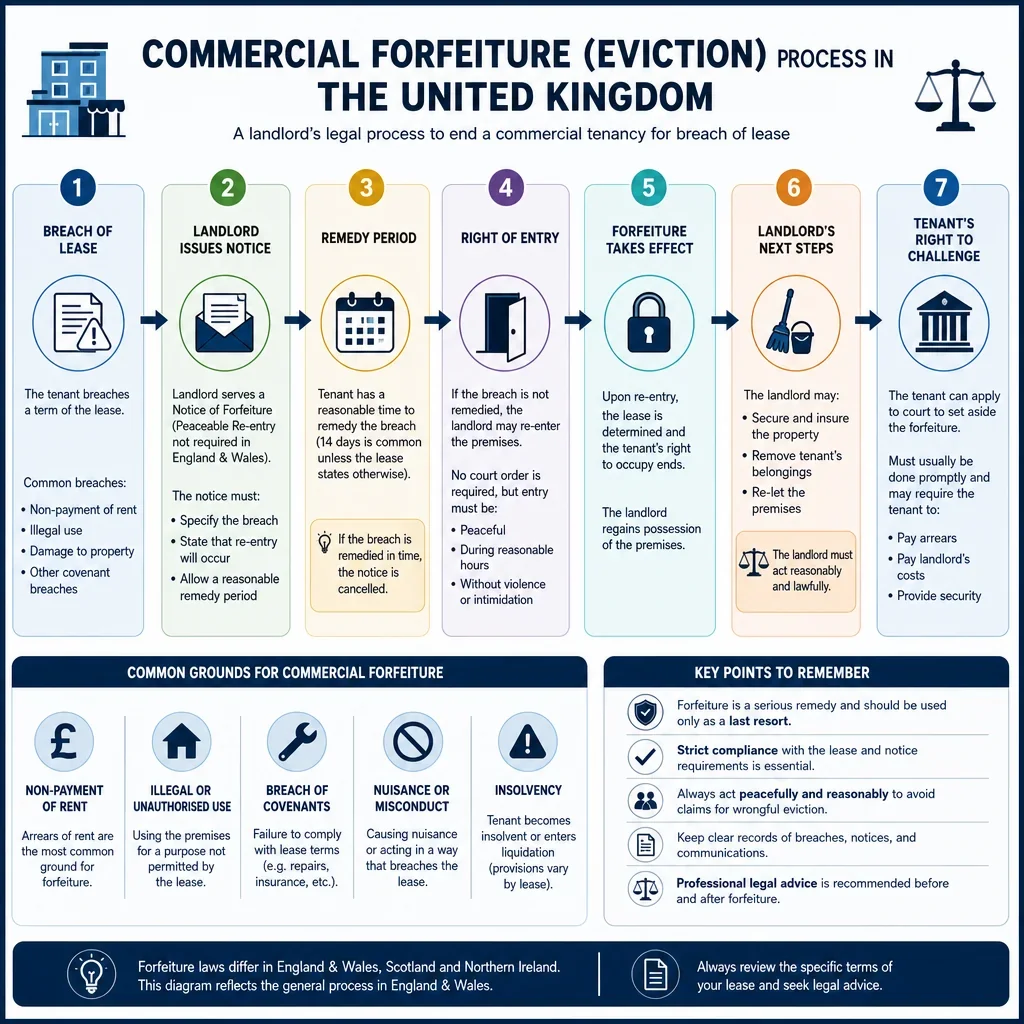
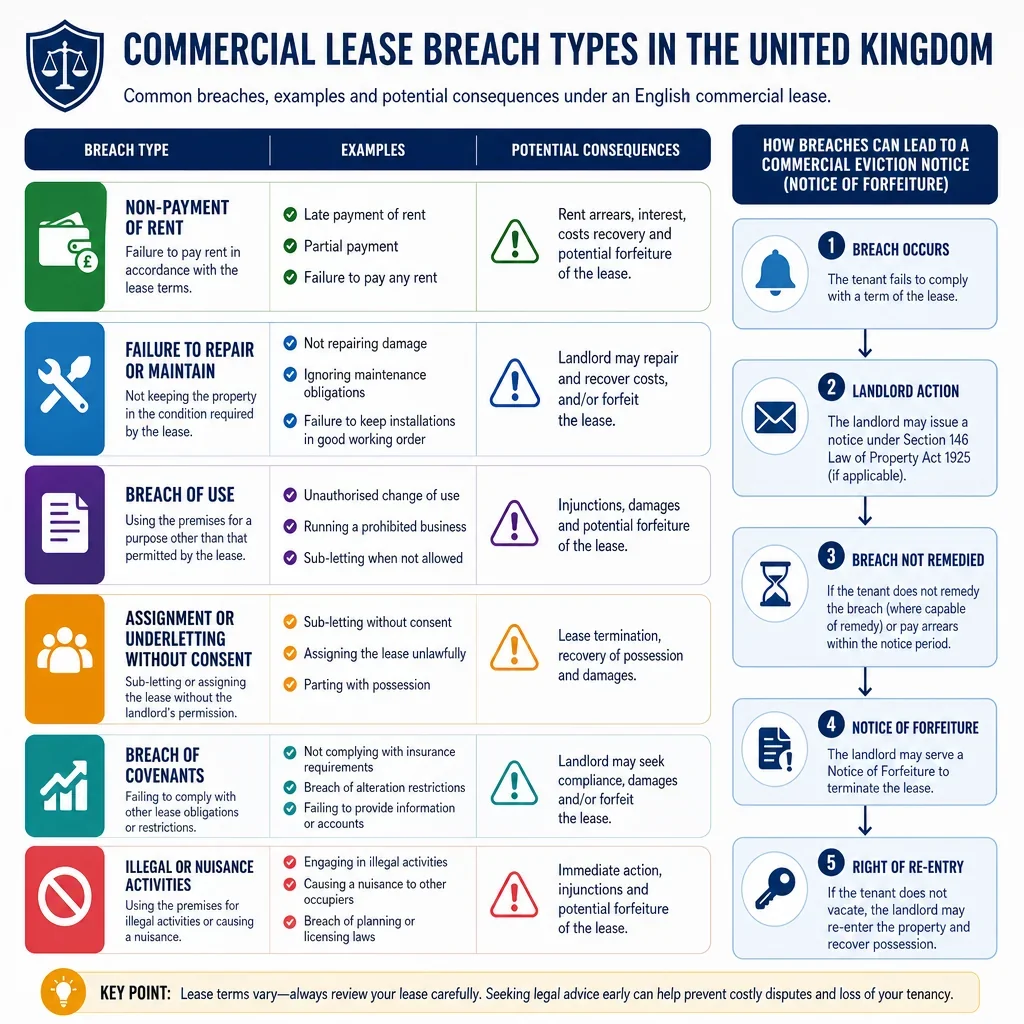
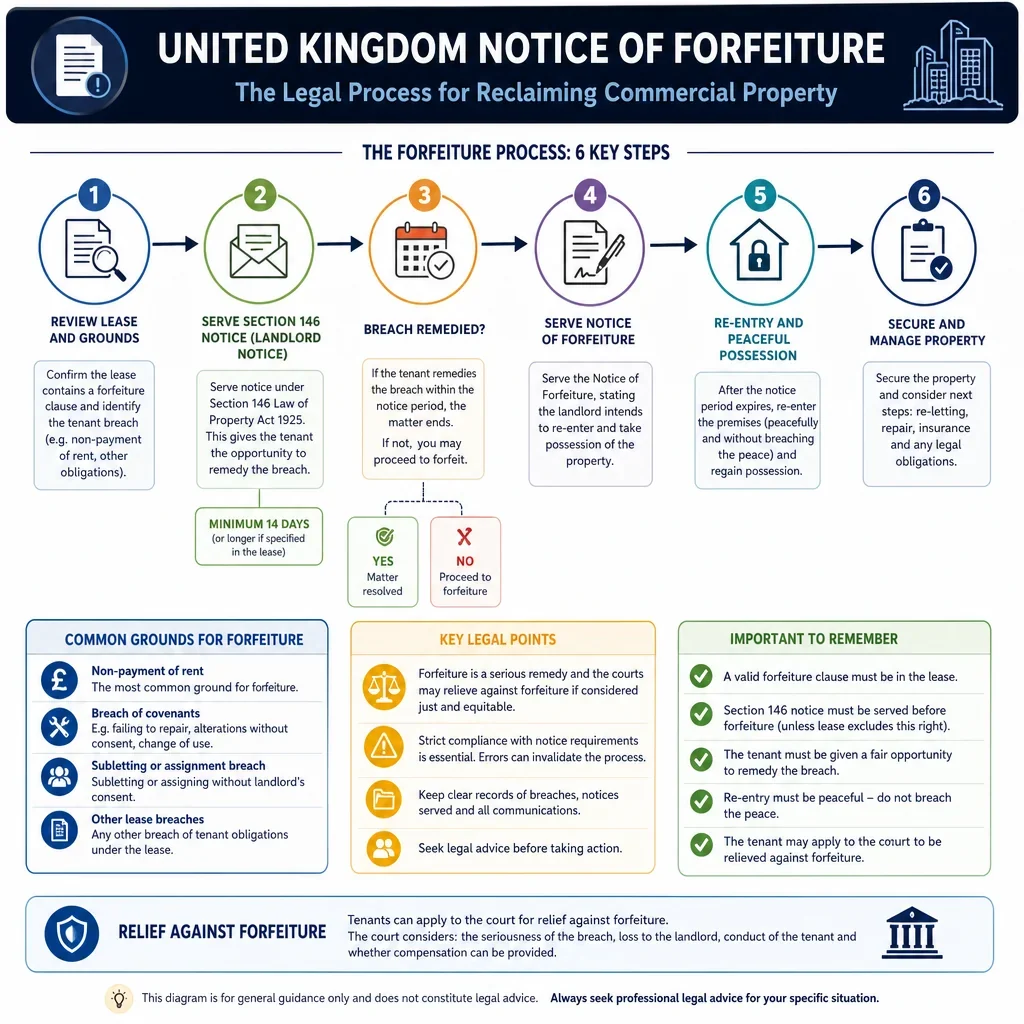
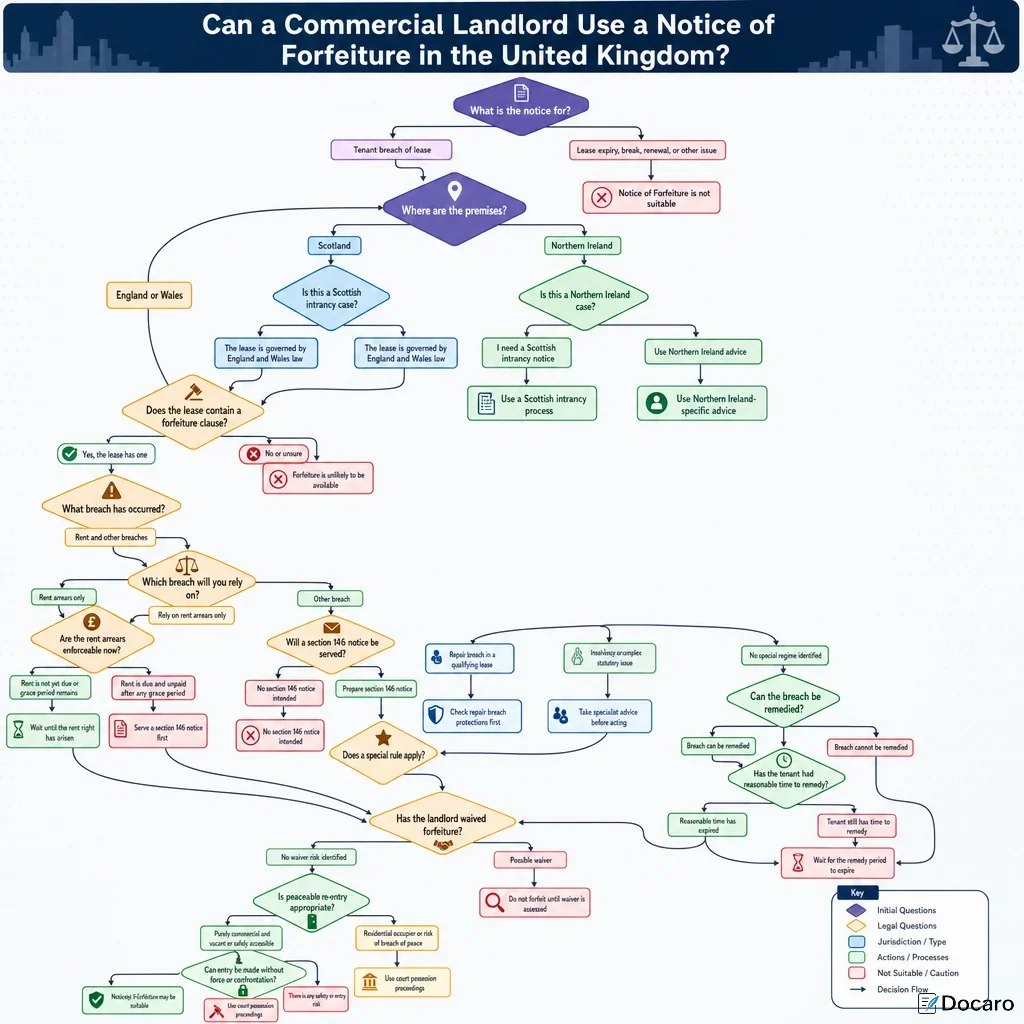
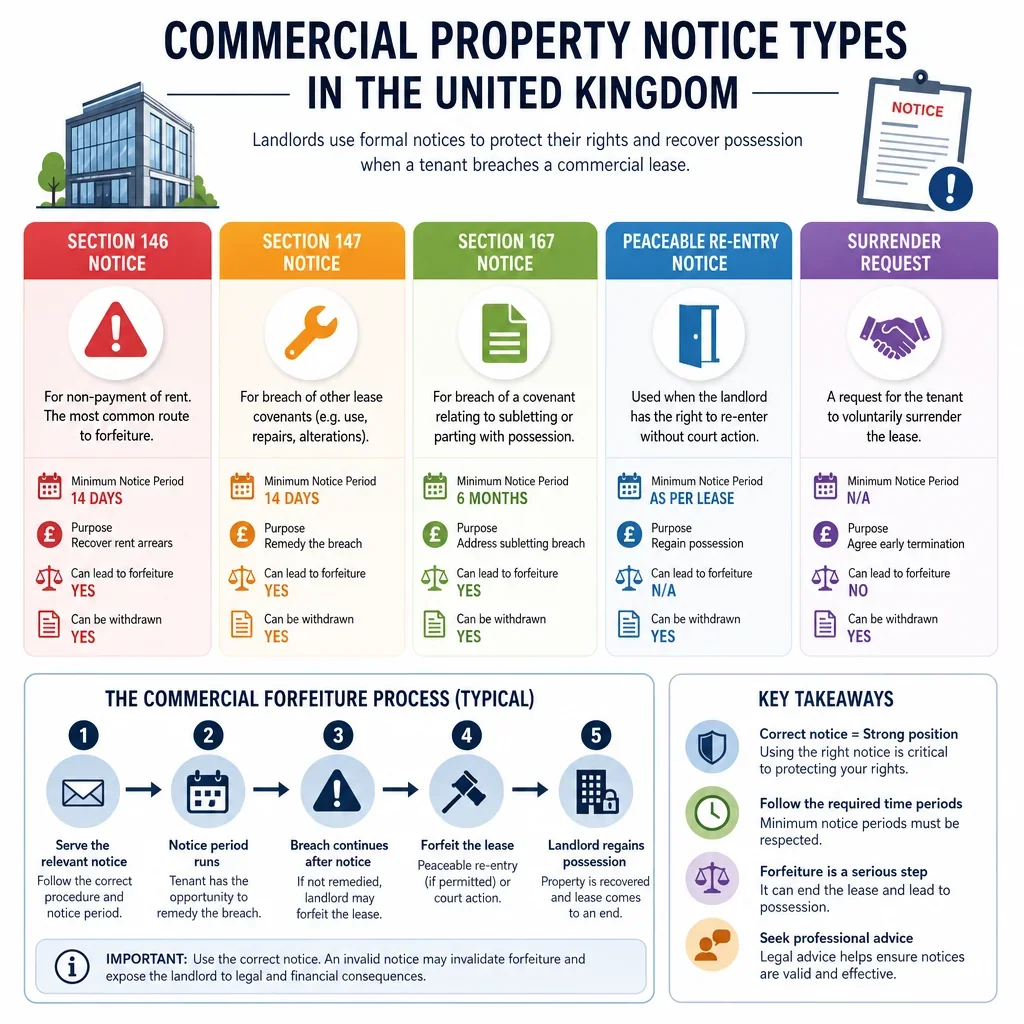
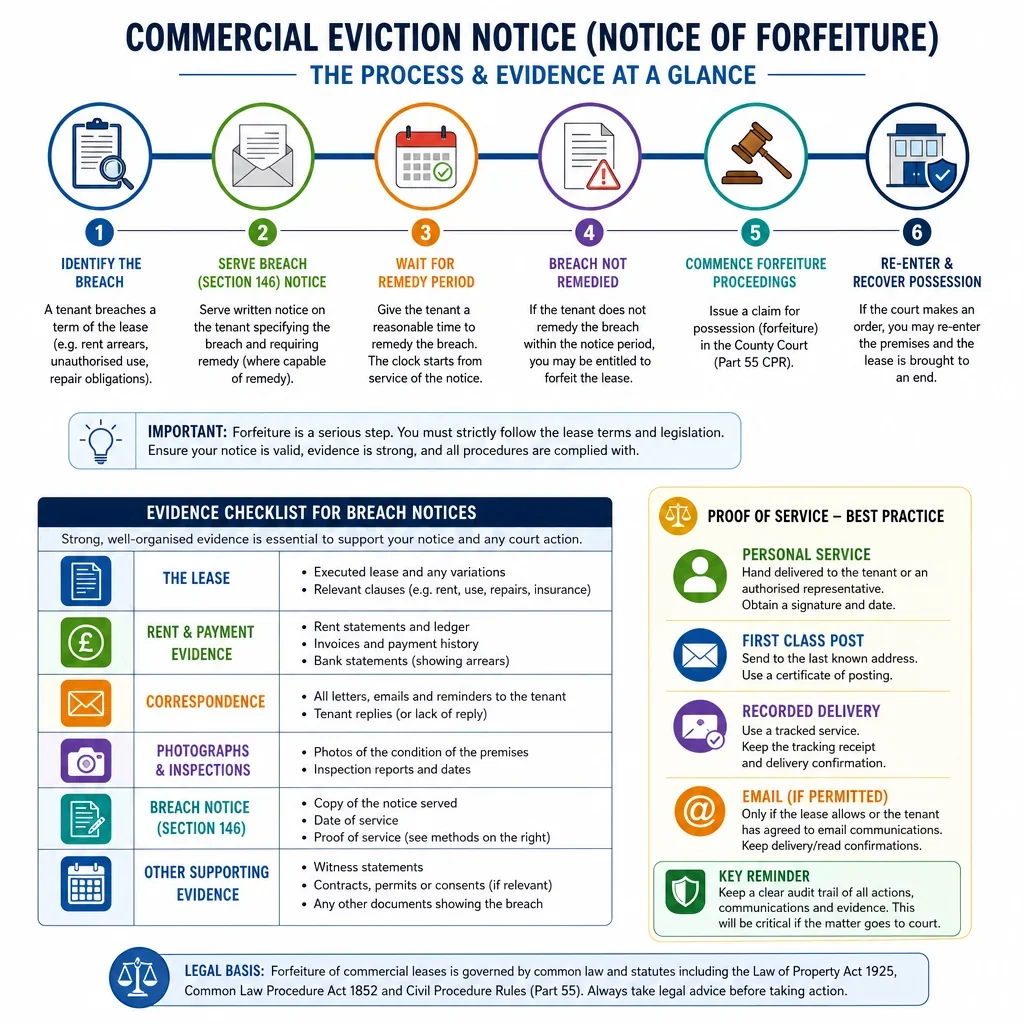
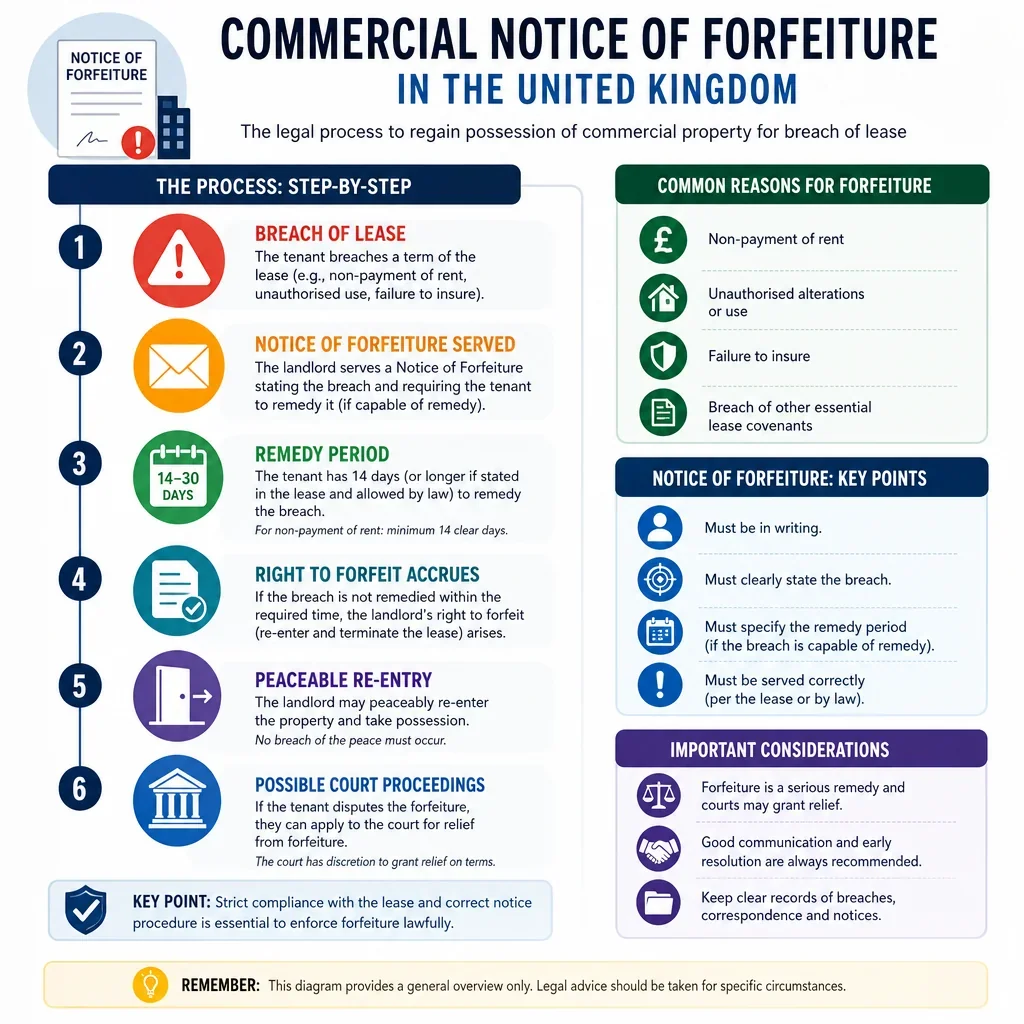
A commercial forfeiture notice should normally identify the competent landlord, the tenant, the demised premises, and any person who must receive statutory notice because they have a protected interest, such as a subtenant or mortgagee. Where forfeiture is based on a breach other than non-payment of rent, section 146 of the Law of Property Act 1925 makes service of a notice on the tenant a key precondition, and the notice must specify the breach and required remedy or compensation where applicable.
Why Does The Correct Legal Name Matter?
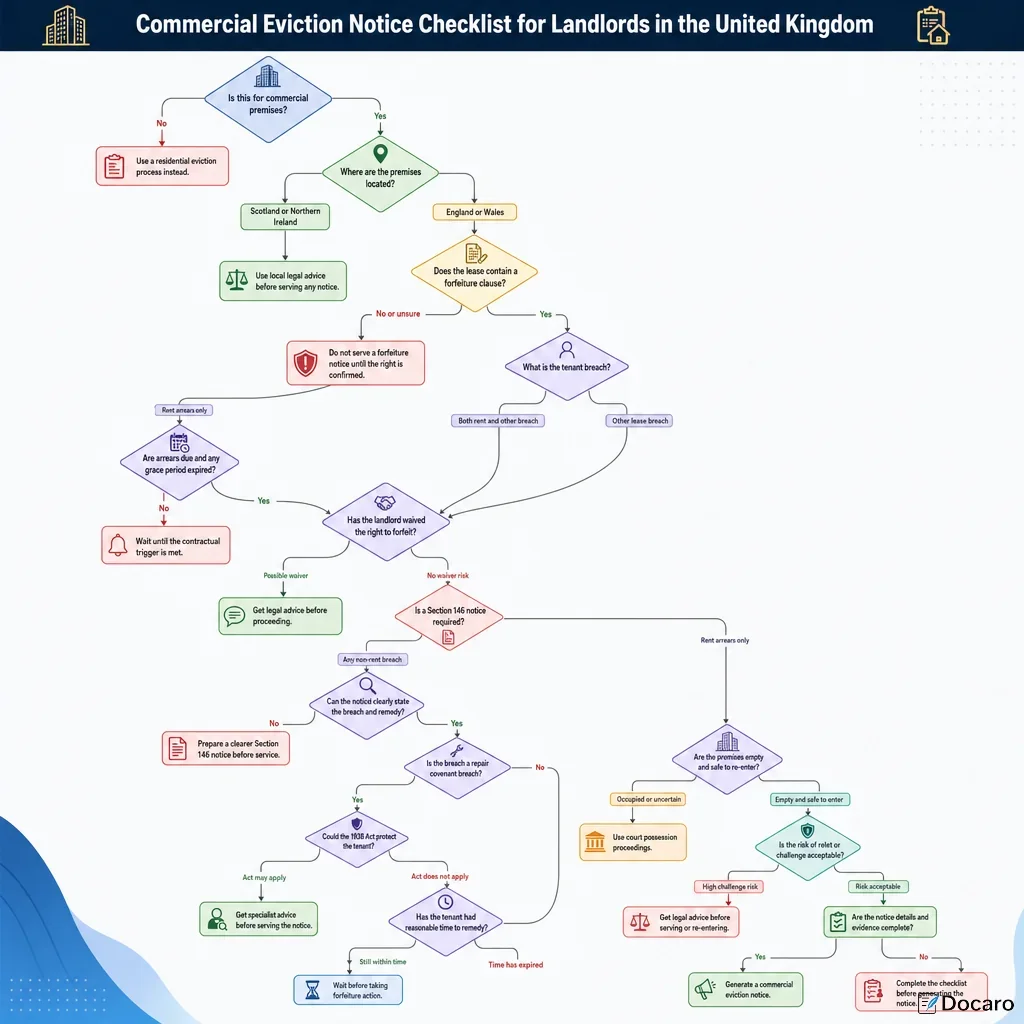
Before preparing a Notice of Forfeiture, check the lease, Land Registry title, Companies House records, and any licence to assign or underlet. Errors in the landlord\'s legal capacity, the tenant\'s company name, or the identity of successors can create disputes about whether the notice was authorised, validly addressed, or properly served.
Who Can Serve A Notice Of Forfeiture?
The notice is often prepared or served by a solicitor, managing agent, surveyor, certificated enforcement agent, or process server, but their authority should be clear and documented. A managing agent or solicitor should be acting for the landlord with authority to demand compliance, serve notices, or take forfeiture steps.
Which Other Parties May Need To Be Checked?
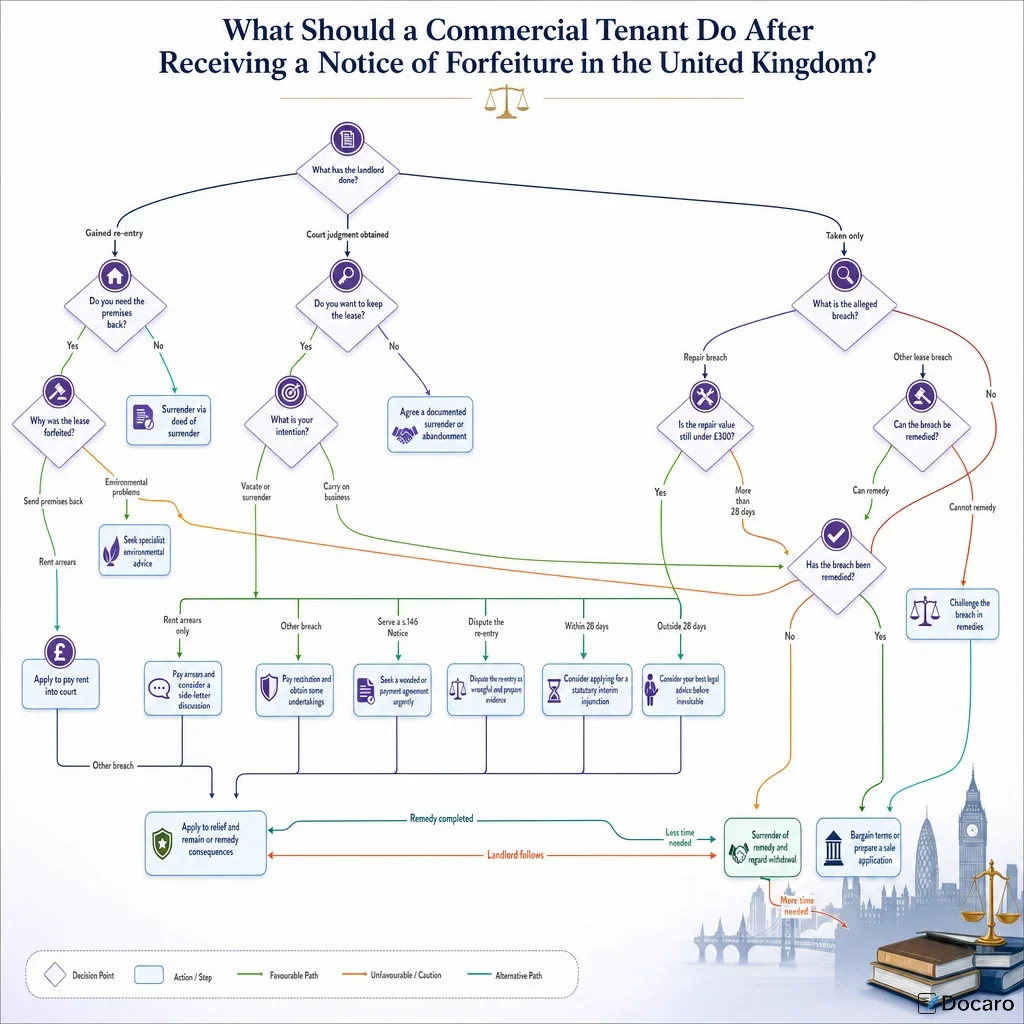
Subtenants, mortgagees, guarantors, administrators, liquidators, trustees in bankruptcy, and receivers can all affect the forfeiture strategy. Some may need notice, some may seek relief from forfeiture, and some may control whether proceedings or peaceful re-entry are possible. Confirming these roles early helps avoid invalid service, unlawful exclusion, or unnecessary delay.

FAQs
You Might Also Be Interested In