United Kingdom Notice Of Forfeiture Information Checklist
Information Item | Required Information Description | Usually Essential | Where To Find It | Practical Notes |
|---|---|---|---|---|
Landlord details | ||||
Landlord legal name | Full legal name of the landlord entitled to enforce the lease. | true | Lease, licence to assign, Land Registry title, Companies House. | Do not use only a trading name unless it is the legal party named in the lease. |
Landlord notice address | Address to identify the landlord or give the landlord contact details in the notice. | true | Lease, rent demands, managing agent letters, Land Registry title. | Use a current address and check whether the lease names an address for landlord notices. |
Landlord company number | Registered number if the landlord is a company or LLP. | false | Companies House register, lease, company stationery. | Helps distinguish similarly named companies and avoid party misidentification. |
Managing agent or solicitor details | Name, address and reference for any authorised agent serving the notice. | false | Management agreement, instruction email, rent demand, solicitor letter. | Confirm the agent has authority to serve the notice on the landlord's behalf. |
Landlord capacity | Whether the landlord acts as freeholder, head landlord, trustee, receiver or other capacity. | false | Title register, lease, appointment documents, correspondence. | Capacity can matter where a receiver, trustee or successor landlord is enforcing the lease. |
Tenant details | ||||
Tenant legal name | Full legal name of each tenant currently bound by the lease. | true | Lease, assignment documents, Land Registry, Companies House. | Check for assignments, name changes and multiple tenants before drafting. |
Tenant notice address | Address where the tenant should be served with the notice. | true | Lease service clause, tenant correspondence, registered office, premises. | Use all required addresses if the lease or statute permits multiple service routes. |
Tenant registered office | Registered office address if the tenant is a company or LLP. | false | Companies House, lease, company correspondence. | Check it on the intended service date because registered offices can change. |
Tenant company number | Registered number if the tenant is a company or LLP. | false | Companies House, lease, assignment documents. | Useful where the tenant has changed name or has a similar group company. |
Tenant trading name | Business or shop name used at the premises. | false | Shopfront, website, invoices, correspondence. | Include only as an identifier the legal tenant name is more important. |
Guarantor details | Name and address of any guarantor or authorised guarantee agreement provider. | false | Lease, authorised guarantee agreement, assignment licence. | Check whether the guarantor must receive a copy to preserve related claims. |
Undertenant or occupier details | Names and addresses of known subtenants, licensees or occupiers. | false | Sublease, licence, inspection notes, rent records, correspondence. | Their interests may affect possession strategy and who should be notified. |
Tenant insolvency status | Whether the tenant is in administration, liquidation, CVA or bankruptcy. | true | Companies House, The Gazette, Insolvency Register, correspondence. | Insolvency can restrict forfeiture or require consent of an office-holder or court. |
Property details | ||||
Premises address | Full postal address of the commercial premises affected by the notice. | true | Lease, title register, business rates bill, rent demand. | Ensure the address matches the leased premises, not merely the tenant's trading address. |
Demised premises description | Lease wording describing the exact area let to the tenant. | true | Lease definitions, lease plan, schedule of premises. | Important for units, floors, yards, parking spaces and shared areas. |
Land Registry title number | Registered title number for the freehold, headlease or tenant's leasehold title. | false | HM Land Registry title register or official copies. | Useful to verify ownership, lease registration and the correct property description. |
Lease plan reference | Plan number, colour markings or schedule reference identifying the premises. | false | Lease plan, title plan, supplemental lease documents. | Check the plan if the property has been subdivided or reconfigured. |
Permitted use | Use allowed by the lease and the tenant's actual use if relevant. | false | Lease user clause, planning records, inspection notes. | Essential if forfeiture is based on unauthorised use. |
Lease details | ||||
Lease date | Date on which the relevant lease was granted. | true | Front page or execution page of the lease. | Use the operative lease, not an earlier draft or agreement for lease. |
Original lease parties | Names of the original landlord and tenant stated in the lease. | true | Lease parties clause or cover page. | Also record successors if the lease has been assigned or the reversion transferred. |
Current lease parties | Current landlord and tenant after any assignment, transfer or vesting. | true | Assignment licences, transfer deeds, title register, rent records. | Mismatch between original and current parties is a common drafting error. |
Lease term and expiry | Length of the term, start date and contractual expiry date. | true | Lease term clause, Land Registry leasehold title. | Check the lease has not already expired or continued by statute. |
1954 Act security status | Whether the business tenancy is protected or contracted out under the Landlord and Tenant Act 1954. | false | Lease, statutory declaration, warning notice, renewal correspondence. | Forfeiture is separate from lease renewal, but status can affect wider possession strategy. |
Forfeiture clause | Exact lease clause giving the landlord a right to re-enter or forfeit. | true | Lease proviso for re-entry or forfeiture clause. | A notice should not assume a right to forfeit unless the lease grants one. |
Rent payment clause | Clause setting rent amount, payment dates and any grace period. | true | Lease rent clause, rent review memorandum, side letter. | Needed if the breach is non-payment of rent or other sums reserved as rent. |
Service charge clause | Clause requiring service charge payments and defining payment procedure. | false | Lease service charge schedule, demands, accounts. | Check whether unpaid service charge is reserved as rent or needs section 146 treatment. |
Insurance rent clause | Clause requiring insurance contributions and how they are demanded. | false | Lease insurance provisions, insurance demand, policy schedule. | Verify whether insurance sums are treated as rent under the lease. |
Repair covenant | Exact clause requiring the tenant to repair, decorate or maintain the premises. | false | Lease tenant covenants, schedule of condition, inspection report. | Repair breaches may need detailed schedules and special care with remedy wording. |
Assignment or subletting covenant | Clause restricting assignment, subletting, sharing occupation or charging the lease. | false | Lease alienation clause, licences, Companies House charges. | Use if the breach involves unauthorised transfer, sharing or occupation. |
User covenant | Clause controlling the permitted use and prohibited activities at the premises. | false | Lease user clause, planning permission, inspection evidence. | Compare the clause against actual use and any written consent. |
Lease service clause | Lease clause stating how notices must or may be served. | true | Lease notices clause or general provisions. | Check whether email, personal service, post or recorded delivery is allowed. |
Breach details | ||||
Rent arrears amount | Total unpaid rent claimed as at the notice date. | true | Rent ledger, bank statements, invoices, demands. | Reconcile payments and credits before stating a figure. |
Rent arrears period | Dates or quarters for which rent remains unpaid. | true | Rent account, lease payment dates, demands. | Separate principal rent from VAT, interest, service charge and insurance. |
Payment due dates | Contractual dates when each unpaid sum became due. | true | Lease, rent review memorandum, demands, ledger. | Check any grace period in the forfeiture clause before alleging entitlement. |
Non-rent breach description | Short factual description of each breach other than unpaid rent. | true | Inspection reports, photos, correspondence, contractor reports. | Be specific vague allegations may make the notice vulnerable. |
Breached lease clause | Clause number and wording alleged to have been breached. | true | Lease tenant covenants and schedules. | Quote or accurately summarise the covenant relied on. |
Breach dates | When the breach occurred, started or was discovered. | true | Inspection notes, emails, rent ledger, witness evidence. | Date of knowledge may matter for waiver of forfeiture. |
Evidence of breach | Documents, photos or witness material supporting the breach allegation. | false | Inspection file, contractor reports, correspondence, account records. | Do not attach unnecessary evidence unless the notice strategy requires it. |
Prior warning correspondence | Earlier letters or emails demanding compliance or payment. | false | Email records, solicitor letters, managing agent files. | Check wording has not waived forfeiture or granted extra time inconsistently. |
Waiver risk check | Whether the landlord demanded or accepted rent after knowing of the breach. | true | Rent demands, bank receipts, emails, agent notes. | Waiver can prevent reliance on a known breach for forfeiture. |
CRAR use check | Whether commercial rent arrears recovery has been used for the same arrears. | false | Enforcement agent instructions, CRAR notices, agent file. | Using CRAR may waive forfeiture for those arrears and should be checked first. |
Remedy details | ||||
Section 146 notice requirement | Whether the breach requires a Law of Property Act 1925 section 146 notice. | true | Breach type, lease, legal review. | Usually required for non-rent breaches before forfeiture can proceed. |
Whether breach is remediable | Whether the tenant can realistically remedy the breach. | true | Nature of breach, surveyor report, lease covenant, legal review. | If remediable, the section 146 notice must require remedy within a reasonable time. |
Required remedy steps | Specific actions the tenant must take to put the breach right. | true | Surveyor schedule, landlord instructions, lease obligations. | Avoid unclear wording such as "comply with the lease" without details. |
Reasonable remedy period | Time allowed for the tenant to remedy the breach if capable of remedy. | true | Landlord instructions, surveyor input, nature of works required. | The period must be reasonable in the circumstances, especially for repairs. |
Compensation required | Whether the notice requires compensation for the breach and the amount if known. | false | Surveyor report, invoices, loss calculation, landlord records. | Section 146 allows compensation to be required where appropriate. |
Repair breach statutory protections | Whether special rules apply to forfeiture for repair breaches. | false | Lease repair clause, surveyor report, legal review. | Repair cases often need extra care before proceedings or peaceable re-entry. |
Relief from forfeiture risk | Whether the tenant may seek court relief and what conditions may be relevant. | false | Tenant correspondence, payment history, breach evidence, legal advice. | Relief is common for rent arrears if arrears and costs are paid promptly. |
Payment remedy details | Amount to pay, payee, bank details or other payment instructions. | false | Rent statement, landlord bank details, managing agent instructions. | For pure rent forfeiture, consider whether a demand or notice is needed under the lease. |
Schedule of required works | List of repair, reinstatement or removal works required to remedy the breach. | false | Surveyor schedule, inspection photos, contractor quotes. | Attach or refer to a clear schedule where the breach is physical disrepair. |
Service details | ||||
Notice date | Date inserted on the notice when it is signed or issued. | true | Draft notice, signing instructions. | Do not pre-date service align notice date with actual signing and dispatch. |
Method of service | How the notice will be served: personal delivery, post, process server or permitted email. | true | Lease service clause, statutory rules, service plan. | Use a method authorised by the lease or applicable law and keep evidence. |
Section 196 service check | Whether service may rely on Law of Property Act 1925 section 196. | false | Lease notices clause, statutory review, service instructions. | Check the lease wording because contractual service provisions may modify the approach. |
Company service rule check | Whether service on a company can be made at its registered office. | false | Companies House, lease, service plan. | Useful for corporate tenants but should be checked against the lease service clause. |
Service address used | Exact address where each copy of the notice will be sent or delivered. | true | Lease, registered office, premises, correspondence, title register. | Record each address separately if serving multiple places. |
Service date and time | Actual date and time when the notice is delivered, posted or emailed. | true | Process server certificate, postal receipt, email metadata, delivery note. | Needed to calculate any remedy period and prove service if challenged. |
Proof of service | Evidence proving how and when the notice was served. | true | Certificate of service, witness statement, postal proof, email delivery receipt. | Keep originals and screenshots because service is often disputed. |
Signatory name and authority | Name, role and authority of the person signing or issuing the notice. | true | Landlord instructions, board authority, agency agreement, solicitor file. | Confirm authority before signature, especially for companies, receivers and agents. |
Recipients of copies | People receiving copies, such as guarantors, undertenants, mortgagees or office-holders. | false | Lease, security documents, insolvency notices, sublease records. | Serving copies can protect position even if not always strictly required. |
Mortgagee or chargeholder check | Whether any lender or chargeholder should be notified before forfeiture steps. | false | Title register, leasehold title, Companies House charges, loan documents. | A lender may seek relief or object if its security is affected. |
Peaceable re-entry plan | Whether forfeiture is intended by notice, court proceedings or peaceable re-entry. | false | Landlord instructions, solicitor advice, enforcement plan. | Peaceable re-entry can be risky where premises are occupied or mixed-use. |
Property details | ||||
Residential occupation check | Whether anyone occupies all or part of the premises as a dwelling. | true | Inspection, lease use clause, utility records, occupier correspondence. | Residential occupation can make peaceable re-entry unlawful and require court process. |
What Information Is Needed For A UK Commercial Notice Of Forfeiture?
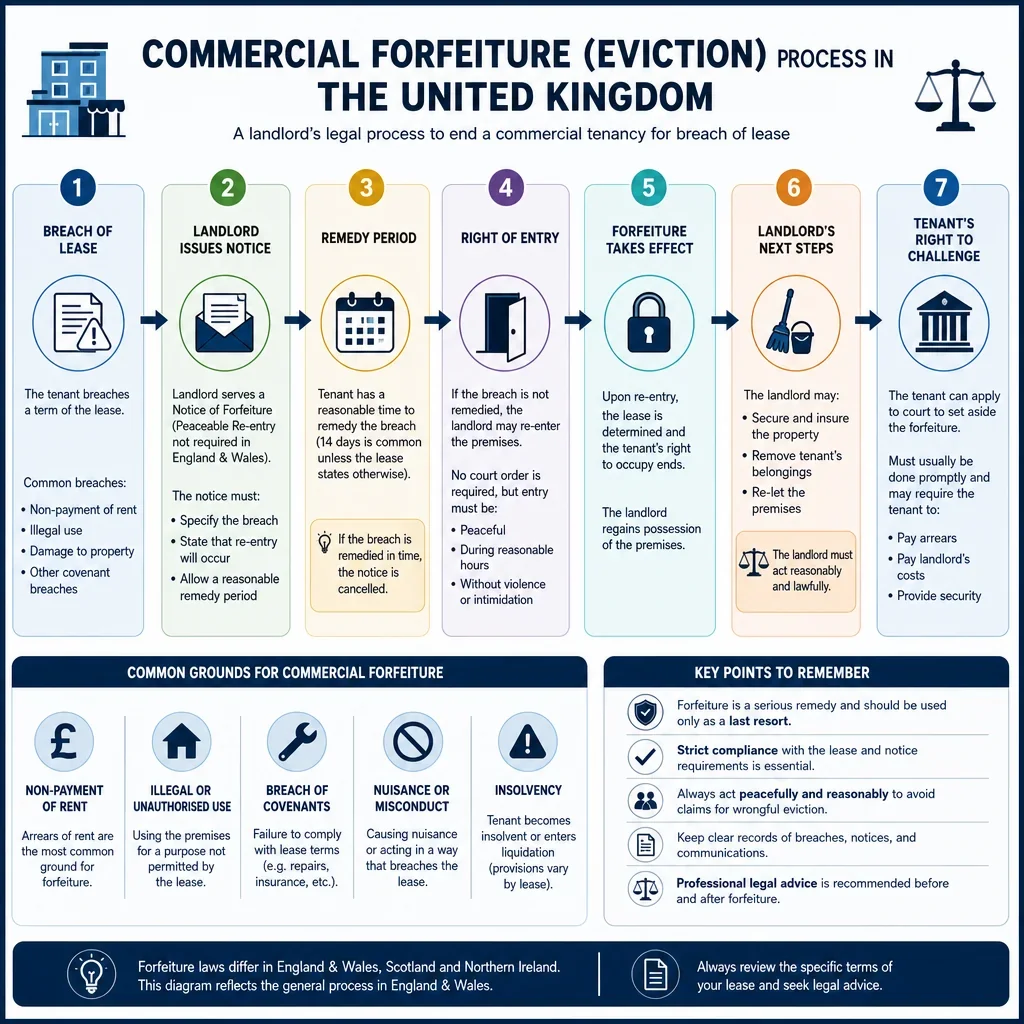
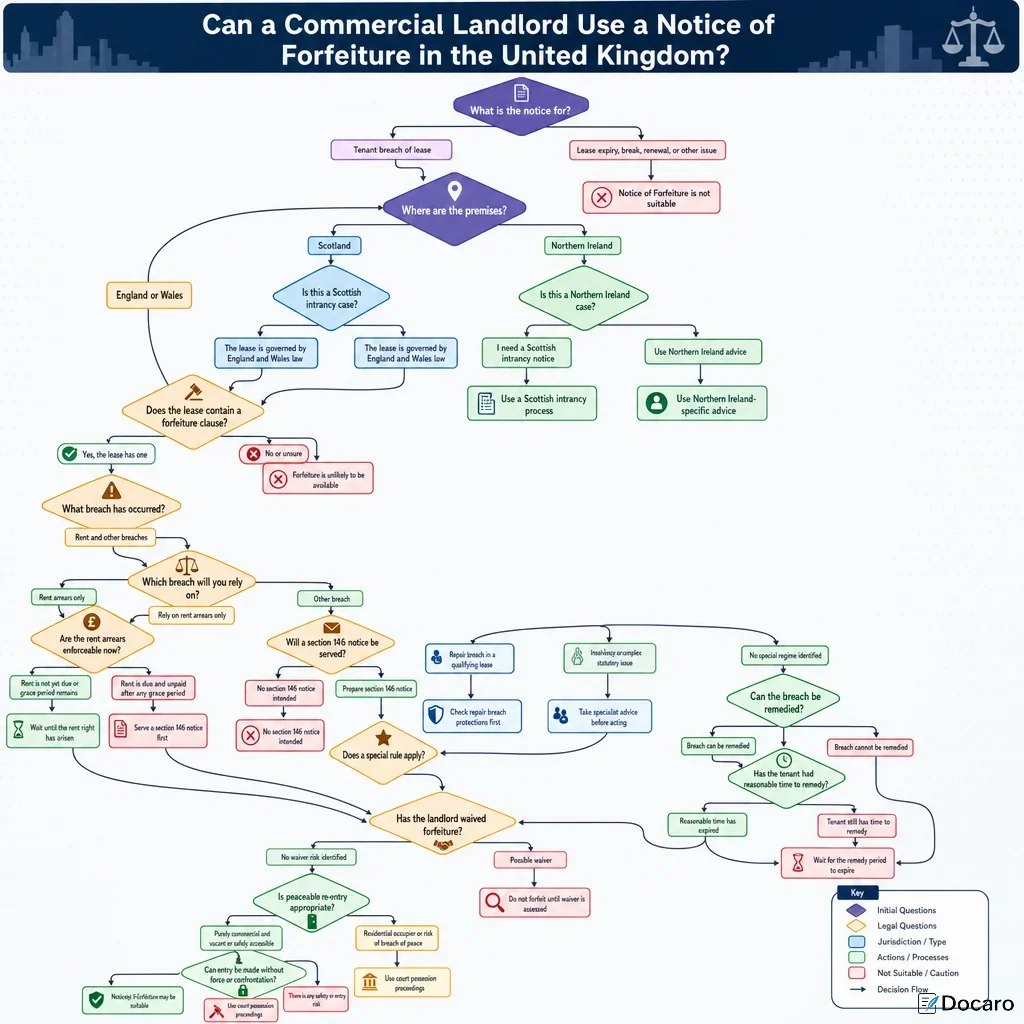
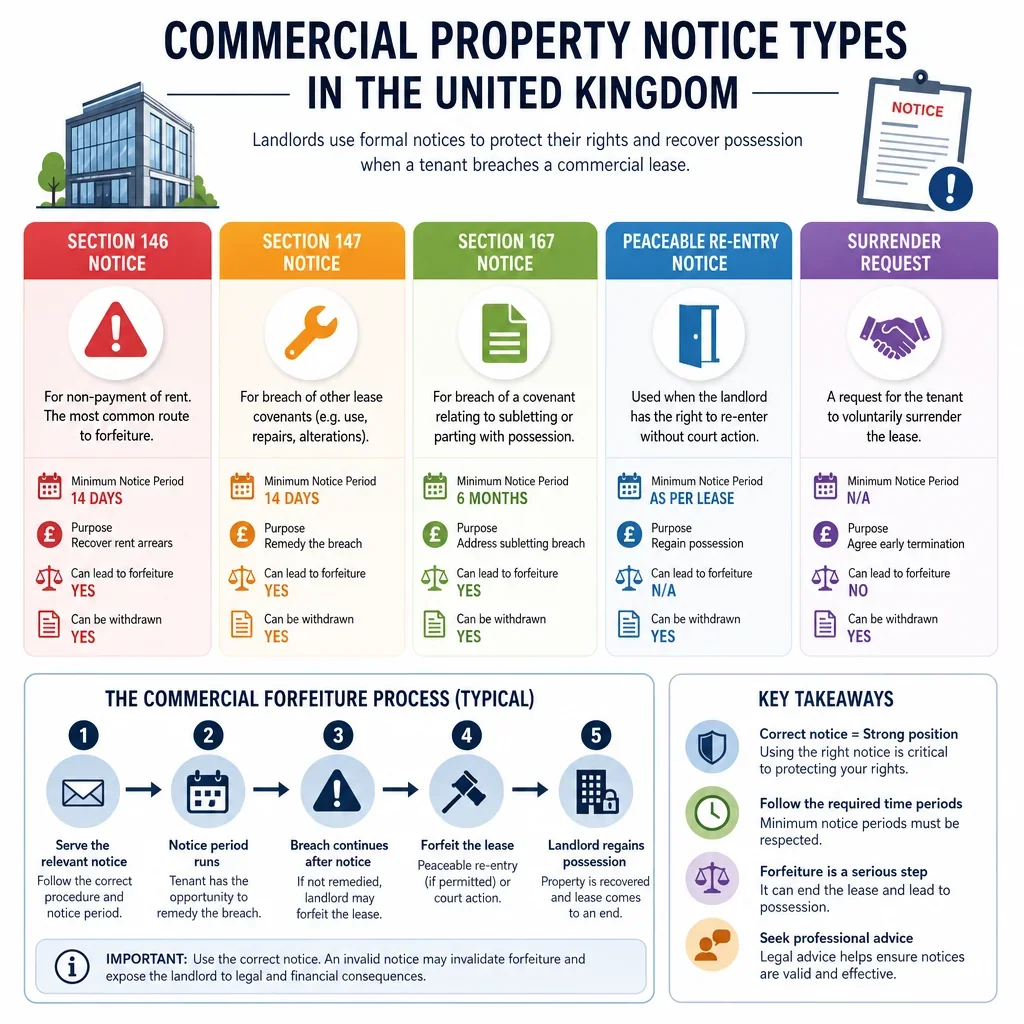
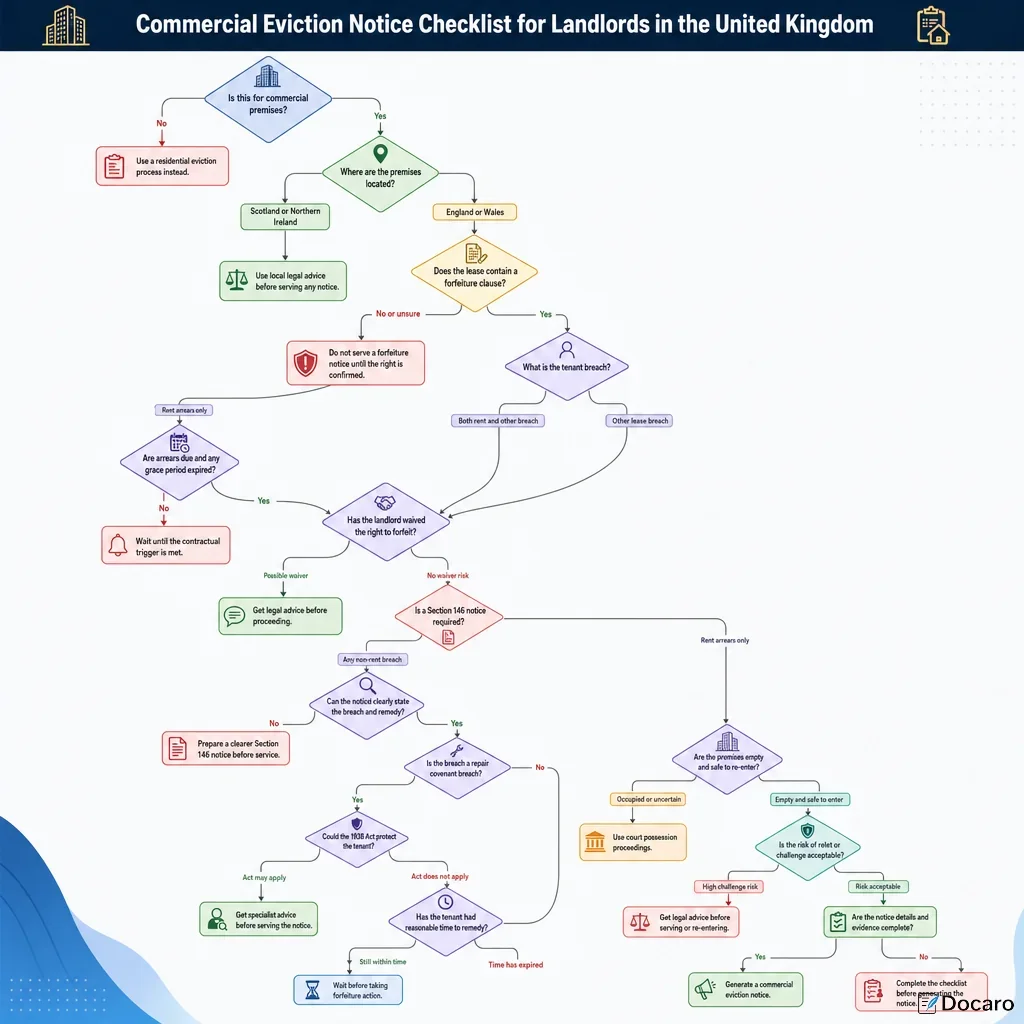
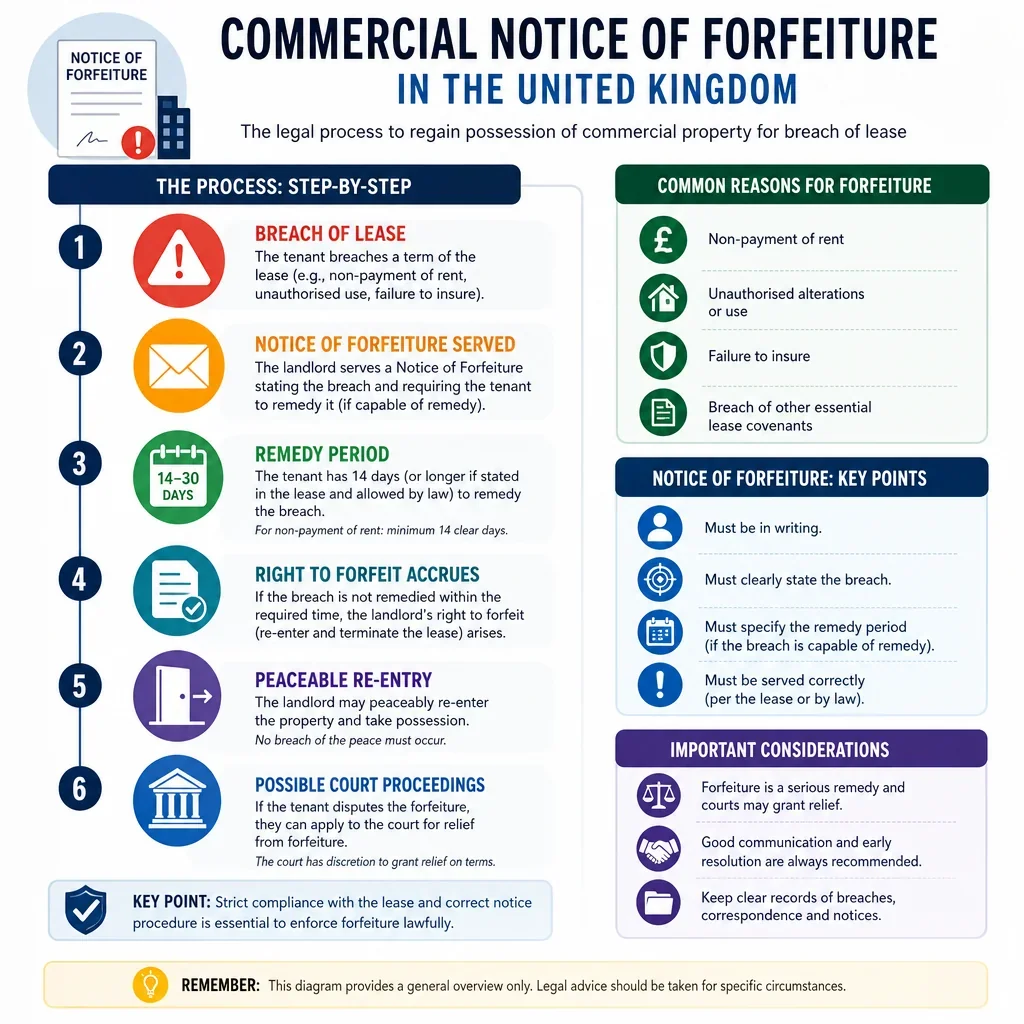
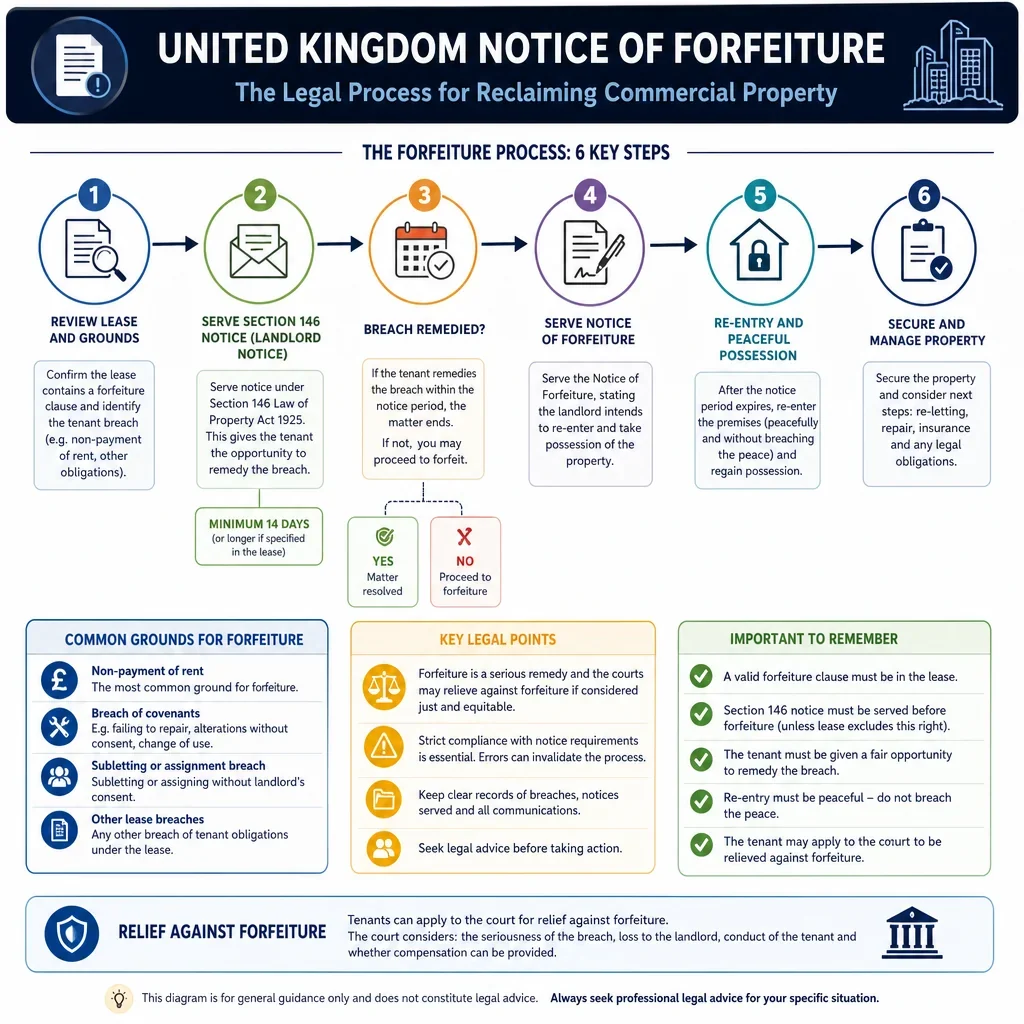
A reliable notice depends on matching the lease, the parties and the breach precisely. The most important checks are the exact landlord and tenant names, the demised premises description, the forfeiture clause, and the specific breach relied on. For non-rent breaches, a section 146 notice under the Law of Property Act 1925, section 146 is usually required before forfeiture.
When Is A Section 146 Notice Required For Commercial Eviction?
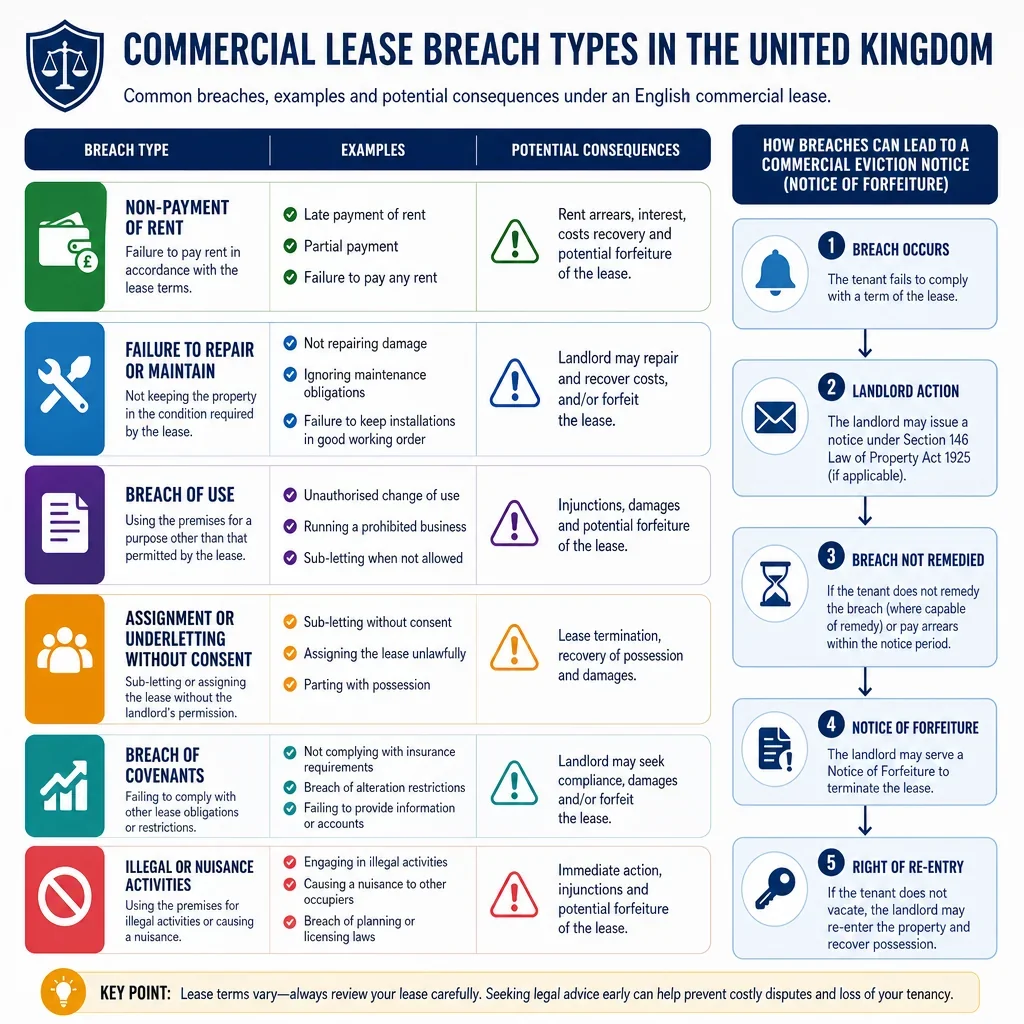
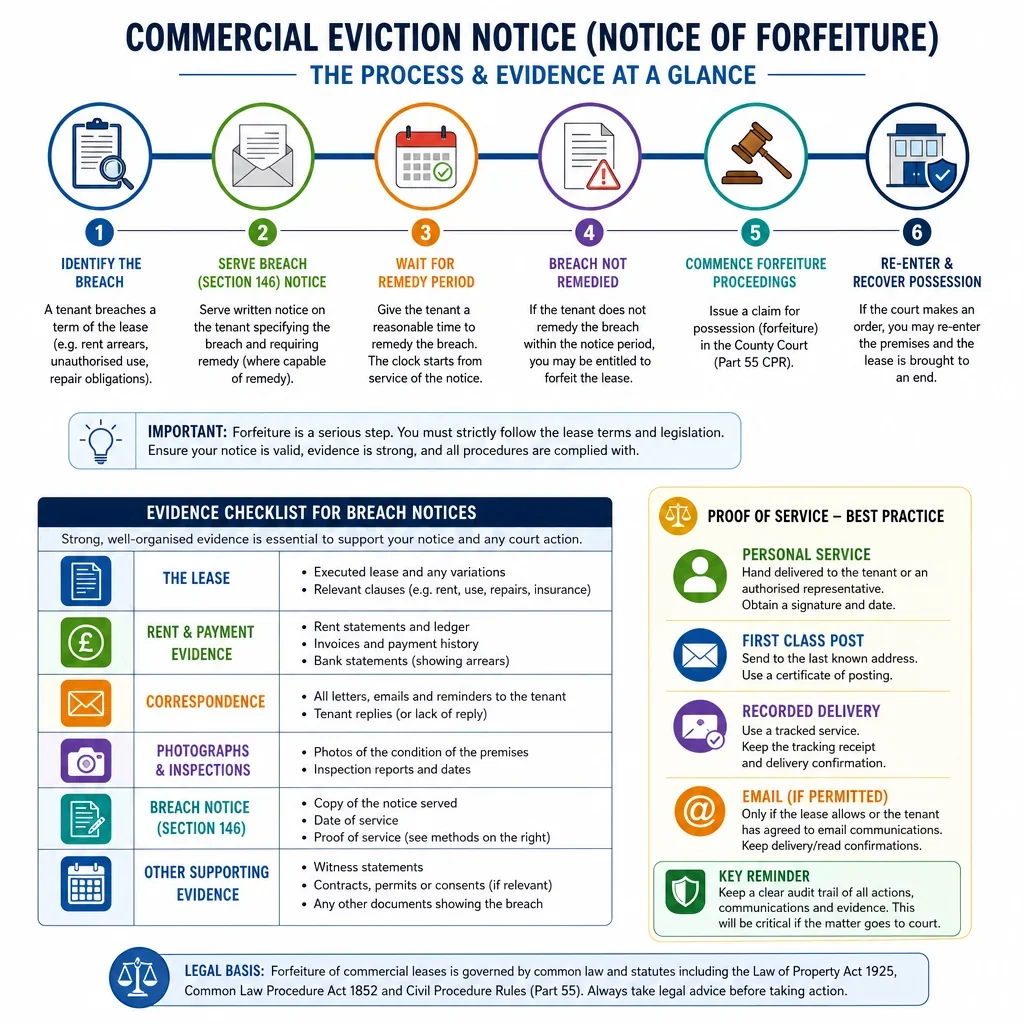
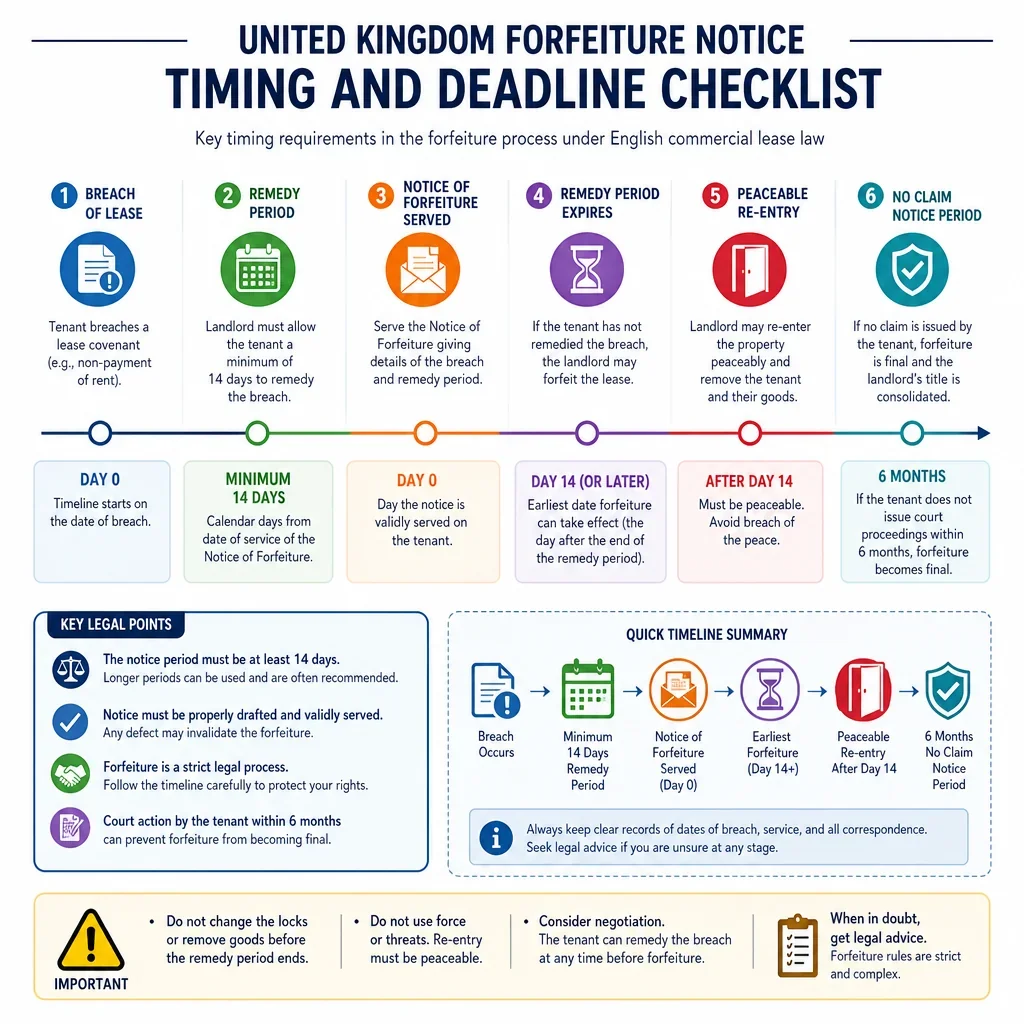
A section 146 notice is usually needed for breaches other than non-payment of rent. It should specify the breach, require it to be remedied if capable of remedy, and require compensation where appropriate. Rent arrears are treated differently, so users should clearly identify whether the forfeiture is for rent, another breach, or both.
Why Must Service Details Be Checked Before Serving A Notice?
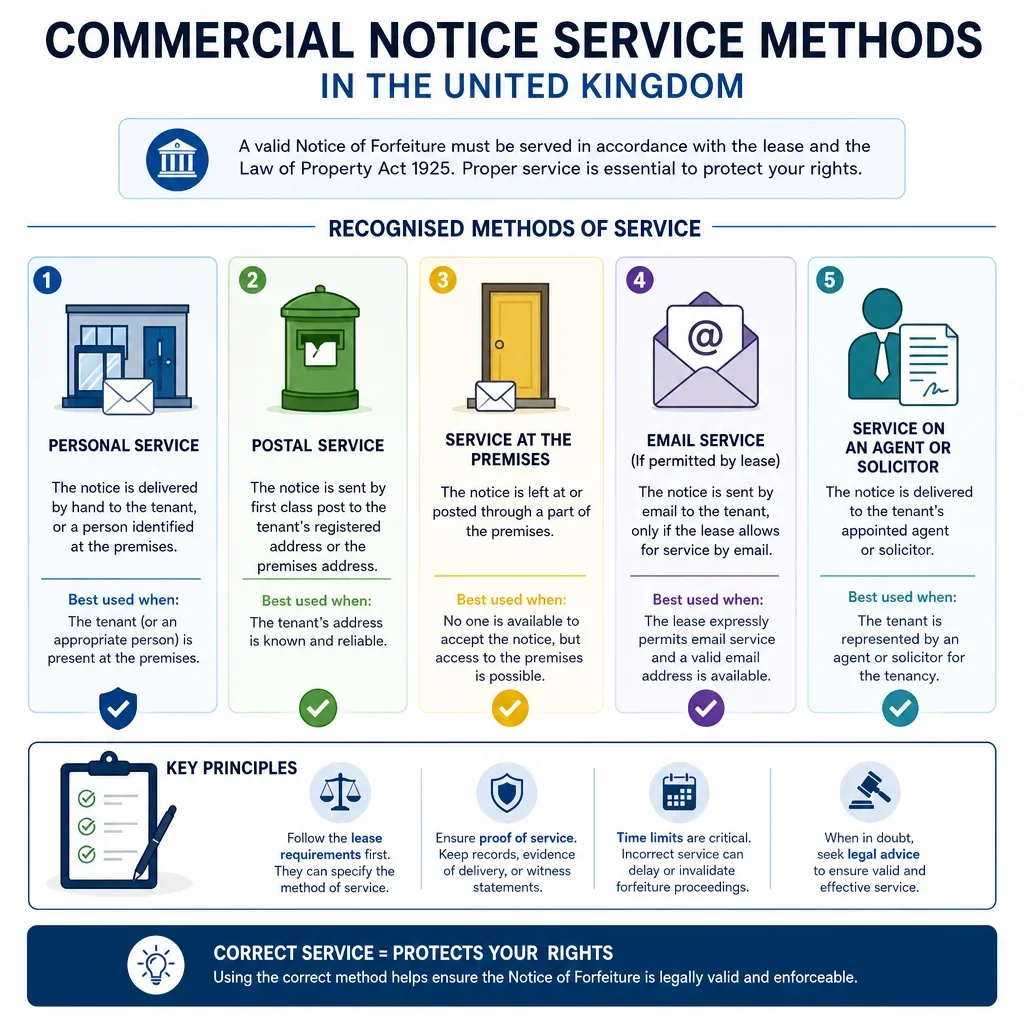
Incorrect service can undermine enforcement. Check the lease service clause, statutory service rules, the tenant address for notices, and whether service must also be made on guarantors, undertenants, mortgagees or insolvency office-holders. Keep proof of posting, delivery, email delivery or process server evidence because the service record may be critical if the tenant disputes the notice.
What Common Mistakes Should Be Avoided?
- Using trading names instead of the legal names of the landlord or tenant.
- Describing the premises differently from the lease or Land Registry title.
- Failing to identify the exact lease clause breached.
- Demanding an unrealistic remedy period for a section 146 notice.
- Continuing to demand or accept rent after knowledge of the breach, which may risk waiver of forfeiture rights.
FAQs
You Might Also Be Interested In