Lease Clauses Relevant To Forfeiture
Clause Name | Relevance To Forfeiture | Usually Review Before Notice | Wording To Check | Drafting Impact Notes |
|---|---|---|---|---|
Forfeiture clause | ||||
Express Right Of Re-Entry Or Forfeiture | Usually the contractual basis for ending the lease after breach. | true | Events triggering re-entry, grace periods, excluded breaches and preconditions. | Notice should match the forfeiture event relied on and any contractual precondition. |
Rent payment clause | ||||
Non-Payment Of Principal Rent | Rent arrears are a common ground for commercial forfeiture. | true | Due dates, payment frequency, grace period and whether demand is required. | Section 146 notice is generally not required for pure rent arrears, but lease conditions still matter. |
Definition Of Rent And Other Sums Reserved As Rent | Determines whether service charge, insurance rent or interest is treated as rent. | true | Whether all sums are reserved as rent or only principal annual rent. | Affects whether the notice can rely on rent arrears wording or needs section 146 treatment. |
Interest On Late Payments | Interest may be a separate recoverable sum or part of rent arrears. | true | Interest rate, start date, compounding and whether interest is reserved as rent. | Avoid overstating arrears if interest calculation is uncertain or disputed. |
Service Charge Payment Covenant | Unpaid service charge may support forfeiture if properly demanded and due. | true | Demand procedure, certification, balancing charges and whether reserved as rent. | Check whether arrears are due, certified and not subject to a contractual condition precedent. |
Insurance clause | ||||
Insurance Rent Payment | Non-payment of insurance rent can be a monetary breach. | true | When premium contributions are due and whether they are reserved as rent. | State the exact unpaid insurance sum and the period covered. |
Repair covenant | ||||
Tenant's Full Repairing Covenant | Disrepair is a common non-rent breach requiring careful specification. | true | Extent of premises, standard of repair, exclusions and schedule of condition. | Section 146 notice should specify defects and require remedy if capable of remedy. |
Internal And External Decoration Covenant | Failure to decorate may be a remediable non-rent breach. | true | Decoration cycles, approved colours, materials and end-of-term obligations. | Notice should identify missed cycles and specify required works. |
Yield Up In Repair Covenant | May evidence repair obligations but usually bites at lease end. | false | Condition required on yielding up and reinstatement links. | Use cautiously for current forfeiture unless an ongoing covenant is also breached. |
Alterations Without Consent | Unauthorised works may be a breach and may require reinstatement. | true | Absolute ban, qualified consent, structural works and reinstatement obligations. | Notice should describe works and require reinstatement or consent application if appropriate. |
Improvements Consent Restriction | Consent restrictions may be affected by statutory controls on improvements. | true | Whether alteration is an improvement and whether consent was unreasonably withheld. | Avoid alleging breach where statutory reasonableness rules may defeat the allegation. |
Reinstatement Of Alterations | Failure to reinstate may be a continuing remediable breach. | true | When reinstatement is required and whether landlord notice is needed. | State the reinstatement works and any contractual notice already served. |
User covenant | ||||
Permitted Use Covenant | Use outside the permitted use may justify a non-rent breach notice. | true | Permitted use wording, ancillary uses and any consent mechanism. | Describe the actual unauthorised use and require cessation if remediable. |
Prohibition On Illegal Or Immoral Use | Illegal use can be serious and may be incapable of full remedy. | true | Scope of prohibited use and evidential threshold. | Notice should be fact-specific and avoid allegations not supported by evidence. |
Nuisance And Annoyance Covenant | Persistent nuisance may breach lease user obligations. | true | Protected persons, prohibited conduct and whether reasonableness is required. | Set out dates, conduct and complaints require cessation if capable of remedy. |
Planning Law Compliance Covenant | Planning breaches may also breach the lease. | true | Obligation to comply, obtain permissions and provide copies to landlord. | Identify the planning breach and require compliance steps where possible. |
Compliance With Statutes Covenant | Breach of legal obligations can also be a lease breach. | true | Which laws, notices, occupier duties and landlord indemnities are covered. | Specify the statutory non-compliance and required remedial action. |
Health And Safety Compliance Covenant | Unsafe occupation may breach user and statutory compliance covenants. | true | Responsibility for workplace safety, risk assessments and statutory notices. | Link alleged breach to lease wording and any enforcement notice. |
Fire Safety Obligations | Fire safety failures may be serious breaches of compliance covenants. | true | Fire risk assessments, equipment, escape routes and compliance responsibility. | State specific failures and require urgent remedial steps if capable of remedy. |
Environmental And Contamination Covenant | Contamination or unlawful waste use may breach the lease. | true | Hazardous materials, waste storage, contamination and indemnity wording. | Notice may need to demand cessation, clean-up and compensation. |
Alienation clause | ||||
Assignment Restriction | Unauthorised assignment can be a breach of alienation covenants. | true | Absolute or qualified restriction, consent process and authorised guarantee agreement. | Identify the assignment and whether consent conditions were unmet. |
Underletting Restriction | Unauthorised underletting may trigger forfeiture rights. | true | Whole or part restrictions, permitted undertenant terms and consent requirements. | Consider impact on undertenant and service on parties with derivative interests. |
Sharing Occupation Or Possession Restriction | Occupation by third parties may breach alienation controls. | true | Group company sharing, concessions, licences and possession wording. | Notice should distinguish lawful sharing from unlawful parting with possession. |
Charging Or Mortgaging Restriction | Unauthorised charge may breach lease alienation provisions. | false | Whether legal charge, equitable charge or security assignment is restricted. | Check Land Registry entries before alleging breach. |
Conditions For Landlord's Consent | Determines whether tenant acted without required consent. | true | Financial tests, AGA requirement, rent deposit and licence to assign terms. | Consider statutory duties on consent before relying on refusal-related breach. |
Insurance clause | ||||
Insured Risks And Tenant Conduct | Conduct increasing insurance risk may breach the lease. | true | Prohibited acts, increased premium, policy voidance and notification duties. | Specify conduct and any insurer evidence or increased premium demanded. |
Tenant's Insurance Obligations | Failure to maintain required policies may be a non-rent breach. | true | Required cover, insured amount, insurer rating and evidence obligations. | Require production of policy evidence or immediate reinstatement of cover. |
Notice clause | ||||
Contractual Notice Service Clause | Controls how lease notices must or may be served. | true | Permitted methods, addresses, deemed service and email wording. | Follow the lease and keep proof of service to reduce validity risk. |
Statutory Service Under Section 196 LPA 1925 | May provide statutory methods for serving property notices. | true | Whether the lease incorporates or modifies section 196 service rules. | Use a service method supported by the lease or statute and record evidence. |
Tenant Address For Service | Wrong address can create service and validity disputes. | true | Registered office, last notified address and premises address. | Serve at all contractually safe addresses where appropriate. |
Electronic Service Or Email Notices | Determines whether email service is permitted for formal lease notices. | true | Express email permission, nominated address and deemed receipt rules. | Do not rely solely on email unless clearly authorised. |
Forfeiture clause | ||||
Section 146 Notice Requirement | Applies to most forfeiture for non-rent breaches. | true | Breach specification, remedy requirement and compensation demand. | Notice must specify breach and require remedy where capable of remedy. |
Repair covenant | ||||
Section 146 Repair Protections | Repair breaches can trigger additional statutory protections for tenants. | true | Whether the breach is repair, lease term length and tenant counter-notice rights. | Some repair cases may require leave before proceedings if tenant serves counter-notice. |
Forfeiture clause | ||||
No Waiver Or Acceptance Of Rent Clause | Waiver can arise if landlord recognises the lease after knowing of breach. | true | Non-waiver wording and rent acceptance provisions. | Avoid demanding or accepting rent after knowledge of a once-and-for-all breach. |
Contractual Cure Period | Lease may require a period to remedy before forfeiture is exercisable. | true | Length of cure period and when it starts running. | Do not serve or act prematurely if contractual cure period has not expired. |
Insolvency Event Forfeiture Trigger | Some leases permit re-entry on tenant insolvency events. | true | Administration, liquidation, CVA, bankruptcy and moratorium wording. | Check insolvency restrictions before taking enforcement steps. |
Administration Moratorium Restrictions | Administration can restrict forfeiture without consent or court permission. | true | Whether tenant is in administration and who can consent. | Do not forfeit during moratorium without administrator consent or court permission. |
Peaceable Re-Entry Provision | May indicate whether landlord contemplates physical re-entry. | true | Re-entry rights, timing and whether court proceedings are alternative. | Consider occupation, risk of criminal liability and whether court route is safer. |
Other clause | ||||
Residential Occupation Or Mixed Use Warning | Residential occupation can make peaceable re-entry unlawful or risky. | true | Any permitted residential use, caretaker flat or actual occupation evidence. | Court proceedings may be required where anyone resides at the premises. |
Forfeiture clause | ||||
Relief From Forfeiture Context | Tenant or certain interested parties may seek court relief. | false | Whether lease has mortgagees, subtenants or other interested parties. | Notice strategy should anticipate possible relief application and settlement terms. |
Other clause | ||||
Landlord's Enforcement Costs Covenant | May allow recovery of notice and enforcement costs from tenant. | true | Costs of notices, solicitors, surveyors, bailiffs and VAT. | Include compensation or costs only where contractually and factually supportable. |
Tenant Indemnity Clause | May support compensation demands for losses caused by breach. | true | Losses covered, causation, third-party claims and legal costs. | Section 146 notice may require compensation where appropriate. |
Guarantor And AGA Provisions | Guarantors may need notice for recovery or strategic reasons. | false | Guarantee survival, AGA terms, notice obligations and release triggers. | Consider serving copies to guarantors without making them addressees if not required. |
Notice clause | ||||
Mortgagee Or Chargee Notice Provision | Lease may require notice to tenant's lender before forfeiture. | true | Registered chargee notice rights, cure periods and addresses. | Failure to notify mortgagee may breach lease or complicate relief proceedings. |
Alienation clause | ||||
Subtenancy And Derivative Interests | Forfeiture may affect underleases and prompt relief applications. | true | Authorised underleases, direct covenants and notice undertakings. | Consider serving informational copies and checking occupiers before re-entry. |
Other clause | ||||
Break Clause Distinction | Break notices are different from forfeiture notices and use different triggers. | false | Break date, conditions and service rules. | Do not confuse contractual break termination with breach-based forfeiture. |
Rent payment clause | ||||
Rent Review Back Rent | Back rent after review may become arrears if due and unpaid. | true | Review determination date, payment date and interest on shortfall. | Only rely on quantified back rent once validly ascertained and due. |
Turnover Rent Reporting And Payment | Failure to report or pay turnover rent may be breach. | true | Sales reporting, audit rights, payment dates and certification. | Separate reporting breach from unpaid rent breach in the notice. |
User covenant | ||||
Keep Open Covenant | Closure may breach retail lease trading obligations. | true | Trading hours, permitted closures and force majeure carve-outs. | Specify closure period and require reopening if realistic and lawful. |
Signage And Shopfront Covenant | Unauthorised signs or shopfront changes may breach lease controls. | false | Consent requirements, design standards and planning advertisement consent. | Usually require removal or consent application before escalation. |
Other clause | ||||
Landlord Access And Inspection Covenant | Refusal of access may prevent inspection and evidence gathering. | true | Notice period, access purposes, emergency rights and keys. | May support a separate breach notice and help evidence disrepair. |
Repair covenant | ||||
Schedule Of Condition Limitation | Limits repair standard and affects whether disrepair is a breach. | true | Whether tenant must keep no worse than documented condition. | Do not allege repairs beyond the schedule-limited obligation. |
Landlord Self-Help Repair Clause | May offer an alternative to forfeiture for repair breaches. | false | Notice to repair, landlord entry, cost recovery as debt. | Consider whether self-help is better than section 146 forfeiture route. |
Insurance clause | ||||
Rent Suspension After Insured Damage | May suspend rent so alleged arrears are not actually due. | true | Damage trigger, uninsured risks, suspension period and reinstatement conditions. | Verify rent was payable before relying on arrears for forfeiture. |
Notification Of Damage Or Defects | Failure to notify damage may breach insurance or repair obligations. | false | Notification deadline, reportable events and insurer requirements. | State the unreported incident and resulting prejudice if compensation is sought. |
Other clause | ||||
Quiet Enjoyment And Re-Entry Limits | Improper re-entry may breach landlord covenants if forfeiture is invalid. | false | Scope of quiet enjoyment and reserved landlord rights. | Supports caution where notice validity or right to re-enter is uncertain. |
Variation And Side Letter Provisions | Side letters may alter rent, use or enforcement rights. | true | Rent concessions, waiver language, personal concessions and termination triggers. | Ensure alleged breach reflects current varied terms, not only original lease. |
Which Lease Clauses Should Be Checked Before Serving A Commercial Forfeiture Notice?
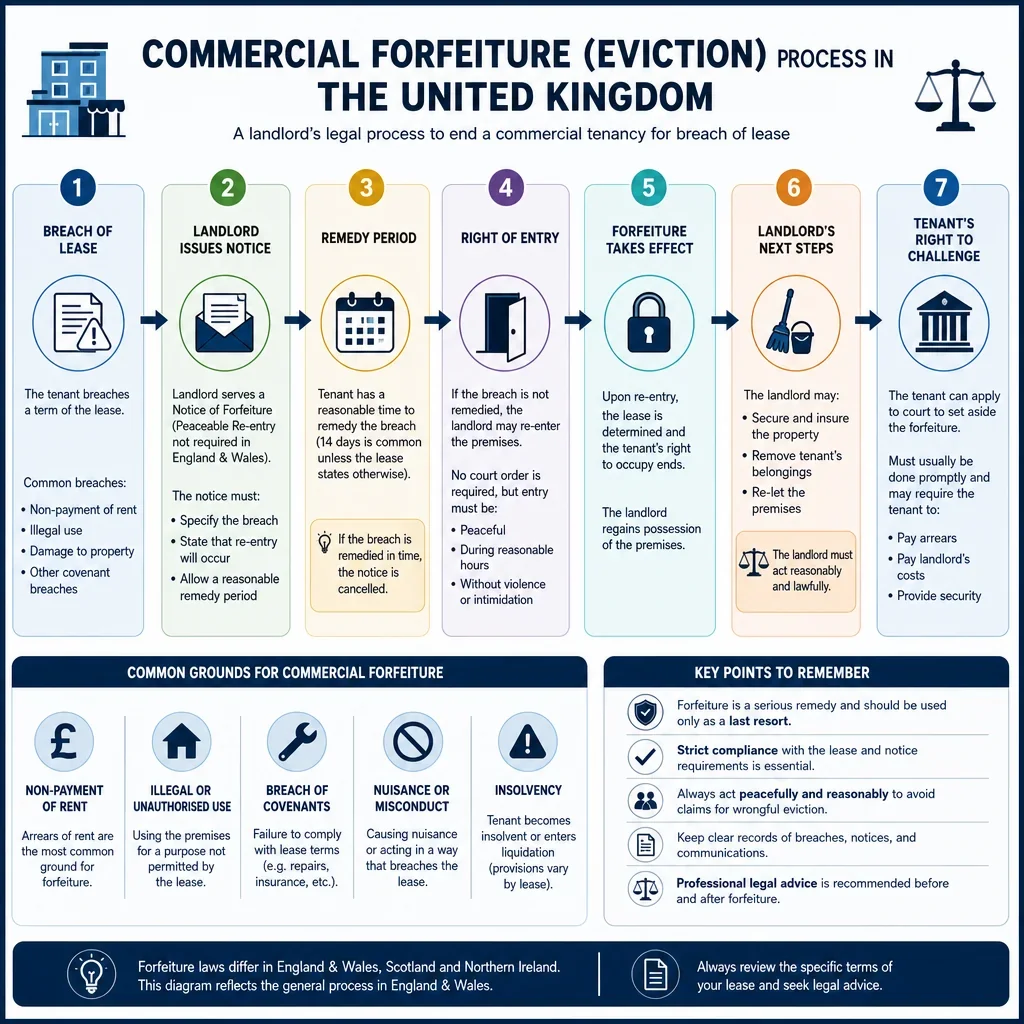
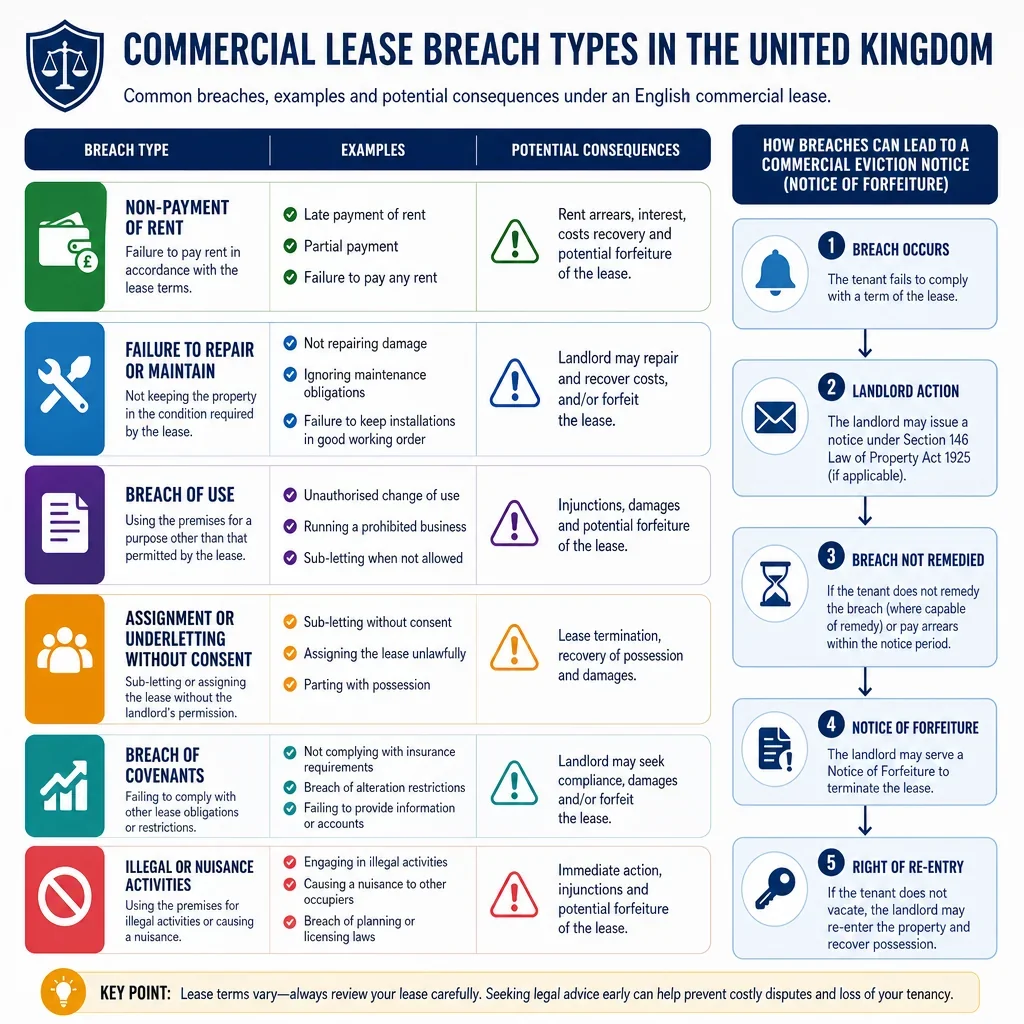
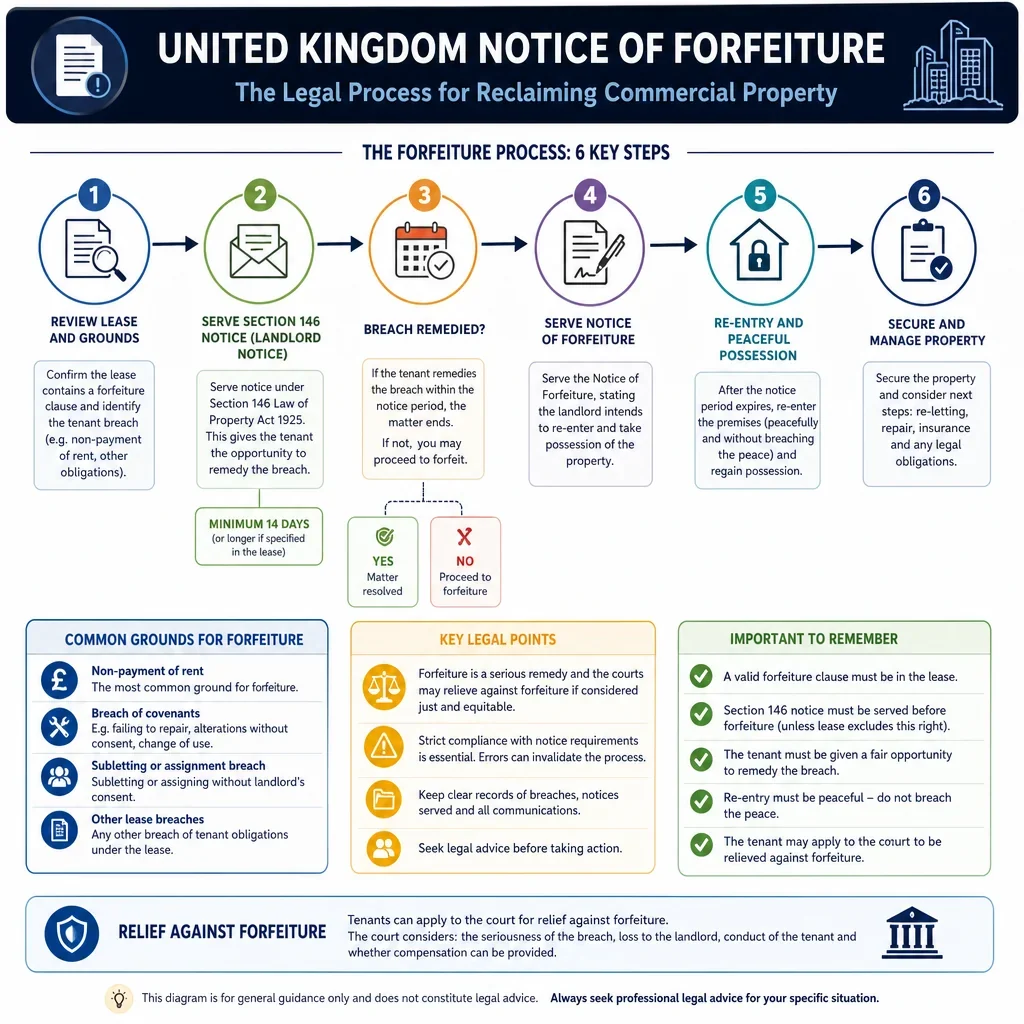
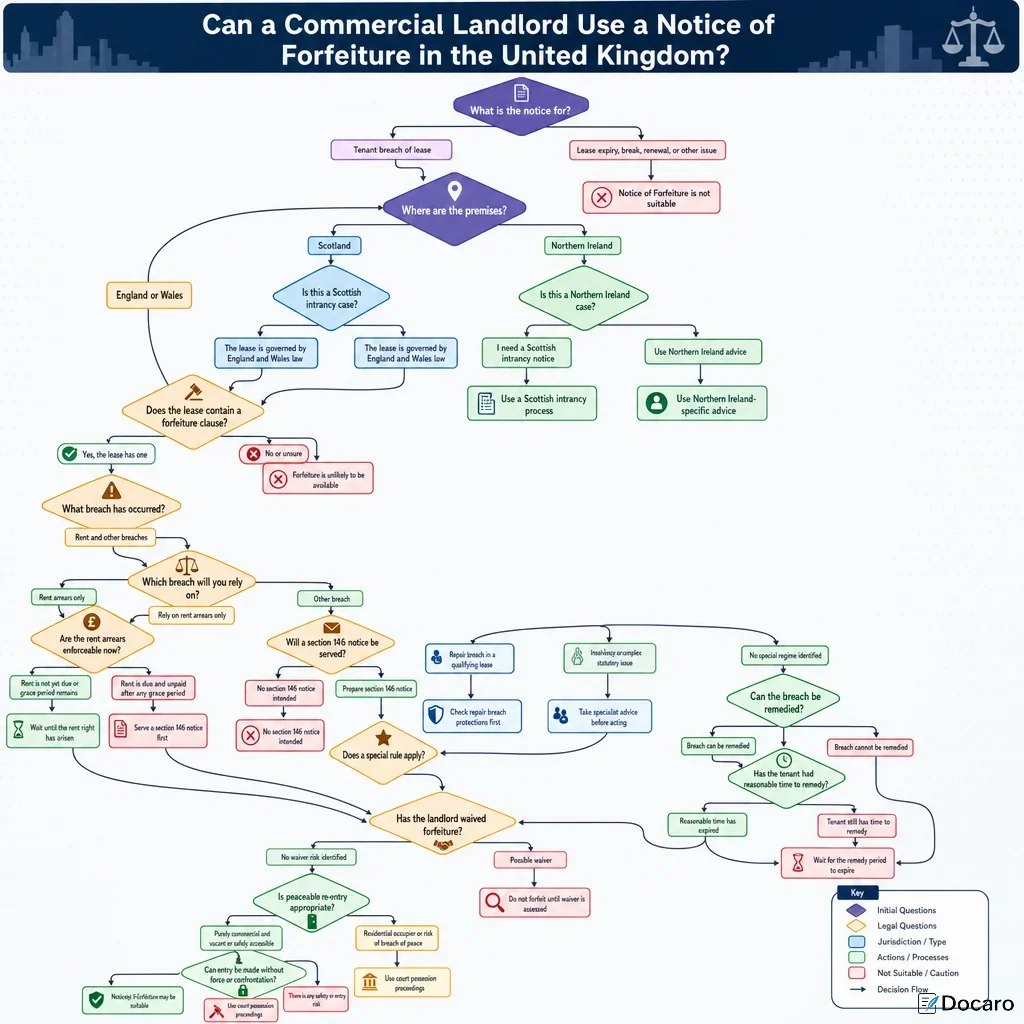
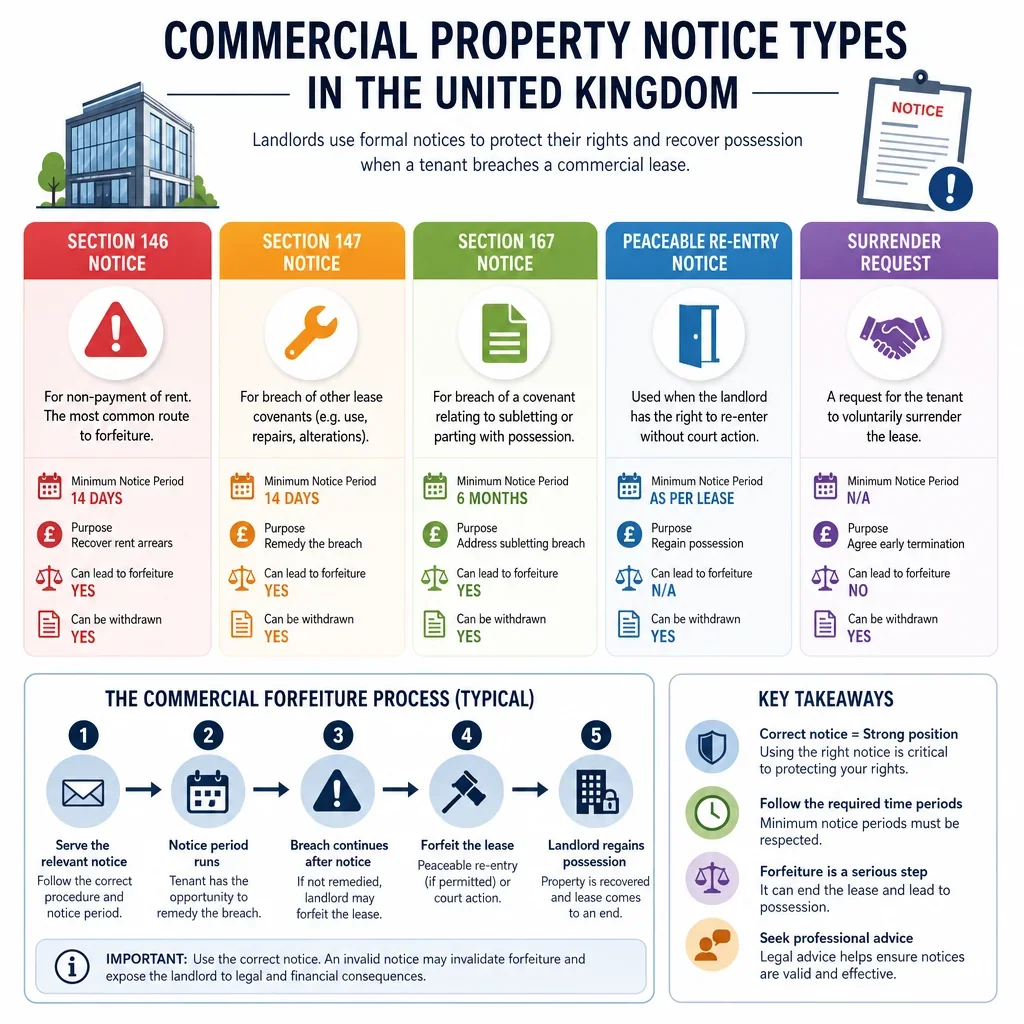
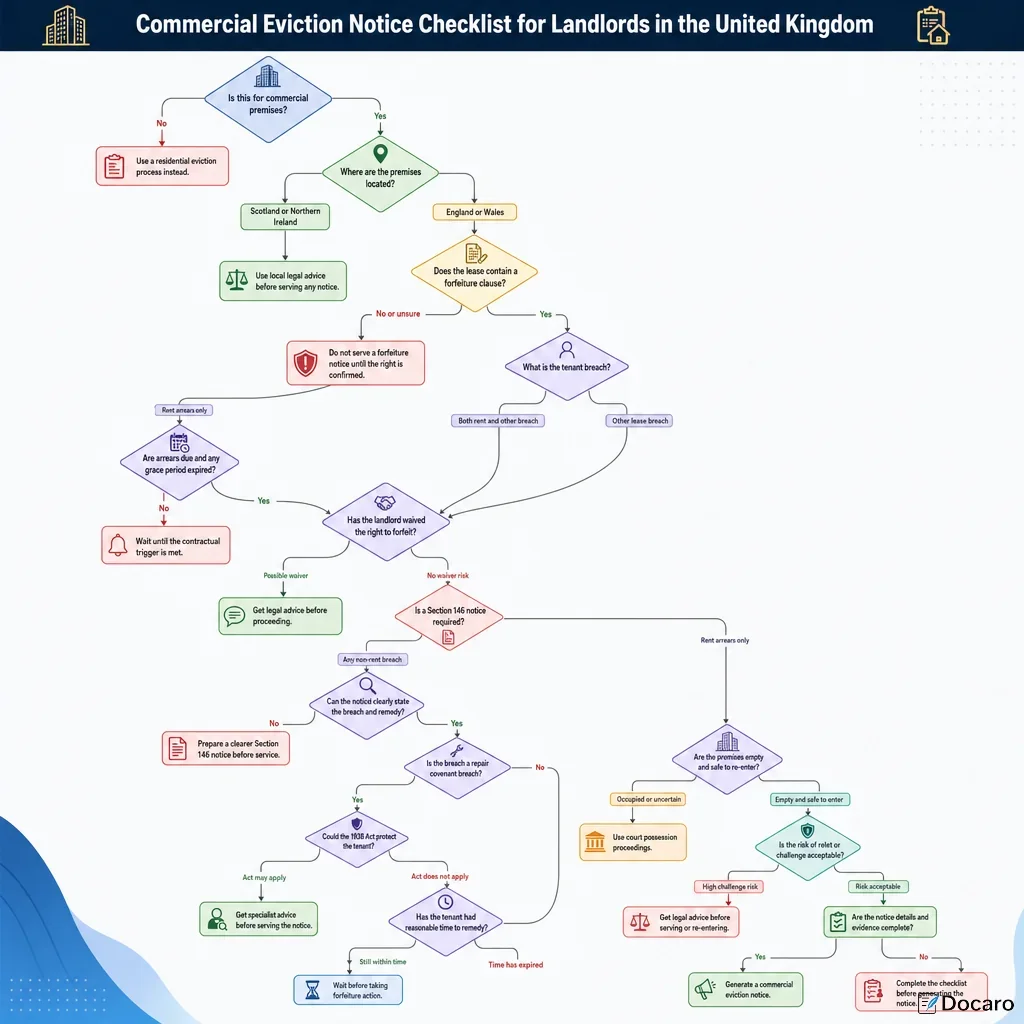
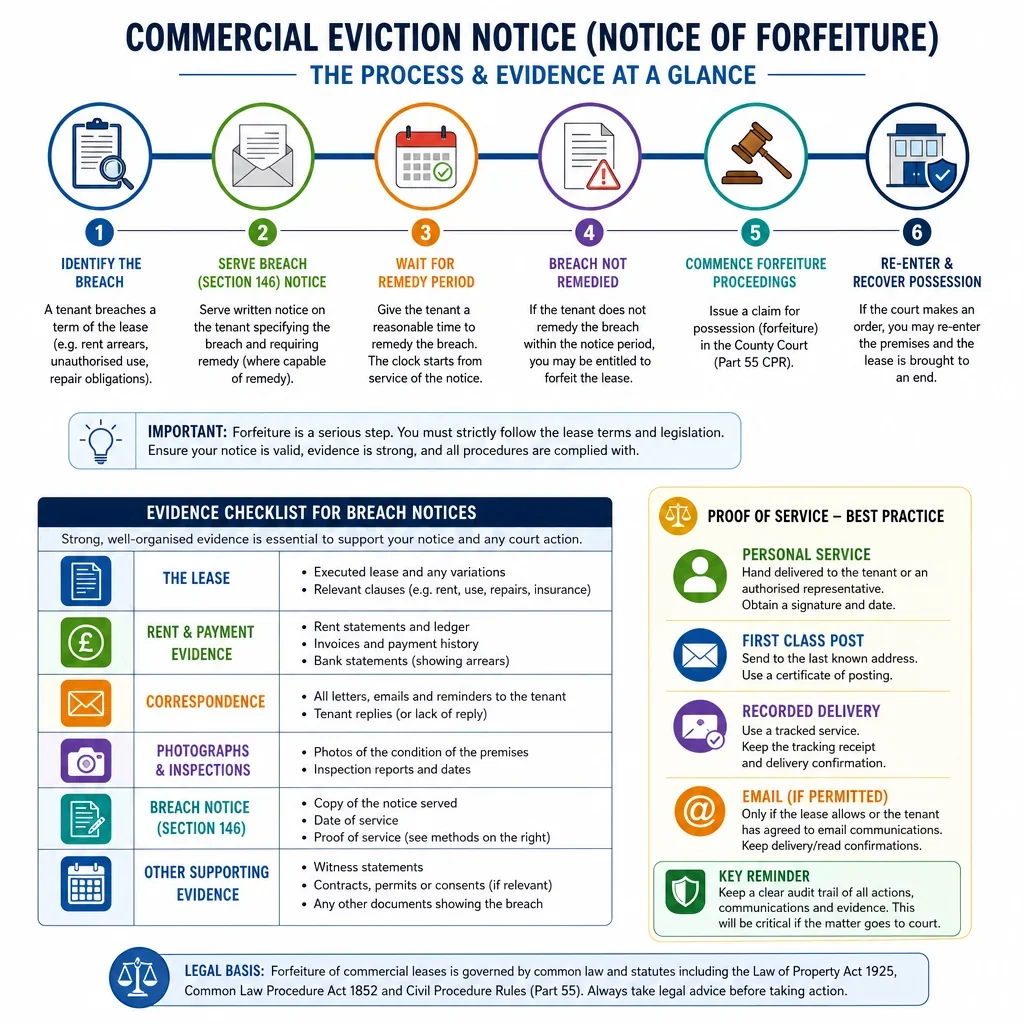
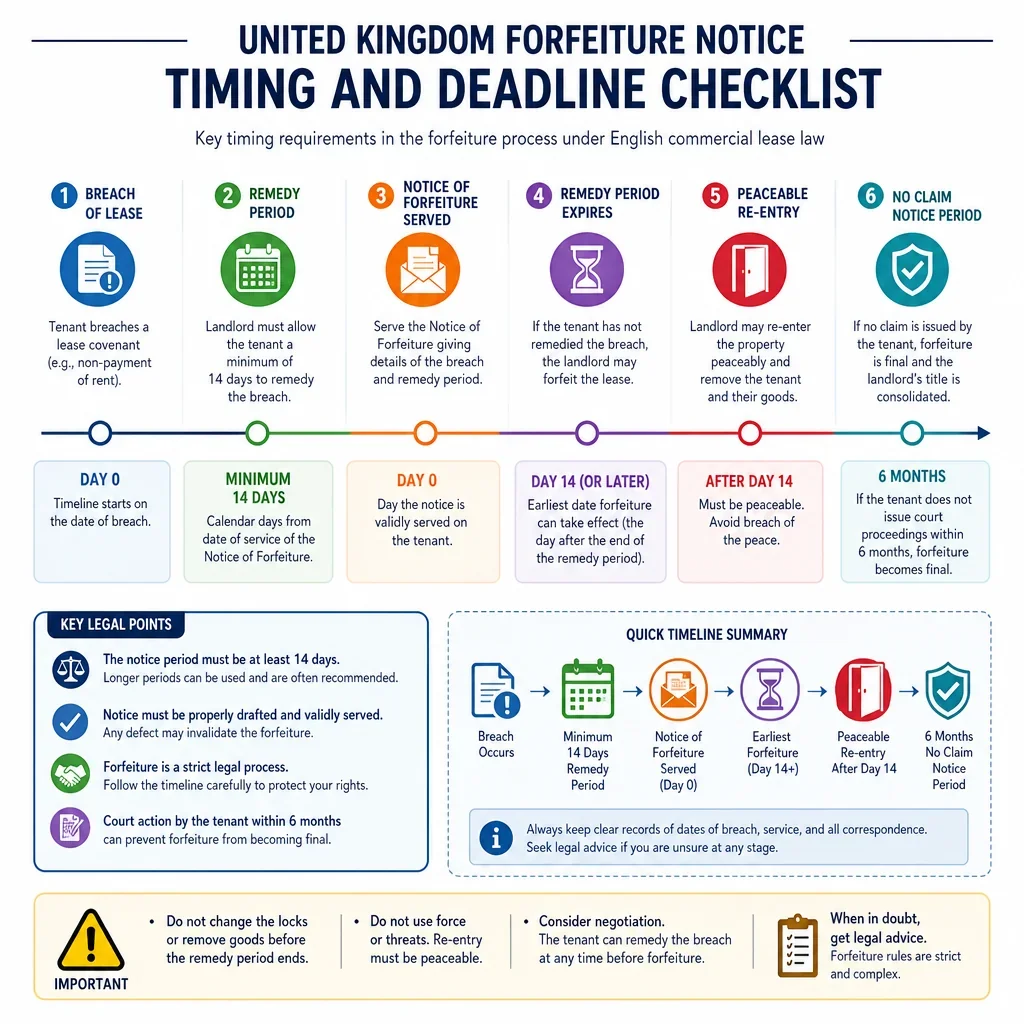
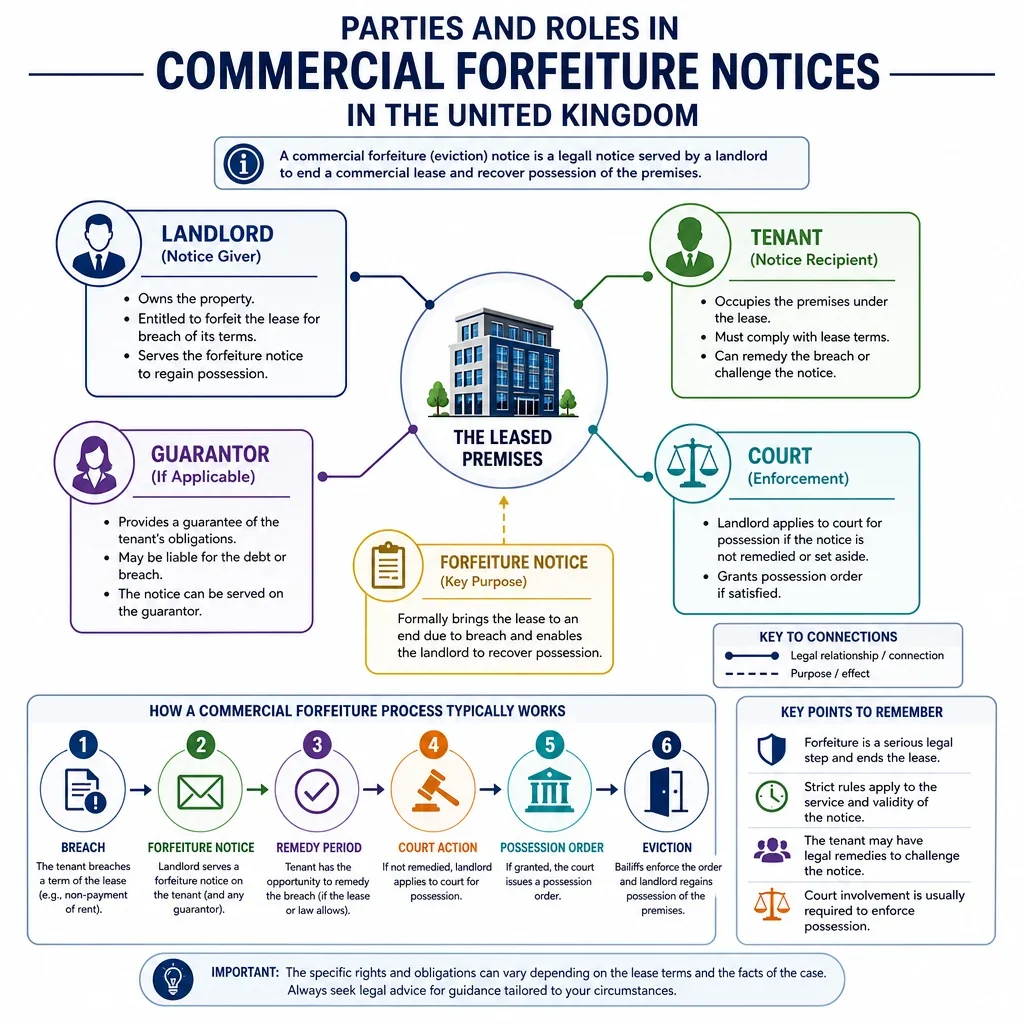
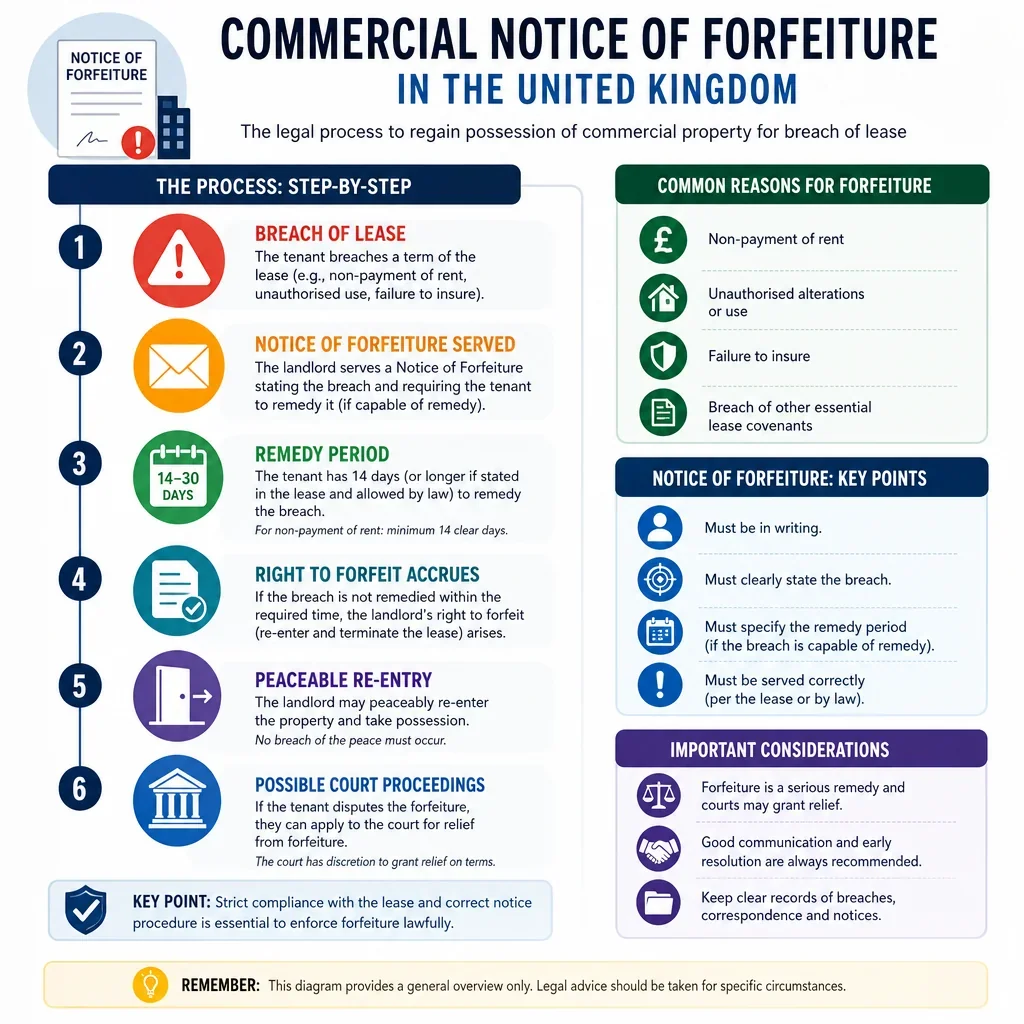
Before preparing a Notice of Forfeiture or a section 146 notice, the lease should be checked for an express forfeiture clause, the exact breach relied on, any notice service rules, and any clauses requiring the landlord to give time to remedy. For most non-rent breaches, section 146 of the Law of Property Act 1925 requires a notice specifying the breach, requiring it to be remedied if capable of remedy, and requiring compensation where appropriate.
When Can Non-Payment Of Rent Be Treated Differently?
Non-payment of principal rent is commonly treated differently from other breaches because a section 146 notice is generally not required for rent arrears. However, the lease wording still matters: it may define rent to include service charge, insurance rent and interest, and may set a grace period before forfeiture is available.
Why Do Repair, User And Alienation Clauses Need Careful Drafting?
Repair, unlawful use, assignment, underletting and sharing occupation clauses often require precise drafting because the notice should identify the covenant broken and the facts relied on. Some breaches may be capable of remedy, which affects the wording and timing of the notice.
Why Is Service Of The Notice A Key Risk?
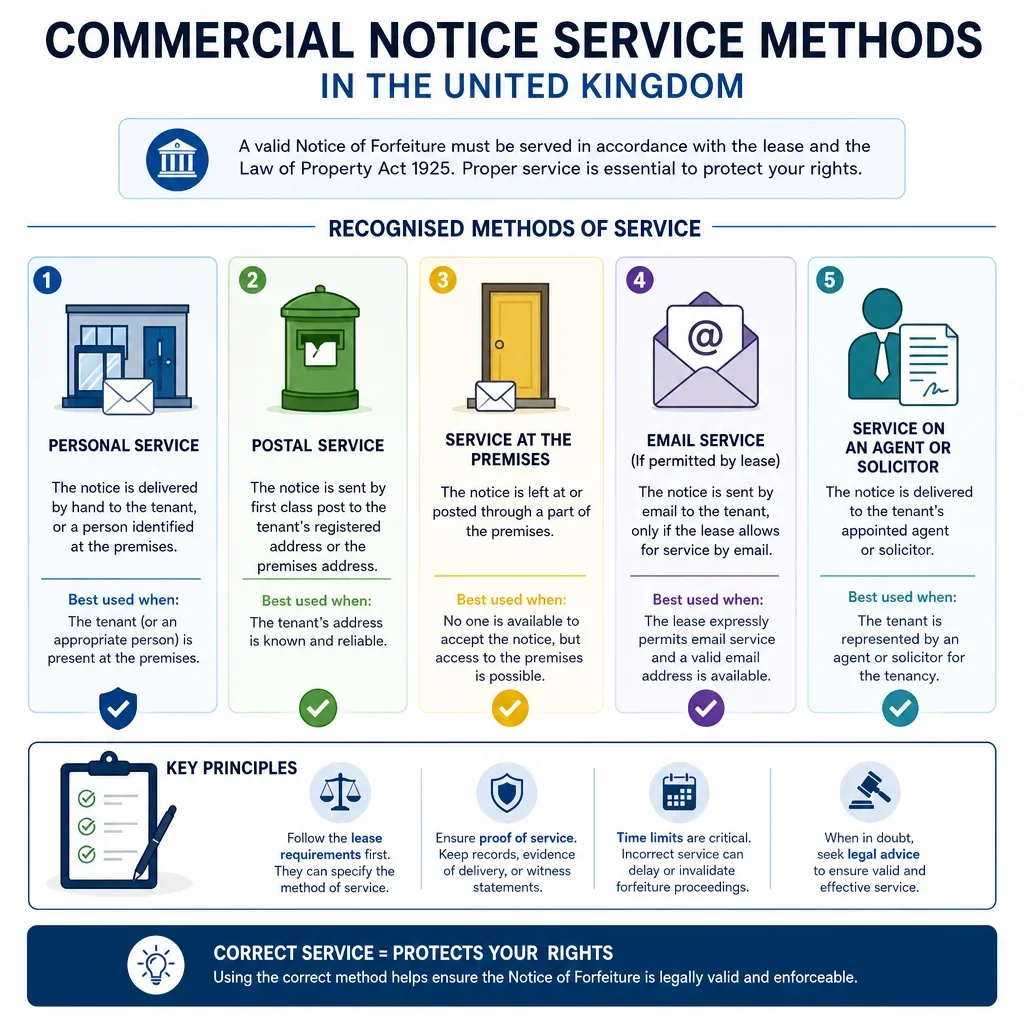
The notice clause should be checked for permitted service methods, addresses, deemed service rules and whether email is allowed. Defective service can undermine enforcement, so the lease notice machinery and any statutory service rules should be followed carefully.
You Might Also Be Interested In