Key Clauses For A Commercial Lease In The United Kingdom
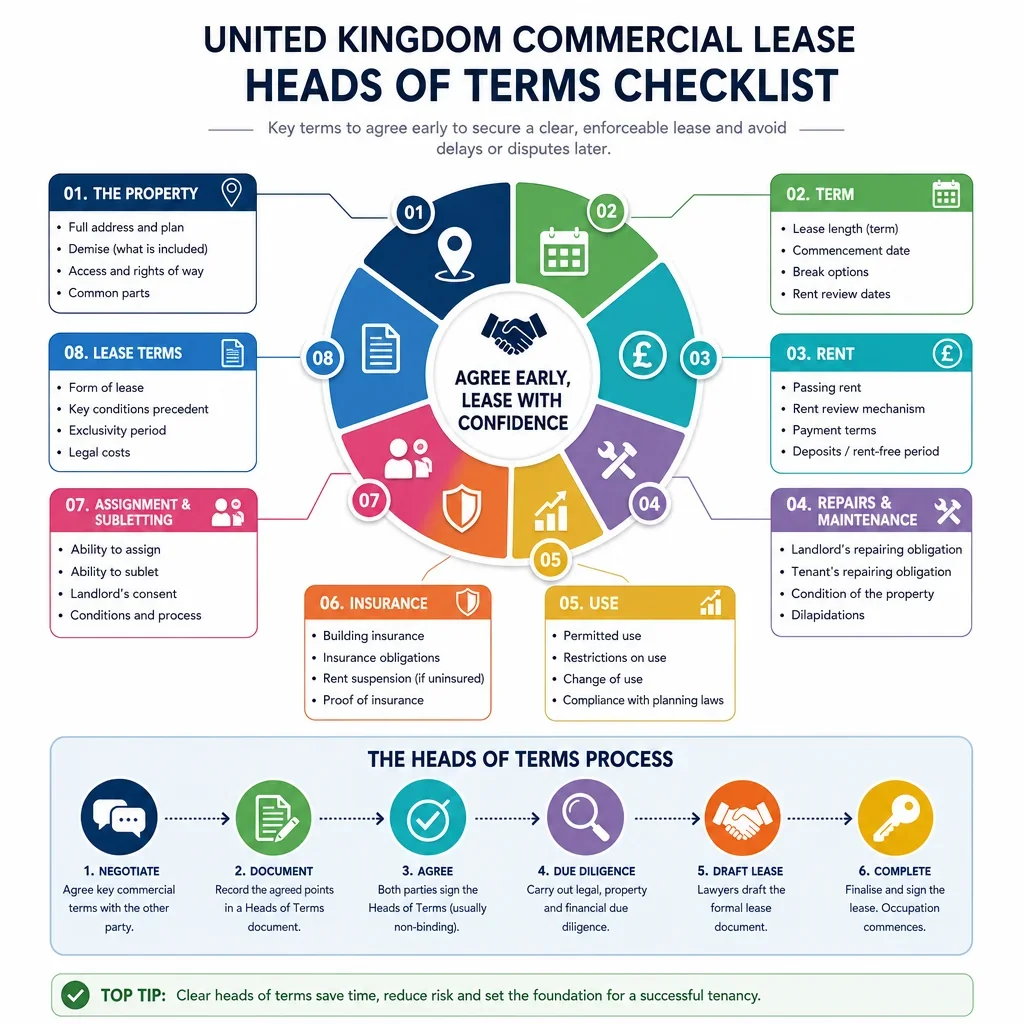
Have the parties agreed heads of terms?
Why Are Commercial Lease Clauses Important In The United Kingdom?
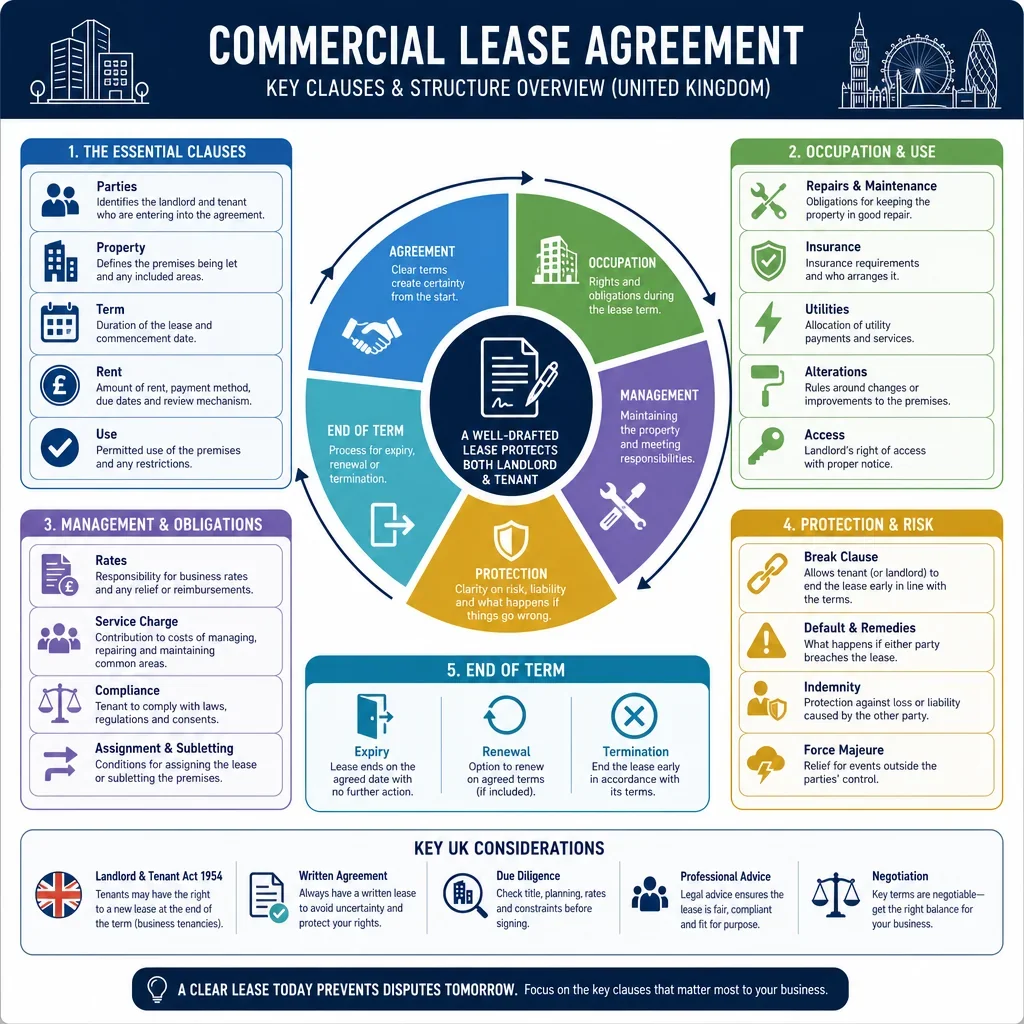
A commercial lease is more than a property agreement. It allocates long-term legal, financial and operational risk between a landlord and tenant. In the United Kingdom, the right clauses can affect rent liability, repair costs, renewal rights, tax filing, property registration and the ability to trade from the premises.
What Happens If A Commercial Lease Is Missing Key Clauses?
Missing or unclear clauses can lead to disputes about service charges, repairs, insurance, break rights, permitted use or statutory compliance. A tenant may unexpectedly inherit expensive repair obligations, while a landlord may lose control over occupation, alterations or renewal strategy.
Why Does The 1954 Act Matter For Business Tenancies?
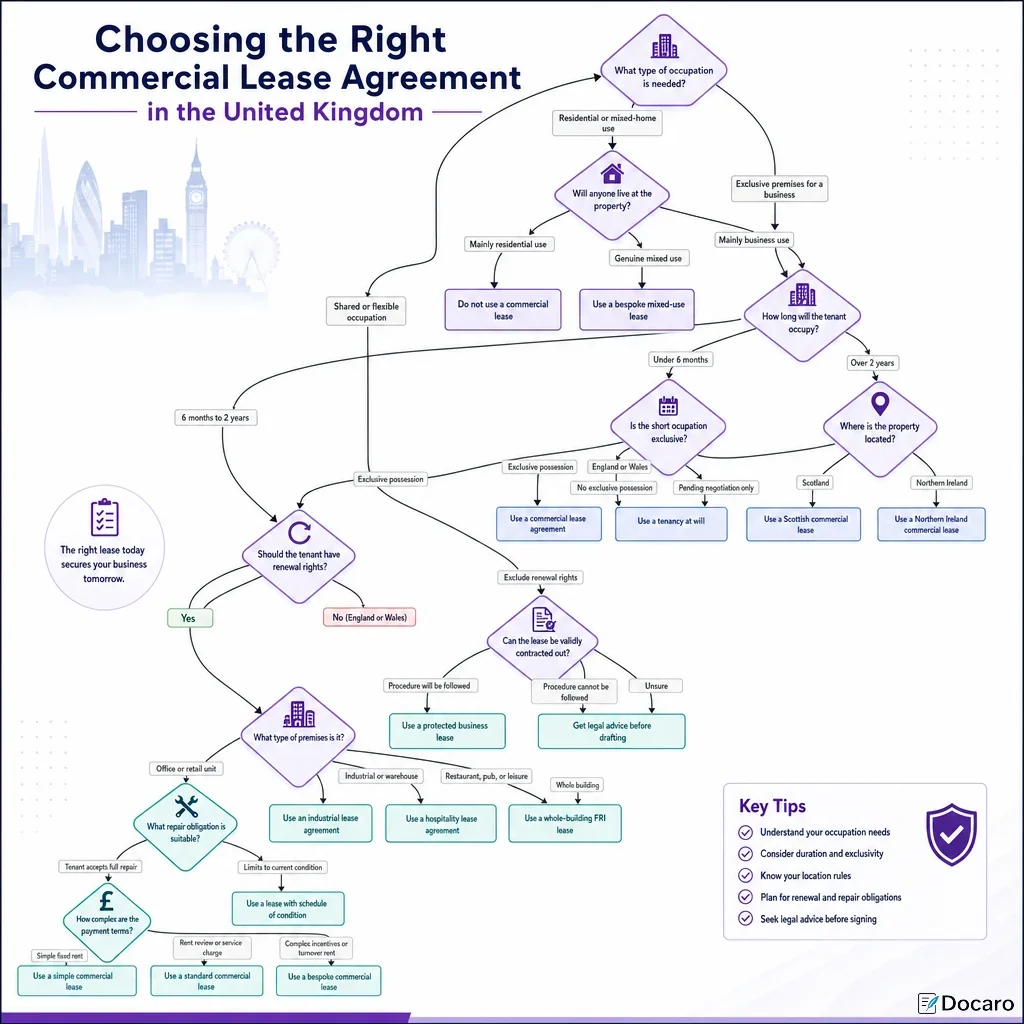
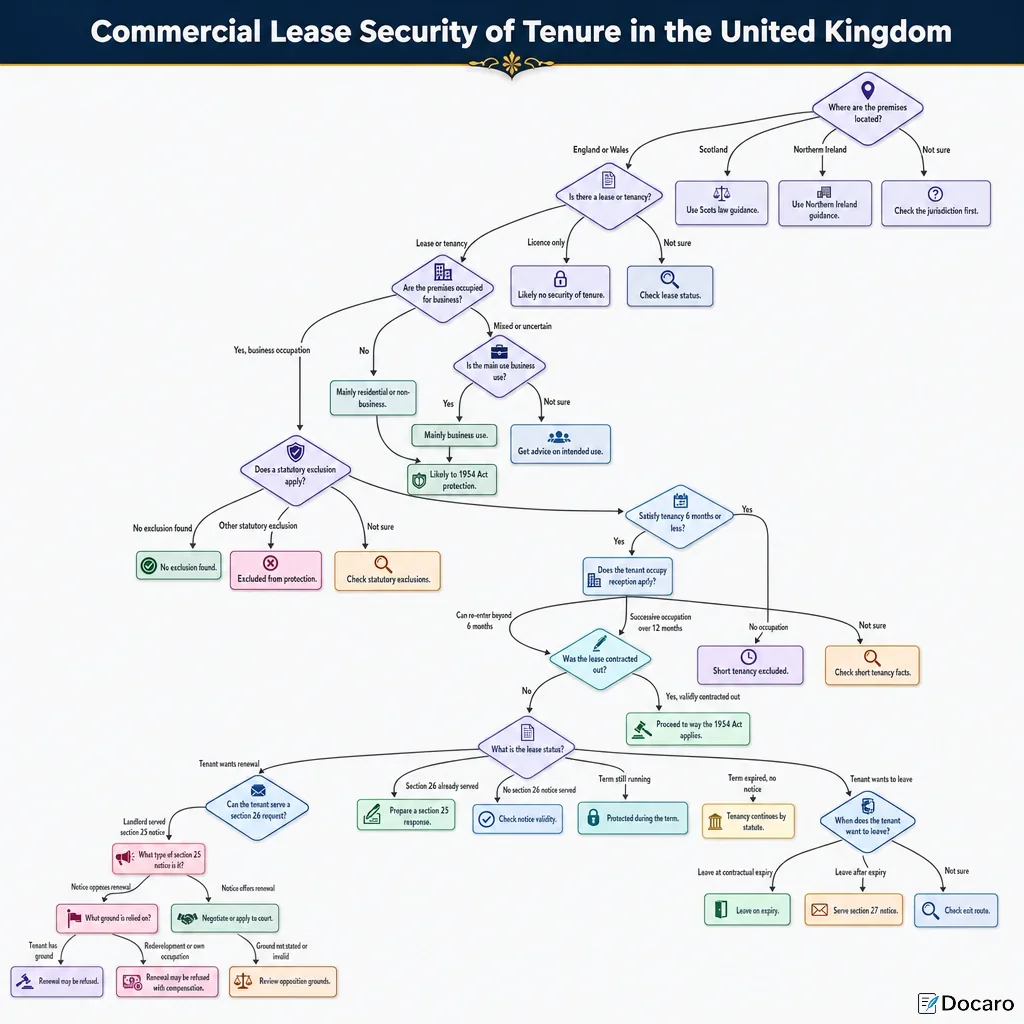
For premises in England and Wales, the Landlord and Tenant Act 1954 can give business tenants renewal rights unless the lease is validly contracted out. This decision should be made before the lease is granted because it affects possession, investment value and bargaining power at the end of the term.
Why Should Rent, Repair And Service Charge Terms Be Clear?
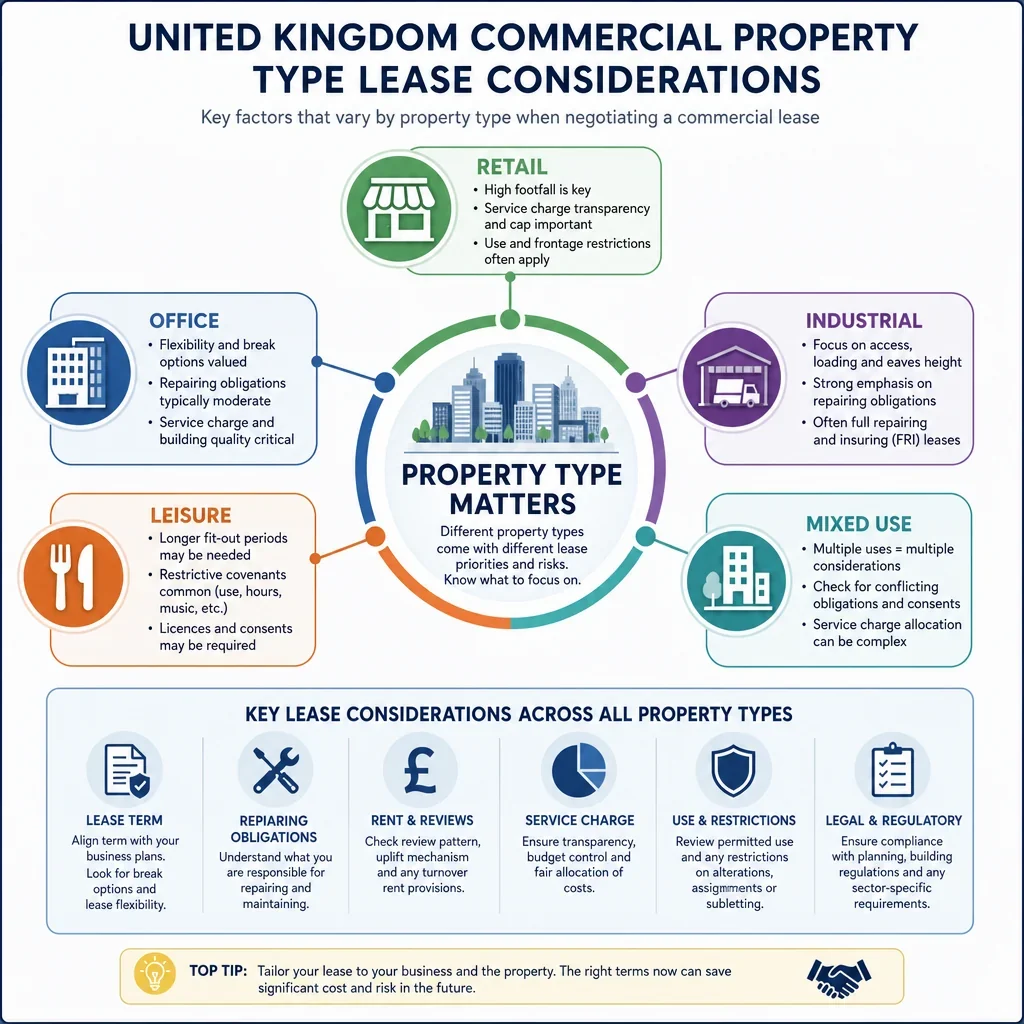
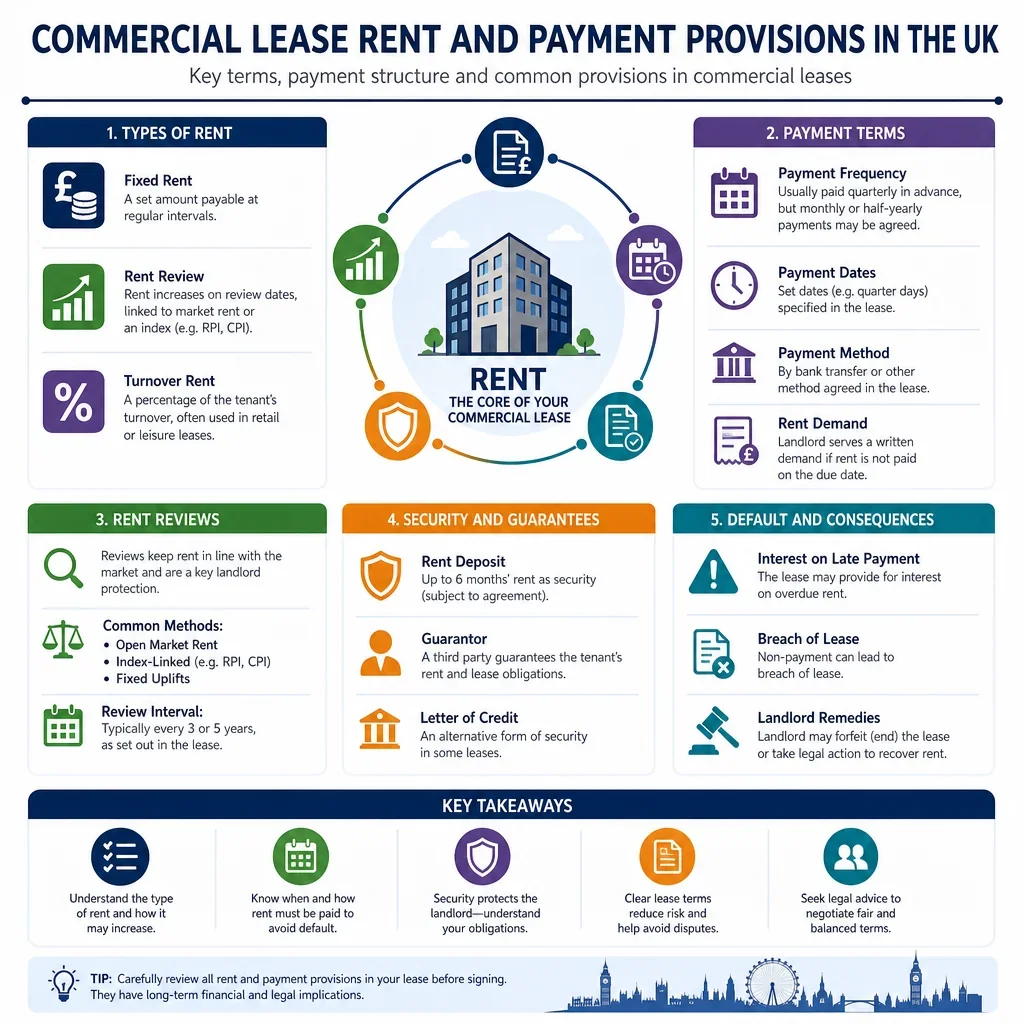
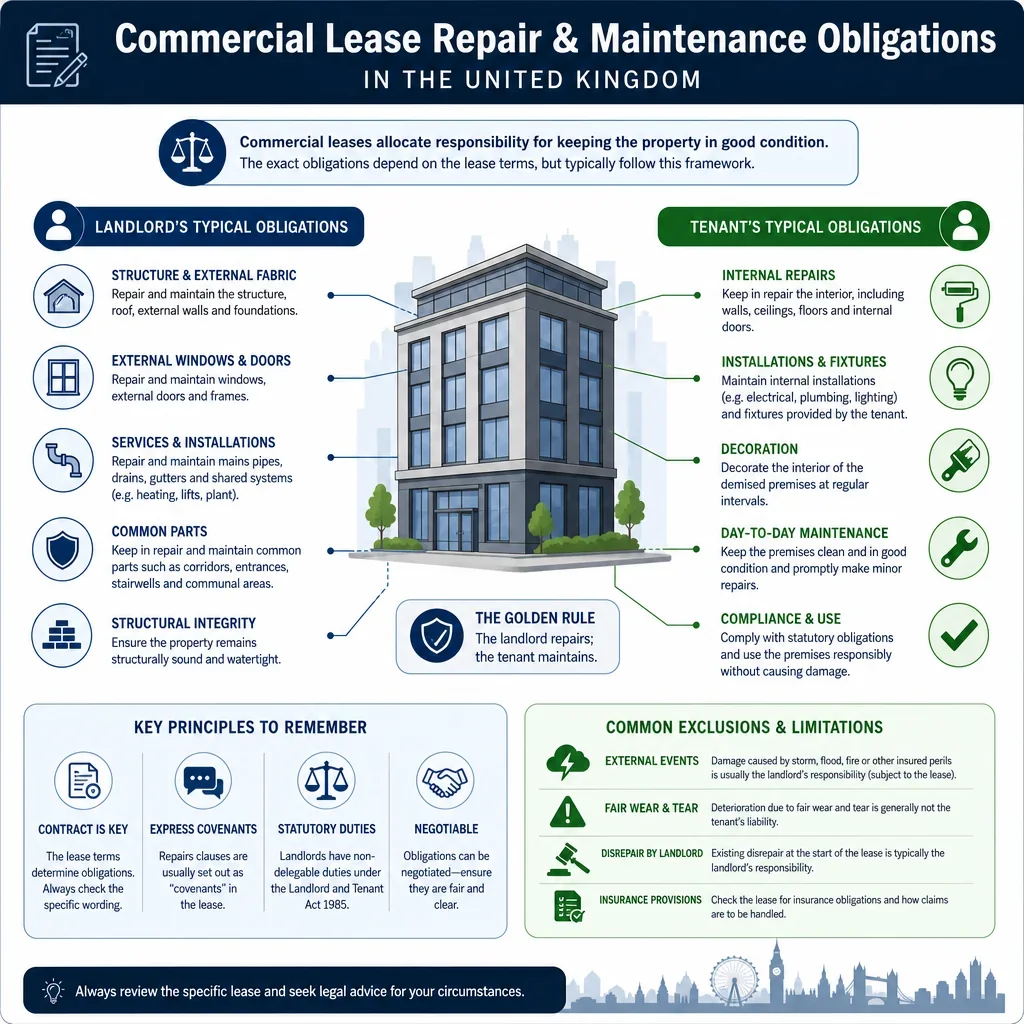
Rent review, repair and service charge clauses are common sources of commercial lease disputes. Clear drafting helps both parties understand the real cost of the lease, including shared building costs, insurance premiums, reinstatement works and future rent increases.
Do UK Commercial Leases Have Tax And Registration Issues?
Yes. Commercial leases may require Stamp Duty Land Tax in England and Northern Ireland, while Scotland and Wales use separate property tax regimes. Longer leases in England and Wales may also need registration at HM Land Registry.
How Does A Good Lease Support Business Certainty?
A well-structured lease helps the tenant operate the business and helps the landlord protect the property. Before generating or signing a commercial lease, the parties should confirm:
- Premises: the property, plans and rights are clear.
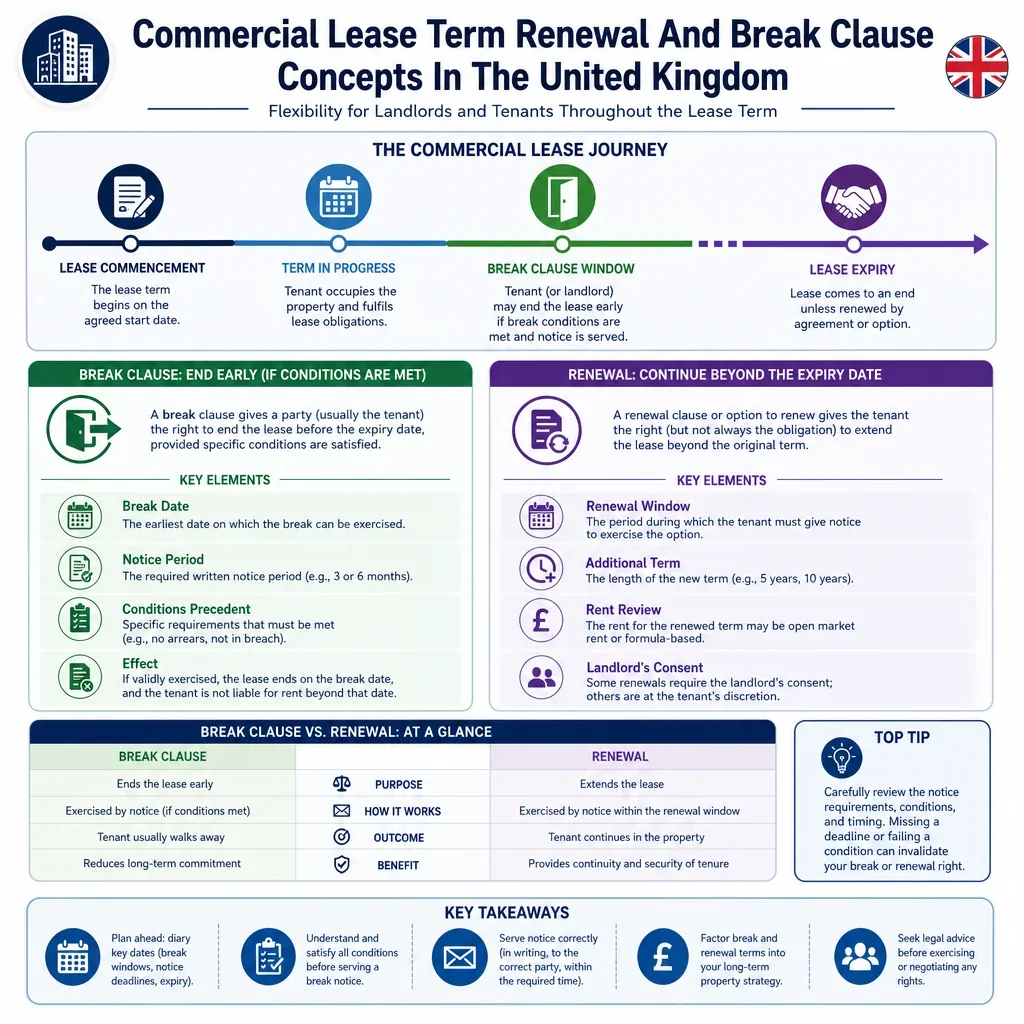
- Term: length, renewal rights and break options are agreed.
- Money: rent, VAT, service charge, insurance and tax are understood.
- Risk: repair, compliance, damage and security obligations are allocated.
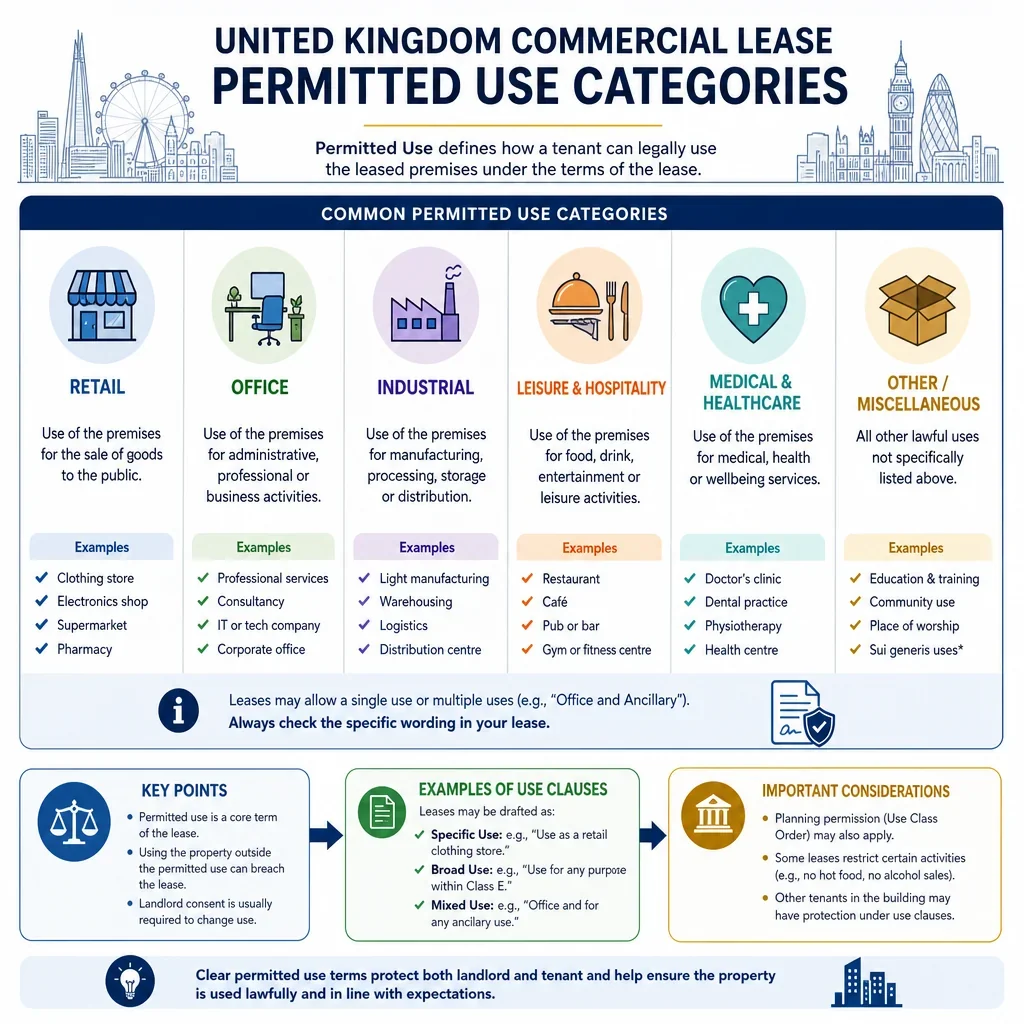
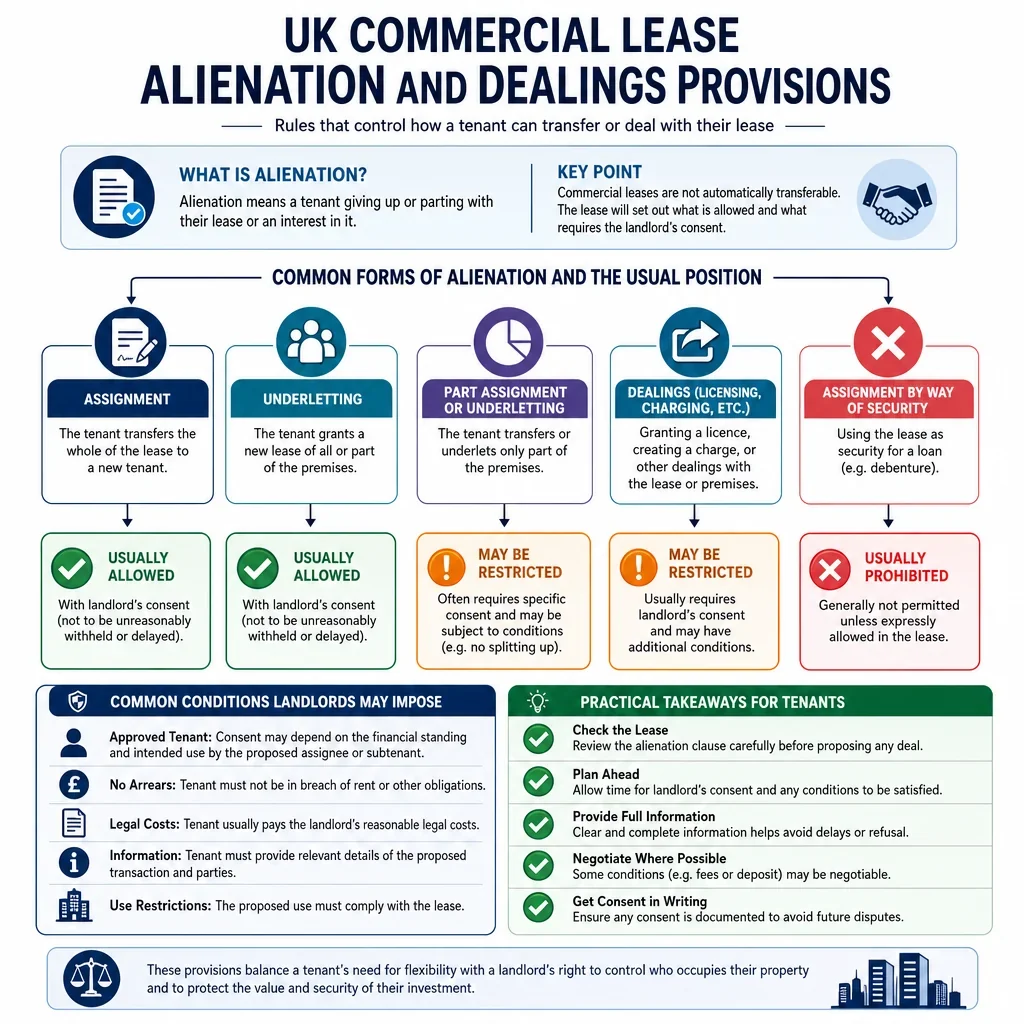
- Flexibility: use, alterations, assignment and underletting are addressed.
Making these decisions correctly helps produce a lease that reflects the actual commercial bargain and reduces the risk of costly UK property disputes.

FAQs
You Might Also Be Interested In