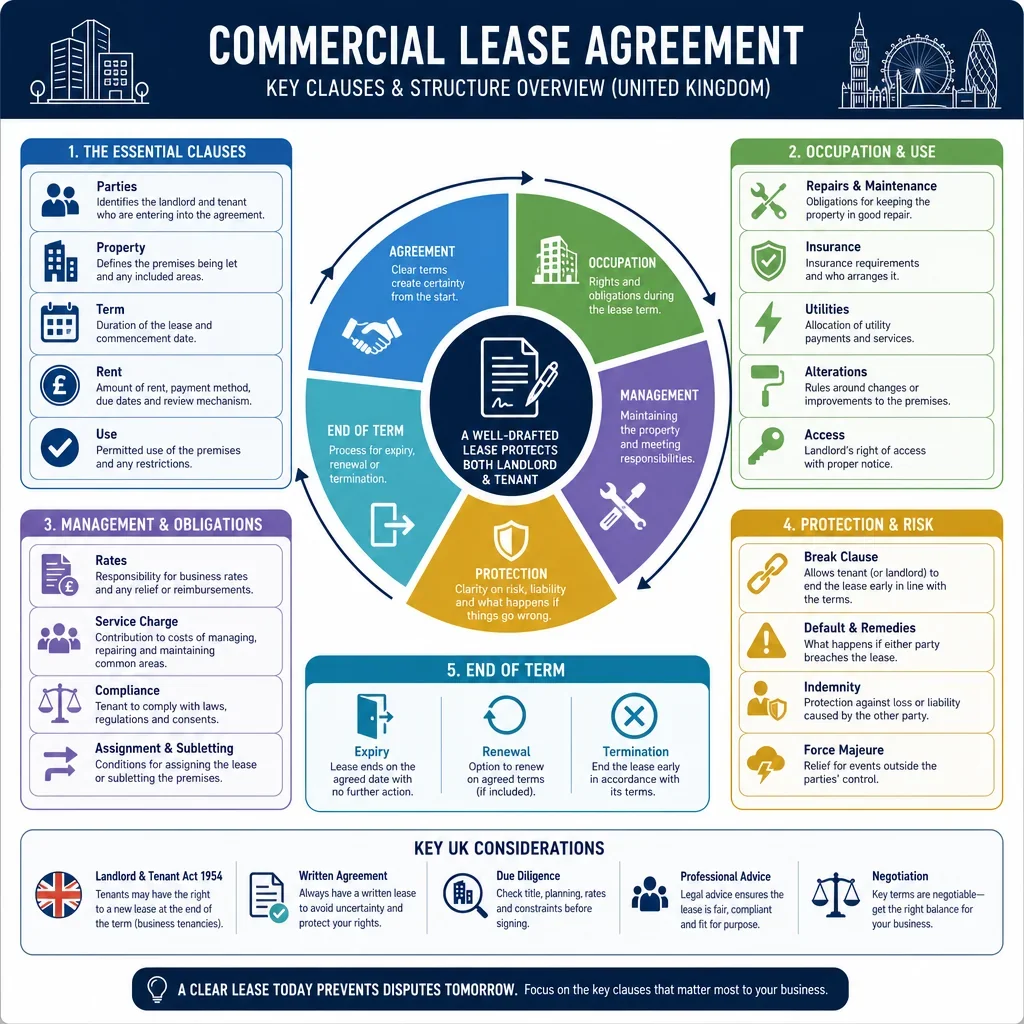
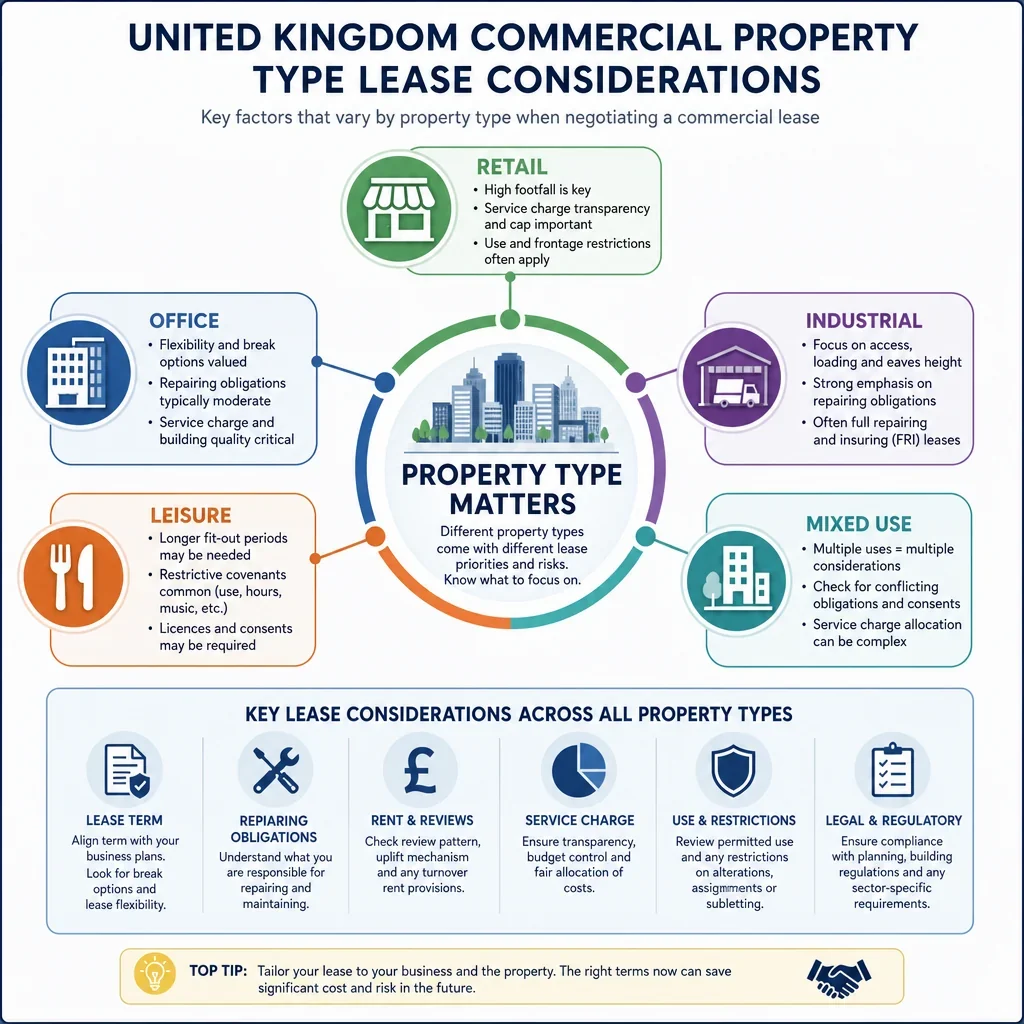
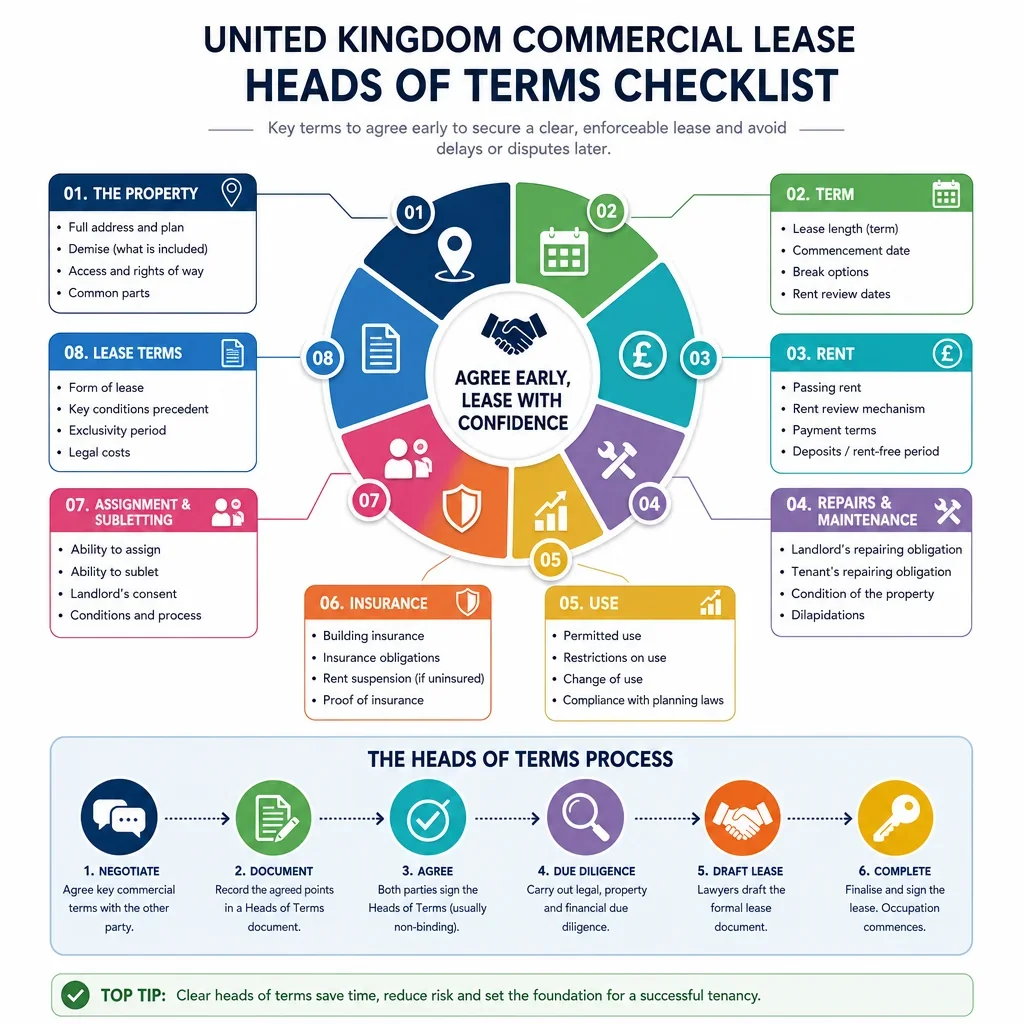
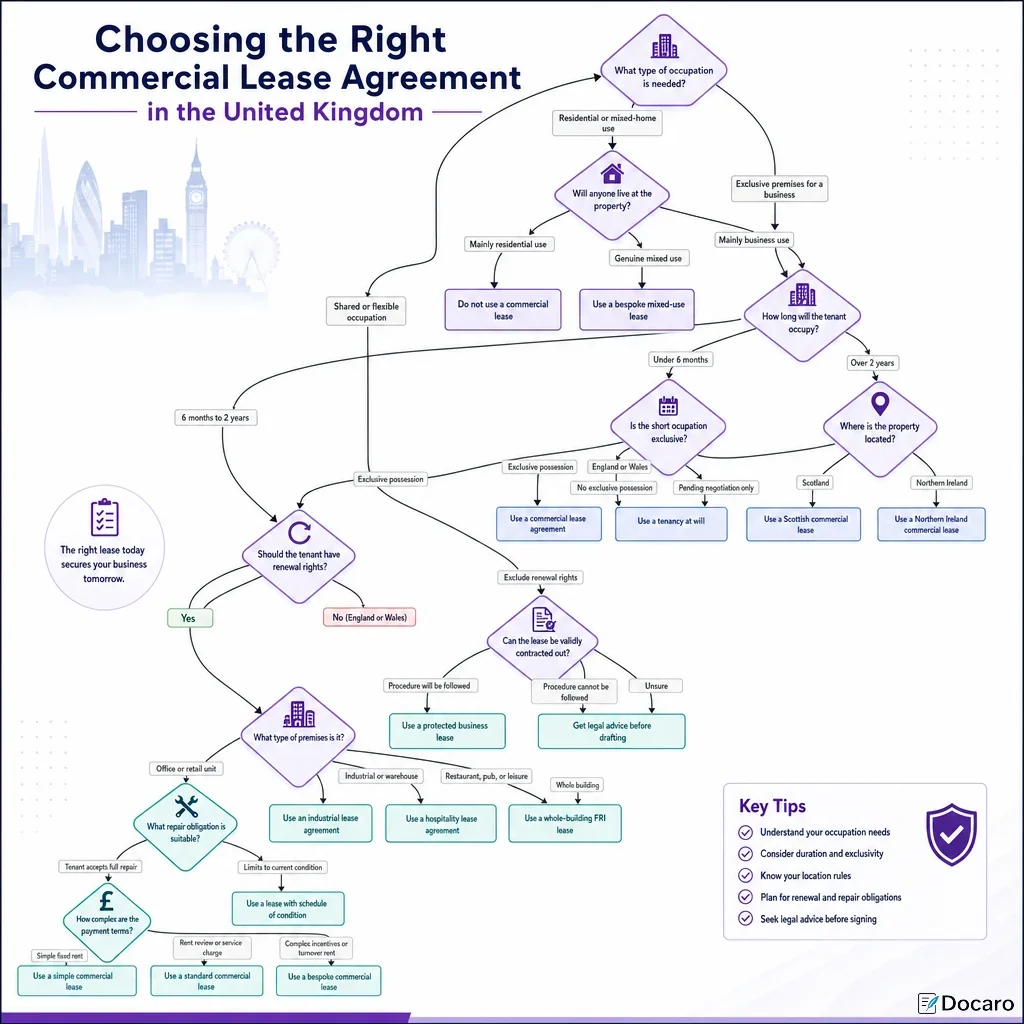
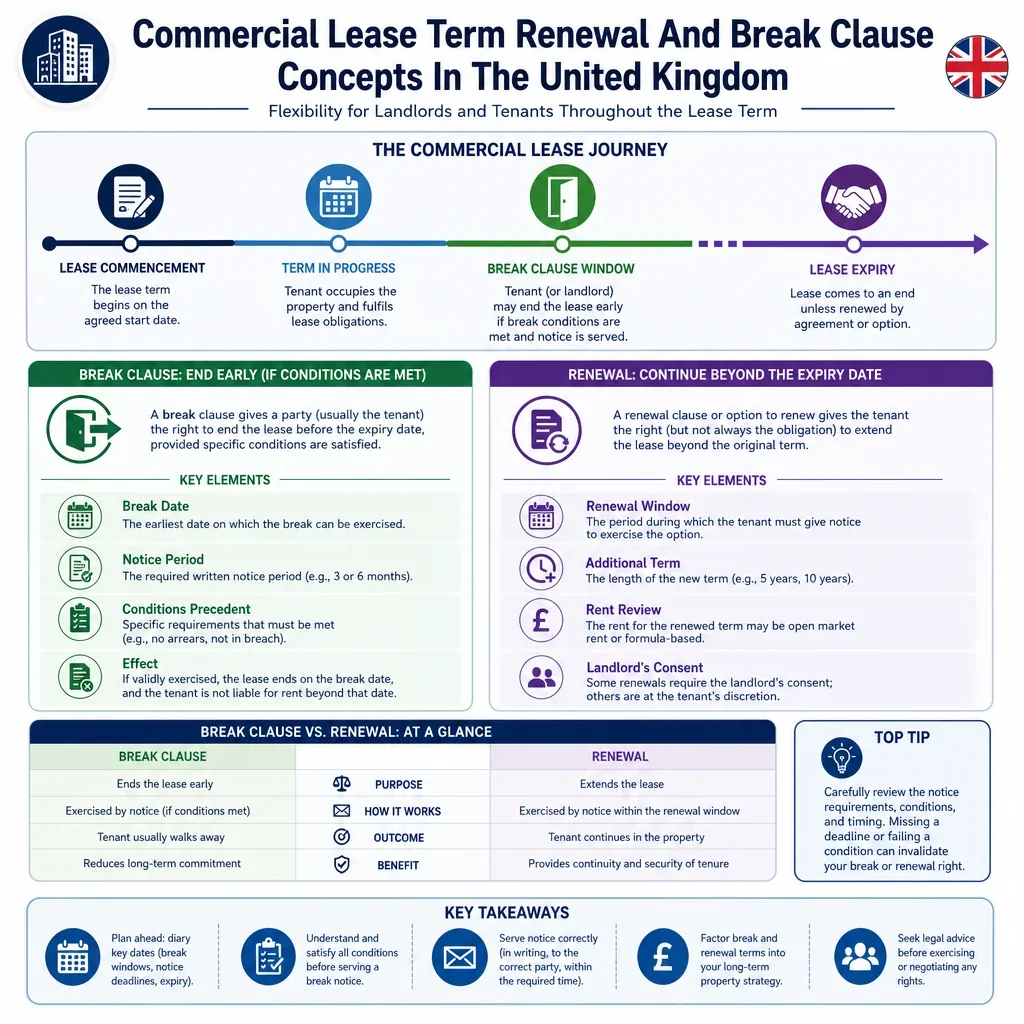
Commercial Lease Term Renewal And Break Clause Concepts In The United Kingdom
Timing concept | Explanation | Affected party | Date or notice details | Drafting issues |
|---|---|---|---|---|
Term length | ||||
Fixed term | A lease granted for a set period it defines the basic duration of occupation and liability. | Both parties | Commonly 1, 3, 5, 10 or 15 years from the commencement date. | State clear start and end dates, not only a length of years. |
Contractual term | The period expressly agreed in the lease, before any statutory continuation or holding over. | Both parties | Runs from commencement until contractual expiry unless ended earlier. | Avoid conflict between term clause, particulars and rent commencement date. |
Commencement date | The date the lease term starts it drives expiry, break and review dates. | Both parties | May be completion date, fixed calendar date or access date. | Distinguish from date of lease and rent commencement date. |
Date of lease | The date the lease is executed or completed it may differ from the start of the term. | Both parties | Usually completion date stated at the start of the deed. | Do not use it accidentally as the commencement date. |
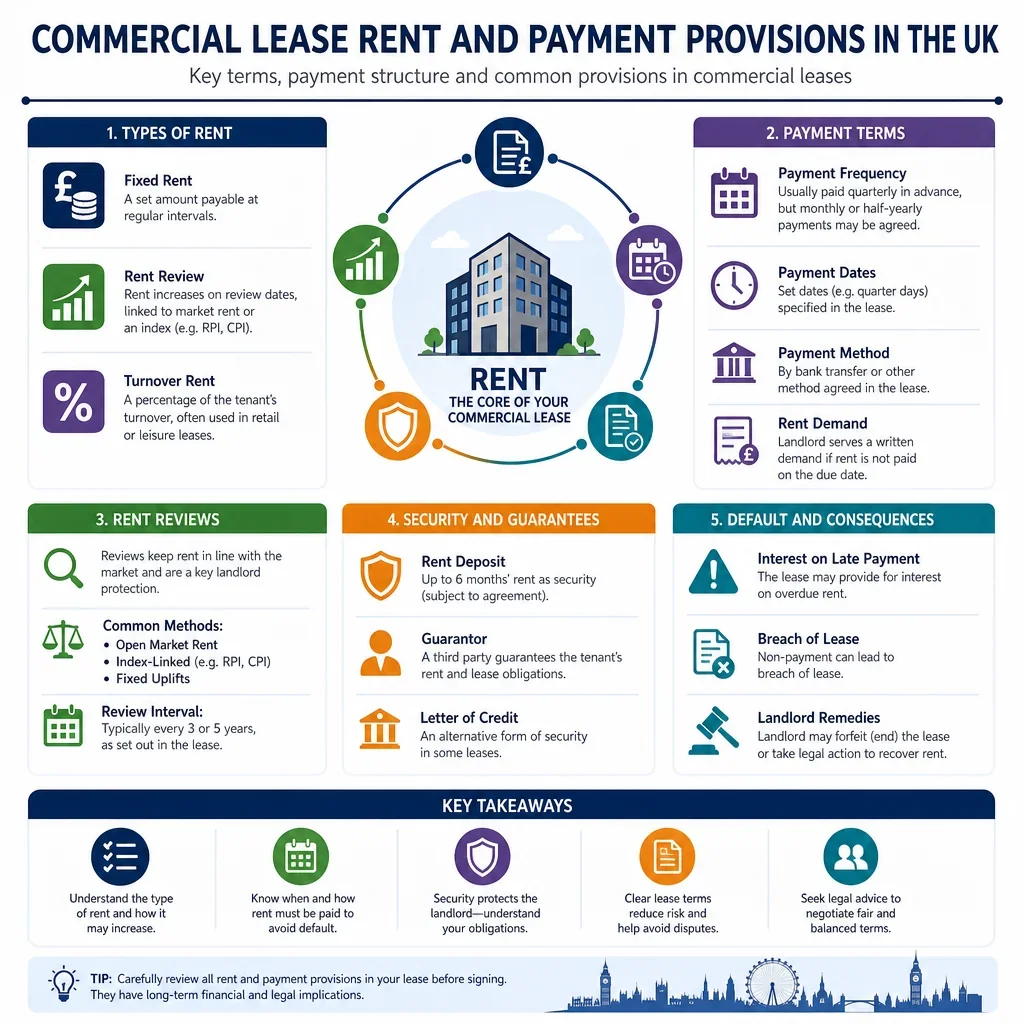
Rent commencement date | The date rent first becomes payable, often after a rent-free period. | Tenant | Often completion date plus agreed rent-free period. | Clarify whether insurance rent and service charge are also suspended. |
Rent-free period | An initial period when principal rent is not payable, often for fit-out or incentive purposes. | Tenant | Often measured in weeks or months from completion. | State whether it ends early if the tenant assigns or breaches. |
Expiry and termination | ||||
Expiry date | The contractual end date of the lease if no renewal, break or surrender occurs. | Both parties | Usually last day of the agreed term. | Confirm whether the stated expiry includes or excludes the final day. |
Natural expiry | The lease ends by passage of time rather than notice, forfeiture, surrender or break. | Both parties | Occurs automatically at contractual expiry, subject to statutory continuation. | Check 1954 Act protection before assuming vacant possession is due. |
Term length | ||||
Term certain | A lease term with a certain maximum duration, required for a valid lease. | Both parties | Must be ascertainable at the grant date. | Avoid uncertain wording such as term lasting until an unknown event only. |
Expiry and termination | ||||
Periodic tenancy | A tenancy continuing from period to period, commonly monthly or quarterly, until notice ends it. | Either party | Notice usually aligns with the tenancy period. | State period, rent days and notice length expressly. |
Tenancy at will | A flexible occupation arrangement terminable immediately by either party. | Either party | Usually no fixed term and no notice period. | Avoid conduct suggesting a periodic tenancy or protected lease. |
Term length | ||||
Licence period | A permission to occupy for a stated time without granting exclusive possession as tenant. | Both parties | Often short-term or terminable on short notice. | Label is not decisive avoid exclusive possession if no lease intended. |
Break rights | ||||
Tenant break option | A contractual right for the tenant to end the lease early on stated terms. | Tenant | Often exercisable on a fixed break date with 3 to 12 months notice. | List conditions clearly and avoid open-ended compliance requirements. |
Landlord break option | A contractual right for the landlord to end the lease early, often for redevelopment or own occupation. | Landlord | Usually tied to specified dates or events with advance notice. | Consider compensation, 1954 Act rights and redevelopment evidence. |
Mutual break clause | A break right available to both landlord and tenant. | Both parties | Same or different notice periods may apply to each party. | Draft separate conditions for each party if obligations differ. |
Rolling break right | A right to terminate at any time after a specified date, usually on notice. | Either party | For example, any time after year 3 on 6 months notice. | Define whether notice can be served before the rolling period starts. |
Fixed break date | A specific date on which the lease may end if a valid break notice is served. | Either party | Commonly the third or fifth anniversary of the term. | Use an exact calendar date or unambiguous anniversary formula. |
Notice requirements | ||||
Break notice period | The minimum advance notice required to exercise a break right. | Either party | Often not less than 3, 6 or 9 months before the break date. | Specify whether notice must expire on the break date. |
Service of break notice | The formal delivery of a break notice in the manner required by the lease. | Either party | Must be served before the contractual notice deadline. | State permitted methods, addresses and deemed service rules. |
Deemed service | Rules deciding when a notice is treated as received, even if actually delayed. | Either party | Often 1 or 2 working days after posting or delivery. | Align lease wording with postal, personal and electronic service methods. |
Statutory service by post | Section 196 of the Law of Property Act 1925 contains rules for serving property notices. | Either party | Service may be effective by registered post or recorded delivery where applicable. | Expressly incorporate or modify statutory service rules if intended. |
Email notice | A notice sent electronically only safe if the lease expressly permits it. | Either party | Deemed receipt time should be stated, including non-business days. | Name addresses, delivery receipts and fallback postal service. |
Break rights | ||||
Rent paid break condition | A tenant break may depend on rent being paid up to the break date. | Tenant | Payment usually required by the break date or last rent day before it. | Clarify whether only principal rent or all sums must be paid. |
Vacant possession break condition | The tenant may need to give the premises back free of people, goods and legal occupation. | Tenant | Usually required on or before the break date. | Define required physical state and avoid uncertainty over fixtures and chattels. |
Compliance break condition | A break may require the tenant to comply with lease obligations before termination. | Tenant | Compliance usually assessed at the break date. | Avoid requiring full compliance with every covenant, which creates uncertainty. |
Break premium | A sum payable as a condition of exercising a break clause. | Tenant | Often payable when serving notice or by the break date. | State amount, VAT treatment, due date and consequence of late payment. |
Withdrawal of break notice | Once validly served, a break notice is usually irrevocable unless the lease or parties agree otherwise. | Either party | Withdrawal must be agreed before termination takes effect. | State whether withdrawal is allowed and how it must be documented. |
Personal break right | A break right available only to a named party, not automatically to assignees. | Tenant | Operates only while the named tenant remains tenant. | State whether successors, group companies or assignees can use it. |
Notice requirements | ||||
Time of the essence for break | Break deadlines are normally strict late notice may be ineffective. | Either party | Notice must be served by the precise contractual deadline. | Use clear deadline wording and allow enough service time. |
Renewal rights | ||||
1954 Act renewal protection | A qualifying business tenant may remain and seek a new tenancy after contractual expiry. | Tenant | Applies at contractual expiry unless validly terminated under the Act. | State whether the lease is protected or contracted out. |
Contracting out of 1954 Act | The parties can exclude statutory renewal rights if the required warning and declaration procedure is followed. | Tenant | Warning notice and tenant declaration must occur before the lease is entered into. | Include correct endorsement and keep evidence of notice and declaration. |
Simple contracting-out declaration | A tenant declaration used when at least 14 days pass after the landlord warning notice. | Tenant | Made after the warning notice and before lease completion. | Use prescribed form and correct tenant identity. |
Statutory contracting-out declaration | A sworn tenant declaration used where completion is less than 14 days after the warning notice. | Tenant | Sworn before lease completion when 14 days notice is not given. | Ensure it is properly sworn or affirmed before an authorised person. |
Section 25 notice | A landlord notice to end a protected tenancy and either propose or oppose renewal. | Landlord | Must give not less than 6 and not more than 12 months notice. | Use correct prescribed form and specify opposition grounds if opposing. |
Section 26 request | A tenant request for a new tenancy under the 1954 Act. | Tenant | Must propose a start date 6 to 12 months after service. | Cannot be served if landlord has already served a valid section 25 notice. |
Section 26 counter-notice | A landlord notice opposing the tenant's section 26 renewal request. | Landlord | Must be served within 2 months of the section 26 request. | State statutory grounds of opposition clearly and in time. |
Expiry and termination | ||||
Section 27 tenant notice | A protected tenant can terminate by giving notice that it does not wish to continue. | Tenant | At least 3 months notice is generally required after contractual expiry. | Do not confuse statutory termination with a contractual break notice. |
Statutory continuation | A protected business tenancy continues after contractual expiry until ended under the 1954 Act. | Both parties | Continues beyond expiry until statutory notice, agreement or court order. | Lease expiry clause should not imply automatic termination if protected. |
Renewal rights | ||||
Interim rent | Rent payable during statutory continuation while renewal terms are being resolved. | Both parties | Can apply from the appropriate statutory date during renewal proceedings. | Consider cash-flow impact where renewal negotiations extend beyond expiry. |
Notice requirements | ||||
Renewal court deadline | A party may need to apply to court before the statutory termination date to preserve renewal rights. | Tenant | Application deadline is usually before the section 25 or section 26 termination date. | Record any written agreement extending the statutory deadline. |
Renewal rights | ||||
Opposed renewal grounds | The landlord can oppose a protected renewal only on statutory grounds. | Landlord | Grounds must be raised in the statutory notice or counter-notice. | Match notice grounds to available evidence, especially redevelopment or own occupation. |
Unopposed renewal | A protected tenant can obtain a new lease where the landlord does not oppose renewal. | Both parties | Terms may be agreed or decided by the court. | Agree whether renewal lease repeats break and rent review dates. |
Renewal lease term | The duration of a new tenancy granted on renewal. | Both parties | Court may grant a term up to 15 years under section 33. | Consider aligning term with investment, fit-out and break strategy. |
Contractual renewal option | An agreed option allowing a tenant to take a further lease on specified terms. | Tenant | Usually exercisable within a set window before expiry. | State option period, new rent mechanism and conditions to exercise. |
Notice requirements | ||||
Renewal notice window | The period in which a contractual renewal option must be exercised. | Tenant | For example, not earlier than 12 and not later than 6 months before expiry. | Avoid vague phrases such as reasonable notice before expiry. |
Expiry and termination | ||||
Holding over | Occupation continues after contractual expiry, potentially under statute, new tenancy or informal arrangement. | Both parties | Starts after the contractual expiry date if tenant remains in occupation. | Reserve rights and clarify payment basis to avoid unintended new tenancy. |
Tenancy at sufferance | A tenant remains after expiry without consent before the landlord elects how to treat occupation. | Tenant | Arises immediately after unauthorised continued occupation. | Landlord should avoid accepting rent without reserving position. |
Surrender by agreement | The lease ends early because landlord and tenant agree to release each other. | Both parties | Effective on agreed surrender date, usually documented by deed. | Deal with arrears, dilapidations, keys, guarantees and release wording. |
Surrender by operation of law | Conduct of both parties may imply the lease has ended without an express deed. | Both parties | Occurs when conduct is unequivocally inconsistent with continuation. | Avoid informal key return or reletting ambiguity without written terms. |
Forfeiture timing | A landlord may end the lease early for breach if the lease contains a forfeiture clause. | Landlord | For non-rent breaches, section 146 notice is usually required first. | Include re-entry clause and distinguish rent arrears from other breaches. |
Notice requirements | ||||
Notice to quit | A notice used to end a periodic tenancy or certain continuing occupations. | Either party | Often at least one full period, expiring at the end of a period. | Identify tenancy period and termination date accurately. |
Expiry and termination | ||||
Contracted-out expiry | A contracted-out business lease normally ends on contractual expiry without statutory renewal rights. | Tenant | Tenant should vacate by expiry unless a new deal is agreed. | Ensure contracting-out procedure was completed before lease completion. |
Break rights | ||||
Rent review before break | A rent review shortly before a break date can affect whether the break is commercially useful. | Tenant | Review dates often fall every 3 or 5 years. | Align review and break dates so notice can be served with rent risk understood. |
Expiry and termination | ||||
Reinstatement before expiry | The tenant may need time to remove alterations and reinstate before giving back premises. | Tenant | Works often planned months before expiry or break date. | State whether landlord notice to reinstate is required and by when. |
Notice requirements | ||||
Reinstatement notice deadline | The landlord may need to notify the tenant if alterations must be removed. | Landlord | Commonly 3 to 6 months before expiry or break date. | Set a clear latest date for requiring reinstatement. |
Expiry and termination | ||||
Yielding up date | The date the tenant must return the premises in the lease-required condition. | Tenant | Usually expiry date, break date or surrender date. | Coordinate with vacant possession, repair, cleaning and key handover obligations. |
Key handover deadline | Return of keys helps evidence giving back possession at lease end. | Tenant | Usually by the break or expiry time on the termination date. | State place, time and evidence for key return. |
Break rights | ||||
Rent apportionment after break | Addresses whether rent paid beyond a break date is refunded. | Tenant | Relevant where rent is paid quarterly in advance before a break date. | Expressly require repayment if refund is intended. |
Notice requirements | ||||
Quarter day rent timing | Commercial rent is often payable on traditional quarter days, affecting break payments. | Tenant | Common dates: 25 March, 24 June, 29 September and 25 December. | Break clauses should state whether full quarter rent must be paid. |
Term length | ||||
Longstop date | A final date by which a condition, completion or agreement for lease step must occur. | Both parties | Often used for planning, works completion or lease completion deadlines. | State consequences if the longstop is missed, including termination rights. |
Agreement for lease completion deadline | The date by which the parties must complete the lease after preconditions are satisfied. | Both parties | Often completion occurs within 5 to 10 working days after satisfaction notice. | Define satisfaction notice, completion mechanics and failure consequences. |
Early access period | Tenant access before lease commencement, often for fit-out, without full occupational rights. | Tenant | Runs from access licence date until lease commencement. | Clarify insurance, works, termination and whether occupation creates tenancy rights. |
Fit-out period | Time allowed for the tenant to prepare premises before trading or rent starts. | Tenant | Often overlaps with rent-free period or early access licence. | State approvals, working hours and whether delays extend rent-free time. |
Break rights | ||||
Turnover rent break trigger | A break right may arise if turnover targets or trading conditions are not met. | Either party | Measured over defined accounting periods or trading years. | Define turnover, evidence, audit rights and trigger calculation precisely. |
Redevelopment break trigger | A landlord break may be linked to genuine redevelopment plans. | Landlord | Often exercisable after planning or funding conditions are met. | Define trigger objectively and consider 1954 Act redevelopment ground. |
Planning condition break | A party may terminate if planning permission or change of use is not obtained. | Either party | Usually tied to a planning longstop date. | Define acceptable permission, appeal obligations and waiver rights. |
Works delay termination | A tenant may end the deal if landlord works are not completed by a longstop date. | Tenant | Longstop often extended for force majeure or tenant delay. | Define practical completion certificate and extension events. |
Notice requirements | ||||
Force majeure time extension | Certain events may extend completion, works or longstop dates if the lease documents allow it. | Both parties | Extension usually requires prompt notice after the delaying event. | Define events, mitigation duties and maximum extension period. |
Break rights | ||||
Assignment before break | An assignment can affect who may exercise a break right and who receives notices. | Tenant | Check tenant identity at notice service and break date. | State whether break right benefits assignees and update notice addresses. |
Expiry and termination | ||||
Guarantor liability after break | Guarantee obligations may continue for arrears or breaches arising before termination. | Landlord | Release usually applies from termination, subject to accrued liabilities. | Clarify survival of accrued liabilities and authorised guarantee obligations. |
AGA release timing | Authorised guarantee agreements can affect former tenant liability after assignment. | Tenant | Relevant on assignment and until the assignee is released or lease ends. | Ensure guarantee wording complies with the 1995 Act. |
Renewal rights | ||||
Six-month 1954 Act exclusion | Certain tenancies not exceeding 6 months are excluded from 1954 Act renewal protection. | Tenant | Applies to qualifying short tenancies, subject to statutory exceptions. | Check renewal or extension rights that may defeat the exclusion. |
Term length | ||||
Lease registration deadline | Certain leases, commonly those over 7 years, must be registered at HM Land Registry. | Tenant | Registration generally required within the Land Registry priority period after completion. | Allow for plans, consents and prescribed clauses needed for registration. |
Notice requirements | ||||
SDLT lease filing deadline | A notifiable lease may require an SDLT return and payment to HMRC. | Tenant | Usually within 14 days of the effective transaction date. | Identify effective date, rent, premium and linked transactions accurately. |
Renewal rights | ||||
Renewal SDLT timing | A renewal lease can be a new SDLT transaction requiring separate assessment. | Tenant | Assess on grant or substantial performance of the renewal lease. | Check overlap rules and whether holding over affects linked lease calculations. |
Break rights | ||||
Break in protected lease | A contractual break may end the contractual term but 1954 Act protection may still need analysis. | Both parties | Check whether statutory continuation follows the contractual break date. | Coordinate break wording with any 1954 Act contracting-out status. |
Expiry and termination | ||||
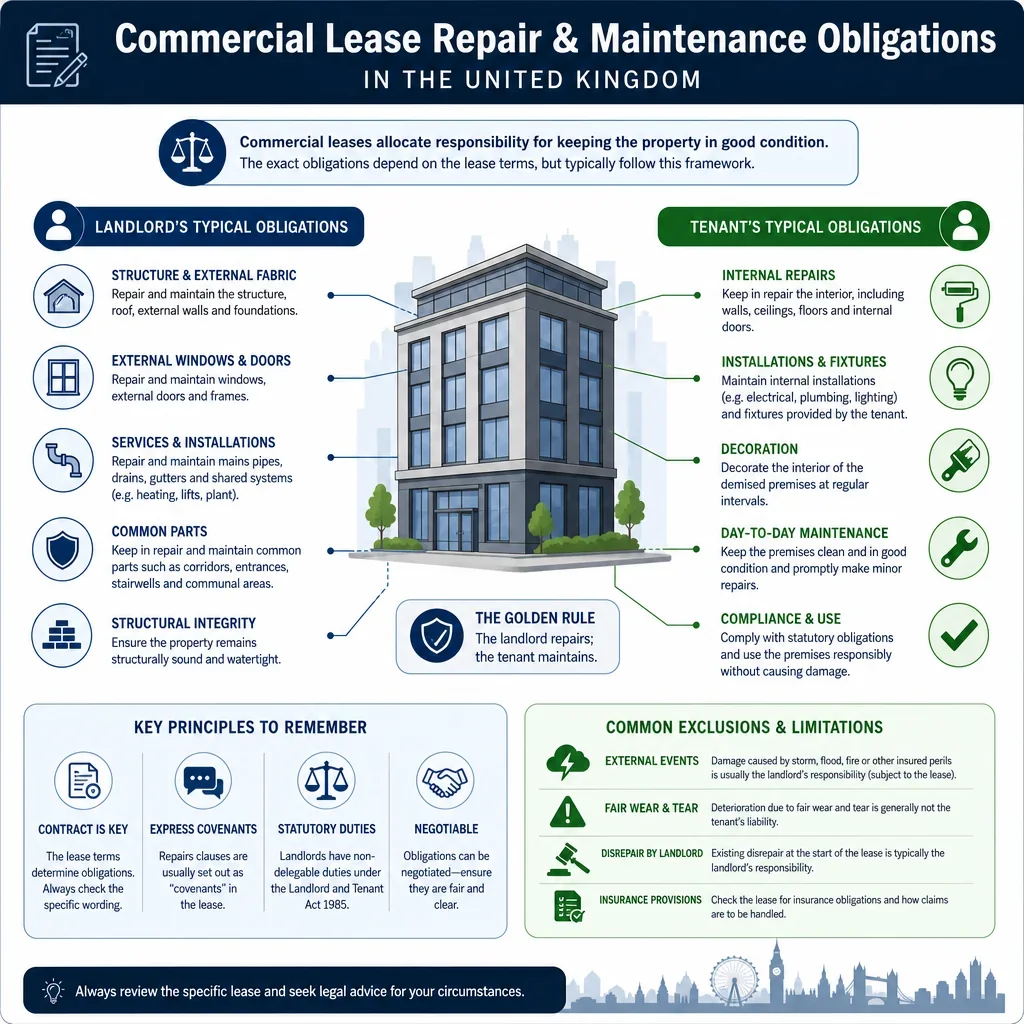
Dilapidations timetable | The timetable for assessing and claiming lease-end disrepair and reinstatement losses. | Both parties | Often starts before expiry and continues after lease end. | Coordinate repair covenants, yielding up, schedules of condition and reinstatement notices. |
Notice requirements | ||||
Terminal schedule timing | A landlord's schedule served near or after lease end setting out alleged breaches. | Landlord | Commonly prepared in the final months or shortly after termination. | Lease should support access for inspections before expiry. |
Expiry and termination | ||||
Pre-expiry viewing period | Landlord access period for marketing, inspections or reletting before the tenant leaves. | Landlord | Often during the last 3 to 6 months of the term. | Balance access rights with tenant business disruption and security. |
Renewal rights | ||||
Renewal rent valuation date | The date by reference to which rent for a statutory renewal may be assessed. | Both parties | Connected to commencement of the new tenancy and court assessment. | Provide evidence of market rent and disregard statutory assumptions where required. |
Renewal lease terms date | Terms of a statutory renewal are agreed or determined when the new tenancy is settled. | Both parties | Settled during negotiations or court proceedings before grant. | Do not assume all old break or renewal options will be repeated. |
Statutory compensation timing | A tenant may be entitled to compensation where renewal is opposed on certain no-fault grounds. | Tenant | Payable when tenancy ends after successful statutory opposition grounds. | Consider compensation exposure before serving an opposed renewal notice. |
Business occupation at expiry | 1954 Act protection generally depends on occupation for business purposes. | Tenant | Status is important near expiry and during renewal proceedings. | Check group occupation, sharing and underletting arrangements. |
Term length | ||||
Underlease expiry alignment | An underlease should usually expire before the superior lease to avoid title problems. | Tenant | Often ends several days before the superior lease expiry date. | Align underlease breaks, renewal exclusion and superior landlord consent. |
Break rights | ||||
Superior lease break risk | A break in a superior lease may affect an occupational underlease. | Tenant | Check superior lease break dates before taking an underlease. | Require disclosure of superior lease termination rights and consents. |
Notice requirements | ||||
Change of landlord notice address | If the landlord changes, the tenant must know where to serve break or renewal notices. | Landlord | Update immediately after sale or transfer of the reversion. | Require written notice of new landlord and service address. |
Last service date | The final date by which a notice must be validly served to be effective. | Either party | Calculated backwards from break, expiry or renewal date. | Account for deemed service, weekends, bank holidays and delivery failures. |
Clear days notice | A notice period excluding the service day and sometimes the expiry day. | Either party | Used only if the lease or statute requires clear days. | Avoid ambiguity by saying whether days are clear, calendar or working days. |
Working days definition | Defines which days count for notice, completion and response deadlines. | Both parties | Usually excludes Saturdays, Sundays and bank holidays in England and Wales. | Specify jurisdiction and treatment of notices served after business hours. |
Bank holiday deadline shift | A deadline falling on a non-business day may create uncertainty unless the lease says what happens. | Either party | Relevant for deemed service and last service dates. | State whether deadlines move to next or previous working day. |
Option exercise notice | Formal notice exercising a renewal, expansion, purchase or other lease option. | Tenant | Must be served within the option period and in the required form. | State whether strict compliance is required and whether conditions apply. |
Renewal rights | ||||
Automatic renewal clause | A clause under which the lease renews unless a party opts out. | Both parties | Opt-out notice often required months before expiry. | Use cautiously define new term, rent and opt-out process. |
Term extension deed | A formal document extending the lease term or documenting a regrant. | Both parties | Completed before expiry or during holding over. | Check SDLT, registration and whether extension is legally a surrender and regrant. |
Term length | ||||
Reversionary lease | A lease granted now but commencing in the future, often after an existing lease ends. | Both parties | Commencement date is future-dated registration rules may apply. | Ensure future commencement, existing lease expiry and registration are consistent. |
Conditional lease trigger date | A lease may complete only after a condition such as consent, planning or works completion. | Both parties | Trigger date should be evidenced by notice or certificate. | Define condition satisfaction, waiver, longstop and termination rights. |
Practical completion date | The date landlord works are sufficiently complete for the lease or rent start to proceed. | Landlord | Usually certified under an agreement for lease. | Define certifier, snagging, disputes and tenant inspection rights. |
Possession date | The date the tenant is entitled to occupy or take control of the premises. | Tenant | May be commencement date, completion date or early access date. | Clarify whether exclusive possession begins before rent starts. |
Renewal rights | ||||
Occupation during renewal talks | A protected tenant may continue occupying while renewal is negotiated or litigated. | Both parties | Can continue after expiry until statutory process ends. | Keep paying rent and preserve rights without creating inconsistent new terms. |
Notice requirements | ||||
Statutory deadline extension agreement | Parties may agree to extend the deadline for applying to court in a 1954 Act renewal. | Both parties | Must be agreed before the existing court application deadline expires. | Record the new deadline expressly in writing and diarise it. |
Prescribed notice form | Some 1954 Act notices must use prescribed statutory forms. | Either party | Use the current form when serving statutory renewal notices. | Do not replace prescribed statutory content with informal lease wording. |
Notice misdescription risk | Errors in names, premises or dates can cause disputes over notice validity. | Either party | Check details before service, especially near final deadlines. | Use lease particulars, title details and company records consistently. |
Correct notice recipient | A notice must usually be addressed and served on the correct legal party. | Either party | Verify recipient at service date, not only lease completion date. | Allow service on successors and require updated service addresses. |
Term length | ||||
Execution before term start | The lease should be validly executed before or at completion to evidence the agreed term. | Both parties | Usually completed immediately before possession or rent commencement. | Coordinate dating, delivery as deed and any escrow conditions. |
Deed requirement for longer lease | Most legal leases must be created by deed unless a statutory exception applies. | Both parties | Relevant at grant, renewal, surrender and variation. | Ensure execution formalities are met before relying on term dates. |
Short lease deed exception | Certain leases not exceeding 3 years can be created without deed if statutory conditions are met. | Both parties | Applies at grant of qualifying short leases taking effect in possession. | Check market rent, possession and premium conditions before relying on exception. |
Variation affecting term | Changing term length, premises or rent can have renewal, SDLT or regrant consequences. | Both parties | Effective from deed of variation date or stated effective date. | Consider surrender and regrant risk before altering expiry or premises. |
Side letter duration | A side letter concession may last for a set period or end on breach, assignment or expiry. | Tenant | Often tied to rent concession periods or personal occupation. | State duration, personal nature, termination triggers and confidentiality. |
Stepped rent dates | Rent increases by agreed amounts on fixed dates during the term. | Tenant | Steps may occur annually or on specified anniversaries. | Ensure stepped rent schedule aligns with breaks and rent-free periods. |
Index review dates | Rent changes by reference to an index at specified review dates. | Both parties | Usually annual or every 3 to 5 years. | Define base index, review index, cap, collar and replacement index. |
Open market review dates | Dates when rent is reset to open market rental value under the lease formula. | Both parties | Common on 5-yearly anniversaries. | Align review assumptions with term, user, disregards and break dates. |
What Dates Matter Most In A UK Commercial Lease?
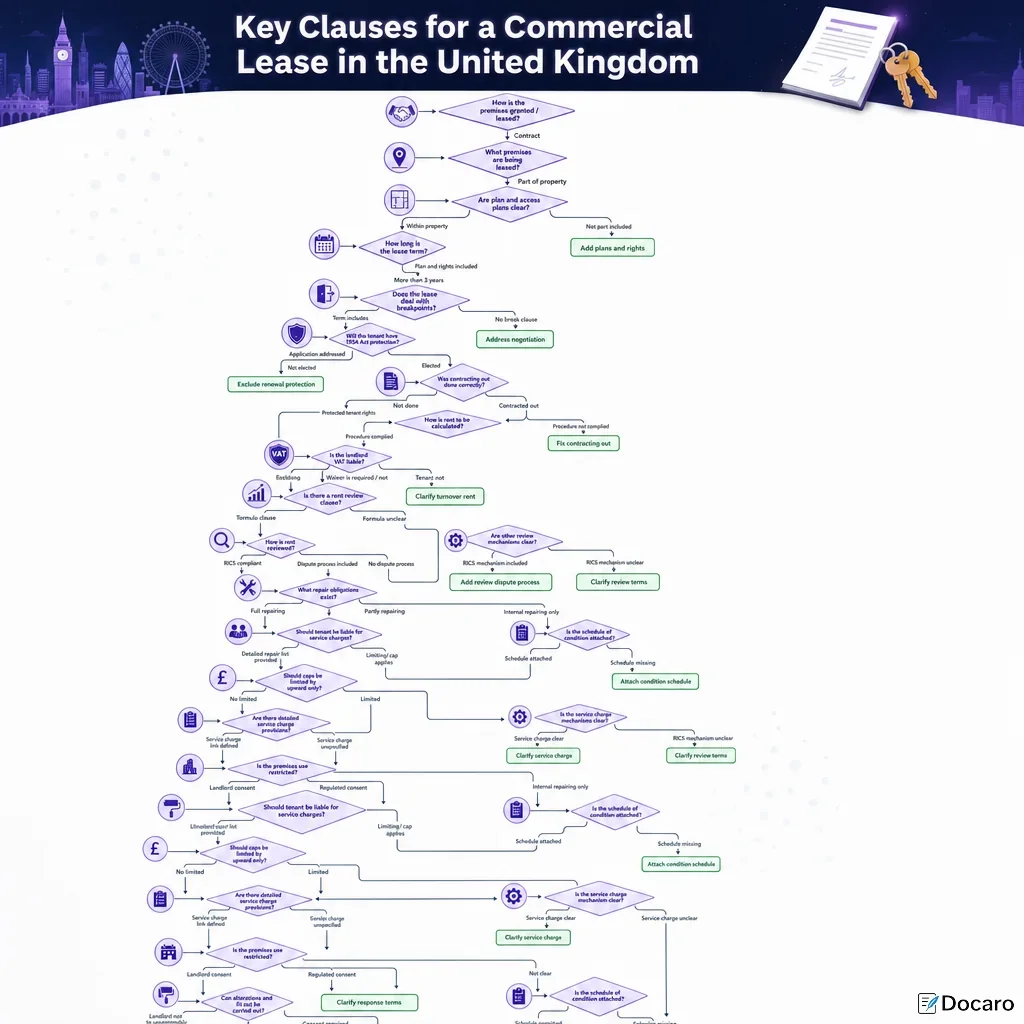
Break dates, expiry dates, renewal deadlines and notice periods should be treated as critical diary dates. Missing a break notice deadline or failing to comply with its conditions can leave a tenant liable for rent until the end of the term.
How Do Break Clauses Affect Commercial Lease Risk?
A break clause is only reliable if the lease states who can break, the break date, the notice period, the service method and any conditions. Conditions such as giving vacant possession, paying rent and removing occupiers or goods should be drafted narrowly to reduce disputes.
When Does The Landlord And Tenant Act 1954 Matter?
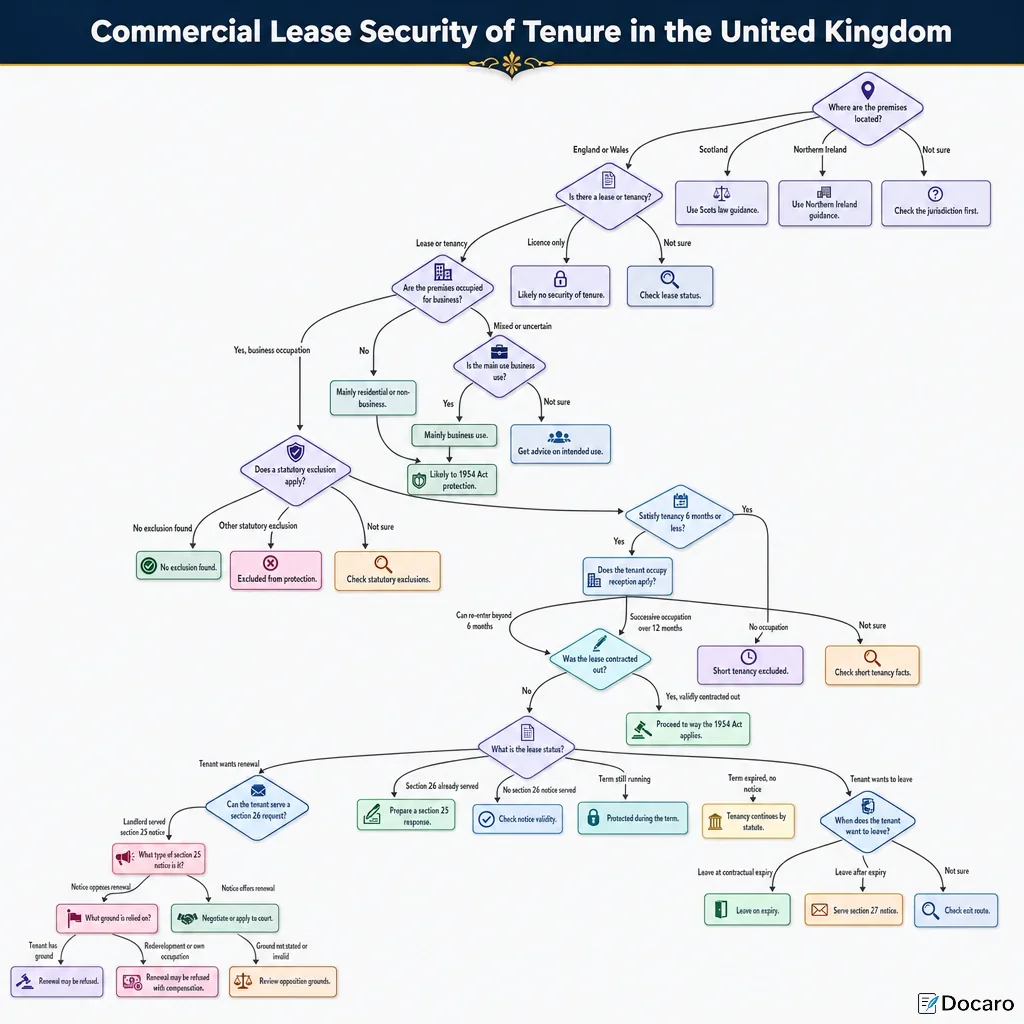
Many business tenants have statutory renewal protection under the Landlord and Tenant Act 1954 unless the lease has been validly contracted out. This affects whether the tenant can remain after contractual expiry and whether a landlord must use statutory grounds to oppose renewal.
Why Should Renewal And Break Notices Be Drafted Carefully?
Notices commonly fail because of the wrong recipient, wrong address, late service, uncertainty about the termination date, or failure to follow the lease service clause. A commercial lease should align its notice provisions with statutory requirements where statutory renewal rights may apply.
What Should Be Checked Before Signing?
- Whether the lease is protected or contracted out of the 1954 Act.
- The exact start date, term length, expiry date and any rent-free period assumptions.
- All tenant and landlord break dates, notice periods and break conditions.
- Whether renewal, rent review and break dates interact in a commercially sensible way.
- Whether notices can be served by post, personal delivery or email, and when service is deemed effective.
FAQs
You Might Also Be Interested In