

Commercial Lease Repair And Maintenance Obligations In The United Kingdom
Created:
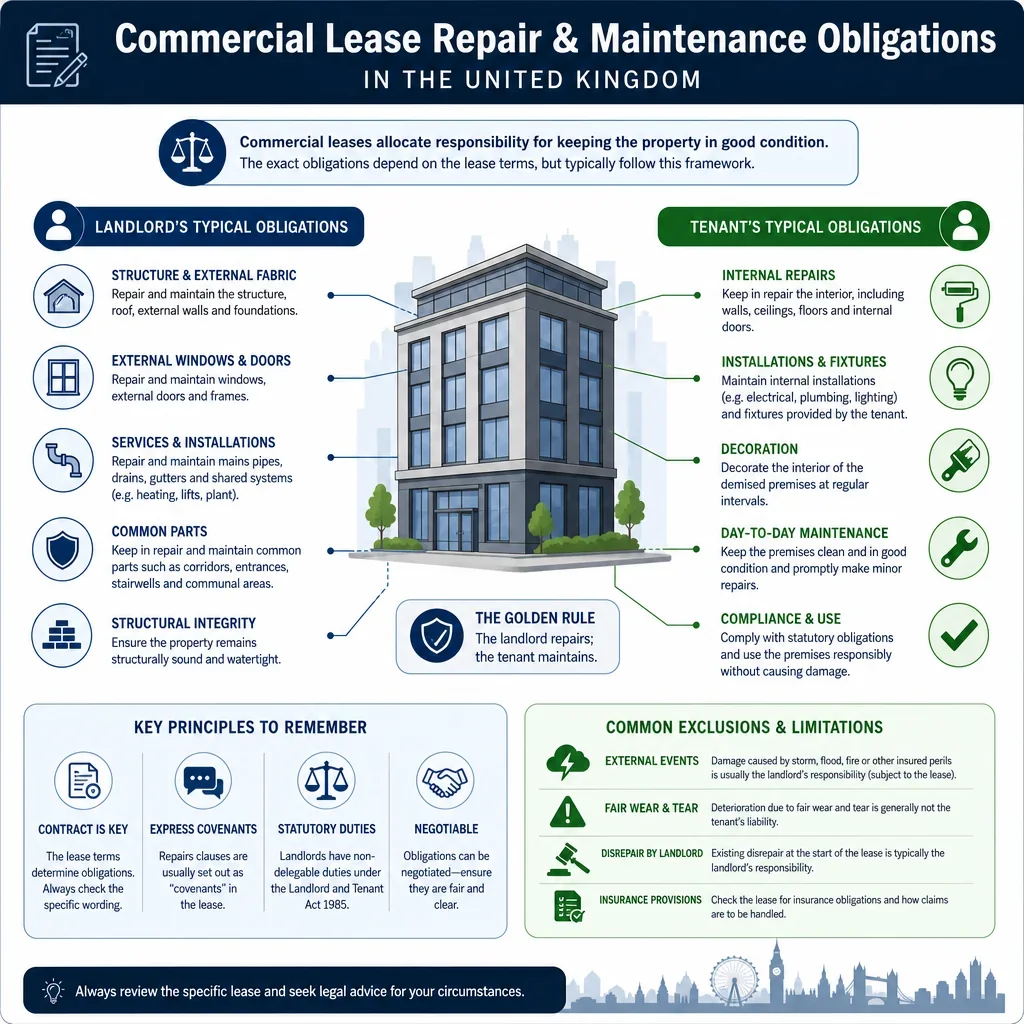
Understand key repair and maintenance duties in commercial leases and how they affect landlords and tenants. This guide complements our AI Generated British Commercial Tenancy Agreement resources, helping you review obligations more confidently.
Repair topic | Obligation summary | Area covered | Common variations | Supporting evidence |
|---|---|---|---|---|
Tenant obligation | ||||
Full repairing lease | Tenant keeps the premises in repair and may be liable even if disrepair existed at the start. | Whole property | Often limited by schedule of condition, fair wear and tear, insured risks or landlord retained parts. | Schedule of condition, pre-lease survey, photographs, heads of terms. |
Internal repair | Tenant repairs and maintains internal non-structural parts of the demised premises. | Internal areas | May exclude structural walls, roofs, main services, latent defects and fair wear and tear. | Lease plan, internal condition schedule, inventory, contractor reports. |
Depends on lease structure | ||||
External repair | Repair of roof, walls, foundations, windows, doors, drains and external surfaces. | External structure | Landlord retained in multi-let buildings tenant responsible in whole-building FRI leases. | Building survey, roof report, drainage survey, photographs, lease demise plan. |
Structural repair | Covers foundations, load-bearing walls, beams, columns, roof structure and main structural elements. | External structure | Often landlord responsibility in multi-let property, recovered through service charge. | Structural survey, engineer report, lease plan, service charge provisions. |
Roof repair | Responsibility for roof coverings, gutters, downpipes, flashings, rooflights and roof structure. | External structure | May exclude roof structure or be limited by schedule of condition or insured risks. | Roof survey, drone photographs, maintenance logs, leak records. |
Windows and glazing | Repair or replacement of glass, frames, shopfronts, seals and opening mechanisms. | External structure | Shopfront glass often tenant responsibility structural frames may remain landlord responsibility. | Photographs, glazing certificates, shopfront drawings, breakage reports. |
Doors, shutters and access systems | Repair of entrance doors, fire doors, roller shutters, locks, keypads and access controls. | Fixtures and fittings | Tenant usually responsible for exclusive doors landlord for common entrance systems. | Maintenance logs, access records, contractor invoices, fire door inspection reports. |
Tenant obligation | ||||
Floors and floor coverings | Repair of floor finishes, raised floors, screeds and sometimes floor structure within the demise. | Internal areas | Structural slabs may be excluded wear from ordinary footfall may be treated differently. | Condition schedule, flooring specification, photographs, fit-out drawings. |
Ceilings and suspended ceilings | Repair of ceiling finishes, tiles, grids, access panels and tenant-installed ceiling systems. | Internal areas | Damage from roof leaks may be excluded if landlord controls roof repair. | Photographs, water ingress reports, fit-out plans, maintenance records. |
Internal walls and partitions | Repair and maintenance of plaster, finishes, demountable partitions and non-structural internal walls. | Internal areas | Structural and load-bearing walls usually excluded unless expressly demised. | Lease plan, fit-out drawings, photographs, reinstatement licence. |
Internal decoration | Tenant redecorates internal surfaces at intervals and at lease end using suitable materials. | Internal areas | Intervals commonly every three to five years final decoration often in last months of term. | Decoration schedule, paint specifications, dated photographs, invoices. |
Depends on lease structure | ||||
External decoration | Painting, treating or finishing external joinery, metalwork, render and exposed surfaces. | External structure | Landlord may undertake through service charge tenant may control shopfront decoration. | Cyclical maintenance schedule, photographs, contractor specifications, service charge accounts. |
Services and utilities | Repair of pipes, cables, meters, drainage, water, gas, electricity and data infrastructure serving the premises. | Fixtures and fittings | Tenant usually repairs exclusive services landlord repairs shared mains or risers. | Service plans, meter records, contractor reports, compliance certificates. |
HVAC systems | Maintenance and repair of boilers, chillers, air conditioning, ventilation and controls. | Fixtures and fittings | Tenant may maintain exclusive units landlord may manage central plant via service charge. | PPM records, F-gas records, commissioning certificates, service contracts. |
Tenant obligation | ||||
Electrical installations | Keep wiring, distribution boards, lighting and electrical equipment safe and in working order. | Fixtures and fittings | Landlord may retain shared electrical systems tenant commonly obtains EICR and PAT records. | EICR, PAT records, lighting certificates, maintenance invoices. |
Depends on lease structure | ||||
Gas installations | Maintain gas appliances, pipework and flues safely where included in the demise or under control. | Fixtures and fittings | Control and occupation affect statutory duties lease may require annual gas safety checks. | Gas safety record, service invoices, appliance inventory, contractor reports. |
Tenant obligation | ||||
Water and plumbing | Repair sinks, WCs, taps, tanks, internal pipework and sanitary fittings serving the premises. | Fixtures and fittings | Shared risers, mains and plant may be landlord retained and service charge recoverable. | Plumbing reports, leak records, service contracts, photographs. |
Depends on lease structure | ||||
Drainage and sewers | Keep drains, gullies, traps, grease interceptors and private sewers clear and repaired. | Whole property | Tenant responsible for blockages caused by use landlord may repair shared underground drainage. | CCTV drainage survey, blockage reports, grease trap records, drainage plans. |
Shared obligation | ||||
Fire safety equipment | Maintain fire alarms, extinguishers, emergency lighting, sprinklers, signage and escape route systems. | Whole property | Tenant usually responsible within premises landlord manages common systems and common parts. | Fire risk assessment, alarm test logs, emergency lighting certificates, extinguisher service records. |
Depends on lease structure | ||||
Asbestos management | Dutyholder must manage asbestos risk in non-domestic premises and keep suitable records. | Whole property | Duty may fall on landlord, tenant or both depending on control and repair duties. | Asbestos survey, asbestos register, management plan, removal certificates. |
Shared obligation | ||||
Statutory compliance | Comply with laws affecting occupation, use, repair, safety and alterations to the premises. | Whole property | Tenant covers occupational compliance landlord covers retained structure and common parts. | Compliance audit, certificates, risk assessments, licences, notices from authorities. |
Health and safety at work | Occupiers and employers must manage workplace safety risks arising from premises and equipment. | Whole property | Lease covenants may allocate costs, but statutory duties can still follow control and occupation. | Risk assessments, inspection logs, maintenance records, incident reports. |
Fire safety legal duties | Responsible persons must assess and manage fire risks in non-domestic premises. | Whole property | Landlord often covers common parts tenant covers occupied premises and work activities. | Fire risk assessment, evacuation plan, alarm logs, inspection records. |
Landlord obligation | ||||
Minimum energy efficiency standards | Commercial landlords generally cannot let sub-standard non-domestic property without a valid exemption. | Whole property | Lease may restrict tenant works that reduce EPC rating or allocate energy improvement costs. | EPC, recommendation report, exemption register evidence, works invoices. |
Insured risks damage | Damage by insured risks is usually covered by landlord insurance, not ordinary tenant repair. | Whole property | Tenant may remain liable for uninsured excess, exclusions, non-insurance or damage caused by tenant fault. | Insurance policy, claims correspondence, reinstatement specification, loss adjuster report. |
Depends on lease structure | ||||
Uninsured risks | Allocates responsibility where damage occurs from a risk not covered by building insurance. | Whole property | May allow termination if reinstatement is uneconomic or insurance is unavailable. | Insurance exclusions, broker letters, surveyor report, reinstatement cost estimate. |
Shared obligation | ||||
Service charge repairs | Landlord repairs retained parts and recovers allowable costs from tenants through service charge. | Common parts | Caps, exclusions, sinking funds, reserve funds, improvement restrictions and apportionment rules. | Service charge budget, accounts, invoices, managing agent reports, RICS code references. |
Landlord obligation | ||||
Common parts maintenance | Maintenance of entrances, lobbies, stairs, lifts, corridors, yards, toilets and shared facilities. | Common parts | Cost usually recovered by service charge standards may be reasonable or good estate management. | Estate regulations, maintenance schedule, service charge accounts, inspection reports. |
Lift maintenance | Inspection, servicing and repair of passenger, goods or platform lifts serving the premises. | Common parts | Exclusive tenant lift may be tenant responsibility shared lift costs usually service charge. | LOLER reports, service contract, call-out logs, insurance inspection reports. |
Shared obligation | ||||
Accessibility and reasonable adjustments | Service providers and employers may need reasonable adjustments for disabled access and use. | Whole property | Alterations may need landlord consent common part changes often require landlord involvement. | Access audit, consent application, risk assessment, works specification. |
Tenant obligation | ||||
Alterations maintenance | Tenant maintains authorised alterations and additions and may need to remove them at lease end. | Fixtures and fittings | Licence for alterations may impose reinstatement, certification and landlord approval conditions. | Licence for alterations, plans, completion certificates, reinstatement specification. |
Reinstatement | Tenant removes alterations, partitions, signage and fit-out and restores premises as required. | Whole property | Only required if landlord serves notice may be waived or limited by alterations licence. | Alterations licences, reinstatement notices, original layout plans, terminal schedule of dilapidations. |
Yielding up | Tenant returns the premises at lease end in the condition required by repair covenants. | Whole property | May require vacant possession, removal of goods, key return and compliance with reinstatement notices. | Check-out report, terminal dilapidations schedule, photographs, key handover receipt. |
Dilapidations | Claims for breach of repair, decoration, reinstatement or yielding-up obligations during or after the term. | Whole property | Interim, terminal or final schedules claims may be limited by diminution in value rules. | Schedule of dilapidations, Scott schedule, surveyor reports, photographs, costings. |
Depends on lease structure | ||||
Dilapidations damages cap | Damages for disrepair may be capped by the reduction in the landlord's reversionary value. | Whole property | Relevant where landlord claims money after lease end rather than requiring works during term. | Valuation evidence, diminution report, dilapidations schedule, repair cost estimates. |
Tenant obligation | ||||
Schedule of condition | Records initial condition and can prevent the tenant owing improvements beyond that condition. | Whole property | Must be clearly incorporated into repair, decoration and yielding-up clauses. | Photographic schedule, surveyor narrative, dated plans, signed lease annexure. |
Depends on lease structure | ||||
Fair wear and tear | Excludes ordinary deterioration from normal use if expressly written into the covenant. | Whole property | Often excluded from decoration or yielding up less common in full repairing covenants. | Condition photographs, usage records, maintenance logs, surveyor opinion. |
Latent defects | Hidden construction or design defects may cause disrepair unless expressly excluded or covered by warranties. | Whole property | Tenant may seek exclusion, warranty rights or landlord responsibility for inherent defects. | Building survey, defect reports, warranties, construction documents, expert evidence. |
Inherent defects | Original design, workmanship or material defects that may later require repair or replacement. | Whole property | Exclusion may cover remedying the defect but not consequential damage to tenant areas. | Patent defect list, collateral warranties, structural reports, maintenance history. |
Repair versus renewal | Determines whether covenant requires patching, substantial replacement or renewal of worn elements. | Whole property | Lease may expressly include replacement where beyond economic repair. | Surveyor report, cost comparison, photographs, maintenance records, expert opinion. |
Improvements and upgrades | Works improving rather than repairing the property may be treated differently from recoverable repairs. | Whole property | Service charge may exclude improvements unless required by law or good estate management. | Service charge clause, works specification, surveyor report, consultation documents. |
Shared obligation | ||||
Preventative maintenance | Regular servicing and inspections to prevent deterioration and keep systems operational. | Whole property | Lease may require planned preventative maintenance contracts for plant and equipment. | PPM schedule, service contracts, inspection reports, maintenance logs. |
Landlord obligation | ||||
Landlord inspection and entry | Landlord may enter on notice to inspect condition, repair retained parts or check compliance. | Whole property | Emergency entry without notice tenant must not obstruct reasonable access. | Entry notices, inspection reports, photographs, correspondence. |
Tenant obligation | ||||
Notice to repair | Landlord may require tenant to remedy disrepair within a specified period after notice. | Whole property | If tenant fails, landlord may enter, do works and recover costs as a debt. | Repair notice, inspection schedule, contractor quotes, proof of service. |
Depends on lease structure | ||||
Landlord self-help works | Landlord performs tenant's overdue repairs and recovers costs where lease permits. | Whole property | May require prior notice and reasonable time costs may include surveyor and professional fees. | Notices, invoices, surveyor certificates, before and after photographs. |
Tenant obligation | ||||
Notification of defects | Tenant promptly reports defects, damage or hazards affecting the premises or landlord retained parts. | Whole property | Often linked to insured risks, leaks, structural issues, plant failure and statutory notices. | Email notices, defect logs, photographs, incident reports, helpdesk tickets. |
Shared obligation | ||||
Waste and refuse areas | Keep bin stores, waste areas, compactors and trade waste facilities clean and usable. | Common parts | Tenant handles its trade waste landlord may manage shared refuse areas through service charge. | Waste transfer notes, cleaning logs, service charge records, photographs. |
Pest control | Prevent and treat infestations affecting hygiene, fabric, occupation or neighbouring premises. | Whole property | Tenant liable if caused by use landlord liable for structural entry points or shared areas. | Pest reports, treatment logs, hygiene inspections, photographs, contractor invoices. |
Depends on lease structure | ||||
Landscaping and grounds | Maintain yards, landscaped areas, car parks, paths, boundary planting and external estate areas. | Common parts | Exclusive yard may be tenant responsibility estate areas usually landlord service charge. | Site plan, grounds contract, service charge budget, photographs. |
Car parks and hardstanding | Repair surfaces, markings, lighting, barriers, drains, kerbs and pedestrian routes. | Common parts | Exclusive demised parking may be tenant responsibility shared estate parking usually landlord managed. | Lease plan, surface survey, accident reports, maintenance records. |
Boundaries, fences and gates | Repair perimeter walls, fences, gates, bollards and security barriers within the demise. | External structure | Boundary ownership and estate layout may determine responsibility security upgrades may need consent. | Title plan, lease plan, boundary survey, photographs, repair invoices. |
Tenant obligation | ||||
Signage | Maintain, clean and remove tenant signs, fascia boards, projecting signs and branding. | Fixtures and fittings | May require planning advertisement consent, landlord consent and end-of-term removal. | Signage consent, photographs, planning records, installation invoices. |
Shopfront maintenance | Maintain retail frontage, display windows, doors, fascias, shutters and customer entrance areas. | External structure | Landlord may control appearance, materials, colours and signage under tenant handbook. | Shopfront drawings, photographs, landlord approvals, glazing and shutter records. |
Plate glass | Tenant repairs or insures large display glass and shopfront glazing against breakage. | External structure | May require immediate boarding-up, replacement to matching standard and insurance policy evidence. | Plate glass policy, photographs, replacement invoices, incident reports. |
Depends on lease structure | ||||
Damp and water ingress | Identify and remedy leaks, condensation, penetrating damp or rising damp affecting the premises. | Whole property | Cause determines responsibility: roof, structure, plumbing, occupation practices or lack of ventilation. | Damp survey, leak trace report, photographs, humidity logs, contractor findings. |
Shared obligation | ||||
Mould and condensation | Manage moisture, ventilation and surface conditions to prevent mould and deterioration. | Internal areas | Tenant use may cause condensation building defects or poor ventilation may be landlord issues. | Ventilation reports, humidity readings, photographs, cleaning records, expert survey. |
Depends on lease structure | ||||
Environmental contamination | Contaminated land liabilities can arise from historic condition, tenant use or statutory remediation duties. | Whole property | Lease may allocate clean-up duties and prohibit contamination, hazardous storage or polluting use. | Environmental report, baseline survey, spill records, remediation notices, permits. |
Tenant obligation | ||||
Hazardous substances storage | Occupiers using hazardous substances must control risks and maintain safe storage arrangements. | Internal areas | Lease may require bunding, spill kits, permits, landlord approval and end-of-term decontamination. | COSHH assessments, storage records, spill logs, permits, inspection reports. |
Shared obligation | ||||
Legionella control | Assess and control legionella risk from water systems under the party's control. | Fixtures and fittings | Tenant controls local water systems landlord controls shared tanks, cooling towers and common services. | Legionella risk assessment, temperature logs, flushing records, water treatment reports. |
Depends on lease structure | ||||
Cooling towers | Cooling towers and evaporative condensers require notification and ongoing water safety management. | Fixtures and fittings | Central plant usually landlord controlled tenant plant may be tenant responsibility. | Local authority notification, water treatment records, risk assessments, service logs. |
Security systems | Maintain alarms, CCTV, access control, shutters, locks and security lighting. | Fixtures and fittings | Tenant systems usually tenant responsibility estate systems usually landlord service charge. | Alarm certificates, CCTV service logs, access control records, contractor invoices. |
Tenant obligation | ||||
Data cabling and telecoms | Maintain tenant cabling, server room fittings, comms cabinets and telecoms installations. | Fixtures and fittings | Wayleave or landlord consent may be needed removal may be required on yielding up. | Cabling plans, wayleaves, landlord consents, installation certificates. |
Depends on lease structure | ||||
Plant rooms | Repair and maintain plant rooms, housings, equipment bases, access panels and associated services. | Fixtures and fittings | Shared plant rooms usually landlord retained tenant plant may remain tenant responsibility. | Plant inventory, PPM records, lease plan, service charge schedules. |
Meters and sub-meters | Maintain meters, sub-meters and related access needed to measure utilities consumption. | Fixtures and fittings | Utility company equipment may be outside both parties' direct repair duties. | Meter readings, installation records, utility bills, calibration certificates. |
Landlord obligation | ||||
Landlord retained parts | Landlord repairs parts not demised to the tenant, such as structure, roofs and shared services. | Common parts | Costs often recoverable through service charge if properly within lease wording. | Demise plan, retained parts definition, service charge budget, inspection reports. |
Tenant obligation | ||||
Tenant fixtures | Tenant maintains trade fixtures, counters, racking, equipment and removable business installations. | Fixtures and fittings | Removal allowed or required at lease end, with making good of damage. | Inventory, fit-out plans, installation invoices, reinstatement schedule. |
Depends on lease structure | ||||
Landlord fixtures and base build | Repair of landlord-provided fixtures, base build systems and original fittings included in the demise. | Fixtures and fittings | Tenant may repair items in demise landlord may maintain central or shared systems. | Specification, inventory, handover pack, maintenance manuals. |
Tenant obligation | ||||
Cleaning and cleanliness | Keep premises clean, tidy and free from dirt, rubbish, staining and avoidable deterioration. | Internal areas | Landlord may clean common parts and recover cost through service charge. | Cleaning schedules, hygiene records, photographs, contractor invoices. |
Shared obligation | ||||
Green lease maintenance | Maintenance duties aimed at preserving energy efficiency, environmental performance and sustainable operation. | Whole property | May require data sharing, efficient plant operation and restrictions on wasteful alterations. | EPC, utility data, green lease memorandum, plant maintenance records. |
Tenant obligation | ||||
Tenant damage | Tenant repairs damage caused by its staff, contractors, customers, visitors or business operations. | Whole property | May include damage to common parts caused by deliveries, fit-out or misuse. | Incident reports, CCTV, photographs, contractor invoices, correspondence. |
Depends on lease structure | ||||
Third-party damage | Allocates repair responsibility for vandalism, burglary, vehicle impact or damage by unknown persons. | Whole property | May be insured risk, tenant risk or landlord estate responsibility depending on clause and location. | Police report, insurance claim, photographs, witness statements, repair invoices. |
Shared obligation | ||||
Emergency repairs | Urgent works needed to prevent danger, serious damage, business interruption or statutory breach. | Whole property | Landlord may enter without notice tenant may need to notify immediately and mitigate loss. | Emergency call-out records, photographs, incident logs, invoices, insurer notices. |
Tenant obligation | ||||
Break clause condition | Tenant break may depend on giving up occupation and sometimes complying with repair conditions. | Whole property | Modern drafting often avoids strict repair conditions and uses vacant possession or payment conditions. | Break notice, compliance checklist, surveyor inspection, handover evidence. |
Holding over repairs | Repair obligations may continue while the tenant remains in occupation after contractual expiry. | Whole property | Depends on tenancy continuation, renewal rights and any agreed temporary occupation terms. | Expiry correspondence, renewal negotiations, inspection reports, occupation records. |
Depends on lease structure | ||||
Renewal and repair condition | Premises condition and repair covenants can affect renewal negotiations and terms for business tenancies. | Whole property | New lease may update repairing standard, service charge machinery or schedules of condition. | Section 25 or 26 notices, survey reports, draft renewal lease, dilapidations evidence. |
Tenant obligation | ||||
Forfeiture for disrepair | Landlord usually needs a section 146 notice before forfeiting for breach of repair covenant. | Whole property | Additional statutory protections may apply for repair breaches under long leases. | Section 146 notice, surveyor schedule, proof of breach, correspondence. |
Shared obligation | ||||
Consent for repair works | Some repairs require landlord approval where they affect structure, appearance, services or common parts. | Whole property | Routine like-for-like repairs may not need consent structural works usually do. | Consent application, method statement, drawings, contractor credentials, landlord approval. |
Planning and building control | Repair works may need planning permission, listed building consent or building regulations approval. | Whole property | Tenant often obtains consents for its works landlord consent remains separately required. | Planning decision, building control certificate, listed building consent, approved drawings. |
Listed building repairs | Works affecting a listed building's character may need listed building consent before repair or alteration. | Whole property | Lease may require specialist materials, heritage approvals and landlord supervision. | Listed building consent, heritage statement, specialist survey, conservation officer correspondence. |
Depends on lease structure | ||||
Party wall repair works | Certain works to party walls, boundaries or excavations require statutory notices and procedures. | External structure | Structural repairs may need landlord, neighbour and party wall surveyor involvement. | Party wall notices, awards, drawings, surveyor correspondence, condition schedules. |
Shared obligation | ||||
CDM repair projects | Construction health and safety duties can apply to repair, maintenance, refurbishment and demolition works. | Whole property | Client duties may fall on landlord or tenant commissioning the works. | Construction phase plan, risk assessments, contractor appointments, health and safety file. |
Tenant obligation | ||||
Work equipment maintenance | Work equipment must be suitable, maintained and inspected where deterioration may create risk. | Fixtures and fittings | Applies mainly to occupier's operational equipment rather than building fabric. | PUWER inspections, maintenance logs, equipment inventory, risk assessments. |
Landlord obligation | ||||
Mixed-use residential repair duties | Residential parts may attract statutory repairing obligations not applicable to purely commercial space. | Whole property | Relevant to shop with flat above, live-work or mixed-use buildings. | Use plan, residential tenancy documents, condition reports, repair notices. |
Depends on lease structure | ||||
Nuisance from disrepair | Disrepair causing leaks, smells, noise, pests or hazards may create nuisance or enforcement risk. | Whole property | Responsibility depends on source, control, tenant use and landlord retained parts. | Complaint records, council notices, photographs, expert reports, correspondence. |
Dangerous structures | Local authorities can act where buildings or structures are dangerous and require urgent works. | External structure | Costs may be allocated between landlord and tenant under lease repair covenants. | Council notice, structural engineer report, emergency works invoices, photographs. |
Who Usually Pays For Repairs Under A UK Commercial Lease?
The lease wording is decisive. In a full repairing and insuring lease, the tenant commonly takes on internal and external repair of the whole premises, while in a multi-let building the landlord usually repairs structure and common parts and recovers the cost through the service charge.
Why Is A Schedule Of Condition Important?
A schedule of condition can limit the tenant's repairing duty so the tenant is not required to put the property into better condition than shown at lease commencement. It is especially important where the property is old, already defective, or let on full repairing terms.
Which Repair Issues Need Extra Care Before Signing?
- Structure, roof, damp and services can create large liabilities if included in the tenant's repairing covenant.
- Decoration, reinstatement and yielding up affect end-of-term dilapidations and should match the permitted use and fit-out plans.
- Statutory compliance, fire safety, asbestos and energy performance should be allocated clearly because legal duties may apply alongside contractual lease obligations.
- Service charge wording should be checked for caps, exclusions, consultation duties and whether works are repairs, improvements or replacements.
Want to Generate Your own Commercial Lease Agreement?
Docaro AI can help you write your own Commercial Lease Agreement for use in the United Kingdom in minutes.
FAQs
Repair obligations in a UK commercial lease usually state who must keep the premises, structure, exterior, services and common parts in repair. The wording of the lease is critical, as obligations can range from internal-only repairs to a full repairing and insuring lease.
Show All FAQs
You Might Also Be Interested In
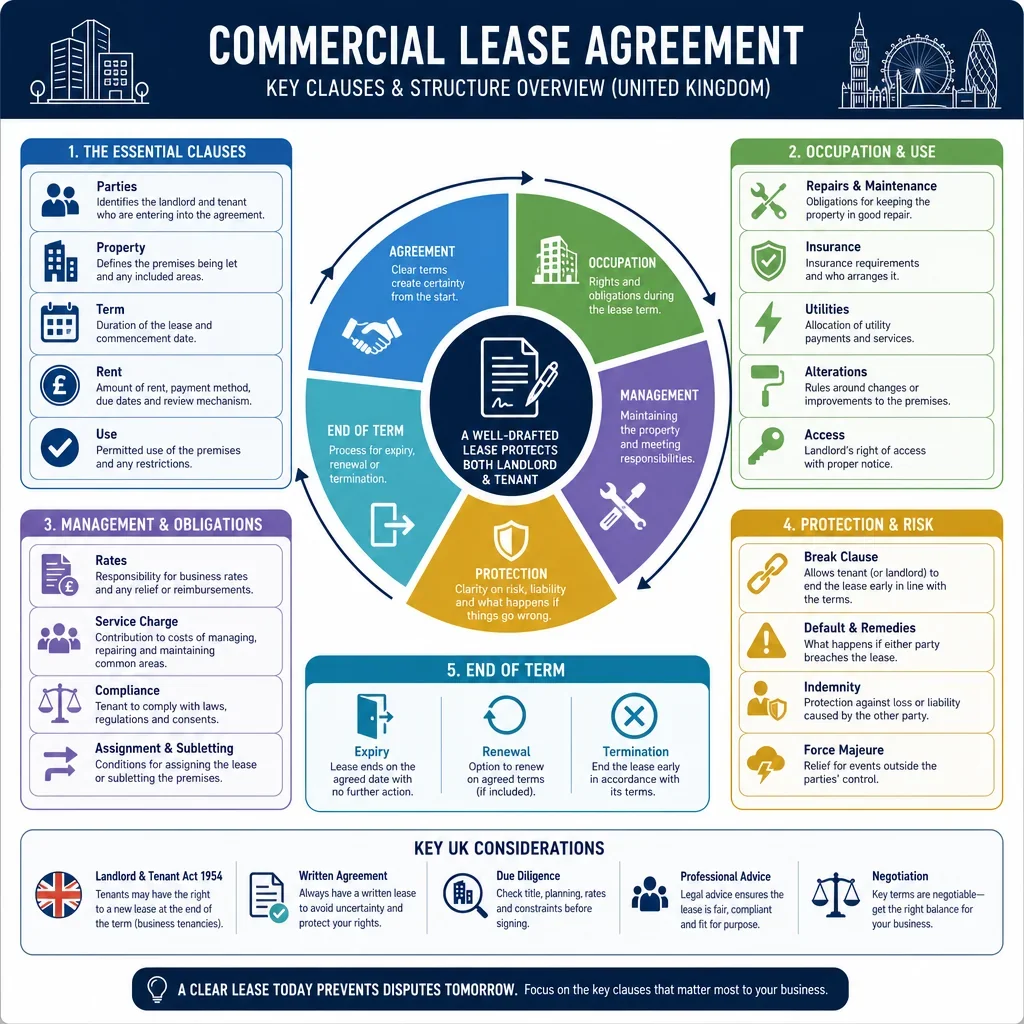
Explore a United Kingdom commercial lease clause library with practical wording for tenancy agreements, landlords and tenants.
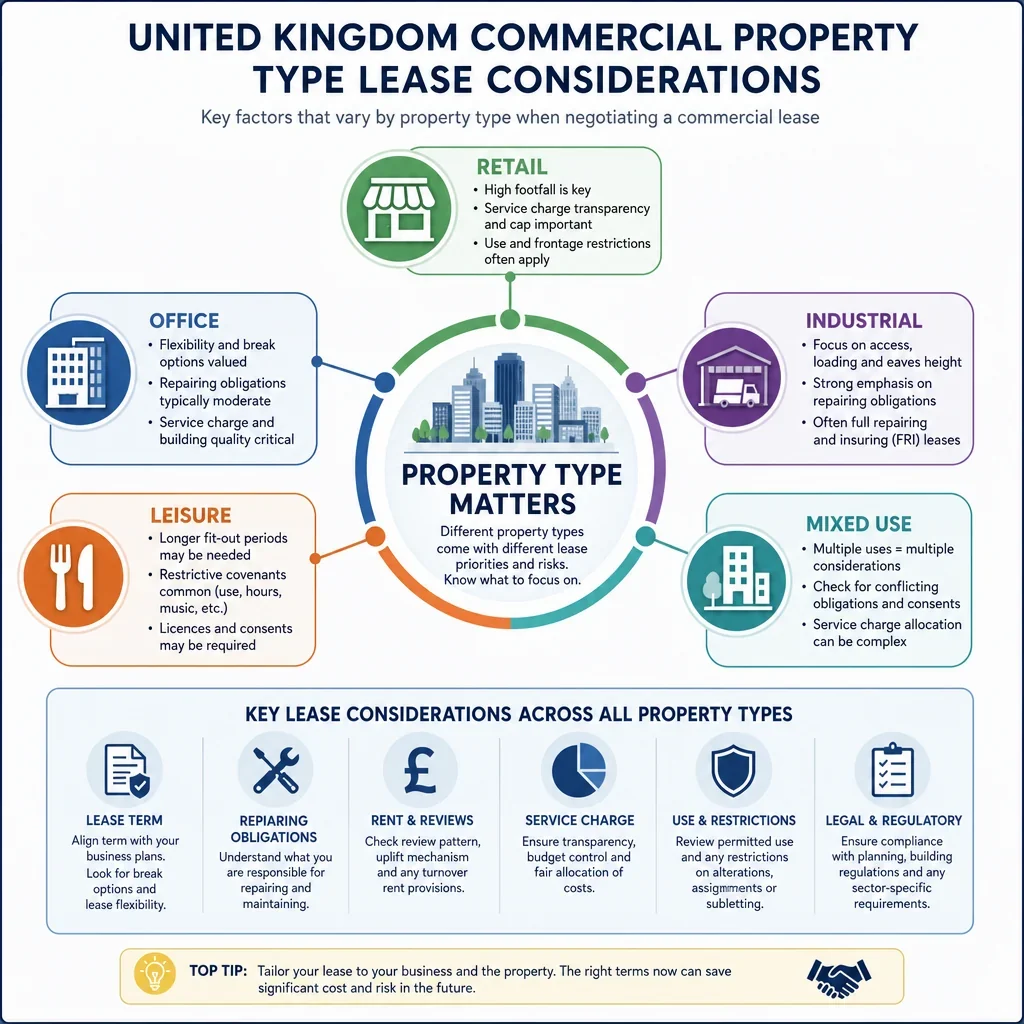
United Kingdom commercial lease considerations by property type, helping landlords and tenants understand key tenancy terms.
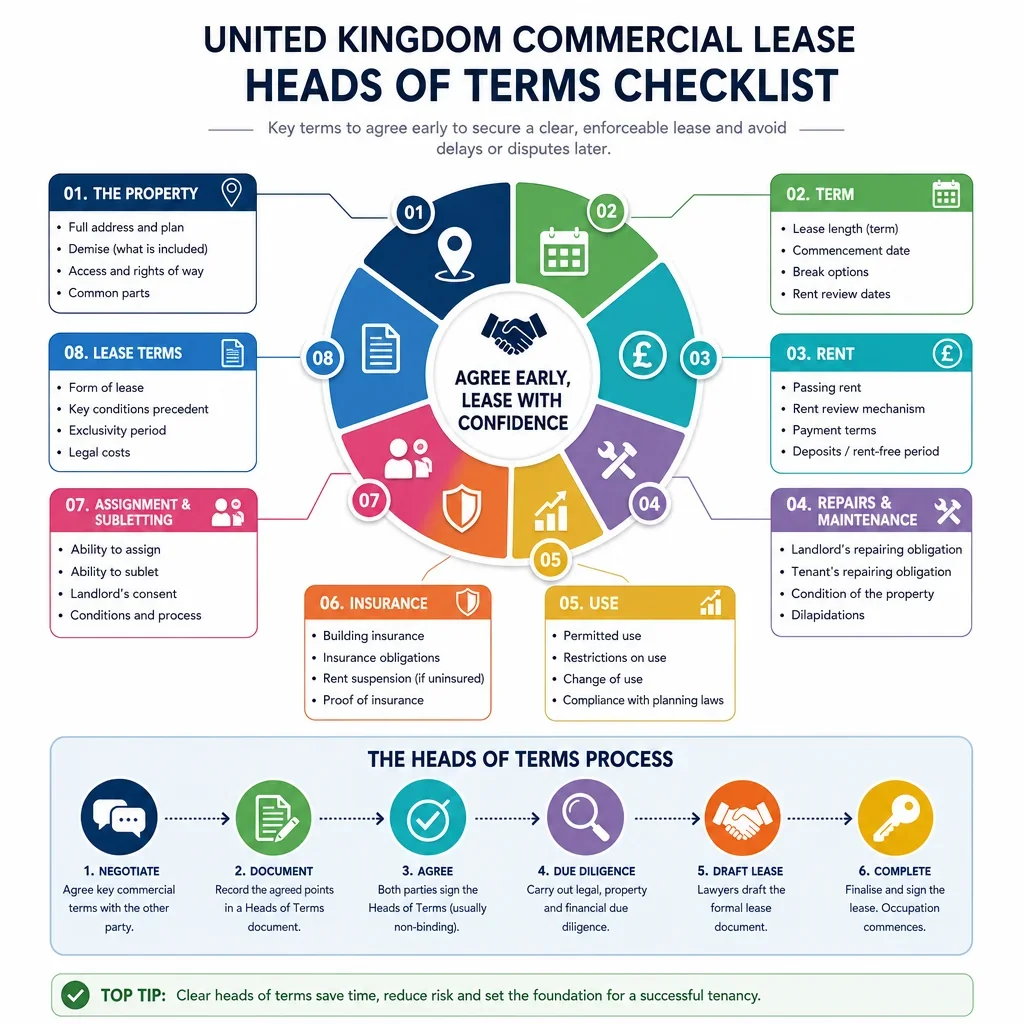
UK commercial lease heads of terms checklist covering key points for landlords and tenants before drafting a lease.
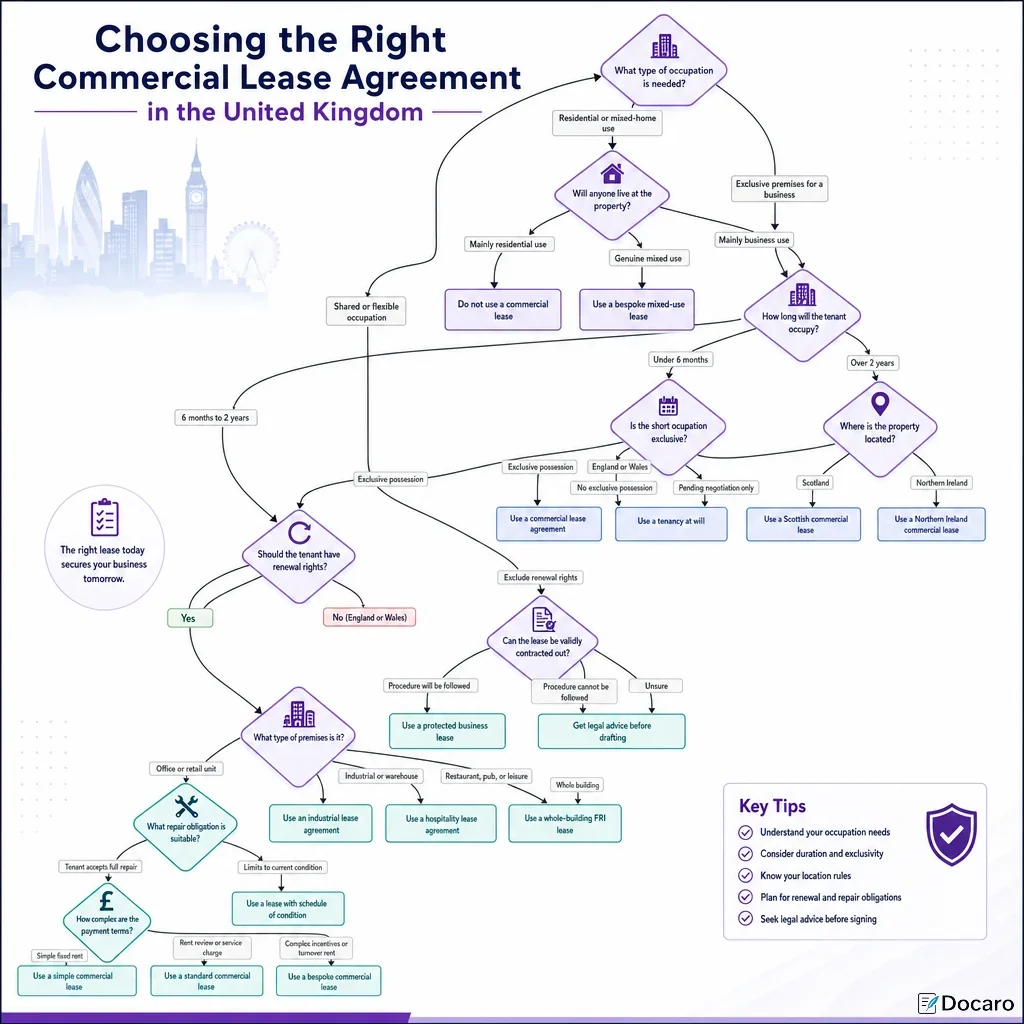
Choose the right commercial lease agreement in the United Kingdom with key factors, risks, and practical decision guidance.
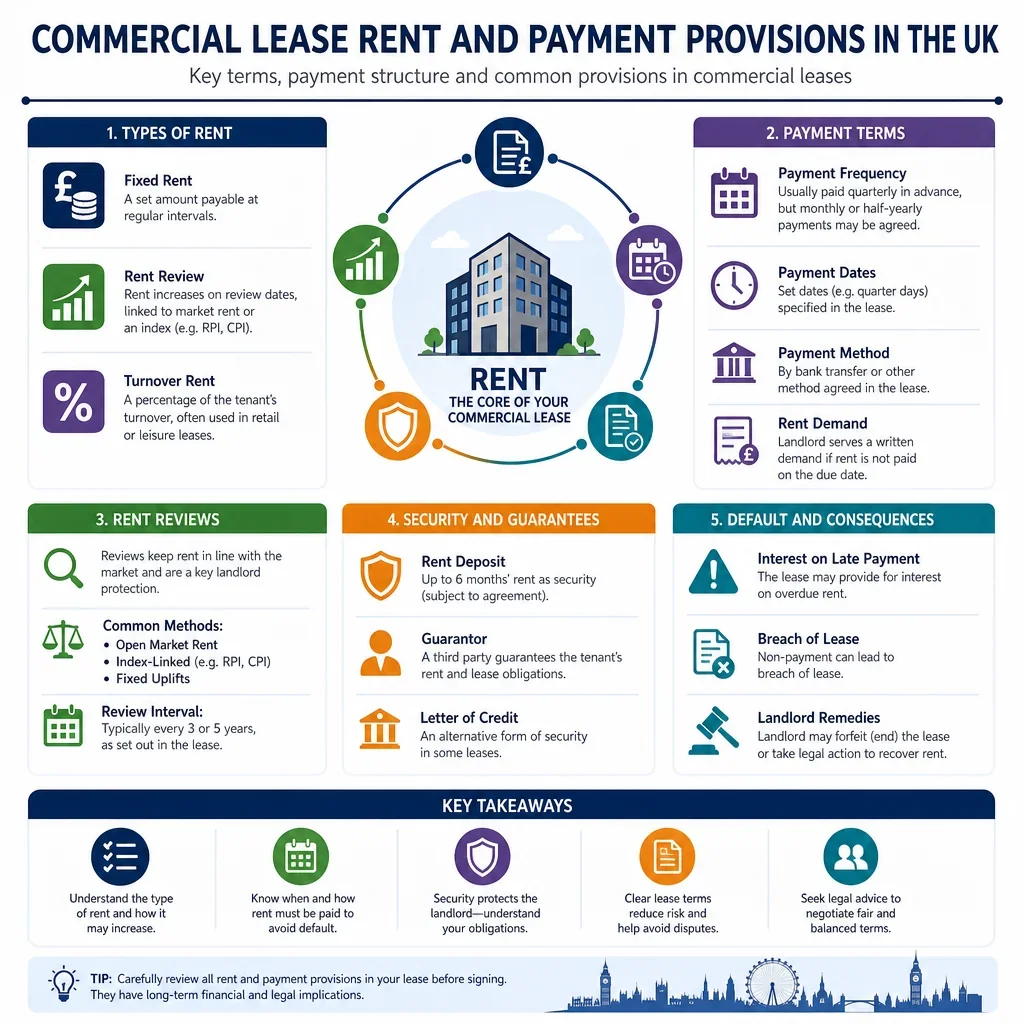
UK commercial lease rent and payment provisions explained for clearer tenancy agreement drafting, review, and negotiation.
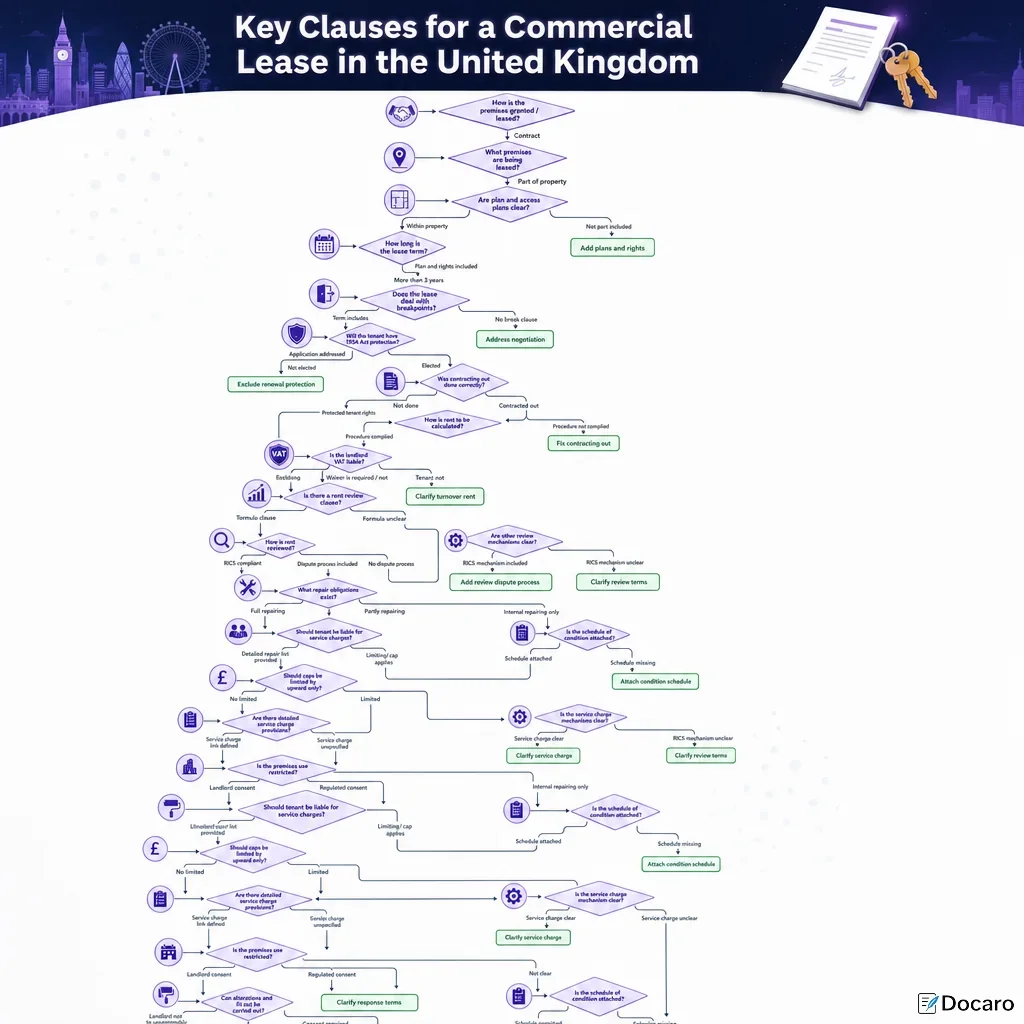
Key commercial lease clauses in the United Kingdom explained for tenants and landlords reviewing essential UK lease terms.
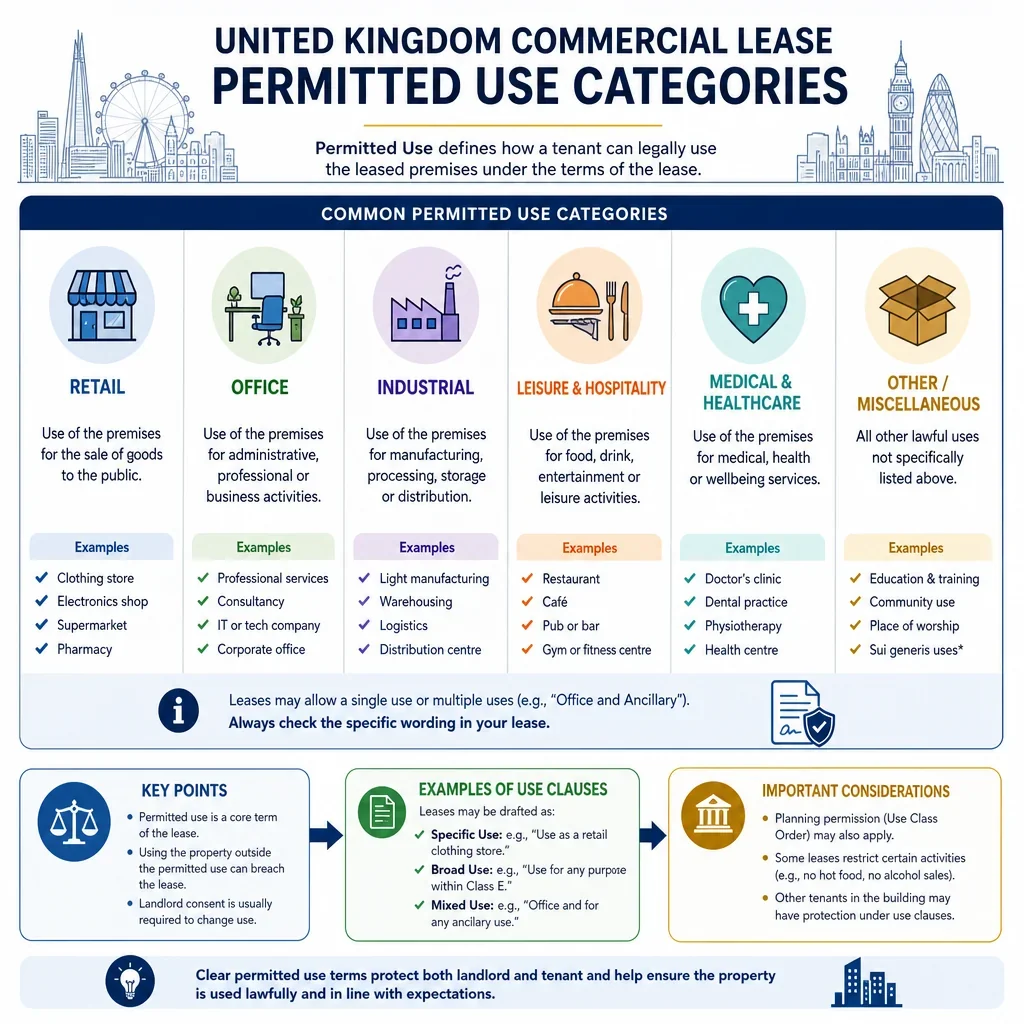
Explore UK commercial lease permitted use categories and how they affect tenancy agreements, tenant rights, and property restrictions.
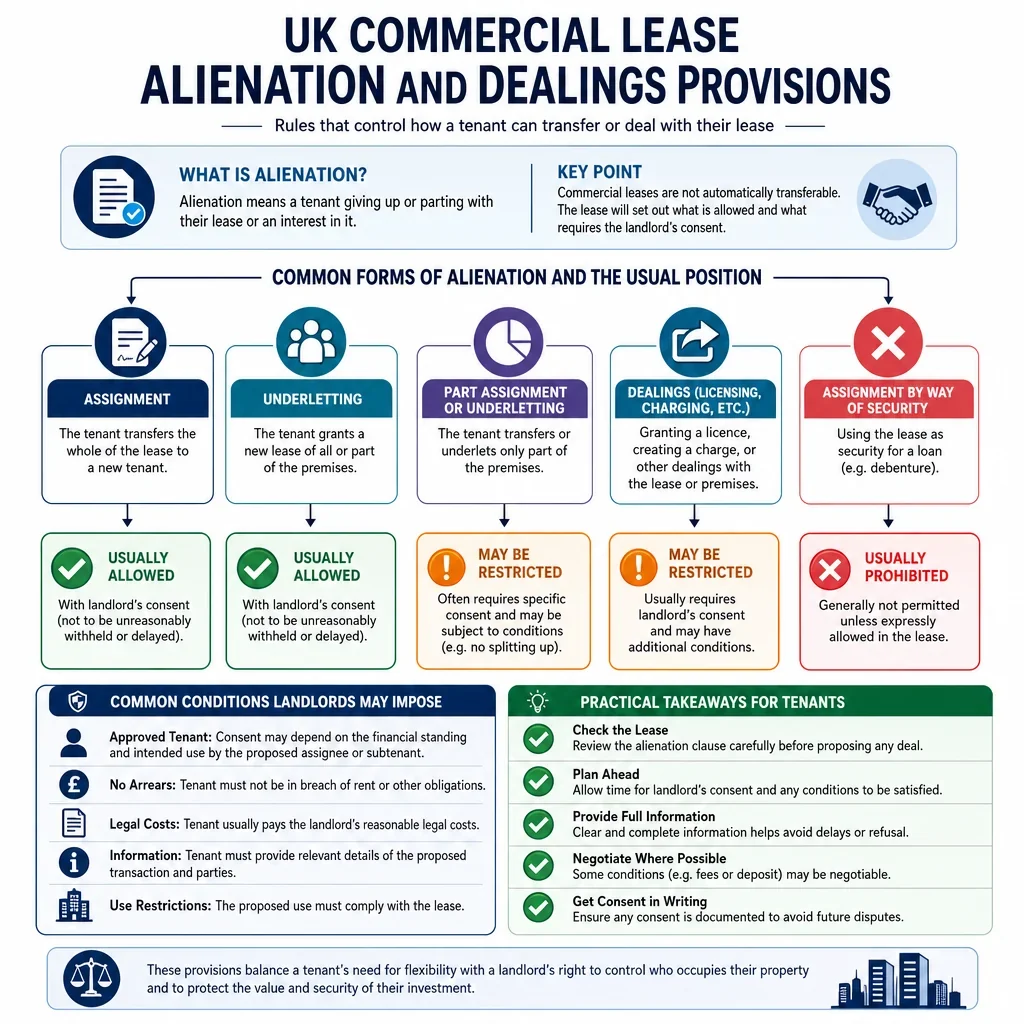
UK guide to commercial lease alienation and dealings provisions, covering assignment, underletting, consent and tenant restrictions.
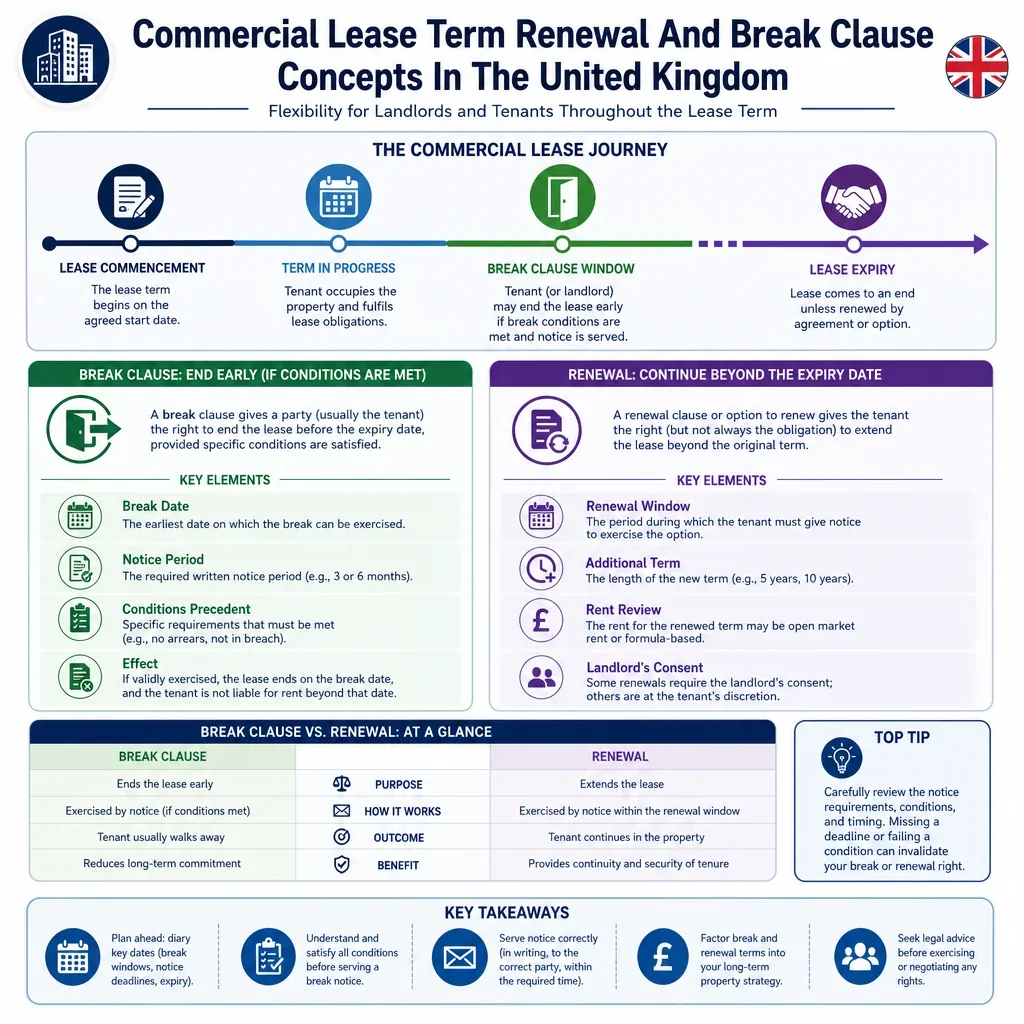
United Kingdom guide to commercial lease renewal terms and break clauses, helping tenants and landlords understand key concepts.
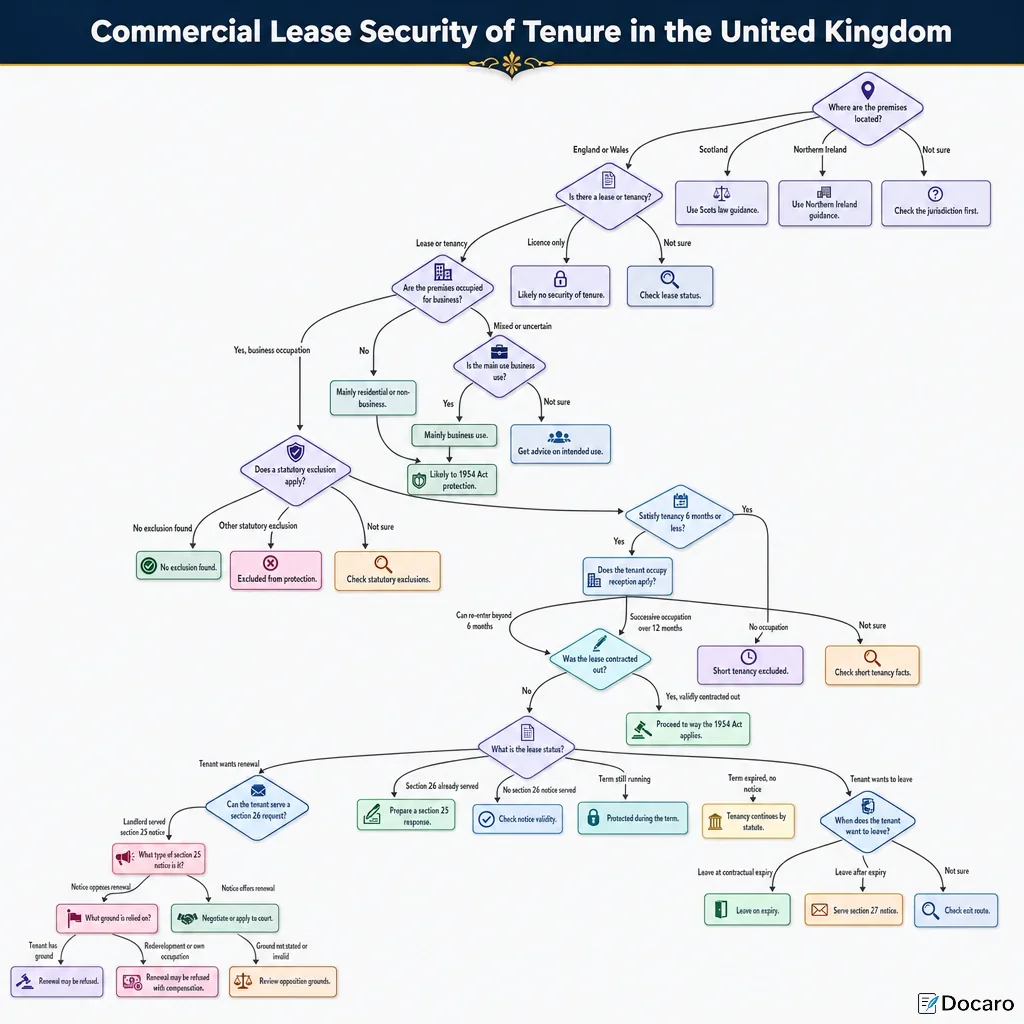
Understand commercial lease security of tenure in the United Kingdom, key rights, exclusions, and practical steps for landlords and tenants.