Choosing Key Clauses For An Arbitration Agreement In The United Kingdom
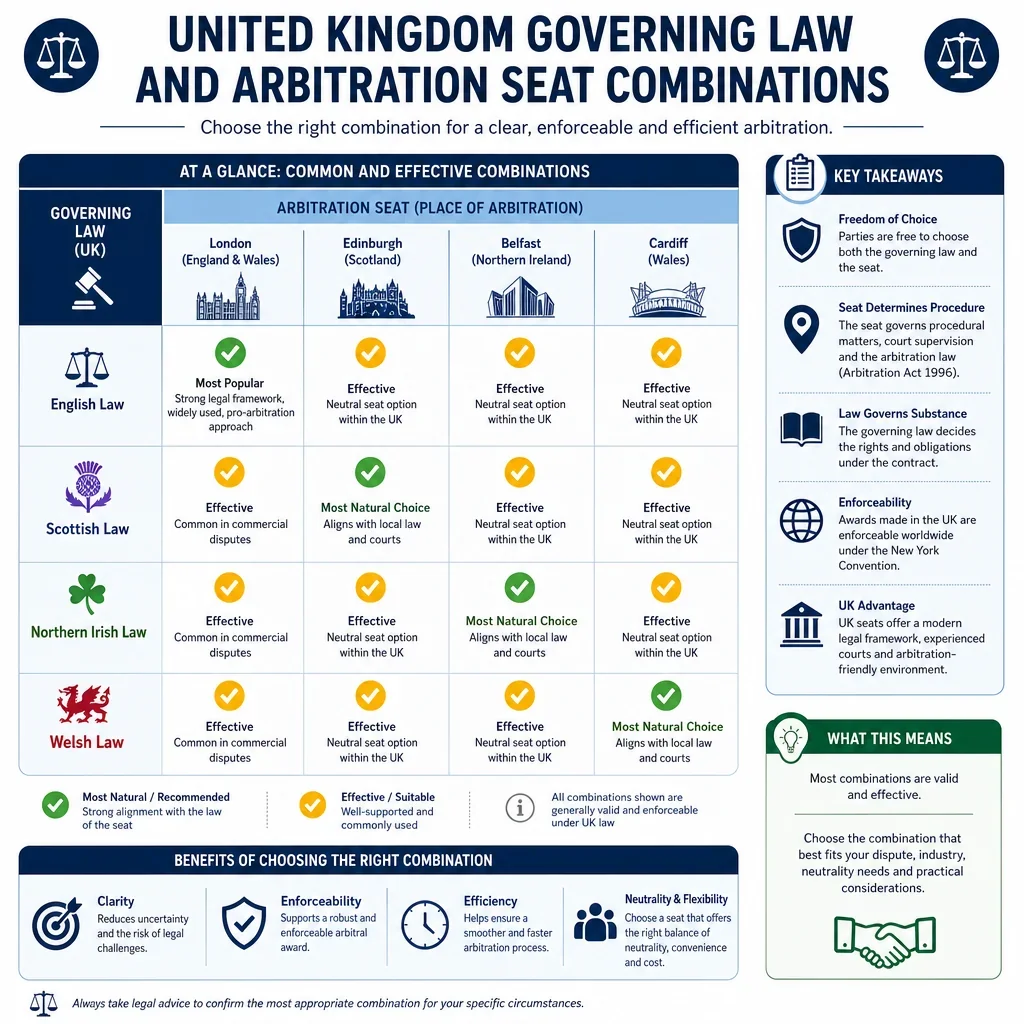
Which law should govern the arbitration agreement?
Why Is Choosing The Right UK Arbitration Agreement Important?
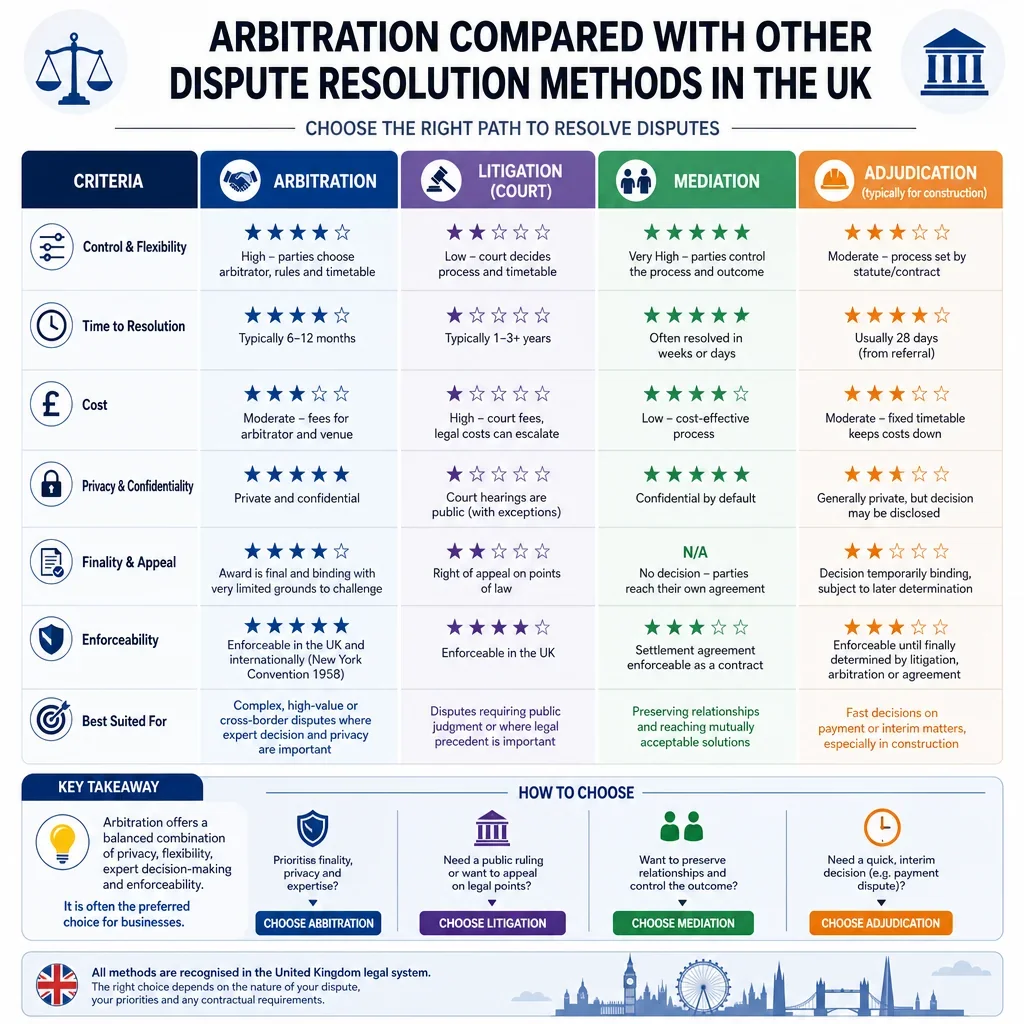
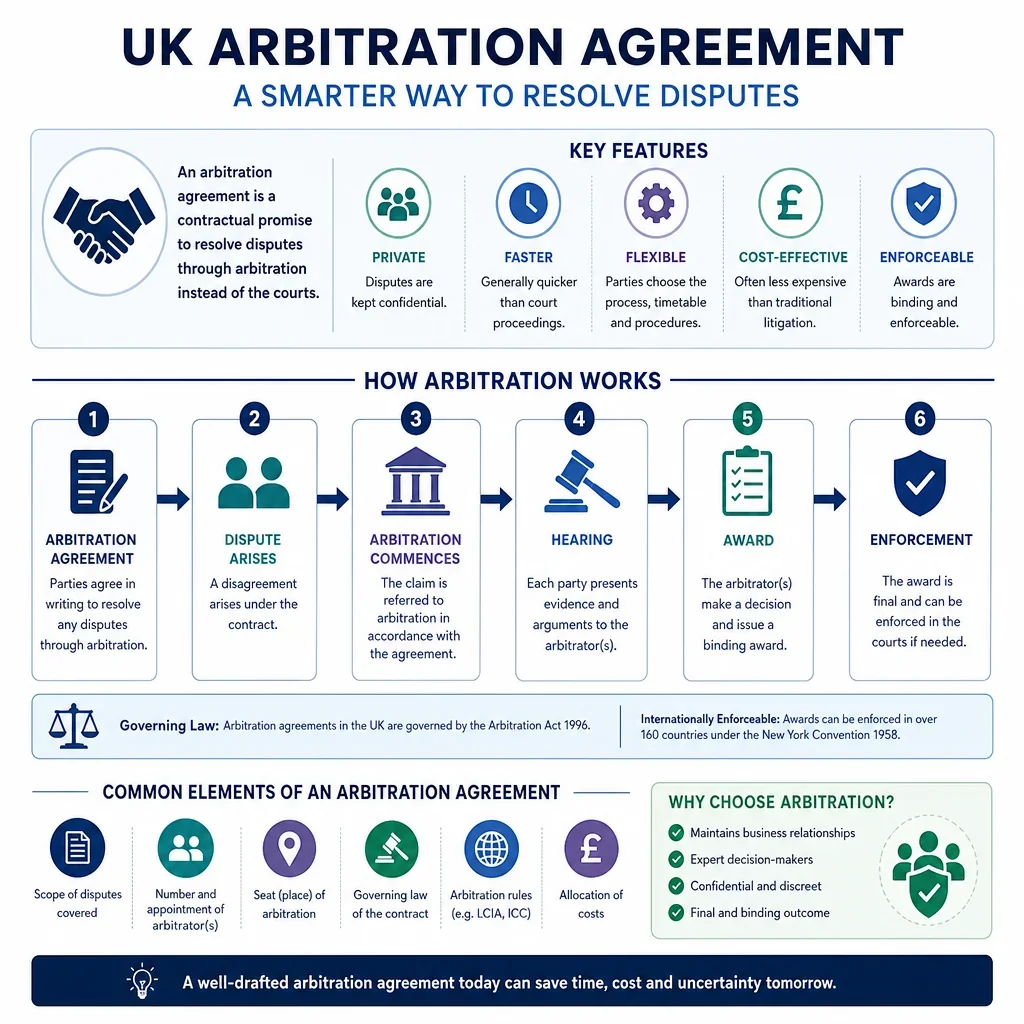
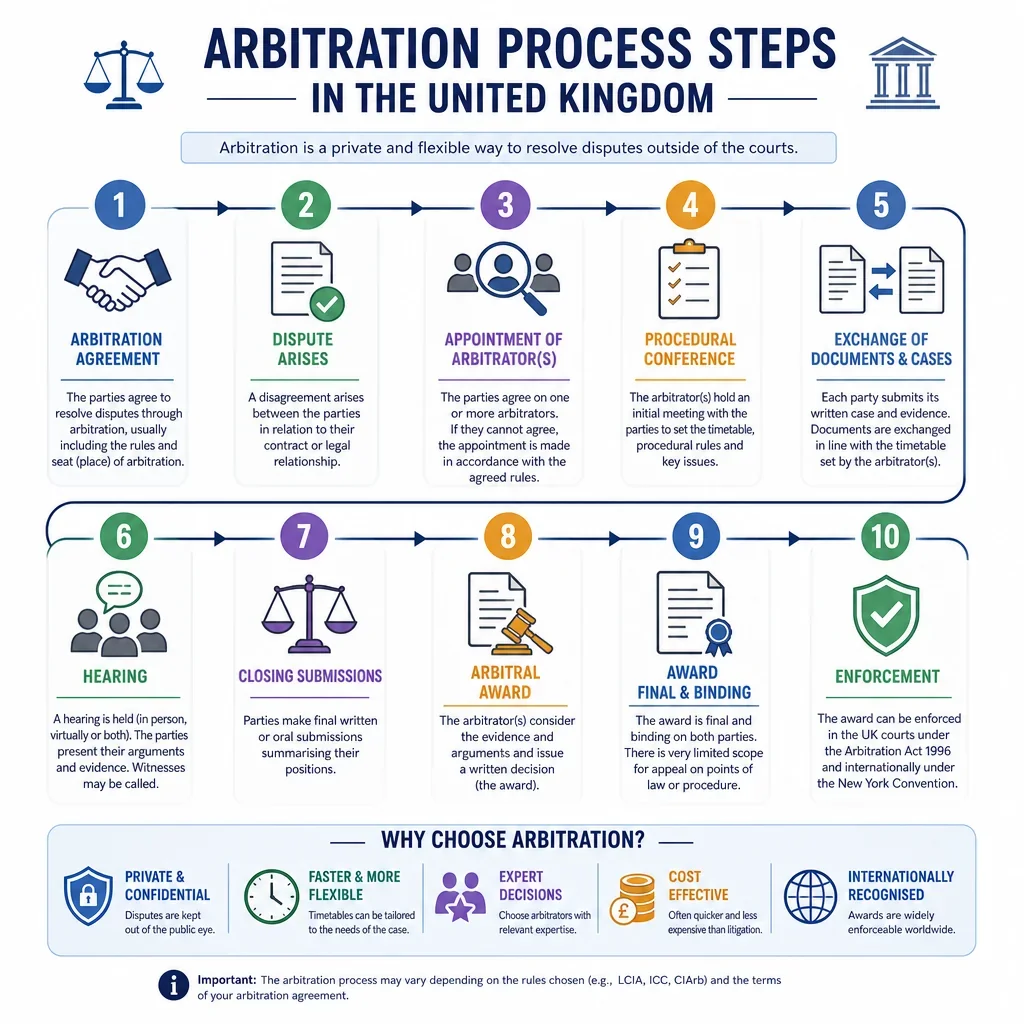
An arbitration clause is not just a boilerplate term. In the United Kingdom, it can decide where disputes are heard, which courts supervise the process, how arbitrators are appointed, and whether an award can be challenged or enforced.
How Can A Clear Arbitration Clause Reduce Dispute Risk?
A well-drafted clause helps avoid early arguments about jurisdiction, seat, procedure, and appointment. This is important because procedural disputes can delay the main claim and increase legal costs before the merits are even considered.
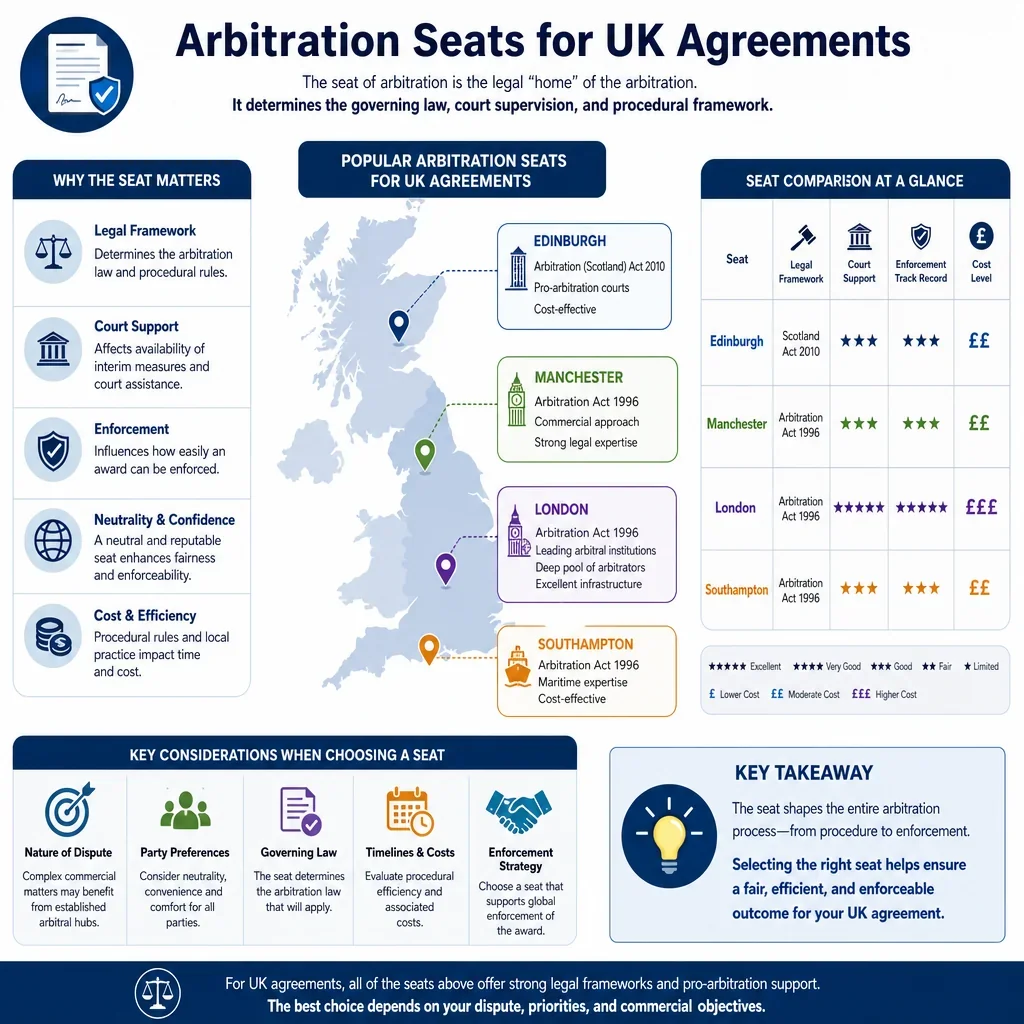
Why Does The Seat Of Arbitration Matter In The UK?
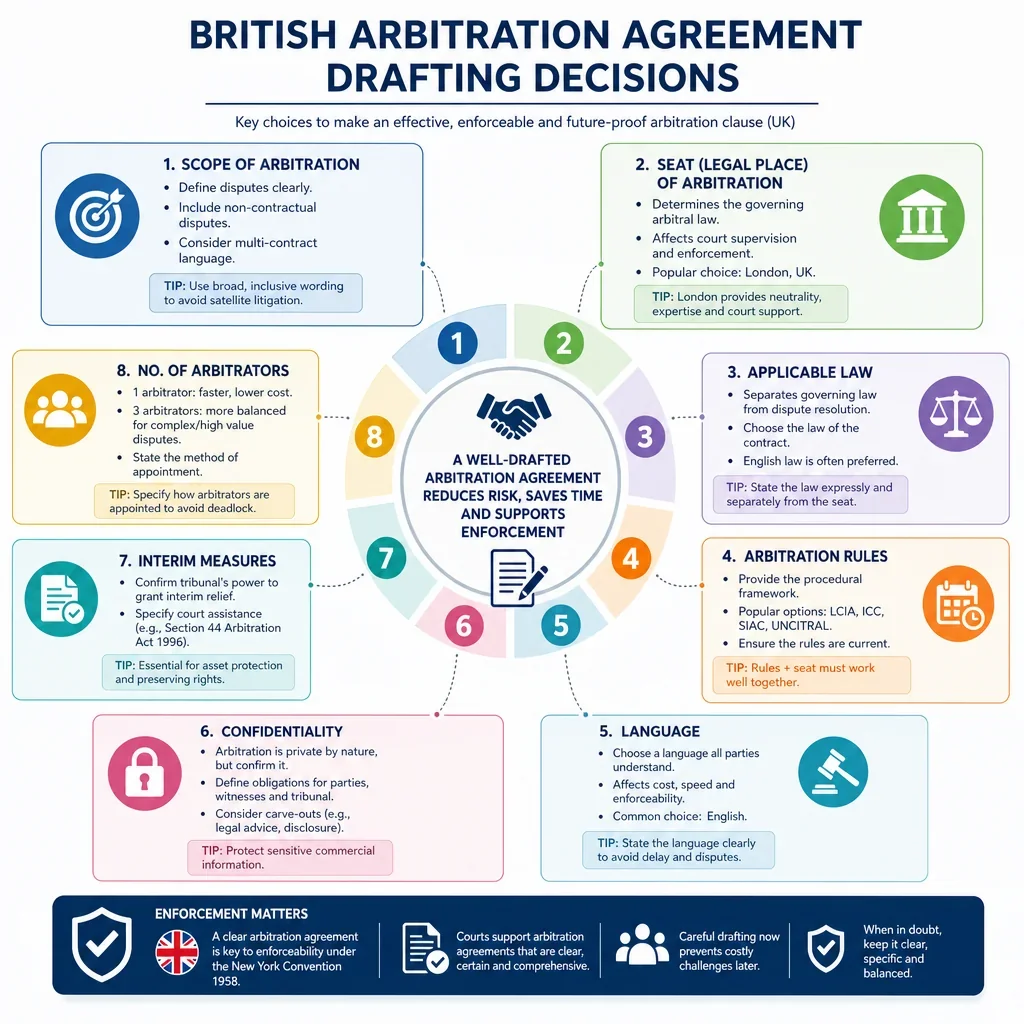
The seat determines the legal framework for the arbitration. A UK seat can bring the arbitration within the support and supervision of the relevant UK courts, including powers under the Arbitration Act 1996.
When Should Standard Arbitration Wording Be Avoided?
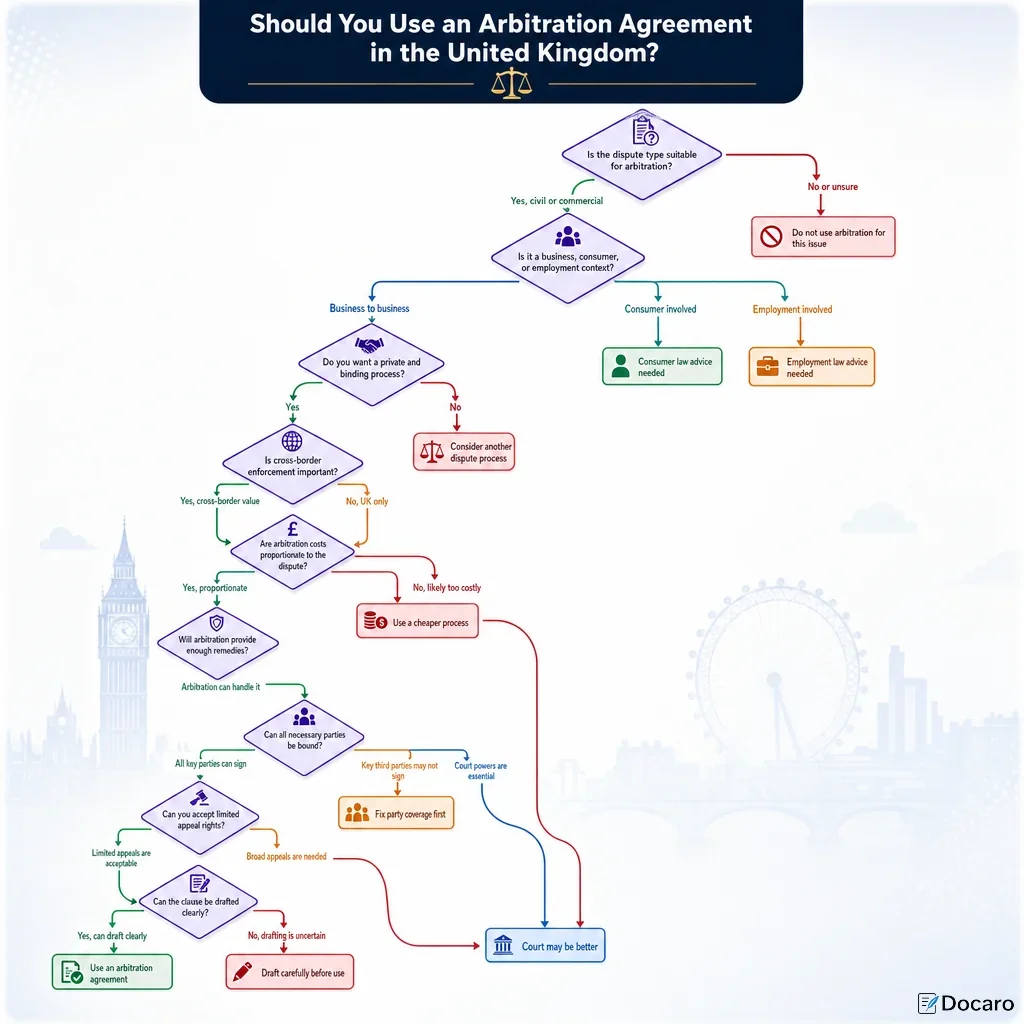
Standard business arbitration wording may be unsuitable for consumer contracts, employment documents, regulated sectors, or statutory rights. UK law contains protections that may limit or invalidate compulsory arbitration in some contexts.
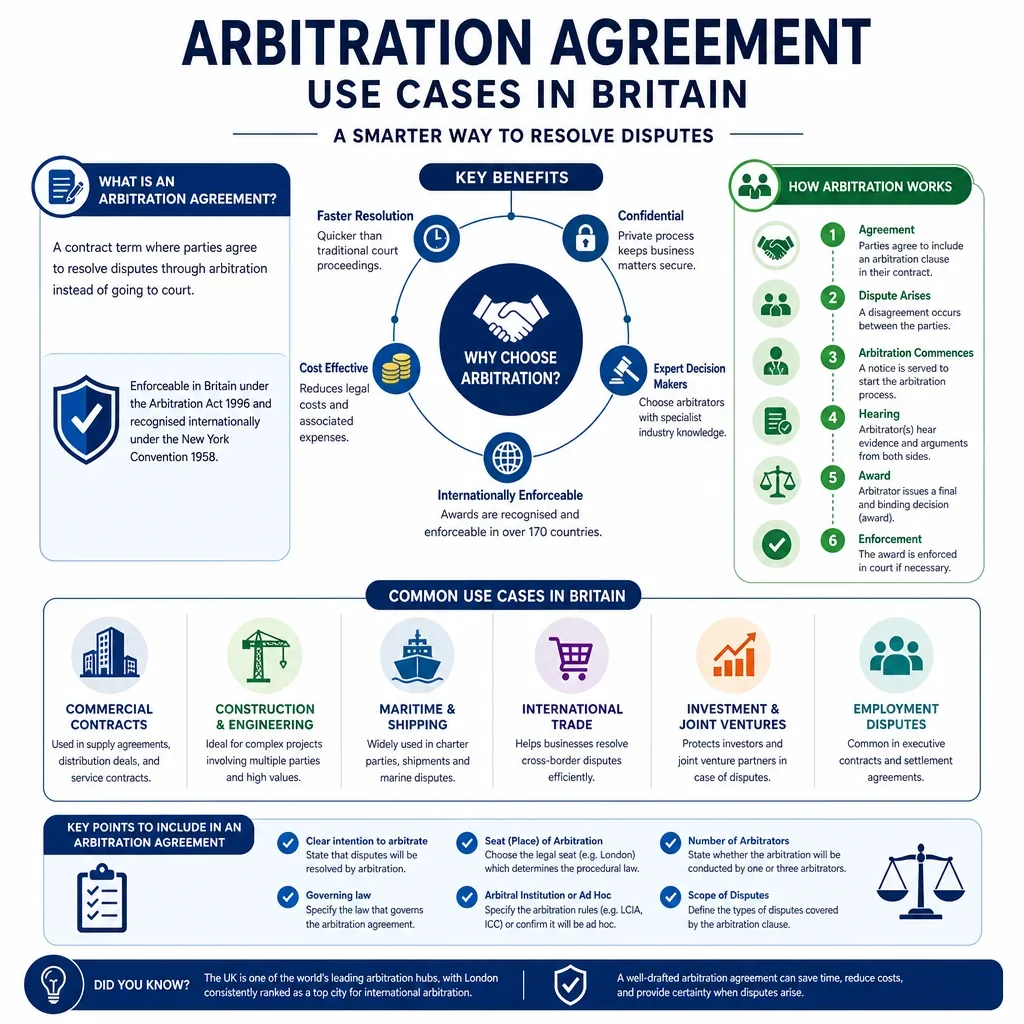
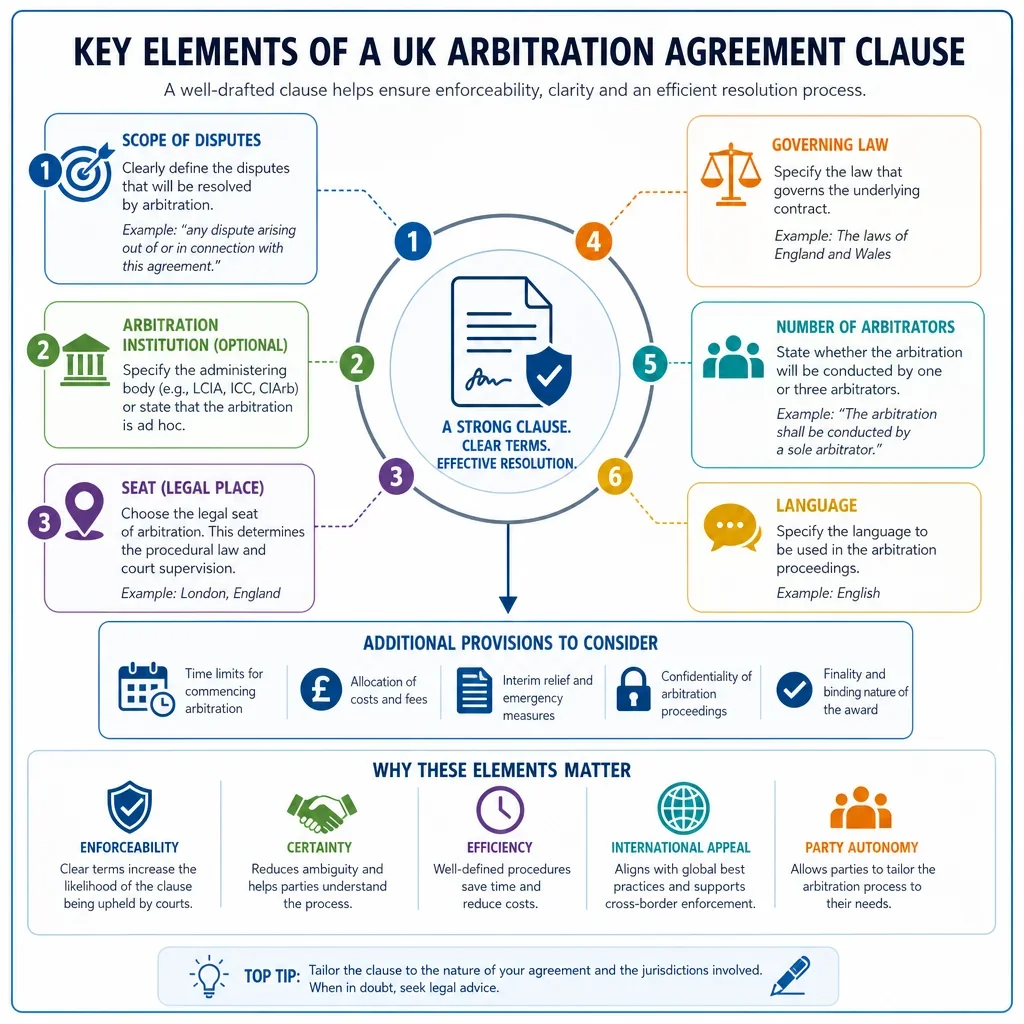
What Clauses Should A UK Arbitration Agreement Usually Cover?
- Governing law for the arbitration agreement.
- Seat of arbitration, such as London or another UK location.
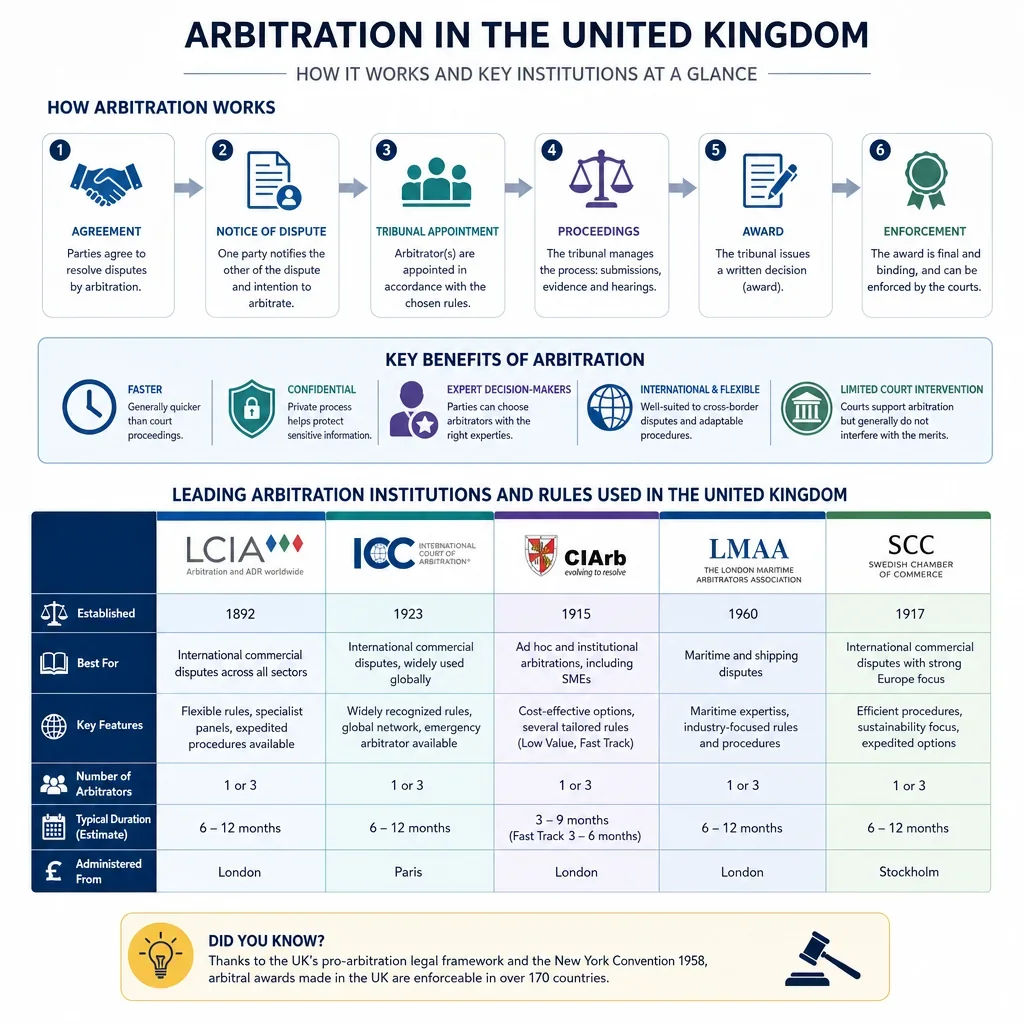
- Rules such as LCIA, ICC, UNCITRAL, or bespoke rules.
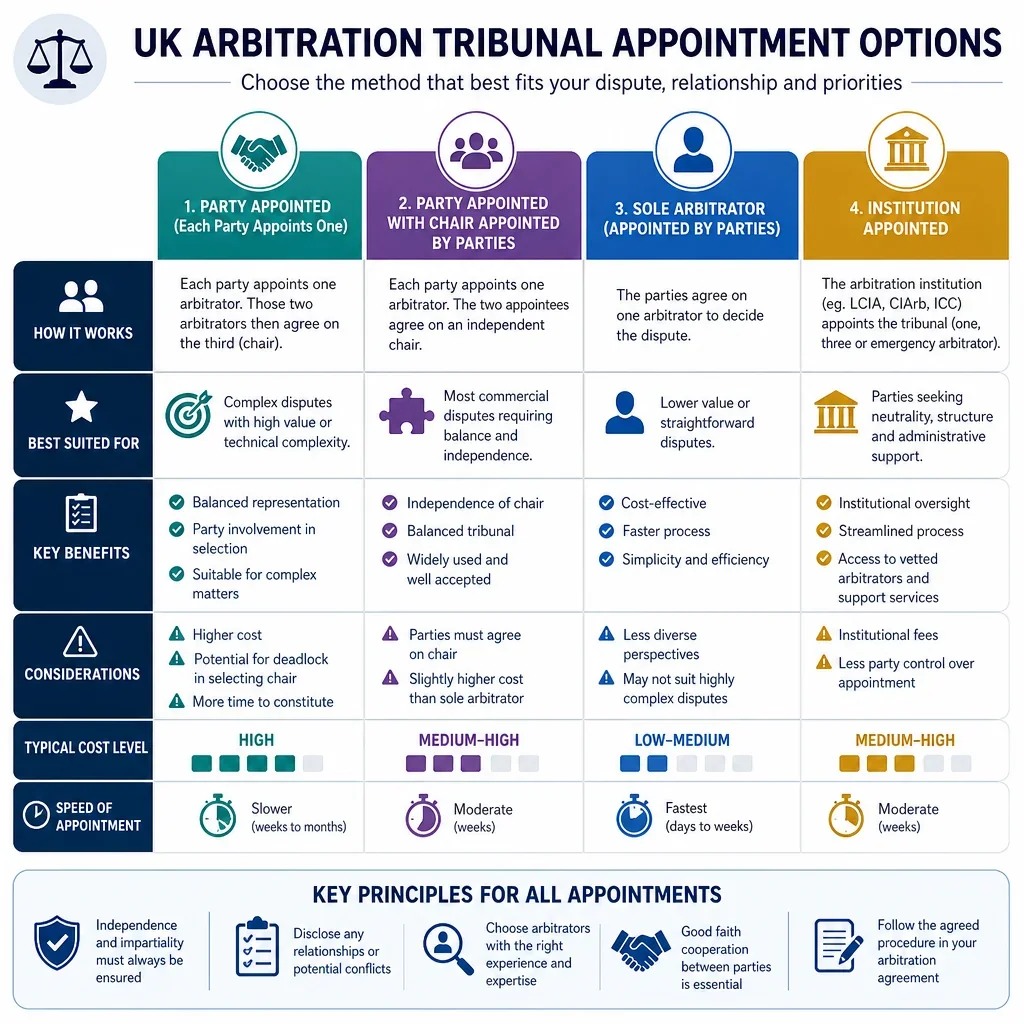
- Tribunal appointment and default appointment process.
- Scope of disputes covered by arbitration.
- Confidentiality, interim relief, language, appeals, and costs.
Making these choices carefully improves certainty, supports enforceability, and helps ensure that arbitration is suitable for the particular UK document and commercial relationship.

FAQs
You Might Also Be Interested In