United Kingdom Arbitration Agreement Clause Checklist
Clause Category | Purpose | Importance Level | Drafting Considerations |
|---|---|---|---|
Agreement To Arbitrate | |||
Core arbitration provision | Records the partiesu0027 binding commitment to resolve covered disputes by arbitration. | Essential | Use mandatory wording and ensure the agreement is evidenced in writing. |
Scope Of Disputes Covered | |||
Core arbitration provision | Defines which disputes must be arbitrated. | Essential | Cover contractual, non-contractual, validity, termination and tort claims if intended. |
Seat Of Arbitration | |||
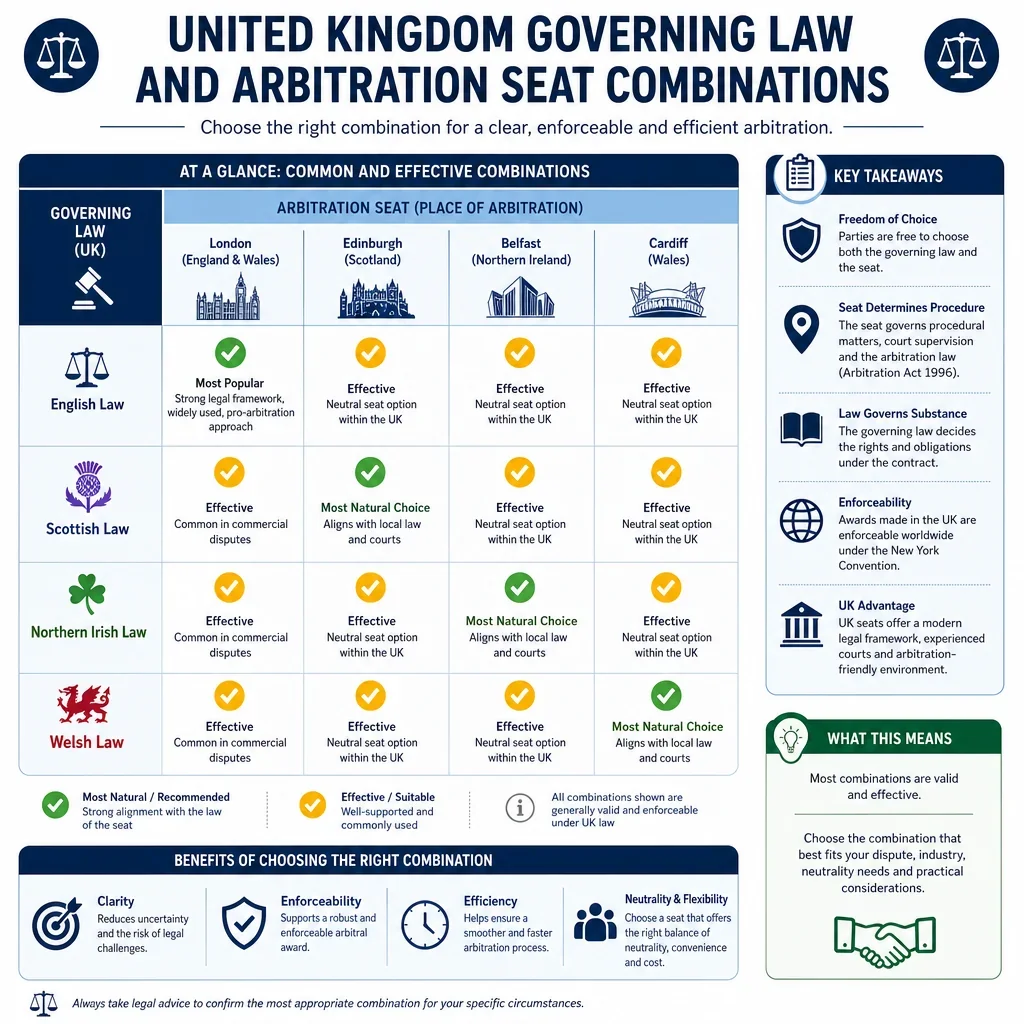
Core arbitration provision | Identifies the legal place of the arbitration and supervisory court. | Essential | State England and Wales, Scotland, Northern Ireland, or another jurisdiction clearly. |
Hearing Venue | |||
Procedure | Allows hearings or meetings to occur in a specified place. | Optional | Clarify that the venue does not change the legal seat. |
Governing Law Of The Contract | |||
Core arbitration provision | Specifies the substantive law applied to the partiesu0027 rights and obligations. | Essential | Keep distinct from the seat and the law of the arbitration agreement. |
Law Of The Arbitration Agreement | |||
Core arbitration provision | Determines law governing formation, validity and scope of the arbitration clause. | Commonly included | Expressly specify it to avoid uncertainty where seat and governing law differ. |
Institutional Arbitration Rules | |||
Procedure | Incorporates a ready-made procedural framework for the arbitration. | Essential | Name the institution and rules accurately, and use current model wording where possible. |
Ad Hoc Arbitration Procedure | |||
Procedure | Sets procedure where no administering institution is used. | Context-dependent | Consider UNCITRAL Rules and specify an appointing authority. |
Number Of Arbitrators | |||
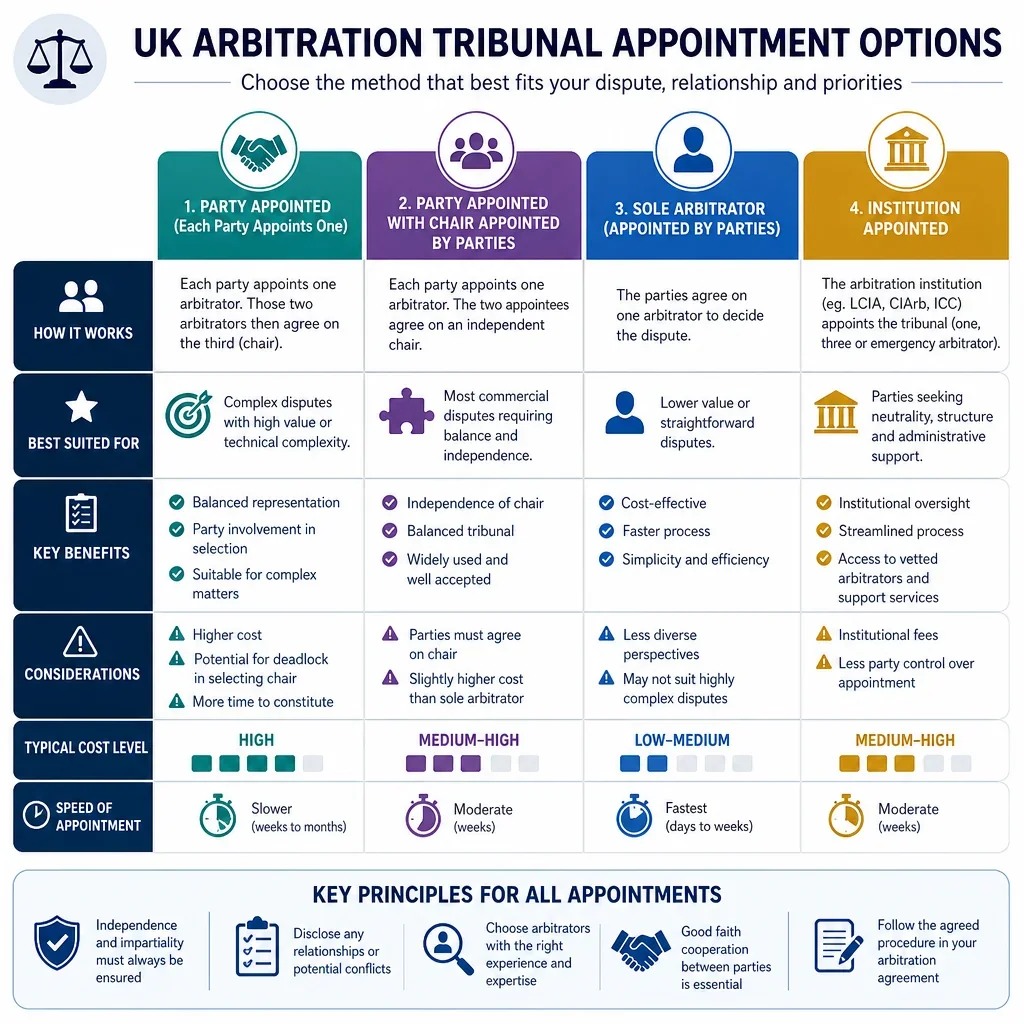
Tribunal appointment | States whether the tribunal has one, three, or another number of arbitrators. | Essential | Match tribunal size to value, complexity, speed and cost. |
Arbitrator Appointment Mechanism | |||
Tribunal appointment | Explains how arbitrators are selected and appointed. | Essential | Include deadlines, party nominations and fallback appointment by institution or court. |
Appointing Authority | |||
Tribunal appointment | Identifies who appoints arbitrators if the agreed process fails. | Commonly included | Choose a suitable institution or default mechanism to avoid deadlock. |
Arbitrator Qualifications | |||
Tribunal appointment | Requires arbitrators to have specified legal, technical or sector expertise. | Context-dependent | Avoid over-narrow criteria that make appointment difficult or invite challenges. |
Independence And Impartiality | |||
Tribunal appointment | Requires neutral decision-makers and disclosure of conflicts. | Commonly included | Refer to institutional rules or conflict guidelines and disclosure obligations. |
Replacement Of Arbitrators | |||
Tribunal appointment | Provides a process if an arbitrator resigns, dies, is removed or cannot act. | Commonly included | State whether earlier hearings or orders remain effective after replacement. |
Language Of Arbitration | |||
Procedure | Specifies the language for submissions, evidence, hearings and awards. | Essential | Address translation costs and documents originally in other languages. |
Arbitration Notices | |||
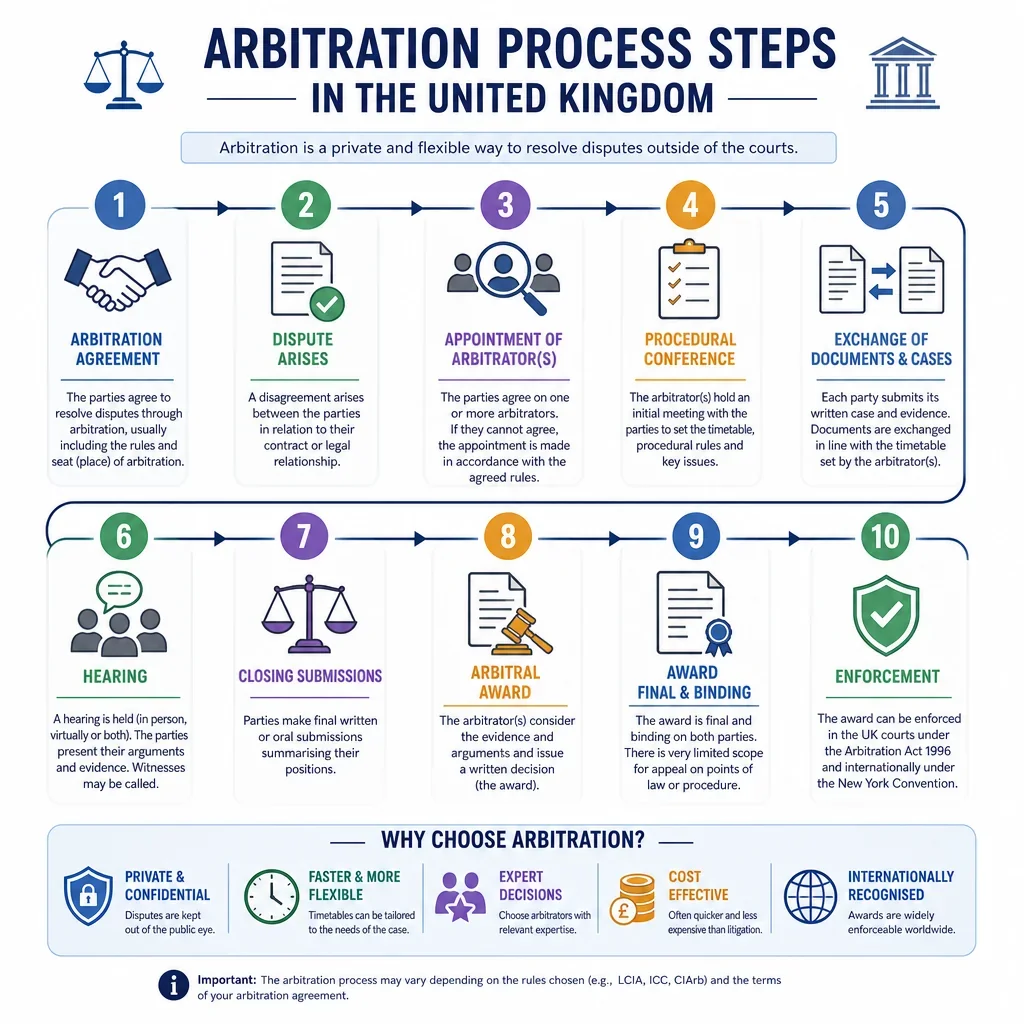
Procedure | Sets how arbitration is commenced and notices are served. | Commonly included | Align with the main contract notice clause and institutional commencement rules. |
Commencement For Limitation Purposes | |||
Procedure | Clarifies when arbitration is treated as started for time-bar purposes. | Context-dependent | Check applicable limitation periods and rules on service of a request for arbitration. |
Procedural Timetable | |||
Procedure | Allows the tribunal to set directions and hearing milestones. | Commonly included | Avoid excessive detail unless speed or staged disputes require it. |
Expedited Arbitration | |||
Procedure | Provides a faster process for urgent or lower-value disputes. | Optional | Set value thresholds, shortened deadlines and limits on evidence or hearings. |
Documents-Only Procedure | |||
Procedure | Allows determination without an oral hearing. | Optional | Use mainly for low-value or narrow disputes and preserve fairness. |
Remote Or Hybrid Hearings | |||
Procedure | Permits hearings by video, telephone or hybrid attendance. | Commonly included | Address platform, security, recording, witness supervision and time zones. |
Evidence Rules | |||
Procedure | Defines how factual, expert and documentary evidence is handled. | Commonly included | Consider IBA Rules, witness statements, expert reports and disclosure limits. |
Document Disclosure | |||
Procedure | Sets whether and how documents are exchanged or produced. | Context-dependent | Choose narrow production, standard disclosure, no disclosure or tribunal discretion. |
Expert Determination Interface | |||
Miscellaneous | Separates disputes for arbitration from issues for expert determination. | Context-dependent | Define accounting, valuation or technical issues carefully to avoid forum disputes. |
Pre-Arbitration Negotiation | |||
Procedure | Requires senior representatives to attempt settlement before arbitration. | Optional | Use clear time limits and avoid uncertain conditions precedent. |
Pre-Arbitration Mediation | |||
Procedure | Requires or permits mediation before arbitration starts. | Optional | Specify mediator appointment, deadline and whether arbitration can start for limitation or urgency. |
Escalation Procedure | |||
Procedure | Creates staged dispute handling before arbitration. | Commonly included | Make each step objective, time-limited and enforceable. |
Emergency Arbitrator | |||
Procedure | Allows urgent relief before the main tribunal is formed. | Context-dependent | Check chosen rules, enforceability, and whether court relief remains available. |
Interim Measures By Tribunal | |||
Costs and remedies | Empowers the tribunal to order preservation, security or provisional relief. | Commonly included | State available measures and whether powers are expanded or restricted. |
Court Relief Carve-Out | |||
Enforcement | Preserves court support for urgent orders despite the arbitration agreement. | Commonly included | Permit injunctions, evidence preservation, asset freezing and other urgent remedies. |
Confidentiality Of Proceedings | |||
Confidentiality | Restricts disclosure of pleadings, evidence, hearings and procedural materials. | Commonly included | Define permitted disclosures to advisers, insurers, regulators, courts and funders. |
Confidentiality Of Award | |||
Confidentiality | Limits publication or disclosure of the final award and reasons. | Commonly included | Allow disclosure for enforcement, legal duties, audit, insurance and regulatory reporting. |
Private Hearings | |||
Confidentiality | Prevents public attendance at arbitration hearings. | Commonly included | Coordinate with chosen rules and confidentiality wording. |
Data Protection In Arbitration | |||
Confidentiality | Addresses personal data processing during arbitration. | Context-dependent | Cover UK GDPR roles, transfer safeguards, redaction and secure document handling. |
Cybersecurity And Secure Communications | |||
Confidentiality | Protects arbitration documents and communications from unauthorised access. | Optional | Specify secure platforms, encryption, access controls and breach notification. |
Costs Allocation | |||
Costs and remedies | Sets how legal costs, tribunal fees and institutional fees are awarded. | Commonly included | Decide whether costs follow the event, are capped, or are reserved to tribunal discretion. |
Advance On Costs | |||
Costs and remedies | Requires parties to fund tribunal and institutional costs during the case. | Commonly included | Usually governed by institutional rules consider default and non-payment consequences. |
Security For Costs | |||
Costs and remedies | Allows security where a claimant may not meet an adverse costs order. | Context-dependent | Avoid discriminatory nationality or residence tests prohibited by the Act. |
Interest On Awards | |||
Costs and remedies | Allows interest before and after the award. | Commonly included | Specify rate, compounding and periods, or leave to tribunal discretion. |
Available Remedies | |||
Costs and remedies | Confirms the tribunal can award damages, declarations, specific performance or injunctions. | Commonly included | Exclude or limit remedies only where commercially and legally appropriate. |
Punitive Damages Exclusion | |||
Costs and remedies | Prevents awards of punitive, exemplary or multiple damages if not intended. | Optional | Coordinate with liability caps, indemnities and mandatory law limits. |
Currency Of Award | |||
Costs and remedies | States the currency for damages, costs and interest. | Optional | Consider exchange-rate date and multi-currency contracts. |
Final And Binding Award | |||
Enforcement | Confirms that awards are final and bind the parties. | Essential | Preserve mandatory challenge rights and align with institutional rules. |
Reasoned Award | |||
Enforcement | Requires the tribunal to give reasons for its decision. | Commonly included | Reasons aid acceptance and enforcement but may affect confidentiality and challenge strategy. |
Form Of Award | |||
Enforcement | Specifies writing, signature, date and seat requirements for the award. | Commonly included | Usually rely on the Act and rules, but avoid inconsistent formalities. |
Enforcement Cooperation | |||
Enforcement | Requires parties to comply with and assist enforcement of awards. | Optional | Include waiver of unnecessary objections but not mandatory statutory rights. |
New York Convention Enforcement | |||
Enforcement | Supports cross-border recognition and enforcement of arbitral awards. | Context-dependent | Use a convention-friendly seat and avoid defects in parties, scope or arbitrability. |
Exclusion Of Section 69 Appeal | |||
Enforcement | Excludes appeal to court on a question of English law where permitted. | Context-dependent | Include if finality is preferred over court correction of legal errors. |
Award Challenge Rights | |||
Enforcement | Acknowledges statutory challenges for jurisdiction or serious irregularity. | Optional | Do not attempt to exclude mandatory challenge rights under sections 67 and 68. |
Separability Of Arbitration Clause | |||
Core arbitration provision | Treats the arbitration clause as distinct from the main contract. | Commonly included | Useful reinforcement where validity, rescission or termination may be disputed. |
Tribunal Jurisdiction To Rule On Jurisdiction | |||
Core arbitration provision | Allows the tribunal to decide its own substantive jurisdiction initially. | Commonly included | Coordinate with court challenge rights and institutional rules. |
Stay Of Court Proceedings | |||
Enforcement | Supports staying litigation brought contrary to the arbitration agreement. | Commonly included | Ensure clause is valid and disputes fall within its scope. |
Consolidation Of Arbitrations | |||
Procedure | Allows related arbitrations to be combined into one process. | Context-dependent | Essential for linked contracts, projects, groups or supply chains. |
Joinder Of Additional Parties | |||
Procedure | Permits additional parties to be added to the arbitration. | Context-dependent | Requires compatible consent, rules and related contract wording. |
Multi-Contract Disputes | |||
Procedure | Allows disputes under related contracts to be heard together or consistently. | Context-dependent | Use consistent seat, rules, language and appointment provisions across documents. |
No Class Or Collective Arbitration | |||
Procedure | Prevents claims from being arbitrated on a class or collective basis. | Optional | Check consumer, employment, competition and statutory collective action limits. |
Consumer Arbitration Fairness | |||
Miscellaneous | Addresses enforceability and fairness where a party is a consumer. | Context-dependent | Check Consumer Rights Act fairness tests and low-value arbitration restrictions. |
Employment Dispute Limits | |||
Miscellaneous | Flags restrictions on contracting out of statutory employment claims. | Context-dependent | Check settlement agreement, ACAS and statutory rights limits before using arbitration. |
Non-Arbitrable Matters Carve-Out | |||
Core arbitration provision | Excludes disputes that cannot or should not be decided privately by arbitration. | Context-dependent | Consider insolvency, criminal, family, public law, registry and statutory tribunal matters. |
Intellectual Property Carve-Out | |||
Core arbitration provision | Allows urgent court action or registry proceedings for IP protection. | Context-dependent | Distinguish infringement, ownership, validity, confidentiality and injunctive relief. |
Injunctive Relief Carve-Out | |||
Costs and remedies | Permits urgent court injunctions without waiving arbitration. | Commonly included | Useful for confidentiality, IP, restrictive covenants and asset preservation. |
Small Claims Carve-Out | |||
Core arbitration provision | Allows low-value claims to proceed in court or another simplified forum. | Optional | Define monetary threshold, forum and whether counterclaims stay in arbitration. |
Undisputed Debt Carve-Out | |||
Core arbitration provision | Allows court action for undisputed payment debts. | Optional | Define undisputed debt carefully to prevent tactical avoidance of arbitration. |
Provisional Or Partial Awards | |||
Costs and remedies | Allows the tribunal to decide issues or claims in separate awards. | Commonly included | Useful for liability-first, quantum-later or jurisdictional staging. |
Early Determination Or Summary Disposal | |||
Procedure | Allows weak claims or defences to be dismissed early. | Optional | Check chosen rules and preserve each partyu0027s reasonable opportunity to present its case. |
General Tribunal Powers | |||
Procedure | Confirms tribunal control over procedure, evidence and hearings. | Commonly included | Avoid restricting powers unless a bespoke process is needed. |
Fairness And Equal Treatment | |||
Procedure | Requires a fair process and reasonable opportunity to present each case. | Essential | Do not draft shortcuts that undermine statutory fairness duties. |
Witness Evidence | |||
Procedure | Sets use of witness statements, examination and cross-examination. | Optional | Consider written evidence, hearing length, remote testimony and witness availability. |
Expert Evidence | |||
Procedure | Controls party-appointed and tribunal-appointed expert evidence. | Context-dependent | Specify disciplines, joint experts, hot-tubbing and report deadlines if useful. |
Legal Privilege | |||
Procedure | Preserves privilege protections over legal advice and litigation materials. | Commonly included | Important in cross-border cases where privilege rules may differ. |
Third Party Funding Disclosure | |||
Costs and remedies | Requires disclosure of external funding arrangements relevant to conflicts or costs. | Context-dependent | Consider funder identity, confidentiality, privilege and security for costs. |
Sanctions Compliance | |||
Miscellaneous | Addresses payments, representation or performance affected by sanctions laws. | Context-dependent | Check UK sanctions licensing, institutional requirements and payment restrictions. |
Sovereign Immunity Waiver | |||
Enforcement | Waives immunity from jurisdiction or enforcement for state-related parties. | Context-dependent | Use express wording for arbitration, court support and enforcement against assets. |
Capacity And Authority | |||
Miscellaneous | Confirms each party has power to enter into the arbitration agreement. | Commonly included | Check corporate authority, agency, partnerships, states and signatory identity. |
Parties Bound By Arbitration | |||
Core arbitration provision | Identifies who must arbitrate, including successors or permitted assigns. | Commonly included | Address group companies, guarantors, affiliates, assignees and novated parties. |
Assignment Of Arbitration Agreement | |||
Miscellaneous | Clarifies whether the arbitration agreement transfers with assigned rights. | Context-dependent | Coordinate with assignment clause and notice requirements. |
Survival After Termination | |||
Miscellaneous | Confirms arbitration obligations continue after expiry or termination. | Commonly included | Include validity, termination, post-contract obligations and accrued claims. |
Severability Of Invalid Terms | |||
Miscellaneous | Preserves the arbitration clause if part is invalid or unenforceable. | Commonly included | Avoid relying on severance to save unfair consumer or statutory restrictions. |
Waiver Of Court Trial For Covered Disputes | |||
Core arbitration provision | Confirms covered disputes are not to be tried in ordinary court proceedings. | Optional | Use carefully in UK documents focus on stay and arbitration obligation, not US-style jury wording. |
Arbitrator Immunity | |||
Tribunal appointment | Recognises liability protection for arbitrators acting in that capacity. | Optional | Usually statutory or rule-based do not undermine mandatory standards. |
Arbitrator Fees | |||
Costs and remedies | Addresses tribunal remuneration and payment responsibility. | Commonly included | Institutional rules often govern fees ad hoc clauses need clearer fee arrangements. |
VAT And Tax On Costs | |||
Costs and remedies | Allocates VAT or tax treatment on fees, costs and expenses. | Optional | Important where parties have different VAT recovery positions or overseas status. |
Procedural Law | |||
Procedure | Identifies mandatory and non-mandatory procedural law applying at the seat. | Commonly included | Usually follows the seat do not create conflict with the chosen arbitral rules. |
Mandatory Provisions Of Arbitration Act 1996 | |||
Miscellaneous | Recognises that some statutory provisions apply despite agreement otherwise. | Commonly included | Do not draft terms inconsistent with Schedule 1 mandatory provisions. |
Court Jurisdiction For Arbitration Support | |||
Enforcement | Identifies courts that may support or supervise the arbitration. | Commonly included | Usually linked to the seat consider non-exclusive court support wording. |
Confidentiality Exceptions | |||
Confidentiality | Lists when arbitration information may be disclosed. | Commonly included | Include enforcement, legal duty, regulators, auditors, insurers, funders and professional advisers. |
Market And Regulatory Disclosure | |||
Confidentiality | Allows required disclosures by listed, regulated or public-interest entities. | Context-dependent | Coordinate confidentiality with FCA, exchange, audit and regulatory reporting duties. |
Time Limit For Award | |||
Procedure | Sets a deadline for the tribunal to issue an award. | Optional | Allow extensions to avoid invalidity or rushed decisions. |
Settlement And Consent Award | |||
Enforcement | Allows agreed settlements to be recorded as enforceable awards. | Optional | Confirm tribunal power to issue an award on agreed terms. |
Correction Or Clarification Of Award | |||
Enforcement | Allows errors or ambiguities in awards to be corrected. | Commonly included | Set time limits consistent with the Act and chosen rules. |
Default Or Non-Participation | |||
Procedure | Allows arbitration to continue if a party fails to participate. | Commonly included | Preserve fair notice and opportunity to present a case. |
Survival Of Confidentiality | |||
Confidentiality | Keeps confidentiality obligations alive after the arbitration ends. | Commonly included | State duration and exceptions for enforcement, law and regulatory duties. |
Delivery And Service Of Award | |||
Enforcement | Sets how awards are delivered to the parties. | Optional | Permit electronic delivery if acceptable under rules and enforcement needs. |
What Should A UK Arbitration Clause Include?
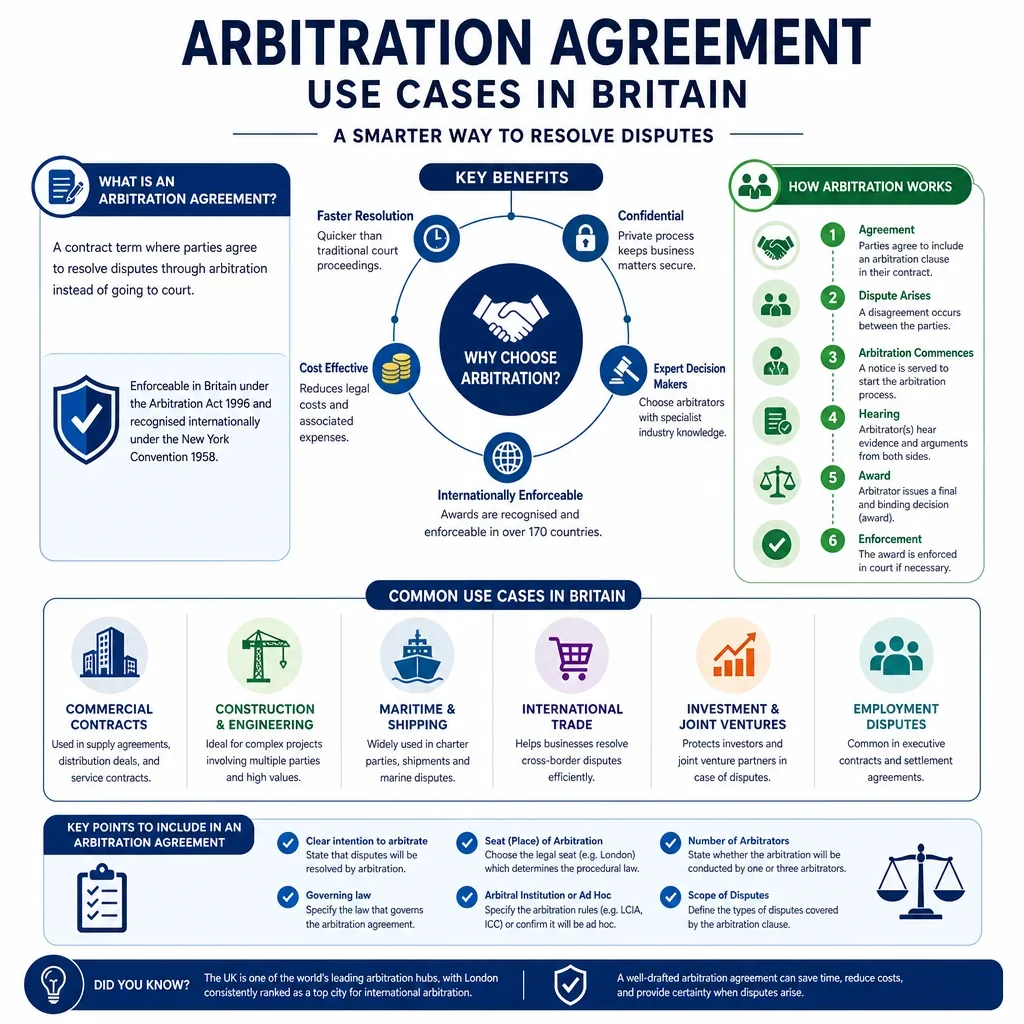
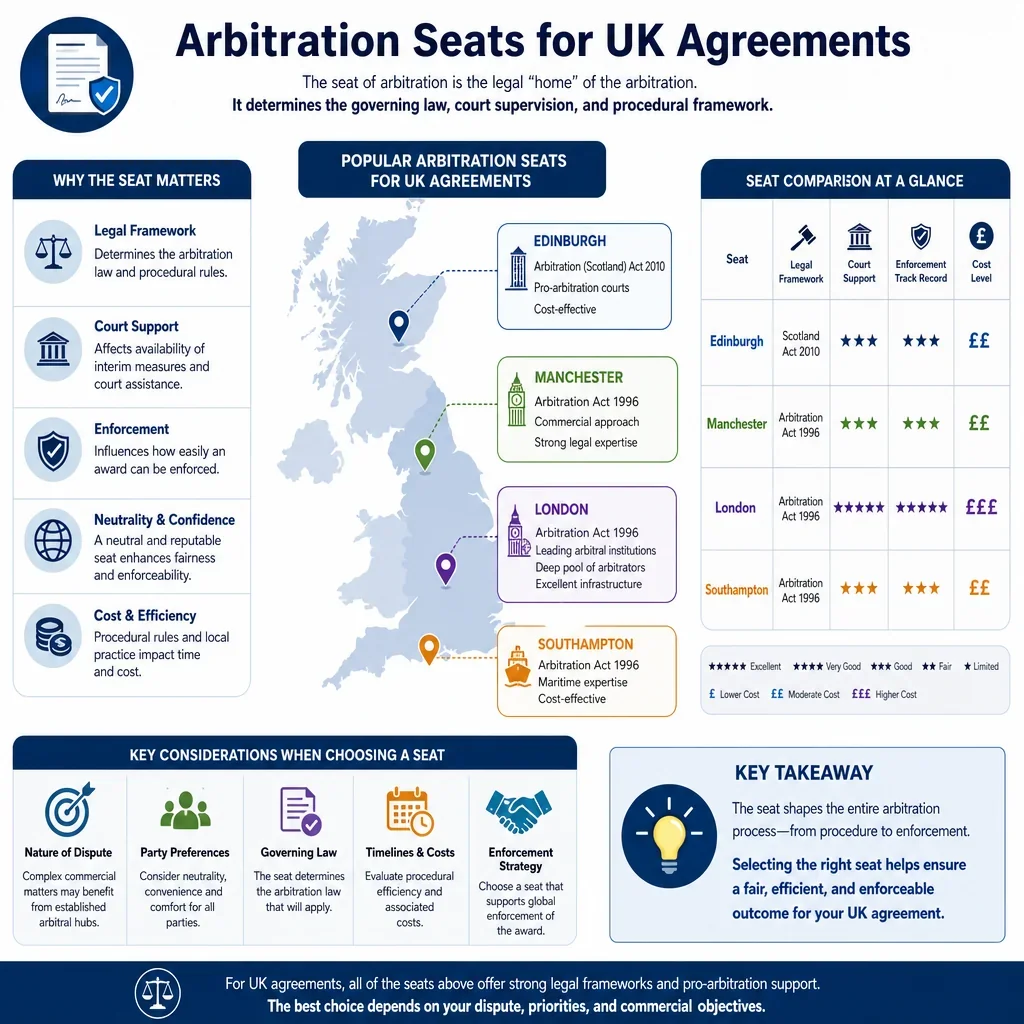
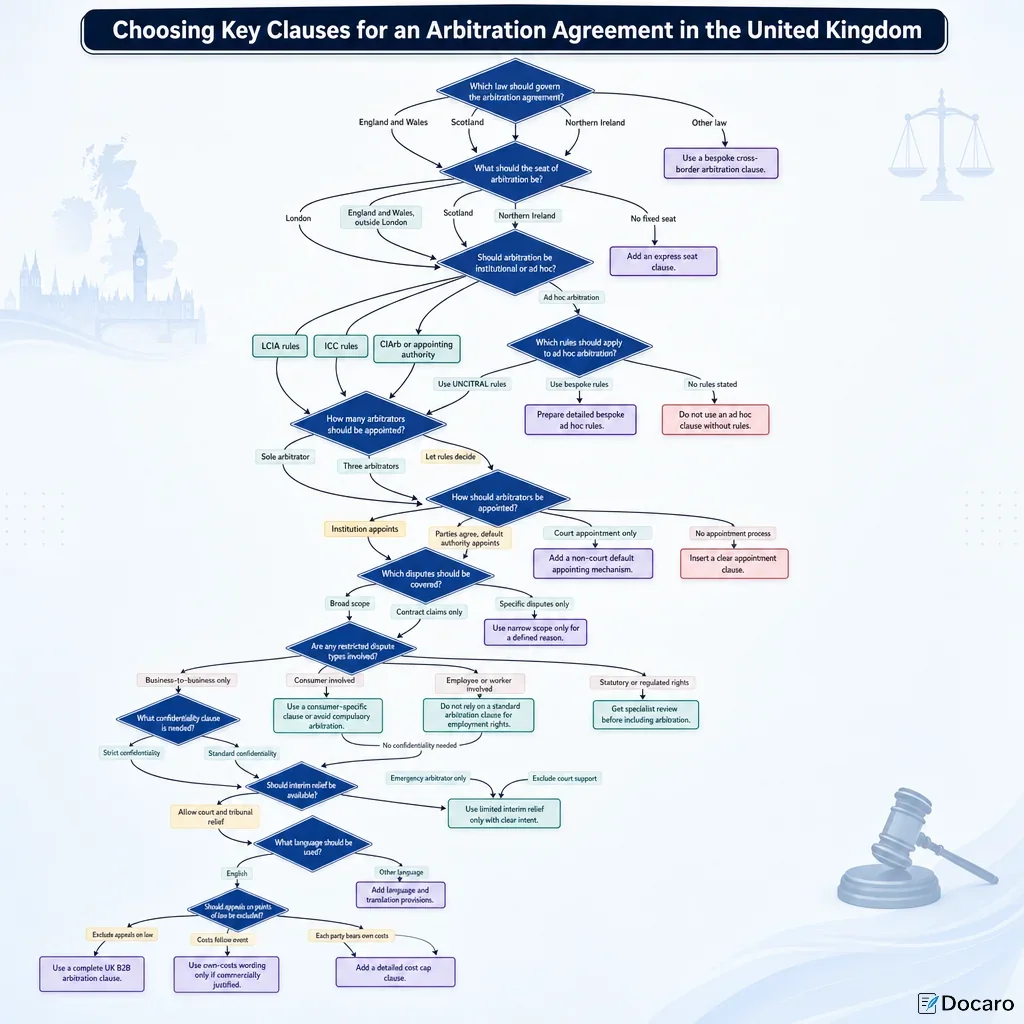
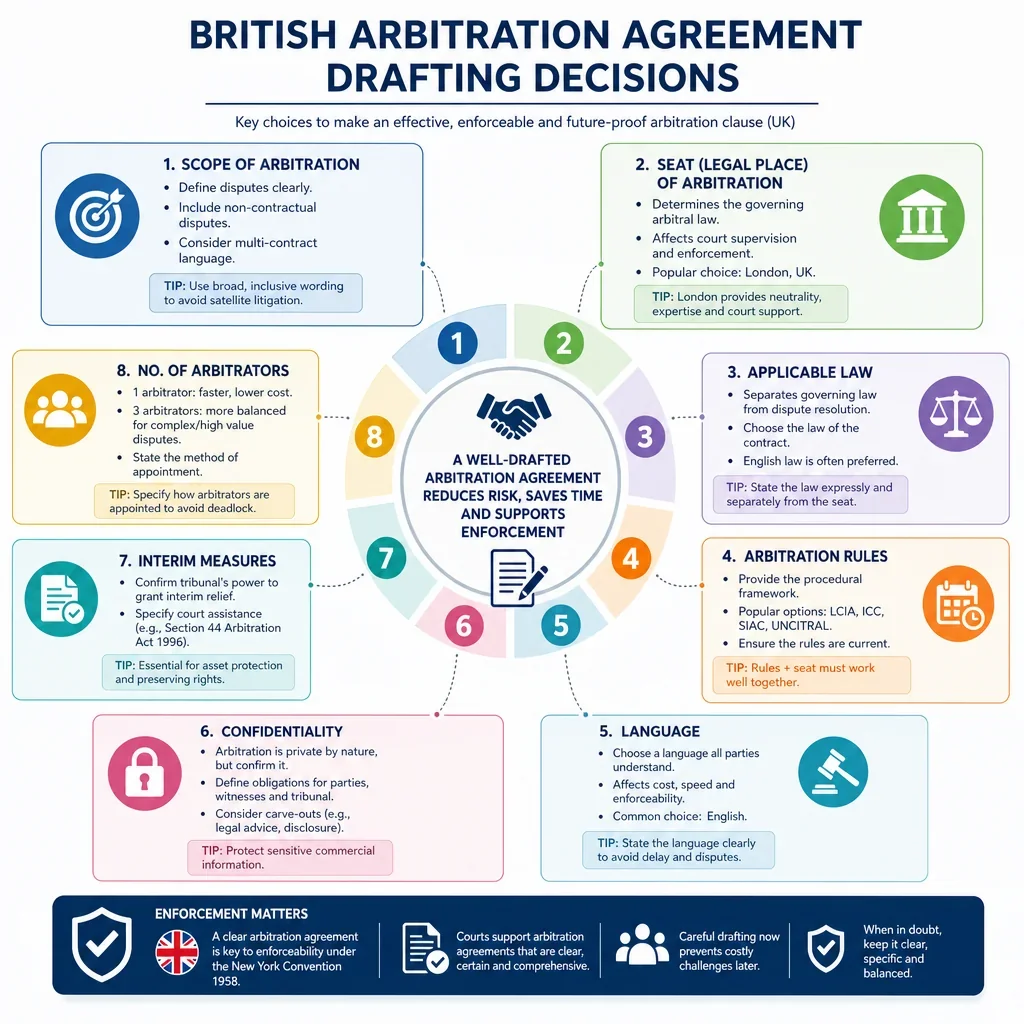
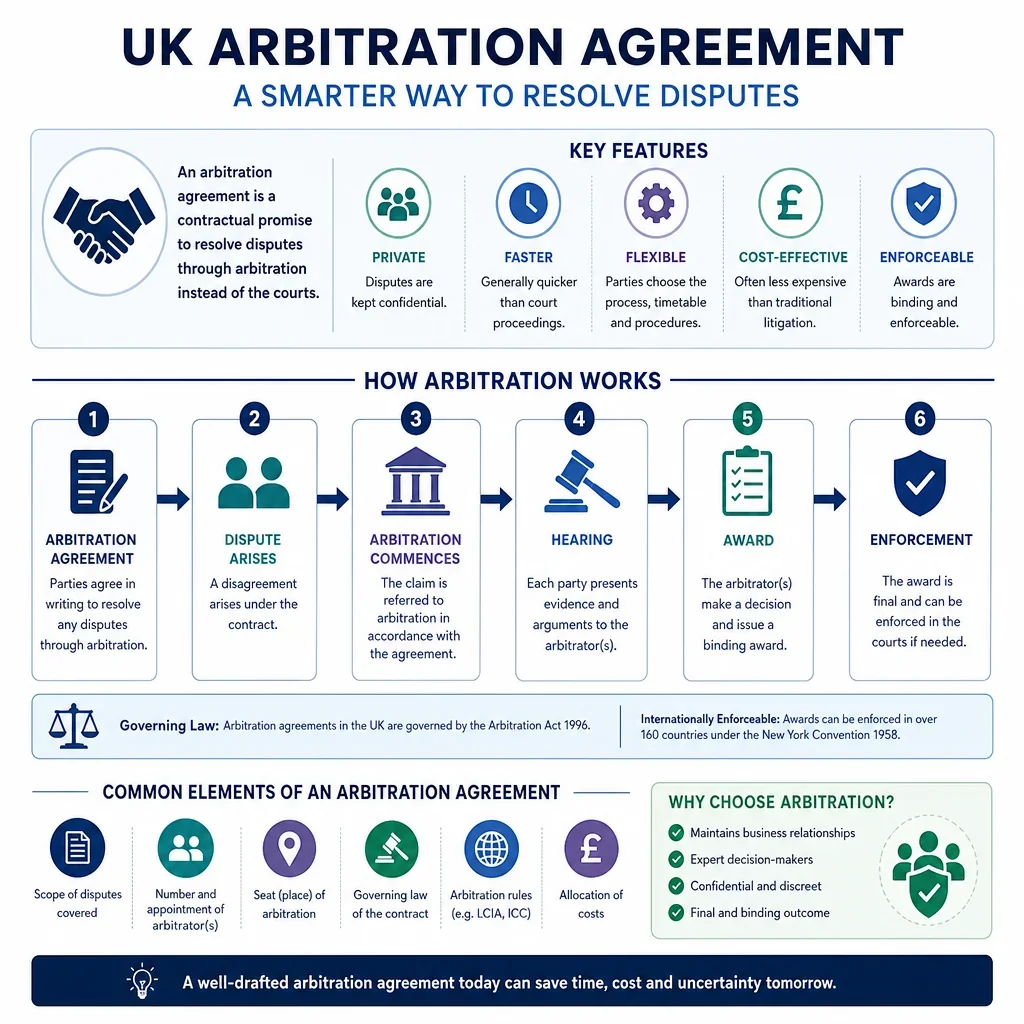
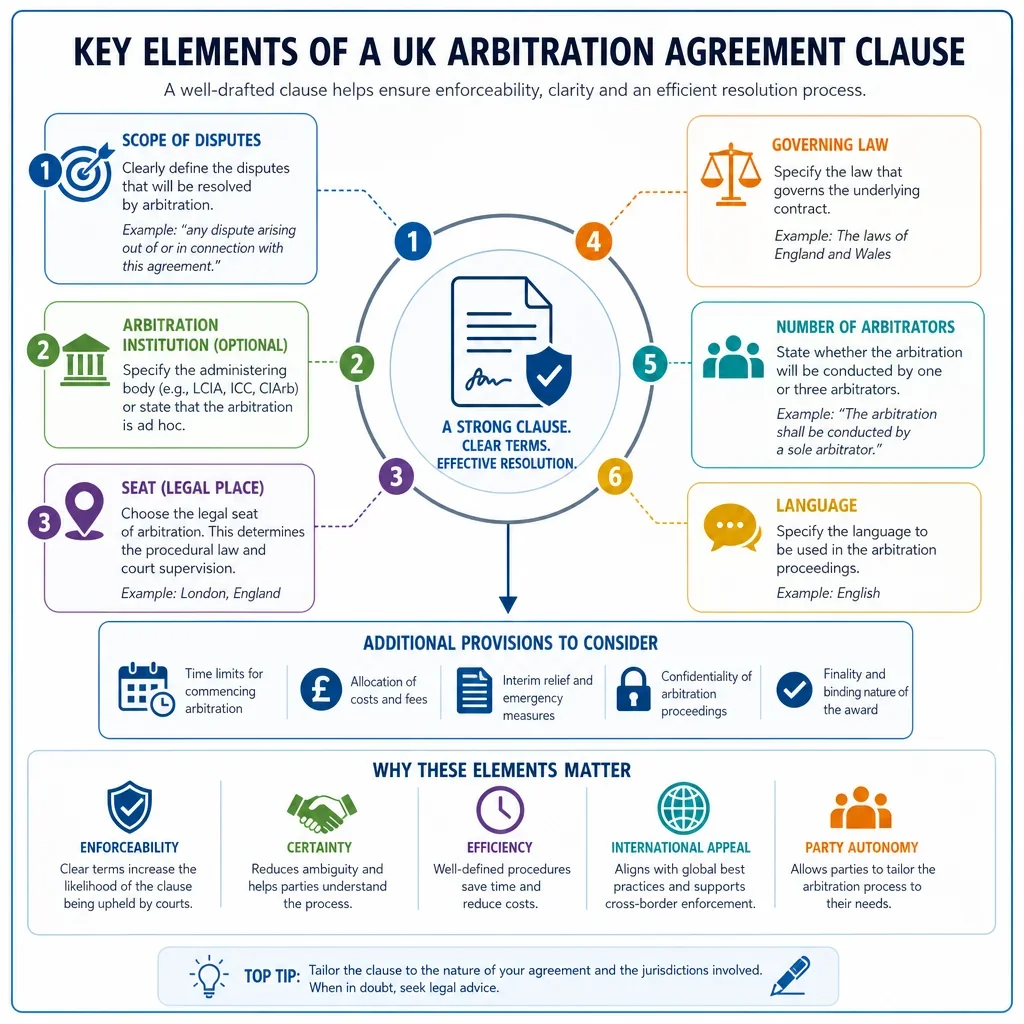
A workable UK arbitration clause should do more than say disputes will be arbitrated. It should clearly state the seat, the rules or procedure, the number and appointment of arbitrators, the language, and the scope of disputes covered. The seat is especially important because it usually determines the procedural law and the court with supervisory powers under the Arbitration Act 1996.
Why Is The Seat Of Arbitration Critical In The UK?
If England and Wales, Scotland, or Northern Ireland is chosen as the seat, the Arbitration Act 1996 will usually govern core procedural matters. This affects court support, challenges to awards, arbitrator powers, separability, confidentiality expectations, and enforcement routes. Do not confuse the seat with the physical hearing venue; hearings can be held elsewhere without changing the legal seat.
Which Arbitration Clause Choices Are Most Often Essential?
- Agreement to arbitrate: creates the obligation to arbitrate rather than litigate.
- Scope of disputes: reduces arguments about whether contractual, tort, statutory, non-contractual, validity, or termination disputes are covered.
- Seat: anchors the arbitration to a legal jurisdiction.
- Rules or procedure: avoids procedural gaps and uncertainty.
- Tribunal appointment mechanism: prevents deadlock if the parties cannot agree on an arbitrator.
When Should Extra Arbitration Clause Terms Be Added?
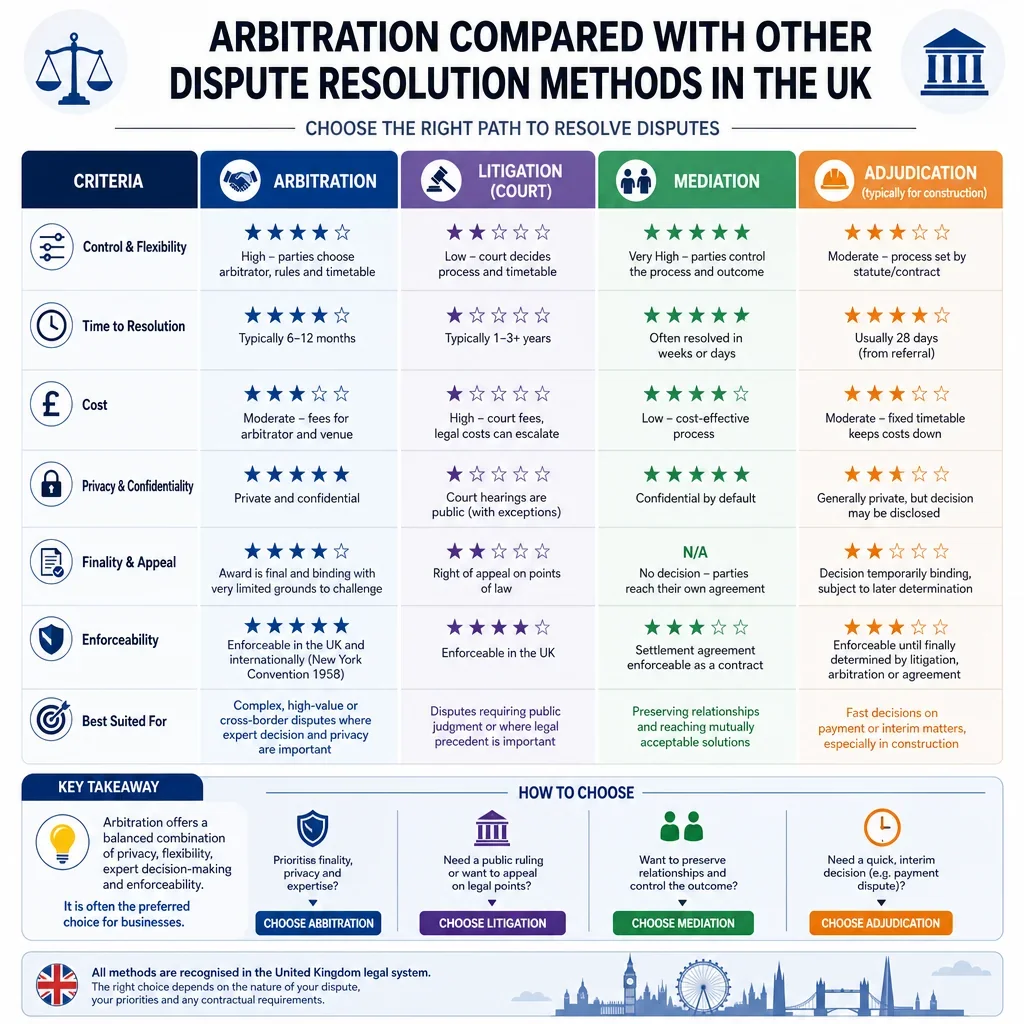
Additional terms are often needed for higher-value, cross-border, confidential, multi-party, consumer, employment, regulated, or IP-heavy arrangements. Common additions include emergency arbitration, interim relief, consolidation, joinder, confidentiality, publication controls, cost allocation, expedited procedure, and carve-outs for urgent court injunctions.
What UK-Specific Risks Should Drafters Check?
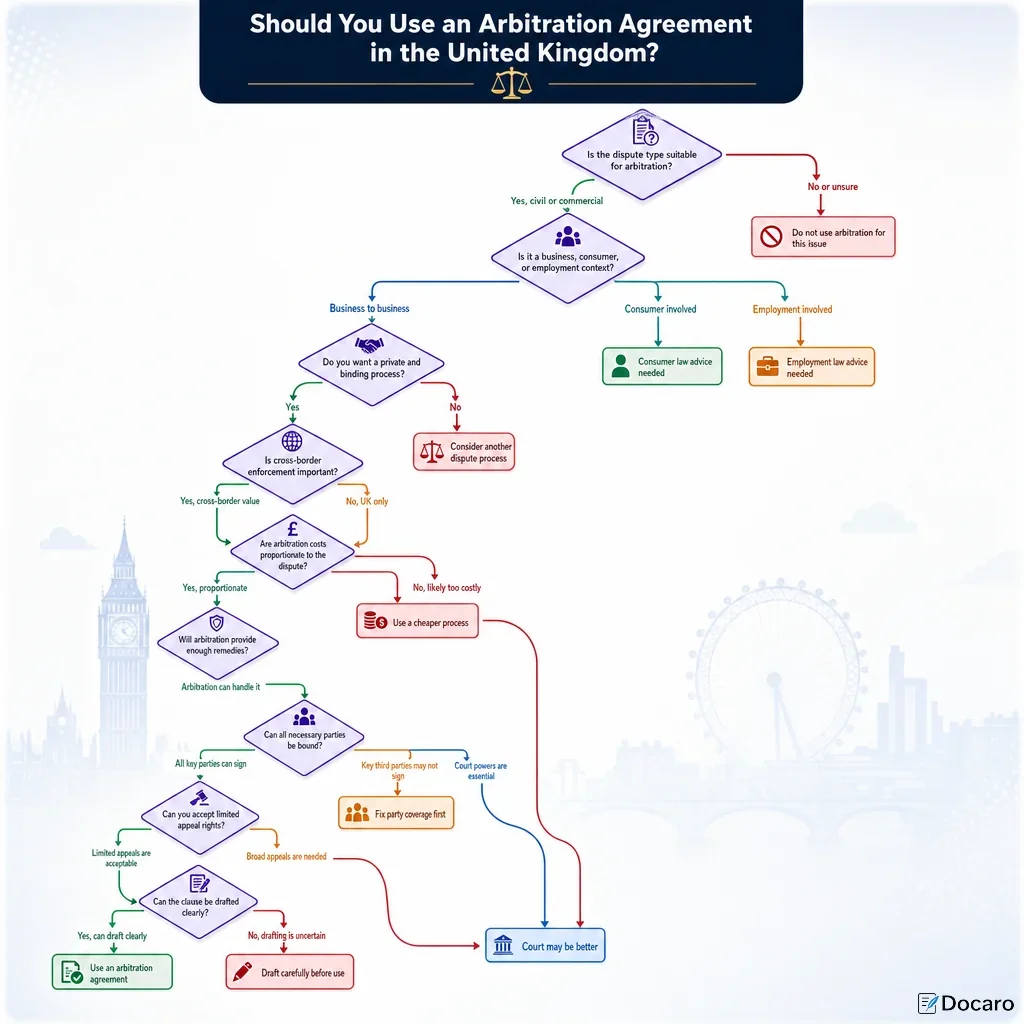
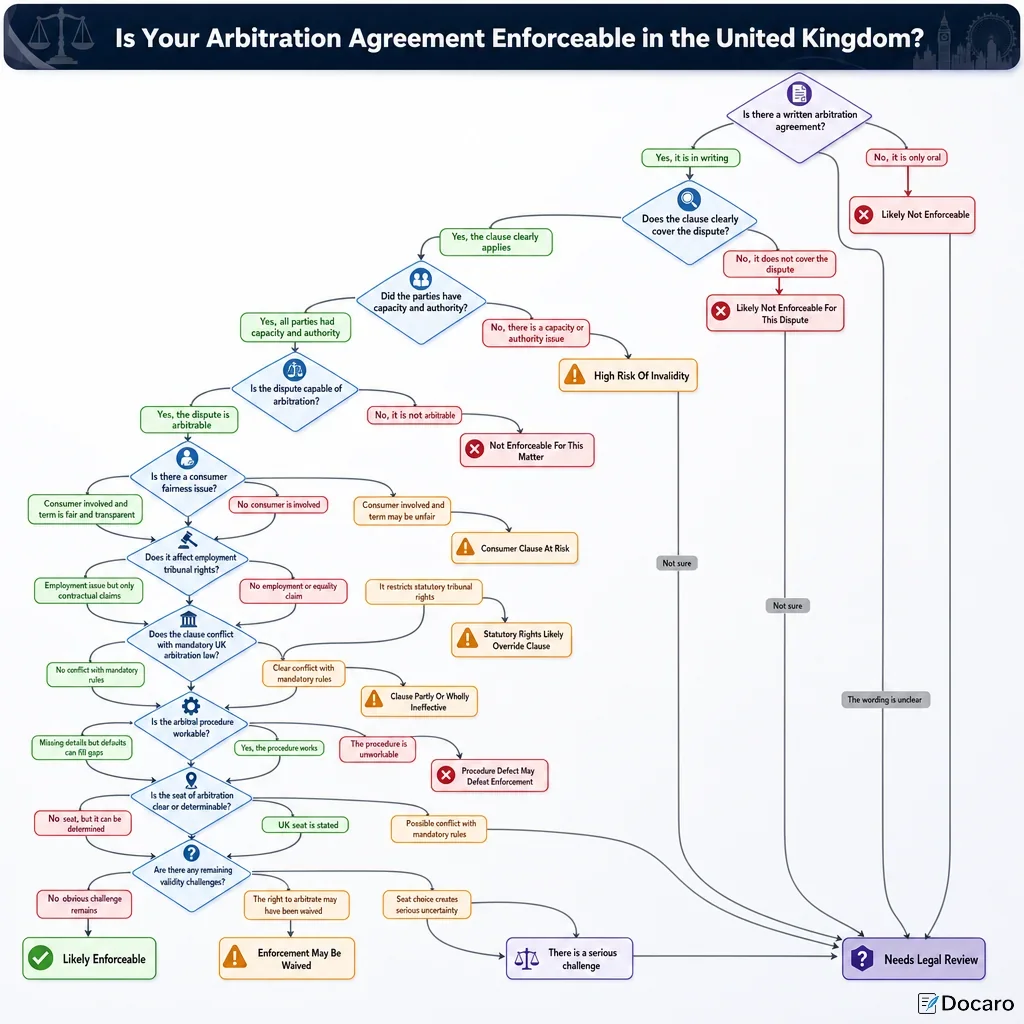
- Consumer and employment contexts: arbitration clauses may face enforceability or fairness limits, especially under consumer rights and employment legislation.
- Confidentiality: English arbitration is commonly treated as private and often confidential, but express wording is safer.
- Appeals: appeals on points of law under section 69 of the Arbitration Act 1996 can often be excluded, but the clause should say so if finality is intended.
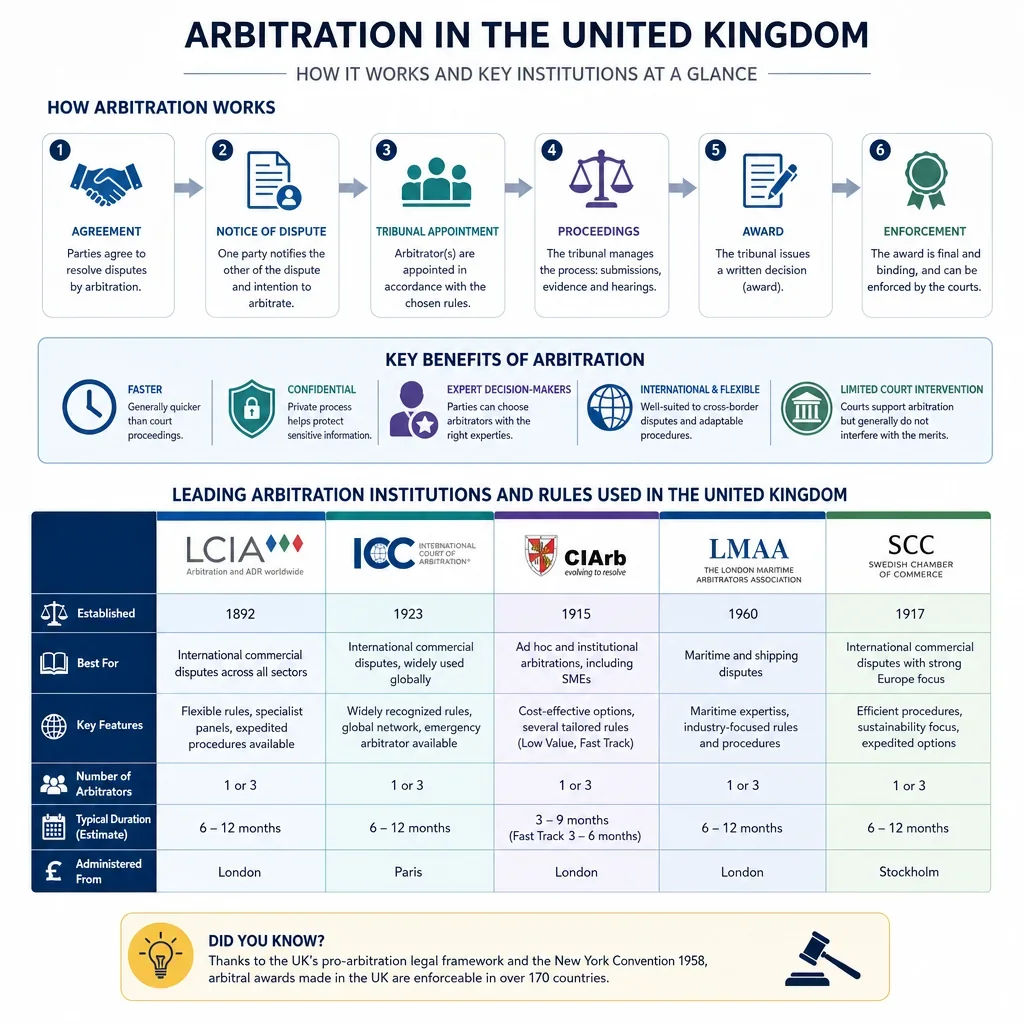
- Institutional rules: LCIA, ICC, UNCITRAL, CIArb, or other rules can materially change appointment, costs, emergency relief, consolidation, and confidentiality provisions.
FAQs
You Might Also Be Interested In