

UK Arbitration Tribunal Appointment Options
Created:
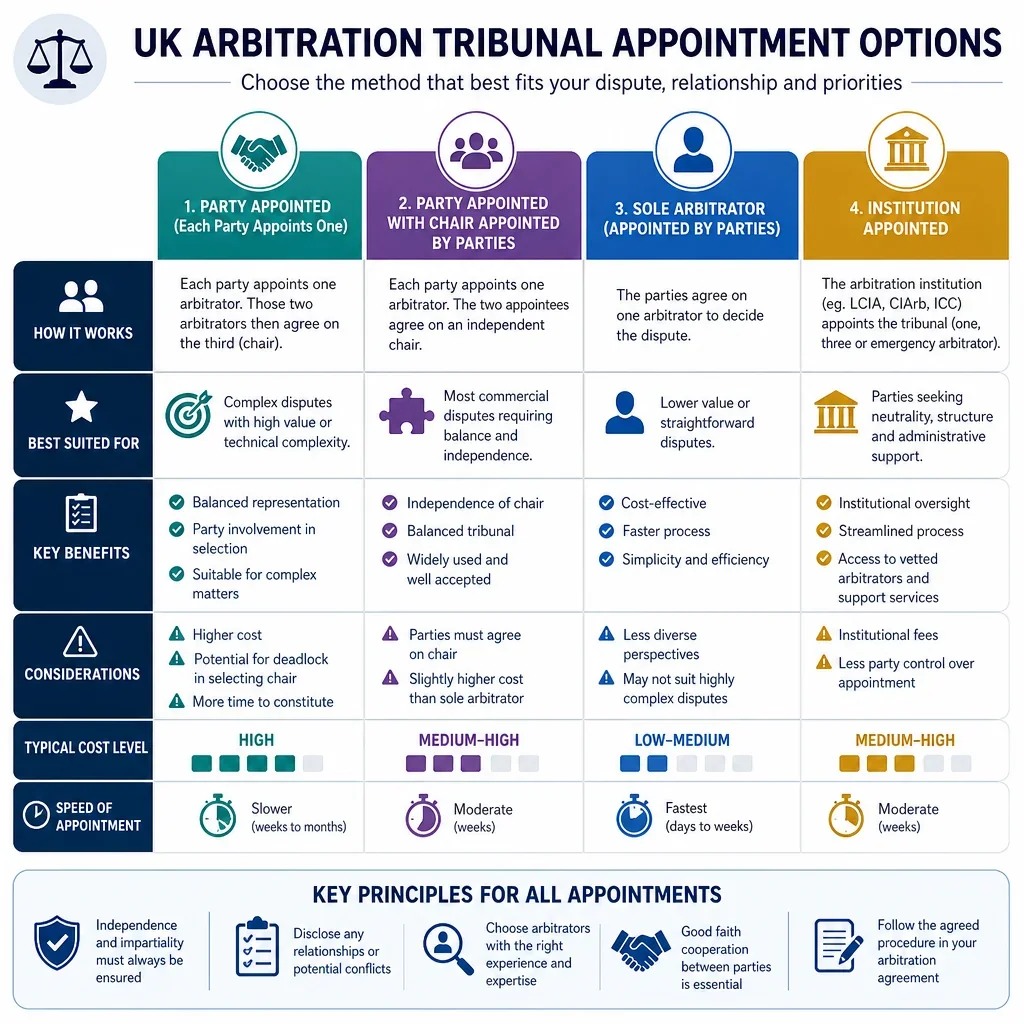
Explore how arbitration tribunal appointments work in the UK and why these structured options matter when drafting or reviewing an agreement. This data helps readers compare appointment methods, reduce uncertainty, and align clauses with practical dispute resolution needs. For broader context, see AI Generated British Arbitration Agreement.
Appointment Method | Suitable Dispute Profile | Advantages | Potential Issues |
|---|---|---|---|
Sole arbitrator | |||
Party agreement | Low value dispute | Lowest tribunal cost and simple appointment process. | Deadlock if parties cannot agree a candidate. |
Party agreement | Medium value dispute | Balances cost control with specialist selection. | Requires cooperation at the point of dispute. |
Institutional appointment | Low value dispute | Avoids party deadlock and keeps appointment quick. | Institutional fees may be disproportionate for very small claims. |
Institutional appointment | Medium value dispute | Neutral appointment route with established procedural support. | Rules and fee schedules must be incorporated accurately. |
Default rules appointment | Low value dispute, Medium value dispute | Statutory fallback where the clause omits tribunal size. | May not match parties' commercial expectations. |
Court-supported appointment | Medium value dispute, High value dispute | Provides a statutory rescue route for failed appointment machinery. | Court application can add delay and cost. |
Institutional appointment | Technical dispute, Medium value dispute | Improves likelihood of relevant technical expertise. | The named body must exist and accept appointment requests. |
Party agreement | Technical dispute, Medium value dispute | Gives parties control over expertise and neutrality. | Shortlist may become outdated or unavailable. |
Default rules appointment | Low value dispute, Medium value dispute | Statutory mechanism can fill procedural gaps. | Less predictable than naming clear rules or authority. |
Institutional appointment | Low value dispute, Medium value dispute | Supports speed, streamlined procedure, and cost control. | May be unsuitable for complex evidence-heavy claims. |
Three arbitrators | |||
Each party appoints one arbitrator | High value dispute | Improves party confidence and deliberative robustness. | Higher fees and more diary coordination. |
Each party appoints one arbitrator | International dispute | Allows balanced representation across legal cultures. | Chair appointment can become contentious. |
Each party appoints one arbitrator | Technical dispute, High value dispute | Enables technical and legal expertise within one tribunal. | Needs clear chair selection and qualification wording. |
Institutional appointment | High value dispute, International dispute | Institution manages defaults, conflicts, and appointment timetable. | Institutional rules may override informal drafting assumptions. |
Institutional appointment | Technical dispute, International dispute | Useful where expertise, neutrality, and enforceability confidence matter. | More expensive and procedurally heavier than a sole arbitrator. |
Court-supported appointment | High value dispute, International dispute | Prevents a non-cooperative party from stalling constitution. | Applications may create tactical delay before merits begin. |
Default rules appointment | High value dispute | Supplies a fallback where parties agree three arbitrators but omit mechanics. | Default timing may not suit urgent commercial disputes. |
Party agreement | High value dispute, Technical dispute | Maximum control over tribunal composition. | High deadlock risk unless a fallback appointor is named. |
Each party appoints one arbitrator, Institutional appointment | High value dispute, International dispute | Combines party input with neutral chair selection. | Clause must specify who appoints the chair and when. |
Each party appoints one arbitrator | High value dispute, Technical dispute | Expert co-arbitrators can identify a suitable chair. | Needs fallback if co-arbitrators cannot agree. |
Default rules appointment | High value dispute, International dispute | Reduces risk that chair deadlock defeats the process. | Default wording may be less tailored than institutional rules. |
Each party appoints one arbitrator, Institutional appointment | Technical dispute, High value dispute | Permits legal chair plus technical wing members. | Over-specifying qualifications can narrow the candidate pool. |
Each party appoints one arbitrator | High value dispute, International dispute | Suitable where stakes and relationship dynamics justify party nomination. | Multi-party structures need special appointment wording. |
Institutional appointment | High value dispute, International dispute, Technical dispute | Institutional rules can better manage consolidation and related issues. | Inconsistent clauses across contracts may complicate appointments. |
Other number specified by agreement | |||
Each party appoints one arbitrator | Medium value dispute, Technical dispute | Gives both sides a nominee while limiting headcount. | Even-number tribunal risks deadlock without an umpire or chair. |
Each party appoints one arbitrator, Default rules appointment | Technical dispute, Medium value dispute | Umpire concept can resolve split decisions. | Needs clarity on when the umpire participates. |
Party agreement, Institutional appointment | High value dispute, International dispute | Broad expertise for exceptionally complex disputes. | Very expensive and procedurally cumbersome. |
Institutional appointment, Party agreement | Technical dispute | Highly specialised decision-makers for technical fact patterns. | May lack legal procedure experience if drafted too narrowly. |
Sole arbitrator, Three arbitrators | |||
Institutional appointment | Technical dispute, Medium value dispute | Industry familiarity and administratively predictable appointment route. | Perceived neutrality concerns if one party is industry-connected. |
Sole arbitrator | |||
Institutional appointment | Medium value dispute, Technical dispute | Recognisable UK professional appointing route. | Wording should identify the office and current appointment process. |
Sole arbitrator, Three arbitrators | |||
Institutional appointment | Low value dispute, Medium value dispute, Technical dispute | Established appointment service with arbitration-focused expertise. | Clause should specify the exact appointment service and rules. |
Institutional appointment | High value dispute, International dispute | Well-known London institution with appointment and challenge mechanisms. | Use the official model clause and correct seat wording. |
Institutional appointment | High value dispute, International dispute | Global administration and established appointment framework. | Costs and scrutiny process may be excessive for smaller disputes. |
Default rules appointment, Institutional appointment | International dispute, High value dispute | Flexible ad hoc framework with appointing authority option. | Must identify an appointing authority to avoid gaps. |
Sole arbitrator | |||
Institutional appointment | Medium value dispute, International dispute | Institution can appoint quickly where urgent relief may be needed. | Emergency arbitrator wording may need separate express adoption or exclusion. |
Sole arbitrator, Three arbitrators | |||
Court-supported appointment | Medium value dispute, High value dispute, International dispute | Rescues appointment process if named mechanism cannot operate. | Better drafted clauses name a live fallback authority. |
Sole arbitrator | |||
Party agreement | Low value dispute, Medium value dispute | Can be fast if genuinely mutual and balanced. | Unilateral appointment powers may invite fairness and validity challenges. |
Three arbitrators | |||
Institutional appointment | High value dispute, International dispute | Institution can avoid imbalance among multiple claimants or respondents. | Simple each-side appointment wording may fail in multi-party cases. |
Sole arbitrator | |||
Party agreement | High value dispute, Technical dispute | Strong legal expertise for complex contractual issues. | Availability and fees may be significant. |
Sole arbitrator, Three arbitrators | |||
Party agreement, Institutional appointment | High value dispute, International dispute, Technical dispute | Supports procedural fairness and confidence in the award. | Disclosure and conflict procedures should be clearly referenced. |
Default rules appointment, Institutional appointment | Medium value dispute, High value dispute, International dispute | Maintains continuity if an arbitrator cannot continue. | Clause should state whether prior hearings must be repeated. |
Sole arbitrator | |||
Default rules appointment, Institutional appointment | Low value dispute, Medium value dispute | Best suited to short timetable and documents-only procedure. | May be unfair for factually complex disputes. |
Sole arbitrator, Three arbitrators | |||
Institutional appointment, Party agreement | High value dispute, Technical dispute, International dispute | Can select arbitrators experienced with sensitive commercial information. | Confidentiality should be addressed separately from appointment mechanics. |
Court-supported appointment | Medium value dispute, High value dispute | Statutory support keeps arbitration from collapsing. | Court reliance signals incomplete appointment drafting. |
Sole arbitrator | |||
Institutional appointment, Party agreement | Low value dispute | Can reduce cost if fair, simple, and transparent. | Consumer arbitration clauses require careful fairness review. |
Party agreement, Institutional appointment | Low value dispute, Medium value dispute | Encourages agreement but prevents indefinite deadlock. | Deadline must be clear and triggered by written notice. |
Three arbitrators | |||
Each party appoints one arbitrator, Default rules appointment | High value dispute, International dispute | Clear deadlines reduce tactical delay. | Must state consequence of missed deadline. |
Sole arbitrator, Three arbitrators | |||
Default rules appointment | Medium value dispute, High value dispute | Strong statutory response to non-participation. | Can be contentious and should be used with care. |
How Should A UK Arbitration Agreement Deal With Tribunal Appointment?
For many UK arbitration clauses, the safest drafting choice is to state both the number of arbitrators and the appointment mechanism. Under the Arbitration Act 1996, parties are free to agree these matters, but gaps can trigger statutory default provisions or require court assistance.
When Is A Sole Arbitrator Usually Best?
- Low and medium value disputes often suit a sole arbitrator because cost and speed usually matter more than a panel structure.
- If the parties cannot agree the sole arbitrator, the clause should name an appointing institution or appointing authority to avoid delay.
When Is A Three-Member Tribunal Worth Considering?
- High value, technical, and international disputes often justify three arbitrators because each side can participate in appointments and the tribunal may bring broader expertise.
- The clause should deal with failure by one party to appoint, failure of the two party-appointed arbitrators to choose a chair, and replacement if an arbitrator cannot act.
Why Do Default Rules Matter In England And Wales?
- If the parties do not agree the number of arbitrators, section 15 of the Arbitration Act 1996 provides for a sole arbitrator by default.
- If the agreed appointment process fails, section 18 allows the court to exercise appointment-related powers, but relying on court support can add cost and delay.
What Is The Main Drafting Risk?
The biggest practical risk is a clause that says arbitration is required but does not clearly identify the tribunal size, appointing route, seat, rules, or fallback authority. That uncertainty can create procedural satellite disputes before the substantive claim is even heard.
Want to Generate Your own Arbitration Agreement?
Docaro AI can help you write your own Arbitration Agreement for use in the United Kingdom in minutes.
FAQs
Arbitration tribunal appointment options are the ways parties choose the arbitrator or arbitrators who will decide their dispute. In UK arbitration agreements, these options commonly cover sole arbitrators, three-member tribunals, party nomination rights, institutional appointments and default appointment procedures.
Show All FAQs
You Might Also Be Interested In
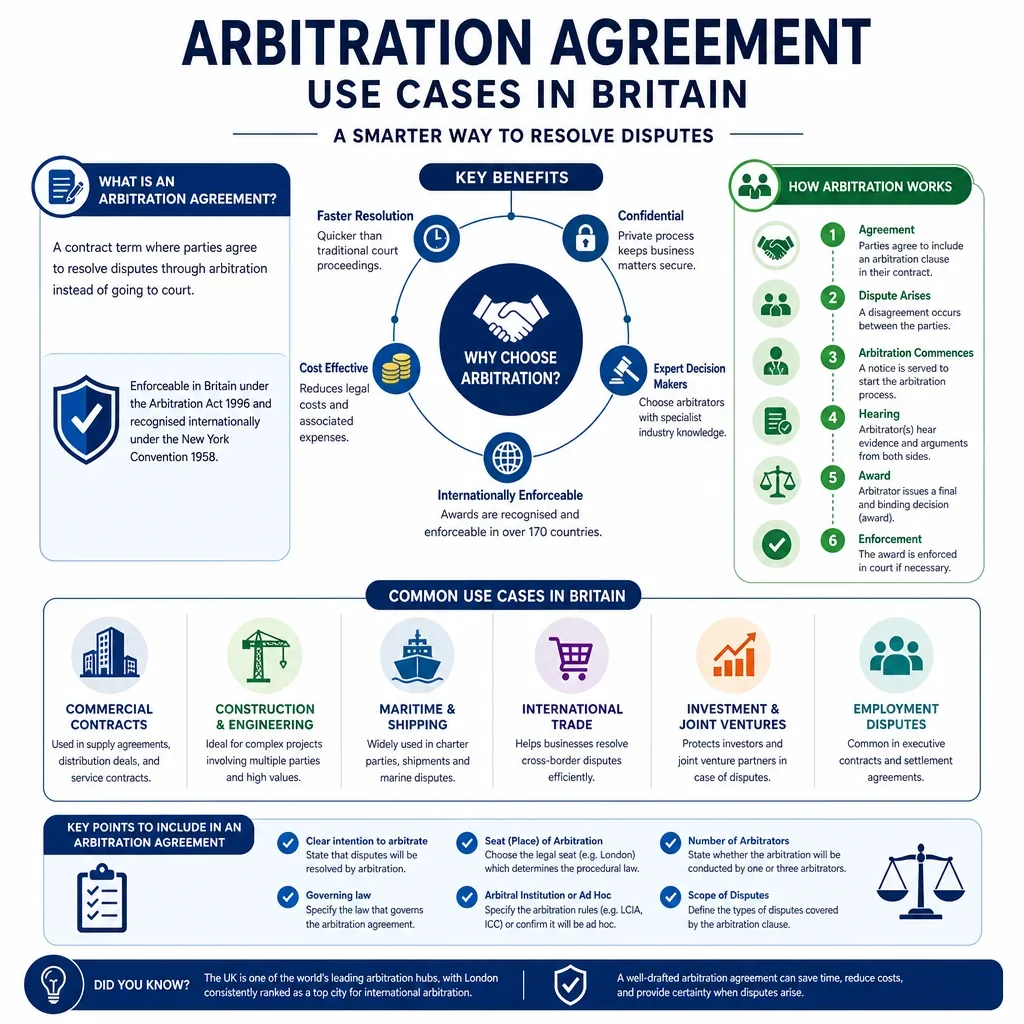
Explore arbitration agreement use cases in Britain, including practical scenarios for resolving disputes efficiently.
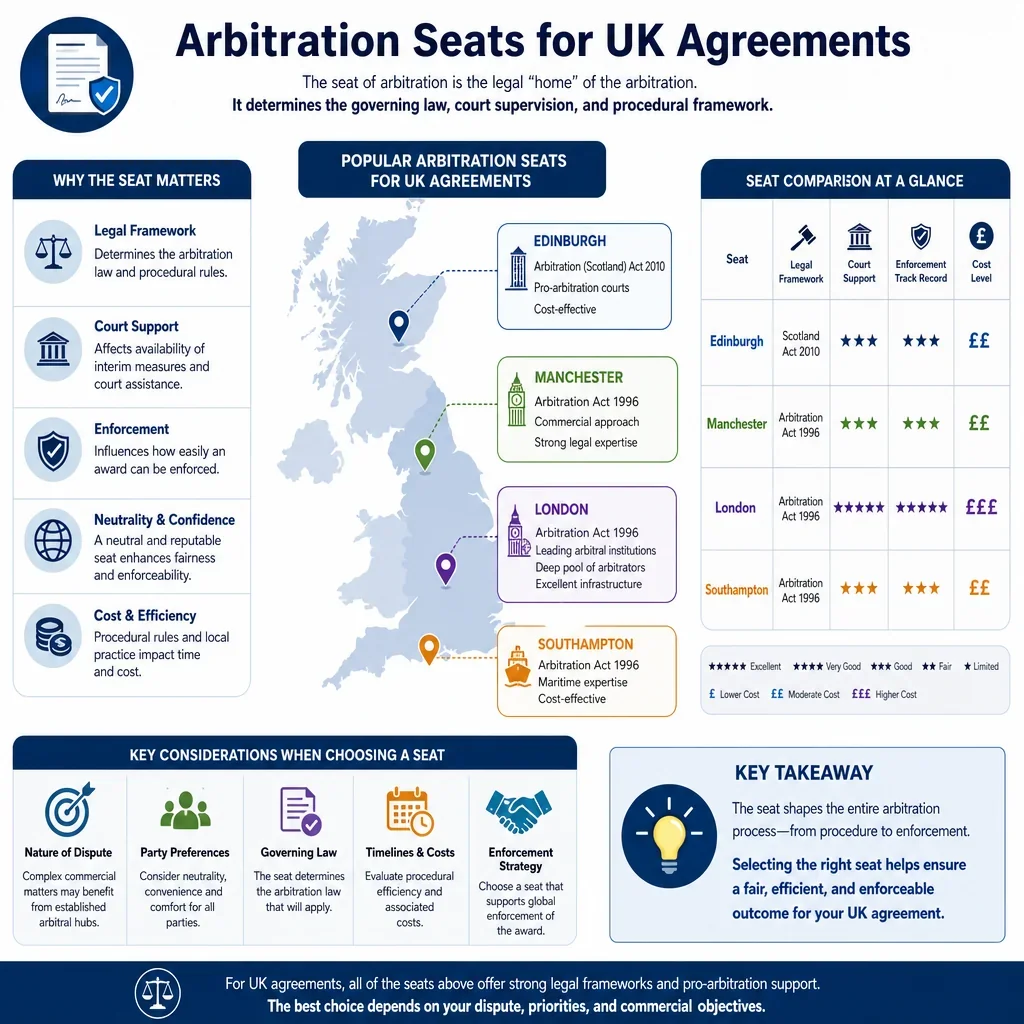
Explore arbitration seats for UK agreements, including why seat choice matters for procedure, enforcement, and dispute resolution.
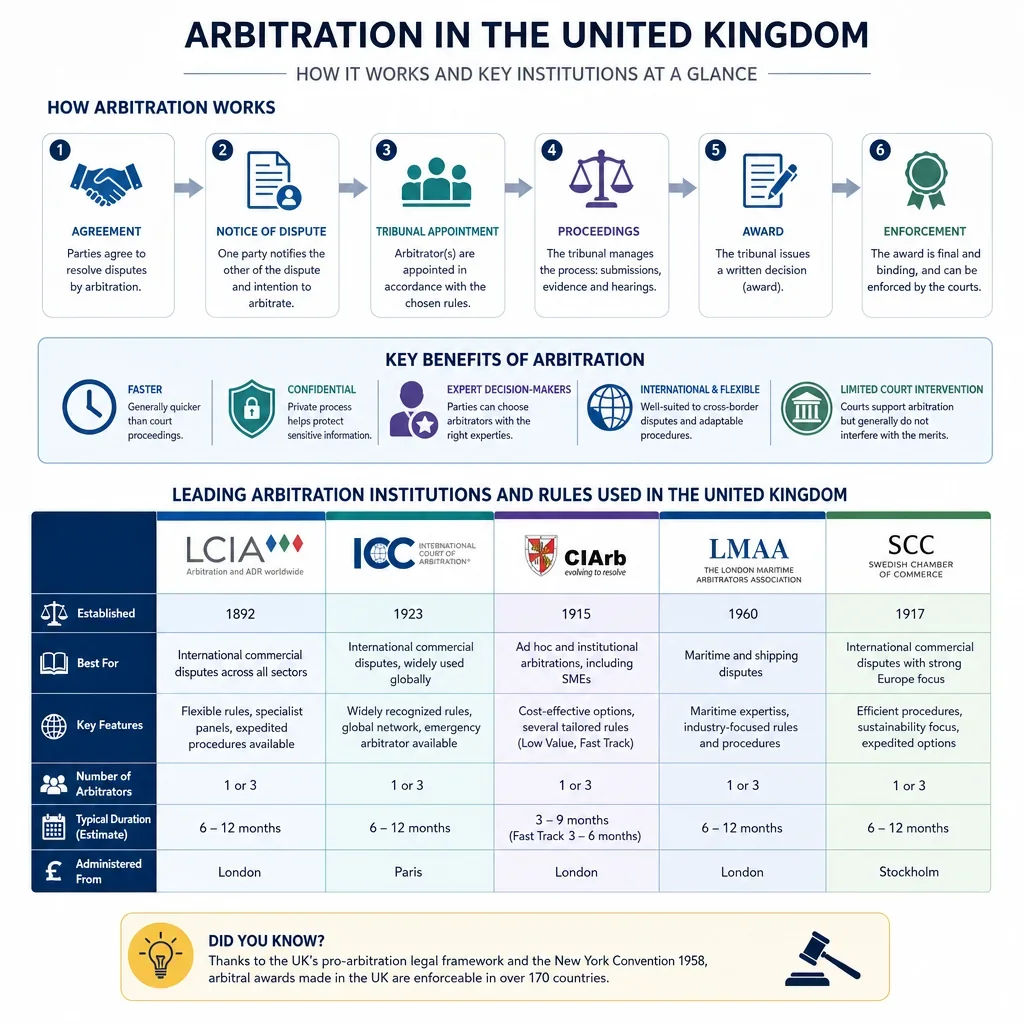
Explore arbitration institutions and rules in the United Kingdom, including key options for effective dispute resolution.
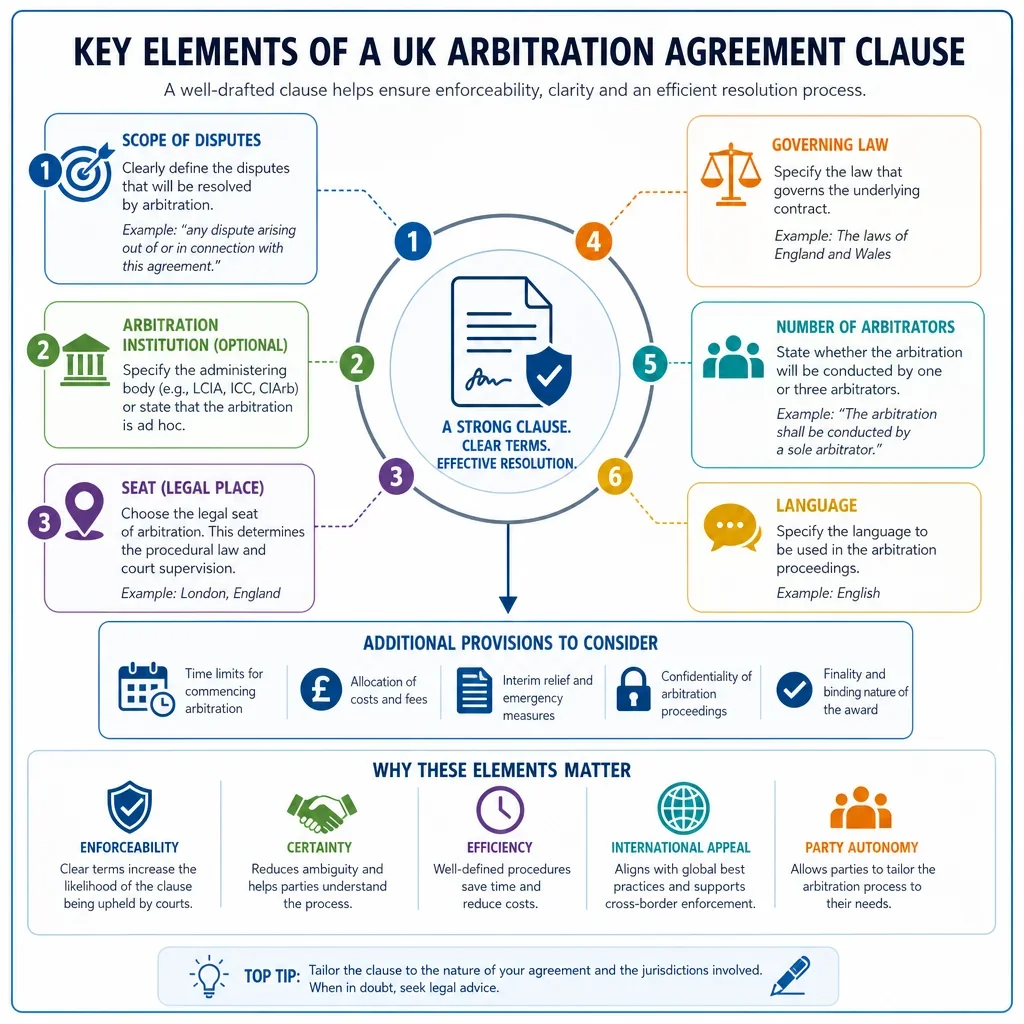
United Kingdom arbitration agreement clause checklist covering essential terms, drafting points, and practical review tips.
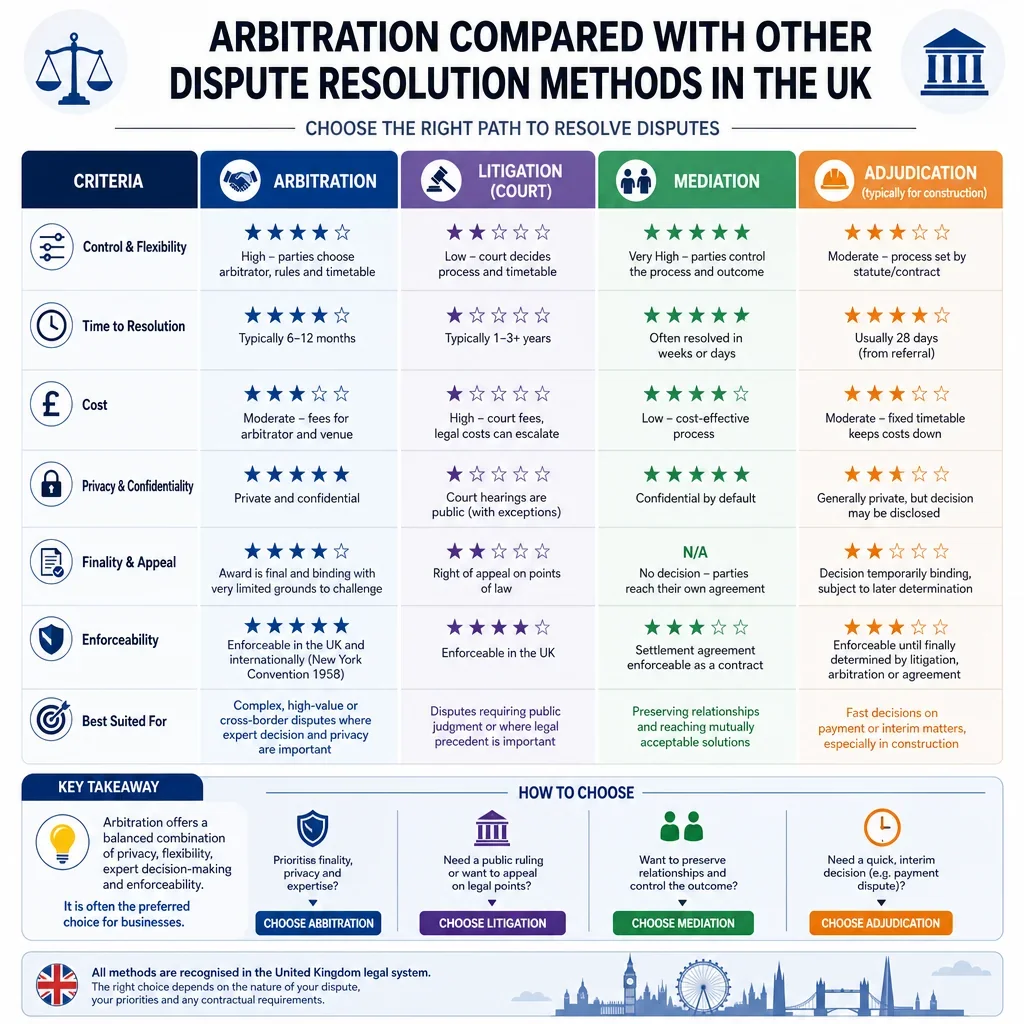
Compare arbitration with other UK dispute resolution methods to choose the right approach for resolving legal or commercial conflicts.
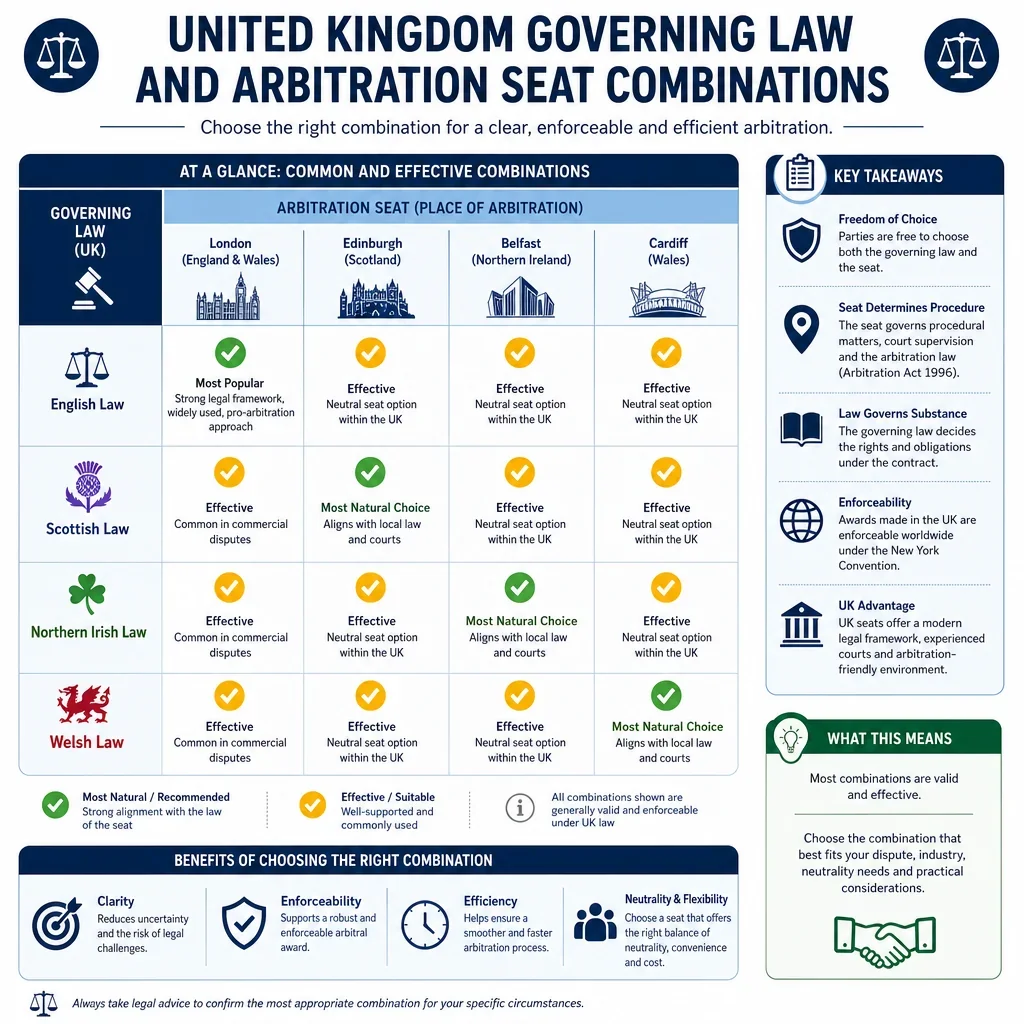
Explore United Kingdom governing law and arbitration seat combinations for clearer contract drafting and dispute planning.
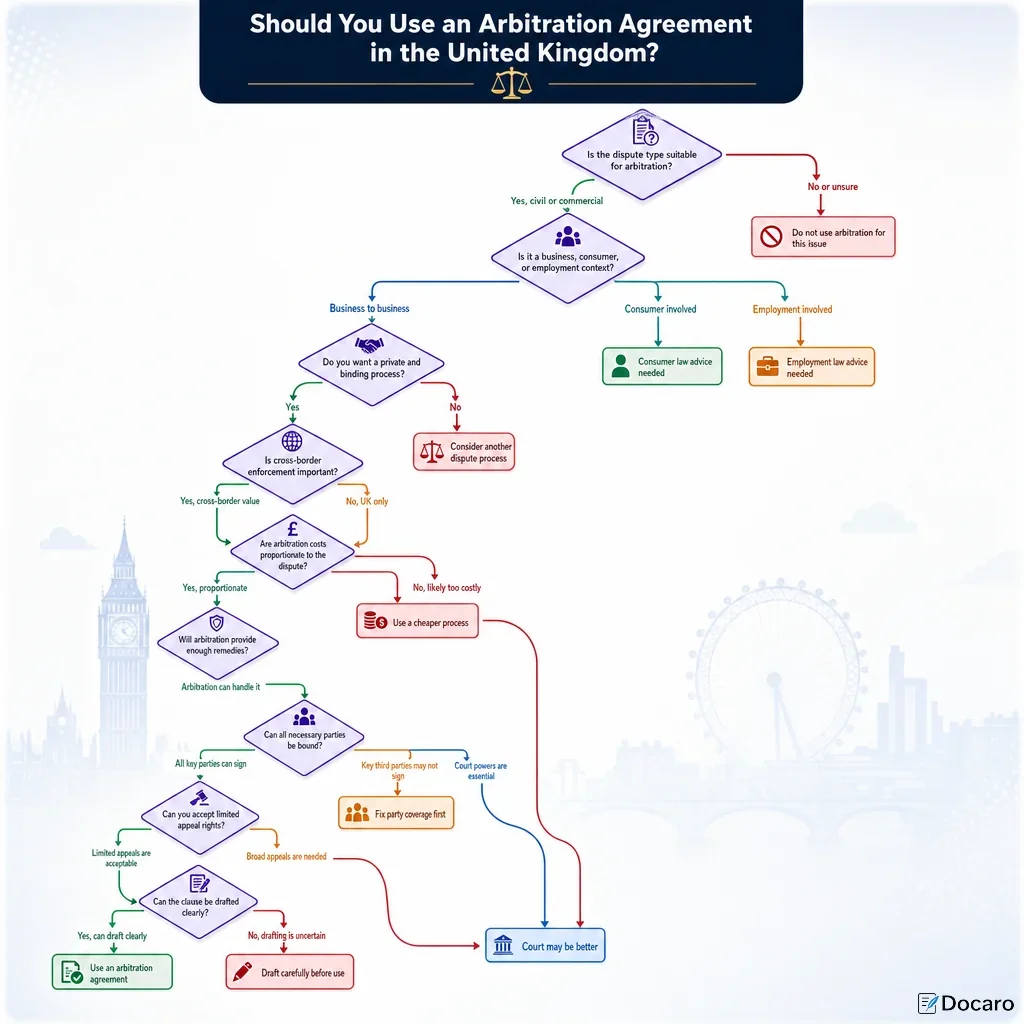
Learn when to use an arbitration agreement in the United Kingdom, including key benefits, risks and practical considerations.
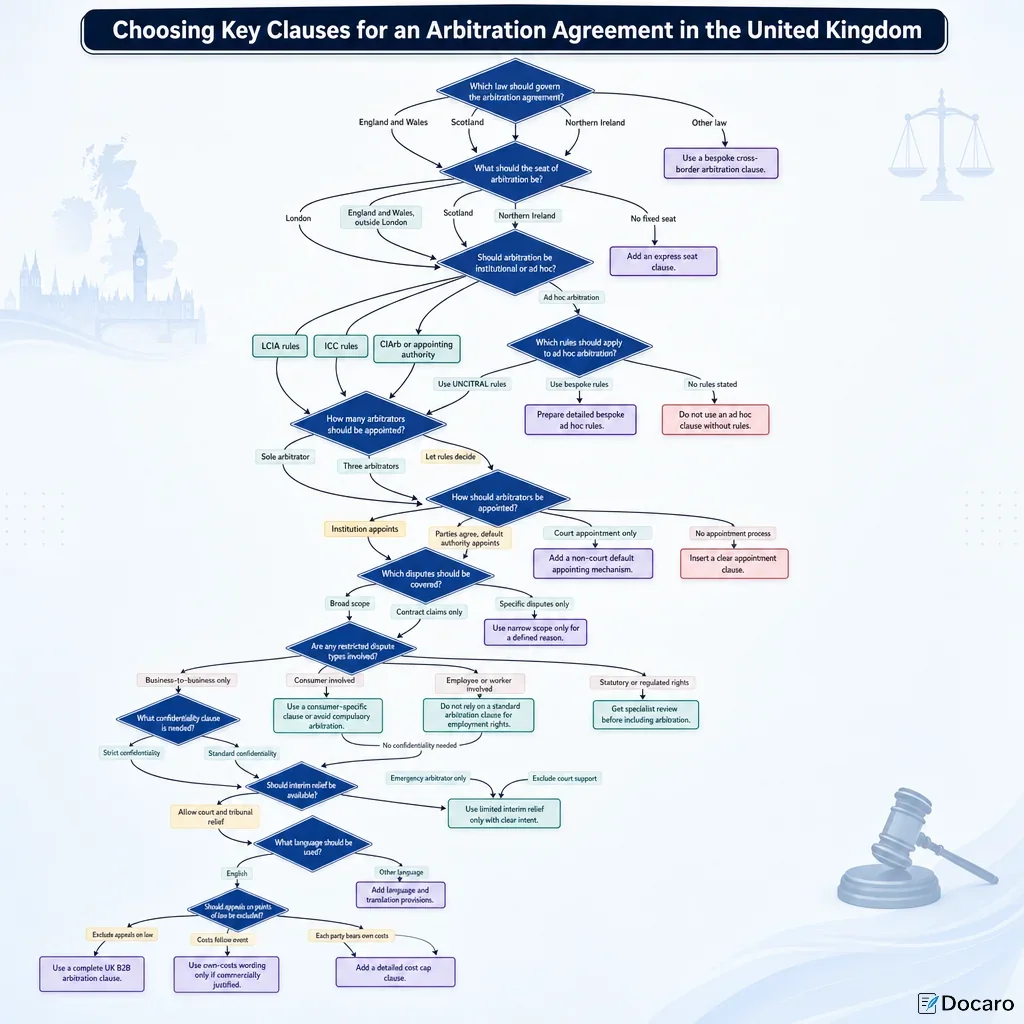
Choose key clauses for an arbitration agreement in the United Kingdom, including seat, rules, confidentiality and costs.
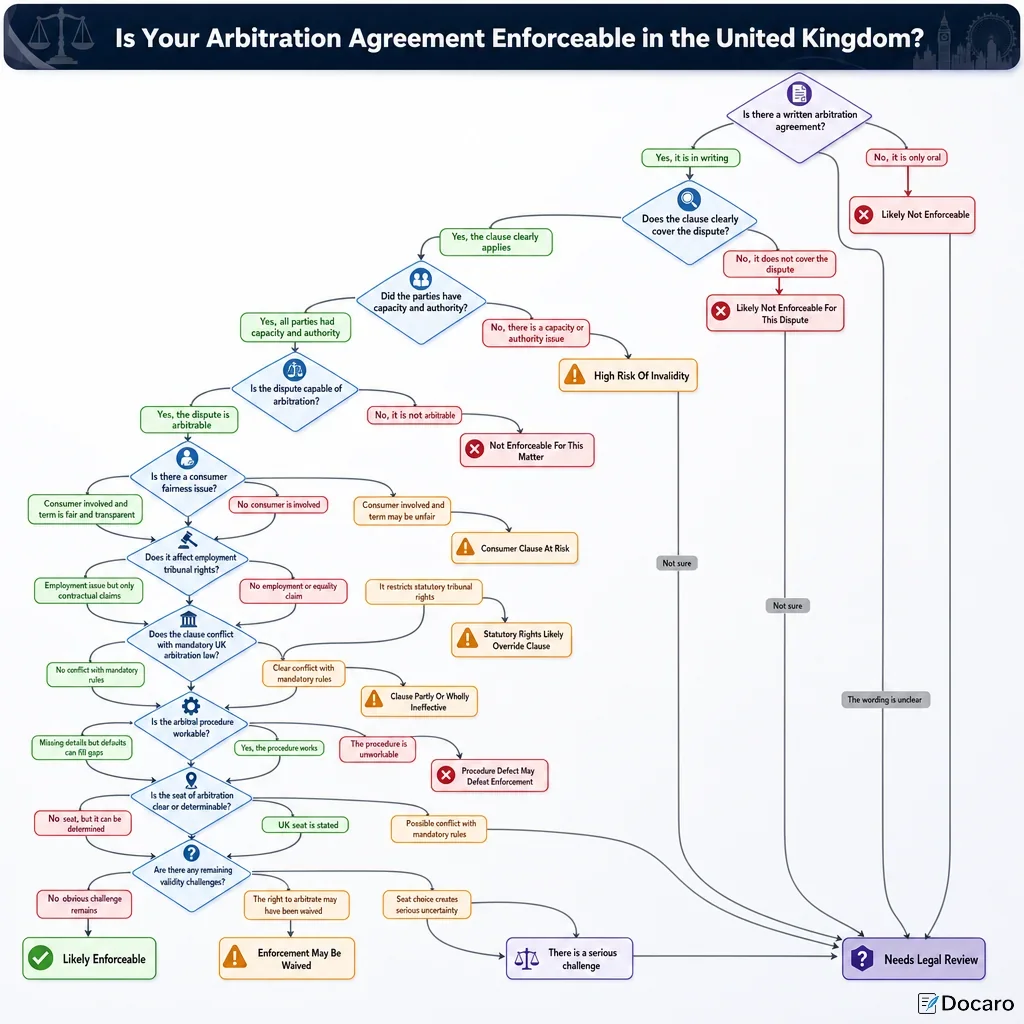
Check if your arbitration agreement is enforceable in the United Kingdom with this practical legal flowchart.
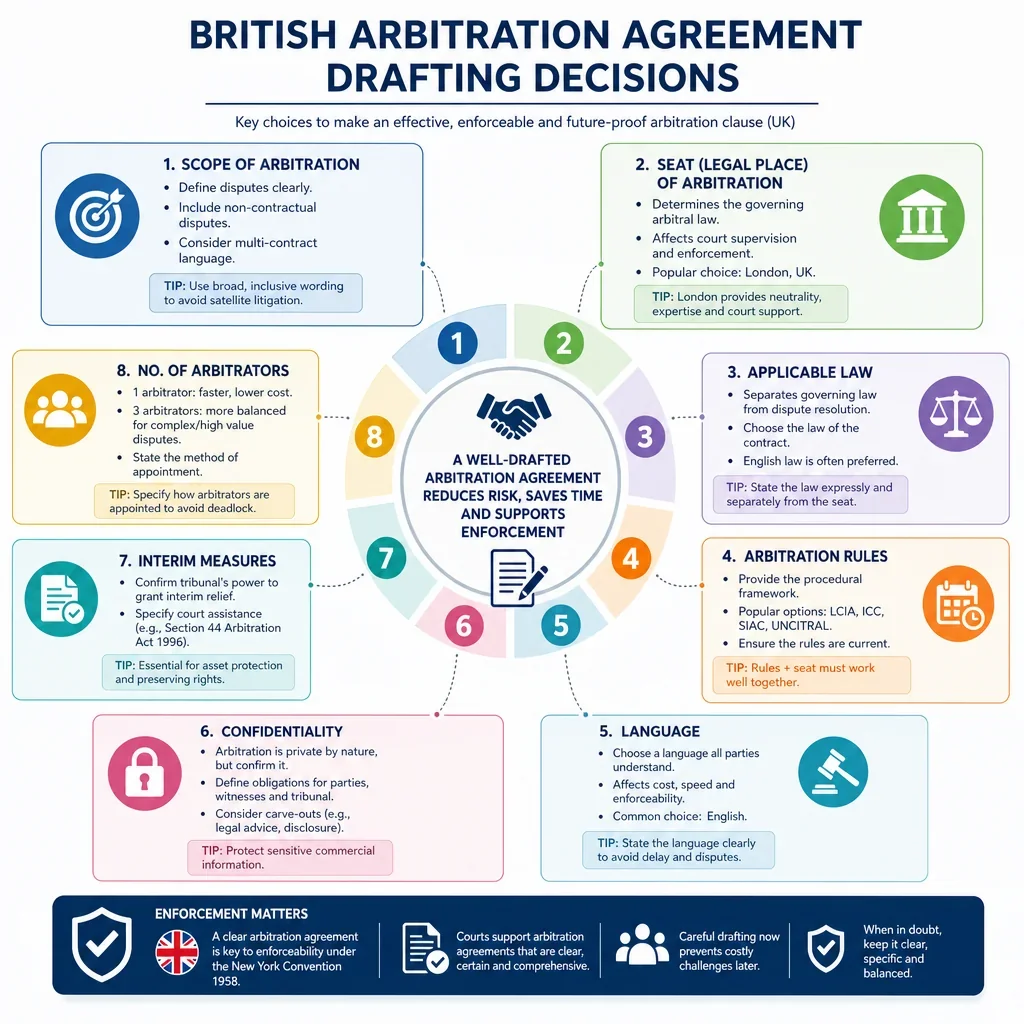
Explore British arbitration agreement drafting decisions, key clause choices, and practical considerations for clearer dispute resolution.
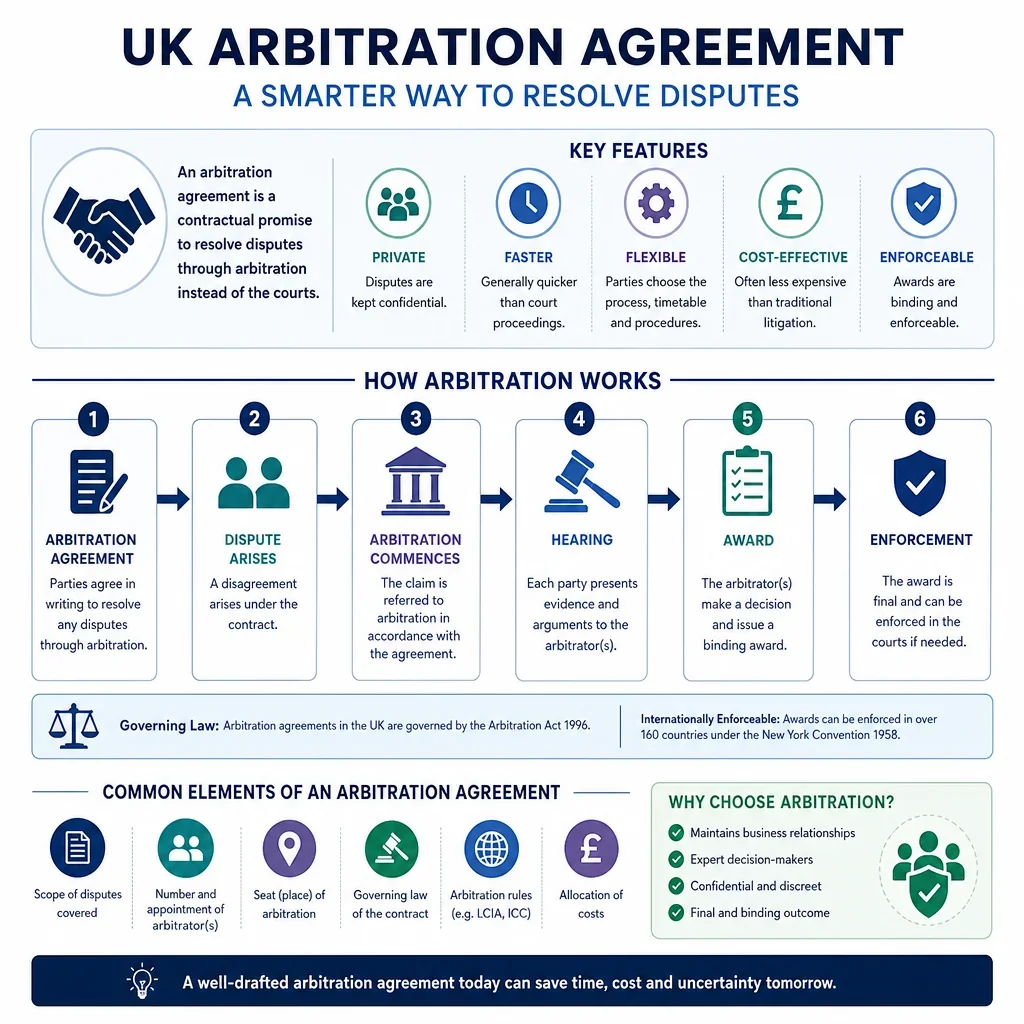
United Kingdom arbitration agreement glossary with key legal terms, definitions, and practical context for readers.
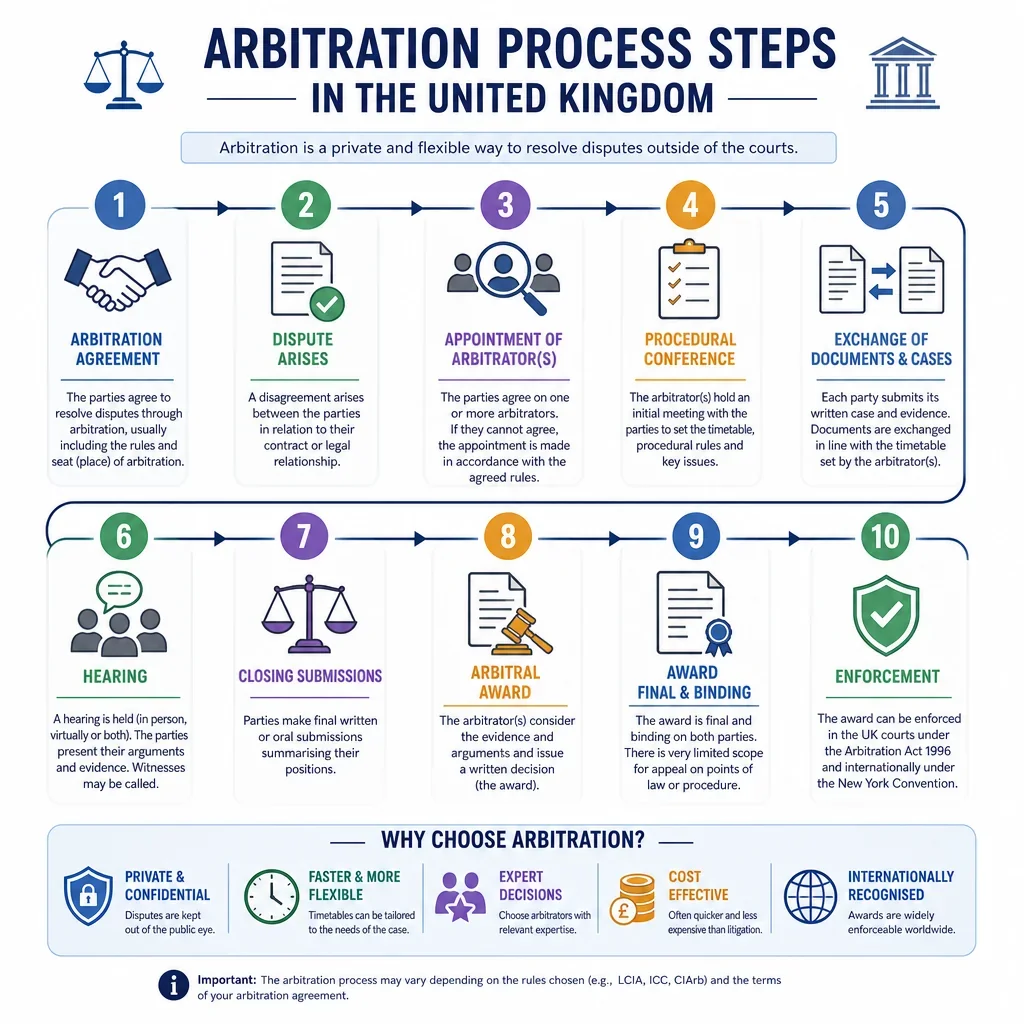
Learn the key arbitration process steps in the United Kingdom, from agreement to final award, with clear guidance for dispute resolution.