Arbitration Compared With Other Dispute Resolution Methods In The United Kingdom
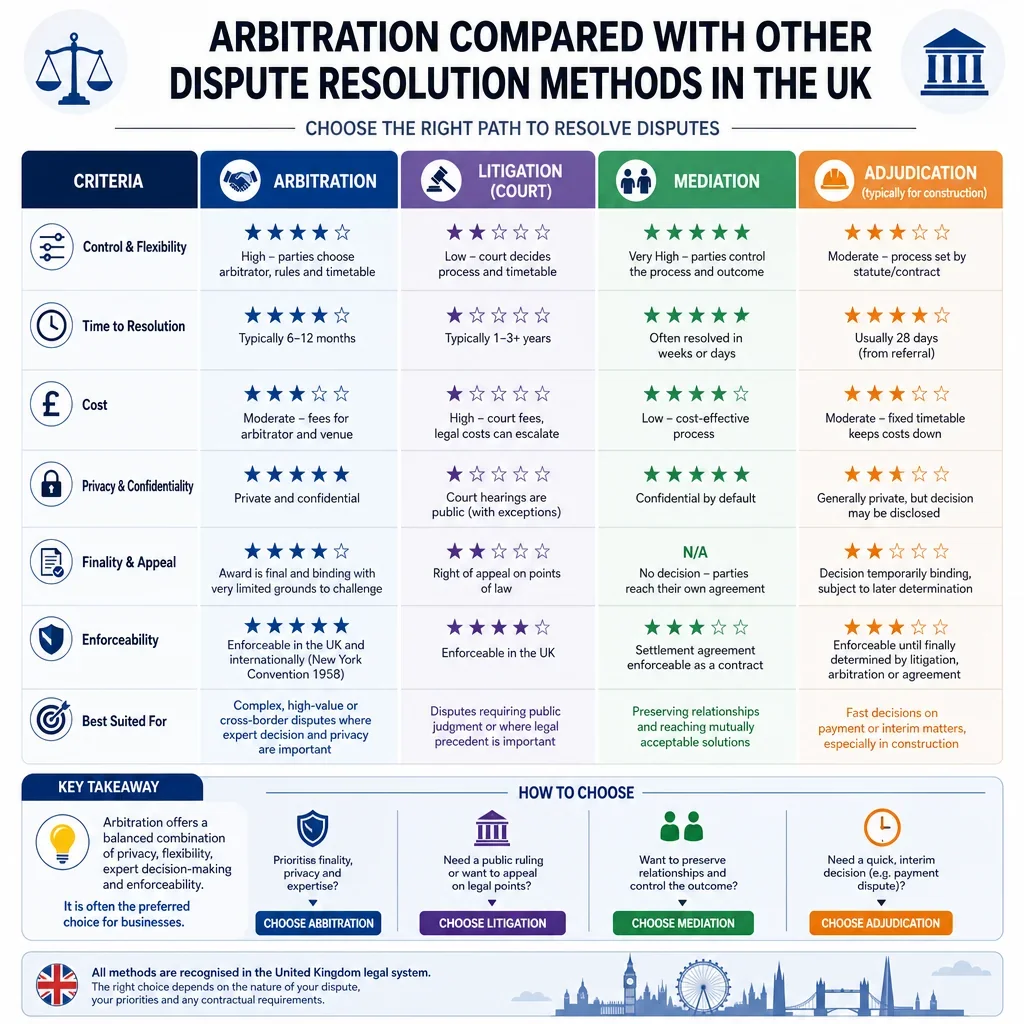
Method Summary | Outcome Type | Privacy Level | Suitability Notes |
|---|---|---|---|
Arbitration | |||
A neutral tribunal decides the dispute under an arbitration agreement, usually after written submissions and evidence. | Binding final decision | Usually private | Good for confidential commercial disputes, technical issues, and cross-border enforcement limited appeal rights and tribunal costs should be considered. |
Parties submit disputes to arbitrators whose award can often be recognised and enforced in other convention states. | Binding final decision | Usually private | Often preferable to English court proceedings where the counterparty or assets are abroad and enforcement is a priority. |
The parties can appoint arbitrators with sector expertise and agree tailored procedure. | Binding final decision | Usually private | Useful for engineering, energy, technology, commodities, and financial disputes where subject-matter expertise matters. |
A contract-based process that binds the parties to the arbitration agreement, with limited court supervision. | Binding final decision | Usually private | Less suitable where public precedent, joinder of non-parties, summary judgment, or broad court powers are central. |
Litigation | |||
A court manages and determines the dispute under procedural rules, usually ending in judgment or settlement. | Binding final decision | Usually public | Best where public judgment, coercive court powers, interim injunctions, disclosure, or multiple parties are important. |
A judge applies the law to the facts and may create or clarify public legal precedent. | Binding final decision | Usually public | Useful where the parties need authoritative legal clarification rather than a confidential private award. |
The court can make interim orders before final trial, including injunctions and asset preservation orders. | Binding final decision | Usually public | Often preferable where urgent injunctions, freezing relief, or orders against third parties are needed. |
Mediation | |||
A neutral mediator helps the parties explore settlement, but does not impose a decision. | Non-binding process | Usually private | Good before or during arbitration or litigation where preserving relationships, saving costs, or narrowing issues matters. |
The process is voluntary unless required by contract or court order any deal is recorded separately. | Depends on agreement | Usually private | A mediated settlement can be contractually binding if written clearly and signed or otherwise agreed by the parties. |
Parties attempt settlement with mediator assistance, sometimes after court encouragement or direction. | Non-binding process | Usually private | Refusing ADR can carry costs risk in English litigation, so mediation clauses can support procedural reasonableness. |
Expert determination | |||
An independent expert decides a defined technical, valuation, accounting, or contractual issue. | Depends on agreement | Depends on rules or agreement | Effective for price adjustment, rent review, earn-out, completion accounts, or technical measurement disputes. |
The expert uses specialist knowledge and the agreed mandate rather than acting as a judicial tribunal. | Depends on agreement | Usually private | Usually faster than arbitration for narrow issues, but less suitable for broad legal disputes or contested witness evidence. |
The contract defines the expert, issue, procedure, timetable, and whether the decision is final and binding. | Depends on agreement | Depends on rules or agreement | The clause should state whether the expert acts as expert not arbitrator and how manifest error is handled. |
Negotiation | |||
The parties discuss the dispute directly or through representatives to try to reach a settlement. | Depends on agreement | Usually private | Low-cost and flexible useful as a first step before mediation, arbitration, adjudication, or litigation. |
A contract may require staged discussions between project managers, directors, or senior executives before formal proceedings. | Non-binding process | Usually private | Works well if the clause has clear time limits, named escalation levels, and does not block urgent relief. |
No neutral decision-maker is involved unless the parties combine negotiation with another process. | Depends on agreement | Usually private | Least suitable where a party needs a binding decision, urgent order, evidence disclosure, or enforceable determination. |
Adjudication | |||
A construction dispute is referred to an adjudicator for a rapid decision, commonly within 28 days. | Temporarily binding decision | Usually private | Key method for construction cash-flow disputes decision is binding until finally resolved by arbitration, litigation, or agreement. |
A statutory or contractual adjudicator gives a fast decision after an abbreviated procedure. | Temporarily binding decision | Depends on rules or agreement | Useful for interim payment, delay, defects, and valuation disputes, but compressed timetables can be difficult for complex evidence. |
The adjudicator decides quickly, but the dispute may later be finally determined by court or arbitration. | Temporarily binding decision | Depends on rules or agreement | Often used alongside arbitration clauses in construction contracts to preserve cash flow before final determination. |
Arbitration | |||
Arbitration can sit at the final stage of a tiered clause after negotiation or mediation fails. | Binding final decision | Usually private | A common structure is negotiation, then mediation, then arbitration, with clear deadlines to avoid tactical delay. |
Litigation | |||
Court judgments may be appealed where procedural rules and permission requirements are satisfied. | Binding final decision | Usually public | More appropriate than arbitration where wider appeal routes and public judicial scrutiny are commercially important. |
Mediation | |||
The mediator facilitates confidential settlement discussions, often on a without-prejudice basis. | Depends on agreement | Usually private | Particularly useful where parties want to test compromise options without creating a public record or adverse precedent. |
Expert determination | |||
A named or appointed expert determines a contractually defined calculation or valuation dispute. | Depends on agreement | Usually private | Well suited to completion accounts, working capital, EBITDA, earn-out, and share valuation mechanisms. |
Negotiation | |||
Parties exchange information and consider settlement before starting proceedings. | Non-binding process | Usually private | Helps satisfy pre-action expectations and may reduce costs, but should not allow limitation periods to expire. |
Adjudication | |||
A party to a construction contract may refer a dispute to adjudication at any time, subject to statutory scope. | Temporarily binding decision | Depends on rules or agreement | Parties generally cannot contract out of statutory adjudication where the Housing Grants regime applies. |
Arbitration | |||
Proceedings are private, but express confidentiality wording can reduce uncertainty around documents and awards. | Binding final decision | Usually private | Best drafted with express confidentiality, privacy, publication, and permitted disclosure provisions. |
Litigation | |||
Disputes are resolved by public courts, with hearings and judgments generally accessible under open justice principles. | Binding final decision | Usually public | May be unattractive for sensitive pricing, trade secrets, shareholder disputes, or reputationally sensitive allegations. |
Mediation | |||
A mediator helps parties identify interests and settlement options beyond strict legal remedies. | Non-binding process | Usually private | Strong choice for ongoing supplier, shareholder, employment, franchise, joint venture, or family business relationships. |
Expert determination | |||
The clause can send specific technical issues to an expert while reserving wider disputes for arbitration or court. | Depends on agreement | Depends on rules or agreement | Useful as a carve-out, but the clause must avoid overlap with the arbitration agreement. |
Which Dispute Resolution Method Is Best For A UK Agreement?
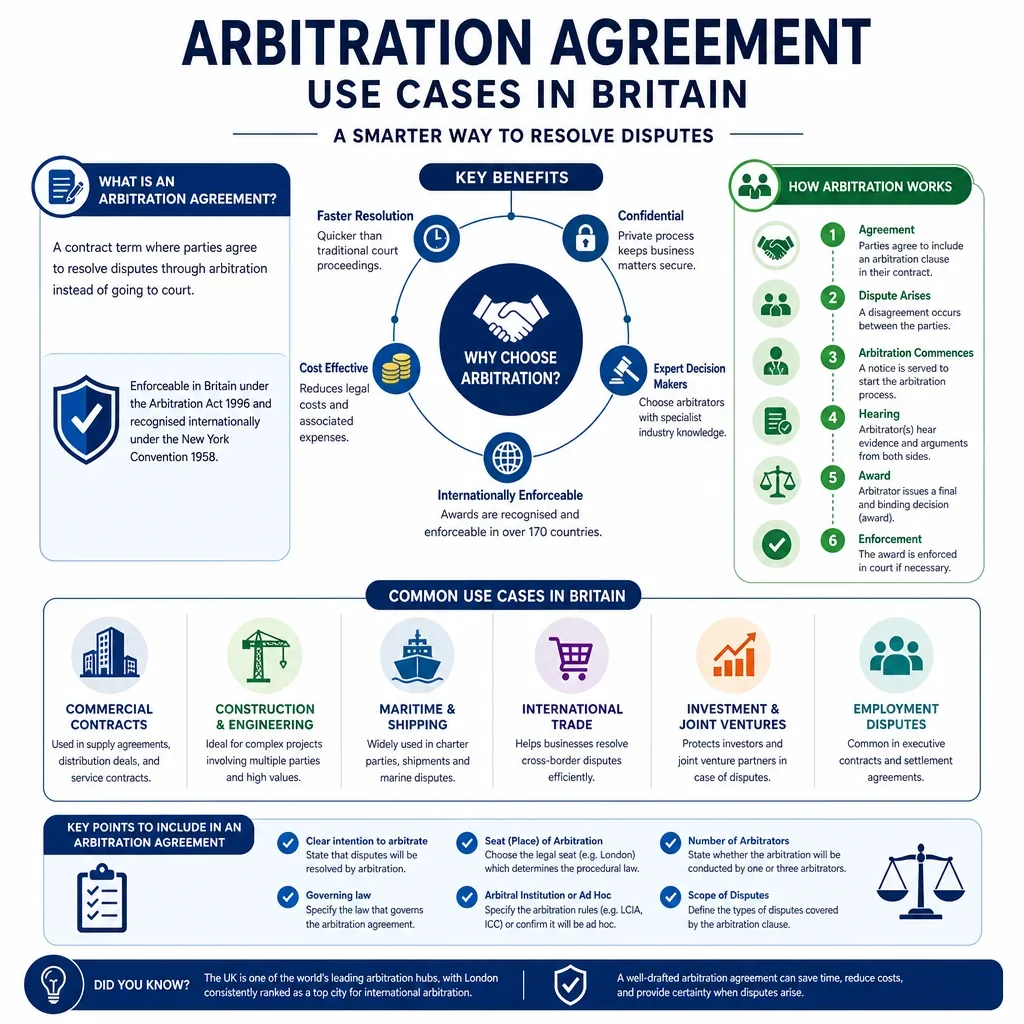
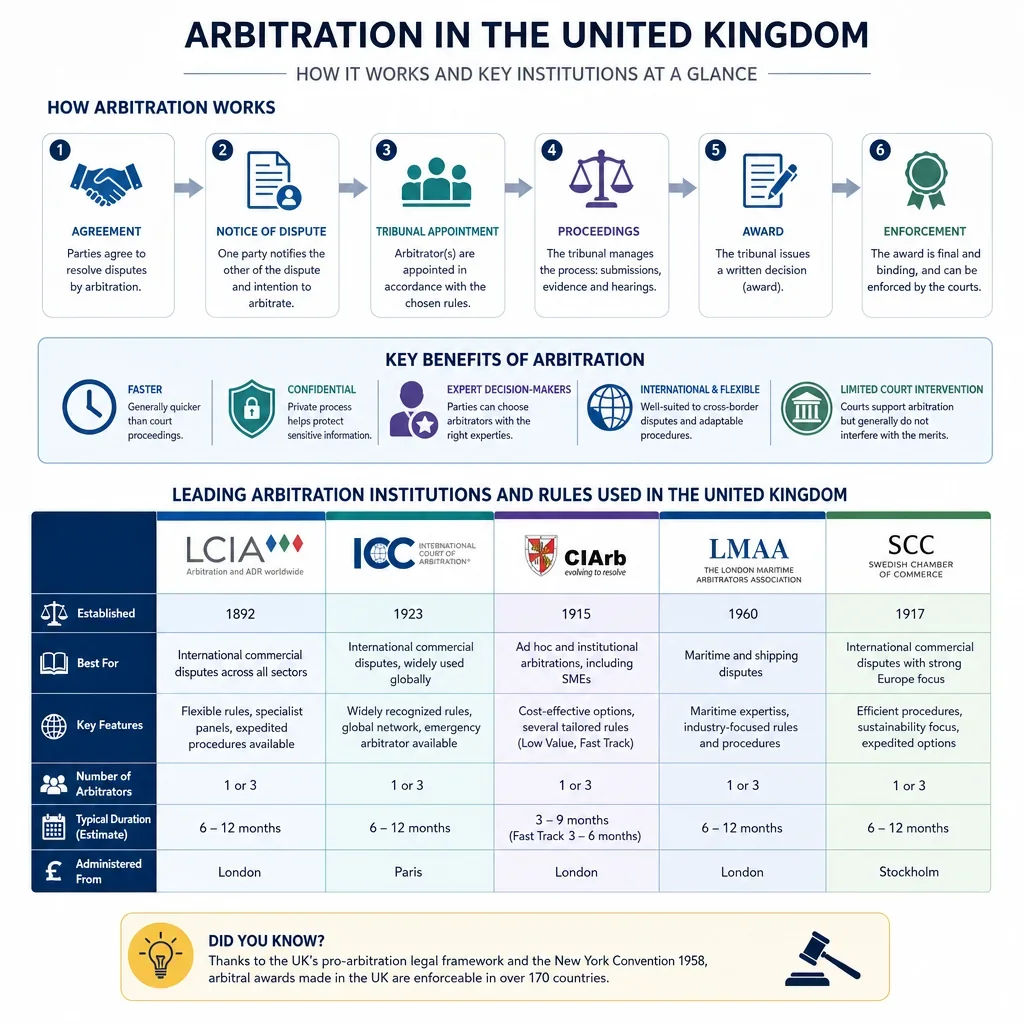
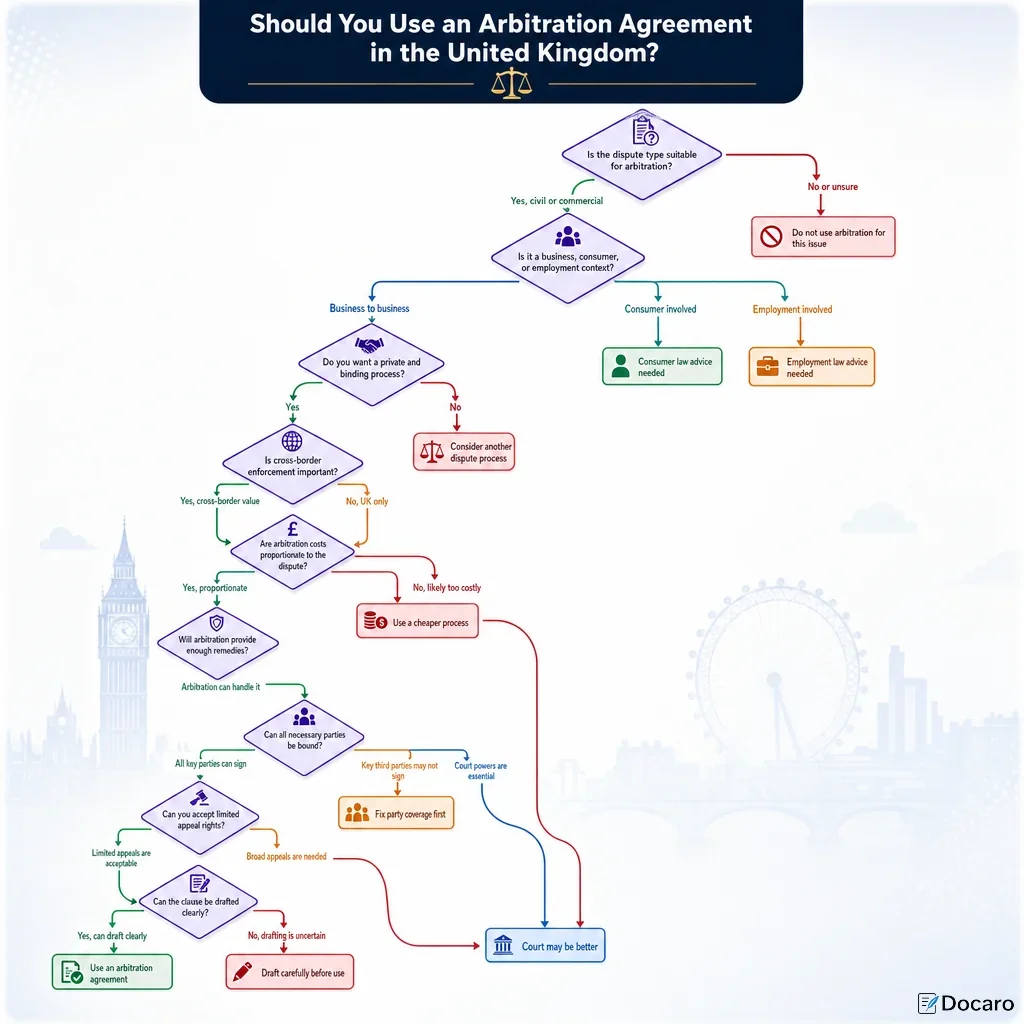
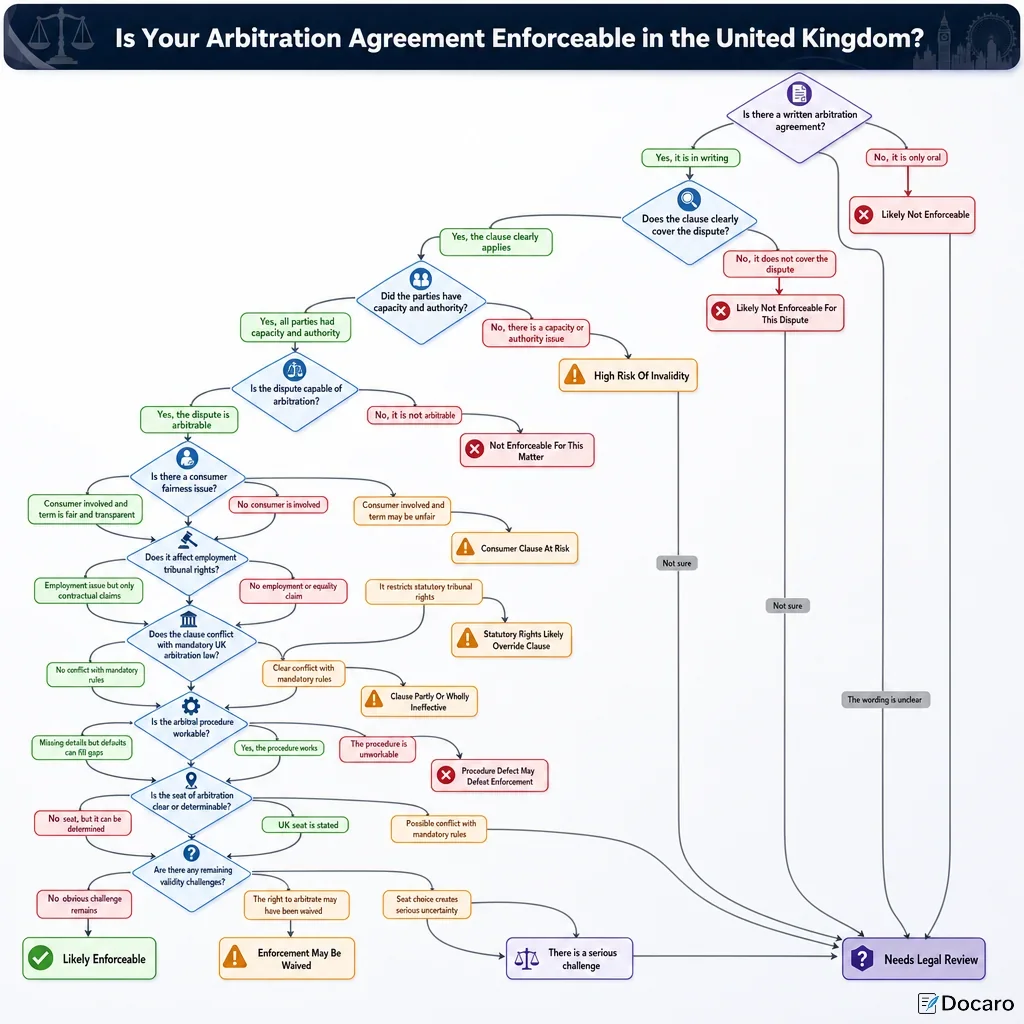
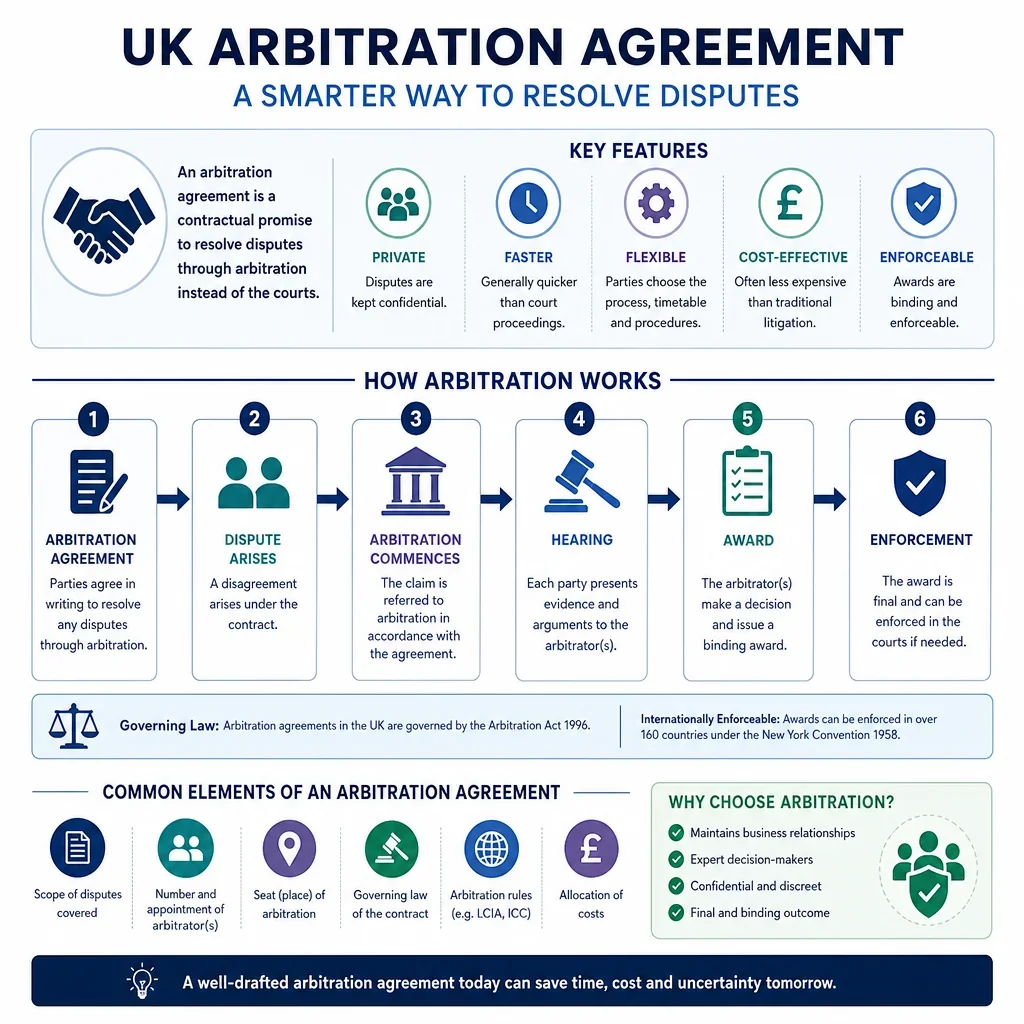
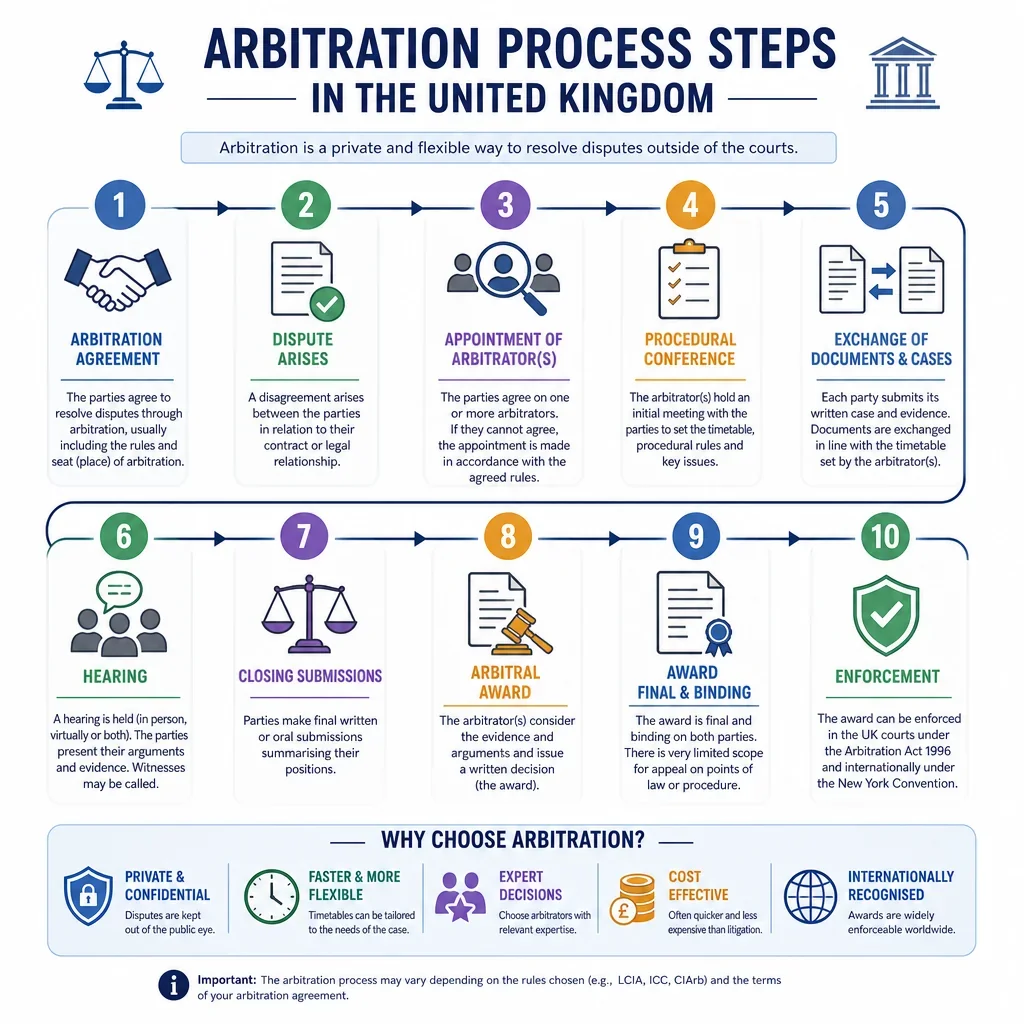
Arbitration is often the strongest alternative to court litigation where the parties want a private, binding decision that can usually be enforced internationally under the New York Convention. It is especially useful for cross-border commercial contracts, but the arbitration clause must be drafted carefully because court appeal rights are limited under the Arbitration Act 1996.
When Should A Contract Avoid Arbitration?
Arbitration may be less suitable where a party needs public precedent, urgent court remedies against third parties, or a low-cost procedure for a small domestic claim. In those cases, litigation, adjudication, negotiation, or mediation may be more proportionate depending on the dispute.
How Do Binding And Non-Binding Methods Differ In Practice?
- Litigation and arbitration normally produce final binding outcomes, but litigation is usually public while arbitration is usually private.
- Mediation and negotiation do not impose an outcome; they only bind the parties if a settlement agreement is reached.
- Expert determination is binding only if the contract says so, making the drafting of the expert determination clause particularly important.
- Adjudication in UK construction contracts gives a fast temporarily binding decision, commonly described as binding unless and until finally determined by litigation, arbitration, or agreement.
What Should A UK Arbitration Clause Deal With?
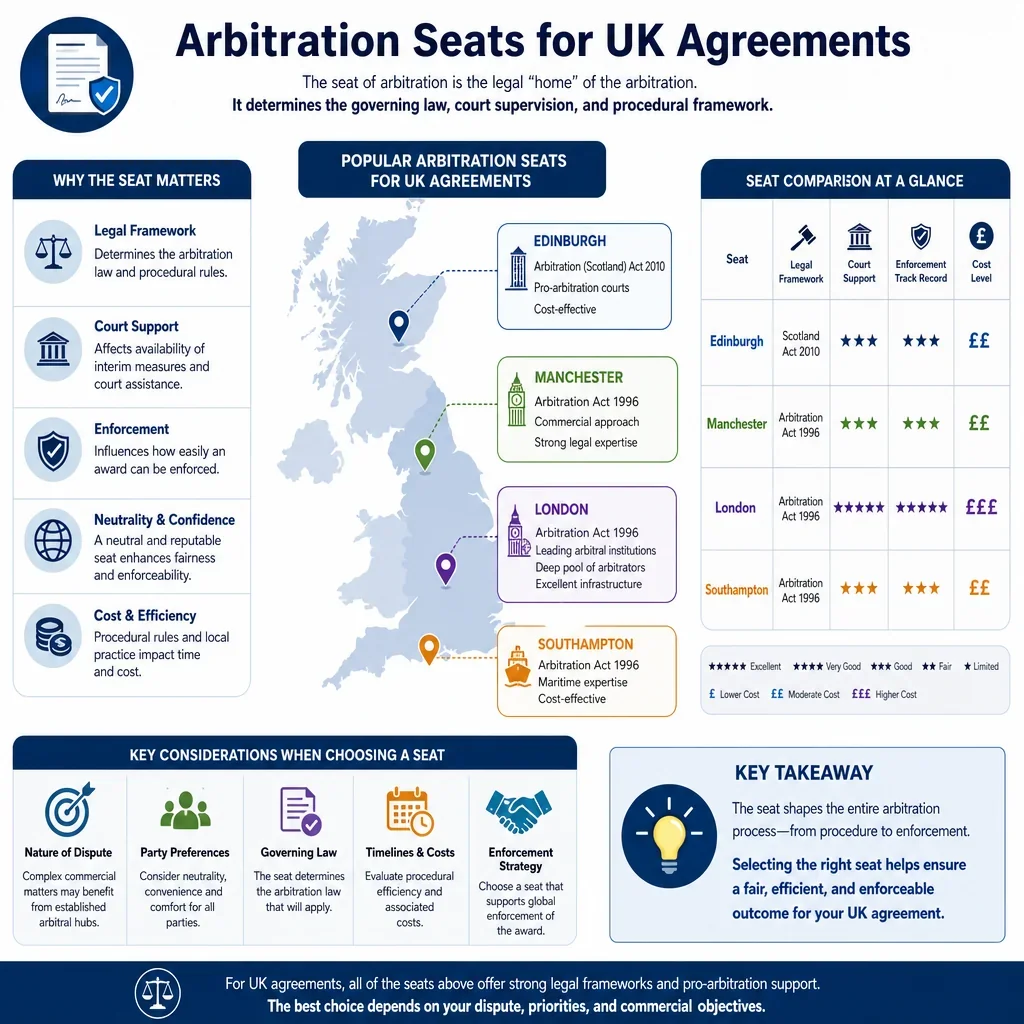
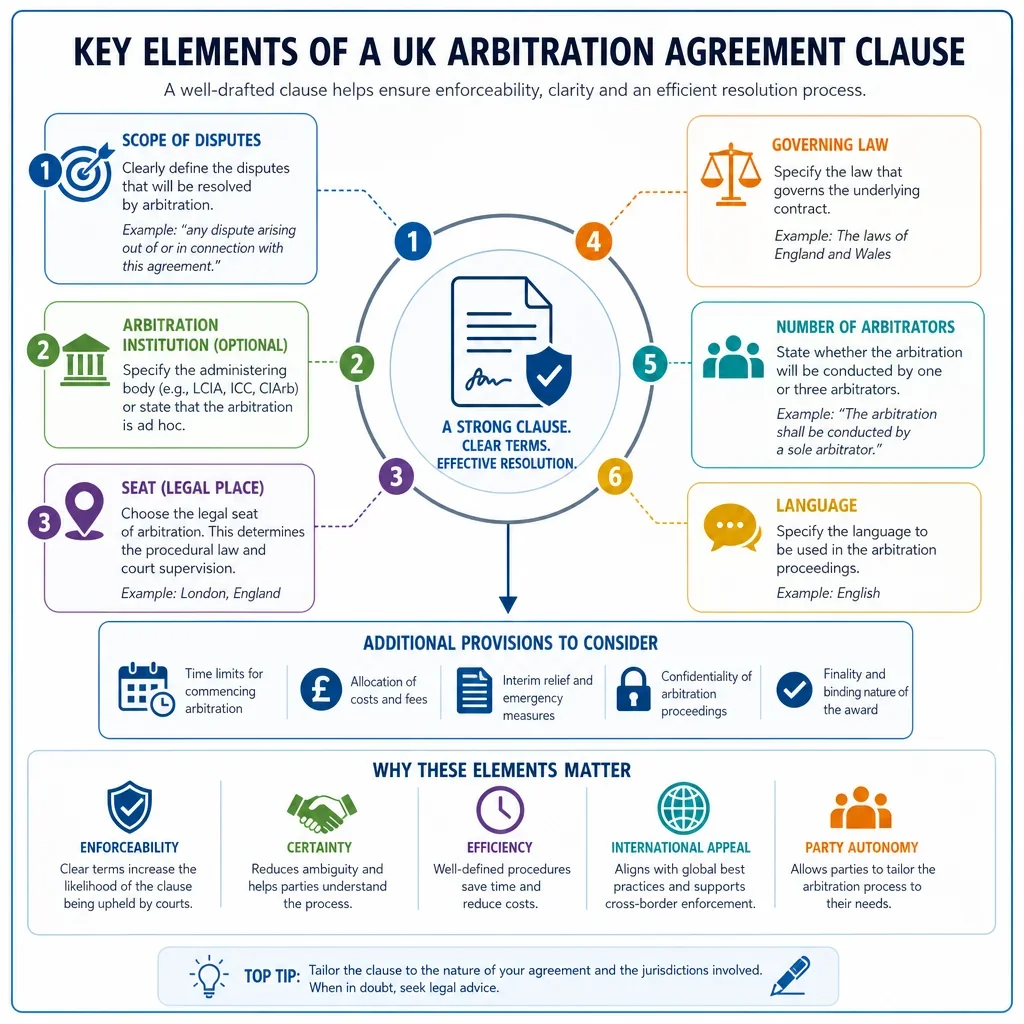
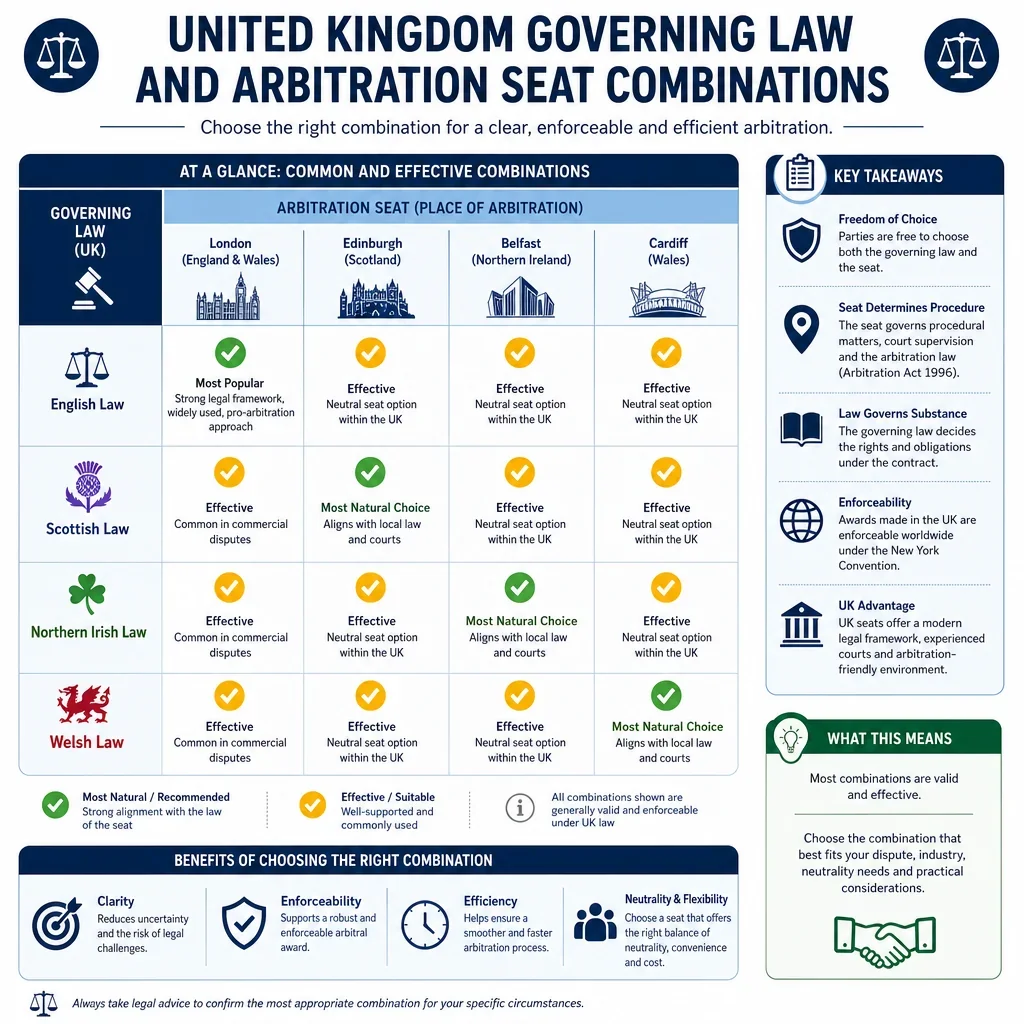
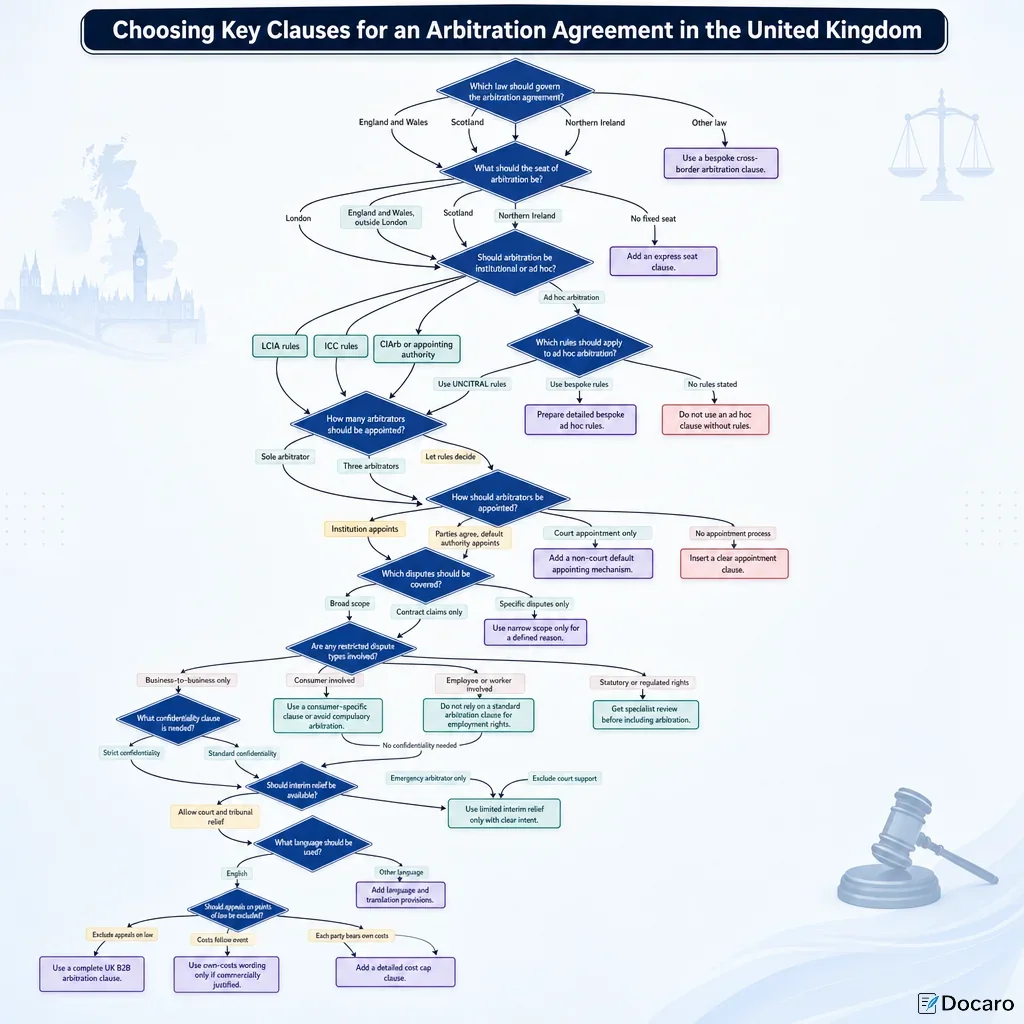
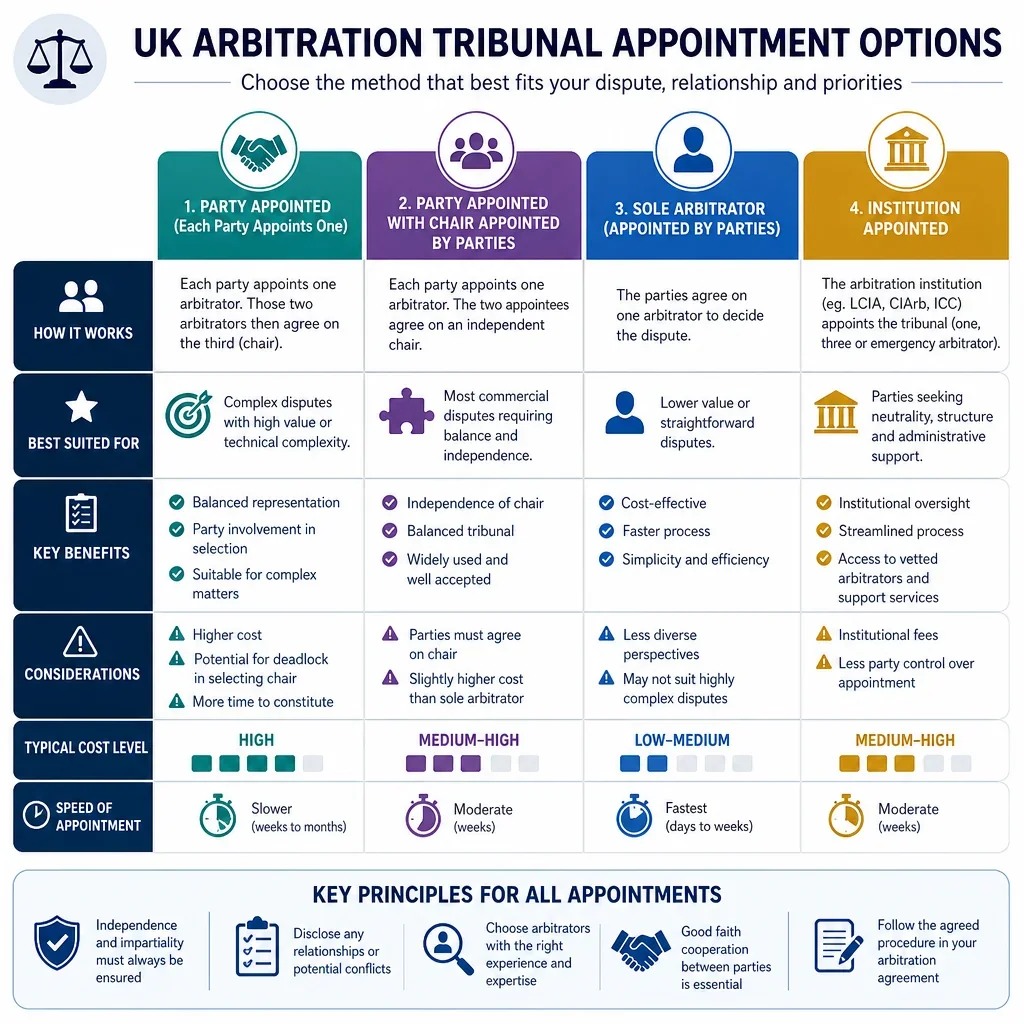
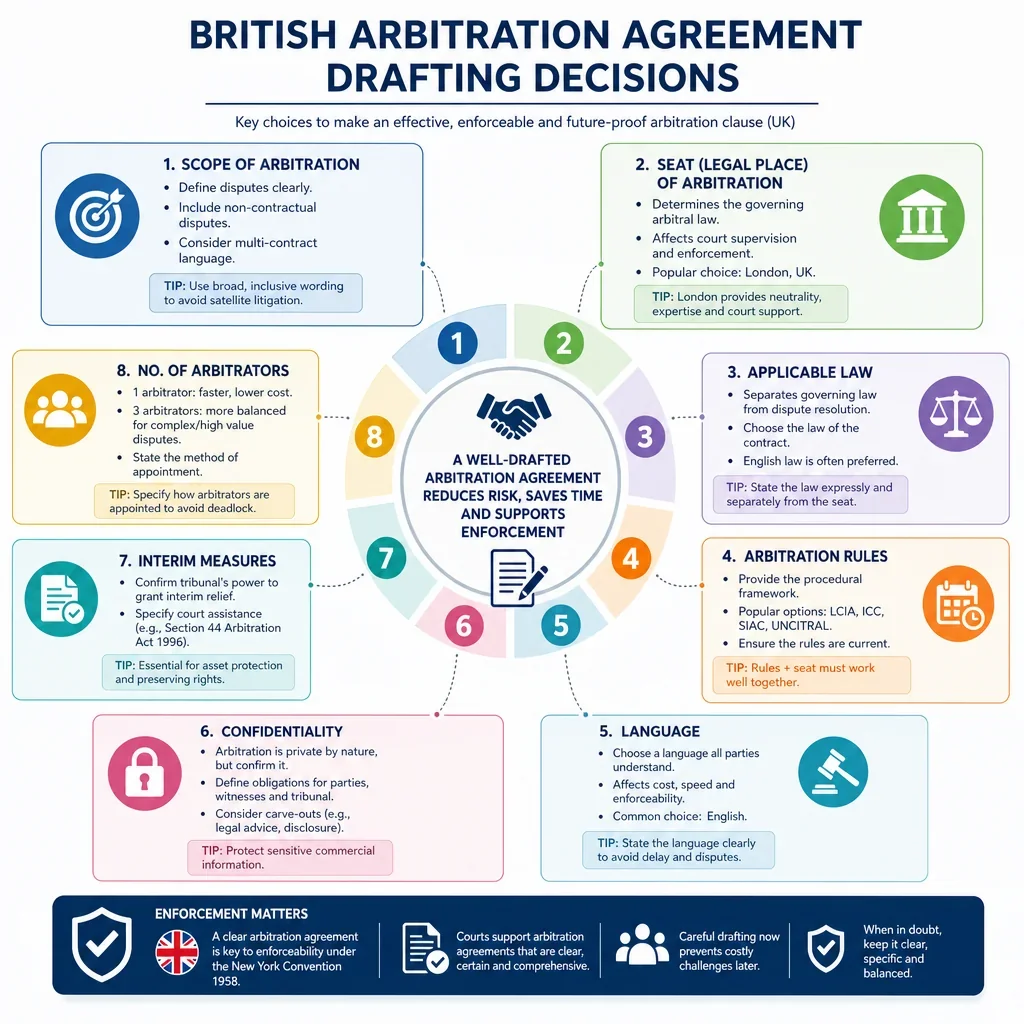
A UK arbitration agreement should usually specify the seat of arbitration, governing law, tribunal appointment process, number of arbitrators, procedural rules, language, confidentiality expectations, and whether any disputes should first go through negotiation or mediation. These choices affect privacy, enforceability, cost, speed, and the scope for court intervention.
FAQs
You Might Also Be Interested In