
AI Generated Move-In/Move-Out Inspection Checklist for use in the United States
PDF & Word - 2026 Updated
Docaro Pricing
When do you need a Move-In/Move-Out Inspection Checklist in the United States?
American Legal Rules for a Move-In/Move-Out Inspection Checklist
Using the wrong structure for a rental inspection checklist may fail to adequately document property conditions and lead to disputes over liability or repairs.
What a Proper Move-In/Move-Out Inspection Checklist Should Include
- Property OverviewStart with the address, date of inspection, names of landlord and tenant, and purpose of the move-in or move-out check.
- Exterior AreasNote the condition of the yard, driveway, walkways, and any outdoor features like fences or patios.
- Interior RoomsDescribe the state of walls, floors, ceilings, windows, doors, and built-in fixtures in each room.
- Kitchen DetailsCheck appliances, cabinets, countertops, sink, and plumbing for functionality and condition.
- Bathroom FeaturesInspect toilets, showers, tubs, sinks, mirrors, and ventilation for cleanliness and proper operation.
- Electrical and PlumbingVerify that lights, outlets, switches, water heaters, and pipes are working without leaks or hazards.
- HVAC SystemsConfirm the heating, ventilation, air conditioning, and any fans are in good working order.
- Furniture and AppliancesList any provided items like furniture or appliances and their current condition if applicable.
- Damage and RepairsRecord any existing damage, wear and tear, or needed repairs with photos if possible.
- Signatures and DateEnd with spaces for both parties to sign and date, confirming agreement on the inspection details.
Generate Your Document in 4 Easy Steps
Why Use Docaro?
 United States
Free Example Move-In/Move-Out Inspection Checklist Template
Below is a free template example of a Move-In/Move-Out Inspection Checklist for use in the United States generated by our AI model.
The clauses in your actual Move-In/Move-Out Inspection Checklist will vary from this example as they will be entirely bespoke to your requirements as set out in the questionnaire you complete.
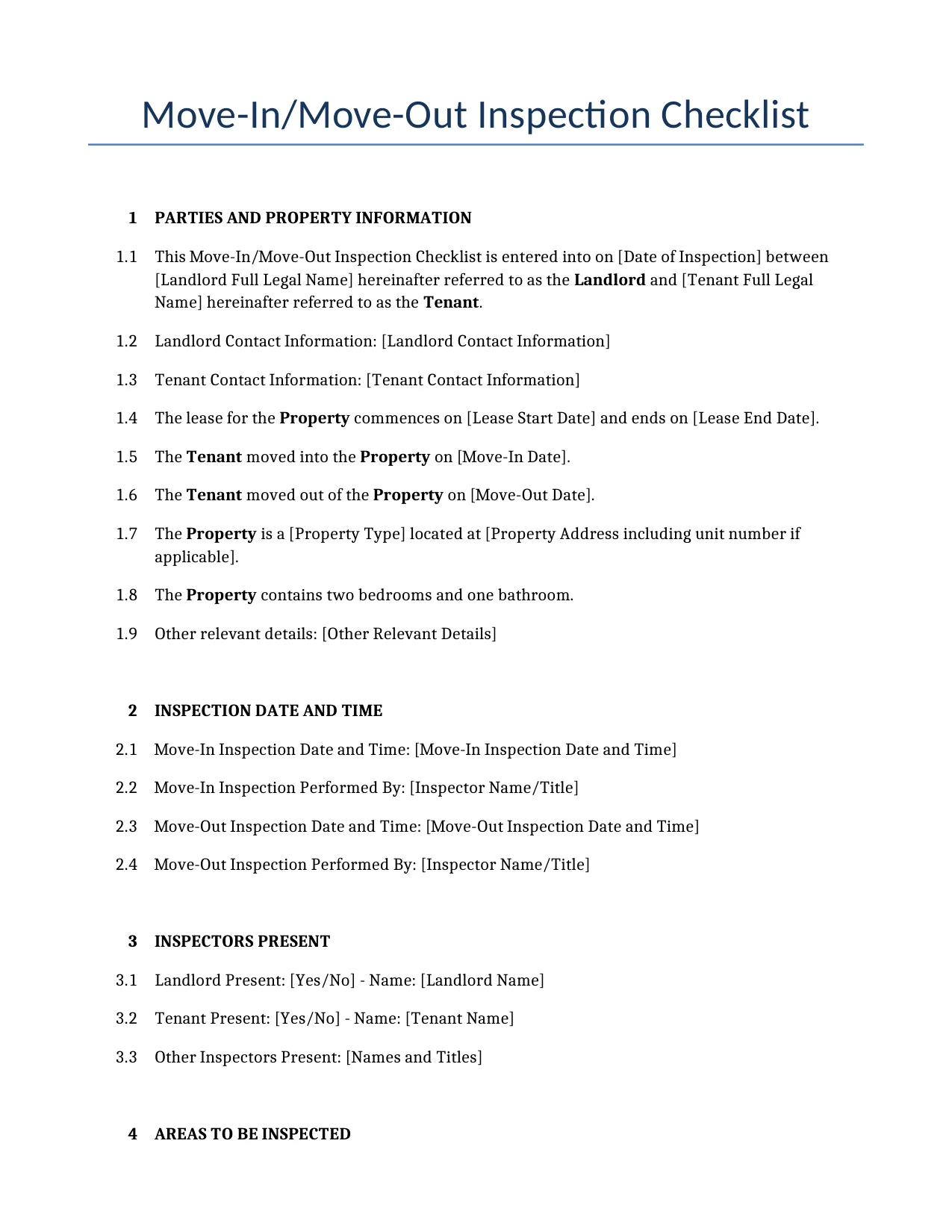
Move-In/Move-Out Inspection Checklist
1PARTIES AND PROPERTY INFORMATION
This Move-In/Move-Out Inspection Checklist is entered into on [Date of Inspection] between [Landlord Full Legal Name] hereinafter referred to as the Landlord and [Tenant Full Legal Name] hereinafter referred to as the Tenant.
Landlord Contact Information: [Landlord Contact Information]
Tenant Contact Information: [Tenant Contact Information]
The lease for the Property commences on [Lease Start Date] and ends on [Lease End Date].
The Tenant moved into the Property on [Move-In Date].
The Tenant moved out of the Property on [Move-Out Date].
The Property is a [Property Type] located at [Property Address including unit number if applicable].
The Property contains two bedrooms and one bathroom.
Other relevant details: [Other Relevant Details]
2INSPECTION DATE AND TIME
Move-In Inspection Date and Time: [Move-In Inspection Date and Time]
Move-In Inspection Performed By: [Inspector Name/Title]
Move-Out Inspection Date and Time: [Move-Out Inspection Date and Time]
Move-Out Inspection Performed By: [Inspector Name/Title]
3INSPECTORS PRESENT
Landlord Present: [Yes/No] - Name: [Landlord Name]
Tenant Present: [Yes/No] - Name: [Tenant Name]
Other Inspectors Present: [Names and Titles]
4AREAS TO BE INSPECTED
The following rooms and areas will be inspected using the standardized format below: Living Room, Kitchen, Bedroom 1, Bedroom 2, Bathroom, Dining Room (if applicable), Hallways and Common Areas, Laundry Area, Storage Areas (e.g. Closets), Exterior (including landscaping), HVAC and Utilities, Smoke and Carbon Monoxide Detectors.
For each component in the room-specific sections: (a) Condition at Move-In: [Condition Rating e.g. Excellent/Good/Fair/Poor], (b) Condition at Move-Out: [Condition Rating e.g. Excellent/Good/Fair/Poor], (c) Description of any pre-existing damage or defects (with photo references): [Description], (d) Estimated cost of repairs if applicable: [Amount], (e) Tenant Initials: [Initials], (f) Landlord Initials: [Initials].
5EXTERIOR INSPECTION
Siding: Condition at Move-In [Condition Rating], Condition at Move-Out [Condition Rating], Pre-existing Damage/Defects: [Description with photo refs], Est. Repair Cost: [Amount], Tenant/Landlord Initials: [Initials]
Roof: Condition at Move-In [Condition Rating], Condition at Move-Out [Condition Rating], Pre-existing Damage/Defects: [Description with photo refs], Est. Repair Cost: [Amount], Tenant/Landlord Initials: [Initials]
Windows (exterior): Condition at Move-In [Condition Rating], Condition at Move-Out [Condition Rating], Pre-existing Damage/Defects: [Description with photo refs], Est. Repair Cost: [Amount], Tenant/Landlord Initials: [Initials]
Doors (exterior): Condition at Move-In [Condition Rating], Condition at Move-Out [Condition Rating], Pre-existing Damage/Defects: [Description with photo refs], Est. Repair Cost: [Amount], Tenant/Landlord Initials: [Initials]
Landscaping and Grounds: Condition at Move-In [Condition Rating], Condition at Move-Out [Condition Rating], Pre-existing Damage/Defects: [Description with photo refs], Est. Repair Cost: [Amount], Tenant/Landlord Initials: [Initials]
6LIVING ROOM INSPECTION
Walls: Condition at Move-In [Condition Rating], Condition at Move-Out [Condition Rating], Pre-existing Damage/Defects: [Description with photo refs], Est. Repair Cost: [Amount], Tenant/Landlord Initials: [Initials]
Ceiling: Condition at Move-In [Condition Rating], Condition at Move-Out [Condition Rating], Pre-existing Damage/Defects: [Description with photo refs], Est. Repair Cost: [Amount], Tenant/Landlord Initials: [Initials]
Flooring: Condition at Move-In [Condition Rating], Condition at Move-Out [Condition Rating], Pre-existing Damage/Defects: [Description with photo refs], Est. Repair Cost: [Amount], Tenant/Landlord Initials: [Initials]
Windows: Condition at Move-In [Condition Rating], Condition at Move-Out [Condition Rating], Pre-existing Damage/Defects: [Description with photo refs], Est. Repair Cost: [Amount], Tenant/Landlord Initials: [Initials]
Doors: Condition at Move-In [Condition Rating], Condition at Move-Out [Condition Rating], Pre-existing Damage/Defects: [Description with photo refs], Est. Repair Cost: [Amount], Tenant/Landlord Initials: [Initials]
Electrical (outlets, switches, lighting): Condition at Move-In [Condition Rating], Condition at Move-Out [Condition Rating], Pre-existing Damage/Defects: [Description with photo refs], Est. Repair Cost: [Amount], Tenant/Landlord Initials: [Initials]
Built-in Features (e.g. shelving): Condition at Move-In [Condition Rating], Condition at Move-Out [Condition Rating], Pre-existing Damage/Defects: [Description with photo refs], Est. Repair Cost: [Amount], Tenant/Landlord Initials: [Initials]
7KITCHEN INSPECTION
Cabinets and Countertops: Condition at Move-In [Condition Rating], Condition at Move-Out [Condition Rating], Pre-existing Damage/Defects: [Description with photo refs], Est. Repair Cost: [Amount], Tenant/Landlord Initials: [Initials]
Appliances (stove, refrigerator, dishwasher, microwave): Condition at Move-In [Condition Rating], Condition at Move-Out [Condition Rating], Pre-existing Damage/Defects: [Description with photo refs], Est. Repair Cost: [Amount], Tenant/Landlord Initials: [Initials]
Sink and Faucet: Condition at Move-In [Condition Rating], Condition at Move-Out [Condition Rating], Pre-existing Damage/Defects: [Description with photo refs], Est. Repair Cost: [Amount], Tenant/Landlord Initials: [Initials]
Flooring: Condition at Move-In [Condition Rating], Condition at Move-Out [Condition Rating], Pre-existing Damage/Defects: [Description with photo refs], Est. Repair Cost: [Amount], Tenant/Landlord Initials: [Initials]
Walls, Ceiling, Windows, Doors, Electrical: Condition at Move-In [Condition Rating], Condition at Move-Out [Condition Rating], Pre-existing Damage/Defects: [Description with photo refs], Est. Repair Cost: [Amount], Tenant/Landlord Initials: [Initials]
8BEDROOM(S) INSPECTION
Bedroom 1 - Walls: Condition at Move-In [Condition Rating], Condition at Move-Out [Condition Rating], Pre-existing Damage/Defects: [Description with photo refs], Est. Repair Cost: [Amount], Tenant/Landlord Initials: [Initials]
Bedroom 1 - Ceiling: Condition at Move-In [Condition Rating], Condition at Move-Out [Condition Rating], Pre-existing Damage/Defects: [Description with photo refs], Est. Repair Cost: [Amount], Tenant/Landlord Initials: [Initials]
Bedroom 1 - Flooring and Closets: Condition at Move-In [Condition Rating], Condition at Move-Out [Condition Rating], Pre-existing Damage/Defects: [Description with photo refs], Est. Repair Cost: [Amount], Tenant/Landlord Initials: [Initials]
Bedroom 1 - Windows, Doors, Electrical: Condition at Move-In [Condition Rating], Condition at Move-Out [Condition Rating], Pre-existing Damage/Defects: [Description with photo refs], Est. Repair Cost: [Amount], Tenant/Landlord Initials: [Initials]
Bedroom 2 - Walls: Condition at Move-In [Condition Rating], Condition at Move-Out [Condition Rating], Pre-existing Damage/Defects: [Description with photo refs], Est. Repair Cost: [Amount], Tenant/Landlord Initials: [Initials]
Bedroom 2 - Ceiling: Condition at Move-In [Condition Rating], Condition at Move-Out [Condition Rating], Pre-existing Damage/Defects: [Description with photo refs], Est. Repair Cost: [Amount], Tenant/Landlord Initials: [Initials]
Bedroom 2 - Flooring and Closets: Condition at Move-In [Condition Rating], Condition at Move-Out [Condition Rating], Pre-existing Damage/Defects: [Description with photo refs], Est. Repair Cost: [Amount], Tenant/Landlord Initials: [Initials]
Bedroom 2 - Windows, Doors, Electrical: Condition at Move-In [Condition Rating], Condition at Move-Out [Condition Rating], Pre-existing Damage/Defects: [Description with photo refs], Est. Repair Cost: [Amount], Tenant/Landlord Initials: [Initials]
9BATHROOM(S) INSPECTION
Toilet, Sink, and Faucets: Condition at Move-In [Condition Rating], Condition at Move-Out [Condition Rating], Pre-existing Damage/Defects: [Description with photo refs], Est. Repair Cost: [Amount], Tenant/Landlord Initials: [Initials]
Bathtub/Shower: Condition at Move-In [Condition Rating], Condition at Move-Out [Condition Rating], Pre-existing Damage/Defects: [Description with photo refs], Est. Repair Cost: [Amount], Tenant/Landlord Initials: [Initials]
Mirrors, Cabinets, and Tiles: Condition at Move-In [Condition Rating], Condition at Move-Out [Condition Rating], Pre-existing Damage/Defects: [Description with photo refs], Est. Repair Cost: [Amount], Tenant/Landlord Initials: [Initials]
Ventilation/Exhaust Fan: Condition at Move-In [Condition Rating], Condition at Move-Out [Condition Rating], Pre-existing Damage/Defects: [Description with photo refs], Est. Repair Cost: [Amount], Tenant/Landlord Initials: [Initials]
Walls, Ceiling, Flooring, Electrical: Condition at Move-In [Condition Rating], Condition at Move-Out [Condition Rating], Pre-existing Damage/Defects: [Description with photo refs], Est. Repair Cost: [Amount], Tenant/Landlord Initials: [Initials]
10DINING ROOM INSPECTION
Walls and Ceiling: Condition at Move-In [Condition Rating], Condition at Move-Out [Condition Rating], Pre-existing Damage/Defects: [Description with photo refs], Est. Repair Cost: [Amount], Tenant/Landlord Initials: [Initials]
Flooring: Condition at Move-In [Condition Rating], Condition at Move-Out [Condition Rating], Pre-existing Damage/Defects: [Description with photo refs], Est. Repair Cost: [Amount], Tenant/Landlord Initials: [Initials]
Windows, Doors, Lighting, and Built-in Features: Condition at Move-In [Condition Rating], Condition at Move-Out [Condition Rating], Pre-existing Damage/Defects: [Description with photo refs], Est. Repair Cost: [Amount], Tenant/Landlord Initials: [Initials]
11HALLWAYS AND COMMON AREAS INSPECTION
Walls, Ceiling, and Flooring: Condition at Move-In [Condition Rating], Condition at Move-Out [Condition Rating], Pre-existing Damage/Defects: [Description with photo refs], Est. Repair Cost: [Amount], Tenant/Landlord Initials: [Initials]
Lighting, Doors, and Stairs (if applicable): Condition at Move-In [Condition Rating], Condition at Move-Out [Condition Rating], Pre-existing Damage/Defects: [Description with photo refs], Est. Repair Cost: [Amount], Tenant/Landlord Initials: [Initials]
12LAUNDRY AREA INSPECTION
Washer/Dryer Hookups and Appliances (if provided): Condition at Move-In [Condition Rating], Condition at Move-Out [Condition Rating], Pre-existing Damage/Defects: [Description with photo refs], Est. Repair Cost: [Amount], Tenant/Landlord Initials: [Initials]
Flooring, Walls, Ventilation: Condition at Move-In [Condition Rating], Condition at Move-Out [Condition Rating], Pre-existing Damage/Defects: [Description with photo refs], Est. Repair Cost: [Amount], Tenant/Landlord Initials: [Initials]
13STORAGE AREAS INSPECTION
Closets and Other Storage: Condition at Move-In [Condition Rating], Condition at Move-Out [Condition Rating], Pre-existing Damage/Defects: [Description with photo refs], Est. Repair Cost: [Amount], Tenant/Landlord Initials: [Initials]
14SMOKE AND CARBON MONOXIDE DETECTORS
Placement complies with local code (Texas/Austin regulations and Chapter 92 of the Texas Property Code): Move-In [Compliant/Non-Compliant], Move-Out [Compliant/Non-Compliant]
Battery Status and Test Results: Move-In [Operational/Non-Operational - Notes], Move-Out [Operational/Non-Operational - Notes]
Additional Notes: [Notes]
15PEST INSPECTION
Evidence of Pests at Move-In: [Findings/Notes]
Evidence of Pests at Move-Out: [Findings/Notes]
Prior Treatment History: [History/Notes]
Tenant Responsibilities per Texas Law: [Notes on Responsibilities]
16HVAC AND UTILITIES INSPECTION
Heating and Air Conditioning: Condition at Move-In [Condition Rating], Condition at Move-Out [Condition Rating], Notes: [Notes]
Filter Condition: Move-In [Condition], Move-Out [Condition]
Thermostat Functionality: Move-In [Functional/Issues], Move-Out [Functional/Issues]
Water Heater: Condition at Move-In [Condition Rating], Condition at Move-Out [Condition Rating], Notes: [Notes]
Ventilation, Plumbing, and Electrical: Condition at Move-In [Condition Rating], Condition at Move-Out [Condition Rating], Notes: [Notes]
All utilities functioning, meters read and documented: Move-In [Yes/No - Readings], Move-Out [Yes/No - Readings]
17LEAD-BASED PAINT DISCLOSURE AND INSPECTION
For pre-1978 housing (included as general compliance item per the Lead-Based Paint Poisoning Prevention Act): Known lead hazards: [Statement/None]
Disclosure provided to tenant: [Yes/No]
Inspection findings: [Findings/Notes]
18SECURITY DEPOSIT INFORMATION
Initial Security Deposit Amount: [Amount]
This inspection will be used to determine any deductions per Texas Property Code (return within 30 days with itemized list of deductions).
Notes on potential deductions: [Notes]
19COMPREHENSIVE SAFETY ITEMS COMPLIANCE
Smoke Detectors: Move-In [Compliant], Move-Out [Compliant] - Notes: [Notes]
Carbon Monoxide Detectors: Move-In [Compliant], Move-Out [Compliant] - Notes: [Notes]
Fire Extinguishers (if required): Move-In [Compliant], Move-Out [Compliant] - Notes: [Notes]
GFCI Outlets: Move-In [Compliant], Move-Out [Compliant] - Notes: [Notes]
Other Safety Items per Austin/Texas Regulations: [List and Compliance Status]
20MOVE-OUT SPECIFIC ITEMS
All utilities transferred out of tenant's name: [Confirmation/Notes]
All keys and access devices returned: [Confirmation/Notes - List Returned Items]
Forwarding address provided: [Yes/No - Address if provided]
Final meter readings documented: [Readings]
21PHOTOS AND ATTACHMENTS
All noted damages or conditions are supported by timestamped photographs or video. Both parties acknowledge the documentation with initials on each item above.
List of attached items (photos, videos, receipts, etc.): [List of Attachments]
22COMPLIANCE WITH APPLICABLE LAW
This inspection complies with Texas Property Code Chapters 92 (Landlord and Tenant) and Subchapter B of Chapter 92 (security devices), Austin City Code on rental property standards and habitability requirements, and proper documentation for security deposit deductions per Texas law. (Note: References to Section 8 or IPMC have been removed as inapplicable to this general template.)
Additional compliance notes: [Notes]
23AGREEMENT AND ACKNOWLEDGMENT
Both parties have had the opportunity to inspect the property. The tenant has the right to be present at the move-out inspection per Texas law. This checklist will be used to determine any security deposit deductions.
The Tenant acknowledges that the inspection accurately reflects the Property's condition at move-in and move-out (as applicable).
The Landlord acknowledges that the inspection accurately reflects the Property's condition at move-in and move-out (as applicable).
The parties agree this checklist is accurate and agree to its use for documenting the condition of the property.
24DISPUTE RESOLUTION
Any disagreements about inspection findings or security deposit shall be resolved following Texas law.
Dispute notes: [Notes]
25SIGNATURES
The Landlord and Tenant have executed this Move-In/Move-Out Inspection Checklist as of the dates set forth below.
Landlord: [Landlord Name] Date: [Date] Signature: [Signature]
Tenant: [Tenant Name] Date: [Date] Signature: [Signature]
This example shows approximately 70% of a typical document and is provided for illustrative purposes only. The remaining content has been omitted.
Every document generated by Docaro is tailored to your specific circumstances, jurisdiction and the information you provide. The completed document includes all applicable clauses and provisions required for your situation.
To generate the full, personalised document, answer a short series of questions and your document will be created instantly.