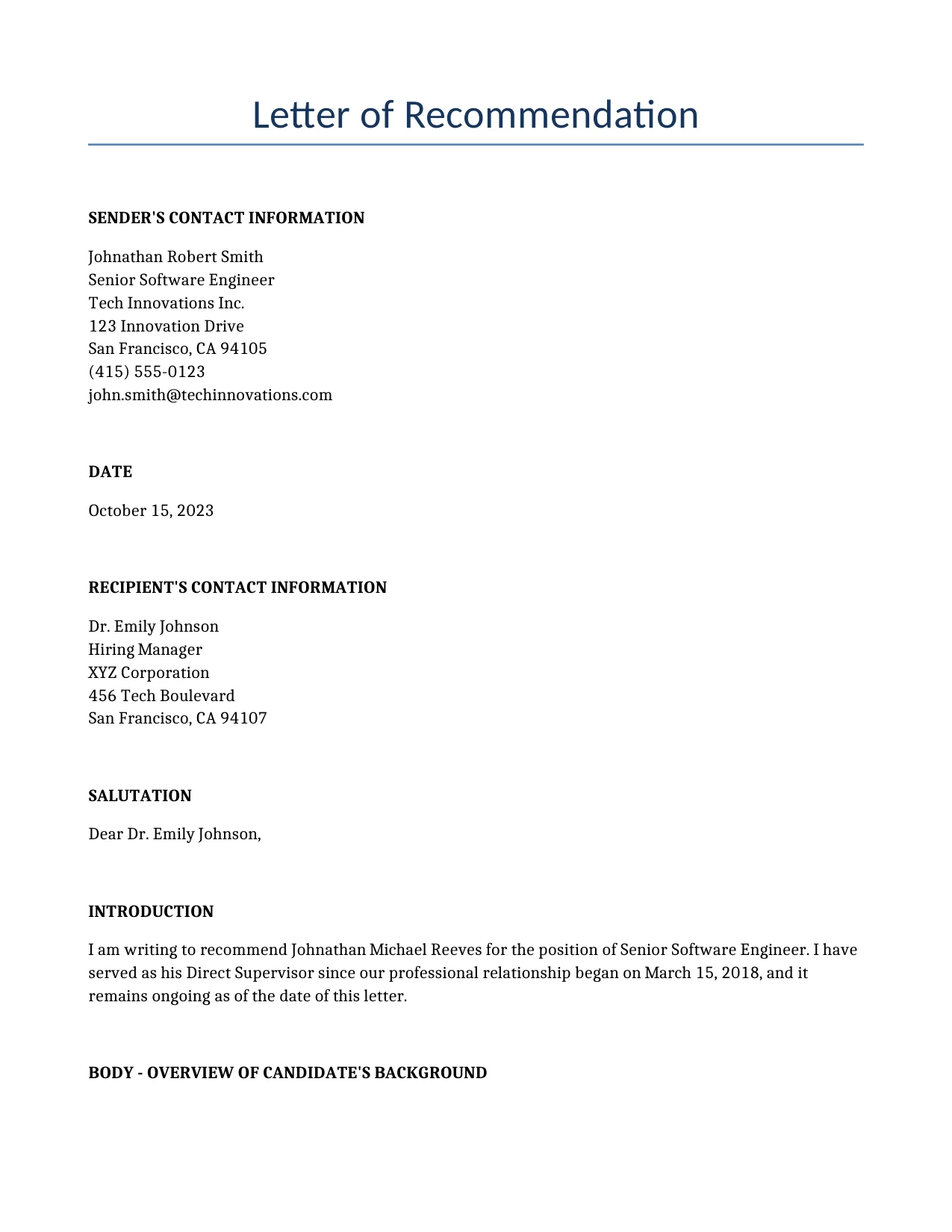
Why Free Templates Can Be Risky for Letters of Recommendation
Free templates for letters of recommendation often use generic language that fails to highlight specific achievements, personal qualities, or the unique context of the recommender's relationship with the candidate. This can result in vague, unconvincing endorsements that don't effectively influence admissions committees, employers, or scholarship reviewers, potentially weakening the candidate's application.
AI-generated bespoke letters of recommendation are customized to incorporate precise details about the candidate's skills, experiences, and the recommender's perspective, creating a compelling, personalized narrative that stands out and maximizes the document's persuasive impact.
What is a Letter of Recommendation in the US Legal Context?
A letter of recommendation is a formal document where one party endorses another's skills, character, or qualifications, often serving as a key element in professional and educational processes in the United States. While not inherently a legal contract, it carries significant weight as a written statement that can be scrutinized in legal contexts, such as verifying facts or assessing credibility.
In employment and professional contexts, letters of recommendation are commonly used to support job applications, promotions, or character references, helping employers evaluate a candidate's fit. For education, they play a crucial role in college admissions, scholarships, or graduate programs, providing insights beyond transcripts; explore detailed guidance in our strong letter for US college applications or the ultimate guide to letters for US job applications.
These letters can impact legal proceedings like defamation lawsuits if they contain false statements that harm reputations, or in employment disputes where they might be evidence in wrongful termination or discrimination cases. For authoritative insights, refer to resources from the US Equal Employment Opportunity Commission on workplace references.
- Always ensure accuracy and truthfulness to mitigate legal risks.
- Consider using bespoke AI-generated documents via Docaro for tailored, reliable recommendations.
When Should You Use a Letter of Recommendation?
A letter of recommendation is a vital document in the United States for various formal processes, providing third-party validation of an individual's skills and character. Common situations include job applications, where employers request them to assess a candidate's fit; college admissions, as universities like those outlined by the College Board use them to evaluate academic potential; professional certifications, such as for CPA or medical licenses through bodies like the AICPA; and immigration processes, where USCIS may require them to support visa or green card petitions demonstrating personal ties or qualifications.
The benefits of a letter of recommendation lie in its ability to offer credible, personalized insights that resumes or applications alone cannot provide, enhancing credibility and influencing decision-makers positively. For instance, in competitive college admissions or job markets, it can highlight unique strengths, increasing approval chances by up to 20-30% according to career experts.
Legally, letters of recommendation are recognized as supporting documents in the US because they serve as affidavits of character or competency, admissible in administrative proceedings under federal guidelines from agencies like USCIS or the Department of Education. Their authenticity is upheld through requirements for signatures and notarial verification when needed, ensuring they contribute to fair evaluations without constituting binding contracts.
When Should You Avoid Using One?
A letter of recommendation should not be provided when the relationship with the subject is strained, as negative personal experiences could lead to biased or unfavorable content that risks defamation claims. In such cases, declining to write the letter protects both parties from potential legal disputes, and consulting resources like the EEOC guidelines on employment discrimination can help assess risks.
Potential for bias arises if the recommender has a close personal or professional tie to the subject, possibly skewing the evaluation and inviting scrutiny in academic or job settings. To avoid conflicts of interest, it's advisable to disclose any relationships upfront or abstain from writing, ensuring the process remains fair and legally sound.
Conflicts of interest, such as recommending a family member for a position where the recommender has influence, can lead to accusations of nepotism and legal challenges under anti-discrimination laws. For tailored advice on navigating these issues, consider generating bespoke AI-generated legal documents using Docaro to customize disclosures or waivers specific to your situation.
"Truthfulness in recommendation letters is paramount; any exaggeration or falsehood can expose the writer to defamation liability. Always base statements on verifiable facts to safeguard against legal risks." – Dr. Elena Vargas, Professor of Employment Law.
For crafting precise, customized legal documents like recommendation letters, use bespoke AI-generated options from Docaro to ensure compliance and accuracy.
What Are the Key Clauses in a Letter of Recommendation?
A US letter of recommendation should include the recommender's relationship to the subject, such as how they know them professionally or academically, to establish credibility and context. This clause, along with the duration of acquaintance, provides clarity by showing the depth of the observer's insight, reducing ambiguity about the endorsement's reliability.
Specific examples of the subject's performance, like notable achievements or skills demonstrated, add concrete evidence to the recommendation. These details ensure the letter is substantive rather than vague, helping recipients evaluate the candidate's qualifications accurately.
A clear endorsement, stating the recommender's strong support for the subject's application or role, ties the letter together with a definitive recommendation. Including this, alongside the other clauses, offers legal protection by minimizing risks of defamation claims, as the statements are factual and contextualized, while promoting transparency in hiring or admissions processes.
For creating tailored US letters of recommendation, consider using bespoke AI-generated legal documents via Docaro to ensure they meet specific needs. This approach aligns with guidelines from authoritative sources like the US Equal Employment Opportunity Commission, emphasizing fair and unbiased recommendations.
What Key Exclusions Should Be Considered?
When writing letters of recommendation in the US, it's crucial to avoid unsubstantiated claims that lack specific examples or evidence, as these can undermine the letter's credibility and potentially expose the writer to legal risks. Instead, focus on verifiable achievements and qualifications to ensure the recommendation remains professional and reliable.
Personal opinions unrelated to the candidate's professional or academic qualifications should be excluded, as they can introduce bias and violate anti-discrimination statutes like Title VII of the Civil Rights Act, which protects against discrimination based on race, gender, or other protected characteristics. For authoritative guidance, refer to the EEOC's overview of Title VII.
Sensitive information protected by laws such as HIPAA must be omitted to prevent privacy violations, particularly in recommendations involving healthcare or medical details. Common pitfalls to avoid are detailed in this resource on common mistakes in US letters of recommendation.
To maintain compliance and effectiveness, use bespoke AI-generated documents via Docaro for tailored recommendation letters that adhere to US legal standards, rather than generic templates.

What Are the Rights and Obligations of Parties Involved?
In a US letter of recommendation, the recommender holds the primary obligation to provide accurate and truthful information based on personal knowledge, as false statements can lead to defamation liability under state tort laws. Recommenders also have a qualified privilege to share opinions honestly, but they must avoid malicious falsehoods to mitigate risks of lawsuits from the subject.
The recipient, typically an employer or educational institution, has the right to request and use the letter of recommendation for hiring or admissions decisions, but they are obligated to maintain confidentiality of the contents to protect the subject's privacy under general employment laws. If the recipient uses the letter in a way that involves background checks, the Fair Credit Reporting Act (FCRA) may apply if a consumer reporting agency is involved, requiring disclosures and consent from the subject; for more details, see the FTC's FCRA overview.
The subject of the letter of recommendation possesses privacy rights under laws like the common law right to publicity and state privacy statutes, entitling them to know if negative information is shared and potentially to sue for invasion of privacy if sensitive details are disclosed without consent. Subjects can request access to recommendations in certain contexts, such as under the Family Educational Rights and Privacy Act (FERPA) for academic records, and they bear no direct obligations but should provide complete information to recommenders to ensure accuracy.

Are There Recent Legal Changes Affecting Letters of Recommendation?
In 2023, the Equal Employment Opportunity Commission (EEOC) issued updated guidance on anti-discrimination laws in employment references, emphasizing that letters of recommendation must avoid biased language related to protected characteristics like race, gender, or age to comply with Title VII of the Civil Rights Act. This reinforces longstanding federal protections, ensuring recommenders do not inadvertently discriminate during hiring processes.
At the state level, California's Consumer Privacy Act (CCPA) amendments effective in 2024 expand data privacy requirements, potentially impacting how personal information in letters of recommendation is handled and disclosed by employers. For instance, companies must now obtain explicit consent for sharing sensitive data in references, aligning with broader employment verification trends to safeguard employee privacy.
General trends in the US highlight increased scrutiny on employment verification practices, with states like New York and Illinois enacting laws to limit liability for good-faith references while promoting transparency. Employers are advised to consult resources such as the EEOC website for federal compliance and to use bespoke AI-generated legal documents via Docaro for tailored letters of recommendation that meet evolving regulations.
How Can You Get Started with Drafting a Legally Sound Letter?
1
Gather Information
Collect details about the recipient, your relationship with them, and specific achievements to support the recommendation.
2
Review Legal Guidelines
Research US laws on letters of recommendation, focusing on avoiding discrimination, defamation, and ensuring factual accuracy.
3
Draft Using Docaro
Use Docaro to generate a bespoke AI-powered letter of recommendation tailored to the gathered information and legal standards.
4
Seek Review
Have the draft reviewed by a legal professional to confirm compliance with US standards before finalizing.
You Might Also Be Interested In
A Legal Agreement Outlining The Terms Of Employment Between An Employer And Employee, Including Duties, Compensation, And Duration.
A Legal Contract Outlining The Terms Of Engagement Between A Company And An Independent Contractor For Specific Services.
A Legal Contract That Prohibits Employees From Revealing Confidential Employer Information.
A Contract Where An Employee Agrees Not To Work For Competitors Or Start A Similar Business For A Specified Period After Leaving The Employer.
A Formal Document From An Employer Outlining The Terms Of Employment, Including Position, Salary, Benefits, And Start Date, To The Prospective Employee.
A Document Provided By Employers Outlining Company Policies, Procedures, Employee Rights, And Expectations To Inform And Guide The Workforce.
A Formal Notice From An Employer To An Employee Stating The End Of Their Employment, Including The Effective Date And Any Relevant Details.
A Legal Contract Outlining Terms Of An Internship, Including Duties, Duration, Compensation, And Confidentiality.
A Legal Contract Outlining Terms For Employees Working Remotely, Including Responsibilities, Compensation, And Compliance Requirements.
A Legal Contract Where An Employee Agrees To Keep Company Information Confidential.
A Legal Document Outlining The Terms, Scope Of Work, Payment, And Rights Between A Freelancer And A Client.
An Employment Arrangement Where The Employer Can Dictate Work Hours With No Minimum Guarantee, Offering Flexibility But Limited Employee Security.
A Formal Document Notifying An Employer Of An Employee's Intent To Resign From Their Position, Typically Including The Last Day Of Work.