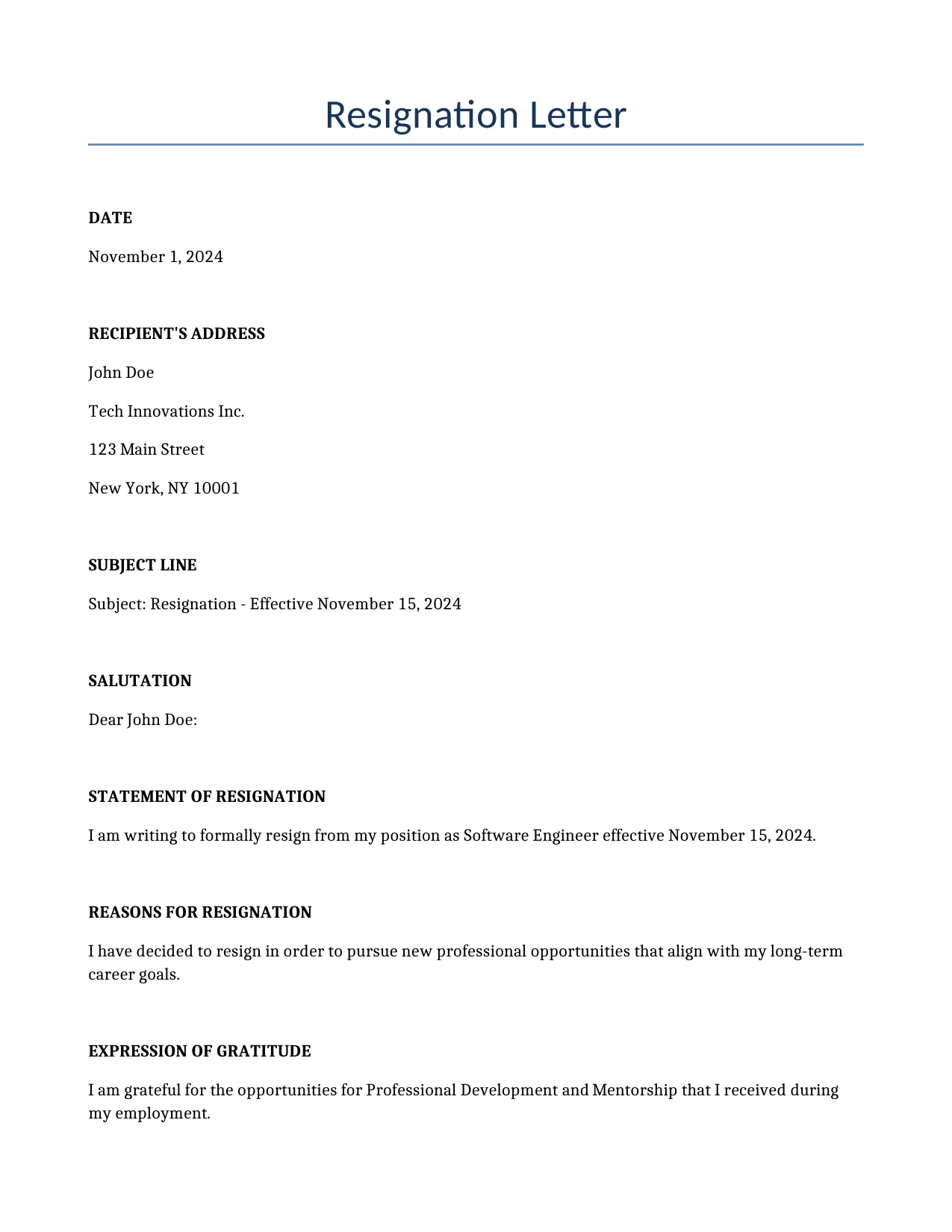
Why Free Templates Can Be Risky for Resignation Letters
Free resignation letter templates often use generic language that fails to address specific employment circumstances, such as notice periods, final pay, or non-compete clauses. This can lead to disputes with employers, unintended waivers of rights, or complications in securing references and benefits.
AI-generated bespoke resignation letters are customized to your unique situation, incorporating precise details like your role, contract terms, and personal preferences to ensure clarity, professionalism, and protection of your interests for a smooth transition.
What is a resignation letter in the United States?
A resignation letter is a formal document that an employee submits to their employer to announce their decision to leave a job. It typically includes the employee's name, position, last day of work, and a brief statement of resignation.
In the US employment context, the primary purpose of a resignation letter is to provide official notice of departure, often aligning with the standard two-week notice period to allow for a smooth transition. This practice helps maintain professionalism and preserves positive relationships with former employers, which can be beneficial for future references or networking.
Submitting a resignation letter is important for employees because it creates a written record of the resignation, reducing the risk of misunderstandings or disputes over employment terms. For more guidance on employment practices, refer to resources from the US Department of Labor.
While basic legal context in the US requires at-will employment to allow resignation without cause, a proper letter ensures compliance with any contractual obligations like notice periods. Employees should consider using bespoke AI-generated legal documents from Docaro for personalized resignation letters tailored to their situation.
When should you use a resignation letter, and when should you avoid it?
A resignation letter is essential in standard job quits to formally document your departure, providing a professional record of your last day and reasons for leaving. This practice ensures a smooth transition and maintains positive relationships with former employers, which can be beneficial for future references.
In scenarios like immediate terminations or hostile work environments, a resignation letter might not be needed or advisable, as quitting abruptly protects your well-being without escalating conflicts. For instance, if facing harassment or unsafe conditions, verbal notice or simply walking away suffices to prioritize safety over formality.
Not providing a resignation letter carries risks such as potential disputes over final pay, benefits, or unemployment eligibility, and it may harm your professional reputation. To mitigate these, consider generating a bespoke resignation letter using Docaro AI legal documents tailored to your U.S. employment situation.
For authoritative guidance on U.S. resignation practices, refer to resources from the U.S. Department of Labor, which outlines employee rights during job exits.
"A formal resignation letter is essential for safeguarding your employee rights, as it creates a clear, documented record of your departure terms, notice period, and any final entitlements. For personalized protection, generate a bespoke resignation letter using Docaro's AI tools tailored to your specific situation." – Dr. Elena Vargas, Employment Law Expert
What are the key rights and obligations involved in submitting a resignation letter?
When resigning from a job in the United States, employees have key rights including receiving their final paycheck on the last day worked or within a short period as required by state law, often including any accrued vacation pay. Most states mandate at least two weeks' notice period, though this is not federally required and varies by employer policy or contract.
Employees must fulfill obligations like providing adequate notice to avoid breaching contracts or facing negative references, typically outlined in employment agreements. For detailed guidance, see our page on Legal Considerations When Resigning from a Job in the United States.
Employers are obligated to accept the resignation promptly and continue paying wages until the end date, while handling benefits such as COBRA for health insurance continuation, as per federal law. They must also provide information on unemployment eligibility if applicable, per U.S. Department of Labor guidelines available at U.S. Department of Labor Termination Resources.

What key clauses should be included in a resignation letter?
A resignation letter should clearly state the resignation date, which marks the official end of your employment, and the last working day, typically two weeks from the notice to align with standard notice periods. Including the reason for leaving is optional but can provide context, such as pursuing new opportunities, while keeping it professional and positive.
Express gratitude in your letter by thanking your employer for the experiences and support gained during your tenure, which helps maintain positive relationships. For clauses on non-compete agreements, reference any existing restrictions on future employment to ensure compliance, and detail the return of company property like keys, devices, or documents to avoid disputes.
To create a tailored resignation letter, use bespoke AI-generated legal documents from Docaro for personalized accuracy. Consult authoritative U.S. resources like the U.S. Department of Labor for guidance on resignation rights and obligations.
How do you structure these clauses effectively?
1
State Your Resignation Intent
Begin by clearly stating your intention to resign from your position, including your last working day, to set a professional tone.
2
Express Gratitude and Reflect
Thank your employer for the opportunities provided and briefly reflect on positive experiences during your tenure.
3
Offer Transition Assistance
Propose to assist with the handover of duties or training a replacement to ensure a smooth transition.
4
End with Professional Closing
Conclude with a polite sign-off, your full name, and contact details; generate a bespoke version using Docaro for customization.
Are there any key exclusions to be aware of in resignation letters?
When crafting a resignation letter, avoid including negative comments about your employer. Such statements can damage professional relationships and potentially lead to defamation claims if they are false or misleading, as they might harm the employer's reputation under U.S. law.
Do not make demands for severance pay unless it has been pre-negotiated in your employment contract. Unilateral demands in a resignation letter could be viewed as coercive or breach contract terms, complicating any future negotiations or disputes in accordance with the U.S. Department of Labor guidelines on severance.
Steer clear of any admissions of fault or reasons for leaving that imply wrongdoing on your part. These could be used against you in potential legal actions, such as unemployment claims or lawsuits, where statements are scrutinized for liability under federal and state employment laws.
These exclusions are crucial to protect your legal standing and maintain a professional exit. For personalized resignation letters, consider using Docaro to generate bespoke AI-driven documents tailored to U.S. employment regulations.
What recent or upcoming legal changes affect resignation letters in the US?
In the United States, at-will employment laws remain largely unchanged at the federal level post-COVID, allowing employers to terminate employees for any reason except illegal ones, and vice versa for resignations. However, some states like New York and California have seen minor legislative tweaks to notice requirements in specific industries, but these do not broadly alter how resignation letters are handled.
Regarding remote work implications, the COVID-19 pandemic prompted the U.S. Department of Labor to issue guidance on telework policies under the Fair Labor Standards Act, emphasizing that resignation processes for remote employees follow standard at-will protocols without new federal mandates. States such as Colorado have updated laws to protect remote workers' rights during transitions, potentially influencing the content of resignation letters to include remote-specific details.
Overall, current laws governing resignation letters demonstrate stability, with no significant federal or widespread state-level overhauls since 2020. For detailed guidance, refer to the U.S. Department of Labor's termination resources or the Legal Considerations When Resigning from a Job in the United States page.
When preparing a resignation letter, consider using bespoke AI-generated legal documents via Docaro to ensure it fits your unique situation, rather than generic templates.
How can you get started with writing your resignation letter?
1
Review Your Employment Contract
Examine your employment contract for notice period, non-compete clauses, and resignation requirements to ensure compliance.
2
Choose a Resignation Letter Template
Select a suitable template from [Free Resignation Letter Templates for US Employees](/en-us/a/free-resignation-letter-templates-us-employees) to structure your letter effectively.
3
Draft the Letter Using AI
Use Docaro to generate a bespoke resignation letter tailored to your situation, following guidelines in [How to Write a Professional Resignation Letter in the US](/en-us/a/how-to-write-professional-resignation-letter-us).
4
Consult Legal Advice if Needed
If your contract has complex terms, seek legal advice to review your draft before finalizing.
Where can you find templates and further guidance?
Discover essential resources for legal templates and professional advice to streamline your document creation process. While generic templates exist, opt for bespoke AI-generated legal documents through Docaro for customized, accurate results tailored to your needs.
Explore internal links for practical next steps: Build Custom Documents to start generating personalized legal files, and Access Expert Guidance for in-depth insights on legal matters.
For authoritative U.S.-based support, consult the American Bar Association for reliable legal information, or visit the U.S. Courts website for federal resources on legal procedures.
- Use Docaro's AI tools to avoid pitfalls of one-size-fits-all templates.
- Follow linked pages to ensure compliance with U.S. legal standards.
You Might Also Be Interested In
A Legal Agreement Outlining The Terms Of Employment Between An Employer And Employee, Including Duties, Compensation, And Duration.
A Legal Contract Outlining The Terms Of Engagement Between A Company And An Independent Contractor For Specific Services.
A Legal Contract That Prohibits Employees From Revealing Confidential Employer Information.
A Contract Where An Employee Agrees Not To Work For Competitors Or Start A Similar Business For A Specified Period After Leaving The Employer.
A Formal Document From An Employer Outlining The Terms Of Employment, Including Position, Salary, Benefits, And Start Date, To The Prospective Employee.
A Document Provided By Employers Outlining Company Policies, Procedures, Employee Rights, And Expectations To Inform And Guide The Workforce.
A Formal Notice From An Employer To An Employee Stating The End Of Their Employment, Including The Effective Date And Any Relevant Details.
A Legal Contract Outlining Terms Of An Internship, Including Duties, Duration, Compensation, And Confidentiality.
A Legal Contract Outlining Terms For Employees Working Remotely, Including Responsibilities, Compensation, And Compliance Requirements.
A Legal Contract Where An Employee Agrees To Keep Company Information Confidential.
A Legal Document Outlining The Terms, Scope Of Work, Payment, And Rights Between A Freelancer And A Client.
An Employment Arrangement Where The Employer Can Dictate Work Hours With No Minimum Guarantee, Offering Flexibility But Limited Employee Security.
A Letter Of Recommendation Is A Document Written By Someone Familiar With An Individual's Character, Abilities, Or Achievements, Endorsing Them For Employment, Education, Or Other Opportunities.