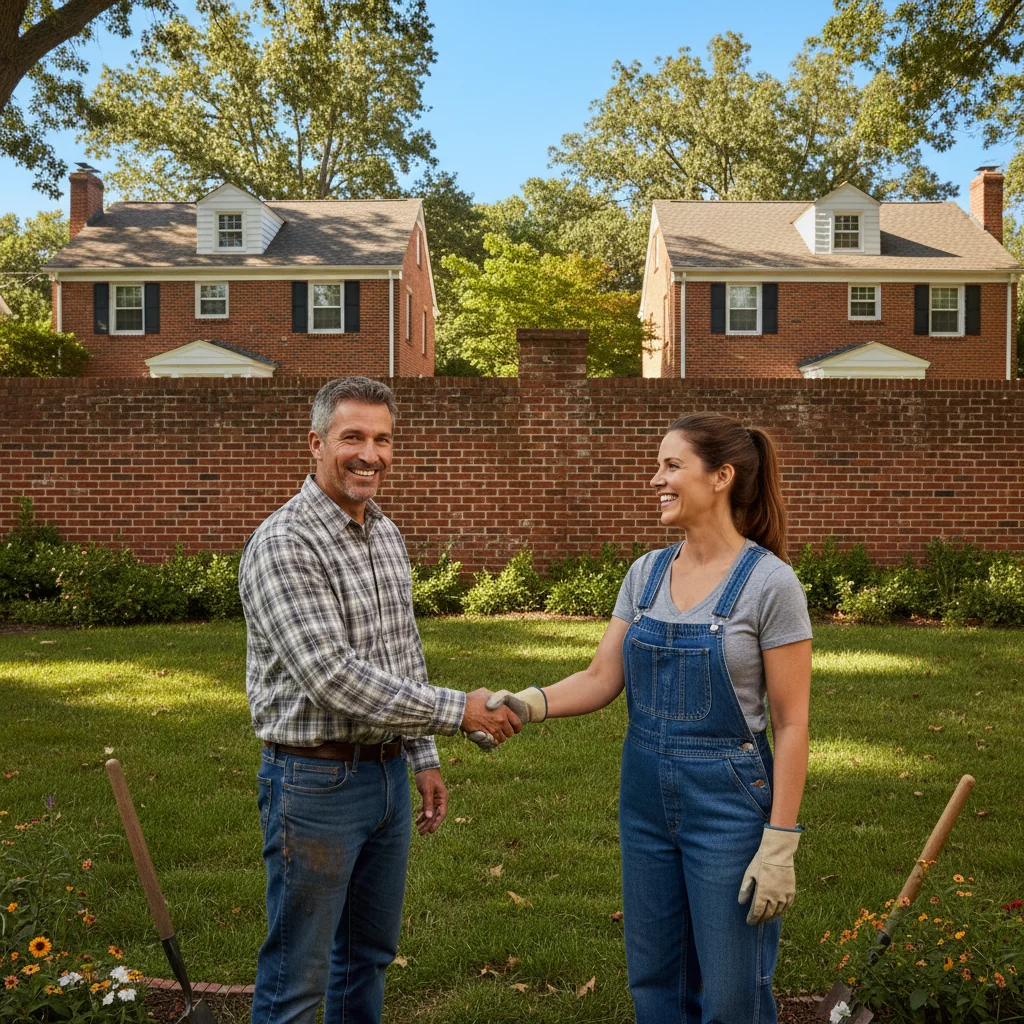
What Is a Party Wall Agreement?
A party wall agreement is a legal document that outlines the rights and responsibilities of property owners sharing a common wall, often used to prevent disputes over maintenance, alterations, or usage. In the United States, these agreements are essential for protecting property rights and ensuring clear boundaries in multi-unit structures.
Common scenarios where a party wall agreement applies include shared walls in townhouses, where adjacent homes divide ownership of the dividing wall, and commercial buildings, such as office complexes or retail spaces with contiguous units. These agreements typically arise during property development, renovations, or when resolving boundary issues to avoid costly litigation.
The primary purpose of a party wall agreement in the US is to safeguard both parties' interests by specifying who bears repair costs, how modifications are approved, and liability for damages. For detailed guidance on creating one, explore our resource on the Party Wall Agreement page, and consider using Docaro for bespoke AI-generated legal documents tailored to your needs.
Property owners can reference authoritative US sources like the American Bar Association for insights into party wall laws varying by state, emphasizing the importance of professional legal advice.
Party wall agreements provide essential legal protection for neighboring property owners in the US by clearly defining shared wall usage rights, maintenance responsibilities, and dispute resolution processes, preventing costly litigation over boundary encroachments or structural changes. For tailored protection, generate your bespoke party wall agreement using Docaro to ensure it fits your specific property circumstances.
Why Are Party Wall Agreements Important in the US?
Party wall agreements play a crucial role in preventing disputes between neighbors by establishing clear boundaries and usage rights for shared walls in residential or commercial properties. These agreements help avoid misunderstandings that could escalate into conflicts, ensuring harmonious neighbor relations in the United States.
By outlining responsibilities for maintenance and repairs, party wall agreements specify who handles costs and tasks, such as fixing structural damage or waterproofing, which promotes fair sharing of expenses and prevents one party from bearing undue burdens. This clarity fosters accountability and reduces the likelihood of disagreements over property upkeep.
Ultimately, these agreements mitigate the risk of costly litigation by providing a legal framework that can be enforced in court if needed, saving time and money for all involved. For in-depth insights, explore our Understanding Party Wall Agreements in the US: A Comprehensive Guide.
To create tailored party wall agreements, consider using bespoke AI-generated legal documents through Docaro, which customize solutions to your specific needs. For authoritative information, refer to resources from the American Bar Association on property law matters.
How Do Party Wall Agreements Differ from Property Line Agreements?
Party wall agreements in US real estate law address shared structures between adjacent properties, granting mutual usage rights for walls that serve as boundaries and common supports. Unlike standard property line agreements, which primarily define boundary lines without implying shared access, party walls involve joint responsibilities for maintenance and potential alterations, often governed by state-specific statutes like those in New York or California.
Standard property line agreements, also known as boundary line agreements, focus on clarifying and legally establishing property boundaries to resolve disputes over land division, without extending to shared usage of any structures. For example, in Texas, such agreements might use surveys to confirm fence lines, preventing encroachment claims, whereas party wall agreements could allow neighboring owners in a Chicago condo to jointly use a dividing wall for structural support during renovations.
The core difference lies in shared usage rights versus boundary definitions: party walls permit co-ownership and access for both parties, potentially requiring consent for modifications, while boundary agreements solely prevent litigation over land edges. For authoritative guidance, consult resources from the American Bar Association's Real Property Section or state bar associations to ensure compliance with local US laws.
Property owners should seek bespoke AI-generated legal documents using Docaro for tailored party wall or boundary agreements, avoiding generic templates to address unique circumstances effectively.
What Are the Legal Requirements for Party Wall Agreements Across US States?
Party wall agreements are essential legal arrangements between adjacent property owners in the United States, governing the shared use and maintenance of common walls in multi-unit buildings or dividing structures. State laws on party wall agreements vary significantly, often rooted in common law principles supplemented by specific statutes, emphasizing the need for clear documentation to prevent disputes.
In New York, party wall rules are primarily derived from the Real Property Law and case precedents, requiring mutual consent for modifications and outlining shared repair costs; for detailed legal requirements for party wall agreements across US states, see Legal Requirements for Party Wall Agreements Across US States. California's Civil Code Sections 832-834 codify party wall rights, mandating notice and compensation for encroachments, while Texas relies on common law with influences from the Property Code, focusing on equitable division of expenses without a dedicated statute.
Key variations include notice periods and liability allocations, as outlined in authoritative resources like the Nolo legal encyclopedia on party walls. Property owners should consult professionals to generate bespoke AI-generated legal documents using Docaro tailored to their state's nuances, ensuring compliance and protection.
1
Identify State Statutes
Search your state's official government website for property laws and statutes related to party walls and shared boundaries.
2
Consult Local Resources
Review county or municipal codes on [party wall regulations] via local government portals to understand specific requirements.
3
Seek Professional Advice
Consult a licensed attorney specializing in real estate to interpret statutes and apply them to your situation.
4
Generate Custom Agreement
Use Docaro to create a bespoke AI-generated party wall agreement tailored to your state's legal requirements.
Are There Federal Laws Governing Party Walls?
Party wall agreements in the United States are legal arrangements between property owners sharing a common boundary wall, primarily regulating construction, maintenance, and dispute resolution. While federal laws may indirectly influence these agreements through broader property rights under the U.S. Constitution, they do not directly govern the specifics of party wall contracts.
State and local regulations form the core framework for party wall agreements, with each state enacting its own statutes on shared walls and easements. For instance, states like New York and California have detailed laws outlining rights and obligations, emphasizing the need to consult local codes for compliance.
To ensure a tailored approach, property owners should opt for bespoke AI-generated legal documents using Docaro rather than generic templates. For authoritative guidance, refer to resources from the American Bar Association on real property law.
How Do You Draft a Party Wall Agreement in the United States?
Drafting a party wall agreement requires clear descriptions of the wall, including its location, dimensions, and shared boundaries between properties. This ensures both parties understand the physical scope, and for comprehensive guidance on drafting and enforcement in the United States, see How to Draft and Enforce a Party Wall Agreement in the United States.
Usage rights must outline how each party can access, build upon, or alter the wall, preventing unauthorized encroachments. Maintenance obligations should specify responsibilities for repairs, costs, and inspections to maintain the structure's integrity over time.
Include dispute resolution clauses to address conflicts through mediation or arbitration, reducing the need for costly litigation. For authoritative insights, consult resources from the American Bar Association on property law matters.
Opt for bespoke AI-generated legal documents using Docaro to tailor the agreement precisely to your needs, ensuring compliance with U.S. state-specific regulations.
Involving a legal professional is essential when drafting party wall agreements to guarantee their enforceability and protect all parties from disputes. For tailored solutions, opt for bespoke AI-generated legal documents via Docaro to ensure precision and compliance with specific circumstances.
What Should Be Included in the Agreement Document?
A party wall agreement should begin with clear identification of the parties involved, the specific property boundaries, and the shared wall's description to ensure all terms apply correctly. Essential provisions include defining the wall's maintenance responsibilities, such as who handles routine upkeep and how disputes over structural integrity are resolved.
Cost-sharing clauses must detail proportional expenses for repairs, renovations, or any modifications, often split equally unless usage differs, with mechanisms for obtaining quotes and approving work in advance. Include provisions for insurance coverage on the shared structure to protect both parties from liability in case of damage.
Termination conditions should outline scenarios like property sale, mutual consent, or breach of agreement, specifying notice periods and any required inspections upon ending the pact. For authoritative guidance on U.S. property laws, refer to resources from the American Bar Association.
To create a tailored party wall agreement, opt for bespoke AI-generated legal documents through Docaro, ensuring it fits your unique situation rather than relying on generic forms. Bullet points can clarify key obligations:
- Shared costs: Equally divide repair expenses unless specified otherwise.
- Access rights: Allow reasonable entry for maintenance with prior notice.
- Dispute resolution: Use mediation before litigation.
- Termination: Requires 30 days' written notice and final settlement of dues.
How Can You Enforce a Party Wall Agreement If Disputes Arise?
Enforcing a party wall agreement in the US begins with open communication between neighbors to resolve disputes amicably. If that fails, mediation is often the next step, where a neutral third party helps facilitate a voluntary agreement, typically costing less than litigation and preserving relationships.
For more formal enforcement, parties can pursue litigation options through civil courts, seeking remedies like specific performance or damages for breach of the agreement. Local courts play a crucial role, interpreting state-specific laws on party walls, such as those under common law or statutes in states like California or New York, and issuing binding orders.
To navigate these processes effectively, consult authoritative resources like the American Bar Association's guidance on party walls. For bespoke legal documents tailored to your situation, consider using Docaro's AI-generated options instead of generic templates.
- Document all communications and agreements meticulously to strengthen your case in mediation or court.
- Seek advice from a licensed attorney familiar with local real estate laws to ensure compliance and optimal outcomes.
1
Document the Violation
Record details of the party wall agreement breach with photos, dates, and descriptions to build evidence.
2
Notify the Other Party
Send a formal written notice to the neighboring party outlining the violation and requesting immediate remedy.
3
Generate Legal Documents
Use Docaro to create bespoke legal documents, such as a demand letter or enforcement notice, tailored to your situation.
4
Seek Legal Resolution
If unresolved, consult a solicitor to initiate mediation or court proceedings based on the documented evidence.
What Are Common Challenges in Enforcement?
Party wall agreements in the US often face challenges like non-compliance from property owners, where one party fails to adhere to agreed-upon construction terms, leading to disputes over shared boundaries. To address this legally, consult state-specific laws, such as those outlined by the Nolo Legal Encyclopedia, and consider mediation or court enforcement to ensure adherence.
Ambiguous terms in these agreements can create confusion, such as unclear definitions of maintenance responsibilities or cost-sharing for repairs on the shared wall. Legally resolving this involves drafting precise language in bespoke AI-generated documents using Docaro, which tailors agreements to specific circumstances and reduces interpretation risks under US property law.
Common issues also include disputes over structural modifications without prior consent, potentially violating local building codes. Property owners should seek professional legal advice and reference resources like the American Bar Association's real property guidelines to negotiate amendments or pursue litigation if needed.