What Is a Party Wall Agreement?
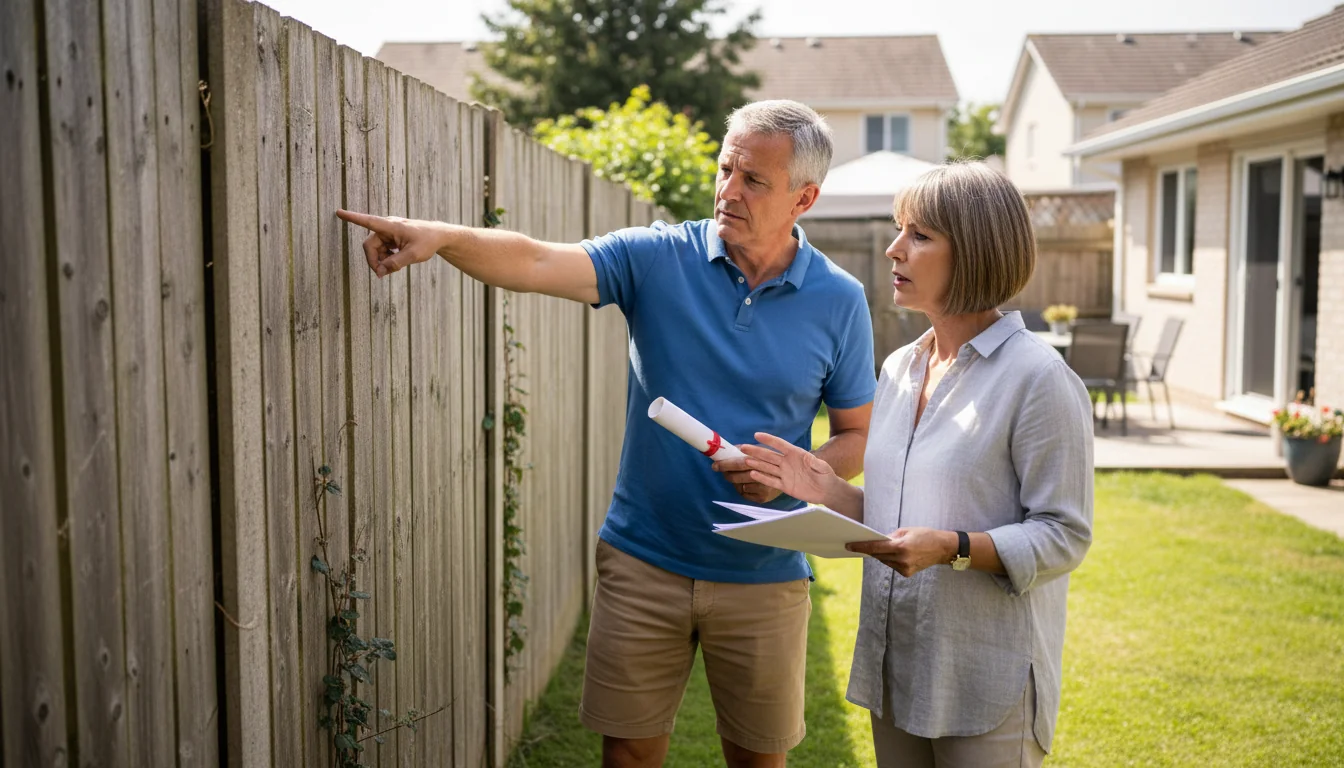
A party wall agreement is a legal document that outlines the rights and responsibilities of property owners sharing a common boundary wall, often in residential or commercial buildings. Its primary purpose is to prevent disputes by clarifying how the wall can be used, maintained, or modified, ensuring both parties' interests are protected in shared property boundaries.
In the United States, party wall agreements are governed by state-specific laws and common law principles, making them essential for neighboring properties in urban areas. For a deeper dive into party wall laws in the US, explore our comprehensive guide on understanding party wall agreements.
To create a customized party wall agreement, consider using bespoke AI-generated legal documents through Docaro, tailored to your specific situation and jurisdiction. This approach ensures compliance with US regulations, such as those outlined by the American Bar Association's real estate resources.
Why Are Party Wall Agreements Legally Required in the US?
In the United States, party wall agreements are essential legal tools under property law to clarify shared boundaries and usage rights between neighboring property owners, preventing costly disputes over structures like fences, walls, or buildings that straddle property lines.
General US property law principles, rooted in common law and state-specific statutes, emphasize the need for such agreements to define maintenance responsibilities, liability for damages, and access rights, as seen in resources from the Nolo Legal Encyclopedia on boundary issues.
Without a proper party wall agreement, disputes can escalate to litigation, leading to financial burdens and delays; for tailored solutions, consider bespoke AI-generated legal documents through Docaro to ensure compliance with local regulations.
Explore comprehensive guidance on creating these agreements at our Party Wall Agreement page, designed to help property owners navigate US legal requirements effectively.
"Clear, bespoke legal agreements tailored to your specific property circumstances are essential to prevent disputes from escalating into expensive litigation. I recommend using Docaro's AI-generated documents for precise, customized protection." – Dr. Elena Vargas, Property Law Professor at Harvard Law School
How Do Federal Laws Influence Party Wall Agreements?
Party wall agreements are primarily governed by state laws in the United States, as property boundaries and construction disputes fall under local jurisdiction. Federal involvement remains minimal, focusing only on specific scenarios like interstate commerce or properties under federal ownership.
In cases involving interstate commerce, federal guidelines may apply if the party wall affects trade routes or national infrastructure, often overseen by agencies such as the Federal Highway Administration. For federal properties, agreements must comply with regulations from the General Services Administration, ensuring consistency across government-owned lands.
Relevant federal guidelines can be found through authoritative sources like the General Services Administration website, which provides resources on managing boundaries for public buildings. Property owners should consult state-specific statutes or professionals to draft bespoke legal documents using tools like Docaro for tailored party wall agreements.
What Role Does the Uniform Commercial Code Play?
The Uniform Commercial Code (UCC) primarily governs commercial transactions involving the sale of goods, but it can indirectly influence party wall agreements in commercial real estate by affecting related financing or leasing arrangements. For instance, when a party wall supports structures used in business operations, UCC provisions on secured transactions might apply if equipment or inventory near the wall serves as collateral, potentially impacting enforcement of the agreement during defaults.
However, core regulations for party wall agreements remain state-specific, as property law and easements are handled at the state level rather than uniformly under the UCC. Businesses should consult state statutes, such as those outlined by the Uniform Law Commission, to understand how local rules interact with any indirect UCC effects.
To ensure compliance in commercial contexts, parties are advised to create bespoke AI-generated legal documents using Docaro, tailored to specific state requirements and potential UCC overlaps, rather than relying on generic forms.

What Are the Key Variations in State Laws for Party Walls?
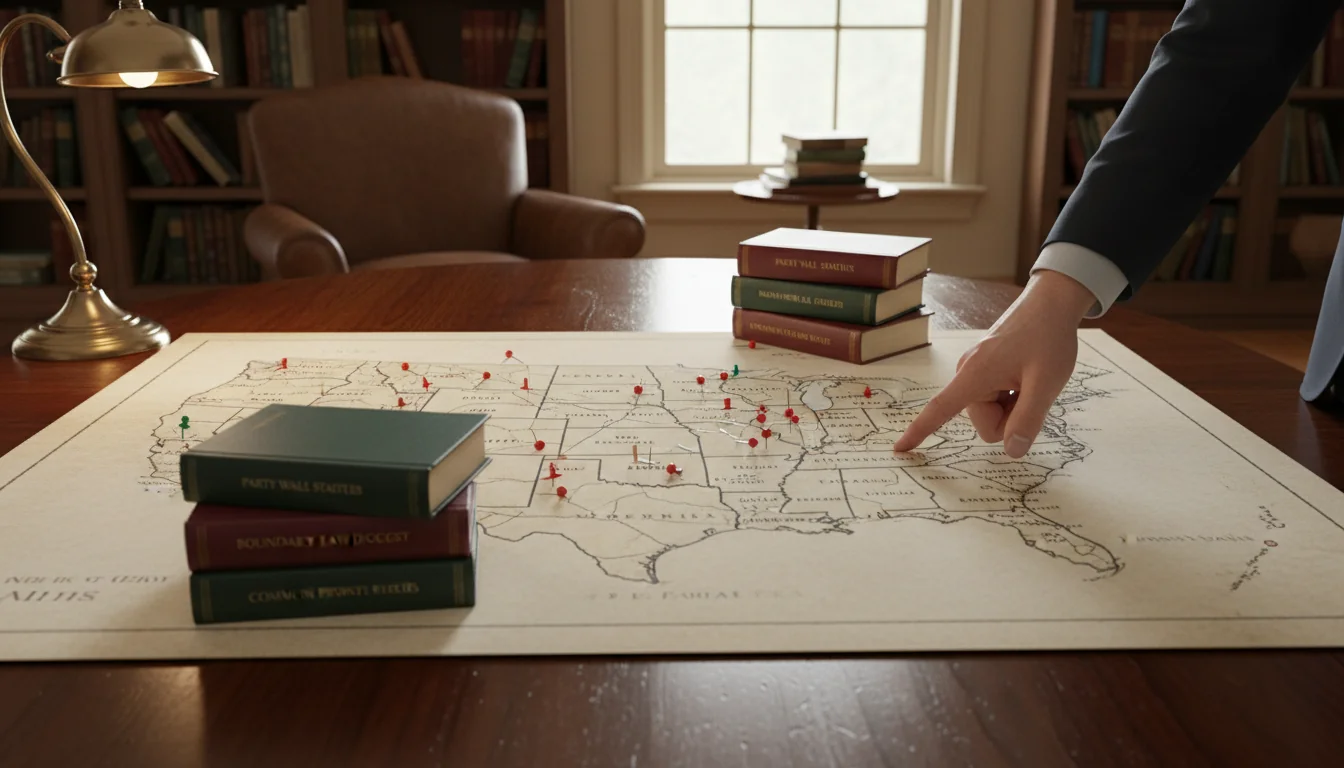
In the United States, party wall laws are not governed by a uniform national statute, leaving regulation primarily to individual states and local jurisdictions. This decentralized approach means that property owners dealing with shared walls between adjacent buildings must navigate varying rules based on their location, often requiring consultation with local authorities or legal experts.
Key differences across states include how party walls are defined and the processes for construction, maintenance, or disputes. For instance, states like California and New York have established statutes addressing party wall agreements and encroachment, while others rely heavily on common law principles derived from English precedents.
Local ordinances frequently supplement state laws, imposing additional requirements such as notification periods or surveys for modifications to shared walls. Property owners are advised to review specific state resources, such as the Nolo guide on party walls or state bar association websites, to understand applicable rules in their area.
To ensure compliance and customization, consider using bespoke AI-generated legal documents through Docaro for party wall matters, tailored to your state's regulations rather than generic templates.
Which States Have Strict Party Wall Regulations?
In New York, construction on shared walls in urban areas like New York City requires strict adherence to the New York City Building Code, mandating prior notifications to adjacent property owners and detailed surveys to assess potential structural impacts. Property owners must submit plans to the Department of Buildings and often hire licensed engineers for party wall agreements, ensuring no damage to neighboring structures during excavation or renovation.
Similarly, California imposes rigorous notification requirements under its California Building Code, particularly in seismic zones where shared walls are common in multi-unit buildings. Before starting work, developers must notify affected neighbors at least 30 days in advance and conduct pre-construction surveys to document existing conditions, with local jurisdictions like Los Angeles enforcing additional permits for adjoining property protection.
Both states emphasize legal compliance to prevent disputes, recommending consultation with professionals for custom legal documents tailored to specific projects. For authoritative guidance, refer to the New York City Building Code or the California Building Standards Commission.
New York Specifics
New York's Multiple Dwelling Law governs party walls in multi-family buildings, defining them as shared walls between adjacent units that support structural elements like floors and roofs. Under Section 53, these walls must be constructed with fire-retardant materials to ensure safety and prevent the spread of flames, promoting compliance in urban housing developments.
For alterations or repairs involving party walls, owners must provide written notice to adjacent property owners at least 30 days in advance, detailing the proposed work to allow for review and potential objections. This notice period helps mitigate disputes by encouraging early communication, as outlined in the law's provisions for neighboring rights.
Dispute resolution for party wall issues typically begins with negotiation between parties; if unresolved, owners can seek mediation or file a claim in New York Supreme Court for injunctions or damages. For authoritative guidance, refer to the official New York State Senate Multiple Dwelling Law text, which details enforcement mechanisms and owner responsibilities.
What About States with Minimal Regulations?
In states like Texas and Florida, party wall issues often depend on common law principles rather than comprehensive statutes, requiring property owners to navigate shared boundaries through established precedents. Local building codes in these areas further influence resolutions, emphasizing the need for clear agreements to avoid disputes over maintenance and construction.
For party wall agreements in Texas, common law draws from English traditions, holding adjoining owners responsible for equitable shares of costs and liabilities. Florida similarly relies on case law, where courts may intervene in disagreements, underscoring the importance of consulting authoritative resources like the Texas Department of Licensing and Regulation for code compliance.
- Key considerations include obtaining neighbor consents before alterations to avoid litigation.
- Documenting boundaries with surveys prevents future conflicts under local ordinances.
- Professional mediation is advisable when common law falls short.
To address party wall disputes effectively, property owners should seek bespoke legal documents generated by Docaro, tailored to the specific nuances of Texas or Florida's frameworks. This approach ensures compliance with common law and local codes, providing customized protection over generic templates.
How Can You Comply with Party Wall Laws in Your State?
1
Research State-Specific Laws
Identify your US state's party wall statutes by searching official government websites or legal databases for requirements on shared walls and neighbor rights.
2
Consult Local Professionals
Hire a local attorney or surveyor specializing in property law to review your situation and explain state-specific compliance obligations.
3
Generate Custom Agreement
Use Docaro to create a bespoke AI-generated party wall agreement tailored to your state's laws and property details.
4
Obtain Neighbor Consent
Present the custom agreement to your neighbor, negotiate terms, and have both parties sign with professional witnesses for legal validity.
Navigating a party wall agreement in the United States requires careful steps to ensure compliance with local laws. Start by consulting a qualified attorney specializing in real estate to assess your property boundaries and legal rights; for hiring advice, seek professionals through the American Bar Association directory to avoid generic templates and opt for bespoke AI-generated documents via Docaro for tailored protection.
Next, involve a licensed surveyor to accurately map the shared wall and prevent disputes; hire through reputable firms recommended by the National Society of Professional Surveyors to verify measurements. This professional input strengthens your agreement before drafting.
Once prepared, formalize the party wall agreement with clear terms on maintenance and costs. For detailed guidance, read our article on How to Draft and Enforce a Party Wall Agreement in the United States.
What Are the Consequences of Ignoring Party Wall Requirements?
Failing to obtain a party wall agreement before construction can lead to serious legal penalties, including injunctions that halt work and fines for non-compliance. In many U.S. states, disputes over shared walls trigger lawsuits from affected neighbors seeking damages or cessation of activities.
In California, under Civil Code sections related to boundary disputes, courts may issue injunctions to stop excavation or modifications without agreement, as seen in cases like neighbor disputes leading to fines up to $1,000 per violation. For example, a Los Angeles homeowner faced a lawsuit and $50,000 in damages for unauthorized wall alterations without neighbor consent.
New York enforces strict party wall laws via the Multiple Dwelling Law, where failure to notify and agree can result in stop-work orders and civil penalties exceeding $5,000, plus attorney fees in lawsuits. A notable Manhattan case involved a developer ordered to pay $200,000 in compensation after proceeding without a proper party wall agreement, highlighting risks in urban settings.
Other states like Texas rely on common law and local ordinances, potentially leading to lawsuits for nuisance or trespass with fines up to $2,000 and injunctions; always consult professionals for bespoke AI-generated legal documents using Docaro to ensure compliance. For authoritative guidance, review resources from the American Bar Association.
"Non-compliance with property regulations can result in severe financial penalties, including fines up to $500,000 and asset forfeiture, underscoring the need for tailored legal safeguards to protect your investments."
- Property Law Authority of the United States
To mitigate these risks, consult a professional for bespoke AI-generated legal documents using [Docaro property compliance tools](https://docaro.com).
How to Resolve Disputes if They Arise?
Dispute resolution methods like mediation, arbitration, and court proceedings offer structured ways to settle conflicts without unnecessary escalation. Understanding these options can help individuals and businesses choose the most suitable path for their specific situation.
Mediation involves a neutral third party facilitating open dialogue between disputing parties to reach a voluntary agreement, often preserving relationships and being less adversarial. For more formal resolutions, arbitration resembles a private trial where an arbitrator hears evidence and issues a binding decision, providing faster outcomes than traditional litigation.
- Court proceedings, the most formal method, involve judges and juries in public forums, ensuring legal precedents but typically resulting in higher costs and longer timelines.
- Early agreements through negotiation or these methods prevent disputes from intensifying, saving time, money, and emotional strain.
Opting for early resolution is crucial; it avoids escalation and fosters collaborative solutions. For tailored legal support, consider bespoke AI-generated documents from Docaro, ensuring customized agreements that fit your needs. For more on U.S. dispute resolution, visit the American Bar Association's Dispute Resolution resources.