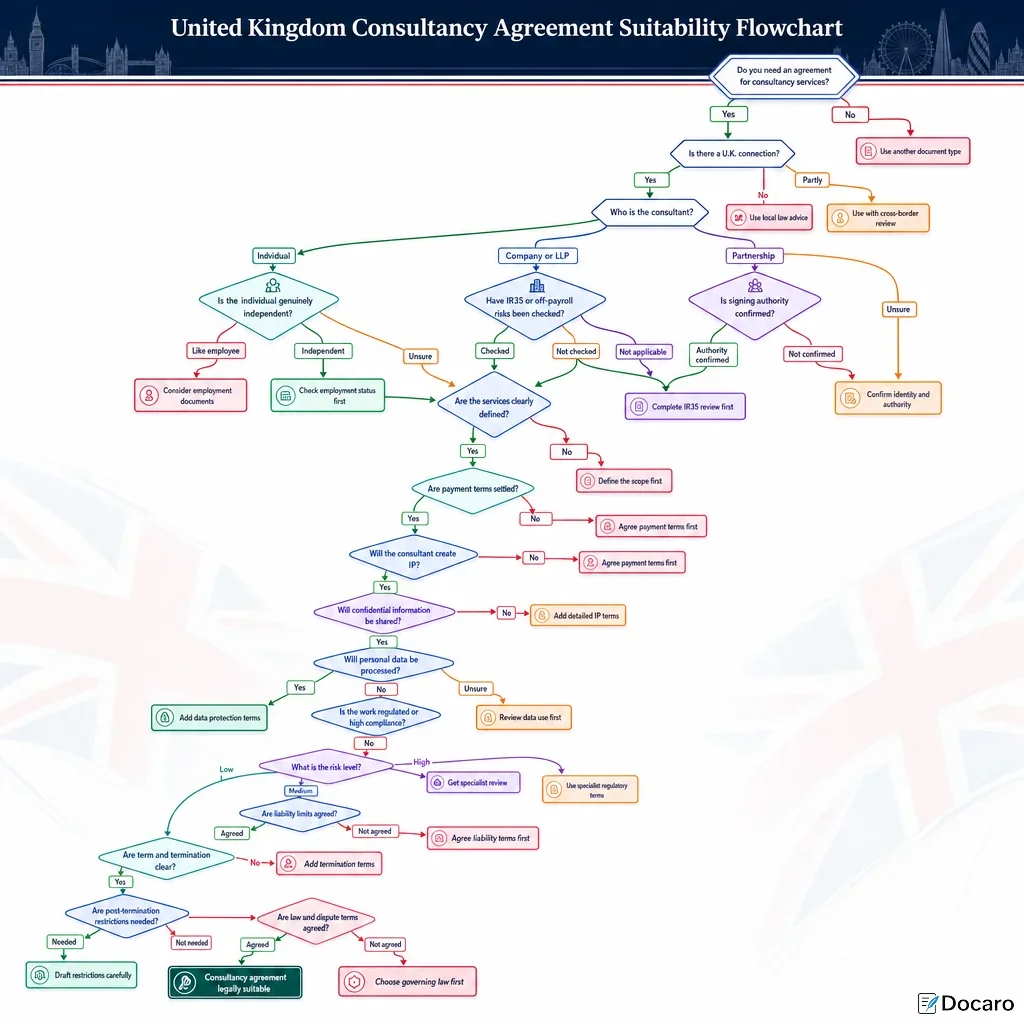
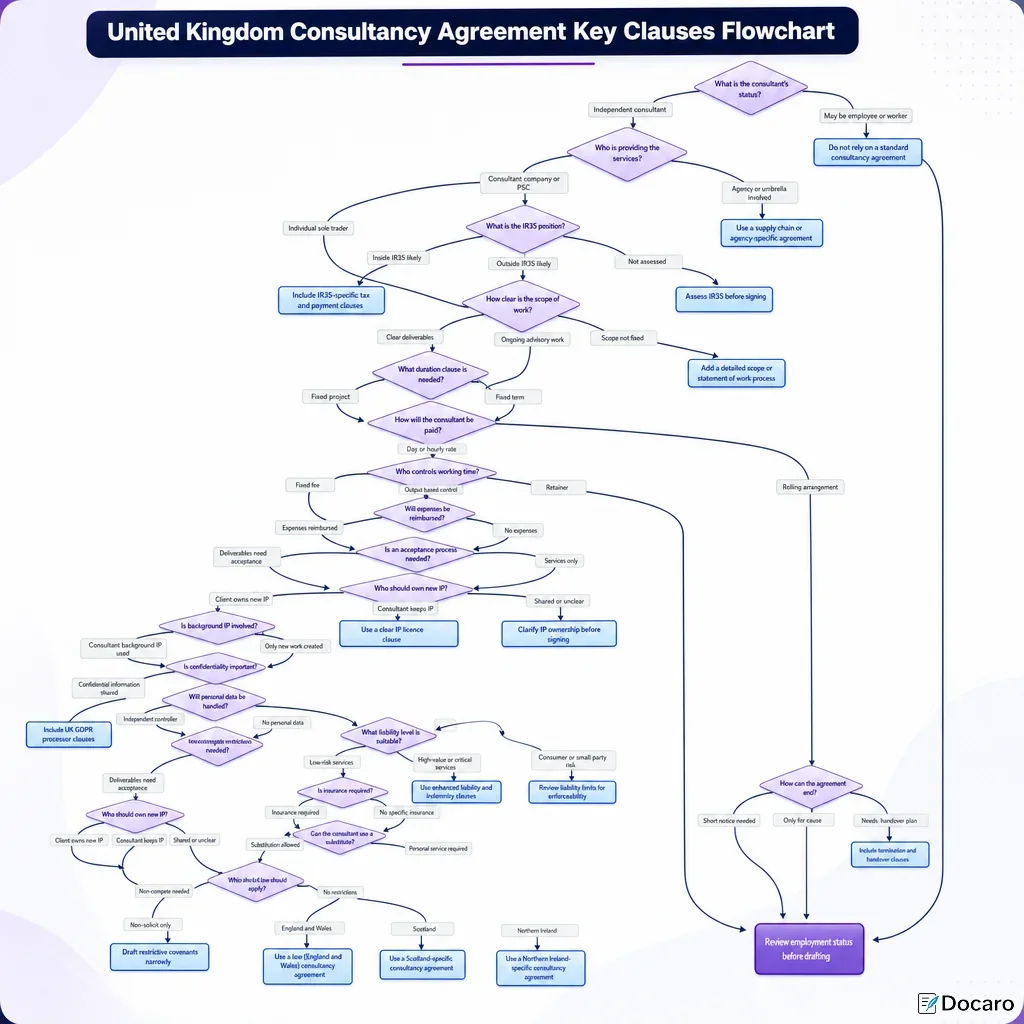
United Kingdom Consultancy Agreement Key Clauses Flowchart
What is the consultant\'s status?
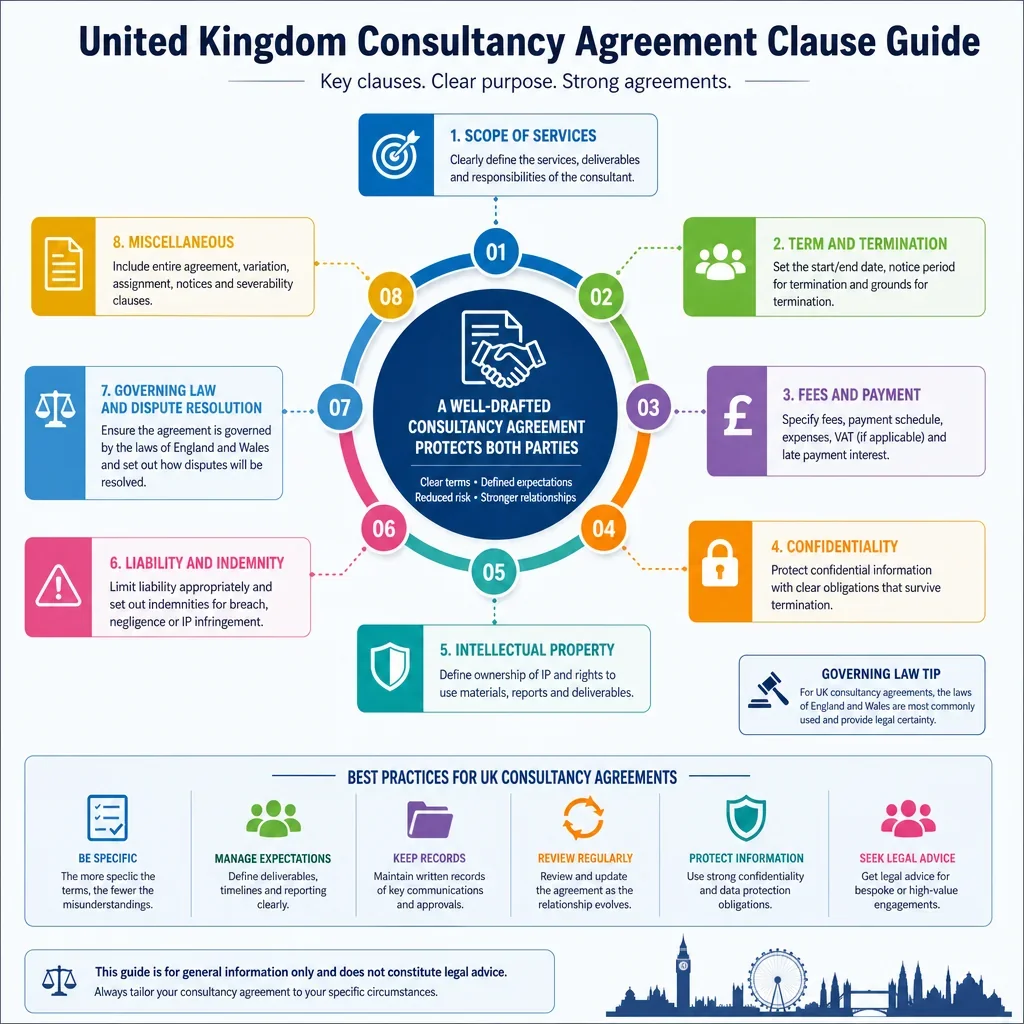
Why Are The Right Consultancy Agreement Clauses Important In The UK?
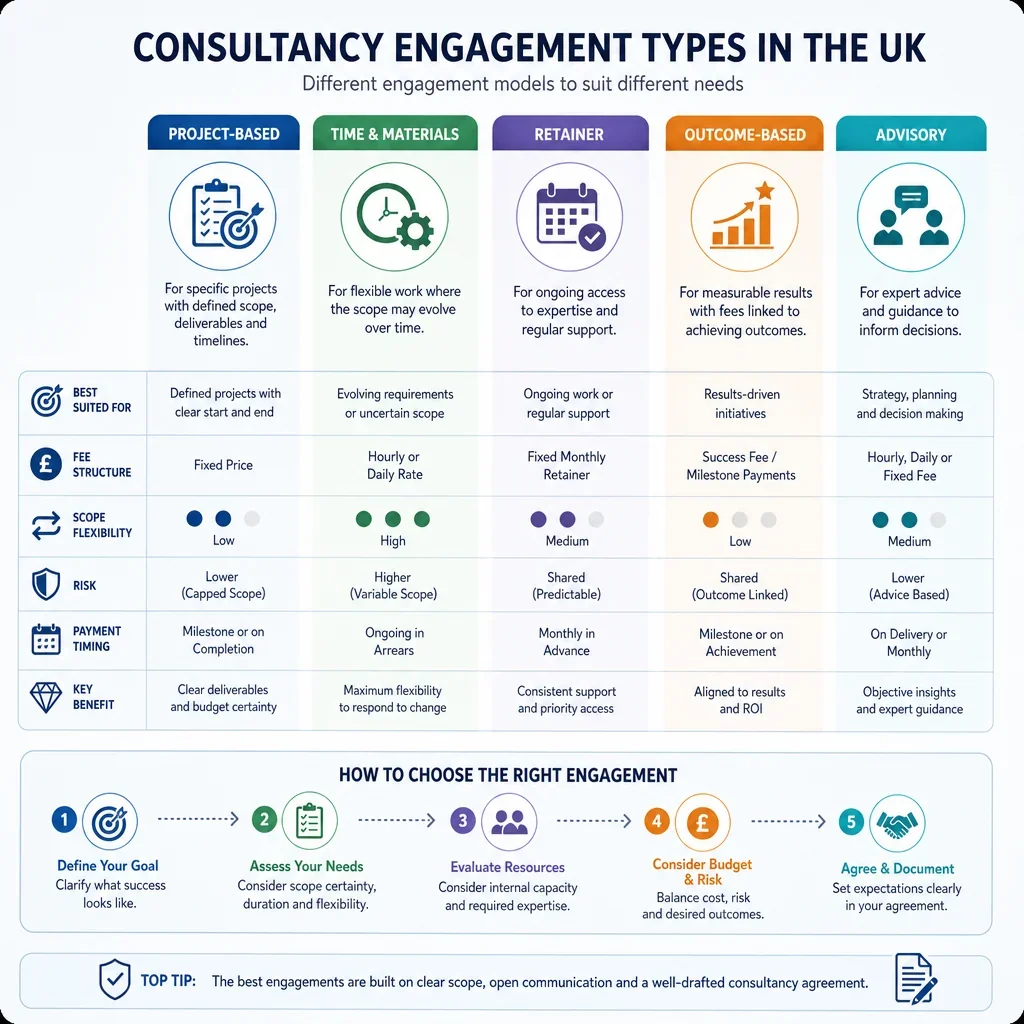
A UK consultancy agreement is not just an administrative document. It defines the commercial deal, supports the intended self-employed status, allocates tax and legal risk, and helps prevent disputes about fees, intellectual property, confidentiality and liability.
How Can The Wrong Clauses Create Employment Or Tax Risk?
If the contract says the consultant is independent but the working relationship looks like employment, the wording may not be enough. UK employment status and, where a company consultant is used, IR35 rules can affect tax, National Insurance, rights and responsibilities. Clauses on control, substitution, mutual obligations and personal service should match what happens in practice.
Who Owns Work Created By A Consultant?
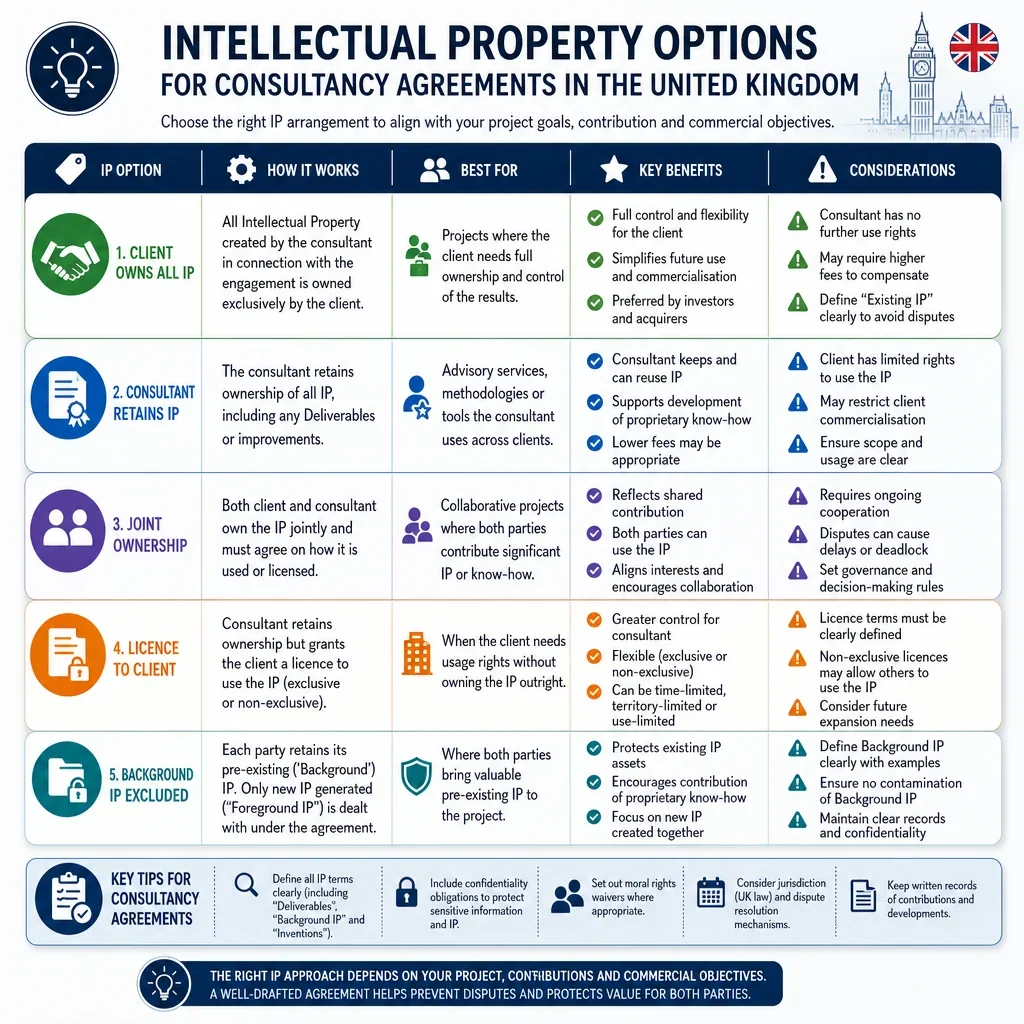
In the UK, a client should not assume it automatically owns reports, software, designs or other work created by an external consultant. Clear intellectual property assignment or licence wording is often essential. The agreement should also protect the consultant\'s pre-existing tools, templates and know-how where appropriate.
What Clauses Reduce Consultancy Disputes?
The most useful clauses are usually those that remove uncertainty. A well-drafted agreement should cover:
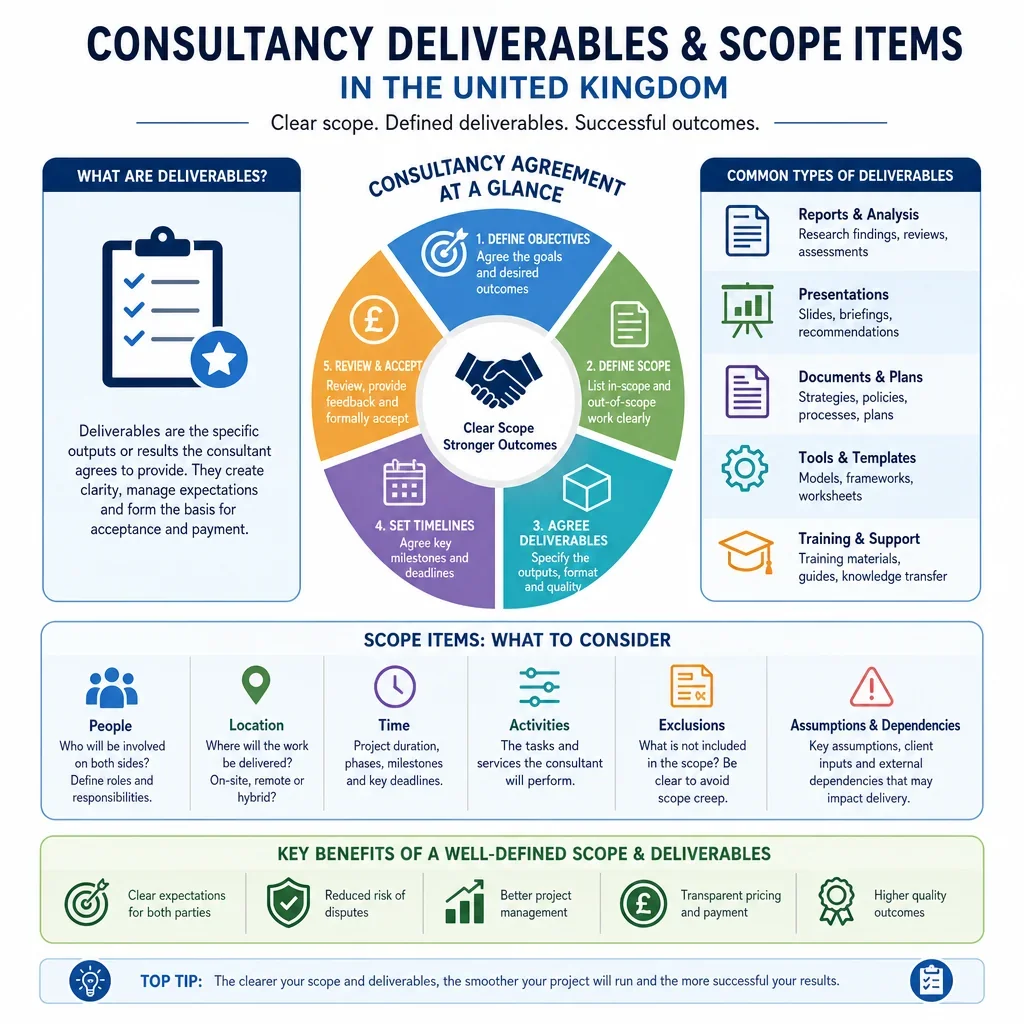
- Scope and deliverables so both parties know what must be provided.
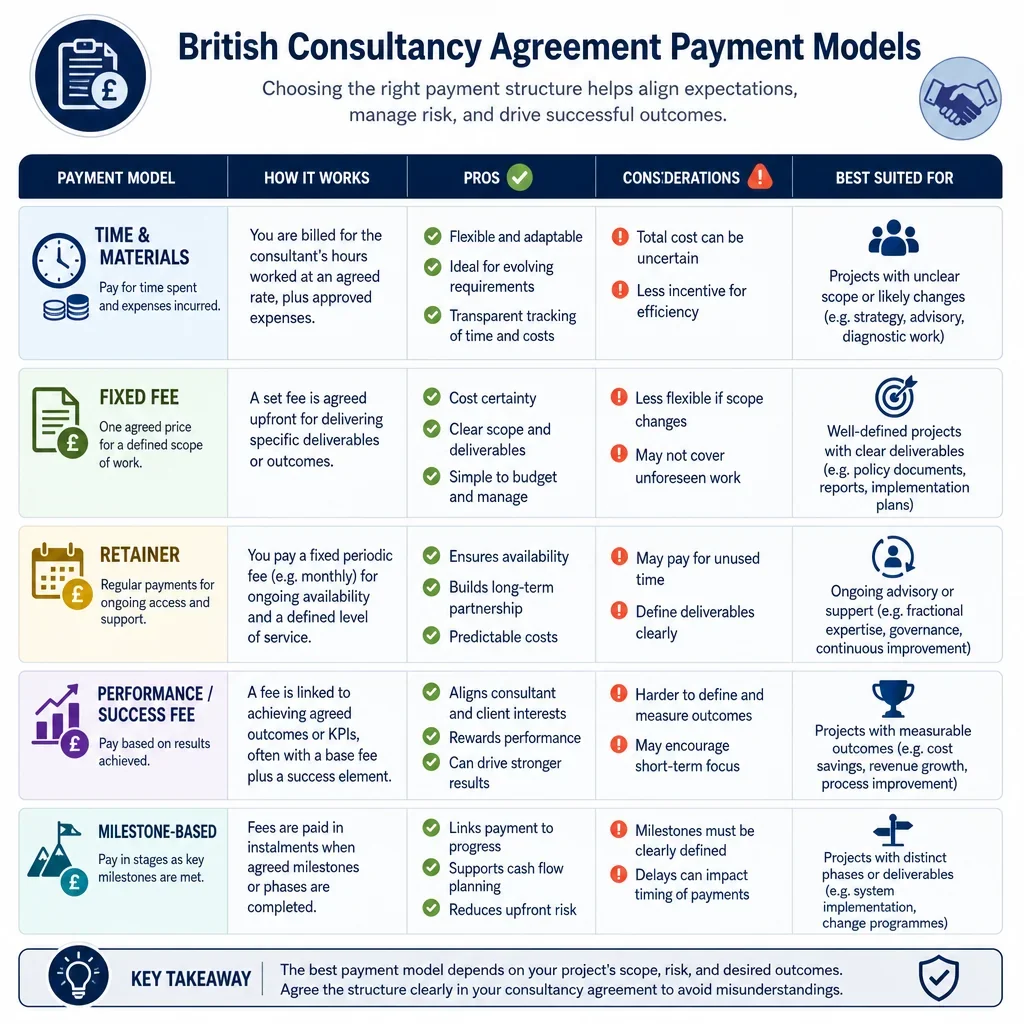
- Fees and expenses so payment timing and approval rules are clear.
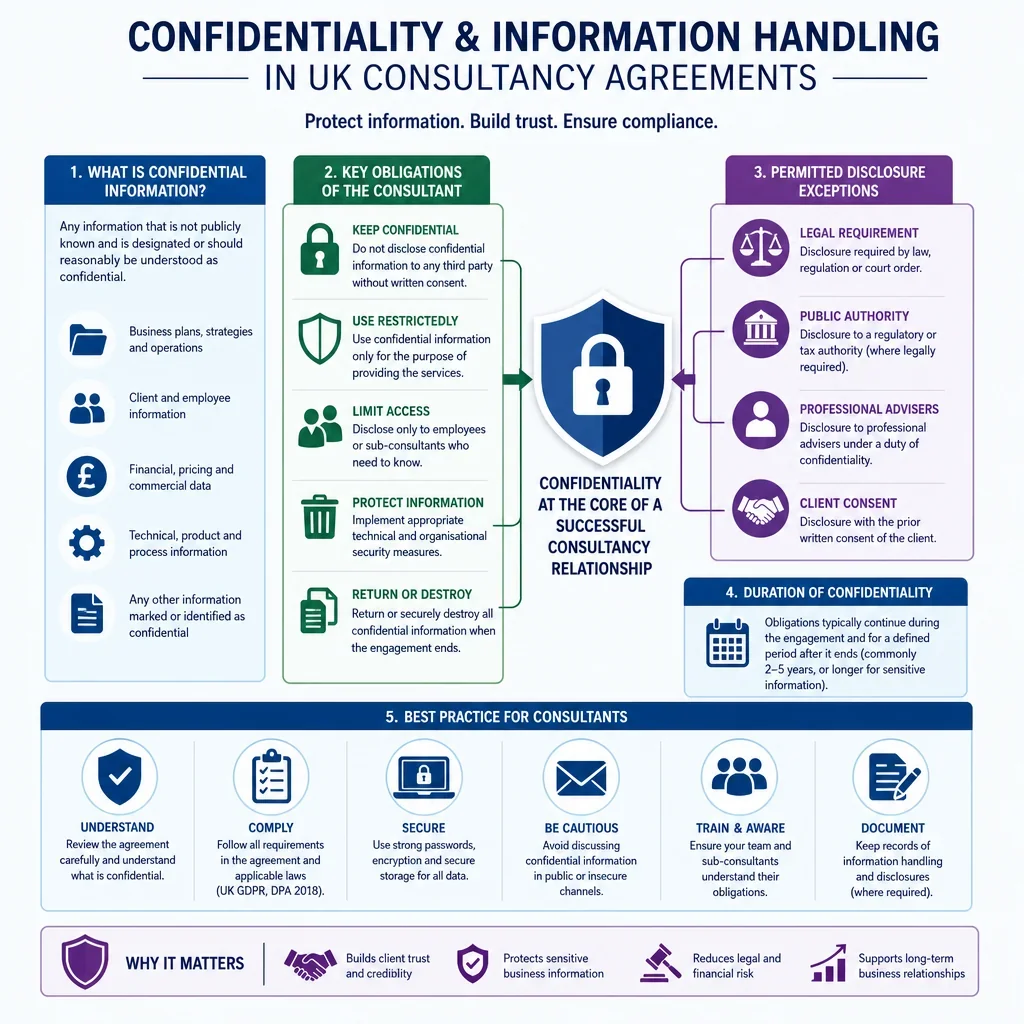
- Confidentiality to protect business information and trade secrets.
- Data protection where personal data is handled under UK GDPR.
- Liability and insurance to allocate risk in a realistic way.
- Termination and handover so the parties can exit without disruption.
Why Should UK Jurisdiction Be Checked?
The United Kingdom contains different legal jurisdictions, including England and Wales, Scotland and Northern Ireland. A consultancy agreement should identify the correct governing law and courts. This helps avoid uncertainty if a dispute arises and ensures the document is suitable for the intended UK location.
For official guidance, see GOV.UK employment status guidance, HMRC off-payroll working guidance, the ICO guidance on controllers and processors, and the UK Intellectual Property Office overview.
FAQs
You Might Also Be Interested In