

British Consultancy Agreement Payment Models
Created:
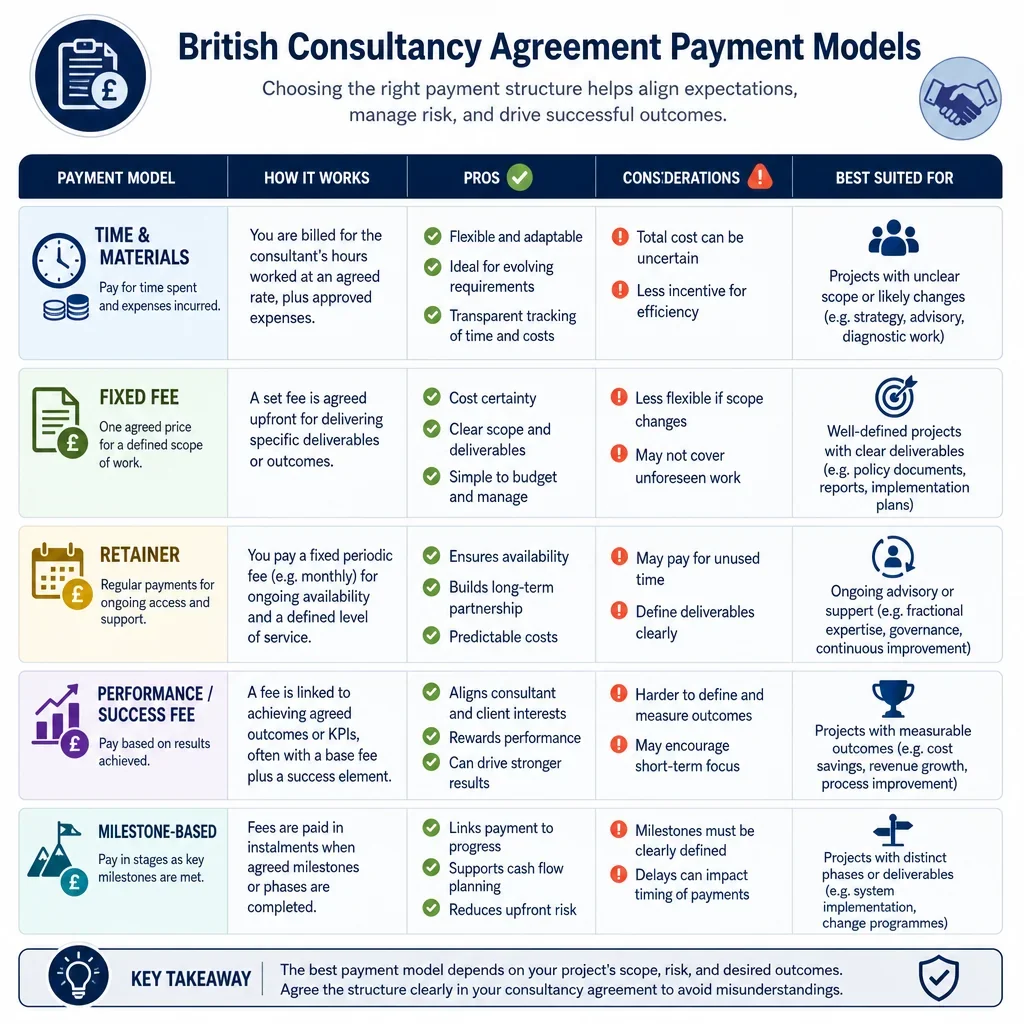
This guide explains common consultancy agreement payment models in Britain, helping you choose fair, practical terms. It is especially useful when comparing options within AI Generated British Consultancy Agreements.
Payment model | How it works | Advantages | Potential issues | Main consideration |
|---|---|---|---|---|
Fixed fee | ||||
Fixed project fee | One agreed price is paid for completing a defined consultancy project or deliverable. | Strong budget certainty and simple invoicing where scope is clear. | Needs tight scope, exclusions and change control to avoid unpaid extra work. | Client budget control |
Fixed deliverable fee | A separate fixed price is allocated to each specified report, plan, design or other output. | Clear link between payment and tangible outputs. | Acceptance criteria and revision limits must be clear. | Project certainty |
Fixed day package | The client buys a defined number of consultancy days for a set price. | Predictable cost with some flexibility over tasks. | Agreement should state expiry, scheduling rules and whether unused days are refundable. | Client budget control |
Fixed diagnostic assessment fee | A set fee is charged for an initial audit, assessment or recommendations report. | Low-risk entry point before larger consultancy work. | Must define whether implementation advice is included or excluded. | Project certainty |
Fixed fee, Milestone-based | ||||
Fixed fee with stage payments | A fixed total fee is paid in instalments at agreed project stages. | Improves consultant cashflow while preserving overall price certainty. | Stages should be objective and not dependent on vague satisfaction tests. | Consultant cashflow |
Time-based | ||||
Hourly rate | The consultant charges for actual hours worked at an agreed hourly rate. | Flexible for uncertain or evolving work. | Client may require caps, timesheets and prior approval for excess hours. | Scope flexibility |
Daily rate | The consultant is paid a set amount for each day worked. | Common and easy to administer for professional consultancy engagements. | Define a day, half-day rules, minimum booking and overtime treatment. | Administrative simplicity |
Half-day rate | The consultant charges a set fee for work blocks shorter than a full day. | Useful for workshops, reviews and short advisory sessions. | Needs minimum booking periods and cancellation terms. | Administrative simplicity |
Time-based, Expenses-based | ||||
Time and materials | The client pays for actual time worked plus approved materials and expenses. | Highly adaptable where requirements are uncertain. | Budget control depends on estimates, reporting and approval limits. | Scope flexibility |
Time-based, Hybrid | ||||
Capped time and materials | The consultant bills actual time and expenses, but only up to an agreed maximum. | Balances flexibility with client budget protection. | Must state whether the cap includes expenses, VAT and change requests. | Client budget control |
Time-based | ||||
Blended rate | A single hourly or daily rate applies regardless of which consultant performs the work. | Simplifies billing for multi-person consultancy teams. | Client may want staffing controls to avoid overuse of junior personnel. | Administrative simplicity |
Tiered rate card | Different hourly or daily rates apply by role, seniority or specialist skill. | Matches cost to expertise used. | Requires named roles, rate review rules and approval for substitutions. | Scope flexibility |
Remote work rate | A lower time-based rate applies where services are provided remotely. | Reflects reduced travel burden and can reduce client cost. | Agreement should define when on-site rates apply. | Client budget control |
Out-of-hours premium rate | Higher rates apply for evenings, weekends, bank holidays or urgent work. | Compensates consultant for disruptive or accelerated support. | Needs clear trigger times and prior written approval unless emergency support is agreed. | Consultant cashflow |
Retainer | ||||
Monthly retainer | The client pays a recurring monthly fee for agreed availability or services. | Predictable cashflow and ongoing access to consultant expertise. | Define included hours, response times, carry-over and excluded work. | Consultant cashflow |
Annual retainer | A yearly fee secures consultancy availability or recurring advisory services. | Long-term planning and administrative simplicity. | Termination, refund and fee review provisions are important. | Project certainty |
Use-it-or-lose-it retainer | Unused included time expires at the end of each billing period. | Gives consultant predictable revenue and discourages backlog accumulation. | Client may resist paying for unused capacity expiry must be transparent. | Consultant cashflow |
Rolling hours retainer | Unused retainer hours roll forward for a limited period. | Fairer to clients with fluctuating support needs. | Needs a longstop expiry and capacity management rules. | Scope flexibility |
Access retainer | The client pays for priority access or availability, with work billed separately. | Secures consultant capacity without predefining all tasks. | Must distinguish availability fees from delivery fees. | Consultant cashflow |
Subscription advisory fee | A recurring subscription covers defined advisory services, check-ins or content access. | Simple recurring billing for standardised consultancy support. | Need clear service limits, auto-renewal and cancellation terms. | Administrative simplicity |
Milestone-based | ||||
Milestone completion payments | Payment is triggered when agreed project milestones are completed. | Links cashflow to progress and deliverables. | Milestones should be objective, measurable and capable of acceptance. | Project certainty |
Acceptance-based milestone payments | Payment is due after the client accepts a milestone deliverable. | Protects clients by tying payment to approved outputs. | Needs deemed acceptance and reasonable review periods to avoid delay. | Project certainty |
Percentage-of-completion payments | Payments are made when defined percentages of the project are completed. | Spreads payment across the project lifecycle. | Completion percentages can be disputed unless tied to objective outputs. | Consultant cashflow |
Milestone-based, Hybrid | ||||
Deposit plus completion balance | The client pays an upfront deposit and the remaining fee on completion. | Reduces consultant non-payment risk and keeps final delivery incentive. | Should state whether the deposit is refundable and what happens on termination. | Consultant cashflow |
Milestone-based | ||||
Mobilisation fee | A fee is paid at the start to cover onboarding, planning and resource allocation. | Funds setup work before substantive delivery begins. | Need clarity on crediting, refundability and termination effects. | Consultant cashflow |
Completion holdback | A percentage of fees is retained until final completion or handover. | Gives client leverage to secure final delivery. | Can harm consultant cashflow release conditions must be precise. | Client budget control |
Milestone-based, Hybrid | ||||
Success fee | An additional fee is paid if agreed commercial or project outcomes are achieved. | Aligns consultant reward with measurable client outcomes. | Outcome metrics, causation and evidence requirements must be clear. | Project certainty |
Performance bonus | A bonus is payable for exceeding specified service levels, savings or delivery targets. | Encourages high performance against agreed metrics. | Metrics must be auditable and within the consultant's influence. | Project certainty |
Commission-based fee | The consultant receives a percentage of sales, introductions or revenue generated. | Reduces upfront client cost and incentivises results. | Define commission events, exclusions, clawback and post-termination payments. | Project certainty |
Gainshare fee | The consultant receives a share of verified savings or financial improvement. | Useful for cost reduction and operational improvement consultancy. | Savings baseline, audit rights and calculation period are critical. | Project certainty |
Expenses-based | ||||
Expenses at cost | The client reimburses approved expenses at actual cost with receipts. | Transparent and commonly accepted for travel or third-party costs. | Needs approval thresholds, receipt rules and excluded categories. | Client budget control |
Pre-approved expenses only | Expenses are reimbursed only if approved by the client in advance. | Strong client control over disbursements and travel spend. | Urgent costs may be delayed unless exceptions are included. | Client budget control |
Per diem expense allowance | A fixed daily allowance covers meals, subsistence or incidental travel costs. | Reduces receipt administration and gives predictable expense cost. | Should align with tax treatment and avoid disguised additional fees. | Administrative simplicity |
Mileage reimbursement | Business mileage is reimbursed at an agreed rate per mile. | Simple method for reimbursing car travel. | State rate, evidence, journey rules and whether HMRC approved rates are used. | Administrative simplicity |
Expenses with handling mark-up | The client reimburses expenses plus an agreed administration or handling percentage. | Compensates consultant for arranging third-party items. | Mark-up should be expressly agreed and may affect VAT treatment. | Consultant cashflow |
Disbursements passed through | Qualifying third-party payments made as agent are passed to the client separately. | Can clarify treatment of true third-party costs. | VAT rules distinguish disbursements from recharged costs drafting must be accurate. | Administrative simplicity |
Fixed fee, Expenses-based, Hybrid | ||||
Fixed fee plus expenses | A fixed service fee is charged, with agreed expenses reimbursed separately. | Keeps service cost fixed while treating variable travel separately. | Expenses should not undermine the fixed-fee budget without controls. | Client budget control |
Retainer, Time-based, Hybrid | ||||
Retainer plus hourly overage | A monthly retainer covers included hours extra hours are billed at an agreed rate. | Predictable base support with flexibility for spikes in demand. | Overage approval and reporting are essential to avoid bill shock. | Scope flexibility |
Fixed fee, Time-based, Hybrid | ||||
Fixed discovery plus time-based implementation | Initial discovery is fixed fee later implementation is charged by time spent. | Uses fixed pricing when scope is knowable and flexible pricing later. | Need a separate statement of work for implementation scope and rates. | Scope flexibility |
Time-based, Hybrid | ||||
Not-to-exceed fee | Work is billed by time spent, but the total cannot exceed an agreed ceiling. | Gives the client a maximum exposure while paying for actual effort. | Must define cap exclusions, assumptions and change request treatment. | Client budget control |
Time-based | ||||
Estimate then actuals | The consultant provides a non-binding estimate and invoices actual time and expenses. | Allows work to start before final effort is known. | State estimate status and notification duties if likely to exceed it. | Scope flexibility |
Fixed fee, Hybrid | ||||
Quoted fee with paid variations | Core work is quoted at a fixed fee agreed scope changes are charged separately. | Preserves fixed price while allowing controlled change. | Variation process should require written approval and pricing method. | Project certainty |
Hybrid | ||||
Call-off fee schedule | A master agreement sets rates or prices individual work orders call off specific services. | Efficient for repeat consultancy assignments under consistent terms. | Priority between master terms, schedules and statements of work must be clear. | Administrative simplicity |
Statement of work pricing | Each statement of work specifies its own fee, rates, milestones and expenses. | Flexible structure for multiple projects under one consultancy agreement. | Templates should require scope, deliverables, assumptions and payment triggers. | Scope flexibility |
Retainer, Hybrid | ||||
Minimum monthly fee | The client pays at least a minimum amount each month, even if usage is lower. | Protects consultant capacity commitment and baseline revenue. | Client should understand unused capacity and termination rights. | Consultant cashflow |
Time-based, Hybrid | ||||
Volume discount rates | Lower rates apply once the client purchases or uses agreed volume thresholds. | Rewards larger commitments and can improve client budget planning. | Thresholds, measurement period and retrospective or prospective discounts must be clear. | Client budget control |
Retainer, Time-based | ||||
Prepaid block of hours | The client prepays for a block of consultancy hours drawn down over time. | Improves consultant cashflow and reduces repeated invoicing. | Needs expiry, refund and rate-change provisions for unused hours. | Consultant cashflow |
Fixed fee, Retainer | ||||
Advance invoice | Fees are invoiced before the relevant service period or work phase begins. | Reduces consultant credit risk and funds initial work. | Termination and refund rules should address prepaid but undelivered services. | Consultant cashflow |
Time-based, Retainer | ||||
Monthly in arrears | The consultant invoices after the month in which services were performed. | Lets the client verify work before payment. | May create cashflow pressure for smaller consultants. | Client budget control |
Hybrid | ||||
Net 30 payment terms | Invoices are due 30 days after invoice date or receipt, depending on the contract. | Familiar B2B payment timetable. | Due date trigger should be clear to avoid disputes and late payment risk. | Administrative simplicity |
Late payment interest and compensation | Statutory interest and fixed compensation may apply to qualifying late commercial debts. | Encourages prompt payment and gives a statutory remedy for late B2B invoices. | Contract terms may replace statutory interest only if they provide a substantial remedy. | Consultant cashflow |
VAT-exclusive fees | Fees are stated excluding VAT, with VAT added where chargeable. | Clear for VAT-registered consultants and business clients. | Contract should state VAT treatment and invoice requirements. | Administrative simplicity |
Fixed fee, Hybrid | ||||
VAT-inclusive fees | The quoted fee includes any VAT that is chargeable. | Gives the client a single all-in price. | Can reduce consultant margin if VAT status changes or wording is unclear. | Client budget control |
Expenses-based | ||||
Third-party supplier costs | The client pays or reimburses agreed external supplier costs used in the consultancy project. | Allows specialist tools, data or subcontractors to be used transparently. | Need approval, ownership, liability and VAT treatment for third-party items. | Client budget control |
Capped travel expenses | Travel expenses are reimbursed only up to an agreed cap or budget. | Controls variable travel costs while allowing necessary site visits. | Specify whether cap is per trip, month or project and whether VAT is included. | Client budget control |
Fixed fee | ||||
All-inclusive fee | The agreed fee includes all consultant expenses and no separate reimbursement is made. | Simple all-in price and strong client budget certainty. | Consultant should price travel and third-party costs carefully. | Client budget control |
Hybrid | ||||
Payment after invoice approval | Payment period starts after the client approves a valid invoice and supporting evidence. | Gives client control over invoice accuracy. | Approval process must not be open-ended or used to delay payment unfairly. | Client budget control |
Time-based | ||||
Timesheet-approved billing | Time-based invoices are payable only for hours or days supported by approved timesheets. | Improves transparency for time-based consultancy work. | Set approval deadlines and deemed approval to avoid payment bottlenecks. | Client budget control |
Fixed fee | ||||
Equal monthly instalments | A fixed project fee is divided into equal monthly payments over the engagement term. | Smooths client expenditure and consultant income. | Termination should address underpayment or overpayment against work completed. | Consultant cashflow |
Milestone-based, Hybrid | ||||
Escrowed project fee | Client funds are held by a third party and released on agreed milestones. | Reduces payment risk and reassures both parties on larger projects. | Requires clear escrow instructions, release triggers and dispute process. | Project certainty |
Milestone-based | ||||
Warranty retention | A portion of fees is retained until a short post-delivery defect or support period ends. | Encourages post-completion support and defect correction. | Retention may be inappropriate for advisory-only work release criteria must be narrow. | Client budget control |
Hybrid | ||||
Risk-reward pricing | Base fees are reduced or increased depending on agreed performance outcomes. | Shares commercial risk and reward between client and consultant. | Needs precise metrics, baseline data, audit rights and liability alignment. | Project certainty |
Early payment discount | The client receives a small discount for paying before the contractual due date. | Improves consultant cashflow and may reduce client cost. | Discount timing, VAT invoice adjustments and eligibility should be clear. | Consultant cashflow |
Deferred payment | Some or all fees are payable after a later event or date. | Can help clients with short-term budget constraints. | Creates consultant credit risk security, interest and termination acceleration may be needed. | Client budget control |
Fixed fee, Hybrid | ||||
Instalment plan | Fees are spread across agreed instalment dates regardless of milestone completion. | Predictable payment schedule for both parties. | Should address missed instalments and whether work may be suspended. | Administrative simplicity |
Milestone-based | ||||
Payment by results | Fees become payable only when specified measurable outcomes are achieved. | Strong alignment with client business objectives. | High dispute risk unless outcomes, causation and measurement are precise. | Project certainty |
Retainer, Hybrid | ||||
Not-to-exceed retainer | Recurring charges are limited to an agreed maximum for the period. | Gives ongoing support with predictable maximum cost. | Need rules for work requested after the cap is reached. | Client budget control |
Retainer | ||||
Standby availability fee | The client pays for the consultant to remain available during specified periods. | Useful for incident response, launches or urgent advisory needs. | Define availability windows, response times and separate work charges. | Consultant cashflow |
Hybrid | ||||
Cancellation fee | A fee is payable if the client cancels booked consultancy time at short notice. | Protects consultant against lost capacity. | Should be proportionate and linked to notice period and genuine loss risk. | Consultant cashflow |
Suspension-linked payment terms | The consultant may suspend work if undisputed invoices remain unpaid after notice. | Gives practical leverage against late payment. | Notice, cure period and treatment of disputed sums should be clear. | Consultant cashflow |
Retainer, Time-based, Hybrid | ||||
Index-linked fee increase | Rates or retainers increase periodically by an agreed index or formula. | Maintains real value of fees in longer engagements. | Specify index, review date, cap and what happens if the index is discontinued. | Consultant cashflow |
Time-based, Retainer | ||||
Annual rate review | Rates may be reviewed and changed annually under agreed notice rules. | Allows pricing to adapt over long-term consultancy relationships. | Client may need a right to reject increases or terminate before they apply. | Scope flexibility |
Time-based, Hybrid | ||||
Fixed budget drawdown | The client sets an approved budget and the consultant draws down fees against it as work is done. | Good budget control while retaining flexible task allocation. | Need stop-work obligations before budget exhaustion. | Client budget control |
How Should A UK Consultancy Agreement Choose A Payment Model?
The payment model should match the level of scope certainty, delivery risk and cashflow need. Fixed fees suit clearly defined deliverables, but the agreement should include change control for extra work. Time-based fees are more flexible, but usually need caps, approval processes and detailed timesheets to protect the client budget.
What Payment Terms Should Be Drafted Carefully?
- VAT: state whether fees are inclusive or exclusive of VAT and require valid VAT invoices where relevant. HMRC guidance confirms that VAT invoices are a key part of VAT accounting.
- Late payment: business-to-business consultancy terms can refer to statutory interest and fixed compensation under the UK late payment regime, unless the contract gives a substantial alternative remedy.
- Expenses: define reimbursable expenses, evidence requirements, travel class, approval thresholds and whether mark-ups are permitted.
- Milestones: link payment to objective acceptance criteria, deemed acceptance and a short dispute process to avoid cashflow deadlock.
Which Models Best Protect Each Party?
Clients usually get stronger budget control from fixed fees, capped time-based work, milestone payments and not-to-exceed retainers. Consultants usually get better cashflow from upfront deposits, monthly retainers, mobilisation fees and subscription-style retainers. Where project scope may change, a hybrid model often works best: for example, a fixed discovery fee followed by time and materials with a cap.
Want to Generate Your own Consultancy Agreement?
Docaro AI can help you write your own Consultancy Agreement for use in the United Kingdom in minutes.
FAQs
Common UK consultancy agreement payment models include fixed fees, hourly or daily rates, retainer fees, milestone payments, success fees, and expenses-based arrangements.
Show All FAQs
You Might Also Be Interested In
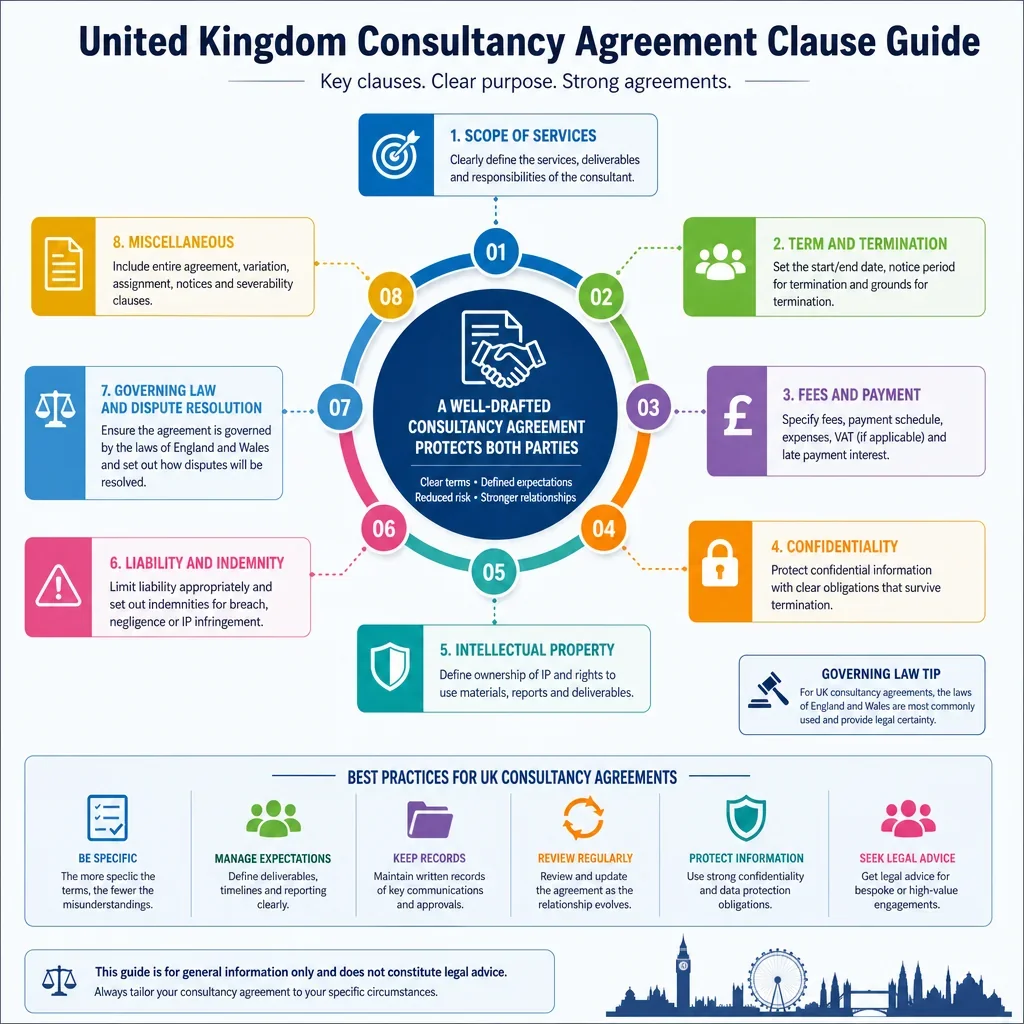
United Kingdom guide to consultancy agreement clauses, covering key terms, risks, and drafting points for businesses and consultants.
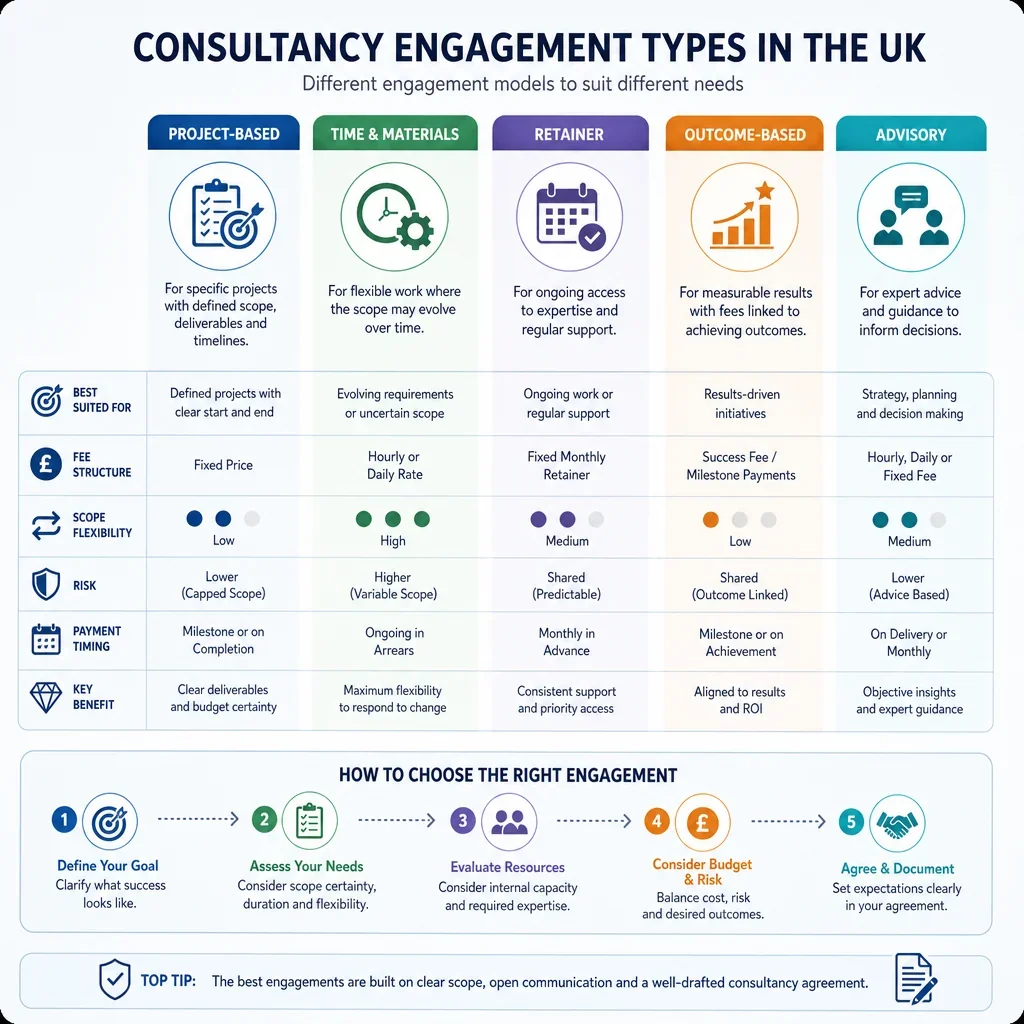
Compare consultancy engagement types in the UK and choose the right structure for your project, scope and commercial goals.
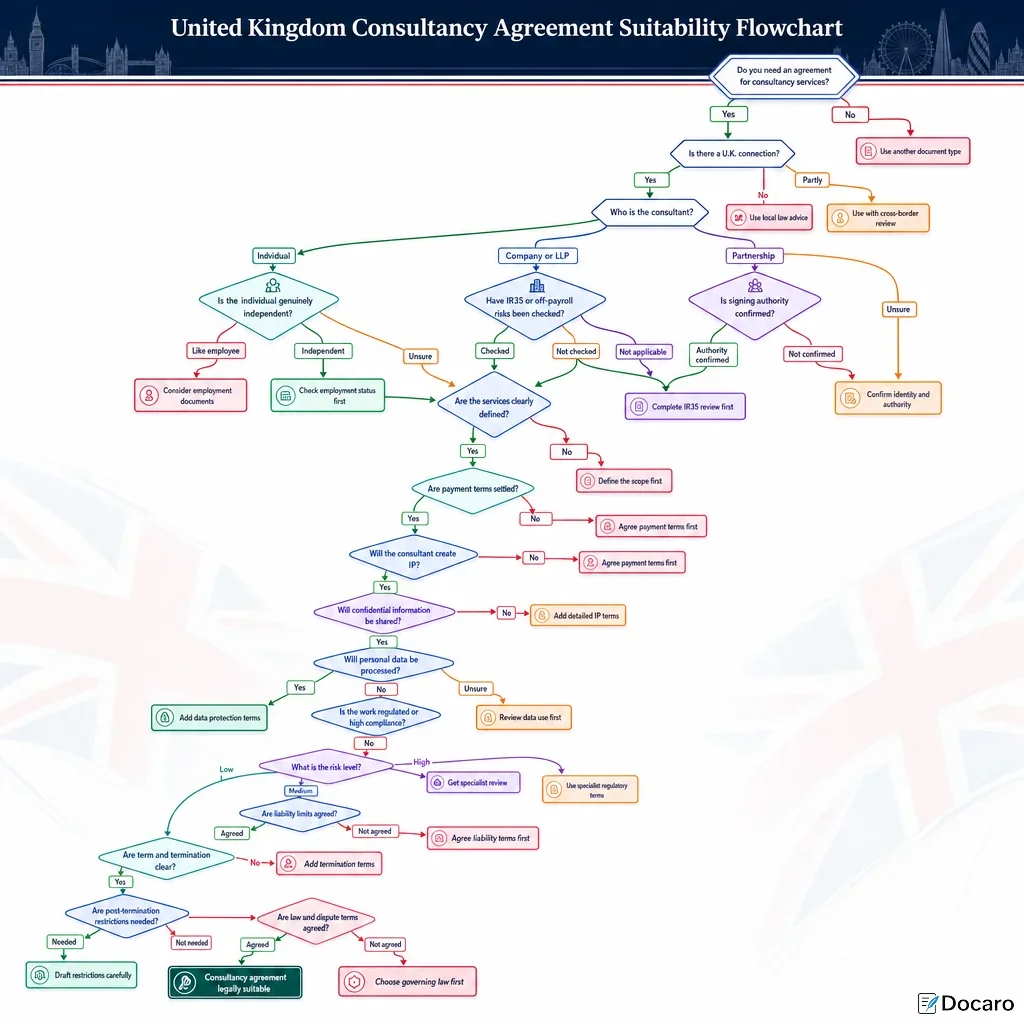
Use this United Kingdom consultancy agreement flowchart to choose the right document for your contractor or consultant arrangement.

Explore consultancy deliverables and scope items in the United Kingdom for clearer project terms and better agreement drafting.
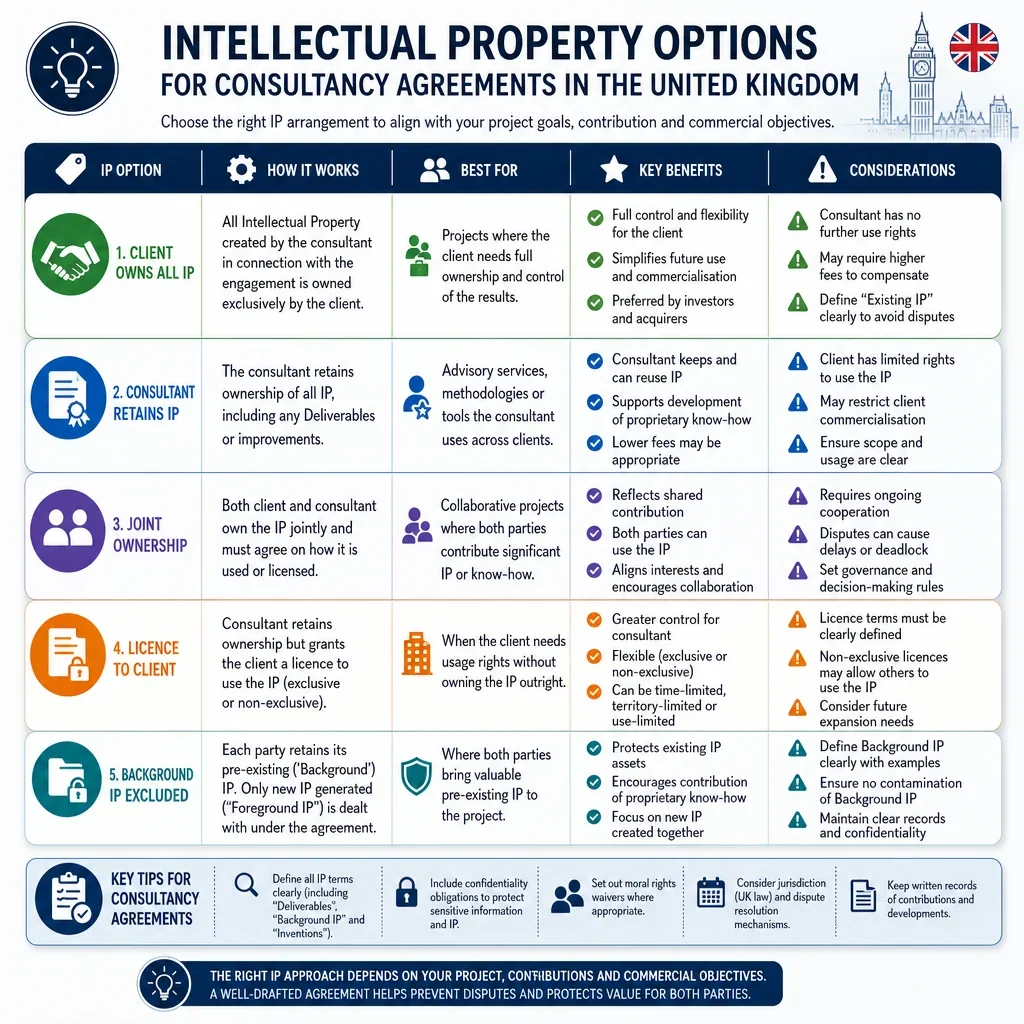
Explore UK IP options for consultancy agreements, including ownership, licensing, and assignment choices for clearer contracts.
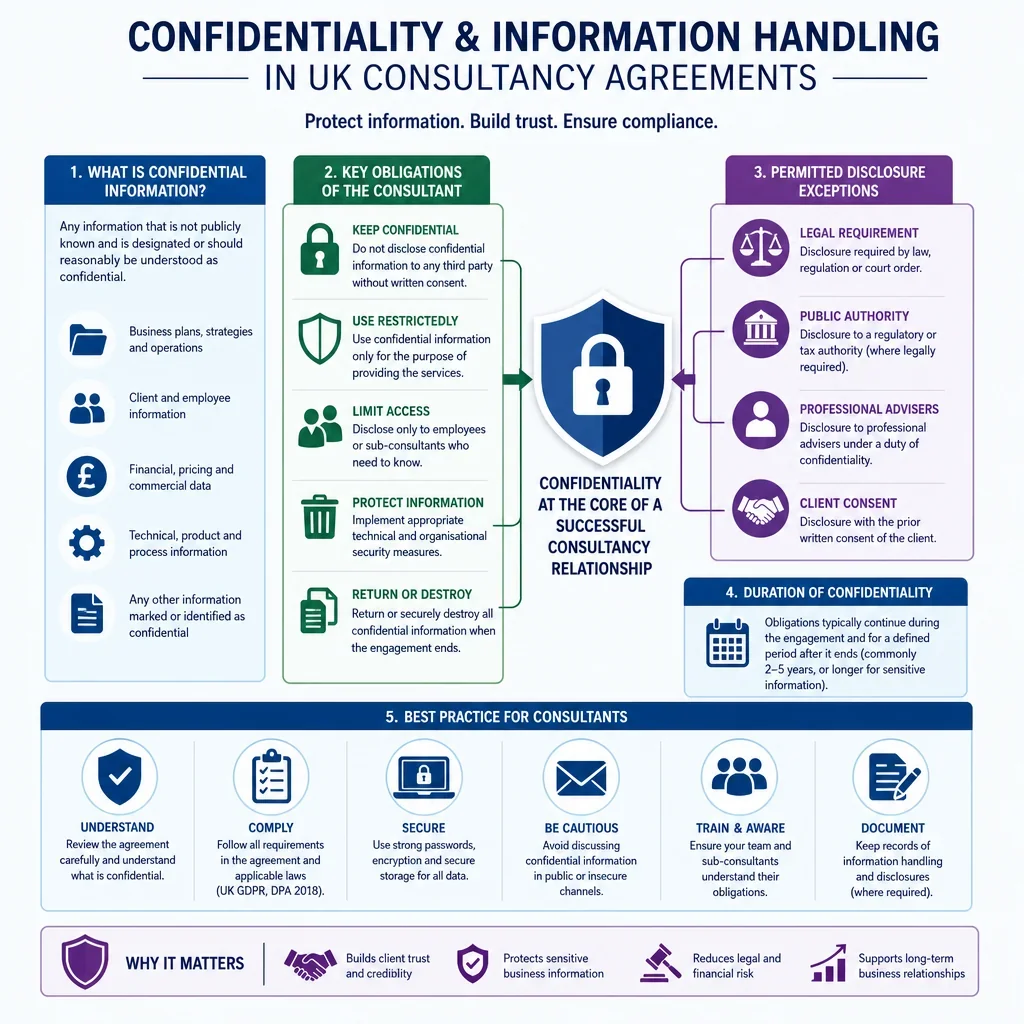
Learn key UK confidentiality and information handling terms in consultancy agreements, including data use, disclosure and protection.
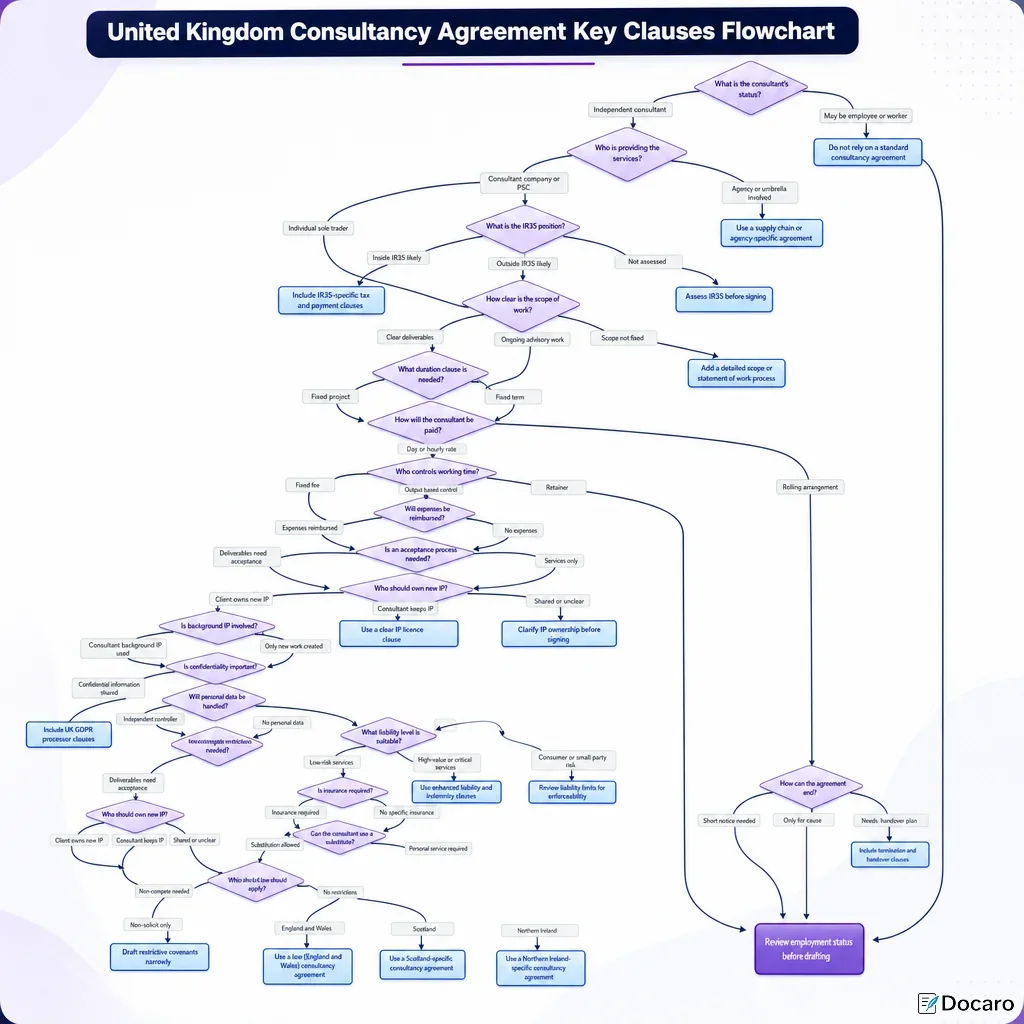
United Kingdom consultancy agreement flowchart covering key clauses, risks, and practical contract review points.