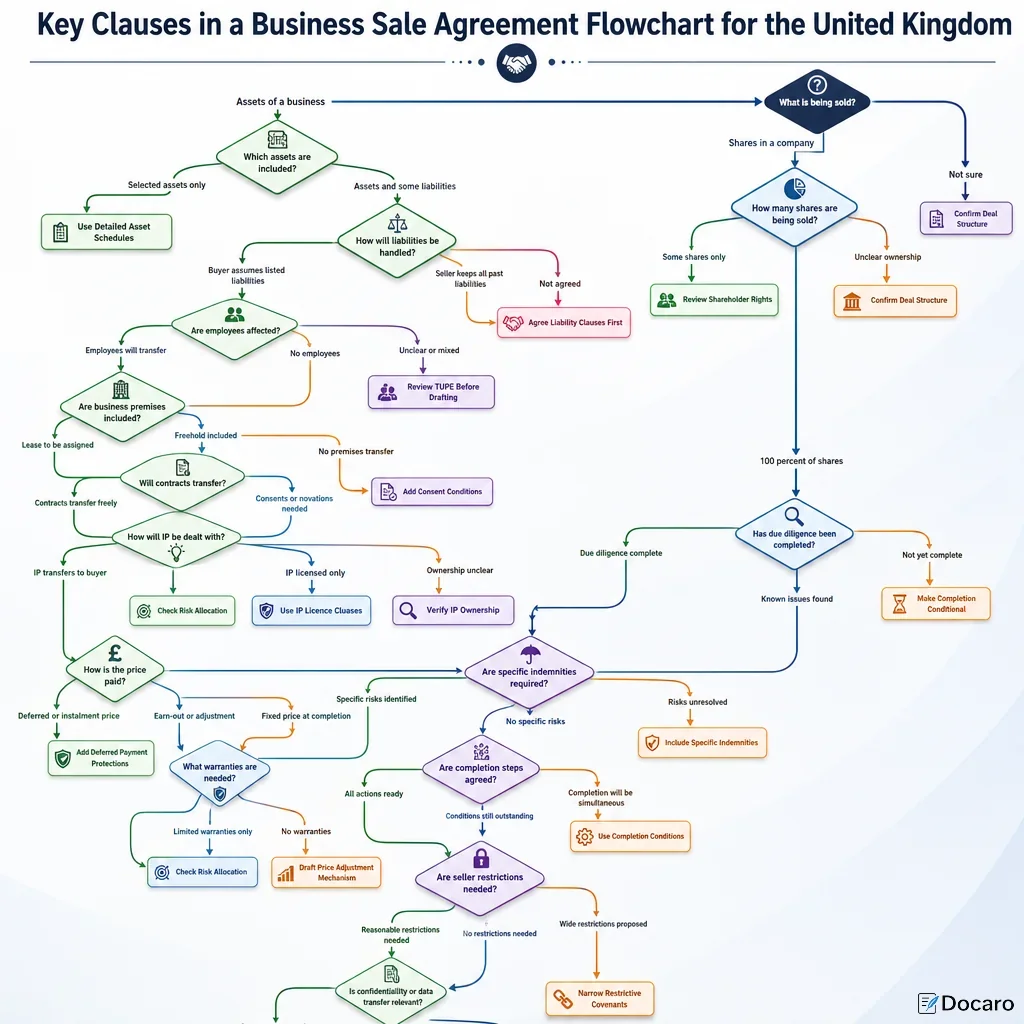
Key Clauses In A Business Sale Agreement Flowchart For The United Kingdom
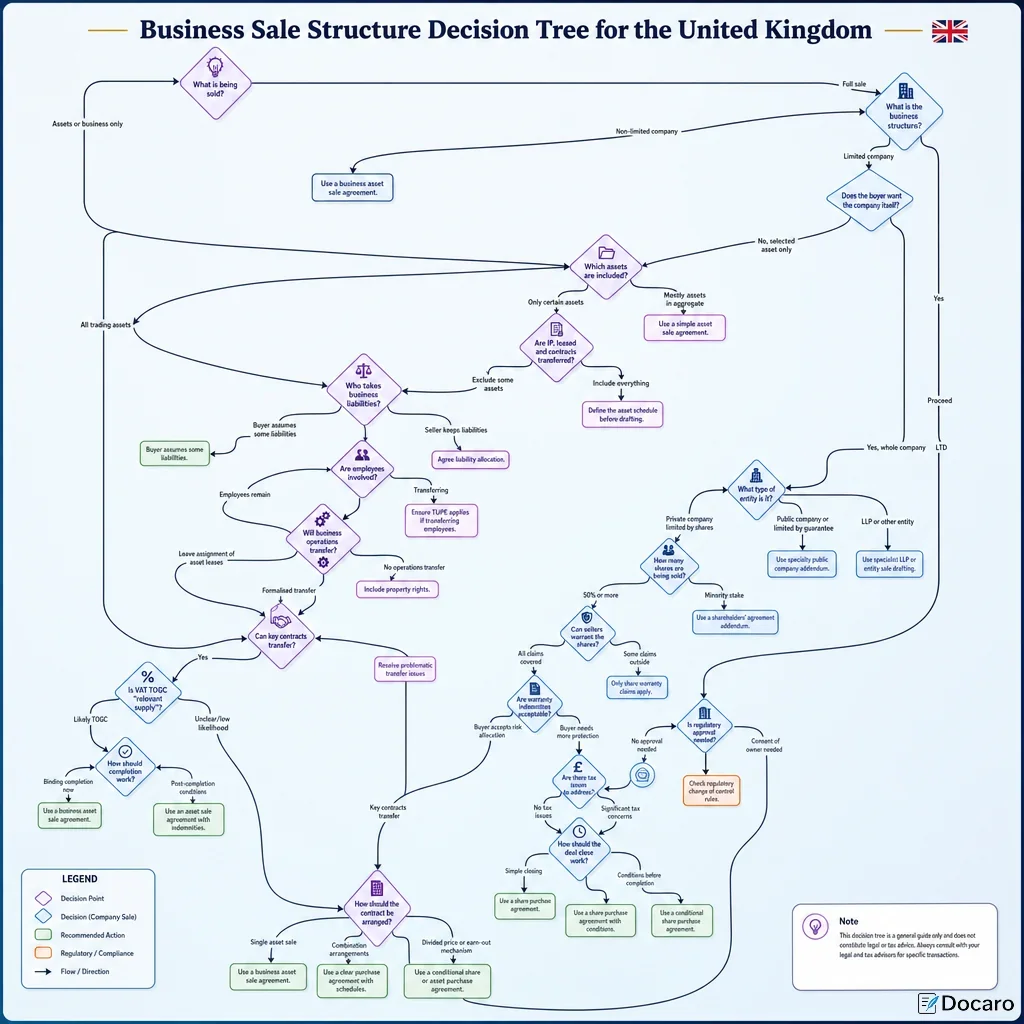
What is being sold?
Why Are Key Clauses In A UK Business Sale Agreement Important?
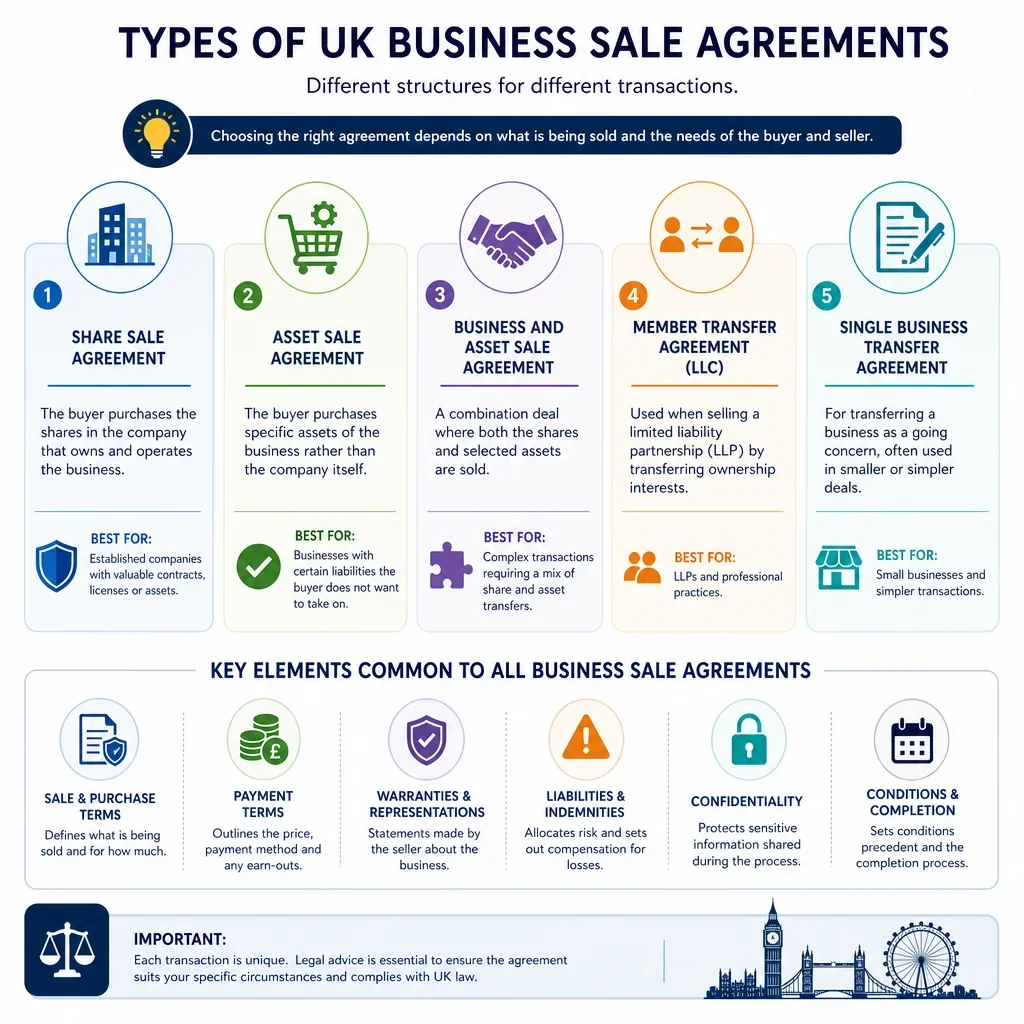
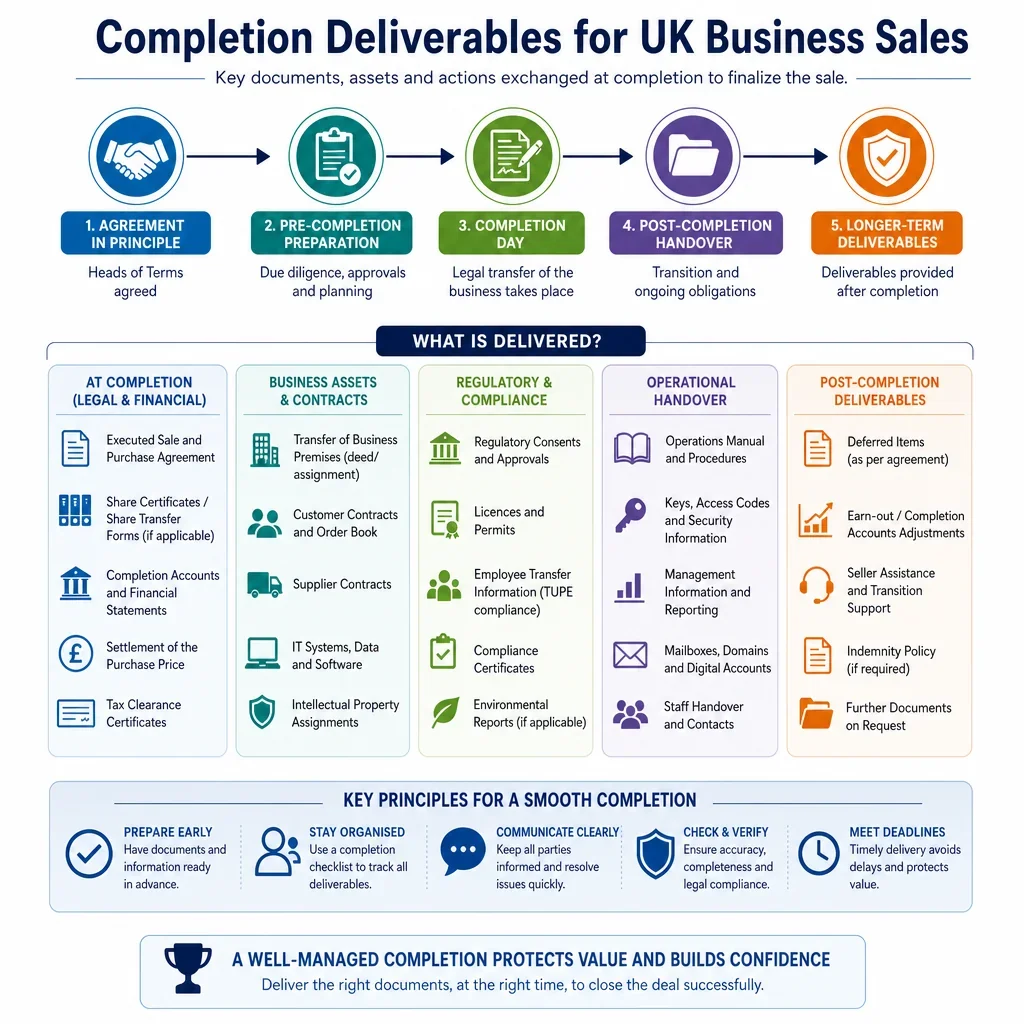
A business sale agreement is the main contract that records what is being sold, what the buyer pays, when completion happens and who carries each risk. In the United Kingdom, the right clauses can be very different depending on whether the deal is an asset sale or a share sale.
How Can The Wrong Clause Create UK Legal And Financial Risk?
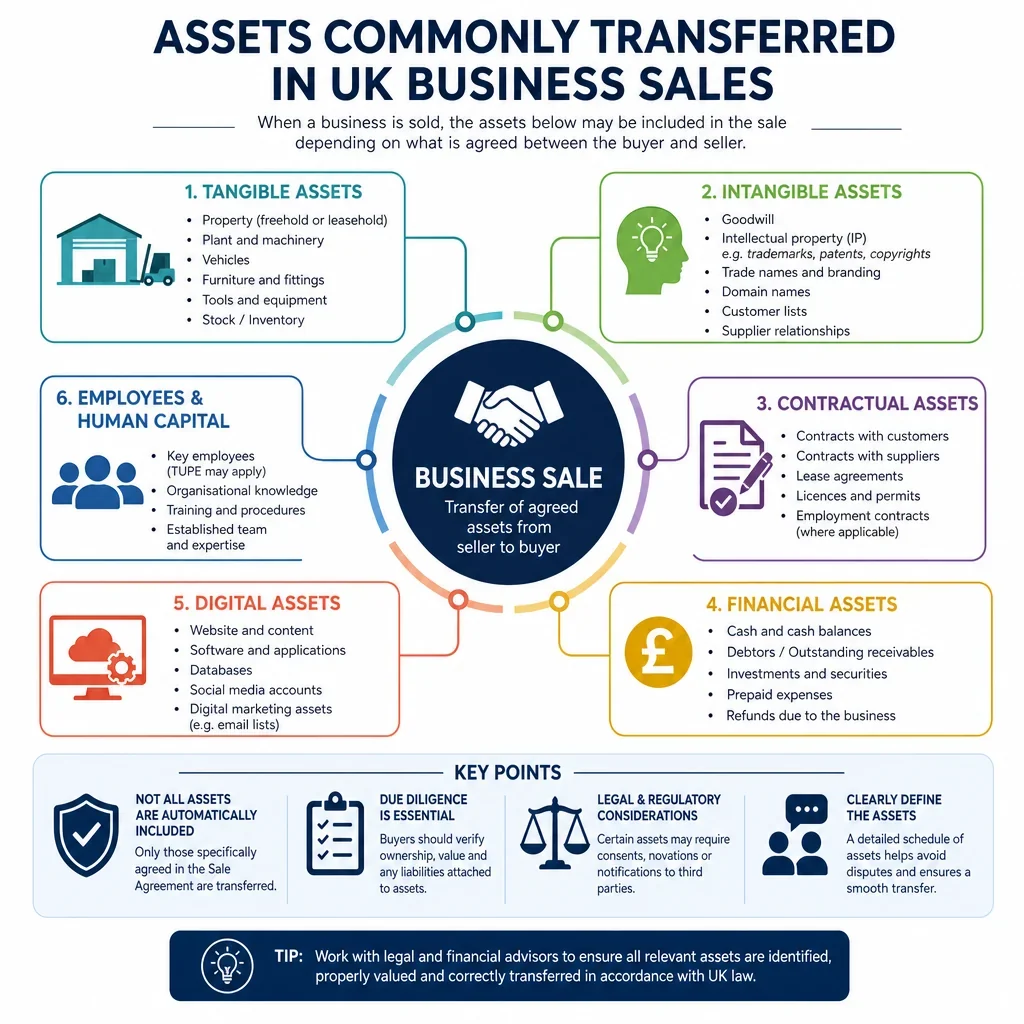
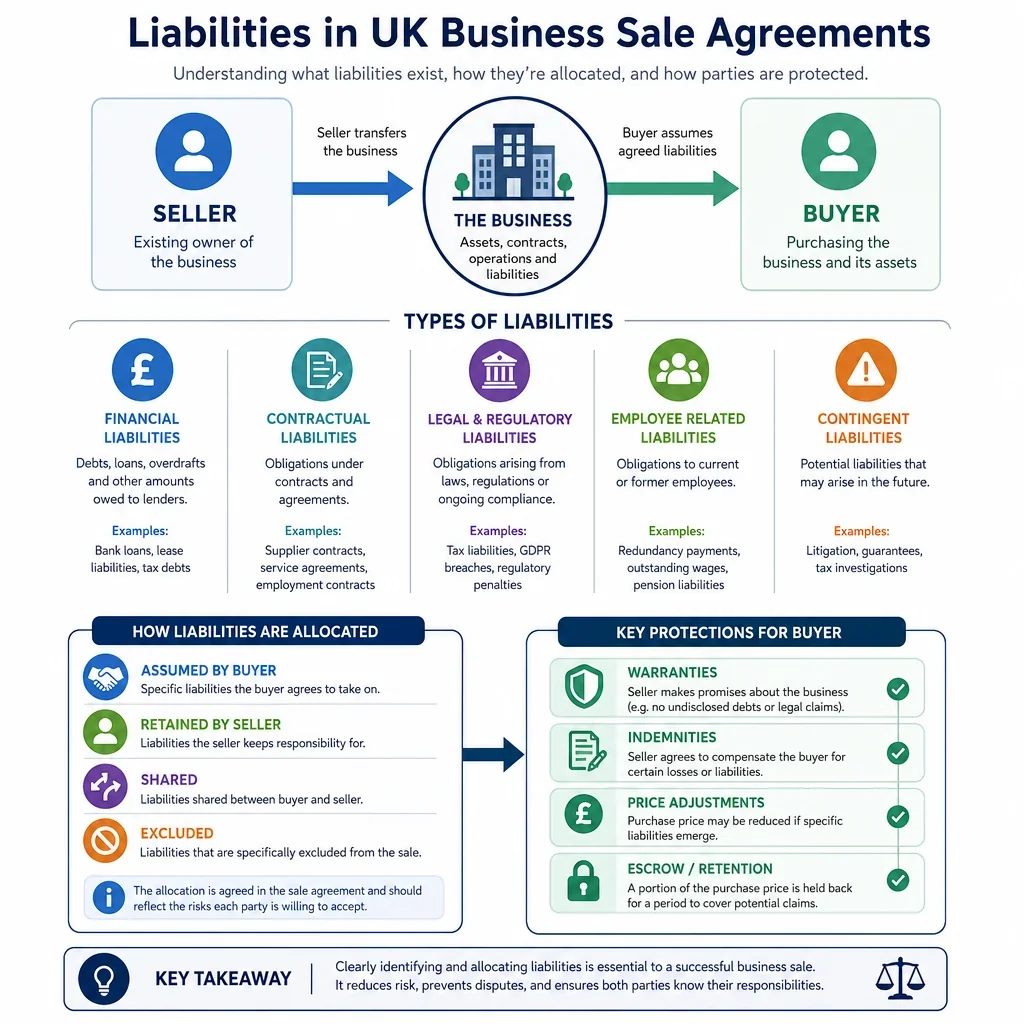
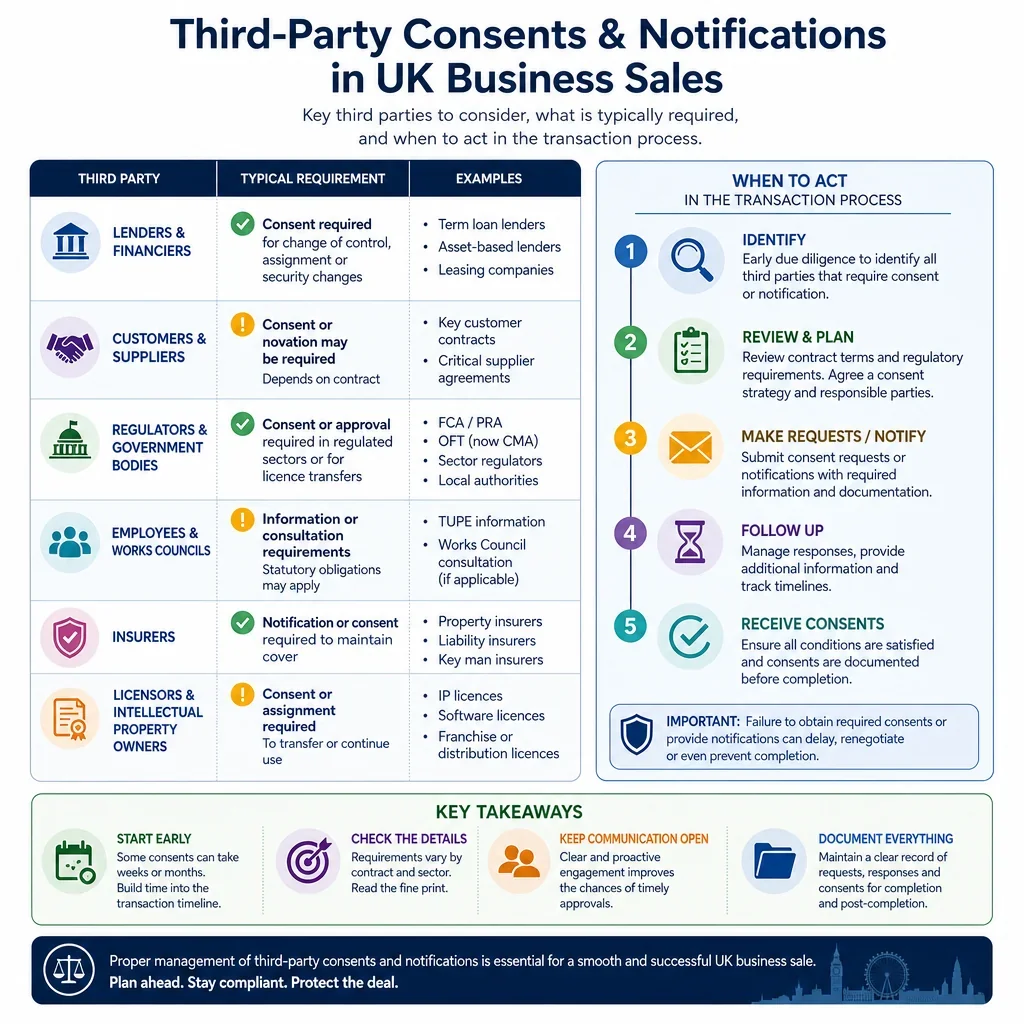
If assets, liabilities, employees, contracts, premises or intellectual property are not dealt with clearly, the parties may face disputes after completion. For example, TUPE may affect employees, landlord consent may be needed for premises, and HMRC rules may affect VAT or stamp duty treatment.
What Should A Buyer Check Before Signing?
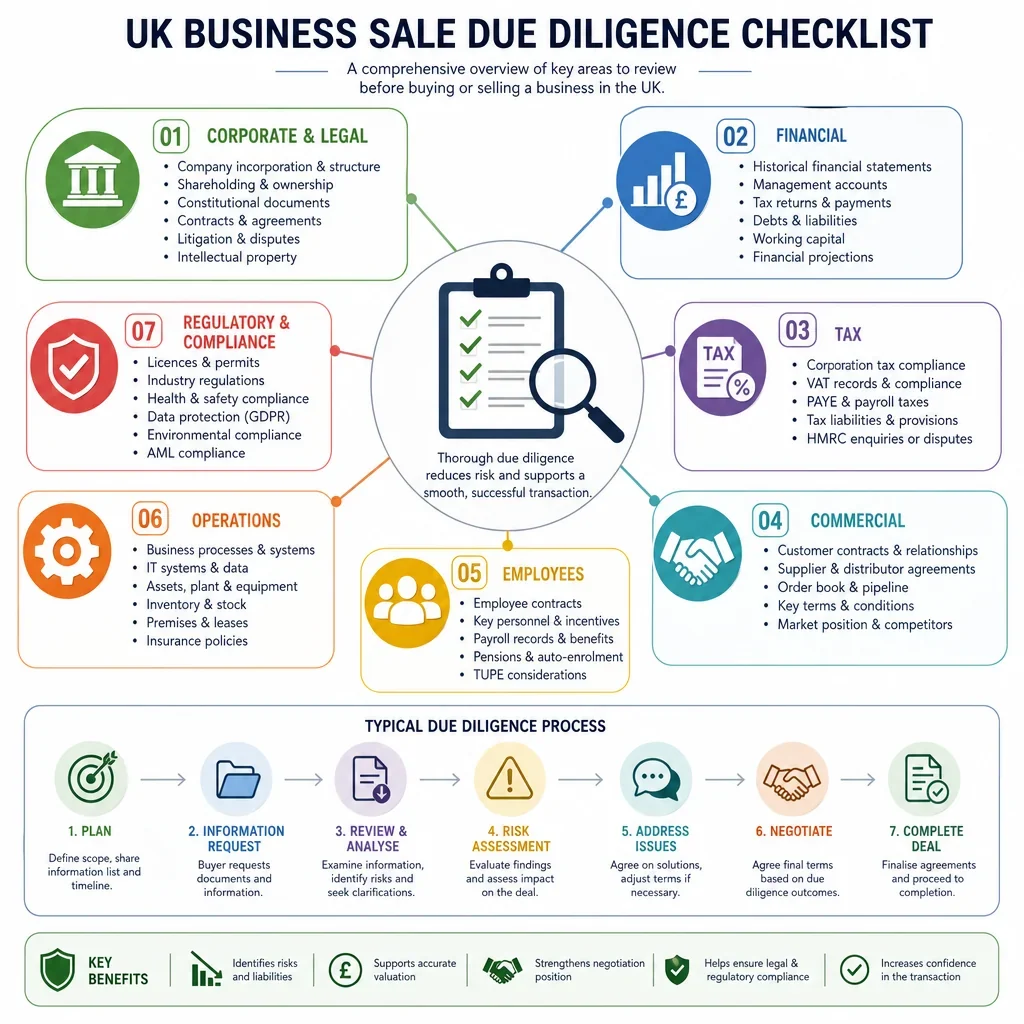
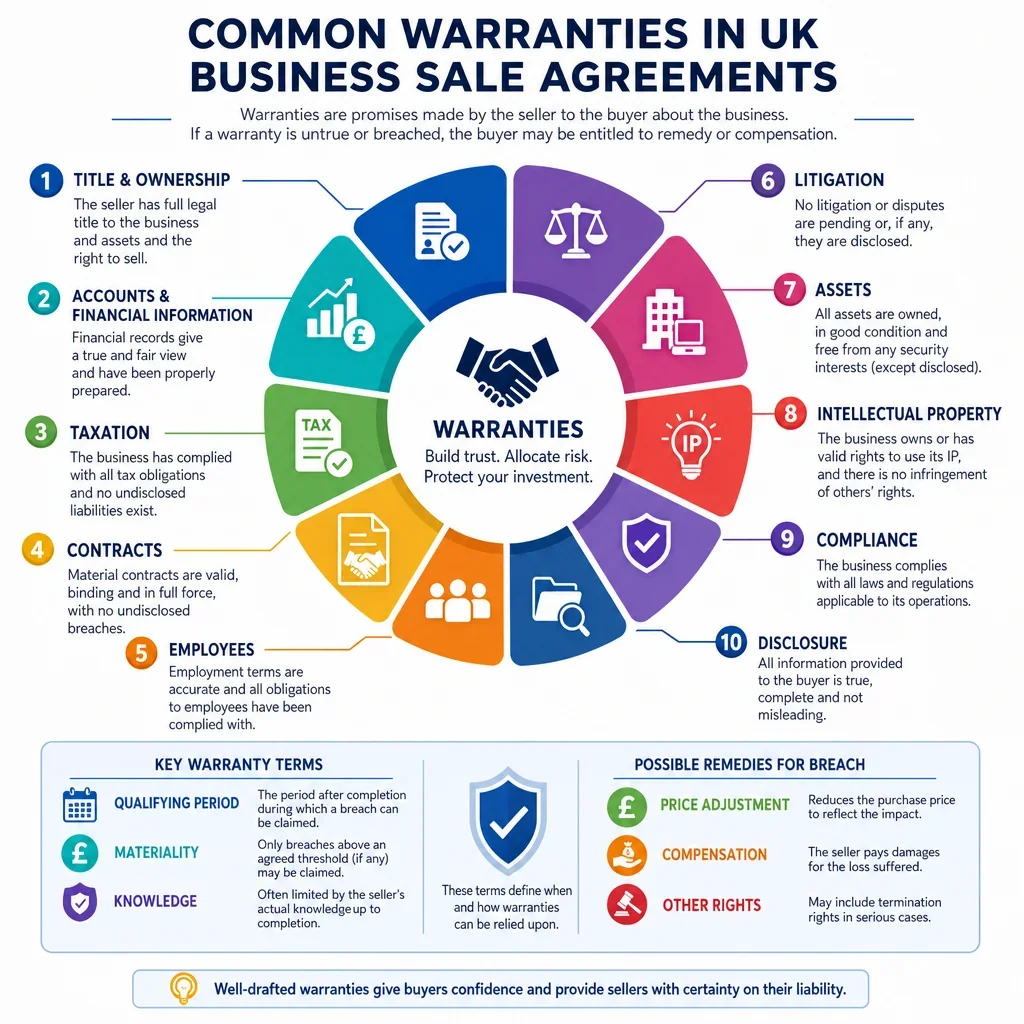
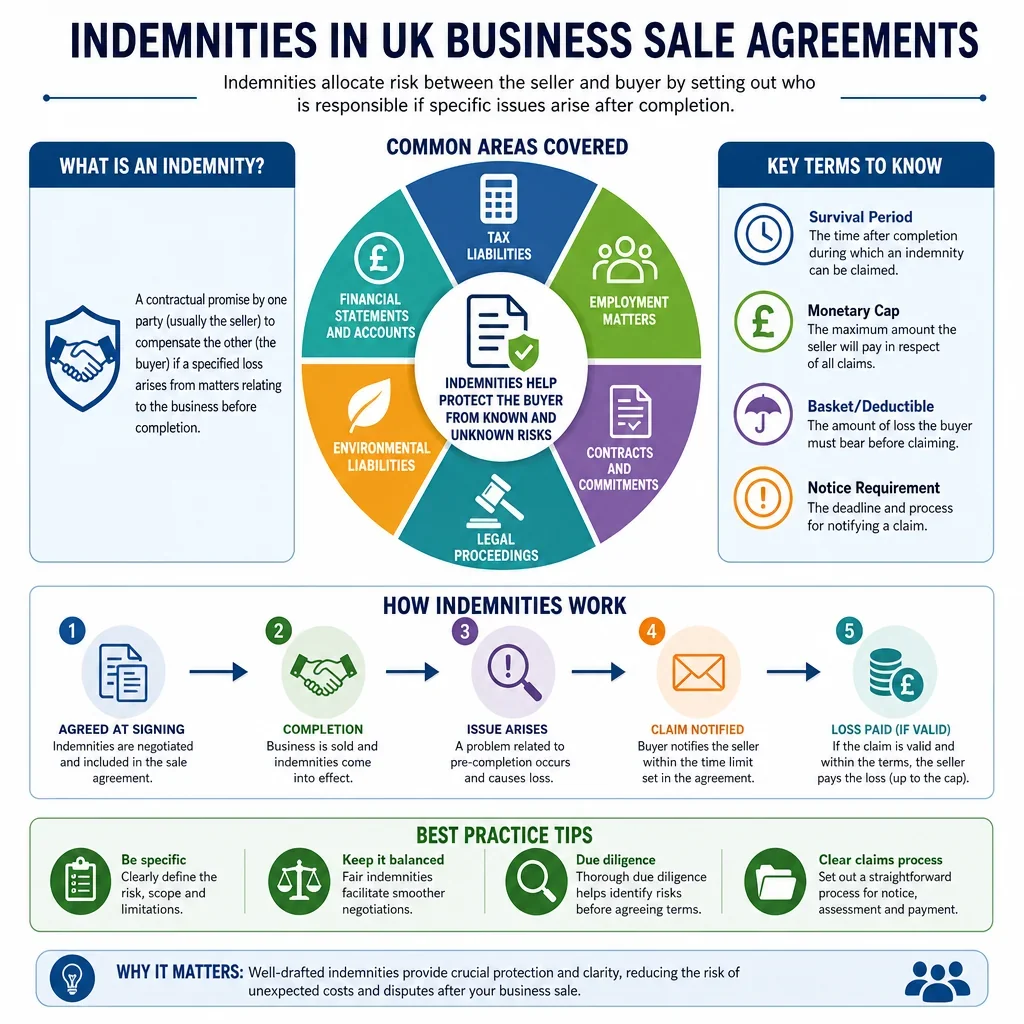
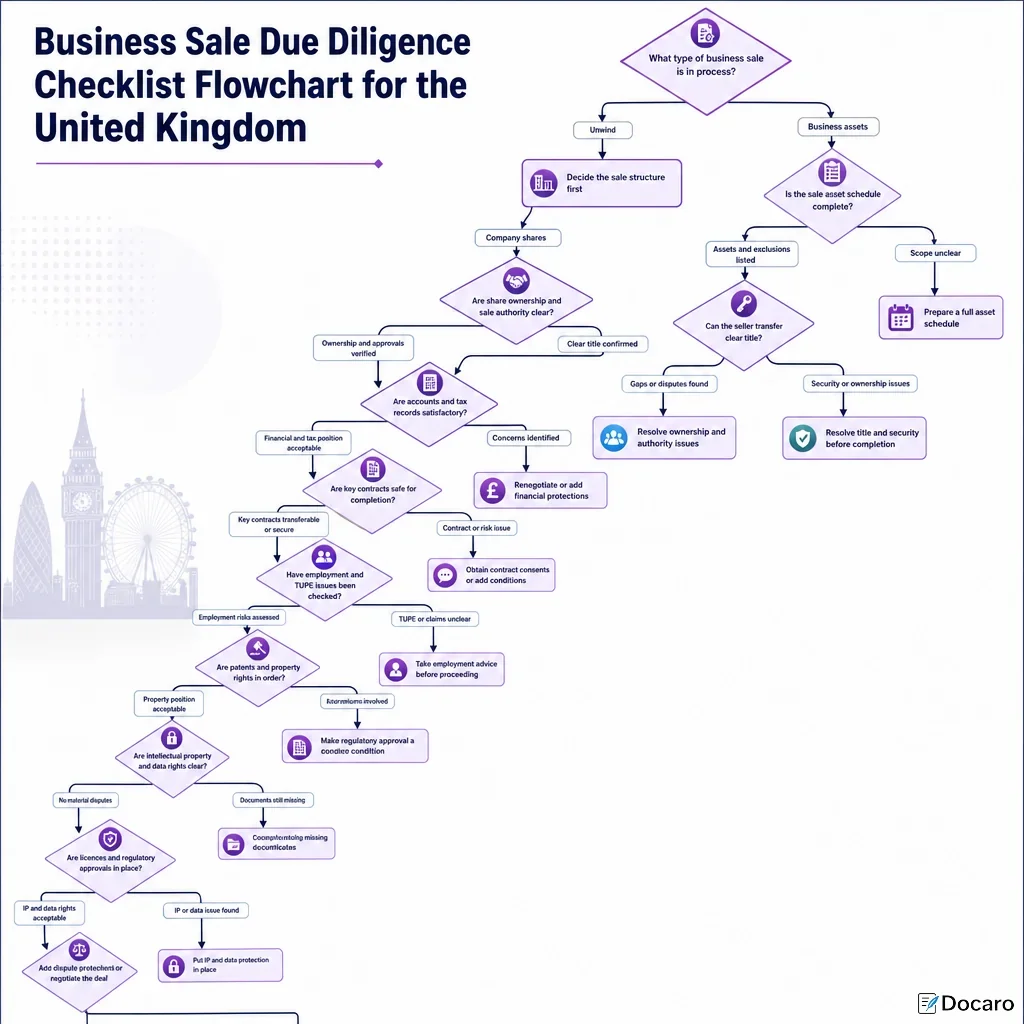
A buyer should use due diligence, warranties, indemnities and completion conditions to test the value of the business and reduce unknown risk. This is especially important in a share sale because the company usually carries its historic liabilities after completion.
What Should A Seller Protect In The Agreement?
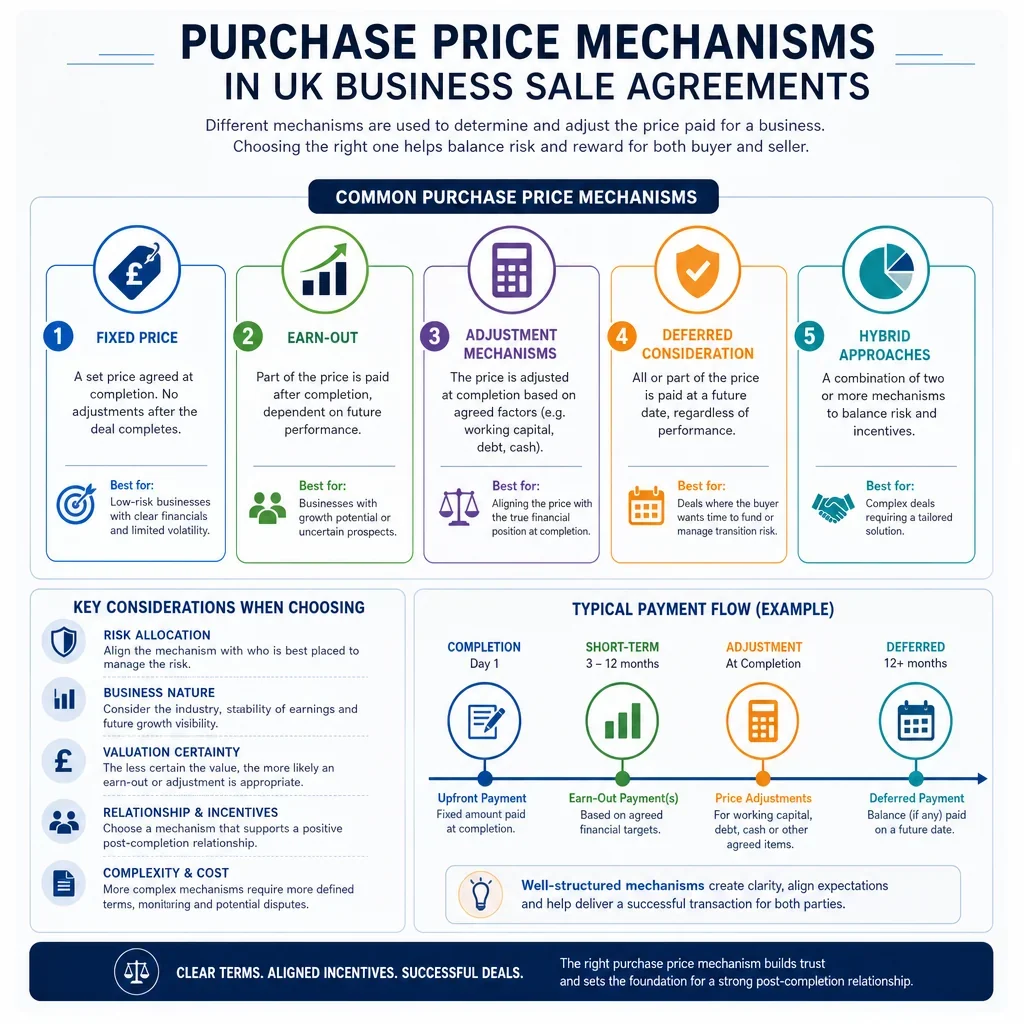
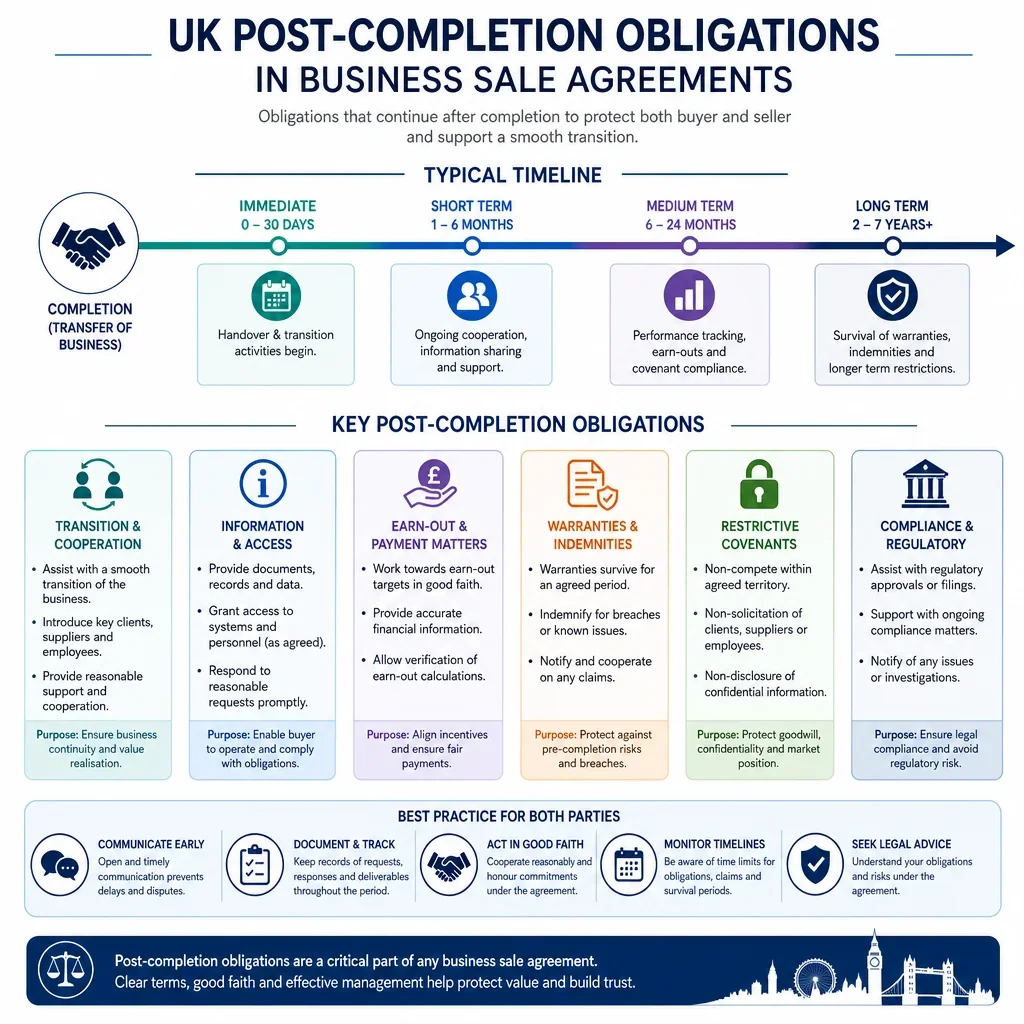
A seller should make sure the price, payment timing, limits on warranty claims, disclosure process and post-completion obligations are clearly stated. Where payment is deferred or linked to future performance, the agreement should include strong and practical payment protections.
Which UK Issues Commonly Need Extra Care?
- Employees: TUPE may transfer employees automatically in some business sales.
- Tax: VAT, stamp duty and corporation tax issues can affect the deal structure.
- Contracts: Customer, supplier and software contracts may need consent to transfer.
- Intellectual Property: Trade marks, copyright, domains and software should be identified and transferred or licensed properly.
- Data Protection: Customer and employee data must be handled consistently with UK GDPR and ICO guidance.
Useful official guidance includes GOV.UK guidance on employee transfers, HMRC guidance on VAT and business transfers, and ICO guidance on UK GDPR.
FAQs
You Might Also Be Interested In