Common Warranties In UK Business Sale Agreements
Warranty Summary | Warranty Giver | Purpose | Common Limitations |
|---|---|---|---|
Seller Capacity And Authority | |||
The seller has legal power and authority to enter into and perform the sale agreement. | Seller warranty | Confirms the agreement is validly entered into by the seller. | Often qualified by board approvals, shareholder approvals and Companies House filings. |
Buyer Capacity And Authority | |||
The buyer has legal power and authority to enter into and perform the sale agreement. | Buyer warranty | Protects the seller from invalid buyer execution or lack of authority. | Usually limited to corporate approvals and funding approvals within the buyer group. |
Due Execution | |||
The agreement has been properly signed and creates binding obligations. | Mutual warranty | Reduces enforceability risk after signing. | Subject to insolvency laws, equitable remedies and proper execution formalities. |
No Conflict | |||
Signing and completion will not breach laws, constitutional documents or key contracts. | Mutual warranty | Identifies consent and breach risks before completion. | Often qualified by disclosed change-of-control consents, banking covenants and regulatory approvals. |
Title To Shares | |||
The seller owns the shares and can transfer them free from security interests. | Seller warranty | Ensures the buyer receives clean ownership of the target company. | Usually fundamental, often uncapped or separately capped and rarely knowledge-qualified. |
Title To Business Assets | |||
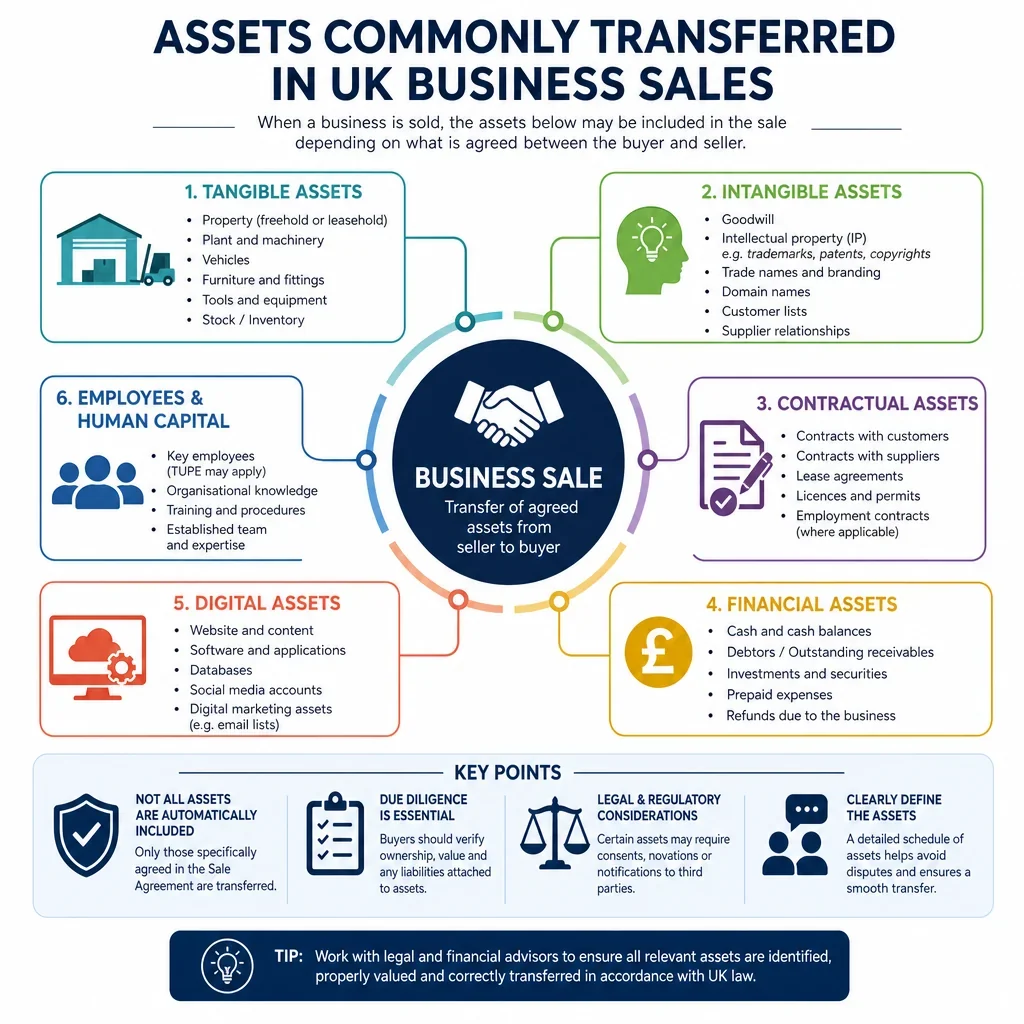
The seller owns or has the right to use all assets needed for the business. | Seller warranty | Confirms the assets being sold can support business continuity. | May exclude leased assets, third-party IP, retention of title goods and disclosed finance leases. |
No Encumbrances | |||
Shares or assets are not subject to charges, liens, options or other third-party rights. | Seller warranty | Protects the buyer from undisclosed claims over acquired property. | Qualified by registered charges, ordinary course liens and disclosed security releases at completion. |
Share Capital | |||
The target's issued shares are as stated, fully paid and correctly allotted. | Seller warranty | Confirms the buyer is acquiring the expected ownership percentage. | Usually checked against statutory registers, filings, option plans and shareholder agreements. |
Subsidiaries And Investments | |||
The target's subsidiaries and corporate investments are accurately disclosed. | Seller warranty | Prevents hidden group liabilities or unexpected minority interests. | Often limited to named entities and matters shown in corporate records. |
Accounts Accuracy | |||
The accounts give a true and fair view and were prepared under applicable accounting standards. | Seller warranty | Supports the price calculation and financial due diligence. | Often limited by disclosed accounting policies, audit qualifications and management accounts status. |
Management Accounts | |||
Recent management accounts were prepared consistently and fairly show trading position. | Seller warranty | Updates the buyer on performance since the last statutory accounts. | Usually not warranted to audit standard and qualified by normal year-end adjustments. |
No Material Adverse Change | |||
There has been no material adverse change in the business since the accounts date. | Seller warranty | Bridges the risk gap between accounts date, exchange and completion. | Heavily negotiated often excludes market-wide events, disclosed matters and buyer-caused issues. |
Ordinary Course Trading | |||
The business has been carried on in the ordinary course since the accounts date. | Seller warranty | Stops value leakage or unusual pre-completion conduct. | Qualified by disclosed restructurings, agreed pre-completion actions and emergency measures. |
Solvency | |||
The seller and target are not insolvent and no insolvency proceedings are pending. | Seller warranty | Protects against transaction challenge and business failure risks. | Often linked to knowledge, formal proceedings and statutory insolvency tests. |
Undisclosed Liabilities | |||
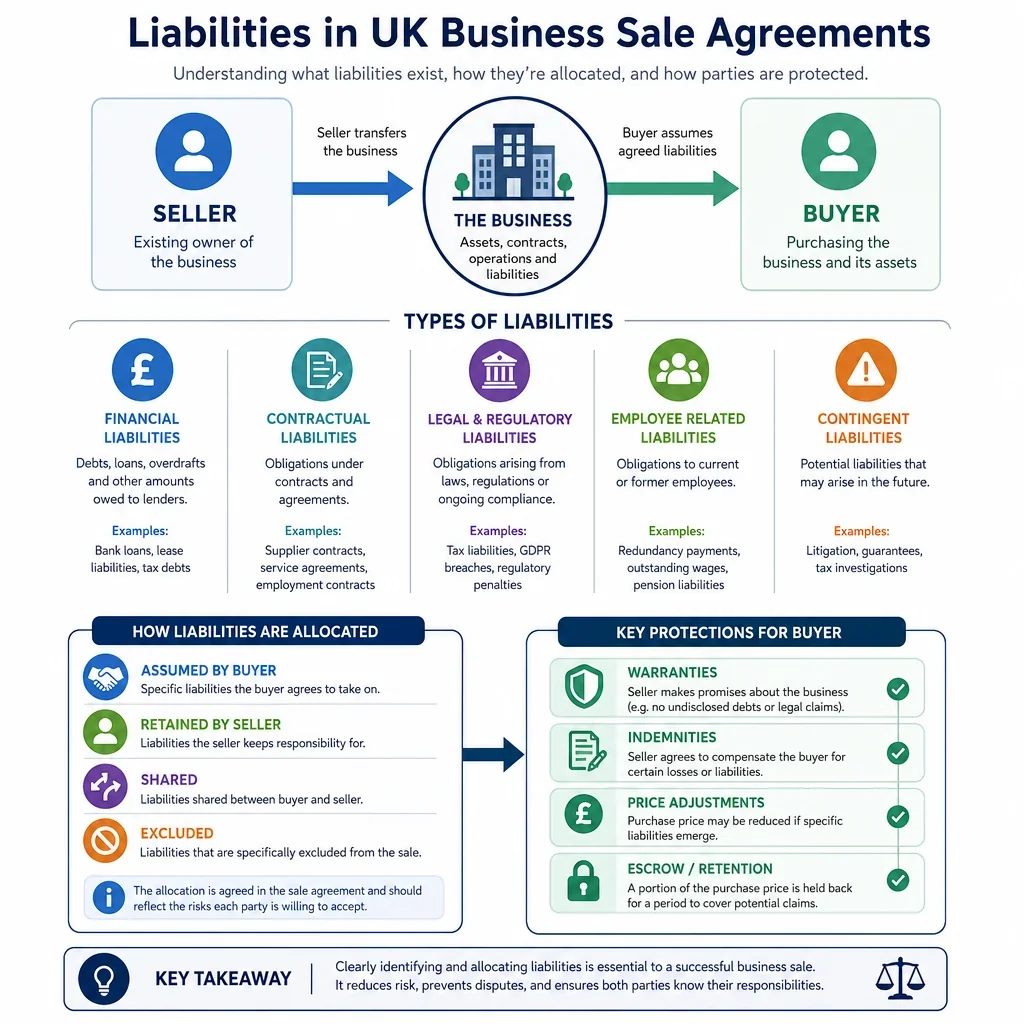
The business has no liabilities except those shown in accounts or disclosed. | Seller warranty | Protects the buyer from hidden debts and obligations. | Usually excludes ordinary course liabilities and matters provided for in completion accounts. |
Borrowings And Guarantees | |||
All borrowings, guarantees and financial commitments are disclosed. | Seller warranty | Allows accurate assessment of debt-like items and contingent exposure. | May exclude trade credit, lease liabilities or guarantees released at completion. |
Tax Compliance | |||
All tax returns have been filed and taxes paid when due. | Seller warranty | Identifies tax exposure that may reduce deal value. | Often paired with a tax covenant and longer claim period than general warranties. |
VAT | |||
VAT registration, charging, recovery and filings are correct. | Seller warranty | Protects against VAT assessments, penalties and transfer pricing errors. | May depend on whether the sale is treated as a transfer of a going concern. |
PAYE And National Insurance | |||
Employee payroll taxes and National Insurance contributions have been correctly operated. | Seller warranty | Protects against payroll tax arrears and penalties. | Often linked to worker status, benefits, expenses and IR35-related disclosures. |
Tax Investigations | |||
No HMRC enquiry, audit, dispute or tax investigation is ongoing or threatened. | Seller warranty | Highlights known tax risks requiring indemnity or price adjustment. | Often qualified by awareness and disclosed correspondence with HMRC. |
Employees And Terms | |||
Employee details, contracts, pay, benefits and length of service are accurately disclosed. | Seller warranty | Helps the buyer assess workforce cost and employment liabilities. | Often qualified by anonymised schedules, GDPR limits and changes since disclosure. |
Employment Law Compliance | |||
The business has complied with employment laws and worker rights. | Seller warranty | Reduces risk of claims for wages, dismissal, discrimination or working time breaches. | May be knowledge-qualified and limited by disclosed grievances, claims and HR policies. |
TUPE | |||
All employee information needed for any TUPE transfer is accurate and complete. | Seller warranty | Manages automatic employee transfer risk on an asset sale. | Usually supported by indemnities for pre-transfer liabilities and failure to inform or consult. |
Pensions | |||
Pension arrangements, contributions and auto-enrolment duties are disclosed and compliant. | Seller warranty | Identifies pension deficits, contribution arrears and compliance failures. | Defined benefit schemes often need specialist warranties, indemnities and actuarial review. |
Employee Claims And Disputes | |||
No employee tribunal claim, grievance or material dispute is ongoing or threatened. | Seller warranty | Flags liabilities for compensation, settlement and management disruption. | Usually qualified by knowledge and disclosed HR correspondence. |
Consultants And Contractors | |||
Contractor arrangements are disclosed and no contractors are misclassified as self-employed. | Seller warranty | Protects against worker rights, tax and employment status claims. | Often tied to IR35, agency worker rules and historic HMRC correspondence. |
Material Contracts | |||
All material customer, supplier and commercial contracts are disclosed and enforceable. | Seller warranty | Confirms key revenue and supply arrangements are understood. | Usually excludes standard terms, minor contracts and contracts below a value threshold. |
No Contract Default | |||
The target is not in material breach of its key contracts and no counterparty is in material breach. | Seller warranty | Protects against loss of revenue, termination or damages claims. | Often knowledge-qualified for counterparty breaches and limited to material contracts. |
Change Of Control | |||
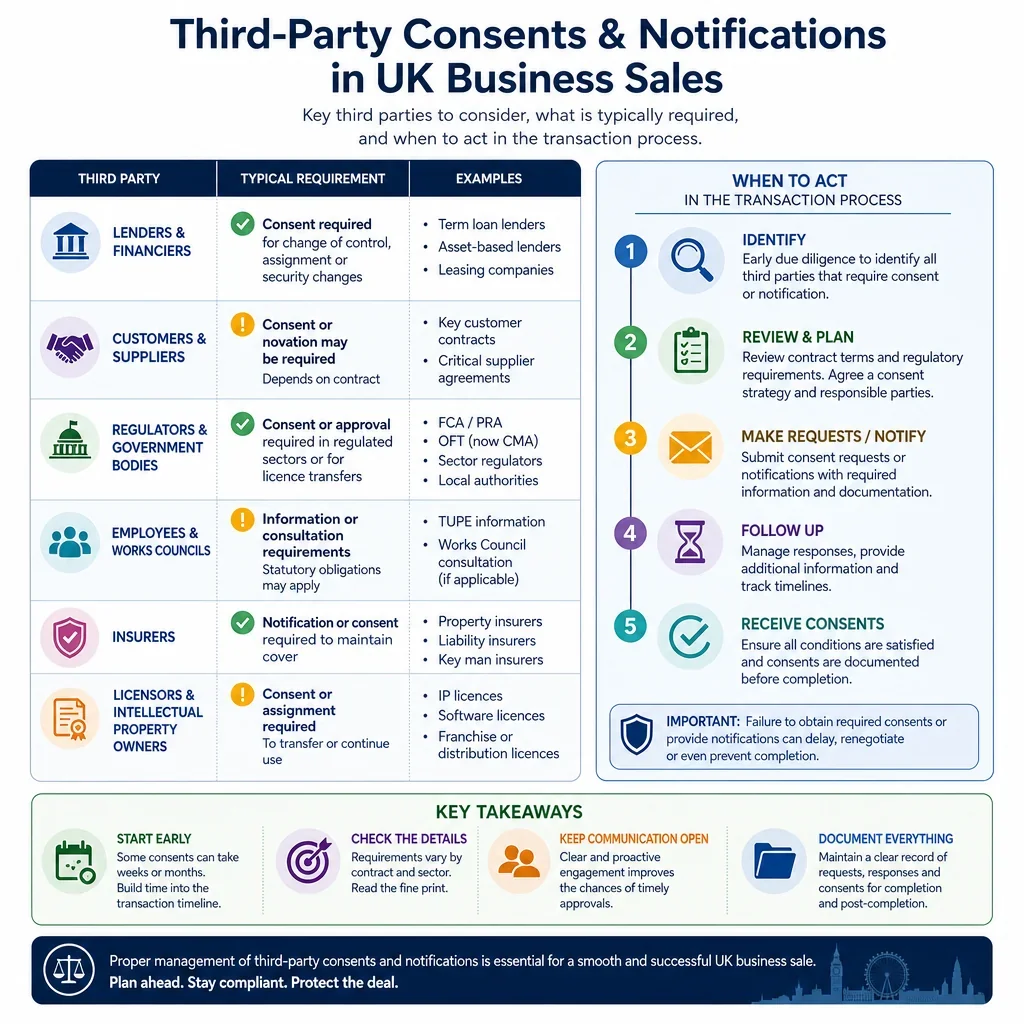
No key contract can be terminated or varied solely because of the sale unless disclosed. | Seller warranty | Protects deal value by identifying required consents. | Often qualified by customer consents, landlord consents and regulator approvals obtained before completion. |
Customers And Suppliers | |||
Key customers and suppliers are disclosed and none has indicated an intention to stop trading. | Seller warranty | Assesses dependency and post-completion trading risk. | Usually limited to top customers and suppliers by revenue or spend and seller awareness. |
Insurance | |||
Insurance policies are disclosed, premiums paid and no material claims are outstanding. | Seller warranty | Confirms risk cover and possible historic claims exposure. | May exclude adequacy of cover and depend on insurer terms and group policy separation. |
Litigation And Disputes | |||
No material litigation, arbitration, investigation or dispute is ongoing or threatened. | Seller warranty | Identifies claims that could create losses or management distraction. | Often knowledge-qualified for threatened claims and subject to disclosed disputes. |
Regulatory Compliance | |||
The business has complied with all material laws and regulatory requirements. | Seller warranty | Provides broad protection against unlawful business operations. | Often narrowed to material laws, specific regulators, seller knowledge and disclosed non-compliance. |
Permits And Licences | |||
All licences, consents and permits needed to operate are held and valid. | Seller warranty | Ensures the buyer can continue regulated activities after completion. | May require transfer applications, regulator consent or reissue after change of control. |
Anti-Bribery And Corruption | |||
The business has not engaged in bribery and maintains adequate anti-bribery procedures. | Seller warranty | Reduces criminal, reputational and debarment risk. | Often supported by policies, training records and disclosures about agents or high-risk jurisdictions. |
Sanctions And Export Controls | |||
The business has complied with UK sanctions and export control restrictions. | Seller warranty | Protects against criminal penalties and blocked transactions. | Important for international sales often requires customer, supplier and territory disclosures. |
Competition Law | |||
The business has not breached competition law or been involved in anti-competitive conduct. | Seller warranty | Protects against fines, damages claims and merger control issues. | Often focuses on pricing, market sharing, exclusive supply and CMA investigations. |
Data Protection | |||
Personal data has been processed lawfully and data protection obligations have been met. | Seller warranty | Protects against ICO action, breach costs and unusable customer data. | Often requires disclosures on consents, privacy notices, processors, breaches and direct marketing. |
Cyber Security | |||
The business maintains reasonable cyber security measures and has disclosed material incidents. | Seller warranty | Assesses risk of business interruption, data loss and remediation costs. | Usually limited to material incidents and often benchmarked against policies and industry standards. |
Intellectual Property Ownership | |||
The target owns or is licensed to use all intellectual property needed for the business. | Seller warranty | Protects the buyer's ability to use brands, software and know-how. | Often qualified by third-party licences, open-source software and employee assignment records. |
IP Infringement | |||
The business does not infringe third-party IP and no one is materially infringing its IP. | Seller warranty | Reduces risk of injunctions, damages and rebranding costs. | Seller often seeks knowledge qualification for third-party infringement and disclosed disputes. |
IT Systems | |||
IT systems are adequate, maintained and not subject to material failures. | Seller warranty | Protects operational continuity and technology-dependent value. | Often limited by disclosed outages, outsourced services, SaaS terms and cyber incidents. |
Open-Source Software | |||
Open-source software use is disclosed and does not require proprietary code disclosure. | Seller warranty | Protects software value and licensing compliance. | Typically limited to material products and known copyleft or licence-breach risks. |
Real Property | |||
All freehold and leasehold property used by the business is disclosed. | Seller warranty | Confirms premises rights and property liabilities. | Usually qualified by title documents, leases, searches and matters discoverable by inspection. |
Lease Compliance | |||
Lease obligations have been complied with and no forfeiture or termination notice exists. | Seller warranty | Protects continuity of occupation after completion. | Often subject to landlord consent, rent review, repair liabilities and disclosed dilapidations. |
Planning And Building Regulations | |||
Property use, alterations and buildings comply with planning and building control requirements. | Seller warranty | Avoids enforcement action or limits on property use. | Qualified by local searches, planning permissions and age of works. |
Environmental Compliance | |||
The business complies with environmental law and has disclosed contamination and permits. | Seller warranty | Protects against clean-up costs, fines and operating restrictions. | Often requires specialist reports, site assessments and indemnities for known contamination. |
Health And Safety | |||
The business complies with health and safety laws and has disclosed incidents or investigations. | Seller warranty | Reduces risk of fines, injury claims and enforcement notices. | Often supported by accident records, risk assessments, notices and insurance claims history. |
Product Liability And Safety | |||
Products supplied by the business are safe, compliant and not subject to recalls. | Seller warranty | Protects against recall costs, claims and regulatory action. | Often limited by disclosed complaints, sector regulations and known product lines. |
Consumer Law Compliance | |||
Consumer-facing sales, terms and practices comply with UK consumer protection rules. | Seller warranty | Reduces risk of refunds, enforcement and unfair terms challenges. | Important for e-commerce, subscriptions, refunds, cancellation rights and standard terms. |
Modern Slavery | |||
The business has complied with modern slavery obligations and supply-chain policies. | Seller warranty | Protects against compliance, reputational and customer contract risks. | Often focused on larger businesses, statements, supplier audits and high-risk jurisdictions. |
Grants And Subsidies | |||
All grants, subsidies and government support are disclosed and conditions complied with. | Seller warranty | Identifies clawback, repayment and change-of-control risks. | May require consent from grant bodies and review of subsidy control terms. |
Information Provided | |||
Information provided to the buyer is accurate and not misleading in material respects. | Seller warranty | Supports reliance on due diligence materials and data room content. | Sellers often resist broad warranties and exclude forecasts, opinions and buyer assumptions. |
Disclosure Letter | |||
Disclosures against warranties are complete, accurate and not misleading. | Seller warranty | Defines which facts qualify the seller's warranties. | Disclosure standard is heavily negotiated buyer prefers specific fair disclosure only. |
Brokers And Transaction Fees | |||
No broker, finder or adviser fee is payable by the other party because of the transaction. | Mutual warranty | Prevents unexpected commission or adviser fee claims. | Usually excludes each party's own advisers and disclosed corporate finance fees. |
Buyer Funding | |||
The buyer has or will have sufficient funds to pay the purchase price at completion. | Buyer warranty | Gives seller comfort that completion payment can be made. | May be qualified by debt finance conditions, equity commitment letters or escrow arrangements. |
Consideration Shares | |||
Any shares issued as consideration are validly allotted and free from undisclosed rights. | Buyer warranty | Protects seller where payment includes buyer shares. | Often requires buyer accounts, securities law review and restrictions on resale. |
Confidential Information | |||
Each party has complied with confidentiality obligations during negotiations. | Mutual warranty | Protects sensitive business, employee and customer information. | Usually subject to permitted disclosures to advisers, funders, regulators and law. |
Seller Competing Interests | |||
The seller has disclosed competing interests and related businesses. | Seller warranty | Supports negotiation of non-compete, non-solicit and goodwill protection clauses. | Restrictions must be reasonable to be enforceable under UK restraint of trade principles. |
Related Party Transactions | |||
Transactions with sellers, directors, shareholders or connected persons are fully disclosed. | Seller warranty | Identifies value leakage and arrangements needing termination or replacement. | Often tied to completion deliverables, intercompany debt settlement and service transition agreements. |
Stock And Inventory | |||
Stock is usable, saleable, properly valued and not obsolete beyond disclosed provisions. | Seller warranty | Protects working capital value and trading continuity. | Usually tied to stocktake, ageing reports, normal reserves and completion accounts. |
Debtors And Receivables | |||
Trade debts are valid, collectible and not subject to undisclosed disputes or set-off. | Seller warranty | Protects the buyer's expected working capital and cash conversion. | Often qualified by bad debt provisions, ageing schedules and actual collection after completion. |
Plant And Equipment | |||
Plant, machinery and equipment are maintained, operational and adequate for the business. | Seller warranty | Reduces risk of immediate replacement or repair costs. | Usually excludes ordinary wear and tear and disclosed maintenance issues. |
Bank Accounts And Mandates | |||
All bank accounts, signatories, overdrafts and mandates are disclosed. | Seller warranty | Supports completion mechanics, cash control and authority changes. | Often linked to releases of security, repayment of debt and post-completion mandate changes. |
Books And Records | |||
Statutory, accounting and business records are accurate, complete and properly maintained. | Seller warranty | Protects audit trail, compliance and post-completion administration. | Usually qualified by disclosed missing records and records held by advisers or outsourced providers. |
Anti-Money Laundering | |||
The business has complied with applicable anti-money laundering obligations. | Seller warranty | Protects against criminal, regulatory and reputational exposure. | Most relevant to regulated sectors usually tied to policies, checks and suspicious activity reports. |
E-Commerce And Distance Selling | |||
Online sales terms, cancellation information and digital trading practices are compliant. | Seller warranty | Reduces refund, enforcement and customer complaint risk for online businesses. | Often checks website terms, checkout flow, email marketing and subscription cancellation processes. |
Advertising And Marketing | |||
Advertising, promotions and marketing claims are lawful, accurate and not misleading. | Seller warranty | Protects against ASA complaints, consumer claims and regulatory scrutiny. | Often important for regulated products, price promotions, endorsements and green claims. |
Third-Party IP Licences | |||
All third-party IP licences are disclosed, valid and sufficient for current business use. | Seller warranty | Ensures critical licensed technology, brands and content remain usable. | Often subject to assignment restrictions, change-of-control clauses and SaaS terms. |
Domain Names And Websites | |||
Domain names, websites and social media accounts used by the business are disclosed and controlled. | Seller warranty | Protects digital trading channels and online goodwill. | Often requires registrar access, platform transfer rules and employee account handover. |
Corporate Records And Filings | |||
Company registers, minutes and Companies House filings are accurate and up to date. | Seller warranty | Confirms corporate housekeeping and ownership records are reliable. | Usually checked against statutory books, PSC register, confirmation statements and board minutes. |
People With Significant Control | |||
PSC information is accurate and required filings have been made. | Seller warranty | Supports transparency of ownership and corporate compliance. | Often limited to information available to the company and statutory register entries. |
Dividends And Distributions | |||
All dividends and distributions were lawfully made and properly documented. | Seller warranty | Protects against unlawful distribution claims and accounting adjustments. | Often checked against distributable profits, board minutes and shareholder resolutions. |
Powers Of Attorney | |||
No undisclosed power of attorney or authority affects the business, shares or assets. | Seller warranty | Prevents unauthorised third-party dealings after signing or completion. | May exclude routine banking, customs, tax agent and adviser authorities. |
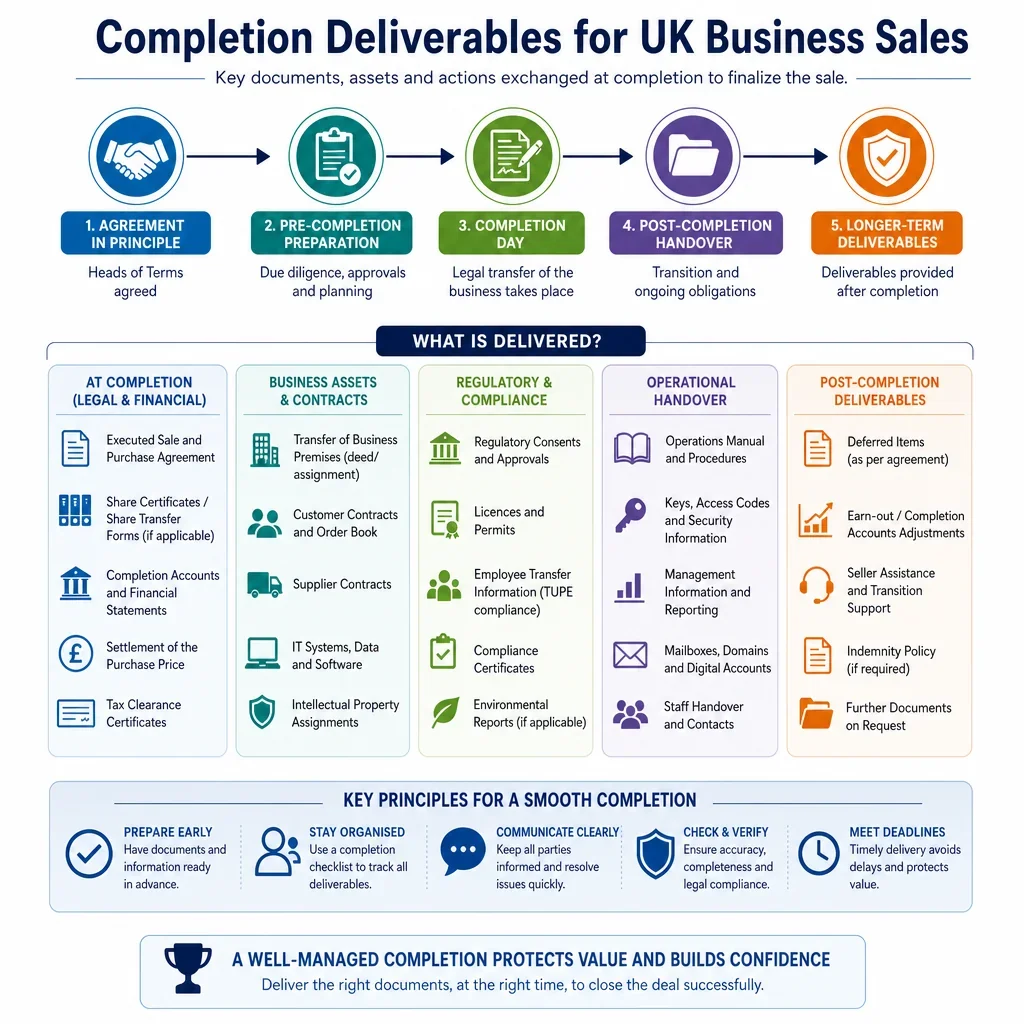
Completion Deliverables | |||
Documents and actions required for completion are accurate, valid and deliverable. | Mutual warranty | Reduces risk of failed transfer mechanics or incomplete completion. | Often tied to agreed checklist, third-party consents and escrow or solicitor undertakings. |
Repetition At Completion | |||
Specified warranties remain true at completion as if repeated on that date. | Seller warranty | Protects buyer during the exchange-to-completion period. | Seller may limit repetition to fundamental warranties or allow update disclosures. |
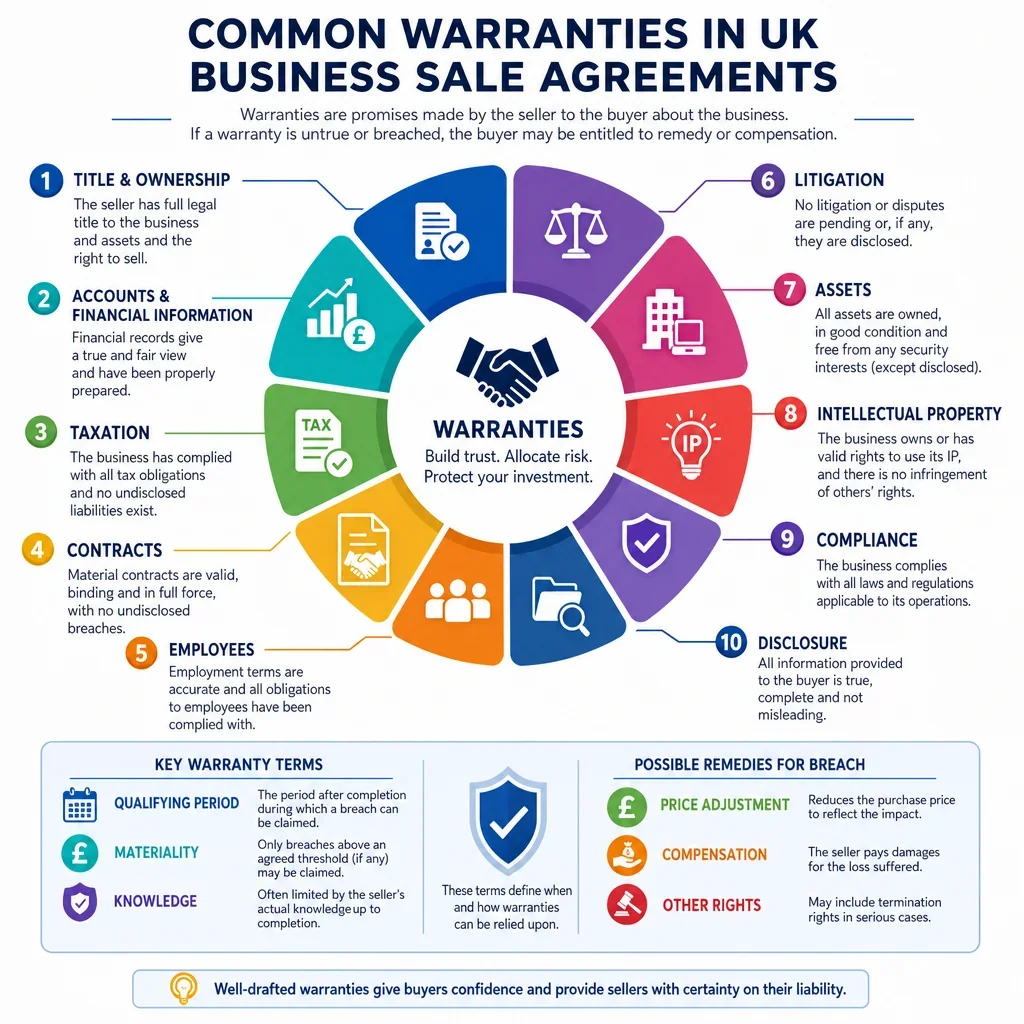
What Warranties Are Most Important In A UK Business Sale Agreement?
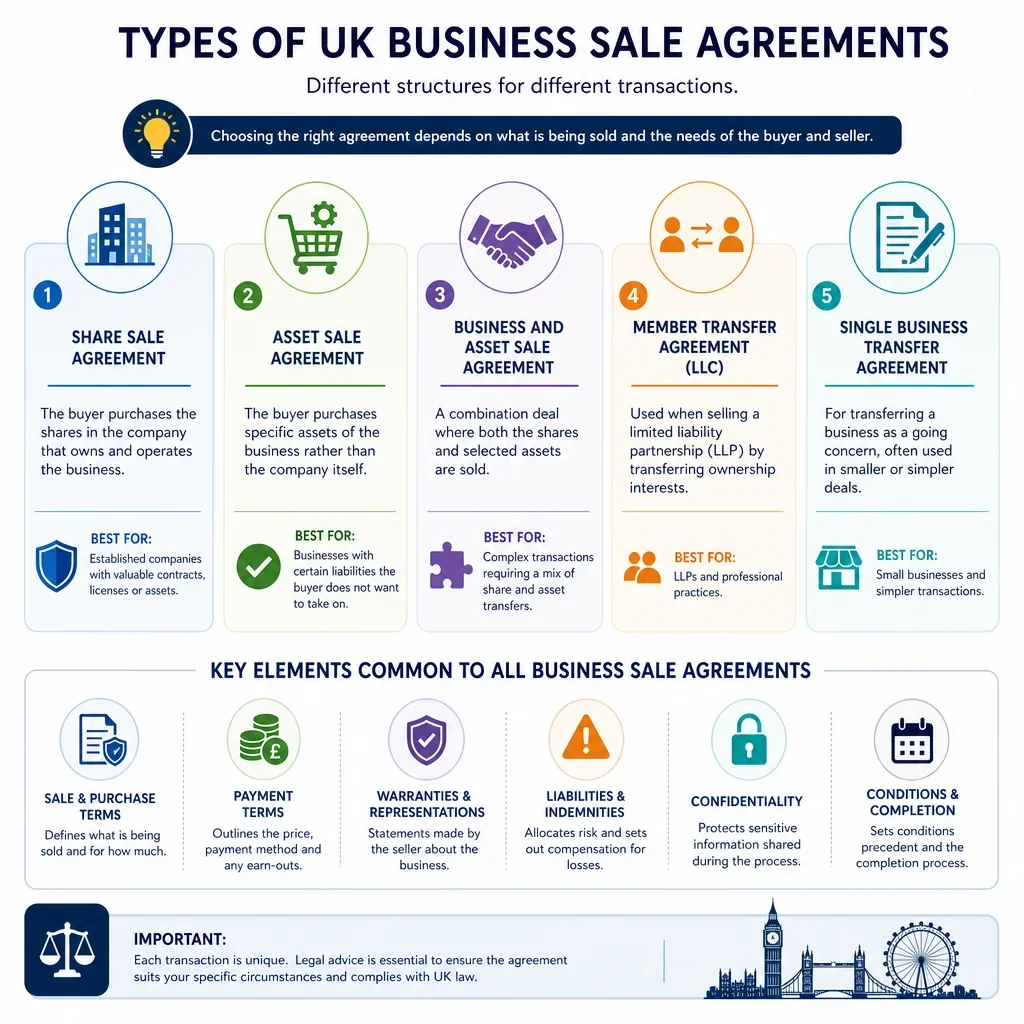
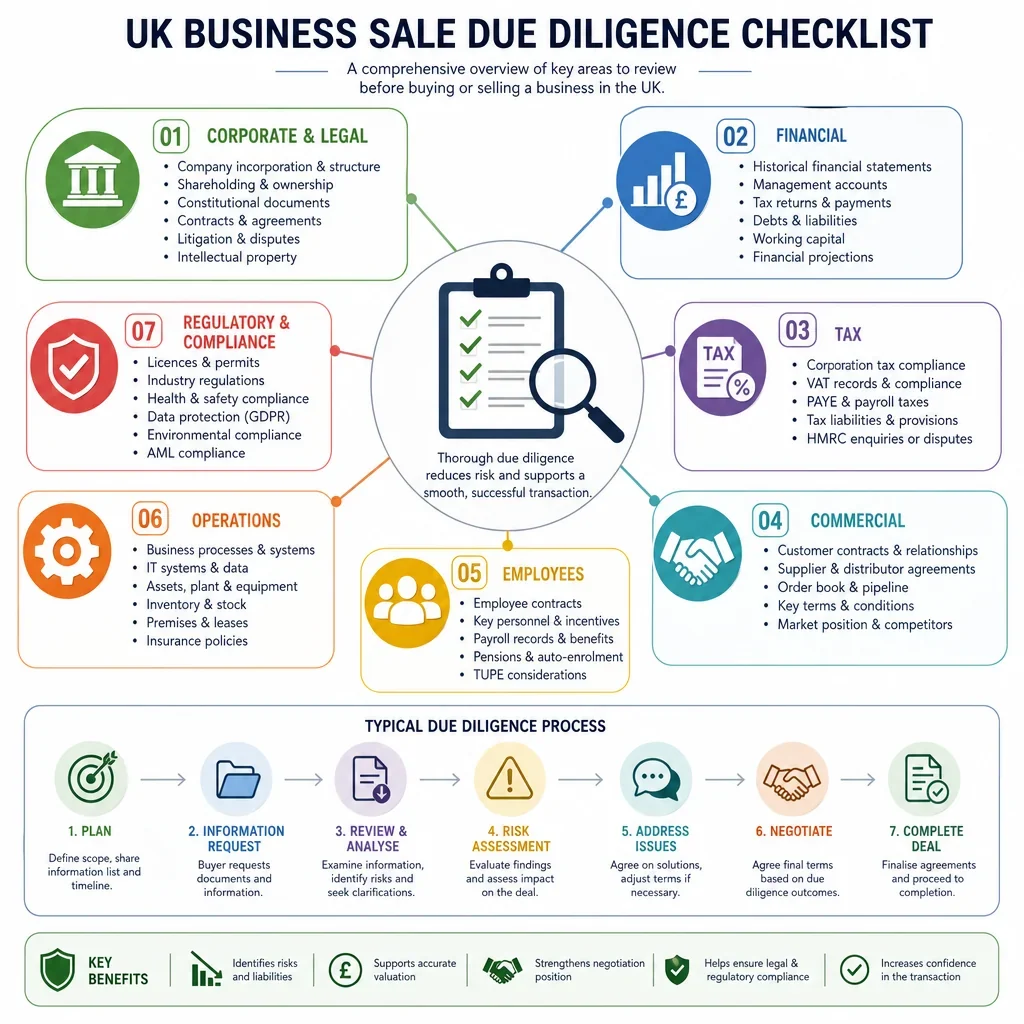
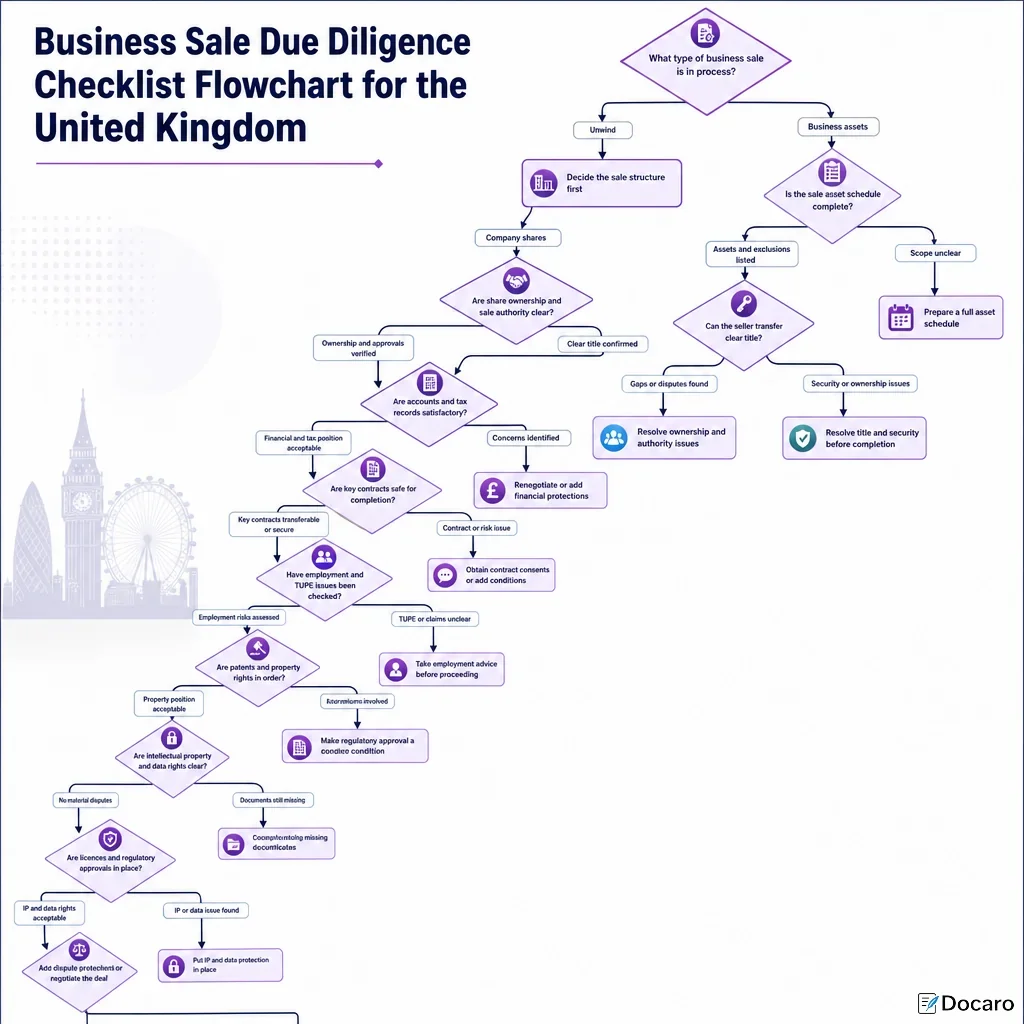
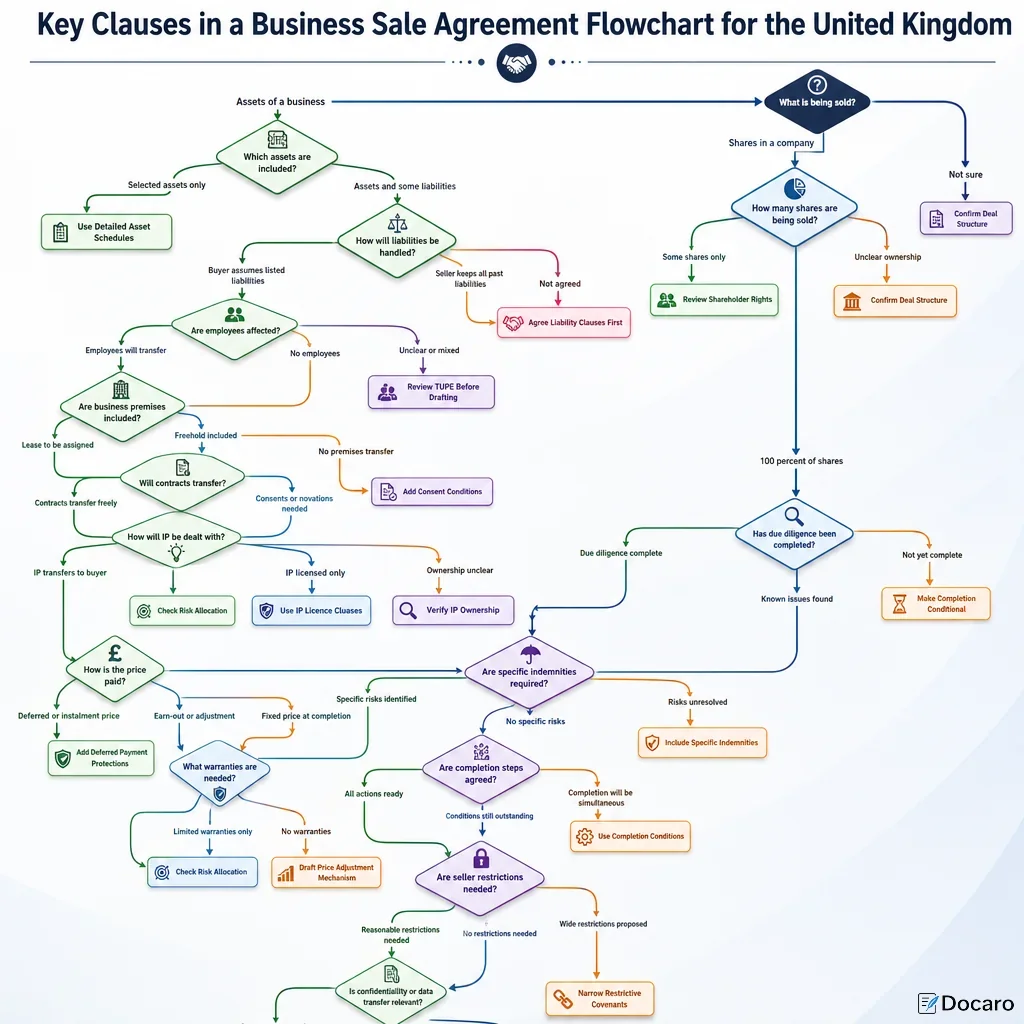
Seller warranties usually carry the greatest risk allocation burden. They commonly cover title to assets or shares, accounts, tax, employees, contracts, litigation, property, intellectual property, data protection, compliance and undisclosed liabilities. These warranties help the buyer test due diligence findings and obtain a contractual remedy if a disclosed picture proves inaccurate.
How Do Disclosures And Limitation Clauses Affect Warranty Claims?
Disclosure is central in UK business sales. A seller will usually try to qualify warranties by matters fairly disclosed in a disclosure letter, agreed data room or public records. Buyers should check that disclosures are specific, complete and easy to match to the relevant warranty. Sellers should avoid broad or vague disclosures that may not give effective protection.
Which UK Laws Commonly Shape Business Sale Warranties?
Several warranty areas are driven by specific UK legal regimes, including tax, employment, pensions, data protection, environmental law, health and safety, bribery, modern slavery, consumer law and competition law. Where these issues are material, a buyer may need detailed warranties, indemnities or completion deliverables rather than relying on broad compliance wording alone.
When Should A Buyer Ask For Indemnities Instead Of Warranties?
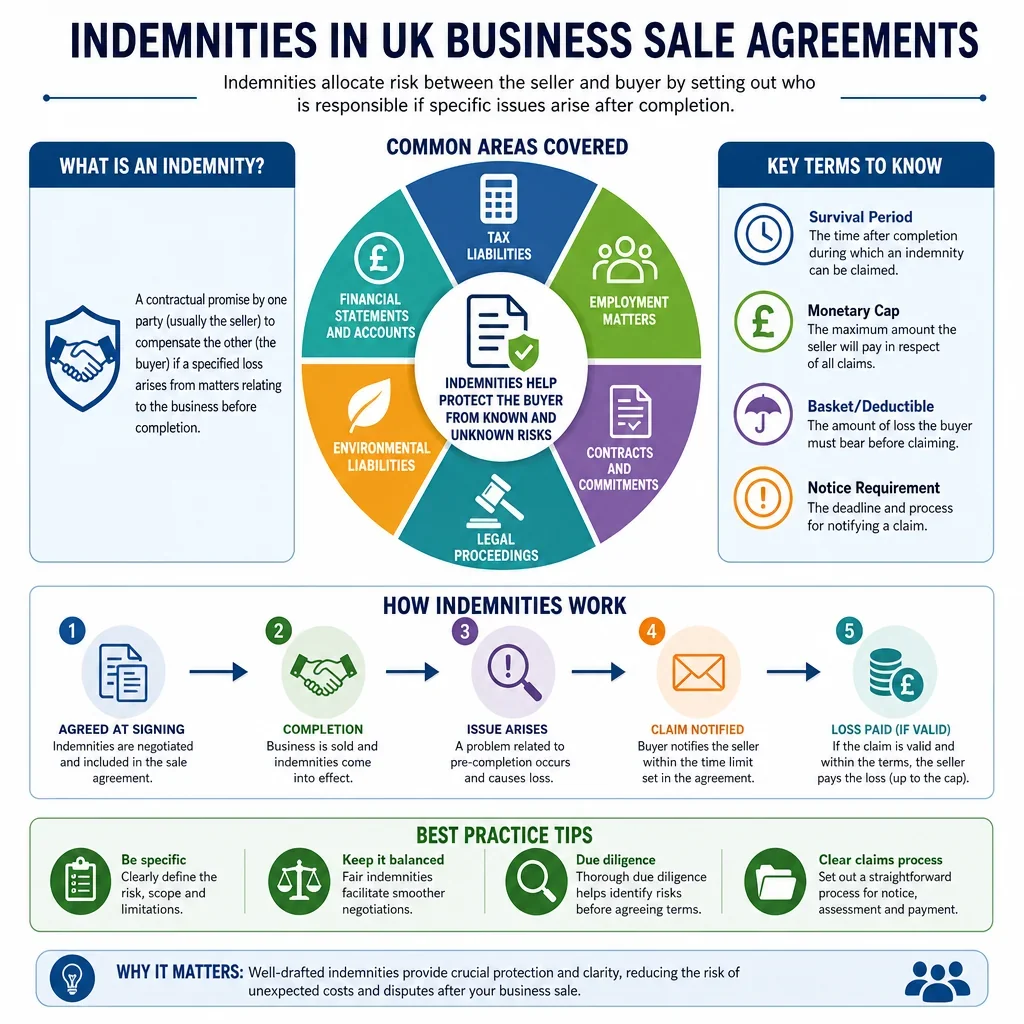
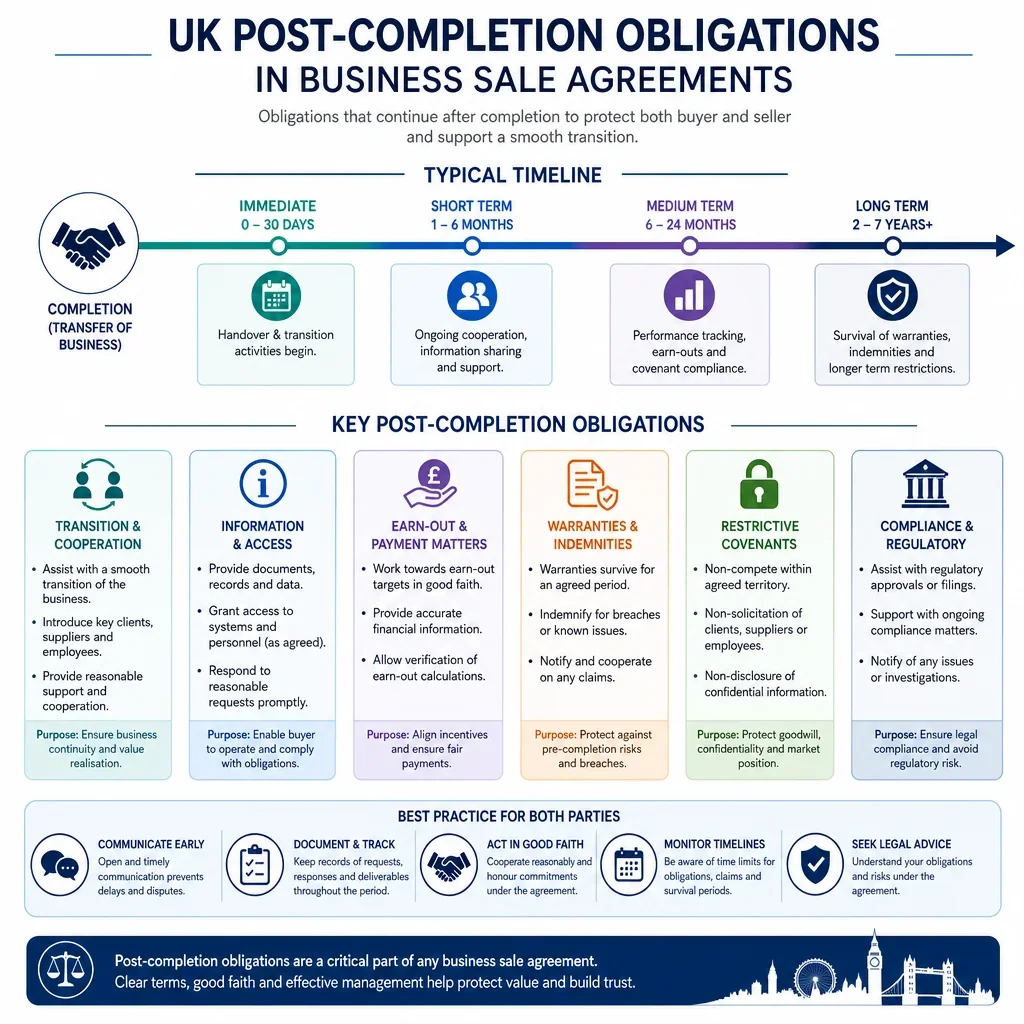
A warranty normally gives a damages claim if the statement is untrue, subject to proof of loss and contractual limits. A specific indemnity may be more suitable for known risks such as a tax enquiry, employee dispute, environmental contamination, data breach, defective product claim or unresolved litigation.
What Should Sellers Negotiate Carefully?
- Knowledge qualifiers for warranties outside the seller's direct control.
- Time limits, often longer for tax and title than ordinary business warranties.
- Financial caps and de minimis thresholds for warranty claims.
- Disclosure standards defining what counts as fair disclosure.
- Anti-duplication clauses to prevent double recovery for the same loss.
- Conduct of claims provisions for third-party and tax claims.
FAQs
You Might Also Be Interested In