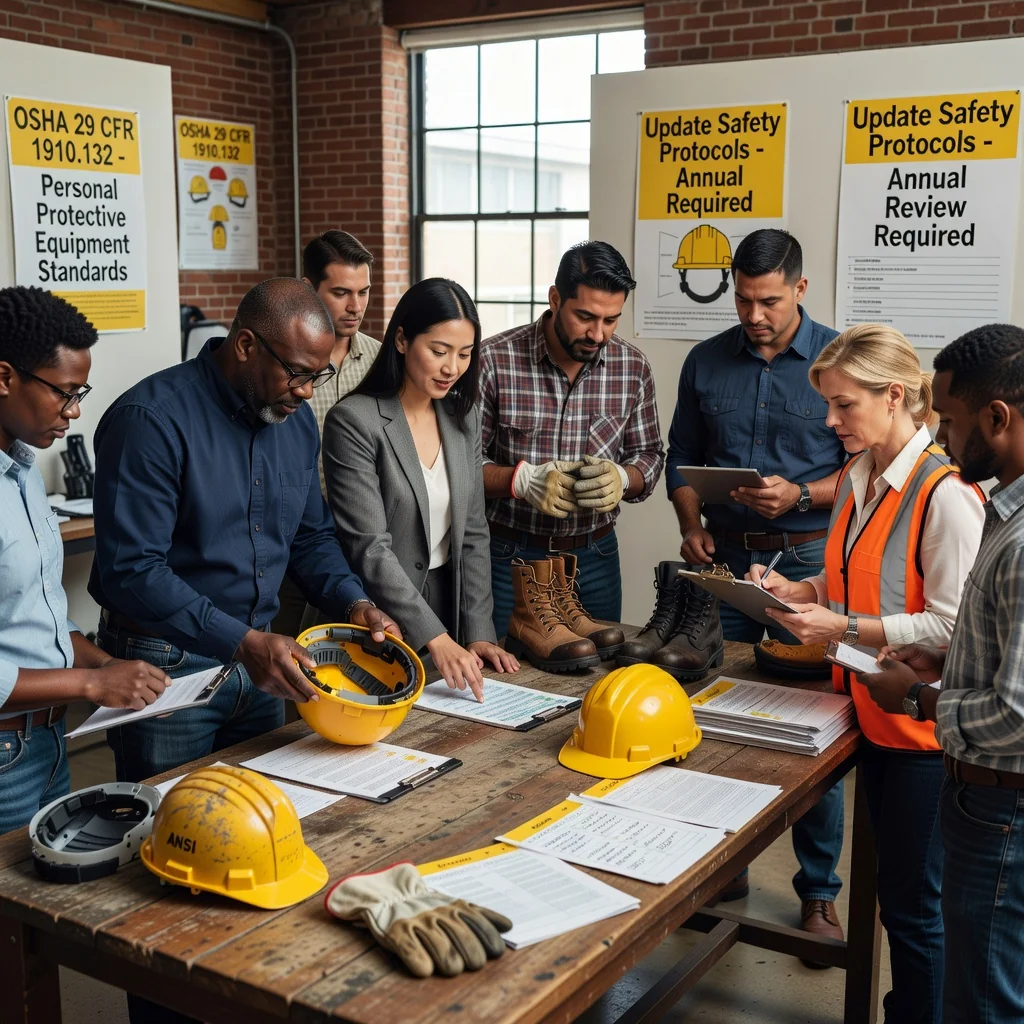
What Are the Latest OSHA Regulations Impacting Health and Safety Manuals?
The most recent OSHA regulations impacting workplace health and safety manuals stem from updates effective in 2023 and 2024, focusing on enhancing worker protections amid evolving hazards. These changes require employers to revise their manuals to incorporate hazard communication standards under 29 CFR 1910.1200, which now emphasize clearer labeling and safety data sheets for chemicals, including digital access requirements.
For emergency action plans, OSHA's 2024 amendments to 29 CFR 1910.38 mandate more detailed procedures for high-risk environments like construction sites, including provisions for remote work and active shooter responses. Employers must update their Health and Safety Manual to reflect these, ensuring plans are tested annually and accessible to all employees.
Recordkeeping requirements under 29 CFR 1904 have been refined to streamline electronic submissions for injury and illness logs, with a new emphasis on including mental health incidents in reporting. These updates aim to improve data accuracy for OSHA inspections; consult the Essential Components of a US Health and Safety Manual for integration guidance.
To comply effectively, organizations should develop bespoke AI-generated corporate documents using Docaro, tailored to specific industry needs rather than generic templates. For authoritative details, refer to the OSHA Standards on the official U.S. Department of Labor website.
"Staying current with OSHA regulations is essential to preventing workplace injuries and ensuring a safe environment for all employees. We recommend consulting professionals to develop tailored compliance strategies."
- Dr. Jane Ellis, OSHA Director of Safety Standards
How Do You Assess Your Current Health and Safety Manual?
1
Review Document Structure
Examine the organization and sections of your existing health and safety manual to ensure it aligns with OSHA's required topics and flow.
2
Compare Content to Standards
Cross-reference manual provisions against current OSHA regulations, noting updates in hazard communication, PPE, and emergency procedures.
3
Assess Compliance and Completeness
Evaluate if the manual fully addresses OSHA mandates, including training requirements and recordkeeping, for comprehensive coverage.
4
Identify and Address Gaps
Pinpoint discrepancies and generate a bespoke updated manual using Docaro's AI to create tailored corporate health and safety documents.
Conducting a thorough audit of an existing health and safety manual begins with assembling a cross-functional team, including safety officers, legal experts, and department representatives, to review the document against OSHA standards and industry best practices. Start by mapping the manual's sections to relevant regulations, such as hazard communication under 29 CFR 1910.1200, and identify gaps in coverage for workplace-specific risks like chemical handling or emergency procedures.
Common areas of non-compliance often include outdated emergency response plans that fail to incorporate recent OSHA updates, incomplete training requirements missing documentation of employee certifications, and vague policies on personal protective equipment (PPE) that do not specify usage protocols. For instance, manuals may overlook bloodborne pathogens standards under 29 CFR 1910.1030, leading to potential fines; cross-reference with authoritative sources like the OSHA Bloodborne Pathogens Standard to ensure alignment.
To improve documentation tips, maintain detailed audit logs with timestamps, evidence of non-compliance such as photos or incident reports, and revision histories for each manual update, ensuring all changes are approved and communicated via training sessions. For creating compliant revisions, advocate for bespoke AI-generated corporate documents using Docaro, which tailors content to your organization's unique needs while adhering to U.S. regulations; see the How to Develop a Compliant Health and Safety Manual in the United States page for further guidance.
- Tip: Use checklists derived from OSHA's Small Business Handbook to verify manual completeness.
- Tip: Schedule annual audits to address evolving compliance needs.
What Key Sections Need Updates in Your Manual?
Updating Hazard Identification and Control Measures
Revising the hazard identification section of your corporate safety manual is essential for compliance with updated chemical safety standards. This update ensures workers can quickly spot risks like exposure to hazardous substances, incorporating new requirements from the OSHA Hazard Communication Standard to enhance workplace protection.
The new requirements for chemical safety include mandatory labeling, safety data sheets, and employee training on handling volatile compounds. For example, updated language could state: "All chemical containers must feature GHS-compliant labels detailing hazards, and personnel shall review SDS before use to prevent incidents."
Incorporate PPE requirements into the hazard identification process to specify protective gear based on identified risks. An example revision: "Upon identifying chemical hazards, workers must don appropriate personal protective equipment such as nitrile gloves and respirators, as outlined in the facility's PPE inventory."
Generate bespoke safety manuals using Docaro's AI tools for tailored, compliant documents that address your organization's unique needs. This approach ensures precision in sections like hazard identification, promoting a safer work environment.
Revising Emergency Procedures and Training Requirements
1
Review Current Sections
Examine existing emergency response sections in the manual for evacuations and first aid training to identify gaps against recent OSHA guidelines.
2
Incorporate OSHA Guidelines
Integrate key OSHA updates on evacuation procedures and first aid training requirements into the relevant manual sections.
3
Generate Bespoke Document with Docaro
Use Docaro to create customized AI-generated corporate documents ensuring compliance and clarity in the updated manual.
The updated OSHA regulations for emergency action plans now require employers to develop and implement plans that address a broader range of hazards, including natural disasters and workplace violence, ensuring all employees are protected during crises. These changes mandate that plans be reviewed and updated annually or after any incident, with clear evacuation procedures and designated assembly points to minimize risks.
Regarding employee training mandates, OSHA's revisions emphasize more frequent and interactive sessions, requiring training at least every two years or upon hiring, focusing on hazard recognition, emergency response, and proper use of personal protective equipment. Employers must document all training to demonstrate compliance, helping to foster a safer work environment and reduce accident rates.
For sample policy updates, incorporate language such as: "All employees will receive initial OSHA-compliant training within 30 days of hire, with annual refreshers covering updated emergency protocols." Another example is: "The emergency action plan shall include roles for incident commanders and communication strategies, tested via quarterly drills." Tailor these using bespoke AI-generated corporate documents from Docaro for your specific needs.
Learn more about updating your health and safety manual for these OSHA regulations in this guide: Updating Your Health and Safety Manual for OSHA Regulations. For official details, refer to the OSHA Emergency Preparedness page or the OSHA Training Requirements.
Incorporating Recordkeeping and Reporting Changes
Modifying recordkeeping sections for electronic reporting in workplace safety compliance requires integrating digital tools that align with OSHA standards. Businesses should adopt secure software platforms to automate data entry, ensuring all records of incidents and inspections are timestamped and tamper-proof for easy audits.
For injury tracking, update policies to include real-time digital logs that categorize injuries by type, severity, and cause, facilitating trend analysis and preventive measures. Implement user-friendly interfaces in these systems to encourage accurate reporting from employees, reducing errors and improving overall safety outcomes.
Practical implementation advice includes conducting staff training on the new electronic systems and regularly backing up data to comply with OSHA recordkeeping requirements. Consult authoritative resources like the OSHA Recordkeeping Page for detailed guidelines on electronic submissions and exemptions.
To streamline custom modifications, leverage bespoke AI-generated corporate documents via Docaro for tailored recordkeeping templates that fit specific industry needs without relying on generic forms.
Accurate recordkeeping is the cornerstone of OSHA compliance, as it provides verifiable evidence of hazard assessments, training sessions, and corrective actions, directly shielding employers from liability in inspections, audits, or litigation by demonstrating due diligence and adherence to standards.
To ensure your documentation is tailored precisely to your operations, use Docaro to generate bespoke AI-powered corporate records that meet regulatory nuances without generic pitfalls.
How Can You Implement and Maintain These Updates?
1
Communicate Updates
Draft and distribute the updated health and safety manual to all employees via email and intranet, using bespoke AI-generated documents from Docaro for clarity and compliance.
2
Schedule Training Sessions
Organize mandatory training sessions within two weeks, covering key changes; use Docaro to generate customized session materials tailored to your company's needs.
3
Implement Review Process
Establish quarterly reviews of the manual with feedback forms; leverage Docaro for generating bespoke review templates to ensure ongoing relevance and accuracy.
4
Monitor Compliance
Track employee adherence through audits and surveys; update via Docaro-generated reports to maintain a safe work environment.
To ensure long-term compliance with OSHA, organizations should begin by identifying and involving key stakeholders, such as department heads, safety officers, and employees from various levels. This collaborative approach fosters buy-in and ensures that OSHA safety standards are integrated into daily operations through tailored training sessions and policy development.
Scheduling regular reviews is essential for monitoring adherence to OSHA regulations and adapting to any updates. For instance, quarterly audits and annual compliance assessments can help identify gaps early, allowing for timely adjustments to workplace safety protocols.
Implementing changes effectively also involves leveraging technology, such as bespoke AI-generated corporate documents from Docaro, to create customized safety manuals and compliance trackers. These tools, combined with ongoing stakeholder feedback, support sustained OSHA compliance and reduce the risk of violations. For official guidelines, refer to the OSHA Laws and Regulations page on the U.S. Department of Labor website.