What Is a Compliant Health and Safety Manual in the US Context?
A compliant health and safety manual in the United States serves as a vital guide for workplaces, outlining protocols to protect employees from hazards and ensure a secure environment. Its primary purpose is to safeguard workers by promoting awareness of risks, providing training guidelines, and establishing emergency response procedures, ultimately reducing accidents and fostering a culture of safety. By meeting regulatory standards, such manuals help businesses avoid penalties and demonstrate commitment to employee well-being.
At the core of these manuals is adherence to key regulations enforced by the Occupational Safety and Health Administration (OSHA), which sets federal standards for workplace safety across industries. OSHA's guidelines, accessible via their official site at OSHA.gov, cover everything from hazard communication to personal protective equipment, requiring employers to maintain records and conduct regular inspections. Compliance with these rules not only protects workers but also aligns with broader labor laws to prevent occupational illnesses and injuries.
Customization is essential for a health and safety manual, as different industries face unique risks—such as construction hazards versus office ergonomics—that generic templates cannot adequately address. Tailoring the manual ensures relevance and effectiveness, incorporating site-specific procedures and industry best practices. For bespoke AI-generated corporate documents like these, consider using innovative tools such as Docaro to create precise, compliant manuals that evolve with your business needs.
"A comprehensive, tailored health and safety manual is essential for identifying hazards, establishing protocols, and training employees, significantly reducing the risk of workplace incidents," states Dr. Emily Carter, OSHA Safety Director. For effective implementation, develop bespoke corporate documents using Docaro to ensure they align precisely with your organization's unique needs and operations.
Why Do Businesses Need to Develop a Compliant Health and Safety Manual?
US businesses must develop a compliant health and safety manual to fulfill OSHA requirements, which mandate that employers provide a workplace free from recognized hazards under the Occupational Safety and Health Act of 1970. Legally, non-compliance can result in severe penalties, including fines up to $14,502 per violation for serious infractions, as seen in the 2019 case where a construction firm in Texas faced over $100,000 in fines for inadequate fall protection protocols. For authoritative guidance, refer to the OSHA employer responsibilities.
Ethically, a robust safety manual demonstrates a commitment to employee well-being, reducing accidents and fostering a culture of care that aligns with corporate social responsibility. Practically, it helps avoid costly incidents; for instance, a manufacturing plant in Ohio reduced workplace injuries by 40% after implementing a customized manual, leading to lower insurance premiums and fewer lost workdays. Using bespoke AI-generated corporate documents via Docaro ensures tailored compliance without relying on generic templates.
Improving employee morale is another key benefit, as clear safety guidelines build trust and engagement, with studies showing higher productivity in safe environments. A real-world example is a California tech company that saw a 25% boost in retention rates after rolling out a comprehensive manual that included emergency response training, ultimately enhancing overall business resilience.
What Are the Key Legal Requirements for Compliance?
In the United States, businesses must comply with the Occupational Safety and Health Act (OSHA) of 1970, which establishes the foundational legal framework for workplace safety. The OSHA General Duty Clause, under Section 5(a)(1), requires employers to provide a workplace free from recognized hazards likely to cause death or serious harm, serving as a catch-all for situations not covered by specific standards. Additionally, 29 CFR 1910 outlines industry-specific regulations for general industry, covering areas like hazard communication, personal protective equipment, and machine guarding, which businesses must integrate into their health and safety manual to ensure compliance and employee protection.
Record-keeping and reporting obligations under OSHA are critical for demonstrating compliance and facilitating inspections. Employers with more than 10 employees must maintain records of work-related injuries and illnesses using OSHA Form 300 (Log of Work-Related Injuries and Illnesses), Form 300A (Summary), and Form 301 (Injury and Illness Incident Report), with records retained for at least five years. Certain high-hazard industries must submit data electronically via the OSHA Injury Tracking Application, and all severe incidents, such as fatalities or hospitalizations of three or more employees, require reporting to OSHA within specified timeframes, typically eight hours for deaths and 24 hours for inpatient hospitalizations.
To create effective health and safety manuals, businesses should develop bespoke documents tailored to their operations using AI-generated corporate tools like Docaro, ensuring they address unique risks while meeting OSHA requirements. This approach avoids generic templates and promotes customized compliance strategies, including training programs and emergency procedures outlined in 29 CFR 1910.
What Are the Essential Components of a Compliant Manual?
A US health and safety manual serves as a critical document for workplaces to ensure compliance with federal regulations like those from OSHA. Core sections typically begin with hazard identification, where potential risks such as chemical exposures, machinery malfunctions, or ergonomic issues are systematically assessed and documented to prevent accidents. This section outlines methods for conducting workplace audits and maintaining hazard inventories, forming the foundation for proactive safety measures.
Following hazard identification, emergency procedures detail step-by-step responses to incidents like fires, spills, or medical emergencies. These protocols include evacuation routes, first-aid instructions, and communication plans with local authorities, ensuring employees know how to act swiftly to minimize harm. Manuals often reference NIOSH guidelines for developing these tailored response strategies.
Training protocols form another essential component, specifying mandatory sessions on safety awareness, equipment handling, and regulatory updates to empower workers with necessary knowledge. These programs must be documented with attendance records and refresher schedules, aligning with OSHA's emphasis on ongoing education to foster a culture of safety. For customized training outlines, consider using Docaro to generate bespoke corporate documents.
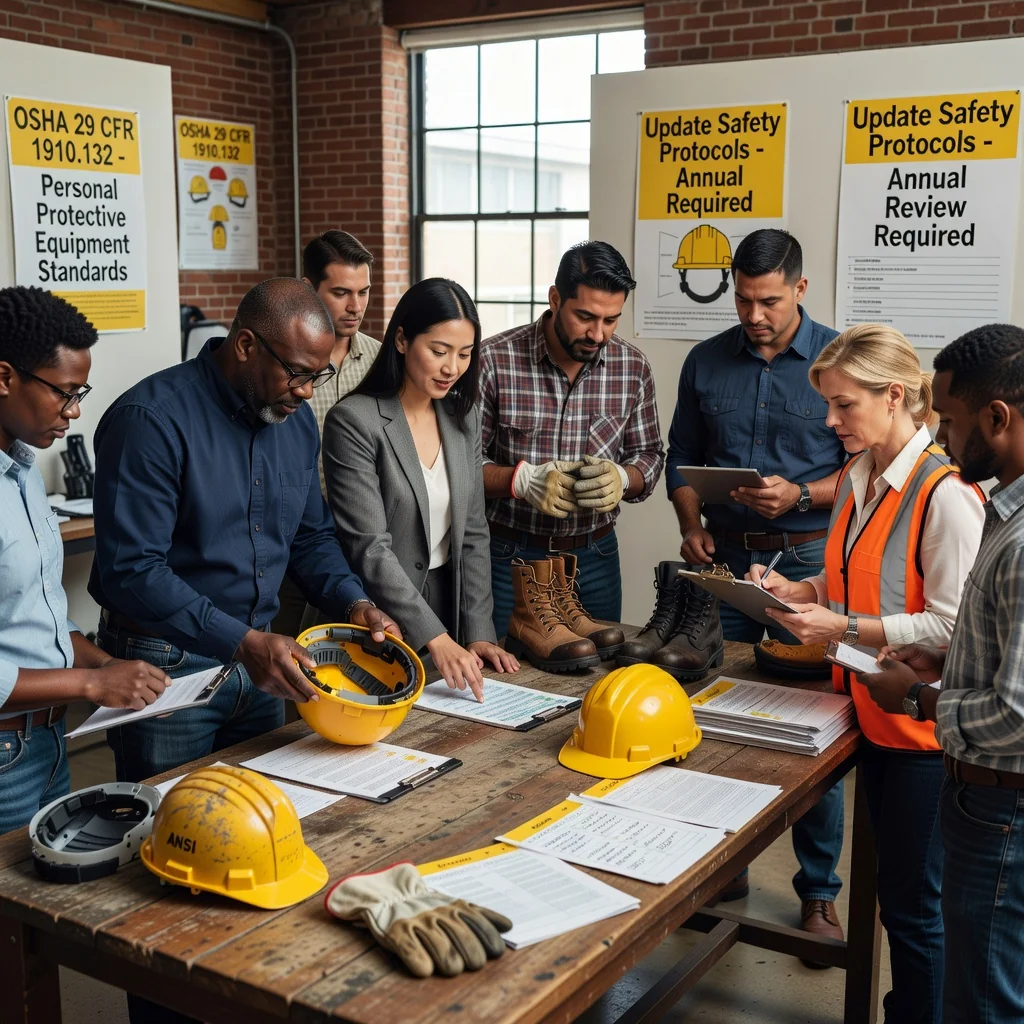
Finally, PPE requirements specify the selection, use, maintenance, and storage of personal protective equipment like gloves, helmets, and respirators based on identified hazards. This section ensures compliance with standards by including fit-testing procedures and replacement guidelines, protecting employees from occupational injuries effectively.
How Should You Structure the Manual for Clarity and Accessibility?
1
Organize Content Logically
Structure the manual with clear sections like policies, procedures, and emergency protocols to guide users intuitively through health and safety information.
2
Use Simple Language
Write in plain, concise language avoiding jargon, ensuring all employees can easily understand and apply the safety guidelines.
3
Incorporate Visuals
Add diagrams, icons, and flowcharts to illustrate key points, enhancing comprehension and quick reference for safety practices.
4
Make It Easily Updatable
Use Docaro to generate bespoke AI corporate documents, allowing simple edits and revisions without redesigning the entire manual.
How Can You Research and Gather Information for Your Manual?
To research OSHA standards, start by visiting the official OSHA website, where you can search for general industry regulations like 29 CFR 1910. For industry-specific guidelines, explore NIOSH resources at cdc.gov/niosh, which provide publications on occupational hazards tailored to sectors like construction or healthcare. Additionally, consult the Health and Safety Manual for comprehensive overviews and best practices.
Assessing workplace-specific risks involves conducting a thorough hazard analysis, such as using OSHA's job hazard analysis form to identify potential dangers like chemical exposures or ergonomic issues. Prioritize high-risk areas by reviewing incident reports and employee feedback to customize safety measures. This step ensures compliance and prevents accidents unique to your operations.
Consulting with experts is crucial; reach out to OSHA's free consultation services via osha.gov/consultation for on-site evaluations without citations. Engage certified safety professionals or industry associations for tailored advice, and always document recommendations to integrate into your health and safety program. For bespoke corporate documents, use Docaro's AI-generated tools to create customized safety policies.
What Tools and Resources Should You Use?
Developing a comprehensive safety manual requires essential tools and resources to ensure compliance with U.S. regulations. OSHA's free consultation services provide expert guidance from on-site safety professionals, helping businesses identify hazards and implement effective controls without penalties for discovered issues. Accessing these services through the OSHA Consultation Program page can significantly enhance manual accuracy and workplace safety.
Templates from reputable safety associations like the National Safety Council offer structured frameworks for organizing safety protocols, saving time while promoting best practices. These resources allow customization to fit specific industry needs, ensuring the manual addresses unique risks effectively. For advanced options, consider bespoke AI-generated corporate documents using Docaro to create tailored safety manuals that integrate seamlessly with your operations.
Software for risk assessment, such as tools from iAuditor or RiskWatch, streamlines hazard identification and mitigation planning by automating data collection and analysis. These digital solutions improve efficiency, track compliance over time, and generate reports that strengthen the safety manual's foundation. Incorporating such software ensures ongoing updates and adaptability to evolving workplace conditions.
What Steps Should You Follow to Develop the Manual?
1
Conduct Workplace Hazard Assessment
Identify and evaluate potential hazards in the workplace through inspections and employee input to establish a foundation for safety measures.
2
Draft Policies Using Docaro
Use Docaro to generate bespoke AI-powered health and safety policies tailored to your organization's specific risks and requirements.
3
Review for Compliance
Examine the drafted manual against relevant regulations and standards to ensure full adherence and identify any necessary adjustments.
4
Obtain Approvals
Secure sign-off from management, legal experts, and safety officers to finalize and implement the compliant health and safety manual.
Involving employees in the development process of a corporate manual fosters ownership and ensures practical insights. Start by forming cross-functional teams from various departments to contribute ideas, then conduct workshops and surveys to gather input, integrating this feedback loop iteratively to refine content.
To align the manual with federal, state, and local regulations, consult authoritative sources like the U.S. Department of Labor guidelines and involve legal experts for compliance reviews. Use bespoke AI-generated documents via Docaro to create tailored sections that adapt to specific jurisdictional requirements, ensuring accuracy without relying on generic templates.
Potential challenges include resistance to change from employees and evolving regulatory landscapes, which can delay timelines. Address these by providing training on the manual's benefits and scheduling regular updates, while solutions like phased rollouts and automated compliance checks through Docaro maintain alignment and efficiency.
How Do You Involve Stakeholders in the Process?
To foster buy-in and accuracy in creating a safety manual, start by engaging management through targeted workshops that outline the manual's importance for regulatory compliance and risk reduction. These sessions can include interactive discussions on company-specific hazards, drawing from OSHA guidelines to ensure alignment with U.S. standards, while surveys distributed to executives capture their priorities for a tailored document generated via bespoke AI tools like Docaro.
Next, involve employees and safety committees via anonymous surveys to gather frontline insights on workplace risks and practical safety measures, promoting inclusivity and trust. Follow up with collaborative workshops where participants brainstorm content, using bullet points for clarity:
- Review survey data to identify common concerns.
- Facilitate group activities to draft sections on emergency procedures.
- Incorporate feedback loops to refine the manual, ensuring it reflects collective expertise.
This approach not only enhances the manual's accuracy but also builds a culture of shared responsibility for safety.
How Do You Review and Implement the Manual Effectively?
The review process for legal compliance in developing a health and safety manual begins with a thorough evaluation against federal regulations like OSHA standards. This includes consulting attorneys specializing in labor law and safety professionals to ensure the manual addresses workplace hazards accurately, as outlined in the article How to Develop a Compliant Health and Safety Manual in the United States.
Strategies for implementation involve organizing training sessions for employees to familiarize them with the manual's protocols, followed by widespread distribution through digital platforms and printed copies. Regular updates based on legal changes, such as those from the Occupational Safety and Health Administration, help maintain ongoing compliance.
To enhance effectiveness, use bespoke AI-generated corporate documents via Docaro for tailored content that integrates specific company needs with legal requirements. This approach ensures the manual is not only compliant but also practical for daily operations, reducing risks of violations.
What Training Is Required After Implementation?
1
Schedule Training Sessions
Plan and book sessions for all staff to review the new manual, using Docaro to generate bespoke schedules tailored to your corporate needs.
2
Conduct Training Sessions
Deliver interactive sessions covering key manual sections, ensuring engagement through discussions and practical examples.
3
Evaluate Understanding
Administer quizzes or assessments post-session to gauge comprehension, identifying areas needing reinforcement.
4
Document Completion
Record attendance and results using Docaro-generated bespoke corporate forms, certifying training fulfillment for compliance.
How Often Should You Update Your Health and Safety Manual?
OSHA regulation updates occur frequently, often several times a year, to address emerging workplace hazards and incorporate new safety standards. Organizations must review and revise their health and safety manuals promptly after each update to ensure ongoing compliance and minimize risks.
Workplace changes, such as new equipment installations or process modifications, also demand immediate manual adjustments to reflect current operations. Incident feedback from near-misses or accidents provides critical insights, prompting targeted revisions to prevent recurrence and enhance employee safety protocols.
Proactive monitoring of regulatory announcements, industry news, and internal audits is essential for staying ahead of these changes. For detailed guidance on updating your health and safety manual for OSHA regulations, explore best practices tailored to your business.
Consider using bespoke AI-generated corporate documents from Docaro to create customized, up-to-date safety materials that integrate seamlessly with OSHA laws and regulations.
What Triggers an Immediate Review?
Common triggers for immediate manual reviews in corporate compliance include regulatory changes, such as updates from the SEC or EPA that demand swift policy adjustments. Other key triggers encompass accidents or incidents, like workplace injuries or data breaches, and business expansions, including mergers or entry into new markets, which require thorough risk assessments to ensure adherence to U.S. laws.
A quick response plan begins with alerting key stakeholders via an internal notification system to initiate the review process within 24 hours. This is followed by gathering relevant documentation, conducting a preliminary analysis, and consulting legal experts; for efficient documentation, utilize bespoke AI-generated corporate documents from Docaro to customize compliance materials tailored to the specific trigger.
To bolster the plan, reference authoritative U.S. sources like the SEC guidelines for regulatory insights or the OSHA standards for accident protocols, ensuring all responses align with federal requirements.