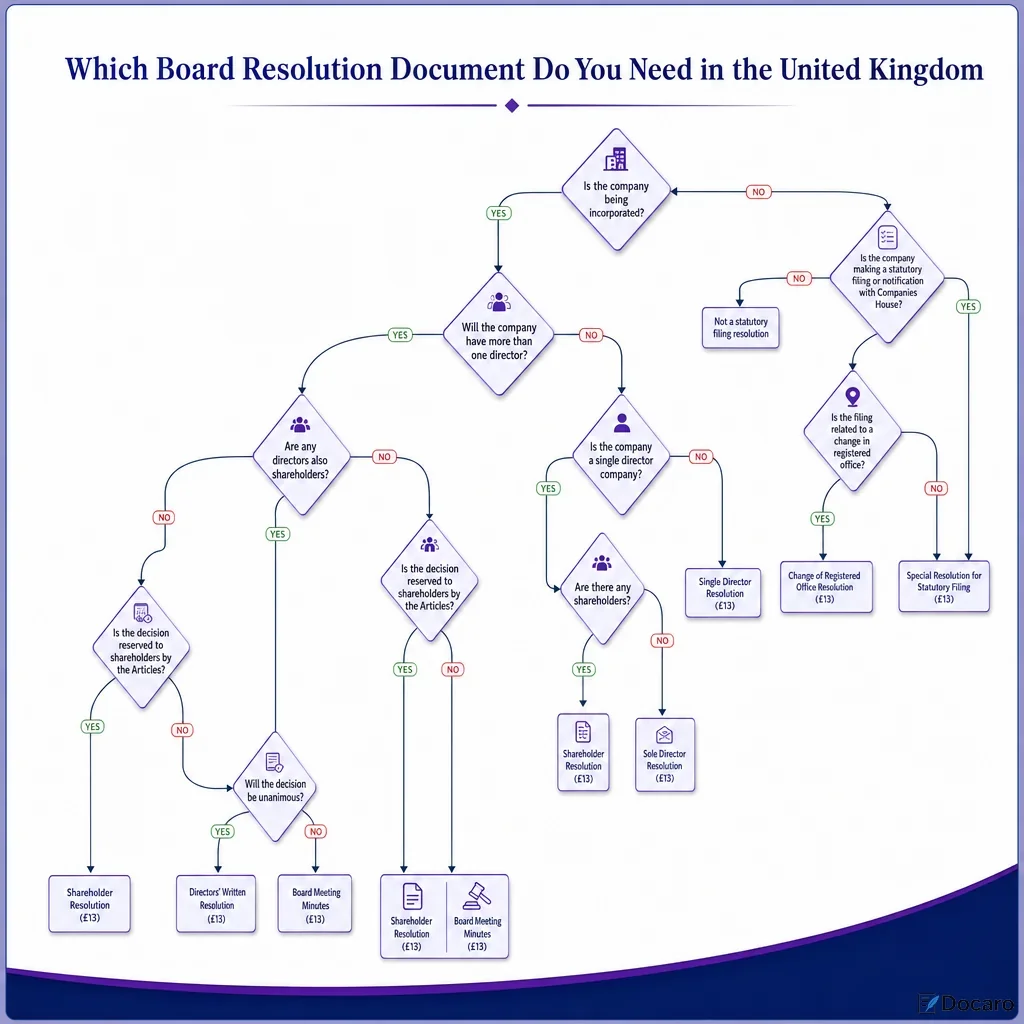
Which Board Resolution Document Do You Need In The United Kingdom?
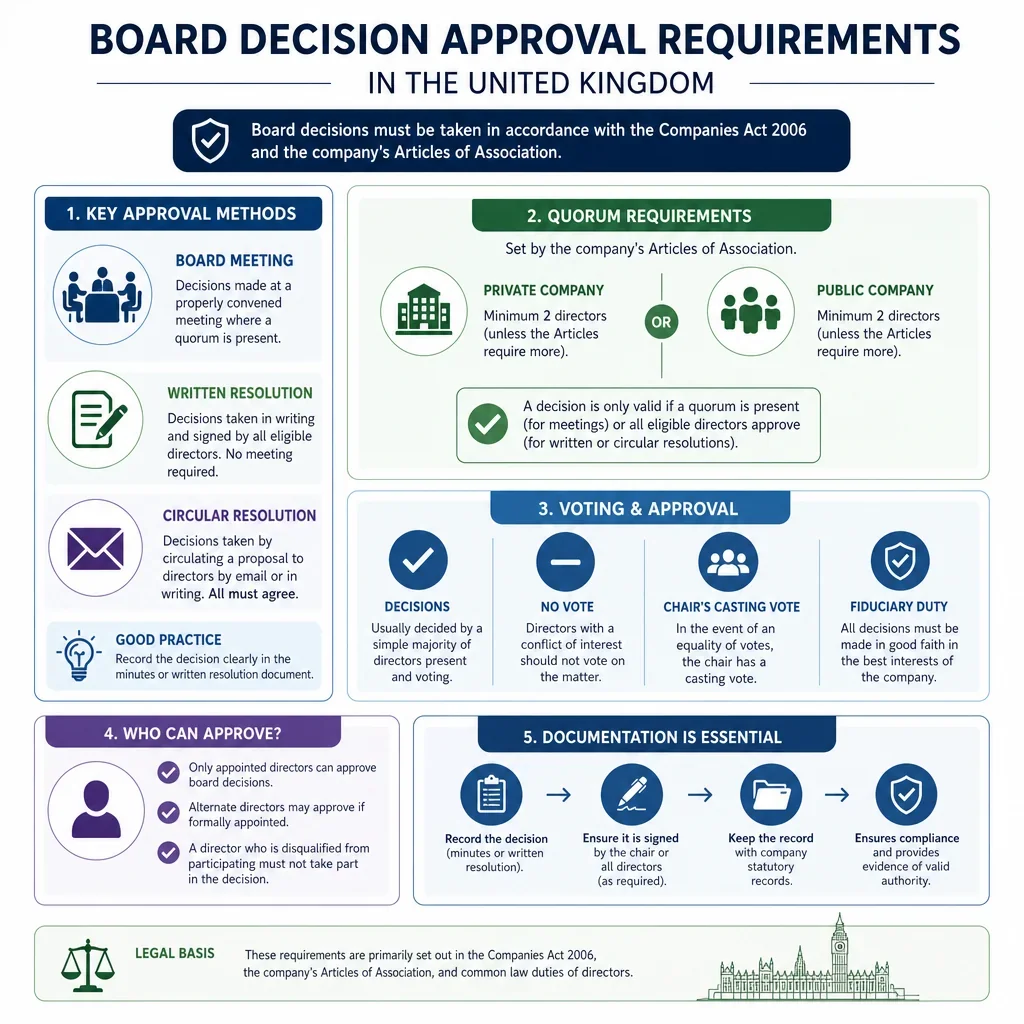
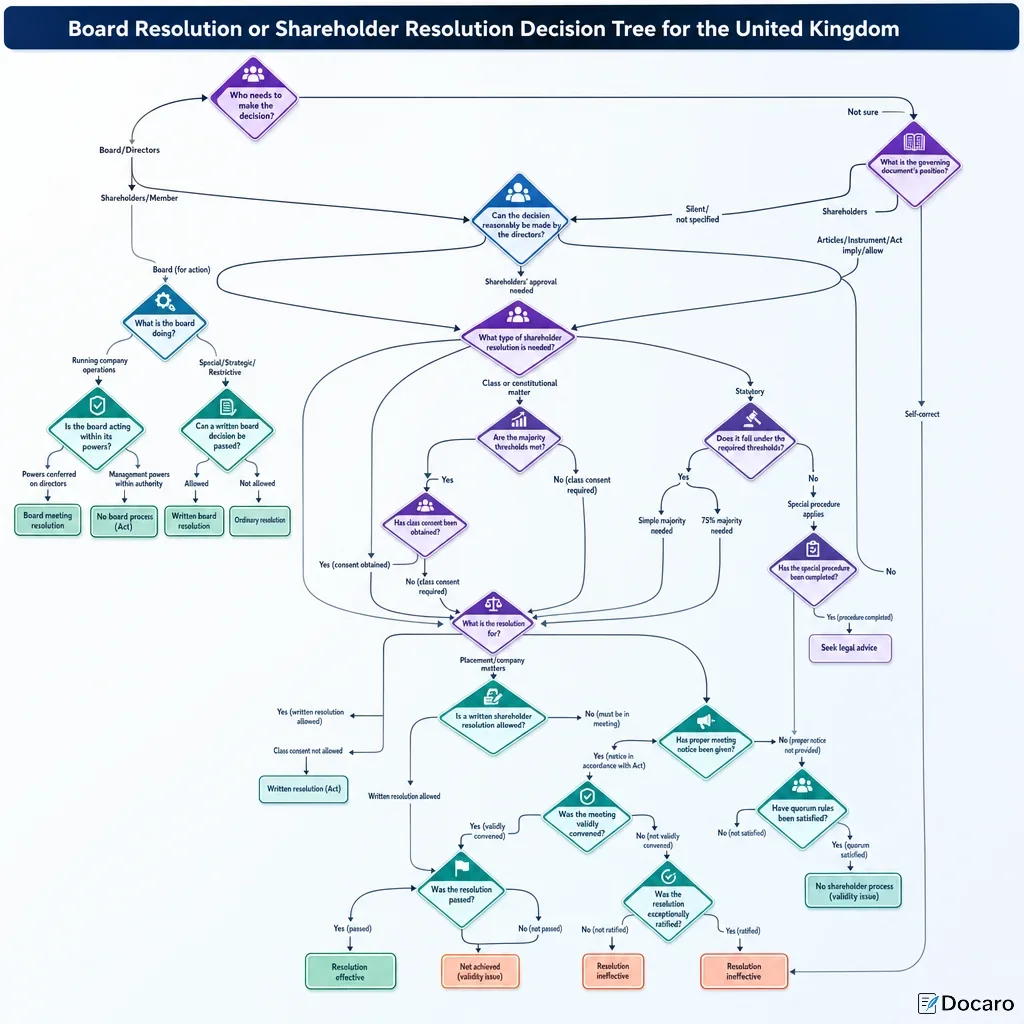
Who needs to approve the decision?
Why Choosing The Right UK Board Resolution Matters
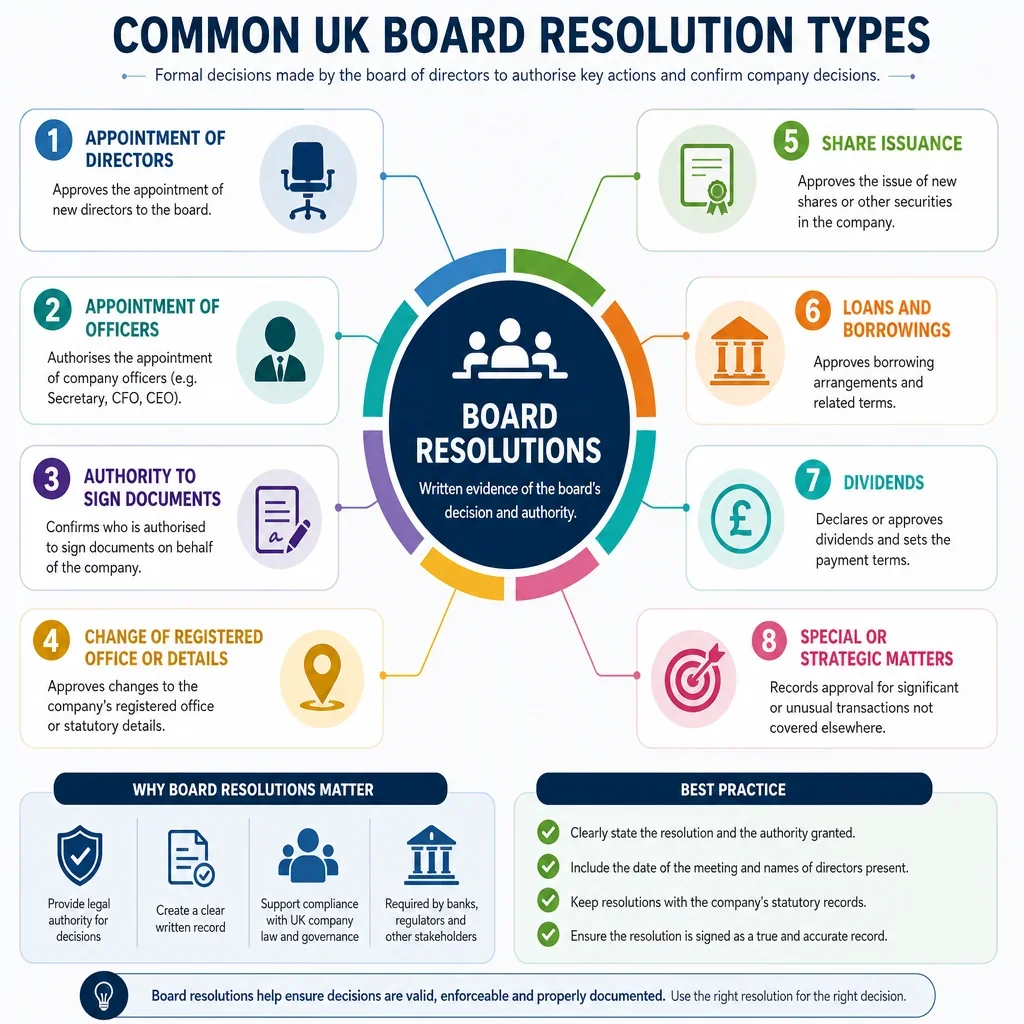
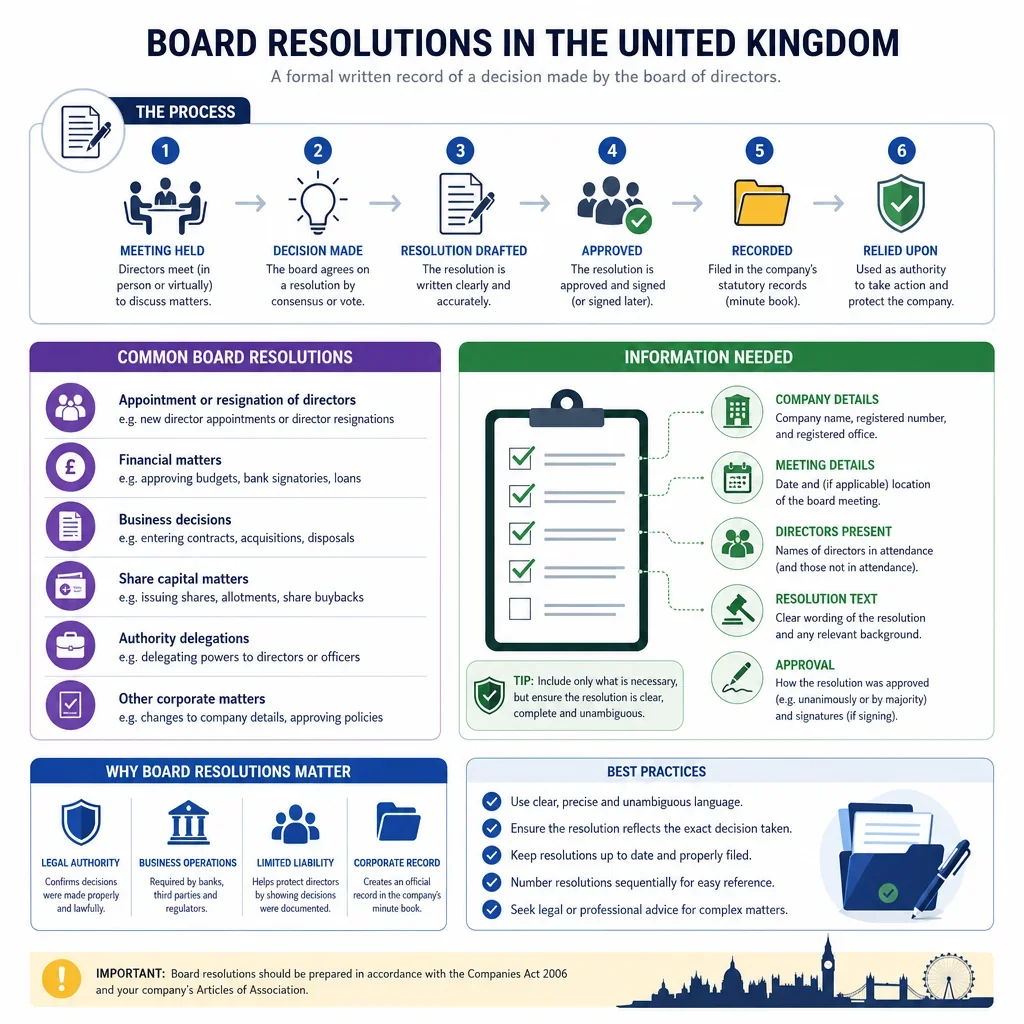
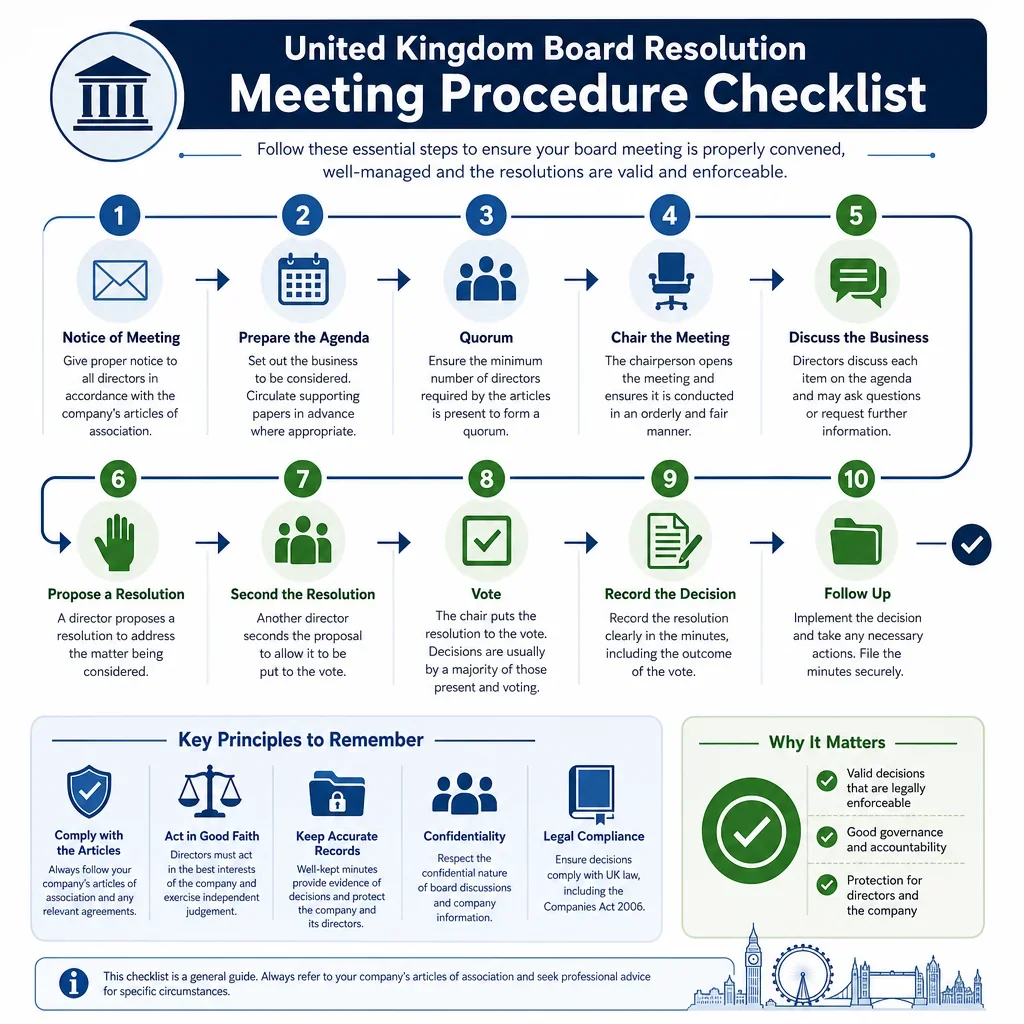
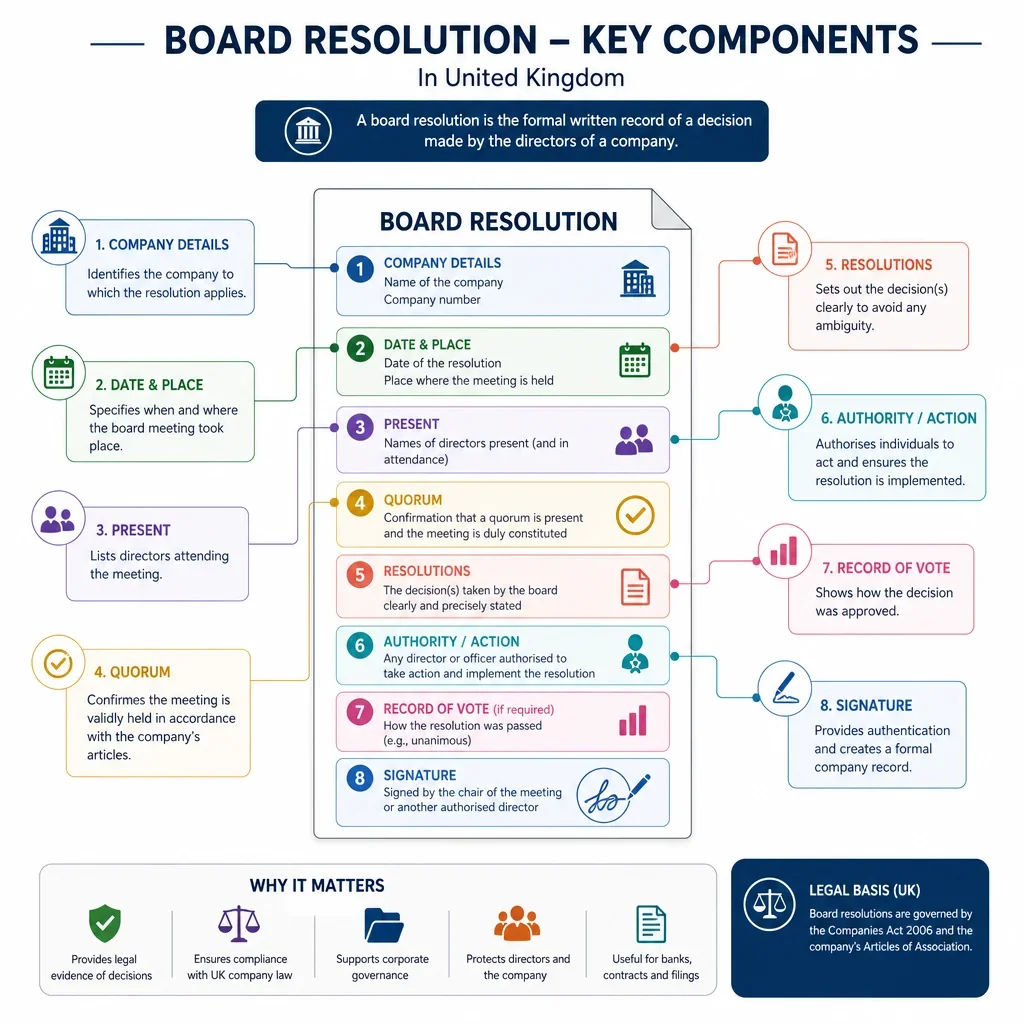
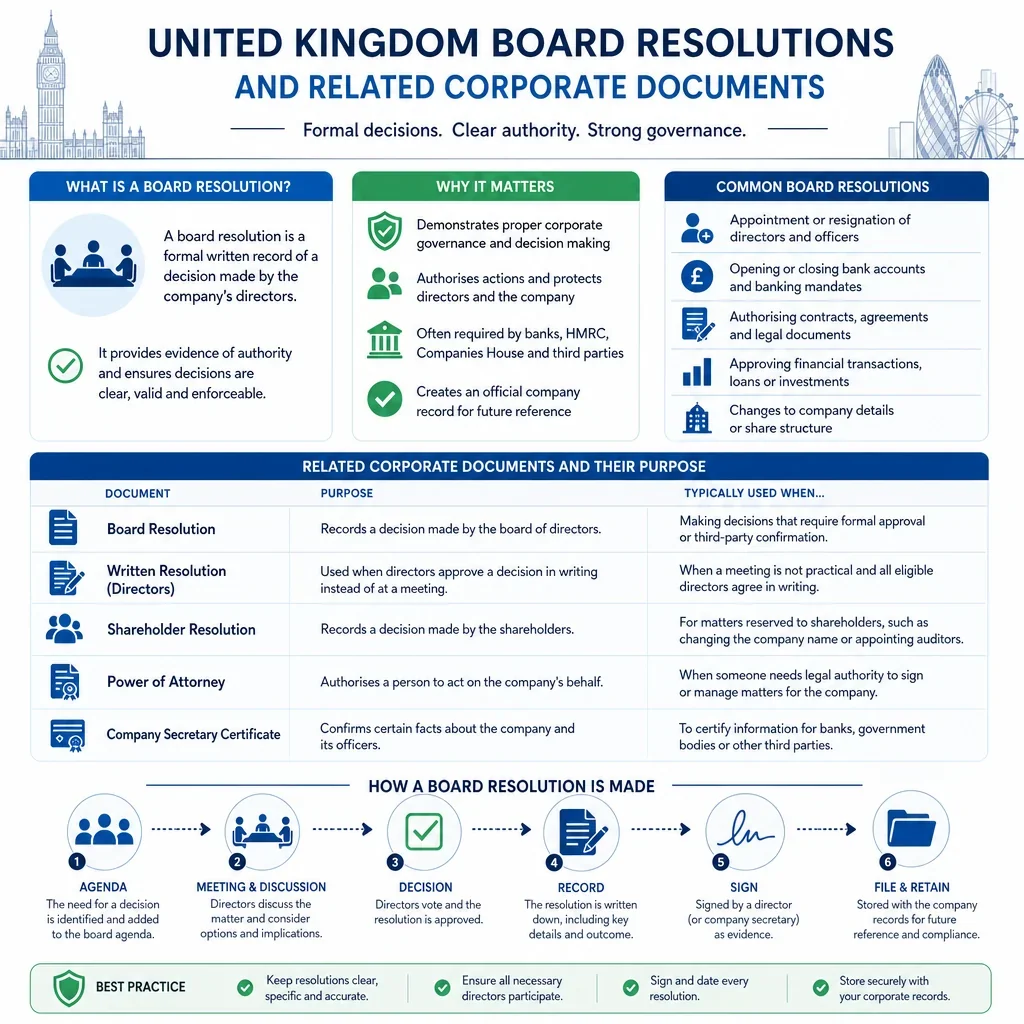
A board resolution is evidence that a UK company decision was properly approved by its directors. Choosing the wrong document can create uncertainty about whether the company had authority to act, sign a contract, issue shares, appoint a director, approve a dividend, or make a Companies House filing.
How Does The Right Resolution Protect A UK Company?
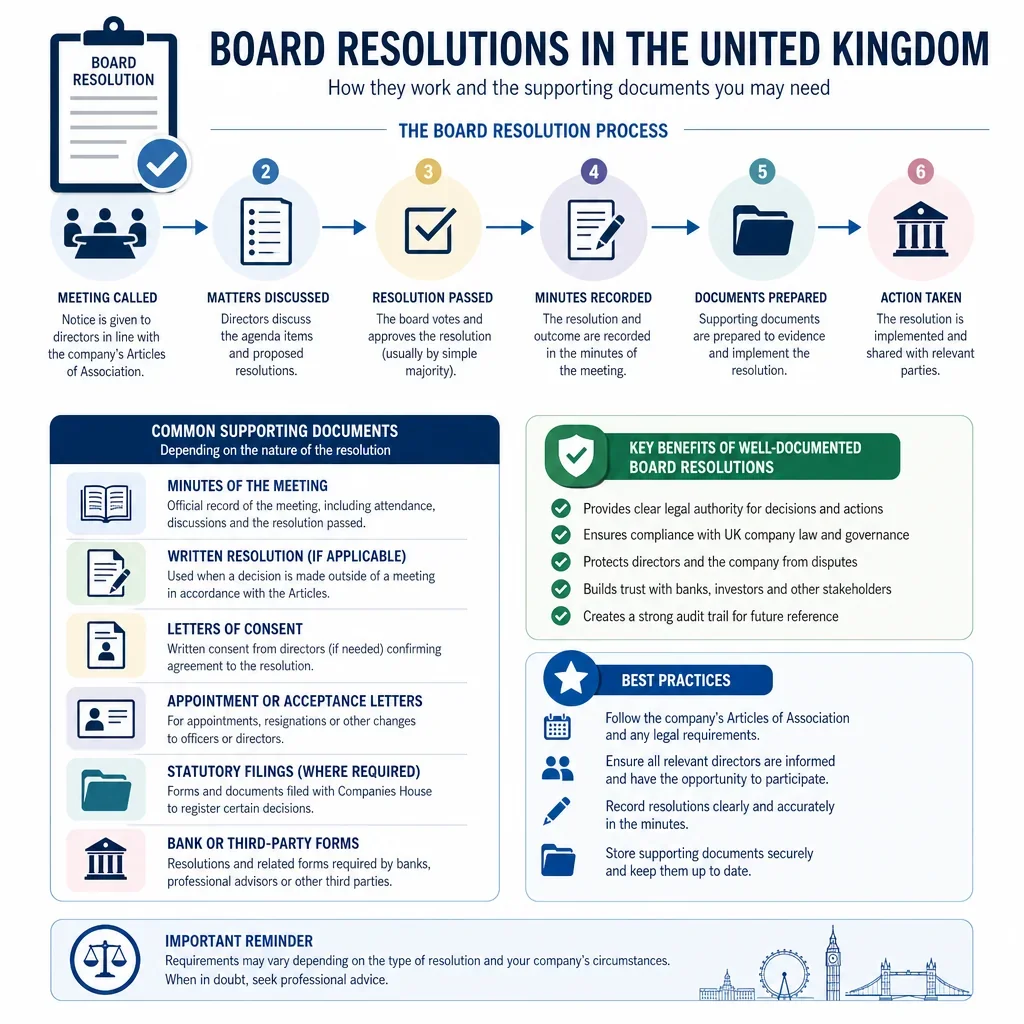
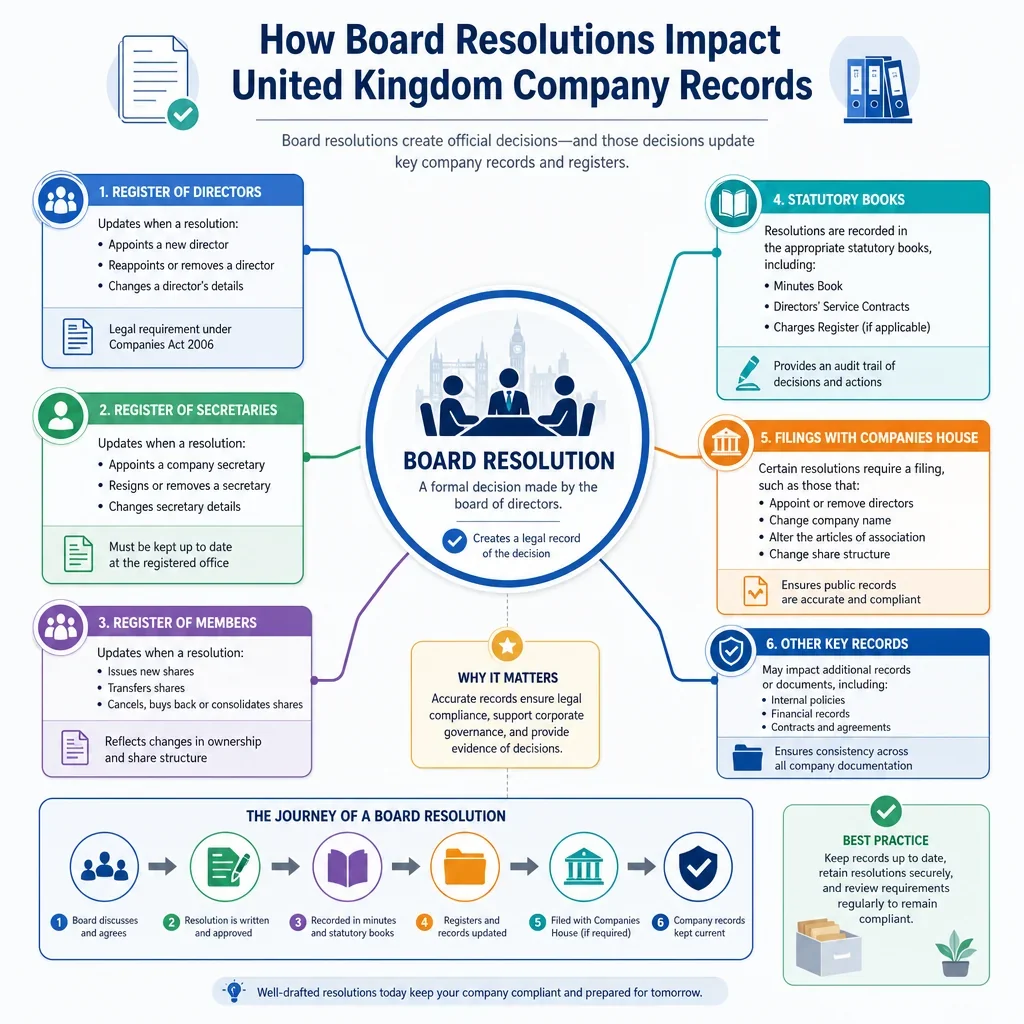
The correct resolution helps show that directors followed the Companies Act 2006, the company articles, and their directors' duties. It also creates a clear audit trail for shareholders, banks, accountants, investors, and Companies House.
What Can Go Wrong If The Wrong Resolution Is Used?
- Invalid approval: a decision may need shareholder approval instead of, or as well as, board approval.
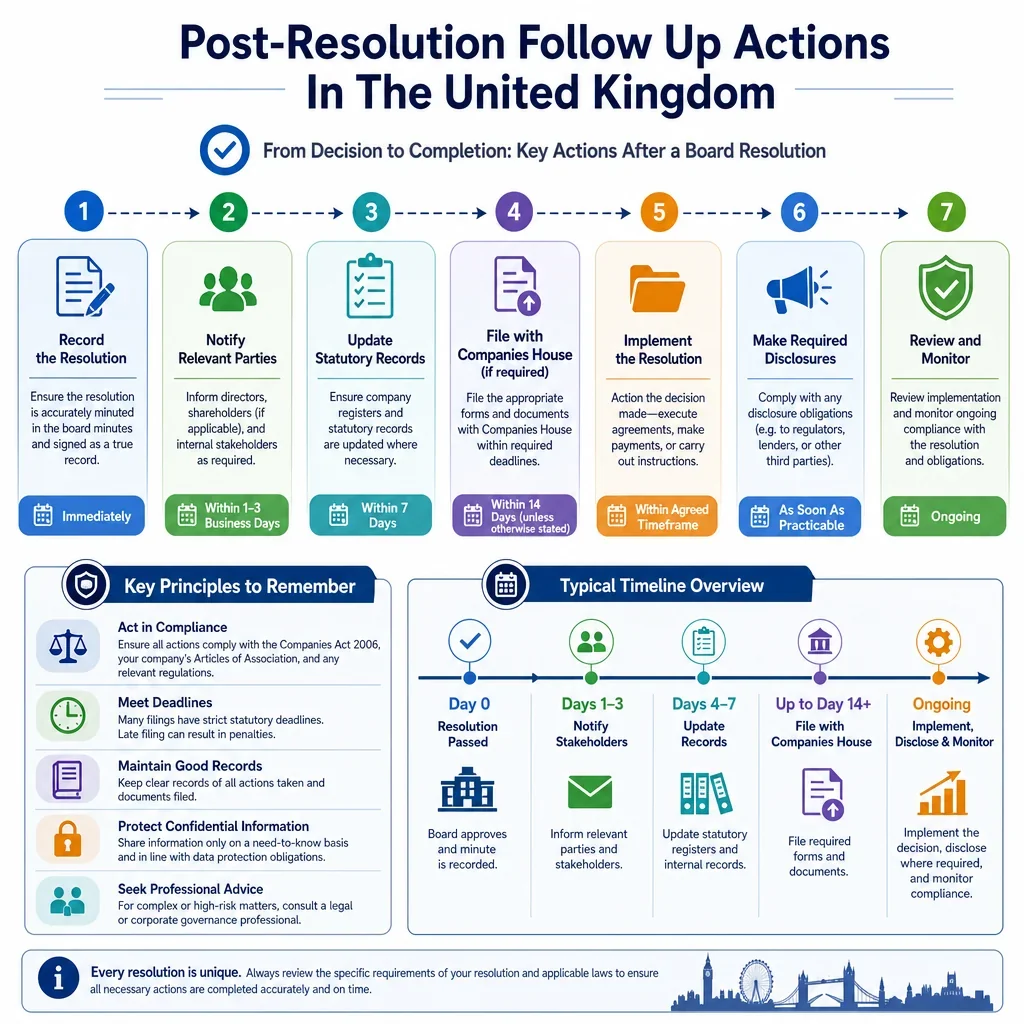
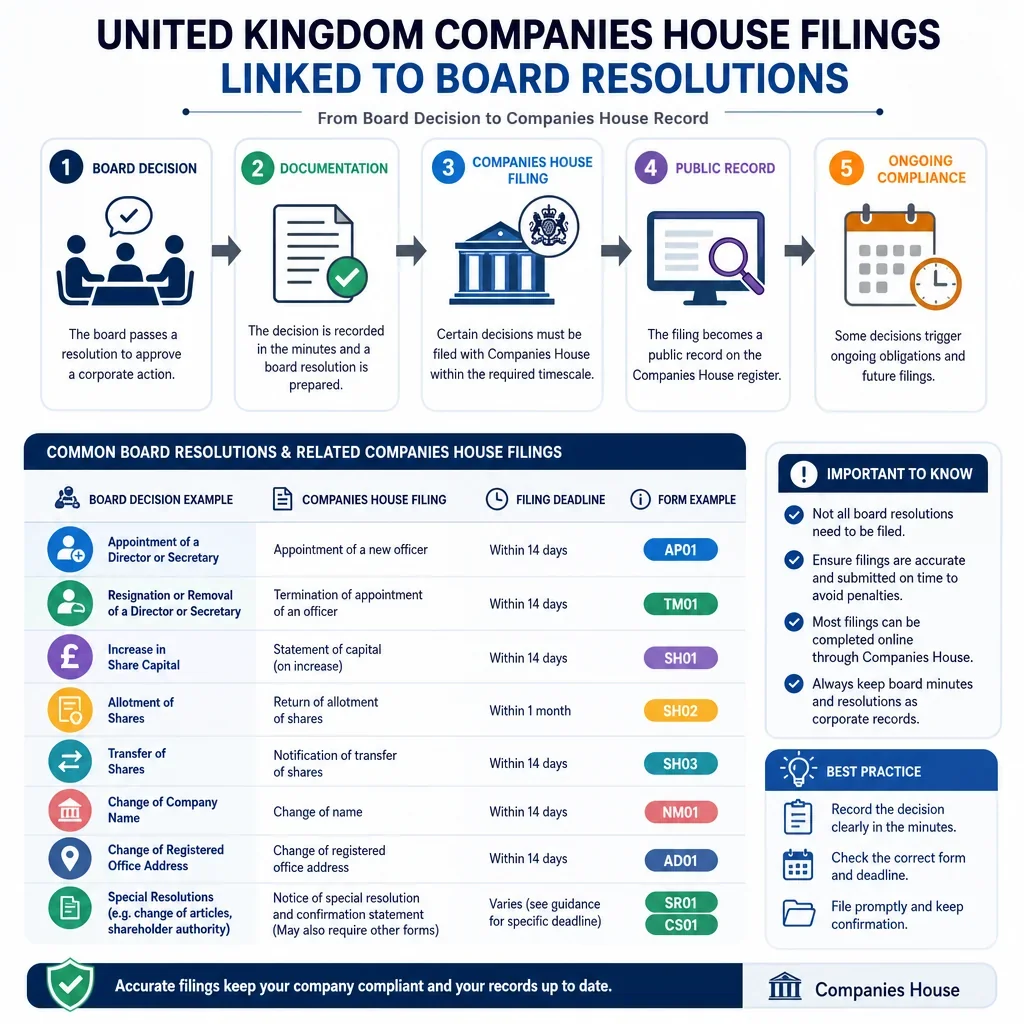
- Missed filing duties: appointments, share allotments, special resolutions, and registered office changes may need Companies House filings.
- Shareholder disputes: incorrect voting, notice, or authority can lead to challenges.
- Tax and accounting issues: dividends and share transactions must be supported by proper records.
- Banking or contract delays: banks and counterparties often require a precise board authority document.
When Should Articles Of Association Be Checked?
Always check the company's articles of association before selecting a board resolution. The articles can set quorum rules, voting rules, director conflict rules, and limits on board authority.
When Is A Shareholder Resolution Needed Instead?
Some decisions are reserved to shareholders under the Companies Act 2006 or the articles. Examples include special resolutions, certain share capital decisions, changes to articles, and ordinary resolutions to remove a director. In those cases, a board resolution alone may not be enough.
FAQs
You Might Also Be Interested In