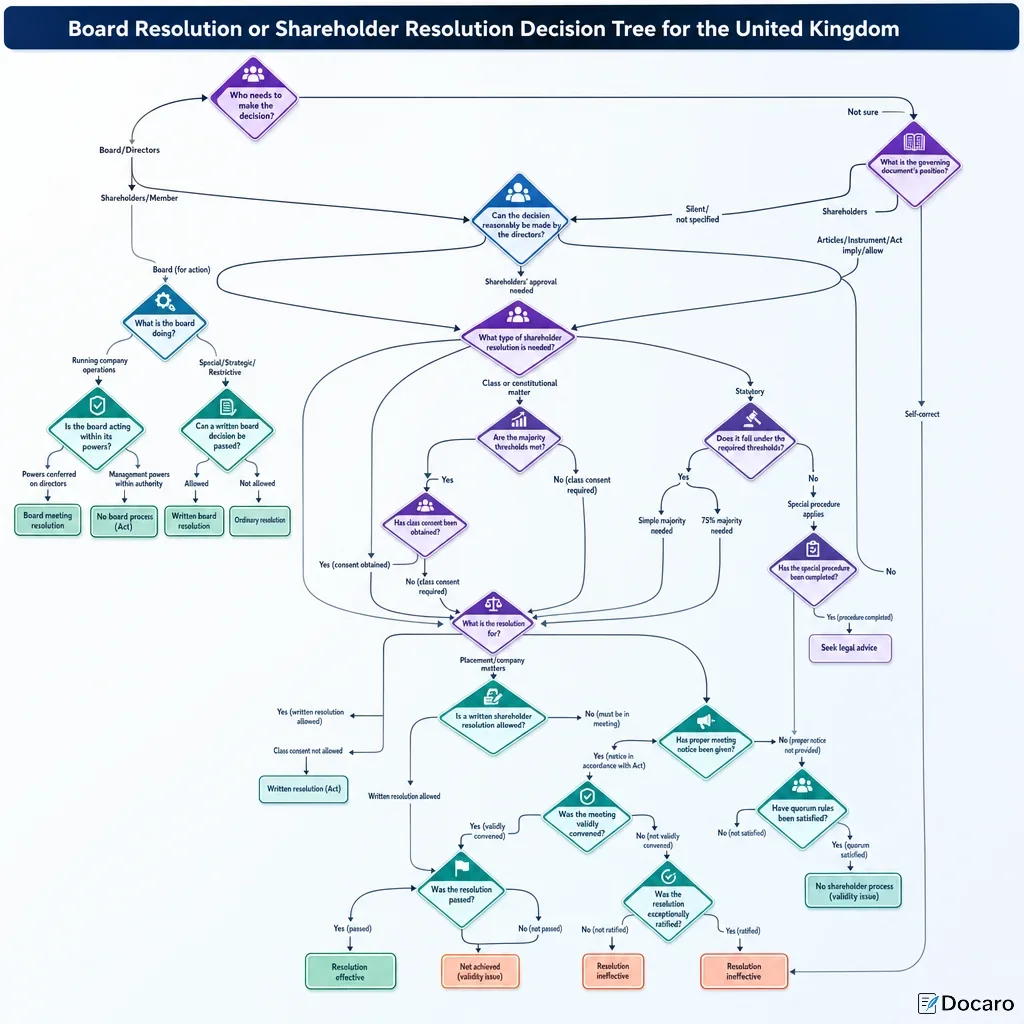
Board Resolution Or Shareholder Resolution Decision Tree For The United Kingdom
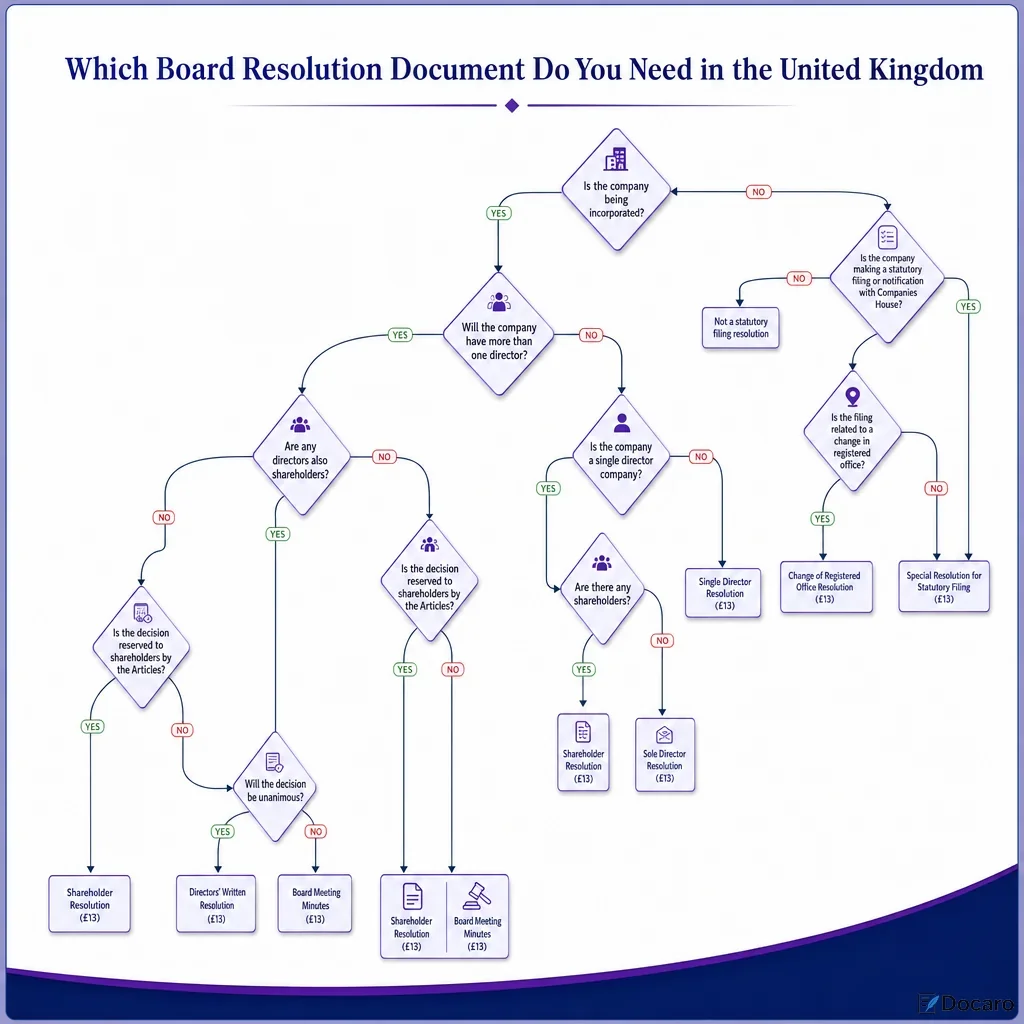
Who needs to approve the decision?
Why Is The Right UK Company Resolution Important?
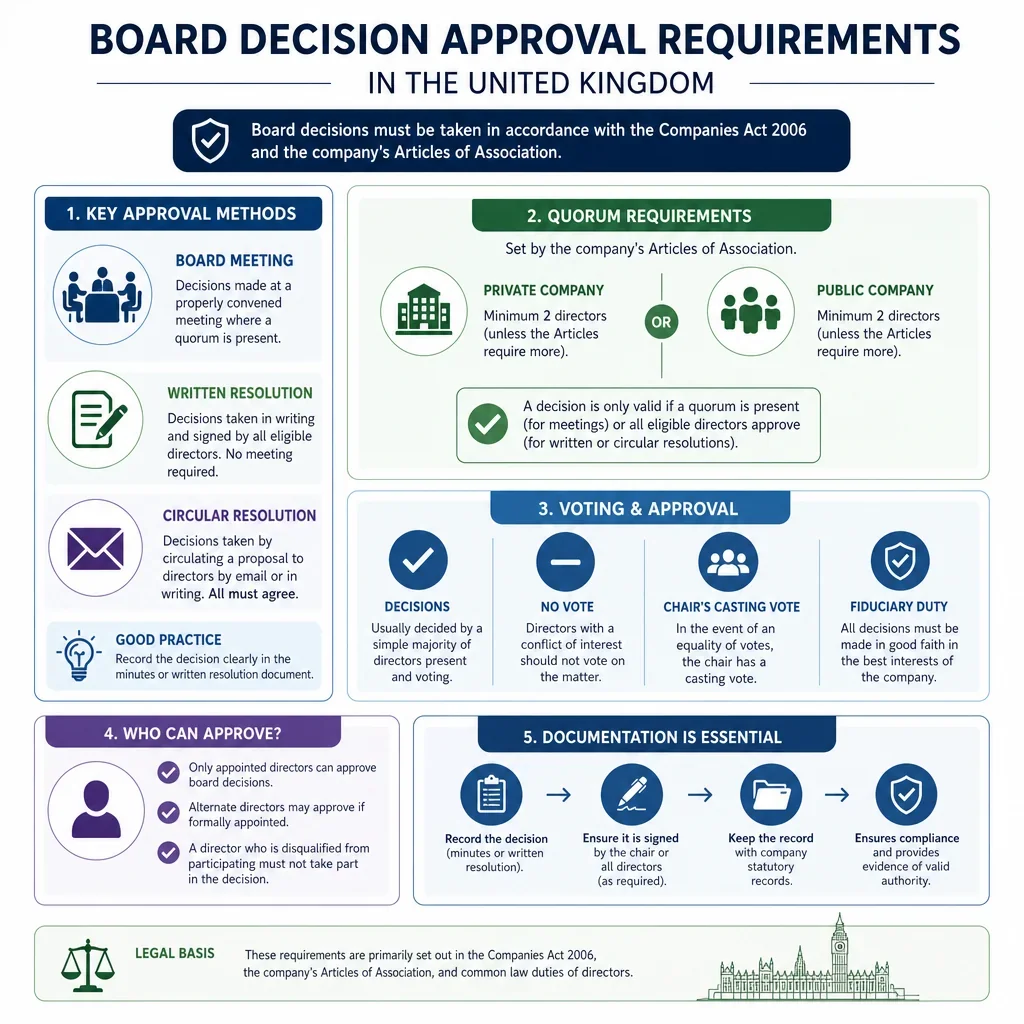
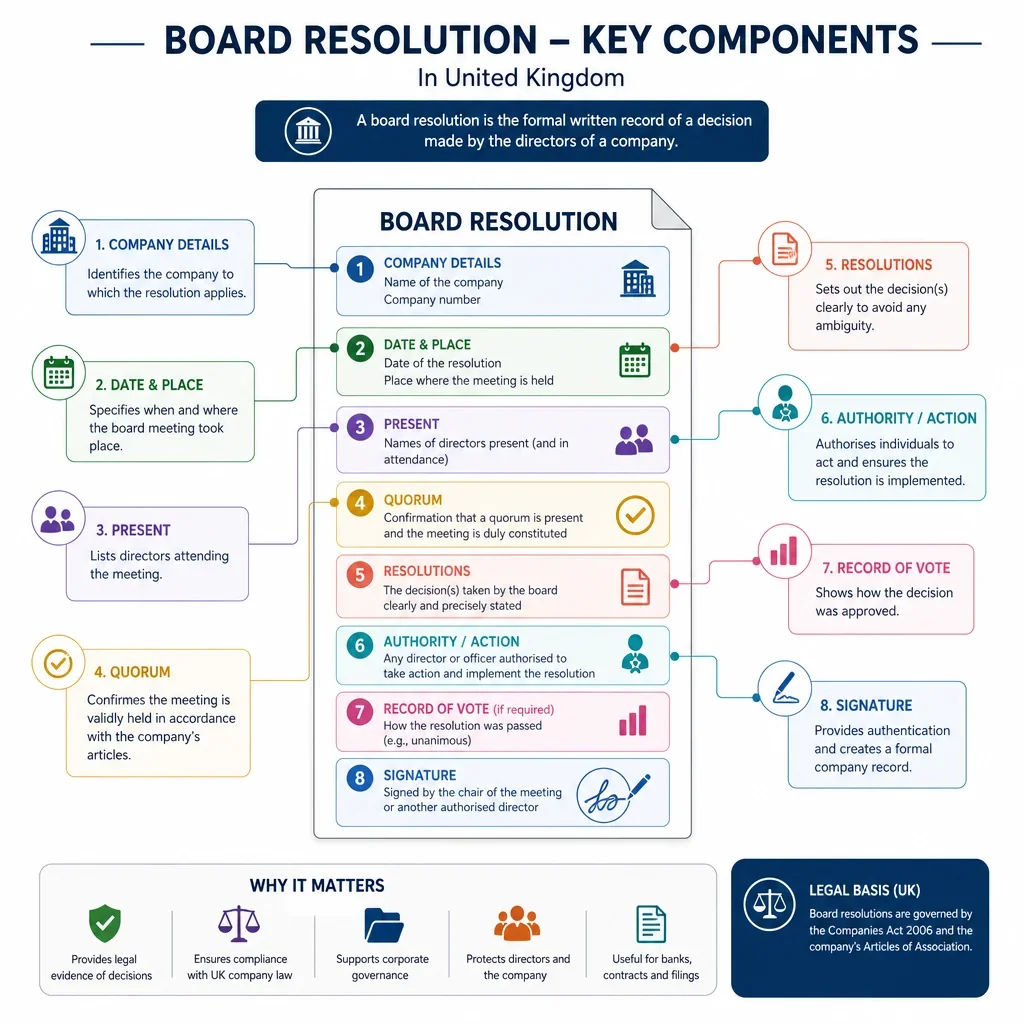
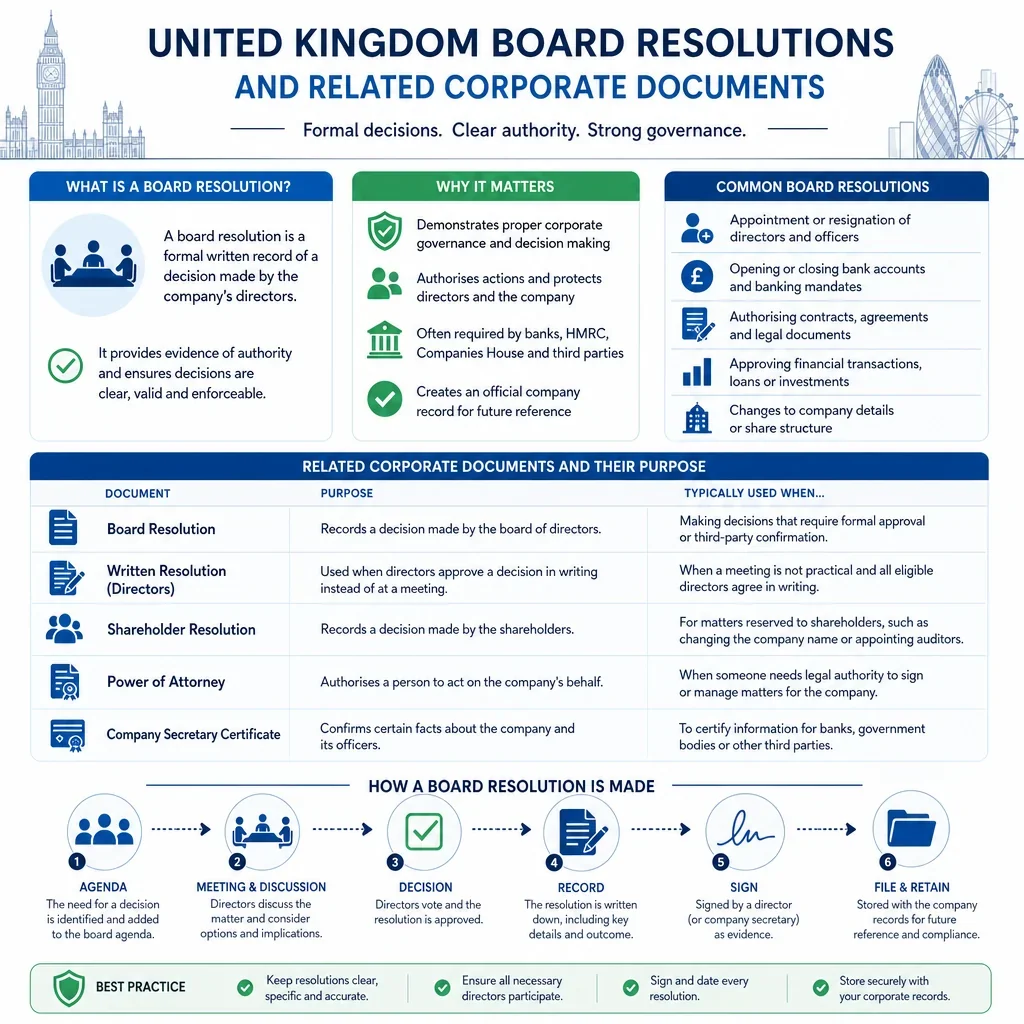
Choosing between a board resolution and a shareholder resolution matters because UK companies must act through the correct decision-making body. Directors usually manage the company, but shareholders must approve certain decisions under the Companies Act 2006, the articles of association, or a shareholders' agreement.
What Can Go Wrong If The Wrong Resolution Is Used?
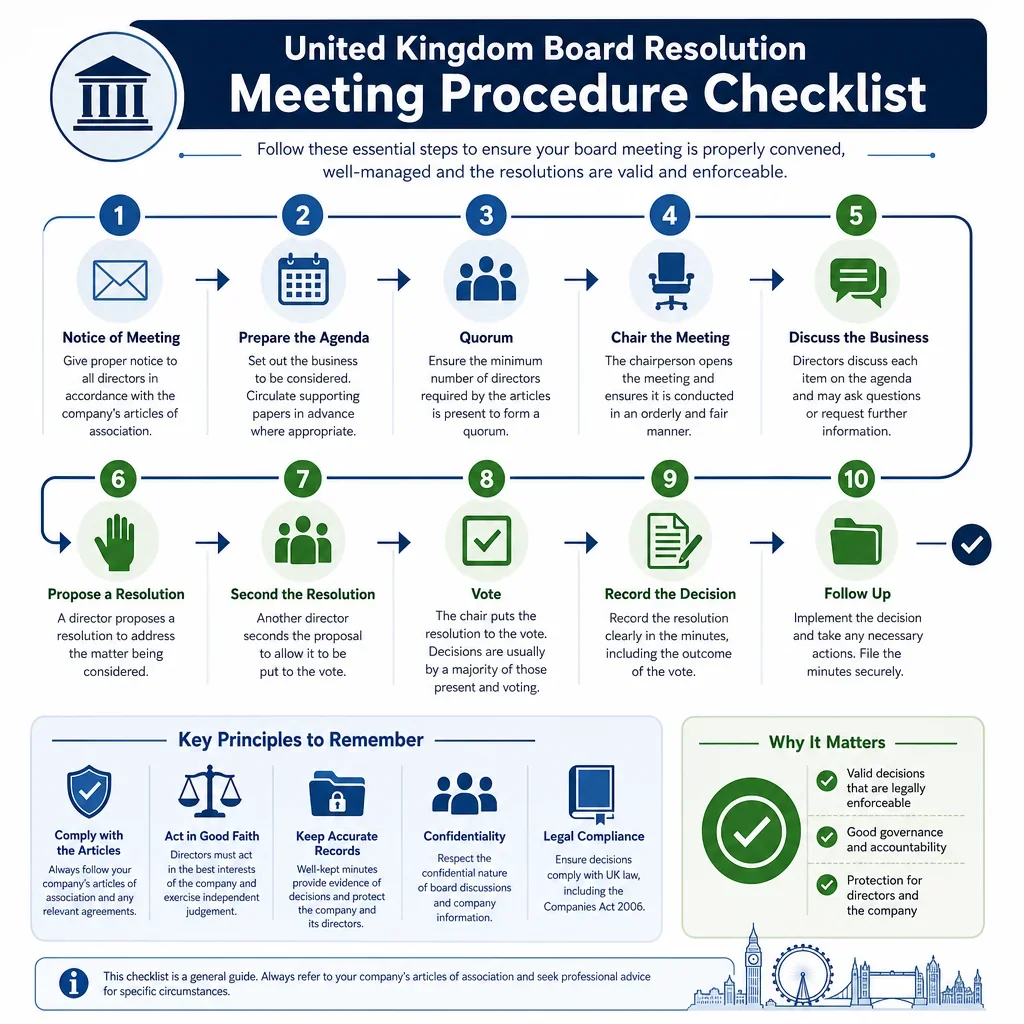
- Invalid decisions: A decision may be challenged if the wrong approval route, quorum, notice period, or voting threshold is used.
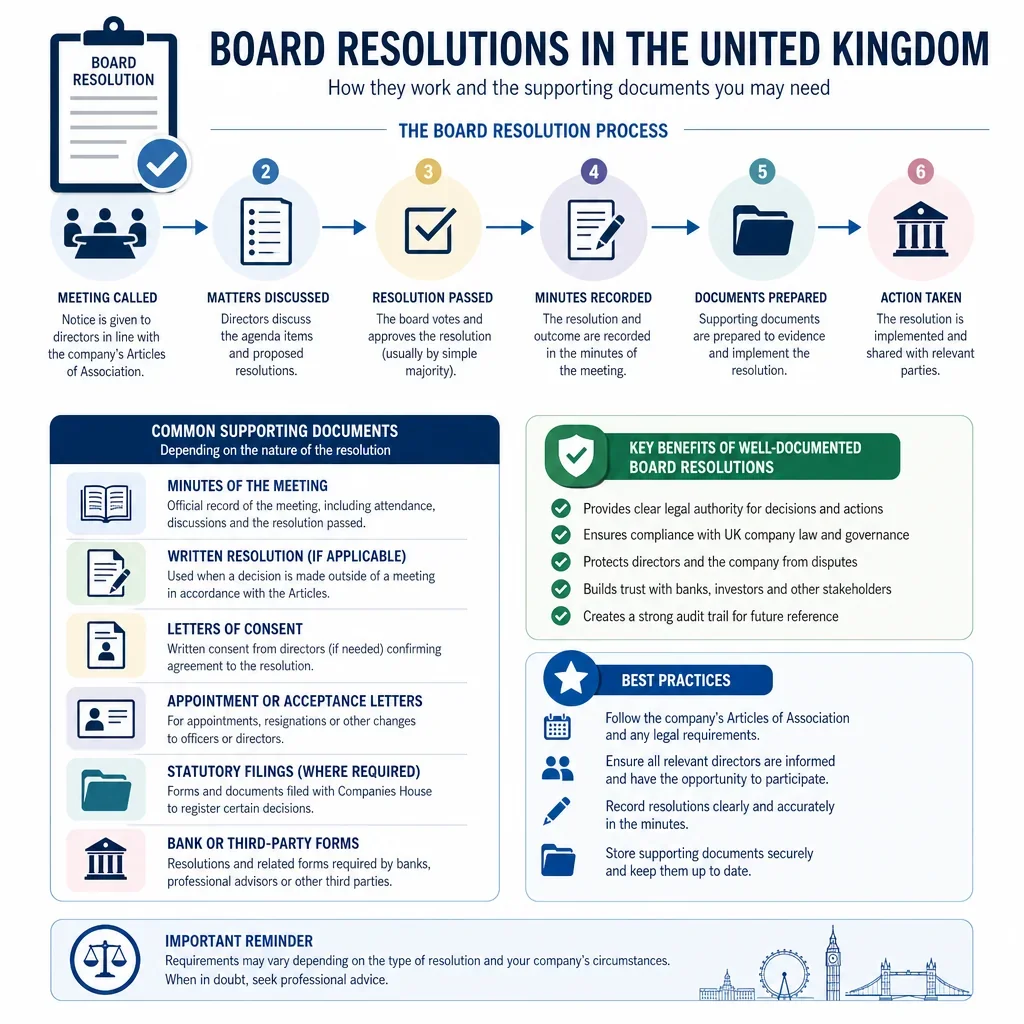
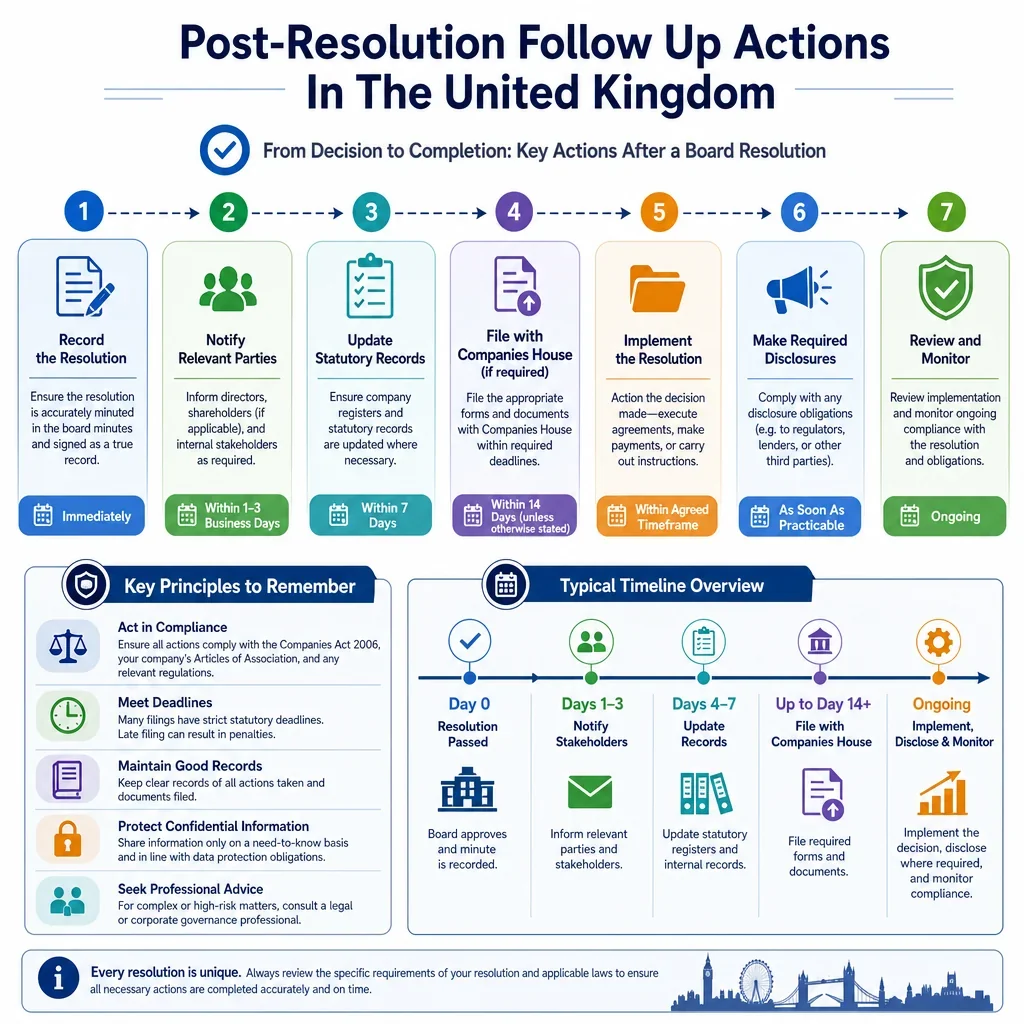
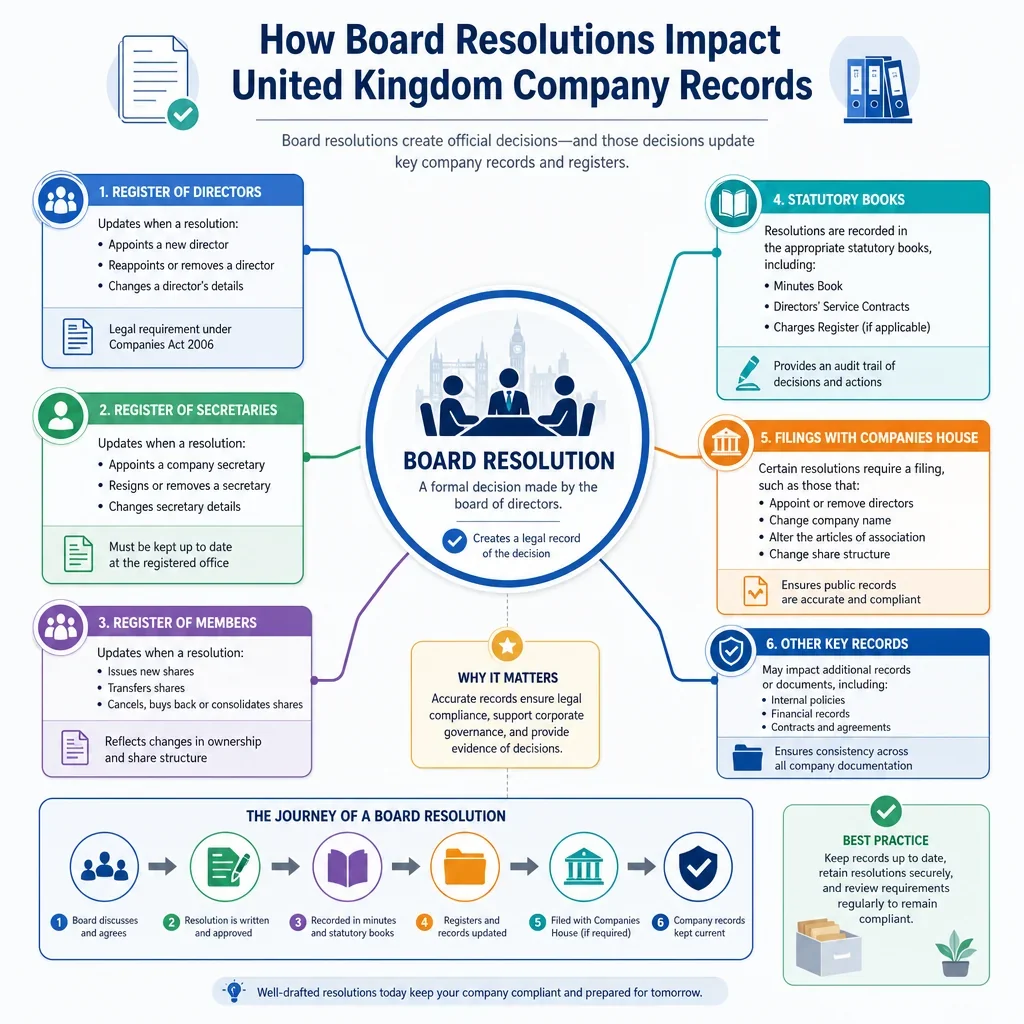
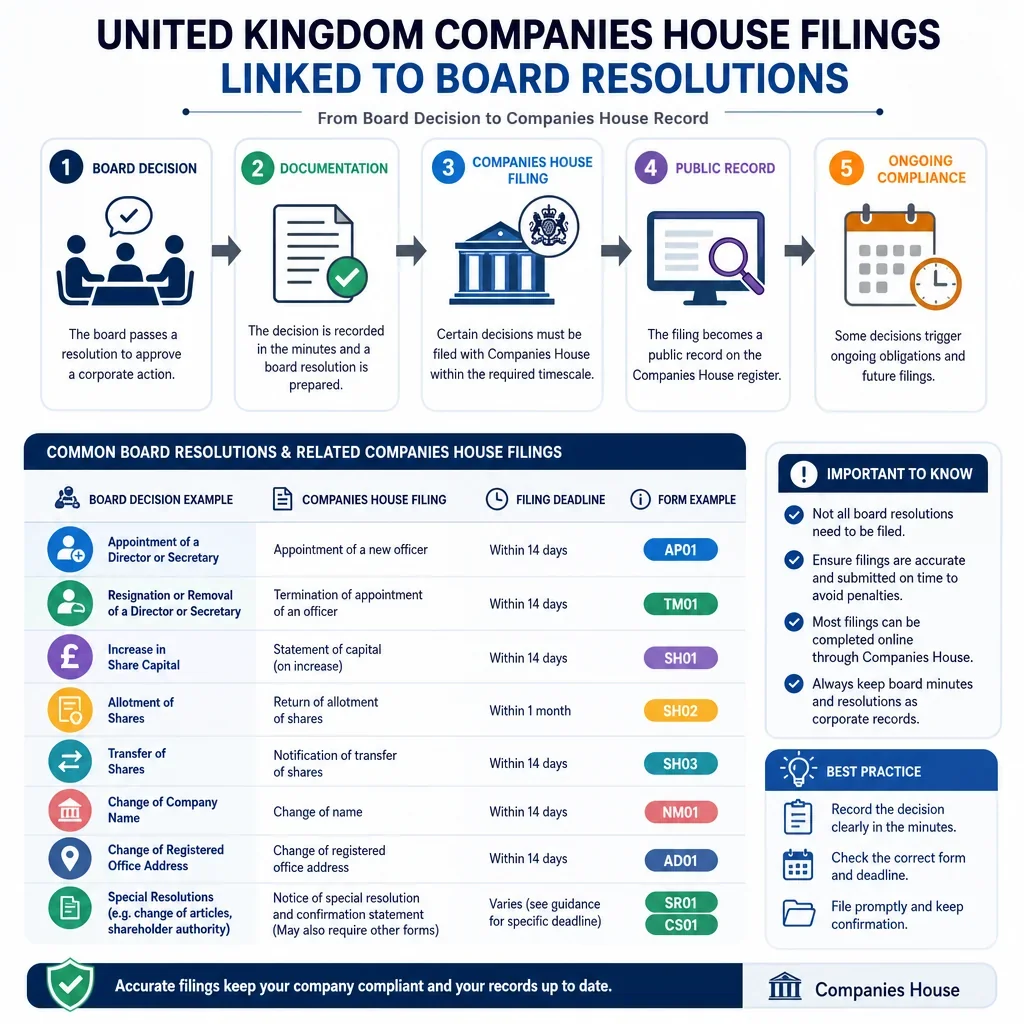
- Companies House problems: Special resolutions and certain constitutional decisions often need filing at Companies House within statutory deadlines.
- Director risk: Directors must act within their powers and comply with their statutory duties.
- Shareholder disputes: Changes affecting share rights, control, or company constitution can lead to disputes if class rights or minority protections are ignored.
How Do Board And Shareholder Resolutions Differ In The UK?
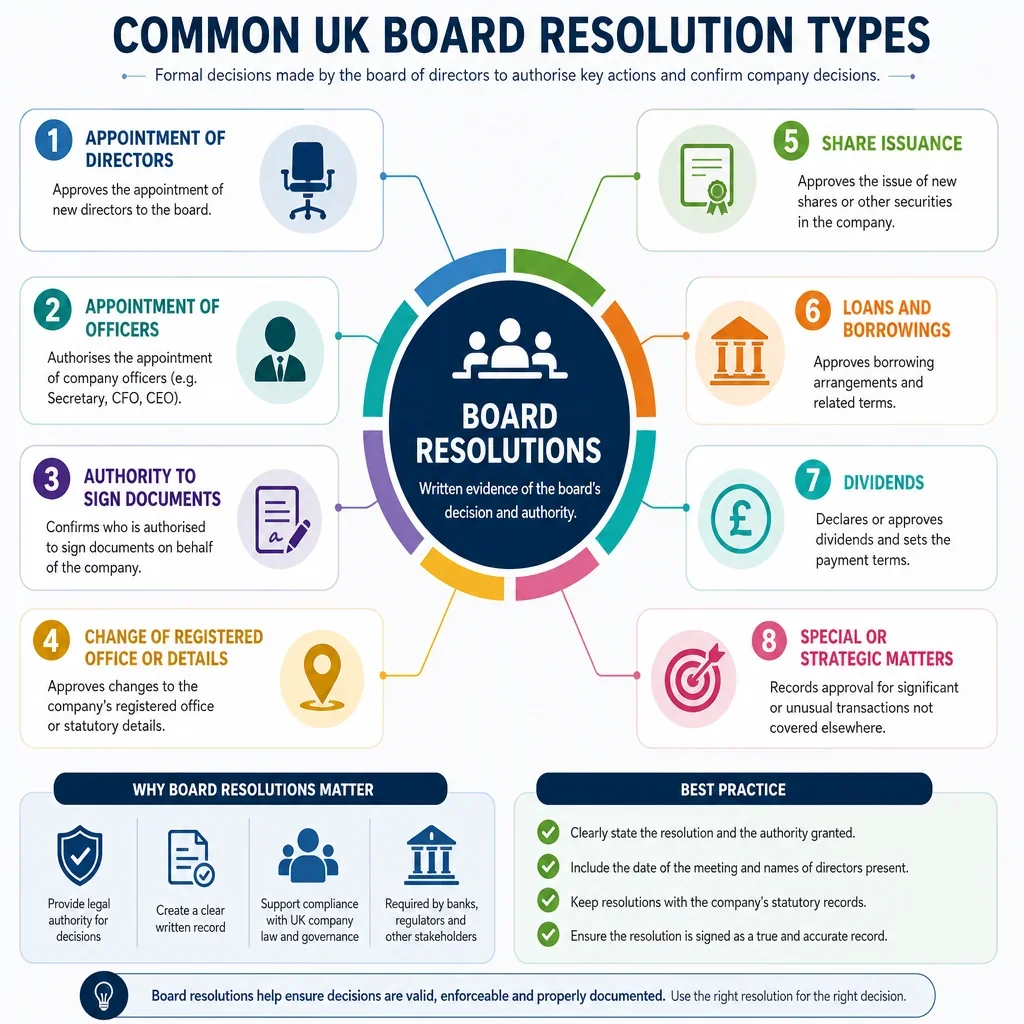
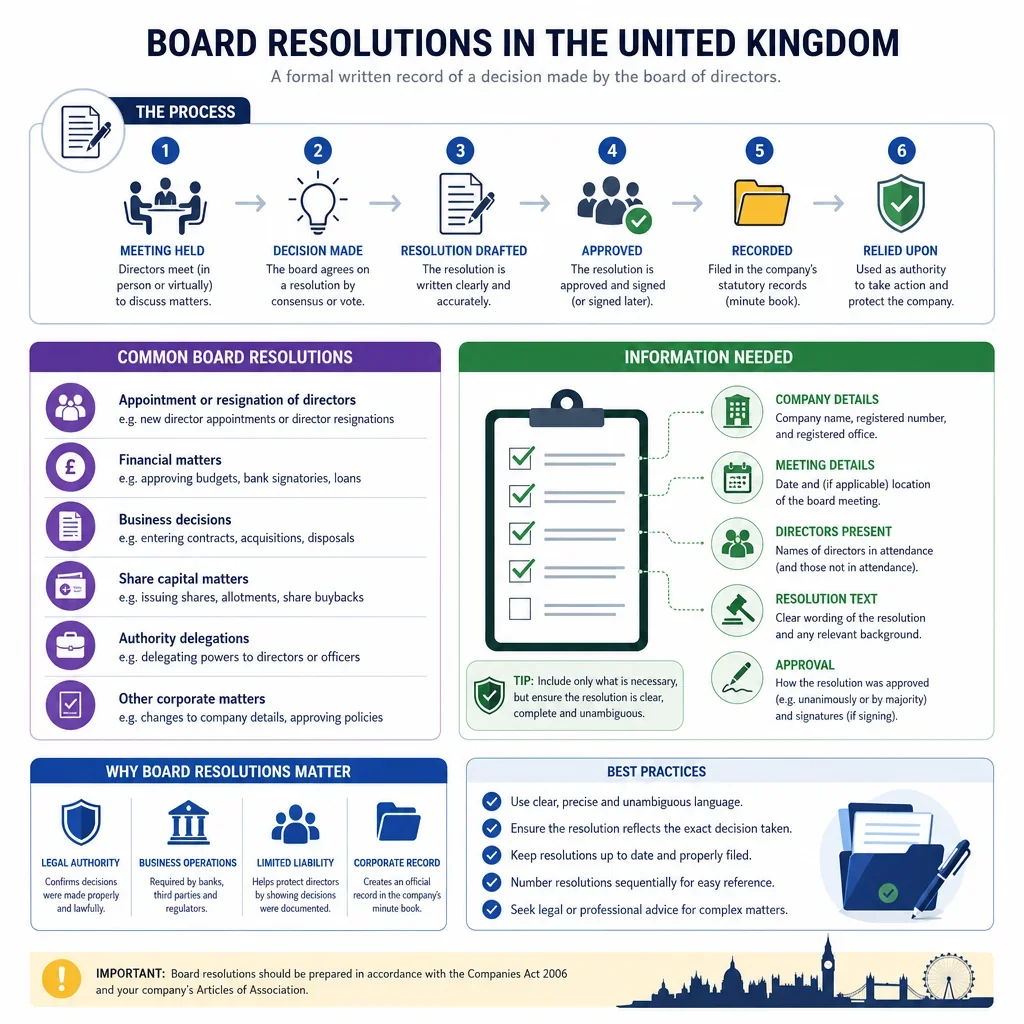
A board resolution records a decision of the directors, such as approving a contract, opening a bank account, or appointing officers where the board has authority. A shareholder resolution records a decision of the members, such as passing an ordinary or special resolution where the law or the company's constitution requires shareholder approval.
When Should A UK Company Check The Articles?
The articles of association should be checked before preparing any resolution. They may set quorum rules, voting rights, director conflict rules, written resolution procedures, and reserved matters. The official Companies Act 2006 is available at legislation.gov.uk, and Companies House guidance on filing resolutions is available at GOV.UK.
FAQs
You Might Also Be Interested In