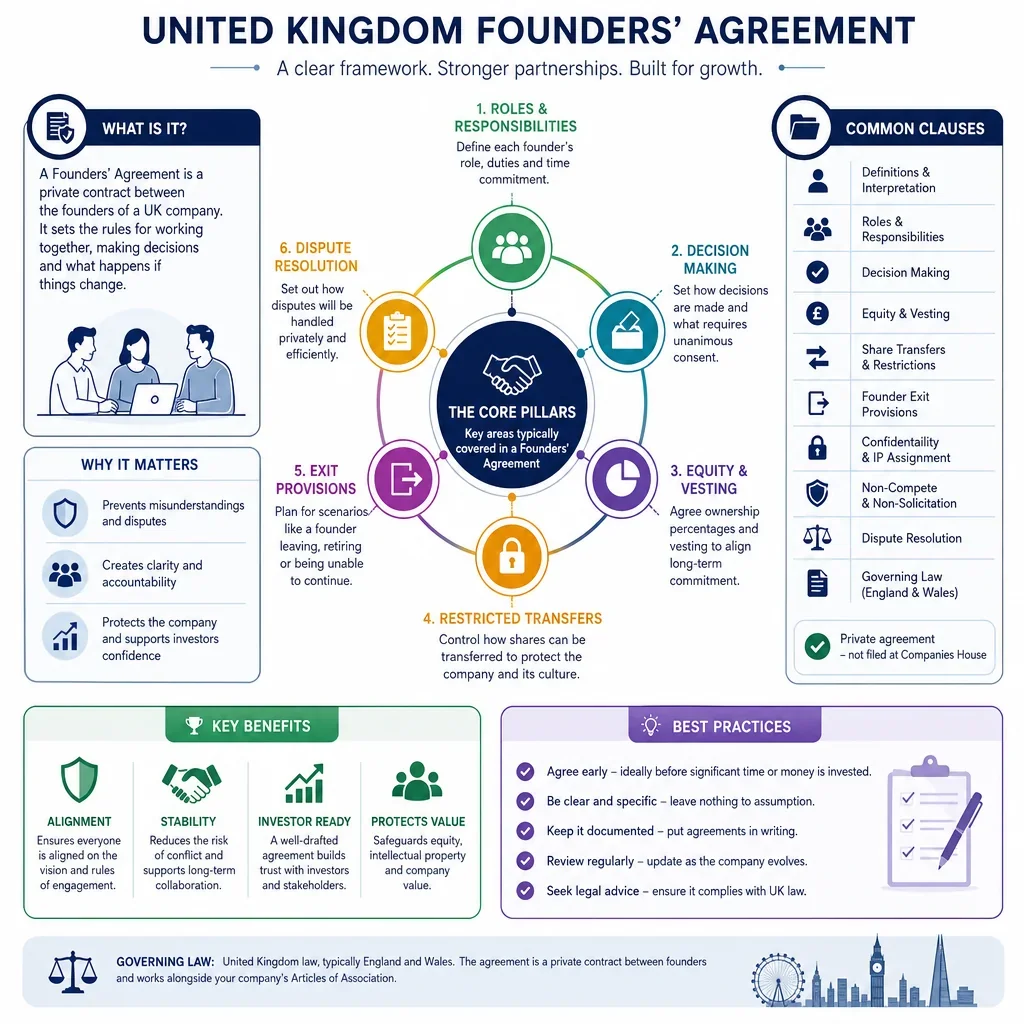
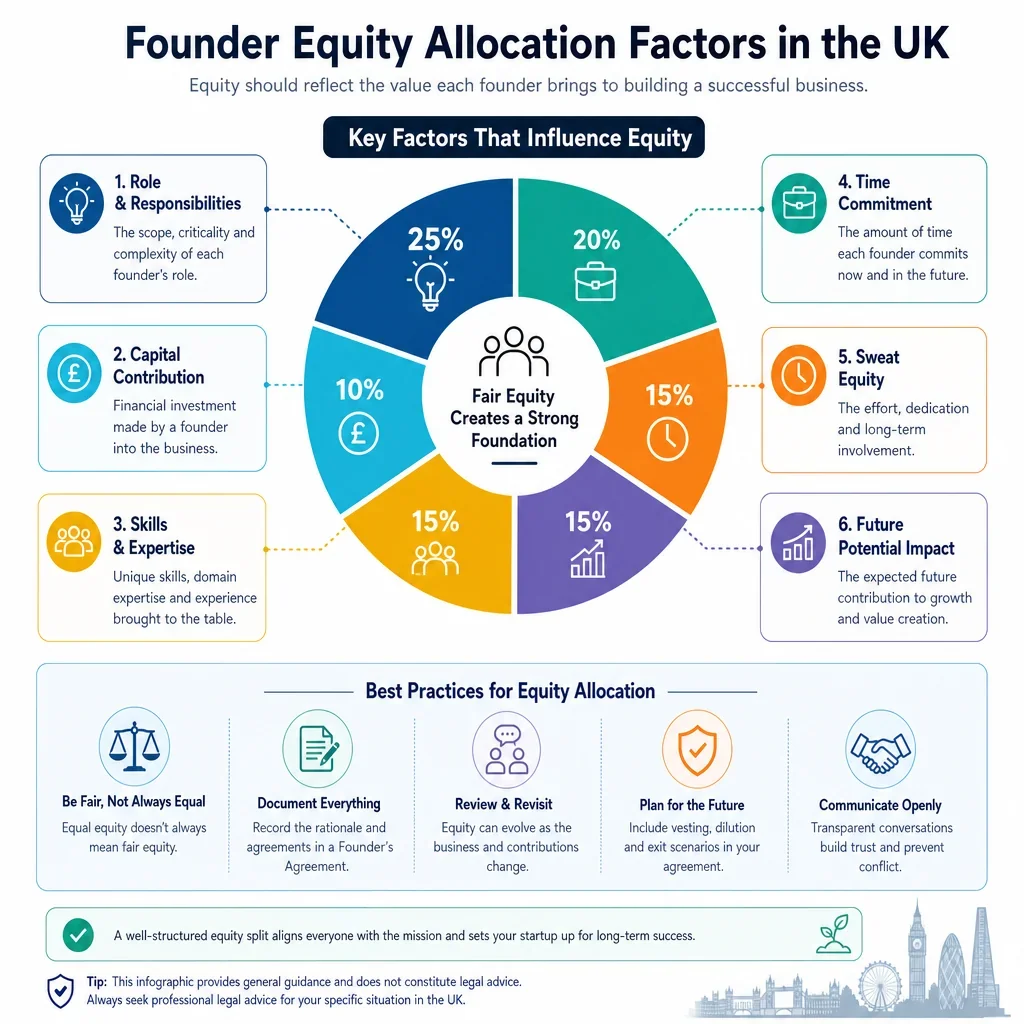
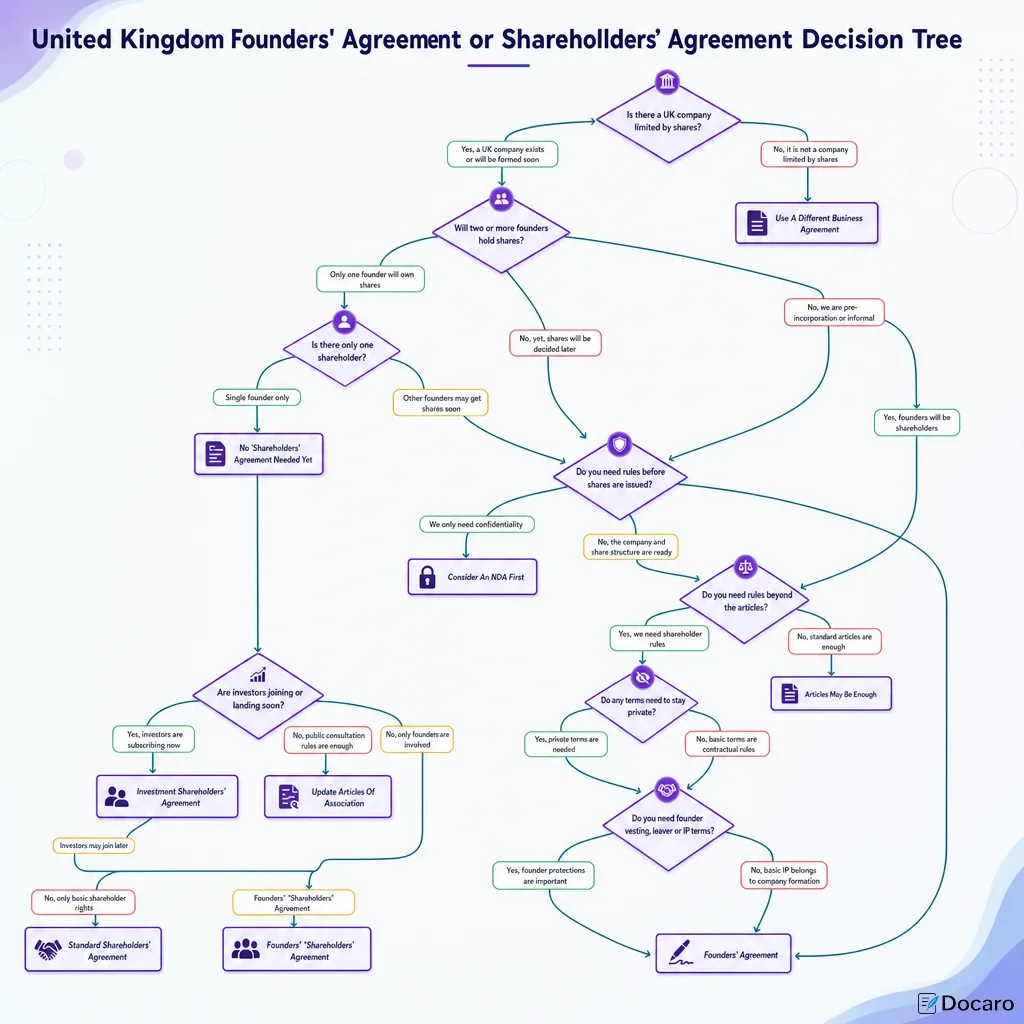
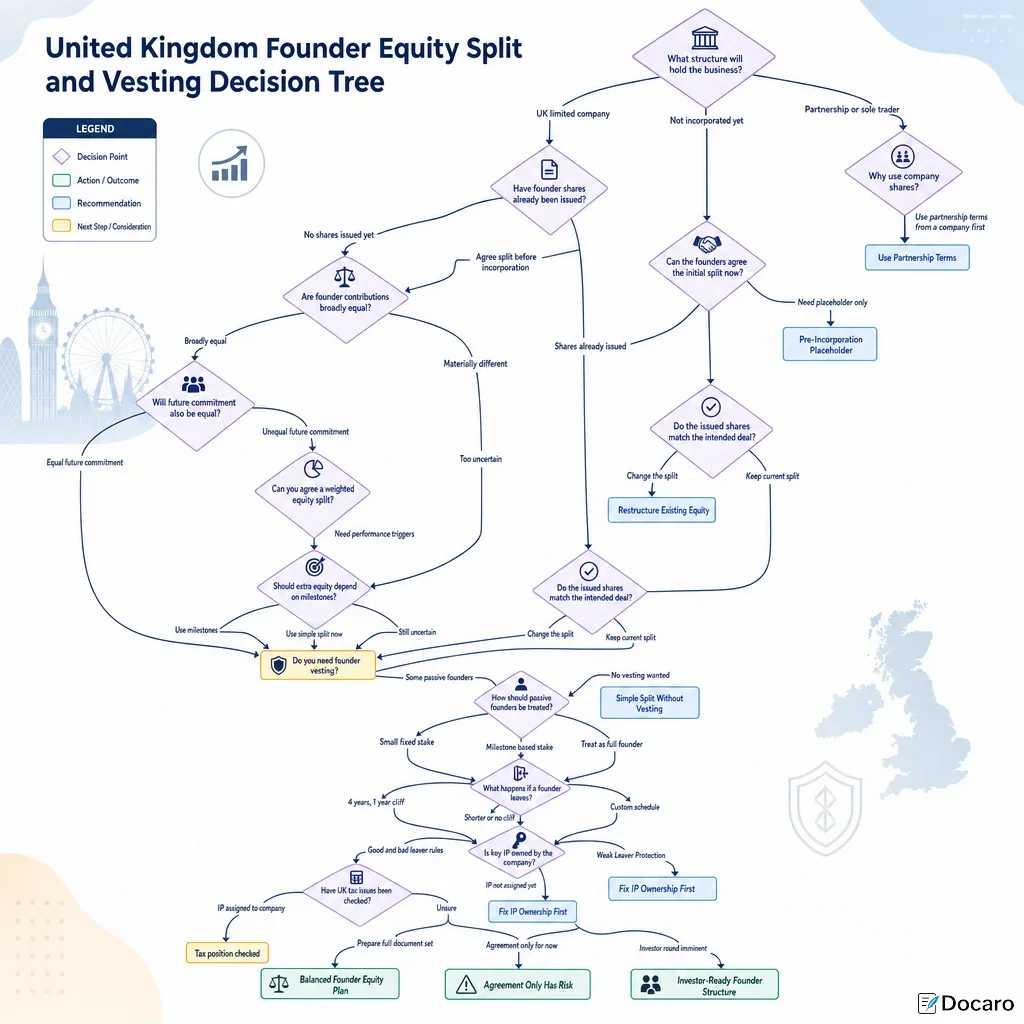
Vesting And Leaver Terms For Founders In The UK
Arrangement Name | Summary | Trigger Events | Effect on Founder Shares | Commercial Position |
|---|---|---|---|---|
Vesting schedule | ||||
Four-Year Monthly Vesting | Founder earns shares monthly over four years. | Time passing while the founder remains in service. | Unvested shares are subject to buyback or transfer on leaving. | Balanced |
Three-Year Monthly Vesting | Founder earns shares monthly over three years. | Continued service during the vesting period. | Faster vesting fewer unvested shares remain at any departure date. | Founder-friendly |
Five-Year Monthly Vesting | Founder earns shares monthly over five years. | Continued employment, consultancy or active founder role. | A larger portion remains at risk for longer. | Investor-friendly |
Cliff period | ||||
12-Month Cliff | No shares vest until 12 months have been completed. | Founder leaves before or after first anniversary. | Leaving before the cliff usually means no vested shares. | Company-friendly |
Six-Month Cliff | Vesting starts only after six months of service. | Departure before the first six months have elapsed. | Early leaver may lose all unvested shares but cliff is shorter. | Balanced |
No-Cliff Monthly Vesting | Shares start vesting from the commencement date. | Any departure after vesting begins. | Founder keeps at least some vested equity even if leaving early. | Founder-friendly |
Vesting schedule | ||||
Annual Instalment Vesting | Shares vest in equal annual tranches. | Founder remains engaged at each anniversary date. | No vesting between anniversaries unless expressly pro-rated. | Company-friendly |
Quarterly Vesting | Shares vest every three months. | Continued service at each quarter end. | Smoother than annual vesting but less granular than monthly vesting. | Balanced |
Initial Vesting Credit | Part of the founder's shares is treated as already vested. | Recognised past contribution before signing or investment. | Founder keeps a minimum vested stake from day one. | Founder-friendly |
Back-Loaded Vesting | A larger percentage vests in later years. | Founder remains active through later growth periods. | Early departure leaves more shares unvested. | Investor-friendly |
Front-Loaded Vesting | A larger percentage vests in early years. | Founder performs key early-stage contribution. | Founder retains more equity if leaving after early milestones. | Founder-friendly |
Milestone-Based Vesting | Shares vest when agreed business milestones are achieved. | Product launch, fundraising, revenue target or regulatory approval. | Unmet milestone shares remain unvested or lapse on leaving. | Investor-friendly |
Hybrid Time And Milestone Vesting | Shares vest partly over time and partly on milestones. | Continued service plus agreed commercial or technical achievements. | Founder must satisfy both retention and performance expectations. | Balanced |
Reverse Vesting Buyback | Founder receives shares upfront, but unvested shares can be bought back. | Founder leaves before vesting is complete. | Company or shareholders may acquire unvested shares at agreed price. | Balanced |
Forward Vesting Issue | Shares are issued only as they vest. | Each vesting date or milestone completion. | Founder does not hold unvested shares or votes before issue. | Company-friendly |
Service-Condition Vesting | Vesting depends on continued employment or consultancy. | Resignation, dismissal, expiry of consultancy or role cessation. | Vesting stops when the service relationship ends. | Company-friendly |
Active Founder Role Vesting | Vesting requires meaningful active involvement in the business. | Founder becomes passive, changes role or materially reduces time commitment. | Vesting may pause or stop if active contribution ends. | Company-friendly |
Board Discretion Vesting Adjustment | Board may adjust vesting in defined circumstances. | Role change, exceptional contribution, illness or negotiated exit. | Vested amount may increase, reduce or be preserved by board decision. | Balanced |
Good leaver | ||||
Death Good Leaver | Founder is treated favourably if they die. | Death while holding founder shares or serving the company. | Estate usually keeps vested shares or receives fair value. | Founder-friendly |
Illness Or Incapacity Good Leaver | Founder is protected if unable to work due to serious illness or incapacity. | Long-term sickness, disability or medical incapacity. | Founder usually keeps vested shares and may receive fair value on transfer. | Balanced |
Redundancy Good Leaver | Founder is a good leaver if their role is genuinely redundant. | Role disappears or workforce requirement reduces. | Usually keeps vested shares compulsory transfer often at fair value. | Founder-friendly |
Dismissal Without Cause Good Leaver | Founder is protected if removed without serious fault. | Termination not involving gross misconduct, fraud or material breach. | Vested shares are retained or transferred at fair value. | Founder-friendly |
Good Reason Resignation | Founder is treated as good leaver if forced to resign by company action. | Material pay cut, demotion, relocation or breach by the company. | Founder usually keeps vested shares and avoids bad leaver discounts. | Founder-friendly |
Approved Retirement Good Leaver | Founder is good leaver if retirement is approved. | Board-approved retirement after agreed age or service period. | Vested shares usually kept or bought at fair value. | Balanced |
Board-Approved Good Leaver | Board can classify a departing founder as a good leaver. | Negotiated exit, role transition or exceptional personal circumstances. | Departure terms may preserve vested shares or fair value pricing. | Balanced |
Bad leaver | ||||
Fraud Bad Leaver | Founder is penalised for fraudulent conduct. | Fraud, dishonesty, theft or deliberate misappropriation. | Shares may be transferred at nominal value, cost or a heavy discount. | Company-friendly |
Gross Misconduct Bad Leaver | Founder is bad leaver if dismissed for gross misconduct. | Serious misconduct justifying dismissal without notice. | Vested and unvested shares may be bought at a punitive price. | Company-friendly |
Criminal Conviction Bad Leaver | Founder is bad leaver after relevant criminal conduct. | Conviction for dishonesty, serious offence or offence harming the company. | Compulsory transfer at cost, nominal value or discounted fair value. | Company-friendly |
Material Breach Bad Leaver | Founder is penalised for serious breach of key agreements. | Breach of founders' agreement, employment contract or articles. | Shares may be subject to forced transfer at discounted price. | Company-friendly |
Restrictive Covenant Breach Bad Leaver | Founder is bad leaver if they breach agreed restrictions. | Competing, soliciting customers, poaching staff or misusing confidential information. | Founder may lose value or be forced to transfer shares. | Company-friendly |
Early Voluntary Resignation Bad Leaver | Founder is bad leaver if they resign during an agreed lock-in period. | Voluntary resignation within first 12, 24 or 36 months. | Unvested and sometimes vested shares transfer at reduced price. | Investor-friendly |
Unauthorised Exit Bad Leaver | Founder is penalised for leaving without required notice or approval. | Failure to give notice, abandonment of role or unauthorised absence. | Compulsory transfer may apply at a discount. | Company-friendly |
Compulsory transfer | ||||
Founder Insolvency Transfer Event | Shares become transferable if a founder becomes insolvent. | Bankruptcy, insolvency process or enforcement against shares. | Other shareholders or company may have a right to buy shares. | Company-friendly |
Unvested Share Compulsory Transfer | Departing founder must transfer all unvested shares. | Cessation of employment, consultancy, directorship or active founder role. | Unvested shares are sold to the company, nominees or continuing shareholders. | Company-friendly |
All Shares Bad Leaver Transfer | Bad leaver must transfer both vested and unvested shares. | Bad leaver event such as fraud, gross misconduct or serious breach. | Founder may lose the entire shareholding at low value. | Investor-friendly |
Good leaver | ||||
Good Leaver Keeps Vested Shares | Good leaver keeps vested shares and transfers only unvested shares. | Death, incapacity, redundancy or dismissal without cause. | Vested equity remains with founder, subject to drag, tag and transfer rules. | Founder-friendly |
Good Leaver Fair Value Buyout | Good leaver must sell shares but receives fair market value. | Good leaver departure where ongoing ownership is not desired. | Founder exits share register for an independently assessed price. | Balanced |
Bad leaver | ||||
Bad Leaver Nominal Value Buyout | Bad leaver sells shares at nominal value. | Serious misconduct, fraud, dishonesty or wilful breach. | Founder receives minimal value regardless of market value. | Investor-friendly |
Bad Leaver Cost Price Buyout | Bad leaver sells shares at the original subscription price. | Defined bad leaver event or early voluntary resignation. | Founder receives no uplift in company value. | Company-friendly |
Bad Leaver Discounted Fair Value | Bad leaver receives fair value less an agreed discount. | Bad leaver event where a total forfeiture is considered too harsh. | Founder receives partial economic value but suffers a penalty. | Balanced |
Compulsory transfer | ||||
Stepped Leaver Pricing | Transfer price improves the longer the founder has served. | Departure in different year bands after incorporation or investment. | Early exit price is lower later exit price moves toward fair value. | Balanced |
Independent Expert Fair Value | An independent accountant or valuer determines fair value. | Dispute or required valuation on compulsory transfer. | Price is set by expert determination rather than board discretion. | Balanced |
Board-Determined Transfer Price | Board determines the price under the articles or shareholders' agreement. | Compulsory transfer following a leaver event. | Founder may face a price set by continuing directors. | Company-friendly |
Continuing Shareholder Pre-Emption Buyout | Leaver shares are first offered to continuing shareholders. | Founder becomes a good leaver, bad leaver or other transferor. | Shares are redistributed among remaining shareholders before outside transfer. | Company-friendly |
Company Buyback Of Leaver Shares | Company buys back leaver shares if statutory requirements are met. | Leaver event plus shareholder approval and buyback process where required. | Shares are bought back and usually cancelled or held as treasury shares. | Company-friendly |
Default Transfer Power Of Attorney | Company can sign transfer documents if the leaver refuses. | Leaver fails to execute required stock transfer form or documents. | Transfer can proceed without the founder's cooperation. | Company-friendly |
Articles Compulsory Transfer Clause | Transfer obligation is embedded in the company's articles. | Leaver event defined in the articles or shareholders' agreement. | Articles bind the company and members as a statutory contract. | Company-friendly |
Director Transfer Registration Control | Directors may control registration if permitted by articles. | Proposed transfer after a leaver event or third-party transfer. | Transfer may not be registered unless article requirements are met. | Company-friendly |
Acceleration | ||||
Single-Trigger Change Of Control Acceleration | Unvested shares vest automatically on a sale or change of control. | Share sale, business sale, merger or change of control. | Founder becomes fully or partly vested at completion. | Founder-friendly |
Double-Trigger Acceleration | Acceleration applies only after a sale plus termination or demotion. | Change of control followed by dismissal, good reason resignation or role reduction. | Protects founder if removed after an exit transaction. | Balanced |
Partial Acceleration | Only a defined percentage of unvested shares accelerates. | Change of control, investment round or termination without cause. | Some unvested shares vest early the rest remains subject to schedule. | Balanced |
Full Exit Acceleration | All unvested shares vest when the company is sold. | Sale of all or most shares or assets. | Founder participates in exit proceeds as if fully vested. | Founder-friendly |
Termination Without Cause Acceleration | Some vesting accelerates if founder is dismissed without cause. | Company terminates role without misconduct or material breach. | Founder receives additional vested shares despite early termination. | Founder-friendly |
Good Reason Acceleration | Vesting accelerates if founder resigns for defined good reason. | Demotion, relocation, pay cut, loss of authority or company breach. | Founder avoids losing unvested equity after being pushed out. | Founder-friendly |
IPO Acceleration | Vesting accelerates on an IPO or admission to trading. | Initial public offering or admission to a recognised market. | Founder may become vested before or at listing. | Founder-friendly |
Funding Round Acceleration | Vesting accelerates when a significant investment round completes. | Qualified financing above an agreed amount or valuation. | Founder obtains extra vested equity after raising capital. | Founder-friendly |
No Acceleration | Vesting continues on the original schedule despite major events. | Change of control, exit, investment or IPO does not accelerate vesting. | Unvested shares remain at risk unless buyer or company agrees otherwise. | Investor-friendly |
Vesting schedule | ||||
Vesting Pause During Extended Leave | Vesting pauses during extended absence from active work. | Unpaid leave, sabbatical or extended absence beyond agreed period. | Vesting end date is extended or missed periods do not vest. | Company-friendly |
Family Leave Vesting Protection | Vesting continues or is protected during statutory family leave. | Maternity, paternity, adoption, shared parental or parental bereavement leave. | Founder is not penalised for taking protected family leave. | Founder-friendly |
Good leaver | ||||
Disability-Adjusted Leaver Treatment | Leaver terms are adjusted to avoid disability-related unfairness. | Disability, long-term health condition or reasonable adjustment issue. | Founder may receive good leaver treatment or protected vesting. | Balanced |
Compulsory transfer | ||||
Minority Protection Sensitive Transfer | Leaver enforcement should avoid unfairly prejudicing a minority founder. | Oppressive enforcement, bad faith valuation or exclusion from management. | Founder may challenge unfairly prejudicial conduct in court. | Balanced |
Vesting schedule | ||||
Employment-Related Securities Vesting Risk | Founder shares acquired by reason of employment may have tax consequences. | Issue, vesting, lifting of restrictions, transfer or disposal of restricted shares. | Tax may arise or elections may be needed for restricted securities. | Balanced |
Section 431 Election Planning | Founder and employer may elect to tax restricted shares upfront. | Acquisition of restricted employment-related securities. | May reduce later income tax charges when restrictions lift. | Founder-friendly |
Compulsory transfer | ||||
Deemed Transfer Notice | Leaver is deemed to have served a transfer notice automatically. | Founder becomes a leaver under the agreement or articles. | Sale process starts without needing a voluntary notice. | Company-friendly |
Suspension Pending Transfer | Certain rights are suspended while leaver shares await transfer. | Failure to transfer shares after a valid leaver notice. | Voting, dividend or information rights may be restricted. | Company-friendly |
Vesting schedule | ||||
Unvested Share Dividend Restriction | Unvested shares receive no dividends or restricted dividends. | Dividend declared before shares have vested. | Economic value is limited until vesting occurs. | Company-friendly |
Unvested Share Voting Rights | Unvested shares may carry votes or be non-voting until vesting. | Shareholder vote during vesting period or before transfer. | Founder influence may be preserved or limited before full vesting. | Balanced |
Unvested Option Lapse | Unvested founder options lapse when the founder leaves. | Cessation of employment, office or consultancy before option vesting. | Founder loses the right to acquire unvested option shares. | Company-friendly |
Good leaver | ||||
Vested Option Exercise Window | Leaver may exercise vested options within a limited period. | Founder leaves while holding vested options. | Unexercised vested options lapse after the deadline. | Balanced |
Bad leaver | ||||
Bad Leaver Option Forfeiture | Bad leaver loses unexercised options immediately. | Gross misconduct, fraud, serious breach or competing activity. | Founder cannot convert vested or unvested options into shares. | Company-friendly |
Compulsory transfer | ||||
Family Transfer Control | Transfers to spouses, civil partners or family trusts are controlled. | Divorce, separation, death estate planning or proposed family transfer. | Shares may need to return or be offered to continuing shareholders. | Company-friendly |
Leaver Shares Subject To Drag-Along | Leaver must sell shares if drag-along rights are triggered. | Approved sale of the company by required majority. | Founder cannot block an agreed exit after leaving. | Investor-friendly |
Good leaver | ||||
Good Leaver Tag-Along Protection | Good leaver may sell alongside majority sellers. | Majority shareholder sale after founder has left. | Founder can participate in exit economics for retained vested shares. | Founder-friendly |
Compulsory transfer | ||||
Deadlock Departure Transfer | Shares may be transferred if founder deadlock leads to departure. | Persistent board or shareholder deadlock and one founder exits. | Departing founder sells shares under a pre-agreed pricing mechanism. | Balanced |
Vesting schedule | ||||
Garden Leave Vesting Treatment | Agreement states whether vesting continues during garden leave. | Founder is employed but not required to work during notice. | Vesting may continue until termination date or stop at notice date. | Balanced |
Notice Date Vesting Cut-Off | Vesting stops when notice is given, not when employment ends. | Founder or company gives termination notice. | Founder does not earn extra vesting during notice period. | Company-friendly |
Termination Date Vesting Cut-Off | Vesting continues until the actual termination date. | Employment, office or consultancy formally ends. | Founder may vest additional shares during notice. | Founder-friendly |
Compulsory transfer | ||||
Deferred Leaver Sale Proceeds | Sale price is paid over time or after specified events. | Compulsory transfer where company cash is limited. | Founder loses shares before receiving full payment. | Company-friendly |
Escrowed Leaver Consideration | Part of the leaver price is held back in escrow. | Warranty claims, unresolved disputes or post-exit obligations. | Founder may receive delayed or reduced proceeds. | Investor-friendly |
Bad leaver | ||||
Bad Leaver Cure Period | Founder can remedy certain breaches before bad leaver treatment applies. | Remediable breach of agreement, duties or performance obligations. | Avoids punitive transfer if breach is cured in time. | Founder-friendly |
Good leaver, Bad leaver | ||||
Board Determines Leaver Category | Board decides whether founder is good leaver or bad leaver. | Any departure where facts are disputed or unclear. | Economic outcome depends on board classification. | Company-friendly |
Investor Consent Leaver Classification | Investor consent is required for favourable leaver treatment. | Founder departure after an investment round. | Founder may not receive good leaver treatment without consent. | Investor-friendly |
What Founder Vesting Terms Are Common In UK Founders\' Agreements?
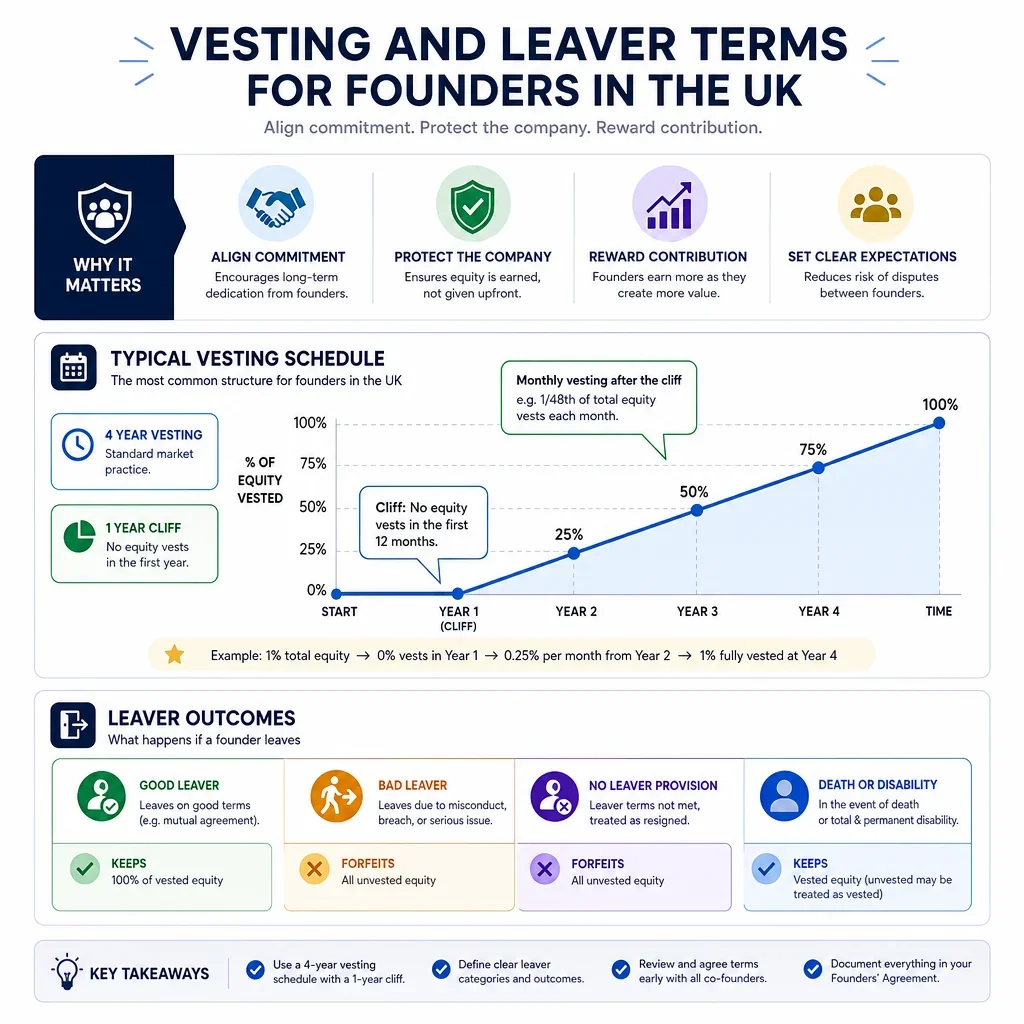
UK founders\' agreements commonly use time-based vesting over three or four years, often with a 12-month cliff. This means a founder who leaves early may keep only vested shares, while unvested shares can be bought back or transferred. The legal mechanics usually need to be reflected in the company\'s articles, shareholders\' agreement and any share transfer provisions, not just in an informal side agreement.
How Do Good Leaver And Bad Leaver Terms Affect Founder Shares?
Good leaver terms usually protect a departing founder who leaves because of death, illness, incapacity, redundancy or sometimes board-approved departure. They commonly allow the founder to keep vested shares and receive fair value for any shares that must be transferred. Bad leaver terms are more company-friendly and may apply to dismissal for gross misconduct, fraud, criminal conduct, serious breach or resignation within a restricted period; they often require transfer of shares at nominal value, cost or a discount.
Why Should UK Founder Share Transfer Rules Be Drafted Carefully?
Compulsory transfer clauses must work with UK company law and the company\'s constitution. In particular, a private company\'s articles often control share transfers, directors may have powers to refuse registration of transfers, and a company buyback generally requires compliance with Companies Act 2006 procedures. Poor drafting can make leaver provisions difficult to enforce or tax-inefficient.
When Is Acceleration Useful For Founders?
Acceleration is most useful where a founder may lose control after an exit, investment round or change of control. A single-trigger clause vests shares automatically on the transaction and is founder-friendly, while a double-trigger clause usually requires both the transaction and termination or material role reduction, making it more balanced for investors and the company.
What Tax Point Should UK Founders Consider?
UK founders should consider whether vesting, forfeiture, restrictions or leaver provisions create employment-related securities issues. HMRC guidance treats shares acquired by reason of employment or office as potentially within the employment-related securities regime, so specialist tax advice is often needed before issuing founder shares with restrictions.
FAQs
You Might Also Be Interested In