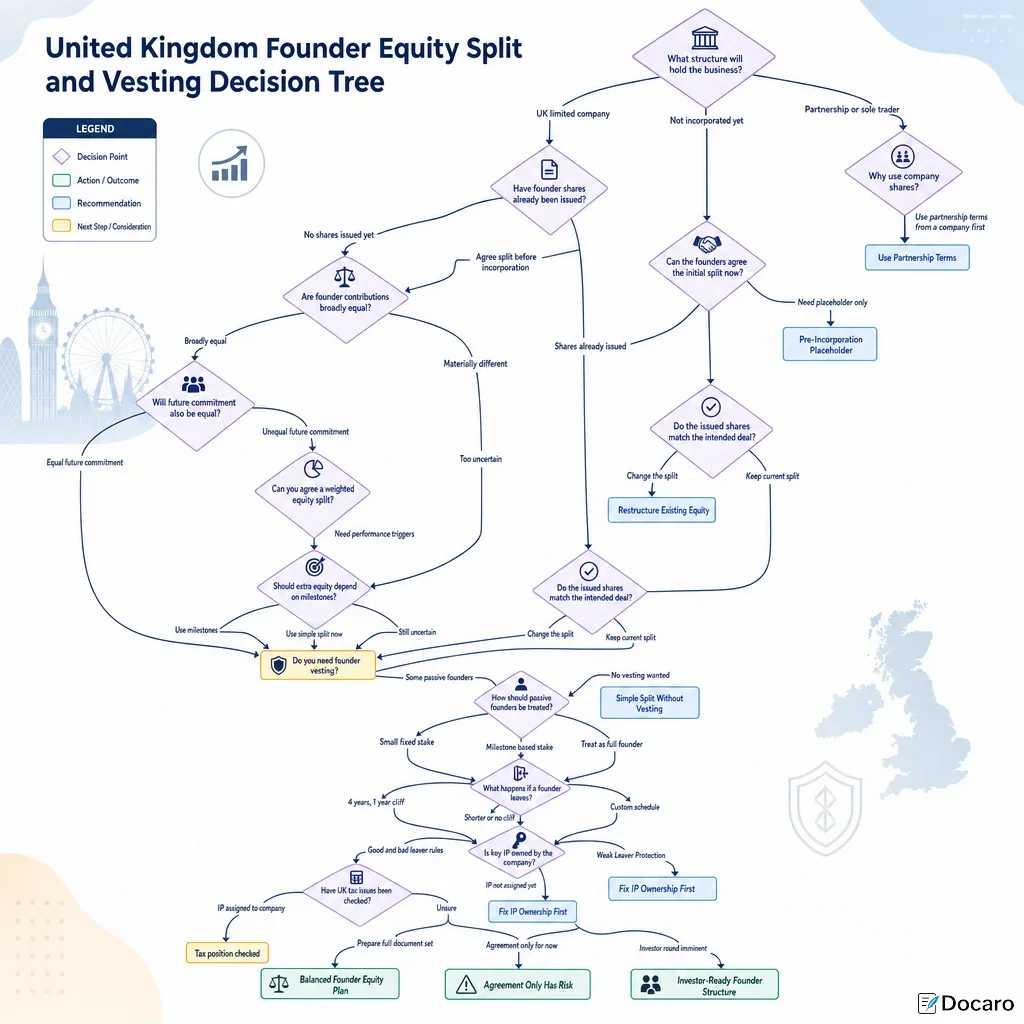
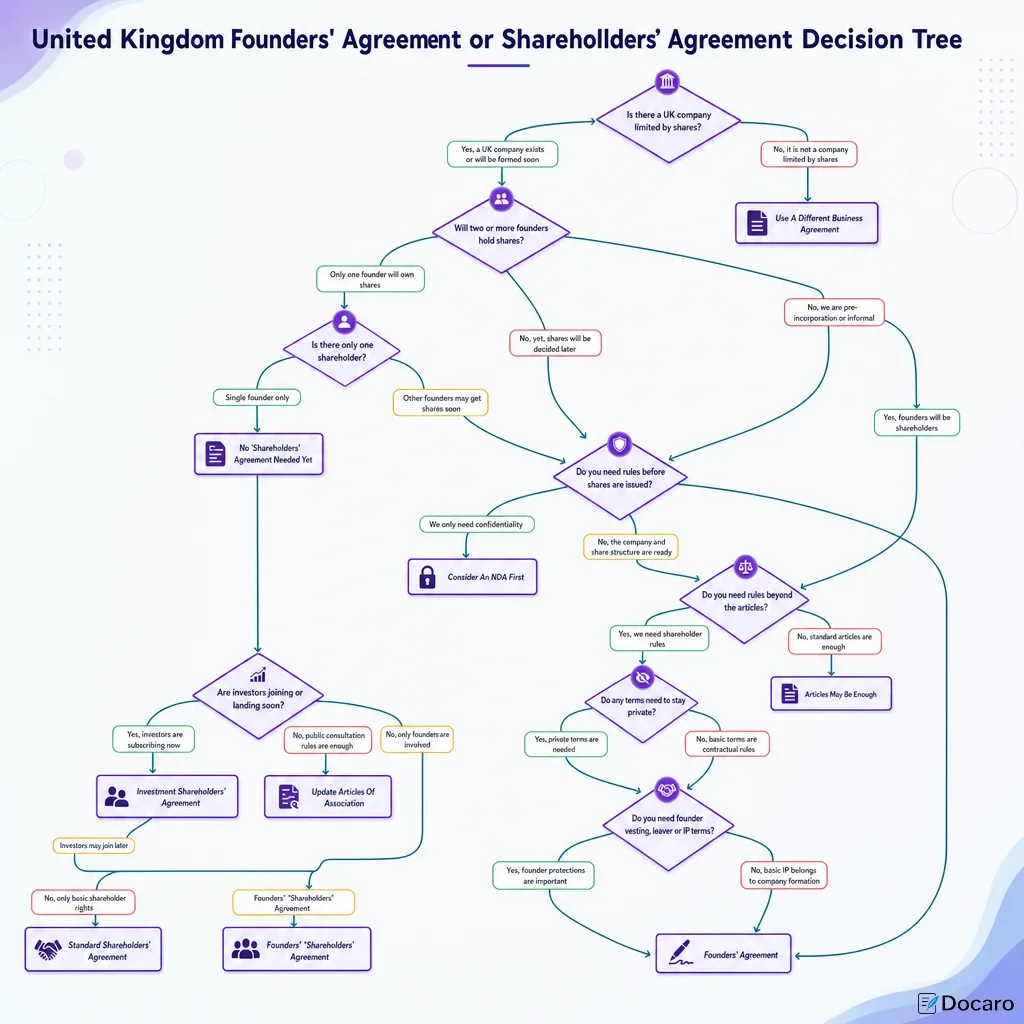
United Kingdom Founders' Agreement Or Shareholders' Agreement Decision Tree
Is there a UK company limited by shares?
Why Is The Right UK Founders' Agreement Important?
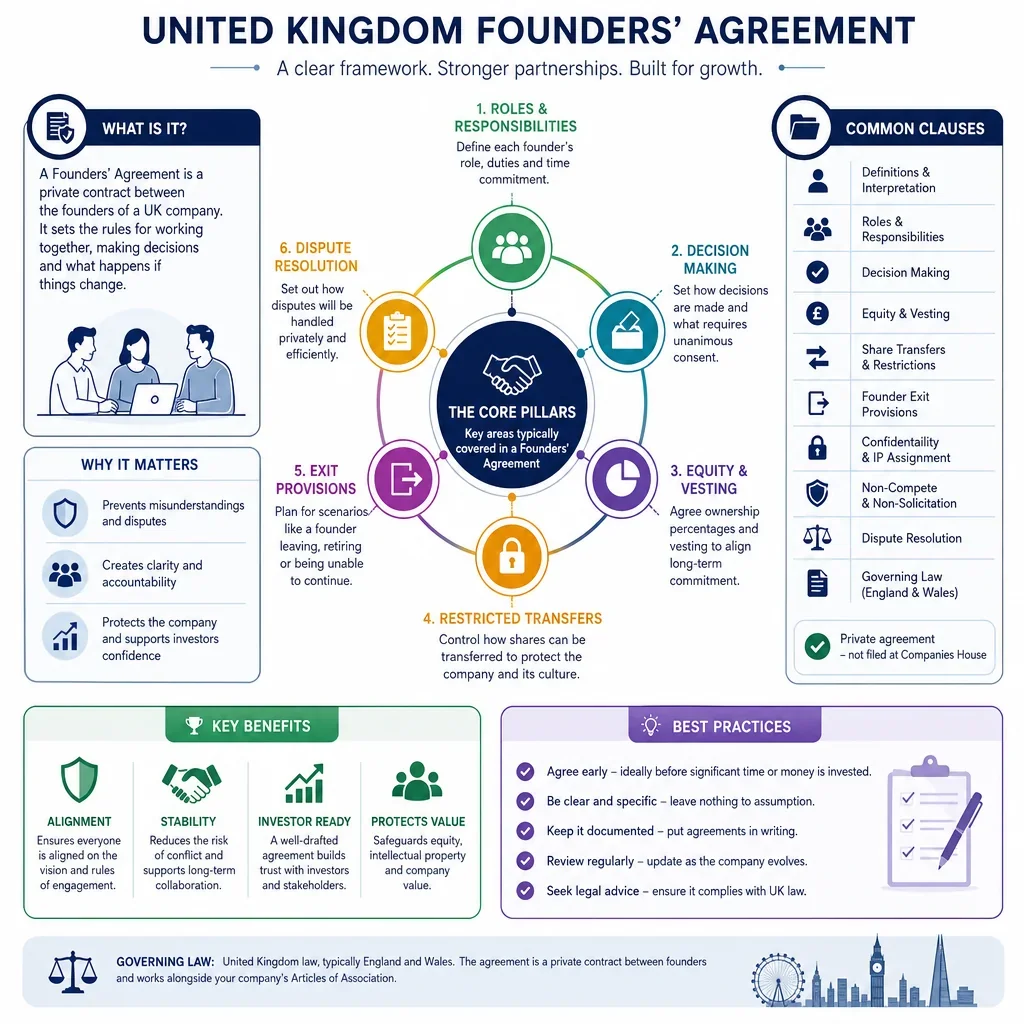
Choosing between a founders' agreement, a shareholders' agreement and updated articles of association matters because each document does a different job under UK company practice.
What Can Go Wrong If Founders Use The Wrong Document?
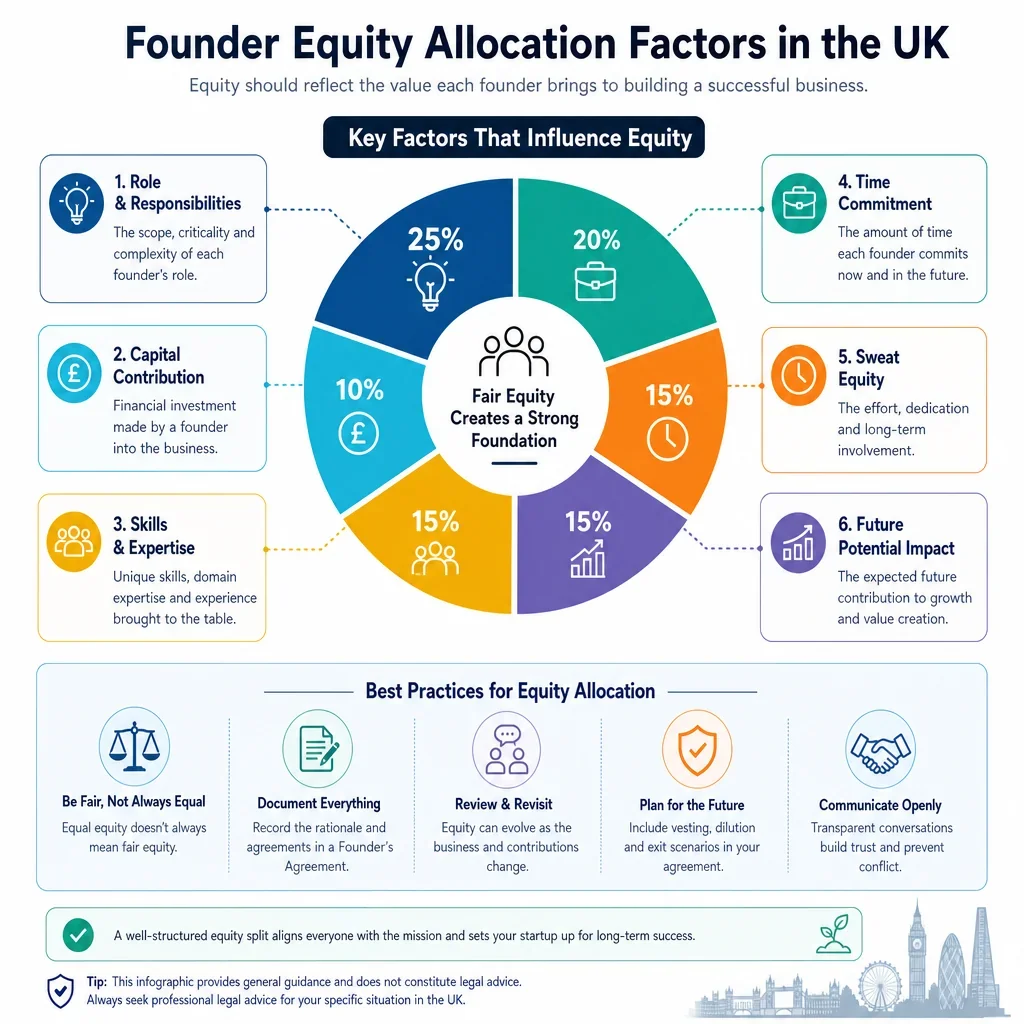
- Ownership disputes: unclear share, IP or contribution terms can cause arguments when the business gains value.
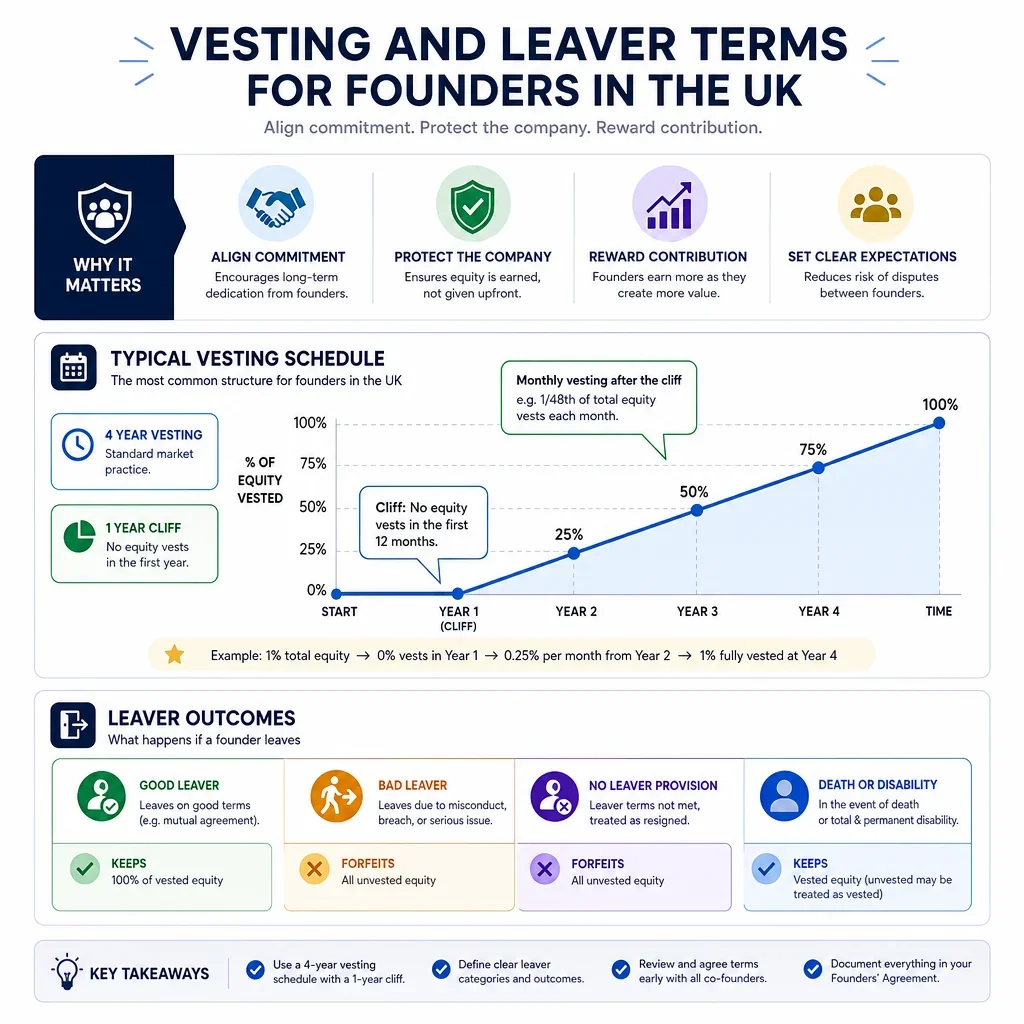
- Leaver problems: without vesting or leaver rules, a founder may keep a large shareholding after leaving early.
- Investor issues: investors may expect proper shareholder protections before funding a UK company.
- Public versus private terms: articles are filed at Companies House, while a shareholders' agreement is usually private.
- Decision deadlock: equal founders can become stuck unless the agreement includes a workable deadlock process.
When Should UK Founders Use A Shareholders' Agreement?
UK founders should usually consider a shareholders' agreement once two or more people hold shares in a private company limited by shares. It can sit alongside the company's articles and deal with private commercial matters such as share transfers, reserved matters, confidentiality, restrictive covenants and exit rights.
When Is A Founders' Agreement Better?
A founders' agreement is often better before incorporation or before the share structure is settled. It can record the founders' intentions, protect confidential information, assign or license intellectual property, and set expectations before a formal UK company structure is in place.
Where Can Founders Check Official UK Information?
Founders can review official guidance from GOV.UK on setting up a limited company, Companies House model articles and the UK Intellectual Property Office. These resources help founders understand the company, share and IP context before preparing documents.
FAQs
You Might Also Be Interested In