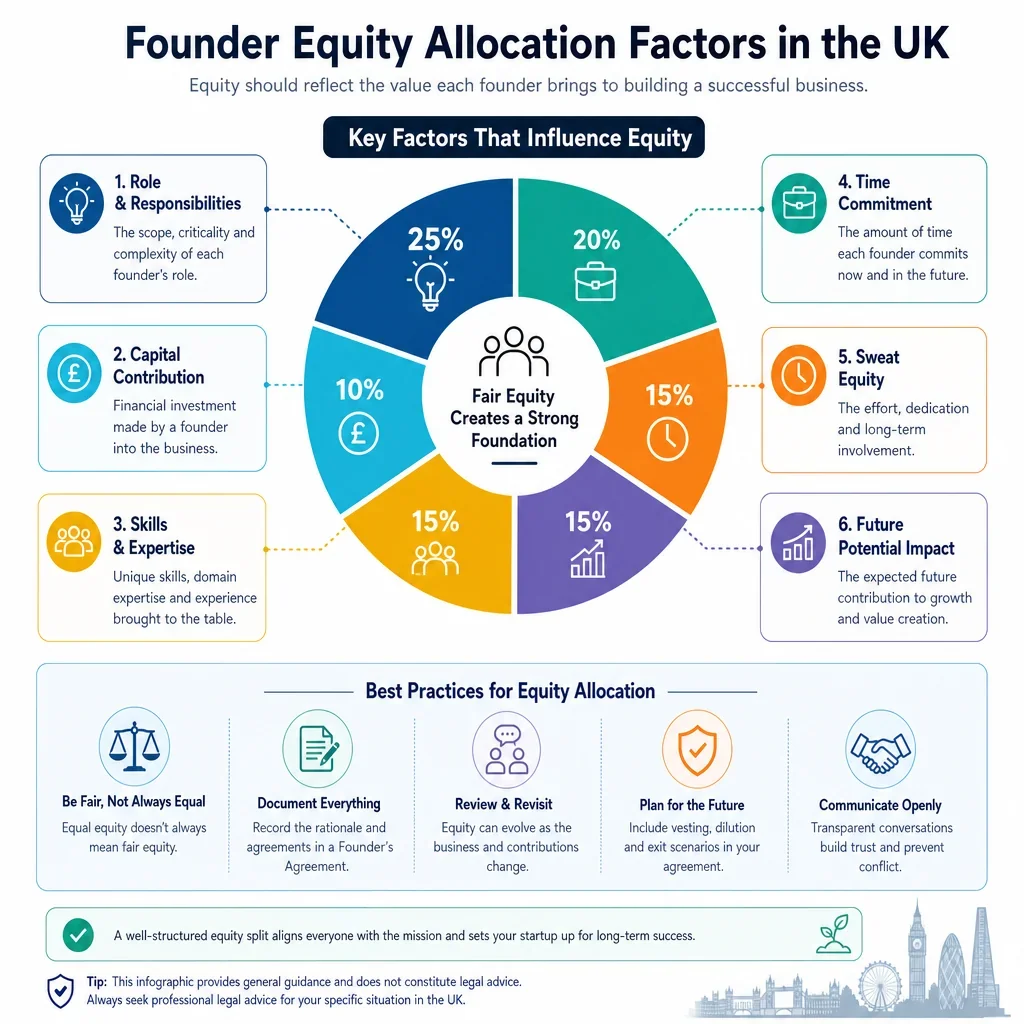
Founder Equity Allocation Factors In The UK
Allocation Factor | Impact on Equity Split | Typical Weighting | Supporting Evidence | Agreement Drafting Note |
|---|---|---|---|---|
Financial contribution | ||||
Founder cash invested before or at incorporation | May justify a larger stake or separate repayment/loan treatment. | Often significant | Bank transfers, receipts, board approvals, cap table notes. | State whether cash is equity, a loan, or reimbursable expense. |
Unequal initial seed funding between founders | Can create a negotiated premium for the larger funder. | Often significant | Founder funding schedule and agreed valuation assumptions. | Avoid ambiguity between investment shares and founder sweat equity. |
Founder loans to the company | Usually affects creditor rights more than ordinary share percentage. | Usually minor | Loan agreement, repayment terms, accounting entries. | Document loan priority, interest, conversion rights and repayment triggers. |
Risk assumption | ||||
Personal guarantees for company debts or leases | May justify extra equity or indemnity due to personal downside risk. | Often significant | Signed guarantees, lender terms, lease documents. | Include indemnity, release obligations and treatment on founder exit. |
Time contribution | ||||
Foregone salary or below-market pay | Can support additional equity where sacrifice is material and tracked. | Often significant | Market salary benchmarks, payroll records, agreed accrual schedule. | Clarify whether sacrifice creates equity, deferred salary or no debt. |
Time contribution, Future commitment | ||||
Full-time versus part-time founder commitment | Full-time founders commonly receive more or vest faster than part-time founders. | Potentially decisive | Employment terms, time logs, board-approved working expectations. | Tie equity retention to vesting and minimum working commitment. |
Time contribution, Risk assumption | ||||
Earlier founding start date | Early contributors may receive extra equity for higher uncertainty and work. | Often significant | Project records, incorporation documents, prototype history. | Record pre-incorporation contributions and confirm company ownership. |
Time contribution, Commercial contribution | ||||
Founder joining after product or revenue traction | Later entrants may receive less because earlier risk has already reduced. | Often significant | Revenue reports, product milestones, board minutes. | Use vesting from joining date rather than backdated entitlement. |
Intellectual property, Commercial contribution | ||||
Original business idea contribution | May matter if developed into protectable assets or validated strategy. | Usually minor | Concept documents, research notes, validation data. | Avoid giving excessive permanent equity for an unprotected idea alone. |
Intellectual property | ||||
Founder-owned patents or patent applications assigned to company | Can be decisive if core technology depends on the patent rights. | Potentially decisive | Patent filings, assignment deed, freedom-to-operate analysis. | Require formal assignment and warranties on ownership and infringement risk. |
Pre-existing software code contributed by a founder | May justify major equity if code is central and exclusively assigned. | Potentially decisive | Repository history, code audit, assignment agreement, licence list. | Include IP assignment, open-source disclosure and moral rights waiver where relevant. |
Copyright created outside employment not automatically owned by company | Founder may receive equity only if copyright is validly transferred or licensed. | Potentially decisive | Employment status, contractor contracts, written assignment. | Use express assignment because first ownership may remain with the author. |
Intellectual property, Risk assumption | ||||
Inventions created during previous employment | Equity value may reduce if prior employer may own the invention. | Potentially decisive | Old employment contract, invention records, legal clearance. | Add warranties, disclosure of third-party claims and clawback if title fails. |
Intellectual property, Commercial contribution | ||||
Founder-controlled domain names and social handles | Usually modest unless brand value or customer access is substantial. | Usually minor | Registrar records, account access proof, brand traffic data. | Require transfer to company and shared administrative access. |
Founder-owned trade marks or brand assets | Can support extra equity if brand is valuable and transferred. | Often significant | Trade mark registration, brand valuation, assignment documents. | Include assignment of registered and unregistered brand rights. |
Intellectual property | ||||
Confidential know-how or trade secrets contributed by founder | May be significant if know-how gives defensible competitive advantage. | Often significant | Technical files, confidentiality logs, restricted access records. | Define confidential information and impose continuing confidentiality duties. |
Operational role, Future commitment | ||||
Chief executive responsibility | Can justify higher equity where founder carries strategy and fundraising burden. | Often significant | Role description, board minutes, investor communications. | Link role expectations to vesting and decision-making provisions. |
Operational role, Intellectual property, Future commitment | ||||
Technical founder building core product | Often commands larger equity if product delivery depends on them. | Potentially decisive | Product roadmap, repository contributions, technical architecture documents. | Combine IP assignment with service commitment and vesting. |
Commercial contribution, Operational role | ||||
Founder responsible for sales and revenue generation | Can materially increase stake if revenue generation is central to growth. | Often significant | Pipeline reports, signed contracts, CRM records, targets. | Use milestones for promised sales contribution where uncertain. |
Operational role, Commercial contribution | ||||
Product strategy and roadmap ownership | May justify extra equity where product-market fit depends on expertise. | Often significant | Roadmap, user research, backlog ownership, launch metrics. | Define deliverables and review contribution against vesting milestones. |
Operational role, Time contribution | ||||
Day-to-day operations and administration burden | May support modest extra equity if workload is substantial and ongoing. | Usually minor | Task logs, supplier contracts, finance and HR records. | Set role duties separately from director statutory responsibilities. |
Operational role, Risk assumption | ||||
Regulated or compliance-critical founder role | Can justify more equity where personal accountability enables trading. | Often significant | Regulatory approvals, fit and proper records, compliance responsibilities. | Address removal, replacement and consequences if approval is lost. |
Founder taking statutory director responsibility | May support recognition if responsibility is unequal and commercially material. | Usually minor | Companies House appointments, board minutes, delegated authorities. | Do not treat shareholding as a substitute for statutory director duties. |
Commercial contribution | ||||
Strategic customer introductions | Usually minor unless introductions convert into material contracts. | Usually minor | Introductions, meeting notes, contract value, CRM attribution. | Prefer milestone equity or commission for unproven introductions. |
Signed customer contracts brought by founder | Can justify higher equity if contracts materially de-risk the business. | Often significant | Executed contracts, revenue terms, renewal probability, margins. | State whether equity depends on revenue receipt or contract signing only. |
Commercial contribution, Future commitment | ||||
Access to investors and fundraising credibility | May affect allocation if founder can realistically secure funding. | Often significant | Term sheets, investor correspondence, fundraising track record. | Use milestone vesting for fundraising promises not yet delivered. |
Commercial contribution | ||||
Founder reputation, credentials or industry profile | May improve credibility but rarely decisive without active involvement. | Usually minor | Relevant track record, press, advisory influence, investor feedback. | Avoid adviser-style equity unless role and time commitment are clear. |
Commercial contribution, Operational role, Risk assumption | ||||
Founder enables access to essential licence or accreditation | Can be decisive if company cannot lawfully trade without it. | Potentially decisive | Licence documents, regulator correspondence, dependency analysis. | Provide for loss, suspension or transfer of the licence dependency. |
Risk assumption, Future commitment | ||||
Founder subject to restrictive covenants from prior role | May reduce allocation if enforceability risk limits contribution. | Often significant | Prior contract, legal advice, competitor risk assessment. | Include warranties and consequences if restrictions prevent participation. |
Potential conflicts with other businesses or roles | May reduce equity or require vesting if availability is uncertain. | Often significant | Outside interests register, contracts, board disclosure. | Add conflict disclosure, non-compete and business opportunity clauses. |
Future commitment, Time contribution | ||||
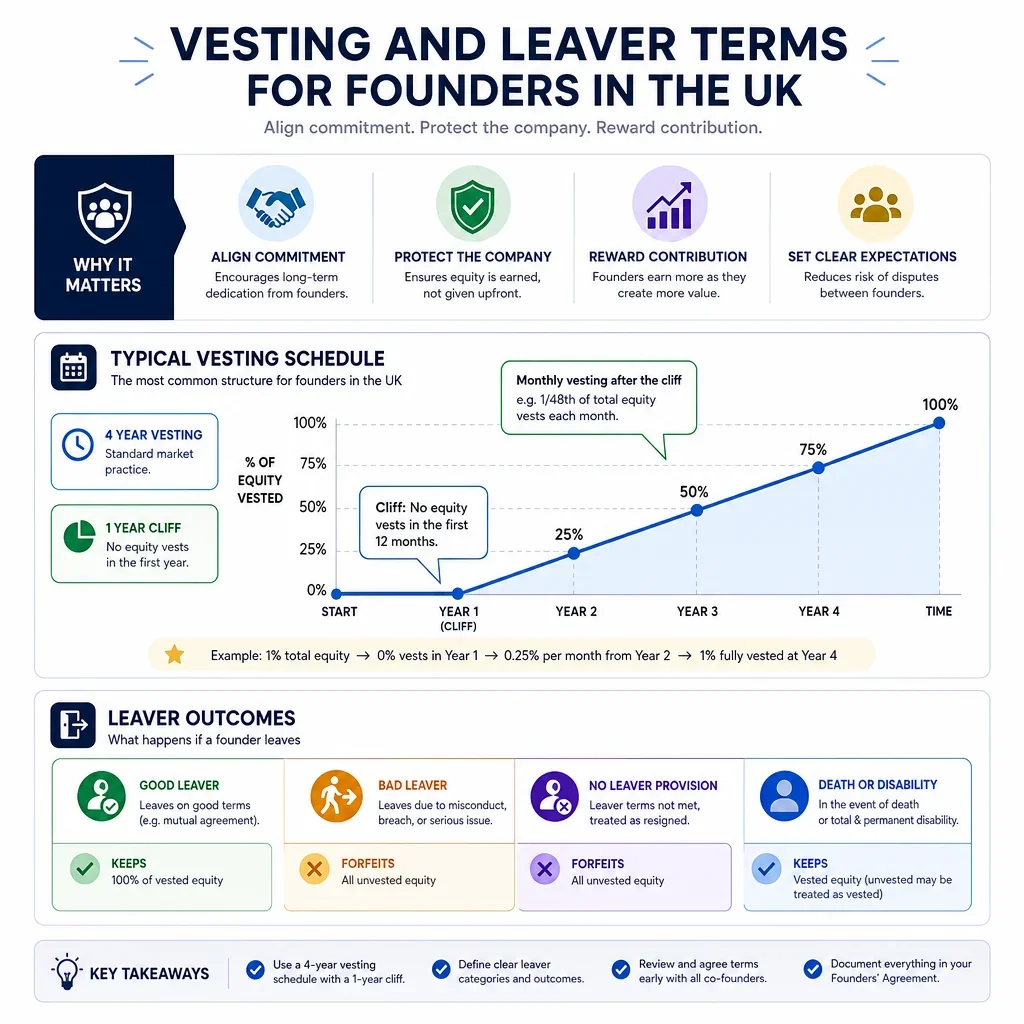
Equity earned through future service vesting | Allows headline split while protecting company if a founder leaves early. | Potentially decisive | Vesting schedule, cliff period, service records. | Include reverse vesting, repurchase price and leaver categories. |
Future commitment, Commercial contribution, Operational role | ||||
Equity conditional on product, revenue or fundraising milestones | Delays or varies allocation until measurable value is delivered. | Often significant | Milestone definitions, KPIs, board certification process. | Define objective milestones and what happens if partially achieved. |
Future commitment | ||||
Minimum founder commitment period | Longer committed service can justify a larger vested stake. | Often significant | Founders' agreement term, employment contract, vesting schedule. | Tie early departure to compulsory transfer or unvested share buyback. |
Financial contribution, Intellectual property | ||||
Equipment, prototypes or other assets contributed | May justify modest equity if assets are valuable and transferred. | Usually minor | Valuations, invoices, transfer documents, asset register. | State whether assets are sold, loaned, licensed or contributed for shares. |
Financial contribution, Operational role | ||||
Free office space, facilities or hosting provided by founder | Usually minor unless cost saving is material and long-term. | Usually minor | Lease, hosting invoices, market rental comparison. | Use service agreement or reimbursement terms instead of permanent equity. |
Risk assumption | ||||
Founder accepts unusually high legal or financial exposure | May warrant extra equity or indemnity if exposure benefits all founders. | Often significant | Contracts, indemnities, insurance exclusions, risk register. | Address indemnification, insurance and liability sharing expressly. |
Future commitment, Risk assumption | ||||
Founder ability to work lawfully in the UK | May affect vesting if work rights are uncertain or time-limited. | Often significant | Right-to-work checks, visa terms, expiry dates. | Add condition or suspension mechanism if lawful work becomes impossible. |
Operational role, Risk assumption | ||||
Founder responsible for UK GDPR and data protection compliance | May justify recognition where data compliance is central to the product. | Usually minor | DPIAs, privacy notices, ICO registration, compliance logs. | Define responsibility without excluding company-wide compliance duties. |
Commercial contribution, Operational role | ||||
Specialist sector expertise essential to product or market | Can increase equity if expertise is scarce and actively applied. | Often significant | Qualifications, prior results, customer validation, technical input. | Specify ongoing role rather than relying on historic credentials. |
Commercial contribution | ||||
Access to valuable community, audience or distribution channel | May be significant if access converts into measurable users or revenue. | Often significant | Audience analytics, mailing list terms, conversion metrics. | Address ownership, consent and transferability of audience assets. |
Financial contribution | ||||
Pre-incorporation expenses paid by founder | Usually handled by reimbursement unless expenses are large and agreed as equity. | Usually minor | Receipts, invoices, approval notes, reimbursement schedule. | List approved expenses and state reimbursement or share treatment. |
Intellectual property, Time contribution | ||||
Working prototype already built by one founder | Can support larger equity if prototype materially accelerates launch. | Often significant | Demo, repository logs, test results, user feedback. | Require assignment and document whether prior work is fully credited. |
Commercial contribution, Future commitment | ||||
Founder contributes mainly advice rather than execution | Usually supports a smaller stake than operational co-founders. | Usually minor | Advisory scope, hours expected, deliverables. | Consider adviser shares or options rather than founder ordinary shares. |
Operational role, Risk assumption | ||||
Founder expected to hold board or management control | May align control with accountability but can create deadlock risk. | Often significant | Governance plan, investor expectations, reserved matters list. | Separate economic ownership from voting rights and reserved matters. |
Financial contribution, Risk assumption | ||||
Market value of shares issued for non-cash contribution | May affect affordability and tax risk where shares are employment-related securities. | Often significant | Valuation, tax advice, ERS records, share subscription documents. | Include tax warranties and require specialist tax advice before issue. |
Financial contribution | ||||
Ability to validly subscribe for and receive shares | Agreed split is ineffective unless shares are properly issued and recorded. | Potentially decisive | Subscription agreements, board approvals, register of members, Companies House filings. | Require completion mechanics for allotment, transfer and statutory registers. |
Future commitment, Risk assumption | ||||
Founder willingness to accept transfer restrictions | May allow larger allocation because shares cannot be freely sold or retained unfairly. | Often significant | Articles, shareholders' agreement, leaver terms. | Align founders' agreement with articles to make transfer rules enforceable. |
Financial contribution, Future commitment | ||||
Expected future dilution from investment or option pool | May affect initial percentages needed to preserve founder incentives. | Often significant | Funding plan, option pool model, investor term assumptions. | Include pro rata, consent and anti-dilution expectations if agreed. |
Financial contribution, Risk assumption | ||||
Use of family, related-party or third-party assets | May reduce value if founder cannot give clean title or long-term access. | Usually minor | Owner consent, licence terms, asset valuation. | Require written third-party consent and termination consequences. |
Risk assumption, Future commitment | ||||
Founder leaves secure employment or other opportunity | May support extra equity where opportunity cost is high and commitment immediate. | Usually minor | Resignation date, former salary, start date, commitment plan. | Use vesting rather than unconditional equity for future opportunity cost. |
Financial contribution, Time contribution | ||||
Balance between cash capital and sweat equity | Higher cash may dilute sweat equity unless founders agree separate classes or loans. | Potentially decisive | Valuation model, cash needs, work commitment schedule. | Separate investment economics from founder service economics. |
Financial contribution, Operational role | ||||
Need for different economic or voting rights | May allow unequal control or dividends without matching ordinary share percentages. | Often significant | Articles, class rights schedule, tax advice. | Define class rights in articles as well as founders' agreement. |
Financial contribution | ||||
Founder expectation of dividends versus reinvestment | May affect preference for ordinary shares, growth shares or salary instead. | Usually minor | Financial model, remuneration policy, distributable profits forecast. | State dividend policy expectations but preserve directors' duties. |
Future commitment, Financial contribution | ||||
Use of options instead of immediate shares | May reduce upfront allocation and align ownership with future service. | Often significant | Option plan, valuation, EMI eligibility review. | Consider EMI or unapproved options with tax advice and clear vesting. |
Future commitment, Risk assumption | ||||
Risk that a founder leaves before value is created | Often reduces unconditional equity and increases vesting protection. | Potentially decisive | Availability, employment terms, vesting schedule, role dependency. | Define good leaver, bad leaver, compulsory transfer and price formula. |
Operational role, Risk assumption | ||||
Deadlock risk from equal shareholdings | May justify unequal equity or special voting arrangements. | Often significant | Decision matrix, reserved matters, board structure plan. | Include deadlock escalation, buy-sell or chair casting vote provisions. |
Future commitment, Operational role | ||||
Founder promises specific deliverables after signing | Should usually affect vesting rather than immediate fixed ownership. | Often significant | Delivery plan, acceptance criteria, board approval process. | Define deliverables objectively and attach equity consequences to non-delivery. |
Operational role, Intellectual property, Risk assumption | ||||
Founder relies on contractors to deliver their contribution | May reduce credit unless contractor IP and delivery are secured. | Often significant | Contractor agreements, IP assignments, invoices, delivery records. | Require founder to procure contractor IP assignments and confidentiality terms. |
Financial contribution, Commercial contribution, Intellectual property | ||||
Existing trading business or assets transferred into company | Can be decisive if company starts with revenue, assets or goodwill. | Potentially decisive | Asset sale agreement, accounts, customer lists, valuation. | Use business transfer documentation and warranties, not only equity clauses. |
Commercial contribution, Intellectual property, Risk assumption | ||||
Customer list or CRM data contributed by founder | Value may be reduced if data cannot lawfully be used or transferred. | Often significant | Consent records, privacy notices, data source audit, CRM export terms. | Include data protection warranties and lawful basis obligations. |
Commercial contribution, Risk assumption | ||||
Founder brings clients subject to non-solicitation obligations | May reduce credit where customer access could trigger legal claims. | Often significant | Former contract, client origin records, legal risk advice. | Add warranties against misuse of confidential information or restricted clients. |
Financial contribution, Commercial contribution | ||||
Founder secures grant funding or public support | May justify recognition if funding is non-dilutive and material. | Often significant | Grant award, conditions, reporting obligations, payment records. | Confirm who bears repayment or clawback risk if conditions are breached. |
Financial contribution, Risk assumption | ||||
Founder creditworthiness enables financing | May justify additional equity if financing depends on that founder personally. | Often significant | Loan approval, lender correspondence, guarantee requirement. | Include reimbursement, indemnity and release on resignation or transfer. |
Operational role | ||||
Founder handles company formation and statutory administration | Usually minor unless ongoing governance work is substantial. | Usually minor | Incorporation filings, confirmation statements, register maintenance records. | Treat administration as a role duty or fee unless strategically important. |
Financial contribution | ||||
Stamp duty cost on share transfers between founders | May influence whether equity is issued upfront or adjusted later. | Usually minor | Stock transfer forms, consideration amount, HMRC stamping confirmation. | Plan transfer mechanics and tax responsibility before reallocating shares. |
Future commitment, Risk assumption | ||||
Contingency if founder becomes unable to contribute | May justify vesting and good leaver protection rather than fixed forfeiture. | Often significant | Role dependency assessment, insurance, continuity plan. | Define incapacity, good leaver status and buyback terms carefully. |
Time contribution, Future commitment | ||||
Known availability limits from other personal commitments | May reduce allocation if materially limits expected contribution. | Usually minor | Agreed working pattern, availability statement, role plan. | Use objective time commitments and avoid discriminatory assumptions. |
Operational role, Future commitment | ||||
Contributor is more like an employee than a founder | May favour salary, options or bonus instead of founder-level equity. | Often significant | Employment status analysis, role scope, control and mutuality evidence. | Separate employment contract from founders' agreement and share rights. |
How Should UK Founders Decide A Fair Equity Split?
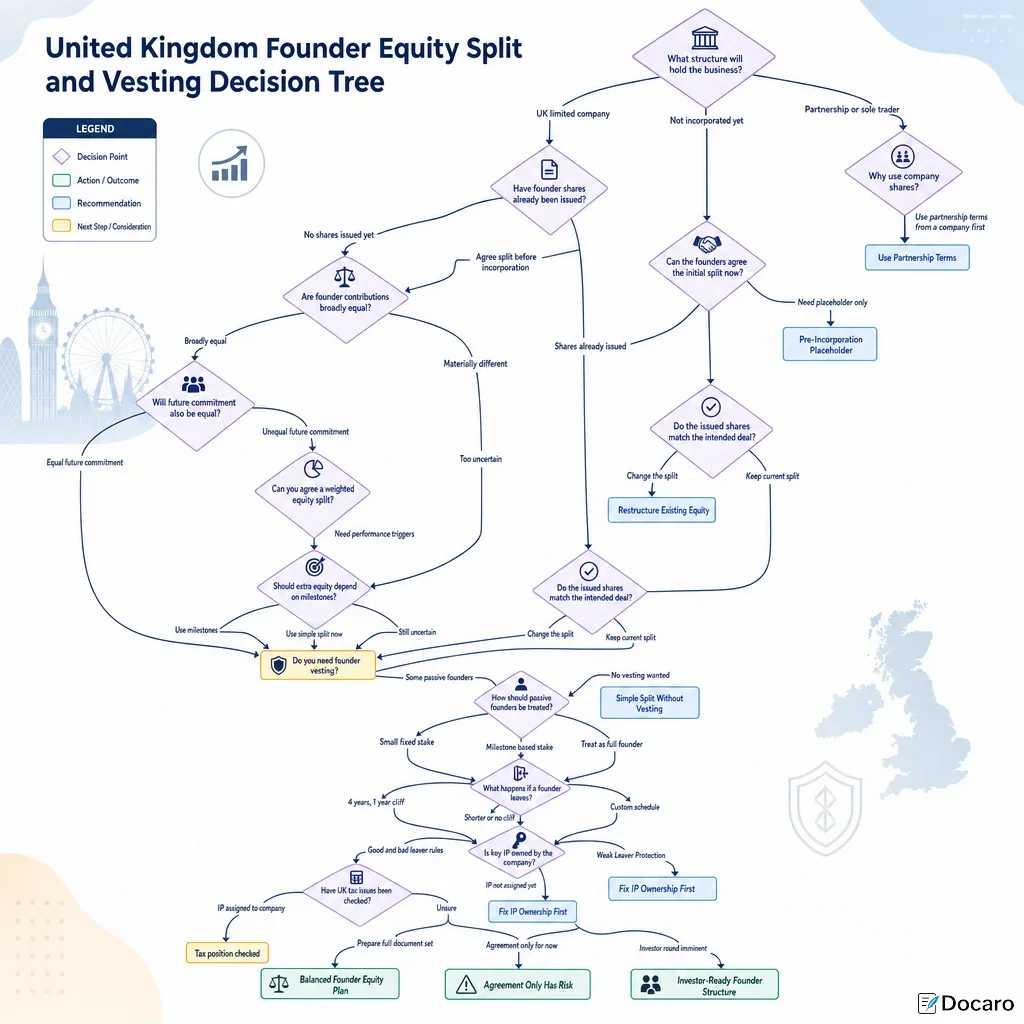
UK founders should usually separate past contributions from future commitments. Cash already invested, valuable assigned intellectual property, full-time operating responsibility, personal guarantees and signed customer traction can justify a larger initial allocation. However, uncertain future work is usually safer to protect through vesting, leaver provisions and milestone-based adjustments rather than an immediate unconditional share transfer.
What Should A Founders' Agreement Say About Equity Contributions?
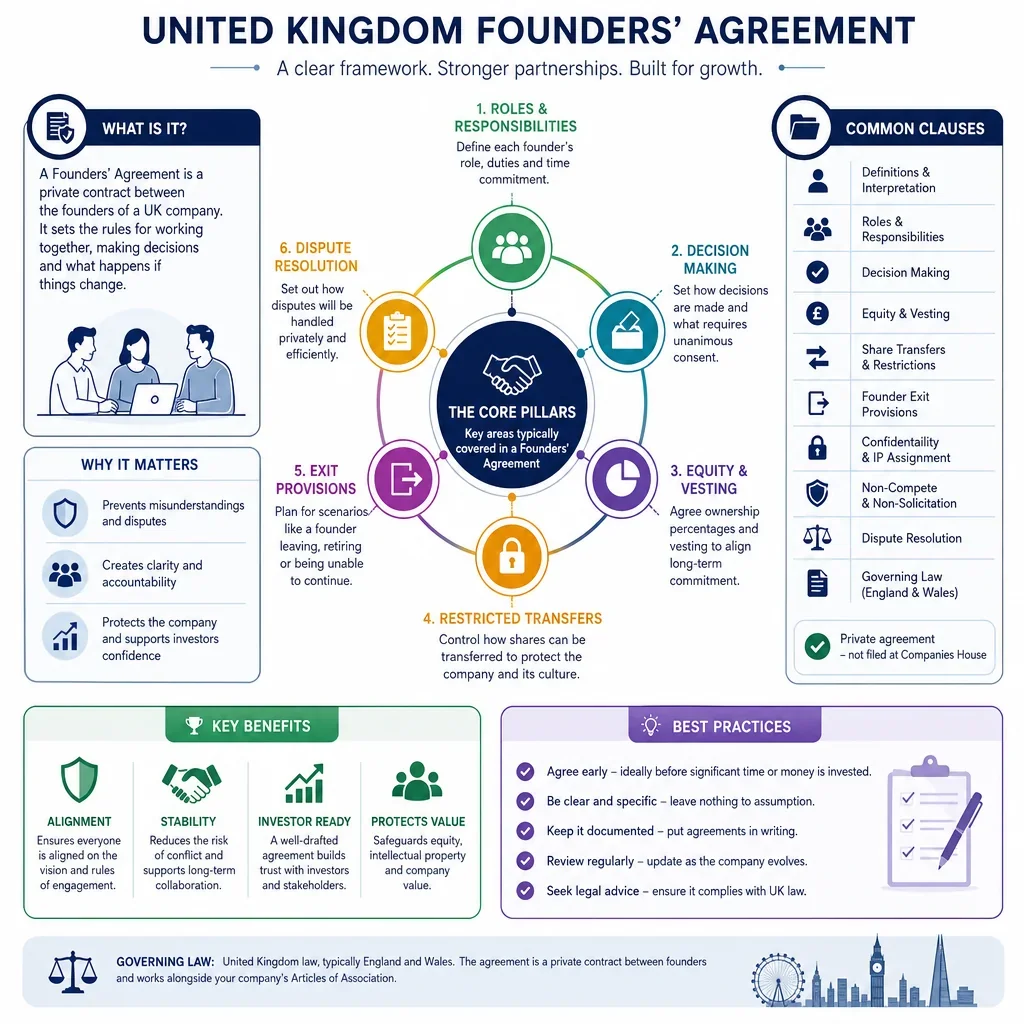
- Record the reason for the split: include a short allocation schedule showing each founder's cash, time, IP, role, risk and commercial contribution.
- Deal with unpaid or future contributions: use vesting, reverse vesting, good leaver and bad leaver provisions so a founder who stops contributing early does not retain a disproportionate stake.
- Protect IP ownership: ensure code, designs, inventions, brand assets and domain names are assigned or licensed to the company in writing, because UK copyright and patents rules do not always put ownership automatically in the company.
- Align with company law filings: issue shares, update the register of members, make Companies House filings where required and consider stamp duty and tax consequences for share transfers.
Which Equity Factors Are Most Decisive?
The most decisive factors are usually exclusive IP ownership, full-time chief executive or technical leadership, substantial cash funding, personal financial guarantees, regulatory responsibility and enforceable future commitment. Minor factors such as early introductions, general advice or small historic expenses may justify recognition, but rarely a major permanent equity difference unless tied to measurable results.
FAQs
You Might Also Be Interested In