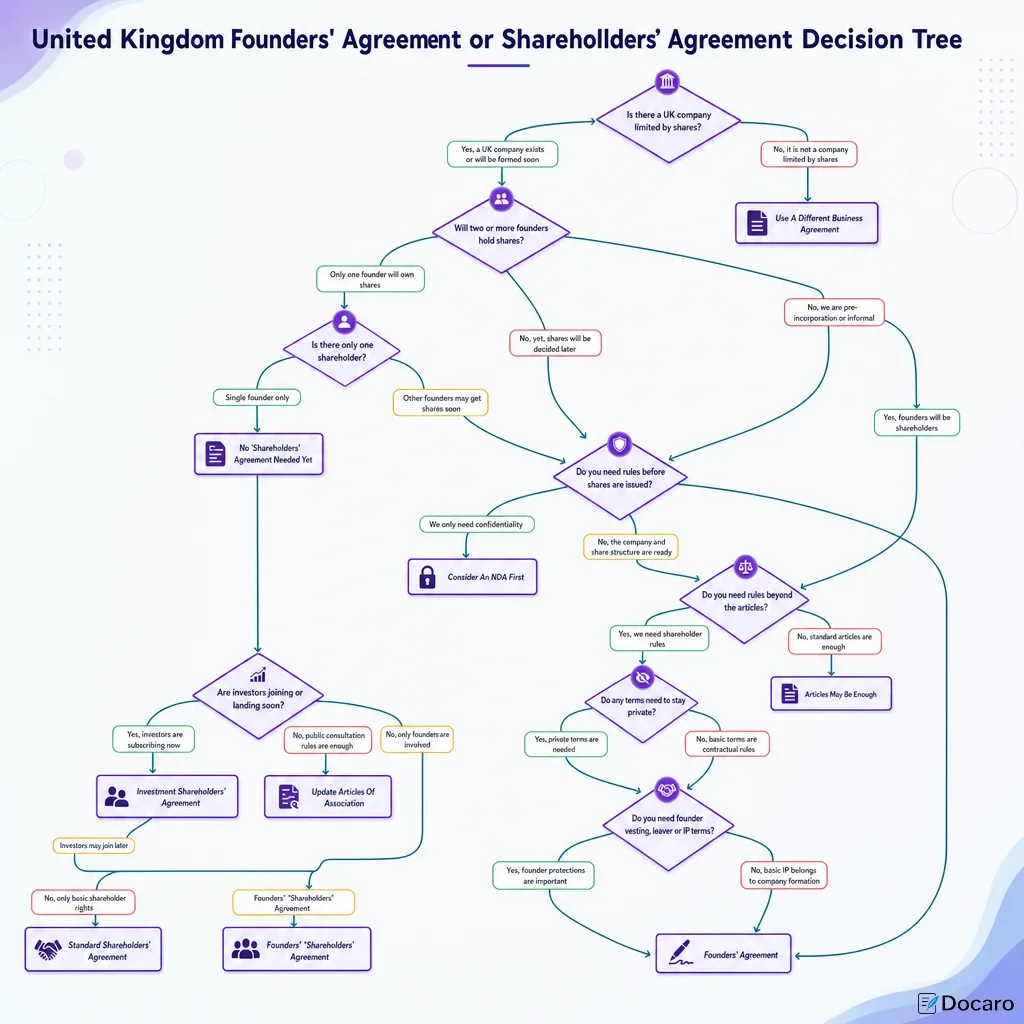
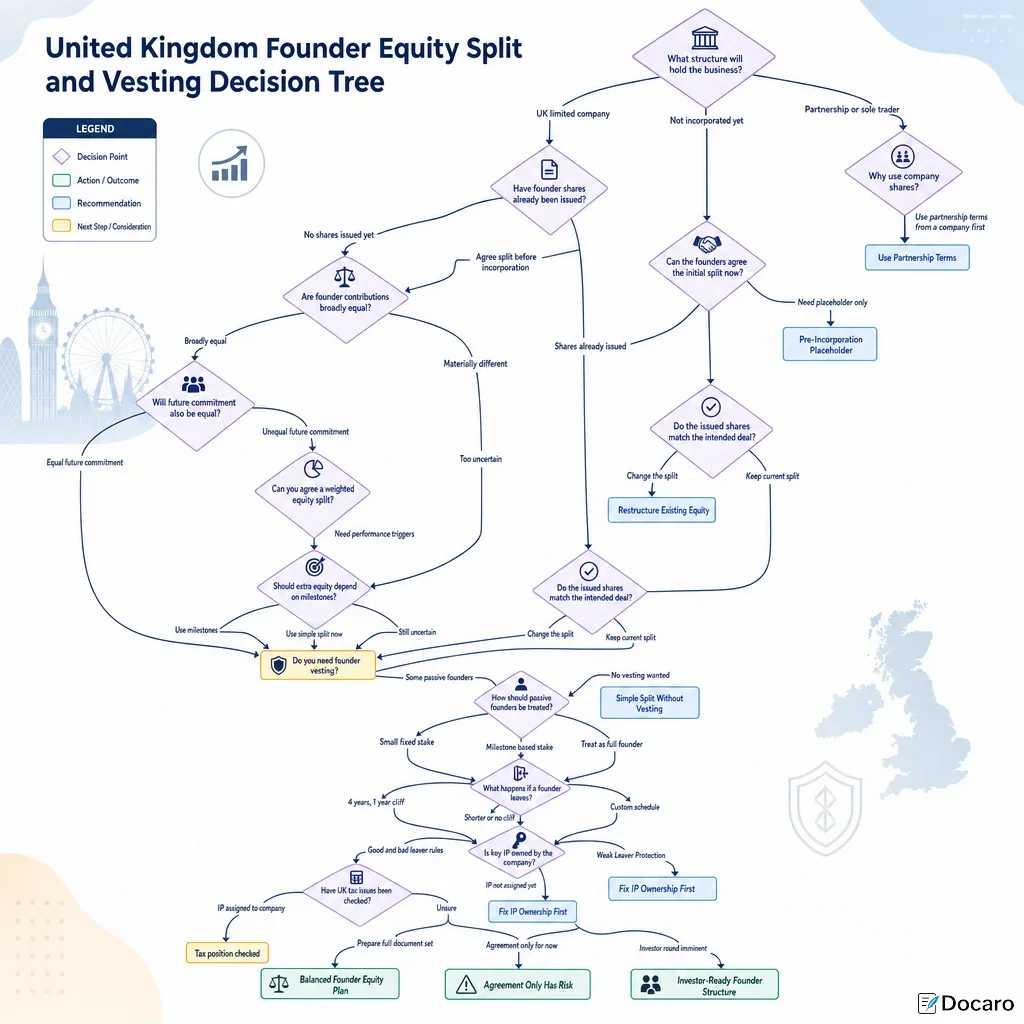
United Kingdom Founder Equity Split And Vesting Decision Tree
What structure will hold the business?
Why Does A UK Founder Equity Split Matter?
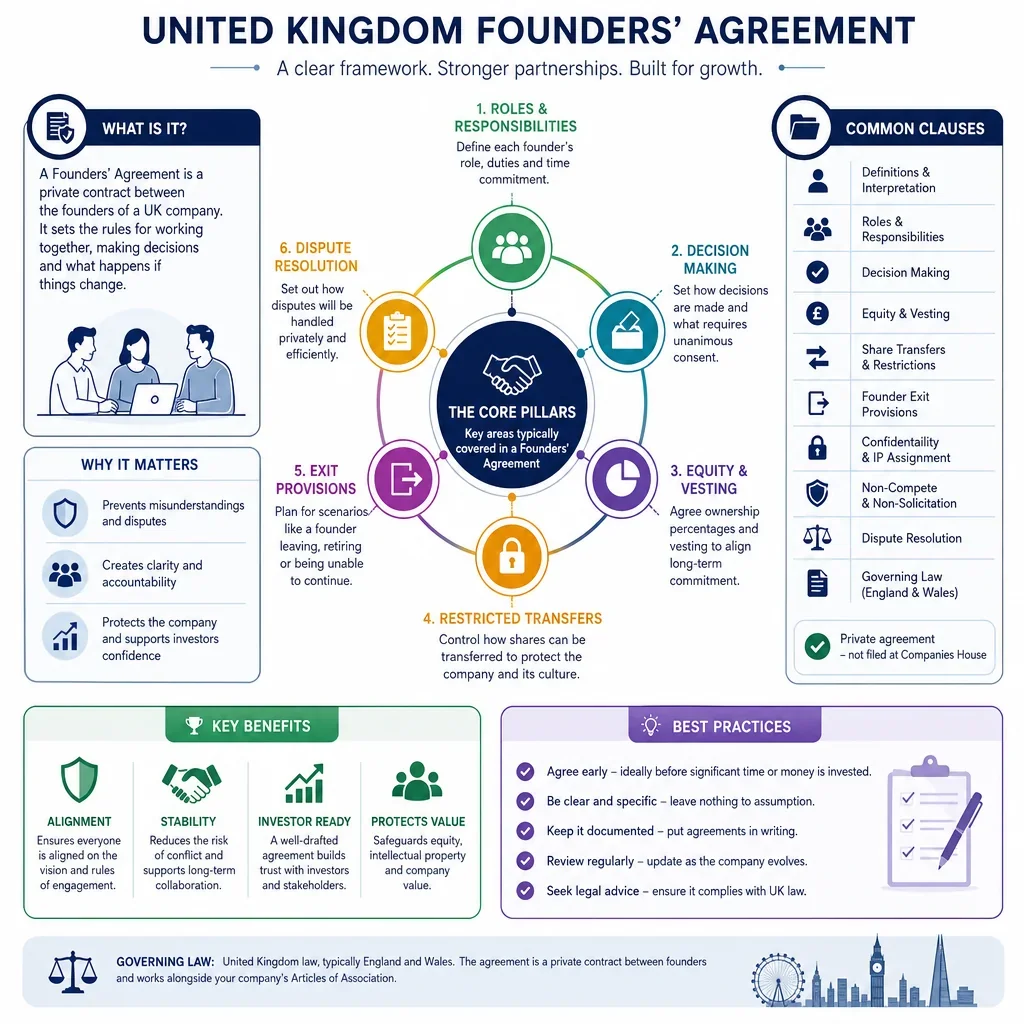
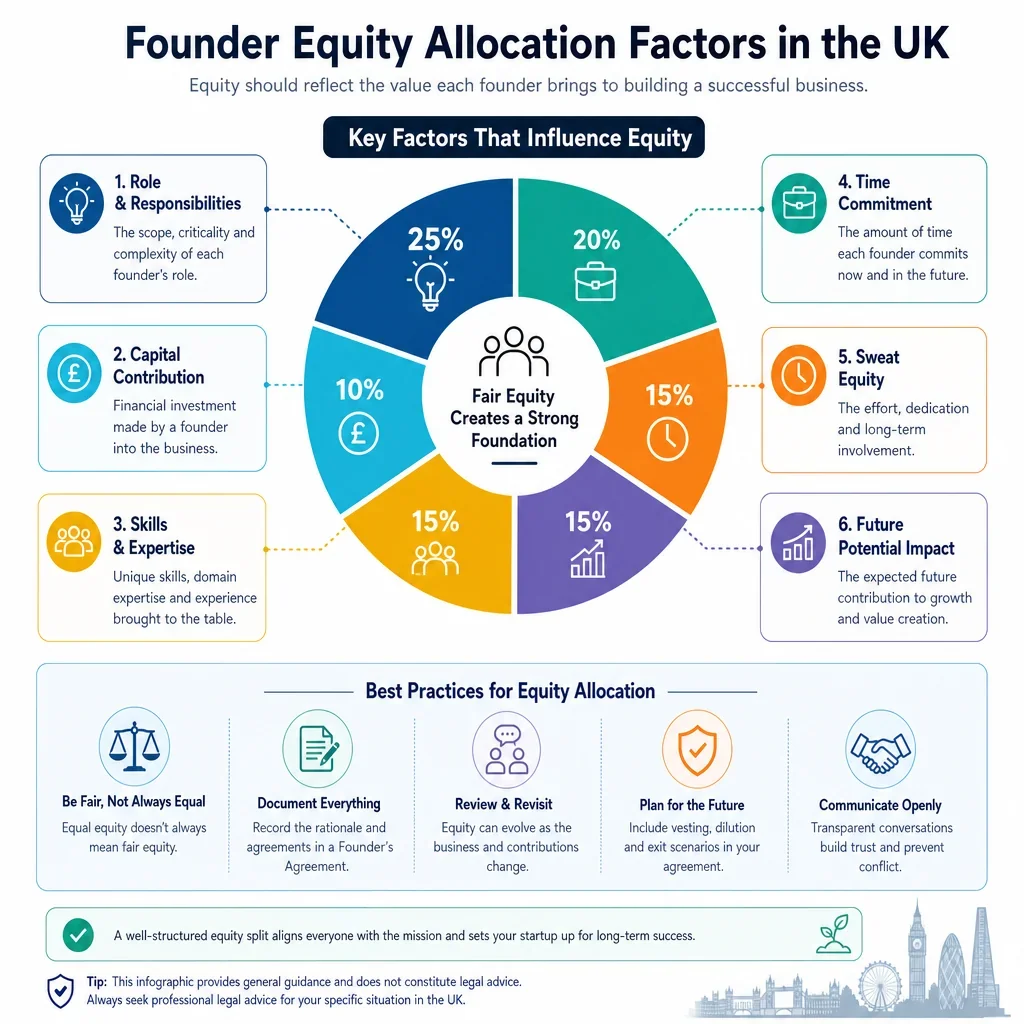
A founder equity split decides who owns the company, who controls key decisions, and who benefits from future growth. In a UK private company limited by shares, this usually affects shareholdings, voting rights, dividends, Companies House records, and the people with significant control register.
A clear founders\' agreement can reduce disputes by recording the commercial bargain in writing. It should usually sit alongside the company\'s articles, statutory registers, share certificates, board minutes, and any required Companies House filings.
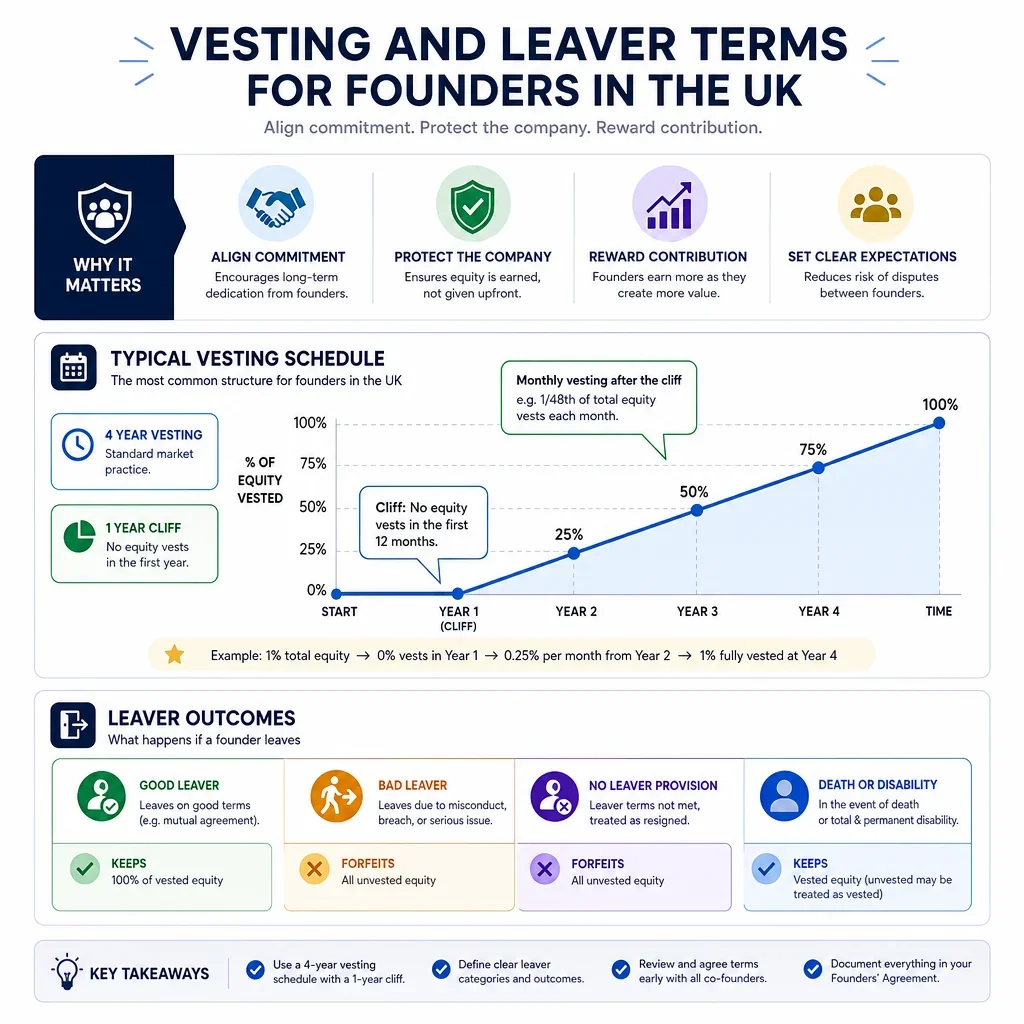
What Can Go Wrong If Founder Vesting Is Missing?
Without vesting or leaver provisions, a founder who leaves early may keep a large shareholding. This can leave the remaining founders doing most of the work while the departed founder keeps voting rights, dividend rights, and potential veto power.
- Fundraising risk: UK investors may question a cap table with inactive founders holding large stakes.
- Decision risk: shareholder approvals can become harder if relationships break down.
- Exit risk: a future buyer may require clean ownership, signed IP assignments, and clear leaver history.
Why Should UK Tax And IP Be Checked Early?
Founder shares can raise UK tax issues, especially where shares are employment-related, issued at undervalue, restricted, or subject to vesting. HMRC reporting and valuation points should be considered before shares are issued or transferred.
Intellectual property is equally important. A company may not automatically own code, designs, inventions, content, or brand assets created before incorporation or by contractors. The UK Intellectual Property Office provides useful guidance on IP at GOV.UK.
How Does The Right Agreement Help A UK Startup?
The right founder equity and vesting structure helps align reward with contribution. It also creates a clearer record for accountants, solicitors, investors, Companies House filings, and future due diligence. For many UK startups, making these decisions early is cheaper and safer than trying to fix an unfair or undocumented split later.
FAQs
You Might Also Be Interested In